In 2019 Let's Follow the Right Path - And move forward with renewed hope for the profession
←
→
Page content transcription
If your browser does not render page correctly, please read the page content below

ISSUE 44 | OCTOBER - DECEMBER 2018

                                                        In 2019 Let’s Follow the Right Path
                                                        And move forward with renewed hope for the profession
Cover pic by Andrew Peloso, courtesy of stocksnap.io

                                                         IN THIS ISSUE:        2    From the CEO’s Desk   13   Legal                          19   Communications

                                                                               3    Standards             14   Registry                       20   General News

                                                                               9    Ethics                15   Education and Transformation

                                                                               11   Investigations        18   Operations
FROM THE CEO’S DESK
The past 18 months have been tumultuous, and 2018 will go down              It seems that auditors have forgotten who the ultimate client is, and
in audit history as one when the profession hit a crossroad. Through        whose expectations they must satisfy. Being too cosy with the client
this time, our general advice to audit firms has been to take actions       can mean that the auditor is no longer comfortable to challenge the
that will restore confidence as that cannot be done by the regulators       client on behalf of shareholders and investors. The expectation gap
alone. Firms have a key role to play in rebuilding trust in their quality   is therefore real.
and integrity. We have also emphasised that all role players in the
financial reporting system, including management, those charged             The public expects more work to be done by auditors around
with governance, internal auditors and shareholders, have a role to         fraud risks. Consequently, firms must improve and adapt their
play in restoring confidence in the profession.                             methodologies and work done around fraud risk on the engagement.
                                                                            It is no longer sufficient to claim that auditors are not expected to
The Steinhoff business failure cost the economy billions of rand. In        discover fraud. Rather, auditors need to strengthen their procedures
the latest scandal with VBS Bank the auditor provided a clean audit         so as to identify and respond to fraud risk factors, especially in the
report though millions of rand had been stolen and pensioners had           current environment of corruption and increased expectations from
lost their hard-earned investments.                                         the public.

Audit is a public interest responsibility. As such, auditors must           Much of what has happened has confirmed the concerns we
consider the cost of their decisions on the public, investors and the       voiced as far back as 2013 and 2014. We see that there is a lack
economy.                                                                    of professional scepticism and independence, and conflicts of
                                                                            interest are not considered sufficiently. Many audit failures are a
During our engagement with the profession this year it became clear         result of cosy relationships between auditors and their clients (audit
that the firms also do not see the gravity of reputational damage,          committees, CFOs, management). Yet, auditors keep denying that
and they do not realise the extent of the measures that need to             these relationships have an impact on their independence and audit
be taken to reverse this. During past crises when there had been            opinions.
a loss of confidence, the first reaction had always been to deny
that anything is wrong. Rather, there had always been an insistence         It is time for auditors to start to take responsibility and accountability
that audit quality meets the required standard, while regulators have       and stop being in denial and defensive. In 2019, there must be a
seen things differently, with inspection results supporting our view.       commitment to clean up and focus on audit quality, especially in light
                                                                            of the IFIAR Public Report on audit findings and the deterioration in
Auditors do not only require technical competence to perform a              quality. Similarly, the IRBA will address any potential shortcomings in
high-quality audit – they also require appropriate behavioural              its regulatory oversight in its attempts to rebuild public confidence.
competence, and this is something that I have repeatedly addressed
this year. Most audit failures are not only linked to poor audit quality.   My hope for this holiday season is that we will all reflect on the year
They have a lot to do with auditors behaving unethically, not               that was and resolve to make significant changes in 2019. I hope
exercising professional scepticism and not acting independently.            firms seriously start focusing on quality, not as a risk to be managed
                                                                            but as an imperative to regain public trust. Without trust there is no
Furthermore, if leadership supports a culture that makes profits            confidence; and without confidence an audit opinion has limited
more important than ethical behaviour, this tone will permeate the          value.
whole organisation. Initially, we thought that the unethical behaviour
was isolated, but as more wrongdoings have come to light, it is             Let’s not wait for the market to change audit and decide on
becoming clearer that we are dealing with a systemic problem in             its continued relevance. Let’s agree to make the changes in the
the profession.                                                             profession that are necessary to ensure that the profession can
                                                                            weather this storm.
It takes one “bad apple” for a firm, and indeed a profession, to
be classified as a “barrel of rotten apples”. Therefore, individual         I wish you all a good festive season and a wonderful holiday break.
errant partners should be dealt with swiftly as drawn out processes         My hope for 2019 is that we can finally draw a line in the sand and
of disciplining auditors benefit no one and merely perpetuate the           move forward with renewed hope for the profession.
negative image of the profession. The IRBA is making every effort
to get these processes concluded as quickly as possible in order
to minimise the reputational damage to the profession as a whole.

I wish to emphasise that the regulator is there to assist the firms
and caution them against potential audit failures. It is, therefore,
advisable to work with us instead of opposing our attempts to help
improve audit quality.
                                                                                                                       Bernard Peter Agulhas
Times have also changed with regards to the environment in which                                                       Chief Executive Officer
we find ourselves. There is an increased awareness of the role of
auditors and expectations by investors, the media and the public.
The “new normal” is an active media as well as an educated and
vocal public. The advent of social media has changed the speed at
which the public forms its conclusions.

                                                                                                                   Issue 44 | October-December 2018   2
STANDARDS
THE FOLLOWING TOPICS ARE DISCUSSED IN THIS                                Outreach by the IAASB
ISSUE:
                                                                          The International Auditing and Assurance Standards Board (IAASB)
•       Standards:                                                        has on two recent occasions conducted outreach activities in South
          o    Outreach by the IAASB.                                     Africa, with both events hosted by the IRBA.
           o      Resources and Tools for Small- and Medium-sized
                  Practitioners.                                          The IAASB invited all interested stakeholders to help shape the
                                                                          future of assurance over emerging forms of external reporting
           o      International Standard on Auditing (ISA) 540
                                                                          (EER) at an event held in Johannesburg on 23 October 2018, as
                  (Revised), Auditing Accounting Estimates and Related
                                                                          part of a global series of discussions being held in seven locations
                  Disclosures.
                                                                          worldwide. Marek Grabowski, who is the Director of Audit Policy at
           o      Revised Guide for Registered Auditors: Assurance        the Financial Reporting Council, the chairman of the EER Task Force
                  Engagements on the Annual Financial Statements and      of the IAASB and a member of the IAASB, led the discussion. Ciara
                  Annual Statutory Returns of a Medical Scheme.           Reintjes, a member of the Project Advisory Panel to the EER Task
           o      Exposure Draft: Proposed International Standard         Force, facilitated the discussion. The event was well attended, with
                  on Related Services 4400 (Revised): Agreed-Upon         about 60 representatives from various constituencies that include
                  Procedures Engagements.                                 assurance providers, professional accountancy organisations,
           o      Exposure Draft: Proposed Revised Guide for Registered   preparers, the public sector, regulators, academics and consultants
                  Auditors: Assurance Engagements on Financial            in attendance. This event was part of the preparations for the
                  Service Providers’ Separate Accounts (Section 19(3))    publication planned for early 2019 of a proposed International
                  and Reporting Requirements (Section 19(4)) of the       Assurance Engagement Practice Note, Addressing Challenges in
                  Financial Advisory and Intermediary Services Act.       the Application of ISAE 3000 (Revised) to EER.
           o      Exposure Draft: Proposed Guide for Registered
                                                                          Then, on 21 November 2018 all interested stakeholders were
                  Auditors: Assurance Engagements on the Fresh
                                                                          invited to an IAASB outreach event held with some of the IAASB’s
                  Produce Agents’ Trust Accounts.
                                                                          leadership and staff. High profile representatives from the IAASB were
           o      Exposure Draft: Proposed South African Auditing         Professor Arnold Schilder (IAASB Chairman) and Mr Jasper van den
                  Practice Statement (SAAPS) 3 (Revised 2019),            Hout (Principal). The event offered stakeholders an opportunity to
                  Illustrative Reports.                                   explore current IAASB projects, which included consultation on the
           o      Revised Illustrative Banks Act Regulatory Auditor’s     next IAASB strategy; revisions to quality control standards and the
                  Reports.                                                proposed new approaches to quality management; a focus on the
           o      IAASB projects in progress.                             audit of accounting estimates; revisions to the risk identification and
                                                                          assessment standard; and an update on IAASB projects relating
•       Ethics:
                                                                          to data analytics, professional scepticism and extended forms of
           o      IRBA Code of Professional Conduct for Registered        external reporting. In addition to this public event, a series of media
                  Auditors (Revised November 2018).                       interviews took place, as well as meetings with firm leadership of
           o      Exposure Draft: Proposed amendments to Section          certain firms, and consultations with the African Organisation of
                  321 of the IRBA Code of Professional Conduct for        Supreme Audit Institutions (English).
                  Registered Auditors (Revised November 2018):
                  Second Opinions.
           o      IESBA projects in progress.

    3   Issue 44 | October-December 2018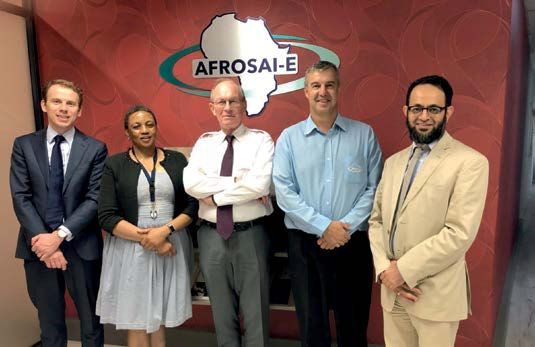
STANDARDS cont.

One of the media interviews IAASB Chairman Arnold Schilder, right, had was with eNCA’s Bruce Whitfield from
The Taking Stock Show.

The outreach also included a consultation session with AFROSAI-E representatives.

                                                                                     Issue 44 | October-December 2018   4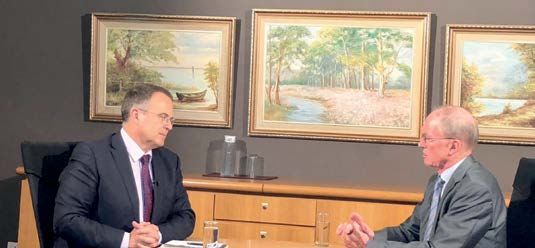
STANDARDS cont.
Resources and Tools for Small- and Medium-Sized
Practitioners
The IRBA website has been updated for small- and medium-               deal with loan provisions (International Financial Reporting Standard
sized practitioners (SMP) resources and tools developed by the         (IFRS) 9, Financial Instruments) and insurance contracts (IFRS 17,
International Federation of Accountants (IFAC). This follows the       Insurance Contracts). ISA 540 (Revised) reflects this rapidly evolving
IFAC’s recent issue of updated information.                            business environment and ensures that the standard continues to
                                                                       keep pace with the changing market.
IFAC’s SMP Committee represents the interests of professional
accountants in the SMP sector. The committee develops guidance         Some of the significant revisions include:
and tools, and also works to ensure that the needs of the SMP and      •  An enhanced risk assessment that requires auditors to
the small- and medium-sized entities (SME) sectors are considered         consider complexity, subjectivity and other inherent risk factors,
by standard setters and regulators.                                       in addition to estimation uncertainty. This will drive auditors
                                                                          to think more deeply about the risks inherent to accounting
SMPs may find the publications useful in running their practices and      estimates.
for SME engagements. A full list of resources and tools is available   •  A closer link between the enhanced risk assessment and the
on the IRBA SMP webpage.                                                  methods, data and assumptions used in making accounting
                                                                          estimates, including the use of complex models.
These publications have not been issued as guidance in South           •  A requirement for a separate assessment of inherent risk and
Africa as they have not undergone the IAASB’s or IRBA’s due               control risk.
process for the development of International Standards. However,       •  Specific material to show how the standard is scalable to all
the guidance may be of use to SMPs, bearing in mind that                  types of accounting estimates.
registered auditors are required to apply the International Standard   •  Emphasis on the importance of applying appropriate
on Quality Control 1 and the IAASB’s International Standards.             professional scepticism when auditing accounting estimates
Those standards also provide, in certain circumstances, for the           to foster a more independent and challenging sceptical mind-
perspectives of SME engagements to be considered.                         set in auditors. An example is the introduction of a “stand-
                                                                          back” requirement or “overall evaluation based on audit
The following document has been added to the list of SMP                  evidence obtained” that requires auditors to take into account
resources:                                                                all relevant audit evidence obtained, whether corroborative or
                                                                          contradictory.
 Description                                         Issued
                                                                       ISA 540 (Revised) becomes effective for financial statement audits
 Guide to Using International Standards on 17 July 2018                for periods beginning on or after 15 December 2019. Early adoption
 Auditing in the Audits of Small- and Medium-                          of ISA 540 (Revised) is permissible and is encouraged by the IRBA.
 Sized Entities, Fourth Edition
                                                                       It is critical that all parties in the financial reporting supply chain
The new document listed above is available in PDF format and           collaborate in the implementation of a standard that has such far-
may be downloaded from the IFAC website. Alternatively, a link         reaching effects on the audit of financial statements. The IAASB
to this document is available on the IRBA SMP webpage. Should          will provide implementation support to help auditors navigate and
you have any further queries, please do not hesitate to contact the    apply the revised standard. Please visit the IAASB website for more
Standards Department by email at standards@irba.co.za.                 information.

Committee for Auditing Standards (CFAS)                                ISA 540 (Revised) may be downloaded from the IRBA website.

International Standard on Auditing (ISA) 540                           Revised Guide for Registered Auditors: Assurance
(Revised), Auditing Accounting Estimates and Related                   Engagements on the Annual Financial Statements and
Disclosures                                                            Annual Statutory Returns of a Medical Scheme
The IAASB issued ISA 540 (Revised), Auditing Accounting Estimates      The CFAS approved the Revised Guide for Registered Auditors:
and Related Disclosures, on 3 October 2018.                            Assurance Engagements on the Annual Financial Statements and
                                                                       Annual Statutory Returns of a Medical Scheme (this Revised Guide)
The IRBA Board approved ISA 540 (Revised) for adoption, issue          in November 2018 for issue.
and prescription for use by registered auditors in South Africa
at its meeting on 6 November 2018. The revisions to ISA 540            This Revised Guide provides guidance to a registered auditor on
(Revised) include those that are responsive to the significant local   conducting an assurance engagement on the annual financial
and international inspection findings on the audit of accounting       statements and annual statutory returns of a medical scheme.
estimates.
                                                                       This guidance focuses on understanding the nature and
Banks, insurers and other financial service providers have seen        characteristics of a medical scheme, as well as the nature and
revolutionary changes in their accounting practices as they have       extent of work on the engagement.
moved to new accounting standards that transformed the way they

 5   Issue 44 | October-December 2018
STANDARDS cont.
Revisions made to this Revised Guide                                      Effective date
This Revised Guide addresses the following:                               The Revised Guide is effective for engagements on accounting
•   Conforming amendments arising from the Constitutional                 periods ending on or after 31 December 2018.
    Court ruling rendered on 6 June 2017 in relation to the correct
    accounting treatment of members’ personal savings accounts            This Revised Guide is available in both Word and PDF formats and
    (PMSA monies). This ruling applies prospectively.                     may be downloaded from the IRBA website.

•   Conforming amendments arising from legislation changes                Exposure Draft: Proposed International Standard
    that effect the treatment of accredited managed healthcare            on Related Services 4400 (Revised): Agreed-Upon
    services.                                                             Procedures Engagements
•   A reference to the Protection of Funds Act in the ISAE 3000           The IAASB has issued the proposed International Standard on
    (Revised) illustrative report, as well as a reference to the          Related Services (ISRS) 4400 (Revised), Agreed-Upon Procedures
    Prescription Act 68 of 1969.                                          Engagement (ED-ISRS 4400 (Revised)), for public comment.
•   Conforming amendments, where considered necessary,
    arising from the revision of the following ISAs:                      The demand for agreed-upon procedures (AUP) engagements
                                                                          continues to grow across jurisdictions. Changes in regulation, such
       o    ISA 260 (Revised), Communication with Those
                                                                          as the increase in audit exemption thresholds in many jurisdictions,
            Charged with Governance;
                                                                          have also driven increased demand for AUP engagements.
       o    ISA 700 (Revised), Forming an Opinion and Reporting
            on Financial Statements;                                      To ensure that the IAASB’s standard on AUP engagements remains
       o    ISA 705 (Revised), Modifications to the Opinion in the        relevant in the current business environment, the IAASB proposes
            Independent Auditor’s Report;                                 to enhance key concepts in the standard, including:
       o    ISA 706 (Revised), Emphasis of Matter Paragraphs              •   The role of professional judgment in an AUP engagement.
            and Other Matter Paragraphs in the Independent                •   Disclosures relating to the practitioner’s independence or lack
            Auditor’s Report;                                                 thereof.
       o    ISA 720 (Revised), The Auditor’s Responsibilities             •   Guidance on appropriate or inappropriate terminology to
            Relating to Other Information;                                    describe procedures and findings in AUP reports.
       o    ISA 800 (Revised), Special Considerations – Audits            •   The use of a practitioner’s expert in an AUP engagement.
            of Financial Statements Prepared in Accordance with           •   Restrictions on the distribution and use of the AUP report.
            Special Purpose Frameworks; and
       o    ISA 810 (Revised), Engagements to Report on                   Request for comments
            Summary Financial Statements.                                 The CFAS welcomes comments on all matters addressed in ED-
•   Inclusion of requirements arising from the new ISA 701,               ISRS 4400 (Revised), including responses to the specific questions
    Communicating Key Audit Matters in the Independent Auditor’s          set out in the Explanatory Memorandum. Comments should be
    Report.                                                               submitted via email to standards@irba.co.za by 27 February 2019.
                                                                          All comments will be considered as a public record.
•   All the ISAs mentioned above are effective for audits of financial
    statements for periods ending on or after 15 December 2016.
                                                                          Alternatively, we invite auditors and other interested parties to
•   Conforming amendments, where considered necessary,                    submit comments directly to the IAASB, via the IAASB website, by
    arising from the revision of the following International Standard     15 March 2019.
    on Assurance Engagement (ISAE):
                                                                          A copy of ED-ISRS 4400 (Revised) is available on the exposure draft
       o    ISAE 3000 (Revised), Assurance Engagements
                                                                          page on the IRBA website.
            Other than Audits or Reviews of Historical Financial
            Information. This ISAE is effective for audits of financial
                                                                          Exposure Draft: Proposed Revised Guide for Registered
            statements for periods ending on or after 15 December
                                                                          Auditors: Assurance Engagements on Financial
            2015.
                                                                          Service Providers’ Separate Accounts (Section 19(3))
•   Conforming amendments arising from Circular 38 of 2018,               and Reporting Requirements (Section 19(4)) of the
    Audit tenure, issued on 3 August 2018 by the Council for              Financial Advisory and Intermediary Services Act
    Medical Schemes. Circular 38 of 2018 requires the auditor’s
    reports on the annual financial statements to disclose the            The CFAS approved the issuing of the proposed Revised Guide
    number of years that both the audit firm and the engagement           for Registered Auditors: Assurance Engagements on Financial
    partner have been the auditor of a medical scheme (audit              Service Providers’ Separate Accounts (Section 19(3)) and
    tenure). This is applicable for audit reports on the annual           Reporting Requirements (Section 19(4)) of the Financial Advisory
    financial statements of all medical schemes for periods ending        and Intermediary Services Act (this proposed Revised Guide) on
    on or after 31 December 2018.                                         exposure in November 2018 for a period of 90 days.

•   IRBA Code of Professional Conduct for Registered Auditors             This proposed Revised Guide provides guidance to registered
    (Revised November 2018).                                              auditors (auditors) on various matters relating to the audit, limited

                                                                                                              Issue 44 | October-December 2018   6
STANDARDS cont.
assurance engagement and other reporting obligations for Agricultural Produce Agents Council, the South African Institute of
authorised financial service providers (Providers) in compliance Chartered Accountants and the IRBA.
with the requirements of the Financial Advisory and Intermediary
Services Act, 2002, Act No. 37 of 2002 as amended (the Act), and The guidance relates to understanding the nature and
its subordinate legislation. characteristics of an agricultural produce agent, and the nature and
extent of assurance work on the engagement. As a consequence,
The purpose of this proposed Revised Guide is to provide assistance this proposed Guide emphasises professional competence and
to auditors of Providers with respect to the auditor’s responsibilities: professional scepticism.
• To report to the Provider in terms of Section 19(3) of the Act;
This proposed Guide provides certain practical guidance to be
• To report to the Financial Sector Conduct Authority (Authority)
considered in developing audit programmes. This proposed Guide
in terms of Section 19(4) of the Act; and
does not override the requirements of the International Standards on
• Relating to his/her other reporting obligations. Assurance Engagements (ISAE), nor does it purport to deal with all
special considerations that may be relevant in the circumstances of
This proposed Revised Guide has been updated for the following:
the engagement. As such, it should not be regarded as a checklist.
• Clarifying that the limited assurance engagement (Section
19(3)) is conducted in accordance with the International This proposed Guide is authoritative and includes:
Standard on Assurance Engagements (ISAE) 3000 (Revised),
• Guidance to a registered auditor on conducting an assurance
Assurance Engagements Other than Audits or Reviews of
engagement in accordance with ISAE 3000 (Revised),
Historical Financial Information;
Assurance Engagements Other than Audits or Reviews of
• Changes to legislation and the IRBA Code of Professional Historical Financial Information on a fresh produce agents’ trust
Conduct for Registered Auditors (Revised November 2018); accounts in terms of the Agricultural Produce Agents Act 12
• Assurance related guidance in this regard; and of 1992;
• The auditor’s other reporting responsibilities. • An illustrative engagement letter and representation letter; and
• Illustrative interim and annual auditor’s reports based on ISAE
Proposed effective date
3000 (Revised).
Depending on comments received, the expectation is that the final
Revised Guide may be approved and issued by the CFAS in June The abovementioned ISAE is effective for audits of financial
2019, with such approval and issue being noted at the subsequent statements for periods ending on or after 15 December 2015.
meeting of the IRBA Board.
Proposed effective date
It is expected that the proposed Revised Guide will be effective for
Depending on the comments received, it is anticipated that the final
engagements commencing on or after 1 July 2019.
Guide will be approved by the CFAS in June 2019 and issued in
the same month, with such approval and issue being noted at the
Request for comments
subsequent meeting of the IRBA Board.
The CFAS welcomes comments on all matters addressed in this
proposed Revised Guide and seeks responses to three specific It is expected that this proposed Guide will be effective for assurance
questions that are set out in the Explanatory Memorandum section. engagements of financial year-ends of fresh produce agents’ trust
accounts ending on or after 31 December 2020. Early adoption is
We invite auditors and other interested parties to submit any encouraged. As with early adoption of the new and revised ISAs
comments regarding this proposed Revised Guide to the IRBA by 7 permitted by the IAASB, early adoption of this proposed Guide
March 2019. Comments, in Word format, should be submitted via will also be permitted where the auditor has early adopted the
e-mail to standards@irba.co.za. All comments will be considered as underlying suite of new and revised IAASB standards.
a public record.
A copy of the exposure draft is available in PDF format and may be
A copy of the exposure draft is available in PDF format and may be downloaded from the exposure drafts page on the IRBA website.
downloaded from the exposure drafts page on the IRBA website.
Request for comments
Proposed Guide for Registered Auditors: Assurance
The CFAS welcomes comments on all matters addressed in this
Engagements on the Fresh Produce Agents’ Trust
proposed Guide and seeks responses to three specific questions
Accounts
that are set out in the Explanatory Memorandum section.
The CFAS approved the issue of the Proposed Guide for Registered
Auditors: Assurance Engagements on the Fresh Produce Agents’ We invite auditors and other interested parties to submit any
Trust Accounts (this proposed Guide) in November 2018 for a 90- comments regarding this proposed Guide to the IRBA by 15 March
day exposure period for public comment. 2019. Comments, in Word format, should be submitted via e-mail
to standards@irba.co.za. All comments will be considered a matter
This proposed Guide was developed by a CFAS Task Group, which of public record.
comprised technical staff representatives from auditing firms, the
7 Issue 44 | October-December 2018STANDARDS cont.
Further implications of the Codes on the auditor’s and
CFAS Regulated Industries and Reports Standing
assurance provider’s reports
Committee (RIRSC)
We ask that you remain alert for a communique expected to be
Exposure Draft: Proposed South African Auditing issued in January 2019 that will further deal with the implications
Practice Statement (SAAPS) 3 (Revised 2019), of the IRBA Code of Professional Conduct for Registered Auditors
Illustrative Reports (Revised November 2018) and the International Ethics Standards
The CFAS approved the issuing of the proposed South African Board for Accountants’ International Code of Ethics for Professional
Auditing Practice Statement (SAAPS) 3 (Revised 2019), Illustrative Accountants (including International Independence Standards) on
Reports (proposed SAAPS), on exposure in November 2018 for a the auditor’s and assurance provider’s reports.
period of 90 days.
Revised Illustrative Banks Act Regulatory Auditor’s
The proposed SAAPS is aimed at providing practical guidance Reports
to registered auditors who report on financial statements, both The CFAS approved the issue of the revised illustrative Banks Act
for compliance with the ISAs (or the International Standards on regulatory auditor’s reports on the Banks Act Returns (revised
Review Engagements, as applicable) and the legal and regulatory illustrative regulatory reports) for use by registered auditors (auditors)
requirements applicable to auditors and auditor reporting in South for banks with year-ends on or after 31 December 2018 as follows:
Africa, as related to the content and format of the auditor’s report.
• South African and Consolidated Operations – Revised
Section 3 of the Explanatory Memorandum in the proposed SAAPS Illustrative Regulatory Reports A-I; and
contains a number of significant matters deliberated by the CFAS • Foreign Operations (BA 610 returns) – Revised Illustrative
during the revision of the proposed SAAPS, and specific comments Regulatory Reports A-H.
are requested from respondents on these matters.
In terms of Regulations 39, 40 and 46 of the Banks Act (No. 94
These significant matters are as follows: of 1990), the external auditor of a bank is required to report to the
Prudential Authority on various regulatory matters.
• New format of the proposed SAAPS;
• New or significantly amended illustrative auditor’s or In terms of Regulation 46(6) of the Banks Act, the revised illustrative
independent reviewer’s reports included in the proposed reports have been rendered in accordance with the wording and
SAAPS; practices that the Prudential Authority, the South African Institute
• Other information – new guidance; of Chartered Accountants (SAICA) and the IRBA agree to from time
• Other information – public sector perspective; to time.
• IRBA Code of Professional Conduct for Registered Auditors The revised illustrative reports are available in both PDF and Word
(Revised November 2018); and formats and may be downloaded from the IRBA website.
• Financial Reporting Pronouncements issued by the Financial
Reporting Standards Council. International Audit and Assurance Standards Board
(IAASB)
Proposed effective date
IAASB projects in progress
Depending on comments received, the expectation is that the
final SAAPS may be approved and issued by the CFAS in June • Quality management at engagement level (ISA 220).
2019, with such approval and issue being noted at the subsequent • Quality management at firm level (ISQM 1).
meeting of the IRBA Board.
• Engagement Quality Review (EQR) (ISQM 2) – NEW STANDARD
It is expected that the proposed SAAPS will be effective immediately. – see IAASB website for more information.
• Group audits (ISA 600).
Request for comments
• Professional scepticism.
The CFAS welcomes comments on all matters addressed in the
proposed SAAPS, especially those identified in the Request • Auditor risk assessments (ISA 315 (Revised)).
for Specific Comments section (Section 4) of the Explanatory • Data analytics.
Memorandum.
• Integrated reporting (emerging forms of external reporting)
We invite registered auditors and other interested parties to submit assurance.
any comments regarding the proposed SAAPS to the IRBA by 28 More information on these projects is available on the IAASB
February 2019. Comments, in Word format, should be submitted website.
by e-mail to standards@irba.co.za. All comments will be considered
as a public record.
A copy of the exposure draft is available in PDF format and may be
downloaded from the exposure drafts page on the IRBA website.
Issue 44 | October-December 2018 8ETHICS
Committee for Auditor Ethics (CFAE) statements for periods beginning prior to 15 December 2023.
This will facilitate the transition to the required cooling-off
period of five consecutive years for engagement partners in
IRBA Code of Professional Conduct for Registered
those jurisdictions where the legislative body or regulator (or
Auditors (Revised November 2018)
organisation authorised or recognised by such legislative body
The IRBA draws the attention of all registered auditors to the release or regulator) has specified a cooling-off period of less than five
of the IRBA Code of Professional Conduct for Registered Auditors consecutive years.]
(Revised November 2018) (IRBA Code (Revised November 2018)).
The IRBA Code (Revised November 2018) applies to all registered Part 2 of the IESBA Code relating to Professional Accountants in
auditors (firms and individuals), regardless of whether their status Business has been adopted by SAICA. Registered auditors are
is recorded in the IRBA’s register as assurance or non-assurance. reminded of paragraphs 120.9 A2, 300.5 A1 SA and 300.5 A2 of
the IRBA Code that clarify the applicability of Part 2 of the IESBA
The IRBA adopted the amendments made to the International Code to registered auditors.
Ethics Standards Board for Accountants’ (IESBA) Code of Ethics
for Professional Accountants (including International Independence Implementation
Standards) (IESBA Code) issued during 2018, following the issue of
The release of the IRBA Code (Revised November 2018) will lead
proposed amendments on exposure in South Africa.
to significant changes and implementation risks that all registered
auditors and audit firms will need to respond to, and these include
Board Notice No. 171 of 2018 was included in Government Gazette
the following:
No. 42037 dated 16 November 2018, advising on the publication
• Training for firm personnel across all levels;
of the amendments to the IRBA Code (Revised November 2018)
• Updating of the firm methodology, across audit and non-audit
pursuant to the provisions of Section 10(1)(a) of the Auditing
service lines;
Profession Act, 2005 (Act No. 26 of 2005).
• Considering amendments to firm policies and procedures;
Amendments to the IRBA Code (Revised November 2018) include • Noting differences between local requirements and international
the following: requirements;
1. Improving the Structure of the IESBA Code. • Transitional arrangements, and catering for the differing
2. Revisions Pertaining to Safeguards. effective dates;
3. New Guidance for Professional Scepticism and Professional • Re-assessing safeguards currently used under the extant IRBA
Judgement. Code, among others; and
4. Offering and Accepting of Inducements. • Confirmation that all relevant firm personnel have understood
5. Restructure of South African Paragraphs. the implications of the IRBA Code (Revised November 2018).
The IRBA Code (Revised November 2018) is a positive response The IRBA Code (Revised November 2018) may be downloaded
to recent concerns about auditor ethics and the goal of restoring from the IRBA website.
confidence in the profession.
Exposure Draft: Proposed amendments to Section
The IRBA website contains a list of links to relevant guidance on 321 of the IRBA Code of Professional Conduct for
the IRBA Code (Revised November 2018), and this is guidance that Registered Auditors (Revised November 2018): Second
has been developed internationally and locally. A mapping table is Opinions
available to facilitate the tracking of changes from the extant IRBA The CFAE approved the issuing of the amendments to Section 321
Code to the IRBA Code (Revised November 2018). of the IRBA Code (Revised November 2018): Second Opinions on
exposure in November 2018 for a period of 60 days.
Effective date
The effective date of the IRBA Code (Revised November 2018) will Circular 01/2006, Giving Second Opinions (the Circular), was issued
be aligned with the effective dates of the amended IESBA Code. in November 2006 by the CFAS. The Circular was issued to ensure
The effective dates are as follows: appropriate communication between the auditor when asked to
1. Parts 1 and 3 of the IRBA Code will be effective as of 15 June issue a second opinion, the existing auditor and their client to avoid
2019. misunderstandings and/or potential conflicts. The Circular includes
2. Part 4A of the IRBA Code relating to independence for audit practical guidance when there is a request for a second opinion on
and review engagements will be effective for audits and reviews an accounting treatment.
of financial statements for periods beginning on or after 15 June
2019. When the IRBA adopted Parts A and B of the IESBA Code, it was
3. Part 4B of the IRBA Code relating to independence for assurance not considered necessary for the Circular to be revised as the
engagements with respect to subject matter covering periods requirements, in principle, were incorporated into Section 230:
will be effective for periods beginning on or after 15 June 2019; Second Opinions of the IRBA Code (January 2011). The Circular
otherwise, it will be effective as of 15 June 2019. was retained as it was still in use and offered good guidance.
[Paragraph R540.19 shall have effect only for audits of financial
9 Issue 44 | October-December 2018ETHICS cont.
In 2018 the CFAS requested that the Circular should be International Ethics Standards Board for Accountants
reconsidered by the CFAE as it is an IRBA Code related matter. (IESBA)
Though the Circular was issued before the formation of the CFAE, it
now falls under its mandate. The CFAE is also best placed to advise
IESBA projects in progress
on whether the Circular should be amended, incorporated into the
IRBA Code or withdrawn. • Safeguards and their applicability pertaining to non-assurance
services.
The CFAE considered whether the guidance contained in the • Fees.
Circular is still relevant and applicable to auditors. It also considered • Professional scepticism.
whether the guidance to be incorporated into Section 321 of the • Technology.
IRBA Code (Revised November 2018): Second Opinions should • E-Code.
be included as introductory material, requirements or application • Alignment of Part 4B of the Code and ISAE 3000 (Revised).
material. More information on these projects is available on the IESBA
website.
Further, the Task Group considered whether the guidance included
in Section 321 of the IRBA Code (Revised November 2018): Second
Opinions should be amended to:
• Align the guidance, where applicable, with South African
amendments made elsewhere in the IRBA Code;
• Further strengthen the guidance by escalating certain Imran Vanker
application material to a requirement paragraph; and Director Standards
• Include additional safeguards mentioned in other sections of
Telephone: (087) 940-8838
the IRBA Code that might be relevant in addressing a possible
self-interest threat when an auditor is engaged to provide a Fax: (086) 575-6535
second opinion.
E-mail: standards@irba.co.za
Project timetable
Subject to comments received during the comment period, the
CFAE plans to finalise the amendments during May 2019 for
approval by the IRBA Board for issue in June 2019. It is anticipated
that the proposed amendments to Section 321 of the IRBA Code
(Revised November 2018): Second Opinions will be effective on or
after 15 January 2020.
Request for comments
The CFAE welcomes comments on all matters addressed in the
proposed amendments to Section 321 of the IRBA Code (Revised
November 2018): Second Opinions, especially those identified in
the Request for Specific Comments section of the Explanatory
Memorandum.
We invite auditors and other interested parties to submit any
comments regarding the proposed amendments to Section 321 of
the IRBA Code (Revised November 2018): Second Opinions to the
IRBA by 5 February 2019. Comments, in Word format, should be
submitted by e-mail to standards@irba.co.za. All comments will be
considered as a public record.
A copy of the exposure draft is available in PDF format and may be
downloaded from the exposure drafts page on the IRBA website.
Issue 44 | October-December 2018 10INVESTIGATIONS
INVESTIGATING COMMITTEE of the Companies Act.
The Investigating Committee met once during this period and The respondent was sentenced to a fine of R180,000, of which
referred 28 matters to the Disciplinary Advisory Committee with R90,000 has been suspended for five years on condition that the
recommendations. respondent is not found guilty of any offence relating to work done
during the period of suspension, no cost order and publication by
DISCIPLINARY ADVISORY COMMITTEE the IRBA in general terms. In addition, the respondent must arrange
and ensure that they and their audit staff attend external training
on the practical application of auditing standards within 60 days
The Disciplinary Advisory Committee met once during this period
of the imposition of the sentence and must provide evidence of
and concluded on 13 matters.
compliance to the IRBA.
Decisions not to charge
Matter 4
One matter in terms of Disciplinary Rule 3.5.1.1 – the respondent
The respondent was mandated to prepare and submit a client’s bi-
was not guilty of improper conduct.
monthly VAT returns. The respondent failed to submit a VAT return
and alert the client thereof at the time. The respondent did not act
One matter in terms of Disciplinary Rule 3.5.1.2 – there is a
diligently in the performance of professional services to the client.
reasonable explanation for the respondent’s conduct.
The respondent was sentenced to a fine of R40,000, of which
Two matters in terms of Disciplinary Rule 3.5.1.4 – there are no
R20,000 has been suspended for three years on condition that the
reasonable prospects to succeed with a charge of improper
respondent is not found guilty of unprofessional conduct relating
conduct against the respondent.
to work done during the period of suspension, no cost order and
One matter in terms of Disciplinary Rule 3.5.1.5 – it is not appropriate publication by the IRBA in general terms.
in the circumstances to charge the respondent.
Matter 5
Decisions to charge and matters finalised by consent The respondent signed the audit report before the annual financial
order statements were approved by the trustees. The financial statements
were retracted and new financial statements were issued. The
Eight matters were finalised by consent order.
respondent failed to extend audit procedures to the date of the new
Matter 1 auditor’s report.
The respondent, as director in an audit firm, failed to ensure that The respondent was sentenced to a fine of R40,000, of which
the annual financial statements of the firm had been prepared in R20,000 has been suspended for three years on condition that the
accordance with Section 30 of the Companies Act. respondent is not found guilty of unprofessional conduct relating
to work done during the period of suspension, no cost order and
The respondent was sentenced to a fine of R80,000, no cost order publication by the IRBA in general terms.
and publication by the IRBA in general terms.
Matter 6
Matter 2
The matter was a referral from the Inspections Committee. The
The respondent, as executor of a deceased estate, failed to perform respondent breached Section 90(2) of the Companies Act by
their duties with the required degree of professional competence as auditing financial statements that had been prepared by the audit
they failed to comply with the requirements of the Administration of firm. Furthermore, the annual financial statements did not disclose
Estates Act. The respondent’s actions in relation to the fees charged the details of the preparer of the financial statements, as required
lacked integrity and professionalism. by the Companies Act.
The respondent was sentenced to a fine of R150,000, of which The respondent was sentenced to a fine of R80,000, of which
R75,000 has been suspended for three years on condition that the R40,000 has been suspended for three years on condition that the
respondent is not found guilty of unprofessional conduct relating respondent is not found guilty of unprofessional conduct relating
to work done during the period of suspension, no cost order and to work done during the period of suspension, no cost order and
publication by the IRBA in general terms. publication by the IRBA in general terms.
Matter 3 Matter 7
The respondent failed to identify that the annual financial statements The matter was a referral from the Inspections Committee. The
did not comply with the requirements of International Financial statement of cash flow for the financial year and the comparative
Reporting Standards for Small and Medium-sized Entities, and figures included unpaid dividends in the financing activities
further failed to perform adequate audit procedures on certain disclosure. The respondent issued an inappropriate audit opinion
material balances and transactions. The respondent also prepared as the financial statements contained material misstatements.
the financial statements and in so doing contravened Section 90(2)
11 Issue 44 | October-December 2018INVESTIGATIONS cont.
The respondent was sentenced to a fine of R100,000, of which
R50,000 has been suspended for three years on condition that the
respondent is not found guilty of unprofessional conduct relating
to work done during the period of suspension, no cost order and
publication by the IRBA in general terms.
Matter 8
The matter was a referral from the Inspections Committee. The
respondent failed to document sufficient appropriate evidence on
dividends disclosed in the statement of cash flow for the financial
year. Furthermore, the respondent’s audit file contained working
papers created and modified after 60 days from the date of the
audit report, with no documentation of supporting reasons.
The respondent was sentenced to a fine of R150,000, of which
R50,000 has been suspended for three years on condition that the
respondent is not found guilty of unprofessional conduct relating
to work done during the period of suspension, no cost order and
publication by the IRBA in general terms.
Jillian Bailey
Director Investigations
Telephone: (087) 940-8800
E-mail: investigations@irba.co.za
Issue 44 | October-December 2018 12LEGAL
DISCIPLINARY COMMITTEE
The Disciplinary Committee sat three times during the period to commenced previously. These matters were not finalised and will
hear two matters, both of which were part-heard matters that had continue in 2019.
Reportable Irregularities
Reportable Irregularities (RIs) for the quarter July-September 2018
-- RIs did not exist 3
(Note that RIs are reported on quarterly in arrears)
Of the 125 continuing RIs received, the top six types of RIs most
268 second reports were received, of which: frequently reported, categorised by nature were:
-- RIs were continuing 125
(Note that in many cases, a second report received would identify
-- RIs were not continuing 140 more than one RI)
Unlawful Act or Ommission Reporting Frequency Regulator(s) Informed
-- Tax and VAT-related contraventions, e.g. non-submission of
tax returns, failure to register for tax, non-payment of PAYE, 25.97% The South African Revenue Service (SARS).
etc.
SARS, the Financial Sector Conduct Authority
-- Financial statements not prepared/not approved within the
21.55% and the Companies and Intellectual Property
alloted timeframe.
Commission (CIPC).
-- Various Companies Act Contraventions, e.g. reckless
trading, breach of directors’ fiduciary duties, irregular financial 15.47% The CIPC.
assistance to directors, AGM-related irregularities, etc.
-- Contravention of the Estate Agency Affairs Act, e.g. trading
14.36% The Estate Agency Affairs Board.
without a valid fidelity fund certificate, etc.
-- Suspected fraud and/or theft, and contravention of the The Directorate for Priority Crime Investigation,
3.87%
Prevention and Combatting of Corrupt Activities Act. the Financial Intelligence Centre, etc.
The Departrment of Public Enterprises, National
-- Contraventions of the Public Finance Management Act. 1.66%
Treasury, the Auditor-General, etc.
-- Other, e.g. contraventions of the Johannesburg Stock The Johannesburg Stock Exchange, the
Exchange Listing Requirements, the National Credit Act, the 17.12% National Credit Regulator, the Community
Sectional Title Schemes Management Act, etc. Schemes Ombud Service, etc.
Holding Out
In February 2017, the Special Investigating Unit (SIU) requested that In November 2018, Caroline Garbutt, Manager: Registrations, was
the IRBA should provide an affidavit as to whether an individual served with a subpoena to attend and testify at a disciplinary hearing
was registered with the regulator. The request related to an instituted by the CIBD against the contractor on 21 November 2018.
investigation regarding the granting of membership to contractors
by the Construction Industry Development Board (CIBD). The At the hearing the contractor admitted guilt thereby curtailing the
application for membership to the CIBD required a submission of proceedings and Ms Garbutt was excused from testifying.
the contractor’s audited annual financial statements.
The IRBA did not pursue any action against the registered auditor
The individual in question with regards to the query from the SIU was since he had passed away in 2010.
a registered auditor until his resignation in April 2009. It appeared
that the individual had prepared a set of the contractor’s “audited
annual financial statements” after his resignation from the IRBA, and
Telephone: (087) 940-8800
this was submitted to the CIBD. An affidavit was duly prepared and
Fax: (087) 940-8873
submitted to the SIU confirming this.
E-mail: legal@irba.co.za
13 Issue 44 | October-December 2018REGISTRY
INDIVIDUALS ADMITTED TO THE REGISTER OF THE IRBA FROM 31 JULY 2018-6 NOVEMBER 2018
Andrew, Ryan Theophilus Labuschagne, Maria Sophia Nel, Diana Elsje
Badenhorst, Adele Labuschaigne, Rika Mare Nieuwenhuis, Jacobus Petrus
Bedford, Richard Lerm, Hertzog Johann Ntsalaze, Zuziwe
Bellis, Amanda Jane Liebenberg, Zelda Nyakusendwa, Killian Shingirayi
Bismilla, Salman Lindemann, Ruwald Rudolph Oosthuizen, Manri
Black, Ian Foster Livesey, Eugene Reyno Ponu, Isaac Anlanne
Boshoga, Portia Thandi Maduna, Mpumelelo Nathaniel Poolman, Marisca
Cachalia, Muhammad Maharaj, Amith Roshanlall Rasivhetshele, Rofhiwa
Christian, David Frank Mahomedy, Mohammed Yusuf Senekal, Marelize
Dwarika, Renitha Makwarela, Mashudu Gaynor Senekal, Marthinus Hendrik
Grobbelaar, Philippus Dawid Manicum, Kavinesh Sims, Elanie
Habe, Simpiwe Mdluli, Ziphozonke Trevor Soobiah, Prenisha
Horrmann, Sune Janet Mguni, Fanuel Van Deventer, Gerhardus Jacobus
Jackson, Shaun David Mitri, Jared Lyndon Van Graan, Hanneli
Jordaan, Rune Mongatane, Thabo Godfrey Vice, Derek John
Kalain, Raakhee Moodley, Subashni Visagie, Leana
Kgatuke, Khumo Bertha Naidoo, Suren Wessels, Willemina
Khan, Mohsin Ndlela, Hlengiwe Penelop Wolder, Clinton Ryan
INDIVIDUALS RE-ADMITTED TO THE REGISTER OF THE IRBA FROM 31 JULY 2018-6 NOVEMBER 2018
Badat, Abdur Rehmaan
Berger, Matthew Cedric
Manilal, Manojkumar Mahendra
Momsen, James de Wet
Mould, Faure
Prins, Johannes Jurie
INDIVIDUALS REMOVED FROM THE REGISTER OF THE IRBA FROM 29 SEPTEMBER 2018-30 NOVEMBER 2018
Barac, Stephan Frank Resigned Jaffer, Ahmed Hassan Resigned
Booysen, Gysbert Passed away Kgokolo, Thomas Teddy Mogale Resigned
Botha, Christo Resigned Mda, Slingsby Wonga Resigned
Craig, Alan Campbell Resigned Minie, Charles Resigned
Da Costa, Michelle Ana Resigned Rautenbach, Jan Andreas Passed away
Desmarais, Christopher Robin Tanguy Passed away Richardson, Marlene Resigned
Fortmann, Michael Grant Resigned Smit, Carel Albert Tecumseh Resigned
Fridberg, Robyn Leigh Resigned Sutherland, Claire Resigned
Ger, Max Passed away Watkins, Warren Resigned
Issue 44 | October-December 2018 14EDUCATION AND TRANSFORMATION
A Time to Reflect
“If you don’t like change, you will like irrelevance even less.” – relevant. More importantly, auditing firms and experienced members
General Eric Shinseki (US Army Chief of Staff, 1999-2003) need to involve trainees and ADP candidates in this process as they
are the future of the profession.
As this quote suggests, to exist it is necessary to adapt to change,
and our response and attitude towards change determine our As we approach that time of the year when we reflect, revisit our
survival. This rings true for the auditing profession too, if it still wants goals and plan for the year ahead, we urge all members of the
to retain its position in society and continue to be seen as protecting profession to evaluate their contribution and how they are adapting
the interests of the public. to the changes happening around them.
The IRBA has been conducting Audit Development Programme As the IRBA also responds to these changes and re-imagines the
(ADP) workshops at various cities around South Africa. During future of the auditor, you can look forward to the following changes
these workshops it has been encouraging to note that members in the near future:
of the profession are acknowledging and accepting the fast-paced -- A new competency framework for auditors. In collaboration
changes occurring in the profession and the resultant need to adapt with SAICA, a research project was commissioned to identify
their business processes and models. Some of these changes the nature of the competencies that future auditors and
include the impact of artificial intelligence and robotics, new professional accountants will require. Some of the high-level
legislation and regulations, globalisation as well as new accounting competencies identified include: leadership and citizenship;
and auditing standards that are being introduced. technology and communication (including the role of data
analytics); higher order thinking; and business acumen, risk
One only hopes that we are not merely acknowledging these
and strategy.
changes as a profession and resting on our laurels, but that we are
-- A new Continuing Professional Development Policy.
already imagining a future where auditors will continue to remain
Successful Completion of the ADP
The IRBA is proud to present the candidates who successfully future. We also take the time to congratulate their firms, especially
completed the ADP in the period between September and November the oversight registered auditors (ORAs), in supporting these
2018. We wish them all the best in their future endeavours and candidates’ journeys on the ADP.
hope to see their positive impact as registered auditors in the near
# Candidate Firm
1 Disego Debeila AGSA – Polokwane
2 Anilda Botes Baillie Koseff & Grobler Incorporated
3 Proffessor Nomaqhawe Mafela Nwanda Incorporated
4 Altea Blignaut Equifin Incorporated
5 Alida Smit Donna HD Chartered Accountants
6 Derick van Eeden EY
I chose to stay in the auditing profession as I find it very stimulating.
The diversity of the clients we serve, meeting new people and
being challenged are all factors that I considered when choosing
to stay in the profession. Success follows passion. My passion is to
implement all the knowledge and skills that I have acquired through
my journey as a student. Also, I am passionate about developing
talent and imparting the knowledge I have acquired over the past
10 years onto the new generation of clerks that join our firm. It was
overwhelming at first, and on numerous occasions I said that I
would rather write an examination.
Anilda Botes However, if I have to look back at the process, it was refreshing and
it challenged me to think out of the box. By doing the programme
I have grown from a personal and business point of view and am a
better professional because of it.
15 Issue 44 | October-December 2018EDUCATION AND TRANSFORMATION cont.
If you want to remain within the auditing profession, the additional
time in relation to the programme should not be seen as a reason to
not participate on the ADP. The support of my firm, and especially
my RCA, was outstanding in not only helping me to be an auditor
but to be an exceptional individual within the field.
I applied for RA registration the day after I received my final sign-off
letter for the ADP.
Altea Blignaut
I am currently in public audit working for the Office of the Auditor-
General which aims to build public confidence through auditing. My
stay in audit is to contribute to the economy and ensure proper
financial and governance systems through auditing.
The ADP was a challenging journey as there were no other
candidates from our firm. As the programme is still relatively new,
it was difficult to get viable firm support. However, the portfolio of
evidence we need to submit assisted me with regards to the audit
documentation process, which I am applying in my day-to-day
work.
Besides auditing, my passion is assisting with community outreach
programmes that alleviate poverty. I also want to push more for the
inclusion of blacks to the audit profession so they can contribute
Disego Debeila meaningfully to the economy of the country.
Ever since my first year as a junior trainee, auditing has been my
passion. For me, auditors play an integral role in the well-being of
businesses as well as the economy as a whole.
As auditors, we assist the receiver of revenue, the society and other
stakeholders to uphold their purpose. To be a part of this gives me
a sense of being a part of something greater than myself.
The thrill of working in the fast-paced audit environment as well as
the opportunities to work on a diverse range of clients and with
colleagues from different walks of life are two of the many reasons
that have made me not to plan on leaving auditing.
Apart from this, training and assisting future CAs to meet their full
potential gives me a sense of fulfilment. Watching their growth
and development under my mentorship are some of my greatest
Proffessor achievements.
Nomaqhawe Mafela The programme, though challenging, was extremely comprehensive.
Not only did it teach me a significant amount about audit but it also
taught me about myself. It assisted me to grow as an auditor and
as an individual.
I have already started encouraging other CAs to participate in the
programme and will continue doing so. I feel that in order to grow as
an auditor, the ADP is a must. Before I started with this programme
I thought I knew everything that there was to know about the ISAs.
However, after completing the programme I realised that there is a
lot more that I have learnt and a lot more that can be learnt.
Issue 44 | October-December 2018 16You can also read


