INNOVATION IN URBAN MOBILITY - POLICY MAKING AND PLANNING TRANSPORT RESEARCH - KOWI
←
→
Page content transcription
If your browser does not render page correctly, please read the page content below

Transport
                               Research
                           and Innovation
                               Portal
Innovation in urban mobility
           Policy making and planning

           COMMUNICATING TRANSPORT RESEARCH AND INNOVATION
                                       www.transport-research.info

           Transport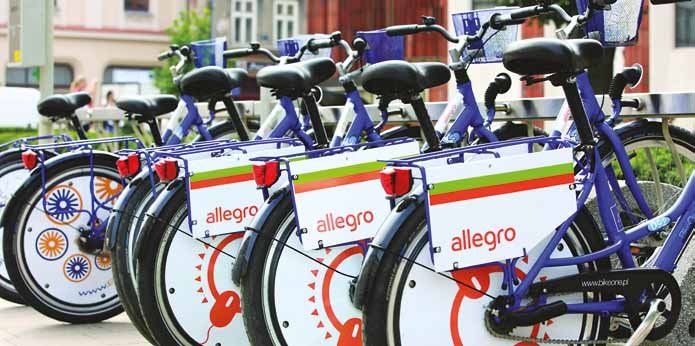
Innovation in urban mobility - policy making and planning

   Contents
   Preface..................................................................................................................................1
   1) Challenges in urban mobility.................................................................................2
   2) Policy and research on urban transport...........................................................4
   3) Integrated and sustainable transport planning............................................7
   4) Mobility needs of EU citizens.............................................................................. 13
   5) Innovative and green urban transport solutions....................................... 18
   6) Policy and research outlook................................................................................ 23
   Bibliography..................................................................................................................... 24
   Glossary............................................................................................................................. 25

   This publication was produced by the Transport Research and Innovation Portal (TRIP) consortium on behalf of the European
   Commission’s Directorate-General for Mobility and Transport (DG MOVE).

   The brochure was compiled by Silvia Gaggi (ISIS, Italy), Thomas Fluhrer (KIT, Germany) and Timmo Janitzek (IGES, Germany).
   The project team wishes to thank Laetitia Dablanc and Antonio Musso for their valuable contributions, and Helen West for
   review of the manuscript.

   LEGAL NOTICE: Neither the European Commission nor any person acting on behalf of the Commission is responsible for the
   use which might be made of the following information. The views expressed in this publication are the sole responsibility of
   the authors and do not necessarily reflect the views of the European Commission.

   Additional information on transport research programmes and related projects is available on the Transport Research and
   Innovation Portal website at www.transport-research.info.

   ISBN: 978-92-79-25925-8
   doi:10.2832/81677

   © European Union, 2013

   Cover: iStockphoto
   Copyright photos: www.eltis.org, CIVITAS Initiative, EBSF Project, Transport for London.
   Reproduction is authorised provided the source is acknowledged.
   Printed in Bulgaria.
Innovation in urban mobility - policy making and planning    1

Preface
The EU recognises that urban transport plays a fundamental role in meeting the objectives
of economic competitiveness, social cohesion and sustainable growth. In accordance with the
subsidiarity principle, the EU is supporting local governments in tackling mobility issues which form
common patterns across Europe.

Demand for passenger and freight transport is constantly increasing in cities and towns, contributing
to congestion, pollution, and traffic accidents. Combating congestion is a common challenge for
governments and transport authorities in all EU Member States. According to the EU, putting current
mobility trends on a sustainable path requires a total rethink of urban mobility.

Local decision makers need to deliver sustainable and integrated transport policies that optimise
the use of all transport modes in the urban network for both passengers and goods. The challenge
is to respond to citizens’ requirements for accessible, reliable, and safe transport. Meeting these
challenges requires forward looking policies that incorporate innovative measures to meet pressing
societal challenges and environmental constraints.

EU-funded research on urban transport is directed to supporting local decision makers in delivering
sustainable and integrated policies and offering smart and green solutions. Fundamental research
is backed by demonstration projects and pioneering initiatives to accelerate market take-up in cities
and towns in Europe and elsewhere.

An essential element is sharing innovative solutions among local authorities and thus the exchange
of research results and best practices is incorporated in research programmes.

This brochure is produced as part of the development of the EU Transport Research and Innovation
Portal (TRIP), a comprehensive information source on transport research, development and innovation
funded by the EU and the Member States. The brochure highlights the contribution of research and
innovation to integrated and sustainable urban transport systems that support economic prosperity
and social cohesion in Europe.
2   Innovation in urban mobility - policy making and planning

1      in troduc t i o n

       Challenges
       in urban mobility
       Increasing demand for passenger and freight transport in urban areas is a challenge
       for governments and transport authorities in all EU Member States. Congestion
       in cities and towns is contributing to air pollution and to traffic accidents, and
       is hampering accessibility. As well as the detrimental impacts on the urban
       environment itself, congestion adversely affects economic competitiveness, social
       cohesion and sustainable growth in Europe. Mobility issues in European cities and
       towns have reached such proportions that the EU is now calling for a total rethink
       of urban mobility.

       Currently, some 74% of Europe’s population lives and   and economic hubs in their national economies and
       works in cities and towns, and by 2050 some 82%        for the EU in the global context. Cities are pivotal in
       of the continent’s population will be concentrated     long-distance transport and constitute the ‘last mile’
       in urban areas (UN World Urbanization Prospects,       in many transport services.
       2011). Urban concentrations provide impetus for
       economic and social development, and cities and        Traffic congestion
       towns are key drivers of the economy, contributing
       up to 85% of EU Gross Domestic Product (GDP).          Urban expansion and high dependence on the car
                                                              and truck have led to congestion in cities and towns
       Efficient urban transport is essential to the          across Europe. Congestion and the accompanying
       competitiveness of European cities as commercial       issues of road safety and environmental pollution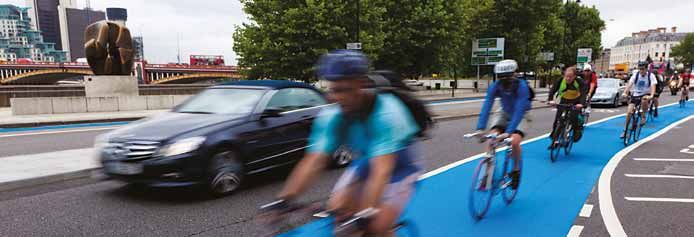
Innovation in urban mobility - policy making and planning         3

present major challenges in planning for improved
accessibility and reducing the environmental impact
of transport. The priority is to create urban transport
systems that meet individual needs for mobility
and the economic and social demand for rapid and
efficient movement of goods and people, safely
and cost-effectively. An integrated component of
efficient urban mobility is minimising environmental
and health impacts, particularly in densely populated
areas.

Changing mobility culture

Breaking the cycle of increasing urban congestion
and accompanying impacts on economy, society
and the environment requires a change in mindset
by both decision makers and transport users. A new
culture in urban mobility is needed in order to deliver
integrated and sustainable transport planning, and
users need to adapt their attitudes and behaviour
with regard to mobility.

Effective transport planning involves more than
constructing and extending transport infrastructure.
It requires a strategy based on the principles
of sustainable development, with optimal use
of all transport modes in the local network. An
integrated approach to urban mobility requires a
global vision on urban transport policy and planning
supported by appropriate decision-making tools and
methodologies.

Transport users must be central in mobility strategies    smart mobility options, such as real-time traffic
because individual choices affect the sustainability      information for travellers, drivers, fleet operators
and efficiency of urban transport systems. Too often,     and network managers. New technologies also
user requirements for reliable, safe and easy access      bring opportunities for integrating data for journey
are met by the private car, further contributing to       planning and electronic ticketing, and smart cards to
urban congestion and pollution. The challenge             facilitate interoperability between public transport
is to find appropriate strategies that provide            modes.
effective alternatives to the car and that entice
drivers, passengers and pedestrians to adopt more         The challenges of global warming, scarce energy
responsible mobility.                                     sources and increasing energy prices are on the top
                                                          of European, national and local policy agendas. In
Societal and environmental challenges                     this context, green solutions are needed to reduce
                                                          the environmental impact of transport in urban
With growing car dependency, an ageing population,        areas. A major concern is to find ways and means
and demands for new and flexible lifestyles, cities       to sustainably reduce transport emissions because
are faced with finding new transport solutions for        urban traffic is responsible for 40% of CO2 emissions
rapid and easy movement of people. Furthermore,           and 70% of other emissions from road transport in
new technologies create high expectations for             the EU (EC, 2007a).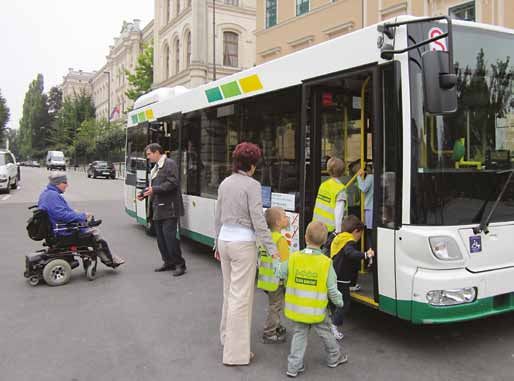
4   Innovation in urban mobility - policy making and planning

2      Policy              Co n t e x t

       Policy and research
       on urban transport
       The strategic importance of urban transport in achieving the overall economic,
       social and environmental objectives of the EU is stressed in major EU policy
       documents and significant funding is provided for research and technology
       innovation for urban transport systems. Urban transport is now on the EU policy
       agenda with dedicated funding programmes to support cities and towns move
       towards a sustainable and integrated approach to urban transport.

       Dedicated EU policy on urban transport                      In addition, the European Commission’s Thematic
                                                                   Strategy on the Urban Environment, adopted in 2006,
       The principle of subsidiarity limits the EU in developing   stresses the contribution of urban mobility trends to
       policies for implementation at national and local           the environmental challenges faced by many cities
       level. However, concerns about the importance of the        and towns in Europe. These challenges include air
       urban dimension in meeting transport policy targets         pollution, greenhouse gas emissions, noise hindrance,
       have led the EU to develop a strategy on urban              damage to the built environment and social exclusion,
       transport compatible with the principle of subsidiarity.    as well as increasing traffic volumes and congestion.
       This is also evidenced by the prominence given to
       urban transport in research funded under major EU           All policy documents highlight the EU’s facilitating role
       framework programmes.                                       in defining policies that are further worked out and
                                                                   implemented at local level in the Member States. The
       The first move to a strategy on urban transport was         EU does not impose top-down solutions, but rather
       made in 1995 with the Green Paper Citizens’ Network         outlines policy guidelines to support cities and towns
       and was followed in 1998 with the Communication             in moving towards a new mobility culture through
       on Developing the Citizens’ Network. To promote             developing and adopting sustainable and integrated
       sustainable transport and to meet mobility needs,           approaches to urban transport.
       initiatives were taken on information exchange,
       benchmarking, and the targeted use of structural and        Dedicated framework for research and
       research funds.                                             innovation

       More recently, a comprehensive policy framework on          The EU supports implementation of sustainable
       urban transport was presented in the Green Paper            transport policies and measures at local level with
       Towards a New Culture of Urban Mobility published in        research funding for developing sustainable and
       2007, which was complemented by targeted actions in         innovative urban transport solutions. In addition to
       the Action Plan on Urban Mobility of 2009. Inclusion of     Structural and Cohesion Funds, research on urban
       a dedicated section on urban transport and commuting        transport is included in the Framework Programmes
       in the 2011 White Paper Roadmap to a Single European        for Research and Development. The first dedicated
       Transport Area further underlines the priority given to     framework for research targeting cities was
       urban mobility in EU transport policy.                      introduced in the Fourth Framework Programme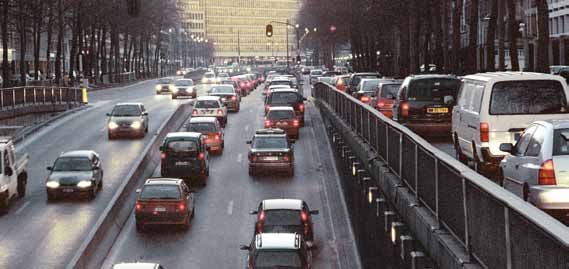
Innovation in urban mobility - policy making and planning                     5

   CIVITAS Initiative

  Launched by the European Commission in 2002 as a                 campaigns for managing mobility demand;
  programme ‘of cities for cities’, the CIVITAS Initiative    •    Safe and secure road infrastructure and transport
  promotes a new urban mobility culture based on                    for all users;
  integrated planning of all modes and forms of urban         •     New forms of vehicle use and/or ownership and a
  transport. Ambitious strategies are being implemented,             less car-dependent lifestyle;
  demonstrated, and evaluated directed to increasing          •      Energy-efficient freight logistics and new concepts
  the mobility of all citizens and to providing more                  for goods distribution;
  sustainable urban transport systems. A key element          •       Innovative transport telematics systems for traffic
  of the programme is the exchange of knowledge and                    management and travel support.
  results in ‘demonstration’ cities with stakeholders
  in other urban areas in Europe. By linking cities with      The CIVITAS community has become a driving force
  common mobility challenges, CIVITAS facilitates             for innovation in cleaner and more efficient urban
  exchange of know-how, ideas and experience, and offers      transport in Europe. Currently, the community includes
  financial and technical support to local authorities.       58 demonstration cities and over 200 cities in the
                                                              Forum Network, representing 68 million citizens in
  Strategies for sustainable urban mobility focus on:         31 countries. The number of participating cities is
  • Energy efficient, cost-effective and clean public and/   constantly increasing.
     or private vehicle fleets;
  • High-quality and innovative collective passenger
     transport;                                                                                                 www.civitas.eu
  • Demand management strategies based on economic                See CIVITAS presented as a success story in the TRIP Policy
     tools, regulatory measures and tele-services;                Brochure ‘Innovating for a competitive and resource-efficient
  • Mobility management plans and communication                                                 transport system’ (page 11).

(FP4), following the first Transport White Paper in           and tools to deliver sustainable and integrated policies
1992. The Fifth Framework Programme (FP5), under              and plans. To this end, research is directed to improving
the action City of Tomorrow, had a large component            traffic planning and demand management with the use
dedicated to sustainable urban transport.                     of intelligent transport systems, and to facilitating high-
                                                              quality public transport and non-motorised transport.
Introduced in 2002 under the Sixth Framework
Programme (FP6), the CIVITAS Initiative is an example         Research is also directed to increasing the
of how research is contributing to meeting policy             attractiveness of public transport for all citizens.
objectives. CIVITAS is the backbone of EU research            Attention is being given to making transport more
on urban transport with an integrated package of              accessible and safe by optimising access to and
measures on sustainable and efficient urban transport         security of vehicles, and by improving interoperability
systems (see text box).                                       between transport modes. An essential element in
                                                              making public transport more attractive is improving
The Seventh Framework Programme (FP7) includes                its image and the perceptions of citizens.
an activity area on sustainable urban mobility, and the
forthcoming Horizon 2020 framework programme for              Research is ongoing for the next generation urban
research and innovation includes ‘Improving transport         vehicle with lower emissions and higher energy
and mobility in urban areas’ as a specific activity in        efficiency. Innovative approaches to city logistics
achieving smart, green and integrated transport.              are being developed that incorporate new mobility
                                                              concepts and seamless mobility services. Urban areas
Targeted research on urban transport                          are becoming ’laboratories’ for technological and
                                                              organisational innovation in transport and mobility.
EU-funded research on urban transport focuses
on developing mobility strategies and solutions for           From fundamental research to the
passengers and goods in cities and their hinterlands,         market take-up
and on reducing congestion and pollution in urban
areas. The objective is to provide decision makers at         New developments are brought closer to the
local and national level with innovative methodologies        market through applied research in demonstration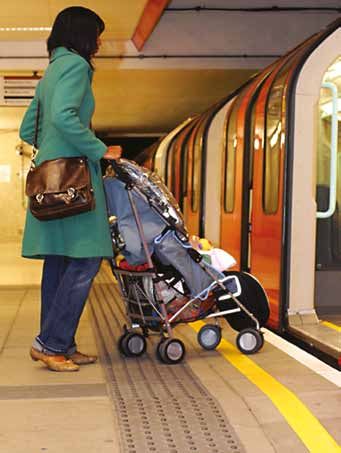
6   Innovation in urban mobility - policy making and planning

       projects, pioneering initiatives, and market take-
       up actions. The switch to cleaner vehicles and
       transport modes is also promoted in innovative and
       green procurement strategies, and in changes to
       regulations for urban areas. In addition, participatory
       processes engaging stakeholders help to bridge the
       gap between research and market take-up. The EU
       promotes sharing innovative solutions with transport
       operators, key stakeholders and citizens by including           ELTIS
       dissemination of results and best practices in
       research programmes, and through information and
                                                                       Created more than ten years ago, ELTIS is now
       communication tools such as the ELTIS portal.                   Europe’s main portal on urban mobility supporting
                                                                       the development of urban transport that uses less
       Launched by the European Commission in 2003,                    energy and produces less emissions, while improving
       the Intelligent Energy Europe programme (IEE                    urban competitiveness, and the mobility and quality
       - STEER) focuses on initiatives in energy saving                of life of citizens. The site presents information
                                                                       on fundamental research, applied research and
       and efficiency in the transport sector. In putting
                                                                       demonstration projects, as well as innovative
       ‘intelligent energy’ into practice, STEER promotes
                                                                       solutions adopted by individual towns and cities. In
       market take-up of innovative measures, ranging                  addition, the website provides news and tools for
       from new and renewable fuel sources to enhanced                 policy makers and transport experts.
       alternative fuelled vehicles, and promotes non-                                                                  www.eltis.org
       motorised transport such as cycling and walking.

       In July 2012, the European Commission presented              to boost the development and wide-scale application
       its proposal for a European Innovation Partnership in        of smart technologies in cities – by pooling innovations
       Smart Cities and Communities. The Partnership aims           in energy, transport and ICT.

          The SMART CITIES Initiative

         Smart urban solutions can make a major contribution        political leadership, innovation and deployment support,
         to addressing the dual 'urban' objectives of reducing      standardisation mandates and regulatory measures.
         greenhouse gas emissions and delivering more               The Strategic Implementation Plan (running till
         efficient public services.                                 2020) will be presented by the European Innovation
                                                                    Partnership's High Level Group this autumn.
         The European Innovation Partnership (EIP) in Smart
         Cities and Communities is a European Commission            Developing 'smart cities' is not 'business as usual', nor
         initiative proposed in 2012. Its added value is to         is it a 'one size fits all' approach. It will engage many
         connect local initiatives (existing partnerships of        sectors (ICT, transport and energy) and areas (e.g.
         local government, business and community-based             finance, technology, legislation, procurement). Increased
         organisations) and to offer tools for meaningful           cooperation between policy sectors and joining-up of
         exchange and assistance to cities, civil society and       measures taken by European, national, regional and
         business for using smart city solutions to meet their      local government organisations is essential to spur on
         local needs.                                               local action and investment.

         The Partnership's stakeholders define joint targets for    For more information, the Smart Cities and
         2020 and more specific operational objectives, they        Communities Stakeholder Platform is available at:
         analyse barriers, and develop a shared innovation          www.eu-smartcities.eu.
         agenda ('Strategic Implementation Plan'). This Strategic
         Implementation Plan is followed through by the             *Smart city solutions could include: innovative, integrated
         Partnership's members in cooperation with each other.      technologies and services with applications in buildings
         They bring in their own commitments and contribute         (heating/cooling), grids, mobility, traffic management, broadband
         to mobilise other resources. In support of an EIP, the     communications that contribute to sustainable development in
         European Commission uses all its policy instruments;       cities and communities.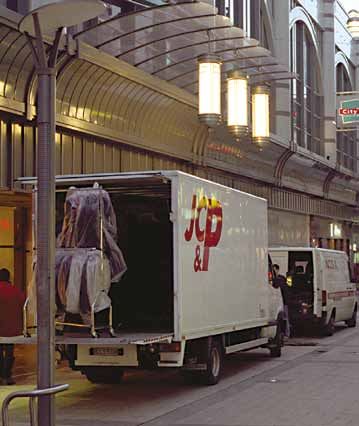
Innovation in urban mobility - policy making and planning      7

3    Policy           P r i o r i t y

    Integrated and sustainable
    transport planning
    The EU policy objective of reducing dependency on the private car is pivotal in
    achieving cleaner and more efficient transport in urban areas. The framework
    conditions have been created and financial incentives provided to support
    local authorities in developing Sustainable Urban Mobility Plans. At local level,
    sustainable mobility requires a long-term vision together with strong political
    will, and the support of innovative solutions based on sound research. Over the
    years, EU-funded research has contributed to broadening the range of measures
    that regulate transport demand while improving alternative and sustainable
    mobility offers, particularly in public transport.

    Sustainable transport planning requires an         models and field demonstrations to support
    integrated approach to manage transport            decision makers in adopting integrated strategies
    demand and to provide services that enhance        and innovative solutions, understanding the social
    the overall urban system and surroundings. Thus,   and environmental implications of policy options as
    an integrated package of measures needs to         well as the costs and benefits.
    be developed that includes consideration of the
    environmental and social impacts of transport,     Sustainable transport planning requires policies
    and that makes effective use of public space.      and measures that cover all modes and forms of
    Research has led to the development of tools,      transport in the urban agglomeration, including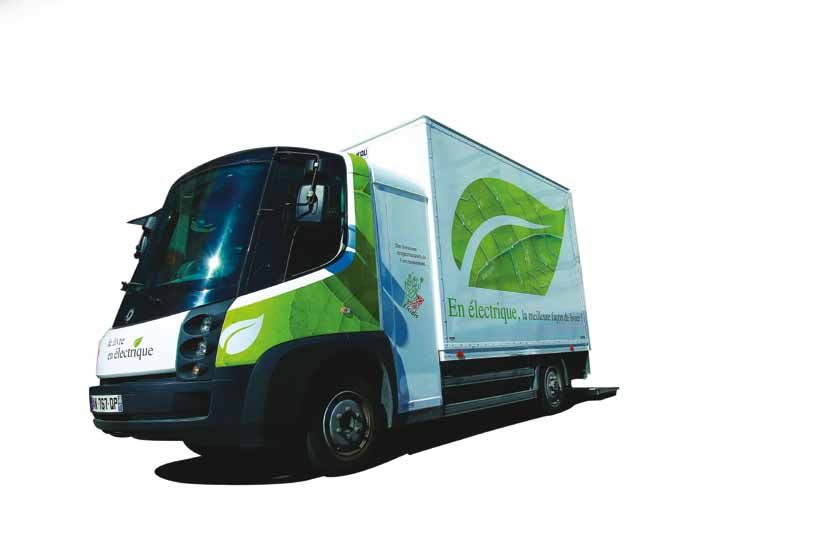
8 Innovation in urban mobility - policy making and planning
public and private, passenger and freight, motorised
and non-motorised, moving and parking vehicles
Sustainable Urban Mobility
(see text box). Research has widened the scope Plans (SUMPS)
of measures to be incorporated in sustainable
The European Commission supports local authorities
mobility plans including, for instance, advances in
across Europe in developing Sustainable Urban
urban traffic management systems, technological
Mobility Plans (SUMPS). A dedicated website has
advances in public transport, and new mobility been set up to provide information and guidelines
concepts. on how to develop and implement such a plan and
provides examples of best practices. The website also
Finally, sustainable transport planning is a matter provides information on events related to SUMPS
for multi-level governance and requires synergies that are organised with EU support. These events
between regional and national administrations. include technical training and awareness raising
Furthermore, early participation of stakeholders initiatives, such as the Sustainable Urban Mobility
in local decision-making contributes to wider campaign, that give an award to European cities
based on their SUMPs.
acceptance of new mobility measures. Various
research initiatives have developed innovative www.mobilityplans.eu
ways to establish coordinated dialogue between
policy makers, stakeholders and civil society.
Urban traffic management throughout Europe. Decision makers have at their
disposal a wide range of technology solutions
Increasing transport demand is creating a major that have emerged from recent research and
challenge in traffic management in urban areas development, especially in Intelligent Transport
Figure 1. Modal split in cities with more than 500 000 inhabitants
Car PT Bike Walk
110
100 3
5 6 8 6 8
16 12
90 17
20 22 21
8 25 28 28
30 16 32
22 21
80 38
46 47
70 37 8 33
55 5
35 12
13 35
Percentage (%)
60 37
50 3 53 18 54
36
18 26 47
38 83
40 76
72 71
33 66
30
53 54
48 47
20 40 41 42
35
31 31
23 24 24
10 17 20
0
London
Toronto
Barcelona
Montreal
Athens
Monterrey
Berlin
Madrird
Lisbon
Paris
Vancouver
Brisbane-
North
Bucharest
Stockholm
Brest
Hamburg
Warszawa
Budapest
Sofia
Wien
TEMS - The EPOMM Modal Split ToolInnovation in urban mobility - policy making and planning 9
Systems (ITS). These systems are now being In addition to providing infrastructure such as
employed to optimise use of road infrastructure new tramlines, roads and cycle lanes, mobility
and to manage urban traffic flows by balancing management can influence transport demand to
road use by private cars, public transport and some extent. Research has focused on information
freight vehicles, optimising energy consumption, and communication on alternative transport
and reducing congestion and transport emissions. options, such as awareness raising and information
campaigns, organisation of sustainable home-work
Traffic management can be further improved and home-school transport services, and mobility
through integration and interoperability of the measures for large events. Investigations indicate
transport networks. To this end, there is increasing that such measures do not require large financial
emphasis in urban areas on interconnecting
road, rail, underground metro infrastructure and
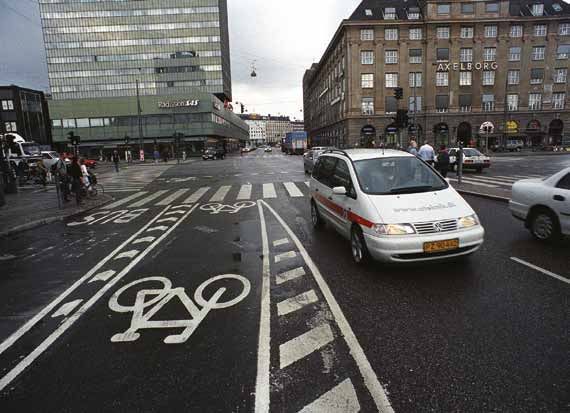
services, bus lanes, cycle lanes and pedestrian
zones. The aim is to facilitate a shift to more
environmentally friendly transport modes and
to increase efficiency in freight logistics. The EU
has funded various projects on data collection,
monitoring and analysis of modal effects,
and on ITS for integrated traffic management
and multimodal information. Studies and
implementation projects have demonstrated that
innovative concepts, such as green zones, urban
charging schemes and e-mobility, improve the
performance of transport networks.10 Innovation in urban mobility - policy making and planning
EU-funded research on public transport aims at
developing and introducing more efficient vehicles
and infrastructure, and integrating services into the
urban transport network. Directed to stimulating
use of public transport, research has been carried
out on infrastructure design (such as, accessibility
of stations), operational and maintenance systems,
and on the public image of the public transport
services.
Research on intermodal public transport is directed
to seamless transfer from one mode to another
by, for instance, smart ticketing systems and
travel planners. Other innovative solutions include
combined public transport, and car and bicycle
sharing services.
New technologies are being developed to improve
public transport use, such as PRT (Personal Rapid
Transit), BRT (Bus Rapid Transit) and GRT (Group
Rapid Transit), and new services such as demand
responsive public transport. These technologies and
services are being tested in the CIVITAS Initiative, in
the CityMobil projects and in the Intelligent Energy
- Europe (IEE) programme.
investment and may have a high cost-benefit ratio.
The concept of mobility management has been Sustainable mobility concepts
investigated in various research projects, and a wide
range of measures have been developed. Research has shown that sustainable mobility
concepts include solutions that stimulate sustainable
High-quality public transport car use (such as car sharing and car pooling) and use
of flexible public transport services such as buses on
Public transport is highly efficient in terms of space demand.
per traveller and for mobility in densely populated
areas. One bus can carry as many people as Increasing attention is being given to non-
approximately 30 cars, while occupying the road motorised transport. For instance, cycling, which
space of just three (IRU, 2009). Thus, affordable has moved from a ‘sustainable’ to a ‘trendy’
and family friendly public transport solutions are solution, is gaining acceptance in major European
essential in reducing car dependency. cities with bike sharing becoming a common
form of mobility. Walking is being stimulated in a
The EU supports public transport and EU legislation growing number of innovative initiatives, such as
regulates a large proportion of public transport the ’pedi-bus’ for children walking to school. To
investment and operations. The EU Regulation on increase the attractiveness and safety of walking
Public Passenger Transport Services by Rail and Road and cycling, EU research has funded initiatives to
(Regulation EC no 1370/2007) sets out conditions integrate these modes into the urban transport
for competent authorities to grant exclusive rights networks. The EU financed the development of a
and/or compensation to public service operators. The toolbox for a bicycle policy audit, an instrument
aim is to guarantee efficient, attractive, and high- that has helped to assess and improve local and
quality passenger transport because this is in the regional cycling policy in more than 100 cities in 20
public interest. countries (ByPAD, 2008).Innovation in urban mobility - policy making and planning 11
European Bus System
of the Future (EBSF)
SUCCESS STORY
Buses to strengthen
sustainable urban
mobility
Project reference: European Bus System of the Future
Status: Completed
Total cost: €26 000 000
EU contribution: €16 000 000
Coordinator: International Association for
Public Transport (UITP)
Website: www.ebsf.eu
Some 30 billion people travel by bus every year in cities throughout
Europe but the bus is still perceived as the least attractive form of
public transport. Bringing together 47 stakeholders in the bus sector,
the European Bus System of the Future (EBSF) project launched a bus
renaissance. For the first time, Europe’s leading bus manufacturers
have pooled resources in pre-competitive research to define innovations
in urban buses. The R&D project is focusing on providing passengers
with real-time multimodal information, quality services with improved
accessibility, enhanced comfort, and on-board services. In addition,
R&D included improving commercial speed by shortening journey times,
improving reliability and punctuality of services, and enhancing safety
for passengers and drivers.
Background and tested based on in-depth analysis of bus
stakeholder needs. As a result, the EBSF vision
All EBSF partners shared the conviction that has been formulated for the bus system for the
the bus is the most versatile solution for urban future to respond to passenger needs, social
transport in the new reality in European cities. and environmental requirements, and goals in
The project aimed to rehabilitate the image of urban planning. It promotes political support and
the bus by focusing on the system as a whole, legislation, and presents a strategic research
which includes the vehicle and its integration agenda for urban bus systems to secure global
into the city, infrastructure design, operations leadership. The main characteristics of the future
and maintenance, and governance. Promising bus system have been defined including reference
solutions and standards have been developed architecture and basic functionalities.12 Innovation in urban mobility - policy making and planning
Results passengers and drivers. These improvements
include:
Through the application of a system approach • An improved central driver cabin to increase
that incorporates vehicle, infrastructure and driver safety and to provide a better view of
operation, EBSF has established innovative and the traffic situation;
high-quality bus operations in a new generation • Wider and/or additional doors combined with
of urban bus networks in Europe. The EBSF system gap filler and height regulation systems that
has been designed in its basic characteristics and improve accessibility for all and reduce time
functionalities. In addition, new key technologies at stops;
and operational concepts have been developed, • A new modular internal bus layout with
simulated and tested in urban scenarios. folding or sliding seats enabling the driver
Four prototype vehicles have been tested by to adjust space according to the passenger
partner operators in eight cities across Europe: flow, providing room for more passengers
Bremerhaven, Brunoy, Budapest, Gothenburg, in peak periods and more seats in non-peak
Madrid, Paris, Rome and Rouen. EBSF set up periods;
the initial framework for the harmonisation and • Improved on-board e-services with screens
standardisation of the solutions developed. providing information on real departure
times and disruptions with alternative routes,
EBSF an intelligent system and tourist and public service information.
To make efficient use of information, EBSF IT
architecture was set up based on open technology Integrated in European urban scenarios
to give operators and authorities access to public EBSF is adapted to modern and old cities, and
transport data from all over Europe by means takes account of future mobility trends and
of common mechanisms, standard rules, and services for passengers and operators. For
protocols. This easy to install and cost-efficient example in Paris, the EBSF bus station offers
architecture was tested in Madrid, Bremerhaven, diversified services to fulfil both transport and
Rome and Brunoy. urban requirements: electric bikes for better inter-
modality, library, public Wi-Fi, dedicated space for
SUCCESS STORY
Innovative vehicles and infrastructure mobile retailers. EBSF can become the core of the
The pioneering activities in the EBSF partner transport network for seamless mobility of urban
cities demonstrated a range of improvements citizens.
in accessibility, functionality, and comfort for
Further steps
More than 100 bus stakeholders contributed to
the EBSF Roadmap, which identifies key areas
and priorities for research on bus systems.
Incorporated in the European Road Transport
Research Advisory Council (ERTRAC) programmes,
the EBSF Roadmap focuses on:
• integration of bus systems in urban scenarios;
• standardisation and development of pilot
applications for the IT platform;
• energy and environmental issues in
electrification and hybridisation;
• development of vehicle technology to improve
comfort, accessibility, and operational
capabilities;
• modularity, a system approach including
vehicle, infrastructure and operations;
• mobility for all.Innovation in urban mobility - policy making and planning 13
4 Policy P r i o r i t y
Mobility needs of
EU citizens
To be an effective alternative to the car, public urban transport needs to be easily
accessible, reliable, safe and secure. In achieving these objectives, the special needs
of user groups in different cities need to be taken into account. European policy and
research are dedicated to developing innovative solutions to attract more passengers
to collective modes of transport.
More accessible urban transport stations, tram stops and bus stops. EU-funded
research is testing new technologies and concepts to
Easy access to efficient transport services – whether make public transport facilities more accessible for
road, rail or waterborne – is essential to the quality of people with reduced mobility.
life of people in urban areas. Implementing policy to
improve accessibility requires innovative solutions to Under the CIVITAS initiative, a number of pilot projects
remove economic and social barriers to mobility and are being conducted in European cities to test new
to improve access to regular services in all appropriate accessibility concepts, such as talking bus stops and
transport modes. Policy focuses on improving the specially designed tram stops, and smart access
mobility of the disabled, the elderly, people travelling facilities for wheelchairs. Accessibility of public urban
with small children, and people travelling with heavy transport has been incorporated in the EU Disability
baggage. This includes improving access to subway Strategy 2010-2020, directed to providing the14 Innovation in urban mobility - policy making and planning
disabled with access to urban and other transport Reliable and transparent information
facilities on the same basis as able-bodied people.
An essential element in making public transport more
Attention is being given to access to public transport accessible and thus a more attractive alternative to the
for people who are socially and economically car is adequate, reliable and up-to-date information.
disadvantaged. This applies particularly to people All passengers – commuters, local residents, visitors –
living on the outskirts of urban areas that are often need real-time information to make choices on when
insufficiently integrated in urban transport networks. and how to travel, such as schedules, travel options,
Research is focusing on closer coordination of orientation guides, connecting services, and alerts to
transport planning with land use, housing and social delays.
cohesion to ensure more accessible jobs, services and
facilities to help overcome social exclusion. In Europe, research is being conducted to develop
user-oriented information technologies and optimal
The key policy focus is to provide all citizens with channels to meet the needs of different user groups.
easy access to alternative transport solutions to One such measure being tested in European cities is
the car. Policy is directed to improving journeys personalised travel plans. Travel information centres
within and between towns and cities that frequently in several cities are now providing citizens and visitors
require intermodal transfers. In support of such with real-time travel information and transport
policies, research is being carried out to improve the planning services both face-to-face and via the web.
physical integration of transport modes, thus making
intermodal transfers and public transport easier While reliable information is often available for
for all citizens. For instance, EU-funded research is individual transport modes, information on intermodal
testing travel by bus in combination with publicly transport tends to be limited in many EU Member
available or free bicycles in some cities. Research is States. Research programmes in cooperation with
also assessing the impact of easier access for cyclists national public transport operators and authorities
and pedestrians. are developing central platforms for integrated
information on transport modes. users with a portal
on multimodal public transport within the EU and
particularly in major urban centres. The EU aims
to provide a unique internet portal to facilitate
multimodal trip-planning in and between major urban
centres in Europe.
Research projects have focused on establishing
common standards to ensure that information
platforms are openly accessible through various
types of mobile devices. This enables efficient pooling
of information, which can be accessed by transport
operators, infrastructure managers, information
centres, and users before and during a journey.
EU-funded research is also developing transport
information systems to meet the specific needs of the
disabled.
Safe and secure urban transport
Over the last ten years, transport has become
safer because of improved safety standards and
technologies, and better transport management.
Nevertheless, safety in urban areas is affected by aInnovation in urban mobility - policy making and planning 15
combination of factors including increasing transport
demand, integration of transport into residential
areas and increasing shortage of space in city centres.
To improve the safety of vulnerable groups -
pedestrians, cyclists and motorcyclists - the European
Commission supports the implementation of safety
standards and systems with legislation and guidelines
for local authorities. For instance, EU legislation
makes it mandatory for motor vehicles to have energy
absorbing car-front structures, advanced braking
systems and blind-spot mirrors. Traffic regulations are
examined to ensure effective incentives are provided
for safe driving and safe behaviour in transport.
Legislation is complemented by EU-funded research
initiatives that focus on advanced solutions, such as
improved visibility of vehicles and infrastructure, speed
management systems, traffic-calming measures and
dedicated infrastructure for non-motorised transport.
The EU is providing implementation support through
the CIVITAS initiative, which is testing measures such
as speed reduction zones, optimal lighting, separate Strategy and of the EU strategy in the fight against
cycle lanes, and campaigns on safe behaviour in terrorism. To ensure that increased security does not
transport. compromise ease of travel, research initiatives have
been set up to develop efficient and effective security
In recent years, incidents in cities in Europe and concepts.
around the world have shown that urban transport
users are more vulnerable to robbery, violence, and Security measures for different transport modes
terrorist attack. Furthermore, surveys indicate that low have been developed and tested in CIVITAS projects
perceived security is a key barrier to public transport in cities throughout Europe. These measures include
for many potential users. Security of urban passenger installation of cameras in buses, trams, trains,
transport is a key element of the EU Internal Security stops and stations, and closer cooperation between
transport operators and local security authorities.
Surveys of public transport users, for instance in
Figure 2. Road fatalities in urban areas Stuttgart (Germany) and Malmö (Sweden), have
in the EU shown that these measures have raised passenger
confidence in the security of public transport.
1% 1% 1% car + taxi
pedestrian Research is supplemented by a coordinated approach
6% in all Member States to harmonise controls and to
bicycle
14% 28% motorbike close security gaps. For this purpose, the European
moped Commission has set up the Urban Transport Security
lorry, under 3.5t Expert Working Group with a mandate to facilitate
11%
heavy goods cooperation and exchange of experience between
vehicle national authorities and transport operators. Security
other criteria and benchmarks are being developed to
38%
enable authorities and transport operators to assess
European Commission (2012b) CARE - EU road accidents security levels and to apply the most efficient and
database, January 2012, Brussels effective measures.16 Innovation in urban mobility - policy making and planning
ACCESSIBILITY FOR ALL
Mediate
SUCCESS STORY
Reference: FP7-218684
Status: Completed
Total cost: EUR 1 097 797
EU contribution: EUR 1 097 797
Coordinator: STIFTELSEN SINTEF, Norway
Website: www.mediate-project.eu, www.aptie.eu/site
Access2All
Reference: FP7-218462
Status: Completed
Total cost: EUR 797 422
EU contribution: EUR 797 422
Coordinator: EUROPE RECHERCHE TRANSPORT, France
Website: www.access-to-all.eu
Mediate and Access2All projects represent the start of a paradigm
shift in urban public transport for disabled and vulnerable groups in
switching from ‘tailored’ measures for a few to ‘inclusive’ solutions
for all. These projects have developed a common methodology for
assessing accessibility of public transport services and have identified
best practices on how to improve urban mobility, thus eliminating
barriers to public transport for the disabled, elderly and other ‘transport
vulnerable’ citizens. The key success factors in these projects were
the involvement of large user groups with different types of physical,
social or economic disadvantages, and the development of innovative,
advanced tools to promote inclusive-design solutions for all.
Background people for whom public transport is physically
too far from where they live, and disabled
One in ten people in Europe is over the age of people for whom public transport is not
60, and according to the United Nations, 10% accessible to travel in relative comfort.
of the population has some type of disability.
To make transport accessible and user- Even though disability-inclusive design,
friendly for everyone, travel opportunities planning, and evaluation of public transport
need to be equitable for all. This includes are well recognised at national level, muchInnovation in urban mobility - policy making and planning 17
needs to be done to implement measures in concepts for vehicles, infrastructure, services
towns and cities where disadvantaged user and public information directed to eliminating
groups live. This discrepancy prompted the barriers in the public transport chain. In
European Commission to launch the Mediate addition, a software tool was developed to
and Access2All projects to establish a common assess the accessibility level of buses, stations
framework to combat social exclusion and and hubs, as part of an overall assessment
to provide access for all to public transport of the accessibility of a route. Based on the
in urban areas. Both projects focused on results, best practices have been proposed to
meeting the day-to-day mobility needs of the improve accessibility of routes and involving
disabled and other vulnerable groups for safe, infrastructure.
reliable and comfortable public transport.
The Mediate project developed a set of
Results European indicators to measure accessibility
of urban public transport, providing a self-
The projects resulted in solutions in urban assessment tool to support stakeholders in
mobility for disabled and vulnerable groups, assessing the strengths and weaknesses
thus breaking down barriers to public transport in the transport system, and in defining
and providing transport on equal terms with appropriate actions. The project created a
able-bodied users. In close consultation with Europe-wide user platform for groups facing
all user groups, tools were developed to assist barriers to public transport.
public authorities and transport operators to
improve access to public transport. Initiated by the Mediate project, the Accessible
Public Transport in Europe portal (www.aptie.
The Access2All project carried out a detailed eu/site) has become the one-stop shop for
user needs analysis and prepared a directory initiatives, case studies, policy and standards,
of best practices, which includes innovative research and training on accessibility in Europe.
SUCCESS STORY18 Innovation in urban mobility - policy making and planning
5 Policy P r i o r i t y:
Innovative and green
urban transport solutions
EU action supports local authorities in introducing innovative and green urban
transport strategies. The 2011 Transport White Paper stresses the need to
phase out ‘conventionally fuelled’ vehicles in the urban environment and to
introduce lower emission vehicles. Moreover, the White Paper addresses a
strategy for near zero-emission urban logistics in the EU by 2030 and the need
for innovative approaches to city logistics. The EU supports pricing and market-
based approaches in shifting towards cleaner transport, including new green
procurement schemes.
Greener urban transport contributes to reducing and alternative fuels supports urban transport
transport’s impact on climate change, the policy while respecting local competences and
environment and human health. While these responsibilities. The EU approach is to provide
problems occur at local level, their impacts extend incentives for consumers and public authorities to
beyond city boundaries. Thus, greening urban purchase more environmentally friendly vehicles.
transport requires a collective effort at all levels -
local, regional, national and EU. New vehicles and fuel technologies
Setting a policy framework at EU and national Transport in Europe is heavily dependent on oil, which
level for the market uptake of cleaner vehicles accounts for 94% of the sector’s fuel consumption.
At least 84% of oil is imported from unstable
regions. This situation leads to concerns about
security of supply as well as to a significant deficit
in the EU trade balance and increasing costs to the
environment. Road transport alone contributes two-
thirds of transport-related emissions of greenhouse
gases.
New technologies are being developed to enable a
sustainable shift from fossil-driven to decarbonised
transport. Promising alternatives are now being
investigated to bring them closer to market entry.
To facilitate the development of a single market
for alternative fuels for transport, the European
Commission launched the Clean Power for Transport
strategy in 2013. A key activity is the evaluation of
alternative fuels to substitute oil such as:
• E lectricity, hydrogen and biofuels;Integrated urban mobility – policy making and planning 19
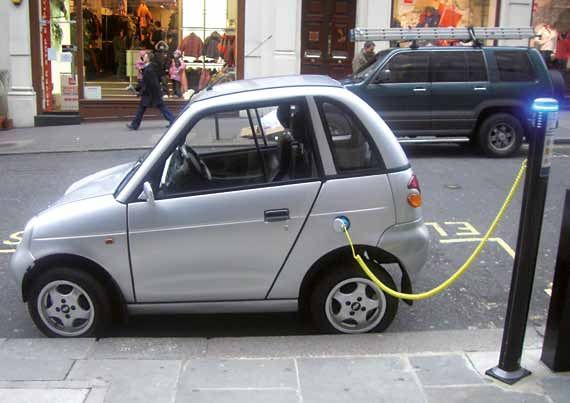
•N atural gas in the form of Compressed Natural lower range vehicles viable options such as cars
Gas (CNG), Liquefied Natural Gas (LNG), or Gas- with electric propulsion, electric bikes and personal
To-Liquid (GTL); transporters (for example, Segways).
• L iquefied Petroleum Gas (LPG).
Innovative approaches to city logistics
Strategies on public transport focus on large vehicle
fleets such as buses that are particularly suitable Optimising freight transport logistics is paramount
for alternative propulsion systems and fuels. to reducing urban congestion and vehicle emissions.
The EU is supporting large-scale demonstration However, to ensure efficient ‘last-mile’ delivery,
projects for alternative bus fleets in various cities the entire freight logistics chain needs to be
in Europe, for instance in Budapest, Gothenburg, optimised, including links between long-distance,
and Madrid, as shown in the EBSF project (see inter-urban and urban transport. The goal is to
page 11). reduce ‘last mile delivery’ to the shortest possible
route because delivery in urban destinations has
The EU Green Cars Initiative is directed to been shown to be the most inefficient part of the
technologies and infrastructure essential for logistic chain. In addition to TEN-T funding for urban
breakthroughs in the use of renewable and non- freight transport, EU-funded research is developing
polluting energy sources. Research focuses on approaches to freight delivery in urban areas that
internal combustion engines, biofuels, electric and involve re-organising logistic flows and using ICT
hybrid vehicles, logistics, and hydrogen fuel cells. tools in logistics management.
In addition to alternative fuel technologies, the Research has led to innovative approaches,
switch to cleaner transport in urban areas is such as the CityLog project, which is increasing
facilitated by shorter travel distances, making the sustainability and efficiency of urban goods20 Innovation in urban mobility - policy making and planning
Pricing and market-based solutions
CLEAN POWER FOR TRANSPORT
In contrast to the benefits, the cost of the environmental
In 2013, the European Commission launched the impacts of transport is generally not borne by the
Clean Power for Transport (CPT) initiative to break transport user. Policy intervention is needed to ensure
the over-dependence of European transport on that users take into account these external costs in
oil and to facilitate the development of a single making transport decisions. The Action Plan on Urban
market for alternative fuels in Europe. Mobility promotes internalisation of external costs in
The Communication on Clean Power for Transport: the urban context, and a corresponding EU framework
A European alternative fuels strategy evaluates is presented in the 2011 Transport White Paper.
the main alternative fuel options available to Research is being carried out on the effectiveness
substitute oil, and suggests a comprehensive list and efficiency of pricing solutions based on the user
of measures to promote the market development pays principle. Studies include implementation issues
of alternative fuels in Europe. such as public acceptability, social consequences,
A Proposal for a Directive on the deployment of cost recovery, availability of ITS tools, and how urban
alternative fuels infrastructure aims to ensure the pricing policies can be combined with other green
development of an alternative fuel infrastructure zone arrangements.
and the implementation of standard technical
specifications across Europe. It also defines fuel A step further in the user pays principle is the integration
labelling at refuelling points and on vehicles to of environmental impacts into procurement decisions
ensure clarity in the consumer information on with the development of guidelines and legislation on
vehicle/fuel compatibility. Green Public Procurement (GPP).
The Clean Power for Transport is built on extensive
consultation with industry and civil society, public The Directive 2009/33/EC on the Promotion of Clean
authorities and the wider public. and Energy Efficient Road Transport Vehicles requires
that energy use and environmental impacts of a
vehicle over its life cycle are incorporated in purchase
delivery through adaptive and integrated mission decisions. The directive covers vehicles purchased by
management, and innovative vehicle solutions. public and private entities providing public transport
services. Such requirements are expected to enhance
Innovations and best practices are being promoted market uptake of environmentally friendly vehicles,
across the EU through coordinated actions and while research is assessing the impact of this new
support initiatives. These initiatives focus on public procurement scheme on transport system
promoting efficient management of freight logistics innovation.
through exchange, discussion, and transfer of policy
experience, knowledge and best practices. Largely
based on this research, the 2011 Transport White CLEAN VEHICLES PORTAL
Paper proposes a strategy for near zero-emission
urban logistics by 2030. This strategy incorporates The Clean Vehicle Portal was set up by the
measures to stimulate the establishment of European Commission to support public
multimodal logistic centres on city outskirts and procurement of vehicles and to help citizens in
the deployment of local trains, river transport and purchasing cleaner and more energy efficient cars.
The portal uses Europe’s largest vehicle database
subway networks for night freight movement.
and provides energy consumption and emission
data on vehicles as well as an online calculator
Technological advances have opened the way for lifetime costs of vehicles, as required by the
to establishing a roadmap for integrated ICT Directive 2009/33/EC. An internet forum enables
applications for an information management procurers to team up in joint procurement calls to
system for freight movements throughout the EU. achieve economies of scale with larger volumes.
This concept known as e-Freight will operate in and www.cleanvehicle.eu
across transport modes.Innovation in urban mobility - policy making and planning 21
SMARTFREIGHT
Smart Freight
SUCCESS STORY
Transport in
Urban Areas
Project reference: FP7-216353
Status: Completed
Total cost: EUR 3 012 324
EU contribution: EUR 2 200 000
Coordinator: SINTEF ICT
Website: www.smartfreight.info
SMARTFREIGHT has designed and developed technical solutions for
innovative and greener city logistics, making urban freight mobility safer,
more efficient and more environmentally friendly. As freight vehicles
emit more pollutants and noise than passenger cars, SMARTFREIGHT
has introduced new ways of monitoring and controlling emissions based
on engine class and other characteristics. By providing powerful tools
that incorporate real-time traffic information to freight companies,
SMARTFREIGHT has contributed to optimising routes, load factors, deliveries
and pick-ups, resulting in smarter, more energy efficient city logistics.
Background given sufficient attention in transport planning
and management systems.
Freight is a significant but often overlooked
element in urban mobility. While crucial for SMARTFREIGHT brought together consulting and
goods delivery to commercial enterprises and academic partners in ten cities to address the
households, freight is responsible for 25% of CO2 impact of freight vehicles on urban areas and to
emissions, 30% of NOx emissions, and almost provide ICT solutions for innovative city logistics,
half of particulate matters generated by urban new traffic management measures, and improved
transport. These emissions are mainly produced interoperability with freight management systems.
by older commercial vehicles and inefficient
urban supply chains, with low load factors Results
(goods volumes carried compared to vehicle
capacity) and frequent and uncoordinated SMARTFREIGHT has contributed to innovative
deliveries. Despite the need for greener city solutions in green transport for city logistics in
logistics, commercial transport has not been many ways.You can also read


