Insert a picture JPI WORKSHOP REPORT - bilat usa 4.0
←
→
Page content transcription
If your browser does not render page correctly, please read the page content below
1|

JPI WORKSHOP REPORT

          Insert a picture

 This project has received funding from the European Union's Horizon 2020 research and innovation programme under grant agreement
 No 692468.
2|

D1.3 REPORT ON EU-US
PROGRAMME LEVEL
COOPERATION

WORKSHOP 1 REPORT
  This project has received funding from the European Union's Horizon 2020 research and innovation programme under grant agreement
  No 692468.
3|

                                                                      Report     on    EU-US       Programme         Level    Cooperation
NAME OF THE DELIVERABLE
                                                                      Workshop 1

NUMBER OF THE DELIVERABLE                                             D1.3

RELATED WP NUMBER AND NAME                                            1-Supporting STI Policy Processes

RELATED TASK NUMBER AND NAME                                          T1.2

DELIVERABLE DISSEMINATION LEVEL                                       PU

DELIVERABLE DUE DATE                                                  M14

DELIVERABLE SUBMISSION DATE                                           M11

TASK LEADER/MAIN AUTHOR                                               BERNA WINDISCHBAUR

CONTRIBUTING PARTNERS                                                 NCURA

QA

REVISIONS

        VERSION                      SUBMISSION DATE                            COMMENTS                                AUTHOR
     1. VERSION                  31.01.2017                                                                 FFG

     2. VERSION                  28.04.2017                            None                                 NCURA

            This project has received funding from the European Union's Horizon 2020 research and innovation programme under grant agreement No
            692468.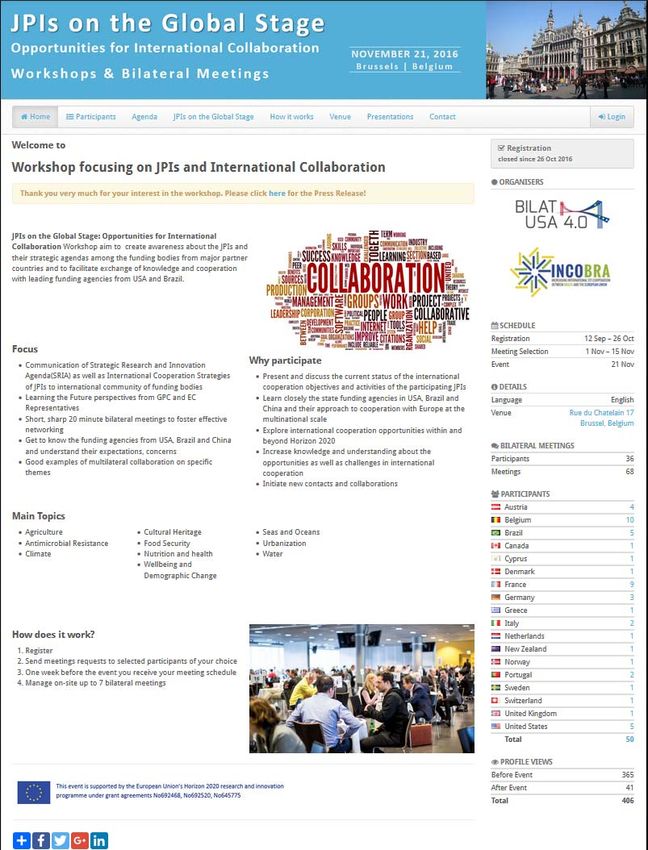
4|

TABLE OF CONTENTS

Executive Summary ............................................................................................................................................................ 5
Abbreviations ...................................................................................................................................................................... 6
Dissemination Plan ............................................................................................................................................................. 7
Detailed Report ................................................................................................................................................................... 8
Event Documentation ....................................................................................................................................................... 14
   Agenda and speakers’ short bios (if available) ............................................................................................................. 14
   Event Photos ................................................................................................................................................................. 17
   Event Web‐site.............................................................................................................................................................. 18
   Overall Evaluation of the Event (as a result of the event feedbacks)........................................................................... 23
   Dissemination Activities (after the event) .................................................................................................................... 23

                   This project has received funding from the European Union's Horizon 2020 research and innovation programme under grant agreement No
                   692468.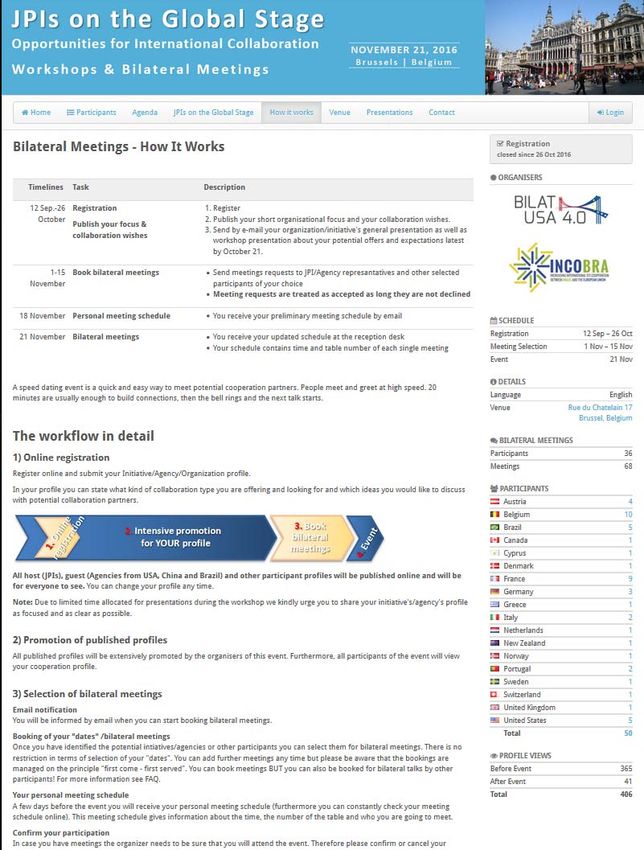
5|
Executive Summary
On 21 November 2016 the Austrian Research Promotion Agency (FFG) has organized a workshop titled “JPIs on the
Global Stage: Opportunities for International Cooperation” in Brussels within the scope of two H2020 funded
initiatives: BILAT USA 4.0 and INCOBRA.
The goal of the workshop was to create awareness about the JPIs and their strategic agendas among the funding
bodies from major partner countries and to facilitate exchange of knowledge and cooperation with leading
funding agencies from US, Brazil and Canada.
50 participants representing 9 JPIs, major funding bodies and organizations from US, Brazil and Canada, European
funding agencies as well as the European Commission, other networks and high level groups such as Belmont Forum,
GPC and SFIC have discussed the international cooperation opportunities and challenges within the framework of
JPIs. JPIs presented their research priority topics and action plans within 1-2 years including the upcoming calls and
other coordination and networking actions. Representatives from the US, Brazil and Canada presented their
institutions, interest areas, framework conditions as well as experience and challenges for international cooperation.
With regard to the H2020 Programme, the new implementing arrangement between the EC and the US which
facilitates cooperation between US organisations and Horizon 2020 participants as well as the H2020 co-fund
mechanism of 8 Brazilian State funding agencies has been mentioned.
In addition to the presentation and discussion sessions, 70 individual meetings have been organized to provide all
participants the opportunity to meet and discuss in detail the international cooperation modalities and processes
bilaterally.
At the end of the workshop the following conclusions were agreed upon:
There is strong interest in collaboration on both sides (JPI and 3rd country Agencies) to tackle global challenges
jointly
International Cooperation will gain more importance in the future in terms of impact assessment of JPIs
International participation in JPIs is higher than international participation figures in H2020
…for every challenge there is an opportunity and also an economic prospect.
Cooperation could be extended to other multipliers beyond funding agencies such as CONFAP (BR) and COL
(US)
Cooperation opportunities are not limited to joint funding activities but also include other activities such as
exchange of experts, workshops, etc.
A good starting point for 3rd country agencies can be to become an observer in a JPI and then developing
activities towards becoming an active and important member
Participation in a JPI network and actions needs time at the initial stages for understanding procedures; on the
other hand, experience and capacity building within the 3rd country institution is key for effective collaboration
…there is a great potential for setting the international agenda and pushing JPIs as truly world class leaders in
societal challenges.
Experience and competences in the field of international cooperation developed through the ongoing actions
within JPIs should be taken as input for the 9th FP preparations.
This project has received funding from the European Union's Horizon 2020 research and innovation programme under grant agreement No
692468.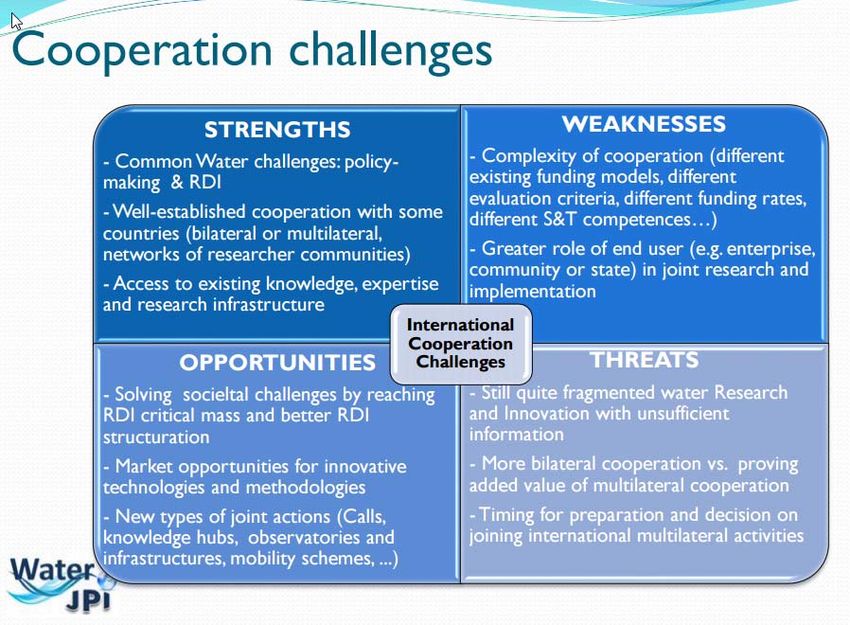
6|

Abbreviations

BILAT                  Bilateral (Refers to one of the EC H2020
                       programme funding scheme for international
                       cooperation)
CSA                    Coordination and Support Action
EC                     European Commission
EU                     European Union
ERA                    European Research Area
FACCE                  Joint Programming Initiative on Agriculture, Food
                       Security and Climate Change
FFG                    Austrian Research Promotion Agency
FP                     Framework Programme
GPC                    High Level Group for Joint Programming
JPI                    Joint Programming Initiative
JPIAMR                 Antimicrobial       Resistance     Joint    Programming
                       Initiative
JPICLIMATE             Climate Joint Programming Initiative
JPICH                  Cultural Heritage Joint Programming Initiative
JPI HDHL               Healthy      Diet    for    a     Healthy     Life     Joint
                       Programming Initiative
JPIMYBL                More Years Better Life Joint Programming
                       Initiative
JPI OCEAN              Ocean Joint Programming Initiative
JPIUE                  Urban Europe Joint Programming Initiative
JPI WATER              Water Joint Programming Initiative
MS                     Member State
SFIC                   Strategic      Forum        for     International      S&T
                       Cooperation
STI                    Science Technology and Innovation
S&T                    Science and Technology
U.S./US/USA            United States of America

            This project has received funding from the European Union's Horizon 2020 research and innovation programme under grant agreement No
            692468.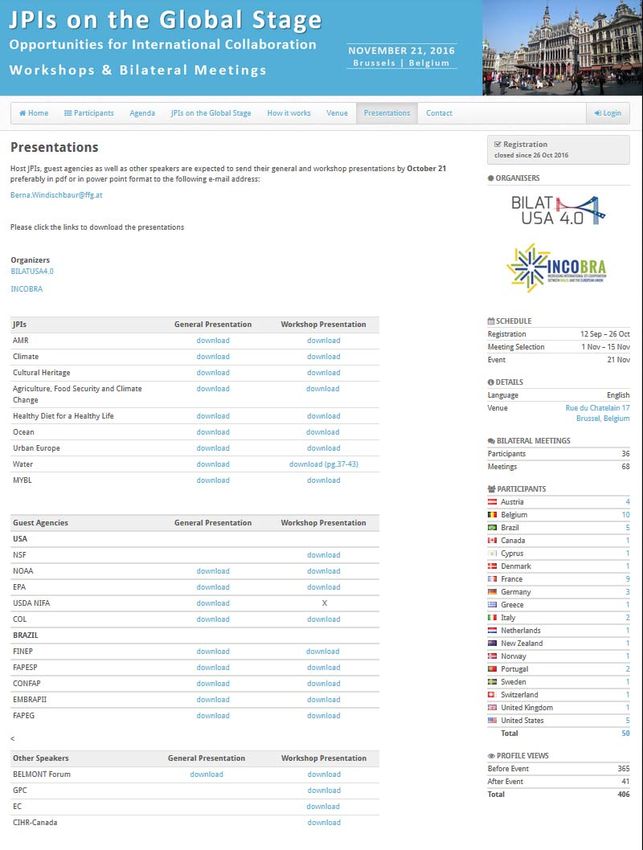
7|

Dissemination Plan
Link    on       the      project       http://www.euussciencetechnology.eu/news/31/joint-
website for dissemination: programming-initiatives-of-europe-open-up-to-the-
                                       world
Main target groups of this EU and US STI Community, mainly policy makers and
deliverable                            funding agencies

What is expected as a                   Sharing the report with all funding agencies in Europe,
good benchmark for hits funding agencies and the U.S. Department of State in
on the website for this the US
activity link?

How is the deliverable                   Newsletter, press release
reaching to target group?

Which channels are used?                e-newsletter, press release

              This project has received funding from the European Union's Horizon 2020 research and innovation programme under grant agreement No
              692468.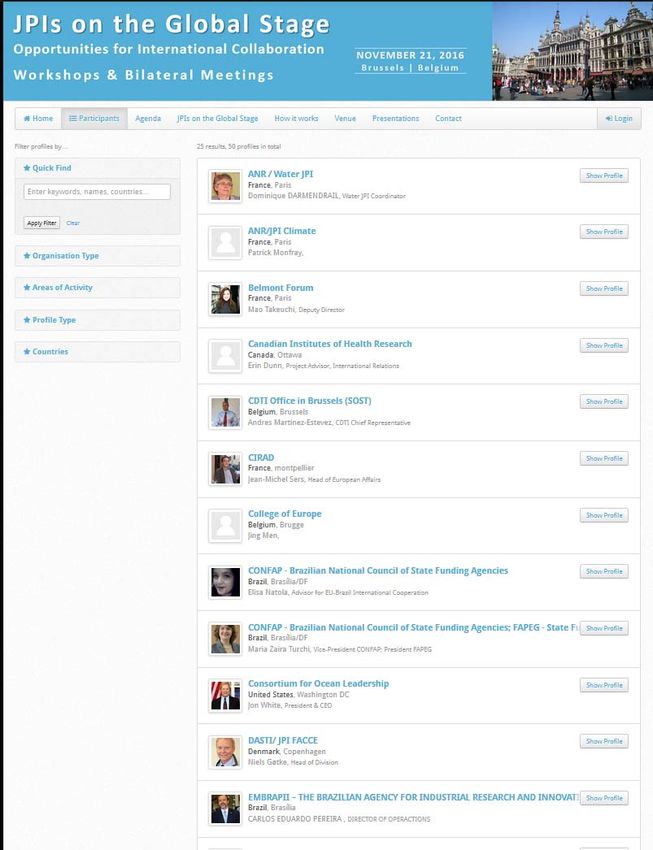
8|

Detailed Report

The workshop “JPIs on the Global Stage: Opportunities for International Cooperation” was organized on 21st
November 2016 in Brussels, Belgium, by the Austrian Research Promotion Agency (FFG), which is a partner in the two
H2020 funded initiatives BILAT USA 4.0 targeting the US and INCOBRA targeting Brazil.
The introduction was made by Berna Windischbaur, FFG, welcoming the participants, particularly funding agency and
JPI representatives and outlining the aims of the workshop, i.e. to create awareness about the JPIs and their strategic
agendas among the funding bodies from major partner countries and to facilitate exchange of knowledge and
cooperation with leading funding agencies from the US and Brazil.
Heino Nau, BILAT USA 4.0 Project Officer at the EC, emphasized on the importance of the bilateral projects and the
synergies used within the JPI workshop as unique opportunity for international cooperation.
André Barbosa (SPI), coordinator of the INCOBRA project, was addressing three main components of the project, i.e.
focusing, increasing and enhancing EU-Brazil STI cooperation. European and Brazilian stakeholders shall be
supported to find mutual interest and to enhance cooperation. Webinars and trainings are being organized and offered
by the project as well as workshops, bringing together policy makers, funding agencies and other relevant stakeholders
in order to align and coordinate funding programs. Exchange of practices and experiences as well as providing
information about H2020 was as well a crucial dimension which was tackled by the workshop.
Olaf Heilmayer (DLR), BILAT USA 4.0 coordinator, invited participants to join BILAT USA 4.0 which supports the policy
dialogue and brings together policy makers and funding agencies from Europe and the US.
Alexander Grablowitz, Policy Officer at the EC, introduced joint programming and international STI cooperation which
need to be supported by the policy side, emphasizing the importance of STI agreements but also of other instruments,
such as JPIs as Member State (MS) driven processes and activities. The coordination of MS in their STI activities
through e.g. joint calls or programme committees was mentioned as an important focus of the EU which supports
public-to-public partnerships in a substantive manner, i.e. €380 million in FP6 (2.1% of the budget) to approximately
€2,500 million in Horizon 2020 (around 3.1% of the budget).
He added that JPIs and ERA NETs collaborate with more than 70 Third countries (www.era-learn.eu).
In the next part of the workshop program, Joint Programming Initiatives (JPIs) had the opportunity to present their
main activities towards internationalization:
Ms Laura Marin (Swedish Research Council), representative of JPRAMR, the JPI on antimicrobial resistance, outlined
that the alignment of research is important as well as the development of national policies and coordination of funding
strategies between Member States. Knowledge gaps still exist and these gaps have to be tackled jointly. 22 countries
are working together, including Argentina, Japan and several European countries, joining forces to define a common
vision and define a strategic research agenda. Strategic workshops and intergovernmental meetings are organized,
joint calls are planned and will be launched in 2017 and 2018 and a fellowship program will be introduced. A variety of
activities assures flexibility and the possibility of third countries to participate and cooperate with the JPI.
www.jpiamr.eu
Ms Petra Manderscheid, representative of the central secretariat of the JPI Connecting Climate Knowledge for Europe,
JPI Climate, outlined that climate knowledge production is a starting point and that 3 challenges are being faced
nowadays, i.e. understanding the process and consequences of Climate Change, improving knowledge and societal
transformation.

              This project has received funding from the European Union's Horizon 2020 research and innovation programme under grant agreement No
              692468.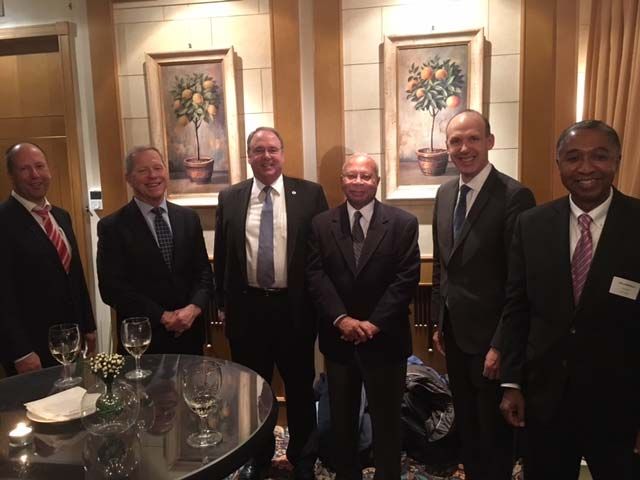
9|

12 member countries and 5 associated members are coordinated by the governing board and a transdisciplinary
advisory board.
There is a strong linkage to the Belmont Forum with 9 projects having started in 2016, targeting Brazil, China, the US,
India, and Japan. Proposals are under preparation for the H2020 Work Program 2017.
www.jpi-climate.eu
Ms Cristina Sabbioni, representative of the JPI Cultural Heritage, presented the initiative which currently consists of 19
participants and 8 observers from Europe.
The 4 priority areas are the development of a reflective society, the connection of people with heritage, the creation
of knowledge and the safeguarding of cultural heritage resources.
In 2013 and 2014 joint calls had been launched, resulting in twenty-six research projects in total.
The priority themes for the future have been set, targeting the valorization, conservation and sustainability of cultural
heritage, as well as the regeneration of historic sites.
4 transnational joint calls are planned for 2017 and 2018 as well as internationalization will be pursued through the
organization of international events in 2018 (Year of CH) and through a ´Joint Communication to the European
Parliament and the Council, Towards an EU strategy for international cultural relations.´
www.jpi-culturalheritage.eu
Mr Niels Gotke, chair of the governing board of the JPI for Agriculture, Food Security and Climate Change (FACCE-
JPI) explained that the initiative underlying this JPI’s thematic scope lies at the nexus of agriculture, food security and
climate change. The initiative comprises 17 EU members, 4 associated countries and New Zealand as Third country
member. It is one of the first JPIs established in 2010. All joint research actions are potentially open to third countries
with thematic priorities of FACCE-JPI in 2018-2020 being most likely soil-food security-climate change, food and
nutrition and digital agriculture, incl. precision agriculture.
Accession is possible through associate memberships.
www.faccejpi.com
Ms Jolien Wenink, coordinator of the JPI healthy diet for a healthy life (JPI HDHL) introduced the initiative and outlined
the types of collaboration, such as through a full membership, participation in a joint action as well as collaboration in
workshops and joint events. Currently an international collaboration strategy is being drafted.
www.healthydietforhealthylife.eu
Mr Gilles Lericolais presented JPI Oceans as an intergovernmental initiative, providing a long-term integrated approach
to marine and maritime research and technology development. 22 countries are represented and international
collaboration is manifold, especially with the US, Canada, and New Zealand. There is a strong rationale for involving
international partners in alignment and in joint actions with the concrete objectives and the means of cooperation
varying considerably from challenge to challenge and depending on the countries involved.
www.jpi-oceans.eu
Ms Margit Noll, chair of the management board of JPI Urban Europe (JPI UE), presented the international relationships
and collaborations of JPI UE with China, Argentina, Australia, Brazil, Japan, the US, etc. The multiannual call agenda
for 2017-2020 includes the thematic priorities of sustainable urbanization, urban accessibility, quality of life and urban
transition pathways.
Expectations for international cooperation are, among others, strategic exchange on sustainable urbanisation and
urban transition needs and approaches, consideration and integration of different research and innovation concepts,

              This project has received funding from the European Union's Horizon 2020 research and innovation programme under grant agreement No
              692468.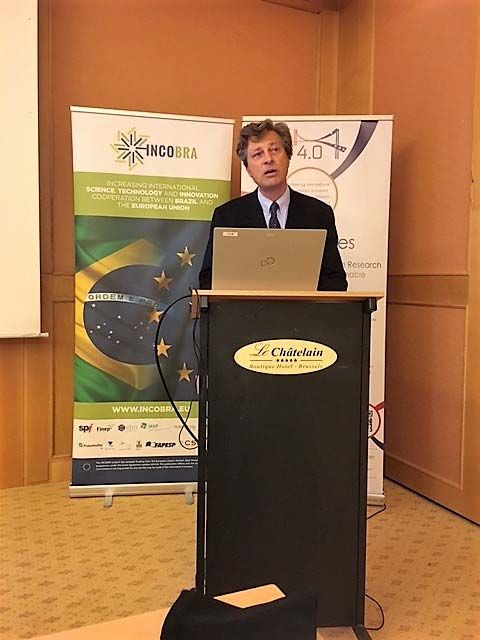
10 |

reflection on research results and policy measures targeted towards urban sustainability, testing new solutions and
ideas under different geographical, social, environmental, etc. conditions, developing common framework conditions for
international collaboration anticipating the needs of inter- and transdisciplinary research and innovation.
http://jpi-urbaneurope.eu
Dominique Darmendrail (ANR), Water JPI coordinator, introduced the Water JPI which is dedicated to tackling the
challenge of achieving sustainable water systems for a sustainable economy in Europe and abroad. This shall be done
through a multi-disciplinary approach, which includes economic, ecological, societal and technological considerations.
The Water JPI partners currently represent 88% of the European national public RDI investment on water. 20 partner
countries and 4 observer countries are represented in the Water JPI.
Possible joint actions can be, among others, shared strategic research and innovation agendas, mapping exercises,
joint calls, demonstration programmes or launch of demonstration platforms, access to key infrastructures and
observatories, training and capacity building, joint events, conferences, workshops, or webinars.
Agencies from Third Countries may collaborate in joint calls, identifying particular topics of interest for a strategic
research and innovation agenda (regional conditions), knowledge hubs development, mapping exercises, participation
to workshops planed in the near future for discussing cooperation challenges and participation to the joint coordination
action (IC4WATER CSA) activities.
www.waterjpi.eu

Ms Annette Angermann introduced the JPI More years better lives (JPI MYBL) outlining that the demographic change,
i.e. the ageing of the (European) population is creating challenges and opportunities for individuals, organisations and
governments. 15 EU members and also Israel and Canada are open to international collaboration which can take
shape through 4 different collaboration types, i.e. become a member, take part in joint transnational initiatives,
participate in research projects or collaborate in joint workshops.
As far as collaboration with Third countries is concerned JPI MYBL is interested in networking with the US and Latin
America, China, Korea and Japan.
http://www.jp-demographic.eu/

The session on Future International Cooperation Perspectives of JPIs was introduced by Leonidas Antoniou, chair
of the High Level Group for joint programming (GPC). He gave a historic overview on the development of endorsing the
concept of Joint Programming.
The concept of Joint Programming was first introduced in 2008 as mainly European oriented approach and until 2014
there was no reference to international cooperation.
The 2009 Lund Declaration was seen as background for joint programming. In 2008 with the Lund declaration, it was
recognized that the global problems and global competition were triggering global collaboration for Europe. In
2013/2014 the Dublin conference included the global opening of JPIs.
According to the Hernani report addressing grand challenges and joint programming, JPIs should elaborate their
activities across Europe and on an international level.
file:///C:/Users/STE/Downloads/JP_evaluation_final_report%20(1).pdf
As of 2016 International cooperation has become an essential aspect of future JPI activities and their successful
development since acting alone on the European level is not enough for future anticipation and solving of grand

             This project has received funding from the European Union's Horizon 2020 research and innovation programme under grant agreement No
             692468.
11 |
challenges.
Challenges for the future will be to overcome legal barriers for opening research programs and alignment whereas an
opportunity will be the design of FP9 as a future platform for international cooperation within JPIs.
Ms Mao Takeuchi, deputy director of the Belmont Forum secretariat, presented current and future Collaborative
Research Actions CRAs of the Belmont. Joint activities are possible with other international initiatives
www.belmontforum.org
Funding agencies from Brazil and the US had the opportunities to present themselves and outline challenges and
opportunities for future international activities:
Mr Julio Cesar Imenes (FINEP, Brazil) highlighted that one of the main challenge for international collaboration was the
fact that there is no dedicated funding at FINEP for international cooperation thus a Memorandum of Understanding
(MoU) is mandatory.
http://www.finep.gov.br/
Mr Euclides de Mesquita Neto (FAPESP, Brazil) emphasized that the main national programs of FAPESP are classical,
such as fellowships, research grants, special programs (e.g. for global climate change research) and application
oriented research. International collaboration is based on international agreements, open doctorate and post doctorate
fellowships, or young scientist awards.
http://www.fapesp.br/en/
Ms Maria Zaira Turchi (CONFAP, Brazil) thanked the organisers outlining that this workshop is a great opportunity to
expand international collaboration. CONFAP is an association coordinating funding agencies in Brazil and establishing
partnerships.
Cooperation with the EU and within H2020 is manifold, e.g. being project partner in INCOBRA and participating as
associated partner in the H2020 C4WATER project within the Water JPI, or hosting the Brazilian National Contact Point
for the H2020 Marie Skłodowska-Curie Actions (MSCA).
There is a big interest in opening further collaboration with JPIs. http://www.confap.org.br
Ms M.Z. Turchi also represented FAPEG, a public funding agency with the mission to foster research and the scientific
and technological R&D development of the State of Goiás, Brazil. It is open for dialogue for deepening cooperation in
all fields of knowledge and priorities of mutual interest with JPIs. http://www.fapeg.go.gov.br/
Carlos E. Pereira (EMBRAPII, Brazil), highlighted the agency’s main goal to support Brazilian companies in developing
high-skill, strategic products and technologies that can enhance their competitiveness in national and international
markets.
Participation in JPI initiatives is effected via EMBRAPII units which share common interest goals with the specific JPI,
by attracting industrial participation and via international collaborative research projects. EMBRAPII can provide
funding to the Brazilian partner if the project fulfills its prerequisites.
http://embrapii.org.br/en/
Graham Harrison (National Science Foundation, US), Program Officer at the Office of International Science and
Engineering (OISE), outlined that there is an overlap and there are synergies between NSF programs and initiatives
and a number of JPIs. He sees potential to participate in joint calls and interest at all levels, such as program officer
participation in meetings or support of US researchers collaborating in JPI supported projects. However, being involved
This project has received funding from the European Union's Horizon 2020 research and innovation programme under grant agreement No
692468.12 |
in strategic processes and priority setting is of the utmost importance for NSF in international cooperation.
https://www.nsf.gov/
Terry L. Schaefer (National Oceanic and Atmospheric Administration, US), Program Manager at the International
Activities Office at NOAA, emphasised that there are several potential areas of interest for cooperation through all
research fields, i.e. climate, weather and air quality, ocean exploration and research, ocean acidification, and arctic
research.
http://www.noaa.gov/
John White, President of COL (Consortium for Ocean Leadership, US) argued that collaboration shall be based on
forums, workshops, education and communication building SHIPs, Leadership, Ownership, Partnership, Stewardship,
Scholarship, Sponsorship, and Entrepreneurship.
http://oceanleadership.org/
James Johnson (US Environmental Protection Agency) Director, Immediate Office, National Center for Environmental
Research (NCER) introduced the various professional development programs, research and innovation grants.
https://www.epa.gov
Erin Dunn, Canadian Institutes of Health Research (CIHR IRSC, Canada) explained that given the distance Canadian
researchers were always involved in international collaboration and welcomed the engagement in JPIs being ready for
participation.
Its involvement in JPIs started in 2012 with becoming observer. CIHR participation in 4 JPIs can be seen as best
practice example, having experienced several advantages, such as the improvement of collaboration with EU Member
States that previously had not existed, creating opportunities for Canadian researchers, leveraging previous
investments, enabling investments in specific research areas , increasing bilateral opportunities, rigorous peer reviews,
giving Canada a voice, and learning from experiences.
Challenges do exist and JPIs are all different, but a solution can always be found. Flexibility is needed, so is engaging
in complex agreements and systems. There are time challenges and travel costs are involved. Group discussions and
communication are oftentimes only possible through web conferencing
Spirit of collaboration and participation are valued.
http://www.cihr-irsc.gc.ca/e/193.html
Discussions
Synergies among JPIs should be explored deeper in the near future. Experiences are currently making it
possible to tackle this next step.
Cooperation and coordination among JPIs will help Third Country agencies working together with various JPIs
together on crosscutting themes.
Relations with UNESCO and different other boards would be suggested for exchanging and using synergies.
EU activities and European activities need a more structured and joint approach. Navigation between these two
dimensions is a challenge for Third Countries.
85% of the total research investments in Europe are realized at the national level. Therefore alignment and
coordination among MSs in societal challenges will unlock the potential and increase the impact of the
investment throughout Europe.
This project has received funding from the European Union's Horizon 2020 research and innovation programme under grant agreement No
692468.13 |
Wrap up
Starting with the JPI perspective, internationalisation is an important response to global challenges and increasing
competition.
Even the collaboration of JPIs among themselves is increasingly necessary to tackle the fast and new challenges of
today to coordinate quick and effective international activities.
From the funding perspective we learned today that a coordinating organisation can support the collaboration with
various funding agencies within one big country, such as CONFAP in Brazil.
We learned that a good starting point can be to serve as an observer in a JPI and then developing activities towards
becoming active and important member in several JPIs at the same time, as was the case of the Canadian Institute of
Health Research.
We learned that for every challenge there is an opportunity and also an economic prospect. According to the
Consortium for Ocean Leadership in the US through SHIPS (such as partnerships and entrepreneurships) we can
learn from each other and work together in FORUMS, EDUCATION, COMMUNICATION and WORKSHOPS.
I hope that today’s Workshop and our two bilateral projects helped to support the existing spirit of international
collaboration and enhance potential joint activities in the future.
As we all heard there do exist challenges in working with JPIs and all different but a solution can always be found.
This project has received funding from the European Union's Horizon 2020 research and innovation programme under grant agreement No
692468.14 |
Event Documentation
Agenda and speakers’ short bios (if available)
JPIs on the Global Stage: Opportunities for International Collaboration”
21 November 2016
Le Chatelain Hotel / Rue du Chatelain 17, Brussels 1000, Belgium
Agenda
08:30 Registrations
09:00 Welcome & Introduction | Berna Windischbaur
09:05 Welcoming Remarks by:
André Barbosa, SPI, Coordinator of INCOBRA
Olaf Heilmayer, DLR, Coordinator of BILAT USA 4.0
09:15 EC’s approach to Joint Programming
Heino Nau, BILAT USA 4.0 Project Officer, Directorate-General for Research
and Innovation, European Commission
Alexander Grablowitz, Policy Officer, Directorate-General for Research and
Innovation, European Commission
This project has received funding from the European Union's Horizon 2020 research and innovation programme under grant agreement No
692468.15 |
09:25 Presentations of JPI Representatives (10 min. each)
JPI AMR -Antimicrobial Resistance | Laura Marin, Swedish
Research Council
Climate | Petra Manderscheneid, Executive Director of the Central
Secretariat, Belgium
Cultural Heritage | Patrizia Bianconi, Italian Ministry on Cultural
Heritage activities and Tourism, Italy
FACCE- Agriculture, Food Security and Climate Change | Niels
Gotke, Chair of the Governing Board, DASTI, Denmark
HDHL-Healthy Diet for a Healthy Life | Jolien Wenink, The
Netherlands Organization for Health Research and Development,
Netherlands
Ocean | Gilles Lericolais, Ifremer, France
Urban Europe | Margit Noll, Austrian Research Promotion Agency,
Austria
Water | Dominique Darmendrail, Agence Nationale de la Recherche
(ANR)-JPIWater, France
MYBL | Annette Angermann, VDI/VDE Innovation, Technik GmBH,
Germany
10:55 Q&A
11:15 Break
11:30 Future International Cooperation Perspectives of JPIs
Leonidas Antoniou, GPC Chair, National Programmes Sector, Research
Promotion Foundation, Cyprus
11:40 Belmont Forum as a good practice example for international cooperation
of national funding agencies
Mao Takeuchi, Deputy Director, Belmont Forum, Japan Science and
Technology Agency (JST)
11:50 Presentations of Guest Agencies (10 min. each)
BRAZIL
FINEP | Julio Cesar Imenes de Medeiros,Deputy Head, International
Cooperation
FAPESP | Euclides de Mesquita Neto
CONFAP | Maria Zaira Turchi, Vice President
EMBRAPII | Carlos Eduardo Pereira, Director of Operations
FAPEG | Maria Zaira Turchi, President
12:45 Lunch
This project has received funding from the European Union's Horizon 2020 research and innovation programme under grant agreement No
692468.16 |
13:45 Experiences of a 3rd Country Agency
Erin Dunn, Policy Advisor, International Relations, Canadian Institutes of
Health Research
US
NSF | Graham Harrison, Program Officer, Office of International
Science and Engineering (OISE)
NOAA | Terry L. Schaefer, Program Manager, International Activities
Office
COL | John White, President
EPA | James Johnson, Director, Immediate Office, National Center
for Environmental Research (NCER)
14:45 Introduction of the Speed Dating Exercise
15:00 SPEED DATING EXCERCISE
17:30 Conclusions
18:00 Networking Reception
This project has received funding from the European Union's Horizon 2020 research and innovation programme under grant agreement No
692468.17 |
Event Photos
from left to right: Olaf Heilmayer (DLR), John White (COL), Terry Schaefer (NOAA), James Johnson (EPA), Graham Harrison (NSF),
Otto Gonzalez (USDA-NIFA).
This project has received funding from the European Union's Horizon 2020 research and innovation programme under grant agreement No
692468.18 |
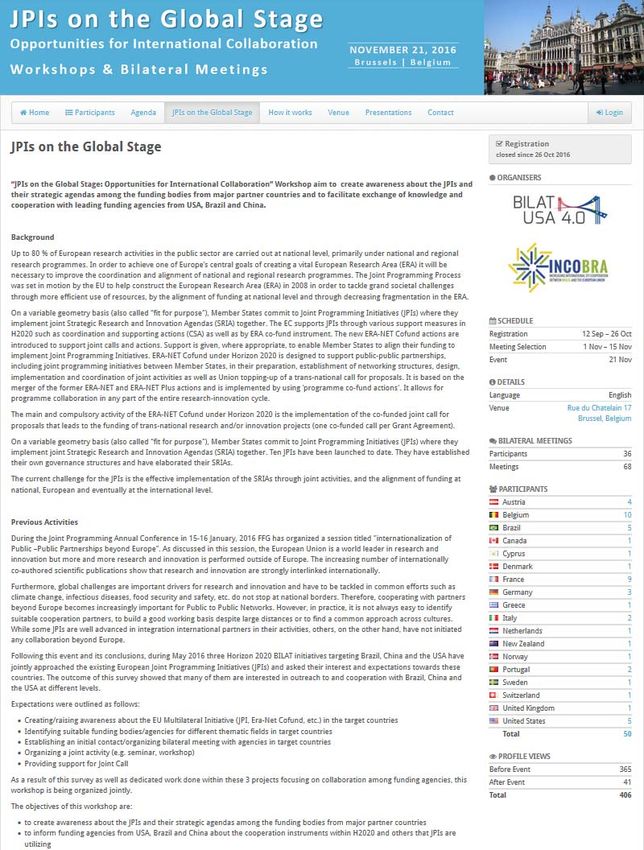
Event Web-site
Web: https://www.b2match.eu/jpisgoglobal2016
This project has received funding from the European Union's Horizon 2020 research and innovation programme under grant agreement No
692468.19 | This project has received funding from the European Union's Horizon 2020 research and innovation programme under grant agreement No 692468.
20 |

This project has received funding from the European Union's Horizon 2020 research and innovation programme under grant agreement No
692468.
21 |

This project has received funding from the European Union's Horizon 2020 research and innovation programme under grant agreement No
692468.
22 |

This project has received funding from the European Union's Horizon 2020 research and innovation programme under grant agreement No
692468.
23 |
Overall Evaluation of the Event (as a result of the event feedbacks)
Evaluation has been done after the event by using the limesurvey. All participants were sent a link of an online
survey after the event. 29 participants provided input.(Participation rate:63%)
Major outcomes of the evaluation:
o 86% of participants were very satisfied with the event (51% out of the total that provided the highest
score)
o 82% Indicated that the event increased their interest in EU-US collaborative research (scores 8 and
above)
o 72% indicated that the event increased their networking opportunities and 82% indicated that it
increased their professional network (scores 8 and above)
o 76% of survey participants also participated in speed dating exercise and 96 satisfied with it (scores 8
and above) and 100% of them recommends this exercise/format to be included in similar meetings.
Overall 86% of participants found the event successful.
Some Testimonials
There were a lot of presentations; speed dating was most fruitful; more interactive elements during the day would be
welcome. I loved the digital environment; it could be used more intensive in the future”
An extremely well organized and conducted event. Exemplary in every way.
An outstanding event that will go a long way toward increasing BILAT USA 4.0 objectives via specific JPI's. It will be quite
valuable toward enabling increased cooperative research programs between the EU, Canada, and my organization (and
maybe even Brazil). Some presentations were a bit long and didn't address the topics spelled out in advance, but this is
nothing new for his type of event.
Speed dating was very useful and was excellently organised (which I am sure was complicated!) Bravo!
Dissemination Activities (after the event)
Type of audience reached Number of Time of Dissemination
Audience
Reached
Event web-site ? September 2016
Participants 70+ November 2016
Press Release 22 November 2016
Newsletter 100+ January 2017
This project has received funding from the European Union's Horizon 2020 research and innovation programme under grant agreement No
692468.You can also read


