Inside this issue: South Bay Bird Society
←
→
Page content transcription
If your browser does not render page correctly, please read the page content below
Volume 45        Issue 3    March-April 2018             Established 1974

                                                                       inside
                                                                       this
                                                                       issue:
                                                                       Page

                                                                       01 | Flyers March 5 and April 2
                                                                       12 | Recap February 5 meeting by Diane
                                                                           Sivas with Joni Malukas
                                                                        3 | Notes From Janet
                                                                        4 | March 5th flyer with Dr. Rosskopf
                                                                        5 | April 2nd flyer with Dave Weeshoff
                                                                        6 | A Conservation with Sugar and
                                                                           Spice and Dr. Micco ****
                                                                           A must read!
                                                                        7 | SBBS Note of Thanks from Jamie

                                                                           McLeod from the Santa Barbara Bird
                                                                           Sanctuary
                                                                        8 | Q&A The Parrot Lady by Karen Allen
                                                                        9 | Meeting Pictures
                                                                       10 | AAV Article “Birds of a Feather”
                                                                       11 | AAV article continued
                                                                       12 | Sister Bird Club Meetings
                                                                       13 | Rescue, Rehab & Adoption

                                                                           Organizations
                                                                       14 | SBBS Sponsors
                                                                       15 | SBBS Officers, Board of Directors
          The Amazing                                                      and Volunteers

        Galapagos Islands                                              16 | SBBS Membership Application
                                                                           and Renewal Forms
       with David Weeshoff
Monday April 2nd, 2018 • 7 pm • Monthly Drawing • Outstanding Food
SBBS NEWS                                                                                                               PAGE 2

                                                                                                                  Y B IR D S

      Whales Dolphins and Birds                                                                                 BA

                                                                                                                           OC
                                                                                                          TH
                                                                                                         SO U

                                                                                                                             IE T Y
                                       February 5, 2018
                                       by Diane Sivas

                                                   Seals and sea lions are not the same thing. Sea
                                                   lions have muzzles (similar to the muzzle on a
                                                   collie), ear flaps, and swim with their front flip-
                                                   pers, but walk on all four. Males can grow to
                                                   8-10 feet and weigh 800 lbs., while the females
                                                   are slightly smaller, measuring 6-8 feet. Seals,
                                                   on the other hand, are smaller, with a pug face,
                                                   no ear flaps, and swim with their back fins but
                                                   crawl on their stomachs when on dry land.
                                                   Their normal size is 3-4 feet, and they weight
We were fortunate to have SBBS member Joni         in at 150 lbs.
Blank-Malukas as our featured speaker at the       Bottlenose dolphins are all gray, and grow to
February 5th meeting. Joni arrived with a          10-13 feet long. Pacific white sided dolphins are
wealth of information on sea birds, dolphins       identified by a white patch on the back of the
and, of course, whales. She has 30 years of        dorsal fin. The common dolphin has the black
whale watching experience and has helped us        back, a long “beak” and is 8-10 long. There is
organize an upcoming whale watching expe-          also another species of common dolphin with
dition. Joni is also a member of the West LA       a shorter beak.
Bird Club.
                                                   Gray whales start their migration in the Ber-
Janet opened the meeting with introductions        ing Sea. From there, they travel south to the
of board members and welcomed five guests          lagoons of Baja, Mexico to mate and have their
who had come to hear Joni’s presentation. She      babies. Gray whales measure 40 to 45 feet
also told us the sad news about Diane Bock’s       long, while calves are 12 to 15 feet at birth. Fin
Palm Cockatoo, Zeus, who recently succumbed        whales are very dark in color and are the size of
to cancer. Dr. Teresa Micco was on hand and        2-1/2 yellow school busses. Humpback whales
took the opportunity to step up and remind us      can be 60 feet long, have huge fins, and are krill
again about cooking with oils and keeping our      eaters. Orcas, or killer whales, are actually the
birds out of the way of any and all fumes in the   largest member of the dolphin family, and are
kitchen. Not only is non-stick cookware a prob-    a matriarchal society, ruled by females.
lem, but it turns out that any kind of cooking
oil can be toxic and can cause lung damage in      Joni had some great photos and stories from
our birds. And, as Dr. Micco said, it can happen   her many whale watching excursions, and took
in an instant. When cooking, please be mindful     several questions before wrapping up. She
of these dangers, and take the necessary pre-      Continued on page 9.
cautions. Even a quick pass through of a room
full of fumes can lead to deadly consequences.
Then we were on to the main event. Joni
began by talking about the Garibaldi Gold
Fish, and then moved on to the different types
of seagulls. The Western Seagull is the one with
the pink legs (juveniles are brown) and is the
one we often see on our beaches. Pelicans,
she told us, are brown when young, and when
grown, can have a wingspan of 7 to 8 feet. Pel-
icans eat only fish, while gulls eat everything.
SBBS NEWS                                                                                  PAGE 3

Greetings feathered friends    would like to thank Bob and        Dave Weeshoff, April 2nd will
and companions! On Feb-        his staff for a delightful morn-   be presenting two outstand-
ruary 17th, several mem-       ing with Kimball.                  ing programs for us. Check
bers and guests gathered at    Tonight, I will be on my way       the flyers on pages 4 and 5,
Wild Birds Unlimited in Tor-   to visit with my grandsons,        for the topics and details.
rance, for Kimball Garrett’s   Nate and Jack. We meet in          As always supports SBBS
presentation on the Parrots    Miami and cruise for 6 days.       sponsors, I look forward to
of Los Angeles. Kimball is a   I look forward to this adven-      seeing you March 5th.
renowned ornithologist and     ture with the boys to the
collections manager at the                                        Cheers,
                               Western Caribbean, and I
Natural History Museum of      ready to dance!                    Janet
Los Angeles County. Kim-
ball’s presentation was out-   SBBS next two speakers Dr.
standing and educational! I    Rosskopf, March 5th and

                                                                           Jasper and Chester

                                                                  More pictures from meeting page 6.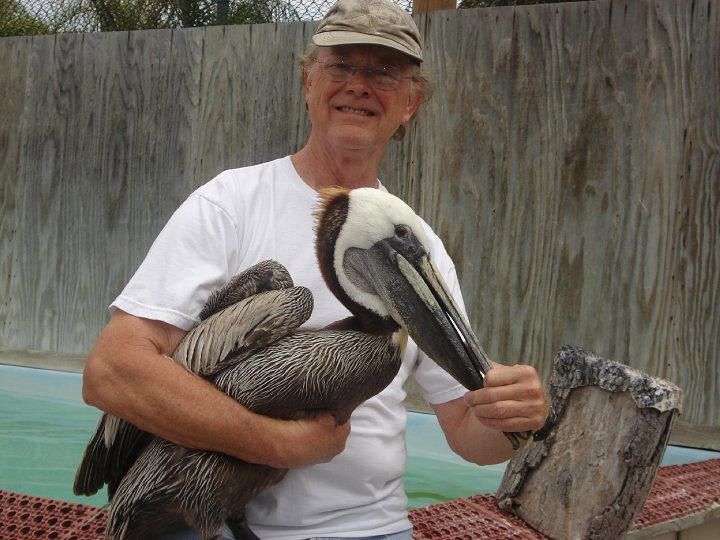
SBBS NEWS PAGE 4
SBBS NEWS                                                            PAGE 5

The AmAzing gAlApAgos islAnds
                wiTh dAvid weeshoff
 Monday April 2nd, 2018 • 7 pm • Monthly Drawing • Outstanding Food

David will present reveal-
ing photos and a inter-
active discussion on the
amazing animals of the
Galapagos Islands, past,
present and future.

Included are numerous birds, iguanas, tortoises indigenous to the historical
desert community. He travels extensively, including the high Arctic, Antarctic,
Alaska, Galapagos, Iceland, Greenland, Midway Atoll, Baja Mexico, Chilean
Patagonia, Madagascar, etc. in search of aquatic birds to protect and enjoy.

         Location: Kiwanis Club of Hermosa Beach
 2515 Valley Drive • Hermosa Beach • Cross streets are Gould and Valley
          Drive For more information www.sobaybirdsoc.com
                Janet: 310-376-5954 • Kathy: winebird1@msn.com
SBBS NEWS                                                              PAGE 6

                A Conversation with
            Sugar and Spice and Dr. Micco
            My name is “Sugar” and I am age 7 and my com-
            panion human, Spice, is 13. I have lived with Spice
            my whole life and today we are having a conversation
            with Dr. Micco. Spice has asked Dr. Micco if more
            can be done for my little body; I have not been feel-
            ing myself these days. Not that I noticed, but Spice
            and his Mother noticed a change and I may not have
            been playing, eating or drinking as I did when we were
            younger. I hear Spice whisper with tenderness that we
            are bonded.
            Dr. Micco touches me ever so gently and I feel a very
            uncomfortable sensation that I have felt for a time.
            when Spice touches me. My dear Spice, I love you
            so! As I listen to Dr. Micco. I hear her words to Spice.
            “Sugar” is in pain is not wanting to eat nor drink nor
            play and she is letting go of her body. My question
            is, when can I move forward without it? I know it is
            time.
            Spice is courageous and compassionate and realizes we
            are at the end of our journey. He looks at his Mother
            for comfort and she to him! Dr. Micco explained to us
            how she will help me move forward and I will no lon-
            ger be in pain.
            My wish came true, I am free, and I love Spice as I
            always have. We are bonded, you know, and my next
            journey has just begun.

                                                 Minnie
SBBS NEWS                                                                            PAGE 7
A NOTE OF THANK YOU FROM THE SANTA BARBARA BIRD SANCTUARY TO SOUTH BAY BIRD SOCIETY!
SBBSNEWS
  SBBS NEWS                                                                                          PAGE
                                                                                                      PAGE 6
                                                                                                           8

                                                                 Karen has been involved with birds 35+ years,
                                                                 has been an SBBS member 35+ years, and has
                                                                 become an honorary lifetime member of SBBS.
                                                                 She has her own bird shop, she counsels and
                                                                 trains new bird owners, and is a published
                                                                 writer.
                                                                                      Send your questions to Karen
                                                                                      Allen, P.O. Box 3863
                                                                                      Redondo Beach CA 90277-3863
                                                                                      Email: Birdsnmore@aol.com

Q &A by Karen the Parrot Lady
The answers to your questions are MY opinion based on nearly 50 year’s experience. I donated my time to Avian
and Exotic Animal Hospital, working with Doctors Rosskopf and Woerpel. Hands-on experience owning my
own exotic bird shops, raising and breeding, grooming and caring for parrots of all kinds. Ask me your ques-
tions and I will answer to the best of my knowledge, if I don’t have an answer I will make every effort to find one
for you and tell you my source. Here we go!!!!!

Q. What temperature is good for the birds in               Q. Are pine shavings or cat litter good for the
the house?                                                 bottom of the bird cages?
A. Birds are very resilient and acclimate well and         A. Please do not use either as they get wet and grow
quickly. 68 degrees is normal room temp for us and         bacteria that is not safe for your bird.
an adult bird will do fine in that temp. 75 degrees is     Q. Can I use newspaper on the bottom of the
a comfortable temp in your home as the bird doesn’t        bird’s cage? What do you recommend?
have to put up with wind, rain or, hopefully drafts.
However, a young bird needs more heat. A baby              A. Newspaper used to have toxic ink, and that has
bird need temps in the 80’s if out of a brooder, your      been corrected. Yes you can use it! I personally pre-
brooder temps are even warmer.                             fer the sheeted newsprint, which is newspaper with
                                                           no ink. If you have a Cockatoo you certainly know
Q. Should you cover the birds at night?                    what I mean. Nothing is uglier than a Schmootsie
A. I do cover all my birds at home at night as they are    (that is Jewish for really YUKKY) looking bird. Feath-
ready for bed at 6pm and we are not always ready.          ers should be clean and not covered with black ink,
A dark heavy cover makes them happy and they are           you think?????
ready for bed at that time. It is so important that your   Q. Why can’t my birds have Avocado?
birds get 12-14 hours of sleep at night and you can
usually do that by covering them between 6-8.              A. Do not cook avocado anywhere near your bird,
                                                           not even in the same house.
Many people ask me why their birds scream in the
evening and the usual answer is they are tired and         Do not feed raw avocado. The area around the skin is
ready for bed, cover them and let them go to sleep.        toxic, the area around the seed is toxic, and there is
That does not mean that you need to do the same!           so much oil in the meat of the avocado that the birds
If the cover does not let light in, there is no problem    cannot digest it all.
with you watching TV, talking, or having the lights on.
SBBS NEWS                                  PAGE 9
Whales, Dolpins and Birds continued from
page 2
really knows her stuff, and as I men-
tioned, she will be leading a whale
watching trip on February 25th. Thanks
for making that happen for us, Joni!
So, if it’s March, it must be time for Dr.
Walter Rosskopf. His presentation this
year will be a “potpourri” of important
avian issues, so there should be a lot of
great information. Make a note to attend
the meeting on March 5 at 7:00 p.m.
Hope to see everyone there!
SBBS NEWS                                                                                                                                             PAGE 10

                                      January 2018 AAV Bird Club News Release
     This article is for the use of member clubs only and is protected by U.S. Copyright laws. Use by any group or organization not currently enrolled
         in the AAV Bird Club News Release Program, is strictly prohibited. For longer articles, it is permissible for clubs to run as a 2-part article.

                                                              Birds of a Feather
                                                       By: Carol Hurst, LVT, CVPM, CVJ

  Birds are unique in possessing a biological structure that helps them in every aspect of their life -
  feathers. A bird’s feathers serve many functions including thermoregulation, hygiene, mate attraction
  and much more. Let’s explore an overview of feathers.

  Function
  Feathers serve many purposes for birds. Flying, courtship/display, camouflage, thermoregulation and
  other more obscure uses.

  The flying feathers are precise and strong and are made up of primary and secondary feathers. They need
  to be able to support upward lift and directional changes while in flight. There are birds (like the Ostrich)
  who have wings and wing feathers but who are unable to fly. Their feathers are not consistent with the
  structure needed to encourage flight.

  One of the most interesting uses for feathers is display. These feathers appear to have no other function
  other than a flashy display meant to catch the eye of the opposite sex. These don’t follow the normal
  structure of a feather. Common areas for display feathers are on the top of the head and the tail. Birds
  can also use these same feathers to intimidate potential aggressors.

  A lot of birds are creatures of prey and having feathers that are suited to help them blend into their
  surroundings serves an important survival function. These colors can vary widely depending on the
  environment from a bright green bird in the rainforest to the subtle beauty of a duck on a lake.

  Plumulaceous feathers are perfectly suited to help keep warmth trapped against the bird’s body. The
  contour feathers help to keep birds dry. These feathers help to roll liquid off of the body. Being
  waterproof is essential to a bird’s survival and if each feather isn’t working in harmony it can potentially
  result in detrimental effects.

  There are also some birds that possess feathers that appear to have no use. There are feather tufts on
  the top of the Great Horned Owl’s head that seem to serve no function.

  Structure
  If we oversimplify the structure to paint a picture of the different parts, we start with the image of a tree.

  On a feather, the tree’s “trunk,” or rachis, extend into “branches” which are called barbs. Each barb has
  several “leaves” called barbules. Each barbule has hooks that connect it to nearby barbules. These hooks
  are called barbicules or hooklets and give the appearance of the soft part of the feather being sticky
  when you run a feather through your fingers. These barbicules are strong and able to withstand the
  pressures of flight. The calamus is the very base of the feather that attaches to the bird itself. If you look
  at the different kinds of feathers, modifications in these parts explain a little bit about the function.

                                                                       - more -
SBBS NEWS PAGE 11
Birds of a Feather Continued
There are two main types of feathers, plumulaceous and pennaceous. The plumulaceous have more
flexible barbs and longer barbules. These types of feathers are the downy, soft feathers that trap air close
to the body to help keep them warm. The pennaceous feathers have the structure described above. The
interlocking barbicules help them to be waterproof and aid in flight.
The wing, down, tail, contour, semiplume, bristle and filoplume feathers all work harmoniously to help
serve the functions that a bird needs.
Feathers are made of keratin, which is a protein that is also found in hair and nails.
Care
There are many diseases that can affect feather health. Mites, bacteria, fungi, stress, and injury are
among a few potential problems birds can encounter. Considering that each feather has a specific
structure that lends to a specialized function, a disruption can cause a variety of problems.
Birds employ preening to keep their feathers in tip-top shape. This behavior serves to help them inspect,
clean and groom the feathers. Some birds have a powder down feather that produces particles that break
off from the barbules. This powder helps to waterproof and condition the feathers. The majority of birds
possess a sebaceous (oil) gland called the uropygial gland that also aids in waterproofing the feathers.
Birds distribute this substance along the feathers while engaging in normal preening behavior. Through
periodic molting birds replace their feathers.
Overview
Feather structure and function is complex and more detailed than this article can provide. There are
many great resources that go into extensive detail about coloration, structure, and function (a few are
listed below).
Sources:
https://academy.allaboutbirds.org/feathers-article/
https://academy.allaboutbirds.org/all-about-feathers/
https://en.wikipedia.org/wiki/Feather
http://www.peteducation.com/article.cfm?c=15+1829&aid=2776
###SBBS NEWS PAGE 12
Welcome SBBS
Wednesday, March 28, 2017
7:00 pm New & Returning Members
Returning
Jason Crean Charles Bender & Barbara Simon-Bender, Lisa Cooley &
Sean Wright, Linda Dorfmont, Phyllis Levine,
Please contact President Sondra Luther, Linda Dorfmont and June Baker
Doreen Seelig
for further information Lifetime Members
(310) 488-9749 or Diane Bock, Cary & Anita Pao, Lorrie Mitchell,
refer to their website Jimi K. Anderson, Bree and Deven Brozey
listed below.
Don’t fly off the membership list. Please pay your dues!
SBBS is currently upgrading our membership files. To help us,
please go to www.sobaybirdsoc.com and click on Memberships to
find the new membership application. Please fill it out and include
your check and send it to SBBS, P.O. Box 3863, Redondo Beach
90277-3863.
If you want to join and have received a hard copy or found the
membership application on the back of the newsletter, fill it out
and send it to the above address. If you have any questions about
your membership, please contact Elaine Dunn at (714) 306-5513.
Other names will follow in upcoming months.
West Valley Bird Society Meeting
At time of printing
no speakers were announced.
7:30 PM the 3rd Friday of each monthSBBS NEWS PAGE 13
Long Beach Bird Breeders Club
Next meeting is Saturday,
Meets the 4th Tuesday of each month
March 10, 2018 7 p.m. at the
Speaker is Steve Duncan American Legion Hall
5938 Parkcrest Street
Meetings are the 2nd (S. of Carson, E.ast of Woodruff Ave.)
Saturday of each month. Long Beach, CA For Information call
562-881-9847
PARROT EDUCATION & ADOPTION CENTER
PEAC is not taking in any parrots right now, but they do have a lot of
nice birds ready to be adopted. There are classes going throughout
the month. The San Diego location has classes the last weekend of
the month. Classes in Orange County are on the third Saturday of the
month. There is a new class now being offered in Hemet on the first
Sunday of the Month. Please check the website for topics, times, and
directions.
Please contact PEAC at parroted@cox.net or visit their website
www.peac.org for more information.
Bir ds
d
Adop t e
Her e
There are so many birds needing homes out there. If you are considering another bird, please think about adopting one.
Call one of these rescue/adoption groups. They all have many wonderful birds just waiting for someone
to come and take them home. Many of these groups have websites – take a look!
Organization Phone Contact
Parrots First (866) 248-7670, ext. 5937 www.parrotsfirst.org
The Lily Sanctuary (714) 442-9474 www.lilysanctuary.org
Parrot Rehabilitation Society (619) 224-6712 www.parrotsociety.org
Southern Nevada Parrot Education, Rescue & Rehoming Society www.southernnevadaparrotrescue.org
Santa Barbara Bird Sanctuary (805)-565-1807 www.sbbird.org.
Fine Feathered Friends Foundation (310) 541-2468 curtismyrna@verizon.netSBBS NEWS PAGE 14
New address 24028 Vista Montana
Torrance, CA 90505
310 378-3052
ROOM
4301 Redondo
Beach Blvd. FOR
RENT
Lawndale, CA 90260
New address 24028 Vista Montana
(310) 370-7550 Torrance, CA 90505
310 378-3052
www.omarsexoticbirds.com
South Bay Bird Society members receive NEED
Fenix A HOME
Crocks and
a 10% discount at Animal Lovers and
Birds & More on selected merchandise for Feeders,
Your Ad? Inc.
and a 5% discount from Chopper’s Toys. Inquire
Ron Norcut,within!
Warehouse Manager
You must show your membership card or
1476SBBS
Wamego Trail
mention South Bay Bird Society
Yucca Valley, CA 92284
when shopping online. Janet Ragonesi
Cyndie Norcut:
Is your card current?
Email Elaine Dunn at (310) 376-5954
Fenixcrocks@aol.com
edsracer62@gmail.com (951) 453-5193.SBBS NEWS PAGE 15
Y BIR D S
PLEASE JOIN US
BA O
H
CI
T
S OU
ET Y
Meetings are held at the Kiwanis Club of Hermosa Beach, 2515 Valley Drive, Hermosa Beach
90254 on the 1st Monday of the month at 7:00 p.m.
Parking lot and street parking.
Birds are Welcome at Meetings
South Bay Bird Society - Officers and Board of Directors 2018
Voting Positions Support Positions
President Janet Ragonesi, (310) 376-5954 Youth Ambassador Open
Vice President CFO Kathy Powell, (310) 325-1268 Adoptions & Foster Care Janet Ragonesi, (310) 376-5954
Vice President, Secretary Diane Sivas, (310) 937-9925
Newsletter
Directors
Publication Joan Margolis-West
Programs Director Open Elaine Dunn
Membership Elaine Dunn, (714) 306-5513 Meeting &
Education Karen Allen, (310) 371-9967
Informational Flyers Joan Margolis-West
Community Outreach Tammy Carreiro, (310) 675-6789
Raffle & Sponsor Patte Fisher, (310) 316-9843 Proof Reading Lorrie Mitchell, Sylvia Skidmore
Media Director Gala Burkholder, (310) 345-0278 Refreshments Coordinator Deborah Peterson
Technical Support Open Photography Open
Non-Voting Positions Lifetime Members Lorrie Mitchell, Diane Bock, Jimi K. Andersen,
Anita & Cary Pao, Bree and Deven Brozey
Webmaster Paul Carreiro
Joan Margolis-West
Consultant to Board Ron Ellwood
Exotic Birds by Fran, Inc.
9215 Valley View Street
Cypress, CA 90630
p: (714) 761-0868
f: (714) 827-8471
facebook.com/
birdsandsuppliesbyfran
• Open 7 days:
Monday-Friday 9-6,
Saturday & Sunday 9-5
• Boarding & Grooming
services
• Home Grooming &
TrainingSBBS NEWS PAGE 16
Y B IR D SO
H BA
CIE
SO U T
TY
P.O. Box 3863
Redondo Beach, CA 90277-3863
www.sobaybirdsoc.com
B I R DS AR E W ELCO M E
AT M EE T I N G S
EFFECTIVE IMMEDIATELY:
Due to rising costs, members that require newsletter USA Postal Service
delivery please add $10 to your membership. Thank You!
MEMBERSHIP UPDATE:
When a new or renewing member pays for a 2 year membership in advance,
the member receives $5.00 off the 2nd year, excluding lifetime members.You can also read


