Insights from Mexico Unlocking the Benefits of Digital Payments for Micro & Small Businesses: Visa
←
→
Page content transcription
If your browser does not render page correctly, please read the page content below
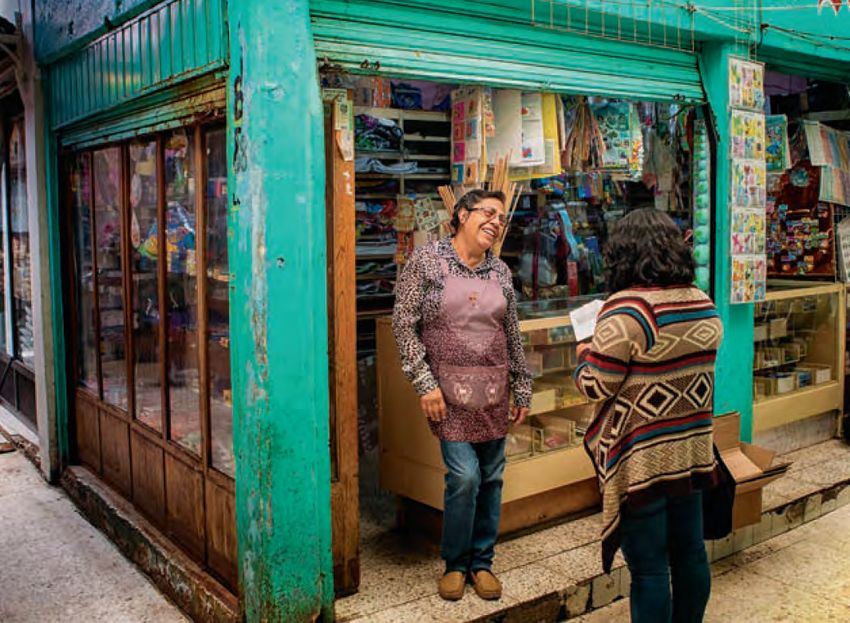
Unlocking the Benefits of Digital Payments
for Micro & Small Businesses:

Insights from Mexico

                               © 2021 Visa. All rights reserved.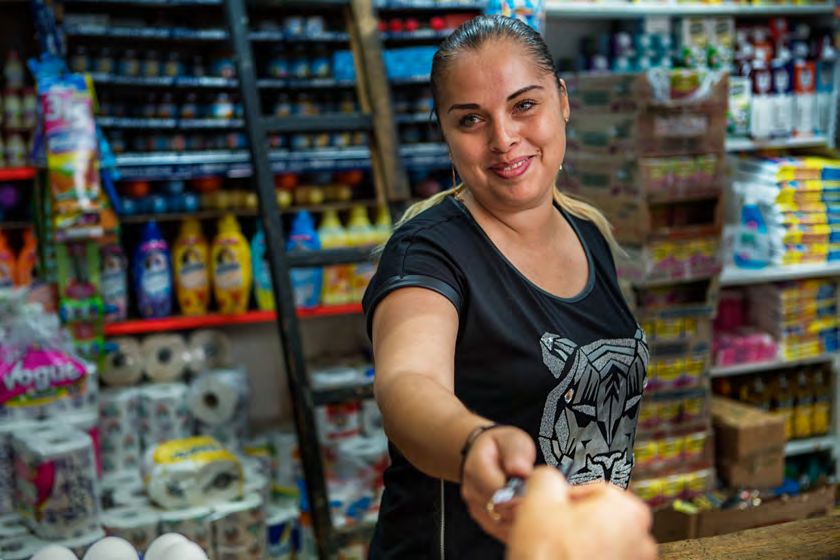
“Personally, it helps me to reach more
customers, and maintain [customers] that
I have, stay current and competitive in my area.
It is what has helped to keep me going.”

—Female owner, services sector, mobile-only business

Acknowledgements
This report was produced by a team led by Amina Tirana, Carlos
Corominas, Urvi Kelkar, Juan José Fernandez and Deborah Gordon, and
based on a survey and data analysis conducted by 60 Decibels. We are
grateful to four payment facilitators in Mexico for their partnership in
conducting the survey as well as in providing inclusive digital payments
to micro and small businesses. We are also grateful to Elizabeth Hurvitz,
David Whitelaw, Arturo Luna, Chad Harper, Barbara Kotschwar and
Michael Nunes for their input.

Images used in this report depict micro and small business owners in
Mexico, but are not the individual respondents of this survey.

Unlocking the Benefits of Digital Payments for Micro & Small Businesses:
Insights from Mexico. © 2021 Visa. All rights reserved.

                                                                            2
Contents

Executive Summary | 4

Introduction | 5

Advancing Inclusive Payments
& Digitalization in Mexico | 6
   What is Visa's Role in Mexico? | 6
   Key Statistics, Mexico 2018 | 7

Resulting Impact: Voices of Micro
& Small Businesses | 8
   Key Findings at a Glance | 9
   Profile of Micro & Small Businesses | 10

Touching Lives & Livelihoods | 11

Recommendations | 13

Conclusion | 15

Appendix 1 Research Methodology | 16

Appendix 2 MSME Insights in Mexico | 17

Unlocking the Benefits of Digital Payments for Micro & Small Businesses: Insights from Mexico.
© 2021 Visa. All rights reserved.

                                                                                                 3
Executive Summary

The transformative impact of digital payments has yet to be extended
fully to micro and small businesses globally. Take Mexico, where the          Results show that
majority of businesses are micro or small, and function predominantly in
cash. In recent years, regulatory changes, the emergence of new players       due to accepting
and business models, such as the payment facilitators and financial           digital payments,
institutions that Visa partners with, and the effects of COVID-19, have led
to a significant increase in acceptance of digital payments. But what does
                                                                              most business
this mean in the context of small business owners’ lives and livelihoods?     owners saw
How has it impacted them professionally and personally?
                                                                              improvements
This paper examines the results of a survey that gathered insights from
                                                                              in revenue,
753 micro and small businesses in Mexico. Most of these businesses are
accepting digital payments for the first time, which confirms that payment    customer
facilitators are including businesses and people who were previously not
                                                                              spending
reached by traditional banks. Results show that due to accepting digital
payments, three quarters of business owners saw improvements in               and business
revenue, customer spending and business management. Furthermore,              management.
in response to COVID-19, more than a third of businesses increased their
acceptance of digital payments, in part to counteract negative impacts of
the pandemic on the business. This highlights the importance of digital
payments for micro and small business resilience and growth.

The survey findings inform actionable insights for policy makers, providers
and other actors to support the expansion of digital payment acceptance
among small businesses. They highlight the role of several complementary
enabling factors required to advance progress in this area, including
partnerships through payment facilitators and FinTechs, policies and
regulations to support a balanced, two-sided market, reliable technology
and listening to micro and small business owners to inform product
design and promotion.

                                                                                                  4
Introduction

COVID-19 has highlighted the importance of digital payments and
being connected to digital commerce, particularly for the resilience
                                                                                          Micro and small
and growth of micro and small businesses. These businesses are
the backbone of the global economy, making up more than 90%                               businesses are the
of all businesses and half of global employment. In emerging                              backbone of the
economies, micro and small businesses account for roughly half of
national GDP, with corresponding impact on livelihoods, lives and                         global economy,
communities.1 Yet, around the world, millions of small businesses                         making up more
remain disconnected from digital payments and the opportunities
those provide.                                                                            than 90% of all
                                                                                          businesses and
Helping small businesses to be resilient, grow and thrive has long
been a policy priority for governments and diverse stakeholders.                          half of global
Visa has made a concerted effort globally to extend the benefits
                                                                                          employment.
of digital payments to the mom and pop shops, local restaurants,
street vendors, taxis, barbers and countless other kinds of micro and
small businesses that have not regularly been reached by traditional
financial service providers. In the past several years, Visa and its
partners in Mexico have successfully extended digital payments
to a rapidly growing number of businesses through a variety
of strategies, including the innovative approaches of payment
facilitators. In order to gather specific insights on the effects of this
transformation, Visa commissioned a survey of 753 micro and small
business owners who recently began accepting digital payments in
Mexico. The results tell a powerful story.

1
  World Bank. SME (Small and Micro Enterprises) Finance. https://www.worldbank.org/en/
topic/smefinance. This data includes that of medium sized businesses. However, the bulk
of SMEs are micro and small.

                                                                                                               5
Advancing
Inclusive Payments
& Digitalization
in Mexico
During the last decade, Mexico has championed the inclusion of more
people and businesses in the formal financial system in support of
numerous social and economic goals. Supporting small businesses
What is Visa’s
has also been a priority in recognition of the key role they play in the role in Mexico?
economy and community welfare. There are 10.5 million businesses in Building an inclusive digital
Mexico. Nearly all of them are micro and small2 and forty percent are payments system is a vast
fully formal businesses while the rest are informal or quasi-formal.
3
and complex undertaking,
Many of the micro and small businesses have functioned only or but the heart of the
predominantly in cash. Providing access to payments was identified as an mission is simple: make it
fit.80710CSD
opportunity to support these goals. A number of factors worked together easy, safe and secure for
to drive progress. Many of the solutions leverage digital technology. all people to adopt digital
payments. Visa works to
Policy action has been a major enabler of digital payments. Specifically, equip people with digital
tele-communication regulation reforms since 2013 have resulted in accounts and the places
lower costs for mobile phones and data, and more connectivity and to use them and works
usage—a key component in the evolution of digital payments. Financial with the many partners
regulation reform, including innovative, risk-based tiered financial and steps in between to
accounts with simplified know-your-customer (KYC) requirements and on make that possible. This
includes all the payment
correspondent banking, opened opportunity for new design and delivery
facilitators in Mexico, as
of financial products. In turn, these resulted in more people having and
well as numerous other
using debit and credit accounts. For example, since 2014, any Mexican
financial service providers
can get a debit card quickly, conveniently and at low cost through a
to serve both consumers
Saldazo account, which is available 24/7 at now more than 19,000 OXXO and businesses.
convenience stores across the country.4 Today, Mexicans can apply
through their phone for a Rappi debit or credit card; within hours, a
Rappi driver delivers the finalized account to the person’s home, with
all the onboarding having been completed digitally.5 More and more
Mexicans have a digital payments account, and want to use it.
2
In Mexico, the government defines a micro business as 0-10 employees, and a small business as
11-50 employees. Microbusinesses constitute 95% of all businesses.
3
Visa (2014). PYMES Referencia 2014: México [slide 19]. Study estimates that 60-65% of businesses in
Mexico are informal
4
FEMSA: Annual Report. (2019). www.annualreport.femsa.com. http://www.annualreport.femsa.com/
index.html
5
Banorte, Rappi sign strategic alliance to create digital financial services company in Mexico. (2020,
June 23). Banorte.com; Grupo Financiero Banorte. https://www.banorte.com/wps/portal/gfb/Home/
noticias-banorte/noticias-2020/rappi. Rappi is an order and delivery mobile app in Latin America.
6Advancing Inclusive Payments & Digitalization in Mexico
Payment facilitators have become an increasingly significant compo-
nent of the Mexican ecosystem.6 They offer customized solutions for
small businesses and fill market needs that have not been addressed
by traditional banks. For example, they provide a seamless payments KEY STATISTICS
process for small business owners, handling all the key elements with Mexico, 201810
the financial institution that acquires the payment, and managing the Population (2019) .......................127.5M
daily settlement process to the small business. This frees business GDP (2019) ..................................$1.26 tr
owners to focus on their operations and supports those who may be GDP growth ................................2.2%
less familiar with digital technology and formal financial services.
GNI per capita (2019) .................$9,480
Payment facilitators also identified new ways to reach small business- Poverty ........................................41.9%
es, including by leveraging commercial networks and stores. These Mobile phone subscriptions .....95%
approaches made it inexpensive and much faster and easier for a
business owner to buy payment terminals, register or get support. It Financial Inclusion11
also fostered competition, which in turn further promoted innovation, Adults accounts ..........................47%
all of which combined to contribute to the dramatic decline in costs Women (accounts) .....................30%
and expansion of acceptance of digital payments. Once, purchasing a
Made or received a digital
point of sale terminal cost a business owner hundreds of dollars and payment in last year12................32%
took weeks to arrive. Today, one can be bought for MXN 500 (about
USD 25) or less at supermarkets and other convenient locations.7
The resulting transformation across Mexico has been notable. As of 2020, 3.9 million business outlets
across Mexico accepted digital payments8 and point-of-sale terminals doubled from six per thousand in-
habitants to twelve per thousand between 2016 and 2019. COVID-19 further accelerated trends, boosting
e-commerce, online platforms such as Canasta Rosa, and digital payments, and reducing the use of cash.9
Nevertheless, cash remains prevalent in Mexico, maintained in part because it is familiar, easy and conve-
nient. While the significant increase in small business acceptance is starting to change that, day to day use
of digital payments is still low, and a key next step in Mexico’s digital transformation. Visa is supporting
this and related initiatives through its collaboration with payment facilitators and other financial institu-
tions, introduction of new technologies, including contactless payments, and partnerships that promote
regular consumer experiences with digital payments such as on mass transit.
6
Payment facilitators are third parties that contract with an acquirer on behalf of a business and settle transactions with the acquirer for the
business. They first began to operate in Mexico in 2014.
7
Clip.mx. 2021. Conoce las tpv de Clip y Familia de Lectores de Tarjetas | Clip. https://clip.mx/productos-clip/.
8
Pablo Graf Noriega, J., Antonio Quesada Palacios, J., & Antonio Del Rio Chivardi, M. (2020). Panorama Anual De Inclusion Financiera. CMBV:
Comison Nacional Bancaria y de Valores.
9
Financial cards and payments in Mexico. (2020, November). From https://www.euromonitor.com/financial-cards-and-payments-in-mexico/report
Mexico | Data. (2018, 2019). Worldbank.org. https://data.worldbank.org/country/mexico. 2018 Data, unless specified. GNI per capita is Atlas
10
method.
11
Encuesta Nacional de Inclusión Financiera 2018: Presentación de resultados. (2018). In INEGI National Survey of Financial Inclusion (ENIF) 2018.
http://en.www.inegi.org.mx/doc/enif_2018_resultados.pdf
12
The Little Data Book on Financial Inclusion 2018. (2018). World Bank Group. Data from The Global Findex Database 2017: Measuring Financial
Inclusion and the Fintech Revolution
7Resulting Impact:
Voices of Micro &
Small Businesses
Visa set out to gather insights from micro and payments. Specifically, 72% said their customers
small businesses in Mexico on what accepting were spending more, and 75% said their revenue
digital payments and being part of an inclusive increased after they started to accept digital
digital ecosystem means for their business payments. Among those that reported higher
and livelihoods. Visa collaborated with a global revenue, the average increase DSC02180.tif
in monthly revenue
measurement firm, 60 Decibels, to conduct
13
was approximately 22%. The businesses identified
an independent survey of 753 micro and small business growth as the top benefit of accepting
businesses that had begun to accept digital digital payments due to additional payment options
payments through one of four payment facilitator for customers, increased convenience, improved
partners during the prior 18 months. Please see security and greater customer satisfaction, among
Appendix for details of the research approach. other factors.
The survey returned strong findings that starting
Accepting digital payments is helping
to accept digital payments has a clear, positive
owners improve how they manage
impact on micro and small businesses revenue,
their business, which contributes to
customers and operations. This matters, not least
growth. Owners reported that digital payments
because small businesses are an important part
and related services helped them keep track of
of household income and welfare. More than half
income, increased visibility into their financial
of the average household income of all survey
accounts and helped them manage and increase
respondents came from the business. And for four
savings. Businesses also noted the practicality and
out of every ten businesses, three quarters to all
convenience of the acceptance tool, such as the
of household income came from the business.
mobility of the point of sale device.
Digital payments are helping Payment facilitators are driving
businesses grow. Three quarters of the inclusion in Mexico. The survey confirmed
responding businesses reported an increase in that payment facilitators are reaching businesses
business revenue, customer base and customer and people who previously lacked access to digital
spending since starting to accept digital payments or did not use them. Three quarters
13
https://www.60decibels.com/
8Resulting Impact: Voices of Micro & Small Businesses
(75%) of surveyed businesses reported they were accepting digital Key Findings
payments for the first time.14 The expansion is being driven by very at a Glance
small businesses and reaching women. First time acceptors were
predominantly businesses earning less than MXN $10,000 (about 75% of respondents said
USD $500) per month. Similarly, they were more likely to be female, their monthly revenue
with 79% of female respondents being first time users, compared to increased. 72% said their
customers were spending
73% of male respondents.
more.
Businesses were motivated by their customers and
22% average increase in
competitors to use digital payments, and these revenue among those who
expectations were met. Sixty-three percent of respondents reported higher revenue.
said that customer demand was the primary driver for adoption.
75% of all respondents were
More than half (56%) also identified keeping up with competition as a first time acceptors of digital
motivation. Fourteen percent specified safety and security, including payments.
Lean Data Insights: SMBs in Mexico
visibility into transactions and accounts 24 hours a day, seven days
a week and remote account access. The experience of accepting 71 was the Net Promoter
Merchant Experience:
digital payments met these expectations. The most common
Digital
Scorepayments have
of accepting
excellent,
payments.
a Net Promoter
digital
and significantly higher than
Loyalty and Satisfaction
benefit mentioned by survey respondents was the chance to offer
their customers multiple payment options, allowing them to grow
their business. Businesses also identified an increase in customer
satisfaction and an increased sense of safety and trustworthiness for
both owners and customers.
The Net Promoter Score® is a gauge of N e t Pr om ote r Sc or e ® (N P S )
client satisfaction and loyalty. Anything Q: On a scale of 0 to 10, how likely are you to recommend
Businesses are very satisfied with their
above 50 is considered of experience
very good. A debit & credit card payments to a friend who owns a
negative score is considered poor. business? (n = 750)
accepting digital payments and willing to recommend
Digital payments’ score of 71 is
them. The Net Promoter Score® (NPS) for digital payments was 71,
excellent.
0
which is excellent and indicates potential
Asking for to
respondents strong
explainword
their of mouth
rating explains what they value and
and peer-to-peer communications as part
what creates of expanding acceptance
dissatisfaction. -50 50
and use of digital payments.NPS
(This
® score is significantly higher than the
is benchmarked against 60dB’s 71
Global,
60 Decibels benchmark average inLatin
LatinAmerica
Americaandof
Financial
52.)
Inclusion average. Digital payments
outperform each average significantly.
Businesses value the resulting growth to their business, as well as the 100
convenience and safety of using these methods. Women were also
Insight NPS = % Promoters — % Detractors
slightly more likely to recommend accepting digital payments than
You ’ re i n th e top 20% of ou r b e n ch m ark f or 9-10 likely to 0-6 not likely to
men, at 81% versus 76% respectively.
this indicator showing digital payments are recommend recommend
incredibly valuable to small and micro
businesses in Mexico.
Source: 60 Decibels Anaylsis
Jump to Slide 42 for NPS by aggregator
14
Some respondents had been accepting digital payments through other providers, but had
signed up with one of the four partner payment facilitators during the prior 18 months, thus
meeting survey qualification criteria.
9Resulting Impact: Voices of Micro & Small Businesses
Micro and small businesses experienced Profile of Micro & Small
significant declines in revenue during COVID-19 Businesses
but some increased their acceptance of digital based on all survey respondents
payments. Eighty-two percent of businesses reported
a negative impact due to COVID-19. The average business’ 90% own the business.
revenue fell by 33%. Yet, more than a third of businesses (The rest are employees.)
(36%) stated that they are accepting digital payments more
28% are women.
than before COVID-19, and that they have increased home
deliveries and/or online sales (37%) to help cope, highlighting 40 years old on average.
the importance of digital payments in this pandemic context.
75% operate in cities.
Increased use of digital acceptance is 78% have only one location.
associated with greater increases in income. 29% have an online presence.
Businesses that used digital payments for 50% or more of (The rest are physical only.)
their transactions (“high users”) in the preceding three months
65% were in Retail (mostly grocery
were more likely to report increased revenue than those
and food stores) and 35% were in
where less than 50% of payment transactions were digital Services (mostly restaurants and food
(“low users”). For example, 43% of “high users” reported that stalls and professional services).
their revenue had “very much increased” due to accepting
digital payments, compared to 15% for “low users”.
2.3 people employed on average.
53% have been operating for more
than 5 years. 15% are less than one
Different types of businesses reported different year old.
levels of impact from digital payments.
Those in retail sector reported more significant impact than $24,650 Average monthly revenues
of MXN $24,650 (approx. USD 1,200)
those in services, in terms of business revenue, number of
prior to Covid-19.
customers, customer spending and business management.
On average, 79% of retail businesses reported improvement 57% average of household income
in these areas, compared to 65% for services. Women-led comes from their businesses.
businesses reported slightly greater impact on the above
60% contribute half or more to
factors than men (77% versus 74%), and larger businesses than household income; 38% contribute
smaller ones based on monthly revenue (78% versus 75%). nearly all of household income.
10Touching Lives
& Livelihoods
Dishwashing to Dueño:
Rodrigo’s Story
After 27 years of waiting tables, Rodrigo took over the local Italian restaurant
in the lake town of Valle de Bravo in 2019. It became a family affair; his
wife tends bar and his daughter makes the pizza. When COVID-19 struck, “I was old school,
supporting his family of six felt impossible until he introduced delivery and
take-out services through mobile social media apps and online. Accepting but I needed to
digital payments let Rodrigo keep his doors open. adapt to change.
IMPACT: Rodrigo reported that 90% of transactions were digital payments It took work
during July – September 2020, in the midst of the pandemic. The business
was earning up to 30% of their pre-COVID monthly revenue, as opposed to getting used to
just 10% before setting up an online presence. As importantly, Rodrigo can
e-banking and
easily transact with and pay his suppliers on time because he has access to
his money 24/7, deepening trust in a critical relationship. tablets.”
Digitizing the Family Business:
Ana Rosa’s Story
Five years ago Ana Rosa’s parents called on her to help with the family “My business
business, a grocery store and restaurant situated in the countryside of
rural Chihuahua, next to a local mine. The miners all had debit and credit has grown a
cards. Ana Rosa’s priority was to adopt digital payment tools, even giving
customers the ability to pay household bills with credit cards or withdraw
lot...it really has
cash at her store. changed my life.”
IMPACT: When Ana Rosa’s parents operated the business, 100% of
payments were made in cash. Today, 70% are digital payments. Sales have
tripled in the last five years. Her quality of life has also improved – now
she can spend more time with her wife and daughter in the state capital
knowing that her business accounts are safe and just one click away.
Names have been changed to protect business owners’ anonymity. Source: 60 Decibels Qualitative Interviews
11Touching Lives & Livelihoods
Barista Turned Entrepreneur:
Marco’s Story
Inspired by his experience and trainings while a barista at popular coffee shop, “Nobody wants
Marco started to sell coffee beans from Veracruz, Oaxaca and Chiapas to customers
in Mexico City—while studying civil engineering and working. His business is entirely to use cash and
online. While most of his clients come through word of mouth, he is turning to
when you use
social media like Instagram to generate sales. Marco believes that accepting digital
payments will be even more important than they already are and allow him to grow digital payments
his business. He sees the many potential advantages, such as using coupons and
credits from his payment facilitator to pay his electricity bill. there are so
IMPACT: Marco launched his business just one month before COVID-19 hit. many more
Previously, Marco was selling one kilogram of coffee per week. Now, he sells
possibilities.”
between five and six kilograms per week.
Designer Celebrating Artisans:
Paola’s Story
Paola regularly visits indigenous women or “artesanas” in Chiapas, Oaxaca and “I love
Queretaro in order to procure unique textiles for her clothing line. Supporting the
women and honoring traditional Mexican design is integral to her business. With everything
the help of social media, she’s been able to scale her business while operating
completely online.
about my
IMPACT: Once Paola moved her operations entirely online, she saw a 100%
business.”
increase in sales with almost all of her transactions through card payments.
With her digital payment tool, she’s able to implement payment options such as
installments, and keep her clients happy and coming back for more high-quality
pieces. She loves the user-friendly interface of the payments platform, and the
ability to track her business growth with a few clicks on her cell phone or computer.
Two-thirds of respondents
have retail businesses,
while almost a third are in
65% 30%
Retail Services
services and 4% are other.
Names have been changed to protect business owners’ anonymity. Source: 60 Decibels Qualitative Interviews
Graph source: 60 Decibels Lean Data Insights: SMBs in Mexico
12Recommendations
The results of this survey contain a number of
actionable insights for providers, policy makers
and other interested actors.
1. The value of accepting digital payments for small businesses is more
than the revenue from a particular sale.
Accepting digital payments brings a greater value proposition derived from expansion
of customers, increased customer spending, improved business management, better
DSC01087.tif
insight into revenue and income, ease of access to financial accounts and safety—as well
as keeping up with customer preferences and competition. And where digital payments
were used more, businesses grew more.
RECOMMENDATION: Payment facilitators, financial service providers, government, and
industry associations should ensure that marketing and related materials convey the full
range of benefits of accepting digital payments to continue to expand acceptance.
2. Payment facilitators are driving inclusion, reaching people and
business owners who were not accepting digital payments before.
The growth is being driven by very small businesses especially, and to some extent by
women-owned businesses.
RECOMMENDATION: Any strategy to digitally enable micro and small businesses should
include payment facilitators, FinTechs and other innovative companies that specifically
serve the unique needs of micro and small businesses.
3. A balanced, two-sided market with customers who want to
pay digitally is important to expanding inclusion of micro and
small businesses.
Business owners were motivated most strongly to adopt digital payment acceptance by
customer preference and to keep up with competition.
RECOMMENDATION: Policy makers should take this into account when reviewing
regulations and trends, and considering priorities to strengthen a market that grows in
balance. A balanced market is also a valuable element of market-readiness assessments.
Providers should incorporate these motivations in to marketing and outreach campaigns
to promote digital payments acceptance among micro and small businesses.
13Recommendations
4. Adopters can be powerful advocates.
Business owners who recently started to accept digital payments in Mexico through these
payment facilitator partners are enthusiastic, and willing to recommend them to friends and
peers. This suggests that micro and small business owners can be strong advocates and a
valuable pathway to ‘word of mouth’ promotion with neighboring businesses or through social
media. This can be all the more effective because small business owners tend to trust their
known networks for advice. Different benefits may be more appealing to different groups.
For example, women respondents placed more emphasis on the safety provided by digital
payments, and expressed a greater need for support with technical issues.
RECOMMENDATION: Promotion efforts should seek to establish peer-to-peer communications
and highlight diverse micro and small business success stories, including those of women.
5. Payments acceptance supports survival and growth.
Being digitally enabled—beginning with accepting payments—helps micro and small businesses
grow and manage their businesses better, and is an important element of successful responses
to the impact of COVID-19. While not covered in this survey, research confirms that those
businesses that have a digital touch point are better positioned to receive emergency support
or government aid quickly during moments of crisis.
RECOMMENDATION: Prioritizing the digital enablement of small and especially micro
businesses should be—as it very often is—a leading element of national and community
strategies for recovery from COVID and strengthening future resilience.
6. Reliable and easy to use technology is a priority for small
business owners.
For all the positive feedback on the ease of use of payment facilitator platforms, including the
portability of acceptance devices, the technical platform and speed of connectivity can be a
challenge for some business owners. Women are more likely to face challenges with technology
than men.
RECOMMENDATION: Continuing to strive for reliability and simplicity in technical devices is
essential to bolster adoption, use and promotion. Providing digital skills and capacity support to
business owners, with a focus on women, can be a valuable complement to the service.
14Conclusion
Helping micro and small businesses grow
should continue to be an important part
of national economic growth and social
Accepting digital
development strategies. As the survey payments and
illustrates, the strong contribution that
these businesses make to the economy and
being connected to
to household income is clear. Accepting digital commerce is
digital payments and being connected to
increasingly important
digital commerce is increasingly important
to small business growth and survival. Thus, to small business
DSC01799.tif
strategies to expand payments acceptance
growth and survival.
and use to more small businesses should
be a key part of national policies and
investments. Such strategies are more likely
to be successful if they deploy a number of
complementary levers including financial
regulations to build a balanced, two-sided
market, business model innovation and
user-centric approaches to solution design
and distribution. Listening to micro and
small business owners and drawing on user
insights to shape products and strategies is
essential for success.
15Appendix 1
Research Methodology
Visa set out to gather insights from micro and small business owners in Mexico
on what using digital payments and being part of an inclusive digital ecosystem
means for their business and livelihoods.
60 Decibels, a global measurement firm specializing in understanding social
impact, designed and administered an online survey, with input from Visa. The
survey and related interviews asked about the acceptance of digital payments in
general. They did not mention Visa or specific payment facilitators.
Visa collaborated with four payment facilitator partners that have direct
relationships with micro and small business owners. These partners sent
invitations to more than 30,000 qualifying businesses to participate in the survey.
Qualification criteria included that each business: was a micro or small business
per the Mexican definition or the payment facilitators’ internal definition; began
to accept digital payments through one of the four partners during the past 18
months; and, was an active user on the payments platform that had made a
transaction in the last three months.
Seven hundred and fifty-three businesses completed the online survey in October
and November 2020. In addition, 60 Decibels conducted 13 in-depth interviews of
small or micro business owners who completed the survey.
The results are based on self-reported information by business owners and
provide directional trends. Because all participating respondents had already
started to accept digital payments, the survey results are not representative
all micro and small businesses in Mexico, many of which use cash only. Finally,
the survey questions were designed to be as objective as possible, but it is
nonetheless difficult to isolate the effects of COVID-19 from other factors on use
of digital payments.
16Appendix 2
Micro, Small & Medium Sized Enterprise
(MSME) Sector Insights in Mexico
1. Micro, small and medium sized businesses1
99% of all enterprises Small = 11-50 employees
95% of all businesses are micro 68% of employment (18.4 million people)
4.8 million formal businesses 45% of GDP
Estimated 5 million informal2 About 45% have been in business 12+ years3
Micro = 0 - 10 employees 45% owned by a woman alone or in partnership*
2. Microenterprises employ many more women and people with less
education than larger firms.4
3. The big informal economy of micro and small businesses is
important for jobs but drags productivity and social inclusion.4
Estimated 60% of all workers
Estimated 25% of GDP
40% capital stock5
Most comply with labor and social regulations
Often have some formal relationships
4. Debit and credit card payment acceptance6
69% of micro, small and medium businesses
17% of micro-businesses
1
Instituto Nacional de Estadística y Geografía (INEGI), Censos económicos, 2019. https://www.inegi.org.mx/programas/
ce/2019/#Informacion_general. *Per 2014 census.
2
Visa research, 2020.
3
Bind ERP. Un vistazo al panorama general de las PYMES en México Retrieved from https://blog.bind.com.mx/un-vistazo-al-panorama-
general-de-las-pymes-en-mexico
4
Mexico Policy Brief: Addressing the Productivity-Inclusiveness Nexus. (2020). OECD. https://www.oecd.org/policy-briefs/Policy-Brief-
Mexico-Addressing-the-productivity-inclusiveness-nexus-EN.pdf
5
Algazi, S. L. (2018). Under-Rewarded Efforts: The Elusive Quest for Prosperity in Mexico. IDB. https://flagships.iadb.org/en/Under-
Rewarded-Efforts
6
INEGI, Encuesta Nacional sobre Productividad y Competitividad de las Micro, Pequeñas y Medianas Empresas, 2018. https://inegi.org.mx/
programas/enoproce/2018/#Documentacion
10
17© 2021 Visa. All rights reserved.
You can also read


