INTERNATIONAL WOMEN'S DAY 8 MARCH 2021 - City of Vancouver
←
→
Page content transcription
If your browser does not render page correctly, please read the page content below

INTERNATIONAL WOMEN’S
DAY 8 M A R C H 2 0 2 1
IWD in Vancouver
March 8 is International Women’s Day, a global celebration of gender equity and
those who seek to improve the lives of women and girls, Two Spirit, trans, non-
binary and gender diverse peoples through cultural, legal, economic, and social
change.

This year, we honour the contributions of our local change makers, from
Vancouver’s past and present, whose courage and commitment to gender equity
are an inspiration for our future.

Until all of us have made it, none of us have made it.                    -
Rosemary Brown
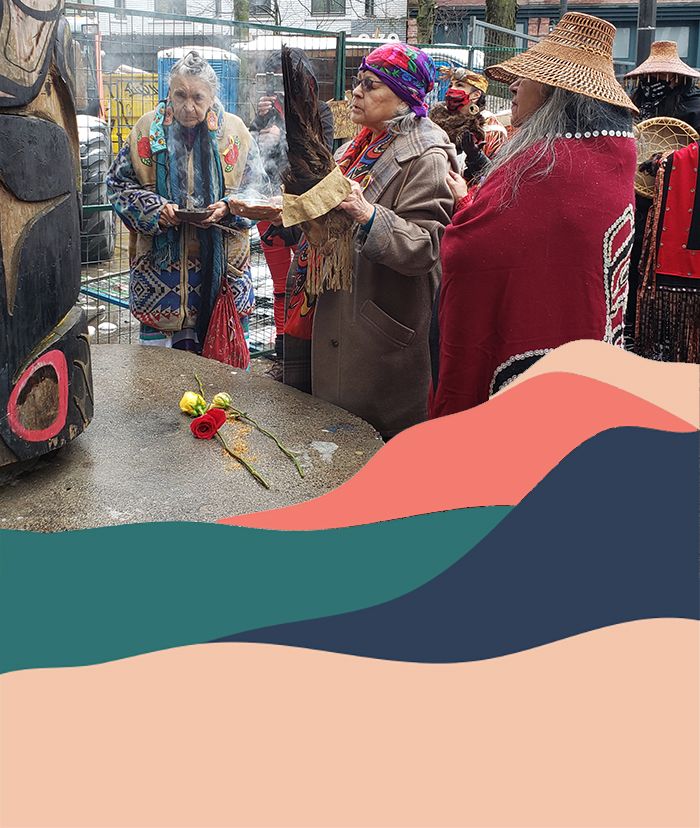
Since Time   Ch’ich’iyúy Elxwikn
Immemorial   The Twin Sisters
             What settlers and newcomers may know as “The Lions” are known to the Host
             Nations as Ch’ich’iyúy Elxwikn - “The Twin Sisters” – reminders of the values and
             kindness of Indigenous women.

             We recognize the brilliance of the women who call this place home didn’t begin with
             Vancouver’s incorporation in 1886, nor did equality first arrive when women won the
             right to vote or were first elected to City Council.

             Before settlers arrived, there was equality here. Indigenous women were leaders, land-
             owners, and matriarchs. Since time immemorial, the women and Two Spirit people of
             the Musqueam, Squamish, and Tsleil-Waututh Nations have built their communities,
             raised their children and grandchildren, and told their own stories on this land.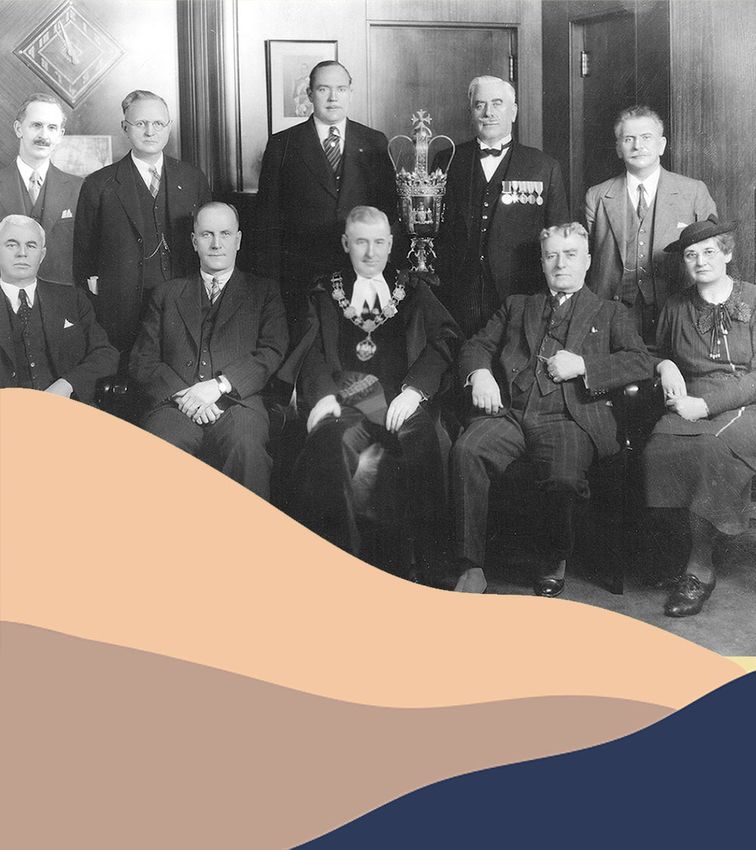
HEALTH &                                                                               Indigenous
                                                    POLITICS
      WELLNESS

Gender equity is rarely a single issue. Many of the individuals and organizations featured here meet their goals by working
across boundaries and being open to new or different perspectives, engaging with intersectional feminism.

Each individual or organization has been assigned a dominant colour scheme to correspond with where they are situated in
the move towards equity. Some may correspond to two or three. It is a helpful reminder that we achieve more together.

                                                                                                  SOCIAL
      2SLGBTQ+                                   HISTORICAL
                                                 HI ORICAL
                                                                                                  JUSTICE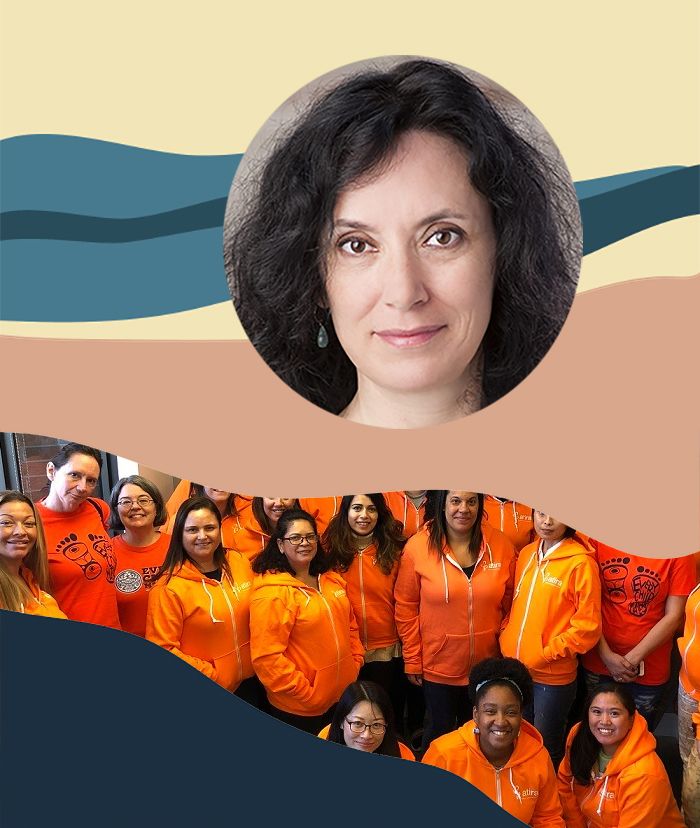
Sophie
                                                                    This painting, Sophie with Berry Basket, Stanley Park by Margaret Wake is from the
                                                                    collection at the Museum of Vancouver. Sophie, the subject, is seated, wearing a berry
                                                                    basket with a woven tumpline. The basket features a stone hammer design which is
                                                                    associated with the Mount Currie and Upper Squamish areas. Based on this, it is possible
                                                                    Sophie was from the Squamish Nation.

                                                                    This painting is loaded with symbolism. Sophie is pictured in Stanley Park, the site of a
                                                                    village inhabited by First Nations people for thousands of years before settlers arrived. The
                                                                    limited information we have access to about Sophie speaks to the collective erasure of
                                                                    Indigenous women in the canon of women’s rights. Our ability to determine that Sophie
                                                                    may have been from the Squamish Nation based on the basket design, the weaving of which
                                                                    would have been done by a woman, speaks to the role of Indigenous women – and all
                                                                    women – in our connection to our communities

Connection to our communities

                           Museum of Vancouver Collection: PA 184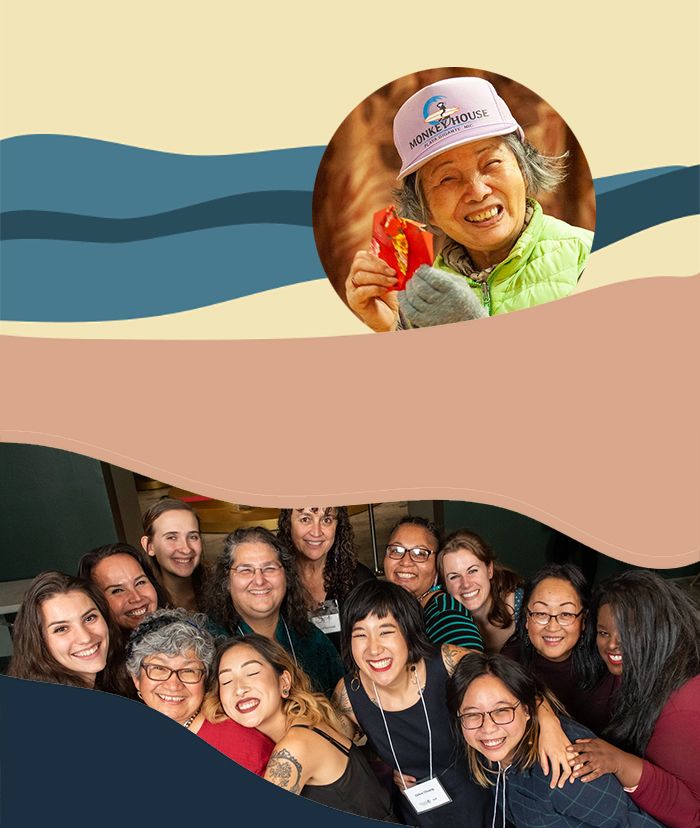
.J..

                                                                             Agnes Lacket Joe
                                                                             Squamish

                                                                             On 13 June, 1886 shortly after Vancouver had been officially incorporated as
                                                                             a city, it burned. Crews using a controlled burn to clear the land for railway
                                                                             expansion lost that control as a wind rose up. Within 45 minutes, the city was
                                                                             nearly levelled.

                                                                             Seeing the devastation from across Burrard Inlet, Agnes Lacket Joe of the
                                                                             Squamish Nation paddled her canoe across the water. Joe and other Squamish
                                                                             paddlers bravely rescued people who had taken refuge in the water. The
                                                                             people rescued were residents of a city that had forced Squamish families
A rescue crew across                                                         from their traditional lands to reserves on the north shore.
the inlet
                       Photo courtesy of City of Vancouver Archives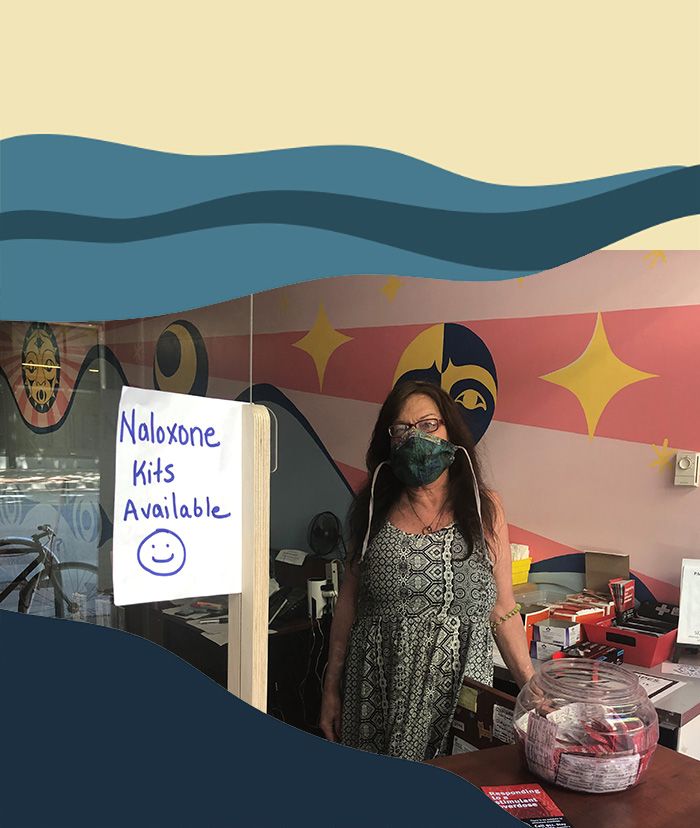
Helena Gutteridge

                            “Every reason that men advance for having the vote applies to
                            women.”

                             Helena Gutteridge was born into a working-class family in London, England. She left her family
                             at age 14 and worked as a cutter in the tailor’s trade while earning her teaching certificate. By
                             the time she arrived in Vancouver in 1911 at the age of 32, Gutteridge was both educated and
                             attuned to the struggles of women and working-class people.

                             A driving force in the women’s suffrage and labour movements, she forged alliances among
                             diverse groups to affect social and political change for the benefit of women and workers. In
                             1937, she became the first woman elected to Vancouver City Council. Her advocacy laid
First woman elected          important groundwork for issues still very relevant to Vancouver today: gender equality, equal

to Vancouver City Council    pay, homelessness, and the need for safe, affordable housing for all.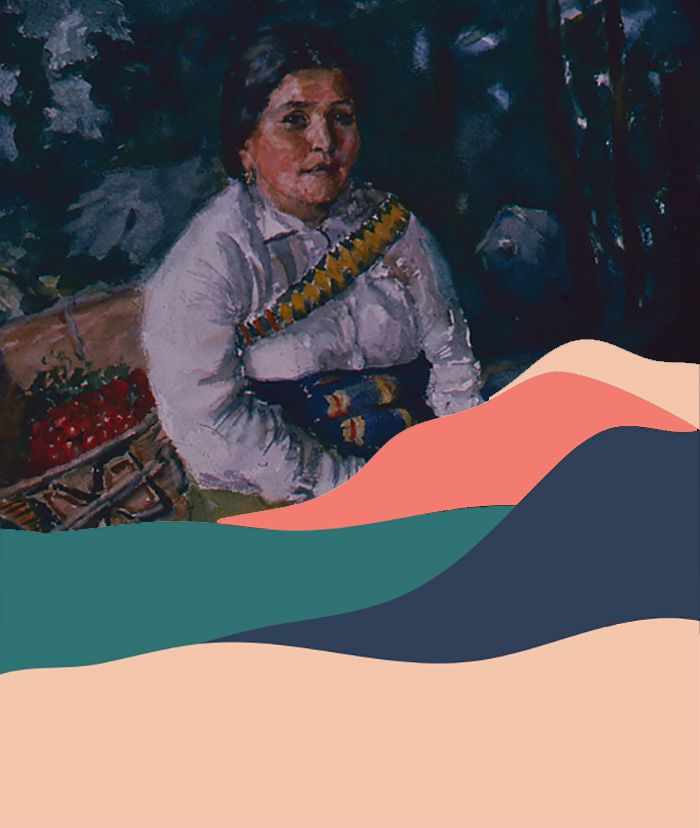
Evelyn Story Lett

                                                                      One of the first female graduates of the University of British Columbia,
                                                                      Evelyn Story Lett was a founding member of the UBC Alma Mater Society.
                                                                      She fought for the equal treatment of UBC’s female students, ensuring
                                                                      women at UBC had the right to vote in 1914, even before women could
                                                                      vote in Canada.

                                                                      A lifelong member of the University Women’s Club of Vancouver, Lett
                                                                      was instrumental in raising the funds for a much-needed daycare facility at
                                                                      UBC. For this and her many other contributions to the community, Lett
                                                                      was made an Officer of the Order of Canada in 1997, one year before her
Equal education for women
                                                                      death at the age of 102.

                       Photo courtesy of City of Vancouver Archives
Helen Gregory MacGill

                                                                     Helen Gregory MacGill learned from her suffragist mother that women, especially those with
                                                                     wealth and connections, ought to seek gender equality as a means to improve society. MacGill
                                                                     put that lesson into practice as one of Vancouver’s leading voices for women’s right to vote.

                                                                     MacGill also focused on women’s issues as they related to the workforce. Under her guidance
                                                                     twelve women’s organizations purchased a large building in the West End. The Vancouver
                                                                     Women’s Building provided space for women’s groups and childcare, as well as classes on
                                                                     writing and effective public speaking.

                                                                     In 1917, MacGill was appointed to the Juvenile Court of Vancouver to deal with cases involving
                                                                     girls; she was the first female judge in the province. She retired in 1945 at age 81.
First female judge
in British Columbia
                      Photo courtesy of City of Vancouver Archives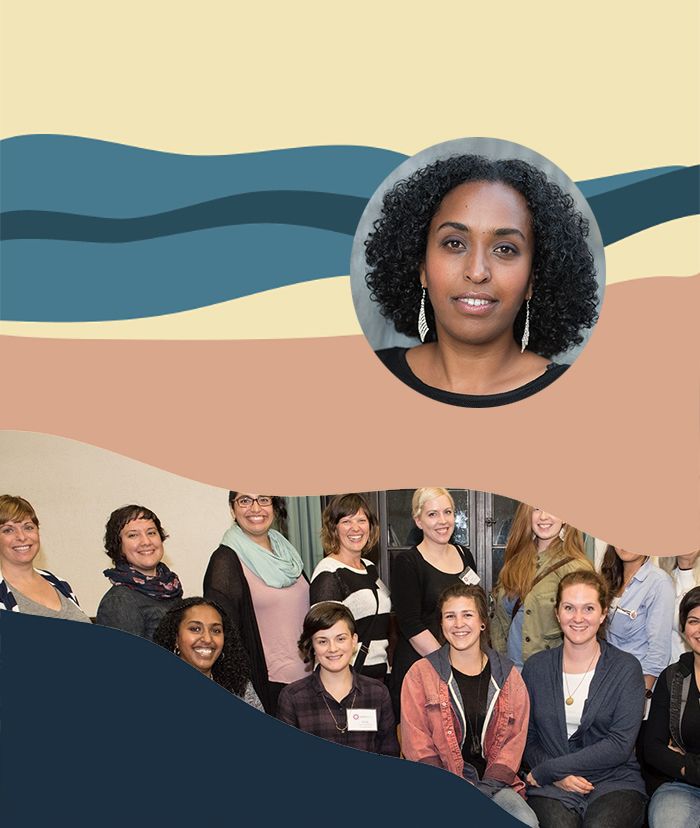
The Crèche
                                               Established in 1910, The Crèche provided daycare for the children of working families for ten
                                               cents a day. Originally located in the Vancouver Women’s Building, the purchase of which
                                               was facilitated by such women as Helena Gutteridge and Helen Gregory MacGill, The Crèche
                                               was the first such public daycare in Canada.

                                               In addition to offering childcare, The Crèche also housed an employment bureau where
                                               women could search for work. Filling an obvious need, The Crèche cared for 123 children and
                                               filled 2,000 working positions within eight months of its opening.
                    Ten cent a day
                    childcare                  The Crèche put a stop to its employment services in 1919, focusing instead on the interests of
                                               children in need. In 1932, The Crèche closed after the childcare portfolio was shifted to the
                                               Vancouver Day Nursery Association.

Photo courtesy of City of Vancouver Archives
First Chinese Canadian
teacher in the Vancouver School Board
Vivian Jung
In 1945, Vivian Jung was a young teacher-in-training who needed a swimming
lifesaving certificate to become a licensed teacher. She was denied access to Crystal
Pool, the only public pool available at that time which excluded Chinese and other
racialized people. Her instructor and classmates insisted they would not enter the
pool unless Vivian was allowed to enter.
In challenging the status quo, Jung and her fellow students helped dismantle
racially discriminatory bylaws that had restricted and excluded people of colour
from public spaces in British Columbia for decades.
Jung eventually became the first Chinese Canadian teacher hired by the
Vancouver School Board to teach in the public school system.Gertrude Guerin
Squamish on her mother’s side, Gertrude Guerin married into the Musqueam First Nation
when she wed Victor Guerin in 1936.
It was within this community that Guerin became active in advocating for the rights of
Indigenous people. This led to her election as Musqueam chief in 1959; she was the first woman
to serve as an elected chief in Canada.
Keenly aware of Indigenous migration to urban centres to pursue economic opportunities,
Guerin founded what is now the Vancouver Aboriginal Friendship Centre Society, co-founded
what is now the Native Education College, and was a founding member of the Vancouver Police
and Native Liaison Society,
Guerin was also an appellant in the 1984 Supreme Court of Canada case R. v. Guerin, the ruling
First elected female of which established the Federal government’s fiduciary duty to First Nations.
Chief in CanadaMilitant Mothers of
Raymur
In 1971, the Militant Mothers of Raymur organized a series of blockades on the railway
tracks to the east of Stamps Place in the Strathcona neighbourhood. Their demand was a
safe railway crossing for their children, which they eventually achieved.
Among the mothers were: Carolyn Jerome, Alice Hamilton, Judith Stainsby, Jean Amos,
Toni Cowlishaw, Ollie Strauman, Barbara Burnet, Joan Morelli, Sheila Turgeon, Muggs
Sigurgeirson, Babs Cain, and Dorothy Cox.
Ray-Cam Cooperative Community Centre emerged from their grassroots activism,
opening in 1976 as a social recreation centre and food co-operative. For over 40 years, the
Centre has provided childcare, support, services, and recreation for children, youth,
“We’re here and families and seniors living in in the Downtown Eastside.
we’re not going to budge”AUCE Local 1
“No employee should lose her job or seniority in case of pregnancy.”
Leading the way for
In 1974, years before other Canadian unions won maternity leave benefits
maternity benefits in collective agreements, the Association of University & College
Employees (AUCE) Local 1 at the University of British Columbia made
history.
In its first collective agreement, UBC clerical and library workers achieved
contract language that provided fully funded maternity leave for its
members. It was a breakthrough not just for workers at UBC, but for
families across the country.Rosemary Brown
“We must open the doors and we must see to it that they remain open so that others can pass
through.”
Before embarking on her political career, Rosemary Brown earned her Masters of Social Work from
the University of British Columbia. During her career as a social worker, Brown fought against
racism and sexism, helping to found the British Columbia Association for Coloured People in 1956.
Elected to the British Columbia legislature in 1972, Brown’s ethos as a feminist social worker led
her to advocate for the welfare of lower income, marginalized, and racialized communities.
First Black woman
elected to a provincial legislature Brown left public office in 1986 and was awarded both the Order of British Columbia and the
Order of Canada before her death in 2008.Downtown Eastside
Survival, strength, Women’s Centre
sisterhood
Founded in 1978, the Downtown Eastside Women’s Centre is one of the few safe
spaces within the Downtown Eastside exclusively for self-identified women and their
children. High levels of violence, homelessness, addictions and poverty characterize
the DTES community. Women and children are particularly vulnerable to
exploitation, injustice and injury.
The mission of the DEWC is to provide a safe, non-judgmental environment for
women from all walks of life, who live and/or work in the DTES. To achieve this goal,
the Centre provides supportive surroundings with meals, counselling, advocacy,
and programs which nurture and empower members.Battered Women’s
Support Services
Since 1979, Battered Women’s Support Services has provided support and advocacy for women
who have experienced abuse. Part of a global feminist anti-violence movement, BWSS’s long-
term goal is the elimination of all violence against women and girls.
The violence stops
Since 2003, Angela Marie MacDougall has served as Executive Director of BWSS, using 30 years
here of experience as an advocate, activist, and frontline worker to raise the profile of the
organization and to make headway in the battle against gender-based violence.
In early 2020, in anticipation of a COVID lockdown, MacDougall and the team at BWSS
ramped up services to provide 24/7 support for those in need. By mid-April of 2020, BWSS had
seen a 300 per cent increase in demand for services.Sadie Kuehn
“Equal treatment is for all of us because all are human.”
Originally from the state of Georgia, Sadie Kuehn arrived in Vancouver via Kitimat,
Midway, and Kamloops, BC. She began her advocacy work in Kitimat where she started
women’s groups and in Kamloops where she facilitated connections between Indigenous
and non-Indigenous women.
In 1985, after having been in Vancouver for three years, Kuehn became the first Black
school trustee to serve on the Vancouver School Board. Five years later she was elected
president of COPE; she was the first person of colour to lead a civic party.
Drawing parallels between the Indigenous experience in Canada and the Black experience
in the US, Kuehn fought and continues to fight to activate anti-racist policy and education
Vancouver’s first Black
in Vancouver’s schools.
school trusteeWendy Au
Lifelong public service
With over 40 years experience as a public servant and volunteer, Wendy’s vision has been one of
collaboration, innovation and inclusivity. She is currently a consultant for the City of Vancouver
Chinatown Initiative. Wendy was the former Assistant City Manager and retired from the City of
Vancouver in June of 2018 after 39 years with the City.
Her participation has been integral to programs like the Vancouver Agreement, a ground breaking tri-
level government agreement that focuses on improving conditions in the Downtown Eastside and the
inner city. When confronted with rising Vietnamese gang membership not addressed by existing
programs, she helped established the collaborative Vietnamese Integration Project to reach high-risk
youths.
She has earned the reputation as a tireless advocate for diversity and inclusion, especially in the
Downtown Eastside. As a volunteer to a multiple of organizations and a board member of Vancouver
Coastal Health, Wendy gives back to build and enhance her community.Watari Counselling & Support Services
Society
Watari was developed in 1986 as a response to the lack of services and programs for high-
risk street-involved youth in Vancouver. Since then, Watari has helped thousands of people
in the Downtown Eastside and surrounding communities, through youth and community
programs, as well as through their counselling team.
Over the years, Watari has developed important programs for everyone needing support
including Indigenous people and migrant workers. Their Latin American Group and
Vietnamese Community Kitchen have become important staples in the community.
Watari is led by Executive Director Ingrid Mendez de Cruz. Before taking up the role in
2018, she served as Watari’s Latin American drug & alcohol counsellor for 20 years.
A bridge to
Healthier possibilitiesbarbara findlay, qc
“It is my conviction that unless we work as hard on the ways we are privileged - whether by white
skin, by heterosexuality, by able-bodiedness, or by economic advantage – as we do on the ways we
are oppressed, equality will never come.”
Both within and without her capacity as a lawyer, barbara findlay lives her stated philosophy. A
founding member of the Sexual Orientation and Gender Identity Conference (SOGIC), a queer
lawyer group within the Canadian Bar Association, findlay is also a founding member of the
December 9 Coalition, a working coalition of leaders in the 2SLGBTQ+ community which
engages in political action and advocacy work.
In addition to being appointed to Queen’s Counsel, findlay has been honoured with an Award
lawyer for queers
of Merit by the Sexual Diversity Studies Department at the University of Toronto, a HERO
award by SOGIC, and the Queen’s Diamond Jubilee Medal.'
She fought for everyone
Jamie Lee Hamilton
Becki Ross, professor at UBC’s Department of Sociology and Institute for Gender, Race,
Sexuality, and Social Justice described Jamie Lee Hamilton as someone who was at the “forefront
of a confluence of very important community struggles, and had membership in all of those
struggles.”
An activist devoted to the issues faced by sex workers, Indigenous people, and the 2SLGBTQ+
community, Hamilton advocated fiercely for all, becoming the first trans person to run for
public office in Canada, serving on the board of directors of the Greater Vancouver Native
Cultural Society, and operating Grandma’s House, a refuge where sex workers in the Downtown
Eastside could access support services.
Though Grandma’s House was shut down by the VPD in 2000, Hamilton continued her
advocacy work until her death in 2019.Sandra LaFramboise
The years after Sandra LaFramboise came out at the age of twelve were
largely bereft of support outside of queer and trans youth engaged in street-
level sex work. After marching on Parliament Hill in 1974 to protest for gay
rights and against police harassment, LaFramboise was motivated to
continue this work and help construct a system of support.
After arriving in Vancouver in 1987, LaFrambroise completed a psych-
nurse diploma but discovered that most agencies in Vancouver did not
want to provide services to trans women. This led to LaFrambroise’s fierce
advocacy for trans women and the establishment of the High Risk Project,
which provides services to trans women street level sex workers living with
HIV/AIDS.
Trans inclusionWomen’s Memorial
March
“Keep us safe, respect our culture and values.”
The Women’s Memorial March has its origins in Vancouver’s Downtown Eastside.
What began in 1992 as an Indigenous women-led response to the murder of a
woman on Powell St in Vancouver, has become an annual protest against the
disproportional number of Indigenous women missing and murdered in the
community.
The women’s memorial march continues to honour the lives of missing
and murdered women and all women’s lives lost in the DTES. Increasing deaths of
many vulnerable women from the DTES still leaves family, friends, loved
Remembering
ones, and community members with an overwhelming sense of grief and loss.
MMIWG2S Thank you to elders Rita Blind and Annie Johnston for allowing us to honour
the Women’s Memorial March in this space.Longest serving woman
in Canadian Parliament
Hon. Hedy Fry
“Leave the world knowing you made it a better place.”
First elected to Canadian parliament in 1993, Hon. Hedy Fry is now the longest serving female MP in
Canadian history. Before entering politics, Fry practiced family medicine at St. Paul’s Hospital.
While practicing, she also served as president of the Vancouver Medical Association and the British
Columbia Medical Association, successfully securing the first retirement plan for doctors in Canada.
As an MP, Fry has been a vocal advocate for women, the 2SLGBTQ+ community, and marginalized and
racialized communities. She is a Special Representative for Gender Issues to the Organization for
Security and Co-operation in Europe Parliamentary Assembly as well as Head of the Canadian
Delegation to the OSCEPA.Cities for everyone
Ellen Woodsworth
Ellen Woodsworth is a writer, organizer, and international speaker and consultant on urban
issues. A former Vancouver city councillor, Ellen is passionate about working for social
justice, economic equality and environmentally sound planning.
Woodsworth works for cities to create social justice, economic equality, a creative culture and
environmentally sustainable planning, using an equity/intersectional lens to ensure that cities
work for everyone.
As the founder and External Chairperson of Women Transforming Cities she is working on a
three year project funded by Status of Women Canada to examine systemic barriers to
women’s participation in local government.By, with, and for
sex workers
PACE Society
PACE was started informally in a one bedroom apartment in Vancouver in 1994 by sex
workers and their allies, who recognized that some services for sex workers were best
delivered by sex workers.
A peer-driven society that seeks to reduce the harm and isolation associated with sex work
otr>ne. through education, support, and advocacy, PACE works to increase the health, safety, and
its empowerment of sex workers of all genders by respecting their right to self-determination and
..Jll\ \CLb le... supporting their self-identified needs.
..
PACE Society’s hope is for long-term commitments to social change within all levels of
government and individuals to eradicate systemic issues that create disproportionate levels of
poverty, homelessness, health concerns and substance use within the Sex Work community so
that individuals can make safe, healthy, and informed decisions in their lives.Cecilia Point
Musqueam
A member of the Musqueam Nation, Cecilia Point is a political activist who stood for
over 200 days protecting her nation’s ancestral burial site from development in 2012.
Since then she has taken part in countless political actions advocating for human
rights and the environment.
Cecilia has also dedicated many years to cultural preservation in the field of
Aboriginal cultural and eco tourism. She currently holds the position of Director of
Finance and Administration for the Indigenous Tourism Association of Canada.
She is a facilitator for reconciliation workshops with the Bright New Day
organization, and has been designated a public speaker for her nation.
Standing for cultureWISH Vancouver
WISH works to improve the health, safety, and well-being of self-identifying women who are
involved in Vancouver’s street-based sex trade. Women who engage in sex work are some of the
most marginalized and vulnerable women in our society; those who engage in street-based sex work
are even more at risk of social stigma, violence, and health crises.
WISH Drop-In Centre Society provides support to women who work in the street-based sex
trade—80 per cent of whom are homeless or precariously housed, and half of whom are Indigenous.
All live in poverty.
WISH is led by Executive Director Mebrat Beyene. With over twenty years of experience working in
social justice and community development, Beyene has worked closely with organizations such as
Status of Women Canada and is a recipient of the YWCA Metro Vancouver Women of Distinction
Award.
A place where all
women are valuedMelanie Mark
Hli Haykwhl Ẃii Xsgaak
Nisga’a, Gitxsan, Cree, Ojibway
Melanie Mark was elected MLA for Vancouver-Mount Pleasant in 2016. She is the first
female First Nations Member of the Legislative Assembly of British Columbia and
subsequent Cabinet Minister.
Prior to entering the legislature, Mark worked as an Advocate at the Office of the
Representative for Children and Youth, an independent office of the legislature serving one of
the province’s most vulnerable populations. Family ties to Northern British Columbia have
prompted Mark to work with organizations such as the Urban Native Youth Association and
to co-found the Vancouver Aboriginal Community Policing Centre.
First female First Nations member
She is the proud mother of two girls, Maya and Makayla.
elected to the BC legislatureAtira
Atira Women’s Resource Society is accessible to anyone who identifies and lives full
time as a woman and who experiences gendered violence and misogyny. They also
support women struggling with substance use and or mental and spiritual wellness.
From low barrier housing for women fleeing from violence to outreach, daycare to
education, the organization works to empower and support women affected by
violence.
Janice Abbott, Executive Director since 2002, has led Atira from a single transition
house located in South Surrey to a large multi-service agency with multiple
properties throughout the Lower Mainland, two for-profit subsidiaries, a
development arm, and more than 500 staff.
Women empowering
womenMichelle Nahanee
Ta7talíya
Squamish
Ta7talíya Michelle Nahanee is a decolonial facilitator & strategist catalyzing social change to
transform colonial narratives & impacts through centred Indigeneity.
Michelle grew up in the Squamish Nation community called Eslha7an between the mountains and the
ocean. She works within the intersection of class, race, culture and creativity focusing on social
change through strategic communications and deep engagement. Michelle’s collaborations have
influenced opinions, changed behaviours and mobilized community action.
In 2018 she founded Nahanee Creative Inc., a small team of Squamish creative professionals. They are
mothers and daughters, friends and mentors within a wider community of Indigenous-led businesses.
Decolonize everythingJada-Gabrielle Pape
Saanich, Snuneymuxw
Jada-Gabrielle Pape is Coast Salish from the Saanich and Snuneymuxw Nations on Vancouver
Island. She has been working with urban and rural First Nations Communities and Peoples for
almost thirty years. She is a specialist in decolonizing approaches and trainings and takes great
care to bring forward the teachings of her Elders, Family, Community and Ancestors. Her work
has brought her to train doctors, nurses, doulas, midwives, prison staff, prison inmates, sex
workers, municipal governments and organizations, Chiefs and Counsels, non-profits, elementary
and high school students and staff.
Jada is a curriculum consultant and designer and also a film director. She uses all her working
skills to showcase the strengths of her people and repair some of the injury caused by colonialism.
Her most important role in the world is as a single mother to an amazing sixteen-year-old
daughter.
Decolonize what you loveStephanie Allen
“Building replacement systems for when we dismantle oppressive ones.”
Stephanie Allen is an affordable housing specialist and organizational
development professional with a focus on equitable city-building. She
combines her expertise in market and community housing development with
her background in government policy and stakeholder engagement to
advance community building initiatives across the province.
Outside of work, Stephanie is a founding board member of the Hogan’s Alley
Society, is on the interim board of the Federation of Black Canadians, and
serves on the City of Vancouver’s Poverty Action Advisory Committee.
Building justiceChris Morrissey
Chris Morrissey is the co-founder of Rainbow Refugee, a non-profit society that supports people
seeking refugee protection in Canada because of persecution based on sexual orientation, gender
identity, gender expression, or HIV/AIDS status.
Along with lawyer Rob Hughes, Morrissey founded the society in 2000 after facing great
difficulty in sponsoring her life partner’s immigration to Canada. Rainbow Refugee has since
partnered with the federal government to direct a national, blended sponsorship program called
the Rainbow Refugee Assistance Partnership.
Since 2011, the assistance partnership has helped groups in 25 cities across Canada to become
A safe and just world for
active sponsors. In British Columbia alone, there are 20 active community sponsorship groups,
2SLGBTQ+ people which the society calls Circles of Hope.
Photo courtesy of Daily XtraDiana Day
Oneida Nation, Wolf Clan
Lead Matriarch, Pacific Association of First Nations Women
Passionate about social justice issues that impact the health and welfare of the most
vulnerable, Diana Day has served as Lead Matriarch at the Pacific Association of First
Nations Women since 2017.
The Pacific Association of First Nations Women envisions a matriarchal community
where all Indigenous women in BC are safe and respected with a sense of belonging and
connection to cultural traditions. To support their vision, PAFNW advocates for
systematic change and provides culturally safe learning and holistic, social, spiritual,
psychological and educational support to uplift Indigenous women and strengthen
families..
Lead matriarchWAVAW Rape Crisis
Centre
The WAVAW Rape Crisis Centre was founded in 1982 with the goal of creating a
future free from sexualized violence.
WAVAW provides support services to survivors of sexualized violence who have
shared experiences of gender marginalization: cis and trans women, Two Spirit,
trans and/or non-binary people. They advocate for social and systemic change
through education, outreach and activism.
Dalya Israel has worked with WAVAW for 16 years, serving as Executive Director
for two.
Supporting survivors,
Shifting societyTayybeh
An unprecedented culinary experience
Nihal Elwan started Tayybeh in 2016 with a small grant from the Vancouver Foundation
and the desire to give newcomer Syrian women fleeing the Syrian Civil War the chance to
show off traditional dishes from their home cities of Aleppo, Homs, Daraa, and Idlib.
Now five years on, Tayybeh has grown beyond pop up dinners to a full-fledged catering
operation with a food truck and prepared goods in local shops. The social enterprise’s
mission is to continue to empower newcomer women and offer opportunities for
employment, financial independence, and social integration by offering and highlighting
their delicious and authentic food.
Introducing Syrian
culture through foodBarbara Lawson Swain
Heiltsuk, Nisga’a, Haisla
Barbara Lawson Swain joined Reconciliation Canada as Chief Strategic Officer with 20+
years of experience of service delivery for the Urban Indigenous Community of Greater
Vancouver. Mrs. Lawson Swain continues to work in partnership with Lu’ma Native
Housing Society as a Program Director for Indigenous Youth In and From Care and
Aboriginal Housing Outreach.
Her employment experience in leadership includes sectors such as education,
employment, housing, homelessness, youth and most recently the Executive Director of
The Aboriginal Mother Centre Society.
Barbara’s firm belief is to lead with love and serve others as individuals without
judgement while maintaining dignity.
Lead with love and
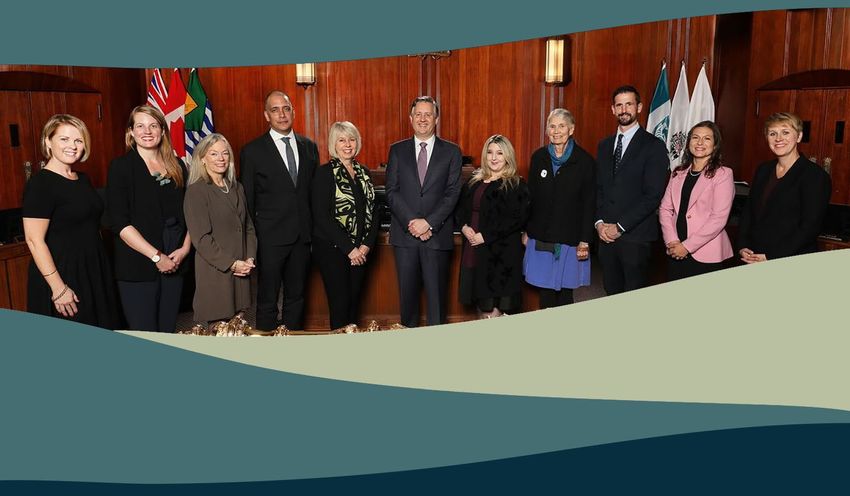
serve othersVancouver City Council, from left to right: Rebecca Bligh, Christine Boyle, Colleen Hardwick, Pete Fry,
Adriane Carr, Mayor Kennedy Stewart, Melissa De Genova, Jean Swanson, Michael Wiebe, Lisa
Dominato, Sarah Kirby-Yung.
City Council
1937
Photo courtesy of City of Vancouver Archives
Representation
Matters
The 2018 civic election in Vancouver made history, with women accounting for
eight out of ten elected city councillors. Women are also represented at the City
by a Women’s Advisory Committee which advises Council and staff on
enhancing access and inclusion for women and marginalized genders to fully
participate in City services and civic life.~ · CITY OF VANCOUVER museum of vancouver
You can also read


