Ireland Where Digital Health Thrives - An Ibec Campaign
←
→
Page content transcription
If your browser does not render page correctly, please read the page content below

Ireland
Where
Digital
Health
Thrives

An Ibec Campaign
2 Ireland | Where Digital Health Thrives

Ireland | Where Digital Health Thrives                              3

Contents

Directors’ welcome                                             4

Chair’s introduction                                           6

Vision and strategic pillars                                   8

How digital is transforming healthcare                         11
Creating a sustainable health system                           12
Digital health empowering people                               14
The future of medicine                                         16
Working across the health sector                               18

Digital health companies going global                          21
Creating the right solutions                                   22
How apps help deliver care at home                             26
At the heart of digital health innovation                      30
Ireland’s Digital Health Ecosystem                             34

How medtech is connecting devices and people                   37
Digital monitoring of patient care                             38

How digital is reimagining medicine                            41
Reimagining pharma with digital transformation                 42

How technology is enhancing experts                            45
Health in the future                                           46

Achieving the full potential of the cluster                    49
Ireland as testbed for innovation and collaboration            50
Supporting healthcare software and services                    52

Supporting a thriving ecosystem                                55
Helping indigenous companies go global                         56
Bringing investment to Ireland                                 58
Creating knowledge from data                                   60

Support lifelong learning for a worldclass knowledge economy   63
Supporting Irish competitiveness                               64
Industry-led training for digital health leaders               66
4                                                                                            Ireland | Where Digital Health Thrives

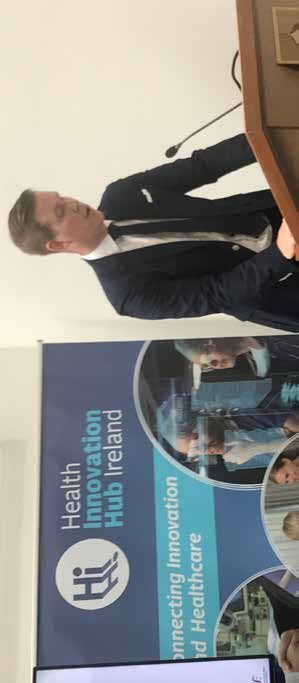
Sinead Keogh                                Matt Moran                                    Una Fitzpatrick
Director, Irish Medtech Association,        Director of BioPharmaChem Ireland             Director of Technology Ireland
Director, Ibec Medtech & Engineering

Directors’
welcome
                                                                     services to deliver more holistic healthcare solutions.
Ireland, a global hub                                                She says “Many medtech companies are now future-proofing
for digital health                                                   their research and development (R&D) departments towards
                                                                     complete care solutions, looking at how digital technology
We speak to the directors of the Irish Medtech Association,
                                                                     can not only improve outcomes, but also improve the
BioPharmaChem Ireland and Technology Ireland, to find out
                                                                     patient experience.”
what digital health means for their respective industries and
why Ireland is becoming a thriving centre for digital health.
                                                                     Sinead explains that, “Digital health is revolutionising
                                                                     healthcare with more personalised technologies and
Revolutionising healthcare                                           healthcare solutions. Hospitals account for 40% of health
                                                                     spending, but digital health empowers patients and helps
“Increased demand for services, ageing populations and
                                                                     them get on the right care pathways.”
the rise of chronic disease are just some of the reasons
why healthcare spending is rising” Sinead Keogh
Director, MedTech & Engineering says. The latest figures from        ‘Where Digital Health Thrives’
the Organisation for Economic Co-operation
                                                                     As part of this campaign ‘Where Digital Health Thrives’
and Development (OECD) reveal that there was an
                                                                     we wanted to capture the scale and scope of the digital
estimated 2.5% spending growth in 2018.
                                                                     health ecosystem already here. We have mapped nearly
                                                                     200 companies, who are already delivering digital health
To tackle rising costs she notes that, “Many businesses
                                                                     solutions here in Ireland, and I’m sure there are many more.
are embracing value-based health care which links the
                                                                     Market segments include, telehealth, data, analytics and cyber
cost to the quality of patient outcomes”. This reimbursement
                                                                     security, health information technology, connected medtech,
model is underscored by innovation in both products and
                                                                     mobile health and more.
Ireland | Where Digital Health Thrives                                                                                                  5

She continued, “Ireland is recognised as a top 5 global hub          sectors of biopharma, medtech and tech, along with the
for medtech, and it’s our ambition to make Ireland a go-to-          burgeoning digital health sector.”
destination of choice for digital health.”
                                                                     “But in Ibec, we have representative bodies for these
“We’re uniquely placed to become a leader in this field with 9       industries all under one roof. This helps with collaboration
of the world’s top 10 medtech companies, 10 of the top 10            between them all and the Ibec Digital Health Working Group
tech companies and 10 of the top 10 biopharma companies              is bringing leaders and experts together to develop the
all having a base here. Moreover, with sales of €15.7                business supports and shape policies for success. The
billion forecast in digital health by 2024, and strong growth        ‘Where Digital Health Thrives’ campaign is the organisation’s
projections year on year, it’s an attractive area to drive growth,   first cross-sectoral initiative of its kind and we see great
innovation and transform healthcare.”                                opportunity to use this approach to deliver results that
                                                                     matter to members.”
“If there’s one thing that Covid-19 has taught us, it’s that we
needed to change our healthcare delivery system,” Sinead
adds. “Health spending before Covid-19 was an average
                                                                     Technology supporting efficiency
8.8% of GDP in the OECD. Management of health spending               Digital health has been around as a concept for many years
has had to adapt to face the challenge of the pandemic, this         now. But it is only within the last few years that the industry
is unsustainable, but Covid-19 has increased the adoption            has become such an innovative space. Una Fitzpatrick,
of digital health solutions in the health system”                    Director of Technology Ireland says that currently, there is a
                                                                     big push in terms of new technology, and how those can be
“With hospital visits being stopped and the reluctance of            applied in a healthcare setting.
people to come into a hospital or a clinic, a lot of physicians
have moved online with telemedicine and home monitoring.             “When we refer to digital health, I think some people have
So, while we had this type of technology before, the crisis has      concerns about big data companies and artificial intelligence,”
accelerated the demand for, and acceptance of, digital health        says Una. “They might also be fearful of the idea of technology
across many health systems globally”                                 and ‘robots’ looking after them. But it’s really just another tool
                                                                     in the armoury.” Una believes it will never replace the human
                                                                     element of healthcare, but it is a technological tool to make it
Implications for life sciences                                       more efficient and accurate.
Matt Moran, Director of BioPharmaChem Ireland says that as
an association, they aim to further the digital health industry
to benefit society at large. “It melds together monitoring
                                                                     Improving quality of care
biomarkers within the body, with therapy to help the patient         “The European Commission set out its Covid-19 recovery
have a better outcome” Matt remarks.                                 response to help improve the EU’s response to future
                                                                     epidemics and pandemics. This has allocated a significant
“Sick patients use virtual tools to speak to a doctor to get         budget to all member states. It’s really heartening to see that
better, and people are using these tools to make sure they           20% of that is going to be focused on digital healthcare. That’s
don’t get sick in the first place,” says Matt.                       a lot of support for this industry as a response to Covid.”

“We already have many examples of how this collaboration             Una adds, “This creates a huge opportunity for Irish
is working. Diabetes is one of the areas where digital               companies. We have a strong tech community here, and
health can be especially useful as it needs to be constantly         we are able to identify what the biggest needs are. So, with
monitored. We have seen digital health tools such as glucose         European support, these companies can scale up and create
monitoring tools. This sees every one of the three industries        partnerships with other jurisdictions too.”
come together to solve an issue for patients. That level
of engagement is why Ireland is a great place for digital            Una says there are challenges to the wide adoption of digital
health to  progress even further.”                                   health, such as getting stakeholders to commit to making
                                                                     changes. But as there are so many benefits and cost savings
“We can see many more digital health products and services           associated with digital health tools, this adoption won’t take
emerging here. To have them commercialised and made in               too long.
Ireland will help the industry and economy going forward.”
                                                                     “We want Ireland to be a location where all stakeholders
                                                                     and all participants in the digital health care sector can
Ibec, bringing industries together                                   participate fully. There is such a creative community across
Matt says not only will the patient benefit from the use of          tech, medtech and biopharma with access to the fantastic
digital health, but the country as a whole will also benefit from    talent here in Ireland too. I see an openness and the ability
being engaged in this next wave of digital therapeutics. “There      to innovate here and this is going to take digital health and
are challenges to bringing together the three different industry     Ireland as a location to a whole new level on a global scale.”
6                                                     Ireland | Where Digital Health Thrives

Chair’s
introduction
                             How Ireland’s history positions
                             us for future success
Digital health is the        John O’Brien, Chair of the Irish Medtech Association, and

intersection of healthcare   Chief Executive and Executive Chairman of S3 Connected
                             Health, talks about why digital health is so important and

and technology. The          Ireland’s thriving digital health industry

goal is to translate the     Fertile ground for
benefits that technology     innovation and growth

has brought to other
                             Ireland is unique in that it has several key ecosystem
                             advantages. It is a small and well-networked country. There

industries and bring
                             is also a worldclass network of innovation centres with a focus
                             on many of the multidisciplined aspects of digital health, from

them to healthcare.
                             medical research to cybersecurity and data science.

                             “All of this mixed together creates a really fertile ground for
                             doing digital health innovation in Ireland and exporting that
                             innovation to different markets,” says John.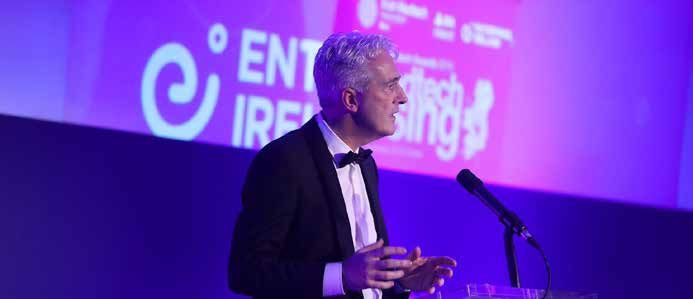
Ireland | Where Digital Health Thrives                                                                                                  7

“Ireland has a history of large companies setting up in Ireland,
as a launchpad into Europe. A lot of our startups and SMEs
                                                                     Bringing people together
are also built towards looking internationally. Our proven ability   John says there are many partnerships taking place between
to attract and build companies in this mode is a perfect model       large medtech companies and pharma companies, along
for digital health.”                                                 with innovative Irish startups and SMEs. This is an important
                                                                     development, as it is a sign that the rich ecosystem in Ireland
                                                                     is working together.
Ireland’s potential
John says that the Ibec Digital Health Working Group                 But of course, this ecosystem wouldn’t be possible without
is committed to fulfilling Ireland’s massive potential for           the talent which keeps the system going. Irish talent helps
digital health by enabling Irish companies to develop and            digital health thrive in Ireland.
commercialise digital health solutions while encouraging
the adoption of new technologies.                                    “Digital health is an attractive industry for people to work in,
                                                                     because it gives people an opportunity to develop solutions
John says, “Here in Ireland, we have companies which are             that save and improve lives. And as we look to the future we
working in digital health across the spectrum. This includes         must continue to attract and develop talent to create a real
medtech companies working on connected medical devices               innovative environment.”
to digital therapeutic companies developing software-based
therapies. And everything in between with companies working          “We have highly productive people who are ranked the most
on remote patient monitoring, digital clinical trials, and health    productive in the world. We also have one of the largest
analytics. It’s a really active area in Ireland.”                    percentages of 24-64 year olds with tertiary education as
                                                                     well as opportunities for industry-led lifelong learning with
Ireland also has a wide range of research organisations              programmes like Skillnet Ireland. Lastly, our culture makes us
relevant to digital health, from clinical research, to creating      very welcoming to mixed discipline approaches and mixed
regulated software. But underpinning it all is data. “Any            cultural approaches. This is essential for a successful digital
of the software that is developed around this area has               health solutions.
to be very mindful of data protection. So, cybersecurity
is a key component here too and there’s a lot of that
expertise in Ireland.”

Technology adoption
“Digital health is the intersection of healthcare and technology.

                                                                     If you want to bring
The goal is to translate the benefits that technology has
brought to other industries and bring them to healthcare.”

John notes that, “A great example of patients being helped           efficiencies to healthcare,
                                                                     you need to understand
through digital health is those with diabetes who are using
continuous glucose monitors. This is a patch that you put on

                                                                     the incentives in the health
your arm that connects to a reader or a smartphone. It gives
the diabetic patient a continuous reading of their glucose

                                                                     system and also the shift
levels. This gives data to the patient, allowing them to take
much more control over their condition.”

John says that this kind of empowerment of patients also             from payment for services
                                                                     to payment for outcomes.
helps to support healthcare professionals, “As we’re projected
to have a significant shortage of doctors over the coming

                                                                     And that’s where data
years, we’re going to have to help them make better decisions
faster with actionable data insights.”

John continues, “If you want to bring efficiencies to                comes in. Once you can
                                                                     measure outcomes, you
healthcare, you need to understand the incentives in the
health system and also the shift from payment for services to

                                                                     can measure effectiveness.
payment for outcomes. And that’s where data comes in. Once
you can measure outcomes, you can measure effectiveness.”
8                     Ireland | Where Digital Health Thrives

Ibec Digital
Health vision and
strategic pillars
Vision   To enable Ireland
         to become a
         recognised global
         hub for digital health,
         where companies
         can develop and
         commercialise
         products, as well as
         attract projects and
         investments.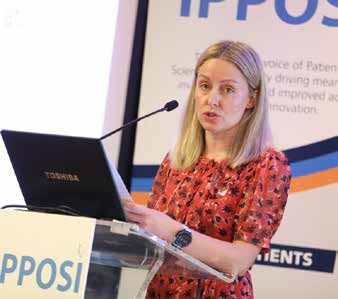
Ireland | Where Digital Health Thrives                                                                                        9

Ibec                                        1.
                                            Build awareness of the
                                                                                       2.
                                                                                       Represent the digital
Digital                                     value of digital health
                                            products and solutions:
                                                                                       health sector:
                                                                                       By engaging with Government,

Health                                      By showcasing how digital health,
                                            empowers patients, supports health
                                                                                       state agencies, and international
                                                                                       policymakers to help the sector
                                                                                       innovate and grow with the right
                                            care professionals, and improves
strategic                                   health systems. As well as promote
                                            Ireland as a location of choice for
                                                                                       policies and infrastructure.

pillars
                                            both startups and FDI multinationals
                                            to develop and commercialise digital
                                            health products, as well as attract
                                            projects and investments.

3.                                          4.                                         5.
Deliver industry foresight                  Support the development of                 Build partnerships in
to members:                                 a worldclass talent pool for               the digital health sector:
                                            the digital health sector:
By offering insights on the latest policy                                              By bringing together key sectors
and market developments affecting           By attracting mobile talent, as well as    such as the medtech, technology,
members through meetings, events,           supporting the upskilling and reskilling   and biopharma industries, along with
and collateral, with opportunities to       of the digital health sector by growing    key opinion leaders and clinicians,
share best practice and network.            the Connected Health Skillnet.             to develop and deliver digital
                                                                                       health solutions.
10                                                                                          Ireland | Where Digital Health Thrives

Policy priorities
As Ireland’s most influential
business representation
organisation Ibec advocates
for policies that matter to
business. We lobby both
Government as well as
international policymakers
to create the right conditions
to help our members achieve
their potential and grow.
Ciara Finlay, Senior Executive, Irish Medtech
Association, outlines the Ibec Digital Health
Working Group policy priorities to ensure
that digital health in Ireland thrives.

Government support: Prioritise digital health opportunities        Market Access: Complete the European Digital Single
with a whole Government approach to ensure Ireland has the         Market, and expand coverage of digital health with a Digital
right resources and a roadmap for the digital economy that         Health Act, similar to Germany’s, to make Ireland a location
includes digital health development and adoption as a priority.    of choice to develop, launch and adopt transformative digital
                                                                   health solutions that improve outcomes while lowering costs.
Competitiveness: Ensure global competitiveness by reforming
the Capital Gains Tax system, Key Employee Engagement              Regulatory pathway: Ensure that the regulatory pathway
Programme (KEEP), making changes to the Employment                 for digital health products and solutions is fit-for-purpose to
Investment Incentive Scheme (EIIS) to bring us in line with        optimise patient access to life changing innovations.
international best practice, as well ensure that Ireland has the
right business policies to attract foreign direct investments.     Health system engagement: Encourage collaboration
                                                                   between policymakers, business, and clinicians to identify
Investment: Set targets for investing in digital health            unmet clinical needs and facilitate the effective adoption of
services and supports to ensure that Ireland’s digital health      digital health solutions into the health system.
infrastructure and services foster a modern health system.
                                                                   Patient centricity: Put people at the centre of their treatment
Talent: Build capacity for diverse healthcare talent with          in an informed and supported manner at the appropriate point
upskilling and reskilling through the Connected Health Skillnet,   in patient care pathway, with digital health solutions such
as well as revise university curriculums to include key subjects   as personalised medicine, connected devices and remote
as data science, artificial intelligence, and health economics.    monitoring, in hospitals as well as in the community.

Innovation: Encourage business to drive disruptive                 Data privacy and security: Build trust and support
innovation and accelerate the development of digital health        best practice with a harmonised approach that ensures
solutions across key sectors such as medtech, technology           interoperability, data privacy and security, underscored by
and biopharma with collaboration between industry, clinicians,     standards for the processing of primary and secondary data.
and researchers.
How digital is transforming healthcare 11
How digital is
transforming
healthcare
Innovations in digital health have
been emerging in Ireland for many
years, but the demand has been
accelerated under Covid-19 with
technologies such as remote
diagnosis, data insights and
connected devices supporting care
delivery in and out of the hospital.
As we look to the future, digital
health products and solutions
can help ensure more sustainable
health system models that improve
outcomes while reducing costs.
Greater technology adoption in
hospitals, as well as by health care
professionals and patients will be
essential to reap the benefits of this
dynamic industry.12 Ireland | Where Digital Health Thrives
Creating a
sustainable
health system
Martin Curley, Director of Digital
Transformation and Open
Innovation at the Health Service
Executive (HSE), discusses why
there is an urgent need for digital
transformation in Irish healthcare.
“Without the introduction of digital, our healthcare system
won’t be sustainable,” says Martin Curley, who has an
extensive background in digital strategy, having worked with
Intel Corporation and Mastercard prior to working with the
HSE. “And Covid-19 has actually accelerated the demand
to move to digital.”
Martin shares an example of a solution the HSE introduced
as a result of the pandemic, “It was a remote management
solution for patients with Covid-19. Instead of patients with
mild to moderate symptoms being hospitalised, we were
able to monitor them at home using an app and a Bluetooth-
enabled pulse oximeter, which measures a person’s blood
oxygen levels.”
Martin says they reached a peak of over one thousand
patients being monitored through the solution and this meant
the healthcare system had the capacity for sicker patients.
“It also meant that the patients at home had the opportunity
for a better quality of life and at least the same care as they
would have received in hospital.”How digital is transforming healthcare 13
Leading with ambition Driving change
Martin, who became Chief Information Officer (CIO) at the Martin, who wrote a book called ‘Open Innovation 2.0’,
HSE after his roles at Intel and Mastercard, says he joined says partnership and collaboration are important in driving
the HSE after seeing “real opportunity to apply digital this change to digital.
technology, to deliver better patient outcomes and do
things more cost-efficiently”. “My book is about how to use digital technology to drive a
structural change in an industry. And that’s what we’re trying
He says, “I could see that healthcare in Ireland was almost to accomplish in the HSE. We’re partnering with so many
a decade behind other industries.” companies, academics and policymakers, as well as large and
small pharma and technology companies, who are all aligned
Today, he is Director of Digital Transformation and Open around this common shared vision of ‘Stay Left, Shift Left’.
Innovation at the HSE, with the aim of helping to enable
the digital transformation of Ireland’s health service. “By working together, we can achieve far more.”
“We have an ambitious plan to become a European digital Martin continues, “Ireland is small enough that we can effect
health leader within five years,” he explains. “And we have change on a national basis, but we’re also big enough to be
a strategy in place called ‘Stay Left, Shift Left’.” credible internationally. If Ireland is able to transform its health
system in a structural way, the rest of the world will see how
‘Stay Left, Shift Left’ is based on partnering with innovative credible the country is and the capability we have.
companies, universities and individuals to utilise the power
of digital applications, data and technology, in order to improve “The only way we can have a sustainable health system will be
quality of life and quality of care, while reducing the cost of care. to use technology to improve quality of care and quality of life.
Digital really is the best medicine for our health care system.”
“The concept of ‘Stay Left’ is to use technology to keep people
well in their homes, and allow people with chronic conditions to
manage themselves in the best way possible at home.
“‘Shift left’ is about finding technologies that help people
move as quickly as possible from the acute setting to a
community setting and finally, to a home setting.”
Martin stresses the Irish health system urgently needs these
types of interventions, “Interventions that either give a 10x
improvement in capability, or a 10x cost reduction. And we are
finding that digital solutions do either of these aims or even both
of them together.”
The concept of ‘Stay Left’
is to use technology to
keep people well in their
homes, and allow people
with chronic conditions to
manage themselves in the
best way possible at home.14 Ireland | Where Digital Health Thrives
Digital health
empowering people
Derick Mitchell, CEO,
“Digital health traditionally tends to be looked at from the
point of view of information technology (IT),” says Derick
and Ava Battles,
Mitchell. “In fact, digital health is far more than IT; it’s about
people and the voice of the patient.
Chairperson of the “It’s about identifying new ways of solving the problems that
Irish Platform for
exist in our healthcare, creating better experiences for both
patients and the HCP (Health Care Professional).”
Patient Organisations, The Irish Platform for Patient Organisations, Science and
Science and Industry,
Industry (IPPOSI) brings together patient groups, scientists,
clinicians, industry and other key decision-makers, to discuss
on why digital health
issues relevant to those involved in delivering treatments.
IPPOSI plays a pivotal role in bridging the gap between
is about much more
patients, science and industry and the decision-makers.
than technology.
And Derick says one such way to create better experiences
for patients and efficiencies for healthcare organisations, is
by transforming patient records from a paper-based system
to an electronic-based system. “We need to implement a
National Electronic Health Record sooner rather than later.How digital is transforming healthcare 15
“Currently, it’s not easy for patients to access their records, “Not only for the 50+ healthcare professionals on the course,
but if patients were to have access to an electronic record of but also from the patient perspective. This is because we have
their medical information, it would improve their engagement introduced a patient ‘Dragons Den’ into the programme, as
and also patient-HCP relationships.” we feel HCPs have great ideas about how problems can be
solved through digital health.
Derick says patients may feel more empowered to use the
data and recognise the value of it, taking a more active role Ava says its about making sure that those ideas produce
in their own care, “The patient can also play a part in how benefits for the patients. “So, a lot of these digital solutions
that data can be used appropriately to make more informed would benefit from the input of patients at the earliest
decisions and improve the health system as a whole.” possible stage.”
IPPOSI also runs a successful patient education programme
Lack of connectivity in health innovation and is seeking to add new modules on
However, Derick says there is currently a lack of connectivity ‘patient data’ to the programme curriculum.
between data collection systems in healthcare facilities.
“The ways that healthcare data is stored, shared,
standardised, and regulated vary across communities,
Maximising data
agencies, health systems, and providers.” According to Derick, the more people that are aware of the
value of quality health data, the more rapid improvement and
This can lead to issues interpreting shared data and matching digitisation of the service there will be.
patient records across systems.
“You can have the best IT system in the world, but if you don’t
“There are certain building blocks involving the integration of have the people to use it in a way that maximises the data,
information that need to be in place. One such building block then you really won’t reap all the potential benefits from it.”
would be that whoever is collecting data would have the
knowledge and training to allow them to input the data in a way Derick says in order for Ireland to be a leader in digital health,
that reaches a certain minimum standard across healthcare.” we need to engage with the multinational health companies
based here. “Not just to see where digital health would
Ava Battles says that very often, the best solutions don’t improve their processes and products, but also to engage
come from just the IT experts. “The best solutions come from the staff in those companies. So that they know the value
the people who are the frontline workers. Those who have of having better quality health information and recognise the
direct experience of where there are gaps or deficiencies current difficulties in the Irish health system.
in the current health service.”
“As a result, staff will be conscious of the opportunities within
IPPOSI has been involved with a number of new courses the company to do something that’s relevant to Ireland and for
including a UL-HSE-led MSc in Digital Health Transformation, Irish patients. With that kind of a motivation factor, innovation
which Derick says has been a positive experience, can come from the most ordinary of backgrounds.”
There are certain building blocks involving the
integration of information that need to be in place.
One such building block would be that whoever
is collecting data would have the knowledge
and training to allow them to input the data in a
way that reaches a certain minimum standard
across healthcare.16 Ireland | Where Digital Health Thrives
The future
of medicine
NUI Galway Professor of Medical Device
Technology and Consultant Physician at
University Hospital Galway, Professor
Derek O’Keeffe talks about how digital
health technology is going to be a major
part of medicine in the years to come.
“With medical problems, there can be digital solutions,”
says Professor Derek O’Keeffe, who holds a unique position
in medicine, as he is both an engineer and a physician.
“I’m what is referred to as a ‘Physicianeer’ which I think
is a good mix for innovation.
“Combining clinical skills with digital and engineering
skills is a good way forward for the industry. It creates
patient-focused solutions by applying problem-solving
competencies within healthcare.”
One of these solutions is the ‘JediGlove’ – a new piece
of technology for the visually impaired which sends
micro-vibrations through the users’ fingers and thumb
proportional to an object's distance. This helps them sense
obstacles in their path. This was developed by researchers
at NUI Galway’s Health Innovation via Engineering (HIVE) Lab,
led by Derek.How digital is transforming healthcare 17
“We nicknamed the device the JediGlove because it lets Professor O’Keeffe says this proves that digital health
someone who is visually impaired ‘feel the force’ of objects in technology is ready to be a major tool in helping manage
their environment. I realised there weren’t many solutions for Covid-19. He says virtual care is able to reduce the spread,
blind people, and they could be helped with digital technology. while keeping patients happy and healthy.
This is a great example of a patient-focused approach.”
“If we were to suddenly stop all the outpatient appointments,”
says Professor O’Keeffe, “our patients with chronic diseases
Managing health in a crisis would likely decompensate and have to go through the
It’s not just everyday clinical problems that digital tools can emergency department for clinical review and then they would
help with. It can also be used to manage diseases, such as have a greater risk of catching Covid-19.
the global Covid-19 pandemic.
“Many clinics who believed they didn’t have digital tools to do
Professor O’Keeffe was part of a global task force which this actually did – we all have phones with Zoom, Skype, and
examined the role of mobile health (mHealth) technologies so many more solutions with many meeting the criteria we
during the coronavirus pandemic. need for data protection. Just choose the best one for now
as there is no need to overcomplicate it.”
Professor O’Keeffe says, “Before Covid-19, clinics had been
doing things the same way for decades. I wondered why we Professor O’Keeffe says virtual care was something Ireland
were bringing people from an hour away into a waiting room had already been creating, but it wasn’t until something shook
to wait for another hour just to see a doctor for 10 minutes. It up the industry that it was implemented. He says his mHealth
didn’t make any sense. I did a TED talk on ‘Digital Doctors’ in report highlighted these shortcomings of healthcare systems
2019, so it was an emerging idea even before the pandemic. and governmental policies. It also proves that it is possible to
So, when Covid-19 happened, I was called for my input on implement remote patient-to-physician monitoring solutions.
how to set-up remote consultations.
“I think Ireland is extremely well placed to be at the forefront of
“When I came back from giving an invited key opinion this new digital health age. Nine of the world's top 10 medical
leaders digital health lecture at the WHO in February 2020, technology companies are in Ireland, we have an amazing
my hospital immediately asked me to help create virtual graduate workforce, and industry expertise. Furthermore we
appointments for our physical outpatients. Virtual doesn't are launching Europes first dual training medical-engineer
have to be futuristic 3D holograms, it can simply be a phone (Physicianeer Program) in Ireland in 2021”
call or audiovisual software. In our diabetes clinic, we didn't
have to cancel one outpatient appointment because we Ireland can be world leaders in this industry and the
embraced technology early.” innovations that have already come from this country
are a testament to that.”
Virtual doesn’t have to be
futuristic 3D holograms, it
can simply be a phone call
or audiovisual software. In
our diabetes clinic, we didn’t
have to cancel one outpatient
appointment because we
embraced technology early.18 Ireland | Where Digital Health Thrives Working across the health sector Dr Steven Griffin, Health Innovation Hub Ireland Manager at National University of Ireland Galway (NUIG) and Eimear Galvin, Health Innovation Hub Ireland Manager at Trinity College Dublin, talk about how digital health is helping to address problems in healthcare and the economic opportunities of the industry.
How digital is transforming healthcare                                                                                            19

“Our primary mission is to connect industry with healthcare
and vice versa,” says Steven Griffin. “Health Innovation
Hub Ireland (HIHI) works as a nexus between the clinical,
technical and commercial areas of the medtech industry,
to help move ideas or products towards the market or
                                                                  It’s about identifying
towards implementation.”
                                                                  new ways of solving the
HIHI is a national network of innovation hubs in Cork, Dublin,
and Galway was established by the Department of Business,
                                                                  problems that exist in
Enterprise and Innovation and the Department of Health in
2016. It is supported by Enterprise Ireland and the Health
                                                                  our healthcare, creating
Service Executive (HSE) to drive collaboration between the
health service and enterprise to develop new innovative
                                                                  better experiences for both
solutions. To do this, they connect enterprise with Ireland’s
leading health professionals to validate and pilot products.
                                                                  patients and the Health
The HIHI team consists of people with clinical, commercial,
                                                                  Care Professional.
innovation, technical, and design backgrounds with half of
the team from the HSE. HIHI is on the ground with a national
network across Irish acute sites offering a unique ability to
navigate the Irish healthcare system for companies and
understand the nuances required to implement a solution.

Eimear says, “Digital health products and solutions, in           “We also ran our HIHI Spark Ignite Innovation competition
particular, are quickly becoming the majority of healthcare       during lockdown for all HSE staff who have identified solutions
solutions from what we’ve seen. These solutions are created       to problems. This is the only staff facing bottom up innovation
for unmet needs and challenges in healthcare, which we            competition for all HSE employees. Over half of those
identify and verify as actual requirements.                       innovations were digital too. Covid-19 really forced connected
                                                                  health and digital solutions to the fore in healthcare.”
“We have an ageing population, which leads to an increase in
chronic diseases. This puts a lot of pressure on the system as    But there aren’t just benefits for the health service or
people have to be monitored all the time. Digital health allows   businesses in the digital health sphere. There are also
a shift towards community health and at-home care with            plenty of opportunities for digital health to create jobs and
remote monitoring, where the patient is wearing a wearable        export growth.
device. The data can be quickly uploaded to the healthcare
provider so they can make decisions going forward without         To date HIHI have engaged with over 575 companies.
having to waste time and money.”                                  Of those engagements HIHI selects solutions to address
                                                                  identified healthcare requirements. There are many digital
                                                                  health companies with a product, but only those that address
Innovation during a pandemic                                      a real validated problem will be successful.
Steven says that when Covid-19 hit, it kick-started the
adoption of a lot of digital solutions, leading to a major        “We work with companies such as Yellow Schedule which
shift towards digital health solutions in Ireland in the last     created an appointment and booking system to digitally
six months.HIHI recently triaged 200 innovative healthcare        facilitate the scheduling of appointments. Then there is
solutions through its Covid-19 Innovation Portal, which helps     Syncrophi, a digital platform to replace the paper based Early
the healthcare system meet the demands of the pandemic.           Warning Score system used to monitor patients in hospital.
The HIHI Covid-19 portal was set up to connect businesses         Through a HIHI pilot with the company we have demonstrated
with solutions to problems created by the pandemic. “With         that a digital solution reduces error rates and improves
the healthcare solutions we received, over half of them were      efficiencies.”
digital solutions,” says Steven.
                                                                  “These companies are using digital technology to deliver
Some of these solutions include the adoption of technology to     innovative solutions to meet the needs of healthcare. Each of
connect patients and clinical teams, electronic prescriptions,    these companies has begun to grow their teams, generate
and the Government’s Covid tracker app. All of these have         revenue, and ultimately look to scale to other geographical
provided a safer environment for people to receive and            markets. This can only be a positive in the years to come”,
deliver healthcare.                                               Eimear adds.
20 Ireland | Where Digital Health Thrives
The future of digital health
HIHI has worked across the health sector with many different
The Irish public are mostly Irish businesses to creatively solve problems and improve
patient care.
digitally literate too. This “Ireland is ideally placed to be a world leader in the provision
makes Ireland a strong of total digital health solutions,” says Eimear
model for leading in the “We have a highly networked ecosystem and the industry
expertise required. This helps us to embrace the convergence
development, testing, and between health and the Internet of Things (IoT), which is the
future of healthcare globally.”
deployment of innovative Steven notes that many of the world’s top medical technology
digital solutions for companies have invested significantly in Ireland. But a number
of exciting, research-based, indigenous companies are also
healthcare. Taking Ireland’s emerging and competing internationally.
relative size globally, it is “The Irish public are mostly digitally literate too”, he says,
“This makes Ireland a strong model for leading in the
the perfect pilot site for development, testing, and deployment of innovative digital
solutions for healthcare. Taking Ireland’s relative size globally,
digital solutions. it is the perfect pilot site for digital solutions.”Digital heath companies going global 21
Digital health
companies
going global
New technology needs to solve a
real problem. Digital health drives
better decision making by health
care professionals by allowing
them to identify risk, monitor and
track disease progression. For the
public it can not only support better
patient adherence to care, but also
promote a preventative approach
to healthcare. This has proven
to be particularly important for
tackling heart disease and chronic
conditions. With an established
ecosystem of large foreign
multinationals, and mobile talent
already here more international
investors see Irish startups as a
safe bet for digital health success.22 Ireland | Where Digital Health Thrives
Creating the
right solutions
Jim O’Donoghue, President of S3
Connected Health, speaks about
how digital health solutions in medtech
and pharma are empowering patient
self-management and easing burdens
on clinicians.
When the number of coronavirus cases started increasing
back in March 2020, Dublin-based digital health company
S3 Connected Health collaborated with senior respiratory
consultants across Ireland to develop a new clinical
support tool.
“Clinicians in hospitals urgently needed a way to cope with the
crisis and better manage respiratory care delivery for affected
patients,” says Jim O’Donoghue, President of S3 Connected
Health. “We developed a web-based application that helps
support Irish healthcare professionals with triage (the process
of determining the priority of patients’ treatments by the
severity of their condition or likelihood of recovery), monitoring,
and treatment of patients in hospital, as the coronavirus
pandemic continues.”
The web-based application uses a Covid-19 specific risk
model that was co-designed with clinicians and which acts
as an early warning system to support clinicians in identifying
patients that are at risk and who could be in need of ICU care.
“The solution is a CE-marked, Class I medical device, which
indicates conformity with European health, safety, and
environmental protection standards,” says Jim, “and we
developed and deployed the solution in a record 10 days;
in normal circumstances it would take up to a year”.Digital heath companies going global 23
Embracing digital in pharma
Digital health solutions are becoming a vital part of today’s
healthcare system. Jim says, “the Covid-19 crisis has
underlined the importance of embracing digital solutions to
For patients, clinicians, and
improve patient outcomes and facilitate more efficient care”.
healthcare providers, they
This has always been the aim of S3 Connected Health, whose
solutions extend from healthcare delivery and acute patient
need to be confident and
care in the hospital to management of patients living with
chronic conditions at-home.
reassured that digital health
The company partners with pharma companies to develop
solutions meet the same
digital therapeutics and digital therapy management solutions
for patients and clinicians in areas including neurology,
exacting safety, security,
immunology, respiratory, and cardiology.
and regulatory requirements
“For example, we partnered with Biogen to develop a digital
solution for a disease, which allows clinical teams to assess,
as any medical device
monitor and track the disease progression,” says Jim. “The
solution drives better insights on the management of patients
or pharmaceutical product.
and supports specialists and care teams to make more
informed decisions on the treatment of patients.
“We also developed a digital solution for the management of
Multiple Sclerosis (MS) with leading pharmaceutical company
Merck. This connected auto-injector and patient app delivery, allows us to quickly scale services, and improves
supports patients with adherence and disease management, time to market. It’s robust, secure, Health Insurance Portability
and a clinician portal provides clinicians with oversight and and Accountability Act (HIPAA) and General Data Protection
decision support.” Regulation (GDPR) compliant.”
Being regulatory compliant and certified is very important
Connected medical devices to the company. “We’ve invested heavily in the regulatory
S3 Connected Health also designs innovative connected side over the past ten years and have our own in-house
medical devices, systems, and solutions for medtech clients, regulatory team,” says Jim. “For patients, clinicians, and
including implantable, wearable, and hospital-based medical healthcare providers, they need to be confident and reassured
devices. “For example, alongside leading health technology that digital health solutions meet the same exacting safety,
company Philips, we developed a wearable device for the security, and regulatory requirements as any medical device
treatment of positional sleep apnoea. or pharmaceutical product.
“The small palm-sized sensor device prompts patients to “And as European regulations switch from Medical Device
change position without disturbing their sleep. A companion Directive (MDD) to a new set of regulations under the Medical
mobile app and online portal make treatment progress easy to Device Regulations (MDR), there is an increasing focus
see; with adherence and positional sleep data accessible via a on clinical evaluation and ensuring that you have the right
cloud-based system.” evidence to demonstrate that your product does what it says
it will do.”
Cloud-based solutions
Affinial is the trusted cloud-based platform S3 Connected
Building teams for success
Health uses to deliver many of their digital health solutions As well as having quality and regulatory experts, S3
and services around a disease, therapy, or connected Connected Health’s strong multidisciplinary team includes
medical device. medical professionals, behavioural scientists, solution
architects, user experience (UX) professionals, data scientists,
Jim says, “Using Affinial as a secure foundation, we create a engineers, and business analysts. Having such a cross-
range of custom-built apps, portals, and connected medical disciplinary team means they can essentially build and create
devices under our ISO13485 certified quality management the right solutions. However, another vital part of developing
system for the design and manufacture of medical devices. digital solutions is consulting with healthcare professionals
Creating digital health solutions using Affinial accelerates and patients who will use the final products.24 Ireland | Where Digital Health Thrives
Using Affinial as a secure foundation, we
create a range of custom-built apps, portals,
and connected medical devices under our
ISO13485 certified quality management
system for the design and manufacture
of medical devices. Creating digital health
solutions using Affinial accelerates delivery,
allows us to quickly scale services, and
improves time to market. It’s robust,
secure, Health Insurance Portability and
Accountability Act (HIPAA) and General Data
Protection Regulation (GDPR) compliant.
“It is always at the forefront of our mind that the end-users “This has been the result of a strong digital health ecosystem.
of these solutions are patients, healthcare professionals, or Ireland has clinicians willing to provide their clinical insight,
healthcare providers,” explains Jim. “We typically engage with local partners who have specialist skills, key leaders, and
clinicians and patients in each of the solutions we develop research collaborators.”
and really try to understand the challenges that they face.
The underlying disease and behavioural challenges can be Jim says that the Digital Health Working Group at Ibec has
similar across certain types of solutions, but the way patients been a great support for the industry. “I am Chair of the
experience healthcare can vary significantly. So, you really group, and it has enabled us to bring together people from
need to understand the challenges each patient cohort, the pharma sector, the medtech sector, and the digital
clinician, or provider face.” health sector, as well as clinicians and different stakeholders
to collaborate and identify challenges. The network is
In the case of clinical support tool for Covid-19, S3 Connected very valuable.”
Health collaborated with Irish respiratory clinicians, including
Professor Richard Costello, Senior respiratory consultant at Jim continues, “We are also lucky to have great teams in
Beaumont Hospital, as well as respiratory clinicians from the Poland and in the US, where you’ll find the largest pharma
major Dublin hospitals and the HSE. market in the world and many of the headquarters for large
medtech companies. When we’re creating our solutions, we
collaborate remotely with our different centres and in today’s
Ireland’s digital health ecosystem world, this has accelerated.
While S3 Connected Health also has offices in the US
and Poland, Jim says there are many benefits to being “Although we have people in different locations, it’s an
headquartered in Ireland. “Ireland has developed a strong integrated team. S3 Connected Health’s client base is global
talent pool in the pharma and medtech sectors, with the right and local. So, to have access to such a strong digital health
mix of small and large companies and a large availability of ecosystem and many different stakeholders that we can easily
multi-disciplinary skills. engage with, is a unique aspect of being based in Ireland.”Digital heath companies going global 25
Getting ahead
with digital
The introduction of better
systems to integrate and visualise
Professor Richard Costello,
Consultant Physician in Respiratory
large amounts of complex data
Medicine at Beaumont Hospital
Dublin and Professor of Medicine
may mean a more personal
at the Royal College of Surgeons
in Ireland, on the role digital health
patient-physician experience.
can play in healthcare
“Digital health is becoming huge.
There’s still a long way to go, but the
healthcare system needs to be at the
forefront in terms of digitising processes
like the banking or legal industries consultants from hospitals across Health, that integrity was hugely
have,” says Professor Richard Costello. the country, to develop a web-based important in our partnership.”
clinical support tool called Enodatis.
“There’s an amazing amount of large This venture was in partnership with S3 Bringing the community together
device manufacturers based in Ireland. Connected Health. For Ireland to be a global leader in
But in terms of SMEs, who might the development and the deployment
develop low-cost monitoring sensors “With no treatment for Covid, we were of digital health solutions, Professor
for example, we need to do more going to always have to rely on best Costello says it’s important there’s a
to help these companies tap into supportive practice,” says Professor common forum, like the Ibec Digital
this opportunity.” Costello. “However, the relative benefits Health Working Group, where the digital
of the different types of supportive and clinical community come together.
Professor Costello says an advantage treatment aren’t always known to
of digital health is to improve the all doctors. “The barriers for innovation and
patient experience. “ development need to disappear, for
“We realised the first thing that was example with early startups and having
“Patients may feel that their doctor going to happen was that hospitals a limited amount of money,” says
isn’t always attentive if the healthcare were going to get overrun with patients, Professor Costello. “I think the industry
professional is trying to analyse data and we wouldn’t always have enough needs to continue to reach out to the
and tapping or checking boxes on specialist doctors available.” academic research community and
a traditional computer system. The other common channels, where you’re
introduction of better systems to Enodatis helps specialist respiratory getting showcases, fellowships and
integrate and visualise large amounts clinicians identify and triage the patients industry-sponsored internships.
of complex data may mean a more most in need of their attention. It also
personal patient-physician experience.” assists non-respiratory clinicians in “It’s difficult as a clinician to do research,
the delivery of respiratory care with as there can be a lot of red tape. The
Patient-focused appropriate data and recommendations clinical tool we developed with S3
Professor Costello adds digital health to support clinical decisions. Connected Health in a week might
solutions also allow patients to share have taken two years in the absence
their progress and have the potential for “It makes sure that everybody is of the heightened demand created by
remote monitoring, if patients want to communicating at a standard level and the Covid-19 pandemic. So, I think
avoid going into the hospital. This might that there are no nuances in the level of it’s highlighted the importance of a
be the case in the current Covid climate. support. It also means the professionals multi-stakeholder process that needs
“Patients could have their treatment and can avoid going in-and-out checking to be introduced to support future life
diagnosis done at home,” he says. Covid patients, which can be risky.” changing innovation.”
This would also help to reduce some of Of the partnership with S3 Connected Professor Costello adds, “One thing
the burdens in busy hospitals. Health in developing the tool, Professor Covid-19 has done is made health
Costello says, “With any collaboration, managers around the world suddenly
With the number of coronavirus cases there has to be a sense of common realise that there’s not just a value, but a
increasing in March 2020, Professor purpose and shared values. I need, for digitalisation in healthcare.”
Costello led a team of senior respiratory immediately sensed with S3 Connected26 Ireland | Where Digital Health Thrives
How apps help
deliver care at home
Garret Coady, CEO of BlueBridge
Technologies, talks about how
next-generation software can
enable positive clinical outcomes.
From drug delivery devices to specialist laboratory
instruments, BlueBridge Technologies provides custom
medical software and technology consulting. Their clients
include pharmaceutical companies and medtech businesses
entering into the digital health space.
They create software for phones, the cloud, or clinical grade
wearables, which can extract meaningful data about the
efficacy of a medical treatment, deliver the treatment, or
deliver a diagnostic.
Garret Coady says, “We work on using the phone as a
diagnostic platform. We have used software to diagnose
multiple sclerosis (MS) or the degree to which a patient
has MS. With our custom-built hardware and firmware PC,
and machine-vision technology, patients are guided through
predetermined movements, captured on video, to let clinicians
assess the severity of their symptoms.”
Garret says that these new types of software take the burden
off health care centres, such as hospitals, as these therapies
and diagnostics can be undertaken away from these settings.
It can also help healthcare professionals have a more
complete picture of patients’ health, as they acquire more
data about the patient over a period of time rather than single
data points when interacting with a healthcare professional.
This helps doctors make more informed medical interventions.
“We have a particular niche speciality in blending technology
developments with the regulatory requirements needed in the
connected health space,” says Garret. “There are three Ps of
why using software can improve healthcare:Digital heath companies going global 27
“Precision – with better technology, better diagnostics, and
better therapeutics, there is more accurate diagnostics or more
Solving problems
precise treatment. Prevention – using technology to diagnose Garret says that when creating software, it cannot just be
the condition before it progresses into something that requires technology for technology's sake; it has to solve a real
expensive hospital care; and Personalisation – with a data set problem. It is critical to consult with healthcare professionals
specific to the individual, particular health care can be tailored for and patients before and during developing digital therapeutics
a patient. This way, you get less of a one-size-fits-all type health or “digiceuticals” products. He adds that if not consulted, the
care approach, so you make things more efficient and targeted.” product won’t be successful.
“The technology has to not only work for the patient and
Developing partnerships the doctor, but it also has to work for the hospitals and the
BlueBridge Technologies has partnered with companies such insurance companies. These are the major stakeholders who
as Medtronic, Boston Scientific, Novartis, Cook Medical, all have to see value in what's being delivered.”
Roche and West Pharma, to name a few. Companies
outsource their research, development, and engineering to Whether that is digitally measuring the medication adherence
BlueBridge to create technologies for them. of patients, or for enabling virtual patient care outside the
hospital. Garret notes that the acceptance of this type of
An example of a BlueBridge innovation includes developing a technology has been advancing slowly for the past decade,
medical mobile app for Medtronic that monitors and manages but the Covid-19 pandemic has helped speed up its adoption.
diabetic patients in a home care setting. A Medtronic sensor is
placed on a glucometer (which measures how much glucose “A lot of the barriers to remote healthcare via technology have
is in the blood) worn by the patient, and this interacts with the fallen because of Covid-19. Suddenly, people are seeing
new mobile app to record data. the benefits of using virtual patient/doctor contact. So, the
pandemic has actually progressed and accelerated things in
Garret says, “We engineered the app with our own this domain.”
developers, our own testers, and all of the documentation
required. A big aspect of developing this technology is
complying with the regulations in the medtech industry. There
Market access
are design controls, risk management, and verifications of Along with Ireland, Bluebridge Technologies has a big
specific parts, and these activities are also outsourced to us presence in the US, Switzerland, and Germany. Garret
by companies. Our systems and procedures are fully vetted remarks that doing these types of digital health activities in
to make sure they're compliant with the law, but also that they Ireland, allows them access to a strong IT sector, medtech
comply with the specific standards of Medtronic, Novartis, centre and medical device sector. This is a real advantage to
Boston Scientific and any company we engineer for, so that other markets.
we operate as an extension to the internal development
departments within these companies. “Attracting and developing talent is essential. Ireland has a
workforce, with the skilled graduates that we, as a company
In order to get to the market, a high bar is set for demonstrating and part of an industry, need. The availability of talent from the
safety, efficacy, and clinical benefits for medtech under current manufacturing, medtech, pharma, and technology sectors
regulations. Software as a medical device is a new category are all required on the frontline to create these solutions.
of software and the United States and the European Union Ibec is great at identifying these in-demand skillsets. They
regulate these. They place obligations on manufacturers to find out what the real needs of the industry are and fuel the
ensure devices are safe, fit for their intended purpose. And ecosystem in digital health while blending the cultures of the
ensure regulatory compliance in protecting user data. different segments.”
“The International Medical Device Regulators Forum is a really Garret adds, “That blend of cultures is why we are able to
good global regulatory regime and gives a lot of guidance deliver on the promise of digital health. That's what makes it
in this area. The software is closely monitored all the time to such a fascinating area to work in and that’s what keeps us
ensure it meets regulations.” innovating for the future.”You can also read


