Study of the virtual health consultation and its benefits for the healthcare system - Proposals to promote virtual health consultations in the ...
←
→
Page content transcription
If your browser does not render page correctly, please read the page content below
Study of the virtual health
consultation and its benefits
for the healthcare system
Proposals to promote virtual health consultations
in the healthcare system
BARCELONA, JULY 2020

Table of contents
 Study of the virtual health consultation and its benefits for the healthcare system                 ←   2   →

01                                             02                                      03
Introduction                                   Methodology                             Current virtual
                                                                                       health consultation
                                                                                       applications

04                                             05                                      06
The value of a                                 Contribution of                         Comparative
virtual health                                 virtual health                          regulatory analysis
consultation                                   consultations during
                                               the COVID-19
                                               health crisis

07                                             08                                      09
Barriers                                       Proposals for                           Annexes
limiting the                                   consolidating
implementation                                 virtual health
of telemedicine                                consultations

10                                             11
Bibliography                                   Partners
01.
Introduction

Study of the virtual health consultation and its benefits for the healthcare system                                   ←   4   →

1. Introduction
Barcelona Health Hub is a technology association that brings           performed in the private sector. Now that it has become more
together a wide range of companies from this sector. This              frequent, we should ensure this continues. However, this must
institution was created in 2018 to promote understanding,              be done in an ordered and regulated manner, that provides
dissemination and innovation in digital health both within             safety and integrity, and respects personal data protection,
Spain and abroad.                                                      guarantees adequate care and is recognised and counted as
                                                                       a medical event.
At Barcelona Health Hub we are fully aware of the role played
by telemedicine in the months since the start of the COVID-19          A virtual health consultation can be carried out at different
pandemic, especially virtual health consultations (an event            stages in the patient’s itinerary (prevention, access to
carried out remotely via digital media in which the physician          outpatient visits, home-based follow-up, etc.) and in different
acts as a medical professional to guide, diagnose and/or               therapeutic fields (traumatology, oncology, endocrinology,
prescribe treatment for a patient remotely).                           neurology, ophthalmology, mental health, etc.). In addition,
                                                                       it offers a number of advantages for both the healthcare
Indeed, the number of virtual health consultations has                 system and for professionals and patients when compared
increased exponentially and public and private healthcare              with in-person consultations. For example, it allows the
providers, insurers, phone companies and start-ups, amongst            access times for specialised healthcare and waiting times in
others, have worked, and continue to work, to provide the best         consultations to be reduced, and, in general, consultations
possible healthcare and technological solutions to meet this           tend to be shorter than when held in person. Moreover, it
demand. The need for remote healthcare during the pandemic             avoids the need for the patient to travel, thus resulting in
in order to reduce the need for outpatient visits and A&E in           economic benefits and saving time. As such, it is an important
non-urgent cases, thereby limiting the number of infections,           complement to a face-to-face consultation.
has meant that some pre-existing barriers have been overcome.
                                                                       The aim of this study is to bring together the community
The regulatory (the initial medical history must be taken in           concerned to make such consultations a general rather
person), financial (virtual consultations are not always counted       than limited reality. At Barcelona Health Hub we hope to
or paid) and safety barriers (lack of a general healthcare             provoke a reflection regarding the current status of virtual
professional accreditation system) found in Spain must be              consultations, current legislation, the advantages and benefits
overcome to ensure that virtual health consultations are here          for the healthcare system, professionals and patients, as well
to stay. Although remote healthcare was being performed in             as their inherent barriers and limitations and the changes
Spain before the pandemic, it was not common and was mainly            that need to be made.
02.
Methodology

Study of the virtual health consultation and its benefits for the healthcare system                          ←    6   →

2. Methodology
2.1. Participants during preparation of study

This document was drafted with the participation of numerous professionals. The project was led by Barcelona Health Hub,
supported by an Advisory Board of 19 people. Esade Creapolis and Esade Institute for Healthcare Management were the project
coordinator and technical executor. Lener Abogados was responsible for reviewing current legislation and proposing regulatory
changes.

Advisory Board members:

   → Oriol Alcoba, CEO Esade Creapolis
   → Andrea Arenas, Head of Marketing and Communication Esade Creapolis
   → Luis Badrinas, CEO Barcelona Health Hub, and CEO Community of Insurance.
   → Andrea Barbiero, Founder Co-Salud
   → Joan Barrubés, Associate Director, Executive Master in Healthcare Organisation Management Esade and Partner Antares
      Consulting
   → Gina Farrús, Head of Marketing and Communication Barcelona Health Hub
   → Oscar García-Esquirol, Deputy Chairman Barcelona Health Hub, Medical Director and Co-founder Mediktor
   → Pablo López, Head of Digital Innovation and Transformation Community of Insurance
   → Fredi Llordachs, Co-founder and partner Doctoralia, Docplanner Group/Braincats
   → Anna Mitjans. Head of Corporate Projects COMB.
   → Aline Noizet, Digital Health Connector & Chief International Officer Barcelona Health Hub
   → Cristian Pascual, Chairman Barcelona Health Hub and CEO and Co-Founder Mediktor
   → Manel Peiró, Lecturer, Department of Business and Organisation Management, Esade Business School
   → Nadia Pons, Director of Health Entrepreneurship Program College of Physicians Barcelona
   → Mireia Sans, Head of Healthcare, Consorci d’Atenció Primària de Salut
   → Jordi Serrano, Medical Doctor, Founder Universal Doctor
   → Elena Torrente, Digital Health Strategy, Innovation Management DKV
   → Rafael Vallet, Partner Commercial Law Department Lener Abogados
   → Luis Vilanova, Auditor CISA and IT assessor. Private medical prescription
   → Francesca Wuttke, Chief Digital Officer Almirall
   → Josep Vidal, GP l’Institut Català de la Salut, Generalitat de Cataluña
Study of the virtual health consultation and its benefits for the healthcare system                                  ←     7    →

2.2. Scope of the study: the virtual health                            2.3. Search and analysis methodology
     consultation

Telemedicine is a broad field of healthcare that covers remote         The search and analysis methodology involved holding
healthcare service (preventive or care) provision, using               interviews, review of the legislation, identification of
information and communication technologies (telephone, email,          successful cases and review of the academic evidence.
video calls, chats, bots, image exchange, remote monitoring,
etc.), and which allows patients and/or professionals to be            2.3.1. Interviews
monitored, diagnosed, treated or informed with no physical
contact between them.                                                  A total of 11 interviews were held with Advisory Board
                                                                       members. In addition, and in order to include a patient
Telemedicine may be asynchronous or synchronous (deferred              viewpoint, interviews were held with José Luís Baquero
or in real time) and can be provided in three different ways:          Úbeda, Director and Scientific Coordinator of the Foro
professional-patient; professional-patient accompanied by              Español de Pacientes and Francesc Fernández, Chairman
another professional; and professional-professional.                   of L’Associació de Diabètics de Catalunya.

In this study we will concentrate on virtual or remote health          The following topics were covered in these interviews:
consultations. A virtual health consultation is defined as a
health event that is carried out via digital communication                 → The conditions needed to conduct the virtual health
media in which the healthcare professional performs the visit                  consultation.
remotely, with no need for the patient to attend the surgery.              → Current barriers: regulatory, financial, professional
These digital media may include, for example, a phone call,                    practice, and others.
email, chat or video consultation.                                         → What other countries are doing.
                                                                           → Examples of successful cases.
Diagnosis and prescription are limited due to the inability                → The legal changes required.
to perform an examination inherent to a virtual health
consultation, the characteristics of the channel used and/             We would like to thank all professionals interviewed for their
or the legal framework of each region.                                 contributions and willingness to participate in the study.

The requirements for performing a virtual health consultation          2.3.2. Review of legislation
are as follows:
                                                                       Telemedicine-related legislation in Spain and internationally
   → All communication must take place using secure end-               has been reviewed. This review mainly concentrated on the
       to-end encryption.                                              following aspects:
   → Patients must be registered in order to save a medical
       history and be contacted if needed.                                 a) Determining the definition of “telemedicine” accepted
   → Healthcare professionals must make their credentials                      by the different organisations;
       available to patients.                                              b) Identifying the legal framework for telemedicine in
   → The interoperability of the prescription with other                       the European Union and Spain;
       parts of the system must be guaranteed.                             c) Identifying the main ethical aspects applicable to
   → The system must be easy to use for users, adapting                        telemedicine;
       the communication technology to the specific needs                  d) Identifying the risks and obligations for healthcare
       of each patient.                                                        personnel inherent to healthcare involving the use of
   → Professionals must be able to dedicate part of their                      ICTs; and, finally
       care duties to this care mode.                                      e) The responsibilities for healthcare personnel that
                                                                               may arise from current telemedicine practices.
Study of the virtual health consultation and its benefits for the healthcare system                                                    ←     8   →

2.3.3.   Identification of virtual health consultation                 Figure:
         applications                                                  Summary of the evidence review process

Current examples and applications of virtual health consultations
throughout the patient’s itinerary within the healthcare system              224 results identified                      16 additional results
                                                                                 via a PubMed                            identified using other
have been reviewed. This review of practical cases was carried                       search                                      sources
out both for Spain and internationally. A search was carried out
taking into consideration the experiences and contributions
of the Advisory Board members, as well as other experiences
identified by the working team.
                                                                                                  240 results identified
                                                                                                      and analysed
                                                                                                         in total
2.3.4.   Review of the academic evidence and
         published studies

A non-systematic review of the scientific literature was carried            43 articles included in
                                                                                                                        197 articles excluded
                                                                            the qualitative analysis
out to analyse the value added by a virtual health consultation.
Studies published in the Medline (PubMed) database after the
cut-off date of January 2015 were considered.
                                                                       Figure:
The English and Spanish search terms “virtual medical                  Inclusion and exclusion criteria for the studies
consultation”, “consulta médica virtual” and “consulta virtual”
were used.                                                                                    Inclusion criteria for studies

These articles found were subject to an initial screening by
applying the inclusion and exclusion criteria when reading                      Studies in which patients intervene.

the titles and abstracts. A second screening was carried out                    Original studies.
for those articles considered to be relevant in the different
                                                                                Geographical location: Europe, USA and Canada.
stages of the patient’s itinerary, and the relevant information
was extracted into an Excel spreadsheet. A full-text version
of those articles for which more information than available in
the abstract was required was obtained for a more in-depth
                                                                                              Exclusion criteria for studies
reading and analysis.

In addition, scientific publications proposed by the members of                 Duplicate studies or with same data.
the Advisory Board and not identified in the initial search were
                                                                                Studies in which only healthcare professionals inter-
also included. A total of 43 scientific articles were included.                 vene, without patients1.
The results of this analysis can be found in section 4. The value
of a virtual health consultation.
                                                                       1. Except for papers in which the experience of professionals was documented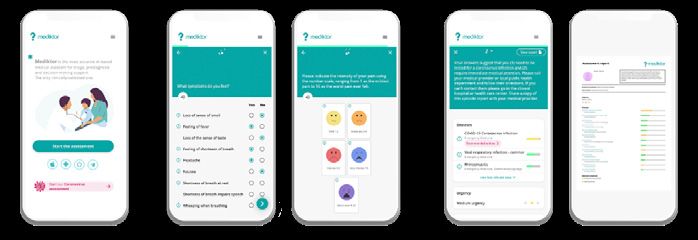
03.
Current virtual
health consultation
applications
Study of the virtual health consultation and its benefits for the healthcare system                                                   ← 10 →

3. Current virtual health consultation
   applications
3.1. Development of telemedicine from a historical perspective

Although telemedicine tends to be associated with the                           the USA, where both time and money were invested to carry
more recent past and the expansion of information and                           out research into telemedicine.
communication technologies, the healthcare system showed
an interest in telemedicine long before that. Indeed, various                   The quantum leap in this field occurred in the late 1990s and
studies and publications , have presented the history of
                               1,2
                                                                                early years of the 21st century as a result of the explosion of
telemedicine over the past 120 years. Some of the more                          the digital society and the advent of the internet (1989). The
relevant examples include:                                                      European Institute for Telemedicine was also founded in 1989
                                                                                at the Université Paul Sabatier in Toulouse (France) with the
    → In article published in The Lancet in 1879 explained the                  aim of creating institutional systems suitable for the creation
        suitability of using phone calls as a strategy for reducing             of multicentre networks that allow the responsibilities of
        unnecessary visits to the healthcare professional’s                     healthcare professionals as regards the use of new information
        surgery.                                                                and communication technologies to be regulated. Similarly,
                                                                                the American Telemedicine Association (ATA) was created in
    → Subsequently, in 1906, Willem Einthoven, the inventor of                  1993 to develop standards for the regulation of telemedicine.
        the electrocardiogram, tested and published an article                  The first digital application for chats and video consultations
        concerning tele-cardiograms.                                            appeared in the early years of this century (Skype in 2000).
                                                                                Medical technology devices also evolved alongside increasingly
    → In the 1920s, the radio was used to give health advice and                advanced connectivity systems adapted to the new digital
        second opinions to teams of healthcare professionals                    environment in this period.
        at sea.
                                                                                As such, telemedicine has been a field of interest for medicine
These initial successes were mainly experimental responses                      and healthcare organisations for more than a hundred
or very specific cases of application (healthcare at sea). The                  years whenever existing technologies allowed solutions to
first real boost occurred in the 1940s and 50s as a result                      be developed. However, it is clear that the most progress
of initial attempts to transmit radiological images. In this                    occurred with the digital transformation of modern societies
same period, the first people to use video communication                        in the 1990s and early years of the 21st century.
for medical purposes were doctors from the University of
Nebraska. Thus, in 1959, the University established a two-way
television set-up to transmit information to medical students
campus-wide, and five years later it partnered with a state
hospital to carry out video consultations.

However, the foundations of current telemedicine were laid in
the 1960s and 70s. These were based on the steady progress
in medical imaging technology and continued investment in
remote healthcare programs for rural communities, mainly in

1   The Role of Telehealth in an Evolving Health Care Environment: Workshop Summary. Board on Health Care Services; Institute of Medicine. Washington
    (DC): National Academies Press (US); 2012 Nov 20.

2 The requirements of Telemedicine use and application is obvious entering the next Century of the Information technology. O. Ferrer-Roca et al., 1997.
Study of the virtual health consultation and its benefits for the healthcare system ← 11 →
3.2. Current virtual health consultation applications
Telemedicine, and specifically virtual health consultations, has developed applications for all stages of the patient’s itinerary.
This report brings together some examples developed by insurance companies, hospitals and long-term care centres for
different stages of the patient care process, with each of these examples being independent of the others.
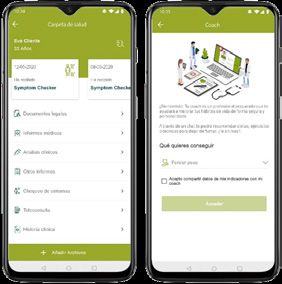
Thus, this care mode is being applied in all stages of the patient’s itinerary, as shown in the following figure:
Figure: Patient itinerary and examples of types of virtual health consultation during it
Hospital
access (A&E, Hospital Long-term
Prevention consultations) treatment care
Primary and
Community Diagnosis Home-based
Care treatment/
follow-up
Chat or video A&E triage via chat or Virtual Remote follow-
consultation video consultation interconsultation up between
concerning residence and
health-related A&E consultation and Remote follow- primary and
aspects and advice via telephone or up of patients community care
recommendations video consultation with medication
for hospital use Remote follow-
Digital disease Virtual consultation for up between
prevention diagnostic guidance residence and
and education specialised care
Prescription of
program
diagnostic tests and/
or pharmacological
treatment Monitoring of diabetic
Follow-up consultation patient or those treated
with specialist with home-based respiratory
therapies
Reading of
Virtual diagnostic tests or Monitoring of patient with
consultation clinical analyses home-based hospitalisation
for diagnostic
guidance Delivery of results Post-surgical patient follow-
by video up
Medication
renewal Video call to notify Follow-up of patient treated
diagnosis at home
Follow-up of
patients in home- Treatment Remote follow-up of
based care prescription hospitalised patientStudy of the virtual health consultation and its benefits for the healthcare system ← 12 →
Prevention Primary and Community Care
Virtual health consultations performed during the prevention In the case of Primary and Community Care, these
stage are mainly related to lifestyle aspects, health-promotion consultations mainly tend to be related to the treatments
programmes and patient education. In general, and in order prescribed, their renewal, resulting complications and
to meet these needs, these consultations are dealt with using symptomatology. In addition, virtual consultations are often
a chat service. complemented with a patient questionnaire, which gives more
information regarding the patient’s status and allows referral
In Spain, the review carried out has allowed different solutions to a specialist if required.
in both the private market and public sector to be identified.
Some of these are presented below. Generally speaking, these consultations are handled using
chat or video call tools, thus facilitating communication
In the public sector, the JailFreeC program developed by the between the primary care professional and patient and
Digestive Apparatus Service at the Hospital Universitario allowing a response to be given in real time. However, in some
Marqués de Valdecilla is a digital prevention and education cases, this service has a margin of response of 24 hours from
application for hepatitis C in hospitals that can be used the time the query is submitted.
remotely for patient training and education purposes.
In Spain, and with regard to insurers, companies such as
In the insurance sector, companies such as Sanitas, “Adeslas, Adeslas, es más”, “Mapfre Savia”, Cigna Wellbeing or “Asisa
es más”, DKV “Quiero cuidarme más”, “Mapfre Savia” and Dr. Virtual” offer this service to their clients, allowing
Axa also have such a service. Thus, patients submit their appointments to be managed via their app.
consultations via a chat system or form available in the app
or on the web page. The system ensures that the consultation Other providers, such as Mediktor, have developed a solution
is answered within a maximum of 24–48 hours. that allows a patient to undergo a pre-diagnosis by taking an
online evaluation, thus allowing actions to be recommended. In
In the USA, Kaiser Permanente allows patients to be in this context, the tool Ever Health, which allows consultations
constant contact with health professionals using an app, to be held with different health specialists via a chat or video
thus allowing questions related to their lifestyle, routine or consultation, has also been identified.
safety to be answered.
Internationally, the UK National Health Service (NHS) allows
patients to manage their appointment with a primary care
professional online using the “NHS Direct” app. In addition,
prior to the consultation, the patient must fill out a form
listing the main symptoms or aspects to be covered during
the consultation. This gives the professional an initial idea
of the patient’s needs. In the USA, Kaiser Permanente allows
appointments with primary care professionals to be managed
and consultations to be carried out remotely using its app.Study of the virtual health consultation and its benefits for the healthcare system ← 13 →
Access to Hospital: A&E or external consultations Diagnosis
In the case of the hospital access stage, virtual health In the diagnostic stage, a virtual health consultation allows
consultations are carried out in both A&E and specialised the interpretation of diagnostic tests or clinical analyses,
care. Some examples of specialities in which applications exist results to be issued, a diagnosis to be reached and notified
include paediatrics, gynaecology, nutrition and dietetics, to the patient, and treatment to be prescribed, all remotely.
ophthalmology, allergology, dermatology, traumatology, It should be noted, however, that this type of consultation is
neurology, etc. never used for serious diagnoses. In most cases, the results
are issued and the diagnosis reached via video, although this
For attention in A&E, a 24-hour service for the attention can also be done by phone if needed.
and resolution of consultations virtually and in real time is
available. In this case, the solution provided by the health In the insurance sector, this service is offered by companies
insurer Sanitas has been identified. such as Sanitas, “DKV Quiero Cuidarme más” or “Adeslas,
es más”.
Generally speaking, the process of access to outpatient visits
with specialists involves two phases, the first of which involves In this context, the provider Ever Health provides its clients
triage via a chat or video consultation to determine the with a telemedicine kit that includes diagnostic tools.
patient’s symptoms and determine the speciality to which the
patient should be referred. The second phase is performed Hospital treatment
directly with the specialist concerned via a video call.
The COVID-19 pandemic has allowed remote care to be
However, it is also possible to access consultations with implemented in various stages of the patient’s itinerary. In
specialists without needing prior triage. Thus, in Spain, the case of hospital treatment, for example, a virtual health
providers such as Doctoralia or My Doctor offer virtual consultation allows an inter-consultation to be held with
specialist consultations via video chat on their web page or professionals from different specialities in the presence of
apps with no need for prior triage. In the insurance sector, hospitalised patients.
companies such as Sanitas, DKV “Quiero cuidarme más”,
“Mapfre Savia”, Axa, “Asisa Dr. Virtual”, or Aegón Salud offer Home-based treatment/follow-up
this service to their clients.
In this stage of the itinerary, follow-up or home-based
Internationally, we found a number of different solutions. treatment consultations allow the progress of the patient
Kaiser Permanente allows its clients to schedule and manage to be monitored during home-based treatment, post-surgical
specialist consultations via its web page with no need for a patients and those under home-based hospitalisation to be
prescription from a primary care professional. In the UK, the monitored and the results of prescribed treatments to be
NHS also provides a similar service via the “NHS Direct” app. determined, while also ensuring the traceability of the patient-
In addition, both the professional and patient can use the care process.
app to access detailed patient information and for various
interprofessional communications. Patient follow-up is possible as a result of mobile applications,
which allow patients with home-based treatment to be
Finally, in Canada, Ontario’s Telemedicine Network provides monitored, for example in the case of diabetes or home-based
numerous digital services, including an emergency service respiratory therapies. Collection of this information allows
that allows consultations with the appropriate specialist the professional to be informed of the patient’s status in real
immediately and in real time. Moreover, this solution allows time. In this context, consultations are usually carried out by
any consultation to be held remotely. video, thus allowing the relationship between the professional
and the patient to be humanised.Study of the virtual health consultation and its benefits for the healthcare system ← 14 →
The Jail Free C program developed by the Digestive Apparatus In the specific case of “Mapfre Savia”, a telepharmacy
Service at the Hospital Universitario Marqués de Valdecilla service, which allows medications prescribed by a healthcare
performs remote follow-up of patients receiving treatment professional to be sent directly to the patient’s home, is
for hepatitis C. This follow-up markedly improves the health also available.
outcomes obtained.
In the UK, the “NHS Direct” app can be used to hold remote
In the case of chronic heart failure patients, the Hospital consultations related to post-surgical aspects and treatment
Universitario de Bellvitge and the Instituto de Investigación monitoring by video. This solution also allows a search to
Biomédica de Bellvitge (IDIBELL) have developed the Pirene be carried out for the different professionals in the region
application for home-based patient follow-up as part of the who offer this service and their availability. Moreover, this
HERMeS project. This solution allows daily measurement of solution allows patients to access their health reports and
patients’ blood pressure, heart rate and weight and sends treatments prescribed.
this information to the professional for subsequent analysis
and control automatically. Long-term Care
The Ekenku app, developed by the eHealth Unit at d’Eurecat, These consultations mainly concern communications and
allows follow-up of chronic complex patients, acute episodes interventions in care homes, and specialities such as psychology,
or post-surgical processes and the measurement of various psychiatry or online coaching. These latter specialities require
parameters, such as blood pressure, oxygen saturation or greater humanisation during the consultation and are therefore
glucose levels. held via video conferencing.
In the case of diabetic patients, the FreeStyle Libre system In Spain, companies such as Sanitas, Cigna Wellbeing, Axa
developed by Abbot allows professionals to monitor and follow- or DKV have incorporated this into their service portfolio.
up patients receiving treatment for diabetes. In addition, the
different applications developed allow patients to exchange Moreover, the Fundación Galatea has implemented the
information with the healthcare professional, perform self- Covidien program, which provides long-term support to
analysis of their glucose levels in real time and also allows the the different professionals involved in patient management
professional to access the diabetic patient’s past data. and care during the COVID-19 pandemic. Using the app, the
various healthcare professionals can schedule and hold video
As a result of the impact of COVID-19, providers such as consultations with mental health specialists.
Inithealth have developed the mobile app “Coronacare”, which
allows the management and home-based follow-up of chronic In the international field of long-term care, the provider
patients and consultations to be held by video chat. This Costaisia, which has developed the “Telelgin” program to
solution allows a form to identify the patient’s risk profile to connect various healthcare professionals with care homes,
be downloaded, thus allowing the healthcare professional to thus allowing remote patient follow-up and care, has been
prescribe recommendations. identified. Similarly, in the UK, the “NHS Direct” app allows
patients to access consultations related to psychology and
In the insurance sector, companies such as Sanitas, Cigna psychiatry in an online manner. These appointments can also
Wellbeing, “Mapfre Savia” and Axa also offer this service. be scheduled online.
Virtual health consultations are currently a reality, with experiences having been
identified in all stages of the patient’s itinerary. Although their implementation has
tended to be greater in the private sector, the COVID-19 pandemic has also increased
their application in the public sector. The variety of channels and technologies for
carrying this out allows these consultations to be adapted to patients’ needs and the
type of healthcare concerned.Study of the virtual health consultation and its benefits for the healthcare system ← 15 →
3.3. Technological maturity in the healthcare system
In recent years, the Spanish healthcare system, both public and private, has invested heavily in information and communication
technologies. Although the potential for the development and application of digital health applications in Spain remains high,
some studies comparing Spain with other countries3 place this country in the group of countries with a higher index of digital
maturity in the healthcare sector. However, this indicator should be interpreted in relative terms. Thus, this does not necessarily
indicate that the Spanish public and private healthcare system is in an excellent digital position, simply that in comparative terms
Spain is in a better position than other European countries.
Figure: Digital maturity index compared with EU countries. Bertelsmann Stiftung (2019)
#SmartHealthSystems: Digital Health Index
1 Estonia
2 Canada
3 Denmark
4 Israel
5 Spain
6 NHS England
7 Sweden
8 Portugal
9 Netherlands
10 Austria 59.8
11 Australia 57.3
12 Italy 55.8
13 Belgium 54.7
14 Switzerland 40.6
15 France 31.6
16 Germany 30.0
17 Poland 28.5 Average 58.9
14 EU Member States and 3 OECD countries, index (maximum 100)
top group pursuers laggards tail lights
Source: the authors
In addition to this comparative European index, the recent paper by Fenin4, in collaboration with Cotec, regarding the degree
of digital maturity of the Spanish healthcare system, is also of interest. The index proposed therein measures four dimensions:
1. Empowerment of citizen/patient
2. Availability of digital health tools/services for the clinical professional
3. Evaluation of the technological progress of the IT infrastructure of healthcare organisations as regards the development
of new digital health services
4. Data analysis tools for decision-making applied to health management/planning, population-based health management,
public health-epidemiology and research.
3 #SmartHealthSystems. International comparison of digital strategies (ed 2019) Bertelsmann Stiftung (Ed). Rainer Thiel, Lucas Deimel, Daniel Schmidt-
mann, Klaus Piesche, Tobias Hüsing, Jonas Rennoch, Veli Stroetmann, Karl Stroetmann.
4 Fenin Digital Maturity Index in Health. Fenin (2020)Study of the virtual health consultation and its benefits for the healthcare system ← 16 →
The combined results of these dimensions show that the technological infrastructure and digital services for professionals are
the most developed. In contrast, digital services for patients are still in a low-development phase. To some extent, this snapshot
indicates that the healthcare system is equipped with the tools and infrastructure but is yet to make them widely available for
patient care.
Figure: Fenin Maturity Index in Health. Fenin, Spain (2020)
41,30 % 42,30 %
22,80 %
17,80 %
Patient services Services for IT infrastructure Analytical systems
professionals
In the field of patient services, the following specific dimensions are measured:
→ Appointment management
→ Access to electronic prescription
→ Consultation of digital health record (DHR)
→ Update of health record
→ Distance communication patient-professional (virtual consultation)
→ Inter-patient collaborative tools
→ Telemonitoring
Once again, the results confirm the trend noted above: it appears that a good infrastructure is available but is yet to be oriented
towards virtual health consultations or telemonitoring.
Figure: Fenin Maturity Index in Health. Fenin, Spain (2020) Patient services dimension.
Telemonitoring 11.9 %
Inter-patient collaborative tools 14.9 %
Distance communication (virtual consultation) 18.4 %
Update of health record 11.7 %
Consultation of digital health record (DHR) 38,6 %
Access to electronic prescription 70.6 %
Appointment management 70.6 %Study of the virtual health consultation and its benefits for the healthcare system ← 17 →
3.4. Examples of the solutions ecosystem for virtual health consultations
The following table provides examples of the solutions being implemented for virtual health consultations, including the entity
concerned, the name of the solution, the field of application in the patient’s itinerary and a description of the solution.
Table: Examples of solutions for virtual health consultations
Name of
Logo Field of Application Description
solution
Healthcare
The PC professional takes a photo of the lesion and attaches it
Telemedicine in to the EMR together with a clinical explanation. The specialist
→ Diagnosis
Central Catalonia reviews it and makes the appropriate recommendations, which
are sent to the PC professional, who then contacts the patient.
Online platform that allows long-term care to be received by
Covidien → Long-term care
different healthcare professionals.
A multilingual telemedicine platform with added services that
→ Prevention
Doctor Clic allows an online connection between healthcare professionals
→ Home-based treat./FU
and patient from any location and at any time.
Health Insurances
→ Primary and Community Care
A real-time video consultation service for policyholders with
→ Hospital access
professionals from the GRUPO HLA hospital network. The
Asisa - Live → Diagnosis
patient enters using a link and the platform allows documents
→ Hospital-based treatment
and images to be shared.
→ Home-based treat./FU
Chat service via a mobile app Users have access to the simplified
EMR (prior diseases, allergies and medications), professionals’
Asisa Chat médico → Medical advice
CVs and allows the sending of multimedia materials (photos,
videos).
→ Primary and Community Care
A video consultation service via the Chipcard platform in
→ Hospital access
which professionals register and confirm their identity and
Asisa – Chipcard → Diagnosis
medical licence information, and the patient receives access
→ Home-based treat./FU
codes via SMS.
→ Long-term care
→ Hospital access A digital health platform that allows video consultations,
Quiero → Diagnosis receipt of the private electronic prescription to be dispensed
cuidarme más → Medication disp. in a pharmacy, monitoring of health habits, access to the
→ Health promotion patient’s EMR.
Medifiatc VC, Chat → Prevention
A videoconference service via the app with health specialists.
medico Gestisep → Hospital access
Todo seguros → Prevention A web platform that allows various insurance policies to be
médicos.com → Policy comparison site compared based the client’s preferred coverages.Study of the virtual health consultation and its benefits for the healthcare system ← 18 →
Name of
Logo Field of Application Description
solution
Technological solutions provider
Platform that allows video consultations with mental health
Airapy → Home-based treat./FU specialists via a secure channel with end-to-end encryption
and with no need to download an app.
→ Prevention
→ Hospital access
→ Diagnosis Platform that allows video consultations with health
Digital Health
→ Hospital-based treatment professionals from different fields, access to the EMR and
Platform
→ Home-based treat./FU includes the electronic prescription.
→ Long-term care
→ Medication disp.
→ Prevention
→ Primary and Community Care Doctivi is a telemedicine platform that was launched in
→ Hospital access 2015 in response to the need for the Hospital de Nens de
Doctivi → Diagnosis Barcelona to find a reliable telemedicine provider to create
→ Home-based treat./FU a connection between paediatric A&E departments and
→ Long-term care schools in the area of Barcelona.
→ Medication disp.
→ Prevention
→ Primary and Community Care
Doctoralia → Diagnosis Digital platform that allows video consultations with
Telemedicina → Home-based treat./FU different health specialists to be scheduled and performed.
→ Long-term care
→ Medication disp.
→ Prevention
Platform that allows virtual consultations to be held
→ Primary and Community Care
with different specialists by phone, video or chat. The
EVER HEALTH → Hospital access
tool comprises a telemedicine kit with diagnostic devices
telemedicine → Diagnosis
(stethoscope, examination camera and pulsimeter), access
platform → Home-based treat./FU
to the medical records, registry of consultations, submission
→ Long-term care
of medical reports and treatment prescription.
→ Medication disp.
→ Prevention Platform that allows remote health management by
→ Primary and Community Care creating and supervising personalised health plans,
Inithealth → Diagnosis including medical history, teleconsultation, telemonitoring
→ Home-based treat./FU of bio-measurements, pharmacological treatments, health
→ Long-term care appointments, etc.
Symptom An artificial intelligence-based health assistant for triage,
→ Primary and Community Care
Checker pre-diagnosis and support for the clinical decision.
→ Prevention
→ Primary and Community Care
A communication platform that allows teleconsultations
mediQuo and → Hospital access
between patients and health professionals via chat, phone
mediQuo PRO → Diagnosis
or video.
→ Long-term care
→ Health management
Platform that allows the creation of shared case histories,
→ Prevention
submission of analyses and photos of the lesion, referral to
MeetingDoctors → Primary and Community Care
face-to-face consultation and issue of private electronic
→ Long-term care
prescriptions via chat or videoconference.
→ Prevention A technology platform that connects all parts of the
Osigu → Diagnosis health field, allowing process automation, data analysis and
→ Medication disp. enhanced fraud prevention.04. The value of a virtual health consultation
Study of the virtual health consultation and its benefits for the healthcare system                                  ← 20 →

4. The value of a virtual health
   consultation
The review of the scientific evidence from published studies highlights that a virtual health consultation provides important
benefits related to health outcomes, the experience of the patient experience and the sustainability of the healthcare system.
These benefits are summarised in the following figure:

Figure: Benefits of a virtual health consultation

           Benefits for
                                            → Health outcomes similar to in-person consultations
           health outcomes

                                            → Patient satisfaction
           Patients’                        → Improved access to outpatient visits
           experience                       → Cost and travel time savings
                                            → Shorter waiting time for entry into the clinic

           Professionals’                   → Satisfaction of professionals
           experience                       → Similar quality to in-person consultations

                                            → Shorter waiting list
           Sustainability of                → Resource optimisation
           healthcare system                → Shorter consultation times and higher number of consultations
                                            → Fewer unnecessary in-person consultations

4.1. Benefits for health outcomes

Health outcomes remained at the same level as for in-                  Moreover, patient health outcomes improved when remote
person visits when virtual home-based follow-up visits were            telemonitoring systems were added in chronic diseases such
performed, as shown by various studies performed in different          as diabetes (Rushakoff RJ. et al., 2017; Greenwood DA. et
chronic diseases, such as Parkinson’s disease (Beck CA. et             al., 2015)
al., 2017), urinary incontinence (Jones G. et al., 2018), mental
health (Fletcher TL. et al., 2018) or stroke (Yaghi S. et al.,         The combination of a virtual consultation for follow-up with
2015). In the latter case (stroke), patients with medium to            an face-to-face consultation for appointments allows the
moderate severity at the face-to-face consultation presented           health outcomes to be improved in patients with age-related
better outcomes (50%) compared with patients in the virtual            macular degeneration (ARMD) (Tsaousis KT. et al., 2019). The
consultation (24%) (p=0.026). As such, patient selection               time between two consultations is reduced from 6.9 weeks
(those with lower severity or risk) is an important factor             for a solely in-person consultation to 5.3 weeks for a virtual
for care via a virtual health consultation. However, virtual           consultation. The visual acuity of the patients improved, with
consultations allow the health of vulnerable patients to be            23.1% of patients being able to read more than 25 letters
improved and inequalities to be reduced, for example in the            compared with 6.9% who achieved this for a solely in-person
case of oral (Braun PA. & Cusick A., 2016) or mental health            consultation.
(Fletcher TL. et al., 2018).
Study of the virtual health consultation and its benefits for the healthcare system ← 21 →
4.2. Patients’ experience
Patient satisfaction After surgical interventions, a virtual consultation allowed
all patients to be followed-up in the first 72 hours post-
In general, patients’ experience with virtual health intervention, whereas for a face-to-face consultation only
consultations is very good for both primary and community 6% of patients were seen in this time (Holgate J. et al.,
care and specialised care (Cain SM. et al., 2018; Marko KI. 2017).
et al., 2019; Waibel KH et al., 2019; Hensel JM. et al., 2018).
Specifically, a study in Ireland concerning virtual consultations A study carried out in Catalonia involving primary and
in post-surgical traumatology (Breathnach O. et al., 2019), community care and a dermatology service (Vidal-Alaball J.
97% of patients treated in a virtual consultation were satisfied et al., 2018) showed that the time from the patient attending
with their recovery. Similar findings for the same indication primary and community care to the results being obtained
were obtained in other studies, such as O’ Reilly M. et al. was less than 5 working days. The primary and community
(2019) and Bhattacharyya R. et al. (2017). care professionals took a photo of the lesion and included
it in the patient’s electronic health records. The consultant
Moreover, the virtual consultation is, in general, recommended dermatologists at the reference hospital accessed these
by patients, as shown by the study by Lin JC et al. (2018), in records, reviewed the images and suggested a treatment or
which 91% of patients in home-based follow-up after vascular action plan. The primary and community care professionals
surgery using virtual consultations recommended virtual care. then reviewed these recommendations and phoned the
patient to notify the results. The entire process was usually
A further benefit for the patient of virtual health consultations completed within 5 working days.
is that it is easier for family members to be present (Østervang
C. et al., 2019). Cost and travel time savings
A high degree of satisfaction can be achieved by establishing Virtual consultations mean that patients do not need to travel,
protocols and personalised care (Tielman ML. et al., 2019). thereby representing savings in terms of both travel time and
associated costs (Humer MF. & Campling BG. (2017); Abbott
Improved access to outpatient visits DE. et al. (2018); Beck CA. et al. (2017)).
Virtual consultations mean that the average waiting time Shorter waiting time for entry into the clinic
for accessing an outpatient visit is lower. Thus, in the study
carried out by Abbott DE. et al. (2018) in the USA, the A virtual triage consultation allows waiting times in A&E to
average waiting time for accessing an out patient visit for be reduced, as shown by the study performed by Coogan
patient in whom pulmonary nodules had been discovered P. & Rodgers M. (2018), in which a healthcare professional
incidentally decreased y 17 days with respect to an face- performed A&E triage for patients waiting in A&E at different
to-face consultation, with an access time for outpatient hospital remotely, thereby reducing waiting times from 60 to
visits of 2.8 days. Similarly, the study carried out by Cruz 10 minutes.
ML. et al. (2015) concluded that a virtual consultation
significantly improved access to endocrine care (odds
ratio, 3.6; CI 95%).
This type of consultation also allows questions to be answered
quickly. Thus, in the study carried out by Kaiser Permanente (Pai
A. et al., 2019) concerning the implementation of a pilot program
at five hospitals to deal with haematological consultations
related to common, non-serious conditions, such as anaemia,
amongst others, 90.3% of the consultations submitted using
the electronic platform (messages) were resolved within 24 h.Study of the virtual health consultation and its benefits for the healthcare system ← 22 →
4.3. Healthcare professionals’ experience
Satisfaction of professionals
Although surveys carried out with healthcare professionals surveyed considered the quality of telemedicine consultations
indicate that their satisfaction with the use of virtual health to be “excellent” or “good”. However, almost 60% of them
consultations is, in general, lower than that of patients, the stated that they had occasionally experienced technical,
satisfaction of these professionals is, nevertheless, still high organisational or other types of difficulties.
(Mammen JR. et al., 2018).
As regards the perceived quality, a study carried out at
One example of the high satisfaction with the use of virtual Massachusetts General Hospital (Dolenan K. et al., 2019)
consultations in primary and community care is the survey found that 59% of professionals did not note any differences
conducted recently amongst primary and community care between the quality of visits and that of an in-person health
professionals in Catalonia (Vidal-Alaball J. et al., 2020). The consultation.
results of this survey showed that 83% of the professionalsStudy of the virtual health consultation and its benefits for the healthcare system ← 23 →
4.4. Sustainability of healthcare system
Shorter waiting list et al. (2018). Specifically, a virtual consultation in specialised
care reduces the consultation time by 42% (virtual 10.94 min
Virtual health consultations allow waiting lists to be reduced. vs in-person 25.9 min), as reported by Jones G. et al. (2018).
The study carried out by Vidal-Alaball J. et al. (2015) shows
that, after implementation of a virtual consulting service in Increase in number of consultations performed
dermatology, the waiting list for both types of consultation
combined (in-person and virtual) decreased 30 days. As less time is required, the implementation if virtual
consultations allows the total number of in-person and virtual
Similarly, in a study carried out at the Madison Memorial consultations performed to be increased, with the number
Veterans Hospital in the USA (Abbott DE. et al., 2018), the of in-person consultations decreasing. A study carried out
average waiting time for accessing the outpatient clinic at Massachusetts General Hospital (Shah SJ. et al., 2018)
decreased by 18 days for the virtual consultation compared showed that virtual consultations represented 80% of all
with its in-person counterpart (waiting time: 20.5 days consultations (in-person and virtual) and reduced the number
for an face-to-face consultation and 2.8 days for a virtual of in-person consultations by 33%.
consultation).
If the appropriate media are available, virtual consultations can
Resource optimisation allow diagnosis and subsequent follow-up of some groups of
patients. For example, in ophthalmology, a study carried out at
The use of virtual health consultations as triage in A&E allows Moorfields Eye Hospital in patients with diabetic retinopathy
resources to be optimised. Thus, in a pilot study carried out (Kortuem K. et al., 2018) showed that, provided tests
at the Aurora Sinai Medical Center (Coogan P. & Rodgers M., (visual acuity test, eye fundus photo and optical coherence
2018), virtual triage of patients waiting in A&E at different tomography) had been carried out beforehand, 54.5% of low-
hospitals allowed between 12 and 15 patients to be seen every risk patients could be diagnosed and followed-up in a virtual
hour. consultation.
Specialised care resources can also be released by referring Fewer unnecessary in-person consultations
patients to primary and community care. Thus, a virtual follow-
up consultation to review non-urgent surgical interventions Many of the aspects raised by patients can be resolved by
allowed 83% of patients to be discharged and referred to phone or online and, if required, the corresponding healthcare
primary and community care (Meehan D. et al., 2019). professional will decide which of these needs to be resolved
in-person. For example, in a study carried out by the Mayo
Requests for diagnostic and imaging tests are more optimised Clinic (Pecina JL. & North F., 2015), 90% of the questions
for virtual health visits than for in-person visits for non- raised by patients were resolved using an online platform,
serious conditions, such as sinusitis, dermatitis, influenza or with the remaining 10% being referred to an in-person
digestive conditions, amongst others. Thus, the comparative consultation. Another example is the study performed by
study carried out by Gordon AS. & Adamson WC. (2017) Kaiser Permanente (Pai A. et al., 2019), which implemented
in these conditions showed that the volume of diagnostic a pilot program at five hospitals to attend haematological
and laboratory tests requested during virtual health visits consultations related to non-serious common conditions,
decreased with respect to those requested during in-person such as anaemia, amongst others, virtually. Around 75% of
consultations. consultations were resolved virtually, and this study also
showed that high-value health consultations of this type can
Decreased consultation time be carried out without compromising care quality.
Virtual health consultations are somewhat shorter than their A study carried out in Spain by López F. et al. (2020) suggests
in-person counterparts, as shown by various studies, such as that, according to healthcare professionals, 66%-88% of
Greenhalgh T. et al. (2018), Pai A. et al. (2019) or Jones G. consultations in primary and community care could be carriedStudy of the virtual health consultation and its benefits for the healthcare system ← 24 →
out virtually. The most common uses of the teleconsulting However, the effectiveness of such systems can vary
service in primary and community care were consultations depending on the previous relationship. Thus, Greenhalgh T.
regarding test results (35.2%), general consultations (16.0%) et al. (2018) found that virtual health consultations are more
and consultations regarding repeat prescriptions (12.2%). effective when there is a previous relationship between the
patient and the specialist.
Indeed, on occasions, virtual consultations can cover the
same aspects as in-person consultations, as shown by the
study carried out by Mendell J. et al. (2019) in which a
chat-type communication system with cardiac rehabilitation
patients allowed questions related to exercise, diet and
positive behavioural changes to limit risk factors for future
heart problems to be answered.
In conclusion, virtual health consultations are a complementary form of healthcare
that can provide significant benefits for all parties in the system if standardised
protocols are put into place and with adequate selection of the patients and
diseases concerned.
These benefits are seen in the form of health outcomes (similar to those for
in-person consultations in many cases), patient experience (high satisfaction,
improved access, cost- and time-savings), professional satisfaction and improved
sustainability of the healthcare system (resource optimisation or shorter waiting
lists, amongst others).05. Contribution of virtual health consultations during the COVID-19 health crisis
Study of the virtual health consultation and its benefits for the healthcare system                                     ← 26 →

5. Contribution of virtual health
   consultations during the COVID-19
   health crisis
A virtual health consultation is an event carried out remotely         The main brakes are as follows:
using digital communications media in which the healthcare
professional acts as a medical professional to guide, diagnose              → Virtual health consultations tend to be limited to the
and/or prescribe treatment to a patient remotely.                              follow-up of known and diagnosed patients as a case
                                                                               history (and the medical event) must be taken in person.
The different types of digital technologies applied in                      → The limited recognition of the virtual care event as
healthcare have a great potential to transform different parts                 regards the event itself (difficult to record and evaluate
of the health system, including:                                               the time required) and from a financial viewpoint
                                                                               (limited recognition of payment for this activity).
    → Clinical practice
    → Health outcomes                                                  However, during management of the COVID-19 pandemic,
    → Operational efficiency                                           digital technologies have been shown to be useful on numerous
    → Patient experience                                               occasions, for example:

Although numerous academic and governmental studies over                    1. Screening of suspected COVID-19 cases
the past 10 or so years have highlighted this potential impact,             2. Follow-up of COVID-19 patients from home
their degree of implementation remains limited. Indeed, there               3. Health-based follow-up of patients in long-term
is clearly a significant gap between:                                          treatment who were being monitored in in-person
                                                                               consultations prior to the health crisis.
    → The slow rate of adoption of new digital technologies                 4. Health consultations for non-COVID-19 patients in
    → The potential positive impact for the healthcare system                  A&E and/or scheduled cases.
Study of the virtual health consultation and its benefits for the healthcare system ← 27 →
5.1. Impact of telemedicine during the COVID-19 crisis
Although it is still too early to measure the actual impact of A study carried out in Catalonia (Pérez Sust et al., 2020)
telemedicine during the COVID-19 pandemic in activity terms, shows the evolution in virtual health consultations with regard
all the information currently available suggests a very rapid to in-person consultations in primary care between the 1st of
growth of this activity. March and the 18th of April this year, with a marked increase
in virtual consultations. This study also highlights that, when
In an article published in The Lancet (Webster P, 2020), this article went to press, although the peak in COVID-19
Paul Webster analysed how telemedicine is expanding infections has been passed, an increase in the implementation
worldwide as a result of the pandemic. The majority of health of digital health solutions continues to be seen. Numerous
consultations in the USA are performed virtually, and the barriers have disappeared and healthcare providers and
growth seen in China occurred once these consultations professionals are increasingly demanding more technologies;
began to be paid. The need to enhance telemedicine has also the pandemic is forcing a change in the implementation of
been noted in Europe, with bureaucratic procedures having eHealth strategies. Two very relevant aspects should be noted
been reduced in both the UK and Italy. A report published in this regard:
by IQVIA provides very interesting data regarding the rapid
growth of telemedicine in the first weeks of lock-down in → Virtual health consultations have increased fivefold
the USA: since the first week of March.
→ The adoption of teleconsultations (rather than in-
Figure: person visits) was very fast as this significant increase
Percentage weekly increase in telemedicine visits in the was seen from the first week of lock-down.
USA
Telehealth Visit % Weekly Increases from pre-Covid Baseline Figure:
1600 % In-person visits in primary and community care in Catalonia
1388%
1400 % compared with other care methods for the period from the
1188%
1200 %
1st of March 2020 to the 18th of April 2020.
1000 %
800 %
160000
Tele-consultation
Self-management
600 %
359% 140000 Face-to-face
400 % eConsultation
200 % Homecare
120000
0% 0% 3%
0%
Baseline 3/06/2020 3/13/2020 3/20/2020 3/27/2020 4/3/2020
100000
% from Baseline
Source: Monitoring the Impact of COVID-19 on the Pharmaceutical Market. 80000
US Thought Leadership, Published April 17, 2020. IQVIA
60000
In Spain, the number of virtual health consultations has
40000
increased exponentially since imposition of the State of Alarm
on the 16th of March. Thus, hospitals have implemented a
20000
system of telephone consultations to deal with the largest
possible number of appointments scheduled with specialists
during the pandemic-related lock-down period and avoid
0
20
/0 020
/0 020
0
/0 020
3/2 0
0
0
/0 020
3/2 0
3/2 0
20
0
20
20
20
20
3/2 0
20
20
20
0
19/ 2020
13/ 2020
02
10/ /202
05 /202
27/ /202
02
09 /202
29 /202
03 /202
2
02 /202
0
/20
/20
/20
/20
/20
/20
/20
/20
/20
4/2
4/2
4/2
these patients having to attend in-person, unless absolutely
/
/
4
3
3
3
03
04
03
03
03
04
04
03
04
03
04
03
03
03
/0
/0
/0
/0
/0
/0
/0
01/
15/
16/
21/
12/
18/
31/
14/
17/
11/
06
08
04
25
23
07
essential due to their disease. Indeed, in April, more than
85% of outpatient consulting sessions were being held by Source: Pérez Sust et al. (2020). Turning the Crisis Into an Opportunity:
Digital Health Strategies Deployed During the COVID-19 Outbreak. JMIR
telephone in numerous hospitals. Public Health Surveill. ; 4;6(2).You can also read


