Islands 2050: The Future of the Trust Area - Visual Policy Analysis & Public Engagement Phase II January 2021
←
→
Page content transcription
If your browser does not render page correctly, please read the page content below
Islands 2050: The Future of the Trust Area
Visual Policy Analysis
& Public Engagement Phase II

January 2021

                                               Illustrations by:

                                             cassyexconsulting.com
We respectfully and
                                      humbly acknowledge…

           The Islands Trust Area is located within the treaty and territorial
    lands and waters of the BOḰEĆEN, Cowichan Tribes, Halalt, Homalco, K’ómoks,
   Klahoose, Ts'uubaa-asatx, Lək̓ ʷəŋən (SXIMEȽEȽ, Songhees, T’Sou-ke), Lyackson,
                                             ̓
MÁLEXEȽ, Penelakut, Qualicum, Scia’new, səlilwətaʔɬ,  SEMYOME, shíshálh, Snaw-naw-as,
      Snuneymuxw, Sḵwx̱wú7mesh, SȾÁUTW̱, Stz’uminus, Tla’amin, Tsawwassen,
          We Wai Kai, Wei Wai Kum, W̱JOȽEȽP, W̱SIḴEM, and xʷməθkʷəy̓əm.

           …these lands and waters                            …we honor the rich
              have been home to                              history, stewardship
           Indigenous Peoples since                          and cultural heritage
               time immemorial                                   of this place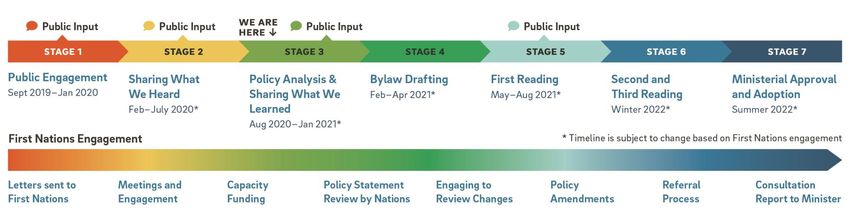
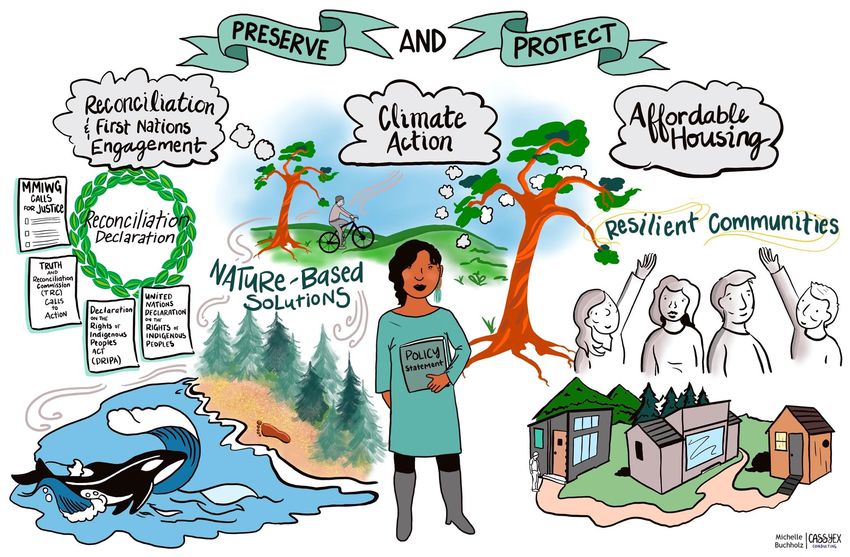
We are updating the Islands Trust Policy Statement to be current,
                  to be resilient to new challenges, and to take advantage of new and evolving opportunities.

    In the Fall of 2019, through online and in-person engagement processes, we asked the public the following questions:

              What do you value             What opportunities do you              In the context of a changing
                 about the                  see to protect and preserve          climate, what concerns do you
                Trust Area?                       the Trust Area?                  have for the next 30 years?

At the same time, Islands Trust began a parallel process of engagement
with First Nations governments on the Policy Statement for the first time
in the history of Islands Trust. Meaningful engagement with First Nations                          Reconciliation
is critical to Trust Council’s commitment to reconciliation.

In July 2020, we summarized the first round of public feedback received in a
                                                                                         Climate                Affordable
“What We Heard” Report.                                                                  Change                  Housing
Over the past six months, we have been considering the feedback
received and examining how amendments to the Policy Statement could
help preserve and protect what is most valued in the Islands Trust Area.
We are now sharing some of our high-level policy directions in three                          Policy Statement
priority areas and launching a new online survey for further public input.
                                                                                               Amendments
A Unique Mandate to Preserve & Protect
         To understand the Policy Statement, it is important to understand its origins...
 In 1974, the Government of British Columbia acknowledged that unrestrained development arising from the Trust Area’s
   proximity to major urban centres could irreversibly damage this uniquely biodiverse and ecologically sensitive region.

                               Establishment of the Islands                    Trust Act
    …special provincial legislation to preserve and protect over 450 islands and surrounding waters in the Salish Sea
…federation of twelve local trust areas and Bowen Island Municipality, represented by twenty-six locally elected trustees
   …unique regional mandate for conservation-oriented planning, regulation, inter-agency cooperation and advocacy

                     The Trust Object:                                                     Policy Statement
              “to preserve and protect the Trust Area                                      a general statement of the
       and its unique amenities and environment for the benefit                            policies of Trust Council to
  of the residents of the Trust Area and of British Columbia generally,                    carry out the Trust Object
          in cooperation with municipalities, regional districts,
         improvement districts, other persons and organizations
                and the government of British Columbia.”
                                                                            Ecosystem
                                                                           Preservation                         Sustainable
                                                                          and Protection     Stewardship       Communities
                                                                                             of Resources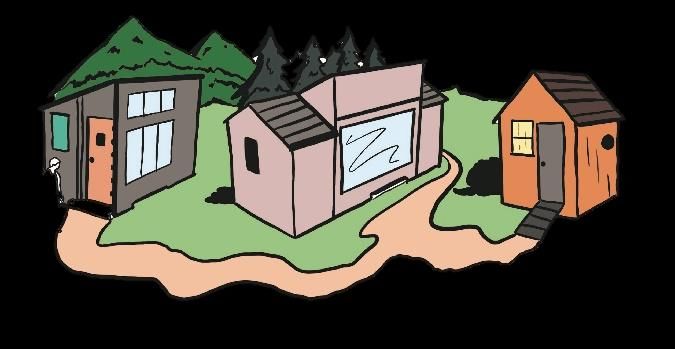
In Phase I of the Islands 2050 Public Engagement, we asked the public two questions related to the
preserve and protect mandate. The “What We Heard” Report highlighted several priority themes:
“The Trust Area’s beautiful
What opportunities do you
What do you value about natural landscapes, its rural character,
and its relatively clean environment are see to protect and preserve
the Trust Area?
the values that are important to me and the Trust Area?
my family, but they are also linked to
sustainability of the islands
Connection to Nature
and their natural ecosystems.”
-Public Engagement Participant Planning & Policy
Preserve & Protect Mandate Economics & Employment
Planning, Policy & Governance Alternative Living &
Rural Island Culture Community Resilience
Community Resilience “I value being near water and Partnerships & Programs
Infrastructure, Transportation & Services
wooded areas; love the surrounding Water System Infrastructure & Management
beauty and peacefulness this affords.
Biodiversity & Species Protection Beauty influences how people think about Biodiversity & Species Protection
Food & Water Security home. People in beautiful places tend to Education & Communication
Affordable Housing love where they live and feel strongly Food Security
about caring for it. They are then more
Cultural Heritage & Reconciliation Alternative Energy & Infrastructure
likely to be active in its protection.”
-Public Engagement Participant Governance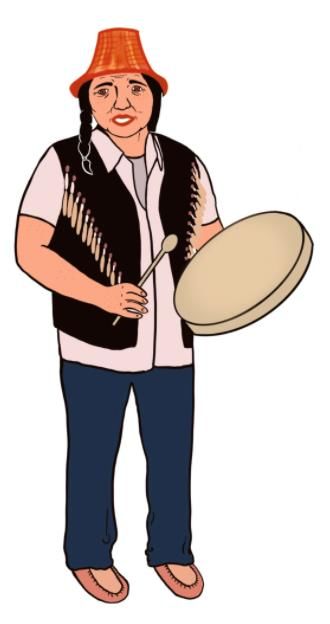
“What is the “carrying capacity” of each
                                                   island? If these are not ascertained, continued
                                                                                                                        “I'm concerned most
                                                and sustained, incremental growth and development
   “It’s important to always                                                                                       about running out of potable
                                               (no matter how “green” the development may be), will              water. We've had an increase in
 have a climate change lens on
                                                 continue to be allowed to erode the functionality of
 everything Islands Trust does.                                                                                  dry winters, long droughts, and
                                                     the very ecosystems and resources that the
 Policies and land use decision                                                                                 our water aquifers and lakes not
                                                        Islands Trust is mandated to protect.”
     making should reflect                                                                                      filling. We need water to survive.
                                                               -First Nations Engagement
        these decisions.”                                              Participant                                     Why aren't we making
        -Public Engagement                                                                                                 this a priority?”
            Participant                                                                                                 -Public Engagement
                                                                                                                            Participant

                         Growing development pressures and a climate emergency are leading to an increasingly
                          complex policy environment. The Islands Trust Council is updating the Policy Statement
                              to better address these issues and more effectively uphold its commitments
                                          to reconciliation and the preserve & protect mandate.
                 Climate Change                                                                                      Marine
                      Impacts         Freshwater                                                                 Pollution
                                                                                             Destruction of
                                                         Biodiversity      Housing
                                        Scarcity                                            Cultural Heritage
                                                            Loss            Crisis

            “We would like to see                                                                                    “Many archaeological sites
    Islands Trust take a stronger stance                                                                               within the Gulf Islands
   on protection of marine resources like                                                                            have been damaged in the
 shellfish (…) Most of the bays are polluted                        “Low impact rural solutions                       name of development.”
and we have very few stretches of shoreline                   to affordable housing like land sharing,                 -First Nations Engagement
     left to harvest in the Islands Trust                  co-op housing, tiny home villages, retirement                       Participant
             jurisdictional area.”                       communities can be accomplished. Creative and
          -First Nations Engagement                      ecological small footprint solutions are out there
                  Participant                               and can be obtained when there is a will.”
                                                                    -Public Engagement Participant
Islands Trust Council

            “The Islands Trust Council acknowledges that the lands
         and waters that encompass the Islands Trust Area have been
             home to Indigenous Peoples since time immemorial
       and honours the rich history, stewardship, and cultural heritage
                    that embody this place we all call home.

The Islands Trust Council is committed to establishing and maintaining mutually
  respectful relationships between Indigenous and non-Indigenous peoples.
              Islands Trust states a commitment to reconciliation
                with the understanding that this commitment is a
             long-term relationship-building and healing process.

          The Islands Trust Council will strive to create opportunities
                  for knowledge sharing and understanding
              as people come together to preserve and protect
                        the special nature of the islands
                             within the Salish Sea.”

                         Adopted March 2019
“The road we travel is
Reconciliation Action Plan equal in importance to the
destination we seek.
There are no shortcuts.
Commitment to the Foundation Documents: When it comes to truth and
reconciliation, we are all
Missing and forced to go the distance.”
Truth and
United Nations Murdered Indigenous - Justice Murray Sinclair,
Declaration on the Reconciliation
Declaration on the Women and Girls Truth and Reconciliation
Rights of Indigenous Commission
Calls for Justice Commission
Rights of Indigenous Peoples Act (DRIPA) Calls to Action
Peoples (UNDRIP) (MMIWG Calls
(TRC Calls to Action)
for Justice)
Meaningful Engagement with First Nations in the Trust Area
Inter-agency collaboration with provincial and federal partner agencies
Policy Statement Review
by First Nations for the first time Policies and overlay mapping for the protection of cultural heritage
in Islands Trust History
Capacity Funding
Cooperation Accords
Recommendations to implement MMIWG Calls for Justice
Long-term relationship building
Standing Resolutions by 11 Local Trust Committees on
relationship building and implementation of UNDRIP
Respectful Cultural
Relations Building Safety
Indigenous
Cultural Access to
Trust Ways of Knowing
Heritage
HarvestingIn March 2019, Islands Trust joined governments around the world in declaring a
Climate Emergency and making a commitment to take urgent and equitable climate action.
In Phase I of the Islands 2050 Public Engagement, we asked the following question
about climate change:
In the context of a changing
“Should we as a community be
climate, what concerns do you able to invest in other means of collecting
have for the next 30 years? water, such as, rain barrels, roof water
catchments and other types? Climate change
is reducing the amount of rain in our area,
The “What We Heard” Report highlighted several priority themes: which reduces the water in the aquifers.”
-Public Engagement Participant
Ecosystem Change
Water “We need to rethink our island
Land and Marine Use Decision-Making transportation system. We need to move
away from the auto-centric way of
Governance commuting. We need to encourage park
and ride (limiting traffic on islands) and
Transportation invest in electrified transportation.
Community Resilience “I’m concerned about the loss of
-Public Engagement Participant
Food Security uninterrupted tracts of Coastal Douglas-fir
Fire Risks forest and depreciating soil… because we
Education
can’t preserve and protect what we don’t
have, and we are losing it rapidly.”
Sea Level Rise -Public Engagement ParticipantIslands Trust
Climate
Emergency
Declaration
Indigenous Knowledge Ecosystem-Based Approaches
ensure climate action policies and processes are
look at the broader landscape;
inclusive of Traditional Ecological Knowledge,
acknowledge that everything is interconnected;
cultural knowledge holders, and
seek nature-based solutions
First Nations’ relationship with the land
Precautionary Climate Equity
As we strive to update the Islands Trust support those most
Principle Policy Statement with climate change in mind, vulnerable to adapt to
where there is we’ve identified a few key principles and paradigms climate change;
scientific uncertainty, to guide our policy making. foster resilient
proceed cautiously communities
to avoid harm
No More Business-as-Usual
it is time for bolder environmental protections
and new low-carbon ways of lifeSafeguard
Preserve, Protect, and Freshwater
Restore Carbon Sinks Sustainability
Preserve mature forests,
Protect finite water supply;
greenspace, soils, wetlands
regulate alternative
and eelgrass meadows Much of what we can do to enhance water supplies
“carbon sink”: a forest, ocean,
climate resilience in the Islands Trust Area
or other natural environment lies in preserving, protecting, and restoring existing
viewed in terms of its ability to natural areas and learning to live lightly on the land.
Mitigate Wildfire Risk
absorb carbon dioxide from We can fulfill these policy goals through
the atmosphere (Oxford) land use planning, advocacy, and inter-agency
cooperation, with the understanding that Minimize fire risks through
thriving, biodiverse, and resilient ecosystems land use planning tools,
= thriving, diverse, and resilient advocacy and outreach
Foster Low-Carbon,
Compact, and Connected Trust Area communities.
Communities Protect Shorelines
and Foreshore
Preserve, Protect, and
Plan for smaller footprints,
clustered development,
Restore Biodiversity Protect shorelines and foreshore
active transportation, habitats through setbacks and
low carbon agriculture, and upslope protections; safeguard
Protect sensitive Coastal Douglas-fir and Coastal Indigenous shellfish harvesting
low carbon buildings Western Hemlock ecosystems, wildlife corridors, areas and archeological sites
culturally-significant species and species at risk, and
marine food webs for Southern Resident Killer Whales Ocean
Droughts
Biodiversity Acidification
Sea Level
Loss Extreme Weather
Wildfires Rise
Events“We need attainable,
creative housing solutions for
diverse populations. Because we aren’t
adapting our development policies in line
with changing demographics, and people
are suffering as a result.”
-Public Engagement Participant
Many islands in the Trust Area are experiencing a shortage of safe, secure and
affordable housing. Development patterns of the past that led to large single-family “We need to direct new
houses and rural sprawl have proven to be environmentally unsustainable and have growth closer to villages, ferry
led to social equity challenges. terminals and transit. This includes
smaller dwellings, shops and services.
To address these challenges, the Policy Statement could require the use of rezoning Reduce vehicle trips; enhance our
sense of community and belonging;
tools to facilitate housing that is energy-efficient and located close to island
protect wild lands and forest
services. It could further require that housing density be moved from areas needing from rural sprawl.”
extra protection to areas that are less vulnerable and less biodiverse. We are also -Public Engagement Participant
looking at the impacts of short-term vacation rentals on affordability for both home
owners and renters, investigating where policy guidance may be needed.
Our advocacy for safe and secure housing will be guided by the Missing and “We need more
Murdered Indigenous Women and Girls (MMIWG) Calls for Justice. compact, eco-friendly and
affordable housing. Otherwise, our
Throughout it all, we will aspire to keep a watchful eye on the protection of communities will fall apart and only
freshwater sustainability, sensitive ecosystems, biodiversity and First Nations’ wealthy retirees will be left.”
cultural heritage, striving for a balanced and equitable approach. -Public Engagement Participant
Social Seniors Aging
Equity in Place
Freshwater
Vacation Species and
Scarcity Demographic
Ecosystems at Risk
Change RentalsPhase II
Now that you have a sense of our high-level policy directions,
we welcome your thoughts and ideas:
Regarding the policy directions we’ve outlined
on Climate Change, please share your ideas.
Regarding the policy directions we’ve outlined
on Affordable Housing, please share your ideas.
What other advice do you have for Trust
Council as it updates the Policy Statement?
Please provide your feedback online through the:
Find the survey online at: https://www.surveymonkey.com/r/Islands2050In the coming months, we will begin to draft amendments to the Policy Statement based on all the feedback we will have received from First Nations, the public, and Islands Trust locally elected officials and staff. Trust Council will consider draft Policy Statement amendments in Spring 2021, at which time there will also be opportunities for further public input as well as further input from First Nations and referral agencies. Any input that is out of scope for this project will be considered by Trust Council for future Policy Statement amendment projects. We look forward to ongoing, inclusive and meaningful engagement on this living document that sets out a vision for the future of the Trust Area.
Thank you for your interest and engagement in the
        Islands 2050 Policy Statement Amendment Project.

          Find this report online at: islandstrust.bc.ca/islands2050

Sign up for the Islands 2050 Subscriber Notice on our website to receive email
   updates about the project and future public engagement opportunities.

  Public input is always welcome at Islands Trust. We encourage individuals,
           community groups and agencies to write to us directly at:
                      islands2050@islandstrust.bc.ca
                 200-1627 Fort Street, Victoria, BC V8R 1H8

                               Follow us on:
                          Facebook: @IslandsTrust
                          Twitter: @Islands_Trust

                      Visit the Islands Trust website at:
                           islandstrust.bc.ca

                                                               Illustrations by:

                                                              cassyexconsulting.com
You can also read


