Joint Transnational Call (JTC) 2019 Graphene Flagship Human Brain Project - for transnational research proposals in - FLAG-ERA
←
→
Page content transcription
If your browser does not render page correctly, please read the page content below
Joint Transnational Call (JTC) 2019
for transnational research proposals in
 synergy with the two FET Flagships:
        Graphene Flagship
       Human Brain Project

          Supported by the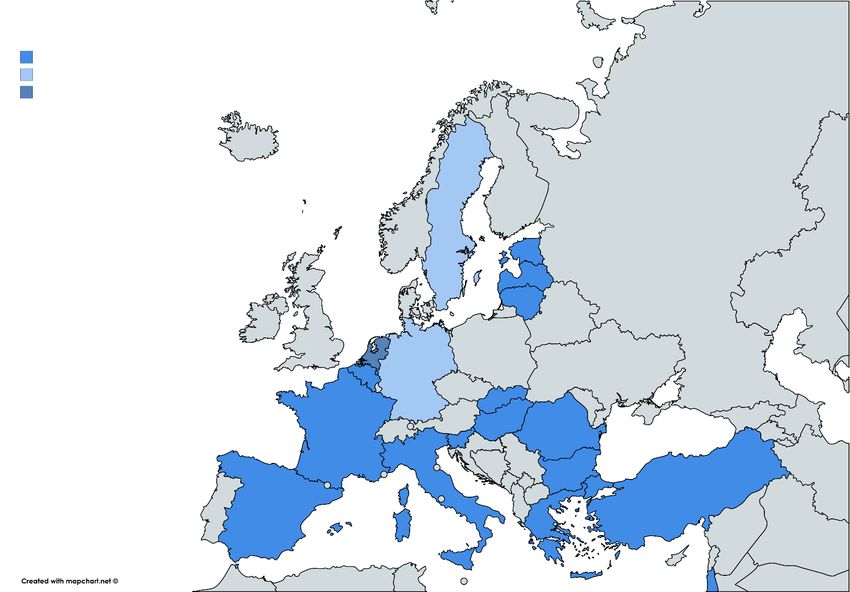
FLAG-ERA JTC 2019
                                                                        2

Outline
• Context
  • FET Flagships: General concept and funding model
  • FLAG-ERA: The Flagship ERA-NET
  • FLAG-ERA Joint Transnational Calls (JTC)
     • Calls for transnational projects in synergy with the Flagships
  • Overview and outcomes of the first two JTCs (2015 & 2017)
• JTC 2019
   • Overview
   • Research areas
   • Participating countries & indicative budgets
   • Evaluation criteria
   • Main steps after submission
• Important documents and further information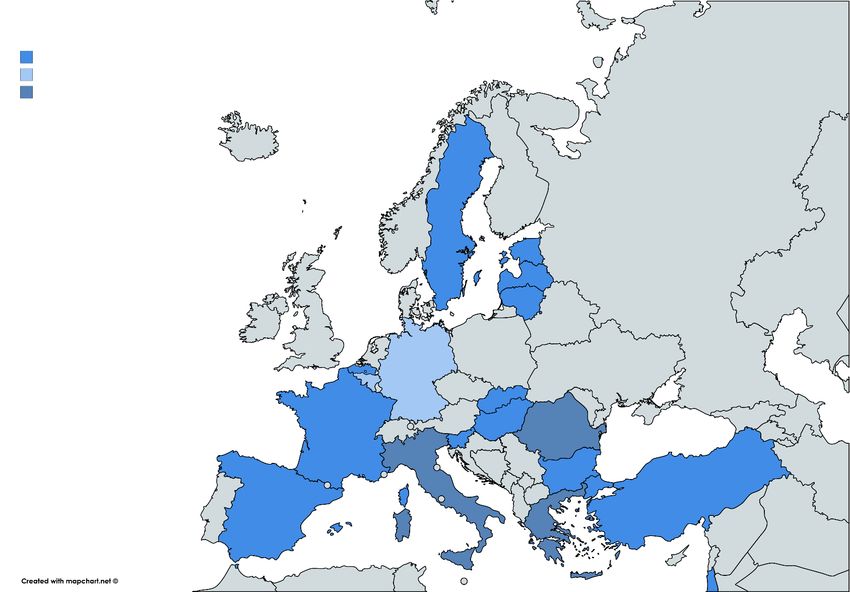
FLAG-ERA JTC 2019
                                                                  3

What is a FET Flagship?
• FET Flagships are
  • Visionary, science-driven, large-scale research initiatives
    addressing grand scientific and technological challenges
  • A new partnering model for long-term co-operative
    research in the European Research Area, based on the
    combination of a large Core Project playing a leading
    role for the whole duration of the initiative and a set of
    Partnering Projects

• http://ec.europa.eu/digital-agenda/en/fet-flagships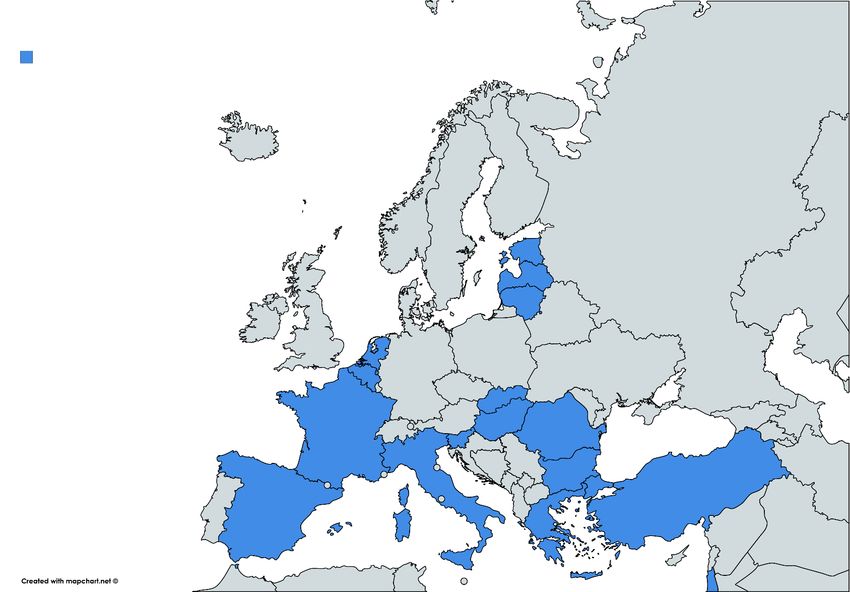
FLAG-ERA JTC 2019
                                                                                                4

Examples of Flagship-like past initiatives

   Apollo program              Human Genome                       Large Hadron
(“Man on the Moon”)               Project                            Collider

  DARPA Grand                         Deep                      5th Generation
   Challenge                          Blue                         Computer

          Source: http://cordis.europa.eu/fp7/ict/programme/fet/flagship/doc/flagshipstudy_en.pdf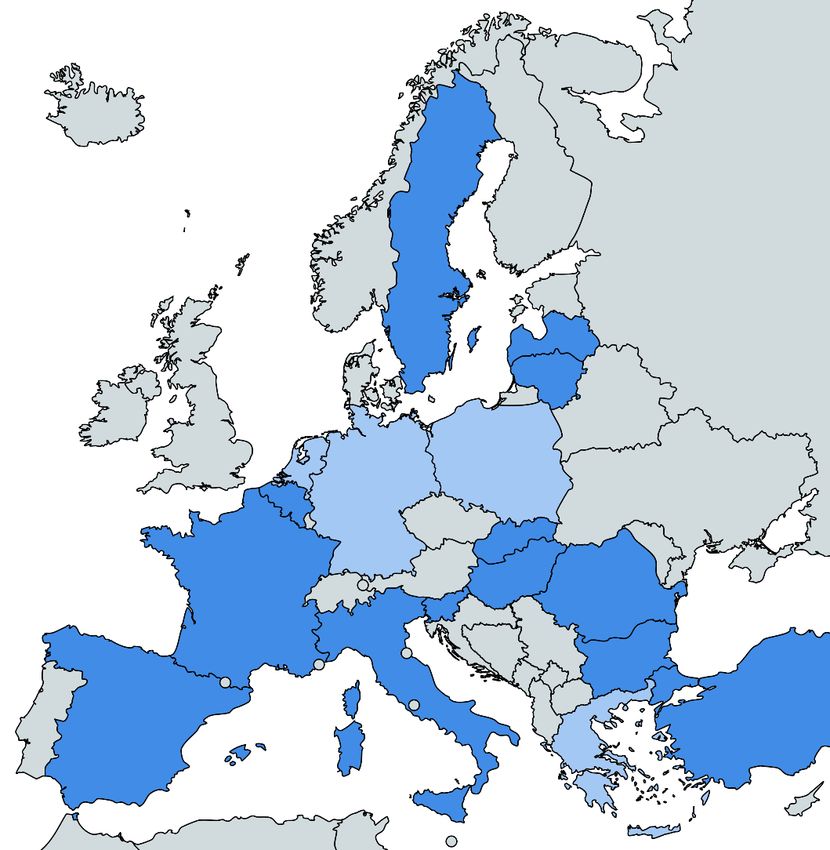
FLAG-ERA JTC 2019
                                                                              5

The first two FET Flagships

  Graphene Flagship                               Human Brain Project

   www.graphene-flagship.eu                        www.humanbrainproject.eu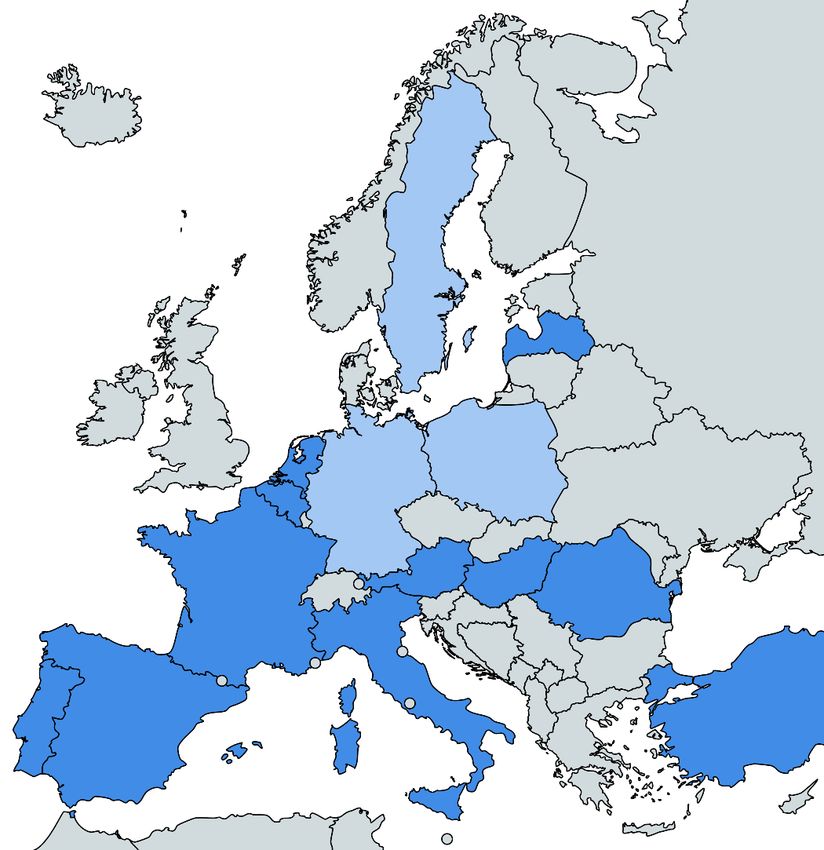
FLAG-ERA JTC 2019
                                                                   6

The FET Flagship Partnering model
Combining efforts from multiple sources of funding

 Funding from                             Other funding (MS&AC,
EC FET Flagship              Partnering      EC, int’l, private)
                              Projects
                              Core
                             Project
                       Association
                       agreements
                         Core
                        Members

                   Associated Members
FLAG-ERA JTC 2019
                                                                   7

Flagship funding structure
        European                              Other public and
       Commission                              private funding
     FET Flagship unit                          organisations

                 €                           € € € € € € € € €

       management                               management

       Core project                          Partnering projects

           R&D                                      R&D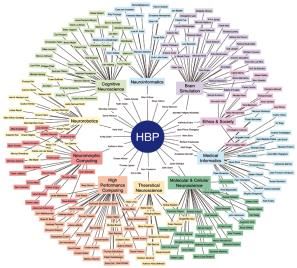
FLAG-ERA JTC 2019
                                                                              8

FLAG-ERA: The Flagship ERA-NET
• A network of National and Regional Funding Organisations
  (NRFOs) in Europe and beyond
• Supporting the FET Flagship initiatives, in collaboration with
  the European Commission
• Funding research complementing the Flagship Core
  Projects:
  • Through the use of existing national, regional and transnational calls,
    which can be combined with the Flagship association mechanisms
  or
  • Through dedicated calls
    • FLAG-ERA JTC 2015
    • FLAG-ERA JTC 2017
    • FLAG-ERA JTC 2019
FLAG-ERA JTC 2019
                                                   9

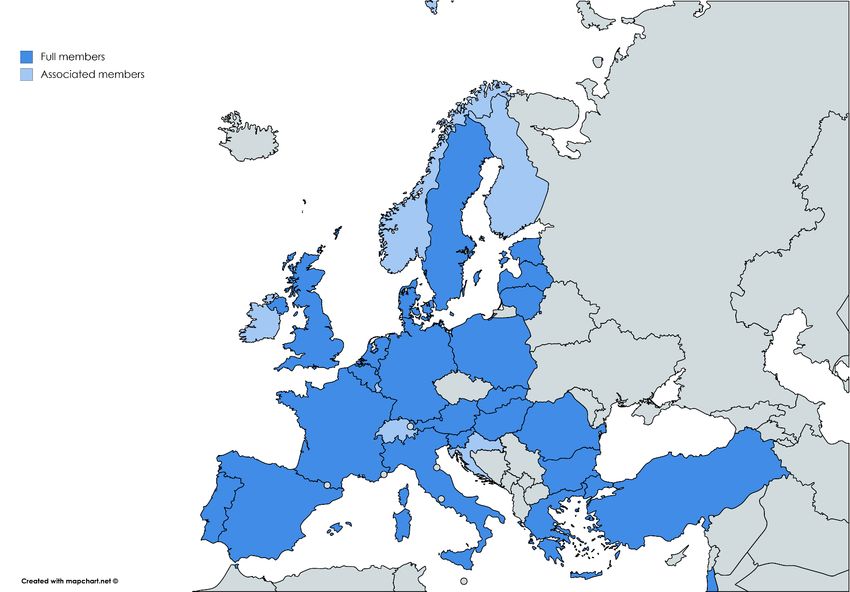
  FLAG-ERA Consortium

40 funding organisations
from 28 countries
• Full members in 22
  countries
• Associated members in
  6 additional countries
Each funding organisation
participates in the calls it
is interested in
FLAG-ERA JTC 2019
                                                                                  10

     FLAG-ERA and its environment
                          FET Flagship programme

                   EC FET           FLAG-ERA
                Flagship Unit        members

                                                                         Build a
                         Take graphene                                  research
                         from the realm                              infrastructure
                           of academic                                   to help
                           laboratories                                 advance
    Graphene             into European               Human Brain     neuroscience,
    Flagship                  society                  Project       medicine and
                                                                       computing

• FLAG-ERA main objectives: Support the Flagship programme
 and in particular the first two Flagships through
  • Dedicated Joint Transnational Calls (JTC 2015, JTC 2017, JTC 2019)
  • Support to partnering projects and to their integration into the Flagship
FLAG-ERA JTC 2019
11
The FLAG-ERA Joint Transnational Calls:
ERA-NET calls tuned for the Flagships
• Balance between the goal of supporting projects in synergy
with the Flagships and the need for independence
• Scope defined together with the Flagships
• Information about foreseen synergies embedded in the submission
• Independent Scientific Evaluation Panel
• Formal association process after publication of results
• A transnational collaboration context provided by the
Flagship
• 3-country rule adapted to offer the possibility to request funding in
only two countries while partnering with a Flagship Core Project
member from a third oneFLAG-ERA JTC 2019
12
Reminder on ERA-NET funding
• Each project partner is funded by its respective funding agency
• All national regulations apply (forms, reports etc.), possibly with
modified/additional procedures for the ERA-NET case
FNRS DFG AEI ANR SAS
Collaborative Project 1 Collaborative Project 2
Partner 1 (BE) Partner 2 (FR)
Partner 2 (DE) Partner 2 (ES)
Partner 3 (DE) Partner 3 (BE)
Partner 4 (FR) Partner 4 (SK)FLAG-ERA JTC 2019
13
Calls for transnational projects…
Rationale
• FLAG-ERA is an ERA-NET. The FLAG-ERA calls are modelled after
typical ERA-NET calls
• While such calls generally require consortia requesting funding from at
least 3 different countries, flexibility has been introduced by allowing one
country to be represented by a Core Project partner not requesting
funding
Rules
• Consortia must be international. They must involve at least
• 3 partners requesting funding from 3 participating countries, or
• 2 partners requesting funding from 2 participating countries and a partner from
another country securing its own funding as a Flagship Core Project partner
• The consortium coordinator must be funded through the call
• Consortia must be balanced
• Requested funding in a given country should not exceed 60% of the total
requested funding (75% if funding is requested in 2 countries)FLAG-ERA JTC 2019
14
… in synergy with the Flagships
Rationale
• FLAG-ERA aims at supporting the Flagships and expects to take advantage
of the synergies they offer
• In order to ensure a smooth integration of the selected projects, information
about the association should be documented in the proposals in a way that
is ready to use for the association
• Discussions between Flagship members and non members are expected to take
place during the proposal preparation
Rules
• Submission must include a description of the foreseen Flagship partnership
using the Flagship partnership proposal form
• Partners in selected projects are invited to proceed with the association
• The project is labelled as a partnering project
• Partners not already in the Flagship become Associated Members
NB: Partners requesting funding may be Flagship Core Project membersFLAG-ERA JTC 2019
15
Main eligibility rules
• International consortia involving at least
• 3 partners requesting funding from 3 participating countries, or
• 2 partners requesting funding from 2 participating countries and a
partner from another country securing its own funding as a Flagship
Core Project partner
• In both cases, partners requesting funding may be Flagship
Core Project members
• The coordinator must be funded through the call
• The consortium must be balanced
• Requested funding in a given country should not exceed 60% of the
total requested funding (75% if funding is requested in 2 countries)
• Researchers who are not eligible for funding can participate in
a project if they secure their own funding
• Project duration: up to 3 years and according to individual
funding organisation regulationsFLAG-ERA JTC 2019
16
Comparison with national calls
FLAG-ERA calls National and regional calls
Scope defined together with the Scope defined independently of the
Flagships Flagships
Synergy with the Flagship is Synergy with the Flagship can be a
expected plus for the evaluation
Funding requested in 2+ countries Funding requested in 1 country
Not all countries participate All countries have calls
Smaller budgets Larger budgets overall
Compete only with proposals fitting Compete with all proposals in the
the JTC constraints domainFLAG-ERA JTC 2019
17
JTC 2015 & 2017 country participation
Graphene: 14 Graphene: 17
2015 HBP: 11
2017 HBP: 13FLAG-ERA JTC 2019
18
JTC 2015 & 2017 outcome
2015 2017
Graphene HBP Graphene HBP
Participating countries 14 11 17 13
Submitted proposals 78 30 52 17
Selected projects 13 6 17 6
Selection rate 17% 20% 33% 35%
Granted funding 9.4 M€ 3.6 M€ 11.2 M€ 3.1 M€
Funding countries 12 6 15 6
Other countries 3 2 1 4FLAG-ERA JTC 2019
19
FLAG-ERA JTC 2019 Overview
• Joint call for transnational research proposals in
synergy with the two FET Flagships
• Graphene Flagship
• Human Brain Project
• Funding both Flagship Core Project partners and new
partners (expected to become Associated Members of the
Flagship)
• 22 funding organisations from 18 countries
• Indicative budget: 20 M€
• Two-step evaluation process
• Pre-proposal deadline: February 19th, 2019, 17:00 CETFLAG-ERA JTC 2019
20
Research Areas - Graphene
1. Synthesis and characterization of layered materials beyond graphene
2. Graphene and related materials (GRMs) for Quantum Technologies
3. Optimized GRM-based tunnel barriers for efficient spin injection and detection into
graphene under operational conditions
4. Spin torque and layered-materials-based memory building block
5. Synthesis of monolayers of non-layered compounds
6. Bacterial degradation of GRMs
7. Osteoinductivity and immunisation capacity of GRMs
8. Soft graphene-based materials for tissue engineering
9. GRM-based large-area light emitters and arrays
10. Low temperature growth of layered semiconductors for flexible applications
11. Nanofluidics based on GRMs
12. CVD growth of graphene on insulators
13. Sensors from GRMs and their heterostructures
14. Passive components for radio frequency electronics based on GRMs
15. Infrared photodetectors based on GRMs and their heterostructures
16. LIDAR based on GRMs for autonomous vehicles
17. Moore’s law continued through GRMs
18. GRM-based tandem solar modules
19. Graphene-based cathode materials for Li-ion batteries
20. Re-usable templates for graphene productionFLAG-ERA JTC 2019
21
Research Areas – HBP
1. Development and maturation of cognitive processes and multisensory
integration at micro- and macro-scales
2. The role of neurotransmitter systems in human cognition
3. Subcortical structures: from cognition to action
4. The neuroscience of decision-making
5. Studies on biological deep learning and combined declarative and working
memory
6. Disease modelling and simulation
7. Single cell RNA sequencing of human and mouse brain
8. Predictive neuroinformatics: A trans-species approach
9. Testing neuronal models at multiple scales
10. Automated construction and analysis of models of neurons and networks
11. Reconstruction of neuronal morphology from microscopic image data
12. Neuron data format standardizationFLAG-ERA JTC 2019
22
Participating countries
Graphene HBP
17 16
BE BE
BG BG
DE
EE EE
ES ES
FR FR
GR GR
HU HU
IL IL
IT IT
LT LT
LV LV
NL
RO RO
SE
SI SI
SK SK
TR TRFLAG-ERA JTC 2019
23
Participation in the graphene sub-calls
TRL ≤ 4 TRL ≥ 5
15 14
BE/FRE
BE/VLA BE/VLA
BG BG
DE
EE EE
ES ES
FR FR
GR
HU HU
IL IL
IT
LT LT
LV LV
RO
SE SE
SI SI
SK SK
TR TRFLAG-ERA JTC 2019
24
Participation in the HBP sub-call
HBP
16
BE
BG
EE
ES
FR
GR
HU
IL
IT
LT
LV
NL
RO
SI
SK
TRFLAG-ERA JTC 2019
25
HBP-specific support for identification of
collaboration opportunities
• In parallel to the evaluation 1st step, except for applicants
who would opt out of this possibility, a feedback from
Flagship representatives about potential areas of further
collaboration is provided on the basis of the Flagship
partnership forms included in the pre-proposals
• Applicants invited to the evaluation 2nd step can take
advantage of this information to improve their proposal
• The information is not forwarded to the SEP and it is up to
the applicants to exploit it.FLAG-ERA JTC 2019
26
Indicative Budgets per country (k€)
Graphene (k€) HBP (k€)
Country Funding Basic research Applied Basic and applied Anticipated nb of
organisation research and research fundable research
innovation groups
FNRS 200 200 2-3
BE Belgium
FWO 350 350 2-3
BG Bulgaria BNSF 100 2-3
DE Germany DFG 2 000 10-12
EE Estonia ETAg 100 100 2
AEI 700 5-7
ES Spain IDEPA 200 1-2
ISCIII 500 3-4
FR France ANR 1 000 1 000 8-10
GR Greece GSRT 900 700 7-9
HU Hungary NKFIH 300 300 4-6
IL Israel InnovationAuth 500 500 3-5
IT Italy MIUR 300 300 4-6
LT Lithuania LMT 100 100 2-3
LV Latvia VIAA 300 2-3
NL Netherlands NWO 700 3
RO Romania UEFISCDI 250 250 3-4
VINNOVA 750 2-4
SE Sweden
VR 750 2-4
SI Slovenia MIZS 420 210 3
SK Slovakia SAS 120 120 2
TR Turkey TUBITAK 2 500 10-15FLAG-ERA JTC 2019
27
Table of links – Graphene
FLAG-ERA JTC 2019 Graphene topic:
Related Divisions and Work Packages per JTC research area
The present document is provided to facilitate contacts with the Graphene Flagship. The table is indicative and appropriate contacts may depend on each specific proposal.
Division 1 Division 2 Division 3 Division 4
Enabling Science and Materials Health, Medicine and Sensors Electronics and Photonics Integration Large-Scale Technologies
WP1 WP2 WP3 WP4 WP5 WP6 WP7 WP8 WP9 WP10 WP11 WP12 WP13 WP14 WP15
Enabling Research Spintronics Enabling Materials Health and Biomedical Sensors Electronic Devices Photonics and Flexible Electronics Wafer-Scale System Energy Generation Energy Storage Functional Foams and Polymer Composites Production
Environment Technologies Optoelectronics Integration Coatings
1 Synthesis and characterization of layered materials beyond graphene X
2 Graphene and related materials (GRMs) for Quantum Technologies X X
Optimized GRM-based tunnel barriers for efficient spin injection and detection into
3 graphene under operational conditions X
4 Spin torque and layered-materials-based memory building block X X
5 Synthesis of monolayers of non-layered compounds X
6 Bacterial degradation of GRMs X
7 Osteoinductivity and immunisation capacity of GRMs X X
8 Soft graphene-based materials for tissue engineering X X X X
9 GRM-based large-area light emitters and arrays X
10 Low temperature growth of layered semiconductors for flexible applications X
11 Nanofluidics based on GRMs X
12 CVD growth of graphene on insulators X
13 Sensors from GRMs and their heterostructures X
14 Passive components for radio frequency electronics based on GRMs X
15 Infrared photodetectors based on GRMs and their heterostructures X
16 LIDAR based on GRMs for autonomous vehicles X X
17 Moore’s law continued through GRMs X
18 GRM-based tandem solar modules X
19 Graphene-based cathode materials for Li-ion batteries X
20 Re-usable templates for graphene production X
Division and Work Package leaders and deputies with email addresses
WP1 - Enabling Research Vladimir Falko (vladimir.falko@manchester.ac.uk); Alberto Morpurgo (alberto.morpurgo@unige.ch)
Vladimir Falko (vladimir.falko@manchester.ac.uk)
Division 1 - Enabling Science and Materials WP2 - Spintronics Kevin Garello (kevin.garello@imec.be); Stephan Roche (sroche@icn.cat)
Alberto Morpurgo (alberto.morpurgo@unige.ch)
WP3 - Enabling Materials Mar Garcia Hernandez (cipreses29@gmail.com); Jonathan Coleman (colemaj@tcd.ie)
WP4 - Health and Environment Maurizio Prato (prato@units.it); Alberto Bianco (a.bianco@ibmc-cnrs.unistra.fr)
Kostas Kostarelos (kostas.kostarelos@manchester.ac.uk)
Division 2 - Health, Medicine and Sensors WP5 - Biomedical Technologies Kostas Kostarelos (kostas.kostarelos@manchester.ac.uk); Jose Garrido (joseantonio.garrido@icn2.cat)
Maurizio Prato (prato@units.it)
WP6 - Sensors Peter Steeneken (p.g.steeneken@tudelft.nl); Sanna Arpiainen (sanna.arpiainen@vtt.fi)
WP7 - Electronic Devices Daniel Neumaier (neumaier@amo.de); Herbert Zirath (herbert.zirath@chalmers.se )
Daniel Neumaier (neumaier@amo.de) WP8 - Photonics and Optoelectronics Frank Koppens (frank.koppens@icfo.es); Andrea C. Ferrari (acf26@eng.cam.ac.uk)
Division 3 - Electronics and Photonics Integration
Henrik Sandberg (henrik.sandberg@vtt.fi) WP9 - Flexible Electronics Henrik Sandberg (henrik.sandberg@vtt.fi); Matteo Bruna (matteo.bruna@nokia.com)
WP10 - Wafer-Scale System Integration Marco Romagnoli (mromagnoli@cnit.it); Cedric Huyghebaert (cedric.huyghebaert@imec.be)
WP11 - Energy Generation Gerard Gebel (gerard.gebel@cea.fr); Emmanuel Kymakis (kymakis@staff.teicrete.gr)
WP12 - Energy Storage Vittorio Pellegrini (vittorio.pellegrini@iit.it); Teofilo Rojo (trojo@cicenergigune.com)
Vittorio Pellegrini (vittorio.pellegrini@iit.it)
Division 4 - Energy, Composites and Production WP13 - Functional Foams and Coatings Xinliang Feng (xinliang.feng@tu-dresden.de); Paolo Samori (samori@unistra.fr)
Xinliang Feng (xinliang.feng@tu-dresden.de)
WP14 - Composites Costas Galiotis (c.galiotis@iceht.forth.gr); Ian Kinloch (ian.kinloch@manchester.ac.uk)
WP15 - Production Alex Jouvray (a.jouvray@aixtron.com); Tamara Blanco (tamara.blanco@airbus.com)
Table available on the call pageFLAG-ERA JTC 2019
28
Table of links – HBP
FLAG-ERA JTC 2019
Related Subprojects per HBP research area
The present document is provided to facilitate contacts with the HBP. The table is indicative and appropriate contacts may depend on each specific proposal.
Neuroscience research and strategic data generation Platforms
SP1 SP2 SP3 SP4 SP5 SP6 SP7 SP8 SP9 SP10
Mouse Brain Human Brain Systems and Theoretical Neuroinformatic Brain Simulation High Medical Neuromorphic Neurorobotics
Organisation Organisation Cognitive Neuroscience s Platform Platform Performance Informatics Computing Platform
Neuroscience Analytics and Platform Platform
Computing
Platform
Development and maturation of cognitive processes and multisensory integration at
1
micro- and macro-scales
X X X X X X X X X X
2 The role of neurotransmitter systems in human cognition X X X X X
3 Subcortical structures: from cognition to action X X X X X
4 The neuroscience of decision-making X X X X X
5 Studies on biological deep learning and combined declarative and working memory X X X X X
6 Disease modelling and simulation X X X X X X
7 Single Cell RNA sequencing of human and mouse brain X X X X
8 Predictive Neuroinformatics: A trans-species approach X X X X X
9 Testing neuronal models at multiple scales X X X X X
10 Automated Construction and Analysis of Models of Neurons and Networks X X X X X X
11 Reconstruction of neuronal morphology from microscopic image data X X X X
12 Neuron Data Format Standardization X X X X X X
NB: The 'Ethics and Society' Subproject can be relevant to all call research areas.
The Subproject leaders and their contact information are provided on the HBP web site (https://www.humanbrainproject.eu/en/about/project-structure/subprojects/).
Table available on the call pageFLAG-ERA JTC 2019
29
Evaluation criteria
• The usual criteria for European projects are used
• Excellence: Scientific and/or technological quality
• Implementation: Quality and efficiency of the implementation and
management
• Impact: Potential impact through the development, dissemination
and exploitation of results
• The criteria weights depend on the sub-call
Graphene HBP
Basic research Applied Basic and
research and applied
innovation research
Excellence 50% 30% 40%
Implementation 30% 30% 30%
Impact 20% 40% 30%FLAG-ERA JTC 2019
30
Main steps after submission
• Proposals are assessed by an independent international
Scientific Evaluation Panel (SEP)
• The list of project recommended for funding is established
on the basis of this assessment and on the available
funding
• Timeline
• May 2019: Notification of accepted short proposals
• July 2019: Full proposal submission deadline
• November 2019: Notification of accepted full proposals
• December 2019 – March 2020: Project start (up to 3 years)FLAG-ERA JTC 2019
31
Important documents
• Call Announcement
• Eligibility rules at the transnational and national levels (cf. Annex II
on National requirements)
• Pre-proposal and Flagship partnership proposal forms
• Submission guidelines
• Flagship contact information
• Call presentations and flyers
http://www.flagera.eu/flag-era-calls/jtc-2019/FLAG-ERA JTC 2019
32
Further information
National and regional contact points:
Cf. Call Announcement (Annex II)
Joint Call Secretariat:
serguei.fedortchenko@agencerecherche.fr
Graphene Flagship Human Brain Project
Point of Contact: Point of Contact:
graphene-eu@esf.org partnering@humanbrainproject.euYou can also read


