June 24 2021 Kidney and Pancreas Transplantation and Living Donation Conference - Pre-registration required ...
←
→
Page content transcription
If your browser does not render page correctly, please read the page content below

V I R T UA L
  June 24
  2021
  Kidney and Pancreas
  Transplantation and Living
  Donation Conference
  Pre-registration required at: http://tiny.cc/KidneyTx
  Available for 30 days.

  Provided by the University of Virginia School of Medicine and School of Nursing

Program Overview & Practice Gaps
Kidney transplantation is the best option to restore quality of life for patients
with end stage renal disease. Dialysis unit staff require relevant and accurate
information regarding advances in kidney transplantation to appropriately
educate patients in their dialysis units. Current regulatory mandates require
that dialysis patients receive education regarding renal transplantation and
opportunity for referral to a kidney transplant center of their choosing. Through
partnership with dialysis unit staff, we are able to provide a consistent message
about the lifesaving benefit of kidney transplantation, the best option for kidney
transplant, which is living donation, and what patients will encounter as a part of
their evaluation. This program will address these educational needs:

• Objective tools are important in determining what patients may be too high risk to
  undergo kidney transplant.  Part of the evaluation process includes calculation of
  frailty, utilizing FRIED, a tested assessment tool.  Keys to success include adequate
  nutrition and improved strength and endurance.
• Patients with ESRD are at increased risk of having severe illness associated
  with COVID.  Heightened anxiety may cause potential transplant candidates to
  be reluctant to consider transplant evaluation and elective surgical procedures.        Desired Outcomes
  Transplant staff receive frequent requests from our dialysis partners regarding         AT THE END OF THIS WORKSHOP,
  recommendations for vaccination and navigating evaluation through COVID.                PARTICIPANTS WILL:
  Education, support and reassurance from health care providers is important.
                                                                                           1 Understand changes in kidney
• Discussion regarding a patient’s candidacy for kidney transplant requires                  allocation and what drives those
  participation of the interprofessional team.  Authentic debate frequently occurs and       changes
  is an excellent learning opportunity.
                                                                                           2 Describe different types of
• For some patients, returning to the dialysis unit after kidney transplant is a             kidneys patient may be offered
  disappointing experience, even if graft function only delayed.  Having an informed         and potential ramifications to
  HCP in the dialysis unit is key to helping the patient maintain optimism as their          their post-transplant care
  kidney recovers.
                                                                                           3 Discuss team members’ role
• Changes in kidney allocation will happen this year.  Educating patients about the          in the decisions made about a
  potential impact to them personally is the role of the transplant team and dialysis        patients candidacy for kidney
  unit staff.                                                                                transplantation
• COVID vaccination is available to many patients with ESRD currently.  Receiving the      4 Understand requirements for
  vaccine may require declining potential kidney offers.  Understanding the risk and         success when a spouse donates
  benefit of the vaccination is important to educating patients.                             a kidney to their spouse
• Living kidney donation remains the best option for patients in need of kidney            5 Describe the motivation of an
  transplant.  Frequently, a spouse will donate to their spouse.  Through interactive        altruistic kidney donor
  conversation with donor and recipient, we can learn how best to support these
  patients.                                                                                6 Discuss factors considered when
                                                                                             assessing a patient’s substance
• Non-directed or altruistic living donors make kidney transplantation possible for          use
  some fortunate recipients.  We will seek to understand the motivation of these
  selfless individuals through interactive discussion                                      7 Understand why a patient’s
                                                                                             physical endurance is considered
• Many individuals, dialysis patients and the general population, choose to use
                                                                                             as part of the assessment for
  substances either recreationally or as self-medication.  Identifying addiction and
                                                                                             kidney transplant candidacy
  potential impact on the success of kidney transplant recipients requires clear
  communication between the patient, the dialysis unit and the transplant team.            8 Discuss best care of patient with
                                                                                             delayed graft function after kidney
• Kidney transplant candidates have input into what type of organ offers they may
                                                                                             transplantation
  receive.  Understanding 2 for 1, en-bloc, DCD, high KDPI, HCV or HBV positive kidney
  offers requires a team approach to educate patients about their choices.                 9 Understand implications of
                                                                                             chronic kidney failure and
                                                                                             managing dialysis and transplant
                                                                                             evaluation during a pandemic
                                                                                          10 Understand the COVID
                                                                                             vaccination strategy for kidney
                                                                                             transplant candidates and
                                                                                             recipients
agenda
9:00AM  Welcome and Housekeeping Remarks, Barb Shephard, RN, BSN
                                                                                    FACULTY
                                                                                    Unlessotherwisenotedallfacultyarefrom
                                                                                    the University of Virginia
                                                                                    Avinash Agarwal, MD*
                                                                                    Transplant Surgeon
9:15    A Changes (Again?) in Kidney Allocation: What it means                      Ben Beitzel, RN, MSN*
        for our patients, Alden Doyle, MD                                           Transplant Director
9:45    What patients need to know about the kidney they may be offered,            Kenneth Brayman, MD*
        Alden Doyle, MD                                                             Kidney Transplant Surgical Director
10:15   Break and exhibitors                                                        Melissa Dorris, MSW
10:30   Interactive Patient Selection Committee Meeting, Whole Team                 Transplant Social Worker
11:15   Living donor panel discussion: Spouse to spouse,                            Alden Doyle, MD
        Emily Lyster, MSW                                                           Transplant Medical Director
11:35   Living donor panel discussion: Altruistic donors                            Barbara Hall, RN*
12:00PM Lunch Break and exhibitors                                                  Dialysis Nurse

1:00    SubstanceUseandkidneytransplantation:Navigatingthis                         Robyn Hamilton, RN*
                                                                                    Dialysis Nurse
        slippery slope, Melissa Dorris, MSW
1:45                                                                                Shannon James*
        Nutrition and Frailty as a Predictor of kidney transplant outcome,
                                                                                    Financial Coordinator
        Rebecca Turner, RD
2:15    Delayedgraftfunction:WhattoknowaboutAKI,AmberLanter,RN                      Barbara Jefferson, RN*
                                                                                    Dialysis Nurse
2:45    Breakandexhibitors
                                                                                    Sarah Klick, MSW*
3:00    COVID:Courageandthedialysispatient,AnthonyReed                              Social Worker
3:30    UpdatesonCOVIDvaccination:Implicationsfor                                   Fresenius Kidney Care Dialysis Center
        pre-andpost-transplant,SwatiRao,MD                                          Amber Lanter, RN*
4:00    Closingremarks,BarbShephard,RN,BSN                                          Kidney Transplant Coordinator
                                                                                    Emily Lyster, MSW*
                                                                                    Living Donor Advocate
                                                                                    Angie Nishio, MD*
                                                                                    Transplant Nephrologist
                                                                                    Jose Oberholzer, MD*
                                                                                    Transplant Director
                                                                                    Edward Phifer, MSW*
                                                                                    Social Worker
                                                                                    Davita Dialysis Center
                                                                                    Suzanne Queheillalt, MSN, RN, ACNS-BC*
                                                                                    Transplant CNS
                                                                                    Swati Rao, MD
REGISTRATION                                                                        Transplant Nephrologist
                                                                                    Anthony Reed*
Registration and payment are available at www.cmevillage.com, (visit our            Biomedical Technician
Learning Portal or Upcoming Events) or direct event link http://tiny.cc/KidneyTx.
                                                                                    Kathryn Reid, PhD, RN, FNP*
Registration will close midnight on June 22, 2021. The course syllabus will be      Nurse Planner
available online only the week of the conference until 30 days after the
                                                                                    Barbara Shephard, RN, BSN*
conference. PLEASE NOTE: Policies on cancellation, payment methods and              Course Director
accommodation requests can be found on our website under FAQs. Additional
                                                                                    Anita Sites, ANP*
questions, please contact uvacme@ virginia.edu or 434-924-5310.                     Living Donor Lead
Early Bird rate through April 21, 2021       Rate April 22-June 22, 2021            Rob Teaster, RN, MBA*
Physician..................$100              Physician..................$130        Transplant Administrator
All other HCP............ $75                All other HCP............ $90          Rebecca Turner, RD*
                                                                                    Transplant Dietician
CONTACT INFORMATION                                                                 Andrea Zimmerman, EdD*
Andrea Zimmerman, EdD                                                               Learning Engineer
Learning Engineer, Office of Continuing Medical Education                           _____
azimmerman@virginia.edu | 434-924-5310
                                                                                    *Planning Committee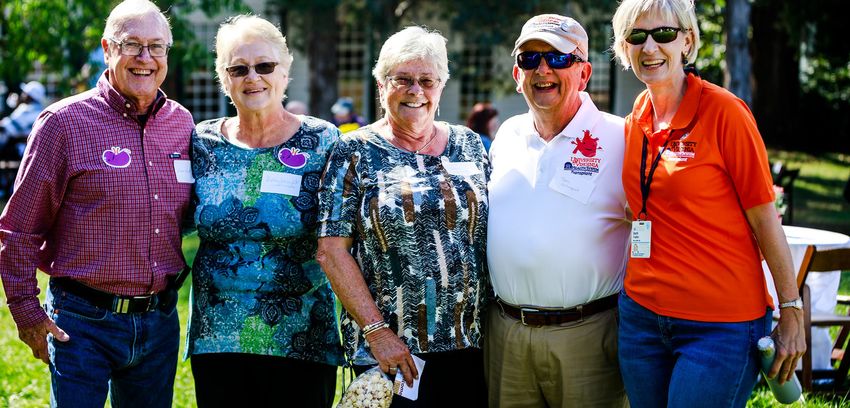
Accreditation & Designation
Statements
In support of improving patient care, the Univer-
sity of Virginia School of Medicine and School of
Nursing is jointly accredited by
the Accreditation Council for
Continuing Medical Education
(ACCME), the Accreditation
Council for Pharmacy Educa-
tion (ACPE), and the American
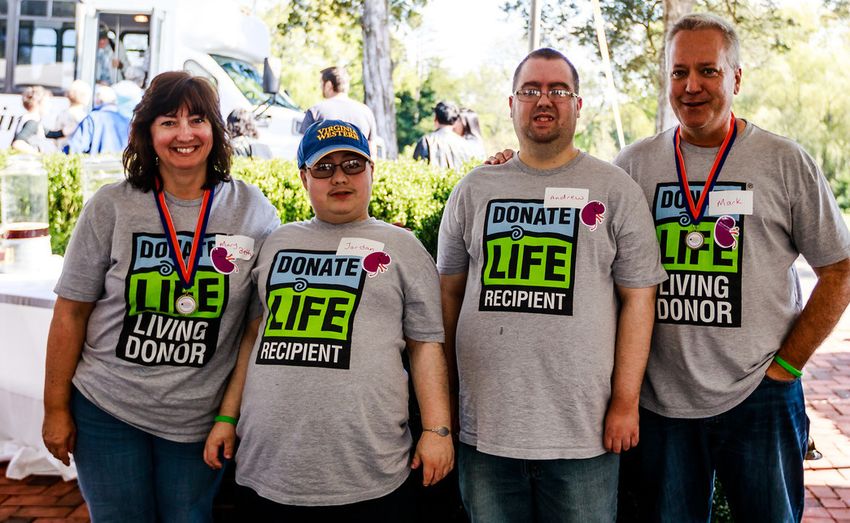
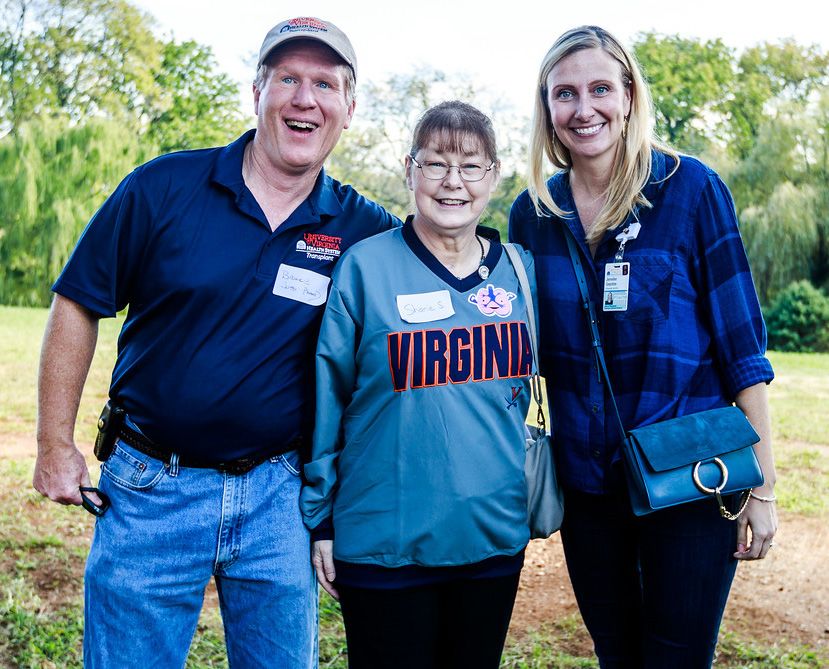
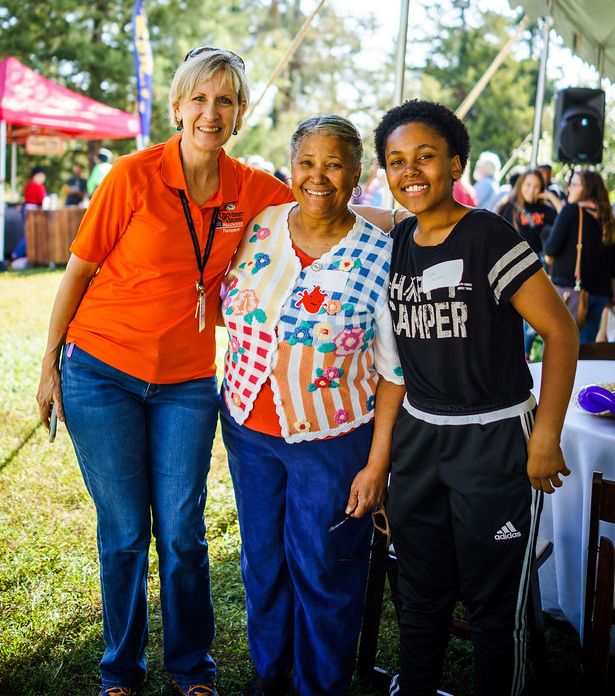
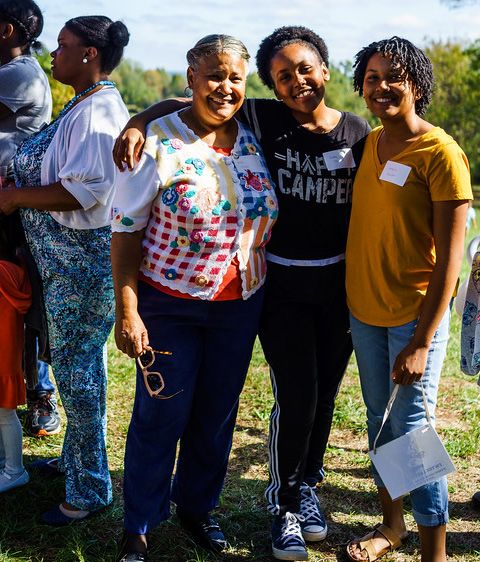
Nurses Credentialing Center (ANCC), to provide        A special THANK YOU to Tom McGovern for capturing pictures of our patients and staff
continuing education for the healthcare team.         during the 50th Anniversary Celebration | www.tommcgphoto.com

AMA PRA CATEGORY 1 CREDIT
                                                      CDR CPEU CREDIT                                          HOURS OF PARTICIPATION
The University of Virginia School of Medicine and
                                                      Completion of this RD/DTR profession-specific or         The University of Virginia School of Medicine and
School of Nursing designates this live activity
                                                      IPCE activity awards CPEUs (One IPCE credit=One          School of Nursing awards 5.25 hours of partic-
for a maximum of 5.25 AMA PRA Category 1
                                                      CPEU).                                                   ipation (consistent with the designated number
Credits.TM Physicians should claim only the credit
                                                         If the activity is dietetics-related but not tar-     of AMA PRA Category 1 Credit(s)TM or ANCC
commensurate with the extent of their participa-
                                                      geted to RDs or DTRs, CPEUs may be claimed               contact hours) to a participant who successfully
tion in the activity.
                                                      which are commensurate with participation in             completes this educational activity. The University
                                                      contact hours (One 60 minute hour= 1 CPEU).              of Virginia School of Medicine and School of
ANCC CONTACT HOURS
                                                      RD’s and DTRs are to select activity type 102 in         Nursing maintains a record of participation for six
The University of Virginia School of Medicine and
                                                      their Activity Log. Performance Indicator selection      (6) years.
School of Nursing awards 5.25 contact hours for
                                                      is at the learner’s discretion.
nurses who participate in this educational activity
and complete the post activity evaluation.

CEPTC CREDIT                                          Disclosure of faculty financial affiliations
As a designated Approved Provider by the Amer-        The University of Virginia School of Medicine and School of Nursing, as a Joint Accreditation provider by
ican Board for Transplant Certification (ABTC),       the Accreditation Council for Continuing Medical Education (ACCME), the Accreditation Council for Phar-
University of Virginia School of Medicine grants up   macy Education (ACPE), and the American Nurses Credentialing Center (ANCC), endorses and strives to
to 5.25 Category 1 Continuing Education Points        comply with the Accreditation Council for Continuing Medical Education (ACCME) Standards for Integrity
for Transplant Certification (CEPTCs) for this        and Independence in Accredited Continuing Education, Commonwealth of Virginia statutes, University of
offering. CODE: 162-153                               Virginia policies and procedures, and associated federal and private regulations and guidelines on the
                                                      need for disclosure and monitoring of proprietary and financial interests that may affect the scientific
AAPA CME CREDIT                                       integrity and balance of content delivered in continuing education activities under our auspices.
Live- This activity is designated for 5.25 AAPA          The University of Virginia School Medicine and School of Nursing requires that all CE activities accred-
Category 1 CME credits. Approval is valid until       ited through this institution be developed independently and be scientifically rigorous, balanced and
February 3, 2024. PAs should only claim credit        objective in the presentation/discussion of its content, theories and practices.
commensurate with the extent of their participa-         All planners, committee members, faculty, reviewers, authors, and staff in a position to control the
tion.                                                 content of accredited education programs are required to disclose relevant financial relationships with
                                                      commercial entities occurring within the past 12 months (such as grants or research support, employee,
ASWB CREDIT                                           consultant, stock holder, member of speakers bureau, etc.). An individual has a relevant financial rela-
As a Jointly Accredited Organization, the Univer-     tionship if the individual or their spouse/partner has a financial relationship in any amount occurring
sity of Virginia School of Medicine and School of     in the last 12 months with an ACCME-defined commercial interest whose products or services are dis-
Nursing is approved to offer social work continu-     cussed in the educational activity content over which the individual has control. Relevant financial rela-
ing education by the Association of Social Work       tionships will be disclosed to the activity audience. Refusal or failure to provide disclosure information in
Boards (ASWB) Approved Continuing Education           a timely manner will result in the disqualification from participation in the activity. The University of Vir-
(ACE) program. Organizations, not individual          ginia School of Medicine and School of Nursing will employ appropriate mechanisms to resolve poten-
courses, are approved under this program. State       tial conflicts of interest to maintain the standards of fair and balanced education to the participant.
and provincial regulatory boards have the final       Questions about specific strategies can be directed to the University of Virginia School of Medicine and
authority to determine whether an individual          School of Nursing, Charlottesville, Virginia.
course may be accepted for continuing education          The faculty and staff of the University of Virginia School Medicine Office of Continuing Medical Edu-
credit. The University of Virginia School of Medi-    cation and School of Nursing Continuing Education have disclosed no relevant personal or professional
cine and School of Nursing maintains responsi-        financial relationships with commercial entities producing healthcare goods or services.
bility for this course. Social workers completing
this course receive 5.25 continuing education         Disclosure of discussion of non-FDA approved uses for pharmaceutical products
credits.                                              and/or medical devices
                                                      The University of Virginia School of Medicine and School of Nursing, as a Joint Accreditation provider by
IPCE CREDIT                                           the Accreditation Council for Continuing Medical Education (ACCME), the Accreditation Council for Phar-
This activity was planned by and for the health-      macy Education (ACPE), and the American Nurses Credentialing Center (ANCC), require that all faculty
care team, and learners will receive 5.25 Inter-      presenters identify and disclose the discussion of any off-label uses for pharmaceutical and medical
professional Continuing Education (IPCE)              device products. Each clinician/team needs to fully review all the available data on new products or
credit for learning and change.                       procedures prior to clinical use.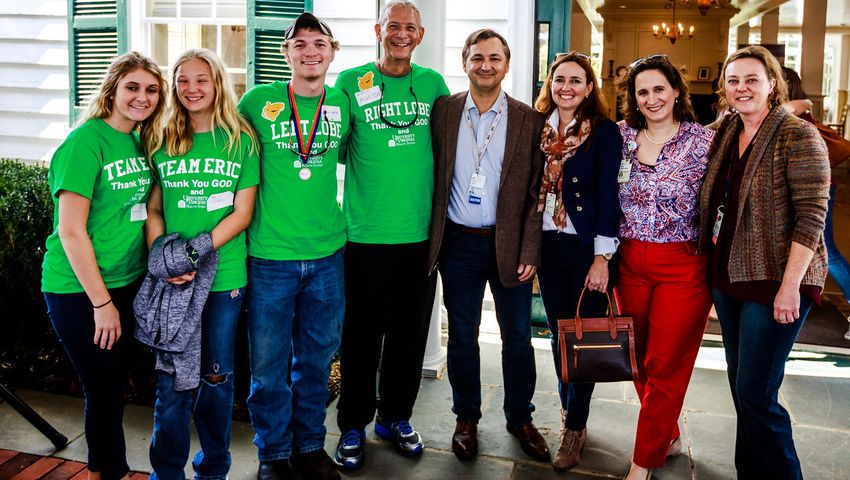

You can also read


