Klever X Speed 45km/h - Klever mobility
←
→
Page content transcription
If your browser does not render page correctly, please read the page content below
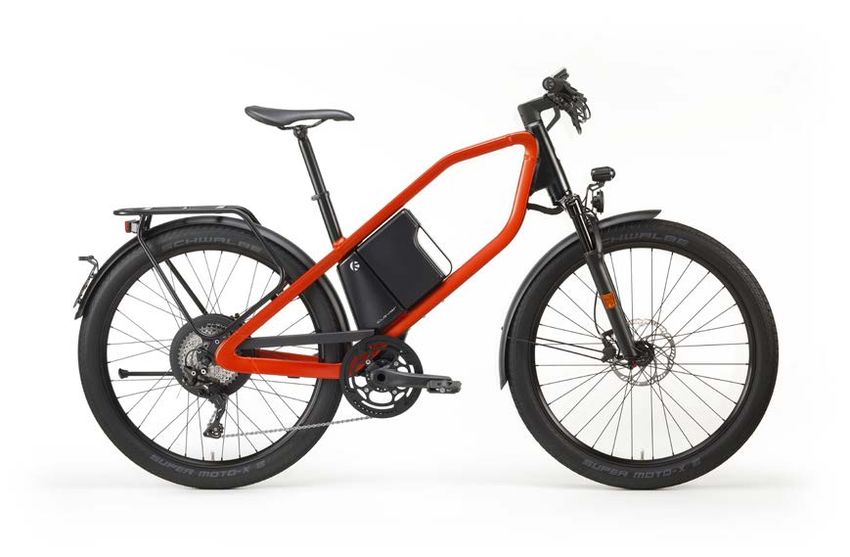
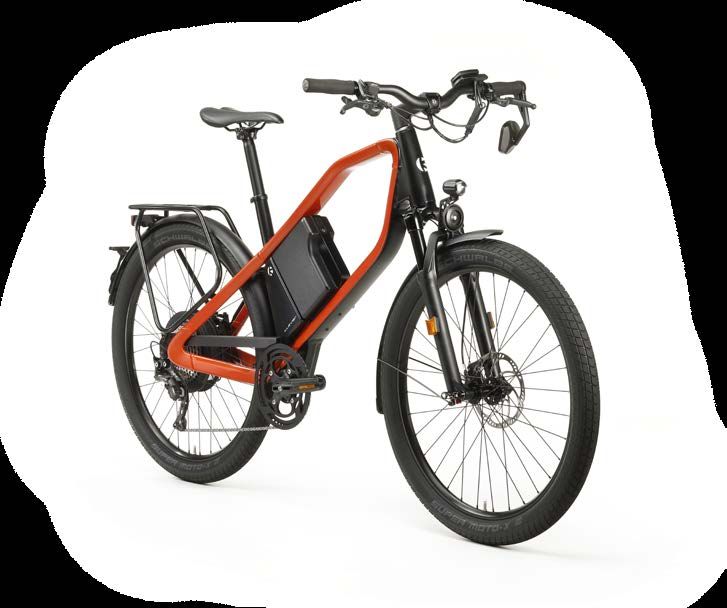
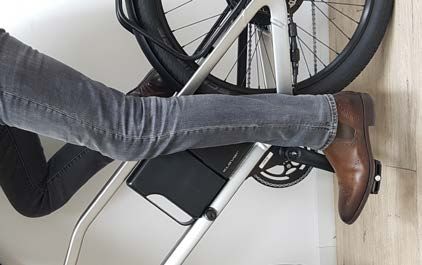
User manual    45km/h
Range

Klever X Speed

models:
X SPEED
X SPEED LTD
X SPEED PURE
Index

Contents:
1. QuickStart ............................................................................................................................... 5
2. Introduction ............................................................................................................................ 8
3. Type approval and EC Certificate of Conformity (CoC)................................................................ 10
4. Getting started and safety check............................................................................................. 11
5. Behaviour in road traffic ......................................................................................................... 13
6. The Klever Mobility propulsion – the BIACTRON system ............................................................ 14
6.1 Sensors and their function..................................................................................................... 15
6.2 Levels of pedal assistance...................................................................................................... 16
6.3 The battery pack................................................................................................................... 17
6.3.1 Charging of the battery...................................................................................................... 20
6.3.2 Range ............................................................................................................................... 22
6.3.3 Removing the battery from its docking and putting it back.................................................. 22
6.3.4 Transport of the battery ..................................................................................................... 23
6.4 Diagnostics and troubleshooting .......................................................................................... 23
7. The Speed Pedelec .................................................................................................................. 25
7.1 Type approval vehicle with dedicated equipment.................................................................... 25
7.1.1 Horn................................................................................................................................. 25
7.1.2 Brake light ........................................................................................................................ 25
7.1.3 Wing mirror ...................................................................................................................... 25
7.2 Saddle and handlebar adjustment ......................................................................................... 26
7.3 Headset ............................................................................................................................... 27
7.4 Rigid and suspension front fork ............................................................................................. 28
7.5 Disc brakes .......................................................................................................................... 29
7.6 Drive train and gearshift ....................................................................................................... 30
7.7 Lighting ............................................................................................................................... 31
7.8 Wheels and tyres .................................................................................................................. 31
7.9 Luggage carrier and the transport of luggage......................................................................... 34
7.10 Lock and theft protection .................................................................................................... 35
7.11 Accessories ........................................................................................................................ 35
8. Transport of your X Speed ....................................................................................................... 36
9. Maintenance, care and storage................................................................................................ 37
10. Disposal and transportation ................................................................................................. 39
11. Technical data ...................................................................................................................... 40
12. Product liability and warranty ............................................................................................... 43
13. Intended use of your X Speed ................................................................................................ 45
14. Wear .................................................................................................................................... 46
15. Legal requirements for participation in traffic on public roads.................................................. 47
16. Regular maintenance and inspection..................................................................................... 48
17. FAQ’s.................................................................................................................................... 49
18. Bicycle passport ................................................................................................................... 51
19. Inspection plan ......................................................................................................................52
20. Appendix...............................................................................................................................53
21. Imprint...................................................................................................................................55

                                                                                                    www.klever-mobility.com                        3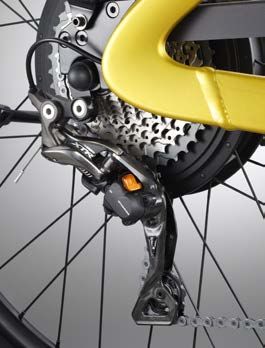
Quickstart

4       www.klever-mobility.com
Quickstart

1. QuickStart
Dear customer,
On the first pages of this comprehensive instruction manual
you will find this QuickStart guide, which gives you a quick
overview of the main features of the Speed Pedelec. For
further information please read the additional instructions
on the following pages.
There you will find all the important technical issues and
details and further relevant information. Should you have any
further questions, please ask one of our authorised dealers
or contact our technical hotline, whose contact details are at
the end of the manual.
Enjoy your Speed Pedelec and we wish you a lot of fun.

The Klever Mobility team.

Image 2

                                                                 www.klever-mobility.com       5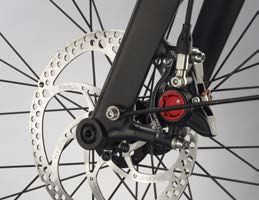
Quickstart

                                            Security check:

        MENU
                                            Before starting the bike please always check the operation of
                              km
                                            the brakes and the tyre pressure.
            +                  /h
            _
                                            Launch of the electric drive
                                            To start the propulsion system the display must be mounted
        TURBO

      Image 3                               in the bracket. There are two ways to activate the system:
                                            1. Press and hold for 1 second the start button (Image 3) –
                                            the system runs for 3 sec through a systems check - now the
                                            system is activated.
                                            or
                                            2. When You start pedalling the system will wake up
                                            automatically. After 3 sec. of system check, the electrical drive
                                            will support you.
                                            Use the + (top left) and - (bottom left) buttons to select the
                                            desired level of support. The support level is indicated by
                                            the 3 horizontal bars at the top of the display.

    0 bar                                                         UL (Ultra Low)   No support; system is
                                                                                   activated
    1 bar                                                         L (Low)          Low support
    2 bars                                                        M (Medium)       Medium support

    3 bars                                                        H (High)         High support
    The Walk/Turbo(á) button has 3 functions:
    1. Walk-assist when walking next to your Speed Pedelec.
    2. Turbo WITHOUT pedalling of the cyclist
    3. Turbo WITH pedalling of the cyclist
    1. Actuate the Walk/Turbo (á) button when walking             < 4 km/h         Pushing aid while
    next to your vehicle. The maximum speed depends on                             taking your Speed
    the selected support rate in your display. Therefore, we                       Pedelec by the hand
    recommend to use the Walk-assist mode only when
    you selected the L support rate.
    2. Turbo mode WITHOUT pedalling of the cyclist. The           At L < 4 km/h    Additional support at
    maximum speed depends on the selected support rate            At M < 12 km/h   standstill or in case you
    in your display.                                              At H < 18 km/h   do not want to pedal
    3. Turbo mode WITH pedalling of the cyclist.                  L < 45 km/h      Additional support
    When actuating while riding in L support rate                 H (High)         while riding hills or
    When actuating while riding in M support rate                 H (High)         strong headwinds
    When actuating while riding in H support rate                 Not applicable

                                                    Caution! We recommend that you use the Walk-assist
                                                    mode only in case you also selected the L support rate.

6           www.klever-mobility.com
Quickstart

       In case you preselected the M or H support rate, then the   Charger
                                                                                               Power plug
       maximum speed of the vehicle is too high to be able to
       walk comfortably and safely alongside the X Speed.

Charging the battery:
                                                                                 Power cable          Image 4

       Caution! The battery should only be charged with the         Charging socket
       appropriate, supplied charger (Image 4).                     LED

The battery can be charged on (image 7a) and off bike (image
7b). For removal of the battery see section 6.3.3.
Connect the charger with the power cable and the power
plug to the wall socket. If the LED on the charger shows
                                                                                                      Image 5
constant red light, the charger is ready for use (image 6).
Connect the charger plug from the charger to the charging
socket on the battery (images 5 + 6 + 7a/7b).
The charging process starts automatically. Once the LED on
the charger constantly lights green the operation is complete
and the battery is charged. Unplug from wall first, then
remove the charger lead from the battery charger.

                                                                                                      Image 6

                                                                             Image 7B               Image 7A

Charging       Indicator LED Charger     Indicator LED Battery     Remark
status
               Flashing red              Error                     Check connections
               Steady red                                          Charger is ready
0%             Flashing yellow           Flashing red              Capacity very low; charging starts
90%           Flashing green            Flashing green            Final charging
100 %          Steady green              No LED colour             Fully charged
The charging of an empty rechargeable battery of 570 Wh (from 0% to 96%) will take about 2.3
hours with a quick charger. For an 850 Wh battery the process will take about 3.5 hours.

                                                                       www.klever-mobility.com                  7
Introduction

                                  2. Introduction
                                  Congratulations
                                  With the purchase of a Pedelec of Klever Mobility you have
                                  made the right purchase decision and you got a high-
                                  quality product with what you will have much pleasure in
                                  everyday life.
                                  Technically and functionally up to date, it is carefully
                                  manufactured using the highest quality materials and
                                  components. An excellent design and excellent value for
                                  money distinguishes this Speed Pedelec.
                                  For a trouble free, pleasurable riding experience with the new
                                  product, please read this manual carefully.
                                  Everything you need to know in terms of technical
                                  specifications, operation, maintenance and care, have been
                                  carefully compiled in this manual .
                                  Please note the additional information in the instructions
                                  supplied with the components.

                                        Pay particular attention to sections in bold which
                                        are additionally marked with "Caution". The most
                                        important information is again summarised. It should
                                        be observed to avoid possible accidents and danger to
                                        your life and limb.

                                        Bold sections marked with this symbol contain
                                        information about the X Speed and its accessories and
                                        its handling.

                                        Operations marked with this sign are to be performed
                                        by an authorised Klever dealer. They require a lot of
                                        experience and special tools.

                                  Furthermore, if you need any further information or advice,
                                  please contact our technical hotline at ++49 (0)223-4933420
                                  (Monday-Friday from 8-17 clock), or contact an authorised
                                  retailer.

8       www.klever-mobility.com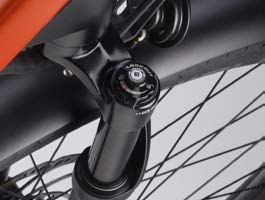
Introduction

The latest available information on our products and other
technical information and videos can be found on our
website: www.klever-mobility.com.
Your pedelec is equipped according to EC Type Approval
Regulation 168/2013 and rated as a vehicle in category L1e-B.
You can use it safely on public roads.
The Speed Pedelec must be equipped with a well audible
horn, a wing mirror (LH-side), a lighting system with quality
marks for the head light and the tail light with integrated
brake light, reflectors and with 2 sets of brakes independently
actuating the front and rear wheel.
The additional electric drive is limited to max. 45 km/h, and
thus complies with the statutory requirements for an L1e-B
vehicle.
Due to the fact that the X Speed is a type approval vehicle in
the L1e-B category it must be registered at your national road
safety authority (e.g. KBA in Germany, DIV in Belgium, RDW
in the Netherlands, DREAL in France or DVSA in the United
Kingdom). In addition, you will need a license plate (as proof
of your local registration and your liability insurance), an
insurance and a driving license. Moreover, you will need to
wear an approved Speed Pedelec helmet as well.

                                                                  www.klever-mobility.com       9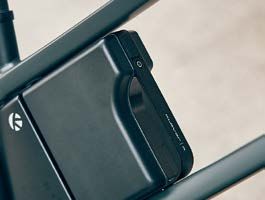
Certificate of Conformity

                                                   3. Type approval and EC
                                                   Certificate of Conformity (CoC)
                                                   The Manufacturer:
                                                   Klever Mobility Inc.
                                                   No. 8, Ln.76, Sec.3, Zhongyang Rd.,
                                                   Tucheng Dist.; New Taipei City 236
                                                   Taiwan
                                                   Represented in Eurobe by:             Represented in Benelux by:
                                                   Klever Mobility Europe GmbH           Klever Mobility NL b.v.
                                                   Dieselstr. 8                          Afslag 8
                                                   D-50859 Köln                          3981 PD Bunnik
                                                   Tel.: +49 2234 93342 0                Tel.: +31 30 210 2905
                                                   info@klever-mobility.com              infoNL@klever-mobility.com
                                                   www.klever-mobility.com

                                                   Hereby confirms for the product: X Speed model year 2018
                                                   conformity with the applicable European Regulation EC 168/2013.
                                                   Your X Speed comes with a Klever Certificate of Conformity (CoC)
                                                   with which your vehicle can be registered.
                                                   Klever will register your X Speed at your local road safety
                                                   authority (e.g. KBA in Germany, DIV in Belgium, RDW in the
                                                   Netherlands, DREAL in France or DVSA in the United Kingdom).
                                                   After registration, your Klever dealer will receive the license plate
                                                   and the code for the name of the registrant. Your dealer will then
                                                   assemble the license plate and ascribe the vehicle to your name
                                                   and to your liability insurance. With the code for the name of the
                                                   registrant you can organise the assignment to your name and
                                                   insure yourself as well.

                                                          Please note! With a maximum speed of 45 km/h. the X Speed is
                                                          NOT a regular electric bicycle, but it is a so-called Speed Pedelec.
                                                          According to the Type approval Regulation it is an L1e-B vehicle
 *** The image of the Certificate of Conformity
                                                          and therefore it has to comply with different road traffic
 (CoC) of the X Speed (45 km/h.) Please see page          regulations and it has a different position and different place
 54 of this manual for the full size image.               within the traffic. Make sure you understand the local road
                                                          traffic and safety regulations in your country. Also, you will
                                                          need a license plate (as proof of your local registration and your
                                                          liability insurance), Insurance and a driving license. Moreover, you
                                                          will need to wear an approved Speed Pedelec helmet as well.

                                                   Technical documentation by:
                                                   Klever Mobility Europe GmbH - Manager Techniek
                                                   Dieselstr. 8
                                                   D-50859 Köln

10      www.klever-mobility.com
Getting started - Safety check
4. Getting started - Safety check
Although your X Speed has been subjected to a final check
during assembly and by the dealer, the transport and the
time may have caused changes.
Therefore, before your first ride, and every ride, you should
consider some important things and check the vehicle.
1. Make yourself intensely familiar with the Speed Pedelec and
the functioning of the electric drive, before the first ride in
public traffic.
2. Check the correct setting of the saddle and the handlebars
(see section 7.1).
3. Check the correct function of the brakes
4. Check the air pressure and the profile depth of the tyres.
5. Check the lighting system for proper operation.
6. Check the tightness of the bolts and nuts of the wheels.
7. Check the minimum insertion of the seat post.
Caution: Do not start when you identify deficiencies in one
of these points. While riding a defective Speed Pedelec this
can cause serious accidents and endanger your live. If in
doubt, please contact your dealer or our technical hotline.
Your bike suffers wear and tear in everyday riding
through extreme weather and road bumps. Through
constant dynamic loads all parts of the bike experience
material fatigue and wear. Therefore, examine your
bike regularly for wear of the components and other
changes such as scratches, cracks or discoloration. These
symptoms may be signs of damage and a future failure
of the accessory. Bring your bike to your dealer regularly
and comply with the plan of inspection, so he can fix or
replace these parts.
Please note! The everchanging road and weather
conditions will constantly fatigues the X Speed
and its components and parts. This may cause
fatigue and wear. Therefore, it is recommended to
inspect your Speed Pedelec on a regular basis and
look for wear of parts and changes in scratches or
cracks, or the discolouring of parts. These could
possibly indicate damage of the part. Following
the inspection plan in section 19, you best bring
your X Speed to your Klever dealer for inspection,
service, maintenance and repair.
www.klever-mobility.com 11Getting started - Safety check
Please note! be sure to only use original Klever
spare parts. In case you are not sure whether to
use certain spare parts or not, please contact
your official Klever dealer or otherwise call our
technical hotline.
12 www.klever-mobility.comBehavior in road traffic
5. Behaviour in road traffic
Due to the electric auxiliary propulsion you reach high speeds
and accelerate much faster than you are used to with a
regular bike. Therefore, you should intensively familiarise
yourself with the Speed Pedelec only on a traffic free road
before you go in public traffic. During riding on the road, you
should follow these tips:
• Always wear a helmet during riding.
• Make yourself familiar with the traffic rules and stick to
the rules.
• Be ready to brake at any time and expect misconduct of
others.
• Ride defensively and be considerate to other road users.
• Always keep your bike in a perfect condition.
• Use your bike only in accordance with its intended purpose
(see chapter 13."normal use").
• Don't use a mobile phone or a headset while riding.
• Be sure to observe the maximum weight of 150 kg of the
bicycle (see chapter 11. Technical Data).
• Please have your Speed Pedelec checked regularly by an
authorised Klever dealer, according to the recommended
service intervals.
www.klever-mobility.com 13The Klever Mobility propulsion
6. The Klever Mobility
propulsion – the BIACTRON
system
You have purchased a Speed Pedelec that helps you improve
your day to day mobility, with its electric propulsion system.
Slopes can be better managed and the wind resistance can
be better overcome.
This electric auxiliary drive consists of the following
components: 1. Battery; 2. Motor; 3. Control unit/Display; 4.
Motor controller; 5. Torque sensor ; 6. Pedal Sensor ; 7. Charger
(Image 8a).
Once you have turned on the system and you start pedalling
the motor will support you as long as you pedal, up to a max.
speed of 45 km/h.
Due to its maximum speed, the X Speed is no longer
considered as a normal bicycle. It is obliged to be insured
and does need a license. Likewise, it is compulsory to wear a
helmet and we strongly recommend it for your own safety.
The five (different) levels of support you can select according
Image 8A to the external circumstances (e.g. level four (high level) on
climbing uphill or headwind) or your personal preferences.
2. Motor
1. Battery
3. Display/
5. Torque sensor dashboard
4. Motor
controller
6. Pedal sensor
Image 8
14 www.klever-mobility.comThe Klever Mobility propulsion
Please note that a high level of support also means a higher
consumption of current and reduces the range of the system
and the battery.
When you ride faster than 55 km/h., the automatic energy
recovery (technical recuperation) is activated. The motor
operates as a generator and re-charges the battery.
In case the technical recuperation has been activated,
you will hear an acoustic signal. During the process of
recuperation the bars on the display representing the
battery state of charge will start to flash and the LED
light on the battery will once flash red, yellow and green
consecutively.
6.1. Sensors and function
The Speed Pedelec is equipped with a torque sensor in the
dropout, and it is electronically controlled. This sensor
accurately measures the change in chain force at every
pedal stroke (left or right) and informs the system about the
force you exert during pedalling. A computer in the control
unit then calculates these values, and manages precisely
the amount of support from the motor, hence generating a
perfect synergy between the cyclist and the X Speed.
During pedalling, the torque and the pedal sensor measure
very sensitively and exactly the rider’s input and enable
the motor controller to operate the additionally support
of the motor tailored to the needs and riding conditions of
the cyclist.
You can also define the amount of motor support by yourself
choosing between the five levels of support (Turbo, High,
Medium, Low, Ultra Low).
This makes the system very efficient and economic, saving
power consumption and maximizing range. The additional
speed sensor sets the power of the electric motor to zero
once you have reached 45 km/h. Above 45 km/h. speed, the
Speed Pedelec works like a conventional bicycle, the only
way to maintain the propulsion of the vehicle is by pedalling
solely.
The electric motor will only activate if you pedal, therefore,
from a standstill, to start, either you have to pedal, or
actuate the Walk/Turbo (á) button. Without pedalling,
by pressing the Walk/turbo (á) button, the electric motor
support will take you to a maximum speed of 18 km/h. The
Walk/Turbo button was designed as an aid when starting
uphill or in case the bike has to be pushed.
www.klever-mobility.com 15The Klever Mobility propulsion
6.2 Levels of support
The propulsion system provides five levels of support.
Depending on topography, weather conditions and your own
preferences, you can choose the motor support using the plus
(+) and minus (-) keys and the boost button on the control
panel (see the separate manual of the LCD-display).
System Level Support Driving situation (recommended)
UL (Ultra Low) No support, system is Downhill
activated
L (low) Low support On the plain
M (medium) Medium support Slight hill / headwind
H (High) Strongest support Steep hill / fierce headwinds
T (High) while pedalling Strongest support Steep ramps / violent gusts
< 45 km/h
T (High) without pedalling Strongest support Starts on hill / pushing uphill
< 18 km/h
T (High) walking with the X Walk assist (á) While walking with your X Speed
Speed < 4 km/h or pushing out of your garage.
Please note! In case you actuate the Turbo button (á),
there are 3 options depending on the situation:
1. You walk alongside the X Speed and/or you push it out
of your garage.
Make sure the support level you select is L. While
pushing the Walk/Turbo (á) button you will activate
the Walk-assist mode and you will trigger a moderate
electric motor power up to 4 km/h. In this way you can
walk with your vehicle comfortably and easily.
Warning: In case you preselected the M or H support
levels, then the maximum speed of the vehicle will
be too high to be able to walk comfortably and safely
alongside the X Speed.
2. You are sitting on your X Speed and intend to start
from standstill on a ramp without pedalling. Push the
Turbo button (á) and you will get the strongest support
up to 18 kph/. provided you preselected the M or H level.
3. You are sitting on your X Speed and you are pedalling
with for instance M level support and you need strongest
support momentarily. Push the Turbo button (á) while
pedalling and you will trigger the strongest support
regardless your speed (from 0 to 45 km/h).
16 www.klever-mobility.comThe Klever Mobility propulsion
Please note! These 3 options will only function while
you keep the Turbo button (á) pushed. As soon as you
release the Turbo button, the electric power support will
stop. Except in the case of pedalling: in that case after
releasing the Turbo button the level of electric power
support will go back to the preselected level (level M as
the example in option 3).
In order to save battery power, the support level will
automatically be limited to the M level when the battery
capacity drops to 10%. When the battery capacity drops to 5%
the support level will be limited to the L level and in the case of
a battery capacity of 2% or less the level will be UL.
6.3 Rechargeable battery
Your Pedelec has a high-quality lithium-ion battery of the
newest generation. For technical details, please refer to
section 11 Technical data.
The status of the battery can always be checked through the
LED light button, next to the charging socket of the battery
(image 9). If you press the button, the LED will shine either
red, yellow or green. If light stays off, then the battery could
be broken. Please have your local dealer check the battery.
red capacity 75% battery can be charged
The battery is automatically protected from overheating,
overcharging and deep discharging. It is very user-friendly,
very practical, very easy and simple to handle.
Nevertheless, you should consider some important things in
order to maximise the life and performance of the battery. Image 9
Since the lithium ion battery has no memory effect, you can
charge it at any time, even if it is not completely discharged.
In practice, it has been shown that it is even better to charge
it again after short distances.
Your battery has a lifetime of 700 charging cycles. One
charging cycle means a full charge of the battery (0-100%
capacity). Partial loads can be done more often.
When the battery is not being used for a long time (more
than 2 months) is not used, it should be recharged as a low
self-discharge is normal. Store the battery, if possible, in a
dry, cool and dark place. The ideal storage temperature is
between 5-20° C.
www.klever-mobility.com 17The Klever Mobility propulsion
Avoid exposing the battery to direct sunlight over a long
time. Temperatures over a longer period of more than 45° C
or below - 10° C can cause permanent damage.
In winter, you should never start with a cold battery. The
capacity of a cold battery is significantly reduced and
consequently will have a lower range.
A battery which is exposed for a long time to frost, should
be gently heated in the ambient temperature of a heated
room, before starting.
Caution! Never place the battery on the heater and never
try to heat it with a hair dryer.
In case you need to park the bike outside for a long time
during the cold season, remove the battery and store it in a
heated room. Since the battery is very easy to remove, this
will be no problem.
Do not expose the battery to humidity, to prevent corrosion
of the charging socket and the plug contacts. Protect the
battery against mechanical damage and don't drop it.
Mechanical damage can also cause overheating and battery
could catch fire
Also, the battery should be charged at moderate
temperatures (15-25° C). Avoid charging in direct sunlight or
near heaters, as well as charging outside in winter at low
temperature. A cold battery should be gently heated to room
temperature before charging. Never place the battery on the
heater and never heat it with a hair dryer!
Caution! Charge the battery exclusively with the proprietary
and dedicated charger which comes with the X Speed.
Do not use any other type of charging unit since this may
damage the battery and may cause overheating or fire.
During loading, neither the charger nor the battery should
be exposed to humidity, in order to prevent short circuits
and electric shocks.
The battery is maintenance-free. Should it be broken or
become defective contrary to expectations, seal the contacts
with tape and take it to your dealer or contact our technical
hotline. Never under any circumstances open up the battery
yourself. This is dangerous and could damage the battery that
may catch fire. The warranty will be void if you do so!
18 www.klever-mobility.comThe Klever Mobility propulsion
Do not dispose of batteries into household waste.
It must be disposed of properly. It's best to take it to one
of our dealers, who can take care of the proper disposal.
Caution!
• Charge the battery only with the proprietary battery
charger
• The battery can be recharged any time, even after
short trips
• Avoid temperatures below -10 ° C and above 45 ° C for
a long time
• Never start with a cold battery
• After an extended period (about two months) of
storage, the battery should be recharged
• Protect the battery from humidity
• Protect the battery from mechanical damage
• Never open the battery yourself.
Used batteries do not belong in the household waste,
they must be disposed of properly.
www.klever-mobility.com 19The Klever Mobility propulsion
6.3.1 Charging the battery
You can charge the battery on or off your bike (e.g. important
in winter time) (image 11A & 11B). Charging at any time, even
after a partial discharge (e.g. after a short distance of a few
kilometres) is possible. There is no need to wait until it is
completely discharged, as it has no memory effect.
To remove the battery pack, refer to section 6.3.3.
Power plug
Charger
Caution! Charge the battery only with the supplied and
proprietary battery charger.
For the technical data of the charger please read section 11,
Power cable
Technical data on page 41.
Image 10
To charge the battery, do the following: You can monitor the
charging process on the basis of the indicator LEDs on the
charger and battery.
• Connect the power cable to the charger.
• Insert the power plug of the charger into the wall socket,
the LED will start to flash red.
• The charger is ready for charging once the LED lights
steady red.
• Connect the socket of the charger into the socket of the
battery. The charging process will start automatically.
• The LED on the charger switches to flashing yellow light,
charging begins.
Image 11A
• The LED indicator turns to yellow continuous light, the
battery is charged to about 35%, The charging is in progress.
• The LED changes to flashing green, the battery is to about
75 - 90% charged.
• The LED steady green, the battery is now fully charged, the
charging is complete.
• Disconnect the power plug from the Wall socket.
• Unplug the socket of the charger from the battery socket.
Image 11B
20 www.klever-mobility.comThe Klever Mobility propulsion
The LED lights on the charger and battery documents
the state of the charge process:
State of Charger LED Battery LED Note
charge
Flashing Red Error detected, reset by re-plugging AC
to main
Steady Red Ready to be connected to battery
0% Flashing Yellow Flashing Red Recovering battery from very low state
of charge
90% Flashing Green Flashing Green Final charging
100 % Steady Green No LED Fully charged
The charging time for a full charge of an empty 570 Wh battery (from 0 to 96%) is about 2.3 hours
in combination with the included quick charger. At a premium price you can buy our biggest 850
Wh battery, its charging time is about 3.5 hours.
Make sure that the battery is no longer connected to the
charger, after the successful charge process. Likewise, the
charger should be disconnected from the power supply.
Battery and charger become warm during charging. Ensure
adequate ventilation of the battery and charger. The vents
should not be covered.
Place the charger and battery on clean surfaces. Prevent
contamination of the charging sockets on the charger and
the battery.
Avoid humidity and direct sunlight.
Attention! If the charger is damaged, please contact an
authorized retailer. Never open the charger.
www.klever-mobility.com 21The Klever Mobility propulsion
6.3.2 Range
The range specification of the system can only be relative,
as it is strongly dependent on the chosen level of support,
the technical condition of the bike (oiled chain, optimal
tyre pressure, etc.) the total weight of the system (bike,
rider and luggage), the topography of the chosen route and
the weather (counter-or tailwind, winter or summer).
The lower the selected support level the larger the range of
the electric system.
The below chart offers a proper indication of the range you
may expect under similar conditions:
• Fully charged 570 Wh (Watt hours) battery
• Outside temperature 12 - 30°C
• Flat and slightly hilly terrain
• Total system weight between 95 – 105 kg (rider’s weight
70 – 80 kg)
• Little to no wind.
Battery Range
570 Wh 30 – 60 km.
850 Wh 45 – 90 km.
Attention: In winter, the range can be up to 30% less by
lower battery capacity due to the lower temperatures.
6.3.3 Removal and mounting of the battery
Removing the battery
The battery is automatically locked in place with the battery
lock and thereby protected from theft. Using the provided
key, you can lock and unlock both the battery lock and ABUS
Image 12A folding lock (accessory option) in order to fully protect your
Speed Pedelec against theft.
To remove the battery, first turn off the system using the
On/Off button on the display. Turn the key in the battery
Contact
connector lock clockwise up to the stop, and pull out at the battery
Rubber with the handle diagonally and backwards from its
seal docking station (image 12A).
Now you can charge the battery separately or store it safely
for a longer break.
Having removed the battery, please don’t forget to protect
the contact connector with the rubber seal. We advise to
Image 12B always use the rubber seal (image 12B).
22 www.klever-mobility.comThe Klever Mobility propulsion
Mounting the battery in the docking station
Insert the battery carefully into the guide rail, while the
groove of the battery casing must be carefully inserted into
the guide rail on the bicycle frame, and slide it gently down
until you hear the lock engage and the electronic contacts are
connected (image 13).
For this operation you do not need the key of the lock. The
lock will automatically snap in and the battery is now locked,
the system is ready for operation and the battery protected
from being stolen.
6.3.4 Transport of the battery
The battery is subjected to the Dangerous Goods
Image 13
Legislation. The user can transport the battery by road
and train without any further requirements. When being
transported by third parties (e.g. forwarders, post or via
air) special requirements on Packing and labelling must
be observed.
For the preparation of the battery being transported,
consulting an expert for hazardous material is absolutely
required. Ship the battery only when the casing is
undamaged. Tape or mask off open contacts and pack up
the battery in such a manner that it cannot move around
in the packing. Please also observe detailed national
regulations.
In every case of transporting a broken or damaged
battery, always refer to an authorised bicycle dealer.
The dealer can inspect the battery and, in case necessary,
forward the broken battery to Klever Mobility
6.4 Diagnostics and troubleshooting
The system will not turn on.
Check whether the display is positioned firmly in the bracket.
Check all connections. Check whether the battery is sitting
correctly in the docking station in the frame and whether the
battery lock is engaged.
The display is fixed but the system will not turn on.
Check if you have installed the correct display.
The system can be turned on, but you do not have support.
Check all connections to the motor.
www.klever-mobility.com 23The Klever Mobility propulsion
If it's not possible to solve the problem, please contact an
authorised dealer or our technical hotline.
24 www.klever-mobility.comThe Speed Pedelec
7. The Speed Pedelec
All other components of your Speed Pedelec are high quality,
conventional bicycle components whose handling and operation
should be explained here briefly. Important information
regarding the adjustment, operation and maintenance of the X
Speed and its accessories are summarised here.
You will also find further information in the accompanying user
manuals of the component suppliers.
7.1 Type approval vehicle and
dedicated equipment
Image 14
As explained in section 3, the X Speed is not a regular electric
bicycle, it is a Speed Pedelec. It is an electrically powered
vehicle with a maximum speed of 45 km/h. Consequently, it is
a type approval vehicle which has to comply with the European
Regulation EC 168/2013. Therefore, the X Speed comes with
special equipment (a well audible horn, a brake light and a
wing mirror) which is in relation to the higher speed of this
vehicle (up to 45 km/h) and the type approval requirements.
7.1.1 Horn
The horn is mounted on the front fork (image 14) and can Image 15
be actuated with a push button at the left-hand side of the
handlebar, underneath the LCD display (image 15). With this
horn you can notify the other road users of your presence on the
road, especially under unclear and crowded traffic conditions.
7.1.2 Brake light
The tail light has an integrated brake light. When you actuate
your brake levers then the brake light in the rear will start to
light with higher intensity than the regular tail light (image 16).
In this way the road users behind you will be notified that your
Image 16
speed is decreasing.
7.1.3 Wing mirror
Your X Speed is being equipped with a wing mirror on the
left-hand side of your handlebar (image 17). The mirror can be
adjusted by hand according to your preferred position. With
this mirror you will have eyes on the road users behind you,
especially those who are faster than you and are in the process
of overtaking you. Consequently, you don’t need to turn around
and you can keep your attention on the traffic behind you and in
front of you at the same time. Image 17
www.klever-mobility.com 25The Speed Pedelec
7.2 Adjustment of saddle and
handlebar
The X Speed comes in two frame sizes (M= Medium and L=
Large). The adjustment to your body size will be made with
the adjustment of the saddle, stem and handlebar. Your
dealer can do this on the spot.
In order to readjust by yourself or in the case of another cyclist,
changing the settings is briefly described below:
Caution: All work described requires mechanic
experience and appropriate tools. Use a torque wrench
to tighten the bolts and never exceed the maximum
torque of the bolts. All the necessary tooling and
information on the recommended torques can be found
in section 11 Technical Data.
Adjustment of the saddle height
The optimal saddle height is if you touch the pedal with the
heel of your stretched leg, when sitting on the saddle.
Or when you bring the ball of the foot to the centre of the
Image 18
pedal, your knee should be slightly bent (Image 18). Loosen
with the proper allen key the seat clamp bolt and move
the seat post with the saddle to its proper height. Align the
saddle with the frame using the saddle nose and the bottom
bracket or top tube as references.
Fasten the bolt of the seat clamp again and check the correct
height of the saddle. Repeat the process if necessary until you
find the correct saddle height.
The distance between saddle and handlebar (by pushing the
saddle forward or backward) and the saddle angle are adjusted
by the saddle clamping bolts (Image 20) of the seat post.
Image 19
The saddle should generally be positioned horizontally.
Minimum Insertion mark
Attention: please pay attention to the recommended
torques when tightening the saddle clamp bolts (see
Chapter 11 Technical data).
Seapost
screws Caution: The seat post may never be installed over the
minimum mark on the seat post. During riding the post
could possibly break which could lead to injuries.
Image 20
26 www.klever-mobility.comThe Speed Pedelec
Handlebar adjustment
The handlebar can be adjusted to your body measurements
and your personal preferences, by changing the angle of the
handlebar (image 21). Your Klever dealer will be happy to set
the handlebar to your liking. However, in case you intend to
adjust the handlebar by yourself, then proceed as follows:
Loosen the 4 bolts of the front cap of the stem a couple of
turns with the proper Allen key and adjust the angle of the
handlebar (image 22). Tighten the 4 bolts of the front cap
with the correct torque. Please note that the adjustment of Image 21
the angle of the handlebar may have also altered the position
of the brake levers, the display and the shifter.
If necessary you can adjust the position of these components
too. Loosen the Allen key bolts and screws of the display,
brake levers and shifters. Turn them into the correct position
and keep in mind that your hands should be resting on the
handlebar in a relaxed way and should not be forced into
an unnatural position. Finally tighten the Allen key bolts
with the correct torque. You may have to repeat these steps
a couple of times in order to find the most suitable and
convenient position according to your liking and needs.
Image 22
Caution! Check whether the handlebar is correctly
tightened, you should not be able to turn it at all.
7.3 Headset
In order to steer easily and safely, the fork´s bearing in the
frame (headset) must function smoothly and be without any
play (image 23). During riding, dynamic loads put a lot of stress
on the headset. Therefore, a regular check is indispensable.
Pull the front wheel brake with one hand and push the bike
gently forward and backward. If you notice a movement
between headset and frame, the headset has to be readjusted.
Image 23
Attention: The adjustment of the headset requires some
experience. This operation is best left to an authorised
and experienced dealer.
If you should make the adjustment by yourself, make the
following steps:
1. Loosen the bolts on the side of the stem, clamping the stem
to the fork, with an Allen key, (image 24).
2. Carefully remove the top cap of the stem and turn the bolt
on top of the fork steerer a quarter of a turn tighter (image 25).
Image 24
www.klever-mobility.com 27The Speed Pedelec
Attention: This bolt does not serve for screwing and
fixing, but only for adjustment of the headset (image 25).
3. Make sure the stem and handlebar are in the direction of
riding and retighten the 2 clamping bolts firmly.
4. Pay attention to the maximum torque of the bolts, which
may not be exceeded under any circumstances.
5. Control the play again and repeat the process if necessary.
Image 25
If it's not possible to adjust the headset, this may have
many reasons. In this case you should definitely contact
an authorised dealer.
Caution: Finally, check the tightness of the stem. A loose
stem is dangerous and can lead to an accident.
You can check smooth functioning of the headset by lifting
the front of your bike and letting the handlebar swing to the
left and right. The front wheel has to be able to move freely
and without stopping.
If you feel slight stops in the movement, the bearing is
worn and the headset has to be exchanged. This has to
be done by a dealer.
7.4 The rigid and suspension front fork
The model X Speed Limited is equipped with a rigid (non-
suspension) front fork. The model X Speed is equipped with
a suspension front fork, which improves the riding comfort.
This front fork is pre-set with factory settings. With a
lockout button on the righthand fork leg you can turn of the
suspension (image 26). It is best to use the lockout only on
smooth and straight roads and always use the suspension on
badly paved roads.
For the long-term proper functioning of the front fork regular
maintenance is required. Some basic tips for do it yourself
maintenance: clean the smooth surfaces of the stanchion
tubes with a cloth and water. After cleaning spray some
water repellent oil on the stanchion tubes for lubrication of
the bearings and for plush a suspension function.
Image 26
Warning! Never use a high-pressure cleaner or aggressive
detergents for the maintenance of the front fork. Pay
attention to the maintenance instructions in the manual
of the fork supplier.
28 www.klever-mobility.comThe Speed Pedelec
7.5 Brakes
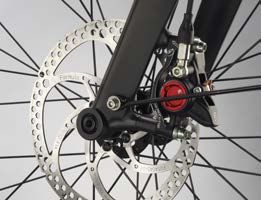
Your Speed Pedelec is equipped with high-quality hydraulic
disc brakes (image 27). The disc brake is characterised by
very good braking performances even under rainy weather
and other bad weather conditions. The disc brake is very
low maintenance and does not wear the rim. The brake
consists of a brake lever with a master cylinder, a hose made
of plastic, the brake calliper and the disc mounted on the
hub. The brake works with a special, non-toxic mineral oil.
While actuating the brake lever, the oil pressure is being
transmitted via the hose to the brake calliper and makes the
brake pads contact the disc.
Attention: new brake pads must be run in so that
they can achieve their optimal deceleration values. By
braking at least 30 times from approximately 30 km/h
to complete standstill, the brake pads will achieve their Image 27
maximum brake power. Break control: The right-hand
brake lever controls the rear wheel brake and the left-
hand brake lever controls the front wheel brake.
Not properly run in brakes do not reach their optimal
deceleration values and are prone to vibrations and loud squeal.
The brake pads and rotors must be regularly checked for wear.
If discs and brake pads are worn, they will need to be replaced.
In case the brake performance is getting less and you are
losing brake power or you can push the lever through to the
handlebar without any braking effect, the brake system must
be bled (purged). That and the replacement of worn brake pads
and discs should be done by an authorised dealer.
Caution! In case the brake performance is decreasing or
the system shows signs of leakage, do not continue to
ride your Speed Pedelec and go and see your local dealer
immediately.
Attention! Oil or grease on the brake pads and discs can
reduce the effect of the brake substantially. Prevent in
any case, while cleaning the bike and lubricating the
chain that oil or other liquids can contaminate the brake
pads and brake discs. Contaminated brake pads cannot
be cleaned and need to be replaced immediately. You can
clean the disc with brake cleaner or warm water and a
little detergent if necessary.
Please note! Ride more cautiously under humid and rainy
conditions because the stopping distance could be longer.
www.klever-mobility.com 29The Speed Pedelec
For more information on disc brakes, brake pads and discs
and their wear limit, read the operation manuals supplied by
the brake manufacturer.
7.6 Drive train and gear shift
Your Speed Pedelec is equipped with a high-quality 11-speed
derailleur drive train currently the most efficient power
transfer on the bike. These gears will help you to always use
the optimal transmission (pedalling & cadence) independent
of terrain (flat or hilly area) and independent of weather (tail or
headwind). That means that you are able to pedal always with
an optimal cadence of 60-80 crank revolutions per minute.
The complete system is composed of the bottom bracket, the
crankset, the rear derailleur, the chain, the gear shifter and
the 11-speed cassette (image 28). With the gear shifter you
control the rear derailleur, which ensures that the chain can
move on the sprockets of the cassette and the translation
changes.
Your dealer has checked your bike before the handover and
adjusted the shifter. During the first miles under stress,
however, the shift cables could lengthen slightly and the
shifter may become disaligned and have to be readjusted.
With the adjustment screw of the rear derailleur, you can
readjust the tension of the shift cable (image 29).
With the two positioning screws on the rear derailleur, you
can adjust the lower (H screw) and upper end stop (L screw),
to make sure that the chain cannot get between the smallest
sprocket and drop out or between the largest sprocket and
spokes of the rear wheel.
Please read also the enclosed operating instructions of the
manufacturer of derailleur and shifter.
Image 28
The precise adjustment of the derailleur is difficult and
should better be done by an experienced mechanic. If you
have any problems with the adjustment of the shifter,
please contact your dealer.
The chain should be cleaned and greased regularly (especially
after driving in the rain), so it runs as quietly as possible,
the friction losses are as low as possible, and the lifetime is
maximised.
Clean the chain regularly with a clean cotton cloth and
Image 29 lubricate it afterwards.
Some minutes after you have oiled the chain, rub it with the cloth
to remove superfluous oil from the outer surface.
30 www.klever-mobility.comThe Speed Pedelec
Since the chain is one of the parts that wears out on your
bike, it should be replaced, if worn. A worn chain has poor
shifting characteristics, and leads to increased wear of the
chain wheel and the sprockets of the cassette.
The control of the chain wear should be carried out at
the dealer, who has the necessary tools to measure and
replace it.
Caution: A poorly riveted or badly worn chain may break
and causes serious falls or injury.
You will find more information in the enclosed operating
manual of the chain.
7.7 Lighting
Your Speed Pedelec is equipped with high-quality lighting
which corresponds with the type regulation and has an
official mark: indicated by the letter E, and a six-digit number.
The lighting is supplied by the battery power of the vehicle. The
headlight is a LED with high output and standlight function.
The taillight is a bright LED too with standlight function, with
brake light and license plate illumination.
If there is a failure in the lighting system please verify that the
light switch on the display is switched to “On”, check all contacts
at headlight and taillight. Check all cables for damage.
If you don't find any errors, you should be looking for repair at
an authorised dealer immediately.
Caution: A non-functioning light is illegal and endangers
your life on the road. Bicycles without lights are easily
overlooked in the dark. You would risk serious accidents.
More information on the headlight and the taillight can be
found in the manual from the lighting supplier.
7.8 Wheels and tyres
The wheels are one of the most stressed components of the
vehicle. They contact the road provide the propulsion and
they absorb the road bumps. Due to the heavy use, they
should be regularly checked.
All wheels are manufactured with great care and precision.
www.klever-mobility.com 31The Speed Pedelec
They consist of the hub (ball bearing hub in the front wheel
and electric hub motor in the rear), the 2 mm stainless steel
spokes and double chamber rims.
In unlikely cases of radial or axial play or broken spokes, the
wheels should be repaired or re-centred by an authorised
dealer.
For removal and installation of the wheels due to a puncture
or in the case of transportation you take the following steps:
Removal of the rear wheel
• Shift the chain to the smallest sprocket on the cassette.
• Turn off the electric drive system.
• Remove the bolt of the mounting bracket (cable guide) on
the inside of the left-hand chain stay with a T25 Torx key
(image 30). Disconnect the motor socket.
• Disassemble the bolt of the mounting bracket (cable guide).
• Loosen the axle nuts on either side of of the motor with a 19
mm wrench.
• Remove the screw of the locking washer on the left side of
the axle and remove the screw and washer (image 31).
• Now pull the wheel out of the dropout, while pivoting the
rear derailleur backwards.
Image 30
• Block the brake pads of the disc-brake by inserting the
enclosed pad separator into the calliper (image 32). This
prevents the accidental compression of the pads by the
unintended application of the lever while the disc is being
removed.
• The assembly of the rear wheel is done in reverse order.
• After having removed the pad separator, make sure to
insert the disc carefully between the brake pads during
assembly.
Image 31 Caution: Take care to tighten the axle nuts to the
proper torque (40 Nm) and make sure there is
sufficient space (at least 5 mm.) between the disc and
the motor cable!
Removal of the front wheel
• There are 2 types of front forks: non-suspended (rigid) fork
on the model X Speed Limited and a suspension fork on the
model X Speed.
• For the rigid front fork (image 33): loosen the thru axle
counter clockwise with a 6 mm. Allen key. Remove the thru
Image 32 axle completely from the front wheel.
32 www.klever-mobility.comThe Speed Pedelec
• For the suspension front fork (image 34): first open the
lever of the quick release and then turn the thru axle
counter clockwise. Remove it from the front wheel.
• Pull the front wheel out of the fork.
• Block the brake pads of the disc-brake by inserting the
enclosed pad separator into the calliper (image 32).
• The assembly of the front wheel is done in reverse order.
• During assembly please insert the disc carefully between
the two brake pads.
• Pay attention to the correct torque of the thru axle (20 Nm).
Note: Rotors can be very hot after riding. Let them cool
down, before disassembly.
Caution: Check before each ride whether the tyres are Image 33
still correctly fitted to the wheels.
Tyres
The tyre provides grip and traction and contributes
significantly to the smooth running and comfort by
absorbing little bumps.
The tyre size can be found on the sidewall printed specifically
in millimetres and inches: 27.5” x 2.40” or 62 – 584 mm. The
rim has a diameter of 584 mm. (27.5”) and a width of 62 mm.
(2.40”).
Image 34
The recommended tyre pressure is indicated on the
sidewall of the tyres (Schwalbe Super Moto 2.0 – 4.0 bar;
30 – 55 Psi).
Regularly check the correct tyre pressure and pressurise your
tyres if necessary.
The tyre uses an inner tube with Schrader valve.
So, you can check and inflate the tyre at any gas station.
Caution: above-or below never exceed this recommended
range. The tyre and the tube can be damaged and this may
lead to sudden loss of air with significant risk of accident.
Regularly check the tyres for cracks and for its tread pattern
height. If you find that cracks or sharp objects have damaged
the fabric of the tyre or the tread pattern is no longer
sufficient, replace the tyres. If in doubt, ask your dealer. He will
verify the tyres and if necessary replace them.
www.klever-mobility.com 33The Speed Pedelec
In the case of a flat tyre, do as follows:
Always use plastic tyre levers.
1. Remove the wheel as described above.
2. Deflate the tyre and push a tyre lever underneath the tyre
bead opposite of the valve and lift the tyre over the rim
flange.
3. Push the second tyre lever underneath the tyre bead in a
distance of approx. 10cm from the first one (image 35). If
the tyre is still very tight around the rim, then use the third
Image 35 tyre lever as well.
4. Now, you can generally lift the tyre over the whole
circumference of the rim by moving the lever and the inner
tube can be removed.
5. Dip the disassembled and inflated inner tube into a bucket of
water in order to discover the leak on the rising air bubbles.
6. Repair the tube according to the instructions on the repair
kit or if necessary replace it. In case of replacement, make
sure you buy the correct size inner tube.
7. Check the inside of the tyre for sharp objects that could
have caused the puncture and remove them. If the fabric of
Image 36
the tyre is damaged, replace it.
8. Start the mounting of the inner tube by inserting the valve
into the valve hole in the rim and inflate the tube with very
little air pressure until it is wrinkle-free.
9. Now mount the inner tube without any creases
underneath the tyre (image 36).
10. Starting opposite to the valve, lift the tyre bead over the
flange of the rim and pull it deep into the rim and lift the
rest of the tyre by hand over the rim’s shoulder. Use no tyre
levers, as this may damage the inner tube.
11. Push up the valve a little back into the tyre, so that the bead
of the tyre is correctly seated in the rim.
12. Pull the valve back again and inflate the inner tube to
recommended tyre pressure.
7.9 Luggage carrier and the transport
of luggage
Your Speed Pedelec is equipped with a robust and durable
aluminium luggage carrier with an integrated LED taillight
(image 37).
The carrier is compatible with all standard panniers, and you
can use an extensive range of accessories. Check our website
for more information.
Image 37
34 www.klever-mobility.comYou can also read


