School Handbook 2020-2021 - Moray Council
←
→
Page content transcription
If your browser does not render page correctly, please read the page content below

School Handbook 2020-2021
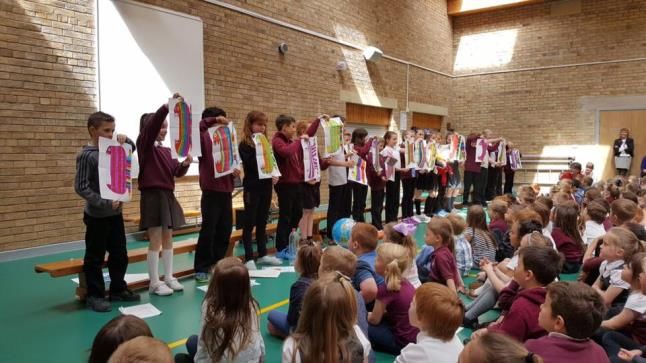
‘The information contained within this Handbook is correct at the time of publication,
and is updated annually’. You may wish to elaborate further with a statement such as
 ‘This Handbook has been prepared by the Head Teacher, and follows guidelines set
                               out by Moray Council’.

                              Date of publication December 2020

                                       www.moray.gov.uk

                                   Moray Council
                Education, Communities and Organisational Development

                         Ambitious to Achieve Excellence Together

Our aims:-
•Ensuring people's outcomes remain at the heart of what we do
•Ensuring effective partnership working
•Supporting, enabling and encouraging people, their families and local communities to
achieve what is important to them
•Actively promoting early intervention
•Delivering accessible, consistent, equitable and high quality services
•Using our resources effectively and targeting our capacity appropriately and efficiently
•Engaging and involving through effective communication with everyone we work with
•Promoting equality
•Sharing and using our information openly and fully
•Creating a culture of self evaluation and continuous improvement

                                   Notes for Parents and Carers -
                                Notes for Parents and Carers booklet:

 Moray Council has produced a “Notes for Parents and Carers” booklet, which is designed to provide
basic information about the education system in Moray and also to detail specific areas of government
  legislation which may relate to your child's experience at school. This booklet is available from the
school, from Education, Communities & Organisational Development, or the Moray Council Internet site
                        www.moray.gov.uk/moray_standard/page_47236.html
Contents
Welcome letter from the Head Teacher ............................................................................. 4
The Millbank Community .................................................................................................... 7
Catchment Area………………………………………………………………………………………7
Transport ……………………………………………………………………………………………...7
Our Pupils ………………………………………………………………………………………….…7
Parents…………………………………………………………………………………………………9
Teaching and Learning at Millbank .................................................................................. 10
Curriculum for Excellence.………………………….…………………………………….……… 10
Support for Learning and Additional Support Needs ……………………………..…………….16
Assemblies…………………………………………………………………………………………. 16
Religious Observance ……………………………………………………………………………..16
Outdoor Learning and Educational Visits …………………………………………………….... 16
Extra-Curricular Activities and Club……………………………………………………………….18
Closing the Gap between Home and School................................................................... 19
Reporting a Pupil Absence……………………………………………………………………..….19
School Closure/Adverse Weather …………………………………………………………….…..19
What if something isn’t quite right for my child? …………………………..………………….…20
Communication and Reporting ……………….………………………………………………..….20
Social Media ……………………….……………………………………………………………..…21
School Uniform ……………………………………………………………………………………..21
Data Protection Act and Privacy Statement ……………………………………………………..21
Holiday Dates …………………..…………………………………………………..……………….22
Breakfast Club ………………………………………………………………………………………23
Supporting Our Learners.................................................................................................. 23
First Aid and Medical ………………………………………………………………………………23
Sickness and Illness ……….………………………………………………………………………23
Head Lice ………………………………………………………………………………….…….….24
Child Protection/Named Person …………………………………………………………….…….24
School Meals ………………………………………………………………………………………..24
Enrolment .......................................................................................................................... 25
Transitions……………………………..…………………………………………………………….25
Appendices ………………………………………….……………………………………………..27
EDUCATION, COMMUNITIES &
                                                        ORGANISATIONAL DEVELOPMENT
                                                             Miss Kirsty Moneagle, Acting Head Teacher
                                                                                 Millbank Primary School
                                                                    McWilliam Crescent, Buckie, AB56 1LU
                                                                                 Telephone: 01542 831113
                                                             Email: admin.millbankp@moray-edunet.gov.uk
                                                                               Website: www.moray.gov.uk
                        School Website: https://sites.google.com/my.glow.scot/millbankprimaryschool/home
                            Telephone Information Helpline – 0870 054 9999 School PIN Number 031340
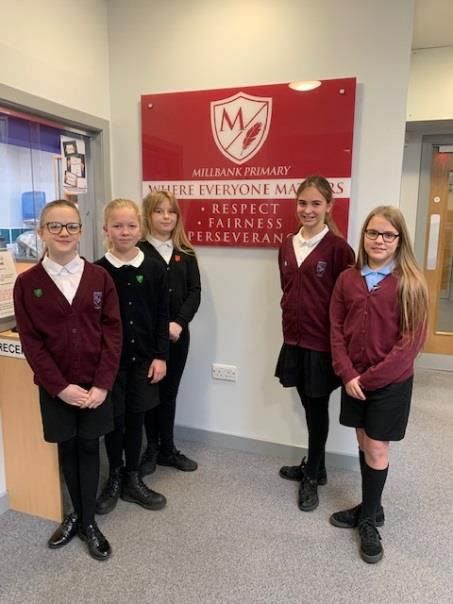
                                   Where Everyone Matters
                        RESPECT FAIRNESS PERSEVERANCE

Dear Parents & Carers
Welcome to Millbank Primary School where our vision 'Where everyone matters' is
supported and promoted through our values of Respect, Fairness & Perseverance. Our
vision and values are underpinned by our Wellbeing Indicators
This handbook is intended to provide an introduction to Millbank Primary School for parents.
Millbank first opened in 1974, was reopened in 2017 as part of the Scottish Schools for the
Future initiative from Scottish Government that currently houses P1-P7 classes and also the
Enhanced Provision for the Buckie area, more affectionately known as 'The Bothy.'
In addition to this handbook you may wish to access our Facebook page to see the many
activities and achievements that happen on a daily basis.
Whilst trying to capture the ethos of a very busy and vibrant school in this handbook, please
do come and visit our school to experience in person the many fantastic aspects that makes
Millbank a place 'Where everyone matters'.

On behalf of the Millbank Primary School community, I look forward to meeting you.

Kirsty Moneagle
Head Teacher (Acting)

                                                                                   4|Page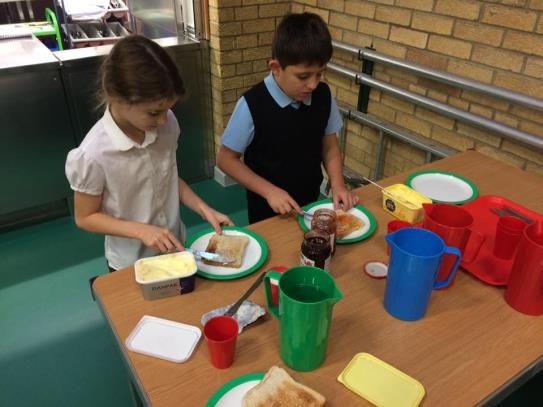
Millbank Primary School - VISION & VALUES
                            Where everyone matters
                   Respect – Fairness – Perseverance
Our vision and values is indicative of our commitment to becoming a Rights Respecting
School (https://www.unicef.org.uk/rights-respecting-schools/ ) which will continue to underpin
our school ethos.
Senior Leadership Team
Head Teacher:         Miss Kirsty Moneagle (Acting)
Depute Head Teachers:         Mrs Karyn Linklater (Acting)
Leadership Team
Principal Teachers: Ms Fiona Peterkin (Additional Support Needs)
Teaching Staff
Primary 1      Mrs Lamont                           P5             Mrs Reid
Primary 1-2    Mrs Macleod                          P5/6           Mrs Flett
Primary 2-3    Mrs Cole                             P6             Mrs Bremner
Primary 3      Mrs Smedley                          P7             Miss Kissock
Primary 4      Mrs Butterly/Mrs Newlands            SFL            Mrs Melville
SFL            Mrs Newlands                         SFL            Miss MacPherson

Pupil Support Assistants                                     Classroom Assistants
Mrs Aitken            Miss McConnachie                       Mrs Innes
Mrs Booth             Ms Main                                Mrs McKenzie
Mrs Bowie             Mrs Mitchell                           Miss N Smith
Mrs Busby             Mrs Murray
Mrs Donaldson         Miss Shakeel
Mrs Gardiner          Mrs E Smith                            Lunchtime Auxiliaries
Mrs Hay               Mrs H Smith                            Mrs Belcher
Mrs Homewood                                                 Mrs Wood
Mrs McKinnon

School Administrator                                         Janitor
Mrs Garrow                                                   Mr Grant

                                                                                   5|Page
Kitchen Staff Cleaning Staff
Mrs Cowie, Unit Supervisor Mrs Gomes
Mrs Smith, Catering Assistant Mrs Benzie
Mrs Newlands, Catering Assistant Mrs Duthie
Mrs Forbes, Catering Assistant Mrs Newlands
Mrs O’Hanlon, Catering Assistant
Miss Proctor, Catering Assistant
Mrs Murray, Catering Assistant
Opening Times:
Morning Interval Lunch Afternoon
08.50am 10.30 – 10.50am 12.30 - 1.20pm 3.00pm
COVID-19 Impact on Schools
If you have concerns about sending your child to school during Covid-19 you should refer to
the National Parent Forum of Scotland back to school guidance which has helpful
advice. To find out more information about Covid-19 from a health perspective you will find
more information from the NHS.
All Moray schools have restrictions in place which have been risk assessed. There are
enhanced health and safety protocols, limited visitors and enhanced cleaning regimes. All
measures have been put in place in order to reduce the risk of outbreak and transmission in
schools.
Copies of the following guides are available to support you and your children/young people
at this time and may answer questions you may have.
Parent/carer guide
Learner guide
Learner top tips
6|Page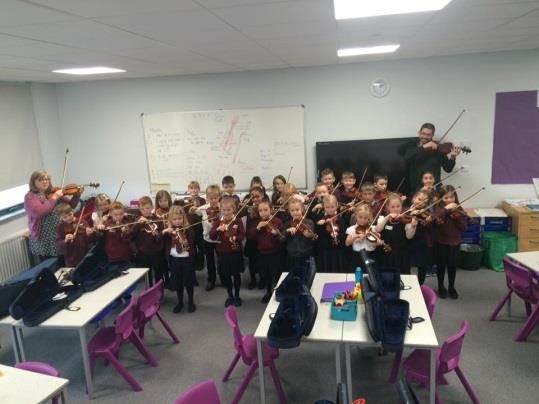
The Millbank Community
School Catchment Area
Our catchment area is diverse. Currently, 40% of our children have additional support needs
and we receive £57,095 in Pupil Equity Funding from the Scottish Government to help to close
the equity gap for our most vulnerable pupils.
The school is designated by the Moray Council to serve children living within the following
territorial boundaries: High Street, March Road, Low Street, Commercial Road, and South of
the A98 Cullen – Fochabers from the west of Connage to the east side of the Gollachy Burn,
and south as far as Hill of Stonyslacks.
The Education (Scotland) Act 1981, gives parents the right to choose the school they wish for
their children to attend, regardless of designated catchment areas. If you would like to enrol
your child out with your catchment area please complete a Placement Request form and send
this to Moray Council Educational Services. You will be informed of their decision by letter
with regard to your request as soon as possible.

Transport
Any child living more than two miles from the school is entitled to transport if the family live in
the school’s catchment area. Children living outside of the catchment area are not entitled to
transport. Management of this service is with the Transport section of Moray Council.
Please refer to Appendix A for information on how to request an application form.

Our Pupils

   ‘I feel safe at Millbank because of the kind teachers and staff members. The modern
  door lock and everything we are doing in Health & Wellbeing. At Millbank you get lots of
                opportunities like House Captain and Ambassadors’ Neve P7

We offer a broad learning experience for our pupils at Millbank Primary School. As wellP7as
accessing an exciting curriculum, we encourage the pupils to participate in extra-curricular
clubs and experiences and celebrate their successes. The pupils have a strong voice in the
continuous development of our school through our pupil council and our commitment to
create/cultivate a Rights Respecting School.

                                                                                        7|Page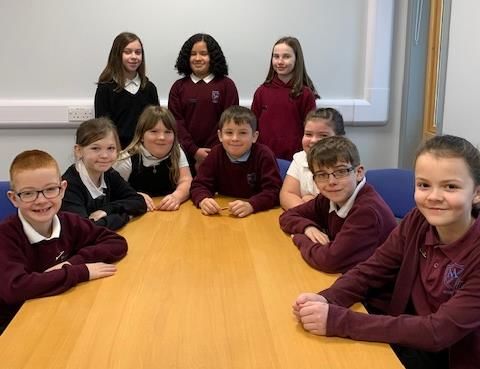
House Points
On entry to our school, each pupil is allocated a 'House'
group. We have three Houses at Millbank; Archibald (Red),
Douglas (Green) and Shearer (Blue). The pupils work to
achieve House Points over the course of the week and these
are added together to give an overall total for the House each
week. House points can be awarded by any staff member
for positive actions linked to our school values; Respect,
Fairness and Perseverance.
Each House has a Primary 7 House Captain and a Vice-
Captain. The House Captains are ambassadors for their
House team. They are role-models; setting the expectation
of behaviour standards and supporting the younger children.
They organise inter-house competitions throughout the year,
deliver assemblies, liaise with the Pupil and Parent Councils
and support the Leadership team throughout the year.

Pupil Council

             ‘I like having councillors and the way they are picked by the class’
                                                                                Madison P7

                                             At the beginning of each academic year, one
                                             pupil from each class are voted in to be their
                                             class representative on the Pupil Council.
                                             A Pupil Council Ambassador from Primary 7 is
                                             also appointed to liaise with the pupils from
                                             Primary 1 to Primary 3.
                                             The aims agreed at our first meeting this year
                                             were:
                                              1. To represent the pupil voice at Millbank
                                              2. To inform the review of behaviour supports
                                             into forming our Positive Relationships Policy

  The Pupil Council have a vital role at Millbank in ensuring we live by our vision and
  values. They meet with a member of the Senior Leadership Team at least twice a term.
  Pupil voice feeds into our school improvement plan and is central to our commitment to
  becoming a Rights Respecting School.

                                                                                    8|Page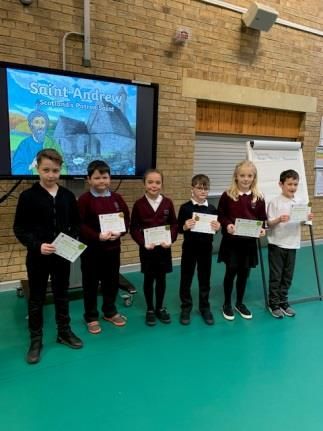
Parents
Parents are a child's first and enduring educators. It is vital that we work in partnership to
foster positive home and school links and to broaden the curriculum. The parent voice is vital
to supporting our school development and we work hard to ensure channels of communication
are always open.
The Senior Leadership Team hold a termly 'Chat and Chill' session and parents/carers are
invited to come in to the school to talk to members of the Leadership team. These are very
informal meetings; there is a general discussion topic and parents are asked to give their views
and ideas on how we can continue improve.
Parent Council
The school has an elected Parent Council, which meets once per term, with the AGM held in
September each year. The council aims to provide parents with an effective link with the
school, to represent their views and to promote a positive partnership between the school, the
parents and the community. The Parent Council has formed a sub-group to organise fund-
raising events and social activities. This group works extremely hard to raise money to
contribute towards many valuable resources and experiences used to enrich learning at
Millbank.
The Parent Council aims to:
support the school in its work with pupils
represent the views of parents
promote contact between the school, parents, pupils and the local community
report annually to the parent forum.
All parents are entitled and welcome to attend Parent Council Meetings. Please contact the
school or Chair, Mrs Belcher, knabllim@hotmail.com, for further details.
We are very lucky to have a very enthusiastic and talented group of parent volunteers that
give up their time to come into our school and support the children's learning in a variety of
ways. This may be accompanying a class on an educational visit; hearing readers in classes,
supporting classes in the library, developing the outside space....the opportunities are endless!
If you would like to volunteer at the school then please contact the school office for more
information.
Working in Partnership
It is important that we communicate and share information about a child's learning; both at
school and the home. This allows us to build a holistic picture of each child and their learning
journey. We build in times for formal parent evenings and meetings throughout the year, but
this is also supported by regular newsletters, Facebook updates and e-mails. There may also
be times when we need to contact you by telephone. It is vital that we have up to date contact
telephone numbers and e-mail addresses to ensure that we can contact you in an emergency.
Data Capture forms are sent home at the beginning of each academic year for parents to
update their contact details, however, if you do change them during the course of the year,
please let the school office know.
9|Page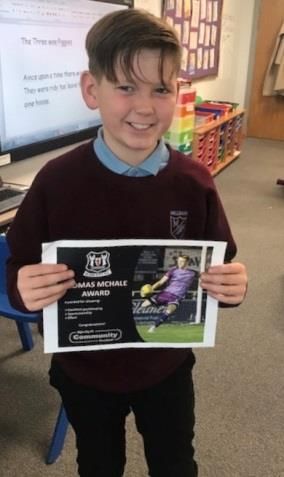
Teaching and Learning at Millbank
Our vision at Millbank Primary School is, ‘Where Everyone Matters’. We endeavour to support
each child to succeed by reaching and exceeding their potential. We treat each child as an
individual and nurture them to develop their own self-confidence, ambition and love of learning.
We teach a broad, general education and use a variety of experiences and learning
environments to enrich the learning for each child. We encourage our pupils to make the most
of every opportunity offered to them and foster growth mindsets from an early age;
perseverance is one of our core values.

       ‘I like the teachers and the way that we learn. It can be confusing at times and
                     sometimes I get it and sometimes I don’t. I keep trying!
                                                                                      Jake P7

Curriculum for Excellence
Curriculum for Excellence (often shortened to CfE) is the curriculum in Scotland which applies
to all children and young people aged 3-18, wherever they are learning. It aims to raise
achievement for all, enabling young people to develop the skills, knowledge and
understanding they need to succeed in learning, life and work. It aims to raise standards,
prepare our children for a future they do not yet know and equip them for jobs of tomorrow in
a fast changing world. All children and young people have an entitlement to provision of an
excellent education so that they develop skills for learning, life and work.
 Curriculum for Excellence is not a 'one size fits all' curriculum. It provides greater
personalisation and choice so that learning is more challenging, enjoyable and relevant to
each child’s needs, strengths and interests. Curriculum for Excellence enables professionals
to teach subjects creatively, to work together across the school and with other schools, to
share best practice and explore learning together. Glow, Scotland’s unique, world-leading,
online network will support learners and teachers in this and there are plans already in place
for parents across the country to have access to Glow in due time.
 A factfile about the ‘Curriculum for Excellence’ for parents/carers which provides a more
comprehensive overview of CfE (and an explanation of the terms used) is available from the
office. You can also access further information about the curriculum and supporting your child
on:
https://education.gov.scot/scottish-education-system/policy-for-scottish-education/policy-
drivers/cfe-(building-from-the-statement-appendix-incl-btc1-
5)/What%20is%20Curriculum%20for%20Excellence
Curriculum for Excellence develops skills for learning, life and work to help young people go
on to further study, secure work and navigate life. It brings real life into the classroom, making
learning relevant and helps young people apply lessons to their life beyond the classroom. It
links knowledge in one subject area to another, helping children understand the world and
make connections. It develops skills so that children can think for themselves, make sound
judgements, challenge, enquire and find solutions.

                                                                                      10 | P a g e
Curriculum Levels
These describe the progression in learning and development of children and young people
from age 3-18 years. In brief, these are:
Early Level- Pre-school through to the end of Primary 1
First Level- End of Primary 1 to the end of Primary 4
Second Level- End of Primary 4 to the end of Primary 7
As a very general guide, children are expected to be at Second Level, and beginning to learn
and develop at Third Level, as they make the transition from Primary into Secondary
Education.
Children and young people progress through these levels at their own pace; and naturally
some do so more quickly, or a little later than expected, dependant on individual circumstances
and needs.
Experiences and Outcomes (Es and Os)
Each learning experience will provide the opportunity for children to learn a number of
outcomes throughout a range of curriculum areas. We use detailed planning to deliver inter-
disciplinary learning opportunities using interesting topics e.g. Victorians, World War 2,
Minibeasts, etc. Not only do children learn more about the topic, but they are continuously
developing their literacy, numeracy and team working skills.
The ability to transfer knowledge and skills over a wide range of learning experiences from the
different curriculum areas is desired.
Key areas of Education
Literacy across learning,
Numeracy across learning and
Health and Wellbeing across learning
Experience - describes the learning activity taking place.
Outcome - describes what the learning will achieve.
Curriculum for Excellence is all about bringing real life into the classroom and taking lessons
beyond it. Learning and teaching still focuses on subjects and knowledge in addition to
developing skills and understanding. The following website page has more information on
other subjects and knowledge covered by the curriculum:
http://www.educationscotland.gov.uk/parentzone/cfe/subjectsandknowledge/index.asp
11 | P a g eThe Seven Principles- The Eight Curriculum Areas -
all learning must take account of these containing a range of subjects:
principles: Expressive Arts
Art, Drama, Music and Dance
Challenge and Enjoyment Health & Wellbeing
Breadth Personal, social and emotional health. Also P.E.
Progression Literacy and English
Depth Communicating with others. Reading, Writing
Personalisation and Choice and Modern Languages
Coherence Numeracy and Mathematics
Relevance Number work, Problem Solving
Religious and Moral Education
This is to ensure children's development is useful Religions, values and beliefs.
and meaningful Sciences
Understanding our planet
Social Studies
Scotland and the World; past, present and future.
Technologies
Food, Design and Computing.
Literacy
The skills required for communication are fundamental to the curriculum and to the needs of
our society. In our every changing world CfE includes teaching about digital literacies. This is
included in the Literacy element of the curriculum.
1. Listening - Children need to be taught to listen well, especially to the opinions of others if
they are to fit in socially. We help children to increase their concentration span.
2. Reading - The ability to read is one of the basic requirements of an education for life. There
is a high emphasis placed on developing good reading and comprehension skills. There is
also the requirement to read and comprehend Scots texts. Digital literacy is an important skill
in today’s world. Children will be taught how to navigate websites safely. Children will also
looking at comprehension of Moving Images.
3. Writing – In CfE writing encapsulates different genres of writing which include both
functional and imaginative. The individual components of writing are also taught, sometimes
as discrete lessons or combined in to a writing lesson.
4. Talking - We aim to encourage good articulation skills so that the children have the ability
and confidence to express appropriately their ideas, opinions, questions and answers in any
situation or company. In addition to this we require children to work collaboratively with their
peers.
Numeracy and Mathematics
Numeracy and Mathematics is important in our everyday life. It equips us with the skills we
need to interpret and analyse information, simplify and solve problems, assess risk and make
informed decisions.
Numeracy and Mathematics plays an important role in areas such as Science or Technologies,
and is vital to research and development in fields such as engineering, computing science,
medicine and finance. Learning mathematics gives children and young people access to the
wider curriculum and the opportunity to pursue further studies and interests.
Because mathematics is rich and stimulating, it engages and fascinates learners of all ages,
interests and abilities. Learning mathematics develops logical reasoning, analysis, problem-
12 | P a g esolving skills, creativity and the ability to think in abstract ways. It uses a universal language
of numbers and symbols which allows us to communicate ideas in a concise, unambiguous
and rigorous way.
Other Curricular Areas
Modern Foreign Language Provision
During the course of P4-P7, pupils are introduced to the French language, traditions and
culture, by either their class teacher, or another teacher who will have been trained to deliver
a modern language in the primary curriculum. This introduction to the language is intended
to focus on the spoken language and developing a vocabulary of simple words and phrases
through enjoyable and practical activities which can be reinforced where appropriate in the
course of the school day.
We also have strong links with the Modern Foreign Language teachers at Buckie High School.
At least once a year, a teacher from the High School comes to deliver focused language
sessions to the P6/7 pupils over a number of weeks. This year the focus language was
German.
Expressive Arts
Art and Design
Drama
Music
Dance
Through the expressive arts we allow children to explore,
express and create aesthetically in ways that are satisfying
to the individual.
We encourage children to achieve high standards by
displaying work around the school and by holding public
performances, which allow the children to demonstrate their
skills, abilities and talents.
We have visiting specialist teachers who come to Millbank
weekly.
Mrs Alexander teaches Violin to P3 children and
children from P4-7 who receive individual
instrumental tuition.
Mr Friday teaches music to P5 children on a
Thursday.
Health and Wellbeing
Learning in health and wellbeing ensures that children and young people develop the
knowledge and understanding, skills, capabilities and attributes which they need for mental,
emotional, social and physical wellbeing now and in the future. Learning through health and
wellbeing enables children and young people to:
13 | P a g e make informed decisions in order to improve their mental, emotional, social and
physical wellbeing
experience challenge and enjoyment
experience positive aspects of healthy living and activity for themselves
apply their mental, emotional, social and physical skills to pursue a healthy lifestyle
make a successful move to the next stage of education or work
establish a pattern of health and wellbeing which will be sustained into adult life, and
which will help to promote the next generation of healthy children.
Personal and Social Development
At Millbank, Everyone Matters. We aim to foster positive self-esteem and an awareness of the
rights and responsibilities of themselves and others, in every child. We are working towards
becoming a ‘Rights Respecting School’ and are working towards our Silver award. We are a
very nurturing school and promote positive relationships. Our school values underpin
everything we do; Respect, Perseverance and Fairness are central to the ethos of our school.
Varied Learning Methods
There are a variety of ways in which learning opportunities may be presented to children. The
CfE represents a different approach to learning in schools intended to help learners develop
skills, knowledge and understanding in more depth.
Examples of how children will learn differently are:
Using technologies
Find, research, communicate, create and present
Active Learning
Being actively engaged in the learning task, whether
mentally or physically
Cooperative Learning
Encouraging thinking, talking together to discuss ideas
and solve problems
Learning from each other
Interdisciplinary Learning
Using links between different areas of learning to develop, reinforce and deepen
understanding
Outdoor Learning
Making use of the outdoor environment and surrounding community
Personalisation, Choice and Achievement
Planning of learning contexts and methods may be personalised according to an individual's
learning and development priorities. Thus, there may be different expectations of learning
achieved for different children.
It is not only the academic achievements of children that are recognised. We celebrate a
range of achievements reached by children in and out of the school community e.g. Progress
14 | P a g ein personal development, participation in events, extra-curricular and personal interest
activities.
Skills
The CfE emphasises the development of skills for learning, life and work. These are wide
ranging and include:
Higher order skills thinking about complex issues, problem solving,
analysis and evaluation and creativity.
Critical thinking skills making judgements and decisions,
communicating, cooperating with others, self-
organisation.
Important themes are Enterprise, Global Citizenship and Sustainable Development.
Assessment
Assessment is the cornerstone of good teaching practice and it is important that information
about children’s progress is collected systematically and used for appropriate action. Regular
tracking of all children’s’ progress takes place on a termly basis, with formal dialogue
November, March and May.
SNSA (Scottish National Standardised Assessments). These diagnostic assessments are
used as an internal tool in the school to confirm the teacher’s assessment of the children’s
learning. This is usually referred to as teacher professional judgement. It also supports
progress over the year.
P1, P4 and P7 will undertake these online assessments at times specified by Moray Council
January Primary 4 pupils
March Primary 7 pupils
May Primary 1 pupils
Children with Additional Support Needs will receive appropriate support from our Support for
Learning teachers and Pupil Support Assistants.
Assessment is an integral part of teachers’ planning next steps to enable quality learning to
take place. Learners are greatly involved in this process so that they can take ownership of
learning progression.
Self assessment what has been successful and what needs
improvement
Peer assessment help others appreciate what is good about
their work and what needs developing
Personal learning planning pupils, teachers and parents will work
together to develop planning for the child's
next steps in learning
SUPPORT FOR LEARNING / ADDITIONAL NEEDS
Children do not all progress at the same rate and provision is made within the school for
children who, for a variety of reasons, are experiencing any difficulties. When a child has been
identified as requiring additional support, parents will be notified and invited to come in to
school to discuss the matter with the class teacher and/or the Support for Learning teacher.
15 | P a g eA programme of work may be initiated to help to overcome the difficulties being experienced
by the child and this programme may involve a request for additional home support. Some
children will have individualised learning pathways devised for them. This will be devised by
the class teacher and support for learning staff. The plan will be shared with parents and the
programme will be monitored and updated on a regular basis. Staff also work in partnership
with other agencies. E.g. Speech and Language Therapy, Educational Psychology
Department. Where these other are agencies involved, review meetings will be held to
ensure parents, school and external agencies are working in partnership to achieve best
outcomes for our children.
Support for Learning teachers may work with a child, or group of children, in the classroom
and sometimes children are withdrawn for specific tasks. Some children may only need
additional help for a short period of time whereas others may have a longer term requirement.
Children requiring extra help, may also be supported in the additional support needs base.
Extra help can be provided for literacy, numeracy, personal, social and emotional, and
behavioural needs.
Parents who have concerns about their child’s progress should make an appointment to
discuss the matter with the class teacher in the first instance.
The Education (Additional Support for Learning) (Scotland) Act 2009 came into force on 14
November 2010. More information can be found on The Moray Council’s website regarding
this and the council’s provision for additional support needs in Moray. There are also internet
links to other potentially useful organisations via The Moray Council’s website.
Please refer to Appendix A for how to access this.
Information on GIRFEC (“Getting it Right for Every Child”) is available at:
http://www.scotland.gov.uk/Topics/People/Young-People/gettingitright
Assemblies
Assemblies are an important part of the school week. It is an opportunity for the whole school,
including children from the Nursery, to come together. They are held on a weekly basis in our
school and the Head Teacher, Depute Head Teachers, some classes
and a school chaplain all present assemblies.
We use our assemblies not only for religious observance but also to
promote our school core values. Assemblies focus on values and links
to our commitment to becoming a ‘Right’s Respecting School’. We link
our values to the Wellbeing Indicators, Safe, Healthy, Achieve,
Nurtured, Achieving, Respected, Responsible and Included. During
each assembly, Head Teacher Awards are given presented. Each
week the children from each class are nominated by their teacher to
receive a Head Teacher Award. The rewards focus on of our school
values. The focus value is set during the assembly for the awards for
the following week. Children who are nominated receive a golden
Head Teacher Award sticker and a certificate. Special assemblies are held in the South and
West Church at Christmas and Easter and we welcome parents and members of the
community to join us in these celebrations.
16 | P a g eAt the end of session a closing ceremony is held. This
is a celebration of the school’s work over that year. It
is an opportunity to celebrate the effort and
achievement of our pupils and staff. A variety of
people from the community are invited to attend this
ceremony. During this assembly, awards for the
winning House from Sports Day, the winning House
overall and the following awards are presented:
Mrs Shand Achievement award (P1-3)
Mrs Blackhall Citizen Award
Bank of Scotland Achievement Award (P7)
Inter House Shield
The Mitchell Trophy for Sport Achievement in School
Taylor Trophy for Bikeability
Religious and Moral Education
Christianity and Other World Religions are taught so that pupils learn
about:
Beliefs
Values and Issues
Practices and Traditions
Where parents exercise their legal rights to withdraw their children
from RME Observance, their wishes will be respected and the children
will be treated sensitively. To make these arrangements, please
forward a letter to the Head Teacher stating your reasons for this
request. Religious Observance at Milbank is delivered through class
lessons as well as in assemblies. Millbank welcomes visits from local
churches who support our Religious Observance
Outdoor Learning and Educational Visits
Teaching and learning at Millbank is enriched, whenever possible, by opportunities to learn
outside of the classroom environment. We are very lucky to have an extensive school site
with a large playground and field that we make full use of all year round. The Bothy has its
own secure garden area.
From Primary 4 to Primary 7,
children have the opportunity to
visit the swimming pool in Buckie
for a block of swimming lessons
delivered by qualified swimming
teachers. Being a coastal town,
we feel that swimming is a vital life
skill to learn.
Classes will always take the
opportunity to bring learning to life by taking classes on education visits to support the learning
in the classroom. At least once a year, each class will go on a trip out with the immediate local
area or groups/visitors are invited in to deliver an exciting learning opportunity. Last year,
younger children visited MacDuff Marine Aquarium. The older children visited the Heritage
Centre and participated in swimming, the P7 children went on a residential visit to Abernethy
17 | P a g eOutdoor Centre at Nethy Bridge and M & M Productions Theatre Company also performed in
school.
Nurturing Environments
Our school vision is ‘Where Everyone Matters’; this is supported by our school values of
Respect, Fairness and Perseverance. At Millbank, we pride ourselves on creating nurturing
environments where our pupils, staff and parents feel valued and supported.
We run a very well attended Breakfast Club every morning from 8.30am. The club helps to
promote a healthy start to the day and children are offered toast and a selection of jams and
a drink of milk or water.
Extra-Curricular and After School Activities
There are many opportunities for children to become involved in extra-curricular activities after
school. We offer a wide range of activities and clubs that are run by members of staff, sports
coaches and/or parent volunteers. We are work very closely with our local Active Schools Co-
ordinator and are currently in the process of training a number of parent volunteers to deliver
a range of different sporting activities.
Some of the recent activities that children have been involved in are:
Football Club
Running Club
Basketball
Scottish Country Dancing
School Choir
Cooking Club
Craft Club
Book Club
Lego Club
Multi Skills
Parents are always asked to give permission for their child to attend
an after school activity.
18 | P a g eClosing the gap between school and home
Contacting school
You can contact the school via email (admin.millbankp@moray-edunet.gov.uk) or by phoning
using the school phone number 01542 831113.
The School Administrator is in the office from 8.30am – 4.00pm and there is always a member
of staff in school between 8.30am and 4pm.
You can use the school telephone information line to hear about any school announcements
e.g. in the event of severe weather closing the school.
To report an absence or inform of lateness;
If your child is unable to attend school, e.g. due to illness or medical appointments,
please contact the school office in the morning to explain the reason for absence.
Where absence/lates are unaccounted for and school are unable to ascertain if your
child is safe, procedures involving one or all of the following agencies to ensure your
child is safe and well. Home School Link Worker may be contacted for a home visit;
Police Scotland may be contacted for a ‘safe and well’ check. Colleagues in Social
Work may also be contacted to ensure your child is safe and accounted for.
Family Holidays During Term-time
Advice from the Scottish Executive is that holidays taken during the school session,
other than in exceptional circumstances, should be considered as unauthorised
absences. Parents need to inform the school about such holidays, and each case will
be considered on its merits. The Head Teacher reserves the right to decide whether
or not the absence will be authorised up to ten days in any consecutive twelve
months. If pupils are absent from school due to holidays, the school does not provide
work for the pupil to complete whilst on holiday.
School closures due to adverse weather
In the event of a school closure due to adverse weather, we will inform parent as soon as
possible via our Facebook page and the telephone information line. Messages will also be
placed onto The Moray Council website which automatically feed the BBC and Moray Firth
Radio.
School Telephone Information Line
Parents can access an information line for the school
• Dial 0870 050 9999
• Enter school pin: 031340
• You will get confirmation message “Selected Millbank Primary School”
• Enter the menu system
o Press 1 - severe weather information
o Press 2 - to leave a non-urgent message (when school not open)
o Press 3 - to hear general school information
o Press 4 - to enter a different school PIN
o Press # - to end call
Calls to this number will be charged a 2p per minute service charge plus your call provider’s
access charge
19 | P a g eWhat if something isn't quite right for my child?
In the first instance please contact Mrs Garrow in the school office. If you are able to share
with her the nature of your query or concern she can then make appropriate arrangements to
meet with the Class Teacher or a member of the Senior Leadership Team. We operate an
open-door policy where we like to proactively support children and parents. Staff will
endeavour to speak with you as soon as possible to address concerns; this usually will be on
the same day but where this is not possible arrangements will made at the earliest
opportunity.
Serious behaviours are dealt with in accordance with Moray Council procedures and
policies. Where pupils are not upholding the vison and values of the school may result in
one or more than one of the following:
Verbal warnings for persistent misbehaviour
Withdrawal of privileges
Class teacher phone call home or meeting if necessary
Reported to Head Teacher
Parents/carers asked to discuss behaviour and agree future conditions
Exclusion from school
Communication
Sharing information about what is happening in school happens throughout the year in a
variety of ways and supports our 'Reporting to Parents' agenda:
Newsletters
Email
Facebook/Twitter
Website
Open afternoon
Meetings
Assemblies
Minutes of meetings
Reporting
Reporting under Curriculum for Excellence is an ongoing process. We send out termly
learning postcards in Term 2, 3 and 4 with each class having a ‘sharing the learning’
opportunity.
In addition to Parents' Evenings and Learning Postcards, staff at Millbank also report on
pupils' attainment and achievements in many other ways. Throughout the year, class
teachers may:
Hold informal meetings with parents Share learning through class
and children assemblies
Open afternoons Comments in children's Reading
Records/Diaries or
Marking feedback Minutes of Additional Support Needs
meetings/reviews
20 | P a g e Displays/learning walls Minutes of meetings requested by
school/home
As part of Individual Education This list is not exhaustive
Plans or Child Support Plans
Social Media
Millbank has an open Facebook page for the purpose of sharing up to date information and
celebrating the many opportunities children at Millbank experience. You will be asked to fill
in a consent form when your child enrols. You can choose the level of consent you are
happy with; if you are happy to allow photographs of your child to be used on our Facebook
page, to be used in school/council related publications, local media coverage or by visiting
specialist groups in their publications.
School Uniform
Available from Leonard Hudson and the school places an order in May. Parents wishing to
order out with this time can order using the following link:
http://www.leonardhudson.co.uk/parents/uniform/Millbank_Primary_School_AB56_1LU
School also has a nearly new rail where items can be taken or donated. Please ask at the
reception about this.
Data Protection Act
Information on pupils and parents/carers is stored securely on a computer system. The
information gathered is subject to the terms of the Data Protection Act 2018.
The information may be used for teaching, registration, assessment and other administrative
duties. The information is shared with Moray Council for administrative and statistical
purposes. Extracts of the information are shared with a range of partners such as Skills
Development Scotland, the Scottish Qualifications Authority, and the NHS (for the dental and
child health immunisation programmes). Information is also shared with The Scottish
Government for statistical and research purposes, although individual children are not
identified.
The Data Protection Act ensures that information is collected fairly and lawfully, is accurate,
adequate, up to date, not held for longer than necessary, and may only be disclosed in
accordance with the Codes of Practice.
More information is available on the Moray Council Internet site at:
http://www.moray.gov.uk/moray_standard/page_75569.html
Privacy Statement
You must include a privacy statement. For further guidance, refer to Admin Handbook
document Data Protection Guidance for Education, Communities & Organisational
Development:-
interchange.moray.gov.uk/int_standard/Page_111672.html (refer to Appendix A)
21 | P a g eHoliday Dates
2020/2021
Autumn
In-service closure: Monday 17 August 2020
Term starts: Tuesday 18 August 2020
Term ends: Friday 9 October 2020
Autumn holidays: Monday 12 October 2020 - Friday 23 October 2020
Winter
Term starts: Monday 26 October 2020
In service closure: Monday 16 November and Tuesday 17 November 2020
Term ends: Friday 18 December 2020
Christmas holidays: Monday 21 December 2019 - Friday 4rd January 2020
Spring
Term starts: Monday 5 January 2021
Mid term holiday: Friday 5 and Monday 8 February 2021
Term ends: Friday 26 March 2021
Spring holiday: Monday 29 March 2021 - Friday 19 April 2021
Summer
Term starts: Monday 12 April 2021
May Day holiday: Monday 3 May 2021
In-service closure: Thursday 13 May and Friday 14 May 2021
Term ends: Thursday 2 July 2021
2021/2022
Autumn
In-service closure: Monday 16 August 2021
Term starts: Tuesday 17 August 2021
Term Ends: Friday 08 October 2021
Autumn holiday: Monday 11 October 2021 - Friday 22 October 2021
Winter
Term starts: Monday 25 October 2021
In-service closure: Monday 15 November 2021 - 16 November 2021
Term ends: Thursday 23 December 2021
Christmas holiday: Friday 24 December 2021 - Friday 07 January 2022
Spring
Term starts: Monday 10 January 2022
Mid term holiday: Friday 11 & Monday 14 February 2022
Term ends: Friday 01 April 2022
Spring holiday: Monday 04 April 2022 - Friday 15 April 2022 (Good Friday)
Summer
Term starts: Monday 18 April 2022
May day holiday: Monday 02 May 2022
In-service closure: Thursday 12 May 2022 - Friday 13 May 2022
Term ends: Friday 01 July 2022
Plus one occasional day holiday to be agreed by 30 March 2021
22 | P a g eBreakfast Club
We run a successful Breakfast Club at Millbank. The club
is run by two Pupil Support Assistants and our House
Captains. The setup of the club has been well supported
by parents and pupils and we are very lucky to have the
support of our local Tesco, Co-op, Lidl and Graham’s Dairy.
The club opens at 8.30am and children can access the
breakfast room via the playground doors. For a 20p
donation, the children are offered a selection of toast and
jams and a drink of milk or water. The club is open to all
pupils, Primary 1 to Primary 7.
Supporting Our Learners
First Aid and Medical Procedures
The care of our school community is paramount at Millbank Primary School. Over the
course of the school day, bumps and scrapes invariably occur.
Minor cuts, grazes, bumps and bruises, stings, etc. are treated in school by trained First
Aiders. Any action taken is recorded in the accident book and the school will inform parents if
there is further concern that the injury should be monitored.
Occasionally, a child is involved in an incident in school or on the way to school, and may
sustain a more serious injury or examination by medical personnel. In this case, parents are
contacted to accompany their child to the doctor or to the hospital. If parents are not
immediately available, a child may be taken to the local Medical Centre or the hospital and
parents can meet their child there. In cases where a parent cannot be contacted, the child will
be accompanied at all times either by school staff or NHS staff until parents arrive.
Medicines in School
Should your child require medication in school there is a protocol to be completed to ensure
medication is administered correctly. Please be aware that without correct documentation,
medicines cannot be administered by staff. Mrs Garrow will help to ensure you have all the
right paperwork. Please ask at the school office.
In line with policy agreed by the Senior Clinical Medical Officer, schools will only
administer medicines with the written approval of a medical practitioner. Painkillers
such as aspirin and paracetamol fall into this category, and will therefore not be
administered on pupil request.
Sickness and Illness
When children become ill in school and need to be sent home, parents will be contacted. If
parents are not available, the emergency contact is notified. A child who is ill must always be
collected from school by a parent or designated adult.
If your child is unwell and will be absent from school, please contact the school office by
telephone to inform the school as soon as possible.
If your child is absent because of sickness or diarrhoea, children must remain at home for 48
hours from the last bout before returning to school.
23 | P a g eHead Lice
In the event of a child being found to have head lice or nits (the eggs), parents of the child are
notified and advised to treat the infection prior to returning the child to school. It is very
important to follow up any treatment given with a second treatment a week later, to ensure
that all lice and emerging eggs are killed. A comb may be used to check your children's hair
on a regular basis, even if the child has never been infected. The school operates the Moray
Council Guidelines on Head Lice Infection and follows their recommended procedures in
contacting parents.
If you check your child's hair and discover lice or eggs, please contact the school to inform us.
It is important to keep the school informed, especially in instances where there may be several
family members in different classes. As soon as the child has been treated, he or she may
return straight to school. The responsibility for checking hair regularly and treating infection
lies with parents.
Child Protection
Along with our school values of Respect, Fairness and Perseverance, Staff at Millbank Primary
undertake to:
Treat children with respect
Act with good intentions towards all children
Respect the child’s right to personal privacy
Encourage children to approach a staff member if they have any concerns or worries
in school.
If a child talks to a member of staff about concerns, that staff member must inform the child
that the information will be passed on in order to take action in order to help the child.
If you would like to speak to someone in confidence regarding an issue, please contact the
Head Teacher.
If an allegation is made against the Head Teacher, Educational and Social Care will be
contacted and an investigation carried out.
A copy of the Child Protection Guidelines can be viewed by parents, by contacting the school
office.
Named Person
Getting It Right For Every Child (GIRFEC) is a national policy to help all children and young
people grow, develop and reach their full potential. It aims to improve outcomes for children
and their families based on a shared understanding of their wellbeing. Most children will
receive all the support they need from their own families and community.
As part of the GIRFEC approach each child or young person is allocated a Named Person. In
Primary the Head Teacher is the Named Person and will remain throughout their primary
school career. On transition to Secondary School, Guidance teachers become the Named
Person.
School Meals
Meals are cooked on the school premises and, at the start of session; parents are advised
about the cost of school meals. Six weekly meal plans are available. The weekly menu is
displayed at the hall door. Meals are purchased by parents/carers on iPay where each child
24 | P a g egets a unique code that links them to the iPay system. Please contact admin to request access
once your child enrols or if you need help to access the system.
If you think your household income may mean you child is eligible for free school lunches,
then refer to Appendix A to access information and a claim form from The Moray Council.
Enrolment at Millbank Primary
Parents wishing to enrol their children at Millbank Primary School are welcome to contact the
school office. The Head Teacher, along with senior pupils if available, will be happy to show
prospective pupils and parents around the school.
Normally, children of suitable primary school age who live in or who move in to our catchment
area are admitted immediately upon the request of their parents. The only enrolment
formalities are the completion of an admission form and the production of the original birth
certificate of the child starting school for the first time. Parents are also asked to complete
forms relating to issues such as media filming consent, access to the Internet, the school’s
behaviour code and a homework contract.
Under Scottish Government regulations, children may start school in August, the beginning of
the school session, of the year in which the child reaches the age of 5 years. To be eligible for
entry to school in any August, a child’s fifth birthday must fall between the previous March 1st
and the following February 28th/29th. There is a full induction programme for parents and
children, which includes a variety of meetings and visits to the P1 classroom.
Enrolment for prospective Primary 1 pupils takes place in January for next session. An
advertisement will appear in the local paper in January, before enrolment is due, inviting
parents to contact their local primary school to register their child. Parents may then enrol their
child at the school, or request a placement request form if they wish their child to enrol at a
school out with the catchment area. Decisions about placement requests are made by an
Education Officer.
Transitions
As our pupils progress through their school career, it is important to plan for times of change
and transition between classes and year groups.
We begin our formal transition sessions for Nursery children in to our Primary 1 class in the
summer term. The children are invited in for a number of play and story session in the
Primary 1 classrooms and meet the teachers. Staff also visit the Nursery children in the
Nursery and meet with the Keyworkers to build a picture of each individual child.
Moving onto Secondary Education
At the end of Primary 7, pupils move onto their secondary education. Most children at Millbank
go to Buckie Community High School. There are a series of information meetings for parents
and pupils held during the latter part of Primary 7. There are also induction days at the High
School so that pupils become familiar with the school, its layout and some of their new
teachers. It is also an opportunity for pupils to meet children from other schools who will be
starting their first year at High School with them. There are enhanced transition opportunities
scheduled for pupils who have additional needs which need to be supported.
The contact details for Buckie Community High School are:
Head Teacher: Mr N Johnston
Tel: 01542 832605 Fax: 01542 935758
Address: West Cathcart Street, Buckie
Email: admin.buckiehigh@moray-edunet.gov.uk
25 | P a g eYou can also read


