Knowledge Translation Supports Community Conservation Efforts to Protect and Restore a Local Marine Environment: A Case Study of Átl'k British ...
←
→
Page content transcription
If your browser does not render page correctly, please read the page content below
Journal of
           Marine Science
           and Engineering

Communication
Knowledge Translation Supports Community Conservation
Efforts to Protect and Restore a Local Marine Environment:
A Case Study of Átl’ka7tsem/Txwnéwu7ts/Howe Sound,
                      ¯
British Columbia, Canada
Jennifer Chapman *, Amber Dearden and Aroha Miller
 Ocean Wise Conservation Association, Ocean Wise Research Institute, 845 Avison Way,
 Vancouver, BC V6G 3E2, Canada; Amber.Dearden@ocean.org (A.D.); Aroha.Miller@ocean.org (A.M.)
 * Correspondence: jenniferchapman751@gmail.com

 Received: 16 September 2020; Accepted: 22 September 2020; Published: 24 September 2020

 Abstract: Individuals, communities, organizations, and governments are the building blocks of
 economies. All require awareness, information, and achievable actions to contribute to moving
 towards healthy oceans, the base of a robust blue economy. Ocean Watch, a program run by
 Ocean Wise Conservation Association, was created to translate scientific understanding, combined
 with community and traditional knowledge, to empower local action for improved marine
 health. Clear improvements have been made in the Átl’ka7tsem/Txwnéwu7ts/Howe Sound marine
                                                             ¯
 environment, which have been captured in an updated report following from the original 2017
 publication. Information within the reports illustrates the connection of communities and the marine
 environment through articles describing seven themes, which are: (1) Species and Habitat; (2) Clean
 Water; (3) Sense of Place; (4) Coastal Development and Livelihoods; (5) Stewardship and Governance;
 (6) Oceanography and Climate Change; and (7) Seafood. Articles such as the 2017 article: “Sea Stars:
 wasting disease taking its toll” gave background, rationale for importance, current status, current
 actions, and recommended actions to improve the health status (healthy, caution, critical, limited/no
 data). The health status for 10 of 28 reassessed articles improved largely due to actions taken by local
 communities, as recommended in the 2017 report. However, more work is needed, especially for areas
 of marine health that were not improving and to address threats from climate change. Establishing a
 sustainable socio-ecological relationship with the ocean is necessary if we are to protect and restore
 the health of all components of the ecosystem. Empowering communities to take action improves
 ocean health, which is inherently linked to the health of individuals, communities, and economies.

 Keywords: blue economy; ocean pollution; sustainable development goals (SDGs); marine
 biodiversity

1. Introduction
      The United Nations (UN) has internationally recognized the need to improve “Life Below Water”
by including it in the UN sustainable development goals (SDG 14) [1]. Achieving this goal is critical
for maintaining healthy ecosystems while deriving benefits from the oceans (e.g., seafood, recreation).
Ongoing unsustainable use of resources has led to overfishing and an increasing number of collapsed
fisheries [2,3]. Additionally, shifts in ocean conditions due to climate change pose substantial risks to
human populations (e.g., sea level rise, extreme weather events) [4]. There is growing recognition of
the dependence of human health on ocean health. For example, in 2019 researchers began a discussion
of a joint Oceans and Human Health agenda for research and governance in Europe [5]. Understanding

J. Mar. Sci. Eng. 2020, 8, 739; doi:10.3390/jmse8100739                         www.mdpi.com/journal/jmse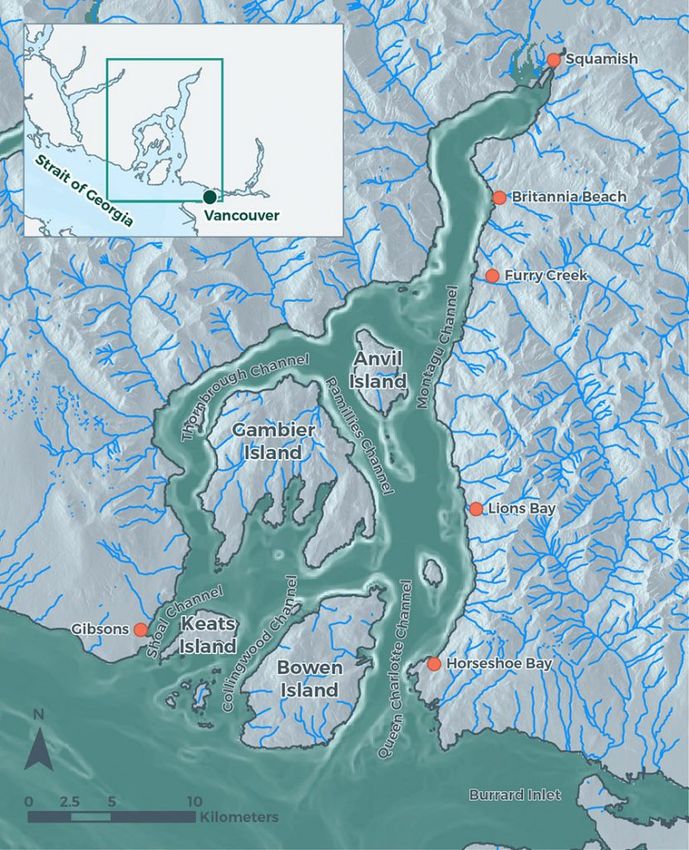
J. Mar. Sci. Eng. 2020, 8, 739                                                                        2 of 9

the current state of the oceans is important for ocean and human health and supplying resources to a
sustainable blue economy.
     Anthropogenic activities have degraded ocean health (e.g., unsustainable fishing methods [6],
plastic pollution [7], greenhouse gas emissions driving climate change [4]). However, informed,
evidence-based actions can reverse deteriorating trends and help to restore ocean resources [8].
Given definitive knowledge of a problem, a lack of action to address the issue is considered an action
gap. Such action gaps have long been a challenge in conserving natural systems and resources [9].
To close this gap and progress towards healthy oceans, knowledge (i.e., scientific, traditional) must be
communicated to the public and decision makers, including evidence-based, achievable actions that
can be taken by the community.

2. Background

2.1. Ocean Watch
       Ocean Watch, a program run by Ocean Wise Conservation Association, translates scientific,
community, and Indigenous knowledge about many topics related to coastal ocean health, into
engaging, non-technical articles suitable for a general audience. Community contributions
to article creation engages scientists, community members, and Indigenous groups; creates
a sense of ownership; and motivates stewardship. Articles for specific geographical areas
(i.e., Átl’ka7tsem/Txwnéwu7ts/Howe Sound and British Columbia) have been combined into
           ¯
comprehensive reports on the state of coastal ocean health. A holistic approach to ocean health
has been achieved by presenting information on both ecosystems and the human activities connected
to them (e.g., tourism and recreation, coastal development).
       Reports feature articles within seven themes: (1) Species and Habitat; (2) Clean Water; (3) Sense of
Place; (4) Coastal Development and Livelihoods; (5) Stewardship and Governance; (6) Oceanography
and Climate Change; and (7) Seafood. Article information was organized under headings phrased
as questions about the topic, specifically: (1) “What’s happening with [topic]”; (2) “Why is [topic]
important?”; (3) “What is the current state?”; (4) “What is being done?”; and, (5) “What can you do?”.
Some variability in headings was applied depending on the article, and where information was available,
sections were added to draw on Indigenous knowledge. Importantly, the final section (i.e., “What can
you do?”) contains a list of recommended actions to improve marine health actionable at an individual
and organization level, and at a government and policy level. Based on the presented information,
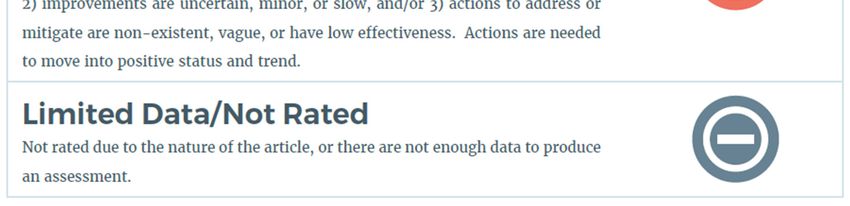
a health rating (i.e., healthy, caution, critical, or limited data/not rated) was applied to indicate the
status and motivate actions to improve the overall health status (Figure 1). Additionally, the health
ratings have provided a framework for tracking status changes over time.
       An executive summary for each report synthesizes information to identify reoccurring issues and
priorities. Key issues, an action plan, and leadership suggestions are made based on comprehensive
area-specific information. There has been notable community action guided by the Ocean Watch report
in Átl’ka7tsem/Txwnéwu7ts/Howe Sound.
        ¯
2.2. Átl’ka7tsem/Txwnéwu7ts/Howe Sound
         ¯
       Located within the unceded territory of Skwxwú7mesh Úxwumixw/Squamish Nation,
                                                       ¯ ¯
Átl’ka7tsem/Txwnéwu7ts/Howe Sound is a quintessential Pacific Northwest fjord with a large diversity
     ¯
of marine life, temperate rainforest, and coastal communities. It is adjacent to the major Canadian city
of Vancouver (Figure 2).
       Within the area there are ten local governing bodies (i.e., Bowen Island Municipality, Town of
Gibsons, Village of Lions Bay, District of Squamish, District of West Vancouver, Resort Municipality of
Whistler, Gambier Island Local Trust Committee, Sunshine Coast Regional District, Squamish-Lillooet
Regional District, Metro Vancouver) and First Nations (i.e., Skwxwú7mesh Úxwumixw/Squamish
                                                                  ¯ ¯
Nation). All connect to and impact the local marine environment; therefore, collaboration is necessary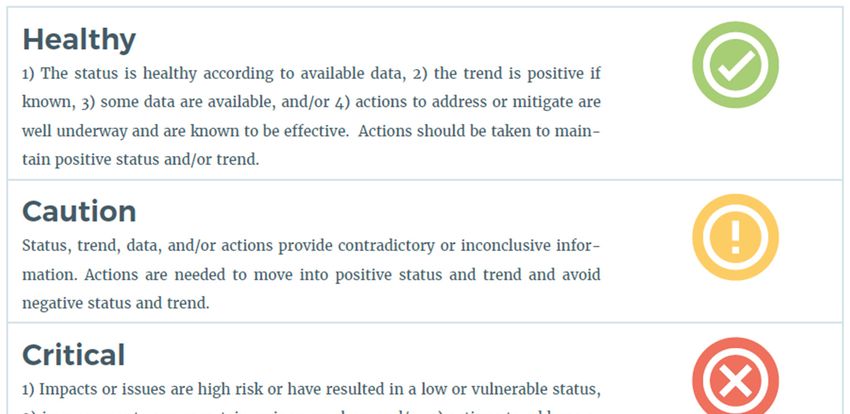
J. Mar. Sci. Eng. 2020, 8, 739                                                                           3 of 9

for ocean health. However, cohesive action across diverse groups is challenging. At the local
government level, the Howe Sound Community Forum (HSCF) was established in 2000, comprising
representatives of local governments, to “provide a forum for local governments, Regional Districts
and First Nations discussion to maintain and enhance the economic, environmental, cultural and social
well being of the Howe Sound for the benefit of present and future generations” [10]. The Ocean Watch
Howe Sound (OWHS) 2017 report supported this vision by providing a single source of evidence-based
J. Mar. Sci. Eng. regarding
information       2020, 8, x FOR PEER
                               the    REVIEW
                                   health of the local marine environment [11].                 3 of 10

                                 Figure 1. Health ratings symbols and criteria.
                                 Figure 1. Health ratings symbols and criteria.

      Historically, marine health in Átl’ka7tsem/Txwnéwu7ts/Howe Sound was degraded through
      An executive summary for each report  ¯       synthesizes information to identify reoccurring issues
anthropogenic activities; however, improvements to marine health were already evident in the
and priorities. Key issues, an action plan, and leadership suggestions are made based on
OWHS 2017 report [11]. Throughout the 20th century, the area was heavily impacted by industrial
comprehensive area-specific information. There has been notable community action guided by the
pollution from Britannia Mine (i.e., predominantly copper mining) and two pulp and paper mills.
Ocean Watch report in Átl’ a7tsem/Txwnéwu7ts/Howe Sound.
By 2017, Britannia Mine had been closed for approximately 40 years. Beginning in 2000, remediation
work was undertaken by the provincial government (e.g., installment of a water treatment plant).
2.2. Átl’ a7tsem/Txwnéwu7ts/Howe Sound
Consequently, conditions have improved for shoreline species and fish. However, some contaminants
      Located
remained        within
            above        the unceded
                   provincial            territory
                               water quality           of S wx̱
                                                 guidelines     wú7mesh
                                                             [12].           Úxwumixw/Squamish
                                                                    The impacts    from the pulp andNation,
                                                                                                         paper
Átl’
industry included fishery closures (e.g., shrimp, prawn, crab) to protect human health [13]. By large
      a7tsem/Txwnéwu7ts/Howe        Sound     is  a  quintessential  Pacific Northwest    fjord  with  a  2017,
diversity  of marine
improvements     were life, temperate
                       apparent        rainforest,
                                after the             and coastal
                                           implementation          communities.
                                                              of effluent         It is adjacent
                                                                           regulations,          to the
                                                                                         mill process    major
                                                                                                      changes,
Canadian   city of Vancouver
and the closure    of one mill(Figure
                               in 20062).[13]. Citizens in the area recorded more cetacean sightings,
including killer whales, which are top trophic level predators, supporting data showing that marine
recovery was occurring [14].
      After the release of the OWHS 2017, the Ocean Watch Task Force (OWTF), a sub-committee of
the HSCF, was created. The OWTF comprised representatives from each of the local governments,
First Nations, community group members, and environmental NGOs, specifically the David Suzuki
Foundation, as well as a representative of the Átl’ka7tsem/Howe Sound UNESCO Biosphere Region
                                                         ¯
J. Mar. Sci. Eng. 2020, 8, 739                                                                            4 of 9

designation application. The role of the OWTF was to take a leadership role in addressing key
issues identified in the 2017 report, and create a strategic plan for collaborative movement on local
government actions [15]. The 2017 report created a sense of ownership within local communities,
and increased interest at both the individual, organization, and local government level in making
progress. Subsequently, the Ocean Watch team at Ocean Wise was tasked with producing an updated
report   to Eng.
J. Mar. Sci. investigate    progress
                 2020, 8, x FOR      made since 2017.
                                PEER REVIEW                                                    4 of 10

                                 Figure 2. Map
                                 Figure 2. Map of
                                               of Átl’
                                                  Átl’ka7tsem/Txwnéwu7ts/Howe   Sound.
                                                         a7tsem/Txwnéwu7ts/Howe Sound.
                                                       ¯
3. Ocean   Watch
      Within      Átl’kthere
              the area   a7tsem/Txwnéwu7ts/Howe
                               are ten local governingSound
                                                         bodies2020
                                                                 (i.e., Bowen Island Municipality, Town of
                       ¯
Gibsons,  Village  of Lions  Bay,  District of Squamish,  District
      Work on an updated report (see Supplementary Materials)       of West Vancouver,
                                                                         began            Resort
                                                                               in early 2019,    Municipality
                                                                                              only   two years
of Whistler,
after          Gambier
      the original reportIsland   Local Trust
                           was released.        Committee,
                                            To further engageSunshine    Coast Regional
                                                               the communities            District,
                                                                                  and gather        Squamish-
                                                                                               knowledge    for
Lillooet
the        Regional
    2020 update,         District,wasMetro
                  a workshop                   Vancouver)
                                      held mid-2019.         and First participated
                                                       Key stakeholders     Nations including
                                                                                       (i.e., S wx̱  wú7mesh
                                                                                                  government
Úxwumixw/Squamish
representatives,          Nation).community
                  First Nations,     All connectmembers,
                                                  to and impact    the local marine
                                                            and environmental       environment;
                                                                                  NGO                therefore,
                                                                                          groups. Discussion
collaboration is necessary for ocean health. However, cohesive action across diverse groups is
challenging. At the local government level, the Howe Sound Community Forum (HSCF) was
established in 2000, comprising representatives of local governments, to “provide a forum for local
governments, Regional Districts and First Nations discussion to maintain and enhance the economic,
environmental, cultural and social well being of the Howe Sound for the benefit of present and future
J. Mar. Sci. Eng. 2020, 8, 739 5 of 9
focused on climate change and included breakout groups tasked with identifying and prioritizing
themes for the key mitigation actions to support marine health in the Sound. Prioritized themes were
applied within the 2020 report to classify key issues and structure the updated action plan.
The update was released in August 2020 [16]. The 2020 edition features articles by previous and
new authors. A climate change lens was applied throughout the report, both as a theme and within all
articles. The order of the seven themes was changed. The report now begins with Climate Change and
Oceanography, which includes the addition of three new articles in this theme alone. The new articles
provide: (1) an introduction to climate change; (2) an overview of the need to reduce greenhouse gas
emissions and how to shift to zero carbon municipalities; and (3) a description of ocean acidification
data for the area. Additionally, every article in the report now includes a high-level look at the impact
of climate change in a new section: “What are the potential impacts of climate change on [topic]”.
The report includes three additional new articles: Pinnipeds (theme: Species and Habitat); Plastics
(theme: Clean Water); and, PollutionTracker (theme: Clean Water). Unfortunately, at the time of
publication, no updates were available for two previous articles (i.e., Cultural Continuity, theme: Sense
of Place; and Squamish Nation Stewardship, theme: Stewardship and Governance). The Ocean Health
Index, included in the 2017 report, was removed in the 2020 update because community feedback
indicated its inclusion was confusing, given a health status was also indicated via the Ocean Watch
Health ratings (Figure 1).
For the 2020 update, a committee comprising local community members and researchers was
convened to assign a health status to each article. Articles were assigned to committee members and
the criteria from 2017 was applied (Figure 1). In some cases, although forward movement on past
recommended actions was identified, not enough had occurred to warrant an increase in health status.
Thus, arrows were applied to the 2020 heath ratings—an upward arrow indicated positive forward
movement had occurred, while a downward arrow indicated a move away from recommended actions.
Final health ratings were decided by consensus through discussion of rationales within the committee.
Committee members provided additional feedback on content, further enhancing the engagement and
sense of ownership of this important work.
4. Átl’ka7tsem/Txwnéwu7ts/Howe Sound from 2017 to 2020
¯
Community and local government action was evident during the reassessment of health statuses
between 2017 and 2020. In each article, tables of actions taken give specific details about what occurred;
however, these were subject to limitations based on data availability (e.g., the ability to determine
whether individual actions were being taken).
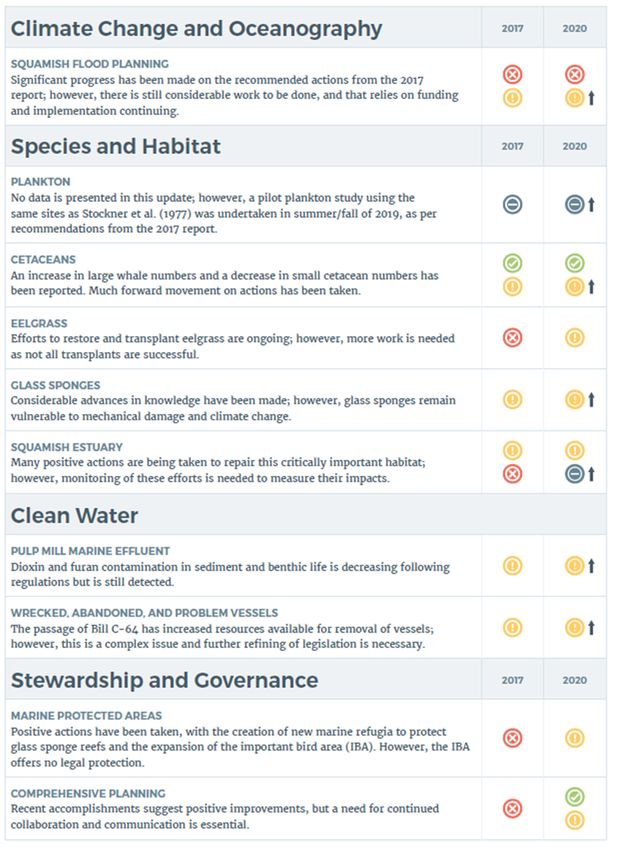
An overview of improvements is presented as a comparison of the 2017 and 2020 health ratings.
For ten articles across four themes, improvements in health statuses were observed (i.e., the rating
improved, or an upwards arrow was applied to indicate progress taken on actions) (Figure 3).
The emphasis on climate change also affected health ratings. The re-assignment of statuses gave
two articles in the Climate Change and Oceanography theme an added critical rating, in addition
to the caution rating they already carried. However, these articles still reported positive movement
of recommended actions [17,18]. Additionally, the article on marine birds moved from caution,
to critical/data limited. In this case, progress was made because of the expansion of an Important Bird
Area (IBA) into the Sound; however, an IBA offers no legal protection and bird populations continue to
decline [19]. For tourism and recreation, caution was assigned for 2020, a decline from the previous
healthy/caution health status. Despite positive actions being taken in the last three years, this rating
reflects a need for a more collaborative, sustainable management of growth in this industry [20].
Finally, only a single article recorded actions contrary to earlier recommendations. In this case,
the article sport fishing, within the Seafood theme, was marked as declining because long-term
monitoring programs for salmon were discontinued and increased pressure on sport fishing is being
felt as this activity grows in popularity [21].J. Mar. Sci. Eng. 2020, 8, 739 6 of 9
J. Mar. Sci. Eng. 2020, 8, x FOR PEER REVIEW 7 of 10
Figure 3. Articles arranged by theme showing improved or improving status from 2017 to 2020.
Figure 3. Articles arranged by theme showing improved or improving status from 2017 to 2020. The
The 2020 rationale is given for each article presented.
2020 rationale is given for each article presented.
Marine health is affected by many factors, including global trends. However, the value of local
5. Ocean Watch as a Tool in the Blue Economy
community improvements cannot be underestimated, and steps to scale-up these efforts are needed to
moveAs thenoted
globalabove, community
community participation is key to the success of the Ocean Watch reports.
forward.
Similar work includes a lagoon management project in the European Union. The ARCH project
5. Ocean Watch
(“architecture as aroadmap
and Tool in the Blue Economy
to manage multiple pressures on lagoons”), worked to provide realistic
solutions to manage
As noted identified issues,
above, community and connect
participation is key with
to thepolicy makers,
success of the local
Oceanauthorities, and
Watch reports.
stakeholders [22]. Different examples of successes and challenges were identified,
Similar work includes a lagoon management project in the European Union. The ARCH project supporting the
need for a combined
(“architecture approachtoof manage
and roadmap traditional and scientific
multiple knowledge
pressures togetherworked
on lagoons”), with social learning
to provide
and political will [23]. Ocean Watch reports have met these conditions (i.e., identified key issues to
improve marine health; provided evidence-based actions; and provided a singular, comprehensiveJ. Mar. Sci. Eng. 2020, 8, 739 7 of 9
realistic solutions to manage identified issues, and connect with policy makers, local authorities,
and stakeholders [22]. Different examples of successes and challenges were identified, supporting the
need for a combined approach of traditional and scientific knowledge together with social learning and
political will [23]. Ocean Watch reports have met these conditions (i.e., identified key issues to improve
marine health; provided evidence-based actions; and provided a singular, comprehensive resource
that facilitated collaborative action between local governments) in Átl’ka7tsem/Txwnéwu7ts/Howe
¯
Sound, leading to rapid improvements in the health of the local marine environment.
Locally, the political environmental in Átl’ka7tsem/Txwnéwu7ts/Howe Sound has driven climate
¯
change action, including the declaration of a climate emergency in half of the municipalities in the
Sound (i.e., five of ten) with climate targets set in all ten communities [24]. Social efforts have also
been strong, such as the movement towards designating the area as a UNESCO biosphere region [25].
Externally, motivation to facilitate the creation and uptake of these reports has been and remains
strong, including significant local philanthropist funding over a multi-year period. The reports provide
information and direction for communities to create local leadership (i.e., the OWTF) and shift their
environmental trajectory.
By making science accessible and community actions clear, Ocean Watch has bridged a
knowledge-action gap. The 2020 update indicates progress had been made on many previously
recommended actions. Consequently, health status improvements have been seen. One of the key
actions from 2017 was to consolidate information for decision-makers. Accordingly, the OWTF was
formed, and a key outcome was the creation of a strategic plan to guide local governments in addressing
recommended actions in a collaborative, cooperative manner [26].
Additionally, work has been ongoing on the Marine Reference Guide (MRG) project,
as recommended in the 2017 action plan. When completed, the MRG will map aquatic ecological
and human-use information for the region to “support informed decision-making, collaborative
management, marine spatial planning, and community education” [27]. The MRG has received
support from local governments and groups. Publication is anticipated for the spring of 2021 [27].
A key to the success of the 2020 Ocean Watch report has been the community participation at all
stages of its development (i.e., engagement, knowledge gathering, health rating assignment, identifying
priority themes, action plan, and leadership structure). The co-creative process has engaged the local
communities and created capacity to make rapid progress possible in the short time span between the
original report and the update.
The Ocean Watch Átl’ka7tsem/Txwnéwu7ts/Howe Sound 2020 report shows that collaboration
¯
between local communities, First Nations, scientists, and local governments can lead to successful
knowledge translation, a sense of ownership and increased stewardship, and environmental leadership
at a community level. As shown in the update, the themes and the article template are adjustable to
adapt to evolving local situations; likewise, application to different regions would be possible due to
this flexibility. The Ocean Watch coastal marine health report is a valuable tool for improving ocean
health through community engagement and evidence-based decision making. The transfer of this tool
to other coastal regions will support improved ocean conditions necessary to establish a blue economy.
Supplementary Materials: Full report: Miller, A.; Chapman, J.; Dearden, A.; Ross, P. (editors). Ocean Watch:
Átl’ka7tsem/Txwnéwu7ts/Howe Sound Edition 2020; Ocean Wise Research Institute, Ocean Wise Conservation
¯
Association: Vancouver, BC, Canada, 2020. Available online: http://oceanwatch.ca/howesound.
Author Contributions: Wrote initial drafts, J.C.; reviewed and edited, A.D. and A.M.; supervised, A.M. All authors
have read and agreed to the published version of the manuscript.
Funding: This research was funded by the Sitka Foundation and the North Family Foundation.
Acknowledgments: We would like to thank Laura Borden for reviewing this article, as well as the anonymous
external reviewers, who helped to improve the content of this article.
Conflicts of Interest: The authors declare no conflict of interest. The funders had no role in the design of the
study; in the collection, analyses, or interpretation of data; in the writing of the manuscript, or in the decision to
publish the results.J. Mar. Sci. Eng. 2020, 8, 739 8 of 9
References
1. United Nations. Conserve and Sustainably Use the Oceans, Seas and Marine Resources for Sustainable
Development. Available online: https://sdgs.un.org/goals/goal14 (accessed on 14 July 2020).
2. Pauly, D. Global fisheries: A brief review. J. Biol. Res.-Thessaloniki. 2008, 9, 3–9.
3. Food and Agriculture Organization (FAO). The State of World Fisheries and Aquaculture 2018—Meeting
the Sustainable Development Goals. Rome. 2018. Licence: CC BY-NC-SA 3.0 IGO. Available online:
http://www.fao.org/3/i9540en/i9540en.pdf (accessed on 22 July 2020).
4. IPCC. Summary for Policymakers. IPCC Special Report on the Ocean and Cryosphere in a Changing Climate.
Pörtner, H.-O., Roberts, D.C., Masson-Delmotte, V., Zhai, P., Tignor, M., Poloczanska, E., Mintenbeck, K.,
Alegría, A., Nicolai, M., Okem, A., et al., Eds.; IPCC Spec Rep Ocean Cryosph a Chang Clim. 2019. In Press.
Available online: https://www.ipcc.ch/srocc/chapter/summary-for-policymakers/ (accessed on 22 July 2020).
5. Borja, A.; White, M.P.; Berdalet, E.; Bock, N.; Eatock, C.; Kristensen, P.; Leonard, A.; Leonard, J.; Pahl, S.;
Parga, M.; et al. Moving Toward an Agenda on Ocean Health and Human Health in Europe. Front Mar. Sci.
2020, 7, 37. Available online: https://www.frontiersin.org/article/10.3389/fmars.2020.00037/full (accessed on
15 July 2020). [CrossRef]
6. Rhodes, K.L.; Tupper, M.H. A preliminary market-based analysis of the Pohnpei, Micronesia, grouper
(Serranidae: Epinephelinae) fishery reveals unsustainable fishing practices. Coral Reefs 2007, 26, 335–344.
Available online: http://link.springer.com/10.1007/s00338-007-0202-5 (accessed on 27 July 2020). [CrossRef]
7. Law, K.L. Plastics in the marine environment. Ann. Rev. Mar. Sci. 2017, 9, 205–229. [CrossRef] [PubMed]
8. Duarte, C.M.; Agusti, S.; Barbier, E.; Britten, G.L.; Castilla, J.C.; Gattuso, J.-P.; Fulweiler, R.W.; Hughe, T.P.;
Knowlton, N.; Lovelock, C.E.; et al. Rebuilding marine life. Nature 2020, 580, 39–51. Available online:
http://www.nature.com/articles/s41586-020-2146-7 (accessed on 15 July 2020). [CrossRef] [PubMed]
9. Cook, C.N.; Mascia, M.B.; Schwartz, M.W.; Possingham, H.P.; Fuller, R.A. Achieving Conservation Science
that Bridges the Knowledge-Action Boundary. Conserv. Biol. 2013, 27, 669–678. Available online:
http://doi.wiley.com/10.1111/cobi.12050 (accessed on 15 July 2020). [CrossRef] [PubMed]
10. Howe Sound Biosphere Region Initiative. Howe Sound Community Forum. Available online: https:
//www.howesoundbri.org/hscf (accessed on 3 June 2020).
11. Bodtker, K. (Ed.) Ocean Watch Howe Sound Edition; Coastal Ocean Research Institute: Vancouver, BC,
Canada, 2017; Available online: https://oceanwatch.ca/howesound/wp-content/uploads/sites/2/2017/02/
OceanWatchHoweSoundReport.pdf (accessed on 4 June 2020).
12. Alava, J.J.; Bodtker, K. Metal contamination from the Britannia Mine site: Lingering problems, ongoing
remediation. In Ocean Watch Howe Sound Ed.; Bodtker, K., Day, A., Eds.; Costal Ocean Research Institute:
Vancouver, BC, Canada, 2017; Available online: https://oceanwatch.ca/howesound/wp-content/uploads/sites/
2/2016/12/OceanWatch-HoweSoundReport-BritanniaMine.pdf (accessed on 10 June 2020).
13. Alava, J.J. Dioxin and furan contamination from pulp mills: A successful history of source control and
regulations. In Ocean Watch Howe Sound Ed.; Bodtker, K., Day, A., Eds.; Coastal Ocean Research Institute:
Vancouver, BC, Canada, 2017; Available online: https://oceanwatch.ca/howesound/wp-content/uploads/sites/
2/2016/12/OceanWatch-HoweSoundReport-PulpMill.pdf (accessed on 14 September 2020).
14. Daneleskko, T. Once Common, then Rare: Today Cetaceans are Back. In Ocean Watch Howe
Sound Ed.; Bodtker, K., Day, A., Eds.; Coastal Ocean Research Institute: Vancouver, BC, Canada,
2017; Available online: https://oceanwatch.ca/howesound/wp-content/uploads/sites/2/2016/12/OceanWatch-
HoweSoundReport-Cetaceans.pdf (accessed on 10 June 2020).
15. Howe Sound Biosphere Region Initiative. Ocean Watch Task Force. 2020. Available online: howesoundbri.
org/howe-sound-community-forum/2020/1/9/ocean-watch-task-force (accessed on 3 June 2020).
16. Miller, A.; Chapman, J.; Dearden, A.; Ross, P. (Eds.) Ocean Watch: Átl’ka7tsem/Txwnéwu7ts/Howe Sound
¯
Edition 2020; Ocean Wise Research Institute, Ocean Wise Conservation Association: Vancouver, BC, Canada,
2020; Available online: https://oceanwatch.ca/howesound/wp-content/uploads/sites/2/2020/08/OceanWatch-
HoweSoundExecutiveSummary2020_online.pdf (accessed on 31 August 2020).
17. Miller, A. Shoreline Erosion and Sea Level Rise. In Ocean Watch Átl’ka7tsem/Txwnéwu7ts/Howe Sound Ed. 2020;
¯
Miller, A., Chapman, J., Dearden, A., Ross, P., Eds.; Ocean Wise Research Institute: Vancouver, BC, Canada,
2020; Available online: https://oceanwatch.ca/howesound/wp-content/uploads/sites/2/2020/08/OceanWatch-
HoweSoundReport2020-CC-ShorelineErosion.pdf (accessed on 31 August 2020).J. Mar. Sci. Eng. 2020, 8, 739 9 of 9
18. Knight, F.; Chapman, J. Stream Flows: Daisy Lake Reservoir and the Cheakamus River. In Ocean Watch
Átl’ka7tsem/Txwnéwu7ts/Howe Sound Ed. 2020; Miller, A., Chapman, J., Dearden, A., Ross, P., Eds.; Ocean
¯
Wise Research Institute: Vancouver, BC, Canada, 2020; Available online: https://oceanwatch.ca/howesound/
wp-content/uploads/sites/2/2020/08/OceanWatch-HoweSoundReport2020-CC-StreamFlows.pdf (accessed on
31 August 2020).
19. Dearden, A. Marine Birds: Important Bird Area expanded into the Sound. In Ocean Watch
Átl’ka7tsem/Txwnéwu7ts/Howe Sound Ed. 2020; Miller, A., Chapman, J., Dearden, A., Ross, P., Eds.; Ocean
¯
Wise Research Institute: Vancouver, BC, Canada, 2020; Available online: https://oceanwatch.ca/howesound/
wp-content/uploads/sites/2/2020/08/OceanWatch-HoweSoundReport2020-SH-MarineBirds.pdf (accessed on
31 August 2020).
20. Chapman, J. Tourism and Recreation: Opportunities and challenges. In Ocean Watch
Átl’ka7tsem/Txwnéwu7ts/Howe Sound Ed. 2020; Miller, A., Chapman, J., Dearden, A., Ross, P., Eds.; Ocean
¯
Wise Research Institute: Vancouver, BC, Canada, 2020; Available online: https://oceanwatch.ca/howesound/
wp-content/uploads/sites/2/2020/08/OceanWatch-HoweSoundReport2020-CD-Tourism.pdf (accessed on 31
August 2020).
21. Dearden, A. Shrimp and Prawn Fisheries: Managing declining stocks. In Ocean Watch
Átl’ka7tsem/Txwnéwu7ts/Howe Sound Ed. 2020; Miller, A., Chapman, J., Dearden, A., Ross, P., Eds.; Ocean
¯
Wise Research Institute: Vancouver, BC, Canada, 2020; Available online: https://oceanwatch.ca/howesound/
wp-content/uploads/sites/2/2020/08/OceanWatch-HoweSoundReport2020-SF-ShrimpPrawn.pdf (accessed
on 31 August 2020).
22. European Commission. Final Report Summary—ARCH (Architecture and Roadmap to Manage Multiple
Pressures on Lagoons). 2016. Available online: https://cordis.europa.eu/project/id/282748/reporting (accessed
on 14 September 2020).
23. Davoudi, S.; Zaucha, J.; Brooks, E. Evolutionary resilience and complex lagoon systems. Integr. Environ.
Assess Manag. 2016, 12, 711–718. Available online: http://doi.wiley.com/10.1002/ieam.1823 (accessed on 31
August 2020). [CrossRef] [PubMed]
24. Saxby, T.; Picketts, I.; Burhenne, L. The path to zero carbon municipalities. In Ocean
Watch Átl’ka7tsem/Txwnéwu7ts/Howe Sound Ed. 2020; Miller, A., Chapman, J., Dearden, A.,
¯
Ross, P., Eds.; Ocean Wise Research Institute: Vancouver, BC, Canada, 2020; pp. 50–74.
Available online: https://oceanwatch.ca/howesound/wp-content/uploads/sites/2/2020/09/OceanWatch-
HoweSoundReport2020-CC-ZeroCarbon.pdf (accessed on 31 August 2020).
25. Simons, R. Comprehensive Planning: Progress continues but collaboration remains key. In
Ocean Watch Átl’ka7tsem/Txwnéwu7ts/Howe Sound Ed. 2020; Miller, A., Chapman, J., Dearden, A.,
¯
Ross, P., Eds.; Ocean Wise Research Institute: Vancouver, BC, Canada, 2020; pp. 372–378.
Available online: https://oceanwatch.ca/howesound/wp-content/uploads/sites/2/2020/08/OceanWatch-
HoweSoundReport2020-SG-ComprehensivePlanning.pdf (accessed on 31 August 2020).
26. Ocean Watch: Howe Sound/Atl’ka7tsem Strategic Plan 2019–2021. Prepared by Eclipse Environmental
¯
Consulting Limited, for Ocean Wise Conservation Association. p. 22. Available online: https:
//assets.ctfassets.net/fsquhe7zbn68/35qzo0mjdczkcfHbZeWMTV/b80b29d633a9ae1bd5275b3acf0f82f1/
OWTF-Strategic-Plan__updated_.pdf (accessed on 1 September 2020).
27. Howe Sound/Atl’kitsem Marine Reference Guide. Howe Sound/Átl’ka7tsem Marine Reference Guide. 2018.
¯
Available online: https://howesoundguide.ca/ (accessed on 9 July 2020).
© 2020 by the authors. Licensee MDPI, Basel, Switzerland. This article is an open access
article distributed under the terms and conditions of the Creative Commons Attribution
(CC BY) license (http://creativecommons.org/licenses/by/4.0/).You can also read


