LeasePlan's 2021 EV Readiness Index - What's next in EVs?
←
→
Page content transcription
If your browser does not render page correctly, please read the page content below
What’s next in EVs?
LeasePlan’s 2021
EV Readiness
Index
Corporate Affairs | March 2021
What’s next in EVs?                                        LeasePlan’s 2021 EV Readiness Index | March 2021

         Contents

         Electric mobility: from Why to How                     1

         New EVs: from scarcity to selection                   2

         New EVs: Made in China, ready for Europe              5

         EV charging infrastructure: the final frontier         7

         Introducing LeasePlan’s 2021 EV Readiness Index       8

         Making sense of readiness, charging and cost          10

         EV Readiness Leaders: Norway and Netherlands          12

         EV Readiness Improvers: Germany and France            13

         EV Readiness Stragglers: Italy and Poland             14

         Appendix                                              15

         LeasePlan EV country Readiness Index 2021             16

         Factor 1: E-vehicle maturity scores                   17

         Factor 1: EV market maturity                          18

         Factor 2: Charging maturity score                     19

         Spotlight: Public charging infrastructure            20

         Factor 2: Charging infrastructure maturity            21

         Factor 3: Total cost of ownership scores             22

         Factor 3: Total cost of ownership                    23

         Generic datapoints                                   25

         Definitions used                                     26

         Scoring scale explanation                             27

         Sources used                                         28

         Country-by-country breakdown                       29-51
What’s next in EVs?                                         1                         LeasePlan’s 2021 EV Readiness Index | March 2021

         Electric mobility: from Why to How

         The largest single shift impacting the entire fleet and
         mobility industry is the move from internal combustion
         engines (ICEs) to zero emission electric vehicles (EVs). The
         Why for this global transition has long since been answered:
         public concern over climate change, regulatory pressure,
         corporate social responsibility and, increasingly, falling
         EV prices, have all made going electric the common sense
         choice in 2021.

         What remains to be answered for many, however, are the How and the When. This
         is where things get complicated, especially from an international fleet management
         perspective: the framework and circumstances that facilitate electrification differ
         significantly from country to country.

         That’s why LeasePlan has developed the EV Readiness Index. It provides a clear
         overview, across 22 key European countries, of three key factors for electrification:
         the size of the EV market, the maturity of the charging infrastructure and the cost
         of operating EVs.

         There’s more. This latest edition of the EV Readiness Index also includes an overview of
         absolutely everything you need know about electric mobility in 2021, including the hottest
         EVs coming onto the market this year. Here, we offer a complete picture of this rapidly
         expanding market, including the expansion into price points beyond what people ever
         imagined for EVs. – EV prices now start at €17k (plus VAT, before incentives), and that
         doesn’t even take into account the fact that not everybody needs a 100 kWh battery.

         This report also offers an overview of the major EU-compliant EVs models being made
         in China, adding to the vitality and diversity of the electric mobility market. Finally,
         we look at how charging can be made easy – a crucial argument to convince drivers
         and fleets to go electric.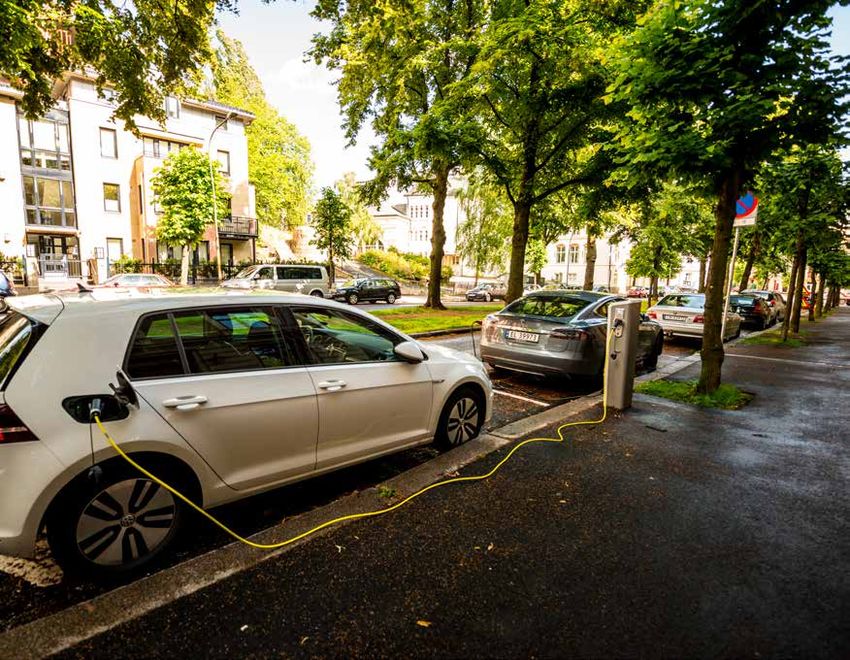
What’s next in EVs?                                         2                                  LeasePlan’s 2021 EV Readiness Index | March 2021

         New EVs: from scarcity to selection

         2021 will see new battery-electric models booming across
         each and every market segment. Rightsizing the battery
         is paramount: too small a battery could compromise its
         customer appeal, but a larger number of cells increases the
         sale price and artificially boosts the purchasing threshold.
         To tackle this issue, some Original Equipment Manufacturers
         (OEMs) offer different battery sizes for the same model – a
         trend we expect to see surging in popularity going forward.

         Dacia Spring
         Dacia is set to launch the cheapest EV on the European market. The China-built Spring
         is the first electric urban crossover in the A segment and has the potential to become a
         true success on the affordable EV scene.

                                                >   Battery size: 27 kWh

                                                >   Range: +/- 225 km

                                                >   AC charging (0-100% SoC time): 6.6 kW (5 hrs)

                                                >   DC charging (10-80% SoC time): 30 kW (1 hr)

                                                >   Competitors: as of yet – none!

         Citroën ë-C4
         With the ë-C4, Citroën brings an original interpretation of the coupé-crossover to the
         compact segment, with a more attractive price point than its competitors as a key
         trump card.

                                                >   Battery size: 50 kWh

                                                >   Range: +/- 350 km

                                                >   AC charging (0-100% SoC time): 11 kW (5 hrs)

                                                >   DC charging (10-80% SoC time): 100 kW (30 mins)

                                                >   Competitors: : Opel Mokka-e, Hyundai Kona, Kia e-Niro
What’s next in EVs?                                           3                                   LeasePlan’s 2021 EV Readiness Index | March 2021

         VW ID3 Pure*
         The Golf of the 21st century will be available as an entry-level model this year. VW has
         promised a sub-€30k price in Germany (including VAT), which could make this a big hit
         with consumers and fleet managers alike.

                                                >    Battery size: 48 kWh

                                                >    Range: +/- 330 km

                                                >    AC charging (0-100% SoC time): 7.2 kW (7 hrs 30 mins)

                                                >    DC charging (10-80% SoC time): 50 kW (44 mins)

                                                >    Competitors: : Nissan Leaf 40 kWh

                                                * The specifications of models marked with an asterisk have
                                                   not been confirmed and are merely indicative.

         Mercedes-Benz EQA
         This GLA-based EQA is the EQC’s baby-brother. It comes with a medium-sized battery
         at launch, but long-range models are to follow later. It fills a gap that Audi and BMW
         will leave untouched for at least another year.

                                                >    Battery size: 66.5 kWh

                                                >    Range: +/- 426 km

                                                >    AC charging (0-100% SoC time): 11 kW (5 hrs 45 mins)

                                                >    DC charging (10-80% SoC time): 100 kW (30 mins)

                                                >    Competitors: Lexus UX300e, Volvo XC40 P8 Recharge

         Nissan Ariya*
         Leveraging over a decade of EV experience, Nissan unleashes a mid-sized crossover
         that is aimed at the premium competition rather than the mainstream rivals. There will
         be various battery sizes to choose from, making it a truly customizable choice.

                                                >    Battery size: 65 – 90 kWh

                                                >    Range: +/- 360 – 500 km

                                                >    AC charging (0-100% SoC time): 7.4 – 22 kW (4 hrs 45 mins – 10 hrs)

                                                >    DC charging (10-80% SoC time): 130 kW (30 – 40 mins)

                                                >    Competitors: Skoda Enyaq iV, VW ID.4

                                                * The specifications of models marked with an asterisk have
                                                   not been confirmed and are merely indicative.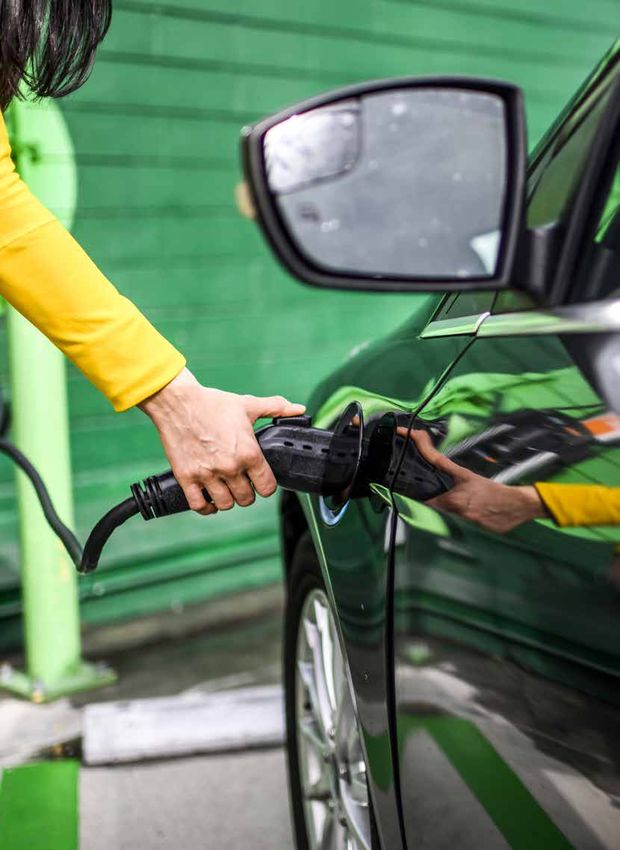
What’s next in EVs?                                         4                                   LeasePlan’s 2021 EV Readiness Index | March 2021

         BMW i4*
         This electric 4 Series GranCoupé takes a giant leap forward into the digital era
         and features state-of-the-art e-power technology. It seems the Tesla Model 3 and
         Polestar 2 will be given a run for their money.

                                              >    Battery size: 82 kWh

                                              >    Range: +/- 500 km

                                              >    AC charging (0-100% SoC time): 11 kW (8 hrs 45 mins)

                                              >    DC charging (10-80% SoC time): 150 kW (30 mins)

                                              >    Competitors: Tesla Model 3, Polestar 2

                                              * The specifications of models marked with an asterisk have
                                                 not been confirmed and are merely indicative.

         Audi Q4 e-tron*
         Whereas the e-tron takes on competitors like the Jaguar I-Pace and Mercedes-Benz
         EQC, the Q4 e-tron is ready to face the BMW iX3 and Ford Mustang Mach-E. Coupé
         lovers can opt for the Sportback version.

                                              >    Battery size: 80 kWh

                                              >    Range: +/- 450 km

                                              >    AC charging (0-100% SoC time): 11 kW (9 hrs)

                                              >    DC charging (10-80% SoC time): 125 kW (33 mins)

                                              >    Competitors: BMW iX3, Ford Mustang Mach-E0

                                              * The specifications of models marked with an asterisk have
                                                 not been confirmed and are merely indicative.
What’s next in EVs?                                        5                                  LeasePlan’s 2021 EV Readiness Index | March 2021

         New EVs made in China, ready for Europe

         Last year, 1.3 million EVs were built and sold in China, and
         according to S&P Global Platts, that number is expected to
         grow to 1.8 million in 2021 and exponentially going forward.
         The time has come for the largest local OEMs to start
         exporting their Europe-compliant models – and they are
         sure to impress.

         MG Motor ZS EV
         The ZS EV is a compact cross-over that comes fully equipped, especially in the safety
         department. The car made an excellent impression in the EuroNCAP tests, receiving
         five stars for its crash-resistance and crash-avoidance performance. MG Motor is the
         most popular Chinese brand in Europe today.

                                               >   Battery size: 44,5 kWh

                                               >   Range: 263 km

                                               >   AC charging (0-100% SoC time): 6.6 kW (7 hrs 45 mins

                                               >   DC charging (10-80% SoC time): 76 kW (35 mins)

                                               >   Manufacturer: SAIC

                                               >   Distribution in Europe: SAIC Motor Europe, private importers

                                               >   Competitors: Hyundai Kona, Kia e-Niro, Opel Mokka-e, Peugeot e-2008

         Aiways U5
         Introduced to the European public at the Geneva Motor Show in 2019, the first U5s are
         now being delivered on the continent. It is a highly digitalised mid-sized cross-over
         with a trendy, minimalistic design. Instead of a classic importer and dealer network,
         Aiways relies on different automotive and non-automotive retailers.

                                               >   Battery size: 3 kWh

                                               >   Range: +/- 410 km

                                               >   AC charging (0-100% SoC time): 6.6 kW (11 hrs 15 mins)

                                               >   DC charging (10-80% SoC time): 90 kW (40 mins)

                                               >   Manufacturer: Aiways Automobiles Company Ltd

                                               >   Distribution in Europe: Skoda Enyaq iV, VW ID4, Nissan Ariya

                                               >   Competitors: Skoda Enyaq iV, VW ID4, Nissan Ariya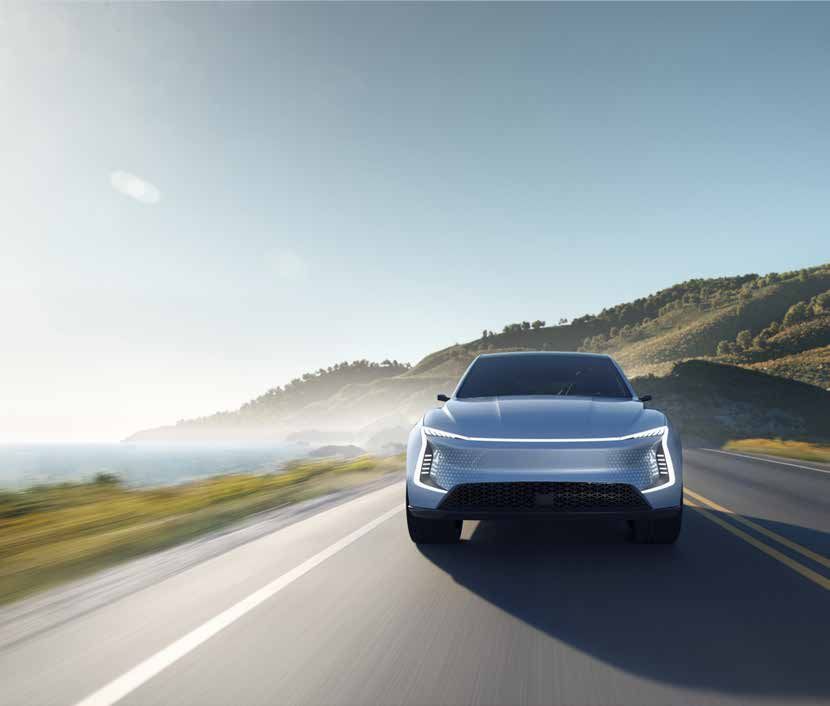
What’s next in EVs?                                           6                                  LeasePlan’s 2021 EV Readiness Index | March 2021

         Seres 3
         Seres, like Tesla, is headquartered in Silicon Valley (US), but its funding is China-based.
         The first Seres available in Western Europe will be the Chinese-built 3. Interestingly, it
         uses cobalt-free lithium iron phosphate batteries (LiFePO4) that charge faster, while
         also being more stable and having a longer service life.

                                                  >   Battery size: 54 kWh

                                                  >   Range: 329 km

                                                  >   AC charging (0-100% SoC time): 6.6 kW (9 hrs 30 mins)

                                                  >   DC charging (10-80% SoC time): 100 kW (38 mins)

                                                  >   Manufacturer: Chongqing Sokon Industry Group

                                                  >   Distribution in Europe: various private importers

                                                  >   Competitors: Hyundai Kona, Kia e-Niro, Opel Mokka-e, Peugeot e-2008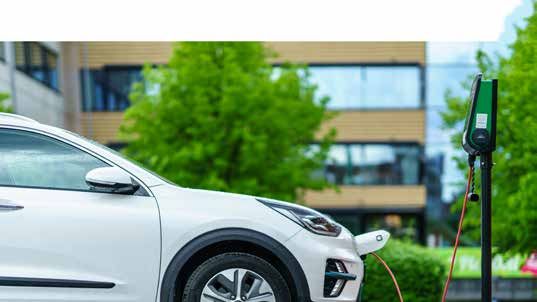
What’s next in EVs?                                           7                         LeasePlan’s 2021 EV Readiness Index | March 2021

         EV charging infrastructure: the final frontier

         Today, charging is for many the final frontier preventing
         easy EV adoption. Here are the three charging sources you
         need to get right in order to make your EV experience as
         seamless as possible.

         1. Home charging
              >	A question often raised is whether home charging is a prerequisite to go full-
                 electric. One could say that the answer is no, so long as there are charging
                 possibilities at the office and/or public chargers close to the home of the employee.

              >	However, public charging is more expensive than topping up the battery at home.
                 Providing a wallbox at home allows companies to better control the total cost of
                 ownership (TCO), while reimbursing the cost of electricity directly to the employee.
                 Indeed, these solutions exist and are highly recommendable.

         2. Charging at the office
              >	Charging at the office contributes significantly to a feasible electric life.
                 Fortunately, it is not necessary to provide a charger for every EV. The solution
                 resides in intelligent charge management. The available power in the company’s
                 local grid is distributed to the chargers according to one’s driving needs, prioritizing
                 business-critical trips for instance.

              >	Determining what type of infrastructure you need starts with analysing your
                  company fleet’s charging needs, based on its composition, fleet renewal and
                  vehicle use. This ensures maximum driver convenience and keeps costs at bay.

         3. Charging at a public station
              >	Even though there is a plethora of charging point operators out there, most
                 networks have roaming agreements allowing you to use a single badge, card or
                 app to use the public charger of your choice. All charging sessions are aggregated
                 in a single monthly invoice.

              >	It should be noted that there are important price differences. Choosing the right
                 charging service provider is therefore crucial to keep charging costs under control.
                 Also, DC fast-charging should be limited, as the price per kWh can be many times
                 higher than the one you pay at a regular AC charger.
What’s next in EVs?                                       8                         LeasePlan’s 2021 EV Readiness Index | March 2021

         Introducing LeasePlan's 2021
         EV Readiness Index

         Are you ready for electrification? The answer to that
         question is co-determined by a range of outside factors and
         will influence whether – and how – you go EV. And those
         factors vary for each country.

         The annual Index weighs key factors of EV preparedness across 22 key European
         countries and ranks them accordingly (see graph). In so doing, it provides clear and
         structured background information for the most pressing issue in international fleet
         management today.

         The three key factors determining the EV Readiness Index are:
           > Maturity of the EV market itself;
           > Maturity of EV charging infrastructure; and
           > Total cost of ownership (TCO) of an EV.

         This year, the Index zooms in on decisive TCO ingredients such as government incentives,
         energy prices and the rental cost of EVs.

         The key countries examined by the Index are:
           > Europe’s Big Five markets (Germany, France, UK, Italy, Spain);
           > the Benelux trio (Benelux, the Netherlands, Luxembourg);
           > the four Nordics (Sweden, Norway, Denmark, Finland);
           > five key East European markets (Poland, Romania, Hungary,
         		    Czech Republic, Slovakia); and
           > five further important markets (Austria, Ireland, Switzerland, Greece, Portugal).

         The Index provides much more than an overall country ranking; detailed data for each
         of the key factors provide actionable insights into each market’s EV readiness. This helps
         international fleet and mobility managers make the right decisions when it comes to
         electrifying their fleets.
What’s next in EVs? 9 LeasePlan’s 2021 EV Readiness Index | March 2021
EV Readiness Index 2021
# Country Score
2020
1 Norway 42 1 Netherlands
2 Netherlands 38 2 Norway
3 United Kingdom 33 3 United Kingdom
4 Luxembourg 31 4 Ireland
5 Sweden 29 5 Sweden
5 Austria 29 5 Austria
7 Germany 28 7 Luxembourg
8 Belgium 27 8 Finland
8 Finland 27 8 Germany
10 France 26 10 Belgium
10 Ireland 26 10 Portugal
10 Portugal 26 10 Denmark
13 Denmark 23 13 France
13 Switzerland 23 13 Hungary
15 Italy 21 15 Switzerland
16 Hungary 20 16 Spain
17 Greece 16 17 Italy
18 Spain 15 18 Czech Republic
18 Poland 15 18 Greece
20 Romania 13 20 Romania
20 Slovakia 13 20 Poland
21 Czech Republic 12 21 SlovakiaWhat’s next in EVs? 10 LeasePlan’s 2021 EV Readiness Index | March 2021
Making sense of readiness, charging and cost
Out of the wealth of data per country, a picture emerges
of the state of electrification across Europe as a whole.
Here are some key findings.
Country: EV-ready, but not everywhere
> Norway, the Netherlands and the UK have the highest overall score on the Index,
in that order; meaning they’re the most prepared to handle the transition to EVs.
The same three countries occupied the top spots last year.
> Electrification is proceeding unevenly across Europe. Romania, Slovakia and the
Czech Republic have the lowest scores, indicating the regional disparity between
Western and Eastern Europe.
> LeasePlan is at the forefront of the energy transition: in 2020, the company saw its
EV registrations double. Last year, EVs made up 15.9% of LeasePlan’s newly ordered
lease vehicles.
Infrastructure: the weakest link
> Charging was the weakest-performing of the three factors, with low scores even
in the top-ranked countries overall. LeasePlan’s recent Mobility Insights Report into
EVs and sustainability shows a lack of charging infrastructure is a major obstacle
to EV adoption.
> It’s a concern that is being heeded: in 2020 alone, there was a 43% increase in
public charging stations across Europe, totalling almost 260,000.
> Most public charging stations: Netherlands (>61,000), France (43,000). Highest density: Netherlands (3.53 plugs per 1,000 inhabitants),
Norway (3.40) and Luxembourg (1.54).What’s next in EVs? 11 LeasePlan’s 2021 EV Readiness Index | March 2021
Price: towards parity, and beyond
> Government incentives provide a crucial nudge to electrification. And in 2020,
more countries put their money where their mouth is. Most of the new incentives
took the form of purchase subsidies.
> A major plus of EVs is that they’re cheaper to operate. On average, 1 km on
electricity costs 53% of 1 km on fuel, but here too, there is a lot of variation across
Europe.
> As for taxes, EV drivers pay on average 63% of what ICE drivers fork over to the
state. The advantage is distributed unevenly. In six countries – Austria, Greece,
Hungary, Ireland, Poland and the UK – EV drivers pay no driver tax at all.
> In 11 countries, renting an EV is cheaper than renting an equivalent ICE vehicle.
That’s market-based evidence that across much of Europe, EVs have already
reached TCO parity with ICEs – and more.What’s next in EVs? 12 LeasePlan’s 2021 EV Readiness Index | March 2021
EV Readiness Leaders: Norway and Netherlands
Norway and the Netherlands are the top performers
across Europe when it comes to EV readiness. What are
they doing right?
Norway
Norway gets the highest marks in EV market maturity, thanks in large part to:
> Its highest score in terms of EV registrations: more than double the figure for
the second-highest scoring country (Sweden).
> Its whopping EV market share (71.83% in 2020). Again, more than double for
the runner-up, which is again Sweden (30.81%).
Norway’s EV success is the result of its government’s active and sustained support for
electrification. There is no VAT on Battery Electric Vehicles (BEV) purchases, no registration
fee for all EVs, and a reduced road tax for BEVs, to name but a few measures.
That’s not to say there isn’t room for improvement. EVs make up 40.56% of Norway’s funded
fleet, but Sweden wins out with 57%. Also in terms of BEV share of the total EV market –
full-electrics are rated higher than hybrids – and penetration of the charging infrastructure
in Norway is near but not at the top.
Netherlands
The Netherlands gets the highest marks in EV market maturity, thanks in large part to:
> No other country has more EV charging plugs per 1,000 inhabitants (3.53 in 2020),
although Norway comes close (3.40). Luxembourg (1.54) is the only other country
with an index higher than 1.
> In the Netherlands, there are 1.6 charge stations per EV registered in 2020,
also more than anywhere else.
The number of fast chargers relative to the highway length of the Dutch total (61 per 100km)
is not the highest, but considering the country has the largest number of public chargers
overall (more than 61,500 in 2020), that’s still very impressive.
However, when it comes to EV registrations per se, the Netherlands does not rise to the top
(just 2.25 per 1,000 inhabitants in 2020, less than Denmark or Belgium).What’s next in EVs? 13 LeasePlan’s 2021 EV Readiness Index | March 2021
EV Readiness Improvers: Germany and France
In the middle bracket are countries like Germany and France:
leaders in absolute EV numbers, but followers when it comes
to speed and share of electrification.
Germany
Size matters. EV registrations in Germany are only slightly better than in the Netherlands
(2.46 per 1,000 inhabitants), but that translates to more than 204,000 EVs registered in 2020 –
more than any other country, and almost double the figure for France.
> When it comes to government incentives, Germany is solidly in the middle, its
purchase subsidies and company tax benefits are rated ‘excellent’, but with
registration tax benefits and VAT benefits non-existent.
> Germany has the smallest price advantage for powering an EV:
electricity for 1 km costs 78% of the equivalent fuel for an ICE.
Other countries with a high energy price index are Ireland (65%) and Spain (62%), while the
lowest figures are achieved in Norway (28%) and the Netherlands (39%).
On the upside: Germany has the second-lowest rental index (81%), after Norway (74%),
indicating the price differential between renting an EV and an ICE.
France
As a big country with a relatively low electrification, France has large figures and relatively
low percentages.
> France had the second-highest number of EV registrations (more than 110,000 in
2020), with just 1.65 EV registrations per 1,000 inhabitants.
> Also after Germany, it had the highest number of BEV sales (almost 71,000 in 2020),
but representing a significantly higher share of overall EV sales (64% vs. 48%).
The relative success of BEV sales in France reflects targeted purchase subsidies and
registration tax benefits, which are higher than for plug-in hybrid vehicle (PHEV).
France’s relatively high charging point penetration (0.67 per 1,000 inhabitants in 2020) masks
the fact that, with just under 45,000 public charging points in 2020, the country was second
only to the Netherlands (around 61,500 charging points in 2020).
However, the tiny share of fast-chargers (6.9%) puts France at the very low end of the scale,
resoundingly beaten by Germany (15.6%), the UK (26.7%) and even Italy (7.8%).What’s next in EVs? 14 LeasePlan’s 2021 EV Readiness Index | March 2021
EV Readiness Stragglers: Italy and Poland
On average, EV readiness is lowest in southern and eastern
Europe. Typical examples are Italy and Poland, both of which
could be doing better.
Italy
With EV registrations at exactly 1 per 1,000 inhabitants in 2020, Italy is doing more than 10
times worse than the best performer (Norway), but also more than 10 times better than the
worst, Romania (0.07).
> Similarly, the penetration of EV charging infrastructure is bad (0.22 per 1,000
inhabitants in 2020), but not the worst.
> TCO-wise, purchase subsidies and ownership tax benefits are both rated ‘excellent’,
but there are no registration tax or company tax benefits.
If EVs are to take off in Italy, one of the areas to improve would be taxation. In 2020, BEV
drivers paid 93% of the tax they would if they drove a similar ICE vehicle. In some countries,
the rate is zero (see p. 8). To be fair, in others, it’s actually higher (as much as 129% in
Denmark).
A definite plus in Italy is the energy price index: charging an EV costs just 53% of fuelling an
ICE vehicle for an equivalent distance.
Poland
Electrification in Poland is still in its infancy, both in absolute and relative numbers.
> In 2020, there were just 0.12 EV registrations per 1,000 inhabitants. Only Greece (0.08)
and Romania (0.08) managed a lower figure. This translated into just 4,500 EVs.
> Poland is still caught in the chicken-and-egg phase of electrification. There are few
EVs because there are few public charging points (791 in all), which in turn stops
people buying EVs.
Things won’t change until Poland pivots towards a more activist government policy towards
electrification. As it is, there are very few incentives, benefits and subsidies to promote EV
penetration.
Yet there is a clear cost-based case to be made for electrification: even in Poland, the energy
price index is 56%, meaning it’s almost half the cost to operate an EV as it is an ICE vehicle.
With the right incentives and infrastructure, Poland could become a showcase for the
electrification of mobility in Eastern Europe.What’s next in EVs? 15 LeasePlan’s 2021 EV Readiness Index | March 2021
Appendix A
AppendixWhat’s next in EVs? 16 LeasePlan’s 2021 EV Readiness Index | March 2021
LeasePlan EV country Readiness Index 2021
Country
1. E-vehicle 1. Charging 3. Total cost Position
# Total score
maturity maturity of ownership last year
1 Norway 42 17 9 16 1
2 Netherlands 38 15 9 14 1
3 United Kingdom 33 11 5 17 3
4 Luxembourg 31 12 5 14 7
5 Sweden 29 14 4 11 5
5 Austria 29 9 6 14 6
7 Germany 28 12 4 12 8
8 Belgium 27 11 5 11 10
8 Finland 27 11 5 11 8
10 France 26 9 5 12 12
10 Ireland 26 12 3 11 4
10 Portugal 26 10 3 11 10
13 Denmark 23 11 4 8 12
13 Switzerland 23 10 5 8 15
15 Italy 21 8 4 9 17
16 Hungary 20 6 3 11 12
17 Greece 16 3 1 12 19
18 Spain 15 6 3 6 16
18 Poland 15 2 2 11 21
20 Romania 13 3 3 7 20
20 Slovakia 13 4 4 5 21
21 Czech Republic 12 4 3 5 18
Most EV ready Least EV readyWhat’s next in EVs? 17 LeasePlan’s 2021 EV Readiness Index | March 2021
Factor 1: E-vehicle maturity scores
One of the key factors in EV maturity is the actual uptake
of EV registrations in a country. This factor includes the
following elements:
> EV uptake relative to the population
> The EV market share for general market
(incl. consumer market)
> The EV order share from LeasePlan customers
The Nordics and western Europe region shows the highest maturity
in uptake of EV registrations.
Legend
Indication EV maturity
14+
> 11 and < 14
> 7 and < 11
> 4 and < 7What’s next in EVs? 18 LeasePlan’s 2021 EV Readiness Index | March 2021
Factor 1: EV market maturity
EV per population EV marketshare
APV + Petrol + Diesel
EV reg. per capita
EV marketshare
EV registration
BEV sales
% of BEV
Score
Score
Score
Country
Austria 13,378 1.50 3 150,524 8.16% 2 8,949 67% 1
Belgium 26,480 2.29 4 294,330 8.25% 2 9,311 35% 1
Czech Republic 2,909 0.27 1 117,495 2.42% 1 1,732 60% 1
Denmark 18,464 3.17 4 173,636 9.61% 2 7,560 41% 1
Finland 12,215 2.21 4 47,716 20.38% 4 2,618 21% 0
France 110,874 1.65 3 946,061 10.49% 3 70,587 64% 1
Germany 204,492 2.46 4 1,631,286 11.14% 3 98,610 48% 1
Greece 882 0.08 1 51,198 1.69% 0 292 33% 0
Hungary 3,511 0.36 1 66,579 5.01% 2 1,772 50% 1
Ireland 5,953 1.20 3 67,924 8.06% 2 3,613 61% 1
Italy 59,946 1.00 2 1,110,289 5.12% 2 32,538 54% 1
Luxembourg 2,990 4.78 4 28,406 9.52% 2 1,481 50% 1
Netherlands 39,240 2.25 4 177,413 18.11% 3 28,852 74% 2
Norway 67,532 12.58 5 26,478 71.83% 5 48,175 71% 2
Poland 4,567 0.12 1 251,491 1.78% 0 2,173 48% 1
Portugal 12,148 1.18 3 86,245 12.35% 3 5,266 43% 1
Romania 1,398 0.07 1 74,596 1.84% 0 1,398 100% 2
Slovakia 1,108 0.20 1 49,906 2.17% 1 578 52% 1
Spain 21,175 0.45 1 487,850 4.16% 2 9,917 47% 1
Sweden 56,559 5.48 5 127,011 30.81% 4 16,295 29% 0
Switzerland 19,229 2.23 4 146,616 11.59% 3 11,200 58% 1
United Kingdom 108,888 1.62 3 1,198,055 8.33% 2 66,611 61% 1
(x1000)
Definition
EV: BEV + FCEV + PHEV
Market share: Entire car market; including B2C sales
BEV: Full electric vehicleWhat’s next in EVs? 19 LeasePlan’s 2021 EV Readiness Index | March 2021
Factor 2: Charging maturity score
Overall, the charging infrastructure is creating a bottleneck
holding back the EV transition. The EV Readiness Index
emphasises this with the lowest scores in all categories.
The factors consist of:
> Public charge points relative to the population
> Public charge points relative to the EV registrations
> Availability (DC) fast chargers relative to the size
of available highways
Markets such as Germany, Sweden and UK are at the top of the EV Readiness Index,
however they include low score for charging development.
Legend
Indication EV maturity
10 +
8 and 9
6 and 7
4 and 5What’s next in EVs? 20 LeasePlan’s 2021 EV Readiness Index | March 2021
Spotlight: Public charging infrastructure
1. Public charging relative to population
Total number of public chargers / population (x1000)
Netherlands 3,53 Belgium 0,71
Norway 3,40 France 0,67
Luxembourg 1,54 Finland 0,60
Sweden 0,92 Germany 0,53
Austria 0,91 Denmark 0,51
Switzerland 0,85 United Kingdom 0,47
2. Fast charging relative to highway availability
# of fast chargers locations per 100 km highway
Norway 789 Germany 52
United Kingdom 218 Slovakia 51
Sweden 78 Czech Republic 40
Switzerland 70 Denmark 39
Austria 68 Finland 38
Netherlands 61 France 27
3. Public charging network comparison
in top 12 markets
The comparison of public available chargers, both normal speed (AC) and fast
charging (DC), shows the large differences in maturity between the countries.
This relates to the EV registrations (with more EVs on the road there is more
demand for public infrastructure) and to wider infrastructure topics (e.g. How
dense are cities built? How many kilometres of highway? How many drivers
own a private driveway?)
The comparison highlights the need for a faster development of public
charging infrastructure in Europe, especially since ramping-up infrastructure
takes time with grid and legislative challenges.What’s next in EVs? 21 LeasePlan’s 2021 EV Readiness Index | March 2021
Factor 2: Charging infrastructure maturity
Chargepoints / population Chargepoints / EV Fast chargers
Scoring # Fast chargers
scoring charging points
# normal speed public
charge locations 2021
# charging plugs per
locations per 100 km
#Total public charge
inhabits (x1000) 2021
# of stations per EV
% of fast chargers
# of fast chargers
per km highway
# of fast charge
per population
registered 2021
charge station
locations 2021
locations 2021
locations 2021
highway
scoring
per EV
Country
Austria 8065 6885 1180 0.91 2 0.603 3 14.6% 67.70 1
Belgium 8246 7815 431 0.71 2 0.311 2 5.2% 24.45 1
Czech Republic 1000 499 501 0.09 0 0.344 2 50.1% 40.02 1
Denmark 2948 2425 523 0.51 2 0.160 1 17.7% 39.35 1
Finland 3289 2934 355 0.60 2 0.269 2 10.8% 38.34 1
France 44892 41797 3095 0.67 2 0.405 2 6.9% 26.52 1
Germany 43776 36942 6834 0.53 2 0.214 1 15.6% 52.01 1
Greece 199 118 81 0.02 0 0.226 1 40.7% 3.86 0
Hungary 981 722 259 0.10 0 0.279 2 26.4% 13.07 1
Ireland 1033 812 221 0.21 1 0.174 1 21.4% 24.13 1
Italy 13176 12150 1026 0.22 1 0.220 2 7.8% 14.78 1
Luxembourg 965 954 11 1.54 3 0.323 2 1.1% 6.67 0
Netherlands 61534 59850 1684 3.53 4 1.568 4 2.7% 61.10 1
Norway 18273 13547 4726 3.40 4 0.271 2 25.9% 788.98 3
Poland 791 462 329 0.02 0 0.173 1 41.6% 20.10 1
Portugal 2109 1727 382 0.20 1 0.174 1 18.1% 12.46 1
Romania 434 273 161 0.02 0 0.310 2 37.1% 19.56 1
Slovakia 626 379 247 0.11 0 0.565 3 39.5% 51.24 1
Spain 7738 6045 1693 0.16 0 0.365 2 21.9% 10.86 1
Sweden 9511 7840 1671 0.92 2 0.168 1 17.6% 78.38 1
Switzerland 7304 6275 1029 0.85 2 0.380 2 14.1% 70.38 1
United Kingdom 31320 22965 8355 0.47 1 0.288 2 26.7% 217.69 2
(x1000)
Definition
Standard speed: AC charging between 3.6 kw and 22 kw
Fast speed: DC charging above 22 kwWhat’s next in EVs? 22 LeasePlan’s 2021 EV Readiness Index | March 2021
Factor 3: Total cost of ownership scores
EV uptake is largely driven by the affordability of driving
an EV within the market. Our Index compares the following
items on the total cost of ownership for EV:
> Government incentives
> Driver taxation
> Energy prices
> Monthly rental of lease vehicle
The Index shows that many countries provide strong government incentives. A lower
driver taxation and lower rental for EVs shows that total cost of ownership (TCO) parity
is achieved in many European countries compared to fuel prices.
Legend
Indication EV maturity
16+
> 13 and < 16
> 10 and < 13
> 7 and < 10What’s next in EVs? 23 LeasePlan’s 2021 EV Readiness Index | March 2021
Factor 3: Total cost of ownership
Government incentives
Purchase Subsidies
Other Financial
Company Tax
Infrastructure
VAT Benefits
Tax Benefits
Tax Benefits
Registration
Ownership
Incentives
Incentives
Benefits
Benefits
Local
Country*
Austria Excellent Excellent Excellent Excellent Good None Medium Good
Belgium None Excellent Excellent Excellent None Good None Good
Czech Republic None None None Good None None Good Medium
Denmark None Excellent None Good None None None None
Finland Good Good Good None None Excellent Medium Medium
France Excellent Good Good Excellent None Good Medium Good
Germany Excellent None Excellent Excellent None None Medium Good
Greece Excellent Good None Excellent Good Good Good Good
Hungary Good Excellent Good Excellent None None Good None
Ireland Medium Excellent Excellent None None None None None
Italy Excellent None Excellent None None None None Good
Luxembourg Excellent None Good Good None None None None
Netherlands Good Excellent Excellent Good None Good None Excellent
Norway None Excellent Good Good Excellent Excellent Good Good
Poland Medium None None None None None Good Medium
Portugal Good Good Excellent Good Good Good Good None
Romania Excellent None Good None None None None None
Slovakia None Good None None None Good Medium Excellent
Spain Excellent Good Good None None None Good Good
Sweden Excellent None Good Excellent None None Medium Good
Switzerland Excellent Good None None None Medium None Good
United Kingdom Excellent Excellent Excellent Excellent Good Good Good Good
*See appendix B For the details per countryWhat’s next in EVs? 24 LeasePlan’s 2021 EV Readiness Index | March 2021
Factor 3: Total cost of ownership
Driver taxation
2021 (BEV vs ICE, lower Energy prices Monthly rental comparison
(average kWh in EUR)
Scoring energy prices
(liter of petrol in EUR)
Driver taxation index
Energy price Index
Average electricity
incl. fuel/electricity
Average fuel price
Scoring TCO 2021
price per 100km
(lower is better)
(lower is better)
(lower is better)
Scoring driver
Energy prices
Rental index
Rental index
per 100 km
Fuel price
is better)
taxation
Country
Austria 0% 5 €1.09 €5.45 €0.19 €3.38 62% 1 101% 95% 4
Belgium 70% 2 €1.32 €6.60 €0.24 €4.36 66% 1 100% 94% 5
Czech Republic 112% 0 €1.06 €5.30 €0.17 €3.08 58% 2 138% 124% 1
Denmark 129% 0 €1.49 €7.45 €0.24 €4.25 57% 2 108% 98% 4
Finland 76% 2 €1.50 €7.50 €0.17 €3.03 40% 3 118% 109% 3
France 78% 2 €1.45 €7.25 €0.18 €3.30 46% 2 102% 88% 4
Germany 50% 4 €1.33 €6.65 €0.29 €5.22 78% 0 81% 81% 5
Greece 0% 5 €1.46 €7.30 €0.17 €3.03 41% 3 141% 113% 0
Hungary 0% 5 €1.04 €5.20 €0.13 €2.28 44% 3 180% 148% 0
Ireland 0% 5 €1.28 €6.40 €0.23 €4.15 65% 1 114% 104% 3
Italy 93% 1 €1.45 €7.25 €0.21 €3.85 53% 2 102% 91% 4
Luxembourg 46% 5 €1.16 €5.80 €0.18 €3.28 56% 2 94% 87% 5
Netherlands 59% 4 €1.58 €7.90 €0.17 €3.06 39% 3 115% 98% 3
Norway 55% 4 €1.57 €7.85 €0.12 €2.18 28% 3 82% 74% 5
Poland 0% 5 €1.00 €5.00 €0.16 €2.81 56% 2 116% 106% 3
Portugal 127% 0 €1.45 €7.25 €0.17 €3.02 42% 3 103% 91% 4
Romania 115% 0 €0.98 €4.90 €0.15 €2.78 57% 2 120% 106% 3
Slovakia 114% 0 €1.21 €6.05 €0.18 €3.16 52% 2 139% 121% 1
Spain 108% 0 €1.20 €6.00 €0.21 €3.74 62% 1 126% 113% 2
Sweden 66% 3 €1.44 €7.20 €0.19 €3.34 46% 2 117% 101% 3
Switzerland 94% 1 €1.29 €6.45 €0.20 €3.58 56% 2 116% 106% 3
United Kingdom 0% 5 €1.31 €6.55 €0.20 €3.55 54% 2 92% 85% 5
(x1000)
Based on average consumption of 5 liter/100 km
Based on average consumption of 18 kwh/100 km
Not included in index for PT, since uncommon market practiceWhat’s next in EVs? 25 LeasePlan’s 2021 EV Readiness Index | March 2021
Generic datapoints
Country Country code Population 2020 Highway infrastructure
Austria AT 8,901,064 1,743
Belgium BE 11,549,888 1,763
Czech Republic CZ 10,693,939 1,252
Denmark DK 5,822,763 1,329
Finland FI 5,525,292 926
France FR 67,098,824 11,671
Germany DE 83,166,711 13,141
Greece GR 10,709,739 2,098
Hungary HU 9,769,526 1,982
Ireland IE 4,963,839 916
Italy IT 60,244,639 6,943
Luxembourg LU 626,108 165
Netherlands NL 17,407,585 2,756
Norway NO 5,367,580 599
Poland PL 37,958,138 1,637
Portugal PT 10,295,909 3,065
Romania RO 19,317,984 823
Slovakia SK 5,457,873 482
Spain ES 47,329,981 15,585
Sweden SE 10,327,589 2,132
Switzerland CH 8,606,033 1,462
United Kingdom UK 67,025,542 3,838What’s next in EVs? 26 LeasePlan’s 2021 EV Readiness Index | March 2021
Definitions used
LeasePlan orders
LeasePlan EV orders LeasePlan full electric orders
The countries are compared based on EV order intake for The countries are compared based on full electric (BEV) order
plugin-hybrid and full-electric intake as a % from the total EV intake to emphasize the
importance of full-electric zero emission vehicles.
Driver taxation
We calculated the monthly rental of a group of BEVs and In case the local taxation calculation required a driver profile,
compared this with comparable ICE vehicles. We included these the following assumptions were used:
standard vehicles, although the vehicle choice could differ per > Employee drives 70% business, 30% private
country based on popularity in that country. > The commuting (home-work) distance is 25 km
one way
We calculated the net taxation costs for a company car driver > The gross annual salary of the employee is €60,000
of an EV compared with a diesel vehicle. This is calculated or local equivalent
based on the comparison of the following vehicles:
• BMW 320 diesel The reported number is the percentage of driver taxation
• Tesla model 3 standard range of the Tesla when taking the BMW as base.
Monthly rental
We calculated the monthly rental of a group of BEVs and BEV cars
compared this with comparable ICE vehicles. We included > Renault Zoe / Hyundai Kona BEV
these standard vehicles, although the vehicle choice could > Volkswagen ID3 / Nissan Leaf
differ per country based on popularity in that country. > Tesla model 3 / Polestar 2
ICE cars The monthly rental is based on a 48 months contract
> Renault Clio / Hyundai Kona diesel with 25,000 annual miles and the following services:
> Ford Focus / Volkswagen Golf > Funding
> Audi A4 / BMW 3 series > Repair and Maintenance and Tires
> Insurance
The monthly rental excludes the fuel/electricity costs.
Energy prices
We compared the electricity prices compared to the fuel prices. > Home charging: Households 2500 kWh < 5000 kWh /
including all taxes.
For the electricity prices we used a mix of public, home and > Workplace: non-household / 500 MWh < 200 MWh band /
workplace chargers based on the following charging behavior: excluding VAT & other recoverable taxes and levies
> 60% Home charging
> 30% Workplace charging
> 10% Public charging
The kwh tariffs we compared are based on:What’s next in EVs? 27 LeasePlan’s 2021 EV Readiness Index | March 2021
Scoring scale explanation
KPI Score Comments
0 1 2 3 4 5
1. E-vehicle maturity
1.1 EV per population Progressive scale based on average
>0 >0.5 >1 >2 >2
0 car ownership in a country
andWhat’s next in EVs? 28 LeasePlan’s 2021 EV Readiness Index | March 2021
Sources used
Element / KPI Data source used
1. E-vehicle maturity
1.1 % EV per population Eurostat, ACEA
www.globalpetrolprices.com/gasoline_prices/
1.2 % EV marketshare Eurostat, ACEA
1.2.1 % EV market share Eurostat, ACEA
1.2.2 % BEV market share
www.acea.be/statistics/tag/category/electric-and-alternative-vehicle-registrations . (Q1-Q3 results)
1.3 % LeasePlan EV orders LeasePlan order bank
1.3.1 % EV order share
1.3.2 % BEV order share
2. Charging infrastructure maturity
2.1 Charging stations per population Eurostat, EAFO
www.eafo.eu/alternative-fuels/electricity/charging-infra-stats
2.2 Charging stations per EV registration ACEA, EAFO
appsso.eurostat.ec.europa.eu/nui/show.do?dataset=road_if_motorwa&lang=en
2.3 Fast chargers per km highway Eurostat, EAFO
3. Total costs of ownership
3.1 Government incentives EAFO with LeasePlan validation
3.2 Driver taxation LeasePlan consultancy services
www.globalpetrolprices.com/gasoline_prices/
3.3 Energy prices Global fuel prices, Eurostat
appsso.eurostat.ec.europa.eu/nui/show.do?dataset=nrg_pc_204&lang=en
3.4 EV lease price comparison LeasePlan consultancy servicesWhat’s next in EVs? 29 LeasePlan’s 2021 EV Readiness Index | March 2021
Appendix B
Country
by country
breakdownWhat’s next in EVs? 30 LeasePlan’s 2021 EV Readiness Index | March 2021
Austria
Government Incentives
Purchase Subsidies > The subsidy up to €5,000 applies to full electric vehicles and fuel cell vehicles.
The subsidy of plug-in hybrids and range extenders amount to €2,500
> Requirements: The catalogue price of the standard model (excl. equipment) vehicle
should not exceed €60,000 & the electric range of the vehicle must be at least 50 km
> Plug-in hybrid models with diesel engines are exempt from subsidy.
> There are 3 funding sources (federal government, vehicle manufacturers, federal
states in Austria, which varies).
> The subsidy is available until end of 2020. For 2021 the subsidy might be lower (€4,000
for EVs and €2,000 for PHEVs), but there is no decision by the government so far.
Registration Tax Benefits > There is no tax (NoVa – registrations tax) for zero emission vehicles, due to the formula.
The NoVA is calculated based on the CO2, since EV have a CO2 emission of zero, no
NoVA is charged.
Ownership Tax Benefits > Electric vehicles are exempt from motor-related insurance tax (motorbezogene
Versicherungssteuer – which is linked to engine size of the vehicle) , this does not apply
to range extenders and hybrid cars. In these type of vehicles the calculation is based
on the ICE part.
Company Tax Benefits
VAT Benefits > VAT deductibility of EVs at a purchase value of up to €40,000
> Partially VAT deductible at a purchase value of up to €80,000
> For a purchase value of €80,000 and above there is no VAT deductibility
Other Financial Benefits
Local Incentives > Free Parking: In several cities, electric vehicles are exempt from parking fees. (Vienna
excepted). On certain determined highways, the speed limit does not apply for electric
vehicles in accordance with the Federal Emission Control Act. License plate in green
letters is required on defined roads (max. speed limit still applies, e.g. signed highways
with a limit of 80 km/h -> the maximum limit of 130 km/h for EVs)
Infrastructure Incentives > Currently there is no legal possibility for the issue of public charging stations which are
blocked by conventional vehicles, (towing etc.)
> Charging providers are working together with partners and policy-makers on a general
parking ban regulation and trying to apply this.
> Installation of public charging stations is subsidised. The subsidy depends on the type
of the charging stations, (€300 up to €15,000 for DC charging stations). Condition:
accessible to the public / for €15,000 subsidy – combined with purchase of electric
LCV or electric bus
Disclaimer: Government incentives are likely to change over time. Prior local verification
of the latest regulation is required before applying the informationWhat’s next in EVs? 31 LeasePlan’s 2021 EV Readiness Index | March 2021
Belgium
Government Incentives
Purchase Subsidies > Canceled since 2020
Registration Tax Benefits > Flanders: electric vehicles registered in the name of a private person or company are
exempt from registration tax.
> Wallonie and Brussels: electric vehicles pay the lowest rate of registration tax.
> Leasing companies registered in Flanders are now also exempt from registration tax for
EV (since 01/07/2020)
> Leasing companies registered in the Brussels or Walloon region, the minimum
registration tax is applied.
Ownership Tax Benefits > Flanders: electric vehicles registered in the name of a private person or company are
exempt from road tax.
> Wallonie and Brussels: electric vehicles pay the lowest rate of road tax.
> Leasing companies registered in Flanders are now also exempt from road tax for EVs
(since 01/07/2020)
> Leasing companies registered in the Brussels or Walloon region, the minimum road tax
is applied.
Company Tax Benefits > Expenses related to the use of zero-emission vehicles are 100% deductible from
corporate tax
VAT Benefits
Other Financial Benefits > Electricity cost for a full electric vehicle is 100% deductible from corporate tax
Local Incentives
Infrastructure Incentives > Cost for charging infrastructure (purchase and installation of charging points) are
100% deductible from corporate tax. Both for workplace charging and home charging
provided by the employer. No extra Benefit In Kind for the employee.
Disclaimer: Government incentives are likely to change over time. Prior local verification
of the latest regulation is required before applying the informationWhat’s next in EVs? 32 LeasePlan’s 2021 EV Readiness Index | March 2021
Czech Republic
Government Incentives
Purchase Subsidies > Incentives for 2021 not yet defined. It is unknown if they will be available. Working
group preparing the incentives ceased their activity in Spring 2020. LPCZ communicates
with Ministry of Industry and Trade through ČLFA (Leasing association).
Registration Tax Benefits
Ownership Tax Benefits
Company Tax Benefits > Exempt from the road tax (BEV, PHEV, CNG). The private use of a company car is
treated as taxable income in the Czech Republic and measured at a flat monthly rate
of 1% of the vehicle’s gross purchase price (Same for EV and ICE).
VAT Benefits
Other Financial Benefits
Local Incentives > Exempt from toll system for cars on highway, started in 2020; Free parking in city
centres of big cities (Prague started in 2018 with this and other cities followed).
Infrastructure Incentives > Public infrastructure incentives for energy companies and similar providers are running.
No incentives for private/company infrastructure.
Disclaimer: Government incentives are likely to change over time. Prior local verification
of the latest regulation is required before applying the informationWhat’s next in EVs? 33 LeasePlan’s 2021 EV Readiness Index | March 2021
Denmark
Government Incentives
Purchase Subsidies
Registration Tax Benefits > New car taxes introduced benefiting zero emissions and low emission vehicles (< 50g
CO2/km). Value tax on all vehicles: 25% of first DKK 65.000, then 85% up to DKK 202.200
and 150% above DKK 202.200. Zero emissions then get a discount of 60% and low
emissions get 55%. On top of that, zero emissions get a further DKK 170.000 discount on
taxes, low emissions get DKK 50.000. Both discounts and cash benefits will be phased
out over the coming years. This means zero emission vehicles are tax free up to DKK
500.000 (approx €67,000) while low emissions are benefited, making PHEV cheaper
than the same model ICE version
Ownership Tax Benefits
Company Tax Benefits > No tax on the Home charge box, for the driver. Tax incentive for company car drivers in
2020 (DKK 40.000 reduction in personal tax) is discontinued.
VAT Benefits
Other Financial Benefits
Local Incentives
Infrastructure Incentives
Disclaimer: Government incentives are likely to change over time. Prior local verification
of the latest regulation is required before applying the informationWhat’s next in EVs? 34 LeasePlan’s 2021 EV Readiness Index | March 2021
Finland
Government Incentives
Purchase Subsidies > 1) Existing direct purchase subsidy: €2,000 for a BEV < €50,000. Only available
for private persons, not B2B and still valid this year. 2) New car scrapping incentive:
for cars 10+ years you get a €2,000 purchase incentive for new PHEV (max 98g/km),
BEV or Gas car.
Registration Tax Benefits > The vehicle tax, which is paid at the time of purchase, is based on the CO2 emissions
of the vehicle. For BEVs it is the lowest (2,7 %).
Ownership Tax Benefits > Ownership tax is the same as Registration Tax Benefits. There is an annual vehicle tax,
based on basic tax plus driving power tax. Basic tax is based on CO2 emissions of the
car. Driving power tax is based on total mass of the car for all other fuels except petrol.
For BEV it is 1.5 c per day starting at 100 kg; for diesel PEV 4.9 c; for petrol PHEV 0.5 c.
Company Tax Benefits
VAT Benefits
Other Financial Benefits > 1) Benefit for drivers (Fringe benefit): The monthly tax values of BEV will be reduced by
€290 (unlimited car benefit) or €170 (limited car benefit). No benefits for employer, only
for employees. 2) There will no longer be a monetary value for charging a car at work
with electricity paid by the employer 2021. When an employee uses electricity paid by
the employer at the workplace or at a public charging point to charge a car in kind and
pays for any other driving power costs for the car, the car benefit is considered a limited
benefit.
Local Incentives > 50 % discount for parking at Helsinki city (administered by city) for low CO2 emission
Infrastructure Incentives > Allowance to housing associations for the construction of charging infrastructure for
electric cars
Disclaimer: Government incentives are likely to change over time. Prior local verification
of the latest regulation is required before applying the informationWhat’s next in EVs? 35 LeasePlan’s 2021 EV Readiness Index | March 2021
France
Government Incentives
Purchase Subsidies > Bonus System for Long-Term Purchase or Lease Financing (> 2 years) for passenger cars
& LCVs. For a CO2 emissions with a rate of 0 to 20G
> This purchase incentive for EVs is €5,000 for cars under €45,000, a bonus of €3,000
for a price between €45,000 and €60,000, and those whose price is over €60,000 will
not receive any bonus. Some PHEVs can also benefit from a new purchase bonus of
€2,000 under the following conditions (CO2 < 50G, minimum range in electric 50 km
and purchase price < €50,000). The amounts will gradually decrease each year by
€1,000. (Amounts had been revalued upwards during the Covid-19 period (in May)).*
For private consumers, the amount is increased by €1,000 except for PHEV.
Registration Tax Benefits > Fully electric vehicles and plug-in hybrids are partially or fully exempt from
registration fees
Ownership Tax Benefits > The accounting depreciation ceiling is raised for EVs, €30,000 against €18,300 for ICE
(and for PHEV, €20,300 against €18,300)
Company Tax Benefits > CO2 tax only applicable to passenger cars. Based on CO2 Tax, It takes into account
two components. The first is based on CO2 and the second is based on environmental
impact (Fuel type, Nox emissions), EV & PHEV are exempt from this tax.
VAT Benefits
Other Financial Benefits > Benefit in kind (BIK), new since November 2019, electricity costs paid by the employer
are not taken into account in the calculation of the BIK
> A reduction of 50% is to be made on the BIK as a whole. The amount of this allowance
is capped at €1,800 per year
> BIK calculation is based on acquisition price of the car => 9 % by year
Local Incentives > Some regions offer additional bonuses to SMEs and private owners
Infrastructure Incentives > The ADVENIR premium covers the costs of supply and installation of charging points
up to 40%* for companies and public entities and 50% for residential collectives.
* A maximum grant amount has been set at €960 per charging point. For private
installations, 30% tax credit on installation of charging infrastructure new
specifications, the premiums will be decreasing according to a new schedule
Disclaimer: Government incentives are likely to change over time. Prior local verification
of the latest regulation is required before applying the informationWhat’s next in EVs? 36 LeasePlan’s 2021 EV Readiness Index | March 2021
Germany
Government Incentives
Purchase Subsidies > For pure electric cars with a list price under €40,000, the grant increases to €6,000, for
hybrids to €4,500. For pure electric cars with a list price between €40,000 and €65,000,
the grant decreases to €5,000, for hybrids to €3,750. List price applies on the base
model). The promotion lasts for a maximum of 400,000 cars. The federal government
promotes a total of 650,000 to 700,000 cars. The promotion has been extended and
ends in 2025.
> In federal states and in emission-polluted cities and regions, additional subsidies are
possible and can be combined with state subsidies.
> In 2021 addition promotion is planed for eLCVs.
Registration Tax Benefits
Ownership Tax Benefits > Exemption for the first 10 years for motor vehicle tax.
Company Tax Benefits > The benefit in kind is extended until 2030.
> For BEV and PHEVs procured in the period from 01/2020 to 12/2030, the monetary
advantage should be reduced to 50% of the gross list price.
> BEVs with a list price below €40,000 an additional reduction to 25 % of the gross list
price is planned.
> For PHEVs there is a restriction that the car must have a range of 40 km or the
CO2 emission is less than 50 g/km. Up to 2022 until 2024 the car must have a range
of 60 km and up to 2025 the PHEV must have a range of 80 km.
VAT Benefits
Other Financial Benefits
Local Incentives > In federal states and in emission-polluted cities and regions, additional subsidies are
possible, but these subsidies cannot be combined with state subsidies.
Infrastructure Incentives > The Federal Government is providing €300m towards expanding the charging
infrastructure. €200m is available for rapid public charging infrastructure, and €100m
for normal public charging.
Disclaimer: Government incentives are likely to change over time. Prior local verification
of the latest regulation is required before applying the informationWhat’s next in EVs? 37 LeasePlan’s 2021 EV Readiness Index | March 2021
Greece
Government Incentives
Purchase Subsidies > The ‘I Move Electric‘ initiative to sponsor 15% on retail price before taxes (up to €50,000
RPBT) of purchase of electric passenger or light commercial vehicles up to €5,500 &
up to €4,500 for PHEVs (+ €1,000 withdrawal benefit for individuals)
Registration Tax Benefits > For PHEVs & BEVs
Ownership Tax Benefits
Company Tax Benefits > No benefit in kind taxation for vehicles with emissions Charging costs to be excluded from taxation income
Other Financial Benefits > Electric and hybrid vehicles are exempt from luxury tax and luxury living tax.
Local Incentives > Free circulation to the center of Athens & free pass to priority bus lane for BEV & PHEV
with CO2 below 50g/km, BEV benefits: Free Parking Reserved Parking spots. No parking
fees and free access to the city center
Infrastructure Incentives > Tax benefit in asset depreciation and incentives for installation of charging
infrastructure (€500). Additional corporate incentives for installation of charging
infrastructure
Disclaimer: Government incentives are likely to change over time. Prior local verification
of the latest regulation is required before applying the informationWhat’s next in EVs? 38 LeasePlan’s 2021 EV Readiness Index | March 2021
Hungary
Government Incentives
Purchase Subsidies > Net 1,5 million HUF state subsidy (21%)
Registration Tax Benefits > No registration tax
Ownership Tax Benefits > No vehicle tax
Company Tax Benefits > No company car tax
VAT Benefits
Other Financial Benefits
Local Incentives > Free parking on public places
Infrastructure Incentives
Disclaimer: Government incentives are likely to change over time. Prior local verification
of the latest regulation is required before applying the informationWhat’s next in EVs? 39 LeasePlan’s 2021 EV Readiness Index | March 2021
Ireland
Government Incentives
Purchase Subsidies > A €5,000 grant for private buyers. There is no longer any additional SEAI grant for
corporate buyers.
Registration Tax Benefits > The Government has continued €5,000 reduction in VRT (Vehicle Registration Tax)
Ownership Tax Benefits > Reduced Motor Tax based on zero CO2 emissions. For a company car driver there
is zero Benefit in Kind up to the end of 2022.
Company Tax Benefits > There are none for leased vehicles. For company purchased vehicles there are
accelerated capital allowances available.
VAT Benefits
Other Financial Benefits
Local Incentives
Infrastructure Incentives > Fee public charging has ended.
Disclaimer: Government incentives are likely to change over time. Prior local verification
of the latest regulation is required before applying the informationYou can also read


