LET THEM LEARN: FURTHER EDUCATION COLLEGES' SUPPORT FOR THE UNEMPLOYED - aoc.co.uk
←
→
Page content transcription
If your browser does not render page correctly, please read the page content below

1   Association of Colleges   Let Them Learn

    LET THEM LEARN:
    FURTHER
    EDUCATION
    COLLEGES’
    SUPPORT FOR THE
    UNEMPLOYED

        aoc.co.uk
2       Association of Colleges                                                            Let Them Learn

    FOREWORDS
                      Kathleen Henehan
                      Senior Research and Policy Analyst,
                      Resolution Foundation

It goes without saying that the past year has          The easing of lockdown and the re-opening of
brought unprecedented challenges, including            job-rich sectors like leisure and hospitality does
for the education sector and the labour market.        offer some room for optimism. Latest figures
While the furlough scheme has been immensely           indicate that employment, among all age
effective in limiting the rise in joblessness          groups, is up on the start of this year, and the
that the pandemic would otherwise have                 number of job vacancies in the UK as a whole
wrought, worklessness has still been on the            are nearing pre-pandemic levels.
up: the number of 16-64-year-olds who were
unemployed rose by 17 per cent between 2019            But reverting to a pre-Covid jobs market
and 2020.                                              shouldn’t be good enough: there were large
                                                       inequalities in joblessness, for example by
And of course, Covid-19’s effect on                    ethnicity, age and region. And even among
unemployment was larger for some groups                those with a job, precarious work was on the
than for others, leaving young people and              rise.
especially young people from some minority
ethnic backgrounds worse off. For example,             Thankfully, this report shows that when
although the share of 25-64-year-olds                  educators, employment support providers and
who were unemployed rose by less than a                employers work together, they can transform
percentage point (to 2.7 per cent) between             peoples’ lives. Colleges and jobcentres are at
2019 and 2020, the share of 18-24-year-olds            the heart of this: by offering careers advice
who were unemployed rose from 7 to nearly              and linking people directly with employers, the
9 per cent over the same timeframe. Black              two have helped young people into Kickstart
18-24-year-olds were harder hit still, as the          roles, onto apprenticeships and into new,
share who were unemployed grew by four                 rewarding careers. But it doesn’t just happen:
points, from 12 to 16 per cent.                        these outcomes are the result of a concerted,
                                                       strategic effort between partners. A clear
For many, unemployment is more than a short-           and joined-up national strategy is needed,
term experience: as of March, the number of            with serious consideration given to removing
18-24-year-olds who were unemployed for six            unhelpful barriers that prevent people from
months or longer reached 188,000 – up 50 per           accessing opportunities to learn and train.
cent in a single year. Its scarring effects can last   I hope these case studies can become a
longer still: previous Resolution Foundation           blueprint for a national pathway forward.
research found that young people with GCSE-
equivalent qualifications who left education
during the financial crisis (between 2008 and
2011) were 20 per cent less likely to find work
than those who left school in the years before
or after the crisis – and this unemployment
scarring stayed with them for nearly a decade.
3      Association of Colleges                                                           Let Them Learn

                    David Hughes
                    Chief Executive,
                    Association of Colleges

Whilst ‘collaboration’ is probably an over-used     The colleges named in these examples all
word, this report shows that it is happening        demonstrate what can be achieved by working
for great effect in colleges as they work with      together to solve shared problems and realise
Jobcentre Plus (JCP) to deliver for employers       opportunities. We need more of these trusting,
and unemployed people. At a time when               collaborative relationships to develop, where
unemployment is front of mind for policy            there can be a shared aspiration and a realistic
makers and too many people are out of work or       commitment to effectively support people
in insecure work as a result of the pandemic, I     back into sustainable work. What these studies
hope that this report fosters even more similar     also show us is that these things rarely have to
collaborations and programmes.                      start from scratch – there is usually something
                                                    around that can be built upon so long as all
Further Education (FE) colleges have always         partners can see the possibilities. I hope these
worked with unemployed people in a range            case studies inspire future partnerships in
of ways, but not always directly with the local     communities across the country, whether you
jobcentre, or strategically with JCP. What          work in a college or a jobcentre, and whether
these case studies provide us with is proof         you are a leader or another member of the
that where those relationships exist, great         team. I also hope that it illustrates the case for
things can happen for both learners and             investing in colleges as vehicles for boosting
employers. Critically, these case studies show      employment, with a systems reform to unlock
that there is a synergy between the skills and      this.
qualifications focus of the education sector
with the work focus in JCP. They also show that
good employers recognise the need to invest
in training for their new recruits and so do
unemployed people when the employer is part
of the equation.

There are still policy challenges which AoC is
pursuing nationally to help bring together skills
and employment services, to build on these
case studies and to help more colleges and JCP
offices build similar partnerships. This is vital
if we are to use current skills reform through
the Skills and Post-16 Education Bill as an
opportunity to support even more unemployed
people into meaningful work.
4     Association of Colleges                                                           Let Them Learn

   INTRODUCTION
                     The opportunity for change to               Further education (FE) colleges are
                     support unemployed people to                well placed to support people into
Further              train at college                            good jobs, no matter their starting
education                                                        point. They are navigating the new
                     Too many people who are unemployed          environment and continuing to support
(FE) colleges        are not being directed to advice and        the needs of their local Job Centre Plus
are well             training that could get them into good      (JCP) using existing, local relationships.
placed to            jobs because of a disconnected system       There are outstanding examples of
support              across skills and welfare. The current      FE colleges supporting unemployed
                     welfare system is actively discouraging     people to gain skills and confidence.
people into          people from getting the skills they need.   Many of these are where the local JCP
good jobs,           People are held back from entering          and the local college work together to
no matter            education and training because they         deliver meaningful progress for people,
                     will lose out on unemployment benefits      boost sought after skills for employers
their starting
                     due to the rules.                           and help to combat the impact of the
point.                                                           pandemic on jobs and the economy.
                     The cost of taking no action means:
                                                                 This report explores a number of case
                     • fewer people in stable and meaningful    studies that demonstrate excellent,
                        jobs;                                    local work between colleges and JCPs
                     • slower economic growth;                  and highlights key success factors that
                     • reduced opportunity to meet              make these partnerships effective.
                        employers’ skills needs; and             These learning points are intended
                     • bigger tax burdens.                       to support existing good practice and
                                                                 should be replicated across the country
                     The Chancellor has invested in              and expanded to include a broader
                     specific programmes through both            range of skills and levels.
                     the Department for Education (DfE)
                     and the Department for Work and             However, it is also clear that this work
                     Pensions (DWP) aimed at supporting          happens locally despite the education
                     16 to 24-year-olds. However, these          and welfare system, not because of
                     programmes do not operate in tandem         it. The Government and DfE have
                     to achieve real impact for them. Nor        recognised that jobs are a core part
                     do current policies and initiatives         of the education and skills strategy,
                     address training and retraining needs       demonstrated in their Skills for Jobs
                     for older adults. Taken together, this      White Paper and the Skills and Post-
                     makes it hard for employers, students,      16 Education Bill. Reciprocal action
                     unemployed people and colleges to use       and reform from the Government
                     them effectively.                           and DWP is also needed to embed
                                                                 the transformative role of education
                                                                 and skills into an employment and
                                                                 jobs strategy. DWP and DfE reforms
                                                                 must create a system that embeds,
                                                                 incentivises and invests in the role of
                                                                 colleges in supporting unemployed
                                                                 people on a national scale.
5     Association of Colleges                                                        Let Them Learn

                     How did we get here and what is       to prioritise job search conditions
                     the impact of the pandemic?           and take available jobs if able to do
The high                                                   so. This means that they may be
employment           Over the period covered by            employed in the short term, but are
rate in the          the 2015 spending review,             prevented from developing skills
                     DWP spending on Employment            that would allow them to get into
2010s should         programmes fell from £760 million     better-quality, more stable, better
not disguise         (2015-6) to £107 million (2019-20).   paid employment over the longer
the fact that        Over this period, the department      term. The high employment rate in
                     replaced the work programme with      the 2010s should not disguise the
some people
                     a more focused work and health        fact that some people have moved
have moved           programme, but neither involve        from job to job with little chance to
from job to          much (re)training or upskilling.      train or retrain for more meaningful
job with little                                            and sustainable employment with
                     In 2020, in response to the impact    prospects for progression.
chance to            of the pandemic on employment,
train or retrain     DWP very quickly introduced new       In 2017, Treasury handed control
for more             and large support programmes          of the £2 billion apprenticeship
meaningful           to help with job search. At the       budget in England to employers,
                     same time, they also scaled up        which has resulted in a shift in
employment.          employment support via the            activity towards older, existing
                     Kickstart and Restart programmes      employees to assist them to
                     but these retain many of the          improve skills at higher levels –
                     characteristics of previous           including management training.
                     programmes. Most of the money is      There has been an 80 per cent fall
                     being directed – sensibly – towards   in the number of under 19-year-
                     wage support. However, employers      olds starting apprenticeships
                     have no obligation to provide         between 2016 and 2020.
                     training, the organisation has been
                     routed via large national companies   DfE allocated funding in one year
                     focused on throughput and there       (2020-21) to increase education
                     is a limited overlap with adult       support via sector-based work
                     education or training schemes.        academies for those who are
                                                           unemployed, but this stops in
                     DfE’s Adult Education Budget          summer 2021 and colleges need
                     (AEB) supports colleges with the      to find funds from AEB that are
                     cost of courses for those who         fixed in cash terms. There are no
                     are unemployed, some of whom          specific arrangements to encourage
                     are mandated to attend by JCPs,       progression from Kickstart or
                     but there are several pressures       Restart to apprenticeships.
                     on the AEB. The funding rate
                     per hour hasn’t increased since
                     2013 and money can only be
                     used for a limited list of courses.
                     People who attend while being on
                     universal credit have obligations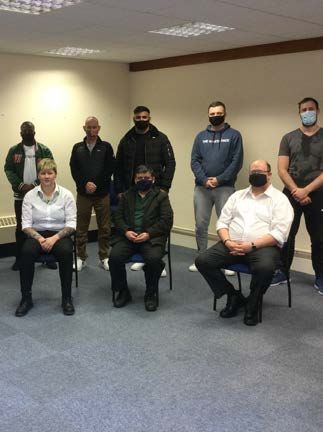
6    Association of Colleges                                 Let Them Learn

     Recommendation 1
     INDIVIDUAL LEVEL

    Every unemployed person should
    be encouraged to access expert
    careers support and have financial
    support for a course at college
    when they need it to get into good
    local jobs, no matter their starting
    point and with no impact on their
    benefits.

     Recommendation 2
     LOCAL LEVEL

    Relationships between colleges and their
    local jobcentre should be strengthened
    so they can support more people
    together, with Jobcentre Plus included
    as a key partner in developing plans to
    support local people and employers with
    skills and training.

     Recommendation 3
     NATIONAL LEVEL

    Government and DWP should embed
    the transformative role of education
    and skills into an employment and jobs
    strategy as part of a joined up strategy
    with DfE.

    See page 20 for further details on our recommendations
7       Association of Colleges                                                            Let Them Learn

LANCASTER &
MORECAMBE COLLEGE
Lancaster & Morecambe College is a trusted provider of support for the
unemployed, this is accredited to a successful hierarchy of collaboration
and maintaining good relationships with their local JobCentre Plus (JCP).

                                         KICKSTART SCHEME                   In total, there are 73 employers
                                                                            supporting 170 Kickstart
                                         Lancaster & Morecambe              Scheme placements. One of
                                         College (LMC) is an intermediary   the benefits of Kickstart is it can
                                         organisation for the Kickstart     apply to any work sector. This
                                         Scheme. They work in               has led to the college working
                                         partnership with Lancaster &       with new local businesses and
                                         District Chamber of Commerce,      sectors – especially smaller,
                                         Morecambe Business                 creative charities, collectives
                                         Improvement District (BID) and     and agencies. The college
                                         Lancaster BID. The college is      also has employers from the
                                         embedded into local employer       hospitality industry, marketing
                                         and community engagement           and business administration,
                                         opportunities.                     children’s groups and have
                                                                            even spread geographically
                                         All four organisations could see   into Cumbria with the scheme.
                                         the benefits and opportunities     This opens up opportunities
                                         of the Kickstart Scheme. The       for future collaborations.
                                         three business groups have         The relationships with these
Photos provided by West London College   strong contacts with employers     employers will be maintained
                                         in the region, and the college     by the Engagement Team and
                                         could take on the role of being    through the college’s Employer
                                         an intermediary for Kickstart.     Hub.
                                         They also developed a range
                                         of support and training for        The learning pathway the
                                         businesses around Kickstart, in    college offers involves
                                         the hope that employers would      wraparound support for
                                         come on board – which they         the individual taking up
                                         have done.                         the role with the employer,
                                                                            and additional training and
                                                                            development. At the end of
                                                                            the six months placement,
                                                                            they might become a full-time
                                                                            employee and /or take on an
                                                                            apprenticeship via the college.
                                                                            For those who don’t get a job
                                                                            they can be offered traineeships
                                                                            and apprenticeships at the
                                                                            college.
8     Association of Colleges                                                         Let Them Learn

“
Lancaster and Morecambe Job Centres and their staff have a great working relationship with
LMC and this has enabled the work coaches to build on and identify any gaps in support for
their customers and to recognise how LMC can support. They are always very keen to adapt
their employability offer to suit the needs and demands of the customer and the JCP and we
are excited for the future in enabling our young adults to access more wraparound support
when the youth hub on campus is launched in the next couple of months.
 Helen Smith      DWP Partnership Manager

                                REAPING THE REWARDS                 The close relationship has led
                                OF PARTNERSHIP                      to DWP supporting a Youth Hub
                                                                    to be housed on the campus
                                WORKING
                                                                    at Lancaster & Morecambe
                                The relationships between           College (LMC). This will be where
                                Lancaster & Morecambe               the DWP can work with 16 -
                                College and the DWP are             24-year-olds on career support
                                embedded at both a strategic        and functional skills, with the
                                and an operational level. The       aim of getting young people
                                college’s engagement and            back into employment or study.
                                work-based learning team work
                                collaboratively with the local
                                JCP team at an operational
                                level, with whom they have a
                                longstanding partnership having
                                previously worked together on
                                sector-specific careers events
                                and employability courses.
                                Kickstart has reinforced these
                                partnerships.

                                 KHAALISA ADAM (19)
                                 Khaalisa was referred to the Employability Skills course as she
                                 was struggling to find a job and thought this would help her
                                 on her employment journey. The course included sessions on
                                 marketing, interview skills, presenting and team working. At
                                 the end of her course, Khaalisa felt more confident about her
                                 career options and following a meeting with LMC’s Employer
                                 Engagement Team to discuss Apprenticeship vacancies, she
                                 was accepted onto the Marketing Assistant Apprenticeship at
                                 The Consult Centre in Morecambe.
9       Association of Colleges                                                          Let Them Learn

PETERBOROUGH
COLLEGE
Peterborough College is based in the city centre and has a satellite branch
called Jobsmart that delivers courses aimed specifically at adult learners
who need help to get into employment.

                                        STEWARDING AND                     themselves effectively and
                                        SECURITY COURSE                    appropriately. An added benefit
                                                                           is that by the time the learners
                                        Like most colleges,                have completed the course,
                                        Peterborough will tailor courses   the camaraderie that develops
                                        and make amendments where          during their shared period
                                        necessary to ensure their          of training creates a support
                                        training opportunities are as      group, a new network of friends
                                        inclusive and accessible as        and increased confidence and
                                        possible, ensuring opportunities   sense of self-esteem.
                                        are open to all, especially to
                                        those who may be furthest          As part of the overall training
                                        away from the job market.          programme, the college offers
                                                                           ongoing support with setting up
                                        Jobsmart are proud of the four-    an individual’s Security Industry
                                        week, full-time and fully funded   Account (SIA) and covering the
                                        Stewarding and Security course     cost of the Door Supervisor
SWAP Cohort Peterborough College 2021   that they currently offer. The     Licence. This support ensures
                                        course consists of a package       that where possible and able to
                                        of qualifications, including       do so, all barriers to accessing
                                        conflict management, equality      employment are addressed.
                                        and diversity and safeguarding,
                                        as well as professional
                                        qualifications needed to enter
                                        the industry, such as the Door
                                        Supervisor and CCTV Operator
                                        awards.

                                        Many participants on the
                                        security course have been
                                        unemployed and in some cases
                                        for a considerable amount of
                                        time. DWP work coaches, in
                                        partnership with the college,
                                        support the students with
                                        broader employability skills
                                        and behaviours including
                                        punctuality, reliability and how
                                        they dress for work and present
10 Association of Colleges Let Them Learn
“
DWP works with local colleges to offer our customers a wide range of courses to gain
qualifications and build confidence to support them in their journey into employment.
This could be through attending a sector-based work academy programme (SWAP) which
can last up to six weeks and has three main components – pre-employment training, work
experience and a guaranteed job interview. All students of the course have up to three
guaranteed interviews at the end of the SWAP with local stewarding and security employers.
This is designed to help employers meet their recruitment needs as well as to recruit a
workforce with the right skills to sustain and grow their business. Customers can be referred
to this by their Work Coach.
A great example of working in partnership with Peterborough College and local employers
is through the delivery of a successful sector-based work academy programme designed at
upskilling our customers to gain a security qualification and licence enabling them to take
their first steps into employment in the Security Industry.
Donna Augustine Partnership Manager, DWP
ENGLISH FOR SPEAKERS OTHER PARTNERSHIPS
OF OTHER LANGUAGES AT AN OPERATIONAL
(ESOL) COURSES AND STRATEGIC LEVEL
ESOL is another area where Cross Keys Homes, a housing
the benefits of having a well- association in Peterborough,
established partnership and hosts a forum called Tackling
communication process in place Worklessness in Peterborough
between a college and DWP (TWIP) which has approximately
can be seen. Whilst many JCP 30 members locally including
clients were managing to obtain DWP employer advisors and
low-skilled employment, they local colleges. TWIP reaches
were in many cases not able to out and supports other local
sustain it due to the levels of organisations in the community
English speaking and reading that also work with and support
skills held. In response to this the unemployed, ensuring
identified need, Peterborough that a network of community
College provided a specific ESOL and college providers can
for Work course at Jobsmart, share information, develop
which offers both accredited and relationships and gain insight
unaccredited qualifications and into the gaps in provision and /
learning. The course has been or areas of demand.
designed specifically around this
cohort of individuals, equipping
them with the necessary levels
of ESOL skills required in the
workplace, enabling them
to sustain employment. This
approach is aligned to, and
supports, the DWP model of ABC
- ‘A job, a Better job, a Career’.11 Association of Colleges Let Them Learn
GRIMSBY INSTITUTE OF
FURTHER AND HIGHER
EDUCATION
The Grimsby Institute of Further and Higher Education’s employability
team work tirelessly on a sustainable approach to reducing long-term
unemployment in the local area. Their success is down to relationships with
employers, Jobcentre Plus and local partners like charities and community
referral groups.
ADAPTING PROVISION Simultaneously, Grimsby
AND BUILDING Institute invested both time
and resource to develop a
PARTNERSHIPS FOR more effective partnership
THE BENEFIT OF THE with their local JCP. This was
UNEMPLOYED achieved in part by employing
and deploying specialist staff
Grimsby Institute took a who built relationships with
strategic decision to focus a key stakeholders including JCP,
larger portion of their Adult probation services and local
Education Budget (AEB) to authorities. They were able to
address the high levels of build a tripartite relationship
unemployed residents in their that worked effectively with
locality. The college undertook a the college’s employers to
rebranding exercise to keep the create and offer employment
unemployed provision separate opportunities, training and
from the college campus and support.
to help remove and address
“
any negative connotations or
experiences that unemployed
Photos provided by West London College
adults might have around
school and college. The college
established National Employer When I look at what
Training (NET UK) as a separate NET does… and the
delivery arm, with its own life-changing impact it
branding and delivery locations
has, it’s honestly one of
which would prove to be more
the best decisions we
accessible for some of their
unemployed adult learners than ever made.
attending the central college
campus.
Debra Gray
Principal,
Grimsby Institute12 Association of Colleges Let Them Learn
“
We do not see the team as part of another organisation, they feel as though they are part of
our extended team. They are always on hand to offer guidance and support. They answer
any questions we have, no matter what time of day that we have it. The relationships that
have been built with the team by myself and other members of our organisation is second to
none. We cannot thank them enough for the assistance they have offered.
Employer
TAILORING PROVISION Through this kind of effective
TO THE NEEDS OF THE partnership working, the college
has successfully placed many
EMPLOYER
ex-offenders and individuals
The employability team work with long term mental and
across the Midlands and the physical health conditions back
North engaging employers into work.
to support their workforce
80 per cent of employability
recruitment and training needs
students are offered a job after
and designing bespoke training
they complete their training,
packages for each employer.
retention is at 98 per cent and
Approximately, 90 per cent
the provision is transforming
of these bespoke employer
lives and enabling business to
training programmes are
thrive.
delivered through sector-based
work academy programmes
(SWAPs) as they engage with
employers directly who are
looking to fill vacancies, many
often in skills shortage areas.
The college also provides
wraparound support, which
they credit as the key to
NET’s success. They receive
referrals from multiple partners
including JCP, local charities and
community groups for learners
who often present significant
barriers to employment, such
as ESOL needs, homelessness,
learning difficulties or mental
health issues. The ethos of the
college is that its provision is not
just about skills development,
but also about investing in the
person as a whole, supporting
their life skills to gain confidence
and achieve the skills to gain
sustainable employment.13 Association of Colleges Let Them Learn
HARTLEPOOL COLLEGE
Hartlepool College enjoys a longstanding relationship working with JCP
in Hartlepool and the surrounding towns. There is a well-established
partnership and ways of working enjoyed by the college and JCP, with
many JCP area managers getting involved in projects and acting as key
contacts for the college. SWAPs have proven very effective for Hartlepool
College and the adult learners who have enrolled.
“
DIALOGUE AT A LOCAL requires manufacturing training.
AND OPERATIONAL The local authority would
deliver English and maths, and
LEVEL possibly Occupational Studies,
Employers are looking The college is focused on and the college would deliver
for value-added getting the quality right and sector-specific training such
training. So, it’s being currently work off 70 per cent as engineering. This way they
able to provide of courses progressing into are in partnership, rather than
work. That reputation of a competitors.
something that’s ‘over
and above’ and having high progression-to-work ratio
means more people committing BEING HONEST AND
that flexibility to do
to courses and more employers OPEN ABOUT WHAT YOU
that.
returning, because they know CAN OFFER
Gary Riches the college can deliver the
employees they want. The quality of the provision
Head of Employer being delivered is also a critical
Services Hartlepool Hartlepool College has aspect of delivery, for both
College developed a good working the employer and the learner.
relationship with the Local Hartlepool College ensures it
Authority Adult Education is clear with their stakeholders
and training arm, Hartlepool and employers about what
Learning and Skills. Both the support or provision is being
college and Local Authority requested and what they
work collaboratively ensuring can deliver. Honesty and
that they can utilise each other’s integrity are important for all
specialisms to deliver a broader stakeholders and if support
and more responsive offer for or provision is requested that
employers and adults than Hartlepool are unable to deliver,
otherwise could be offered if they will signpost or refer to
they were competing. Such another local college or training
collaborative partnership provider who is best placed to
working also allows for effective respond. The Further Education
and simplified communications landscape can be competitive
to employers and learners. An but Hartlepool, like so many
example of this collaborative other FE colleges, continues
partnership could take place if to develop collaborative
an employer engages in a SWAP partnerships for the benefit of
with the local authority, which local employers and residents.14 Association of Colleges Let Them Learn
SOUTH GLOUCESTERSHIRE
AND STROUD COLLEGE
The Employability and Progression department at South Gloucestershire
and Stroud College has established links with employers to ensure there is
a progression route and positive destination for all students.
“
EARLY YEARS Whilst the college has an
PROGRAMME - AN external facing team to actively
engage with employers, the
EXAMPLE OF EFFECTIVE success and impact of the
Our partnership has PROVISION Early Years UpSkillED course
worked extremely well, has meant that employers will
Utilising the existing strong actively engage the college
and we are delighted partnership that is in place,
with the positive to recruit students from the
Kingswood JCP approached programme.
difference the training South Gloucestershire and
has made for our Stroud College to advise them For many adults returning
customers. that they had identified a to learning, it can often be
number of parents who were the case where it has been
Carole Stubbs returning to work and who were a considerable length of
actively seeking employment time since they were last in
JCP Employer Advisor that could fit around childcare employment. This can lead
commitments. In collaboration to loss of self-confidence and
with Kingswood JCP, South a degree of anxiety around
Gloucestershire and Stroud returning to learning and
College designed the Early Years employment after a length of
UpSkillED course to respond to unemployment or economic
the needs of those parents. The inactivity. The course is
course is taught from 9.30am designed to boost self-esteem
to 2.30pm over a period of and develop self-confidence
three weeks, a time arranged as well as developing skills
so that parents can still do the and qualifications. The impact
school run. Learners on the of which can be seen in the
Early Years UpSkillED course, employers engaging with the
are taught four qualifications: college to participate in the
CACHE Award Level 1 in programme.
Early Years Settings; NCFE
Interpersonal Skills Level 1;
TQUK Certificate in Equality and
Diversity Level 2 and the QA
Level 3 Award in Paediatric First
Aid. Learning is underpinned
and complimented by industry
professionals delivering talks to
inspire students and offer an
insight into the sector.15 Association of Colleges Let Them Learn
“
Before being invited to attend the early years course I’d spend hours and hours searching for
jobs which ended similarly everyday- I felt worthless, overwhelmed, and a failure. When I was
asked to attend the early years course by my job coach at first, I was sceptical. Probably
because I’d been so bombarded with no’s I felt I wasn’t good enough for anything, not even
a course designed to help. As I attended, day by day I felt my confidence slowly return. I met
people in similar positions who had had similar experiences. I no longer felt embarrassed
and ashamed of my unemployment, I felt a new sense of drive. Our course leader Claire
Hibberd was amazing, she was so patient and understanding and gave the whole class
something we’d all not had in a while- hope. Attending this course not only gives you the
first steppingstones to a new career it reminds you that you are not all the things you’ve
led yourself to think. I left with my level 1 early year’s course and 4 weeks later I’ve started
an apprenticeship in a nursery on my way to achieving my level 3 whilst getting paid. 2
months ago, I wouldn’t in a million years have predicted I’d be where I am. Take that leap
of faith you owe yourself. No matter how low you rate yourself now it all can change in one
decision.. to turn up
Student on Early Years UpSkilled Course
KICKSTART SCHEME - two qualifications and have a
COLLABORATING AT AN presentation from Ecotricity
introducing their company to
OPERATIONAL LEVEL
the learners, outlining their
Ecotricity a local employer culture, ethos and values. All
in Stroud, Stroud JCP and course participants are offered
South Gloucestershire and a guaranteed interview at the
Stroud College developed a end of the course.
partnership to engage with the
The partnership and
Kickstart Scheme.
programme has been very
The college and employer successful to date with 10
worked closely to design a pre- learners from the initial cohort
training programme that would of 15 having subsequently
offer support, with a particular been employed by Ecotricity.
focus on employability and For those learners who did not
interview skills, preparing for job manage to secure a position
interviews and understanding with Ecotricity, they all received
the requirements of job ongoing post course support, to
descriptions, for anyone help them secure employment
applying for an Ecotricity or a Kickstart placement with
Kickstart placement. In another employer.
Photos provided by West London College
addition, learners on the
programme would achieve16 Association of Colleges Let Them Learn
WEST LONDON COLLEGE
West London College already had a strong relationship with JCP however,
collaborating through the Kickstart Scheme has made it even stronger.
A COLLABORATIVE Kickstart employee and their
APPROACH TO line manager reflecting on
what’s working and what could
PROVISION be developed. These facilitated
When Kickstart was announced conversations also allow
in the summer of 2020, the opportunity to address
the college saw this as an effectively and appropriately any
opportunity to collaborate issues that might have arisen
for the benefit of their local thus supporting a positive
community. Consultations experience and successful
and feedback from employers outcome for both learner and
identified a need and demand employer.
for wraparound employability
Participants undertake a self-
support. The college designed
assessment at the beginning
a new programme which used
of their programme and
the Skills Builder Universal
throughout the programme
Framework at its core to ensure
to measure and reflect upon
consistency. Employers in
their journey and progress
West London were also very
Photos provided by West London College to date. For any participants
familiar with the framework
who are not offered a position
which supported the synergy
with an employer at the
of all parties using the
end of the programme, the
same framework. Having a
college will continue to offer
consistent and collaborative
support including potential
wraparound offer across the
apprenticeships and other
locality has been welcomed by
longer-term career and training
employers for its simplicity and
options.
consistency.
The Kickstart Scheme has
An integral aspect of the
further cemented the existing
Kickstart Scheme is the
strong relationship between
journey the young person
West London College and JCP.
undertakes to achieve and
obtain a sustainable job.
Strong relationships between
the college and the employer
are therefore very important
to support a positive learner
journey and outcome for
all. To support the ongoing
relationship with employers
involved in the programme,
the college facilitates regular
conversations with both the17 Association of Colleges Let Them Learn
“
DWP is constantly engaging with its key partners & stakeholders, including our local colleges.
We work together to ensure that the services, provisions and programmes being delivered
are tailored to the specific needs of local residents & our claimants. Especially in this current
economic climate.
Kam Babrah Partnership Manager DWP
PARTNERSHIPS: WOMEN Regular communication with
INTO CONSTRUCTION DWP Partnership Manager for
Hammersmith and Fulham
West London College works in also helps the college identify
partnership with Women into needs within the borough.
Construction (WiC) to offer West London College has
training courses to work in the a good relationship with all
construction industry. Trainees DWP partnership managers.
complete the Construction Skills A good way to develop these
Certification Scheme (CSCS) as relationships is to identify
well as a Level 1 certificate in a single point of contact
Employability Skills. within each organisation and
with DWP, to enable regular
ONGOING communication and a two-way
COLLABORATION AT exchange
A STRATEGIC AND During the Covid-19 pandemic,
Angela Ramsay, took part in the OPERATIONAL LEVEL West London College hosted a
programme, trying her hand at virtual coffee morning for job
plumbing with H2O during her West London College is brokers and work coaches from
work placement. The company represented on the West JCP, in order to continue the
were so impressed they offered London Employment and Skills communication and keep those
Angela a job. Board (WLESB), which brings channels open.
together further and higher
education institutions, the
DWP, the local authority and
other stakeholders offering
opportunities for the college to
engage with partners on a sub-
regional basis.
Bianca says: “A very big thank you to Anna at WiC, and Barry
Mortimer and my tutor Donna. My two-week placement with
EE Smith Contracts was fast-paced and informative, and I have
now been offered a permanent role on a huge project! The
WiC scheme is such a great opportunity to get into a variety of
construction roles - even in the middle of a pandemic.”18 Association of Colleges Let Them Learn
ACTIVATE LEARNING
Activate Learning is an education group that consists of seven colleges
across Oxfordshire, Berkshire and Surrey: The seven colleges are Banbury
and Bicester College, Bracknell and Wokingham College, City of Oxford
College, Farnham College, Guildford College, Merrist Wood College and
Reading College. The colleges work collaboratively, with a faculty structure
spanning all campuses. Their unemployed offer is funded through the
Adult Education Budget and projects funded by DWP, European Social
Fund (ESF) and The National Lottery.
“
PARTNERSHIP WORKING is a collaborative project which
AT A STRATEGIC AND also includes Banbury Young
Homelessness Project (BYHP),
OPERATIONAL LEVEL South Oxfordshire Food and
It’s the holistic, all- In Oxfordshire and Berkshire, Education Academy (SOFEA)
round approach that Activate Learning has a and motor project TRAX.
we provide project dedicated project manager who
Other partnerships include
participants. When works directly with their local
working with Oxfordshire
participants come JCP and in partnership with the
County Council’s Education
to us, they can have Activate Learning employability
Employment and Training (EET)
access to a one-to- engagement specialists who
Service and with Thames Valley
one coach... to support in turn manage employer
Police, the probation service
engagement and relationship
their job search and and the mental health charity
management. Regular monthly
the coach will also Mind. The focus of these
meetings are scheduled and
encourage them to get partnerships and collaborative
take place for colleges and
onto training courses approaches is very much
nominated JCP colleagues to
and upskill, and that’s centred on supporting long-
share updates and discuss what
term unemployed, who face
really key. If they’re provision might be needed.
additional barriers, back into
unemployed they can In addition, the colleges also
employment.
access a wide variety host steering group meetings
of free training in as with key local stakeholders
WORK AND HEALTH
many courses as they including community and Third
sector organisations, Local PROGRAMME
want.
authorities and Local Enterprise
Activate Learning is in addition
Rebecca Iley Partnerships (LEPs) that
a provider for the DWP-
supports greater collaboration,
funded Work and Health
Head of Operations partnership working and
Programme which receives
information sharing.
direct referrals from Jobcentre
Activate Learning are currently Plus. Participants on the Work
delivering a project called and Health Programme have
‘Back on Track’ which supports typically been unemployed for
young people who are at risk some length of time and have
of being Not in Education or been unable to work due to a
Training (NEET). Back on Track long-standing health condition.19 Association of Colleges Let Them Learn
SUCCESS FACTORS
These case studies have hopefully given Partnerships offer an opportunity
you some inspiration for developing to view problems from a different
your relationships – wherever you work. perspective – which can lead to new,
innovative solutions. Resources can
They make clear that successful be shared and used to greater effect
partnerships take time to establish. and possibly even provide better
They are built on mutual trust and value for money. The success of any
respect and start with some shared partnership though will strongly depend
goals and drivers. on the quality, breadth and depth of
communication established between
Any partnership that is to stand the
organisations. All of these case studies
test of time, needs recognition and
show what can be achieved through
support from the senior level, as well as
making a commitment to effective
individuals who are tasked with making
partnership.
it work. All partners need to learn about
each other and make sure that they are They also demonstrate how local
realistic about what can be achieved, organisations working together can
that they understand the barriers that create solutions that work for that area.
each organisation has to overcome. These initiatives are mostly funded
through national funding streams, but
each area has adapted the offer to fit
the local need, and the benefits can be
seen locally and nationally.20 Association of Colleges Let Them Learn
CONCLUSIONS
FE colleges and JCPs are finding effective We welcome investment in programmes
ways to support unemployed people to support 16 - 24-year-olds but they
in their local communities with tailored must complement each other for
training and skills development that employers, students, unemployed
will help them achieve meaningful job people and colleges to use them
outcomes. This report shows there is a effectively. More needs to be done to
willingness and commitment to respond support older adults to train and retrain
to local need and identifies key factors in order to address existing skills gaps
that lead to local success. This good and to respond to changes in the jobs
practice should be replicated across the landscape, for example in green jobs. In
country and expanded across a broader particular, financial barriers to secure
range of skills and levels. and meaningful work must be removed.
Unfortunately, opportunities for even Treasury, DWP and DfE all recognise
more unemployed people to benefit that jobs are a core part of the
from learning and training are being education and skills strategy. Reciprocal
hindered by national policy. This is action and reform is now needed to
not a new issue, but at a time when embed the transformative role of
Government is rightly talking about the education and skills into an employment
importance of training and retraining to and jobs strategy.
support people and employers, there
seems to be a mismatch between the
Government’s levelling up agenda and
the employment and jobs strategy.21 Association of Colleges Let Them Learn
RECOMMENDATIONS
Recommendation 1
INDIVIDUAL LEVEL
Every unemployed person should be
encouraged to access expert careers
support and have financial support
for a course at college when they
need it to get into good local jobs,
no matter their starting point and
with no impact on their benefits at
the end of sentence.
Currently few people are pointed in the direction of college courses
and training even though this might support them to be more work
ready. Every part of the skills and welfare system needs to work together
to ensure that people are given the right advice for them and where
necessary signposted to the training that will support them, with the
funding they need.
We are calling for Government to:
a) R
eform universal credit rules so that no one is prevented from being
able to access training that will help them so they can progress to
gain meaningful employment.
b) G
ive everyone a right to lifelong learning so that each person can
access the training they need, when they need it, throughout their
life and career, including a fully funded additional level 3 qualification
(A-level equivalent) as required by local, regional and national
priorities and opportunities.
c) Include signposting to careers information, advice and guidance as
part of the JCP job coach role.22 Association of Colleges Let Them Learn
Recommendation 2
LOCAL LEVEL
Relationships between colleges
and their local jobcentre should
be strengthened so they can
support more people together,
with Jobcentre Plus included as a
key partner in developing plans to
support local people and employers
with skills and training.
Jobcentre Plus speak to people and businesses every day and should
play an increased role in planning how to support people with
developing the skills they need in their locality. Whilst there are many
examples FE colleges supporting unemployed people in partnerships
with their local Jobcentre Plus (JCP), this happens despite the education
and welfare systems, not because of it.
We are calling for colleges and their local Jobcentre Plus to:
• B
uild links between welfare careers advice and jobs programmes and
skills initiatives so that people get the right guidance for them that
assesses both training and work progression, no matter where they
turn for support.
• Include Jobcentre Plus as a key stakeholders in Local Skills
Improvement Plans.
We are calling on Government to:
• E
mbed the role of colleges in supporting unemployed people in
the Skills and Post-Education Bill through legislation for Local Skills
Improvement Plans in the Skills and Post-16 Education Bill.
• Invest in colleges to provide more strategic advice to employers and
their local Jobcentre Plus on interpreting skills needs to reduce the lag
between supply and demand. This requires a move towards mission
driven governance and accountability to deliver on outcomes for their
communities instead of numerical targets for outputs.23 Association of Colleges Let Them Learn
Recommendation 3
NATIONAL LEVEL
Government and DWP should embed
the transformative role of education
and skills into an employment and
jobs strategy as part of a joined up
strategy with DfE.
The Chancellor has invested in programmes in both the Department
for Education and the Department for Work and Pensions, but they do
not operate in tandem and are difficult to make work for employers, for
students /unemployed people and for colleges.
We are calling for the Government to:
• S
et out a national strategy for the role of education and skills in
supporting employment, alongside the industrial decarbonisation
strategy as part of the transition to a net-zero carbon economy.
• E
stablish a cross-departmental ministerial taskforce, with DFE, BEIS,
DWP, MHCLG and others represented, with meaningful engagement
with employers, colleges, and trade and student unions.
To discuss your engagement with our work, please
get in touch with public_affairs@aoc.co.uk.24 Association of Colleges Let Them Learn
aoc.co.ukYou can also read


