Liverpool Multi-Agency Self-Harm Practice Guidance - April 2021 Review Date: April 2023
←
→
Page content transcription
If your browser does not render page correctly, please read the page content below
Liverpool

  Multi-Agency
    Self-Harm
Practice Guidance
         April 2021

   Review Date: April 2023

             1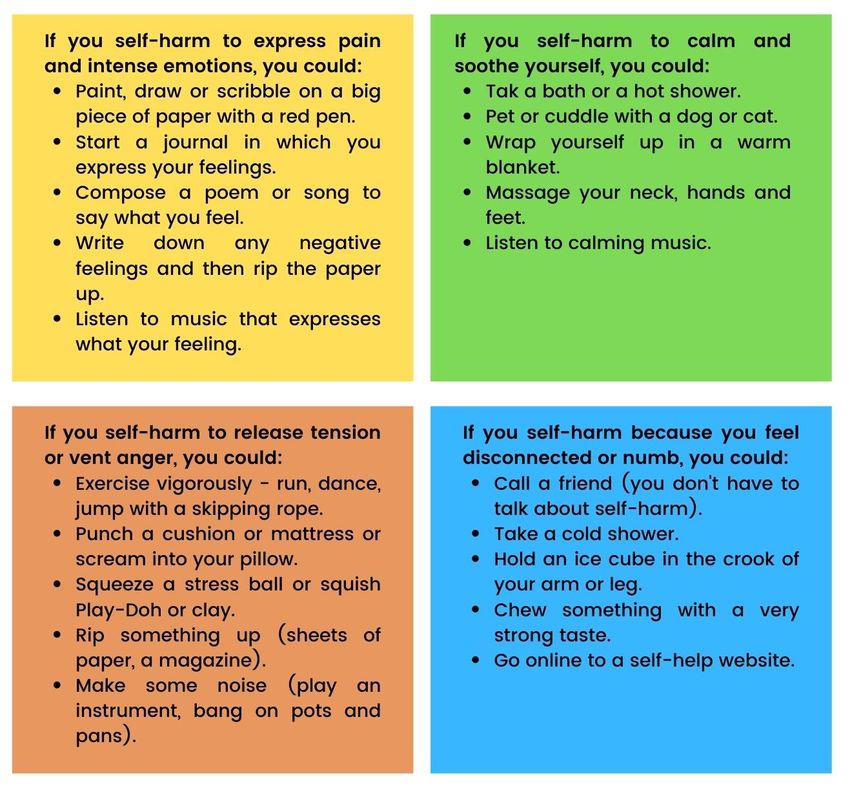
Multi-Agency Process Flowchart for Managing Self Harm
Young person shows signs/symptoms of self-harm OR self/peer disclosure of thoughts of self-harm OR suspected or
self/peer disclosure of recent or previous self-harm.
Staff member comforts, acknowledges, reassures and responds to young person. Safeguarding lead is notified.
Safeguarding lead assesses risk and identifies most appropriate member of staff to meet young person’s needs,
considering trusted adults for young person.
Reduce risk of self-harm by building resilience, ensuring good communication skills and improve awareness of warning signs.
LOW RISK RAISED RISK HIGH RISK
o Comfort, o Comfort, Acknowledge, CRISIS
Acknowledge, Reassure, Respond. o Locate young person. Comfort,
Reassure, Respond. o Offer supportive Acknowledge, Reassure, Respond.
o Offer supportive strategies/safety net. o Contact emergency services if injury is
strategies/safety net. o Explain confidentiality life threatening or if young person is
o Explain confidentiality and consent. suicidal.
and consent. o Encourage and help o If young person has taken an overdose,
o Encourage and help young person to link to take to A&E.
young person to link sources of support in o Administer first aid if required.
to sources of support organisation. o Inform Designated Safeguarding Lead.
in organisation. o Contact the young o Contact the young person’s
o Contact the young person’s parents/carers, parents/carers, unless it places the
person’s unless it places the young person at further risk.
parents/carers, young person at further o Consider environment and those who
unless it places the risk. might be affected by witnessing the
young person at o Initiate EHAT to co- incident.
further risk. ordinate appropriate o If the young person is taken to hospital,
PREVENTION
o Consider initiating an support for young emergency protocols in A&E will be
EHAT – consider if / person. implemented and referral to Alder Hey
what support is o Follow safeguarding CAMHS activated.
needed for the wider procedures and refer to
Careline 0151 233 3700 NOT CRISIS
family.
if obvious safeguarding o Comfort, Acknowledge, Reassure,
concerns of immediate Respond.
risk to the child (MARF). o Urgent referrals to 24/7 Crisis line
freephone or 0151 293 3577 (out of
office hours or in crisis).
o Follow safeguarding procedures and
refer to Careline 0151 233 3700 if
obvious safeguarding concerns of
immediate risk to the child. (MARF –
Multi Agency Referral Form).
If child is open to CAMHS services, contact CAMHS practitioner.
Otherwise contact Alder Hey: freephone 08081 963 550 or 0151
293 3577 for advice and guidance. Contact Alder Hey: freephone 08081 963 550 or
You could also contact the young person’s GP. 0151 293 3577 for advice and guidance.
Schools can speak to their EMHT practitioner/service. You could also contact the young person’s GP.
Ensure there is a plan to provide help and support and that the Review onward support plan on young person’s
young person understands it. Consider mental health needs in return to setting.
addition to the self-harm risk. Ensure young person has a trusted person who
can offer support and is the link into a
coordinated approach to ongoing wider multi
agency support. Consider mental health needs in
addition to the self-harm risk.
Debrief Self-Harm-
with safeguarding Guidance
lead/senior colleagues and set professional
on Levels of Riskaction
andplan. Ensure staff members are supported
Management
and offered supervision as appropriate. Ensure incident is logged.
2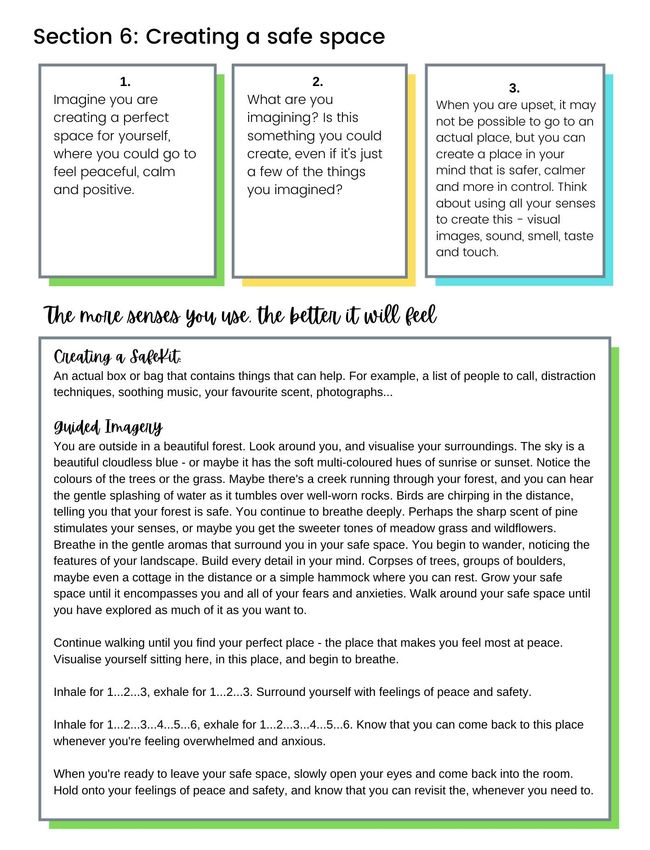
PREVENTION                LOW RISK                     RAISED RISK                    HIGH RISK

o   By being aware      o   Suicidal thoughts          o   Suicidal thoughts        o   Frequent suicidal
    of students who         are fleeting and               are frequent but still       thoughts which are
                            soon dismissed.                fleeting.                    not easily dismissed.
    display the risk
                        o   Few or no signs of         o   No specific suicidal     o   Specific plans with
    factors                                                                             access to potentially
                            depression.                    plan or immediate
    associated with     o   Any mood changes                                            lethal means.
                                                           lethal intent.
    self-harm (see          are transient.             o   Showing indicators       o   Evidence of current
    section 4).         o   Superficial cutting.           of current mental            mental illness.
o   By being alert to   o   No other self-                 health disorder          o   Significant drug or
    any specific            harming behaviour.             especially                   alcohol use.
    incident that       o   Sensible attitude to           depression, anxiety      o   Situation felt to be
    might trigger an        experimentation                and eating disorder.         causing unbearable
                            with drugs and             o   Scarring or cutting.         pain or distress.
    act of self-
                            alcohol.                   o   Previous history of      o   Increasing self-harm,
    harm.                                                                               either frequency,
                        o   Nothing to indicate            overdose or other
o   By being alert to       past or present                self-harm.                   potential lethality or
    changes in              abuse.                     o   Significant or               both.
    demeanor and        o   Current problem                potentially
    behaviour that          situation felt to be           dangerous drug or
    suggest anxiety         painful but                    alcohol use.
    or low mood.            bearable.                  o   Showing indicators
o   Observing                                              of possible abuse or
    expressions of                                         significant traumatic
    hopelessness                                           experience.
                                                       o   Problem situation
    or suicidal
                                                           felt to be painful but
    feelings.                                              no immediate crisis.
o   Observing                                          o   Recent experience
    behaviour                                              of bereavement or
    change – some                                          loss.
    may become                                         o   Experienced
    withdrawn and                                          bullying, both face
    isolated, others                                       to face or online.
    may become                                         o   Experiencing
                                                           academic
    disruptive or                                          pressures,
    more animated.                                         especially related to
o   Building                                               exams.
    resilience in                                      o   Experiencing
    children and                                           physical health
    young people.                                          conditions that are
o   Breaking the                                           longstanding or
    cycle of ACEs.                                         have a social
                                                           impact.

                                                   3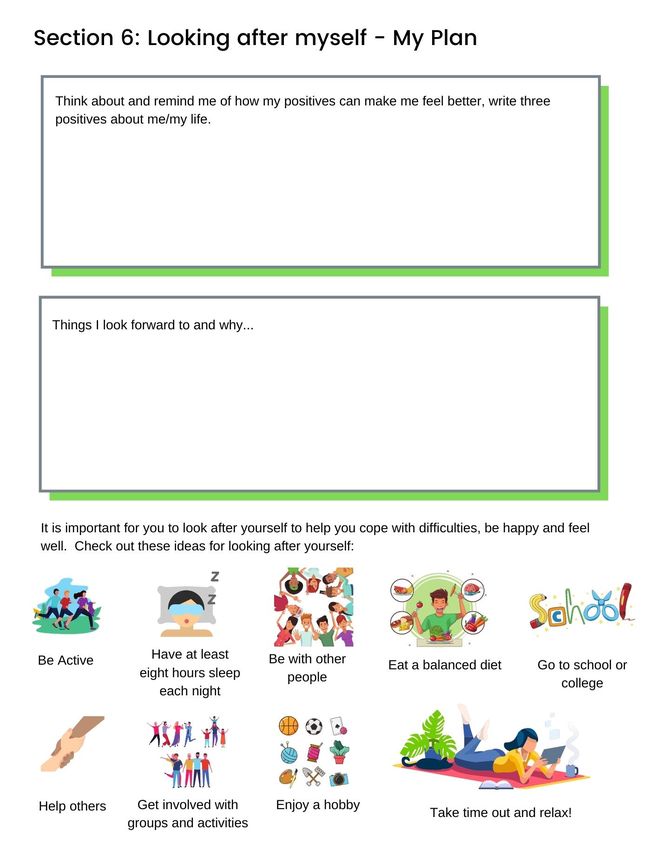
Page
Contents
    Introduction                                        5

 1. What is self-harm?                                  5
 2. How many young people are affected by self-harm?    8
 3. Why do young people self-harm?                      9
 4. Becoming self-harm aware                            11
 5. What to do if a young person makes a disclosure     13
 6. When hospital care is needed                        15
 7. Follow up                                           16
 8. Confidentiality and information sharing             16
 9. What to do next                                     18
 10. Support for practitioners                          20

 Appendices

 Useful publications                                   21
 Research articles                                     22

 Toolkit                                               23-44

                                             4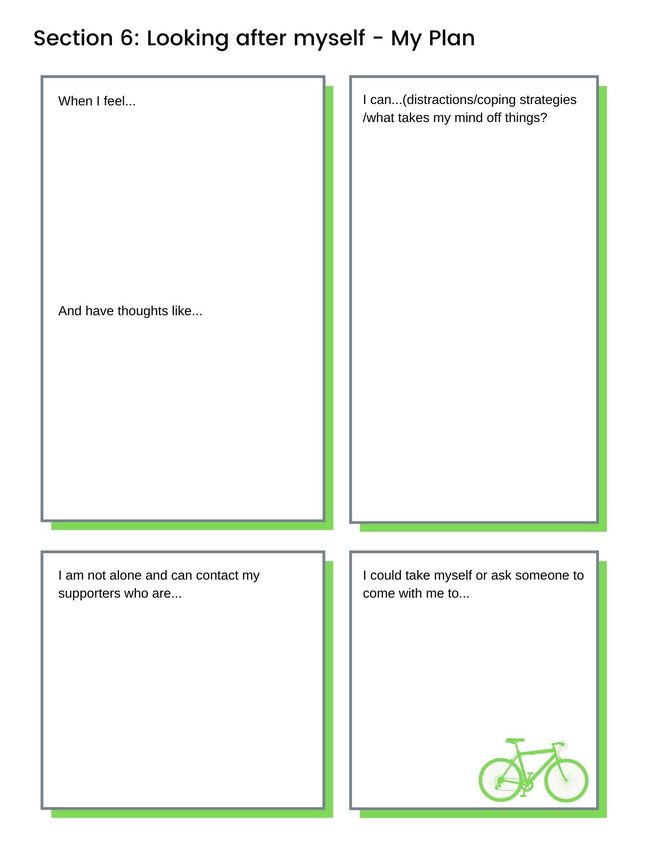
INTRODUCTION

This document has been developed as a reference guide for all agencies and practitioners who come
into contact with children, young people and their families. It is intended as a guide to supporting
children/ young people who have thoughts of, are about to or have self-harmed.

The guidance will support practitioners to keep children safe by outlining:

 What self-harm is                    The triggers for self-harm            How to support young people
                                                                            and children who self-harm

Agencies and practitioners must refer to the Liverpool levels of need framework
(www.liverpoolcamhs.com/about/pathway/) to help them in their decision making about the level of need
and the most appropriate assessment and interventions, including early help and referral to Children’s
Social Care. Where there are serious or complex needs or where there are safeguarding concerns,
practitioners should consult with their designated lead for safeguarding and, where appropriate, make a
referral to Children's Social Care or initiate an Early Help Meeting to coordinate support.

1. WHAT IS SELF-HARM?

Self-harm is an expression of personal distress, not an illness, and there are many varied reasons for a
person to harm themselves. Self-harm describes a wide range of behaviours that someone does to
themselves, usually in a deliberate and private way and without suicidal intent, resulting in non-fatal
injury. In the majority of cases, self-harm remains a secretive behaviour that can go on for a long time
without being discovered.

Many children and young people may struggle to express their feelings and will need a supportive
response to assist them to explore their feelings and behaviour and the possible outcomes for them.

 Examples of self-harm behaviour:

 Self-cutting or scratching                                Punching/hitting/bruising

 Burning or scalding oneself                               Swallowing objects

 Headbanging or hair pulling                               Self-poisoning, i.e. taking an overdose or
                                                           ingesting toxic substances

 Over/under-medicating, e.g. misuse of insulin

There are other behaviours that are related to, but which do not typically fall within the definition.
These include:

 Self-neglect – physical and emotional                  Eating distress (anorexia or bulimia)

 Reckless risk-taking                                   Substance misuse

 Staying in an abusive relationship                     Risky sexual behaviour

                                                       5
NICE Clinical guidance1 defines self-harm as 'self-poisoning or injury, irrespective of the act's
apparent purpose. However, self-harm is also commonly known as self-injurious behaviour (SIB), non-
suicidal self-injury (NSSI), or deliberate self-harm (DSH)2

     Common characteristics of self-harm behaviour

     Compulsive, ritualistic            Sometimes, but not always, occurs with depression and anxiety

     Episodic (every so often)          Serves a purpose to the child or young person

     Repetitive (on a regular           Serves as a way of communicating to others that something is wrong
     basis)

    Common myths about self-harm

    The most common myths about most young people who self-harm are that they:

     Are attention-seeking (often the                              Follow a ‘Goth’ sub-culture
     opposite is true) or are manipulative

     Do it for pleasure                                            Have a borderline personality disorder

     Do it as a group activity                                     Are a risk to others

    The cycle of self-harming/cutting

    When a person inflicts pain upon themselve, the body responds by producing endorphins, (which are
    similar to the drugs opium and heroin) a natural pain-reliever that gives temporary relief or a feeling of
    peace. These chemicals are released when a person feels in danger, experiences fear and particularly
    when the body is injured in any way.

    They produce an insensitivity to pain that will help the individual survive when having to deal with
    danger. The addictive nature of this feeling can make the stopping of self-harm difficult. Young people
    who self-harm still feel pain, but some say the physical pain is easier to stand than the
    emotional/mental pain that initially led to self-harm.

1
  NICE Guideline NICE clinical guideline 16 www.nice.org.uk/cg16 Self-harm: The short-term physical and psychological
management and secondary prevention of self-harm in primary and secondary car
2
  Klonsky, E., et al. (2011). Non-suicidal Self-Injury. Toronto, ON. : Hogrefe Publishing.

                                                               6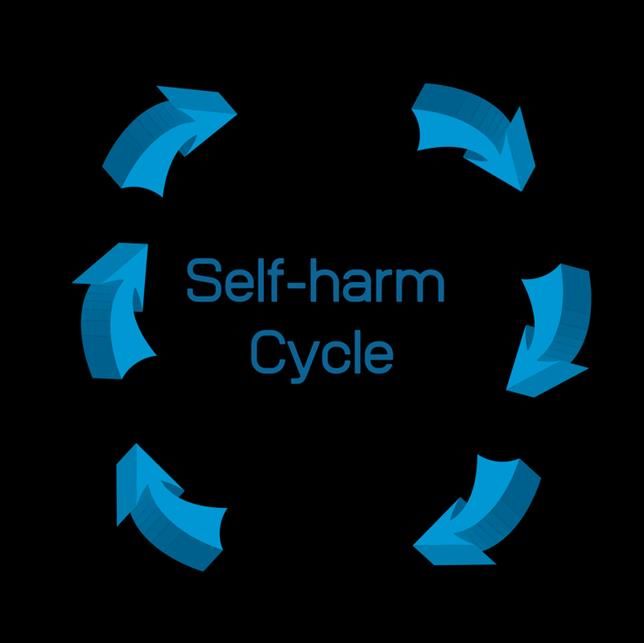
Self-harm and suicide

    Suicide is a rare event, although rates have increased in recent years.

    Suicide rates among young men (aged 10-24 years) have increased significantly since 2017. However,
    the rate among young women in 2019 was the highest recorded since 1981.3

    Some people who self-harm are at high risk of suicide. However, many who do self-harm do not want to
    end their lives; they do it to live. It is how many people cope with emotional distress, so they don’t feel the
    need to kill themselves.4

    However, there is a relationship as there is a high prevalence with suicide and self-harm. We don’t always
    take self-harm seriously but:

     50% of those who die by                Suicide is up 50-fold in                 1 in 50 attending A&E with
     suicide have previously self-          12months after going to A&E              self-harm have died within a
     harmed.                                with self-harm.                          year.

     There are distinct differences between self-harm            Self-harm is the strongest clinical predictor of
     and suicide. The majority of those who self-harm            death by suicide, especially in those who self-
     do not have suicidal thoughts when doing so.5               harm by cutting.

     Both indicate emotional distress; self-harm tends           While methods used for suicide are often
     to be about coping, whereas suicide is more                 different from those used for self-harm, those
     concerned with ‘giving up’.6                                who repeatedly self-harm are most at risk of
                                                                 suicide.

     Self-harm can escalate into suicidal behaviours,            However, some young people who do not
     and intentions can change over time.                        intend to kill themselves may do so because
                                                                 help does not arrive in time.

     Almost half of the people who self-harm have                Others may not realise the seriousness of their
     reported at least one suicide attempt.2 This is             behaviour and its implications, for example,
     often the case when self-harm is no longer seen             other factors such as drugs or alcohol.
     as an effective coping method.7

3
  Office for National Statistics (2020). Suicides in England and Wales: 2019 registrations.
4
  https://www.research.manchester.ac.uk/portal/files/162072409/NCISH_2019_Report.pdf
5
  Klonsky, E., May, A. & Glenn, C. (2014). The relationship between non-suicidal self-injury and attempted suicide: Converging
evidence from four samples. Journal of Abnormal Psychology, 122(1), 231-237
6
  Burton et al. (2014). An Introduction to Child and Adolescent Mental Health. London: Sage;
7
  Whitlock, J. & Knox, K. (2007). The relationship between self-injurious behaviour and suicide in a young adult population. JAMA
Paediatrics, 161(7), 634-640.

                                                                7
2. HOW MANY YOUNG PEOPLE ARE AFFECTED BY SELF-HARM PREVALENCE?

    Self-harm is common, especially among younger people.

     1 in 4 young women and 1 in 10 young men have              Adolescents have the highest rate of self-
     self-harmed at some point in their8 life.                  injurious behaviours, with about 17% admitting to
                                                                self-injury at least once in their life.9

     Mental health problems may also be associated              Most young people reported that they started to
     with self-harm behaviours; however, many young             hurt themselves around the age of 12.
     people will not have a diagnosed mental health
     condition.

     A survey of young people aged 15–16 years                  In 2017, 25.5% of 11 to 16-year old’s in England
     estimated that more than 10% of girls and                  who had a mental health problem said that they
     more than 3% of boys had self-harmed in the                had self-harmed or attempted suicide at some
     previous year.                                             point, compared to 3% of those without a mental
                                                                health problem10.

    Studies use different definitions of self-harm and cover different age ranges. This makes it very difficult to
    understand how many young people are affected.

    Self-harm is something that can affect anyone. It’s believed that around 10% of young people self-harm,
    but it could be as high as 20%.

    More than a third (36%) of 16-25 year-olds in Britain have self-harmed at some point in their lives,
    according to a 2019 survey commissioned by Self-Harm UK, The Mix and YoungMinds.

     Self-harm becomes more common after the                    Rates amongst young Asian women can be
     age of 16 but is still prevalent among                     even higher, but other than this, there is no
     teenagers and younger children from the age                reported difference in prevalence between
     of eight.                                                  young people from different ethnic
                                                                backgrounds.

     A quarter of young men aged 16-24 have used                Lesbian, gay, bisexual and transgender (LGBT)
     self-harm as a way of coping.                              young people are more likely to self-harm.

     Young women are up to three times more likely to self-harm than young men.

    Self-harm is often managed in secondary care – this includes hospital medical care and mental
    health services. However, most young people who self-harm do not present anywhere for
    treatment.

8
  McManus S, et al. (2016) ‘Chapter 12: suicidal thoughts, suicide attempts and self-harm,’ in McManus S, Bebbington P, Jenkins
R, Brugha T. (eds) Mental health and wellbeing in England: Adult Psychiatric Morbidity Survey 2014. Leeds: NHS Digital.
9
  https://www.therecoveryvillage.com/mental-health/self-harm/related/self-harm-statistics/#SelfInjury_Prevalence
10
   NHS Digital. (2018). Mental Health of Children and Young People in England, 2017: Summary of Key Findings. Retrieved from:
https://files.digital.nhs.uk/F6/A5706C/MHCYP%202017%20Summary.pdf

                                                               8
3. WHY DO YOUNG PEOPLE SELF-HARM?
Causes
There is no one specific cause of self-harm. It is not a clinical condition but a response by a young
person to stress. It may be in relation to repeated or long-standing stress, such as that arising from
abuse or domestic violence, or a reaction to a single event such as bereavement. It may be the only
way a young person has learned to cope with powerful emotions, or it might be the method of choice –
the one that works best for them.
Some reasons young people give for self-harming include11:
Using it as a way to feel more in control when For those who feel ‘numb’ from previous
they are feeling desperate about a problem and trauma, such as Adverse Childhood
don’t know where to turn to for help. Experiences detached from the world, may use
self-harm as a way to feel more connected
and alive.
It is a way to relieve tension that has been Using it as a way to communicate their
building up. emotional pain and seek care from others or
from themselves.
They have feelings of guilt/shame or have low Self-harming may express a powerful sense of
self-esteem, and self-harm is a way of despair that needs to be taken seriously. Such
punishing themselves. behaviours should not be dismissed as
“attention-seeking”.
Self-harm is primarily a coping mechanism, a means of releasing tension and managing strong feelings.
Marginalised young people, for example, those in custody, LGBTQ+, victims of abuse, or those affected
by sexual exploitation, are at greater risk. This is partly because they are more at risk of depression and
anxiety and are less likely to have role models demonstrating effective, alternative coping strategies.
They may also be more likely to know others who use self-harm themselves or who have attempt
suicide. These factors have been identified as risk factors in a number of studies. See section 4 for more
details.
Prevention
It can be difficult to identify young people at risk of self-harm, even though they may seek help before
they self-harm. This is partly due to the secrecy and shame that tends to surround self-harm or
impulsiveness that precipitates an act of self-harm, but also because there is no single individual or
behavioural characteristic to look out for.
Nevertheless, schools in particular are well placed to take action to address some of the issues
known to be associated with self-harm, such as bullying/cyber-bullying, child abuse, family
breakdowns, peer pressures and exam pressures12.
11
Royal College of Psychiatrists (2020). Self-harm in young people: for parents and carers
12
Burton, M. (2019). Suicide and Self-harm: vulnerable children and young people.
https://www.magonlinelibrary.com/doi/full/10.12968/pnur.2019.30.5.218
9This can be achieved in the following ways13:
By being aware of students who display the risk Observing behaviour change – some may
factors associated with self-harm (see page 11). become withdrawn and isolated, others may
become disruptive or more animated.
By being alert to any specific incident that might Building resilience in children and young people.
trigger an act of self-harm.
By being alert to changes in demeanor and Observing expressions of hopelessness or
behaviour that suggest anxiety or low mood. suicidal feelings.
Breaking the cycle of ACEs.
Remember that young people seek out a trusted adult they are comfortable with,
not just teachers or pastoral care staff.
Be pro-active – show concern and ask if Be aware of strategies that offer alternatives to self-
there is a problem, and take seriously any harm (Section 4 Toolkit).
expression of emotional distress.
Record and take action upon any incident of Have a referral pathway that all school staff are
self-harm within the school or affecting a aware of (see self-harm process flowchart).
student.
Have good links with key services such as Attend awareness sessions for schools and other
CAMHS partners, School Health and Early Help organisations.
Services.
Have policies and procedures that support these
actions (See Section 2 and Section 9 of the
Toolkit).
Similar approaches can be taken by other services who work with young people who are known to
have additional vulnerabilities such as:
• Out of school services/Pupil Referral Units and • Barnardo’s Action with Young Carers
Support Centres • Services for those who run away and those
• Targeted services for young people who are at risk of child sexual exploitation
• Children’s and foster homes • CAMHS partners
• Aftercare services
• Youth Offending Services
Effective action is likely to require a multi-agency approach such as an Early Help Assessment,
team around the family meetings, and multi-agency action plans to ensure appropriate help and
support is provided.
13
Royal College of Psychiatrists (2018). Young people who self-harm: A guide for school staff
104. BECOMING SELF-HARM AWARE
Vulnerability and Risk Factors14
There can be many factors for a young person, their immediate and wider social networks and their
environment, which might predispose him/her to a wide range of vulnerabilities and not just self-harm.
Protective factors mitigate those vulnerabilities.
Risk factors
Young people in closed settings, e.g. armed forces, Children in Local Authority Care.
prison, sheltered housing, boarding schools.
Custody. YP with learning disabilities.
Black and minority ethnic young people. Refugee and asylum-seeking children.
Lesbian, Gay, Bisexual and Transgender Children with HIV/AIDS.
(LGBT).
Characteristics of young people who self-harm15
Common characteristics of adolescents who self-harm are similar to the characteristics of those who
commit suicide. Physical, psychological, emotional or sexual abuse may also be a factor. Recently there
has been increasing recognition of the importance of depression in non-fatal and fatal self-harm in young
people. Substance misuse is also common, although the degree of risk of self-harm in young people
attributable to alcohol or drug misuse is unclear. Knowing others who self-harm may be an important
factor.
As many as 30% of young people who self-harm report previous episodes, many of which have not
come to the attention of professionals. At least 10% repeat self-harm during the following year.
Common problems preceding self-harm:
(These are also factors in repeated self-harm and possible triggers)
Being bullied or hate crime. Pressure at school. Low self-esteem.
Health problems, illness. Sexuality. Gender identity.
Breakdown in relationships. Bereavement. Alcohol or drug misuse.
Anger, shame. Family conflict. Perfectionism.
Sexual, physical, emotional To make thoughts, feelings Speech and language
abuse. visible. impairment.
Express suicidal thoughts/ Difficult feelings such as anxiety, Incident of homophobia or bi-
feelings without taking your own depression or other mental phobia, or trans-phobia
life. health disorders. (including internalised).
Being in care. Racism. A sense of being in control.
Exclusion or social isolation. Parental criminality. Poverty.
14
Burton, M. (2019). Suicide and Self-harm: vulnerable children and young people.
https://www.magonlinelibrary.com/doi/full/10.12968/pnur.2019.30.5.218
15
Royal College of Psychiatrists (2018). Young people who self-harm: A guide for school staff
11Warning signs to look out for16
There may be a change in the behaviour of the young person that is associated with self-harm or other
serious emotional difficulties:
Changes in eating/sleeping Talking about self-harming or Becoming socially withdrawn.
habits. suicide/suicidal ideation.
Increased isolation from Cuts, scratches or burns that Suicide or self-harm history in the
friends/family. may not be accidental. family.
Changes in activity and mood, Risk-taking behaviour (substance Reluctance to take part in
e.g. more aggressive/ withdrawn misuse, unprotected sexual acts, activities where a change of
than usual. driving dangerously). clothes is required.
Changes in appearance, sudden Expressing feelings of failure, Wearing long sleeves,
/drastic weight loss/gain. uselessness or loss of hope. tights/legging’s, trousers even in
hot weather.
Lowering of academic grades. Giving away possessions. Abusing drugs or alcohol.
16
Royal College of Psychiatrists (2018). Young people who self-harm: A guide for school staff
125. WHAT TO DO IF A YOUNG PERSON DISCLOSES THAT THEY HAVE, OR INTEND TO, SELF-
HARM, EXPRESS SUICIDAL THOUGHTS OR YOU HAVE CONCERNS AND NEED TO
APPROACH THEM
Protective and supportive action the general approach to be taken
What matters for many young people is having someone to talk to, a trusted adult, who will take them
seriously. Previous studies have found that most people want to be able to talk about self-harm and help
young people but do not have the language/vocabulary to communicate effectively.
Try to find out about not only the risks and vulnerabilities but also about any particular strengths
and protective factors (see Appendix 3).
A supportive response demonstrates respect and understanding together with a non-judgmental stance,
focusing on the person, not what they have said or done.
Remember, most young people who self-harm:
• Do not have mental health problems – they are feeling overwhelmed and have no other
means of managing their emotions.
• Feel shame and stigma – it may not be easy for them to talk about it.
Do Don’t
Listen and care. This is the most important Tell them off (e.g. this behaviour is wrong’) or
thing you can do. punish them in some way. This can make the
It might not seem much, but showing that you want person feel even worse, so it could lead to more
to know and understand can make a lot of self-injury.
difference. They may find it more helpful if you
focus on their feelings, and this shows that
you understand that, at that time, self-harm works
for them when nothing else can.
Accept mixed feelings. They might hate their self- Jump in with assumptions about why they are self-
harm, even though they might need it. It helps if harming. Different people have different reasons,
you accept all of these changing and conflicting and it’s best to let them tell you why they do it.
feelings.
Help them find further support. They may need Blame them for your shock and/or upset. You have
help in addition to what you can give - you can a right to feel these things, but it will not help if you
support and encourage them in finding this. make them feel guilty about it.
Show concern for their injuries. If the person shows Treat them as mad or incapable. This takes away
you a fresh injury, offer the appropriate help in the their self-respect and ignores their capabilities and
same way as if it was an accident. Don’t overreact strengths.
just because it is self-inflicted.
Voice any concerns you have. Make sure you also Try to force them to stop self-harming. Doing things
listen to their feelings about what they want to like hiding razor blades or constantly watching
happen. Work out together a way of taking care of them doesn’t work and is likely to lead to harming
their health and safety. in secret, which can be moredangerous.
Recognise how hard it may be for them to talk to Panic and overreact. This can be very frightening
you. It may take a lot of courage for them to for the person. It is better to try and stay calm and
discuss their self-harm and feelings, and it may be take time to discuss with them what they would like
difficult for them to put things into words. Gentle, you to do for them or
patient encouragement can help. the next steps they’d like to take.
13Help them find alternatives to self-harm (there are Avoid talking about self-harm. It won’t make it go
lots of distracting techniques in section 4 in the away but will leave them feeling very alone
Toolkit)
Ask them to promise not to self-harm. This will not
work but is likely to put a lot of emotional pressure
and can set them up to feel guilty.
Simple things you can say:
‘I’ve noticed that you seem bothered/worried/preoccupied/ troubled. What has happened?’
‘I’ve noticed that you have been hurting yourself. What has happened to you?’
Conversation prompts
Topic Possible prompt questions
Confidentiality “I appreciate that you may tell me this in confidence, but it’s important that I
let you know that your safety will always be more important than
confidentiality. If I am sufficiently worried that you may be feeling unsafe or at
risk of hurting yourself, part of my job is to let other people who can help you
know what’s going on, but I will always have that discussion with you before
and let you know what the options are so that we can make these decisions
together.”
Starting the “Let’s see how we can work this out together. I may not have the skills to give
conversation/ you the help you need, but we can find that help for you together if you would
establishing rapport like.”
Use active listening - for example: “Can I just check with you that I have
understood that correctly?”
The nature of the self- “Where on your body do you usually self-harm?”
harm “What are you using to self-harm?”
“Have you ever hurt yourself more than you meant to?”
“What do you do to care for the wounds?”
“Have your wounds ever become infected?”
“Have you ever seen a doctor because you were worried about a wound?”
Reasons for self-harm “I wonder if anything specific has happened to make you feel like this or
whether there are several things that are going on at the moment? Can you
tell me a little more?” For example, peer relationships, bullying, exam
pressure, difficulties at home, relationship break-up or substance misuse or
abuse.
Coping strategies and “Is there anything that you find helpful to distract you when you are feeling
support like self-harming? Perhaps listening to music, playing on your phone, texting
a friend, spending time with your family, reading or going for a walk?”
“I can see that things feel very difficult for you at the moment, and I’m glad
that you have felt able to talk to me. Is there anyone else that you have found
helpful to talk to before, or is there anyone you think may be good to talk to?
How would you feel about letting them know what’s going on for you at the
moment?”
“How could we make things easier for you at school?”
“What feels like it is causing you the most stress at the moment?”
“What do you think would be most helpful?”
14Speaking to parents “I understand that it feels really hard to think about telling your parents, but I
(where appropriate) am concerned about your safety, and this is important. Would it help if we did
this together? Do you have any thoughts about what could make it easier to
talk to your parents?”
Ongoing support “Why don’t we write down a plan that we have agreed together? Then you
will always have a copy that you can look at if you need to remind yourself
about anything. Sometimes when you are feeling low or want to self-harm, it
is difficult to remember the things you have put in place - this can help remind
you”.
6. WHEN HOSPITAL CARE IS NEEDED
When a young person requires hospital treatment concerning physical self-harm, including an
overdose, clinical practice should comply with NICE guidance.
• If a young person needs immediate emergency physical health assessment or treatment or
cannot be kept safe at that moment, then they should be supported to attend A&E.
• If it is not an emergency, then the 24/7 crisis line should be called on freephone 08081 963 550 or
0151 293 3577 for advice and guidance or to assess the young person either virtually or the
telephone.
• Triage, assessment and treatment for under 16s should take place in a separate area of the
Emergency Department at Alder Hey. Please note currently, over 16s are seen at Liverpool
University Hospital.
• The Crisis Care Team will see all children and young people in A&E.
• Assessment should follow the same principles as for adults who self-harm but should also
include a full assessment of the family, their social situation, family history and safeguarding
issues.
Any child or young person who refuses admission, if necessary, should be reviewed by a
senior Pediatrician in the Emergency Department and, if necessary, their management
discussed with the on-call Child and Adolescent Psychiatrist.
157. FOLLOW UP
Having dealt with any immediate medical problem, make sure there is a formal follow-up and provide a
report using your agency’s incident form.
• Seek advice and support for yourself from your line manager, safeguarding lead, CAMHS or
another source.
• Contact the young person’s parents/carers, unless it places the young person at further risk (see
section 8 of this guidance).
• Provide advice and written information on the nature of help, helplines and other sources of advice
and support (See Section 5, 6 and 8 of the Toolkit).
• For advice and guidance, contact YPAS clinical admin for 0151 707 1025, the MHST Lead/EMHP
(primary schools)/Wellbeing clinic practitioner (secondary schools) directly or contact Alder Hey 24/7
on freephone 08081 963 550 or 0151 293 3577.
Consider the need for:
• An Early Help Assessment – consider if / what support is needed for the wider family.
• Referral to CAMHS – call 0151 293 3662 or email camhs.referrals@alderhey.nhs.uk.
• Referral to children’s social care, where there are serious or complex needs or child protection
concerns.
• Ensure information is shared appropriately.
• Ensure that there is a plan to provide help and support and that the young person understands it.
• Follow your agency’s own policies, including safeguarding issues and the Liverpool LSCP’s
safeguarding children procedures regarding confidentiality, recording, identification of needs and
decision-making.
• Record what has happened and what needs to happen next, following your own agency’s
procedures.
• Provide parent/carer with the carer/parent’s fact sheet and help them understand the self-harm to
support the young person. See Section 7 of the Toolkit.
8. CONFIDENTIALITY, INFORMATION SHARING AND CONSENT
Young people will be concerned that they do not lose control of the issues they have disclosed. In
particular, they will be concerned that sensitive and personal information is not shared without their
agreement. Where it is shared, with or without their agreement, they will be concerned that it is properly
safeguarded and not misused. This is often expressed as a request for confidentiality.
At the earliest, suitable time, there needs to be a discussion with the young person about who
needs to know what and why. It needs to be explained in terms of:
• Seeking help from relevant agencies and professionals;
• Ensuring those who need to know (such as teachers/pastoral care, GPs) can be
understanding and supportive;
• Parental expectations that information they need to have is not withheld from them – except where
there are concerns about parenting, outcomes for young people are invariably better with parental
engagement.
Where a young person is withholding their consent, professional judgment must be exercised
to determine whether a child or young person in a particular situation is competent to consent,
or to refuse consent, to sharing information. Consideration should include the child's
chronological age, mental and emotional maturity, intelligence, vulnerability and
comprehension of the issues.
• A young person, especially if they are distressed and anxious, may not appreciate the seriousness
of the risks they are taking and the harm that might occur and not be judged competent to make
decisions at that point about who needs to be told what.
16The Gillick Competency Fraser Guidelines should be used to determine whether or not information should
be shared without an agreement in circumstances where:
The situation is urgent, and there is no time to seek There is a pressing need to share the
consent. information.
Seeking consent is likely to cause serious Sharing information with parents would
harm to someone or prejudice the prevention prevent the young person from engaging
or detection of serious crime. with services.
The risk is sufficiently great to outweigh the harm or
the prejudice to anyone which may be caused by the
sharing.
Best practice would always be to share and include parents in interventions, whenever this is possible
and in the best interests of the children and young people. However, if a competent child wants to limit
the information given to their parents or does not want them to know it at all, the child's wishes should
be respected, unless the conditions for sharing without consent apply.
Practitioners should refer to their agencies information sharing policy and the Liverpool LSCP
Information Sharing Agreement and Guidance for practitioners located within the safeguarding children
procedures.
179. WHAT TO DO NEXT
Consider convening a meeting to consider the need for an early help assessment at a mutually
convenient time and place within the school environment or other setting where the young person feels
comfortable. Invite representation from the relevant services. Be clear about information sharing. See
Section 2 in the Toolkit.
Help the young person to:
Express their needs and what would be helpful. Build up resilience and/or self-esteem.
Identify his or her own support network, e.g. using Find a safer way of managing the problem, e.g.
protective behaviours. talking, writing, drawing or using safer
alternatives.
If the person dislikes him or herself, begin Provide information about advice on
working on what he or she does like. If life support agencies, including websites and
at home is impossible, begin working on advice on which are safe and
how to talk to parents/carers. recommended.
Stay safe and reduce the risk of self-harm e.g. In line with your agency’s procedures, ensure
• washing implements used to cut full recording of all meeting, contacts with the
• avoiding alcohol/other substances if it’s young person, concerns and actions taken in
likely to lead to self-injury response. Ensure meetings are recorded,
• taking better care of injuries (the school agreed actions circulated, and review dates
nurse may be helpful here) adhered to.
Working with friends and peers
These can often be the first to recognise the signs and symptoms of self-harm amongst their group.
• It is important to encourage young people to let you know if one of their group is in trouble, upset
or shows signs of harming.
• Friends can worry about betraying confidences, so they need to know that self-harm can be
dangerous to life. By seeking help and advice for a friend, they are taking a responsible action.
• They also need to know that they can seek advice without disclosing the identity of the young
person in question – should a serious risk requiring such a disclosure arise, it can be addressed
as necessary
• Peers can play an important part in protecting a young person from harm
Occasionally concerns may arise in relation to self-harming behaviours occurring within a group
context.
Self-harm and group contexts
Settings that work with young people in groups, especially schools, need to be alert to the possibility that
peers/close contacts of a young person who is self-harming may also behave similarly. Occasionally,
schools discover that a number of students in the same peer group are harming themselves. Some
young people, for example, get caught up in mild repetitive self-harm, such as scratching, which
is often done in a peer group. In this case, it may be helpful to take a low-key approach, avoiding
escalation, although at the same time being vigilant for signs of more serious self-harm.
18Self-harm can become an acceptable way of dealing with stress within a peer group and may increase
peer identity. This can cause considerable anxiety both in staff and in other young people. Pro-active
steps, such as using PHSE in schools to engage young people in dialogue about the stresses and
pressures that some young people seek to manage through self-harm, is an effective way of
encouraging young people (and their peers) to seek early help and of building resilience.
• Each young person will have individual reasons for self-harming, which should be assessed
individually, leading to a personal action plan - professionals must not assume that all the young
people involved have the same needs and respond in the same way.
• There may be evidence that group dynamics/pressures are an additional factor in determining/
maintaining the behaviours - social media and electronic communications will need to be
considered as part of the overall picture, including young people accessing websites supporting
self-harm but may also be used as a positive influence.
• Where there is any evidence suggesting that the self-harm is wholly or in part “group behaviour”,
the advice of both safeguarding and CAMHS needs to inform an action plan.
• It may help convene a meeting to discuss the matter openly within the group of young people
involved. In general, however, it is not advisable to offer regular group support for young people who
self-harm.
1910. SUPPORT FOR PRACTITIONERS - A checklist of some of the procedures and practices can
help in the management and prevention of self-harm can be found at Section 2 and Section 9 of the
Toolkit.
The needs of practitioners
Practitioners may also experience a range of feelings in response to self-harm in a young person, such
as anger, sadness, shock, disbelief, guilt, helplessness, disgust and rejection. It is important for all work
colleagues to have an opportunity to share the impact that self-harm has on them personally and receive
help and support. Colleagues need to be open to the possibility that having to deal with self-harm in a
young person for whom they have a duty of care may require a member of staff to confront issues within
their own lives, past or present, or that relate to someone close to them.
• It is important that any plan to address a young person’s self-harm needs is clear about
the expectations of individual staff/practitioners – failing to set limits on individuals' roles
can leave them feeling too responsible for too long.
• Staff in some settings such as children’s homes will have more intensive and enduring
responsibilities. It may need additional training and access to consultation to support them in their
role.
The responsibility of managers and supervisors
Managers/supervisors are responsible for creating a workplace environment where these sensitive
issues such as self-harm can be discussed within an atmosphere of openness, mutual trust/respect and
mutual support and sensitivity. They are also responsible for facilitating access to training on self-harm
and encouraging take up. In house training – for example, INSET days in schools – provide an excellent
vehicle for training the network of staff who need to work together and CAMHS and other services will
always aim to respond positively to any such request. An important aspect of the prevention of self-harm
is having a supportive environment in the school/organisation that is focused on building self-esteem
and encouraging healthy peer relationships.
Other related issues that can form part of a wider programme include anti-bullying, internet safety, child
sexual exploitation, and substance misuse.
Those who have the care of young people on a day or full-time basis have additional responsibilities to
build resilience:
In the young people themselves so they can In the staff who are the adults, young people are
cope with the ups and downs that they will have most likely to turn to for help, so they are better
to cope with. equipped to respond positively.
In the agency/organisation through policies They also need to be alert to the possibility of
and procedures that promote safe and self-harm – a young person may conceal
effective practices. injuries such as cuts or present for first aid
because they cannot verbalise their need for
help.
20APPENDICES
Useful Publications
Adolescent self-harm AYPH Research Summary No 13 (March 2013) Ann Hagell,
Association for Young People’s Health
http://www.ayph.org.uk/publications/316_RU13%20Self-harm%20summary.pdf
Self-harm in young people: For parents and carers (2020) Royal College of Psychiatrists
https://www.rcpsych.ac.uk/mental-health/parents-and-young-people/information-for-parents-and-
carers/self-harm-in-young-people-for-parents-and-carers
Young people who self-harm: A guide for school staff (2018) University of Oxford
https://www.psych.ox.ac.uk/news/young-people-who-self-harm-new-resource-for-school-staff-published
Coping with self-harm: A guide for parents and carers (2016) University of Oxford
https://www.psych.ox.ac.uk/files/research/coping-with-self-harm-brochure_final_copyright.pdf
Self-harm and suicide prevention competence framework: Children and young people (2018) NHS
https://www.rcpsych.ac.uk/docs/default-source/improving-care/nccmh/self-harm-and-suicide-prevention-
competence-framework/nccmh-self-harm-and-suicide-prevention-competence-framework-children-and-
young.pdf?sfvrsn=29d0a351_4
On the edge Childline spotlight: suicide (2014) Childline/NSPCC
https://www.nspcc.org.uk/globalassets/documents/research-reports/on-the-edge-childline-
suicide-report.pdf
Self-harm: The short-term physical and psychological management and secondary
prevention of self-harm in primary and secondary care (2014) NICE Guidance CG 16
https://www.nice.org.uk/guidance/cg16/informationforpublic
Self-harm: longer-term management (2011- reviewed 2014) NICE Guidance CG 133
http://www.nice.org.uk/guidance/CG133
Self-Harm in Children and Young People – Handbook (2011) National CAMHS Support
Service workforce programme: https://healthyyoungmindspennine.nhs.uk/media/1010/self-harm-
in-children-and-young-people-handbook.pdf
Inquiry into the support available for young people who self-harm (2020) All-
Party Parliamentary Group on Suicide and Self-Harm Prevention
https://media.samaritans.org/documents/APPG_inquiry_full_report.pdf
What to do in a crisis (2016) MindEd for Families
https://mindedforfamilies.org.uk/Content/what_to_do_in_a_crisis_self-
harm/#/id/5a8bfed77917b495647e187d
Advic and information for parents: Self-harm. Young Minds
https://youngminds.org.uk/media/3691/self-harm-updated-dec-2019.pdf
Self-harm in schools (2020) Mentally Healthy Schools
https://www.mentallyhealthyschools.org.uk/mental-health-needs/self-harm/?searchTerm=self-harm
Self-Harm UK, The Mix, Young Minds, New survey shows more than a third of young people
have self-harmed, (2018), https://youngminds.org.uk/media/2200/new-survey-shows-more-than-a-
third-of-young-people-have-self-harmed.pdf
The truth about self-harm for young people and their friends and families – Mental Health
Foundation
https://www.mentalhealth.org.uk/sites/default/files/Truth%20about%20self%20harm%20WEB%20FINA
L.pdf
21Research articles
Repetition of self-harm and suicide following self-harm in children and adolescents: findings
from the Multicentre Study of Self-harm in England (2012) Keith Hawton, Helen Bergen, Navneet
Kapur, Jayne Cooper, Sarah Steeg, Jennifer Ness, and Keith Waters, Centre for Suicide Research,
University of Oxford, Oxford, UK; Centre for Suicide Prevention, University of Manchester,
Manchester, UK Derbyshire Healthcare NHS Foundation Trust, Derby, UK
http://www.antoniocasella.eu/salute/Suicide_Australia_2012.pdf#page=37
Epidemiology and nature of self-harm in children and adolescents: findings from the
multicentre study of self-harm in England (2012) Keith Hawton, Helen Bergen, Keith Waters,
Jennifer Ness, Jayne Cooper,Sarah Steeg & Navneet Kapur, European Child & Adolescent
Psychiatry ISSN 1018-8827, Eur Child Adolesc Psychiatry
DOI 10.1007/s00787-012-0269-6 http://www.psych.ox.ac.uk/publications/320422
Self-harm in young people (2014) Ellen Townsend Self-Harm Research Group, School of
psychology, University of Nottingham, University Park, Nottingham NG7 2RD, UK;
Ellen.Townsend@nottingham.ac.uk published in clinical review Evid Based Mental Health 2014
17: 97-99 http://ebmh.bmj.com/content/17/4/97.full.pdf+html
Self-harm in young adolescents (12–16 years): onset and short-term continuation in a
community sample (2013) Paul Stallard, Melissa Spears, Alan A Montgomery, Rhiannon Phillips and
Kapil Sayal http://www.biomedcentral.com/1471-244X/13/328
22Toolkit section
Contents Page
Section 1: Risk and protective factors 24
Section 2: Example of a checklist for schools / other agencies for self-harm 25
procedures & practices
Section 3: Example Incident Form to be used when a child or young person self- 26
harms
Section 4: Working with children & young people who self-harm 27
Section 5: Information on self-harm for young people 29
Section 6: My Plan – Looking after myself 32
Section 7: Fact sheet on self-harm for parent/carers 37
Section 8: Local & national advice & helplines 38
Section 9: Multi-agency self-harm decision-making guidance ‘do’s and don’ts’ 41
/information for practitioners/Important contacts
23Section 1 Risk and Protective Factors
Risk Factors Protective Factors
Low self esteem
Limited problem-solving skills
Difficult temperament High self-esteem
Unloving and reject love from Good problem-solving skills
others Easy temperament
Difficult early attachment Able to love and feel loved
Tendency to see things literally Child - Secure early attachments
Fear of failure Family Good sense of humour
Genetic vulnerability A love of learning
Being male Good communication skills
Poor communication skills Belief in something bigger than the
Self-centred thinking self
Rejected / isolated from peer group
Loss/bereavement
LGBT/Identity/Cultural issues
Low self-esteem
Violence or unresolved conflict
between adults High self esteem
Low marital satisfaction Warm relationship between adults
High criticism / low warmth High marital satisfaction
interactions Good communication skills
Conditional love Good sense of humour
Excessively high or low goals set Parents -
Capable of demonstrating
for the child Family
unconditional love
Physical, emotional or sexual Set developmentally appropriate
abuse goals for child
Neglect of child’s basic needs Provide accurate feedback to the
Inconsistent or inaccurate child
feedback for the child Uses firm but loving boundaries
Parents with drug or alcohol
problems
Parental mental health problems
Excessively low or high demands Caring Ethos
placed on child Students treated as individuals
Student body treated as a single Warm relationships between staff
unit and children
Distance maintained between staff Close relationships between
and children School/ parents and social
Absent or conflictual relationships College/ Good PHSE/opportunities for
between staff and school University open discussion
Low emphasis on PHSE Effectively written and
Unclear or inconsistent policies and implemented behaviour, anti-
practice for behaviour, bullying and bullying, pastoral policies
pastoral care Accurate assessment of special
Ignoring or rejecting special needs needs with appropriate provision
Fear of failure
Permanent home base
Homelessness Adequate levels of food and basic
Inadequate provision of basic needs
needs Access to leisure and other social
Little or no access to leisure and Housing & amenities
other social amenities Community Low fear of crime
High fear of crime Low level of drug use in the
High levels of drug use community
Social isolated communities Strong links between members of
the community
24Section 2: Example of a checklist for schools / other agencies for self-harm procedures & practices
Checklist for schools and other agencies: supporting the development of effective practice
Organisational ethos
▪ A culture that encourages young people to talk and adults to listen and believe.
▪ Utilises PHSE to help build resilience in its students / informal education activities for young people.
▪ It works closely with other agencies, the school nursing service, CAMHS and others to identify and
respond to the needs of vulnerable students.
▪ Schools are adopting the Whole School Approach to mental health, which includes having a Mental
Health Policy in place which links to the safeguarding policies.
▪ This guidance is to be adopted and embedded within the organisation to support young people who
are self-harming or at risk of self-harming and their parents or carers.
Training – Liverpool CAMHS Partnership Training and LSCP Training
▪ All new members of staff receive an induction on safeguarding procedures and setting
boundaries around confidentiality, including awareness of self-harm.
▪ All members of staff receive regular training on safeguarding procedures.
▪ Administrative and ancillary staff also receive awareness training commensurate with their roles
and responsibilities.
▪ Staff members with pastoral roles (head of year, designated safeguarding lead, welfare officers) have
access to additional training in identifying and supporting students who self-harm.
▪ Whole organisation approach to self-harm and managing disclosures to ensure young people have a
choice of who they would like to speak to.
Communication
▪ The organisation has systems that ensure good communication about students requiring
additional help and support both within the school and other agencies.
▪ All members of staff know to whom they can go if they discover a young person who is self-harming.
▪ Senior staff ensure that all members of staff are included in communications about vulnerable young
people at a level appropriate with their roles and contact with students.
▪ Time is made available to listen to and support the concerns of staff members on a regular basis.
Support for staff / young people in a school
▪ School members know the different agency members who support the school, specifically
school counsellors, school nurses, education mental health teams.
▪ Staff members in schools know who their designated mental health lead is and the
safeguarding leads, who they can speak to if they are concerned about a young person who is
self-harming.
▪ Staff members know how to access support for themselves and young people.
▪ Young people know to whom they can go for help.
▪ Schools are adopting the Whole School Approach to mental health, which includes having a Mental
Health policy in place which links to the safeguarding policies.
▪ There are significant resources on the Liverpool CAMHS website for schools
www.liverpoolcamhs.com/schools/the-liverpool-whole-school-approach/
25Section 3 Example Incident Form to be used when a child or young person self-harms
Incidents of self-harm should be logged on, for example, on CPOMS in schools, other multi-agency
partners to ensure they are logging incidents and notifying relevant partners.
Below is an example of a form that could be used.
School / Organisation Date of Report:
Young person’s name: Age: Gender: Year:
Special needs:
Staff member: Role:
Date of incident: Time of incident:
Details of incident
Action taken by member of staff
Decision made with respect to contacting parents and reasons for decision
Follow-up action required and timescales
Signature: Role:
26Section 4: Working With Children & Young People Who Self-Harm
Understanding what maintains self-harm behaviours
Self-harm behaviour in young people can be transient and triggered by particular stresses that are
resolved fairly quickly. Others, however, develop a longer-term pattern of behaviour that is associated
with more serious emotional/mental health difficulties.
The more underlying risk factors that are present, the greater the risk of further self-harm. Once self-
harm, particularly cutting behaviours, is established, it may be difficult to stop.
Self-harm can have several purposes for young people, and it becomes a way of coping, for example:
By reducing in tension (safety An outlet for anger and rage. A way of taking control.
valve).
A distraction from problems. An opportunity to ‘feel real’. To not feel numb.
A form of escape. A way of punishing self. Care-eliciting behaviour.
To relieve emotional pain Means of getting identity with a Non-verbal communication (e.g.
through physical pain. peer group. of an abusive situation).
Suicidal act. Shame and guilt over self-harm
act.
Coping Strategies
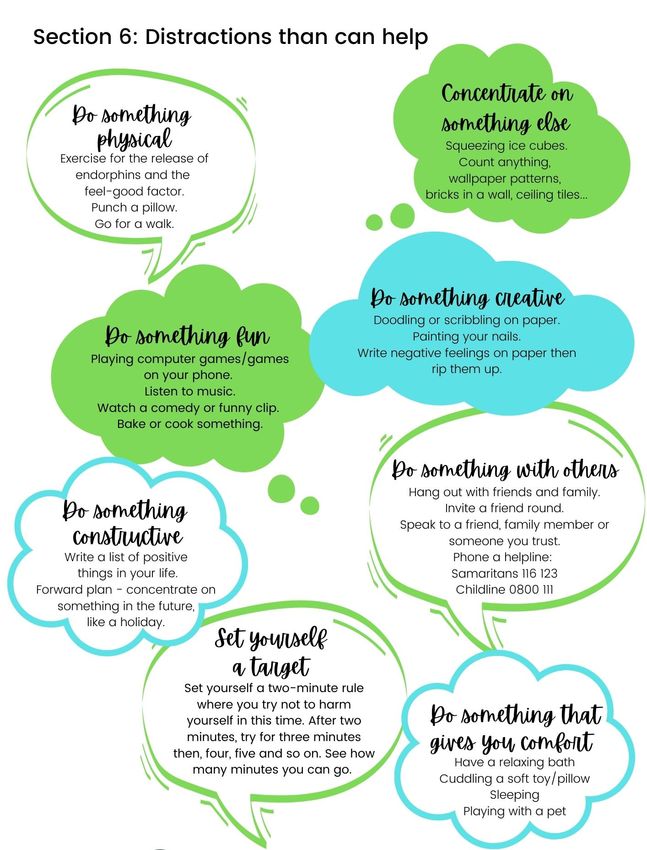
Replacing the cutting or other self-harm with safer activities (Distraction Strategies) can be a positive
way of coping with the tension. What works depends on the reasons behind self-harm. Activities that
involve emotions intensively can be helpful.
Successful distraction techniques include:
Using a creative outlet, e.g. Making lots of noise, either Getting out of the house and
writing poetry & songs, with a musical instrument going to a public place, e.g. a
drawing, collage or artwork or just banging on pots and cinema.
and talking about feelings. pans.
Using stress-management Going online and looking at Going into a field and
techniques, such as guided self-help websites or ringing a screaming.
relaxation or meditation. helpline.
Putting elastic bands on wrists Using a red water-soluble felt tip Talking to a friend (not
and flicking them instead of pen to mark instead of cut (the necessarily about self-
cutting. butterfly project). harm).
Reading a book. Looking after an animal. Listening to loud music.
Scribbling on a large piece of Hitting a punch bag to vent Physical exercise or going for a
paper with a red crayon or pen. anger and frustration. walk/run.
Writing a diary or journal. Rubbing ice instead of cutting. Having a bath.
Writing negative feelings on a
piece of paper and then ripping it
up.
27You can also read


