Living God's Love 2020 - The next stage of our journey - The Diocese of St Albans
←
→
Page content transcription
If your browser does not render page correctly, please read the page content below
              The
  Diocese
  of
  St
  Albans


       Living God's Love 2020


          The
  next
  stage
  of
  our
  journey


                                               Part
  2
  of
  a
  Report
  for
  Diocesan
  Synod

                                                                                    17
  October
  2015
Chapter
1:
• The
remainder
of
Chapter
1
describes
the
evidence
sources
used
to
inform
the
Introduction
renewal
process;
• Chapters
2
and
3
set
out
the
context
and
drivers
for
the
next
phase
of
Living
God’s
In
2011,
the
Diocese
of
St
Albans
committed
to
Love.
Chapter
2
summarises
the
progress
a
journey
of
Living
God’s
Love
by:
and
challenges
experienced
so
far
on
our
journey.
Chapter
3
describes
people’s
• Going
Deeper
into
God;
ambitions
for
the
future,
as
well
as
available
• Transforming
Communities;
and
evidence
on
how
these
might
be
achieved.
• Making
New
Disciples.
The
wider
Church
of
England
context
is
also
briefly
explored.
This
was
a
journey
grounded
in
our
love
of
God
• Chapter
4
contains
the
proposed
core
and
love
of
neighbour
flowing
from
God’s
love
content
of
the
next
stage
of
our
Living
God’s
for
us.
Love
journey.
It
suggests
where
we
should
be
aiming
to
get
to
by
2020,
and
what
we
One
of
the
main
elements
of
Living
God’s
Love
will
need
to
do
to
get
there.
was
a
request
to
the
parishes,
schools
and
• Finally,
Chapter
5
describes
how
the
chaplaincies
of
the
diocese
to
undertake
renewal
of
Living
God’s
Love
will
be
Mission
Action
Planning
–
a
process
of
listening
implemented
and
kept
under
review.
and
planning
for
what
God
was
calling
them
to
do
in
their
specific
contexts.
1.2
Evidence
sources
Through
Mission
Action
Planning,
it
was
The
main
source
of
evidence
used
to
inform
the
anticipated
that
we
would
develop
confident
renewal
of
Living
God’s
Love
was
the
qualitative
and
outward
looking
mission
and
evangelism
responses
to
a
comprehensive
listening
leading
to
spiritual
and
numerical
growth.
exercise1
carried
out
across
the
diocese
during
early
2015.
This
exercise
sought
to
draw
out:
Four
years
on,
the
time
is
right
to
renew
Living
God’s
Love
to
ensure
it
remains
meaningful
for
today’s
context,
and
sets
out
an
engaging
way
• where
we
are
now
as
a
diocese:
what
has
forward
for
2016-‐20
to
which
every
part
of
our
gone
well
and
less
well
over
the
last
four
diocese
feels
inspired
to
contribute.
years;
• where
we
want
to
be
by
2020
and
how
we
think
we
might
get
there.
1.1
Purpose
and
content
of
paper
In
addition
to
trying
to
get
a
general
feel
for
This
paper
has
been
produced
to
describe
the
people’s
views
on
their
progress
and
ambitions,
renewal
process.
It
explains
where
we
have
got
contributors
were
also
asked
to
reflect
on
to
so
far
on
our
journey,
and
how
this
has
successes,
challenges
and
opportunities
informed
a
proposed
renewed
direction
for
specifically
relating
to
Living
God’s
Love.
Living
God’s
Love
for
the
next
five
years.
The
paper
is
structured
as
follows:
1
70
face-‐to-‐face
listening
exercises
with
clergy
and
laity;
520
survey
responses;
8
self-‐guided
exercises.
2

The
  findings
  from
  the
  listening
  exercise

       were
  considered
  alongside
  wider

       qualitative
  and
  quantitative
  contextual

       evidence
  such
  as:


•      statistics
  and
  strategic
  initiatives
  from
  the

       national
  Church;

•      other
  Dioceses’
  visions
  &
  strategies;

•      learnings
  from
  the
  wider
  church
  about
  what

       it
  means
  to
  be
  a
  healthy
  church
  in
  this

       generation
  (eg
  Anecdote
  to
  Evidence;

       Healthy
  Churches
  Handbook
  and
  Natural

       Church
  Development
  material);

•      existing
  statistics,
  strategic
  initiatives
  and

       MAPs
  from
  the
  Diocese
  of
  St
  Albans.


Part
  3
  of
  this
  report
  sets
  out
  the
  full
  findings
  of

the
  listening
  exercise,
  as
  well
  as
  a
  list
  of
  the

other
  evidence
  sources
  used.


                                                                                      3
Chapter
2:
•
welcoming
as
possible
to
newcomers;
numerical
growth;
Progress
so
far
•
•
more
study/home
groups;
an
increased
focus
on
prayer;
• successful
partnerships
with
other
churches;
The
first
step
in
renewing
Living
God’s
Love
is
to
• building
improvements;
understand
‘where
we
are
now’:
what
has
gone
• positive
contributions
made
by
particular
well
and
less
well
since
2011.
leaders
(clergy
and
laity).
A
review
of
the
findings
from
the
listening
exercise,
alongside
existing
diocesan
statistics
and
strategic
initiatives,
provides
a
good
picture
of
progress
made
over
the
last
four
years.
The
main
conclusions
of
this
review
are
set
out
below.
2.1
We
have
much
to
celebrate
An
overriding
conclusion
from
both
the
listening
exercise
and
a
review
of
other
diocesan
material
is
that
we
have
a
great
deal
to
celebrate
and
build
on.
2.1.2
A
wide
range
of
strategic
initiatives
2.1.1
Our
parishes,
schools
and
chaplaincies
have
been
introduced
are
rightly
proud
of
the
progress
they
have
made
over
the
last
four
years
The
hard
work
in
our
parishes,
schools
and
chaplaincies
has
been
reinforced
by
the
Encouragingly,
every
contributor
to
the
introduction
of
a
wide
range
of
strategic
listening
exercise
felt
that
they
had
made
some
diocesan
initiatives
over
the
last
four
years.
form
of
progress
since
2011.
Key
themes
from
achievements
quoted
included:
A
wide
range
of
guidance
and
support
has
been
produced
to
help
parishes,
schools
and
• increased
community
outreach
work
(for
chaplaincies
develop
their
Mission
Action
Plans
example,
social
projects
such
as
food
banks,
(MAP).
credit
unions,
homeless
projects,
lunch
clubs,
community
cafes
etc.);
Effective
and
sustainable
Ministry
has
been
• the
introduction
of
initiatives
to
bring
more
developed
through
a
‘2020
Vision
for
Ordained
people
to
God.
A
key
sub-‐theme
here
was
and
Authorised
Ministry’.
This
has
contributed
efforts
to
make
church
more
attractive
and
to
successes
such
as
the
number
of
clergy
being
accessible
to
young
people
and
families;
maintained;
a
commitment
to
an
act
of
worship
• increased
numbers
of
exploration
courses
in
every
church
every
Sunday;
a
renewed
offered;
emphasis
on
vocation;
a
renewed
lay
training
• increased
efforts
to
ensure
churches
are
as
programme;
the
ongoing
development
of
a
4
Strategy
for
Lay
Ministry
and
a
review
of
MMDR.
• 87%
of
parishes
have
developed
a
Mission
Action
Fruitful,
broad
based
Mission
and
Discipleship
Plan
has
been
supported
and
encouraged
through
• Numbers
of
clergy,
Readers
helping
parishes
better
engage
with
and
chaplains
é
communities;
offering
increased
support
and
training;
and
reviewing
our
approach
to
• Parish
share
receipts
é
engaging
children
and
young
people.
• Ranking
of
2nd
out
of
43
Innovative
social
justice
projects
have
been
dioceses
in
gift
aid
recovery
introduced
and
new
partnerships
have
been
created
with
the
wider
Church
and
those
of
• 83%
of
our
135
schools
&
other
faiths.
A
renewed
focus
has
also
been
academies
are
good
or
outstanding
placed
on
developing
mission
and
ministry
through
Giving.
Finally,
in
terms
of
personal
• 84
parishes
are
admitting
discipleship,
many
individuals
have
participated
children
for
communion
enthusiastically
in
a
series
of
Lent
and
Advent
• 500
people
took
part
in
challenges.
Messy
Cathedral
+
we
have
61
Messy
churches
Other
strategic
enabling
activities
undertaken
in
the
last
four
years
include
increased
consultant
and
financial
support
to
schools;
the
development
of
a
new
schools’
vision;
2.1.4
The
majority
of
us
feel
that
Living
God’s
increased
support
and
funding
for
building
Love
has
made
a
contribution
to
the
progress
improvements;
and
a
successful
concerted
made
effort
to
raise
parish
share
receipts
and
ensure
we
are
not
in
deficit.
Of
those
taking
part
in
the
listening
exercise,
the
majority
felt
that
Living
God’s
Love
and/or
2.1.3
Our
statistics
are
encouraging
in
some
Mission
Action
Planning
(MAP)
had
made
a
big
important
areas
or
some
contribution
to
the
progress
they
have
made.
A
larger
number
of
positive
general
Statistics
do
not
provide
a
complete
picture
of
comments
were
also
made
about
the
initiative
how
far
we’ve
come
on
our
Living
God’s
Love
than
negative.
Key
themes
from
the
positive
journey.
We
cannot
measure
everything,
and
comments
made
included:
the
statistics
that
we
collect
have
their
limitations.
However,
numbers
do
offer
some
• Living
God’s
Love
and
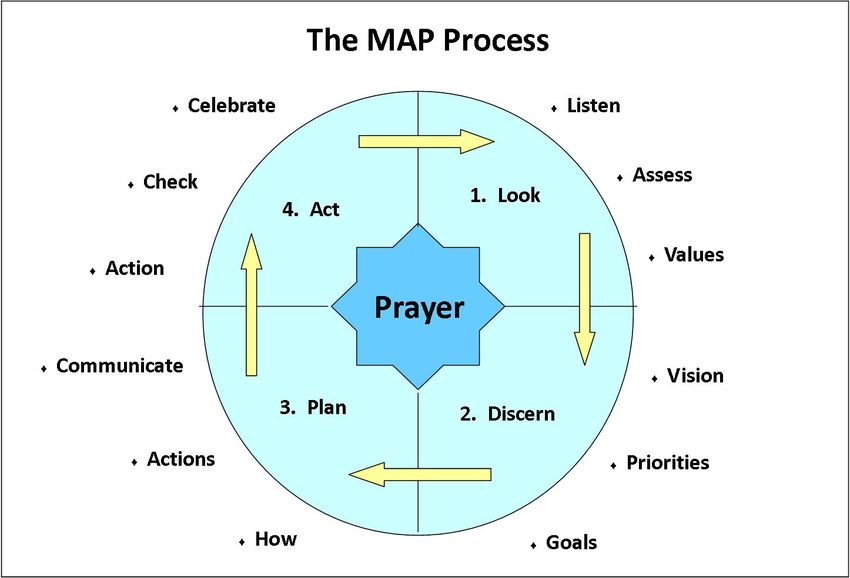
MAP
have
provided
helpful
indicators
of
the
health
of
the
diocese.
useful
strategic
direction
and
a
helpful
framework
for
action;
The
box
below
sets
out
some
of
our
more
• Living
God’s
Love
and
MAP
have
helped
positive
statistics.
Many
of
these
closely
reflect
parishes
prioritise
their
activities;
the
impact
of
the
progress
outlined
in
the
• the
initiative
has
acted
as
a
catalyst
for
sections
above.
action;
• the
initiative
has
helped
ensure
parishes
undertake
a
balance
of
activities
and
don’t
5
just
focus
on
the
area
they
are
most
bureaucracy;
comfortable
with;
• central
initiative
overload;
• difficulties
in
getting
sufficient
help
from
an
“We
need
as
clergy
to
look
ageing
and
declining
laity;
upwards,
inwards
and
• a
lack
of
money
which
has
constrained
outwards
–
most
churches
have
a
leaning
to
one
of
three:
parishes
from
taking
action
in
new
areas;
LGL
creates
m ore
of
a
• buildings
that
aren’t
fit
for
purpose.
balance”.
Other
themes
included
the
challenges
of:
• Living
God’s
Love
and
MAP
have
given
parishes
the
freedom
to
do
what
is
right
for
• attracting
young
people
to
church;
them
in
their
own
context.
• congregations
or
clergy
opposed
to
change;
• the
particular
contexts
in
which
churches
2.2
We
have
also
faced
challenges
are
based.
2.2.2
The
statistics
are
challenging
in
some
Just
as
Scripture
is
full
of
stories
of
people
who
important
areas.
encounter
obstacles
on
their
life
journey
of
following
God,
so
have
many
of
us
experienced
Whilst
many
of
the
statistics
associated
with
challenges
as
well
as
successes
over
the
last
our
processes
or
‘inputs’
are
positive,
(see
four
years.
section
2.1.3),
progress
made
in
these
areas
doesn’t
yet
seem
to
have
had
a
positive
impact
2.2.1
Many
parishes,
chaplaincies
and
schools
on
many
of
our
key
diocesan
outcomes.
have
experienced
barriers
to
progress
Many
contributors
to
the
listening
exercise
noted
that
they
had
experienced
a
range
of
• Church
membership
ê
barriers
to
progress,
with
the
pressure
of
• Overall
ê
trend
of
attendance
insufficient
time
and
resources
being
raised
as
at
Easter
and
Christmas
the
biggest
area
of
difficulty.
Notable
sub-‐
services
themes
here
included:
• Overall
ê
trend
of
baptisms,
marriages
and
funerals
• the
challenge
of
being
able
to
fit
in
new
missional
work
as
well
as
the
more
• A
growing
proportion
of
our
traditional
work
of
being
a
priest;
congregations
are
age
70
+
• Planning
Giving
ê
“It’s
difficult
to
meet
the
dual
expectations
of
engaging
with
• Ranking
of
32nd
out
of
43
new
growth
m odels
as
well
as
dioceses
in
terms
of
giving
in
meeting
the
expectations
of
relation
to
income
being
a
traditional
priest
–
if
we’re
not
careful
priests
will
break.”
The
statistics
in
the
box
on
the
previous
page
• the
burden
of
administration
and
do
not
necessarily
mean
that
we
have
been
6
focusing
on
doing
the
wrong
things.
Changes
to
processes
and
activities
take
time
to
have
an
‘There
is
a
risk
that
we
will
end
impact
on
outcomes.
up
m aking
numerical
growth
the
idol,
when
what
we’re
really
about
is
the
Kingdom
of
It
is
also
important
to
take
into
consideration
God’.
that
these
statistics
need
to
be
approached
with
a
degree
of
caution.
For
example,
the
recent
move
by
the
national
church
to
invite
Others
felt
that
Living
God’s
Love
had
been
a
parishes
to
give
an
idea
of
the
size
and
make-‐up
rather
top
down
or
imposed
initiative
and
this
of
their
overall
worshipping
community
and
to
had
initially
put
them
off
getting
involved.
take
a
more
detailed
look
at
leavers
and
joiners
has
shown
that
the
picture
could
be
much
more
A
notable
sized
group
felt
that
Living
God’s
Love
fluid
than
the
decline
in
membership
in
that
lacked
clarity
and
detail
in
some
areas,
such
as
box
seem
to
indicate.
Parishes
actually
reported
exactly
what
the
initiative
wanted
to
achieve
that
more
people
joined
the
worshipping
and
how
this
might
happen.
community
than
left
it.
A
fairly
large
group
raised
issues
concerning
the
Finally,
we
should
also
be
mindful
of
the
fact
connection
of
diocesan
strategies
and
initiatives
that
our
existing
statistics
only
measure
one
with
each
other
and
with
Living
God’s
Love.
area
of
success
–
attendance
numbers.
These
numbers
do
not
take
into
account
ways
in
In
terms
of
Mission
Action
Planning
specifically,
which
patterns
of
church
attendance
have
a
further
group
of
contributors
indicated
that
changed
in
recent
years.
They
also
provide
little
they
would
have
liked
to
have
received
more
indication
of
spiritual
growth,
with
the
follow-‐up
when
they
submitted
their
plans.
exception
perhaps
of
the
numbers
of
confirmations,
baptisms
and
weddings.
Finally,
although
not
solely
attributable
to
Living
God’s
Love,
many
contributors
2.2.3
There
are
elements
of
Living
God’s
Love
highlighted
that
congregations
felt
distant
from
that
some
of
us
have
found
challenging
the
diocese
and
diocesan
initiatives.
Although
the
listening
exercise
resulted
in
more
2.3.4
We
have
been
operating
within
some
positive
than
negative
comments
about
Living
potentially
challenging
diocesan
constraints
God’s
Love,
there
were
elements
of
the
initiative
that
some
groups
of
contributors
As
we
look
to
move
forwards,
it
is
worth
found
challenging.
keeping
in
mind
that
the
Diocese
of
St
Albans,
like
much
of
the
Church
of
England,
functions
A
fairly
large
group
indicated
that
they
had
within
some
potentially
challenging
found
Living
God’s
Love
to
be
broadly
irrelevant
organisational
constraints.
or
a
statement
of
the
obvious.
Another
large
group
had
concerns
with
the
language
around
For
example,
we
have
a
developmental
some
of
the
Living
God’s
Love
priorities
(eg,
pathway
which
sends
clergy
from
an
initial
Making
New
Disciples)
and
the
explicit
training
experiences
to
an
often
fairly
isolated
references
to
numerical
growth
associated
with
role
as
an
incumbent.
the
initiative.
7
We
have
a
management
system
where
support,
this
situation
cannot
be
expected
to
leadership
development
and
review
is
spread
continue
unless
the
decline
in
membership
fairly
thinly
across
parishes.
There
is
a
relatively
is
reversed.
weak
accountability
system
for
ministers
that
means
that
challenge
and
support
is
limited.
•
The
age
profile
of
our
clergy
is
increasing,
There
is
also
an
absence
of
central
expectations
with
around
40%
of
parish
clergy
due
to
or
accountability
in
return
for
investment
or
retire
over
the
next
decade
or
so.
And
support
provided
to
parishes,
etc.
while
ordination
rates
have
held
up
well
over
recent
years,
they
continue
to
be
well
Additionally,
we
have
central
diocesan
support
below
what
would
be
needed
to
maintain
services
that
only
have
the
capacity
to
spread
current
clergy
numbers
and
meet
diocesan
their
resources
and
support
thinly
across
ambitions.
parishes,
chaplaincies
and
schools.
• The
burden
of
church
buildings
weighs
2.3
Part
of
a
national
picture
heavily
and
reorganization
at
parish
level
is
complicated
by
current
procedures3’.
It
also
of
note
that
current
trends
in
the
broader
Church
of
England
have
influenced
our
Through
the
renewal
of
Living
God’s
Love,
we
progress
over
the
last
four
years,
and
that
our
have
an
opportunity
to
contribute
to
mixed
picture
of
progress
and
challenges
in
overcoming
these
challenges.
The
next
Chapter
many
ways
reflects
the
national
picture.
shows
that
we
are
ready
to
take
up
this
challenge
and
are
optimistic
and
full
of
ideas
for
General
Synod
recently
emphasised,
for
the
future.
example,
that
we
should
be
heartened
by
the
signs
of
life
and
growth
in
the
numbers
of
people
coming
to
and
growing
in
faith,
and
by
the
significant
positive
impact
that
the
Church
of
England
continues
to
have
in
the
life
of
the
nation.2
At
the
same
time,
however,
Synod
also
noted
that
the
Church
faces
urgent
challenges:
• ‘Attendance
at
Church
of
England
services
has
declined
at
an
average
rate
of
1.3%
per
annum
over
recent
decades
and,
in
addition,
the
age
profile
of
our
membership
has
become
significantly
older
than
that
of
the
population.
• Finances
have
been
relatively
stable,
thanks
to
increased
individual
giving.
However,
2 3
GS
1976
–
Reform
and
Renewal.
Extracts
from
the
reports
Ibid
8
Chapter
3:
• building
more
relationships
with
the
wider
community;
Our
ambitions
for
the
• more
outreach
work
for
the
community,
future
within
the
community
as
well
as
within
church
buildings;
Having
got
a
good
feel
for
where
we
are
now,
“We
should
do
more
to
meet
the
next
stage
in
the
renewal
process
is
to
people
‘where
they
are
at’
and
determine
our
ambitions
for
Living
God’s
Love
not
be
fixated
with
growth
at
during
2016-‐20:
how
do
we
want
to
be
Living
the
main
Sunday
services.”
God’s
Love
in
the
Diocese
of
St
Albans
in
2020
and
what
do
we
think
we
need
to
do
to
get
there?
• increased
focus
on
prayer;
• more
study
opportunities.
3.1
We
are
optimistic
about
the
future
Many
contributors
to
the
listening
exercise
had
a
clear
view
on
what
they’d
like
to
have
achieved
by
2020.
Key
themes
included
a
desire
to
see:
• numerical
growth,
with
a
particular
emphasis
on
growth
in
the
numbers
of
young
people
and
families;
• growth
that
is
not
just
about
numbers
of
people
in
church,
but
instead
about
bringing
more
people
to
God;
• more
accessible
and
diverse
worship;
• the
introduction
of
new
ways
of
doing
3.2
We
have
clear
ideas
on
what
will
church;
help
us
get
there.
“We
need
to
try
and
do
church
Contributors
to
the
listening
exercises
had
a
in
a
different
way.
There’s
lots
of
churches
at
the
moment
in
wide
range
of
views
on
how
they
could
achieve
close
proximity
doing
exactly
their
2020
ambitions.
These
can
be
divided
into
the
same
thing.”
activities
that
explicitly
relate
to
Living
God’s
Love,
and
broader
activities.
In
terms
of
the
former,
a
notable
sized
group
• increased
focus
on
helping
people
make
the
felt
that
more
explanation
or
definition
could
transition
from
community
to
church
usefully
be
given
to
Living
God’s
Love
and
its
• an
increased
confidence
in
talking
about
three
priorities
(for
example,
what
do
we
mean
faith;
by
each
of
the
priorities
and
what
do
we
want
• churches
becoming
more
welcoming
to
to
achieve
against
each
of
them
and
Living
newcomers;
God’s
Love
more
generally).
9
A
smaller,
but
not
insignificant,
group
felt
that
number
of
contributors
suggesting
that
a
there
was
a
need
to
unpack
references
to
toolkit
could
provide
a
practical
way
of
spiritual
and
numerical
growth
and
to
explain
in
providing
parishes
and
chaplaincies
with
the
more
detail
how
they
relate
to
Living
God’s
support
they
need.
Love.
3.3
There
is
wealth
of
information
A
large
group
of
contributors
expressed
the
available
to
help
us
develop
our
ideas
view
that
Living
God’s
Love
could
usefully
be
used
to
add
increased
coherence
to
the
work
of
There
is
a
considerable
amount
of
published
the
Diocese.
A
key
sub-‐theme
here
was
a
material
that
provides
guidance
on
how
to
desire
for
there
to
be
a
single
Living
God’s
Love
develop
many
of
the
ambitions
and
activities
delivery
strategy
or
MAP.
suggested
in
the
listening
activities.
Some
of
the
key
sources
are
summarised
below.
A
further
large
group
was
very
keen
that
increased
coherence
did
not
translate
into
an
2.3.1
Wider
Church
of
England
initiatives
initiative
imposed
from
the
top.
A
significant
number
of
contributors
spoke
of
the
need
for
The
renewal
of
Living
God’s
Love
comes
at
a
Living
God’s
Love
to
be
about
supporting
the
time
of
wider
renewal
in
the
Church
of
England.
parishes,
chaplaincies
and
schools
in
what
they
For
example,
the
current
Reform
and
Renewal
want
to
do,
rather
than
be
about
telling
them
programme
is
making
recommendations
on
what
they
need
to
do.
how
mission
and
growth
should
be
resourced;
how
the
right
type
of
ministers
can
be
recruited
Additional
Living
God’s
Love
activities
identified
and
trained;
and
the
means
by
which
the
by
smaller,
but
notable,
sized
groups
included
systems
and
structures
of
the
Church
of
the
need
for
culture
change,
improved
England
can
be
simplified.
The
renewal
of
communications,
and
ongoing
listening.
Living
Gods’
Love
has
been,
and
will
continue
to
be,
informed
by
these
and
other
relevant
In
terms
of
enabling
activities
that
did
not
changes.
specifically
relate
to
Living
God’s
Love,
a
large
number
of
contributors
focused
on
the
2.6.1
Church
development
material
importance
of
ensuring
we
have
the
right
people
(clergy
and
laity)
with
the
right
skills
in
The
proposed
way
forward
for
Living
God’s
our
parishes,
schools
and
chaplaincies,
as
well
Love
has
also
been
informed
by
some
of
the
as
on
our
Boards
and
Committees.
material
that
has
been
developed
to
guide
churches
in
creating
a
more
positive
future.
Others
mentioned
themes
such
as
the
need
for
increased
pastoral
care
from
senior
clergy;
a
Sources
such
as
Anecedote
to
Evidence,
the
reduced
administrative
burden/more
Healthy
Churches
Handbook,
Natural
Church
administrative
support
and
increased
Development
and
Leading
Your
Church
into
partnerships
with
other
churches
and
those
of
Growth
have
proved
valuable
in
turning
the
faith.
ideas
presented
in
the
listening
exercise
into
the
proposed
next
phase
of
Living
God’s
Love
Many
also
emphasised
the
importance
of
set
out
in
Chapter
4.
sharing
best
practice
going
forward,
with
a
10
You can also read


