Living with Diversity the Singapore Way - Inclusion through Intervention - NLB
←
→
Page content transcription
If your browser does not render page correctly, please read the page content below
E S S AY

                            Inclusion through Intervention

        Living with Diversity
         the Singapore Way

W       hen it comes to ensuring the harmonious integration of Singapore’s
        diverse ethnic, religious, nationality, income, age or disability groups,
nothing is left to chance.

Singapore is multi-ethnic, multi-religious,                      Like many modern cities, Singapore also
multiple. As a small sovereign city state                        faces the issues of an ageing population
without a hinterland nor natural resources,                      and growing income disparities. These
galvanising the people to gel as a community                     test the resilience of its social fabric.
has been fundamental to Singapore’s success                      But unlike many cities where instances
story. As the founding Prime Minister Lee                        of cultural intolerances are rife, and
Kuan Yew shared in his memoir From Third                         different social groups lead separate,
World to First: The Singapore Story, his biggest                 seemingly “parallel lives”, Singapore
challenge was “how to build a nation out of                      has managed to foster a community of
a disparate collection of immigrants from                        togetherness—a Singaporean intercultural
China, British India and the Dutch East                          “habitus” (how people tend to think and
Indies”. This, coupled with a significant                        act based on socialisation)—despite the
foreign population that has been attracted                       differences. What are some of the key
to Singapore to live, work and study, has                        principles that have guided Singapore’s
created super-diversity in today’s Singapore.                    model of living with diversity?

              Louisa-May Khoo is adjunct researcher at the Centre for Liveable Cities.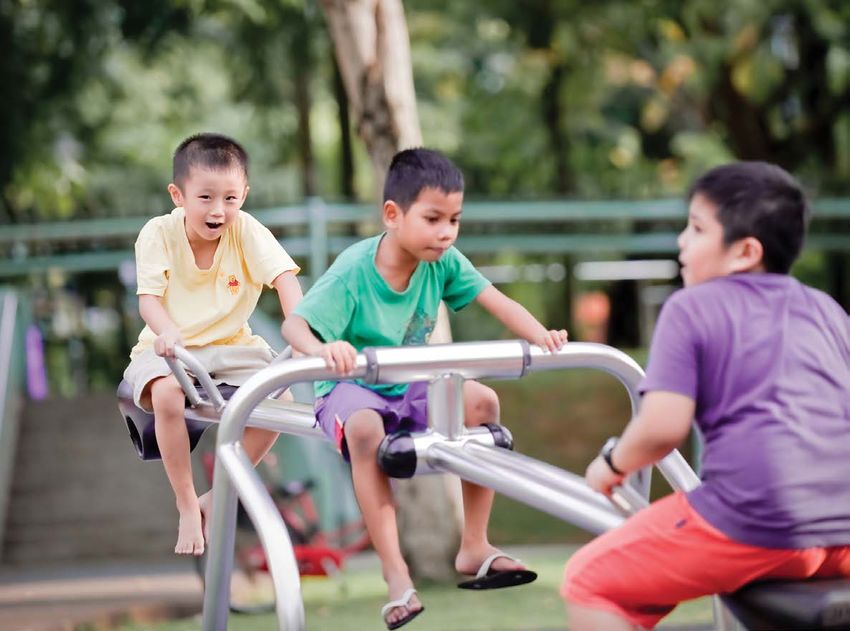
39

                                  essay

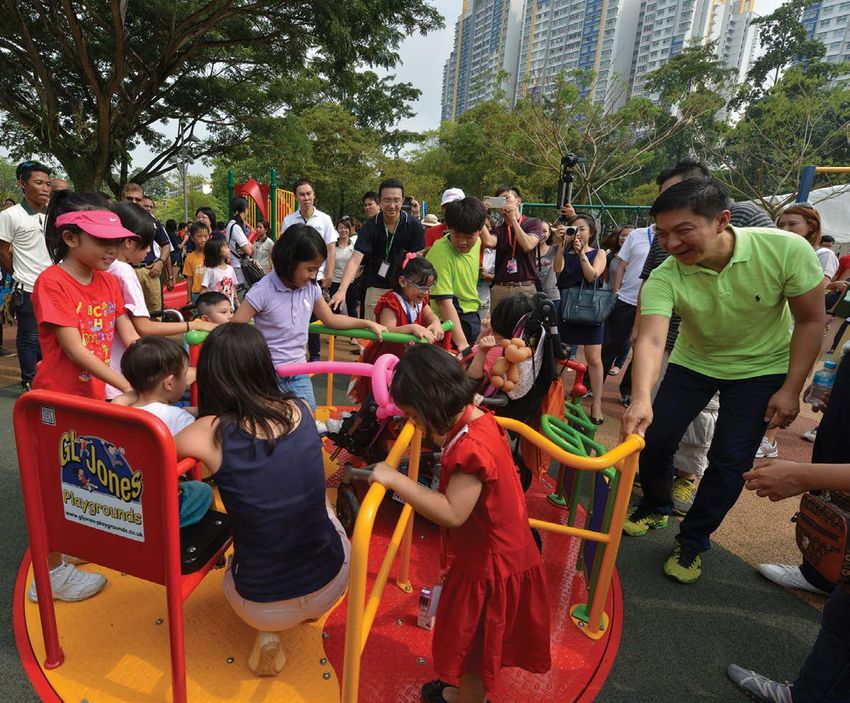
Minister for Social and Family
Development Tan Chuan
Jin (far right in green) at the
opening of Bishan-Ang Mo
Kio’s inclusive playground.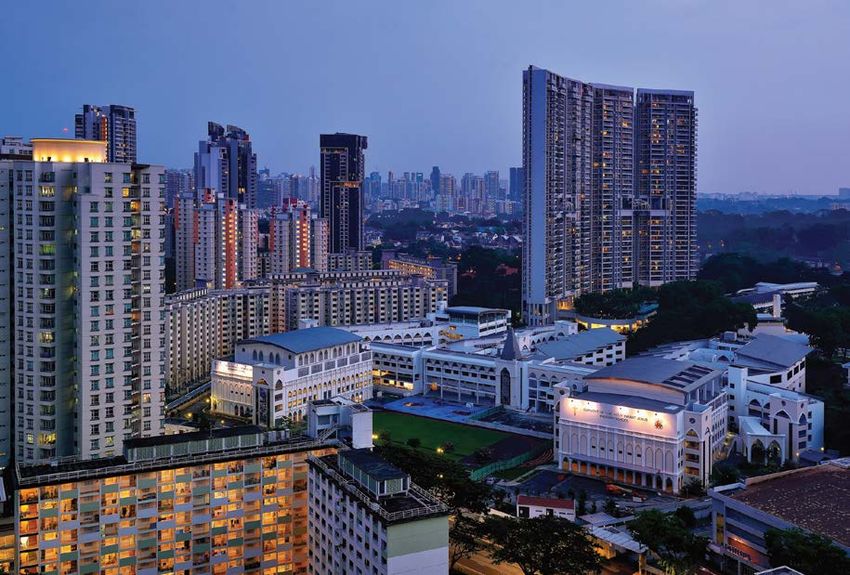
01

Setting the Frame, Building Bridges               school system, and national service for males
                                                  at 18 years serve as the pillars to build bridges
The 1960s and 1970s were tumultuous
                                                  across divides. While these pillars set the
times for Singapore. Beleaguered by
                                                  frame, strategies had to be put in place to
an Independence precipitated by racial
                                                  ensure that living across difference was not
politics, and founding years embroiled
                                                  just about high-level policies and political
in ethnic riots, Singapore verges on the
                                                  discourse, but also translated in concrete ways
obsessive when it comes to managing
                                                  that have become internalised as part and
ethnic relations with institutional measures.
                                                  parcel of everyday life in Singapore.
Singapore’s constitution was thus founded
on the concept of equal rights, where
                                                  Embedding “Software” in “Hardware” to
rights and freedoms cannot be classified,
                                                  Achieve Social Goals
defined and distinguished in terms of race,
language or religion. Mr S. Rajaratnam,           The public housing programme, which
in his speech to Parliament on the Report         houses 80% of Singapore’s citizen population,
of the Constitutional Commission in 1967,         became the key vehicle through which this was
reiterated that since rights and freedoms         achieved. In A Chance of a Lifetime: Lee Kuan
are the same for all citizens, minorities         Yew and the Physical Transformation of Singapore,
need not shield themselves with so-called         Professor Chua Beng Huat, a sociologist who
minority rights, and that the democratic          worked with the Housing and Development
principle of equal rights is the most practical   Board (HDB) when early flats were being
safeguard against tyranny by the majority.        built, recalled: “ My personal story is a
Multiracialism, meritocracy, the use of           testament to the idea that the HDB has heart,
English as a lingua franca, compulsory            and has always been concerned about people’s
primary school education in a secular public      everyday lives …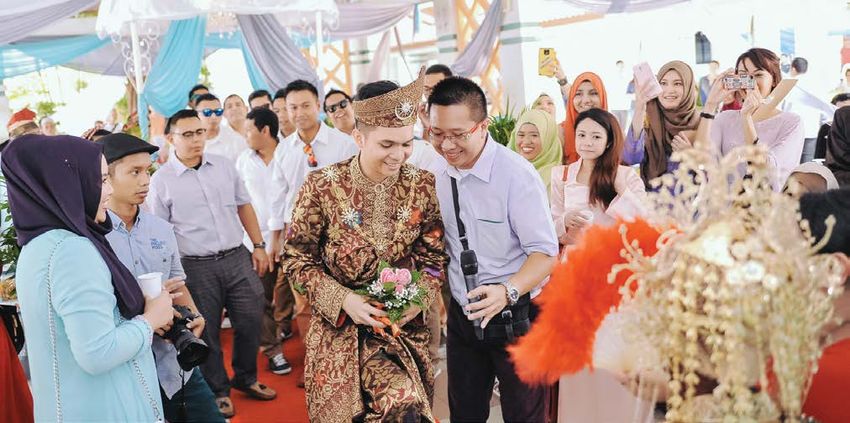
41

                                                                                                                                    essay
                                                                                                                         02

                                                                              “
“I saw an ad in The Straits Times that the HDB
was looking for a sociologist. So I went to see                                     Singapore verges on
Liu Thai Ker (then CEO of HDB). I asked:
‘Why do you need a sociologist?’ … he said, ‘I                                      the obsessive when
don’t know what the sociologist would do but I                                     it comes to managing
know I need one’ … obviously, he knew he was                                       ethnic relations with

                                                                                                               ”
building housing for the whole nation, but it
wasn’t just a physical structure that was being                                   institutional measures.
built. The HDB had to consider the everyday
lives of Singaporeans, because the physical
environment was going to influence their lives
in very serious ways. So, he knew he needed
to worry about that, even though he didn’t                                In contrast to many cities where public
necessarily know where to begin.”                                         housing tends to concentrate the socially
                                                                          disadvantaged groups, Singapore’s housing           ISSUE 10 • JAN 2017
Thus, in building flats, it was not just                                  estates—while predominantly designed for
about the physical structure but how the                                  public housing—have some private housing
environment affected people’s way of life.                                developments. Everyone, regardless of type of
The mix of housing types (rental and owner-                               housing they live in, has equal access to public
occupied flats ranging from 1-room to 5-room                              transportation and facilities such as shops,
units) within each HDB town was important.                                markets and parks. This principle of spatial
It encompassed the spectrum of the poor and                               equity underpins the quality of everyday life
middle classes to prevent ghettoisation.                                  and public spaces necessary for a fair society.

 01   The racial riot in 1964 highlighted the need for tolerance and acceptance in Singapore.
 02   Public (left) and private housing (right) surround a school in a residential estate.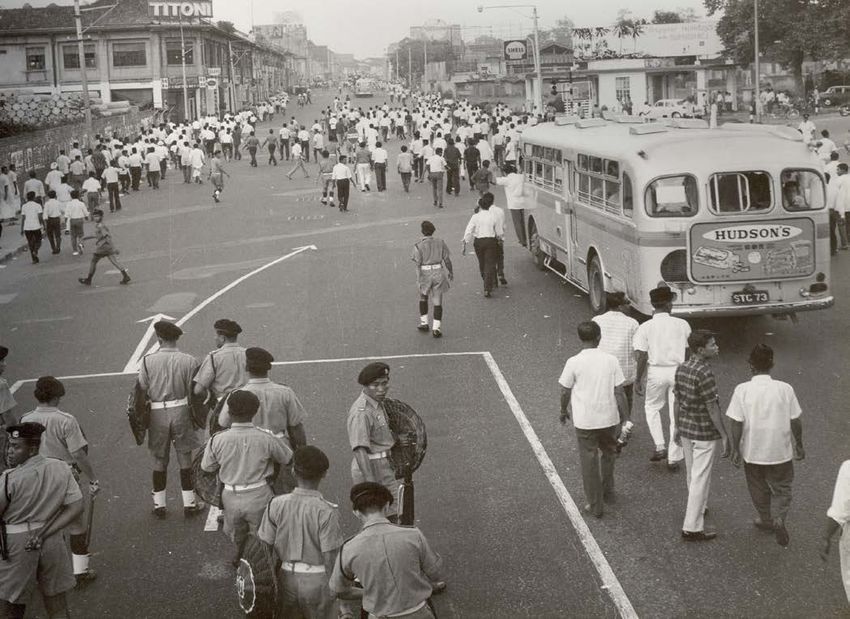
“
     Everyone, regardless of type of
      housing they live in, has equal
     access to public transportation

                             ”
       and facilities such as shops,
           markets and parks.

01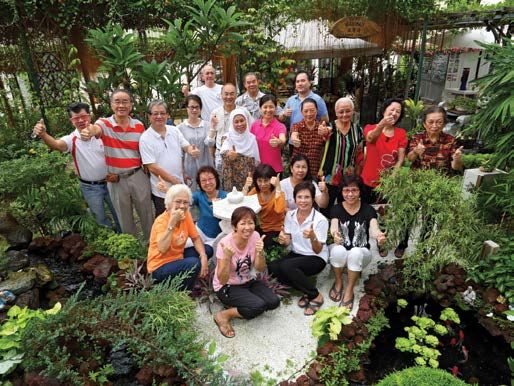
43

                                                                                                                            essay
Every town’s full range of facilities                              These are safeguards we have put in,
provides porosity for people living within                         which have prevented the communities
and at the fringes of the HDB estate to                            from fragmenting and being alienated
inadvertently encounter each other when                            from one another.” The belief was, and
they access these facilities. Schools, clinics,                    continues to be, that putting people of
libraries, kopitiams (local cafes), markets,                       different races together would compel
shops, hawker centres, playgrounds and                             them to interact, and hence understand
parks have become “third-places”—spaces                            one another better.
outside the home and work that people
are familiar with and which help them get                          Schools in HDB towns have naturally
through the day.                                                   become integrative spaces as most
                                                                   children from different races and
Singapore’s varied ethnic cuisines are                             backgrounds go to schools close to their
also co-located at hawker centres, local                           homes where they learn to interact
coffee shops and markets. Not only does                            across diversity from a young age.
this ensure that people of all races have                          These attitudes carry over into the
convenient and equitable access to the                             spaces of everyday life. Deputy Prime
food they like, it also encourages the act                         Minister Tharman Shanmugaratnam
of eating together while sharing a table                           considers Singapore’s education and
despite dietary differences.                                       housing policies the lynchpins of social
                                                                   cohesion and equity. In an interview
These shared spaces are the everyday                               at the St Gallen Symposium in 2015,
anchors that foster the convivial spirit and                       Mr Tharman noted that “once people
enable diversity to become commonplace                             live together, they’re not just walking the
through the opportunities made available                           corridors everyday … Their kids go to
for inter-group mixing.                                            the same kindergarten, they go to the
                                                                   same primary school … and they grow
The most far-reaching of Singapore’s                               up together … where you live matters
social interventions is the Ethnic                                 … it matters tremendously in the daily
Integration Policy, which leaves                                   influences that shape your life”.
nothing to chance. It ensures that each
neighbourhood and block is racially
mixed by stipulating racial quotas that
correspond to the ethnic composition at
the national level. The aim is to prevent
ethnic enclaves from forming. Thus, a
particular ethnic group would not be
able to buy a flat if their quota has been                                                                            ISSUE 10 • JAN 2017
reached for that particular block and
neighbourhood.

As then PM Lee Kuan Yew explained:
“We had to mix them up. Those who say
we should cancel these restrictions … just
don’t understand what our fault lines are
and what the consequences can be.
                                                                                                                 02

  01   Children playing together at a playground.
  02   A wide range of hawker centre stalls caters to all dietary needs.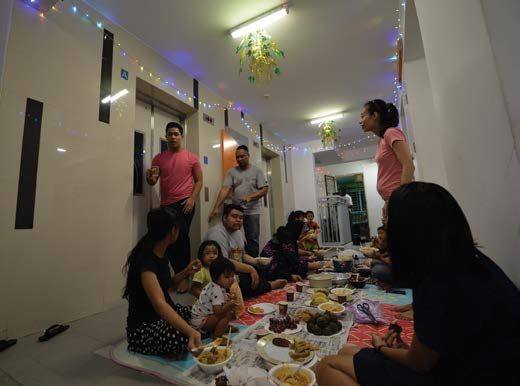
The design of micro-spaces takes the effort to                                Fostering Collective Identity and
foster integrative communities a step further.                                its Challenges
The ground floors (“void decks”) of HDB
blocks are designed as informal social spaces                                 In cities where differences among classes
for residents to chat and for children to play.                               and ethnicities are so stark that it makes
They are important social sites that have                                     communal living impossible, Singapore has
become quintessentially Singaporean—it is                                     managed to craft a model that has enabled
common to see Chinese funerals and Malay                                      people of different backgrounds to co-exist in
weddings held at void decks, sometimes                                        harmony. Managing diversity in the Singapore
even simultaneously. The proliferation of                                     context is deliberate and concerted—backed
kindergartens, student care centres, senior                                   by an institutional apparatus supportive of
citizen clubs that occupy part of void deck                                   equity across difference. A good distribution
spaces further encourage chance encounters                                    of public amenities and the provision of
between residents. Beyond the ground level                                    communal spaces have served as social
spaces, “courtyards in the sky”, which are                                    levellers that have ameliorated differences,
common corridors that link neighbours, and                                    leaving no group feeling like the underclass.
rooftop gardens introduce more communal
spaces for interaction.                                                       Despite these measures, a survey in August
                                                                              2016 on race and racism in Singapore,
Promulgating the “Kampong Spirit”                                             conducted by Channel NewsAsia and the
                                                                              Institute of Policy Studies, reported that nearly
Whilst the State can envisage and institute a                                 50% of respondents recognised that racism
framework of harmonious co-existence with                                     can be a problem and judged new immigrants
policies, tools and props, it is up to people                                 as more racist than Singaporeans.
to foster the “kampong spirit”—a term that
refers to the neighbourliness and community                                   Alongside racial cleavages, diversity has
cohesion that often marked kampongs (local                                    now taken on cultural and local/foreign
villages) of yesteryear. As Dr Liu Thai Ker,                                  dimensions. As new and old sit uneasily
former CEO of HDB and Chief Planner                                           together, cultural adjustments can become
of Singapore put it: “I have built you the                                    flashpoints for conflict.
kampong, show me the kampong spirit.”
                                                                              In 2011, a “curry war” erupted when a
The Community In Bloom scheme is one                                          migrant family from China complained
example that has fostered this spirit. NParks,                                about the wafts of curry emanating from an
the national agency responsible for parks                                     Indian Singaporean neighbour’s apartment.
and gardens, established frameworks and                                       The mutually-agreed mediation outcome
guidelines to make it easier for groups to set                                was that the Indian family would cook the
up community gardens. To date, some 1,000                                     aromatic dish when their neighbours were
community gardens have fostered                                               not home. When this was reported, the issue
community spirit and brought 25,000                                           bubbled over into one of nationalistic pride as
residents of diverse backgrounds together                                     Singaporeans perceived the outcome as unfair.
as recreational gardeners.                                                    Amidst the negativity, a Singaporean rallied
                                                                              others to “Cook and Share a Pot of Curry” to
                                                                              help newcomers appreciate local cultures.

 01   Events at void decks of public housing range from funerals to weddings.
 02   Five families gather along the corridor of their flats to break fast.
 03   Programmes like Community in Bloom bring neighbours together for a common purpose.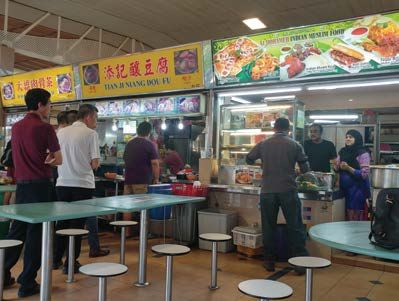
45

                                                                                                       essay
                                                                                            01

                                       02                                                   03

These incidences and the survey on racism      stranger, xenophobia might rear its ugly head.
are reminders that the work on diversity and   Nonetheless, there are everyday delightful
inclusion are never quite done.                examples that remind us that the “kampong
                                               spirit” is very much alive in Singapore—such      ISSUE 10 • JAN 2017
As a global city that attracts migrants        as Muslim families inviting their non-Muslim
from the world over and has an increasing      neighbours to “break fast” with them during
number of inter-ethnic marriages, Singapore    Ramadan season at their common corridor
will need to build on the foundations it       outside their homes.
has put in place to manage an increasingly
diverse society.                               Amid the fast paced city life where routines
                                               can grate, taking individual responsibility to
The transnational challenges of security       promulgate a curiosity towards learning about
threats and unemployment woes due              others, a spirit of inclusivity, and a practice
to disruptions in the economy will test        of everyday conviviality can shape a collective
Singapore’s social resilience. And as people   culture that engenders a more socially
direct their anxieties at the foreigner        progressive society and liveable city for all.
You can also read


