Maintaining skin health and integrity for staff wearing personal protective equipment for prolonged periods: a practical tip sheet
←
→
Page content transcription
If your browser does not render page correctly, please read the page content below
Coyer et al.                                                                                                 PI prevention for PPE

Original article

Maintaining skin health and integrity
for staff wearing personal protective
equipment for prolonged periods:
a practical tip sheet
Coyer F, Coleman K, Hocking K, Leong T, Levido A and Barakat-Johnson M

Keywords personal protective equipment, pressure injury, device-related pressure injury, COVID-19
For referencing Coyer F et al. Maintaining skin health and integrity for staff wearing personal protective equipment for prolonged
periods: a practical tip sheet. Wound Practice and Research 2020; 28(2):75-83.
DOI https://doi.org/10.33235/wpr.28.2.75-83

                                                                   Abstract
  Fiona Coyer* RN, MSc Nursing, PhD
                                                                   Patient skin injuries associated with medical or therapeutic
  Professor of Nursing, Conjoint appointment with
  the School of Nursing Queensland University of                   devices are increasingly reported in the literature. With the
  Technology and Royal Brisbane and Women’s                        coronavirus (COVID-19) pandemic, healthcare staff are
  Hospital, QLD                                                    wearing personal protective equipment (PPE) for prolonged
  Visiting Professor, Institute for Skin Integrity and             periods. Anecdotally, cases of healthcare workers’ self
  Infection Prevention, University of Huddersfield, UK             report of injuries to their face, particularly the bridge of
  Email f.coyer@qut.edu.au                                         the nose, upper cheek, forehead and above the ears, as
                                                                   a result of extended use of eye protection and masks is
  Kerrie Coleman RN, BNSc, MN Clinical (Wound),                    increasing. Protecting the skin of frontline healthcare staff
  MN (Chronic Disease NP)                                          is as important as protecting patients’ skin. The tip sheet
  Nurse Practitioner Complex Wound Management,                     presented in this paper provides staff with a guide in the
  Royal Brisbane and Women’s Hospital, QLD                         form of written and visual assistance in order to reduce the
                                                                   risk of device-related pressure injuries (DRPIs) in healthcare
  Kathy Hocking RN, Grad Dip (Wound Care)
                                                                   staff caused by PPE.
  Acting Clinical Nurse Consultant Skin Integrity
  Service, Royal Brisbane and Women’s Hospital,
  QLD
                                                                   Key points
                                                                   What is already known about this topic
  Tom Leong RN, MNursing
                                                                   • Patient skin injuries related to medical or therapeutic
  Clinical Nurse Consultant, Skin Integrity and Wound
                                                                     devices are reported in the literature with increasing
  Management, Royal Prince Alfred Hospital, NSW
                                                                     frequency.
  Annabel Levido RN, BN, GradCert (Critical Care                   • Healthcare staff caring for COVID-19 positive patients
  Nursing), MAppManagament (Nursing)                                 must wear personal protective equipment (PPE) for
  Clinical Nurse Nursing Research, Intensive Care                    prolonged periods, resulting in skin injuries seen on their
  Services, Royal Brisbane and Women’s Hospital,                     faces and ears caused by masks and eye wear.
  QLD                                                              • There is scant empirical evidence on staff experiencing
  Michelle Barakat-Johnson RN, MNursing, PhD                         PPE-associated pressure injuries.
  Skin Integrity Lead, Sydney Local Health District,
                                                                   What this manuscript contributes
  NSW
  Senior Lecturer, Faculty of Medicine and Health,                 • This manuscript reports the rapid development of a tip
  University of Sydney, Camperdown, NSW                              sheet for staff wearing PPE for prolonged periods to
  Adjunct Associate Professor, School of Nursing,                    protect their facial skin.
  Queensland University of Technology, QLD                         • Pre-emptive skin care practices to reduce the risk of PPE-
                                                                     associated pressure injuries are important to develop and
  * Corresponding author
                                                                     disseminate.

                                                             75                                 Volume 28 Number 2 – June 2020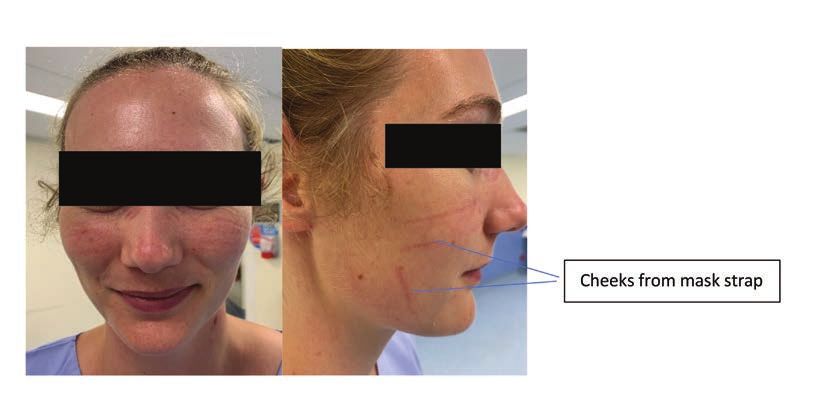
Coyer et al.                                                                                                      PI prevention for PPE

                                                                       to protect its user, the healthcare staff, against physical harm
 Figure 1. Clinician wearing PPE.
                                                                       or hazards present in the workplace environment. This harm
                                                                       or hazard may be evident from breathing in contaminated
                                                                       air or droplet aerosols and droplet particles or splash to
                                                                       the eyes5. Healthcare staff are now faced with wearing PPE
                                                                       for extensive time periods, including 8- and 12-hour shifts.
                                                                       Consequently, staff have reported, largely through a variety
                                                                       of social media platforms, injuries to the skin of their face,
                                                                       particularly the bridge of the nose, upper cheek, forehead
                                                                       and above the ears, as a result of extended wear of eye wear
                                                                       and masks (Figures 2 and 3).

                                                                       These injuries fall into the category of device-related pressure
                                                                       injuries (DRPI). DRPI was defined by a recent consensus
                                                                       panel as injuries that “involve interaction with a device
                                                                       or object that is in direct or indirect contact with skin or
                                                                       implanted under the skin, causing focal and localised forces
Background                                                             that deform the superficial and deep underlying tissues. A
Severe acute respiratory syndrome coronavirus-2 (SARS-                 device-related pressure ulcer/injury, which is caused by a
COV-2), also known as coronavirus (COVID-19), is a viral,              device or object, is distinct from a pressure injury, which is
highly infectious disease causing mild, moderate and severe            caused primarily by body weight forces. The localised nature
respiratory symptoms. COVID-19 has spread rapidly and                  of device forces results in the appearance of skin and deeper
widely in mainland China, with significant local transmission          tissue damage that mimics that of the device in shape and
occurring in other countries across all continents (excluding          distribution”8(pS5). DRPI located on the skin are staged using
Antarctica) and increasing numbers of infections occurring             the cutaneous pressure injury Stages 1–4, unstageable
globally. On 11 March 2020, the World Health Organization              or deep tissue pressure injuries9. Of late there has been
declared COVID-19 a global pandemic1. As at 3 June 2020,               increased attention given to, and reporting of, empirical work
COVID-19 global mortality is 6% (379,941 deaths from                   related to DRPI10–15, leading to the inclusion of this injury
6,287,771 confirmed cases)2. The healthcare response to                in the recent Prevention and treatment of pressure ulcers/
COVID-19 has mobilised vast numbers of healthcare staff,               injuries: clinical practice guideline (known as the International
with facilities now operating dedicated, separate areas or             guideline)9.
wards to care for COVID-19 positive patients in isolation3,4.
                                                                       However, literature associated with DRPI is usually made
Consequently, it is mandatory for staff working in COVID-19            with reference to patients. There is a dearth of literature
dedicated areas to wear personal protective equipment (PPE)            exploring this phenomenon in healthcare staff wearing PPE.
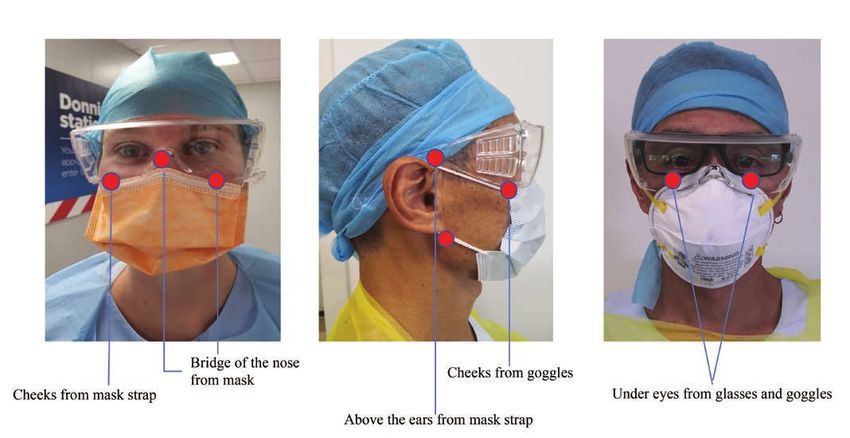
for contact and airborne precautions5–7. PPE, in this instance,        Areas susceptible to unrelieved focal and localised forces
includes a long-sleeve gown, disposable non-sterile gloves,            that deform the tissues are illustrated in Figure 4. Following
eye wear (disposable safety glasses and / or full-face visor),         the SARS outbreak in 2003, Foo et al.16 surveyed healthcare
respiratory protective equipment (for example N95 respirator           staff and identified that 35% of staff (109/307) reported
masks) and protective hair covers (Figure 1). PPE is intended          adverse skin reactions, including rashes and itch, when

  Figure 2. ICU RNs with facial skin injuries from PPE.

Wound Practice and Research
                                                                  76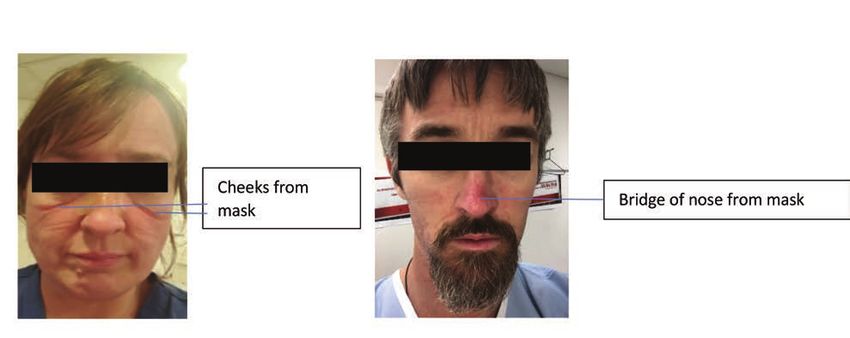
Coyer et al.                                                                                                   PI prevention for PPE

               Figure 3. Clinician with areas of pressure after 1 hour of wearing a mask.

wearing face masks for an average duration of 8 hours per              prevention of skin lesions caused by PPE. This is supported
day. Interestingly, Foo and colleagues16 did not identify any          by an updated overview from the Nurses Specialising
adverse skin reactions as pressure injuries or DRPI, possibly          in Wound, Ostomy and Continence Canada (NSWOCC)
because of the retrospective nature of their survey which              organisation19. Both documents highlight the concern for
used self-reporting and a lack of a DRPI definition at the             PPE-related skin injury and outline standardised approaches
time of the publication. These experiences and injuries are            for healthcare staff to address skin hygiene and injury
similar to those of patients who wear masks for non-invasive           prevention when wearing PPE. The National Pressure Injury
ventilation over a prolonged period17.
                                                                       Advisory Panel (NPIAP) in the United States have published
Promoting skin health and maintaining skin integrity for               a position statement on preventing skin injury with N95
frontline staff wearing PPE for extended and regular periods           masks20 and information tips for staff to consider to protect
when caring for COVID-19 patients is paramount. Globally,              their skin under the N95 face masks21. Of note, the NPIAP
professional wound care organisations are collaborating                position paper does not provide a recommendation for the
to address this issue, and work in this area is emerging               application of thin prophylactic dressings under face masks,
rapidly. The Portuguese Wound Management Association                   arguing that the risk of COVID-19 infection through this
(APTFeridas)18 released a global consensus statement for the           practice has not been determined. Instead, the clinicians are

   Figure 4. Areas susceptible to unrelieved focal and localised forces that deform the tissues

                                                                77                                Volume 28 Number 2 – June 2020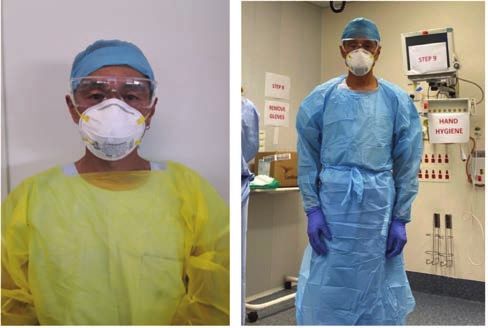
Coyer et al.                                                                                                        PI prevention for PPE

advised to weigh the risks and benefits of this practice and            expert group using key communication strategies to attract
consider their local facility policies20.                               the readers’ attention and promote ease of understanding
                                                                        with straightforward provision of key information24.
Given the impact of the COVID-19 global pandemic on
healthcare staff, interventions to assist staff wellbeing are           A near final draft was then circulated to senior nursing
paramount22. The aim of this paper is to present a tip sheet to         leadership in the intensive care service of one facility for
assist in preventing the occurrence of DRPI in staff wearing            their review and comment. Changes to the tip sheet were
PPE for prolonged periods.                                              then made and consensus achieved within the expert group.
                                                                        The tip sheet was circulated to staff in the intensive care
Methods                                                                 units and the COVID clinics of two healthcare facilities,
We formed a local expert group comprised of six skin                    one in Queensland and one in New South Wales, using
integrity specialists and researchers in two Australian states,         multiple strategies such as email, posters displayed in
Queensland and New South Wales. We used an iterative                    prominent clinical areas, word of mouth and the expert
consensus process for group decision-making where                       group members providing information face-to-face. We also
information generated from iteration was disseminated to                placed a poster of the tip sheet at the PPE donning station
group members via email; this supported the group members’              as a visual prompt. This was accompanied by baskets of the
decision-making through structured discussion23.                        appropriate prophylactic dressings and materials/product
                                                                        supplies placed with the PPE in the clinical PPE robing to
We classified a prolonged period in PPE as greater than
                                                                        ensure easy access for staff.
2 hours. Consultation was also carried out with infection
control experts, along with a brief safety trial of the proposed        Feedback was sought from staff via email or verbal face-to-
strategies conducted by expert group members to ensure                  face communication with one of the authors at each facility.
correct fit and seal of the masks was maintained as per local
state guidelines6,7. We sought email feedback from staff on             Results
their experiences of applying and wearing the skin protection
                                                                        The tip sheet provides staff with information on skin
strategies.
                                                                        protection (Figure 5), the principles involved (Figure 6), and
We used communication via email; emails were distributed                a step-by-step guide to preparing and applying a quick and
to all group members using the ‘reply all’ function. Key                efficient method of skin protection using a dressing foam
documents available at the time8,18–21 were disseminated to             pad (Figure 7) and a silicone tape and adherent prophylactic
the group to inform group decision-making. Further, content of          dressing (Figure 8). The suggested prophylactic dressings
the tip sheet was determined by local availability of products.         and materials proposed in the tip sheet were chosen based
                                                                        on clinical availability and expert opinion. Further options for
All group members replied to indicate their suggestions for,            staff who are allergic to silicone or protective rubber gloves
and agreement with, content and proposed changes. Changes               are provided in Figure 9.
to text and comments made to the tip sheet were performed
using the edit and track changes function in Microsoft Word             Feedback was received from 12 staff members; this
(Microsoft Office, 2016). Each change, or iteration, achieved           highlighted two key issues – fading/reduction of skin redness
100% group agreement. The tip sheet was developed by the                and slippage of prophylactic dressings.

  Figure 5. Skin protection information                                   Figure 6. Principles involved in skin protection

  • Wearing of PPE masks and eye protection when caring                   • Skin protection tips should be applied at the discretion
    for COVID-19 patients or undertaking screening/                         of each RN.
    swabbing procedures for prolonged periods causes                      • Facial prophylactic dressings are single use only.
    sweating and areas of pressure points on all areas of
                                                                          • Facial skin protection should be applied after hand
    the skin in contact with PPE, for example the bridge
                                                                            hygiene and first before donning PPE.
    of the nose, cheek bones and above the ears.
                                                                          • Each time prophylactic dressings are applied to the
  • Follow the intensive care unit/hospital policy for the
                                                                            face, the integrity of the seal of the mask (PPE) must
    use, and application, of PPE.
                                                                            be checked.
  • Use of a skin barrier protectant (e.g. Cavilon™)
                                                                          • Facial skin protection should be removed as the last
    and a dressing pad (Mepilex® Lite) or silicone tape
                                                                            step when removing PPE.
    (Mepitac® or Sofsicure®) as an interface between PPE
    and the skin to alleviate pressure, shear and friction is
    recommended.

Wound Practice and Research
                                                                   78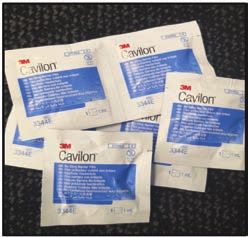
Coyer et al.                                                                                                       PI prevention for PPE

Figure 7. Step-by-step guide to preparing and applying a quick and efficient method of skin protection using a dressing foam pad

 Step 1                                Step 2                             Step 3                         Step 4

 Wash hands. Apply no                  Use 1 single Mepilex® Lite*        Follow the template.           Final cut shapes.
 sting barrier film wipe* (e.g.        dressing 10cm x 10cm OR
                                                                          Cut the dressing in half.      Adjust or recut the dressing
 Cavilon™) to the face where           DouDERM® Extra Thin.
                                                                                                         to suit your facial shape and
 the dressing will be applied.                                        Cut the two diagonal cuts
                                       The dressing will be cut in                                       the pressure points of the
 Allow to dry before applying                                         (2 & 3) to give 2 triangles.
                                       half.                                                             mask on your face – cheeks
 the dressing.                                                        Cut the edges of the large
                                                                                                         and nose.
                                       Place the unused half back in triangle to fit your nose.
                                       the plastic dressing packet,
                                                                      Option: Use the other half
                                       label the packet with your
                                                                      of the dressing, cut in two
                                       name and store the packet
                                                                      pieces, to wrap around each
                                       in a clean safe place for your
                                                                      arm of your eye wear to
                                       second application OR use
                                                                      protect your ears.
                                       the remaining half to protect
                                       your ears – see next step.

 Step 5                                Step 6                             Step 7                         Step 8

 Wash hands. Apply the                 Apply the cut dressing             Wash hands. Apply the face     Wash hands. Apply the hair
 triangles from the 2nd and            section to the bridge of your      mask.                          cover and eye shield. Wash
 3rd cuts to your cheek.               nose.                                                             hands.

* The use of products in this tip sheet is off label

                                                                     79                                Volume 28 Number 2 – June 2020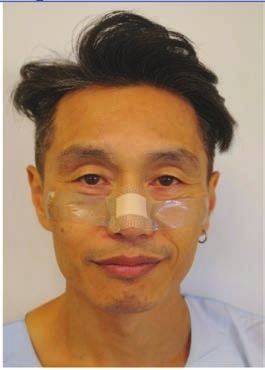
Coyer et al.                                                                                                        PI prevention for PPE

Figure 8. Step-by-step guide to preparing and applying a quick and efficient method of skin protection using a silicone tape and an
adherent prophylactic dressing

 Step 1                                                Step 2                                  Step 3

 As in previous tips sheet, wash hands                 Use 1 single Mepilex® Border Lite       Peel backing.
 and apply a no sting barrier film wipe                dressing* 4cm x 5cm for the bridge of
                                                                                               Apply Mepilex® Border Lite dressing*
 (e.g. Cavilon™)* to the face where the                the nose.
                                                                                               4cm x 5cm to the bridge of the nose.
 dressing will be applied. Allow to dry
 before applying the dressing.

 Step 4                                                Step 5                                  Step 6

 For the cheeks and under the eyes, use                Remove from packaging.                  Apply SofSicure®* or Mepitac®* fixation
 SofSicure®* or Mepitac®* fixation tape.                                                       tape to the cheeks under the eyes
                                                       With clean hands, tear or cut off a
                                                                                               where the face mask will be applied
 These tapes are easy to tear, are                     piece of tap (approximately 6 to 8cm
                                                                                               and above the ears to protect from the
 breathable, conform to the face and                   depending on face size).
                                                                                               friction caused by the mask straps.
 are designed to reduce pain, shear and
                                                                                               Wash hands.
 friction and are gentle on removal.

* The use of products in this tip sheet is off label

Wound Practice and Research
                                                                        80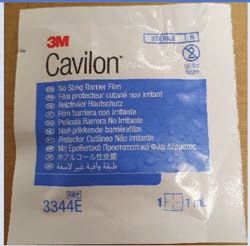
Coyer et al.                                                                                                   PI prevention for PPE

                                                                      Mepilex Border Lite® and SofSicure® were very easy to
  Figure 9. Further options for staff who are allergic to             remove and did not cause any pain [RN2].
  silicone or protective rubber gloves
  • Those staff members allergic to silicone can use               Discussion
    Comfeel® Plus Transparent (Coloplast) dressing in the
                                                                   This tip sheet presents a concise and staged approach to
    same manner.
                                                                   developing skin protection for staff wearing PPE. All PPE
  • For irritant dermatitis caused by prolonged wear of            should be donned and removed as per local policies. This tip
    disposable protective rubber gloves, consider use
                                                                   sheet focused on relief of pressure from face masks and eye
    of a barrier hand cream, such as Silic 15™ (Ego), to
                                                                   wear. It is intended as a rapid quick guide to be laminated
    be applied as the last step before donning protective
                                                                   and placed in the clinical area where staff are donning PPE.
    gloves.
                                                                   We used four types of thin prophylactic dressings, Mepilex®
                                                                   Lite, a self-adherent, easy to cut, soft silicone foam dressing
                                                                   to minimise trauma to the facial skin, DuoDERM® Extra Thin,
Fading/reduction of skin redness                                   a hydrocolloid dressing to prevent skin breakdown from
Feedback included the following:                                   friction, and Mepilex® Border Lite for the bridge of the nose.
                                                                   We chose thin prophylactic dressings to ensure comfort
   I initially used a FLUIDSHIELD* N95 Filter Respirator
                                                                   while maintaining the integrity of the seal of the mask25–27.
   (Halyard Health). My nose and cheekbones were heavily
                                                                   We consulted with infection control services that endorsed
   marked for more than 2 hours, without skin breakdown.
                                                                   the use of the prophylactic dressings providing the mask has
   I then put on the Mepilex Lite® (Mölnlycke®) [dressing]. It
                                                                   a good seal. We also used silicone fixation tape (Mepitac®
   sealed better. Marks on my cheekbones faded noticeably
                                                                   [Mölnlycke®] and SofSicure®) that is easy to tear, breathable,
   within an hour [RN1].
                                                                   conforms to the face and designed to reduce shear and
   On my first break I noticed I had a lot of redness from my      friction. Mepitac® and SofSicure® are gentle on removal to
   duckbill mask – particularly on the bridge of my nose. After    reduce pain28. To improve prophylactic dressing adherence
   noticing this, I used the supplied Mepilex Lite® [dressing]     in potentially humid conditions with prolonged PPE wear, we
   as protection; however, it weakened the seal of the mask        recommend the application of a barrier, for example Cavilon™
   and made the mask slip down slightly [RN5].                     No Sting Barrier Film wipe, an alcohol-free terpolymer barrier
                                                                   that provides a protective coating on the facial areas where
   I changed to a 3M™ N95 [mask] due to constant leaks and
                                                                   the dressings will be applied27,29. When applying the barrier
   fogging of my glasses with the FLUIDSHEILD*. The bridge
                                                                   film, wiping the eye area should be avoided.
   of my nose was not red or marked when I wore the 3M™
   one as it already has foam on the nose bridge. However,         We opted for simple cut-out steps for the prophylactic
   my cheekbones were heavily marked. This largely resolved        dressings. Further, for the template prophylactic dressing
   with the Mepilex Lite® [RN3].                                   cutting option we suggested the use of one single prophylactic
   When I first wore my mask and googles, I experienced a lot      dressing per time; a saving of resources. Staff may individualise
   of pain on the bridge of my nose and above my ears. My          the template and cut the prophylactic dressing to suit their
   nose and cheeks were red. I used the SofSicure® [Sentry         own facial contours. We acknowledge that the use of the
   Medical] [silicone fixation] tape behind my ears and across     prophylactic dressings and tape as suggested in this tip
   my cheeks, as well as the Mepilex® Border Lite 4 x 5 [cm]       sheet is off label. The strategies suggested in this tip sheet
   on the bridge of my nose, it provided a lot of relief and I     are intended to minimise the forces of friction and pressure
   did not get red marks [RN2].                                    as well as moisture and humidity caused by the prolonged
                                                                   wear of PPE, especially masks. As such, they are the basis
Slippage of prophylactic dressings                                 of a degree of trial and error and the tip sheet is a fluid, living
Feedback included the following:                                   document. Further, each clinician should weigh the risks and
                                                                   benefits and individualise the suggested strategies to suit
   I found that applying a Cavilon™ wipe [3M™] before              their own unique facial contours. However, the underlying
   putting on the Mepilex Lite®, reduced the movement. I           principle of adherence to local infectious disease guidelines6,7
   found it to be a must [RN1].                                    remains – that the integrity of the seal of the mask must be
   I tried DuoDERM® Extra Thin [ConvaTEC], as suggested by         checked before entering the isolation room or bedspace and
   other nursing staff. This was very easy to apply and stuck      that the seal must be maintained throughout.
   very well for long hours. However, it was very painful to
                                                                   The skin should be protected by cleaning prior to the
   remove [RN4].
                                                                   application of barrier films and prophylactic dressings. In
   The SofSicure® on my cheeks and Mepilex Border Lite® on         line with best practice guides to prevent DRPI in patients9,30,
   the bridge of my nose, did not get sweaty like the sticky       a recent international consensus document on DRPI8,
   hydrocolloid dressings I used the other day. Both the           and a professional organisation’s position statements20,

                                                              81                                 Volume 28 Number 2 – June 2020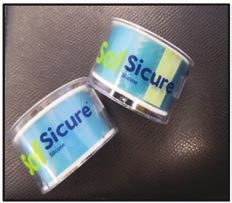
Coyer et al.                                                                                                            PI prevention for PPE

we recommend for healthcare staff that the prophylactic                 3. World Health Organization. Infection prevention and control
dressing interface between the skin and PPE, and the facial                during health care when novel coronavirus (nCoV) infection is
                                                                           suspected: interim guidance; 2020. Available from https://www.
skin, should be assessed at least 4-hourly. Finally, following
                                                                           who.int/publications-detail/infection-prevention-and-control-
removal of PPE according to local facility guidelines and the              during-health-care-when-novel-coronavirus-(ncov)-infection-is-
prophylactic dressings, the skin should be cleansed and a                  suspected-20200125
moisturiser applied18–21.
                                                                        4. ANZICS. The Australian and New Zealand Intensive Care Society
                                                                           (ANZICS) – COVID-19 guidelines, version 1; 2020. Available from
Future work in this field                                                  https://mcusercontent.com/03cbd5b8a6d36c351c46c235e/
Previous literature addressing this issue is scant16 and                   files/86e36972-a552-45da-8eab-8fd8c52a788d/ANZICS_
                                                                           COVID_19_Guidelines_Version_1.pdf
reference is only made to skin lesions such as rash, itching or
erythema in staff wearing PPE. With the COVID-19 pandemic,              5. Australian Government, Department of Health. Australia health
                                                                           sector emergency response plan for novel coronavirus (COVID-
we now see evidence, largely through numerous social media
                                                                           19). Australian Government; 2020. Available from https://www.
channels, of skin injuries caused by PPE present on the                    health.gov.au/resources/publications/australian-health-sector-
faces of healthcare staff (Figures 2 and 3). We suggest that               emergency-response-plan-for-novel-coronavirus-covid-19
such skin injuries are DRPI and should be assessed, staged
                                                                        6. New South Wales Government. Clinical Excellent Commission.
and recorded or documented as such. Further research is                    Personal protective equipment; 2020 [cited 2020 Apr 14].
needed in this field to identify the prevalence and incidence              Available from: http://cec.health.nsw.gov.au/keep-patients-safe/
of DRPI in healthcare staff caused by PPE in order to                      COVID-19/standard-and-transmission-based-precautions-
evaluate the maintenance of integrity of mask function when                including-ppe.
a prophylactic dressing is applied.                                     7. Queensland Government. Interim infection prevention and
                                                                           control guidelines for the management of COVID-19 in healthcare
Limitations                                                                settings. Version 1.10; 27 March 2020.
There are some acknowledged limitations to this work,                   8. Gefen A, Alves P, Ciprandi G, Coyer F, Milne C, Ousey K,
namely the need to extrapolate evidence and guidance                       Ohura N, Waters N, Worsley P. Device-related pressure ulcers:
                                                                           SECURE prevention. J Wound Care 2020;29(Sup2a):S1–S52.
from other contexts (DRPI experienced by patients) (indirect
                                                                           doi:10.12968/jowc.2020.29.Sup2a.S1
evidence) when direct clinical evidence on this issue is
unavailable. In the interest of meeting an urgent clinical need,        9. European Pressure Ulcer Advisory Panel (EPUAP), National
                                                                           Pressure Injury Advisory Panel (NPIAP), Pan Pacific Pressure
we used an iterative group consensus process to facilitate
                                                                           Injury Alliance (PPPIA). Prevention and treatment of pressure
rapid development of a tip sheet. Use of a structured Delphi               ulcers/injuries: clinical practice guidelines. The international
process for future work in this area would provide reliable                guideline. 3rd ed. Emily Haesler, editor. EPUAP, NPIAP, PPPIA;
quantifiable group response and participant anonymity.                     2019.
                                                                        10. Coyer FM, Stotts NA, Blackman VS. A prospective window into
Conclusion                                                                  medical device-related pressure ulcers in intensive care. Int
                                                                            Wound J 2014;11(6):656–64.
The occurrences of DRPI in frontline healthcare staff wearing
PPE is an emerging and significant issue. These tip sheets              11. Black J, Alves P, Brindle CT, Dealey C, Santamaria N, Call
provide a quick overview and potential solution options for                 E, Clark M. Use of wound dressings to enhance prevention
                                                                            of pressure ulcers caused by medical devices. Int Wound J
healthcare staff to protect their skin. Further empirical work
                                                                            2015;12(3):322–7.
is required to address this issue and disseminate effective,
                                                                        12. Edsberg LE, Black JM, Goldberg M, McNichol L, Moore L,
practical, evidence-based solutions.
                                                                            Sieggreen M. Revised national pressure ulcer advisory panel
                                                                            pressure injury staging system. J Wound Ostomy Continence
Conflict of interest                                                        Nurs 2016;43(6):585–97.
The authors declare no conflicts of interest.                           13. Hanonu S, Karadag A. A prospective, descriptive study to
                                                                            determine the rate and characteristics of and risk factors for
Funding                                                                     the development of medical device-related pressure ulcers in
                                                                            intensive care units. Ostomy Wound Manag 2016;62(2):12–22.
The authors received no funding for this study.
                                                                        14. Barakat-Johnson M, Barnett C, Wand T, White K. Medical
                                                                            device-related pressure injuries: an exploratory descriptive
References                                                                  study in an acute tertiary hospital in Australia. J Tissue Viability
1. World Health Organization. Coronavirus disease 2019                      2017;26(4):246–53.
   (COVID-19) situation report 51; 2020 [cited 2020 Jun 4].
   Available from: https://www.who.int/docs/default-source/             15. Barakat-Johnson M, Lai M, Wand T, White K, Coyer F. The
   coronaviruse/situation-reports/20200311-sitrep-51-covid-19.              incidence and prevalence of medical device-related pressure
   pdf?sfvrsn=1ba62e57_10                                                   injuries in intensive care: A systematic review. J Wound Care
                                                                            2019;28(8):1–8.
2. World Health Organization. Coronavirus disease 2019
   (COVID-19) situation report 135; 2020 [cited 2020 Jun 4].            16. Foo CCI, Good ATJ, Leow Y-H, Goh C-L. Adverse skin reactions
   Available from: https://www.who.int/docs/default-source/                 to personal protective equipment against severe acute respiratory
   coronaviruse/situation-reports/20200603-covid-19-sitrep-135.             syndrome – a descriptive study in Singapore. Contact Dermatitis
   pdf?sfvrsn=39972feb_2                                                    2006;55:291–294.

Wound Practice and Research
                                                                   82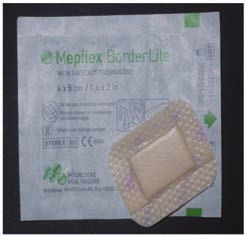
Coyer et al.                                                                           PI prevention for PPE

17. Alqahtani JS, AlAhmari MD. Evidence based synthesis for
    prevention of noninvasive ventilation related facial pressure
    ulcers. Saudi Med J 2018;39(5):443–452. doi:10.15537/
    smj.2018.5.22058.
18. Alves P, Moura A, Vaz A, Ferreira A, Malcato E, Mota F,
    Afonso G, Ramos P, Dias V, Homem-Silva P. PRPPE guideline
    COVID-19: prevention of skin lesions caused by personal
    protection equipment (face masks, respirators, visors and
    protection glasses. Portuguese Wound Management Association
    (APTFeridas). J Tissue Heal Regen 2020; Education Supp, 15
    March.
19. Le Blanc K, Heerschap C, Butt B, Bresnai-Harris J, Wiesenfeld
    L. Prevention and management of skin damage related to
    personal protective equipment: update 2020. Nurse Specialized
    in Wound, Ostomy and Continence Canada (NSWOCC); 2020.
    Available from: www.nswoc.ca/ppe
20. National Pressure Injury Advisory Panel (NPIAP). Position
    statement on preventing injury with N95 masks; 2020. Available
    from: https://cdn.ymaws.com/npiap.com/resource/resmgr/
    position_statements/Mask_Position_Paper_FINAL_fo.pdf
21. National Pressure Injury Advisory Panel (NPIAP). Protecting
    facial skin under PPE N95 face masks; 2020. Available from:
    https://cdn.ymaws.com/npiap.com/resource/resmgr/position_
    statements/NPIAP_-_Mask_Injury_Infograp.pdf
22. Gefen A. Skin tears, medical face masks and Coronavirus.
    Wound Manage Prevent 2020 Apr;66(4):6–7.
23. Lee Y, Park YB. A proposal of iterative consensus process
    for group decision making. 2019 International Conference on
    Platform Technology and Service (PlatCon), Jeju, Korea (South),
    2019, pp.1-4, doi:10.1109/PlatCon.2019.8668957.
24. Arnold EC, Boggs KU. Interpersonal relationships e-book:
    professional communication skills for nurses. Elsevier Health
    Sciences; 2019.
25. Schallom M, Cracchiolo L, Falker A, Foster j, Hager J, Moorehouse
    T, Watts P, Weems L, Kollef M. Pressure ulcer incidence
    in patients wearing nasal-oral versus full-face noninvasive
    ventilation masks. Am J Crit Care 2015;24(4):349–356.
26. Cohen LP, Ovadia-Blechman Z, Hoffer O, Gefen A. Dressings
    cut to shape alleviate facial tissue loads while using an oxygen
    mask. Int Wound J 2019;16:813–826.
27. Field MH, Rashbrook JP, Rodriques JN. Hydrocolloid dressing
    strip over bridge of nose to relieve pain and pressure form filtered
    face piece (FFP) masks during the coronavirus (COVID-19)
    pandemic. Ann R Coll Surg Engl 2020;102:391–396.
28. Taroc AM. Staying out of sticky situations: how to choose the
    right tape for your patient. Wound Care Advis 2015;4(6):21–26.
    Available from: https://www.myamericannurse.com/staying-
    sticky-situations/
29. Anderson D. Wound dressings unravelled. In Practice 2003;
    25(2):70–83.
30. National Pressure Injury Advisory Panel. Best practices for
    prevention of medical device-related pressure ulcers in critical
    care; 2020 February.

                                                                       83   Volume 28 Number 2 – June 2020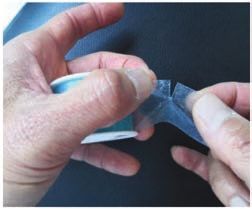
You can also read


