Indiana Vape-Free Schools - Updated January 2020 - IN.gov
←
→
Page content transcription
If your browser does not render page correctly, please read the page content below
Indiana
Vape-Free Schools
          Toolkit

          Updated January 2020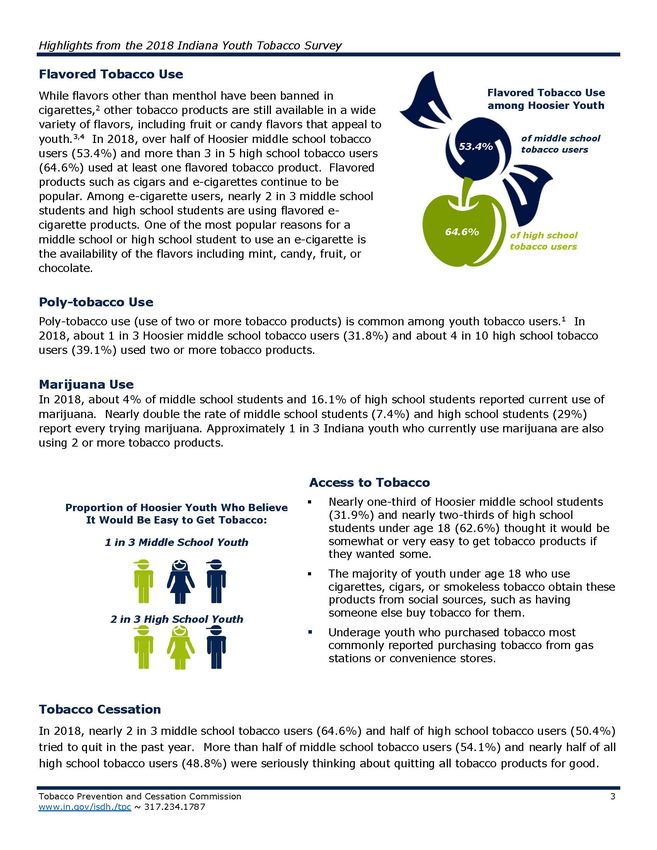
Introduction
This toolkit provides resources for Indiana school staff, including administrators, teachers and health
services staff, who are working to address the use of tobacco products, especially e-cigarettes in schools.
This toolkit outlines opportunities for action that can be taken by various school staff with support of
community partners.

            The Indiana State Department of Health Tobacco Prevention and Cessation program and
                 network of local partners are ready to assist your school with these resources.

                                     317.234.1787 | in.gov/isdh/tpc
background
Youth Tobacco Use

Preventing youth from using tobacco products can save lives and money and improve the future of our
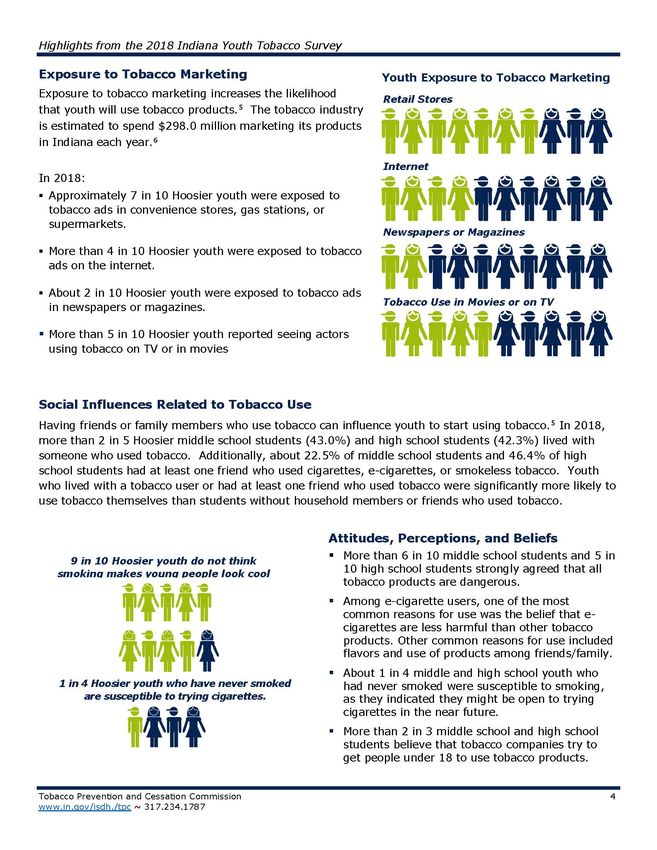
state. Each year, approximately 3,100 Hoosier youth become new regular, daily smokers, and an
estimated 151,000 Indiana youth currently under age 18 will ultimately die prematurely from smoking.
Early tobacco use leads young people to a lifelong addiction and can cause specific health problems,
such as early cardiovascular damage, reduced lung function and decreased lung growth, and a reduced
immune function.

There has been substantial progress in reducing youth tobacco use in Indiana, as current use of several
tobacco products declined significantly among Hoosier youth between 2000 and 2018. In particular,
current cigarette smoking declined from 9.8% to 1.9% among middle school students and from 31.6% to
5.2% among high school students.

E-Cigarettes and other Vaping Products
Electronic cigarettes (e-cigarettes) are battery-operated devices that heat a liquid to produce an aerosol
that users inhale. This aerosol typically contains nicotine, flavorings, and other additives. The term e-
cigarette is often used to refer to a broad class of products also known as electronic nicotine delivery
systems (ENDS), which also includes electronic cigars (e-cigars), electronic hookahs (e-hookahs), vapor
(vape) pens, and other products. E-cigarettes are the most used tobacco product among youth.

Between 2016 and 2018, current use of e-cigarettes nearly doubled among Hoosier youth. Since 2012,
e-cigarette use among middle school and high school students has increased nearly fivefold. E-
cigarettes remained the most commonly used tobacco product among Indiana middle school (5.5%) and
high school (18.5%) students in 2018. Even higher rates of use were found for use of JUUL (6.0% and
24.2%) in 2018. E-cigarette use is strongly associated with use of other tobacco products among youth,
including cigarettes and other combustible tobacco products.

A new group of e-cigarette products that look like USB drives are called “pod mods.” One of the most
popular brands, JUUL (pronounced “jewel”), has grown quickly in popularity since introduction to the
market in 2015, fueled by a large following among youth and young adults. These JUUL and JUUL
“look-a-like” products contain nicotine salts, which allow users to ingest a higher amount of nicotine
without irritation that is often associated with traditional cigarettes. The increased use of these products
has become a concern for teachers and parents in Indiana.

Nearly all e-cigarettes contain nicotine. Nicotine is highly addictive and can harm the developing
adolescent brain. Because the brain is still developing until about age 25, youth and young adult
exposure to nicotine can lead to addiction and disrupt attention and learning. No amount of nicotine is
safe for youth.

Indiana Vape-Free Schools

what schools can do
Review and Strengthen Current policy
Tobacco-free spaces are a proven way to prevent youth tobacco use and protect students,
faculty, and visitors from secondhand smoke. Tobacco-free schools are one way to address the
increasing popularity of e-cigarettes and other vaping devices among youth. A tobacco-free
school policy prohibits any tobacco use by students, all school staff, parents, and visitors on
school property, in school vehicles, and at school-sponsored functions away from school property
24 hours a day. Additionally, A tobacco-free school policy should include effective and holistic
enforcement options for student violations beyond suspension and expulsion

Tobacco control coalitions have made progress working with school districts to amend their
tobacco-free school policies to include ENDS in the definition of tobacco products that are
prohibited. Currently, 286 school districts in Indiana (an increase from 120 school districts in SFY
2018), nearly 90 %, cover ENDS in their district policies.

                                                             List of tobacco-free schools,
                                                             including E-cigarettes:

                                                              o   Map of Indiana Counties with Tobacco-
                                                                  Free Public School Districts, Including
                                                                  E-Cigarettes
                                                                  (https://www.in.gov/isdh/tpc/files/TF%2
                                                                  0Schools%20w%20E-
                                                                  cigs%2001_2020.pdf)
                                                              o   Indiana Tobacco-Free School Policy
                                                                  Detailed List
                                                                  (https://www.in.gov/isdh/tpc/files/SCHO
                                                                  OLS_TOTAL%20LIST%20WEB_12_31
                                                                  _19%20cc.pdf)

Indiana Vape-Free Schools Toolkit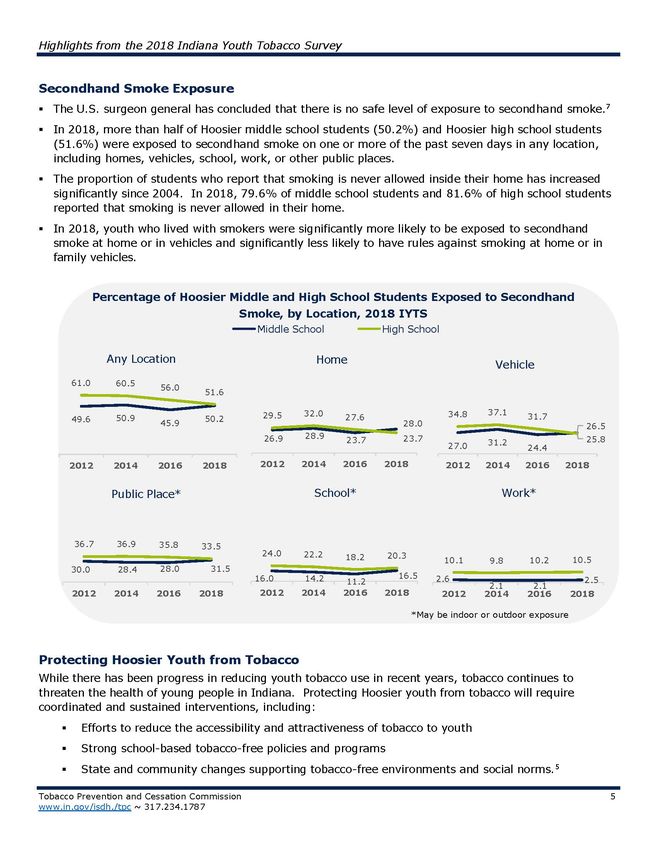
Tobacco-Free School Campus Policy Checklist:

In order for a school campus to be recognized as being tobacco-free, the language of the
school’s policy must express or imply that:

         possession or use of tobacco products in any form; such as, cigar, cigarette, pipe,
         chewing tobacco, electronic nicotine delivery devices/electronic cigarettes, etc.; is
         prohibited
         the adopted policy is effective 24 hours a day
         school buildings are tobacco-free
         school grounds are tobacco-free
         school vehicles are tobacco-free
         all students are subject to the policy’s regulations
         all staff are subject to the policy’s regulations
         all parents and visitors are subject to the policy’s regulations

  Schools are also encouraged to include additional components, such as:

         Require consistent enforcement and define consequences for violations of the policy for
         students, staff, and visitors
         Provide referrals to resources to help students and staff overcome addiction to nicotine
         and use of tobacco and vape products
         Provide annual notification of the tobacco-free and vape-free policy in school materials,
         including: handbooks, manuals, contracts, newsletters, and websites
         Require tobacco education for staff
         Make announcements about the policy at school-sponsored events
         Require tobacco education for students in the health education curriculum
         Provide supportive discipline options (non-punitive) for positive students outcomes

Indiana Vape-Free Schools Toolkit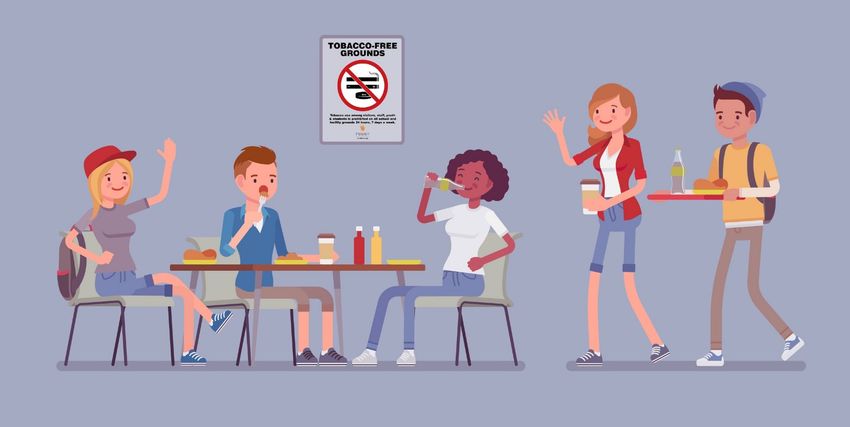
Responding to Common Questions about the Policy

Why does the policy have to cover       How are we going to get people to
all school property, not just indoors? comply with this policy?
•   Allowing tobacco or vape use on any school        •   Communication is key. Most people will
    property reinforces and normalizes use of             comply with the policy if they know it exists
    these products.                                       (see pages 18-24 for communication
                                                          strategies and resources).
•   Secondhand smoke, even outdoors, can be
    dangerous for people (especially youth) with      •   Consistently enforce the policy. When
    other health problems, such as asthma and             enforcement is consistent, people are much
    allergies.                                            more likely to comply (see page 25 for
                                                          compliance and enforcement resources).
•   Many vape products are easy to conceal,
    so banning any use or possession of
    tobacco and vape products is necessary
    to discourage students from using them in         Why does it have to include
    places like buses, classrooms or bathrooms.       visitors, contractors, and
                                                      maintenance workers, and how
                                                      can we get them to comply?
Why include staff and visitors, and
not just students?                                    •   Maintenance staff members are an important
                                                          part of the school staff. Their support of
•   Teachers, staff, and school visitors can be           student health and respect for school policies
    powerful role models for students. Seeing             is essential for tobacco-free and vape-free
    adults use tobacco and vape products can              schools.
    normalize use of these products for students.
                                                      •   Allowing exceptions for service providers or
•   Youth who don’t see the use of tobacco and            visitors creates a mixed message.
    vape products in their everyday environments
    are less likely to think the behavior is normal   •   Visitors, contractors, construction crews,
    and acceptable, and they are less likely to           and maintenance workers are not subject to
    start using these products.                           certain school rules and exempt from others.
                                                          Enforce school tobacco and vape policies
•   Secondhand smoke contains over 7,000                  just as you enforce all other policies, such
    chemicals, with about 70 that are known to            as those prohibiting the use of alcohol and
    be harmful or cause cancer. There is no risk-         firearms.
    free level of secondhand smoke exposure.
    The only way to fully protect youth from the
    dangers of secondhand smoke is through
    100% smoke-free environments.

Indiana Vape-Free Schools Toolkit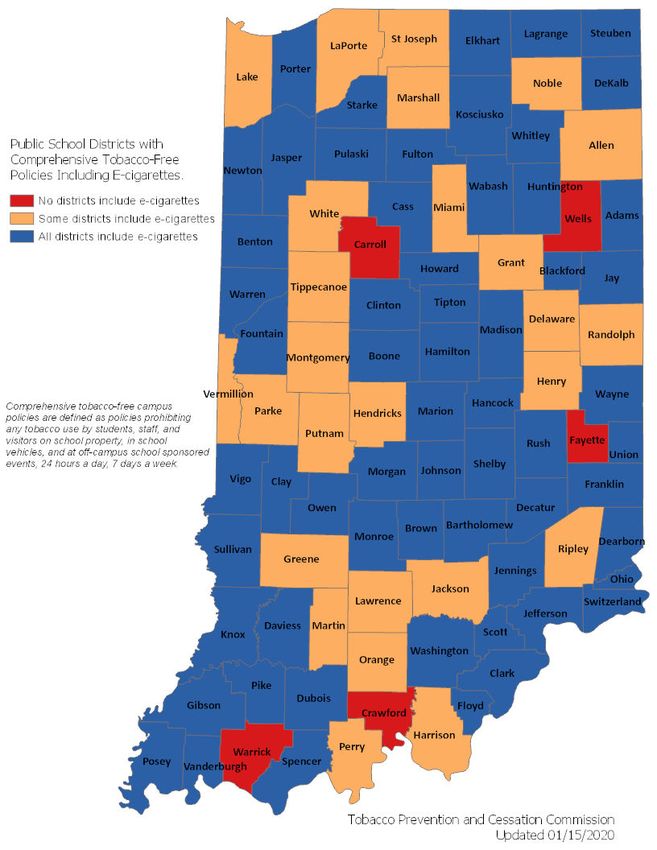
Responding to Common Questions about the Policy

Why athletic events?                                Why does the policy prohibit
                                                    electronic smoking devices
•   Tobacco use has been historically promoted
    by the tobacco industry through sporting        (e-cigarettes) regardless of what
    events such as baseball, rodeo, and football.   they contain?
    Refraining from tobacco and e-cigarette use
    at school athletic events supports a healthy    •   E-cigarette possession and use is against
    environment for everyone and helps de-              school policy, regardless of whether the liquid
    normalize tobacco and e-cigarette use.              used in the device contains nicotine.

                                                    •   Many e-cigarette liquids contain nicotine,
                                                        which causes addiction, may harm brain
Why does the policy require                             development, and could lead to the use of
schools to provide referrals to                         other tobacco products among youth.3
cessation resources?
                                                    •   E-cigarette use models nicotine and tobacco
•   Many cessation resources, or services that          use for youth, regardless of the liquid used.
    help people quit smoking, are available over
    the phone or online. Providing the websites     •   Because many different liquids can be
    and phone numbers to these resources is a           used in an e-cigarette, school staff cannot
    simple way for schools to demonstrate their         definitively determine whether an e-cigarette
    commitment to the health of all students,           contains nicotine or other chemicals (such as
    staff, and visitors.                                liquid THC, a marijuana extract).

•   Why does the policy                             •   E-cigarette aerosol is not water vapor. In
    include holistic enforcement                        addition to nicotine, e-cigarette aerosol can
                                                        contain heavy metals, ultrafine particulates
    options for student                                 that can be inhaled deep into the lungs, and
    violations beyond                                   toxins known to cause cancer.
    suspension and expulsion?

•   Because using punitive measures
    like suspension and expulsion to
    penalize student violations of school
    tobacco policy is not reasonable,
    considering the targeted marketing,
    science of addiction, and long-term
    consequences associated with
    suspension.

Indiana Vape-Free Schools Toolkit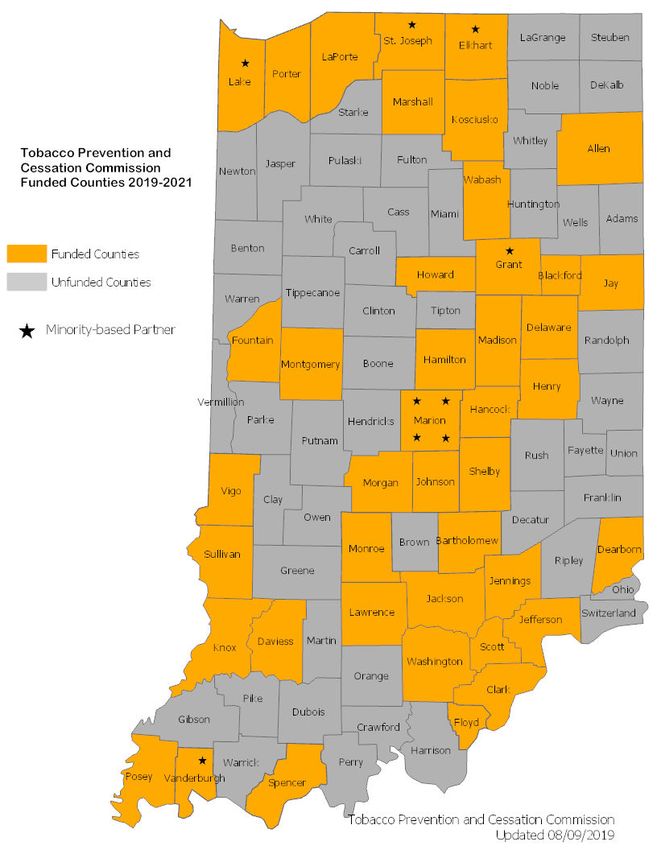
Model Tobacco-Free Policy Language

Tobacco Free Campus Policy of the _____________ School Corporation

1. PURPOSE AND GOALS

INTENT. All students shall possess the knowledge and skills necessary to avoid all tobacco use, and
school leaders shall actively discourage all use of tobacco products by students, staff, and school visitors.
To achieve these ends, district/school leaders shall prepare, adopt, and implement a comprehensive plan
to prevent tobacco use that includes:

   •   establishment and strict enforcement of completely tobacco-free school environments at all times;
   •   prohibition of tobacco advertising;
   •   appropriate counseling services and/or referrals for students and staff to help them overcome
       tobacco addiction;
   •   cooperation with community-wide efforts to prevent tobacco use; and
   •   strategies to involve family members in program development and implementation.

RATIONALE. Tobacco use is considered the chief preventable cause of premature disease and death in
the United States. Schools have a responsibility to help prevent tobacco use for the sake of students' and
staff members' health and the well-being of their families. Research conclusively proves that:

   •   regular use of tobacco is ultimately harmful to every user's health, directly causing cancer,
       respiratory and cardiovascular diseases, adverse pregnancy outcomes, and premature death;
   •   second-hand smoke is a threat to the personal health of everyone, especially persons with asthma
       and other respiratory problems;
   •   nicotine is a powerfully addictive substance;
   •   tobacco use most often begins during childhood or adolescence;
   •   the younger a person starts using tobacco, the more likely he or she will be a heavy user as an
       adult; and
   •   many young tobacco users will die an early, preventable death because of their decision to use
       tobacco.

Additional reasons why schools need to strongly discourage tobacco use are that:

   •   ITthe purchase and possession of tobacco products is illegal for persons under age 21;
   •   use of tobacco interferes with students' attendance and learning;
   •   smoking is a fire safety issue for schools;
   •   use of any tobacco products pose health issues and could lead to addiction; and
   •   use of spit tobacco is a potential sanitation issue.

DEFINITION. For the purposes of this policy "tobacco" is defined to include any lighted or unlighted
cigarette, cigar, pipe, bidi, clove cigarette, and any other smoking product; spit tobacco, also known as
smokeless, dip, chew, and snuff, in any form; and all electronic nicotine delivery systems (ENDS) such as
e-cigarettes and vape and hookah pens.

 Indiana Vape-Free Schools Toolkit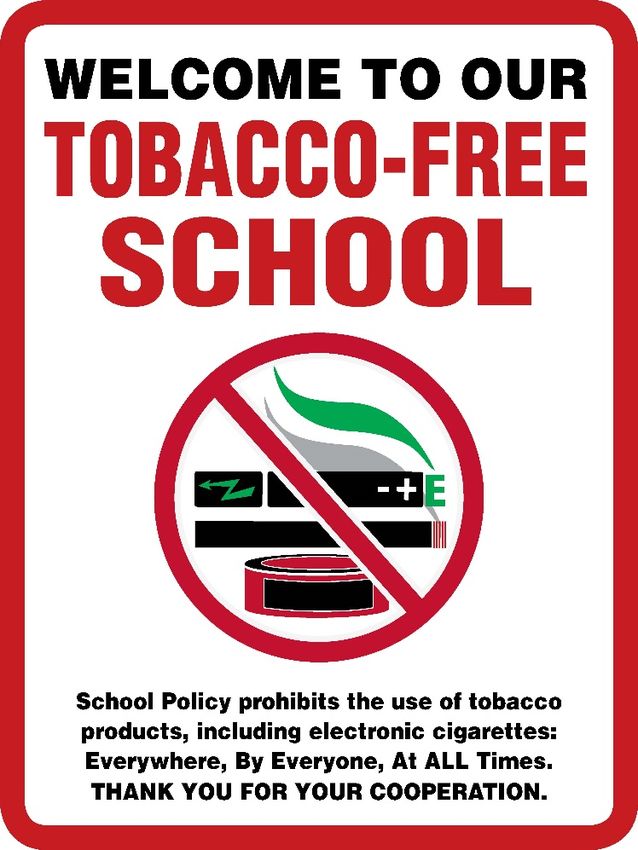
2. TOBACCO-FREE ENVIRONMENTS

TOBACCO USE PROHIBITED. No student, staff member, or school visitor is permitted to smoke, vape,
inhale, dip, or chew tobacco at any time, including non-school hours:

   •   in any building, facility, or vehicle owned, leased, rented, or chartered by the district/school;
   •   on school grounds, athletic grounds, or parking lots; or
   •   at any school-sponsored event off campus.

In addition, “pass-outs” for adults during extra-curricular events are hereby eliminated as they only tend to
encourage tobacco use on campus.

Further, no student is permitted to possess a tobacco product. The provisions of existing policies that
address the use and possession of drugs shall apply to all tobacco products.

TOBACCO PROMOTION. Tobacco promotional items, including clothing, bags, lighters, and other
personal articles, are not permitted on school grounds, in school vehicles, or at school-sponsored events.
Tobacco advertising is prohibited in all school-sponsored publications and at all school-sponsored events.

CLOSED CAMPUS. No student may leave the school campus during breaks in the school day to use a
tobacco product. School authorities shall consult with local law enforcement agencies to enforce laws that
prohibit the possession of tobacco by minors within the immediate proximity of school grounds.

NOTICE. The superintendent/principal/other shall notify students, families, education personnel, and
school visitors of the tobacco-free policy in handbooks and newsletters, on posted notices or signs at
every school entrance and other appropriate locations, and by other efficient means. To the extent
possible, schools and districts will make use of local media to publicize the policies and help influence
community norms about tobacco use.

ENFORCEMENT. It is the responsibility of all students, employees, and visitors to enforce this policy
through verbal admonition. Any tobacco product found in the possession of a minor student shall be
confiscated by staff and discarded.
Research shows penalties like expulsion and suspension result in negative educational and life outcomes.
Suspension, expulsion, and other punitive penalties should be used as a last resort. Sample language for
alternative penalties can be found below.

Any student in violation of this policy may be subject to the following measures:

1. The first violation will result in confiscation of tobacco products notification of parents and/or guardians,
and at least one of the following:

          a. A student meeting and individual student assessment with designated staff (such as a
             guidance counselor, school nurse, counseling service, or resource officer) to discuss
             tobacco use and school policy.
          b. Student participation in a tobacco education program, such as CATCH My Breath
          c. Offering student information about available cessation programs and resources

 Indiana Vape-Free Schools Toolkit
2. The second violation shall result in confiscation of tobacco products, notification of parents and/or
guardians, and offering the student information about available cessation programs, as well as at
least one of the following:
a. A student meeting and individual student assessment with designated staff with parents
and/or guardians to discuss commercial tobacco use and school policy
b. Student participation in a tobacco education program
3. The third and any subsequent violation shall result in confiscation of tobacco products, notification
of parents and/or guardians, offering student information about available cessation programs, and
student participation in a tobacco education program as well as at least one of the following:
a. A student meeting and individual student assessment with designated staff and parents
and/or guardians to discuss commercial tobacco use and school policy.
b. Educational community service hours. This alternative can include activities related to the
tobacco violation, such as cleaning up school grounds of litter or providing tobacco
education to younger students.
3. ASSISTANCE TO OVERCOME TOBACCO ADDICTION
PROGRAM AVAILABILITY. The school health program shall include referrals to community resources
and programs to help students and staff overcome tobacco addiction.
More information and resources about quitting tobacco:
• Quitting resources for youth and adults:
o This is Quitting (truthinitiative.org/thisisquitting)
Indiana Resources for This is Quitting (in.gov/isdh/tpc/2769.htm)
Text INDIANA to 88709
o Quit Now Indiana
1-800-Quit-Now
www.QuitNowIndiana.com
• CATCH My Breath e-cigarette prevention program: www.catchinfo.org/cvshealthE-cigarette
resources for schools and parents: https://www.in.gov/isdh/tpc/2340.htm
Adopted and approved by the Board of the ____________________ School Corporation this _____
day of _________, 20XX. This policy is effective upon adoption.
Indiana Vape-Free Schools Toolkitalternative measures: for
addressing student tobacco use in
schools
Students are often punished punitively for the use and possession of tobacco products including
electronic nicotine delivery devices (e.g., JUUL, Suorin) without any regards to the tobacco industry’s
history of direct marketing to youth or the phases of addiction.
Tobacco industry documents dating back to as early as the 1950s show that the tobacco industry
intentionally and strategically studied and marketed tobacco use to youth in order to recruit “replacement
smokers” to stay in business.
According to a 2016 study published in the Journal of Adolescent Health there is specific evidence that e-
cigarette marketing exposure is associated with ever and current e-cigarette use among middle and high
school students.
For more background and resources on alternatives to suspension for students please visit:
https://www.publichealthlawcenter.org/sites/default/files/resources/Addressing-Student-
Commercial-Tobacco-Use-in-Schools-Alternative-Measures-2019.pdf
Indiana Vape-Free Schools Toolkitvape and tobacco education for students
The Tobacco Prevention Toolkit is a theory-
based and evidence-informed educational
Sweet Deception resource created by educators and researchers
and aimed at preventing middle and high
school students’ use of cigarettes, cigars/
In response to the sharp spike in the use of JUUL
and other e-cigarettes by teens, VOICE created cigarillos, chew, hookah, and e-cigarettes. This
Sweet Deception, a peer-to-peer education program. toolkit contains a set of modules focused on
e-cigarettes and vape products, messages on
nicotine addiction, resources related to positive
youth development, and information about
To find out more or request a group training, contact: school tobacco policies and tobacco control
efforts.
VoiceIndiana.org
med.stanford.edu/
tobaccopreventiontoolkit.html
The Real Cost
“The Real Cost” is hosted by FDA’s Center for
Tobacco Products. “The Real Cost” campaigns
educate at-risk teens on the harmful effects of
e-cigarette use and cigarette smoking. The target
audience is youth 12-17 years old.
www.therealcost.
Tobacco Prevention Toolkit betobaccofree.hhs.gov/
by Stanford Medicine
Indiana Vape-Free Schools ToolkitKnow the Risks: A Youth
CATCH My BreathTM Guide to E-Cigarettes
CATCH My Breath is a best practices youth CDC’s Office on Smoking and Health (OSH)
e-cigarette and JUUL prevention program. developed this presentation and talking points
The program provides up- to educate youth on e-cigarettes, including the
to-date information to teachers, parents, and health risks, the factors that lead to e-cigarette
health professionals to equip students with use, and what youth can do to avoid all tobacco
the knowledge and skills they need to make products, including e-cigarettes. This resource
informed decisions about the use of e-cigarettes, is intended for adults who educate or serve
including JUUL devices. CATCH My Breath youth ages 11-18 (teachers, youth ministers,
utilizes a peer-led teaching approach and meets coaches, scout leaders, etc.).
national and state health education standards.
https://www.cdc.gov/
To find a CATCH trainer in your community, call
317-234-1787. tobacco/basic_information/ e-
catchinfo.org/ cigarettes/youth-guide-to- e-
modules/e-cigarettes/ cigarettes-presentation.html
INDEPTH: An Alternative to Teen Nicotine
Suspension or Citation
https://www.lung.org/stop-
smoking/helping-teens-
quit/indepth.html
Indiana Vape-Free Schools Toolkitvape and tobacco education for adults
For Staff For Parents
An annual presentation/training should be held An advisory should be issued to notify parents of
on tobacco-related school policies for all staff, the policy, and educational resources should be
including teaching staff, bus drivers, aides, food provided. Some resources include:
service workers, and maintenance staff.
• Talk with Your Teen About E-cigarettes: A Tip
Request a presentation (email Sheet for Parents (Office of the Surgeon
info@voiceindiana.org), “Kids and Vaping: General)
• Quick Facts on the Risks of E-cigarettes for
What parents need to know”, for a parent
Kids, Teens, and Young Adults (Centers for
education night.
Disease Control and Prevention)
• Teachers and Parents: That USB Stick Might
Be an E-cigarette (Centers for Disease
Control and Prevention)
• E-cigarettes and Youth: What Parents Need to
Know (Office of the Surgeon General)
• Teachers and Parents: That USB Stick
Might Be an E-cigarette:
https://www.cdc.gov/tobacco/basic_inform
ation/e-cigarettes/teacher-
parent/index.html (Centers for Disease
Control and Prevention)
Indiana Vape-Free Schools Toolkitcommunication tools and signage
Communicating Your Vape-Free School Policy
Many communities and schools have found that tobacco-free and e-cigarette-free policies are largely
self-enforcing (meaning that people generally respect the rules, as long as they know about them).
Communicating that your school has a tobacco-free and vape-free policy is crucial to the policy’s
success. There are lots of ways for you to make sure that students, staff, parents and visitors know
about your policy! However you choose to notify the people of the policy, make sure your message is
clear, consistent, and positive.
Communicating the policy to students:
• In-school student announcements: Involve student groups or clubs in developing and delivering
announcements about the policy.
• Student handbook: Update the student handbook as soon as possible to reflect the full policy
and its definitions, as well as the consequences for policy violations.
• Student pledges: Ask students participating in sports or academic groups and clubs to sign a
pledge to be drug- and tobacco-free.
.
Communicating the policy to staff:
• Staff memo/email: Inform school staff annually about the policy with an official memo or staff
email.
Communicating the policy to parents:
• Parent letters: Send a letter to all parents/ guardians notifying them of the policy, including
background information on why the policy is necessary and an outline of consequences for policy
violations.
• Communicating violations: Have letters ready to notify parents of student policy violations.
Indiana Vape-Free Schools ToolkitCommunicating Your Vape-Free School Policy
Communicating the policy to visitors:
• Signage: Tobacco-free and e-cigarette-free signage should be posted at all entrances to school
buildings, athletic facilities, grounds, and parking lots.
• Event announcements: Announce the policy at athletic and other school events, meetings,
concerts, and plays. Include information about the policy in event bulletins and flyers.
• Newspaper article/advertisement: Work with your local newspaper to create a story or
advertisement about the school’s policy.
• Official memo: Inform vendors who provide deliveries or services on a regular basis of the policy
with an official memo.
Indiana Vape-Free Schools ToolkitTobacco-Free and Vape-Free
24”x18”
School Signage12”x
18”
Aluminum Signs Aluminum Signs
14”x10”
Aluminum Signs
Example Signage
12”x9.25” & 24”x18”
Plastic Yard Signs
Indiana Vape-Free Schools ToolkitRound Window Clings
Sample Student Posters
Putting up posters in hallways, school bathrooms, and locker rooms can be a great way to remind
students of the tobacco-free and vape-free policy at your school, but they can also be a great way
to spread the message that smoking or vaping is not cool and is not healthy. Recruit school clubs
and groups to help design posters for your school, or check out posters created by organizations like
the Food and Drug Administration (FDA) or the Centers for Disease Control and Prevention (CDC).
Examples:
https://digitalmedia.hhs.gov/tobacco/print_materials/search?embedde
d_type=Poster&page=1&tag=E-cigarettes%2Fvaping
https://countertobacco.org/media-gallery/print-campaigns/
https://www.cdc.gov/tobacco/multimedia/media-campaigns/index.htm
Indiana Vape-Free Schools ToolkitSample Event Announcements
School events, such as sporting events, concerts and theater performances, are an important place to
remind visitors of your tobacco-free and vape-free school policy.
The following are a few options for announcements to be used at school sporting events; they
can also be easily adapted for use at concerts, theater performances, and other school events.
15 Seconds: For the safety of our students, [school] is proud to have a 100 percent tobacco-free
and vape-free school policy. At this time, we would like to remind our home fans and visitors
that the use of tobacco products or electronic cigarettes during tonight’s sporting event is
strictly prohibited. We appreciate your support and would like to thank you for keeping our
school and stadium tobacco-free and e-cigarette-free. Enjoy the game!
15 Seconds: In Indiana, an estimated 3,100 kids under age 18 will become new daily smokers
each year. That is one reason why [school] has a 100 percent tobacco-free and vape-free
school policy. Tobacco and e-cigarette use of any kind is strictly prohibited on all school
property, including in and around the stadium and parking lots. Thank you for your support
and for helping us keep our students tobacco-free and e-cigarette-free!
15 Seconds: Smoking kills about 1,300 Americans every day. Nearly ninety percent of
adult smokers started smoking before they turned 18 years old. Refraining from
tobacco and e-cigarette use at school athletic events supports a healthy environment
for everyone. This is one reason why [school] is 100 percent tobacco-free and vape-
free. Thank you for your support, and enjoy the game!
15 Seconds: We would like to remind our visitors and fans that tobacco and e-cigarette use of
any kind during tonight’s game is prohibited. This means no tobacco or e-cigarette use
anytime, by anyone, anywhere on campus–including stadiums and parking lots. We
appreciate your support and thank you for keeping our school and stadium tobacco-free and
e-cigarette-free!
30 Seconds: We would like to remind our visitors and fans that use of tobacco and e-cigarettes of
any kind during tonight’s game is prohibited. Secondhand smoke, even outdoors, can be
dangerous for people (especially kids) with other health problems such as asthma and
allergies. E-cigarette aerosol is not just water vapor. In addition to nicotine, e-cigarette aerosol
can contain heavy metals and other chemicals and toxins known to cause cancer. This is one
reason why [school] is 100 percent tobacco-free and e-cigarette-free. We appreciate your
support and hope you enjoy the game!
Indiana Vape-Free Schools ToolkitSample Staff Memo
Dear Staff,
To ensure our school maintains a positive, healthy learning environment, [school] has approved a
tobacco-free and vape-free school policy that prohibits all tobacco and e-cigarette use by students,
staff, and visitors at all times, including school events after regular school hours and at off-site school
activities. This policy also prohibits students, staff, and visitors from bringing tobacco and e-cigarette
products to school. A copy of the policy is attached.
We have put this policy in place for two main reasons:
• Help Students Be Tobacco-Free and Vape-Free: Youth spend a great deal of their time
at school and school events. Keeping tobacco and e-cigarettes out of the school environment
means students don’t see their friends or adults using tobacco and e-cigarettes, which helps
make tobacco and e-cigarette use less socially acceptable.
• Provide A Healthy and Positive Environment: Secondhand smoke can make
nonsmokers sick or worsen breathing problems like asthma.
• Prevent A New Nicotine-Addicted Generation: National statistics show that youth are
using e-cigarettes now more than ever before. We have a responsibility to educate our students
about the dangers of nicotine addiction and help them to live tobacco-free and nicotine-free lives.
As staff, it is critical you are aware of and in compliance with our tobacco-free and vape-free school
policy. All of our policies must be enforced in order to be effective. It is also important we recognize
our position as role models for our youth. All school personnel are required to enforce and comply
with our tobacco-free and vape-free school policy.
Here at [school], staff should refer students who are found violating the policy to [customize
this information for your school]. Ignoring violations or only warning students compromises the
effectiveness of our policy. It is our job to work together to provide a positive and healthy learning
environment for our youth and fellow staff. As a tobacco-free and vape-free school, we are paving the
way for a lifetime of healthy decision-making in our students.
There are many helpful resources for youth or adults in our community who use tobacco or e-cigarettes
and want to quit. Indiana has a free tobacco Quitline, 1-800-QUIT-NOW (1-800-784- 8669), that anyone
can use at no charge. Free texting services are available through This is Quitting (text INDIANA to
88709), and web-based services are available through teen.smokefree.gov and QuitNowIndiana.com
We appreciate your help in supporting this policy. If you have questions or comments about the policy,
please feel free to contact [Point of Contact].
Indiana Vape-Free Schools ToolkitSample Parent Letter
Dear Parents,
On [date], [school] approved a comprehensive tobacco-free and vape-free school policy. This
policy prohibits all tobacco and e-cigarette use by everyone (students, staff, parents and visitors),
everywhere on campus, at all times, including school events after regular school hours. This policy
also prohibits the use of tobacco products and e-cigarettes during off-site school-sponsored events. A
copy of the policy is attached.
We have put this policy in place for three main reasons:
• Help Students Be Tobacco-Free and Vape-Free: Youth spend a great deal of their time
at school and school events. Keeping tobacco and e-cigarettes out of the school environment
means students don’t see their friends or adults using tobacco and e-cigarettes, which helps
make tobacco and e-cigarette use less socially acceptable.
• Provide A Healthy and Positive Environment: Secondhand smoke can make
nonsmokers sick or worsen breathing problems like asthma.
• Prevent A New Nicotine-Addicted Generation: National statistics show that youth are
using e-cigarettes now more than ever before. We have a responsibility to educate our students
about the dangers of nicotine addiction and help them to live tobacco-free and nicotine-free lives.
Tobacco-free and vape-free schools provide positive role modeling for students. Schools are a place
where children develop lifelong behaviors, and we are committed to ensuring smoking, chewing
tobacco, and/or using e-cigarettes are not among those behaviors.
We have installed signs about the policy throughout the school campus. We will also make regular
announcements at school events to remind students and visitors that tobacco and e-cigarette use is
not allowed at these events or on school property.
There are many helpful resources for youth or adults in our community who use tobacco and want to
quit. Indiana has a free tobacco Quitline, 1-800-QUIT-NOW (1-800-784-8669), that anyone can use at
no charge. Both youth and adults can call for free help, or receive online support at
QuitNowIndiana.com. Youth can also get free texting support from This is Quitting (Text INDIANA to
88709) and free online support from www.teen.smokefree.gov.
We appreciate your help in supporting this policy. If you have questions or comments, please feel free
to contact [Point of Contact].
Indiana Vape-Free Schools Toolkitpolicy compliance and enforcement
Enforcement Responsibility
Enforcement should be viewed as a shared responsibility of all staff, students and visitors.
Enforcement should be clear and consistent—every violation, every time.
Sample Consequences for Violations
Students Staff
• Students who violate the policy will be • Staff who violate this policy will be offered a
provided information on cessation. referral to cessation services.
• The tobacco products or other devices will • Multiple violations are grounds for
be confiscated. disciplinary action.
• Student violations may also result in: Visitors
parent/guardian notification, substance
abuse assessments, participation in tobacco • Visitors who violate this policy will be
education program, and/or community asked to comply.
service.
• Individuals who fail to comply upon request
may be referred to the principal or other
supervisory personnel and may be
directed to leave school property and may
forfeit any admission fee. Law enforcement
may also be contacted.
• Repeated violations may result in the
individual being prohibited from entering
school property for a specified period.
Indiana Vape-Free Schools Toolkitcessation support for students
This is Quitting
This is Quitting is a mobile application and
companion text messaging program designed
specifically for young adult smokers and
e-cigarette users. The app brings together quit
stories from real-life young people, along with
entertaining gif posts about quitting, strategies
and tips to stay tobacco free, training challenges,
and access to free expert counseling 24/7.
To enroll in This is Quitting, Indiana teens and
young adults text INDIANA to 8870.
Download materials:
https://www.in.gov/isdh/tpc/2769.htm
thisisquitting.com
Smoke-Free Teen
Indiana Tobacco Quitline
This site is designed and run by the National
The program is designed to help teens stop using Cancer Institute and provides tobacco cessation
tobacco permanently. These participants will also information grounded in scientific evidence
receive age-appropriate educational materials and specifically for teens, aged 13-19 years old.
additional help via unlimited access to a toll-free It offers free tools, including a text messaging
support line that is available 24/7. program and quitSTART mobile application.
QuitNowIndiana.com/Teens
teen.smokefree.gov
Indiana Vape-Free Schools Toolkitcessation support for adults
Indiana Tobacco Quitline Become an Ex
The Indiana Tobacco Quitline, 1-800-QUIT- EX is brought to you by Truth Initiative, America’s
NOW, provides information and one-on-one largest non-profit public health organization
coaching. This FREE service is available to dedicated to making tobacco use a thing of
all Hoosiers who are ready to quit any form of the past. Truth Initiative partnered with the
tobacco or nicotine, including e-cigarettes. Mayo Clinic Nicotine Dependence Center to
launch BecomeAnEX as a free digital resource
The Quitline is available 24 hours a day/7 days a to help tobacco users quit. This resource
week online or by phone. Telephone counseling includes an active social community, text and
is available in English, Spanish and 150 other email messaging support, expert guidance and
languages. Trained Quit Coaches provide interactive quitting tools.
participants support to create an individual plan
for quitting tobacco and fighting cravings.
becomeanex.org
Adult callers may be eligible to receive a Nicotine
Replacement Therapy (NRT) Starter Kit.
QuitNowIndiana.com
1-800-QUIT-NOW
Indiana Vape-Free Schools Toolkitreach out to local coalitions
Community partnerships
In 2019-20, the Indiana State
Department of Health’s Tobacco
Prevention and Cessation
Commission (TPC) funded community
coalitions in 40 counties, with 10 state
and local minority-based partners,
reaching over 75% of Indiana’s
population. Their work in the local
communities is key to the success of
the statewide program. TPC supports
the local community programs by
providing training, technical
assistance, and resources.
To raise awareness of the impact of
tobacco use at the local level,
communities must maintain coalition
efforts through the priority area of
maintaining a state and local
infrastructure. These activities include
training adult and youth coalition and
community members; developing
relationships with key stakeholders
and decision makers; and building
diverse coalitions in their community.
• Full list of local tobacco control partners in Indiana (https://www.in.gov/isdh/tpc/2350.htm)
• Request a presentation, “Kids and Vaping: What parents need to know” for a parent education night
• Find out more about accessing the CATCH my Breath Curriculum or the Sweet Deception peer
education opportunity.
Indiana Vape-Free Schools Toolkitopportunities for youth engagement
Encourage youth interested in becoming involved in youth advocacy and tobacco
prevention to learn more about:
Indiana’s youth engagement model, Voice,
seeks to engage, educate, and empower
youth to celebrate a tobacco-free lifestyle.
Voice is actively building a network of youth
leaders to assist with the design and
implementation of initiatives that will educate
the community and empower their peers to
overcome tobaccoe. www.voiceindiana.org
Truth Initiative® is America’s largest
nonprofit public health organization
committed to making tobacco use a thing
of the past. It conducts groundbreaking
research and policy studies, offers an
award-winning truth® campaign, and
promotes community activism and
engagement, and innovation to end
tobacco use. www.truthinitiative.org
Indiana Vape-Free Schools ToolkitIndiana youth tobacco survey Indiana Vape-Free Schools Toolkit
Indiana Vape-Free Schools Toolkit
Indiana Vape-Free Schools Toolkit
Indiana Vape-Free Schools Toolkit
Indiana Vape-Free Schools Toolkit
You can also read


