Taunagh National School - Riverstown, Co. Sligo - School Booklet
←
→
Page content transcription
If your browser does not render page correctly, please read the page content below
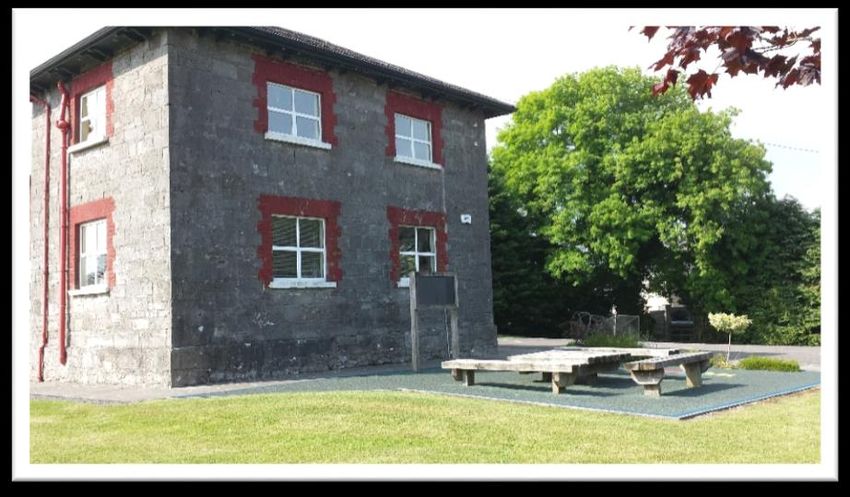
Taunagh National School
  Riverstown, Co. Sligo

    School Booklet
        2020-2021
     Nurturing a love of learning
Taunagh N.S., Riverstown, Co. Sligo.
071-9165605 taunaghns@gmail.com
Uimhir Rolla: 13196R
Introduction
Taunagh National School is located in the heart of
Riverstown, Co. Sligo. It is a two-teacher school which is
fortunate to have small class sizes. We promote a caring and
supportive learning environment where children are
encouraged to think independently, respect one another and
value diversity. Our aim is to provide an environment in
which each child is encouraged to develop his/her capabilities
to the fullest extent. We envisage to help each child achieve
high standards of work and behaviour. We also aim to nurture
a love of learning which we hope the children will carry with
them throughout their lives.
“Every child is one of a kind and special. Effort rather than
performance will be encouraged. Every effort is an attainment.”
Dr. Tony Humphries
Website: www.taunaghns.ie
2About the School
Taunagh National School is a two-teacher national school under the
patronage of the Church of Ireland (The Bishop of Kilmore, Elphin &
Ardagh). It is managed by a Board of Management representative of the
patron, parents, community and teaching staff. The school is a two-
storey building, which was extended and renovated in 2009 to
accommodate new facilities.
Classes are divided as follows:
Ms. Crummy: Junior Infants - 2nd Class
Ms. McMahon (Principal): 3rd - 6th Class
We also have a Special Education Teacher, Ms. Reynolds, who supports
children individually, in groups and through the use of station teaching.
School starts at 9.10am
Infants finish school at 1.50p.m. *
All other classes finish at 2.50p.m.
* During the first week of the Autumn term Junior Infants finish at 12
noon.
Curriculum
The school follows the curricular programmes prescribed by the
Department of Education and Skills. The curriculum is child centred,
integrated and activity based. It covers the following subjects:
English, Gaeilge, Mathematics, History, Geography, Science, Visual
Arts, Music, Drama, Physical Education, SPHE and PE.
The creative and artistic talents of the pupils are nurtured through the
curriculum and through the use of visiting experts, class trips and
competitions. All classes use digital technology to access the
curriculum and improve their problem-solving skills. The school has
seven laptops and seven iPads. Each classroom is equipped with an
interactive whiteboard and computers. We also have a set of six Lego
WeDo kits. In addition, both teachers have a laptop computer.
3Ethos
The School has a Christian ethos reflecting the tradition and teaching of
the Church of Ireland. Christian values are promoted within the school
with an emphasis on individual responsibility, forgiveness,
reconciliation, new beginnings and hope. Pupils are encouraged:
to learn to think independently,
to tolerate and value diversity,
to respect ourselves and each other, and
to be responsible for; ourselves and to society. "
Other Activities
Michael Hurley, a renowned local musician comes in once weekly
to teach tin whistle. This is available to children from 1st to 6th
class.
Each year children from 2nd to 6th class attend swimming classes
for eight weeks. In the Spring term a G.A.A. coach comes to the
school each week for football coaching.
We also participate in poetry, recitation and art competitions in
Sligo Feis Ceoil, as well as taking part in initiatives in conjunction
with Peace IV and Sligo Education Centre.
Pupils also take part in the following: Green Schools, Active
Schools, the SFI Plaque of STEM, Shared Education and much
more.
Uniform
All pupils wear the following uniform in school and on occasions
when they are representing the school.
Girls: Grey skirt/pinafore or grey trousers, red V-neck jumper,
white polo shirt, grey socks or tights and black shoes.
Boys: Grey trousers, red V-neck jumper, white polo shirt and
black shoes.
Tracksuit: Plain navy bottoms, round necked navy sweatshirt (no
hoodies), white polo shirt and runners.
Items of uniform may be purchased in Moffitts of Sligo, O’Connell
Street, Sligo. The tracksuit bottoms, sweatshirts and polo shirts are
widely available. The school crest can be purchased from the school.
4Parents/Guardians
The welfare and progress of your child in Taunagh N.S. is our primary
concern. With that in mind we have an open policy with regard to
parents/guardians and home links are strongly encouraged in the
following ways:
The very active and supportive Parent Association helps to organise and
fund certain activities within the school
Parents/Guardians are frequently informed of activities in the school by
newsletters, texts, the school website and Facebook page
Formal parent/teacher meetings take place in the first term
Parents/Guardians often help out with certain school activities (Sports
Days, fund-raising activities, craftwork, etc.)
Two parent nominees are members of the Board of Management
Notes may be written in ‘homework journals’
Visits of parents/guardians – by all means make an appointment to see
the class teacher or principal
Reports are sent home at the end of the school year
Homework
Homework enables children to
Revise what is learned during the day
Carry out further research for projects etc.
Study on their own.
Homework is given to all classes from Monday to Thursday. The time
spent on homework varies but the following is a good guideline to the
maximum time necessary per evening, however on occasion the time
required may exceed these times:
Infants 5-10 minutes
First/Second 15-20 minutes
Third/Fourth 25-30 minutes
Fifth/Sixth 35-40 minutes
5Provisional Holiday List 2020-2021
The new school year will commence at 9.10 a.m. on
Wednesday, 26th August 2020.
REASON FOR CLOSURE DETAILS
October Mid-term Break School closes on Friday, 23rd October and reopens
on Monday, 2nd November 2020
Christmas Holidays School closes on Tuesday, 22nd December 2020 and
reopens on Wednesday, 6th January 2021
February Mid-term Break School closes on Wednesday, 17th February and
reopens on Monday, 22nd February 2021
St Patrick’s Day School is closed on Wednesday, 17th March 2021
Easter Holidays School closes on Friday, 26th March and reopens on
Monday, 12th April 2021
May Bank Holiday School is closed on Monday, 3rd May 2021
June Bank Holiday School is closed on Monday, 7th June 2021
Last Day of Term Friday, 18th June 2021
Please note that pupils must attend 183 days in the school year. If the
school has to close because of inclement weather conditions, it may be
necessary to make up this time.
6Rules
The school recognises the variety of differences which exist between
children, and the need to accommodate these differences. School rules
are kept to a minimum, and are devised with regard for the health, safety
and welfare of all members of the school community. The Department
of Education and Skills requires the school to have certain policy
documents. The policy documents in relation to behaviour and anti-
bullying are included for the information of parents/guardians.
Code of Behaviour
Introduction
This policy was updated in October 2010, by staff and parents, in light
of the NEWB Guidelines for Code of Behaviour. It was reviewed last in
March 2018 and is now revised on annual basis. Overall, the pupils in
Taunagh N.S. are polite and well-mannered children who show a great
deal of respect for staff members and their peers.
School Vision
Taunagh N.S. is a parish school reflecting and promoting the ethos and
characteristic spirit of the Church of Ireland. Through our Code of
Behaviour we hope to reflect this ethos and promote respect for staff and
pupils and school property. We aim to provide a stable and secure
learning environment for all students in the school to allow them work
their full potential. Effective discipline helps promote this environment.
Principles underlining an effective code:
This code outlines the school’s expectations for behaviour in the
school. We hope to create a climate that encourages and
reinforces good behaviour.
We hope to create a positive and safe environment for teaching
and learning.
7 We hope to develop self-discipline in pupils based on
consideration, respect and tolerance for others.
We outline the efficient operation of the school and the
structuring of in-class discipline so that there exists an effective
and stimulating learning environment.
The school code places a greater emphasis on rewards than on
sanctions. There are times when it may be necessary to impose
sanctions in order to maintain good order and discourage
offenders.
We recognise the importance of the school community and a
high level of cooperation is needed between all parties to
maintain a positive working environment.
Expectation for pupils
The following standards of behaviour reflect our values:
Respect for themselves and others
Kindness and willingness to help others – peers and staff
Courtesy and good manners
Fairness
Readiness to use respectful ways of resolving conflict
Forgiveness
Expectations of Parents
Pupils and staff need working environment which is conducive
to learning and teaching. Parents can support the school by
reading the Code of Behaviour and supporting the staff by
discussing the Code with their children.
Parents are asked to model the behaviour children are asked to
respect.
The way in which parents and teachers interact will provide
students with a model of good working relationships.
8Complaints Procedure
Stage 1
1. A parent/guardian who wishes to make a complaint should firstly
approach the class teacher with a view to resolving the
complaint.
2. Where the parent/guardian is unable to resolve the complaint
with the class teacher she should approach the principal teacher
with a view to resolving the complaint.
3. If the complaint is still unresolved the parent/guardian should
raise the matter with the Chairperson of the Board of
Management with a view to resolving it.
Stage 2
1. If the complaint is still unresolved and the parent/guardian
wishes to pursue the matter further she should lodge the
complaint in writing with the Chairperson of the Board of
Management.
2. The chairperson should bring the written complaint to the notice
of the teacher and seek to resolve the matter between the parties
within 5 days of receipt of the written complaint.
It would be envisaged that a complaint put forward by a
parent/guardian would be resolved prior to stage 3. If this is not the
case, it is the duty of the Chairperson to follow procedure outlined
in stages 3, 4 and 5 of appendix 50 under Section 28 of the education
Act.
The following are the rules for pupils:
No illegal substances, cigarettes or alcohol are allowed on school
premises, on outings or on tours
Mobile phones, cameras and any other personal electronic
devices are not permitted on school premises, on outings or on
tours
9Rules for inside school:
Everyone must be able to work in a positive working environment
Respect all pupils, staff and visitors to the school.
Use respectful language.
Show consideration and be helpful to other pupils and adults
Be a good worker and work to your potential.
Concentrate on your work and complete it to the best of your
ability.
Respect the teaching time given to other classes in a multi-grade
setting.
Have all the materials you need for school.
Complete homework fully and neatly.
Be willing to tidy up and be responsible for your own and the
school equipment.
Walk carefully and quietly in the school.
When going to another room remember to knock, enter and wait.
Lunches should be healthy. Friday is a treat day.
Rules for break times and outside:
Stay in the playground unless you have permission to leave.
Include others in your play.
Line up carefully at the end of playtime.
Use play equipment properly and safely
Return play equipment to storage at the end of break.
Play suitable games – don’t fight, tease or bully.
Nobody should be frightened by silly behaviour likely to hurt or
annoy others.
Keep the school grounds clean and tidy.
Teachers and pupils will work together to discuss these rules and may
further develop them through class rules.
10School Absences
Attendance at school is important for every child. If your child is unable
to attend school for any reason you are required to inform the school in
writing when your child(ren) return to school. Under the Education
Welfare Act 2000 schools are legally obliged to report any absences of
20 days or more to the NEWB.
Promoting positive behaviour:
The emphasis in our school is on promoting good behaviour. A variety
of strategies will be used in each class. Some examples are:
Verbal praise
Written comments in copies and diaries
Positive comment to parents
Displaying of pupils work in school and on the school website.
Stickers, stars, etc.
Treats for good behaviour.
Extra privileges – no homework.
Special prizes for topics, projects.
Sanctions
Sometimes despite promoting positive behaviour children may break the
rules.
Strategies are put in place to discourage bad behaviour:
Verbal reprimand
Removal from group (within the classroom)
Communications with parents
Recording incidents of bad behaviour
Withdrawal of privileges
Withdrawal from classroom
Not being allowed to go on a school trip
Report to the principal
Report to the BOM
11 Communication with BOM
Suspension
Expulsion
Suspension
We have adopted the NEWB Guidelines for suspension and expulsion.
Full information is available in chapters 10 – 12 of Developing a Code
of Behaviour, Guidelines for Schools. The following is a summary of
procedures.
Suspension is defined as
“Requiring the student to absent himself/herself from the school for a
specified, limited period of school days.”
Suspension should be a proportionate response to the behaviour which
is causing concern.
The decision to suspend requires serious grounds such as:
Student’s behaviour has had a seriously detrimental effect on the
education of other students
The student’s continued presence in the school at this time
constitutes a threat to safety.
The student is responsible for serious damage to property.
A single incident of serious misconduct may be grounds for
suspension.
Procedures:
We use fair procedures when proposing to suspend a student
Inform the parents
Give the parents and student a chance to respond
If suspension is still decided upon, the Principal notifies parent in
writing of the decision to suspend. The letter will confirm:
The period of the suspension and the dates on which the
suspension will begin and end.
The reasons for the suspension
Any study programme to be followed.
12 The arrangements for returning to school, including any
commitments to be entered into by the student and the parents.
The provision for appeal to the Board of management or
secretary general of the DES (Only where the total number of
days for which the student has been suspended in the current
school year reaches 20 days.)
Where the cumulative total of days reached is 6, the NEWB will
be notified.
Expulsion
The BOM of a recognised school has the authority to expel a student.
As a matter of practise that authority should be reserved to the BOM and
not delegated.
Expulsion should be a proportionate response to student’s behaviour –
should only be taken in extreme cases of unacceptable behaviour.
Grounds include:
Student’s behaviour is persistent cause of significant disruption
to the learning of others or to the teaching process.
The student’s continued presence in the school constitutes a real
and significant threat to safety.
The student is responsible for serious damage to property.
A single serious incident.
Procedures: (Fair procedures/right to be heard)
Detailed investigation carried put under the direction of the
principal (includes contacting parents re behaviour as with
suspension)
Recommendation to the BOM of the principal’s
recommendation/ and the holding of a hearing
BOM deliberation and actions following the hearing (incl.
informing NEWB. The student cannot be expelled before the
passage of 20 school days from the date the EWO receives the
written notification)
13 Consultations arranged by the EWO (BOM may consider
suspending the student during this period if good order/Healthy
and Safety is threatened by the presence of the student)
Confirmation of decision to expel – letter to parents, info on right
to appeal (Section 29)
Parents may appeal an expulsion or a cumulative suspension of 20 days
under Section 29 of the Education Act. The Section 29 form is available
in the school or on the DES website.
Anti-Bullying Policy
1. In accordance with the requirements of the Education (Welfare) Act
2000 and the code of behaviour guidelines issued by the NEWB, the
Board of Management of Taunagh N.S. has adopted the following anti-
bullying policy within the framework of the school’s overall code of
behaviour. This policy fully complies with the requirements of the Anti-
Bullying Procedures for Primary and Post-Primary Schools which were
published in September 2013 and Circular 20/90 from the DES.
2. The Board of Management recognises the very serious nature of
bullying and the negative impact that it can have on the lives of pupils
and is therefore fully committed to the following key principles of best
practice in preventing and tackling bullying behaviour:
(a) A positive school culture and climate which
is welcoming of difference and diversity and is based on
inclusivity;
encourages pupils to disclose and discuss incidents of bullying
behaviour in a non-threatening environment; and
promotes respectful relationships across the school community;
At Taunagh N.S. we consider the following to be key elements of a
Positive School Culture:
14 We acknowledges the right of each member of the school
community to enjoy school in a secure environment
We acknowledge the uniqueness of each individual and their
worth as a human being
We promote positive habits of self- respect, self -discipline and
responsibility among all its members.
We actively prohibits vulgar, offensive, sectarian or other
aggressive behaviour by any of its members
We have a clear commitment to promoting equity in general and
gender equity in particular in all aspects of its functioning
We have the capacity to change in response to its pupils needs
We identify aspects of its curriculum through which positive and
sustainable influences can be exerted towards forming pupils
attitudes and values
We take particular care of ‘at risk’ pupils and uses its systems to
identify needs and facilitate early intervention where necessary
–thus responding to the needs, fears & anxieties of individual
members in a sensitive manner
Taunagh N.S. recognises the need to work in partnership with
and keep parents informed on procedures to improve
relationships within the school community
We recognise the right of parents to share in the task of
equipping pupils with a range of life skills.
We recognise the role of other community agencies in
preventing and dealing with bullying
We promote habits of mutual respect, courtesy and an awareness
of the interdependence of people in groups and communities
15 We promote qualities of social responsibility, tolerance and
understanding among its members both in school and outside of
school
Staff members share a collegiate responsibility, under the
direction of the Principal, to act in preventing
bullying/aggressive behaviour by ANY MEMBER of the school
community
(b) Effective leadership
The BOM has overall responsibility to ensure that this policy is
effective, sustainable and measured. The BOM must ensure that
accountability is of the highest standard and frequently appraise
the outcomes of the strategies and measures contained within the
policy
ISM Team - (Named in Appendix A) - have a clear role to act
in a leadership capacity within the school community,
stimulating a whole school approach to preventing and tackling
bullying – and modelling best practice
The Principal of Taunagh N.S. as key leader strongly influences
attitudes and sets standards in relation to dealing with bullying
Teachers must act as good role models and not misuse authority,
but be fair, clear and consistent in their disciplinary measures.
(c) A school-wide approach
A whole community approach to the problem of bullying is
required and Taunagh National School community comprises of
management, teachers, non-teaching staff, pupils,
parents/guardians
Beyond the school community, bullying behaviour may extend
to outside of school. Where this negatively impacts on a school
- parents and pupils have a responsibility to support the school
16in helping to address the issue. This applies particularly (but not
exclusively) to cyber bullying.
The assistance of Gardaí, Tusla and Community Workers may
be required in some cases
Collective vigilance is needed throughout the whole
school/community sector to identify and deal with issues around
bullying in a fair and equitable manner
(d) A shared understanding of what bullying is and its impact
Taunagh N.S. endeavours to put in place appropriate systems to
ensure that ALL relevant members of the school community
(parents, pupils, staff and the wider community) have a shared
understanding of what constitutes bullying behaviour as defined
in this policy (Section 2&3 of Anti Bullying Procedures for
Primary & Post Primary Schools)
(e) Implementation of education and prevention strategies see
section 5 of this policy, (including awareness raising measures) that-
build empathy, respect and resilience in pupils; and
explicitly address the issues of cyber-bullying and identity-based
bullying including in particular, homophobic and transphobic
bullying;
effective supervision and monitoring of pupils;
(f) Effective supervision and monitoring of pupils
Staff members have a distinct responsibility to ensure that
supervision of pupils in class is effective and consistent
Supervision in playground areas must be managed and
conducted effectively, with particular attention given to ‘hot
spots’ or ‘hot times’ eg arrival & dismissal
17 Pupil Council are consulted and engaged in a supervisory role,
suitable to their capacity and understanding of the issues
involved both in class and in the playground
(g) Supports for staff
Regular discussion and review of policy and procedures is
essential to support staff on a continuous basis
All staff must have a uniform interpretation of what is expected
in relation to bullying, how to identify possible bullying
behaviours, how to manage disclosures and how to deal
effectively with incidents of bullying within the classroom
context
Staff must be aware that supporting one another is a key aspect
of prevention and new/inexperienced members of staff must be
given every opportunity to discuss concerns and model best
practice
CPD in relation to Anti Bullying Strategies will be supported and
encouraged for all members of staff
(h) Consistent recording, investigation and follow up of bullying
behaviour (including use of established intervention strategies); and
(i) On-going evaluation of the effectiveness of the anti-bullying
policy.
3. In accordance with the Anti-Bullying Procedures for Primary and
Post-Primary Schools bullying is defined as follows:
Bullying is unwanted negative behaviour, verbal, psychological or
physical conducted, by an individual or group against another person (or
persons) and which is repeated over time.
The following types of bullying behaviour are included in the definition
of bullying:
18 Deliberate exclusion, malicious gossip and other forms of
relational bullying,
Cyber-bullying and
Identity-based bullying such as homophobic bullying, racist
bullying, bullying based on a person’s membership of the
Traveller community and bullying of those with disabilities or
special educational needs.
Isolated or once-off incidents of intentional negative behaviour,
including a once-off offensive or hurtful text message or other private
messaging, do not fall within the definition of bullying and should be
dealt with, as appropriate, in accordance with the school’s code of
behaviour.
However, in the context of this policy, placing a once-off offensive or
hurtful public message, image or statement on a social network site or
other public forum where that message, image or statement can be
viewed and/or repeated by other people will be regarded as bullying
behaviour.
Negative behaviour that does not meet this definition of bullying will be
dealt with in accordance with the school’s code of behaviour.
5. The following education and prevention strategies (including
strategies specifically aimed at cyber-bullying, homophobic and
transphobic bullying) will be used by Taunagh N.S. (Ref: Section
6.5 of the Anti-Bullying Procedures for Primary and Post-Primary
Schools):
Education and prevention strategies
School-wide approach
A school-wide approach to the fostering of respect for all members
of the school community.
19 The promotion of the value of diversity to address issues of prejudice
and stereotyping, and highlight the unacceptability of bullying
behaviour.
The fostering and enhancing of the self-esteem of all our pupils
through both curricular and extracurricular activities. Pupils will be
provided with opportunities to develop a positive sense of self-worth
through formal and informal interactions.
Whole staff professional development on bullying to ensure that all
staff develops an awareness of what bullying is, how it impacts on
pupils’ lives and the need to respond to it-prevention and
intervention.
An annual audit of professional development needs with a view to
assessing staff requirements through internal staff
knowledge/expertise and external sources
Professional development with specific focus on the training of the
relevant teachers
School wide awareness raising and training on all aspects of
bullying, to include pupils, parents/guardians and the wider school
community.
Supervision and monitoring of classrooms, corridors, school
grounds, school tours and extra- curricular activities. Non-teaching
and ancillary staff will be encouraged to be vigilant and report issues
to relevant teachers. Supervision will also apply to monitoring
student use of communication technology within the school.
Involvement of the student council in contributing to a safe school
environment e.g. Buddy system, mentoring, Lunchtime Buddies and
other student support activities that can help to support pupils and
encourage a culture of peer respect and support.
Development and promotion of an Anti-Bullying code for the
school-to be displayed publicly in classrooms and in common areas
of the school.
The school’s anti-bullying policy is discussed with pupils and all
parents/guardians are given a copy as part of the Code of Behaviour
of the school on enrolment.
The implementation of regular (e.g. per year) whole school
awareness measures e.g. a dedicated notice board in the school and
classrooms on the promotion of friendship, and bullying prevention;
20annual Anti bullying Week and parents/guardians seminars
organised by P/A.; annual student surveys during Anti Bullying
Week; regular school assemblies by principal or deputy principal.
Encourage a culture of telling, with particular emphasis on the
importance of bystanders. In that way pupils will gain confidence in
‘telling’. This confidence factor is of vital importance. It should be
made clear to all pupils that when they report incidents of bullying
they are not considered to be telling tales but are behaving
responsibly.
Ensuring that pupils know who to tell and how to tell, e.g.:
o Direct approach to teacher at an appropriate time, for
example after class.
o Hand note up with homework.
o Make a phone call to the school
o Anti-bully or Worry box?
o Get a parent/guardian or friend to tell on your behalf.
o Ensure bystanders understand the importance of telling
if they witness or know that bullying is taking place.
Identify clear protocols to encourage parents/guardians to approach
the school if they suspect that their child is being bullied. The
protocol should be developed in consultation with parents.
The development of an Acceptable Use Policy in the school to
include the necessary steps to ensure that the access to technology
within the school is strictly monitored, as is the pupils’ use of mobile
phones.
The listing of supports currently being used in the school and the
identification of other supports available to the school.
Implementation of curricula
The full implementation of the SPHE and the RSE and Stay Safe
Programmes.
Continuous Professional Development for staff in delivering these
programmes.
School wide delivery of lessons on bullying from evidence based
programmes.
School wide delivery of lessons on Relational aggression (Cool
School Programme: A Friend in Deed), Cyber Bullying (#UP2US,
21Be Safe-Be Web wise, Think Before you Click, Let’s Fight it
Together, Web wise Primary teachers’ resources), Homophobic and
Transphobic Bullying (Growing up LGBT, Stand Up Programme,
The Trust pack )Diversity and Inter-culturalism, Yellow Flag
Programme. The school should list every resource related to the
SPHE curriculum, and make a list of supports.
Delivery of the Garda SPHE Programmes at primary level. These
lessons, delivered by Community Gardaí, cover issues around
personal safety and cyber-bullying
The school will specifically consider the additional needs of SEN
pupils with regard to programme implementation and the
development of skills and strategies to enable all pupils to respond
appropriately.
The school will consider the implement of advice in “Sexual
Orientation advice for schools” (RSE Primary, see booklet).
.
Board of Management
The Board of Management is a corporate body that acts on behalf of
the patron and in accordance with the regulations of the Department of
Education and Skills. Boards of Management of primary schools are
appointed for a four year term. The term of office for our current Board
of Management is from 1 December 2019 to 30 November 2023.
Board Members:
Ms. R. Crummy (Teacher)
Ms. L. Mc Mahon (Principal/Secretary)
Mrs K. Barlow (Parent Nominee)
Mr S. Cunnane (Parent Nominee)
Dr. D. Swann (Community Nominee)
Mrs. A. Barlow (Community Nominee/Treasurer)
Mr D. Shorten (Patron’s Nominee)
Mrs H. Shaw (Patron’s Nominee/Chairperson)
22You can also read


