Matakana School CHARTER - Taking Students Beyond Expectations!
←
→
Page content transcription
If your browser does not render page correctly, please read the page content below
Matakana School
              School Number 1364

             CHARTER
                 (including)
        Strategic Plan 2018 – 2020
            Annual Plan 2018

Taking Students Beyond Expectations!
                       1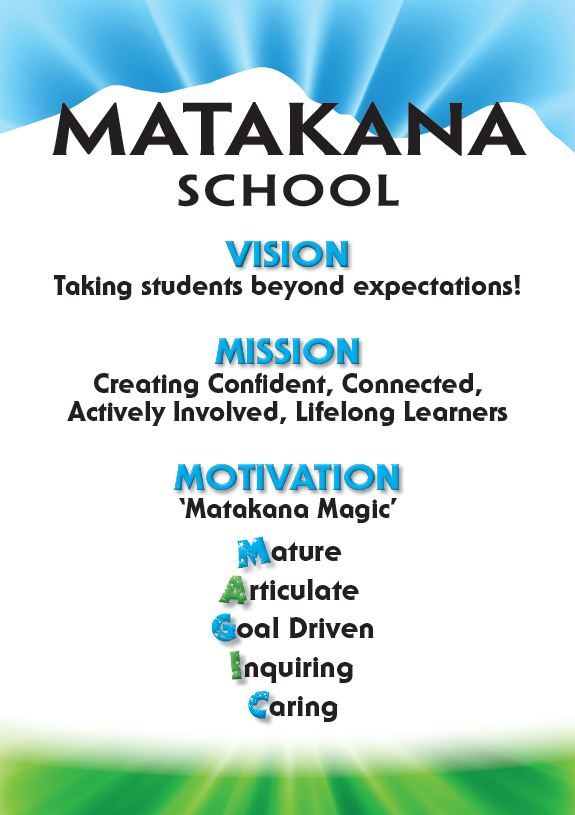
Matakana School Context
• Our modern, semi-rural school is situated in large grounds in a popular country village setting which
  contributes to the peaceful learning environment of the school. We are currently classified as a
  Zoned, U5 Decile 9 School with a grading roll of 368 students. The school has a long history and
  celebrated its sesquicentennial (150 years) in 2012. We believe our students need to be actively
  engaged in individual, shared and cooperative learning experiences that are enjoyable and
  challenging. We deliver a school curriculum which is rich, real, relevant and respectful.

• Matakana School aims to develop the whole child, intellectually, socially, emotionally, creatively and
  physically in a caring learning environment that prepares students to succeed in today's world. Our
  vision statement, ‘Taking students beyond expectations!’ is founded on this. Our students personal
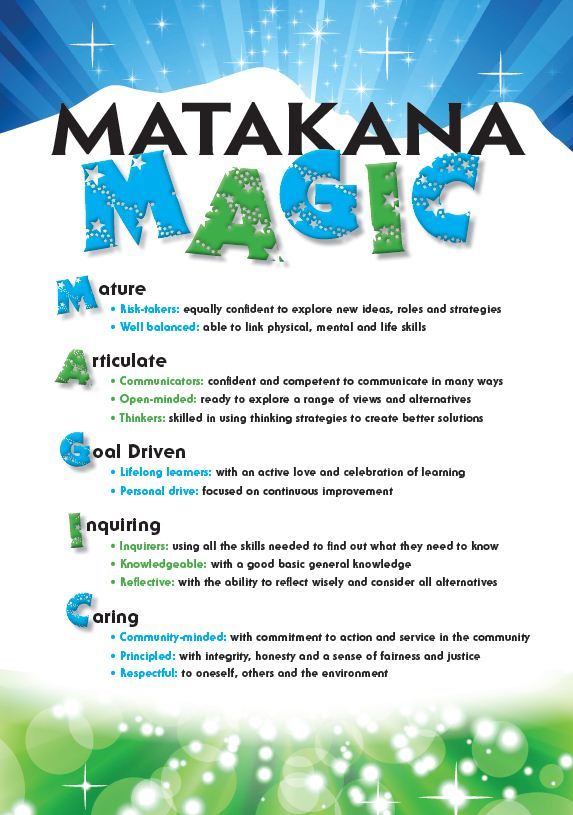
  development programmes focus on ‘Matakana Magic’ where being mature, articulate, goal driven,
  inquiring and caring is of primary importance.

• A focus on explicit teaching in Literacy and Numeracy is complemented with Integrated Studies.
  There is also an emphasis on strong outdoor, sporting and creative arts activities, including school
  choirs and Kapa Haka. We foster a commitment to action and service in our community and are as
  committed to our community as they are to us. Parents, staff and students proudly work together to
  create a great nurturing school in an aesthetically pleasing environment. A fully integrated Montessori
  Unit exists on site. Our school also has a fully equipped special needs facility called The Castle.

• Our community is a constantly changing one and rapid growth has been experienced both in the
  community and the school. Most of our children have experienced a formal pre-school education
  setting and are generally well equipped for school being confident and articulate. In general our
  parent body are community-minded professionals who are highly articulate, well-educated and
  informed. Parents are proactive and demonstrate a keenness to be involved in their children’s
  education and are highly supportive of the school.

                                             2
MATAKANA SCHOOL
School Vision, Mission, Motivation Values Strategic Goals
1. Every child attending Matakana School will
have equitable opportunities to make progress
towards reaching the National Standards in
literacy and numeracy.
2. The principal and teachers will respond
quickly and effectively to the learning needs of
children who are not achieving. Formative
assessment practices will be an integral part of
all classroom programmes to improve the
quality of curriculum delivery and accelerate
student learning outcomes across the school.
3. The principal and teachers will continue to
work with parents to further enhance their
understanding of their child’s literacy and
numeracy needs.
4. The school will report to parents about their
child’s progress and achievement against
national or age appropriate norms.
5. The school will work to accelerate and raise
levels of achievement of Māori and Pasifika
students in literacy and numeracy.
6. The principal and teachers will give effect to
the New Zealand Curriculum through the
Integrated Matakana School Curriculum and
‘Teaching as Inquiry’ Pedagogy.
7. The school will embrace the opportunities
that blended e-learning presents to transcend
the boundaries of the classroom using ICTs
and thinking skills.
3Obligations to the Ministry of Education
The school acknowledges its obligations to the Government and
the Ministry of Education under legislation and guidelines that
include the National Education Goals, National Administration
Guidelines and Educational Priorities.
Charter Undertaking:
Our Cultural Diversity
This Charter was ratified by the BOT on 26 February 2018 and submitted to the Ministry of Education The School curriculum will encourage students to understand and
on 28 February 2018. respect different cultures that make up the New Zealand Society.
It will ensure that the experiences, cultural traditions, histories and
languages of all New Zealanders are recognised and valued. It
will acknowledge the place of Pacific Island societies in New
Zealand society, and New Zealand’s relationships with the peoples
of Asia, Europe and the South Pacific.The school recognises the
national education priorities and is committed to equitable learning
Chairperson, Board of Trustees Date: 26 February 2018
opportunities. The school is committed to responding to cultural
diversity and to improving the learning outcomes for all students.
The Unique Position of Māori Culture
The School curriculum will recognise and value the unique position
of Māori in New Zealand society and the vision of Māori students
enjoying and achieving education success as Maori. All students
will have the opportunity to acquire some knowledge of Maori
language and culture. The school curriculum will acknowledge the
importance to all New Zealanders of both Maori and Pakeha
values, traditions and histories.
Te Reo and Tikanga Māori
The school integrates aspects of Te Reo and Tikanga Māori into
teaching and learning programmes making use of staff and
community expertise. The school will develop new and expand
current teaching and learning approaches that are engaging,
effective and enjoyable for all Māori students. The school will also
strengthen capability and accountability for Māori education and
language outcomes across all stakeholders. The school does not
provide specific instruction in te reo and tikanga, however, parents
may be directed to local schools providing bi-lingual education.
Charter Consultation
The Board will document and maintain an ongoing programme of
reporting, self-review and community consultation over a three-
year period. Reports from reviews and student achievement will
form the basis for deciding priorities for school development and
improvement.
4MATAKANA SCHOOL STRATEGIC PLAN 2018 TO 2020
1. Every child attending Matakana School will have equitable opportunities to make progress towards
reaching the National Standards in literacy and numeracy.
2018 2019 2020
Refer annual action plan Reporting will cover the whole curriculum and PaCT used to record student progress and
the requirements for the new ‘progress-based’ achievement. Progress and Achievement data
approach for reporting data, will be used. will be reported to the BOT and trends
Introduction of PaCT. analysed.
Continue to target students - data from target Ongoing targeting of students – based on the
students in literacy and numeracy will be analysis of Kāhui Ako and School data as
measured and analysed each term. Kāhui Ako reported to the BOT.
(Community of Learning) targets will be added Continue targeted Kāhui Ako and School
and tracked. specific PD to support effective teaching,
Target PD with additional resources (people additional resources (people and/or financial).
and/or financial) to support effective teaching.
2. The principal and teachers will respond quickly and effectively to
the learning needs of children who are not achieving.
Formative assessment practices will be an integral part of all classroom programmes to improve the quality
of curriculum delivery and accelerate student learning outcomes across the school.
2018 2019 2020
Refer annual action plan Use of OTJ sheets (possibly in conjunction with Analysis of PACT data.
the new PaCT analysis and graphing tool) if Review OTJ sheets in line with Kāhui Ako
implemented across the Kāhui Ako. needs and PaCT.
Refining the use of eTap to record all data Continued use of eTap by teachers to ensure
electronically for ease of access by teachers to learning needs are identified in students who
ensure learning needs are identified promptly in are not achieving and students themselves are
students who are not achieving. able to track their own progress over time.
Continue to Focus on priority students to Review of student self assessment practices.
ensure early identification and tracking of Review of formative assessment practices.
students needing acceleration to ensure Review of acceleration practices.
equitable outcomes.
53. The principal and teachers will continue to work with parents to further enhance their
understanding of their child’s literacy and numeracy needs.
2018 2019 2020
Refer annual action plan Continue to embed the PR!ME Maths Review the effectiveness of the Hapara
programme from Year 2 – 6. Teacher Dashboard Parent Portal to inform
Continue refining and embedding of PPPs in parents of student progress and learning via
combination of use with 1-to-1 mobile devices Mobile devices (Chrome Books).
(Chrome Books) and implementation of the Review the implementation of the PR!ME
Hapara Teacher Dashboard Parent Portal to Maths programme from Year 2 – 6 and the
inform parents of student learning. impact it is having on student achievement.
4. The school will report to parents about their child’s progress and achievement
against national and age appropriate norms.
2018 2019 2020
Refer Annual action Plan E-Tap database used to synchronise OTJ data Kāhui Ako (CoL) collaboration on data analysis
for student reports (most likely in conjunction across the schools.
with the new PaCT analysis and graphing tool if Full implementation of PaCT analysis and
implemented across the Kāhui Ako) to further graphing tool to further enhance reporting to
enhance reporting to parents. parents in the Kāhui Ako (CoL).
Kāhui Ako (CoL) collaboration on sharing data
analysis across the schools.
65. The school will work to accelerate and raise levels of achievement of Māori and Pasifika students in
literacy and numeracy.
2018 2019 2020
Refer annual action plan Kāhui Ako (CoL) collaboration and use of PaCT Full use of PACT analysis of data and graphing
analysis of data to identify children at risk in within the Kāhui Ako (CoL).
order to: Kāhui Ako agreement to identify children at risk
§ Target students specific learning needs in order to:
§ Provide acceleration programmes to § Target the specific learning needs of
address the specific learning needs of students
priority students § Provide acceleration programmes to
§ Raise levels of achievement address priority studentss specific
learning needs
Maori/Pasifika annual Consultation Hui will be § Raise levels of achievement
used to consult/inform the Māori community as § Annual Māori/Pasifika Consultation Hui
originally promoted through the Mahurangi LCN will continue to be used to
and now Kāhui Ako, to integrate elements of consult/inform the Maori community on
students’ identity, language and culture into the specific learning needs
curriculum teaching and learning. § Retain high expectations of students to
Develop new and expand current teaching and succeed in education as Māori
learning approaches that are engaging, Continue to develop new and expand current
effective and enjoyable for all Māori students. teaching and learning approaches that are
Continue targeted PD to support effective engaging, effective and enjoyable for all Māori
teaching, additional resources (people and/or students.
financial).
76. The principal and teachers will give effect to the New Zealand Curriculum through the Integrate Matakana
School Curriculum and ‘Teaching as Inquiry’ Pedagogy.
2018 2019 2020
Refer annual action plan Continuous improvement of School Curriculum Continue the firm focus on Global curriculum
– focus on curriculum being Real, Rich, content. Review the Integrated Themes
Relevant and Respectful. accordingly and make changes to the
Continue embedding Kāhui Ako (CoL) Spirals curriculum delivery plan ensuring continuous
of Inquiry shared agreement. improvement. Continue electronic national and
Kāhui Ako across-school and in-school international classroom teaching via Skype etc.
teaching expertise used to enhance the quality to enrich the School Curriculum and continue
of school leadership and teaching, and raise targeted PD to support effective teaching and
the professional status of teaching. additional resources.
Electronic national and international classroom Continuous improvement of School Curriculum
collaboration via Skype etc. using ultra-fast – focus on curriculum being Real, Rich,
broadband to enrich the School Curriculum. Relevant and Respectful.
Teachers will regularly use the Media Room Kāhui Ako within-school and across-school
facilities in the Information Centre. teaching expertise used to enhance the quality
Focus on global curriculum content. of school leadership and teaching, and raise
the professional status of teaching.
7. The school will embrace the opportunities that blended e-learning presents to transcend the boundaries
of the classroom using ICTs and thinking skills.
2018 2019 2020
Refer annual action plan Regular live internet based learning and Review learning and teaching opportunities
teaching opportunities using 1-to-1 mobile using 1-to-1 mobile devices (Chrome Books)
devices (Chrome Books) on ultra-fast on ultra-fast broadband using the Hapara
broadband using Hapara Teacher Dashboard. Teacher Dashboard and the Parent Portal.
Focus on Robotics as key learning tool for the. Regular Robotics Classes implemented as part
Possible Sister School involvement and of the new Digital Technologies Curriculum.
connections with Robotics. Continue targeted PD to support effective
teaching additional resources (people and/or
financial).
82018 ANNUAL ACTION PLAN DEVELOPED FROM OUR STRATEGIC PLAN
1. Every child attending Matakana School will have equitable opportunity to make progress towards
reaching the National Standards in literacy and numeracy.
Specific Strategies for 2018 incl. Who Expected Result
budget
To continue to gather and analyse Teachers Following analysis of data:
achievement data in literacy and numeracy SMT § Planning and teaching programmes will be tailored to meet the specific
as per National Standards requirements. SENCO/AP/DP learning needs of students
Identify trends and patterns from 2013 – Kahui Ako § ‘Need’ trends and patterns across the school will be identified
2017 National Standards data. WSL/ASL § Kāhui Ako (KA) - ‘Need’ trends and patterns across the KA will be
Kāhui Ako - collaboration with National Principal identified
Standards data sharing and analysis. § Specific PD for staff in order to continue to accelerate and lift
achievement according to the trends identified in the analysis of data.
To gather and analyse achievement data Teachers At risk students identified:
in literacy and numeracy for at risk SMT § Programmes put in place across the school (and KA) in order to
students across the school and Kāhui Ako. SENCO/AP/DP accelerate raising levels of achievement.
Kahui Ako § Develop new and expand current teaching and learning approaches that
WSL/ASL are engaging, effective and enjoyable for all Māori students.
Principal § Specific programmes for at risk children, will be monitored on a regular
basis
§ Students monitored on a regular basis, by teachers and Senior
Management.
To report to the BOT on student Kahui Ako WSLs Progress and Achievement Data (School and KA) will be presented to the BOT.
achievement across the school and Kāhui SENCO/AP/DP Results will be differentiated;
Ako. Principal § All children- Year Level / Gender / Maori / Pasifika / Special Needs.
Progress Data from target students in SMT Data will be gathered from targeted students and measured twice yearly to
literacy and numeracy will be measured Principal monitor progress and achievement. This will be reported to the BOT as part of
twice yearly. the mid-year and end-of-year assessment reports. Kāhui Ako data will be
Progress and Achievement Data will be reported to the BOT when made available.
reported to the BOT.
92. The Principal and Teachers will respond quickly and effectively to the learning needs of
children who are not achieving.
Formative assessment practices will be an integral part of all classroom programmes to improve the quality of
curriculum delivery and accelerate student learning outcomes across the school.
Specific Strategies for 2018 incl. Who Expected Result
budget
Teacher’s job descriptions (Appraisal Teachers will reflect regularly on their teaching inquiries in their appraisal
Connector) will include specific formative SMT/Principal journals.
assessment goals – targeting the priority Teachers will meet formative assessment goals to accelerate raising student
groups as mentioned in the 2018 School achievement as outlined in job descriptions.
Progress and Achievement Targets. Teachers will have high expectations for all Māori students.
Teaching as inquiry for excellence (Spirals
of Inquiry)
Develop new and expand current teaching
and learning approaches that are engaging,
effective and enjoyable for all Māori
students.
Assessment grids used for accurate overall The summative assessment grids for accurate overall teacher judgements
teacher judgements (OTJs). Results entered Teachers/SMT (OTJs) will be used for accurate progress and assessment reporting to parents.
on SMS (E-Tap) for student reports. The assessment schedule for 2019 will be updated in Term 4, 2018.
Formative assessment will be evident in Students will articulate their own success criteria in “child speak” in response to
classroom practice. Teachers/SMT the question “What are you learning?” This will also form part of the teacher
appraisal process (Student Voice).
Formative assessment will inform planning Learning intentions will be evident in all planning.
and teaching programmes to ensure Teachers Learning intentions will be shared with students in written and oral form.
learning needs are being met. Evidence of feedback/ feed forward in children’s books.
Goal Cards used in all year levels.
Reading Recovery, Lexia and MathsWhizz Teachers, SENCO, Tracking of all students achieving below the National Standard.
will be implemented with the addition of Principal, DP Moderate Needs Identification and Support Register in use.
‘Quick 60’ and ‘Rev it Up’ Early Words, and Māori Tracking Register in use.
Targeted Writing programmes when Pasifika Tracking Register in use.
required. Priority Learners Matrix in use.
DATA shared with Kāhui Ako schools.
103. The principal and teachers will continue to work with parents to further enhance their
understanding of their child’s literacy and numeracy needs
Specific Strategies for 2018 incl. Who Expected Result
budget
Continue operating the Two Team School The School will continue to operate in two Teams – Junior Team (Years 1-3) and
Organisation in 2018. Principal Senior Team (Years 4-6) allowing for better communication and collaboration
SMT amongst Senior Management, Teaching Staff and Parents.
The Montessori Unit teachers will operate in these teams.
Continue to strengthen home/school Lead Teacher The Matakana Magic Home-Learning Challenge will be implemented in Term 1.
partnerships in literacy and numeracy – Teachers Parents and Students will be encouraged to take on the extra challenge. A
Matakana Magic Home-Learning Challenge. special School Assembly will be held at the end of the year to celebrate the
success of students who have completed all aspects of the challenge and
medals awarded.
Support all stakeholders to have high SMT/Teachers Develop new and expand current teaching and learning approaches that are
expectations for all Māori students and engaging, effective and enjoyable for all Māori students.
develop and use a range of networks to All Māori students are engaged in quality teaching and learning experiences.
share and grow knowledge and evidence of
what works to support excellent education.
Entry Interviews and Transition to School. DP All students are assessed by the DP for oral language and basic literacy and
numeracy skills within 1 month of starting school. A meeting is held with parents
to discuss the results and set the first learning goals. Parents are also advised
on how they are able to assist their child to achieve and maximise learning
success.
Written Reports to parents Reports – will be generated from the Student Management System (e-Tap).
Term 2 (Mid-Year) and Term 4 (End-of-year Teachers Reports contain specific information regarding literacy and numeracy levels.
Report). Principal Reports clearly indicate to parents how their child is progressing in relation to
National Standards.
Parent Interviews & Goal Reviews will be At Parent Interviews & Goal Reviews the focus will be on the goals for future
held in Term 1, Week 4. Teachers learning as carried over from the student end-of-year reports for 2017.
Parent Interviews and Mid-Year Reports in Principal Mid-year reports will be issued to parents at the Parent Interviews in Term 2
Term 2 Week 9. which focus on student progress and achievent data.
Pupil Progress Presentations in Term 3, At the Pupil Progress Presentations, students will share with their parents their
Week 6. learning journey so far and where to next using their goal cards. Students will
End-of Year Reports will be issued in Term also guide their parents through their class showing their work and talking about
4, Week 9. their learning journey.
114. The school will report to parents about their child’s progress and achievement
against national and age appropriate norms.
Specific Strategies for 2018 incl. Who Expected Result
budget
Written reports will be used in 2017 which Principal eTap format reports used in Term 2 & 4.
are generated using our Student SM Anniversary reports will be entered online within 2 weeks of the student’s school
Management System (e-Tap). Teachers attendance anniversary date (After 1, 2 & 3 years at school).
Parents/ BOT Reporting timetable for 2019 updated in Term 4, 2018.
Reports will be written in such a way that parents are able to clearly understand
where their child’s learning is at.
Reports will indicate specific learning levels in relation to National Standards
Reports will indicate student attendance/absence.
Reports to parents will reflect current Principal Assessment practice will be rigorous to ensure as far as possible that results are
achievement levels, against expected levels. Teachers an accurate reflection of a child’s progress.
SM Cross-school collaboration in terms of moderation will be persued as in 2017.
Data on reports will be up to date.
Format of written reports will make evident to parents their child’s learning levels
in relation to National Standards.
Parent Interviews & Goal Reviews will be Principal Dates will be set for Parent Interviews and Goal Reviews, Parent Interviews and
held in Term 1, Week 4. Teachers Mid-Year Reports as well as PPPs in the relevant term.
Parent Interviews in Term 2 Week 9. SM Parents will be encouraged to attend – 100% attendance expected.
Pupil Progress Presentations in Term 3,
Week 6.
Written reports will be given to parents in Principal Written reports will be completed by class teachers.
Terms 2 and 4. Teachers Senior Management and the Principal will oversee the writing of reports.
Anniversary reports will recorded online SM
within 2 weeks of the student’s attendance
anniversary date.
125. The school will work to accelerate and raise levels of achievement of Māori and Pasifika students in literacy
and numeracy.
Specific Strategies for 2018 incl. Who Expected Result
budget
The Māori/Pasifica Consultation Hui will Principal/SMT Support for all stakeholders to have high expectations for all Māori students.
be held in Term 2 Develop and use a range of networks to share and grow knowledge and
evidence of what works to support excellent education and Māori language
outcomes.
To gather and analyse achievement Principal Progress and achievement data for these students will be analysed and all
data in literacy and numeracy. Senior Management at risk students identified.
Support all stakeholders to have high Principal Programmes put in place for identified at risk students in order to accelerate
expectations for all students. SENCO/Senior raising levels of achievement.
To gather and analyse achievement Management/Teachers Moderate Needs Identification and Support Register in use.
data in literacy and numeracy. Māori Tracking Register in use.
Pasifika Tracking Register in use.
To report to the BOT on achievement of DP/Principal BOT will be informed re Maori / Pasifika student achievement.
Maori and Pasifika students. Maori and Pasifika Consultation Hui will be used to inform the Maori and
Pasifika community as originally promoted through the Mahurangi LCN and
now the Kāhui Ako.
To implement the Ka Hikitia and Principal/DP/Senco/Teachers Use strategies and ideas as suggested in these documents as well as those
Pasifika Education Plans (2013 – 2017) originally agreed/determined by the Mahurangi LCN member schools and
the new KA to accelerate raising the achievement of our Maori and Pasifika
students. Matakana School Priority Learners Matrix in use.
Commitment to and participation in all Principal/SENCO Continue to use joint strategies as determined by the original Mahurangi
activities of the original Mahurangi LCN member schools (and now the KA) to raise the achievement of our
Learning and Change Network (LCN) Māori and Pasifika students (Member Schools are: Matakana, Snells Beach,
and now the Kāhui Ako. Warkworth Mahurangi College, Pakiri, Leigh, Kaipara, Horizon).
SENCO continues to participate in the Youth Action Group (YAG) meetings.
136. The principal and teachers will give effect to the New Zealand Curriculum through the Integrated Matakana
School Curriculum and ‘Teaching as Inquiry’ Pedagogy
Specific Strategies for 2018 incl. Who Expected Result
budget
Implement reviewed Integrated Curriculum Principal Curriculum Review for 2018 is Integrated Studies. Review will be completed in
for 2018 SM Term 3
§ Curriculum overview/Delivery plan Teachers Staff meeting - Term 4 to reflect/review on Integrated Curriculum topics of 2018
incorporating thinking skills – focus on Concept/Context and the Matakana Magic thread that keeps it all
§ Concept/Context planning together – PMI
§ Matakana Magic golden thread Review of the Curriculum Delivery Plan for 2019 in Term 4, 2018.
School-wide Targets for 2018 – Writing and Principal Raise student achievement:
Mathematics as per the Kāhui Ako shared SM 1. School Wide Target 1
achievement challenges. Teachers To raise achievement of students in Writing in Years 0-6. There will be an
emphasis on lifting achievement of those students working ‘Below’
National Standard to ‘At’ National Standard and those working ‘At’ National
Standard to ‘Above’ National Standard.
2. School Wide Target 2
To raise achievement of students in Mathematics in Years 0-6. There will
be an emphasis on lifting achievement of those students working ‘Below’
National Standard to ‘At’ National Standard and those working ‘At’ National
Standard to ‘Above’ National Standard.
These targets align with the current Mahurangi Kāhui Ako ‘Aspirational
Challenges’.
More specific detail will be determined as a part of the Kāhui Ako
co-construction and development process.
14‘Teaching as Inquiry’ Pedagogy using the Principal During Term 1 – 4 as the reviewed Integrated Curriculum for 2018 unfolds
Matakana School Kowhai Model SM teachers will focus on:
Teachers • Creating a supportive learning environment
• Encouraging reflective thought and action
• Enhancing the relevance of new learning
• Facilitating shared learning
• Making connections to prior learning and experience
• Providing sufficient opportunities to learn.
Collaboration and Collaborative Teaching Principal Whole Staff Conference (Professional Development) presented on PR1ME
initiatives in 2018 SM Maths – January 2018.
Teachers Collaborative agreements set up between teachers/teams – January 2018.
Staff Appraisal System 2018 Principal Using ‘Appraisal Connector’ for Staff Appraisal based on Spirals of Inquiry and
SM continuous reflection/improvement on teaching and learning practice.
157. The school will embrace the opportunities that blended e-learning presents to transcend the boundaries
of the classroom using ICTs and thinking skills.
Specific Strategies for 2018 incl. budget Who Expected Result
Blended Learning & the Information Centre Teachers Blended e-learning will be encouraged in all learning practices.
For ICTs to be incorporated into classroom ICT Team Teachers will be encouraged to use the media room facilities.
programmes: Principal Teachers will share learning with colleagues.
§ PCs/Macs/Ipads/Ipods/Chromebooks Students actively using Chromebooks, Ipads and Ipods.
§ Swivels Teachers using the Soundfield Systems to enhance student auditory
§ Digital Cameras – Video & Still processing and learning.
§ Visualisers Teachers encouraged to enrol for the MindLab PD.
§ Soundfield Systems
To continue to develop the use of thinking skills Teachers Professional Development opportunities will be available for staff.
in the classroom as per the Curriculum Delivery Principal Teacher’s pedagogical knowledge will increase and impact on children’s
Plan. learning (personal PD).
• Blooms Revised Taxonomy Model Integration of thinking skills will be evident in classroom practice.
• Gardener’s Multiple Intelligences Children will be able to articulate their knowledge of thinking skills.
• SOLO Taxonomy Teachers will reflect on their practise and collaborate/share with colleagues
their ideas and thoughts.
Continued implementation of 2015 Future Principal, ICT Blended learning and One-to-One devices (Chromebooks) fully integrated
Focused Learning Initiative Team, Teachers into the teaching and learning programme in Years 4-6.
Use of ICT’s and programmes will be evident in Lead Teachers Professional Development opportunities will be available for staff to
planning, programmes and teaching as Team Leaders effectively use Hapara Teacher Dashboard and Google Apps for Education
observed by TeamLleaders Teachers (GAFE) to ensure the successful implementation of Chromebooks in Years
Principal 4-6
School Radio Station contributions to Student Teachers Staff PD and Student Radio Crew learning opportunities includes visits to
learning and wellbeing (MagicMix 97.6fm) Principal commercial radio stations. Student programming broadcast on a daily basis.
Teachers will have access to more ICT Lead Teachers More Ipads, Ipods and Headphones will be provided through Grants or BOT
hardware Principal funding.
Teachers will have access to more online ICT Team Teachers will actively follow various social media teacher sites, for teaching
resources tips and suggested programmes/apps to assist in teaching and learning
programmes. Teachers also encouraged to use the N4L (Network for
Learning).
16Progress and Achievement Targets for 2018
In Written Language and Mathematics (using Overall Teacher Judgement)
School Wide Target 1
To raise achievement of students in Writing in Years 0-6. There will be an emphasis on lifting achievement
of those students working ‘Below’ National Standard to ‘At’ National Standard and those working ‘At’
National Standard to ‘Above’ National Standard.
School Wide Target 2
To raise achievement of students in Mathematics in Years 0-6. There will be an emphasis on lifting
achievement of those students working ‘Below’ National Standard to ‘At’ National Standard and those
working ‘At’ National Standard to ‘Above’ National Standard.
These targets align with the current Mahurangi Kāhui Ako ‘Aspirational Challenges’.
More specific detail will be determined as a part of the Kāhui Ako
co-construction and development process.
172018 ‘BUSINESS AS USUAL ANNUAL PLAN’ FOR MATAKANA SCHOOL
NAG FOCUS AREA PLANNED STRATEGIES FOR THE YEAR
CURRICULUM
NAG 1 Literacy Refer annual action plan and School Writing Target
Curriculum Kāhui Ako PD expected to be available during the course of the year to dove-tail with Kāhui Ako shared
…with the writing targets
principal and
staff Numeracy Refer annual action plan and School Maths Target
Implementation of the PR1ME Maths programme – Years 2-6 with focused PD
Other curriculum area Curriculum Review for 2018 is Integrated Studies. Review will be completed in Term 3
initiatives Matakana Integrated Curriculum – Integrated Studies – Year 2 of a new Three Year Cycle
Te Reo Tuatahi programme – Years 1-3 (funds approved by the BOT) starts Term1 2018.
Science Days – every theme week.
Inquiry learning
NZC Implementation Start implementation of the new Digital Technologies Curriculum. Refer annual action plan.
Integrated Curriculum
EOTC Camps held for Year 4, 5 & 6 Students
Assessment • OTJ Sheets, Goal Cards & all Reports generated using the SMS (E-Tap)
• NZCER PATs online
• e-asTTle
School Achievement Minimum for our School: 85% ‘At’ or ‘Above’ National Standard for Reading, Writing and Mathematics
Students at risk Refer strategic and annual action plan as well as the school’s Priority Learners Matrix
Moderate Needs Identification and Support Register in use
Māori Tracking Register in use
Pasifika Tracking Register in use
GATE, CWSN and ESOL As per SENCO and DP/AP. Our approach is inclusive and we provide a range of extension programmes as
programmes listed in our curriculum delivery plan and on our website
18Regular, quality physical Through our Sport Specialist (Sharon Hallet) - continue promoting physical activity including organised
activity sport. Our own MMMM programme will allow students to have access to a variety of sports
equipment/games at play breaks.
Consultation with Māori Refer strategic and annual action plan – Māori /Pasifika Consultation Hui will be used to consult/inform the
Community Māori community as promoted through the original Mahurangi LCN strategy and new KA strategy
Student Wellbeing for Student Wellbeing for Success. Focus on improving those areas identified in the 2016 community Health &
Success PE survey in relation to the draft indicators. Focus on ERO report February 2015 ‘Wellbeing for Children’s
Success at Primary School
Teachers will have access Teachers will actively follow various social media teacher sites, for teaching tips and suggested
to more online learning programmes/apps to assist in teaching and learning programmes. Teachers also encouraged to use the N4L
resources (Network for Learning).
DOCUMENTATION AND REVIEW
NAG 2 School review/Self Continious school review and self review. Improvement as per the 2018 BOT School Review and Work
Strategic review Plan as well as the Curriculum Review and Consultation Schedule in the 2018 School Curriculum Delivery
Planning/Self Plan.
Review Continue initiating and implementing the recommendations from the 2017 ERO review and note the
...through the findings in the ERO CoL report of late 2016
principal and Curriculum Review for 2018 is Integrated Studies. Review will be completed in Term 3
staff
Policy and Procedure As per SchoolDocs Policy Review Cycle for 2018 (BOT Policy Sub-committee)
review As per 2018 BOT School Review and Work Plan
19Strategic Plan review Ongoing through 2018 as per 2018 BOT School Review and Work Plan
Develop Annual Plan Charter/ Strategic and Annual Plans for 2017 to be presented to the Board in February 2017 for
ratification.
Develop student progress Two specific targets in 2018:
and achievement targets School Wide Target 1
To raise achievement of students in Writing in Years 0-6. There will be an emphasis on lifting
achievement of those students working ‘Below’ National Standard to ‘At’ National Standard and
those working ‘At’ National Standard to ‘Above’ National Standard.
School Target 2
To raise achievement of students in Mathematics in Years 0-6. There will be an emphasis on
lifting achievement of those students working ‘Below’ National Standard to ‘At’ National Standard and
those working ‘At’ National Standard to ‘Above’ National Standard.
These targets align with the current Mahurangi Kāhui Ako ‘Aspirational Challenges’.
More specific detail will be determined as a part of the Kāhui Ako
co-construction and development process.
Curriculum learning area As per the Curriculum Review and Consultation Schedule:
reviews Review ‘Integrated Learning’
Integrated Learning – Year 2 of a new three year cycle
Health and PE Survey Term 3
Reports to BOT (general) Principal reports to BOT at each meeting referenced to the annual plans and targets as per the Matakana
School 2018 BOT School Review and Work Plan
20Reports to BOT – student Report to the Board as per the Matakana School 2018 BOT School Review and Work Plan including
achievement Montessori Unit
Reports to BOT re Māori Report to the Board re Māori and Pasifika student achievement in reading, writing, and numeracy -
and Pasifika achievement February 2018 and August 2018
Reporting to parents See strategic and annual action plan
Report to students and their parents on the student’s progress and achievement in relation to National
Standards. Reporting to parents in plain language in writing must occur at least twice a year.
See Matakana School – Reporting to Parents on Student Progress and Achievement Cycle 2018
Reporting school-level data Sent to the Secretary for Education at the same time as the updated school charter under NAG 7
to Ministry of Education
Report the numbers and proportions of students at, above, below or well below National Standards,
including by Māori, Pasifika, European/Pakeha, Asian, gender, and by Year level
ERO Review Build on outstanding work as reported in the 2017 ERO review
Mahurangi Kāhui Ako Working/structure and collaboration agreements in place and operational in 2018
Community Consultation Māori/Pasifika Consultation/Information Hui (Term 2) and Community Consultation Survey (Term 3)
21PERSONNEL
NAG 3 Professional development Staff Conference – The Tuff Stuff – Sexual Behaviours and Disclosures/ Boys Literacy/writing/
Personnel/PD programme Te Reo Tuatahi – all teachers – Te Reo Tuatahi Facilitator
BOTs are Robotics PD - all teachers – Jess Bertelsen and Claire Allen
required to… Robotics - Visit to Te Matauranga - BOT
ICT PD for all teachers - ICT Team
MANZ Conference – Montessori Teachers – July 2018
Mathematics – Maths Team teachers – Primary Maths Association Conference – July 2018
PR1ME Maths PD – all teachers - Ellen Edwards and Sophie Kurmann & Maths Team
Energise Education Conference - Rolleston, Canterbury on 26th and 27th April. 8 x Teachers attending.
Play in the Classroom - South Auckland on Monday 16 April. 4 x teachers attending
The Learning Brain – Auckland 26 April – Principal/AP
Google Chrome Books/Hapara Dashboard Roadshow – ICT Team
Leadership Coaching Course (Auckland) August 2018 – 2 x Team Leaders to attend
ACEL Conference (Melbourne) October – Principal/DP/SENCO
ICT PD – Interface Expo (Auckland) May 2018 - ICT Team attending
Kahui Ako (CoL) – several PD sessions in 2018 for Teachers/Principal and BOT
Health and PE PD – Sport Specialist Sharon Hallet - throughout the year for all teachers
New staff and PRT New staff and PRT will be supported into the school by their Team Leaders and the DP/Principal. Team
induction Leaders will be specifically responsible for the induction of new registered teachers. Designated Mentors
will be responsible for the induction of beginning teachers.
Staff appraisal – teaching New Teacher Appraisal System – Appraisal Connector - inclusive of registered teacher criteria.
and non-teaching Teacher appraisal goals to align with school strategic goals and Kahui Ako goals.
Ensure all non teaching staff are appraised against job descriptions.
EEO programme To ensure that the principles of equal employment opportunities are reflected in school policies and
practice.
Good employer practices As outlined in policies.
BOT training BOT members – Governance vs Management – Mac Stevenson
BOT members – STA Board training available for BOT members
22PROPERTY AND FINANCE
NAG 4 Prepare annual budget Property allowed for in budget.
Finance and
Property Allocate funds to reflect Funds allocated through budget according to identified school needs eg. Field drainage maintenance,
BOTs are Charter goals Signage maintenance, Concrete painting maintenance, Property Managers shed - asphalt maintenance,
required to… Pool Painting and maintenance
Regular reviewing of Monthly reports to the BOT by Property Sub-committee.
financial situation with
BOT
Maintenance of school 2nd Year of implementation of the new 10YP and 5YA plan (Started on 01 July 2016)
buildings and grounds Manage BIP progress with Ministry of Education officials
Develop property to reflect As per 5YA and innovative teaching/learning environments. Complete Room 16 & 17 toilet & roof
charter goals (5YA) upgrade and outside areas
Planned major asset Various innovative teaching/learning environment furniture pieces in R1/2/3/5/7/9/10/13/16.
purchases 180 x Hapara Teacher Dashboard License renewals
12 x iPad minis
1 x Visualiser for R13
50 x Chromebooks (to replace old stock and meet the demand of roll growth)
1 x Chromebook charging station (36 slots)
23HEALTH AND SAFETY
NAG 5 Provide a safe physical and Continue with current behaviour management strategies - school values system – Matakana Magic,
Health and emotional environment Wheel of Choice.
Safety Ensure duty teachers are monitoring the playground using high visibility pink fluoro jackets or high
BOTs are visibility fluoro orange hats
required to… Student Incident Book in use for student support (2 x Student Support Teachers)
SENCO continues to participate in the Youth Action Group (YAG) meetings.
Anti-bullying initiatives Wheel of Choice – embedding behaviour choices
Values system – Matakana Magic Ethos embedded. Ongoing review.
Cool School Peer Mediation programme in action
‘Student Wellbeing for The ethical responsibility of teachers, leaders and trustees is to consider, promote, balance and respond to
Success’ all aspects of the student, including their physical, social, emotional, academic and spiritual needs. Focus
on deliberate action across all curriculum areas, pastoral care, strategic priorities and teaching practices.
Focus on improving those areas identified in the 2016 community Health & PE survey in relation to the
draft indicators.
Community Health Focus on improving those areas identified to be of concern in the 2016 Community Health and PE
Consultation (every two Consultation Survey. New survey due Term 3 2018.
years)
‘Health and Safety at Work Health and Safety Audit completed in 2016
Act’ Ensure all policies and procedures are up to date as per SchoolDocs
‘Vulnerable Children Act’ Implement all procedures as required by law to keep vulnerable children safe.
All permanent workers to be vetted by July 2018.
Food Act 2014 In force since 2016 – make sure we are compliant
NAG 5 other (e.g. major Civil Defence – Confirmed Local Evacuation/Assembly Area
accidents, hazards,
evacuations)
24LEGISLATION
NAG 6 School Attendance Attendance Report to BOT – March 2018
Legislation LEGISLATION
BOTs are Ensure that correct Use of electronic registers using SMS (eTap)
expected to… procedures are followed re: Stand downs and/or suspensions
Management of truancy
Enrolment scheme
Teacher registration
Staff salary increments.
Police vetting of non-teaching staff and contractors
Mandatory reporting to teachers council re competency and/or serious misconduct
ANNUAL CHARTER UPDATE
NAG 7 Charter Update Provide the Secretary for Education with a copy of the updated school charter before 1 March 2018.
Charter Update Principal to complete the Charter update to be presented to the BOT in February 2018.
BOTs are
expected to…
ANALYSIS OF VARIANCE
NAG 8 Variance Analysis To provide a statement providing an analysis of any variance between the school's performance and the
Analysis of relevant aims, objectives, directions, priorities, or targets set out in the school charter at the same time as
Variance the updated school charter provided to the Secretary for Education under NAG 7.
BOTs are Principal to prepare the Analysis of Variance to be presented to the BOT in February 2018
expected to…
25You can also read


