Making the economy work for people on low incomes - National Assembly for Wales Equality, Local Government and Communities Committee - National ...
←
→
Page content transcription
If your browser does not render page correctly, please read the page content below

National Assembly for Wales
Equality, Local Government and Communities Committee

Making the economy work
for people on low incomes

May 2018

                                                       www.assembly.wales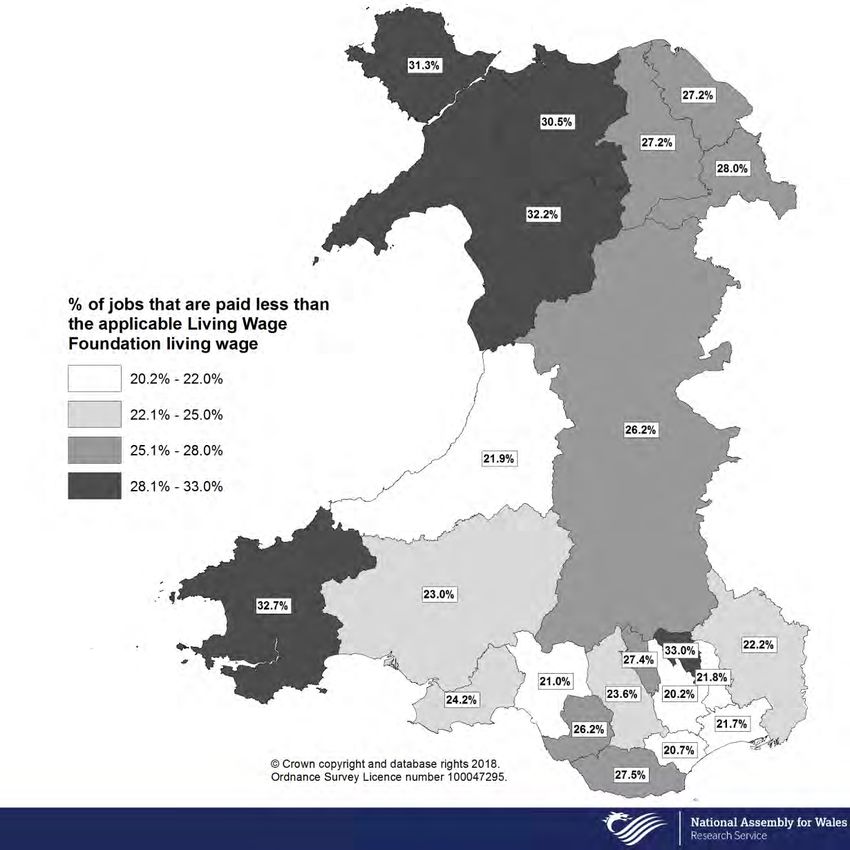
The National Assembly for Wales is the
democratically elected body that represents
the interests of Wales and its people, makes
laws for Wales, agrees Welsh taxes and holds
the Welsh Government to account.

An electronic copy of this document can be found on the National Assembly
website: www.assembly.wales/SeneddCommunities

Copies of this document can also be obtained in accessible formats including
Braille, large print, audio or hard copy from:

Equality, Local Government and Communities Committee
National Assembly for Wales
Cardiff Bay
CF99 1NA

Tel: 0300 200 6565
Email: SeneddCommunities@assembly.wales
Twitter: @SeneddELGC

© National Assembly for Wales Commission Copyright 2018
The text of this document may be reproduced free of charge in any format or
medium providing that it is reproduced accurately and not used in a misleading
or derogatory context. The material must be acknowledged as copyright of the
National Assembly for Wales Commission and the title of the document specified.
National Assembly for Wales
Equality, Local Government and Communities Committee

Making the economy work
for people on low incomes

May 2018

                                                       www.assembly.wales
About the Committee
The Committee was established on 28 June 2016 to examine legislation and hold the
Welsh Government to account by scrutinising expenditure, administration and policy
matters encompassing (but not restricted to): local government; housing, community
regeneration, cohesion and safety; tackling poverty; equality of opportunity and human
rights.
Committee Chair:
John Griffiths AM
Welsh Labour
Newport East
Current Committee membership:
Gareth Bennett AM Janet Finch-Saunders AM
UKIP Wales Welsh Conservatives
South Wales Central Aberconwy
Siân Gwenllian AM Rhianon Passmore AM
Plaid Cymru Welsh Labour
Arfon Islwyn
Jenny Rathbone AM Jack Sargeant AM
Welsh Labour Welsh Labour
Cardiff Central Alyn and Deeside
Bethan Sayed AM
Plaid Cymru
South Wales West
The following Members were also members of the Committee during this inquiry:
Joyce Watson AM Mick Antoniw AM
Welsh Labour Welsh Labour
Mid and West Wales PontypriddMaking the economy work for people on low incomes
Contents
Chair’s foreword ..................................................................................................... 5
Recommendations ................................................................................................ 7
1. Introduction ......................................................................................................... 11
2. Welsh Government’s Strategic Approach to economic
development.......................................................................................................... 13
2. 1. Measuring economic success .............................................................................................................. 14
2. 2. The Economic Action Plan....................................................................................................................15
2. 3. Regional economic development................................................................................................. 19
2. 4. Foundational economy ...........................................................................................................................25
2. 5. Our view ............................................................................................................................................................... 26
Welsh Government strategic approach................................................................................ 27
Regional economic development ............................................................................................ 29
Foundational economy......................................................................................................................... 31
3. Employability ................................................................................................... 33
Careers advice .............................................................................................................................................. 37
Diversity and employability............................................................................................................. 39
3. 1. In-work progression ...................................................................................................................................... 41
3. 2. Our view ............................................................................................................................................................... 45
In-work progression ............................................................................................................................... 46
4. Procurement ..................................................................................................... 48
4. 1. Quality of procurement .......................................................................................................................... 48
4. 2. Code of Practice on Ethical employment in supply chains .................................. 53
4. 3. Monitoring and enforcement ........................................................................................................... 56
4. 4. Equality and procurement.................................................................................................................. 58
4. 5. Our view ...............................................................................................................................................................60
5. Quality of work ................................................................................................ 63
5. 1. Fair Work Board ............................................................................................................................................. 65
5. 2. Zero hours contracts................................................................................................................................. 66Making the economy work for people on low incomes
5. 3. Our view ............................................................................................................................................................... 67
Fair Work Board ......................................................................................................................................... 68
Zero hours Contracts............................................................................................................................. 68
6. Pay ........................................................................................................................ 70
6. 1. Voluntary Living Wage .............................................................................................................................. 72
6. 2. Gender and pay..............................................................................................................................................75
6. 3. Our view ............................................................................................................................................................... 76
Voluntary Living Wage .......................................................................................................................... 77
Gender and Pay ......................................................................................................................................... 78
7. Welfare................................................................................................................ 80
7. 1. Devolving powers on welfare reform to the National Assembly ....................... 82
7. 2. Our view ............................................................................................................................................................... 83Making the economy work for people on low incomes
Chair’s foreword
One of our key areas of focus throughout this Assembly is poverty in Wales. It is a
priority of the work we undertake – policy, financial and legislative scrutiny. This
wide-reaching inquiry looking at how we can ensure the economy works for those
on the lowest incomes has taken the Committee outside its more common areas
of scrutiny, giving it the opportunity to look at wider issues, such as procurement.
This has helped us understand the changes that are needed to reduce poverty,
and help increase household incomes.
We have also considered the Welsh Government’s approach to economic
development, welfare reform and procurement. During this inquiry, the Welsh
Government has published a number of critical policies. We have considered
these as part of our work. The Economic Action Plan, and the Employability Plan
are good starting points, but we want to see more detail on how the ambitions in
both these plans will be delivered. It is also essential that these plans set clear
objectives. As these plans both stand, we are concerned that they are not detailed
enough and too vague in how they will be delivered.
During the course of our inquiry, we heard some very compelling evidence about
the impact of work on people’s lives. The evidence we heard from the small
business and construction sectors was particularly inspiring in showing how they
can help drive forward improvements in local economies by providing good
quality, meaningful work. It was also heartening to hear of how small changes can
make a big difference to people’s lives.
We all believe in the importance of work, not just as a means of supplying income,
but the broader benefits of work for an individual, their family and their
community. However, changes to employment practices and the types of work
that are available are driving up levels of in-work poverty. This is unacceptable. As
some of the policy levers that can help address this are outside of the Welsh
Government’s control, we call for them to use the powers they have creatively, to
ensure that people living in Wales have access to good quality work which pays a
decent wage.
As well as calling for the Welsh Government to do everything it can to minimise
the use of zero-hours contracts and maximise the payment of the Voluntary Living
Wage, our report also considers the way public procurement can help drive a
more inclusive local economy. Procurement is one of the biggest direct policy
levers that is available to the Welsh Government, and we believe more needs to be
done to make sure it is delivering the best value, not just financially, but socially.
5Making the economy work for people on low incomes
Now is the time to grasp this agenda, and to take forward the changes needed to
ensure better jobs and to positively improve people’s lives.
John Griffiths AM
Chair, Equality, Local Government and Communities Committee
6Making the economy work for people on low incomes
Recommendations
Recommendation 1. We strongly recommend that a clear tackling poverty
strategy is published, which brings together the many strands of poverty
reduction work to help provide clear direction and to help the Assembly scrutinise
the Government’s approach. The strategy should include clear performance
indicators to ensure effective performance management, as well as setting out a
broader evidence base to help underpin effective evaluation of different
approaches to tackling poverty. ............................................................................................................. Page 27
Recommendation 2. We recommend that the Welsh Government develops a
single, joined-up, implementation plan to deliver the actions set out in the
Economic Action Plan and Employability Plan. This should include a set of
indicators against which the Government’s progress in delivering its key objectives
can be measured, and should be published by the end of 2018, with annual
updates thereafter. ............................................................................................................................................. Page 28
Recommendation 3. We recommend that the Welsh Government:
sets out clearly the outcomes it expects businesses awarded funding via
the Economy Futures Fund to achieve;
explains how outcomes will be measured; and
develops robust monitoring procedures to ensure compliance with the
Economic Contract. ........................................................................................................................ Page 28
Recommendation 4. We recommend that the Welsh Government sets out
clearly the potential consequences to businesses of not complying with the
Economic Contract. In cases where businesses do not comply with the
requirements of the Economic Contract, and do not accept support to meet
these requirements, potential sanctions should include enhanced monitoring,
publicising serious cases of non-compliance where there is a public interest in
doing so, suspending funding, and ultimately clawback of funding. ................... Page 29
Recommendation 5. We recommend that the Welsh Government works with
the Chief Regional Officers to ensure that the regional business plans take into
account the differences within regions, identify the actions that will address
inequalities and benefit those on the lowest incomes within regions............... Page 30
Recommendation 6. We recommend that the Welsh Government reviews its
Location Strategy to ensure a better spread of public sector jobs across Wales, and
7Making the economy work for people on low incomes
in particular deprived areas. This should include setting out how this approach will
attract and relocate jobs to the strategic hubs within the South Wales Valleys, and
to other parts of Wales, in particular those areas in West Wales and the Valleys set
to lose EU Structural Funding. .................................................................................................................. Page 31
Recommendation 7. We recommend that the Welsh Government’s enabling
plans for the four foundational sectors contain a clear outline of the
improvements to pay, security of work and training that it requires in return for
the greater sectoral support it will provide. ................................................................................. Page 32
Recommendation 8. We recommend that the Welsh Government clarifies why
the construction, energy and health sectors are classed as foundational sectors
prioritised for investment in the Valleys but not in other parts of Wales. ......... Page 32
Recommendation 9. We recommend that the Welsh Government’s enabling
plans set out how the support it is providing to foundational sectors will help to
address inequalities facing the predominantly female workforce. ........................ Page 32
Recommendation 10. We recommend that the Welsh Government ensures that
Working Wales continues to collect data on outcomes and experiences for at least
a year after a person has successfully gained employment. ......................................... Page 46
Recommendation 11. We recommend that the Welsh Government pilots in-work
progression support for the four foundational sectors it has chosen to prioritise.
This could include areas such as skill council support or careers advice; and
support for increasing understanding of transferrable skills and “on the job
learning” to assist people progressing through organisations. ................................... Page 47
Recommendation 12. We recommend that the Welsh Government works with
employers in foundational sectors to pilot creating “job ladders” within firms to
improve workforce progression. ............................................................................................................. Page 47
Recommendation 13. We recommend the Welsh Government commits to
undertaking a full review of the Code of Practice on Ethical Procurement in
Supply Chains by 2020 and takes actions to address any issues identified. The
review should consider whether the Code should be placed on a statutory basis.
............................................................................................................................................................................................... Page 61
Recommendation 14. We recommend the Welsh Government use the
forthcoming procurement fitness checks to assess the extent to which public
bodies ensure that businesses comply with ethical employment and community
benefits initiatives. ............................................................................................................................................... Page 61
8Making the economy work for people on low incomes
Recommendation 15. We recommend the Welsh Government uses the
procurement fitness checks to review the approach to monitoring ethical
employment practices and community benefits policies. The findings of such a
review should inform the development of guidance to the public sector on
monitoring and reviewing compliance. ........................................................................................... Page 61
Recommendation 16. We recommend that the Welsh Government carries on its
work to explore the potential for using “equality benefit” clauses in procurement,
and the potential for requiring contractors to develop action plans to advance
women in their company and industry. .......................................................................................... Page 62
Recommendation 17. We recommend the Welsh Government publish the
composition, terms of reference, and details of meetings of the Fair Work Board
on the Welsh Government website immediately. Going forward, the Welsh
Government should commit to publish the findings of any work undertaken by
the Board, along with its responses to the Board’s recommendations. .............Page 68
Recommendation 18. We recommend that the Welsh Government place
requirements on any company receiving Welsh Government support through
funding covered by the Economic Contract or otherwise to minimise the use of
zero hours contracts. As part of this, the Welsh Government should support
organisations to overcome potential barriers to offering secure contracts. As a
minimum, companies should have to offer employees the option to move onto
secure contracts after a set period of employment, which we suggest should be 3
months..........................................................................................................................................................................Page 69
Recommendation 19. We recommend that the Welsh Government develop a
broad and wide-reaching campaign to encourage payment of the voluntary living
wage within both the private and public sector in Wales. Such a campaign should
highlight the economic benefit to businesses and should celebrate those
employers that already pay the voluntary living wage. ..................................................... Page 77
Recommendation 20. We recommend that the Welsh Government incentivises
the payment of the voluntary living wage when considering applications for
financial support covered by the Economic Contract. This should be seen as a core
requirement for larger businesses who employ at least 250 staff. .......................... Page 78
Recommendation 21. We recommend that the Welsh Government place a
requirement on all companies, with between 50-249 employees, who receive
support as part of the Economic Contract to publish data on their gender pay
gaps. ................................................................................................................................................................................ Page 79
9Making the economy work for people on low incomes
Recommendation 22. We recommend that the Welsh Government publish an
action plan setting out what it will do to reduce the gender pay gap once the Fair
Work Board has published its recommendations. This action plan should contain
clear milestones, targets and actions. ............................................................................................... Page 79
Recommendation 23. We recommend that, as part of any consideration of the
devolution of powers on the administration of Universal Credit, the Welsh
Government undertakes and publishes analysis of the benefits and risks. ..... Page 83
10Making the economy work for people on low incomes
1. Introduction
This is the third strand of the Committee’s work looking at
1
poverty in Wales. For this report, we took a wide range of oral
and written evidence, which included hearing directly from
people on low incomes. We have taken account of key policy
developments, including the publication of the Welsh
Government’s Economic Action Plan.
1. This inquiry is most substantial in terms of the amount of evidence. It has
built on our previous evidence and conclusions, in particular relating to
employability arising from our Communities First work2 and our budgetary
scrutiny, and one off Ministerial scrutiny sessions on work such as the Valleys Task
Force.
TERMS OF REFERENCE FOR THE INQUIRY:
How the Welsh Government’s economic strategy and employability plan can:
create more inclusive economic growth that benefits people and places
equally across Wales;
interact with the UK Government’s Work and Health Programme;
reduce the proportion of people on low incomes in Wales; and
address economic inequalities between different groups of people;
An exploration of low pay sectors, and measures to improve pay of low-paid
workers such as the living wage;
Ways to increase the security of work in Wales; and
The role that welfare benefits play in supporting people on low incomes in
Wales.
There are a number of ways in which “low incomes” can be defined including:
1
We have already undertaken work looking at Communities First and taking an asset based
approach to poverty reduction.
2
Communities First: Lessons Learnt Full Report, October 2017
11Making the economy work for people on low incomes
When a household’s income is less than 60 of the median income of similar
types of households. The Department of Work and Pensions currently collects
and publishes date on this indicator.
A household where the main wage earner earns less than the voluntary Living
Wages hourly rate.
When an individual’s resources are not sufficient to meet their minimum needs
(including social participation).3
2. Our work has not considered the issues arising from automation and how
this may impact on jobs. The Economy, Infrastructure and Skills Committee are
currently looking at this issue4 in detail, and we look forward to their views and
analysis.
3. Along with written submissions, and our oral evidence sessions, we also held
eight focus groups across Wales.5 These were helpful in understanding the lived
experience of people on low incomes. Listening to those with direct experiences is
essential to informed scrutiny and effective policy development.
4. We would like to thank everyone who participated in our work.
5. During the course of our inquiry, there have been a number of policy
announcements from the Welsh Government. Firstly, the Welsh Government
published Prosperity for All, followed by the Economic Action Plan (the EAP).
Our written and oral evidence with stakeholders were gathered after Prosperity for
All was published, but before the EAP was published. To ensure our conclusions
reflected new developments, people were invited to submit additional evidence
on the EAP, that were relevant to, this inquiry. These informed our final evidence
session with the Cabinet Secretary for Economy and Infrastructure, Ken Skates AM
(the Cabinet Secretary) and the Minister for Welsh Language and Lifelong
Learning, Eluned Morgan AM (the Minister).
6. Another significant policy document, The Employability Plan, was not
published until after we had finished taking evidence. We considered the
Employability Plan against the evidence we had taken, which has enabled us to
make some recommendations around the Plan.
3
This definition has been adopted by the Joseph Rowntree Foundation
www.jrf.org.uk/report/definition-poverty [accessed 10 May 2018]
4
Economy, Infrastructure and Skills Committee, Automation and the Welsh economy inquiry
5
Focus groups with people from Swansea, Caernarfon, Blaenau Ffestiniog, Conwy, Lampeter, Ton
Pentre, Cardiff, Merthyr Tydfil, Ebbw Vale, Torfaen and Rhondda Cynon Taff.
12Making the economy work for people on low incomes
2. Welsh Government’s Strategic Approach to
economic development
We note the Welsh Government’s change in approach to
economic development. However, we are concerned that
there is not enough detail on how the Government will
deliver its ambitious agenda, and we call for the Government
to set out more clearly how it hopes to achieve this.
7. Before we started this inquiry, the Cabinet Secretary indicated there would
be a significant shift in economic development policy. He said it would:
Take a regional approach to ensure that growth and prosperity are
spread across Wales;
Prioritise a smaller number of foundational sectors nationally, including
healthcare and energy but will encourage regions to develop their own
sector specialisms and to align skills policies with local needs; and
Empower communities with the tools they need to access work, for
example stronger employability skills, better transport infrastructure and
better jobs closer to home.6
8. Prosperity for All was published in September 2017. On the publication of
this over-arching strategy, the First Minister said:
“….prosperity is about far more than material wealth and cannot be
determined, or delivered, indeed, by economic growth alone. It is about
every person in Wales enjoying a good quality of life, living in a strong,
safe community and sharing in the prosperity of Wales…
….This strategy takes our commitments in Taking Wales Forward, places
them in a long-term context, and sets out how they will be delivered in
a smarter, more joined up way that cuts across traditional boundaries,
both inside and outside government.”7
6
Wales Online, 20 March 2017
7
National Assembly for Wales, Plenary, 19 September 2017, RoP [14:44].
13Making the economy work for people on low incomes
9. Giving oral evidence before the publication of the EAP, the Bevan
Foundation said they wanted to see a shift to:
“…making the economy work for people so that it’s about job quality, it’s
about access to work and it’s about improving the quality of services
that those jobs deliver.”8
10. The Joseph Rowntree Foundation reminded us “that there is no guarantee
that economic growth alone will lift people out of poverty”.9
11. Citizen’s Advice highlighted the importance of an economic strategy being
“cross-cutting” joined up with other Welsh Government actions, policies and
programmes, as well as those of other public bodies.10
12. Chwarae Teg said that the previous approach to economic development and
the focus on priority sectors had not benefited women. They argued for a greater
“foregrounding” of gender equality in the economic strategy and action on
changing mind-sets and attitudes, including getting more women into the most
productive sectors and in leadership roles.11 Oxfam Cymru also called for greater
focus on those groups disproportionality affected by poverty, and in particular,
women.12
2. 1. Measuring economic success
13. A number of stakeholders13 called for a move away from narrow
measurements such as GDP (Gross Domestic Product) and GVA (Gross Value
Added), to a broader set of measurements. Both Professor Caroline Lloyd and FSB
Wales highlighted the importance of setting clear objectives before deciding on
targets and indicators.14
14. FSB Wales said a basket of measurements should cover the “economic
wellbeing and diversity in local economies”, including business size and
8
ELGC Committee, 5 July 2017, RoP [7]
9
MEW07 Joseph Rowntree Foundation, paragraph 1
10
MEW04 Citizen’s Advice Cymru, paragraph 2.12
11
ELGC Committee, 19 July 2017, RoP [142, 153, 156]
12
MEW03 Oxfam Cymru, section 1
13
Oxfam Cymru, FSB Cymru, and Professor Karel Williams
14
ELGC Committee, 5 July 2017, RoP [124] and 19 July 2017, RoP [265]
14Making the economy work for people on low incomes
employment quality.15 They said that there can be a disconnect between
productivity gains and what that actually feels like for people.16
15. Professor Karel Williams called for a “dashboard of tangible welfare
indicators, which would be local and relevant”. These could include indicators like
“denser bus services to outlying estates”. He felt these would be more relevant
than “an overall metric of a technocratic and remote, top-down kind”.17 Wales TUC
called for a “basket of measures that are more reflective of living standards”. They
also wanted to see more indicators about working life, to provide a better
understanding of household incomes than a simple GVA measurement.18
16. Oxfam Cymru suggested that the Well-Being of Future Generations
indicators could be considered when looking at the impact of the economy on
those on low incomes.19
2. 2. The Economic Action Plan
17. The EAP was published in December 2017. The Government described it as
“wide-ranging” and setting out “ambitious proposals” which commit the
Government to a “major shift in policy”.20 At the heart of the EAP is the “economic
contract” described as framing the “reciprocal relationship between Government
and business to drive public investment with a social purpose”.21
18. The Cabinet Secretary told us that the new approach would look to improve
well-being and wealth while also reducing inequalities. In order to deliver this, the
Welsh Government is focusing on:
the new economic contract, which according to the Government will
help “drive inclusive growth and fair work”;
the Calls to Action,22 which according to the Government will help to
“future-proof the economy”.
15
MEW17, FSB Wales
16
ELGC Committee, 19 July 2017, RoP [264]
17
ELGC Committee, 5 July 2017, RoP [121]
18
ELGC Committee, 19 July 2017, RoP [13]
19
MEW03 Oxfam Cymru, section 2
20
ELGC(05)-03-18 Paper 2, Welsh Government written evidence, paragraph 8
21
ELGC(05)-03-18 Paper 2, Welsh Government written evidence, paragraph 10
22
Businesses that wish to receive Welsh Government support will be expected to contribute to one
of the five calls for actions. The five calls are focused on: decarbonisation; innovation
15Making the economy work for people on low incomes
a regional place based approach, which according to the Government
will help identify the strengths, challenges, capabilities of all regions and
communities across Wales, and where further investment and
intervention is needed.23
19. The Welsh Government has prioritised three thematic sectors and four
foundational sectors in its EAP.24 The three thematic sectors are:
tradeable services between residents and non-residents of Wales such
as Fintech25 services and online insurance;
high-value manufacturing that applies leading-edge technical
knowledge to create products, production processes and associated
services, such as compound semiconductors and new composites
manufacturing; and
enablers that drive competitiveness for successful business such as
digital, energy efficiency and renewables.
20. The four foundational sectors prioritised are tourism, food, retail and care.
These differ from the foundational sectors prioritised by the Valleys Taskforce. The
Valleys Taskforce Delivery Plan prioritises eight foundational sectors – tourism,
retail, food, energy, construction, social care, childcare and health.26
21. The following stakeholders provided their views on the EAP: to this inquiry:
Oxfam Cymru;27
Civil Engineering Contractors Association (CECA);28
Citizens Advice Cymru;29
The Bevan Foundation;30
entrepreneurship and headquarters; exports and trade; high quality employment, skills
development and fair work; and R&D, automation and digitalisation.
23
ELGC Committee, 25 January 2018, RoP [15-16]
24
Welsh Government, Economic Action Plan, December 2017, page 14
25
Fintech companies are businesses that use technology to deliver banking and financial services.
26
Welsh Government, Valleys Taskforce Delivery Plan, November 2017, page 21
27
MEW03a Oxfam Cymru
28
MEW20a CECA
29
MEW04a Citizen’s Advice Cymru
30
MEW11a Bevan Foundation
16Making the economy work for people on low incomes
Professor Caroline Lloyd;31
Chwarae Teg;32
Dr Alison Parken;33 and
FSB Wales.34
22. Broadly speaking, they supported the shift of approach outlined in the EAP.
All stakeholders provided useful evidence where further changes or
improvements could be made. The key points are summarised below.
23. While welcoming the EAP, and its commitments to inclusive growth, fair
work and greater regional balance, the Bevan Foundation said the EAP is:
“…short on practical actions to achieve these ambitions…..not in our view
sufficient to achieve a transformation in pay and hence a reduction in
poverty.”35
24. In a similar vein, Chwarae Teg was critical of the EAP’s initial focus on retail
and care: – to understand the challenges and opportunities these sectors face. It
argued much of this is already known and that there should be a focus on
action.36
25. FSB Wales wanted to see “stronger targets and measures” in the EAP.37
26. The Bevan Foundation wanted a range of actions, including:
a commitment to increase the payment of the Voluntary Living Wage;
more opportunities for low-paid employees to access training and
development;
more adult skills and training provision;
increasing participation in essential skills learning; and
31
MEW13a Professor Caroline Lloyd
32
MEW15a Chwarae Teg
33
MEW16a Dr Alison Parken
34
MEW17a FSB
35
MEW11a Bevan Foundation, paragraphs 2-3
36
MEW15a Chwarae Teg, paragraph 13.5
37
MEW17a FSB Wales
17Making the economy work for people on low incomes
a commitment to create jobs in places with few employment
opportunities.
27. Additionally, they wanted the EAP to include clear objectives for specific
groups of people, and specific places.38 Professor Caroline Lloyd highlighted that
the EAP did not address inequalities in employment, with apprenticeships, as
often having “very rigid gender segregation”, and that there was nothing about
“BME access”.39
28. Professor Caroline Lloyd raised a fundamental concern about the basis on
which the EAP had been developed:
“There is a tension in the report [Plan] between a recognition that there
is a lack of quality jobs available and an agenda based on employability
and skills improvement to enable individuals to access ‘decent jobs’.
The report states that ‘We know that improving the level of skills for
people from all backgrounds and places in Wales and encouraging a
better match between these skills and the needs of employers is the
best way of creating better jobs, higher wages and improved health
outcomes. These changes help to reduce the pay gap…’ pg 30.
Unfortunately, there is no evidence that this is the ‘best’ way to create
better jobs. Over many years, skill levels have been rising, yet the
number of poor quality jobs has continued to increase. Women out-
perform men in educational qualifications but the pay gap persists.
Recognising that other forms of intervention are more likely to drive the
creation of better jobs would provide a more realistic approach to the
role of skills within such an agenda”40
29. When we raised this disconnect with the Minister, she said that the
Government has been “listening to the employers” about their needs, and are
discussing these with FE colleges, trying to ensure that apprenticeships are
adapted to match jobs available.41
30. Chwarae Teg noted that the EAP does not “explicitly discuss poverty”. They
wanted to see a clearer understanding of how the EAP will “tackle root causes of
poverty”.42
38
MEW11a Bevan Foundation, paragraph 4.7
39
MEW13a Professor Caroline Lloyd, paragraph 2
40
MEW13a Professor Caroline Lloyd, paragraph 2
41
ELGC Committee, 25 January 2018, RoP [158-159]
42
MEW15a Chwarae Teg, paragraph 13.4
18Making the economy work for people on low incomes
31. The Cabinet Secretary told us that the aim of the economic contract was:
“…to provide a bar that any business will have to overcome in order to
gain support from the Welsh Government.”43
32. We explored with him how delivery of the calls to action will be monitored.
He told us that the burden of proof would be in the economic contract. In terms
of specifics, he said the Welsh Government intended to incorporate the well-
being indicators within the action plan. However, he said that targets were not
enough and that:
“We need a cultural change and a behavioural change, and that will be
delivered through the stick-and-carrot approach of the economic
contract and the calls to action and the regional work.”44
33. He acknowledged that while some economic levers were outside of the
Welsh Government’s devolved competence, the Government can use both its
financial power and “power of persuasion” to develop a cultural change. 45
34. He also outlined that the definitions devised by the Fair Work Board would
help inform the development of measures and indicators.46 He said that within
the economic contract he wanted to incorporate a definition of fair work that
“offers security”.47
2. 3. Regional economic development
35. The Welsh Government said that the focus on regional economic
development would help “tailor our delivery to the specific challenges and
opportunities of different parts of Wales”.48
36. The Cabinet Secretary pointed to the impact of the interventions made by
the Welsh Government in Merthyr Tydfil and local government as “a blueprint” for
regional development. He said this sort of approach has been “a departure from
previous plans that have often sat in silos in isolation”.49
43
ELGC Committee, 25 January 2018, RoP [38]
44
ELGC Committee, 25 January 2018, RoP [20]
45
ELGC Committee, 25 January 2018, RoP [137]
46
ELGC Committee, 25 January 2018, RoP [21-22]
47
ELGC Committee, 25 January 2018, RoP [133]
48
ELGC(05)-03-18 Paper 2, Welsh Government written evidence, paragraph 13
49
ELGC Committee, 25 January 2018, RoP [58-60]
19Making the economy work for people on low incomes
37. Stakeholders unanimously supported the focus on regional economic
development. A regional approach was also supported by academic research:
“Local employment growth is more important than employment
growth in specific sectors in influencing individuals’ wage growth.”50
38. Professor Caroline Lloyd highlighted the regional variance in pay across
Wales.51 In Blaenau Gwent, Pembrokeshire, Gwynedd, Anglesey and Conwy – more
than 30% of workers are paid less than the Voluntary Living Wage. Even at the
other end of the spectrum, around 20% of workers in Caerphilly, Cardiff and
Neath Port Talbot are paid less than the Voluntary Living Wage.52
39. The Bevan Foundation said that the areas with the highest proportion of the
workforce being paid below the Voluntary Living Wage are in rural areas.53 The
Trussell Trust reported “there are few job opportunities paying enough to cover all
the extra expenses involved in living in a rural community”.54
40. In every area where we held the focus groups we heard about a lack of job
opportunities. Participants told us that available work was low paid, and in some
areas, like North West Wales, it is seasonal. People in rural areas also spoke about a
reduction in jobs that has occurred over recent years.55
41. The Bevan Foundation said:
“The fundamental challenge in Wales is the lack of jobs.”56
42. This view was supported by the Trussell Trust who told us the biggest barrier
to getting work faced by people accessing foodbanks was a lack of opportunities /
jobs in their area.57
43. In addition to a lack of available jobs, poor transport links create an additional
barrier to employment. People living in both rural and urban areas highlighted
the importance of decent bus services because the costs of running a car can be
too high for people on low incomes. The practical issues include:
50
MEW12 Professor Anne Green, Dr Paul Sissons and Dr Neil Lee, paragraph 8
51
MEW13 Professor Caroline Lloyd, Cardiff University, paragraphs 12-13
National Assembly for Wales, In Brief Blog: Poverty in Wales: are we getting the full picture,
52
March 2018 [accessed 12 April 2018]
53
MEW11 The Bevan Foundation, paragraph 7
54
MEW06 The Trussell Trust, paragraph 17
55
Notes from the Focus Group meetings
56
MEW11 The Bevan Foundation, paragraph 4
57
MEW06 The Trussell Trust, paragraph 10
20Making the economy work for people on low incomes
a lack of basic information about timetables, prices and bus stop
locations;
the difficulties of shift working when relying on public transport at
times when the service is less frequent; and
a number of connections make the journey more unpredictable.58
44. The Bevan Foundation said that there was a need for “good connections
between disadvantaged communities and centres of employment”.59 Tinopolis
Cymru (an independent media production company based in Llanelli)
highlighted young people on low incomes who cannot access employment
outside their immediate area because of transport issues.60
45. The Joseph Rowntree Foundation said that there was a number of actions
the Welsh Government could take to create employment and reduce poverty:
Link place-based regeneration with pro-active supply for businesses;
Offer tax breaks for local job creation;
Use local planning powers to support job creation; and
Encourage business ownership models that retain local value (e.g. co-
operatives and sustainable social enterprises).61
46. Tinopolis Cymru welcomed a regional approach. They felt it provided more
opportunities for smaller companies and areas such as Llanelli.62
47. Citizen’s Advice told us that a regional approach to economic development:
“…not only helps us support the local economy and the infrastructure
that supports those communities in terms of shops and other facilities,
but it also helps address some of the barriers to work that people face
in terms of travel, the cost of travel, the time it takes to travel.”63
48. We heard that certain areas within Wales face greater difficulties. Gwynedd
Council said that there is “a growth gap” between North East and North West
58
Notes from the Focus Group meetings
59
MEW11 The Bevan Foundation, paragraph 5
60
ELGC Committee, 11 October 2017, RoP [91]
61
MEW07 Joseph Rowntree Foundation, paragraph 4
62
ELGC Committee, 11 October 2017, RoP [46]
63
ELGC Committee, 5 July 2017, RoP [20]
21Making the economy work for people on low incomes
Wales.64 They highlighted the importance of ensuring that public infrastructure
investment should be dispersed to ensure growth is supported across Wales. 65
49. We heard a lot of evidence about the impact of spreading public sector jobs
to deprived areas. Tinopolis Cymru told us:
“It’s one of the most important things that the Welsh Government can
do to ensure that jobs do go to the most disadvantaged areas where
there is a high percentage of people living in poverty.”66
50. They argued that placing jobs in disadvantaged areas enables people to
travel to employment areas more easily, highlighting the difficulties of
connectivity, in South West Wales where they are based.67 They said that too many
jobs are being centralised in Cardiff when there is no need for the jobs to be
located there.68
51. Tinopolis Cymru said the broader positive impact of moving public sector
jobs to disadvantaged areas ensured:
“…that smaller businesses can take advantage of the working
population out there….if you move some of the larger departments into
the centre of Cardiff, you have those large multinational companies
selling sandwiches to the workforce at lunchtime rather than smaller
businesses taking advantage of that. So, one thing breeds another.
That’s why it’s crucially important that we do move organisations.”69
52. They also felt that it would help engender confidence, and persuade people
of the value in establishing a business within a disadvantaged area. 70
53. Mentrau Iaith supported this view. They cited Traveline Cymru, which is
based in Penrhyndeudraeth. The company provides travel information across
Wales bilingually, and has helped strengthen the local economy. They said that
this model could be replicated in places like Blaenau Ffestiniog, Llanrwst,
Bethesda, and Caernarfon. While they would not create hundreds of job, they said
creating a small number of jobs would “do a great deal for the sustainability of the
64
MEW08 Gwynedd Council, paragraph 13
65
MEW08 Gwynedd Council, paragraph 17
66
ELGC Committee, 11 October 2017, RoP [23]
67
ELGC Committee, 11 October 2017, RoP [24]
68
ELGC Committee, 11 October 2017, RoP [34]
69
ELGC Committee, 11 October 2017, RoP [64-65]
70
ELGC Committee, 11 October 2017, RoP [82]
22Making the economy work for people on low incomes
Welsh language, and the sustainability of those towns and villages”.71 They said
that the Welsh language is not seen as a skill that has an economic benefit.
54. We raised these issues with the Cabinet Secretary. He talked of his
commitment to “decentralise and share wealth-creating opportunities across
Wales”. He told us:
“….we’re looking at every opportunity to move public sector jobs to those
areas where we need to see a greater degree of wealth-creating
opportunities…..I think right across the public sector there is a role….I do
believe it’s incumbent upon us all to make sure that future
developments are undertaken where they will have maximum
beneficial impact.”72
55. He said that across the Welsh Government every opportunity was being
looked at to add to the development of communities “outside of the intensely
urban areas where there is already near full employment”.73 When pressed on this,
he told us that as well as creating public sector opportunities, it was important to
get more “private capital” into communities, as well as ensuring better
connectivity and a broader range of housing stock. He said it was important that
young people did not feel like they had to move away from their communities.74
56. City and County of Swansea,75 the Trussell Trust76 and Oxfam Cymru77 told us
that a more regional approach could lead to more responsive skills development
that better reflects the needs of a local labour market. At the core of this would be
greater partnership working and building the right local intelligence base.
57. FSB Wales wanted to see more regional labour market statistics, which they
believed would enable more responsive policy making.78 They highlighted the
variations within regions:
“…lots of these places, or the regions we’re talking about, are as diverse
inside themselves as they are between each other.”79
71
ELGC Committee, 11 October 2017, RoP [38]
72
ELGC Committee, 25 January 2018, RoP [68]
73
ELGC Committee, 25 January 2018, RoP [72]
74
ELGC Committee, 25 January 2018, RoP [75-77]
75
MEW02 City and County of Swansea, paragraph 2.2
76
MEW06 The Trussell Trust, paragraph 40
77
MEW3a Oxfam Cymru, paragraph 2.5
78
MEW17 FSB Wales
23Making the economy work for people on low incomes
58. The FSB told us there is:
“…a relationship between the diversity of the local business base and
sustainable and resilient labour markets.”80
59. Wales TUC highlighted the need for a “social partnership approach” to city
deals. They said that full engagement with social partners, such as trade unions
has not been happening.81
60. The Cabinet Secretary for Finance spoke about the importance of
procurement in regional investment and development. He acknowledged that
there were some “major opportunities” with the various city deals, and the South
East Wales Metro. He assured us that he would raise issues around skills
development with local authorities and other partners.82
79
ELGC Committee, 19 July 2017, RoP [234]
80
MEW17 FSB Wales
81
ELGC Committee, 19 July 2017, RoP [137]
82
ELGC Committee, 21 September 2017, RoP [336]
24Making the economy work for people on low incomes
2. 4. Foundational economy
61. The Welsh Government said that the EAP “recognises the important
economic and social role of foundation sectors such as care, tourism, food and
retail”. The Government describe the foundation economy as:
“The foundation economy provides essential goods and services from
the provision of care to the old and young, to the food we consume and
the retailers in our high streets. It is the backbone of our local
communities across Wales. In parts of Wales, such as some of our rural
communities the foundation economy is the economy.”83
62. The EAP aims to targets support to these sectors84 with cross-Government
enabling plans to “maximise impact”.85
63. The Centre for Research on Socio-Cultural Change define the foundational
economy as:
“…the sheltered sector of the economy that supplies mundane but
essential goods and services such as: infrastructures; utilities; food
processing, retailing and distribution; and health, education and
welfare.”86
64. Most witnesses87 broadly welcomed the EAP’s focus on the foundational
economy within the EAP. Oxfam Cymru said, “recognising the social capital and
value of the foundational economy is key to creating an inclusive economy”.88
Chwarae Teg highlighted that the key to inclusive growth was recognising the
value of the foundational economy.89
65. Professor Caroline Lloyd highlighted that creating jobs in the foundational
sectors may not have an impact on pay or incomes, and it was important to have
an integrated strategy that looks at “how do we create good-quality jobs and
higher paid jobs”.90
83
Welsh Government, Prosperity for All: Economic Action Plan, page 15
84
ELGC(05)-03-18 Paper 2, Welsh Government written evidence, paragraph 12
85
Welsh Government, Prosperity for All: Economic Action Plan, page 15
86
Centre for Research on Socio-Cultural Change website [accessed 6 April 2018]
87
This included Dr Alison Parken, Chwarae Teg, and FSB Cymru.
88
MEW3a Oxfam Cymru, paragraph 2.2
89
MEW15 Chwarae Teg, paragraph 11.5
90
ELGC Committee, 5 July 2017, RoP [118]
25Making the economy work for people on low incomes
66. Professor Karel Williams pointed out that the care sector does not deliver
consistent high quality care or jobs. Both need to be addressed. 91 He said it is
essential to ask “citizens-not consumers” what sorts of services they want, and
what they define as quality.92 He also believes there is a need to “rethink policy”
more fundamentally, arguing that public sector organisations need to “up their
game”. Essentially:
“….we need to stop doing policy to people and ask them what do they
want and what do they value.”93
67. FSB Cymru said the focus needs to shift to working out what interventions
ensure we are “getting the maximum social value” from the foundational sectors. 94
68. The Cabinet Secretary said that the enabling plans would help drive up the
quality of employment and pay levels in these sectors. He noted that this would
help to narrow the gender pay gap,95 where an “environment and culture” t has
allowed women to be paid less.
69. The Cabinet Secretary told us childcare had been identified as one of the
foundational sectors because of the impact it has on employment. He said that
the enabling plan for this sector will recognise the challenges of changing
working practices and patterns, and how these challenges can be overcome.96
2. 5. Our view
70. We recognise the Welsh Government’s shift in strategic approach to
economic development. It is only through a cross-Governmental approach that
we can make significant in-roads into the causes and impact of poverty in Wales.
We stated the importance of this in our report on Communities First97
recommending that “a clear tackling poverty strategy is published, which brings
together the many strands of poverty reduction work to help provide clear
direction….” We also called for the inclusion of clear performance indicators as well
as the setting out of the evidence base to help underpin future evaluation. We
were disappointed that this recommendation was rejected by the Welsh
Government. While we welcome a holistic approach, we do not believe this
91
ELGC Committee, 5 July 2017, RoP [127]
92
ELGC Committee, 5 July 2017, RoP [192]
93
ELGC Committee, 5 July 2017, RoP [227]
94
ELGC Committee, 19 July 2017, RoP [236]
95
ELGC Committee, 25 January 2018, RoP [25]
96
ELGC Committee, 25 January 2018, RoP [133]
97
Communities First: Lessons Learnt Full Report, October 2017, paragraphs 176-181
26Making the economy work for people on low incomes
prevents development of a clear anti-poverty strategy. We are therefore making
this recommendation again.
Recommendation 1. We strongly recommend that a clear tackling poverty
strategy is published, which brings together the many strands of poverty
reduction work to help provide clear direction and to help the Assembly
scrutinise the Government’s approach. The strategy should include clear
performance indicators to ensure effective performance management, as well as
setting out a broader evidence base to help underpin effective evaluation of
different approaches to tackling poverty.
71. Poverty has remained stubbornly high for too long. The ability of work to
deliver a route out of poverty has faltered, as more than half of Welsh working-age
adults and children in poverty have at least one person in their household in work.
The impact this has on the daily lives of people across Wales is significant, and
affects the sustainability of communities. From the evidence we have heard, that
all partners appear ready and willing to play their part in trying to address this.
Welsh Government strategic approach
72. We welcome the inclusion of the Economic Contract in the EAP and believe
this could potentially help bring about the cultural and behavioural change as
recommended by the Cabinet Secretary (see paragraph 33).
73. While supporting the broad approach the Welsh Government has set out, we
are sympathetic to the calls by stakeholders like the Bevan Foundation for a more
concrete set of actions with deadlines. It strikes us that the Welsh Government
has effectively diagnosed the problem, and is halfway to finding solutions but is
not quite there. There are many commitments to action in the EAP but only some
of these have clear deadlines. The EAP does not include a set of indicators against
which effectiveness can be evaluated.
74. We note the Cabinet Secretary’s intention to incorporate the well-being
indicators into the action plan. We also know that the Fair Work Board will help
shape the indicators. But, considering that the importance of evaluation has been
a recurring theme during the lifespan of Welsh devolution, we think it is a missed
opportunity that the EAP did not bring all of this together in one document. Such
a fundamental shift in approach needs careful and considered monitoring and
evaluation. This is lacking in the EAP.
27You can also read


