Makmur Sunusi, Ph.D THE MINISTRY OF SOCIAL AFFAIRS REPUBLIC OF INDONESIA
←
→
Page content transcription
If your browser does not render page correctly, please read the page content below
INTER-GENERATIONAL FAMILY AND COMMUNITY SUPPORT:
IMPLICATION TO SOCIAL PARTICIPATION AND CONTRIBUTION
OF OLDER PERSON

             Makmur Sunusi, Ph.D
      THE MINISTRY OF SOCIAL AFFAIRS
          REPUBLIC OF INDONESIA

          THE 12TH ASEAN & JAPAN HIGH LEVEL
        OFFICIALS MEETING ON CARING SOCIETIES
              TOKYO, 21 – 23 OCTOBER 2014
OUTLINE PROFILE OF AGEING IN INDONESIA NATIONAL POLICY ON AGEING OLDER PERSONS AND DEVELOPMENT ADVANCING HEALTH AND WELL-BEING INTO OLD AGE ENSURING ENABLING AND SUPPORTIVE ENVIRONMENTS STRESSING PROGRAM IN THE FUTURE
INDONESIA
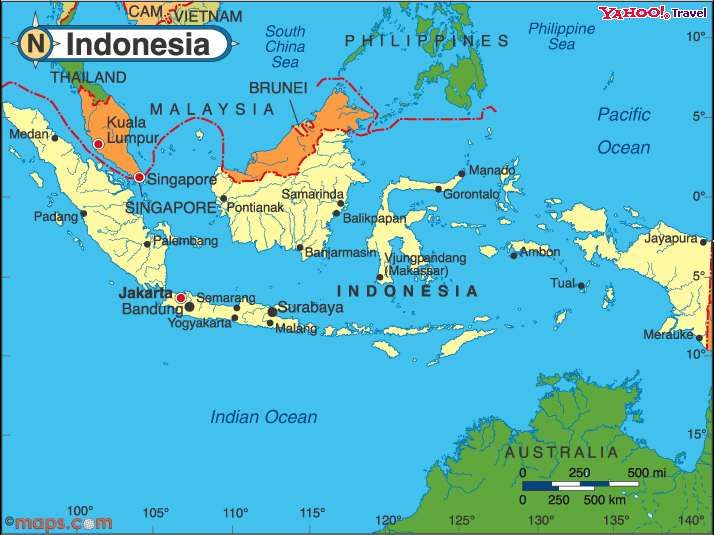
Number of Island: 17,504
Population (2012) ± 246.9 million
Decentralized Government:
34 provinces; 508 districts
GDP per Capita (2013, in USD):
3,651
Life Expectancy (2013): 70,07 yrs
Population 60+ yrs will increase
from 18.1 million in 2010 to 29.1
million in 2020 or approximately
11.4% of the total population and 36
million in 2025. Now number of the
elderly has reached about 23
million.
AGEING IN INDONESIA Life expectancy of the population in Indonesia has steadily risen 1970: 45.7 years 1990: 59.8 years 2008: 69,0 years 2010: 69,4 years 2013: 70,07 The aged population in Indonesia, (i.e. Those 60 years and above), will increase in proportion of total population from 7.4% or 15.4 million in 1999 to between 10 and 11% or 30–40 million older people in 2020.

LIFE EXPECTANCY AND POPULATION GROWTH

    Year            Life Expectancy   Number of Elderly Percentage from the total
                         (years)          People              population

   1980                  52,2             7.998.543                 5,45 %

   1990                  59,8             11.277.557                6,29 %

   2000                  64,5             14.439.967                7,18 %

   2010                  69,4             18.043.712                7,60 %

   2020*                 71,1             28.822.879               11,34 %

* Projection year                                         Source: Central Statistic Bureau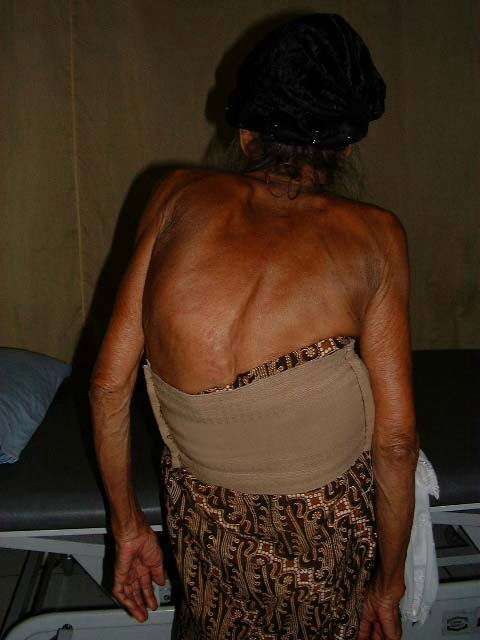
Ageing in Indonesia
         People who are 60 years old and above

                                 Ageing problems
      18.043.712                 Physical:
      Ageing in Indonesia          Decline ability to move, to hear, to see,
                                  to smell, to feel and to remember
                                   Degenerative diseases
      Neglected: 2.851.606       Economical:
Vulnerable to be neglected:       Poverty
                  4.658.280       Decline of productivity
    Productive: 10.533.831        Old Dependency Ratio (ODR, 2010): 11,95
                                 Social:
                                  Neglected
     70.462 victims of            Lonely
         violance                 Limited social interaction
                                  Limited communities to join in
                                 Law:
                                  Victim of violance
                                  Managing of property and inheritance
                                  Fraud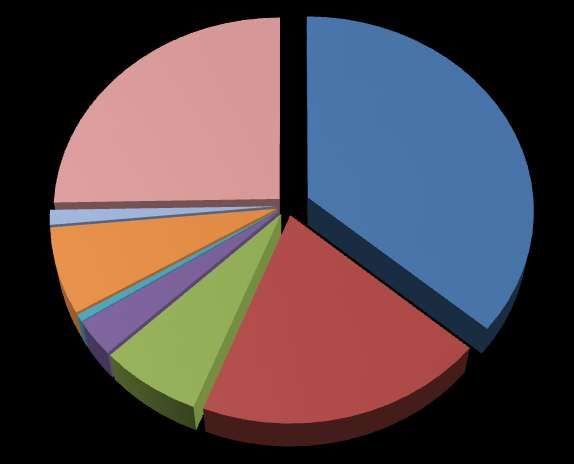
SOME CHALLENGES Triple burden diseases: nutrition, metabolic, degenerative and infections, are on the uprise, it means there will be an increased for health care cost. The economic growth lack behind the speedy increase of elderly. Since resources are limited, solving problems of the ageing population, do not get proper priority. The education of the present elderly is far beyond expectation. There are only 1.2% with university degree, 6,2% high school and elementary school, 28.2% with basic school. 63.2% do not enjoy formal education. Labour force. More than 50% of elderly are still working. 88.37% of men aged 60 – 64 and 75.48% of men aged 65+ are still working. While 59.66% women aged 60 – 64 and 46.03% women aged 65+ are still working.
These fact shows us two things :
a). More than 50% of elderly are able to
work and funding their own living and their
family.
b). They are forced to do so by necessity
and their low level welfare.
INDONESIA NATIONAL POLICIES
Before MIPAA:
1. Law No. 13/1998 on Older Persons Welfare.
2. Law No. 39/1999 on Human Rights.

After MIPAA:
1. National Plan of Action for Older Person Welfare Guidelines in
2003.
2. Government Regulation No. 43/2004 on Older Person Welfare
Improvement Efforts.
3. Presidential Decree No. 52/2004 on Formation of National/
Regional Commission.
4. Presidential Decree 93/M/2005 on Appointment and Membership
of National Commission for Older Persons period 2005-2008.
5. Law No. 40/2004 on the National Social Security System (NSSS).
6. Law No. 11/2009 on Social Welfare.
7. Law No. 13/2011 on Poverty Eradication.
NATIONAL COMMISSION FOR OLDER PERSONS
(NCOP)
NCOP task is :
• (1) To assist President in coordination of
implementation efforts to increase social welfare;
• (2) To provide recommendation and consideration
in developing policy on efforts to improve older
person social welfare.
In implementation of its tasks, NCOP can cooperate
with government agencies, community, experts,
international organizations and other necessary
parties.
Komisi Nasional Lanjut Usia
Jl. Salemba Raya Nomor 28 Jakarta Pusat
Gd D Aneka Krida Lt I dan II
www.komnaslansia.or.idNATIONAL PLAN OF ACTION (NPA) ON AGEING AND ITS OBJECTIVES Political support of policy maker, NGOs, community and religious leaders as well as experts in ageing in efforts to improve older person welfare Create informal support for older persons by maintaining family and community support for older population Create formal support for older persons by increasing improvement in health services and development of system in protection and social security for older persons Establish reinforcement of older person institutions through improving inter sector cooperation at national and international levels Role of older persons in family life as well as community, nation and state
NPA ON AGEING AND GENDER CONCERNS
Mainstreaming older women in development sector
Identifying sector programs that are age-friendly
Inter sector meetings on mainstreaming older women in development
programs
Monitoring and evaluation
Increase sensitivity and Community Awareness on Older Women
(equality to men)
Public Education through published media
Public education through mass media
Solidifying institutions and networking as well as age-friendly
community
Affirmative action for older women
Education is implemented through education and skills program for
older women
Health is implemented through activities of health insurance for
older persons
Economy is implemented through activities of economic
empowermentMONITORING FRAMEWORK OF NPA ON AGEING Monitoring and evaluation of NPA involves: Central government Local government Older people associations
PROMOTING THE PARTICIPATION OF OLDER PERSONS IN POLICY-MAKING NPA on Ageing 2009-2014, Action 6 states: To improve Older Person quality of life both economic, mental-religious, self actualization and quality of life. This action is implemented through: 1. Education of skills or courses in line with older persons before entering pension; 2. conomic productive activities based on older person capabilities; 3. Increase professional capacity of older persons that is non- discriminative and based on his/her profession through formal and informal institutions; 4. Increase social function through relations between older persons and between generations through various forums such as religious, traditional and others; 5. Preparation of mental-spiritual through comprehensive understanding of religious beliefs entering old age
OLD AGE PENSION SCHEME Asistensi Sosial Lanjut Usia Terlantar (ASLUT) or Older Person Social Assistance is the effort to provide permanent social assistance to 26.500 older persons given Rp. 200,000.-/month until they die. ASLUT in 2012 is implemented in 33 provinces, 381 regencies/cities, 1.033 districts, 2.284 sub-districts Budget = Rp. 63.600.000.000,- Additional support to fulfill basic needs of older persons given through Social Welfare Institutions (LKS) in 31 provinces (except West Sulawesi and West Papua), 138 regencies/cities, 249 LKS target of 11,000 older persons total budget of Rp. 12.045.000.000,- Starting from 2006 - present
CURRENT HEALTH INSURANCE
COVERAGE BY 2013
                                       Jamkesmas

                                       Jamkesda (local govt
              25.3%                    scheme)
                               36.3%   Civil Servant scheme

                                       Employee scheme
1.2%
       7.1%                            Army/Police

        3.0%                           Company Self-insured
0.6%
                6.9%
                                       Commercial Insurance
                       19.6%
                                       Uninsured
JAMKESMAS EXPERIENCE
FOR ELDERLY MEMBERSHIP
2.64% 2.97% 3.43%
1.98% 2.21% 2.43% > 76
71-75
2.75% 2.77% 2.9% 66-70
61-65
3.21% 3.38% 3.52%
2009 2010 2011 2012ACTIVITIES TO ACHIEVE OBJECTIVES ARE AS FOLLOWS: Increase access to primary health care for the elderly through development of age- friendly primary health care Healthy life style program (healthy diet, physical activity) Early detection of risk factors and counseling: control BP, Cholesterol, Blood Glucose Distribute media promotion on Healthy Life Style Increase community empowerment through development of elderly supporting groups Increase referral services in integrated geriatric clinics hospitals
SOCIAL PROTECTION PROGRAMME FOR PERSONS
WORKING IN THE INFORMAL SECTOR

Asuransi Kesejahteraan Sosial (ASKESOS) or Social welfare
Insurance:
1.Community based run assurance
2.Fights against vulnerability and enforces family resilience
3.Provides assurance to replace income if workers fall sick,
  accident or dies
4.Focuses on funding potential in the community
5.Transparent in implementation
6.Objective in service provision, just and unbiased
7. Implementation according to procedure
SOCIAL PROTECTION PROGRAMME…

8. Community empowerment, services are directed to
    increasing community capacity
9. Participation, management of ASKESOS must involve all
    levels and components in the community
10. Inter sector program integration
11. Professional and accountable ASKESOS is implemented
    based on skills and accountable
12. Independent program development is directed to increase
    capacity of self management and self funding in
    developing ASKESOS synergistically
13. Sustainable in management of program must be able to
    develop active participation of the community to use,
    maintain, reinforce and develop the program continuously

Starting from 2004 - present
PROVISION OF MINIMUM INCOME FOR OLDER PERSONS WITH NO OTHER MEANS OF SUPPORT Usaha Ekonomi Produktif (UEP) or Economic productive efforts and Kelompok Usaha Bersama (KUBE) or Economic groups UEP or Economic productive efforts is monetary assistance to older persons individually to increase older person income KUBE or Economic groups is monetary assistance to older people in groups to increase the income of older people Starting from 1980 - present
OTHER INCOME SUPPORT SCHEME Bantuan Kesejahteraan Sosial Permanen (Permanent Social Welfare Assistance) is social assistance in money for business provided to older families or social organizations working for older persons Starting from 2004 - present
INCREASING EMPLOYMENT OPPORTUNITIES FOR OLDER PERSONS WHO WISH TO WORK Training in preparation of pre-pension or Training for second career for civil servant pensioners Starting from 2004 - present
PROMOTE HEALTHY AND ACTIVE AGEING
NPA on Ageing, 2009 – 2014, Action 5: Reinforce Efforts
in health services for older persons.
This action is implemented through:
1. Publication and campaigns on older person health services;
2. Optimize of health institutions such as health center and other
health facilities for older people;
3. Professionalism of human resources and quality services in
health;
4. Provision of medical drugs, health services and care that is
effective and accessible;
5. Optimize of community participation and empowering
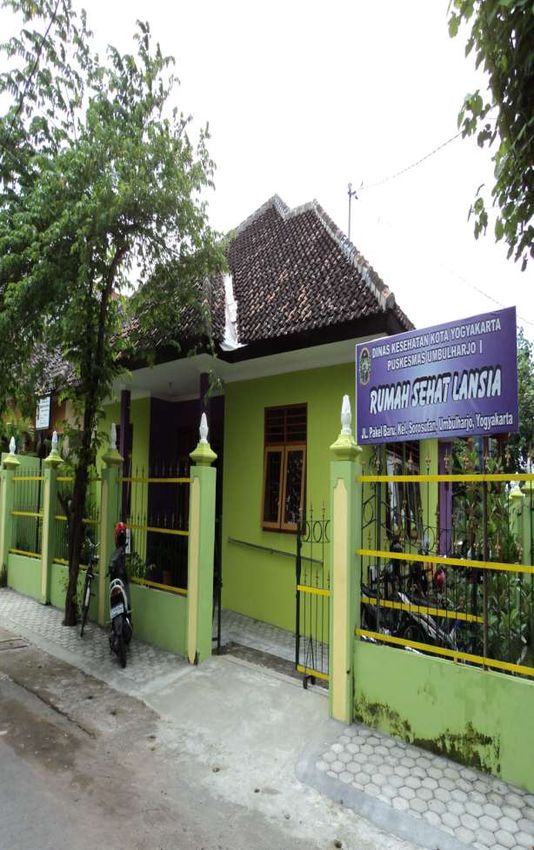
community groups concerned with older personsUNIVERSAL AND EQUAL ACCESS TO HEALTH CARE SERVICES FOR OLDER PERSONS Pusat Kesehatan Masyarakat (Puskesmas) Ramah Lansia or Age-friendly health center. There are 102 age- friendly out of 9,005 health centers in Indonesia. Health centers that provide services for older people are 5,968. Pos Pelayanan Terpadu (Posyandu) Lansia or Older person integrated health post. There are 34,956 elderly clubs registered under MOH Geriatric training for health providers. Training for health providers provided at geriatric units in the major provisional hospitals primarily in Java island. There are 6 geriatric units in Indonesia. Program on counseling for older persons. Available in age-friendly health centers.
PROMOTING “AGEING IN PLACE” IN THE COMMUNITY Government Regulation of Republic of Indonesia No. 36 Year 2005 on Implementation of Law No. 28 Year 2002 on Buildings. Paragraph 5, Accessibility, Article 54 Item 14, Requirement of accessibility as stated in Article 31 includes access in, within and outside the building including infrastructure and instrumentation Article 55, Accessibility as stated in Article 54 includes facilities that are easy, safe and comfortable for people with special needs including older persons. Etc.
IMPROVING ACCESS TO TRANSPORTATION FOR
OLDER PEOPLE
Reduction in transportation fee for older population issued
by Ministry of Transportation.
Transport fee reduction for older population given to those
60 years and above namely:
Land transportation
Sea transportation
Air transportationDEVELOPING TRAINING PROGRAMMES FOR FORMAL AND INFORMAL CAREGIVERS Training for Care givers of older people. Training for care givers has been provided by: MOS MOH MOE Ministry of Man Power & Transmigration ITCOA (Indonesian Training Center on Ageing)
ENSURING THE QUALITY OF ELDERLY CARE SERVICES Standard for Training of care giver. Standard training for care giver of older persons has been formulated by Ministry of Manpower &T in the form of a training module for Care Giver of Older persons
HOME CARE IN INDONESIA
Locations of Pilot Projects: Home Care Program
       aceh
   3

                                                                                          n. sulawesi
                                                                                                        15
                                                              e. kalimantan
                                                                        12

                    14                                            6
       s. sumatra
                                                            kalsel
                              8        d. jakarta                                     9
                                   1                c. java                               South sulawesi
                    lampung               4             2         e. java
                                                    5
                                                              7                     NTB
                                        15                                     10
                                                    yogya               11

                                  w. java                               bali

1. 2006 – 2007 : in DKI Jakarta, DI Yogyakarta, NAD Provinces
2. 2007 – 2008 : in West Java, Central Java & South Kalimantan Provinces
3. 2008 – 2009 : in East Java & Lampung Provinces
4. 2009 – 2010 : in South Sulawesi & Nusa Tenggara Barat Provinces
5. 2011 – 2012 : in North Sulawesi , East Kalimantan, Bali, SouthSumatera, West Java
Provinces
IMPLEMENTATION OF ASSISTING AND
CARING
FOR HOME CARE
Recruitment
Training Home Care Intake
Monitoring (field coordinator) Need assessment
Regular meeting
Care plan
Coordinating
Evaluation
Volunteer
Case Management
Management
Volunteer Older people
Home visiting
Social care
Personal care
Healt careDevelopment of Social Services System
in Home Care
Central GO
Planning
Reporting
Funding
Local GO
Monitoring Reporting
NGO
Evaluation
Implementation
Home CareFUTURE VISION Develop Age-friendly city Empower professional elderly Health for Wellness (health promoting life cycle) Creating a friendly environment that promotes healthy senior citizens & active participation of elderly Promote participation of the elderly in public policy formulation Realize the value of elderly wisdom & encourage elderly to fully participate in family & community
SOME CHALLENGES Need for greater capacity on policy development Need to accord higher priority to the issue Need for greater budgetary resources Need for increased personnel (human resources) dedicated to ageing issues Need to strengthen inter-ministerial or inter-departmental coordination Need for greater support from international agencies
THREE MAIN PROGRAMS FOR AGEING

1.PROMOTION AND PROTECTION OF THE RIGHT
OF OLDER PEOPLE
Protect against exploitation, violence and abuse,
discrimination Promote Social, Economic and Political
Rights

2.STRENGTHENING FAMILY AND COMMUNITY
First safety nets in family, then community , state as the
last resort (welfare society model)

3.PROMOTE THE ESTABLISHMENT OF
COMMISSION ON THE OLDER PERSON
At the regional, national and local level
THANK YOU...!!
You can also read


