COVID-19 and HIVST: Adapting HIV Self Testing models during a pandemic, experiences from South Africa - Population Services International
←
→
Page content transcription
If your browser does not render page correctly, please read the page content below
COVID-19 and HIVST: Adapting HIV Self Testing models during a pandemic, experiences from South Africa
COVID-19 AND HIVST: ADAPTING HIV SELF
TESTING MODELS DURING A PANDEMIC,
EXPERIENCES FROM THREE STAR
COUNTRIES

EXHIBITION HOT TALK
MONDAY, 6 JULY 2020   10:00 CAT | 01:00 PST
SPEAKER        COVID-19 and HIVST: Adapting HIV Self Testing models during a pandemic,
               experiences from South Africa

          CELESTE MADONDO
          HIV Self-Testing Program Manager, Society for Family Health, South Africa
BACKGROUND
   Current data shows that an estimated 90% PLHIV know their status – highest
   proportion of never tested among adult males

   South Africa has the highest impact of COVID-19 in Africa, with more than 180
   000 positive confirmed cases

   Reassignment of health workers to support COVID-19 services

   Health services have been disrupted, with dramatic decrease patients testing for
   HIV or collecting their medication

   Need to maintain services for HIV testing and PLHIV, especially in countries with high
   burden of HIV and TB
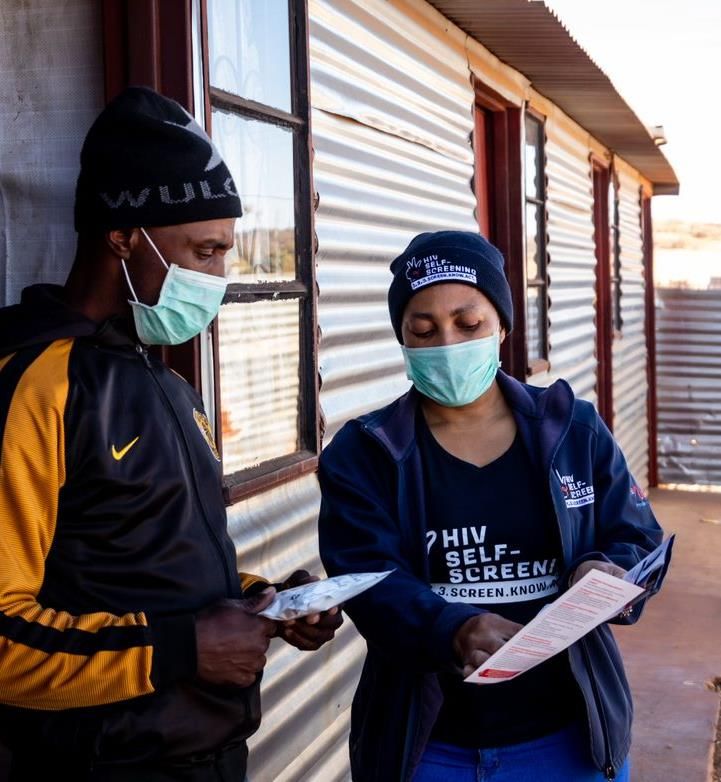
TOTAL DISTRIBUTION BY PROVINCE (NOV 17 – MAY 20)
• To date, 2 046 847 million HIVSS
  test kits have been distributed
  through the STAR Initiative in
  collaboration with NDOH
• Coverage in 6 of the 9 provinces
  that bear the highest HIV
  burden
• 59,9% are males 15 – 50 years
• 48.5% are AGYW 15-24 years
• 9,54% among males and 9,06%
  among females are first-time
  testers
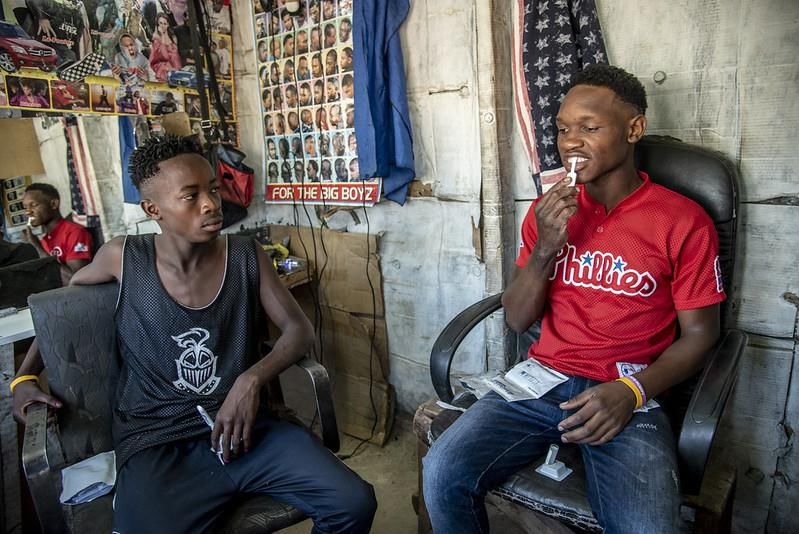
MODIFICATION OF EXISTING HIVST APPROACHES TO
ENSURE HTS SERVICE DELIVERY DURING COVID-19
               Expand online access and home delivery to all
                               populations

          Offer HIVST at pick-up points outside of the health care
                          facilities (ICPA, CCMDD)

           HIVST distribution to vulnerable populations during
          COVID-19 contact tracing activities at community level

              Encourage the use in facilities both primary and
                               secondary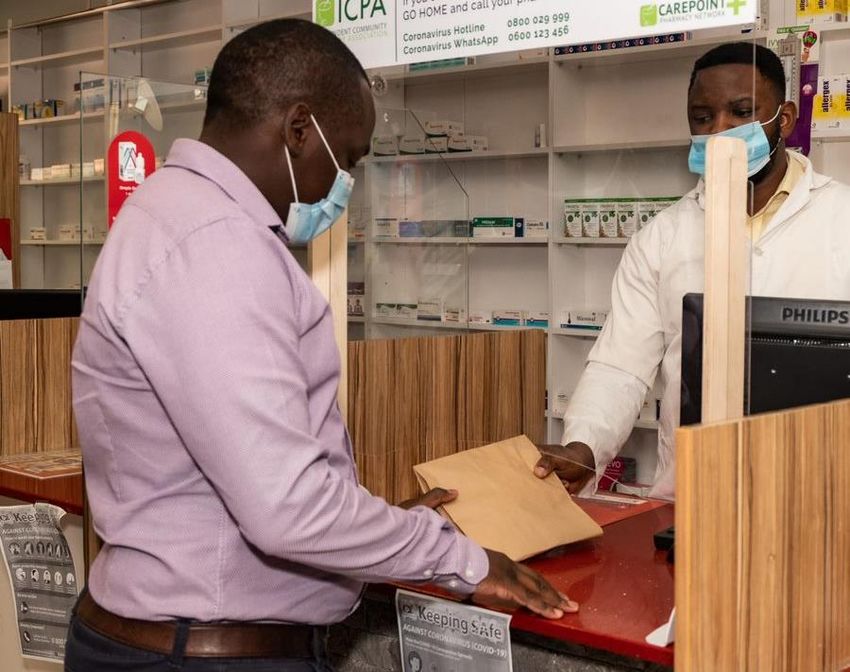
ONLINE ORDERING AND DISTRIBUTION OF HIVST
  KITS
  • Initially (Oct 2019) targeted key populations (men who have sex with men (MSM) and transgendered (TG) people)
  • At the end of March (SA Lockdown), included older men (30-49) and young women (18-25)
  • Social media platforms selected for digital marketing and targeting
     • Grindr, GaySA Radio, Facebook, Instagram, Tinder, Bumble and Google ads

 “CALL TO ACTION “#OrderNow #StayHome’

• Clients are directed from the relevant social media platform
  to the https://www.hivselfscreening.co.za/
• Interested clients register on the online platform and
  provide key information
• Test kit (oral/blood) is delivered within three working days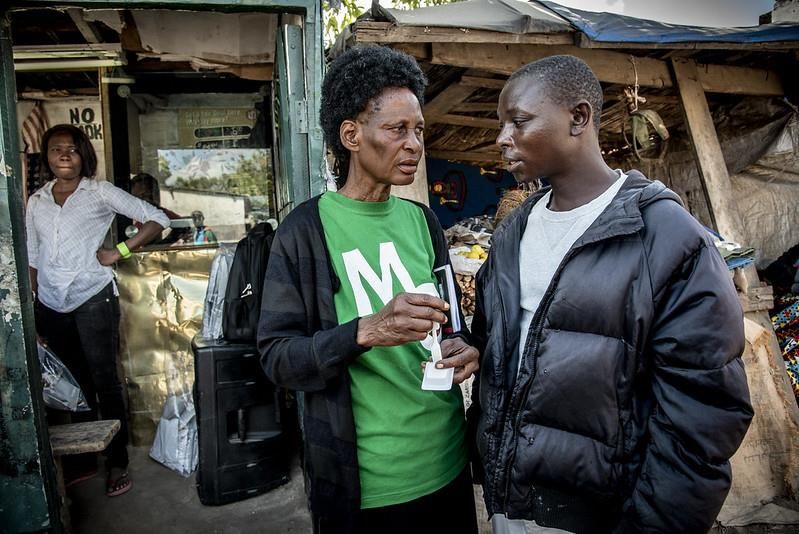
ONLINE DISTRIBUTION OUTPUTS:MAR – JUN 2020
         Online HIVST kit Distribution by sex, age and % of first time                                    Online Distribution by HIVST kit type and age category
                    testers , Mar - Jun 2020 (N=3 860)                                                                  Mar – Jun 2020 (N=3 860)
1400                                                                                     35% 1400                                                                                         40%
              33%
                                                                                                          35%                                                                             35%
1200                                                                                     30% 1200
              28%                                                                                                                                                                         30%
                                                                                               1000
1000                                                                                     25%              26%                                                                             25%
                                                                                                800
 800                                                                                     20%                                                                                              20%
                                                                                                600                                                                                 17%
                                                                                                                                                                                          15%
 600                                                 15%                                 15%
                                                                                                400                                                   13%                 13%
                                                                                                                     11%
                                                                                                                     12%                    10%                 11%                       10%
                       12%                                               11%       12%                                                                                    9%
 400                                                                                     10%                                    8%          6%        8%                            7%
                        11%                          10%       10%                              200                             6%                                                        5%
                                 8%        8%                            8%        8%                                                                           3%
                                           7%                  6%
 200                             4%                                                      5%       0                                                                                       0%
                                                                                                      15-19     20-24      25-29      30-34       35-39      40-44    45-49     Over50
   0                                                                                     0%
                                                                                                        Insti                                     Oraquick
          15-19     20-24     25-29   30-34     35-39      40-44     45-49     Over50
                                                                                                        Percent first time testers: Insti         Percent first time testers: Oraquick
       Male   Female   Percent male first time testers   Percent female first time testers

       • 69% of kits were delivered to clients aged 20-29                                             • > 70% of clients prefer Insti (blood) test, of which
       • Of females, 60% kits were delivered to females aged                                            60% are ordered by males
         20-24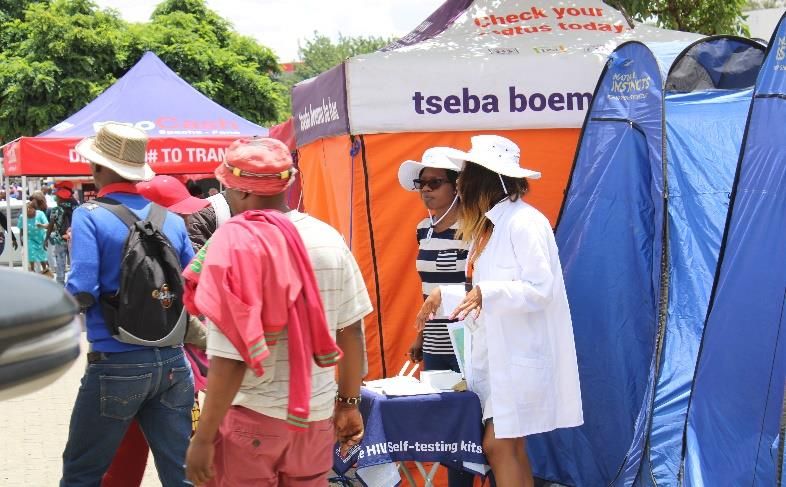
HIVST AT PICK-UP POINTS
(CCMDD) OUTSIDE OF
HEALTH FACILITIES
• Central Chronic Medication Dispensing
  and Distribution (CCMDD) is a medicine
  pick-up point for stable chronic patients
• Branded with ‘Cheka Impilo!’ – national
  wellness campaign
• Distribution at pick-up points (post office,
  private surgery, pharmacies etc)
• Pick-up point selection criteria used
  based on key indicators
• Support packages are barcoded and pre-
  packed
• Clients can call-in on tollfree AIDSLINE or
  WhatsApp for Business Solution for
  further managed care
                     Implementation to commence soon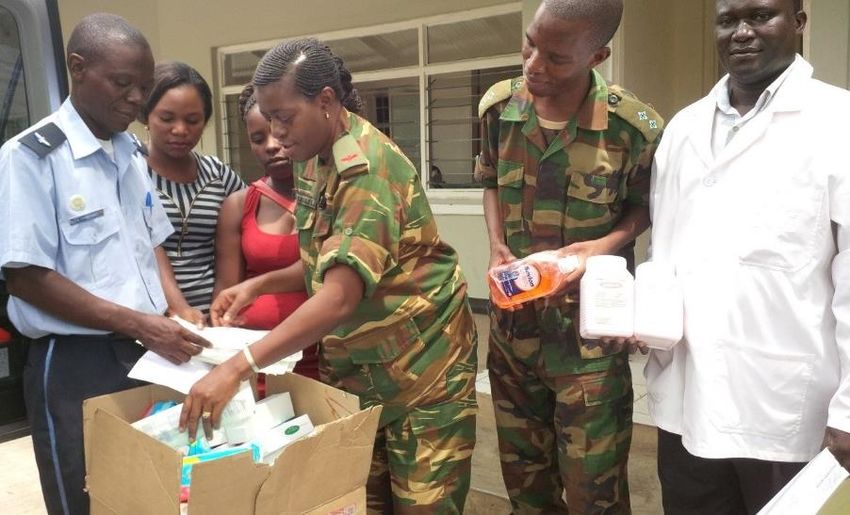
HIVST DISTRIBUTION TO VULNERABLE
      POPULATIONS DURING COVID-19
             CONTACT TRACING

• Mass COVID-19 Screening Campaign with
  Contact tracing from COVID-19 hotspot
  areas
    • Door-to-door symptomatic COVID-19
      screening and referral for COVID-19
      testing if required
• Distribution of HIVST kits during COVID-
  19 tracing and screening
HIVST DISTRIBUTION TO VULNERABLE POPULATIONS
DURING COVID-19
COVID-19 Community Distribution, by age, sex and % of first time testers
April – June 2020 (N=24 214)
4500 40%
4000 35%
34%
34%
3500 30%
3000 27%
25%
24%
2500 22%
23% 20%
19% 19%
2000 18%
17% 18% 18% 17%
16% 16% 16% 15%
1500
1000 10%
500 5%
0 0%
15-19 20-24 25-29 30-34 35-39 40-44 45-49 Over50
Male Female Percent male first time testers Percent female first time testersWAY FORWARD • Expand distribution of HIVST while supporting contact tracing and screening activities • Expanded digital marketing (Media24) to increase online distribution • Strengthen demand creation activities for HIV (back to care) • NDoH procured HIVST kits through domestic funding to accelerate facility distribution
ACKNOWLEDGMENTS
•   Unitaid
•   STAR Partners (XX, WRHI and CHAI)
•   NDoH, Provincial and District Departments of Health
•   Other partners supporting the COVID-19 response
COVID-19 and HIVST:
 Adapting HIV Self-Testing
 models during a pandemic;
 experience from Eswatini

STAR
AIDS 2020
THE NEXT FUTURE: POWER IN MY HANDS
SPEAKER        COVID-19 and HIVST: Adapting HIV Self-Testing models during a pandemic;
                                     experience from Eswatini

          Musa Ginindza
          National Community HTS Coordinator
Eswatini background
Population: ~1,140,000
Rural population: 76%
Divided into four regions
Median age: 21.7 years
HIV prevalence: 27% (ages 15-49, 2018)HIV & HIVST in Eswatini
• HIV testing offered in health facilities & in the community
• In 2019, ~374,000 HIV tests done (conventional RDT)
• HIVST: pilot in 2017; national guidelines in 2018; scale-up of
HIV self testing to national level in 2019
• In 2019: >32,000 oral HIV self-tests distributed
National AIDS Program guidance on HIVST:
1. Target young women; men of all ages and key
populations
2. Distribution at workplaces (factories;
manufacturing plants; logistics companies);
community hotspots/events; index contact
tracing; at high-volume healthcare facilities;
secondary distribution to pregnant women, clients
with STIs
Do it yourself!COVID-19 in Eswatini
First case confirmed on 17 March
28 March: National lockdown announced
- Non-essential businesses closed
- Pharmacies, health facilities, food stores
open
- Work from home order in place
SARS-CoV-2 confirmed cases as of July 2:
Total population of Eswatini: 1,140,000
Total number of confirmed cases: 873 (8 per
10,000 people)
Total recoveries: 452 (52%)
Total deaths: 11 (0.01%)Eswatini response to COVID-19
COVID-19 task team set up; involvement of private health sector
Approach to containing the virus:
• lockdown in varying degrees
• test - trace contacts – isolate asymptomatic – quarantine
symptomatic
Modified one hospital to treat & quarantine symptomatic COVID-19
cases
Modified one large convention centre for isolation of confirmed
asymptomatic cases who are unable to isolate at home
Daily national updates of the confirmed cases; mortality and
recoveries
Since the lockdown, MoH personnel from all departments have been assigned COVID-19-related duties such as conducting
trainings for HCWs on infection prevention & control, & case managementHIV self-testing
during COVID-19 lockdown
Ministry of Health
recommendations for
HIVST distributionHIV self-testing in the community
before and after lockdown
BEFORE AFTER
Distribution took place at: NO DISTRIBUTION OF HIVST through the
normal community channels.
(1) Workplaces (factories; manufacturing
plants; logistics companies); Distribution in communities at/in front of:
(2) Community hotspots/events (e.g.
sports events; tertiary institutions, (1) Pharmacies
etc.) (2) Food shops
(3) Used for index contact tracing (3) Small peer-to-peer gatherings of key
(4) Peer-to-peer distribution for key populations (group ofPromoting HIV self-testing during lockdown:
adverts in the national media
Newspaper:
Television:
Video advert on a
national television station
to promote accessing
HIVST
Call the toll free line to Radio:
find out where you can On two national radio stations, an advert has
get an HIV self-test been playing, promoting HIVST, its benefits &
sharing toll-free lineResults:
HIVST distribution in the community
Before lockdown
Total number of HIVST kits distributed in the community in • Three months’ data
Eswatini (Jan – May 2020) • Distribution at events/hotspots;
25000
23123
peer-to-peer; workplaces; index
contact tracing in the community
20000
• Refer clients with reactive self-tests to
facility OR confirm HIV status in the
community
15000
Lockdown
After lockdown
10000 • Two months’ data
7314
• >3 times the amount of kits as
5000 the three months prior
• Distribution at pharmacies, food
0
shops
Jan, Feb, Mar Apr, May • No community confirmation of
reactive HIV self-testsNext Steps Confirmation of clients with reactive HIV self-tests was affected when the country was on strict lockdown; linkages affected Confirmation of clients with reactive HIV self-tests in the community will resume HIVST distribution will also resume in community Emphasis on virtual counseling to reduce contact with clients coming for confirmation As soon as movement restrictions are relaxed, catch-up campaigns will be considered to improve coverage of testing, prevention & treatment for the at-risk population
Acknowledgements

                                                  Contact
                                                  Musa Ginindza
                                                  National Community HTS Coordinator
                                                  Eswatini National AIDS Program
                                                  mbginindza@gmail.com

                                                  Ralitza Dekova
                                                  HIV Self-Testing Program Manager
                                                  STAR Eswatini
                                                  ralitzad@psi.sz
• And all HTS implementing partners in Eswatini
COVID-19 and HIV self-testing :
Adapting HIV Self Testing models
during a pandemic
STARAIDS 2020 THE NEXT FUTURE: POWER IN MY HANDS
SPEAKER           COVID-19 and HIV self-testing : Adapting HIV Self Testing models
                                        during a pandemic

          MOLEMO MAKHETHA
          HTS Manager – Programs, Lesotho
Lesotho
COVID-19 and HIV self-testing :
Adapting HIV Self Testing models during a pandemicLesotho HIV Profile: LePHIA 2017
58,000 HIV+ people
not aware of status
100% • 306,000 PLHIV (25.6%)
80% • Burden of HIV higher among females
30.4% vs 20.8% in males
60%
92% 88% • Annual HIV incidence of 1.1%
81%
40% • 72% of FSWs and 33% of MSM are
living with HIV
20%
• 81% of PLHIV know their status (84%
0% Females, 76.6% males)
People living People living People living
with HIV with HIV on with HIV virally
diagnosed treatment suppressedHIVST Implementation models
HIVST launched on 1st Dec 2017
▪ PSI in 5 Lowlands districts
▪ Integrated HIVST with New Start Fixed
sites and outreach
▪ Uniformed services (Military and Police in
Maseru)
▪ Public health facilities
▪ Secondary distribution at MNCH sites in 5
selected hospitalsHIVST distribution, case identification and linkage
Nov‘17- Dec’19
176,458 • Total distribution
• Confirmed HIV positive at
2,895 Newstart
72%
• Linked to HIV Care and
2,092 Treatment ServicesIncreased case identification with on-site HIVST
1800 0.6
1600 1554 54%
1524 1517
Stock-out 0.5
1334 1419
1400 Introduced 1312
1367 48%
onsite HIVST
1200 0.4
35%
1000 935 31%
0.3
800 769
26% 26%
630 634
600 539 0.2
465
390
400 357
10% 0.1
200 125
0 0
Jan-Mar18 Apr-Jun18 Jul-Sep18 Oct-Dec18 Jan-Mar19 Apr-Jun19 Jul-Sep19 Oct-Dec19 Jan-Mar20
Pos HIVST Contribution % HIVST ContributionHIVST distribution during COVID period
Lesotho COVID-19 status (05 July 2020)
                 2% from tests
                  conducted

              Confirmed cases           Recoveries   Deaths
Total tests
conducted
   • 4637          • 91                      • 11        0

                    Active cases : 80
Upward trend in confirmed COVID-19 cases
Lesotho’s response to COVID-19
National lock-down from the 29th March 2020 (eased on 6th May 2020)
Community based HIV testing services halted
Key messages on physical distancing through different media platforms
HIVST distribution to increase HTS access whilst ensuring physical distancing
   - HIVST kit distributed together with referral IEC material (outlining nearby confirmation
     facilities)
   - Selected pick-up points for easy access
   - Clients self-test offsite and self report reactive results
   - HIVST distribution and at public health facilities (e.g. OPD, MNCH)
Need to change HIV programming; scale up HIVST
Adopted HIVST distribution models during COVID-
19 period: Lesotho
Newstart fixed sites (centres)
- Six Newstart centres
- Self-test offsite
Targeted community pick-up points
- High foot traffic areas
- Areas with history of high HIV burden (e.g. factories)
- Self-test offsite
Pharmacy distribution model
- Seventeen selected retail pharmacies
Index distribution model
- Secondary distribution for sexual partners of clients living with HIV
Facility based distribution
- All public health facilitiesImpact of COVID 19 on HIVST distribution
12000 80%
69% 70%
10000
59% 60%
58%
8000 53% 54% 53% 54% 54%
50%
6000 Community 40%
38%
HTS
30%
4000 suspended
20%
2000
10%
0 0%
October November December January February March April May June
Male Female % males contributionHIVST distribution by modality: June 2020
7000
6484
6000
5288
5000
4000
3321
3104
3000 2842
2349
2000
1000
2 4 95 55
0
Newstart site Pick-up points/ mobile Index Facility Total
Male FemalePopulations of child bearing age reached with
HIVST: June 2020
2000
1882
1800
1600 1551
1400 1294
1200
1082 1082
1042
1000
800 732
662
600 552
454
397
400
242 213 190 228
200 164
1 4
0
10-14 15-19 20-24 25-29 30-34 35-39 40-44 45-49 50+
Male FemaleSelf reported reactive HIVST results: June 2020
3.5
3
2.5
2
1.5
1
0.5
0
10-14 15-19 20-24 25-29 30-34 35-39 40-44 45-49 50+
Male FemaleLessons HIVST is the only hope for community HTS delivery during this pandemic period Most distributions/pick ups of HIVST among child bearing age groups IEC material on linkage aids self-reporting of reactive HIVST results More clients reached through community based HIVST pick-up points and Newstart fixed centres Majority of those self reporting reactive results are females
Thank you
Like our Facebook Page: https://www.facebook.com/HIVSelfTestingLesotho
Using HIVST to reach military
populations in Zambia during
COVID-19 pandemic

Brian Lukwesa, HIV Testing and Prevention
Technical Advisor, Jhpiego Zambia
Zambia: Progress towards 95-95-95 targets (all
     ages)

47
Zambia: COVID-19 confirmed cases by month
1800
1600 1557
1400
1200
1057
1000
800
600
400
200 106
36
0
TOTAL COVID-19 CASES reported
March April May June
48COVID-19 Impact on HIV Testing Services (HTS)
Health facilities started reporting decrease in clients
accessing HTS and ART services.
Health providers shifted attention from the routine
HTS to COVID-19 screening, testing and care.
Lack of PPEs for Community Lay Workers (CLW)
resulted in reduced HTS at community level.
The MOH provided guidance to halt community HTS,
leaving program implementers in suspense.
Decongestion of health facilities (“stay home and be
safe”), prevented clients referred by CLWs to access
testing and treatment services.
49Target population for HIVST
HIVST kits are distributed by trained CLW at community level while
observing preventive COVID-19 measures
HIVST kits are distributed to
Sexual contacts to newly diagnosed PLHIV
Sexual contacts to HIV-positive clients with unsuppressed, high viral
load
Sexual contacts to clients newly initiated on ART (less than 6 months)
Sexual contacts to Known HIV-positive clients (on treatment less than 6
months) who had not been offered index testing previously.
50HIVST Distribution testing
CLWs are encouraged to use the HIV Risk Screening
51Follow up of results and linkage confirmation
HIVST kits are distributed either by index clients to their sexual partners (index
cases) or by CLW during index contact tracing at community level.
CLWs follow up on results either through index clients or with self-test users
directly within 3-7 days
Self-test users with reactive HIVST results receive confirmative testing at
community level or at the health facility
Self-test users with reactive or confirmed positive results are escorted to the
health facility by the CLW or are directed to health care facilities via phone.
After confirmative testing, HIV positive index cases are initiated on treatment and
the clinician communicates the ART number of the client to the CLW; CLW are also
contacting the clients to confirm ART initiation.
52Total HIVST Data for March - April 2020
250 120%
96% 100%
92% 100%
200
82%
80%
150
60%
100
27% 40%
26%
50 16%
20%
2%
0 0%
FSW Workforce Civilian Total
HIVST Distributed 86 103 43 231
HIVST Reactive 23 2 11 36
Confirmed POS* 23 2 11 36
Linked to ART 22 2 9 33
HIVST Yield 27% 2% 26% 16%
Linked (%) 96% 100% 82% 92%
HIVST Distributed HIVST Reactive Confirmed POS* Linked to ART HIVST Yield Linked (%)
53Way Forward/Next Steps
HIVST is an acceptable and feasible approach to maintain
index testing during COVID-19
HIVST reduces the risk of COVID-19 transmission through
physical distancing
Index testing with HIVST has the potential to reach hard to
reach populations.
HIVST increases case finding and linkage to ART services
HIVST provides the platform for HIV-negative clients to be
linked to preventive services such as VMMC and PrEP
54THANK YOU!
55NEXT SESSION KNOWLEDGE SHARING SESSIONS ON HIVST LINKAGE TOOLS - LINKAGES AND OUTCOME MEASURES HIVST, MHEALTH SOLUTIONS EXHIBITION HOT TALK MONDAY, 6 JULY 2020 14:00 CAT | 05:00 PST
You can also read


