MCCSC GUEST TEACHER HANDBOOK - Monroe County Community ...
←
→
Page content transcription
If your browser does not render page correctly, please read the page content below

MCCSC
GUEST TEACHER
  HANDBOOK
               2021-2022
          MCCSC Administration Center
               315 North Drive
            Bloomington, IN 47401
                812‐330‐7700
           Website: www.mccsc.edu

Bethany Stanger, MCCSC Guest Teacher Coordinator
         Phone | 812‐349‐4753, option 6
  MCCSC Switchboard| 812‐330‐7700, ext. 51580
               Fax | 812‐330‐7705
           Email | blstange@mccsc.edu

          Aesop/Frontline Information
          http://www.aesoponline.com
                 1‐800‐942‐3767
TABLE OF CONTENTS

TITLE                                             PAGE

Welcome                                            1
Equal Opportunity Statement                        2
Employment Requirements                            3
Substitute Teacher Agreement                      4
Current School Year Calendar                       5
School Directory                                  6
School Closings and Delays                         7
Payroll Information                                8
Pay Schedule                                       9
Aesop Internet & Phone System Quick Start Guide   10-11
School Times & Substitute General Information     12-13
School Emergency Procedures & Alerts              14-15
Substitute Teacher Evaluation Form                16
Policies                                          17
Classroom Management                              18-19
Special Education Classroom Categories            20
Bullying Defined                                  21-22
Bullying Flow Chart                               23
Seclusion and Restraint Guidelines                24-28
Protocol for Reporting Child Abuse/Neglect        29
Child Abuse Hotline Process                       30
INPRS-Teacher Retirement Fund Information         31
Insurance Marketplace Information                 32

GUEST (SUBSTITUTE) TEACHER AND GUEST
             PARAPROFESSIONAL IN THE
  MONROE COUNTY COMMUNITY SCHOOL CORPORATION

We welcome you to MCCSC and look forward to your employment in this
corporation. Your role as a guest (substitute) teacher/paraprofessional is vital to
the educational welfare of our students and it is our hope that your experience will
be successful and gratifying. Guest teachers and paraprofessionals are an essential
asset to our corporation as they provide an important and much needed service.

The most important goal of MCCSC is to sustain effective instruction each day of
the school year. In order to achieve this goal, we need competent, conscientious
and caring guest teachers/paraprofessionals available to fill faculty and staff
absences in our schools. Once a guest teacher/paraprofessional is assigned to an
open position, the expectation is that the normal instructional program, as
prescribed by the regular teacher, will be implemented as outlined in written lesson
plans. The key role of the guest teacher/paraprofessional is to continue effective
classroom interaction so students sustain learning and achieve instructional goals.

We sincerely appreciate your contributions to MCCSC and will support your
efforts in experiencing a productive and positive school year. For any questions or
concerns you may have through the year, please contact MCCSC Guest Teacher/
Paraprofessional Coordinator, Bethany Stanger, via phone at 812-349-4753, option
6 or via email at blstange@mccsc.edu.

                          WELCOME TO MCCSC!!

                                         1
MCCSC – AN EQUAL OPPORTUNITY EMPLOYER

The Monroe County Community School Corporation is committed to equal
employment opportunity and employs all qualified persons without regard to race,
color, religion, national origin, sex, age, disability, sexual orientation, marital
status, genetic information, gender identity or any other legally protected
characteristic in its programs or activities, including employment opportunities.

No person is excluded from participation in, denied the benefits of, or otherwise
subjected to unlawful discrimination on such basis under any educational function
or student activity. Education services, programs, instruction and facilities will not
be denied to anyone in the Monroe County Community School Corporation as a
result of race, color, religion, national origin, sex, age, disability, sexual
orientation, marital status, genetic information, gender identity or any other legally
protected characteristic.

For further information, clarification or complaint please contact:

Amanda Shettlesworth, SHRM‐CP, PHR
Director of Human Resources
MCCSC Administration Center
315 E. North Drive
Bloomington, IN 47401

Phone: 812-330-7700, ext. 51161
Email: ashettle@mccsc.edu

                                          2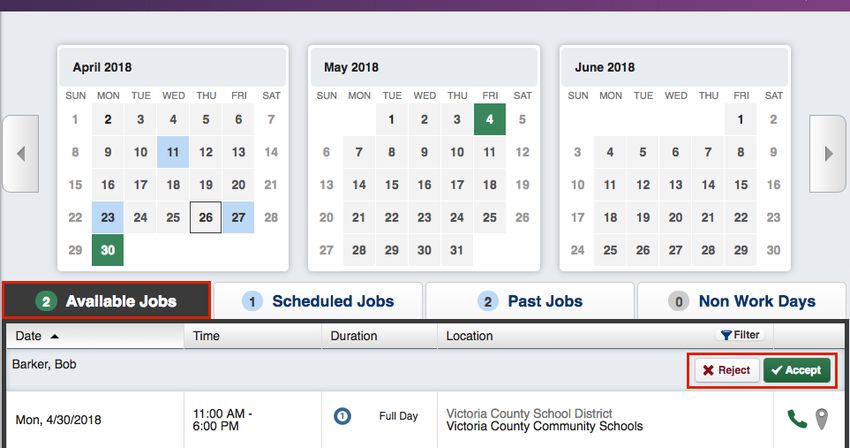
MCCSC SUBSTITUTE TEACHING EMPLOYMENT REQUIREMENTS
CERTIFICATION:
Guest Teachers must be at least 21 years of age, have a minimum of 24 college credit hours and hold
either a valid Indiana Teaching License or an Indiana Substitute Permit. Guest Paraprofessionals must be
at least 18 years of age and have a high school diploma or the recognized equivalent and hold a valid
Indiana Substitute Permit. If you obtain an Indiana Teacher’s License after you begin as a substitute
teacher, you must provide a copy of your license to the Human Resources Department to increase your
pay rate (as of the date of submission) It is the responsibility of the substitute to renew certification as
needed by contacting the Indiana Department of Education, License Verification & Information System
(LVIS) portal at www.doe.in.gov/licensing .

UNIVERSAL PRECAUTIONS:
The State of Indiana requires an annual in-service training for Universal Precautions and Epi-pen training.
You will receive your initial training at the Guest Teacher Orientation meeting you attend prior to hire.
After this, you will be expected to attend an annual video review session. Video reviews and follow up
training are scheduled during the months of July and August. You will receive details of the follow up
video review schedule each year once school lets out for summer break.

PERSONNEL FILE:
The following items are needed to complete the personnel file:
       1. Employment Application, located online at www.mccsc.edu/jobs
       2. Copy of Indiana Teacher’s License OR Substitute Permit
       3. Guest Teachers: college transcripts to verify minimum of 24 college or university credit hours;
           Guest Paraprofessionals: high school diploma or its recognized equivalent
       4. Resume
       5. Identification--driver’s license along with the social security card or birth certificate OR, a
           copy of a valid passport
       6. A satisfactory, expanded background check as required by Indiana
           state law for all school personnel
       7. Two satisfactory letters of reference
       8. Proof of Universal Precautions Training
       9. Substitute Teacher Agreement, signed
       10. New-hire and policy forms completed and signed

In a given 60 day period if there have been no assignments accepted and completed you could become
inactive and subject to restarting the process unless written notice is given to the Substitute Teacher
Office.

                                                     3
MONROE COUNTY COMMUNITY SCHOOL CORPORATION
                   Substitute Teacher/Paraprofessional Agreement
                                2021-22 School Year
1.    CONDITIONS OF PLACEMENT FOR SUBSTITUE TEACHERS and PARAPROFESSIONALS
      a)    Responsibilities of the position as substitute teacher/paraprofessional are completed
            during the time outlined by the school calendar as school days.
      b)    Employment is based on need and there are no guarantees of daily work.
      c)    Appropriate and current Indiana teaching certification must be on file with the corporation
            prior to any assignment. Pay rate of $78.29/day for Substitute Permit, $89.47/day for
            valid Indiana Teacher’s License and $106.25/day for retired MCCSC teacher with valid
            license.
      d)    Participation in Indiana State Teachers Retirement Fund (ISTRF) is for those who work a
            minimum of 120 days, hold a valid Indiana Teacher’s license and are a member. It is
            optional for those with a Substitute Certificate hold a college degree and must work a
            minimum of 120 days in a two-year period.
      e)    Building evaluation reports, with regards to a substitute’s unsatisfactory performance,
            may necessitate the temporary or permanent removal of the individual’s name from the
            Substitute List until the nature of the problem and its resolution are determined.
      f)    A substitute teacher’s/paraprofessional’s name may be removed from the Substitute List
            for any reason, deemed by the administration, to be in the best interest of the School
            Corporation.
      g)    A substitute teacher/paraprofessional is responsible for reviewing, knowing and
            understanding all MCCSC policies and guidelines which are found on the website at
            www.mccsc.edu, Board of Trustees, Policies and Guidelines, 4000 Support Staff.
      h)    Substitutes who do not work any assignments during a 60 day period may become
            inactive and subject to restarting the process, without written or email notice to the
            Substitute Office.

2.    RESPONSIBILITIES
      a)   REPORT to the main office on time at the start of the school day to familiarize yourself
           with the room, building surroundings and with the classroom rules.
      b)   IMPLEMENT the teacher’s lesson plan as stated, to the best of your ability
      c)   PERFORM all other normal assigned duties of the absent teacher such as
           lunchroom/playground supervision, bus duty, etc.
      d)   OBSERVE and implement all other school policies, state statutes and administrative
           rules and regulations, such as not leaving students unattended, NO cell phone usage
           during instruction time, NO consumption of food or beverage during
           classroom/instructional time and NO personal computer usage (see building
           administrator if necessary to implement the noted lesson plans).
      e)   DEMONSTRATE professionalism in maintaining confidentiality with regards to all
           administrators, faculty, staff and students.
      f)   DEMONSTRATE professional behavior and emotional control which reflects appropriate
           language and model responses.
      g)   WRITE a brief report for the absent teacher stating accomplishments during the
           substitute assignment and return the classroom to its proper order.
      h)   REPORT back to the main office at the end of your assignment, prior to your departure.
      i)   MAINTAIN a personal record of days subbed to ensure appropriate salary
           compensation.
      j)   EXHIBIT flexibility in the occurrence of the substitute assignment being modified or
           changed upon or after building arrival.

        AGREEMENT TO THE CONDITIONS & TERMS OF PLACEMENT ON THE
              SUBSTITUTE TEACHER/PARAPROFESSIONAL LIST

                   Printed Name                                             Signature
                                                 4
                                                     Date
4

Monroe County Community School Corporation
2021-2022 Staff Calendar
AUGUST 2021 July/August February FEBRUARY 2022
S M T W Th F S 29 - New Teacher Welcome 18 - 4th 6-wk Grading Period S M T W Th F S
29 30 31
30 - New Teacher Picnic 21 - Presidents’ Day - No 1 2 3 4 5
2 - Opening Day for Teachers School
1 2 3 4 5 6 7 6 7 8 9 10 11 12
3 - Teacher Workday
8 9 10 11 12 13 14 4 - First Day for Students 13 14 15 16 17 18 19
15 16 17 18 19 20 21 20 21 22 23 24 25 26
22 23 24 25 26 27 28 27 28
29 30 31
19 Student Days
20 Student Days
SEPTEMBER 2021 September March MARCH 2022
S M T W Th F S 6 - Labor Day - No School 4 - 3rd 9-wk Grading Period S M T W Th F S
1 2 3 4 17 - 1st 6-wk Grading Period 14-18 - Spring Break – No 1 2 3 4 5
School
5 6 7 8 9 10 11 6 7 8 9 10 11 12
12 13 14 15 16 17 18 13 14 15 16 17 18 19
19 20 21 22 23 24 25 20 21 22 23 24 25 26
26 27 28 29 30 21 Student Days 27 28 29 30 31
18 Student Days
OCTOBER 2021 October April
APRIL 2022
8 - 1st 9-wk Grading Period 8 - 5th 6-wk Grading Period
S M T W Th F S S M T W Th F S
Ends
1 2 1 2
7-8 - Fall Break
3 4 5 6 7 8 9 29 - 2nd 6-wk Grading Period 3 4 5 6 7 8 9
10 11 12 13 14 15 16
10 11 12 13 14 15 16
17 18 19 20 21 22 23
24 25 26 27 28 29 30
21 Student Days 17 18 19 20 21 22 23
24 25 26 27 28 29 30
31 19 Student Days
May
3 - Primary Election - Inservice
NOVEMBER 2021 November 20 - Last Day of School MAY 2022
S M T W Th F S 2 - Election Day – Inservice 6th 6-wk Grading Period S M T W Th F S
1 2 3 4 5 6 22-26 - Thanksgiving – No 4th 9 wk Grading Period 1 2 3 4 5 6 7
7 8 9 10 11 12 13 School Semester 2 Ends 8 9 10 11 12 13 14
14 15 16 17 18 19 20 23 - Teacher Record Day 15 16 17 18 19 20 21
28 -Commencement (Tentative)
21 22 23 24 25 26 27 22 23 24 25 26 27 28
30 - Memorial Day
28 29 30 16 Student Days 29 30 31
14 Student Days
DECEMBER 2021 December June JUNE 2022
S M T W Th F S 16 - 3rd 6-wk Grading Period 1 - Report Cards Sent Home S M T W Th F S
1 2 3 4 2nd 9-wk Grading Period 1 2 3 4
5 6 7 8 9 10 11
Semester 1 Ends 5 6 7 8 9 10 11
17 - Winter Break Begins - No
12 13 14 15 16 17 18 12 13 14 15 16 17 18
School
19 20 21 22 23 24 25 19 20 21 22 23 24 25
26 27 28 29 30 31 12 Student Days 26 27 28 29 30
July
January
JANUARY 2022 4 - Independence Day JULY 2022
3 - School Resumes
S M T W Th F S Observed S M T W Th F S
17 - Martin Luther King Day -
1 No School 1 2
2 3 4 5 6 7 8 3 4 5 6 7 8 9
9 10 11 12 13 14 15 10 11 12 13 14 15 16
16 17 18 19 20 21 22 17 18 19 20 21 22 23
23 24 25 26 27 28 29 24 25 26 27 28 29 30
30 31 20 Student Days 31
Key Teacher Student 6-wk Grading Period Ends 9-wk Grading Period Ends
Days Days
st st
Teacher Day Only 1 Sem. 91 1 Sem. 88 September 17 October 8
nd nd
2 Sem. 94 2 Sem. 92 October 29 December 16
No School/Holiday Total Days 185 Total Days 180 December 16 March 4
New Teacher Welcome Day February 18 May 20
First / Last Student Day April 8 Board Approved
Summer Break May 20
06/23/2020
IN THE EVENT OF SCHOOL CLOSURE, WE WILL HAVE E-LEARNING.MONROE COUNTY COMMUNITY SCHOOL CORPORATION
315 East North Drive - Bloomington, IN 47401-6595
812-330-7700 * FAX: 812-330-7813 - www.mccsc.edu
School Directory
ELEMENTARY SCHOOLS (grades K-6)
School Principal Address (Area 812) Telephone FAX Number
Arlington Heights Mr. Micah Heath 700 W. Parrish Road 330-7747 330-7748
Bloomington, IN 47404
Binford (gr.3-6) Mr. Christopher Wilkins 2300 E. 2nd Street 330-7741 330-7834
Ms. Courtney Ladyman, Assistant Bloomington, IN 47401
Childs Mr. Chris Finley 2211 S. High Street 330-7756 349-4798
Mr. Steven Marshall, Assistant Bloomington, IN 47401
Clear Creek Ms. Eve Robertson 300 W. Clear Creek Drive 824-2811 824-9265
Ms. Gina Stancombe, Assistant Bloomington, IN 47403
Fairview Ms. Marti Colglazier 627 W. 8th Street 330-7732 330-7818
Mr. Shawn Gobert, Assistant Bloomington, IN 47404
Grandview Ms. Lisa Roberts 2300 S. Endwright Road 825-3009 825-3302
Ms. Jessica Willis, Assistant Bloomington, IN 47403
Highland Park Mr. Cassidy Rockhill 900 S. Park Square Drive 825-7673 825-4907
Ms. Lisa Quigley, Assistant Bloomington, IN 47403
Lakeview Ms. Angela Evans 9090 S. Strain Ridge 824-7061
824-9280
Bloomington, IN 47401
Marlin Mr. Timothy Dowling 1655 E. Bethel Lane 330-7750 330-7822
Bloomington, IN 474048
Rogers (gr.K-2) Mr. Mark Conrad 2200 E. 2nd Street 330-7767 330-7820
Bloomington, IN 47401
Summit Mr. Nicholas McGinnis 1450 W. Countryside Lane 330-2011 330-2022
Ms. Mary Douglas Bloomington, IN 47403
Templeton Ms. Rebecca Mungle 1400 S. Brenda Lane 330-7735 330-7779
Mr. Joshua Livingston, Assistant Bloomington, IN 47401
Unionville Ms. Lily Albright 8144 E. St.Rd. 45 332-0175 339-2717
Unionville, IN 47468
University Mr. Glen Hopkins 1111 N. Russell Road 330-7753 330-7770
Ms. Rachel Guthrie, Assistant Bloomington, IN 47408
MIDDLE SCHOOLS (grades 7-8)
Batchelor Mr. Eric Gilpin 900 W. Gordon Pike 330-7763 330-7766
Ms. Kari Rickerby, Assistant Bloomington, IN 47403
Mr. Greg Bodie, Assistant
Jackson Creek Ms. Kristin Poage 3980 S. Sare Road 330-2451 330-2457
Mr. Dominick Stella, Assistant Bloomington, IN 47401
Mr. Josh Pace, Assistant
Tri-North Ms. Rae Floyd 1000 W. 15th Street 330-7745 330-7799
Mr. Mathew Worland, Assistant Bloomington, IN 47404
Mr. Aaron Ritter, Assistant
HIGH SCHOOLS (grades 9-12)
Bloomington H.S. North Ms. Michelle Brittain-Watts 3901 N. Kinser Pike 330-7724 330-7805
Ms. Gayla McAdams Bloomington, IN 47404
Mr. Marcus Debro, Assistant
Mr. Cory Irwin, Assistant Mr. Andrew Hodson, Athletic Director
Mr. Tim Hudson, Assistant
Bloomington H.S. South Mr. Mark Fletcher 1965 S. Walnut Street 330-7714 330-7810
Mr. Joe Doyle, Assistant Bloomington, IN 47401
Ms. Christina Adduci, Assistant
Mr. Jay True, Assistant Mr. John Holmes, Athletic Director
Ms. Kate Ratliff, Assistant
Academy of Sci & Entr Ms. Alexis Harmon 444 S. Patterson Drive 330-2480 330-7813
Bloomington, IN 47403
Bloomington Graduation Mr. Craig Belt 705 S. Coolidge Drive 330-7837 330-7839
Bloomington, IN 47401
CAREER AND ADULT EDUCATION
Hoosier Hills Career Center Adult Education
Ms. Christi McBride Mr. Robert Moore
Dr. David Pillar, Assistant 705 S. Coolidge Drive, Bloomington, IN 47403
3070 N. Prow Road, Bloomington, IN 47404 330-7731 ** Fax: 330-2433
330-7730 ** Fax: 330-7807
6SCHOOL CLOSINGS & DELAYS
Decisions to close school due to inclement weather will generally be made prior to
6:00 am and announced immediately via the media listed below.
TV STATIONS: FM RADIO:
WTTV (4) WTTS (92.3 FM)
WTIU 30 (5) WSKT (92.7 FM)
WRTV-TV (6) WFHB (91.3 FM)
WISH-TV (8) WQKC (93.7 FM)
WTHR-TV (13) WBWB (96.7 FM)
MyINDY (23) WKKG (101.5 FM)
WXIN-TV (59) WCBK (102.3 FM)
AM RADIO: WNUF (102.5 FM)
WGCL (1370 AM) WFIU (103.7 FM)
WBIW (1340 AM) WHCC (105.1 FM)
WCSI (1010 AM) WQRK (105.5 FM)
In addition to announcements through the media, you will receive an automated
phone call alert to the primary phone number on file for you concerning the details
of cancellation. Also, any closings or delays will be made public on the home page
of our website at www.mccsc.edu . There is a traffic light graphic located on the
right side of the home page of the MCCSC website which reflects the status of the
school day by the color highlighted: green light indicating everything is on and
running as scheduled, yellow light there is a delay, red light represents a closed
school day.
In the event there is a delay in the opening of school (normally a 2 hour delay) the
announcement will be made in the same manner as listed above. You would go to
your assignment 2 hours later than you were scheduled; instead of 8:40am for
elementary, it would be 10:40 am; and instead of 7:40 am it would be 9:40am for
middle and high school. If your assignment is for a “traveling teacher”, you may
need to call either the school or Denise Hoke at 812-349-4753, option #6, or 812-
330-7700, ext. #52297, to get the actual location where you should report for the
start of your assignment, as this may have changed due to a delayed start.
7PAYROLL INFORMATION
It is recommended that the substitute maintain a calendar of days worked in
order to verify the accuracy of his/her compensation; you may also reference
a history of your days worked via your Aesop profile under “Work History”.
Questions regarding paychecks should be directed to Bethany Stanger at
812-349-4753, Option 6, or 812-330-7700, ext. #51580 or, via e-mail at
blstange@mccsc.edu. Please check the pay schedule to confirm the correct
pay period (see page 9).
If you have not set up Direct Deposit (strongly recommended), paychecks
will be mailed out on the Thursday immediately preceding the pay date and
should reach the substitute on the pay date (Friday) listed on the schedule.
Checks are mailed to the address listed on the W-4 Federal Tax form.
Called in error – If due to our error you are called and report to a school
where there is no assignment, you will be paid for a half-day and will be
assigned for that time wherever needed within the building or
corporation. If two substitutes arrive for an assignment, the substitute who
has the job confirmation number is the one who has the right to the
assignment; the other substitute would not be paid unless there is another
assignment or arrangements can be made and are agreed upon.
Long term substitutes are paid at a rate commensurate with their education
and verified contract experience (a maximum of five years of experience is
allowed on the salary schedule) following 15 consecutive days in the same
position and remains at that pay for the duration of the assignment. This
applies when the substitute has a valid Indiana Teacher’s License (a copy
must be on file in the Substitute Office) and the assignment is for the
teacher of record, not as an aide or the substitute holds a Substitute Permit.
8School Year 2020‐21
Pay Periods and Corresponding Pay Dates for Guest Employees
PERIOD BEGINS PERIOD ENDS PAY DATE
6/14/2021 6/27/2021 7/9/2021
6/28/2021 7/11/2021 7/23/2021
7/12/2021 7/25/2021 8/6/2021
7/26/2021 8/8/2021 8/20/2021
8/9/2021 8/22/2021 9/3/2021
8/23/2021 9/5/2021 9/17/2021
9/6/2021 9/19/2021 10/1/2021
9/20/2021 10/3/2021 10/15/2021
10/4/2021 10/17/2021 10/29/2021
10/18/2021 10/31/2021 11/12/2021
11/1/2021 11/14/2021 11/26/2021
11/15/2021 11/28/2021 12/10/2021
11/29/2021 12/12/2021 12/24/2021
12/13/2021 12/26/2021 1/7/2022
12/27/2021 1/9/2022 1/21/2022
1/10/2022 1/23/2022 2/4/2022
1/24/2022 2/6/2022 2/18/2022
2/7/2022 2/20/2022 3/4/2022
2/21/2022 3/6/2022 3/18/2022
3/7/2022 3/20/2022 4/1/2022
3/21/2022 4/3/2022 4/15/2022
4/4/2022 4/17/2022 4/29/2022
4/18/2022 5/1/2022 5/13/2022
9 5/21/2021Substitute QuickStart Guide| 1
Absence Management
SIGNING IN
To log in to the absence management application, type
aesoponline.com in your web browser’s address bar.
The Sign In page will appear. Enter your ID/username and
PIN/password and click Sign In.
RECOVERING CREDENTIALS
If you cannot recall your credentials, use the recovery options or
click the “Having trouble signing in?” link for more details.
SEARCHING FOR AVAILABLE JOBS
You can review available jobs directly on the homepage. These potential jobs appear in green on the
calendar and in list form under the “Available Jobs” tab.
To accept a job, click the Accept button beside the absence (or click Reject to remove a job from the list).
© 2018 Frontline EducationSubstitute QuickStart Guide | 2
GETTING HELP AND TRAINING
If you have questions, want to learn more about a certain
feature, or want more information about a specific topic, click
Help Resources and select Frontline Support. This opens a
knowledge base of help and training materials.
ACCESSING ABSENCE MANAGEMENT ON THE PHONE
In addition to web-based, system accessibility, you can also find and accept available jobs, manage
personal information, change your PIN number, and more, all on the phone.
When You Call into Absence Management
To call, dial 1-800-942-3767. You’ll be prompted to enter your ID number (followed by the #
sign), then your PIN number (followed by the # sign).
When calling the absence management system, you can:
• Find available jobs – Press 1
• Review or cancel upcoming jobs – Press 2
• Review or cancel a specific job – Press 3
• Review or change your personal information – Press 4
When the Absence Management System Calls You
If an available job has not been filled by another substitute two days before the absence is
scheduled to start, the system will automatically begin to call substitutes and try to fill the job.
Keep in mind, when the system calls you, it will call about one job at a time, even if you’re eligible for
other jobs. You can always call in (see “When You Call into Absence Management” section above) to hear a
list of all available jobs.
Note: When the system calls, be sure to say a loud and clear “Hello” after answering the
call. This will ensure that the system knows you picked up the call.
When you receive a call, you can:
• Listen to available jobs – Press 1
• Prevent absence management from calling again today – Press 2
• Prevent absence management from ever calling again – Press 9
If you are interested in the available job, Press 1. You will be asked to enter your PIN number
(followed by the # sign). The absence management system will list the job details, and you will have the
opportunity to accept or reject the job.
© 2018 Frontline EducationSUBSTITUTE GENERAL INFORMATION
ELEMENTARY (K – 6) SCHOOL DAY SCHEDULE
School Start Time: 9:00 am
School End Time: 3:45 pm
SECONDARY (7 – 12) SCHOOL DAY SCHEDULE
School Start Time: 8:00 am
School End Time: 2:55 pm
Please be sure to check the Sub start time noted
on every assignment in Aesop for the correct arrival time,
this can vary depending upon the individual teacher’s schedule
**CHECK IN AND OUT through the school office upon arrival and before departure,
this is also where you will pick up your sub folder containing classroom roster,
student information and possibly sub plans for the day, you should also be issued a
“Visitor” or “Substitute” name tag at check in.
**ARRIVE on or before the scheduled start time, as students will be entering the
classroom at approximately 10 minutes prior to the school start time
**DO NOT DISTURB the teacher’s personal items or things left on the desk
**FOLLOW the lesson plans as prescribed by the classroom teacher, be sure to
check Aesop for attached notes pertaining to the day’s lesson plans, if there are no
lesson plans, seek direction from a neighboring teacher, the building secretary or
the building principal
12**NEVER leave the classroom unattended, if you have a personal emergency and
need to leave the classroom, ask for assistance from a neighboring teacher or call
the Main Office (dial “0” from any phone in the school) for coverage of the
classroom
**DISMISS students using the proper procedures as left by the classroom teacher
**LEAVE a brief summary of the day for the classroom teacher
**CLASSROOM should be left neat and orderly
**NO CELL PHONE usage during classroom or instructional time
**NO PERSONAL COMPUTER usage. If computer access is required to implement
the lesson plans please see someone in the front office of the building for
instructions
**NO CONSUMPTION of food during classroom or instructional time, if you are
working a full day job, please go to either the cafeteria or the teacher’s lounge for
lunch or snacks
**DELAY OR CANCELLATION OF SCHOOL is possible on severe weather
days. If you have not received a phone call alerting you to a delay or cancellation,
but severe weather is present, you may obtain this information by calling the main
switchboard at 812‐330‐7700, or from the main website at www.mccsc.edu
Remember to adjust your arrival time with any delay and when school is cancelled
there is NO job assignment for that day.
13Each School has a planned response for the following alerts:
CAUTION:
Caution status is when an incident occurs within a short distance from the building that warrants bringing
all students/staff into the building. The exterior doors are verified to be secure and normal operations
occur within the school such as students moving from classroom to classroom. Example: A robbery has
taken place down the road from the school and the suspect(s) are still at large.
Information is given to the schools by MCCSC administration or SRO
Schools can call caution status themselves if something is seen outside the school building that is
considered suspicious or dangerous
School administrators are advised to contact central administration if they initiate a caution status
Caution status is lifted when notified by the originating source
LOCKDOWN:
Lockdown is initiated when an intruder is located within the building, or is immediately on the grounds
and is considered to be a clear and present danger to students, staff, or guests. All interior doors are
locked, the lights in the classroom are turned off, and the students/staff hide in an area where the
intruder cannot see them. Lockdown is not cleared until the principal or their designee, gives an “all
clear” announcement via the intercom or radio system. If the fire alarm sounds, all persons stay in
position and DO NOT exit the building.
Lockdown is the “hide” component of the “run, hide, fight” concept
Lockdown is used when running is not an option due to the proximity of the intruder
Teachers are told to use all means necessary to block the doorway including using furniture to
block the door or clothing items such as belts to secure a handle or closing device if necessary
Fighting is considered a last resort and is used only when an intruder appears to be able to
breach the doorway where a class is in hiding
Ignoring the fire drill is designed to keep the students and staff in hiding in the event an intruder
pulls the alarm in an attempt to force people into the area controlled by the offender
14EVACUATE:
Evacuation occurs when it is not safe to remain in the building. Events such as a fire or chemical spill
are examples where an orderly evacuation is necessary.
Evacuation is utilized when all people inside the school need to exit in an orderly manner.
Reasons for evacuation include fire, chemical leak inside the school, structural or infrastructure
issues, or if a suspicious device is located inside the building
Evacuation sites are listed as primary and secondary. Primary sites are located within the school
grounds such as a football practice field where students can be moved and accounted for easily.
These locations are often used for fire drills where the school population doesn’t go to the off-site
evacuation site. Secondary sites are located off premises and can be churches, businesses, or
neighborhoods
SHELTER IN PLACE:
Shelter in place occurs when it is necessary to stay in particular areas of a school due to an external
event occurring outside the school. Examples would include a tornado, or chemical spill near the
school. Shelter in Place is lifted when the principal or their designee, gives an “all clear” announcement
via the intercom or radio system
School administrators and custodians are trained on how to shut off their HVAC systems to
prevent outside air from being pulled into the building
Shelter in place locations will be similar to the severe weather locations designated in each
school
A shelter in place is called by the administrator when a tornado warning is issued in the vicinity of
the school
A shelter in place can also be called by emergency service agencies such as fire, police, or
emergency management in response to an external threat that may not be known by school
administrators. In these situations, additional measures may be necessary such as using
clothing, blankets, or duct tape to stop any air flow from entering the building
REUNIFICATION:
Reunification involves three separate “locations”. One location for parents, one for students, and
finally one for the parent and the student to meet
The goal is to have full accountability for all students and to confirm the student is delivered to the
correct parent or guardian
This goal is achieved by keeping both groups separate and reuniting them at a mutual site
A large amount of personnel is required to achieve reunification and usually requires additional
personnel from other unaffected buildings
15TEACHER / PRINCIPAL EVALUATION FOR SUBSTITUTE TEACHER
Name of Substitute Teacher: ______________________________________________
Location: _________________ Date/Time of Assignment: _____________________
YES NO
On duty the required length of time _____ _____
Readily adjusted to situation _____ _____
Provided favorable learning situation _____ _____
Used acceptable methods of control _____ _____
Favorably received by students _____ _____
Favorable attitude toward work _____ _____
Left summary of work covered _____ _____
Left room in favorable working condition _____ _____
List strong characteristics: ________________________________________________
List characteristics that need improvement: __________________________________
List any other items not mentioned above: ___________________________________
If you prefer this substitute not be re-assigned to your building/classroom, please state reason:
_______________________________________________________________
Would you recommend this person for continued substitute services? YES NO
Summarize the quality of execution and implementation of the assignment by the substitute
teacher:
________ excellent ________ satisfactory ________ unsatisfactory
Date: _______________________ Teacher: ________________________
Principal: ________________________
16Monroe County Community School Corporation
Policy and Guidelines
Acknowledgment
The Monroe County Community School Corporation Policy and Guidelines can be found on the MCCSC website.
As an employee of MCCSC, you are responsible for reading and adhering to the expectations of the Monroe
County Community School Corporation Board of School Trustees.
If you do not have access to a computer or are unable to read and understand the content of the policies and
guidelines, you are to contact your immediate supervisor or the Substitute Coordinator.
You can access the policies and guidelines by clicking on the link:
http://www.boarddocs.com/in/mccsc/Board.nsf/public or by going to: www.mccsc.edu; Board of Trustees,
Policies and Guidelines; 4000 Support Staff. The Guest Teacher Handbook can be found at www.mccsc.edu;
Departments; Human Resources; Employee Agreements; Guest Teacher Handbook.
I understand and agree that I am responsible for reviewing the MCCSC Policies and Guidelines found on the
website and adhering to the expectations therein. I understand that any violation of these policies and guidelines
may result in (but not limited to) disciplinary and/or legal action, and/or loss of employment.
For more information, please contact one of the following:
Dr. Andrea Mobley Mrs. Amanda Shettlesworth, SHRM‐CP, PHR
Assistant Superintendent Director of Human Resources
Human Resources and Operations (812) 330‐7700, ext. 51161
(812) 330‐7700, ext. 50201 ashettle@mccsc.edu
amobley@mccsc.edu
Ms. Bethany Stanger
Guest Teacher Coordinator
(812)330‐7700, ext. 51580
blstange@mccsc.edu
17
315 E. North Drive, Bloomington, IN 47401 Ph. (812) 330-7700 Fax (812) 330-7813 www.mccsc.edu
OUR MISSION: Empowering students to maximize their educational success to become productive, responsible global citizens.CLASSROOM MANAGEMENT:
SOME SIMPLE IDEAS TO KEEP IN MIND:
**Find the classroom teacher’s rules first – if possible
**Greet students at the door as they enter
**Stay away from arguing
**Have a bag of tricks, filler activities – crosswords, word search, etc.
**Keep moving – do not stay in one place too long
**Have a reflective zone for students when you need a “break” from each other
**d=Do an activity just for fun once in a while!!
**Remember: praise publicly; reprimand privately
HAVE PROCEDURES FOR:
** Beginning of class (i.e.: welcome students to class and introduce yourself)
** Quieting a class (i.e.: switch lights off then back on)
** Movement of students and papers
** End of class period
** Transitions and special events, like moving to the gym or a fire drill—use teacher’s or have
your own ready
NEVER BE AFRAID TO STOP THE CLASS WHEN:
** A procedure is not being followed
** Someone is disrupting the class
Too often we think the lesson is more important than the classroom environment, but if no
one is or can pay attention there is no learning.
18Do not escalate a situation by raising your voice or arguing with the student, use techniques
such as: eye contact, “the look”, a sit down or be quiet gesture, clear your throat, counting,
counting backwards, humor, name drop, some sort of class signal, using proximity or ignore.
REMEMBER THESE HINTS:
**Be consistent
**Be patient with yourself and with your students
**Keep all students actively involved
**Discipline individual students quietly and privately
**Anticipate when problems will occur (transitioning)
**Keep your sense of perspective and your sense of humor
**Know when to ask for help / find the “go‐to” student that will help
**The Principal and Assistant Principals are your best resource if you are experiencing
behavior problems with a student or an escalating situation, do not be afraid to ask for help!
SAFETY:
**As a guest teacher/paraprofessional you are responsible for adhering to established safety
rules and procedures
**You are required to behave in a safe manner at all times: be spatially aware of your
surroundings to avoid slips and/or tripping over students or furnishings
The safety of MCCSC students, faculty, staff and visitors is of the utmost importance, guest
teachers/paraprofessionals are required to exercise good judgement and control when
observing any unsafe conditions that could lead to accidents. Use provided
safety devices and equipment when necessary.
19SPECIAL EDUCATION CLASSROOM DESCRIPTION BY CATEGORY
INCLUSION:
Typically, there is one special education teacher for up to 25 students and these students are in several
grade levels within the building. This includes providing targeted support to specific student for specific
skills. Every School has inclusion teacher and some have para educator to assist with the student’s
needs. You will be provided a schedule and activities to implement with the students
BRIDGES:
Bridges is designed for students with the most challenging behaviors. It has an intensive social and
behavioral curriculum component. With this focus on behavioral strategies and supports, students gain
skills needed to incrementally earn time back with typical peers. During the time in Bridges, students
receive general education curriculum or alternative curriculum supports in the self-contained classroom
setting. The high student to staff ratio helps the students achieve success in their school environment.
Bridges classrooms are located in selected elementary, middle and high schools.
PRESCHOOL:
The preschool programs are for children ages 3 – 5 with disabilities including speech/language
impairment, developmental delay, autism or physical disabilities. Students come for ½ day sessions,
either morning or afternoon. Most programs have a teacher and 2 para educator. Responsibilities may
include assisting students to and from the school bus, toileting/diapering, assisting children in
wheelchairs, Note to remember: never leave student unsupervised.
SELF-CONTAINED:
Usually students are average or one grade level behind their typical peers and have emotional or
behavioral needs that require a separate classroom for adult support. These students are participating in
some general education activities, lunch, recess and special events. There is a need to maintain a
specific schedule and detailed behavioral plans and document the day as it proceeds. There will be a
schedule created for you and you will need to follow the lead of the other adults in the classroom who
are more familiar with the students and their needs.
COMMUNITY-BASED:
These students have moderate to severe cognitive disabilities and require more significant need for
support. They are usually far below grade level, many still at or below kindergarten level in terms of
understanding concepts, reading, math skills, social skills, etc. Typically there in one teacher and 3 para
educators in each classroom. Students need assistance in areas such as educational and communication
devices, getting from one place to another, help getting in/out of a wheelchair, using the restroom,
assistance in the cafeteria and using their person schedule that helps them know what is happening next.
There will be a schedule created for you and you will need to follow the lead of the other adults in the
classroom who are more familiar with the students and their needs.
20Bullying Defined
Categories of Bullying for IDOE Reporting Requirements:
Physical
Verbal
Social/Relational
Electronic or Written communication
What is Bullying?
“Bullying” (per IC 20-33-8-2) means overt, unwanted, repeated acts or gestures, including verbal or
written communications or images transmitted in any manner (including digitally or electronically),
physical acts committed, aggression, or any other behaviors, that are committed by a student or
group of students against another student with the intent to harass, ridicule, humiliate, intimidate, or
harm the other targeted student and create for the targeted student an objectively hostile school
environment that:
(1) places the targeted student in reasonable fear of harm to the targeted student’s person or
property;
(2) has a substantially detrimental effect on the targeted student’s physical or mental health;
(3) has the effect of substantially interfering with the targeted student’s academic performance; or
(4) has the effect of substantially interfering with the targeted student’s ability to participate in or
benefit from the services, activities, and privileges provided by the school.
Bullying fosters a climate of fear and disrespect that can seriously impair the physical and
psychological health of its victims and create conditions that negatively affect learning. Bullying
includes unwanted, aggressive behavior that involves a real or perceived power imbalance. The
behavior is repeated, or has the potential to be repeated, over time. The imbalance of power involves
the use of physical strength, or popularity to access embarrassing information to control or harm
others. Bullying can occur anywhere (in-school or outside of school) and at any time – both during
and after school hours. Bullying can include physical bullying, verbal bullying, social/relational
bullying, and electronic/written communication.
Physical bullying involves hurting a person’s body or possessions. It includes hitting/kicking/
punching, spitting, tripping or pushing, taking or breaking someone’s things, and making mean or
rude hand gestures.
Verbal bullying involves saying mean things. It can include teasing, name-calling, inappropriate
sexual comments, taunting, or threatening to cause harm.
Social/relational bullying involves hurting someone’s reputation or relationships. Social bullying
involves telling other children not to be friends with someone, leaving someone out on purpose,
spreading rumors about someone, or embarrassing someone in public.
Electronic/written communication involves cyber-bullying, collective or group note writing, any
bullying undertaken through the use of electronic devices (computer, cell phones).
21Considerations in determining if the behavior meets the definition of bullying:
The history between the individuals. Have there been past conflicts? Have these individuals
had a dating relationship? (This may not be considered bullying)
Power differential. Is there an imbalance of power? (Power imbalance is not limited to physical
strength)
Repetition. Has this or a similar incident happened before? Is the individual worried that it
may happen again?
Are any of the individuals involved with a gang? (This may result in interventions different from
bullying.)
Please see the flow chart to help in determining if an incident is bullying.
What do you do if a student reports or you see a bullying incident?
Procedures and Timetables for the
Reporting and Investigation of Alleged Bullying Incidents
1. Employees are required to make a report (verbally or by completed report form) within
the same day that they have observed or become aware of an alleged incident of
bullying. If the incident was verbally reported, the verbal report should be followed up
with a completed bullying incident report form, completed by the same employee within
one school day.
2. Once a referral has been received from an employee or through anonymous reporting
protocols, the principal (or designee) will initiate an investigation of the alleged bullying
incident within one school day from when the initial written report was first received.
3. Once the incident is determined to be a bullying incident and investigation is completed,
appropriate disciplinary response and follow up services for both the targeted student
and the bully are determined. The nature of the incident, disciplinary response and
proposed follow up services are to be communicated to the parent/guardian of targeted
student(s) and perpetrator(s) as allowed by law, no later than two school days from
the end/completion of the investigation.
4. Law enforcement will be contacted if the nature of the bullying incident rises to the level
of a criminal offense.
5. The investigating staff member will complete the necessary bully incident report form
and maintain record of the incident for mandated state reporting.
6. The reporting staff member should be notified of the results of the investigation once it
is close.
22Bullying Assessment Flow Chart
Was there aggression? Not Bullying
No
Physical aggression such as hitting, Consider another
shoving or threatening injury; verbal infraction
aggression such as teasing or name-
calling; social aggression such as
spreading rumors and shunning.
Yes
No
Was there dominance? Not Bullying
Were the aggressors stronger or Consider another
dominant over the other? Was one infraction
side outnumbered?
Yes No
Not Bullying
Was there persistence?
Consider another
Was there more than one incident infraction. Would be
or did the aggressor fail to stop bullying if behavior
when asked? continues.
Yes
Response to Bullying
1. Discipline aggressor for bullying, based on the seriousness and persistence of
behavior.
2. Educate and counsel all students. Including bystanders, about bullying.
3. Continue to educate all students about bullying.
4. Encourage all students to let an adult know if this behavior continues.
5. Monitor and follow-up to make sure that bullying does not recur.
23MCCSC Seclusion and Restraint Guidelines
A. Statement of Values, Belief, and Purpose
Respect for law and for those persons in authority shall be expected of all students. This includes
conformity to school rules as well as legal provisions regarding minors. Respect for the rights of
others, consideration of their privileges and cooperative citizenship shall also be expected of all
members of the school community.
The purpose of these guidelines is to insure that all students and staff are safe in school, and that
students who may have a behavior crisis are free from inappropriate use of physical restraint or
seclusion.
MCCSC emphasizes prevention and de-escalation, which reduces the risk of injury to both students
and program staff. The emphasis is always on the care, safety, and welfare of our students and the
primary technique used is verbal de-escalation. Restraint and seclusion are emergency procedures to
be used when there is risk for injury to someone. Physical restraint and seclusion of a student shall
be limited to circumstances in which the seclusion or restraint can be used safely in a manner that is
in the best interests of the student.
All students will be treated with dignity and respect; and appropriate student behavior will be
promoted and taught. A student shall not be subjected to seclusion or restraint except as
specifically authorized in these guidelines.
B. Use of Seclusion
The use of seclusion on a student with disabilities is subject to any conditions in the student's
Individualized Education Program (IEP) and any Behavioral Intervention Plan (BIP) in addition
to the conditions established in these guidelines.
Seclusion shall only be used when a student is displaying behavior that presents imminent risk of
injury to the student or others.
Seclusion shall only be employed as a last resort when other less restrictive interventions are
ineffective.
Seclusion should only be used as long as necessary and shall be discontinued when there is
no longer an imminent risk of injury. If a student with a disability is placed in seclusion
pursuant to a BIP or IEP, the time limitations identified in the BIP or IEP shall be determined
and applied.
Seclusion should only be employed by staff members who have received training in the safe
use of seclusion.
A staff member must be able to supervise a student in seclusion and see and hear the student
at all times.
24Seclusion Environments
An enclosure used for seclusion of a student shall have the same ceiling height, lighting, ventilation, and
temperature as the surrounding rooms. The room or enclosure shall be large enough to accommodate the
student being isolated and any other person necessary to accompany that student. The room or enclosure
shall not be locked, except that a latching device that a staff member must continuously activate to
prevent a door from opening is allowed. The enclosure or room shall comply with all applicable
health, fire and emergency safety requirements, and the student placed in seclusion shall be included in
any evacuation or safety plan or drill for the facility. The enclosure or room shall not be named, labeled, or
referred to by a staff member so as to label or stigmatize a student placed in the enclosure or room.
An enclosure or room used for seclusion must be constructed of materials or objects that cannot injure or
be used by students to injure themselves or others. It must be designed so that a student cannot climb up
the walls and shall allow continuous visual monitoring and communication with the student by a staff
member.
C. Use of Restraint
The use of restraint on a student with disabilities is also subject to any conditions in the student's IEP
and any BIP in addition to the conditions established in these guidelines.
Chemical Restraints are not allowed.
Mechanical Restraints are not allowed.
o Mechanical devices, materials, or equipment authorized by a licensed physician or other
qualified health-care professional (such as a physical or occupational therapist) are not
“mechanical restraints” under these guidelines, and may be used by staff trained in their safe use.
o Transportation safety restraints are also not “mechanical restraints” subject to these guidelines.
Physical Restraint shall only be used when a student’s behavior presents an imminent risk of injury
to the student or others.
o Restraint shall not be used if the sole justification is to punish the student for a violation of a
directive from a staff member, violation of student conduct rule, the student's use of vulgar or
profane language, a verbal threat, or a display of disrespect for another person.
o A verbal threat shall not be considered as sufficient justification for the use of physical restraint
unless a student has or has immediate access to the means of acting on the threat.
o Failure of a student to complain or object to a restraint or the successful use of a restraint with
another student shall not justify the use of a restraint.
Physical Restraint shall only be used as a last resort when other less restrictive interventions are
ineffective.
A restraint shall not be implemented with the intention of using physical pain to achieve control of a
student's behavior or punish misconduct, and a restraint shall never be applied in a manner that
restricts a student's blood flow or respiration.
25 Physical restraints shall not be used if there is a medical contraindication to its use identified for the
student
Physical restraints shall only be applied and supervised by a staff member who has been trained in the
safe application and supervision of the specific means of restraint applied (except in emergency
situations when trained staff are not available).
Physical restraint shall be used no longer than necessary to contain the behavior of the student so that
the student so that the imminent risk of injury has passed. The use of force in the application of the
restraint shall not exceed the force that is reasonably necessary in the circumstances justifying the use
to the restraint.
D. Definitions
"Chemical restraint" means the administration of a drug or medication to manage a student's
behavior or restrict a student's freedom of movement that is not a standard treatment or dosage or
both for the student's medical or psychiatric condition.
"Mechanical restraint" means the use of a mechanical device, material or equipment attached or
adjacent to a student's body that the student cannot remove and that restricts the freedom of
movement of all or part of the student's body or restricts normal access to the student's body.
The term does not include materials or equipment that is used as authorized by a licensed physician
or other qualified health-care professional (such as a PT or OT). The term also does not include a
bus harness or other safety equipment that is used to safely restrain a student during transport.
“Physical restraint" means physical contact between a school employee and a student in which the
student unwillingly participates, and that involves the use of a manual hold to restrict freedom
of movement of all or part of a student's body or to restrict normal access to the student's body.
The term does not include: (1) briefly holding a student without undue force in order to calm
or comfort the student, or to prevent unsafe behavior, such as running into traffic or engaging in a
physical altercation; (2) physical escort; (3) physical contact intended to gently assist or prompt a
student in performing a task or to guide or assist a student from one area to another; or (4) the use
of a bus harness or other safety equipment that is used to safely restrain a student during transport.
“Seclusion” means the confinement of a student alone in a room or area from which the student
physically is prevented from leaving.
E. Examination and Parental Notification
Immediately after the student has restored behavioral stability following the use of restraint or
seclusion, a staff member not involved with the incident shall examine the student to ascertain
if any injury has been sustained during the seclusion or restraint.
26 The building principal or designee shall attempt to verbally report every instance of restraint or
seclusion to the parent/guardian of the student on the same school day of the incident.
The building principal or designee shall, as soon as practical after an incident of restraint or
seclusion, offer the parent/guardians of the student the opportunity to request a meeting
regarding the incident of restraint or seclusion.
F. Debriefing, Documenting, and Reporting
As soon as practical after an incident of restraint or seclusion, the building administrator or designee
shall:
Meet with one or more staff members who participated in the restraint or seclusion to discuss
whether procedures were followed and whether the restraint or seclusion could have been avoided;
Direct a staff person to debrief the incident with the student in a manner appropriate to the
student’s age and developmental ability, to discuss the behaviors that led to the use of restraint or
seclusion.
The principal or designee will ensure that an incident report is completed for each instance of the use of
seclusion or restraint.
The incident report will be saved in the student’s record, given to the building principal, and sent to the
director of special education and the parent/guardian as soon as practical but no later than three school
days.
The building principal or designee will review reports to monitor multiple uses in the same classroom or
by the same staff members to determine if strategies or procedures should be revised.
G. Training
MCCSC will provide these guidelines and procedural information regarding physical restraint and
seclusion to all staff.
MCCSC will provide recurrent training to appropriate staff who have regular direct contact with
students on:
Effective alternatives to restraint and seclusion including: conflict de-escalation
techniques, and positive supports and behavioral interventions techniques;
Steps to avoid the use of seclusion or restraint;
The safe use of seclusion and restraint in appropriate cases;
Debriefing practices and procedures.
Documentation of training shall be kept that includes: the name and position of those trained, who
provided the training, when the training was completed, and a short description of the training.
Substitute teachers, volunteers, and other not trained will be directed not to restrain or place
students in seclusion, unless it is an emergency and trained staff are unavailable.
27H. Annual Review and Reporting
The Superintendent will designate a coordinator of data, planning and oversight of the use of
restraint or seclusion procedures in MCCSC.
At least annually, the designated administrator will review the data on the use of restraint and
seclusion in the district in order to improve the use of prevention, positive behavior intervention
and support, and conflict de-escalation techniques to minimize the use of restraint or seclusion, and
to consider revising these guidelines.
These restraint and seclusion guidelines shall be posted on the school corporation’s website and a
notification of the guidelines will be provided in the student handbook when revised.
I. Emergencies, Law Enforcement, and Use of Physical Force with Non-Students
Nothing in these guidelines prevents a school employee from stopping a physical altercation,
acting to prevent physical harm to a student or another individual, or acting to address an
emergency until the emergency is over, whether or not the school employee has received formal
training on the use of restraint or seclusion. If a staff member’s emergency use of physical force
constitutes “restraint” or “seclusion” under these guidelines, the notification, reporting, and
debriefing requirements of the guidelines should be followed.
These guidelines do not apply to School Resource Officers (SROs) who may need to use physical
force or to restrain or seclude a student while performing law enforcement duties. SROs will follow
their own procedures and training when performing law enforcement duties.
28Indiana Child Abuse and Neglect Hotline
1-800-800-5556
Under Indiana State Law any individual who has a “reason to believe” (IC 31-33-5-1) a child is a
victim of abuse or neglect has they duty to make a report. Indiana law requires a more stringent
standard of reporting in some professions, such as school staff and school professionals. These
reporters are legally obligated by their professional to report alleged child abuse or neglect.
An individual has “reason to believe” that a child is the victim of child abuse or neglect if there is evidence that,
if presented to individuals of similar backgrounds and training, would cause the individual to believe that
a child was abused or neglected. (IC 31-34-1-1-3) When in doubt as to whether you have “reason to
believe”, make a report.
If you suspect a child is being abused or neglected, call the Indiana Department of Child Services'
Child Abuse and Neglect Hotline. It is available 24 hours a day, 7 days a week, including weekends
and holidays. You can report abuse and neglect anonymously.
Do not wait for someone else to make the call. Your call may be the critical first step in protecting a
child.
Can the person making the report remain anonymous?
State law requires DCS to protect the identity of those reporting abuse or neglect allegations. DCS
keeps the name and contact information of all report sources confidential. While DCS accepts child
abuse and neglect allegations from persons who wish to remain anonymous, DCS encourages
individuals to provide contact information. Providing your contact information allows the family case
manager who is assigned the report to follow up with additional questions if needed.
What will I need to provide when making a report?
If you call to make a report, an intake specialist will ask for information about the circumstances
creating a risk of harm to the child including:
who was involved
what occurred
when and where it occurred
the extent of any injuries sustained
any other relevant information
You may be asked for detailed information including names, addresses and phone numbers for the
child, parent or alleged perpetrator. Even if you are unable to provide all of the information, please
contact the hotline to make a report if you suspect a child is a victim of abuse or neglect.
What if I call the hotline and I have to wait?
If you find yourself on hold, please do not hang up. Your call will be answered by the next available
intake specialist. If all lines are busy, please call 1-833-800-5556.
29You can also read


