Medical Delta Technological solutions for tomorrow's healthcare - Medical Delta - Life Sciences, Health & Technology - Medical ...
←
→
Page content transcription
If your browser does not render page correctly, please read the page content below
Medical Delta
Technological solutions for
tomorrow’s healthcare

       Medical Delta – Life Sciences, Health & Technology
Content
Medical Delta
Technological solutions
for sustainable healthcare
The COVID-19 pandemic has underlined the
urgency of achieving a healthcare transition in the
coming years. It has accelerated this transition
by boosting the digitalization of healthcare and
created new opportunities to get the right care in
the right place.
In the meantime, the average life expectancy in Europe is increasing.
Due to the aging of our population and other factors, such as the
Medical Delta Eco System
5 26 Medical Delta eHealth & self- increase in chronic diseases, the demand for specific care will
Infographic management for a healthy society increase in the coming years, as will the costs. At the same time, we
How eHealth is changing healthcare want to live longer, in good health and condition and in a sustainable
Medical Delta Diagnostics 3.0:
6
world, but the number of caregivers is declining. To keep our
Dementia & Stroke Vital Delta: Medical Delta’s journey healthcare system sustainable, a transition is recommended. In our
28 towards vitality and health
Dementia and stroke: how deep learning opinion, technology plays an indispensable role in this transition.
algorithms make faster diagnoses Improving the vitality and health in
the Delta region
To push this transition forward, the regional MedTech ecosystems
Medical Delta Cancer Diagnostics in The Netherlands, in collaboration with universities, companies
8
3.0: Big Data Science METABODELTA: Metabolomics
30
and governmental organizations, set up the MedTechNL Agenda.
of in & ex vivo Imaging for clinical advances in the This agenda highlights the ambition that the MedTech sector wants
Improving cancer diagnostics with new Medical Delta to deliver: more focus on prevention and early diagnosis, more
imaging techniques and machine learning Growing old healthy by predicting
operations with minimal trauma and more care at home.
and preventing diseases
10
Demand-driven innovation is crucial in realizing these ambitions
Medical Delta UltraHB: Ultrafast and
32
and thus in realizing Medical Delta’s contribution to the healthcare
Ultrasound for the Heart and Brain Holland PTC Medical Delta transition. Technological innovations are key, and it is of great
Ultrafast ultrasound for the heart and brain program on HTA value proposition importance that the technology itself fits into daily healthcare
Determining the cost effectiveness of proton therapy
12
practice. This is only possible if scientists from different disciplines
Medical Delta Field work together. Engineers and healthcare professionals collaborate,
and Living Labs Medical Delta Regenerative
34
and patients’ perspectives should also be taken into account from the
Between prototype and practice Medicine 4D beginning of each innovation process.
Generating complex tissues with stem cells
and printing technology
Medical Delta NIMIT:
16
Over the past 15 years, Medical Delta has brought together scientists,
Novel Instruments for Minimally
36
Colophon Invasive Techniques Medical Delta AI for engineers, medical doctors, small and medium enterprises, large
info@medicaldelta.nl, www.medicaldelta.nl Creating standardized methods to develop Computational Life Sciences companies, municipal and provincial governments, science funders
minimally invasive instruments Opening new doors for biological research and many others to collaborate. Medical Delta has captured the best
Editor in chief: Arjan Poggenklaas
scientists in their fields in 15 different consortia that are working
38
Editors: Xandra van Megen, Lucy Goodchild van Hilten
Medical Delta’s Journey from
18
together on 15 interdisciplinary scientific programs. Their research
Design: WAT ontwerpers, Utrecht
Medical Delta Cardiac
Arrhythmia Lab Prototype to Payment takes place at locations including the BioScience Park in Leiden,
Photography: De Beeldredacteur; Erasmus MC / Esther Unravelling disease mechanisms of From prototype to payment the TU Delft campus and the Convergence HealthTech campus in
Morren (pagina 19). cardiac arrhythmia for better treatment Rotterdam. Acceleration of innovation takes place in 10 Medical Delta
40 Advisory Boards
Press: Zalsman B.V. Living Labs, where scientists, companies, healthcare professionals
Medical NeuroDelta
20 Scientific Board and Economic Board and patients collaborate.
Ambulant Neuromonitoring for Prevention
Contact
41
and Treatment of Brain Disease
Medical Delta
Young Medical Delta This magazine introduces the 15 Medical Delta scientific programs.
22
Platform for students, young researchers Each program aims to achieve ambitious goals in the coming years.
Huismansingel 4 Medical Delta: Improving Mobility and young professionals You will learn how these Medical Delta programs are helping to
with Technology
42
2629 JH Delft accelerate technological solutions for sustainable healthcare.
The Netherlands
Improving mobility with technology Medical Delta Professors
Overview
+31 (0)6 24928919 Prof. dr. Frank Willem Jansen
24
medicaldelta.nl
Medical Delta Institute of Chairman Medical Delta
Fetal & Neonatal Care
info@medicaldelta.nl Preventing morbidity and
mortality for both mother and child
Medical Delta overview
    Medical Delta brings together knowledge and experience from three universities,
    two academic medical centres and four universities of applied sciences in
    the province of Zuid-Holland. Top researchers from these institutions work
    together on technological solutions for sustainable healthcare, from molecule to
    reimbursement. A strong, outstanding scientific and business community, Medical
    Delta aims at creating and exchanging knowledge, stimulating and facilitating
    talent, and accelerating the valorisation and implementation of research results and
    innovations into healthcare practice. To ensure this, collaborations include several
    living labs, real-life settings in which healthcare innovators develop and test new
    ideas together with end-users.
    www.medicaldelta.nl

4                                                                                          5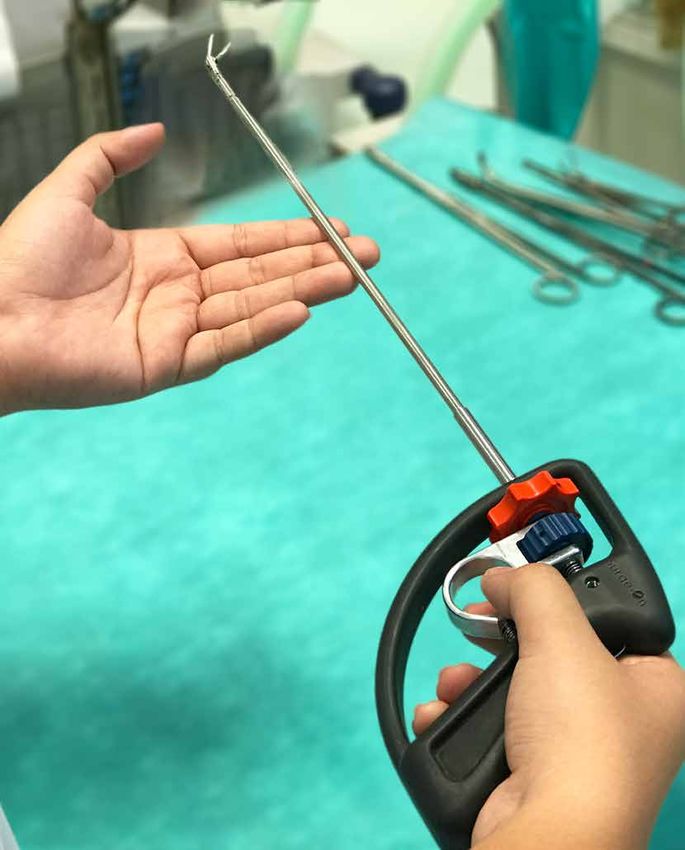
Imaging and big data for life

     Medical Delta Diagnostics 3.0: Dementia & Stroke

     Dementia and stroke: how deep learning
     algorithms make faster diagnoses

     Prof. dr. Wiro Niessen                    Dr. Frans Vos                         Prof. dr. Mark van Buchem
     Biomedical Image Processing (EMC/TUD)     Imaging Physics/Radiology (TUD)       Radiology (LUMC)

    Dementia and stroke impose an
    enormous burden on individuals and
    society. To address this challenge, tools
    are required to identify individuals at
    risk – ideally very early in the disease
    process, to support the trend towards
    prevention.

                         Image-based techniques are among the most               techniques such as deep learning, they can estimate if   inspected and interpreted by the doctor quantitatively;    techniques to improve patient care. The research
                         promising of the technologies available to improve      a person is at high risk of developing a disease. More   clinical decision making will be supported qualitatively   relies on data and clinical expertise available through
                         diagnosis, prognosis and treatment selection. In        accurate and faster diagnosis and prognosis can          based on deep learning algorithms that have been           collaborations with population and clinical studies.
                         particular, the application of imaging technology       improve disease treatment and support steps towards      trained on previous cases.                                 “Through the collaboration across the different
                         combined with the use of advanced data analytics,       disease prevention.                                      In this way, doctors can detect a disease in an early      disciplines of the Medical Delta institutes, we create
                         such as deep learning, will be helpful. This way,                                                                phase, make a diagnosis faster, determine the best         a whole which is greater than the sum of its parts,”
                         imaging biomarkers will be combined with other          Stroke                                                   possible treatment more precisely and monitor the          concludes Niessen.
                         biomarkers and clinical data. Initially, dementia       A stroke occurs when the blood flow to parts of the      disease over a longer time.
                         and stroke will be addressed in the Medical Delta       brain is cut off. This can happen due to a blood clot    “In this program we aim to learn optimally from
                         Diagnostics 3.0 program.                                that blocks the blood flow or due to bleeding in the     imaging and healthcare data from previous
                                                                                 brain. These two different types of stroke require       patients, to treat the next generation of patients
                                                                                                                                                                                                        Using images and data
                         Dementia                                                different treatments, and the right treatment must be    more effectively”, says Wiro Niessen, professor in            researchers can estimate if
                         Dementia is a brain disorder characterized by loss of   selected.                                                Biomedical Image Analysis at Erasmus MC and
                         cognitive function such as thinking and remembering,    Accurate and objective imaging systems can support       TU Delft.                                                     a person is at high risk of
                         which affects people’s daily functioning. Using         treatment selection in the acute stage of stroke by                                                                    developing dementia
                         MRI imaging techniques and advanced analysis            determining which type of stroke the patient has dealt   Collaboration
                         techniques, researchers want to understand              with, thus optimizing the treatment selection process.   This program brings together experts in different
                         better how dementia, such as in Alzheimer’s                                                                      fields, such as imaging physicists, medical image
                         disease, develops. Using images and data from           Future perspective                                       analysis experts and clinicians, with the joint aim of
                         large population studies and artificial intelligence    In the future, a scan of a patient will not only be      developing, implementing and validating imaging

6                                                                                                                                                                                                                                                              7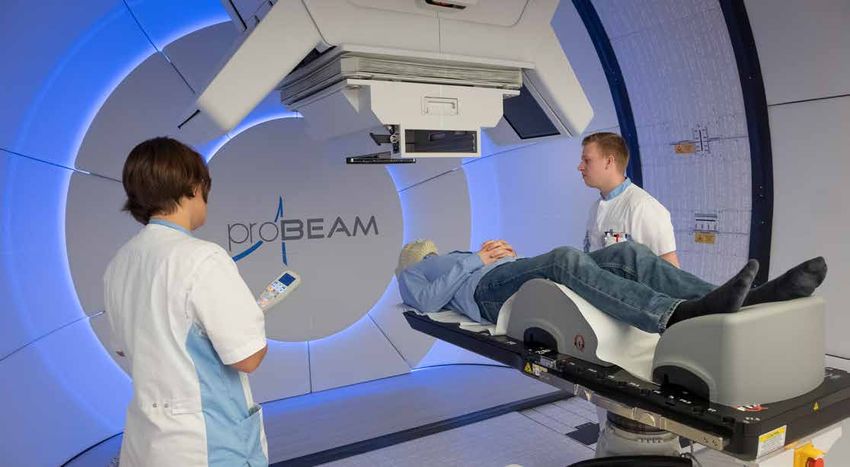
Imaging and big data for life
Medical Delta Cancer Diagnostics 3.0: Big Data Science Different patients with the same type of
of in & ex vivo Imaging cancer can respond very differently to a
Improving cancer diagnostics with new specific treatment, and as a result, outcomes
imaging techniques and machine learning vary greatly between patients. Many clinical,
pathological, and genetic factors make the
diagnosis and choosing the right treatment for
Prof. dr. ir. Matthias van Osch
Radiology (LUMC)
Prof. dr. Marion Smits
Radiology and Nuclear Medicine
Prof. dr. Sjoerd Stallinga
Imaging Physics (TUD)
an individual patient increasingly complex.
(EMC)
In Medical Delta Cancer Diagnostics 3.0, the newest imaging future,” says Johan Koekkoek, neuro-oncologist in LUMC and
techniques will be used together with machine learning to provide MC Haaglanden.
diagnosis faster and to better predict the course of the disease. For doctors it would very helpful to get guidance in making the
right diagnosis and selecting the best treatment. “Currently,
Creating non-invasive methods diagnosis is based on a visual assessment of the MRI scan by a
At the moment, biopsies are taken to obtain information about radiologist,” says Marion Smits, professor of Neuroradiology at
the genetic and molecular characteristics of the tumor. Taking Erasmus MC. “Machine learning techniques will help us to include
a biopsy is an invasive method that can sometimes be risky. a lot more information from the MRI scan in our assessment, and
Researchers from the Medical Delta Cancer Diagnostics 3.0 to make such diagnoses more objective.”
program believe analyzing tumors could be improved by Machine learning solutions are also in development in the field of
extracting more information from MRI images. digital pathology of biopsy material. Sjoerd Stallinga, professor of
Computational Imaging at TU Delft: “Analysis and classification
Advanced MRI techniques of tissue morphology is a very suitable task for modern deep
Within this program, which initially focusses on brain tumors, learning methods.”
advanced MRI techniques will be used to gather relevant
information about the tumor. The researchers will do this using
standard MRI scans, as well as the newest MRI techniques and Machine learning techniques will
hardware. “For example, we will use a 7 Tesla MRI, which has a
higher magnetic field and provides images with a better resolution help us to include more information
and more information,” says Thijs van Osch, professor in the
from the MRI scan and to make
radiology department at LUMC.
The aim of comparing information gathered through biopsies and diagnoses more objective
information visible on the MRI scans is to deduce the genetic
and molecular characteristics of the tumor from the MRI-data: a
‘virtual biopsy’. Collaboration
The close collaboration that has been established between
Machine learning Erasmus MC, TU Delft and LUMC with MRI experts,
In addition to obtaining better MRI images, this Medical Delta computational scientists, engineers and clinicians is a key
research program links them to machine learning to unlock all success factor for realizing the ambition to enable biopsy-free
the information hidden in the different MRI-contrasts. Ultimately, image-based diagnosis of cancers. The support to provide a
this is expected to contribute to an even better treatment choice personalized treatment selection and treatment monitoring is
tailored to the individual patient, and to enable better monitoring envisioned as a template for similar Medical Delta innovations in
of the tumor during treatment. the care of other cancer types.
“It would be of enormous added value if we were able to better
predict on the basis of all those MRI characteristics how the
tumor will evolve and what that means for the patient in the
8 9
Imaging and big data for life

      Medical Delta ultraHB: Ultrafast and Ultrasound for the Heart and Brain

      Ultrafast ultrasound for the heart
      and brain

      Dr. David Maresca                  Dr. Annemien van den Bosch             Prof. dr. Aad van der Lugt
      Imaging Physics (TUD)              Cardiology (EMC)                       Radiology & Nuclear Medicine
                                                                                (EMC)

     Renewing ultrasound techniques
     will open doors for a whole range of
     diagnostic and therapeutic possibilities
     in the cardiovascular and neurological
     field. The Medical Delta program
     Ultrafast Ultrasound for the Heart and
     Brain offers excellent opportunities to
     tackle the major existing and evolving
     healthcare threats.
                          In the Netherlands, it is expected that 195,000 people        and special contrast agents make new diagnoses and        This program will offer diagnostic methods with
                          will be diagnosed with heart failure in 2025, leading         treatments possible.                                      excellent opportunities to tackle the major existing          The expected results
                          to a high number of hospitalizations and deaths.                                                                        and evolving healthcare threats, such as heart failure,
                          Atherosclerosis is a disease in which plaque builds up        Technological developments                                atherosclerosis and neurological disorders. The
                                                                                                                                                                                                                of this program will
                          inside arteries. If plaque ruptures in an artery linked to    Three technological developments are expected             technological breakthroughs will also be directly             represent a huge
                          the brain, this can lead to stroke. In neurology, brain       to have an impact in this field. The first is ultrafast   clinically tested in the cardiology and neuroradiology
                          tumors are also a large threat. In the Netherlands            ultrasound imaging, involving thousands of images         departments at Erasmus MC. The expected results
                                                                                                                                                                                                                step forward for
                          alone, more than 1,000 patients were diagnosed with           per second. This makes the blood flow in the heart        will represent a huge step forward for clinical practice,     clinical practice
                          a brain tumor in 2018.                                        and through organs and even the activation of brain       where doctors eagerly await the new possibilities
                                                                                        parts directly visible (“functional ultrasound”).         these techniques offer.
                          The program focuses on three healthcare threats:              The second focuses on the realization of new                                                                          use of protocols and measurement systems in the
                          heart failure, atherosclerosis and neurological               sensors, making ultrasound into a truly 3D modality.      Collaboration                                               Operating Room. Ultrafast ultrasound imaging can be
                          disorders.                                                    At the moment, almost all applications show a 2D          Erasmus MC, TU Delft and LUMC are involved in               used for real-time monitoring during carotid, brain or
                                                                                        visualization; this creates a limitation for treatment.   this program, which is also very well linked to two         cardiac surgery or procedures.
                          Ultrasound                                                    In this program, 3D image reconstruction will be          Medical Delta living labs. The first is Medical Delta
                          Ultrasound is the most commonly used medical                  used, to improve diagnosis and treatment options in       Instruments, focuses on the use of minimally invasive
                          imaging technique. It is harmless, relatively cheap           healthcare.                                               instruments. Ultrafast ultrasound imaging can be
                          and, because it uses real-life images, it gives                                                                         used during minimally invasive procedures for real-
                          immediate diagnostic feedback. The technology is              The third is the development of ultrasound contrast       time tissue characterization – this is important, for
                          developing rapidly: new ultrafast imaging brings the          agents that target disease-specific markers and can       example, in surgical procedures. The second is
                          functioning of the heart and brain directly into view,        transport drugs with them.                                Medical Delta ResearchOR, which focusses on the

10                                                                                                                                                                                                                                                                     11
Locations Field- and Living Labs
     Medical Delta Field
     and Living Labs:
                                                          Geriatric Rehabilitation@Home

                                                          Integrative Medicine Technology

     between prototype
                                                          Medical Delta Instruments

                                                          Rehabilitation Technology

     and practice                                         Better In Better Out

                                                          ResearchOR
                                                                                                            THE HAGUE

     The Medical Delta Living Labs form a                 Care Robotics

     crucial link in the healthcare innovation            VIT for Life

     chain. They test companies’ and                      Phenomix

     healthcare institutions’ promising                   NeLL

     technological healthcare solutions with
     healthcare professionals and patients
     in real-life environments. Practical
     questions are the foundation for the
     public-private projects the Living Labs
     take on. The interdisciplinary nature
     of the work is characteristic of the
     Living Labs’ approach: health lecturers
     collaborate with technology lecturers
     from other universities of applied          Medical Delta Living Lab VIT for Life                    Medical Delta Living Lab Better In
                                                 Paying more attention to health and prevention           Better Out
     sciences. They conduct their research       will reduce the pressure on our healthcare system.       The fitter someone enters a cancer treatment

     together with end users, healthcare         Health apps and innovations that stimulate a healthy     program, the higher their chance of a faster recovery.
                                                 lifestyle and exercise do not reach all people with      Medical Delta Living Lab Better In Better Out focuses
     institutions and companies, and through     an increased risk of lifestyle-related complaints.       on researching and developing e-health applications
                                                 Medical Delta Living Lab VIT for Life focuses on         and technologies that improve the fitness of cancer
     this collaboration, the Living Labs have    these groups and aims to make inaccessible apps          patients.
     a social and economic impact on the         or complicated technology user-friendly. In addition,    At Medical Delta Living Lab Better In Better Out, The
                                                 it integrates these technologies into the broader        Hague University of Applied Sciences, Rotterdam
     region. The Living Labs also provide        range of interventions provided by doctors and           University of Applied Sciences, HMC Anthoniushove

     a bridge to research carried out at         physiotherapists.                                        and the University Cancer Center Leiden-The
                                                 At Medical Delta Living Lab VIT for Life, Rotterdam      Hague work together with companies, healthcare
     Medical Delta’s academic knowledge          University of Applied Sciences, The Hague University     professionals and patients on technological solutions
                                                 of Applied Sciences, Stichting WMO Radar and             for healthcare. The Living Lab also works on a project
     institutions.                               Kinderfysiotherapie Regio Westland work together         basis with researchers from academic knowledge
                                                 with patients and companies. The Living Lab also         institutions, including TU Delft and Maastricht
                                                 collaborates with universities affiliated with Medical   University.
                                                 Delta.
12                                                                                                                                                                 13
Program: tekst

                      Medical Delta Living Lab Geriatric                       Medical Delta Living Lab ResearchOR                       Medical Delta Living Lab Rehabilitation Medical Delta Fieldlab Phenomix
                      Rehabilitation@Home                                      In the Medical Delta Living Lab ResearchOR,               Technology                              A good picture of one’s current health can be created
                      E-health applications can significantly ease the         processes and systems are developed and validated         Smart technology such as robotics, sensors, artificial      by measuring metabolic products such as amino
                      pressure on geriatric rehabilitation and improve care.   to increase and guarantee efficiency and patient safety   intelligence and e-Health solutions offer opportunities     acids, hormones, glucose and adrenaline. With the
                      There is also a greater need for medical specialist      in the operative process. An operating room with          for intensive rehabilitation. This can be done at home,     resulting ‘metabolic profiles’, doctors can make
                      rehabilitation. Medical Delta Living Lab Geriatric       measuring equipment and sensors is used for this.         in a rehabilitation center or at the physiotherapist. The   earlier diagnoses and personal treatment plans. In
                      Rehabilitation@Home focuses on the development of        Reinier de Graaf Hospital and TU Delft are involved in    Medical Delta Living Lab Rehabilitation Technology          the Medical Delta Fieldlab Phenomix, companies,
                      e-health applications that promote home rehabilitation   this Living Lab.                                          gives companies and other healthcare developers the         healthcare institutions and scientists work together on
                      of the elderly. At Medical Delta Living Lab Geriatric                                                              opportunity to test their innovations together with end     practical applications of metabolomics research.
                      Rehabilitation@Home, Inholland University of Applied                                                               users and to develop them in practice. They can also        Leiden University and Erasmus MC participate in the
                      Sciences, The Hague University of Applied Sciences,                                                                take up questions from healthcare practice.                 Fieldlab together with various companies from the
                      Rotterdam University of Applied Sciences and                                                                       The University of Applied Sciences the Hague, TU            biotech and pharmaceutical industries. It is located at
                      Stichting Omring work together with companies, care                                                                Delft, LUMC, Erasmus MC, Sophia Rehabilitation              the Leiden Bio Science Park and is being established
                      institutions, informal caregivers and elderly people.                                                              Center, Rijndam Rehabilitation Center and the               with an EFRO subsidy. InnovationQuarter, Medical
                      The Living Lab also works on a project basis with                                                                  Rijnlands Rehabilitation Center collaborate in this         Delta and others are involved in setting up and
                      researchers from academic knowledge institutions.                                                                  Living Lab.                                                 expanding the Fieldlab.

                      Medical Delta Living Lab Integrative                     Medical Delta Living Lab Care
                      Medicine Technology                                      Robotics                                                  Living Lab Medical Delta Instruments                        Medical Delta National eHealth Living
                      For some health issues, such as antibiotic resistance    Robotics allow people to live independently at home       Minimally invasive medical instruments ensure smaller       Lab (NeLL)
                      and pain complaints due to chronic diseases, regular     for a longer period of time. Medical Delta Living Lab     scars, less trauma, less blood loss, faster recovery        E-health plays an important role in making healthcare
                      medicine offers insufficient (good) solutions. Medical   Care Robotics offers companies and other healthcare       and a lower risk of infection. The Living Lab Medical       future-proof. To make digital care part of regular care,
                      Delta Living Lab Integrative Medicine Technology is      developers the opportunity to test, develop and           Delta Instruments connects technical and clinical           Medical Delta Living Lab NeLL facilitates scientific
                      exploring non-pharmacological, integrated prevention     validate their innovations in a practical manner          Medical Delta researchers with companies and                research into e-Health solutions and their validation
                      and treatment approaches, such as the use of             together with end users. In addition, the Living Lab      supports them in the development of high-quality            and testing. In addition, the Lab shares news, insights
                      natural products, to make Integrative Medicine more      gives companies the opportunity to take up questions      prototypes of medical instruments.                          and knowledge.
                      available, accessible and acceptable in a responsible    from healthcare practice and translate them into          TU Delft, Erasmus MC, LUMC, AMC, Reinier de Graaf           Within this Living Lab, patients, caregivers,
                      way. The University of Applied Sciences Leiden,          promising innovative technological solutions.             Hospital and LIS (Leiden Instrument Makers School)          consumers, students, scientists, entrepreneurs,
                      University of Applied Sciences Rotterdam, NVAA and       The University of Applied Science the Hague, TU Delft,    collaborate in this Living Lab.                             organizations and institutions work together on
                      Cure + work in this Living Lab together with patients,   LUMC, Pieter van Foreest and the Reinier de Graaf                                                                     tomorrow’s healthcare.
                      healthcare professionals and companies. The Living       Hospital collaborate in this Living Lab.
                      Lab also works on a project basis with researchers
14                    from academic knowledge institutions.                                                                                                                                                                                                     15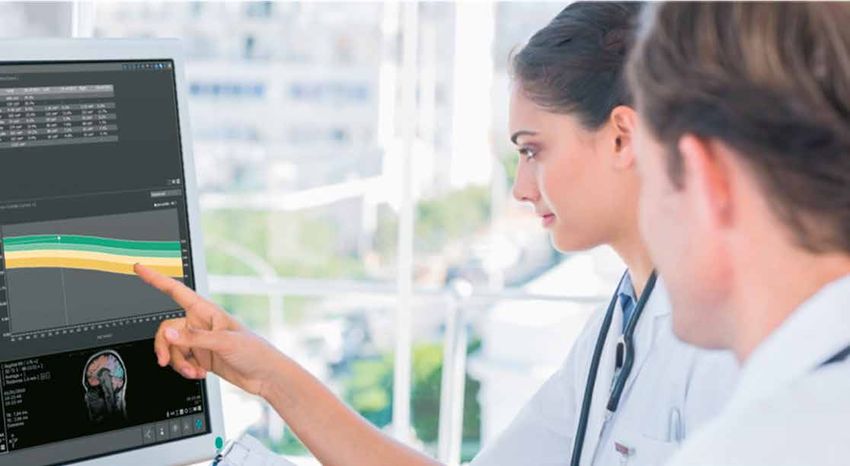
Medical instruments for diagnosis and treatment
Medical Delta NIMIT: Novel Intruments for Minimally Invasive Techniques In minimally invasive surgery, the surgeon
Creating standardized methods to operates through the small incisions.
Compared to open surgery, minimally invasive
develop minimally invasive instruments surgery results in smaller scars, less trauma,
less blood loss, faster recovery and a lower
risk of infection.
Prof. dr. Frank Willem Jansen Prof. dr. Gijs van Soest Prof. dr. Jenny Dankelman
Gynaecology (LUMC/TUD) Cardiology (EMC) BioMechanical Engineering (TUD/
LUMC)
In addition to the direct benefits for the patient, there are economic the Medical Delta program, phantom models will be developed.
benefits too: shorter hospital stays and quicker recovery mean Phantoms are artificial structures representing human tissues,
the patient can go back to work faster. Minimally invasive surgery and they can be used to test medical instruments for function and
relies on the minimally invasive instruments that are designed usability. Such phantoms could also be used in place of some of the
and developed in academia. Currently, many instruments being animal and clinical trials of the instruments. “It would be preferable if
developed have unique designs and advanced functionalities. phantoms themselves were standardized and certified by regulatory
However, these instruments lack standardization, they are complex, bodies. This would contribute to the certification of medical
expensive and difficult to manufacture. This creates hurdles for instruments,” says John van den Dobbelsteen, Associate Professor
regulatory assessment and certification and delays innovation at the department of Biomechanical Engineering at TU Delft.
benefits for the patient. The Medical Delta NIMIT program aims When creating a new instrument, it is important to keep
to design minimally invasive instruments that enable a rapid documenting the practical workflows of existing instruments
innovation cycle based on wel characterized, documented process and learn lessons from those devices. This should result in a
steps and standardized tests. This will eventually lead to quicker standardized method for development.
implementation in clinical practice. In order to achieve this, new It would be ideal to have a prototype lab where instruments can be
design, manufacturing and assembly methods should be developed made in small, reproducible series. “We don’t want to create and
for minimally invasive instruments. The instruments produced test instruments to have the perfect picture for a scientific paper,
should be simpler ad should support sustainable surgery. we want to test the instruments to be used in clinical practice,” says
Van Soest.
Modular instruments
“As academic developers, we realized that we do not get far Collaboration
enough in the translational trajectory to transfer our technologies to In this consortium, TU Delft and Erasmus MC provide the technical
clinical practice,” says Gijs van Soest, Associate Professor at the knowhow and labs with required equipment. LUMC and Erasmus
Department of Cardiology at Erasmus MC. MC provide the knowledge for safe application. Medical Delta
“It is a shame to throw away every part of a good technical device Living Labs ResearchOR and Medical Delta Instruments are also
that still functions well, after having only been in the body for half a connected to this consortium.
Instruments should be
minute,” says Tim Horeman, Assistant Professor at the department Because this program leads to standardized methods to develop
of Biomechanical Engineering at TU Delft. instruments faster and better following regulations, the results can
Circular design can help reduce this waste. The circular economy also be of value for other programs at Medical Delta.
produced simpler and support can be applied on three levels: reuse the instrument as a total
assembly; reuse certain components or reuse the materials. The
sustainable surgery
goal of this project is to develop a modular design approach for
a variety of instruments for several purposes, for example the
development of simple and smart hardware components with well-
controlled properties that can also be reused for other applications.
Phantom models
The instruments must be tested following a set of regulations. In
16 17
Medical instruments for diagnosis and treatment

      Medical Delta Cardiac Arrhythmia Lab

      Unravelling disease mechanisms of
      cardiac arrhythmia for better treatment

      Prof. dr. Natasja de Groot       Prof. dr. ir. Alle-Jan van der     Prof. dr. ir. Wouter Serdijn       Prof. dr. Bianca Brundel
      Cardiologist-Electrophysiologist Veen - Signal Processing (TUD)     Bioelectronics (TUD)               Molecular Biologist (VUmc)
      (EMC)

     The number of patients diagnosed with
     cardiac arrhythmia is rapidly increasing
     due to ageing, obesity, diabetes and
     elevated blood pressure. Cardiac
     arrhythmia is therefore the cardiovascular
     epidemic of the 21st century. Treatments
     are often not successful, but a new
     patient-specific therapy can improve
     existing treatments.
                          Cardiac arrhythmia is the cardiovascular epidemic of        degree of electropathology (‘staging the arrhythmia’).     causing arrhythmia). Unfortunately, these therapies        arrhythmia. The future goal is to assess the degree
                          the 21st century. The number of patients diagnosed          However, this is still not yet possible because there      have side-effects and are only moderately effective.       of electropathology using non-invasive mapping
                          with cardiac arrhythmia is rapidly increasing due           are no diagnostic tools to measure electropathology.                                                                  techniques.
                          to ageing, obesity, diabetes and elevated blood             It is therefore also not possible to recognize patients    Unravel electropathology
                          pressure.                                                   at risk of arrhythmia early. In addition, there are no     The aim of the Medical Delta Cardiac Arrhythmia            Arrhythmia-on-a-chip
                                                                                      therapies specifically targeting electropathology.         Lab is to reduce the cardiac arrhythmia burden by          To further unravel the mechanisms of arrhythmia,
                                                                                                                                                 unravelling arrhythmia-related electropathology and        this consortium aims to design an arrhythmia-on-a-
                             Providing a patient-specific                             Treatment of Arrhythmia                                    designing and testing novel bio-electrical diagnostic      chip platform enabling the investigation of electrical
                         therapy can improve treatment                                Electrical signals recorded from young hearts usually      tools and therapies targeting electropathology.            conduction in relation to e.g. genetic defects.
                                                                                      have a simple morphology, as electrical waves              This enables staging of the cardiac arrhythmia and
                                                                                      propagate smoothly through cardiac tissue. Over            selection of the appropriate treatment in the individual   Collaboration
                          Atrium fibrillation is the most common arrhythmia. It       the years, these electrical signals may become more        patient, thereby improving therapy outcome.                This program is a collaboration between biologists,
                          is a progressive disease, which means that episodes         complex (electropathology) due to damaged cardiac          A first step is to unravel electropathology by             engineers and medical doctors from Erasmus MC,
                          of arrhythmia progress from short-lasting episodes          tissue. When the degree of electropathology exceeds        quantifying electrical parameters. For this purpose,       LUMC and TU Delft. They combine their unique
                          to episodes which are continuously present and no           a certain threshold, cardiac arrhythmia may occur.         a 192 electrode-array has been designed to record          expertise on advanced signal recording and
                          longer terminate spontaneously. Atrium fibrillation may     Treatment of cardiac arrhythmia is still often not         electrical signals directly from the surface of the        processing techniques, cardiac mapping tools and
                          cause stroke and heart failure and is even associated       successful, says Natasja de Groot, professor and           heart during open heart surgery. Advance signal            arrhythmia related molecular mechanics.
                          with death.                                                 cardiologist-electrophysiologist at Erasmus MC.            processing techniques are then used to comprehend
                          Treatments are often not successful, but a new              Current treatment consists of either an ‘electrical        electrical activation patterns during arrhythmia.
                          patient-specific therapy can improve existing               shock’ to restore the normal heart rhythm, drugs or        Linking electrical signals with the structure of cardiac
                          treatments. This can be achieved by measuring the           ablative therapy (eliminating the cardiac tissue that is   tissue is essential to unravel the mechanisms of

18                                                                                                                                                                                                                                                                   19
Medical instruments for diagnosis and treatment
Medical NeuroDelta: Ambulant Neuromonitoring for Prevention and Brain disorders have a disastrous influence on
Treatment of Brain Disease people’s lives, but they are notoriously hard to
Neuromonitoring for prevention study and difficult to treat.
For example, migraine, which is characterized
and treatment of brain disease by repeated attacks of severe headache, is
difficult to investigate in patients, because it
is impossible to predict when an attack will
Prof. dr. Arn van den
Maagdenberg - Geneticist
Prof. dr. Chris de Zeeuw
Neuroscience (EMC)
Prof. dr. ir. Wouter Serdijn
Bioelectronics (TUD)
strike.
(LUMC)
When patients are asked to go to the hospital to investigate their within CUBE, Medical Neurodelta researchers have already
brain disorder, they will often notice they do not get an attack. started to use high-frequency ultrasound to measure the activity
This happens because the hospital setting is so different from in large parts of the brain; within the project, they will use low
the patient’s natural environment. “In order to better understand frequencies to stimulate specific brain areas to correct brain
the disease, it is important that the patient’s brain activity activity. According to professor De Zeeuw, ultrasound would also
can be measured over a longer period of time in their home allow monitoring throughout the day in the home environment,
environment, preferably using a non-invasive method,” says Arn which would be unique in the world. Compared with MRI, for
van den Maagdenberg, professor of molecular and functional example, this would be much easier – it would not be possible to
neurogenetics at LUMC. place an MRI scanner in a patient’s house.
The same holds for autism, a developmental disorder that starts
in young children. “Autism is caused by a disturbed interaction Testing in mice
between the cerebellum and cerebrum. People with autism In the program, ways to monitor and modulate brain activity will
have problems with social interaction and they show repetitive be first tested in mice, paving the way for clinical applications
behavior. We need better means to monitor how the brain in humans. Testing in mice is already being done, but these
deteriorates in autism,” says Chris de Zeeuw, professor and head experiments are conducted in non-natural settings.
of the Department of Neuroscience at Erasmus MC. Professor De Zeeuw asks: “If you investigate autism with
mice housed in isolation, how can you see the effects of an
Observing patients in their home environment intervention?” In this new study, researchers will make use of their
In this Medical Neurodelta program, researchers focus primarily recently developed FlashTrack system, in which individual mice
on autism and migraine – two disorders with widespread brain can move freely and can be easily identified within a group. Using
dysfunction. For both disorders, it is important to observe this system, several mice can be put together and followed over
patients in their home environments to understand why disease time.
High-frequency ultrasound worsens over time or how attacks begin. A non-invasive method
would provide a much wider time window in which brain activity Collaboration
would allow monitoring
can be studied, giving doctors and scientists extremely valuable In this consortium, Erasmus MC, TU Delft and LUMC are
insights. collaborating. According to professor Van den Maagdenberg,
the Medical Delta area is small enough that there is a regular
throughout the day in the Wireless long-term neuromonitoring systems
The Medical Neurodelta program focuses on the development
crossover and large enough to incorporate different expertise and
make real progressing. It is a unique opportunity to create added
home environment, which
of wireless long-term neuromonitoring systems to register value.
brain activity. Bio-electronics, acoustrodes and optrodes in In other projects within the overall Medical Neurodelta program,
combination with artificial intelligence and machine-learning will other brain diseases, such as epilepsy and brain dysfunction in
would be unique in the world be applied for diagnosis and treatment.
The new system should not only monitor brain activity, but it
infants, are also being investigated. The same technology can be
applied to investigate these disorders.
should also modulate brain activity. Advances in light probes and
ultra- sound, made at TUDelft, make this feasible. In Rotterdam,
20 21Medical instruments for diagnosis and treatment
Medical Delta: Improving Mobility with Technology
Improving mobility with technology
Prof. dr. ir. Jaap Harlaar Prof. dr. Gerard Ribbers Prof. dr. Frans van der (TUD/LUMC) Prof. dr. Rob Nelissen
BioMechanical Engineering Neurorehabilitation (EMC) Helm - BioMechanical Prof. dr. Sita Bierma Orthopaedics (LUMC/TUD)
(TUD) Engineering (TUD/LUMC) General Practice (EMC)
Our society is aging. Motoric disabilities
increase with age, which means there
will be more and more people with
restricted mobility. The Medical Delta
Improving Mobility with Technology
program focuses on the development of
accurate diagnostics and treatments to
improve mobility.
This program consists of two tracks: the rehabilitation Recently Heike Vallery, professor at TU Delft, techniques. In this project, the researchers focus
track and the orthopaedics track, each with three demonstrated the feasibility of a new wearable on multiscale modeling, in which biomechanical
themes. balance assistance backpack to help people walk computational models are made at all levels and
with more stability and to keep balance. Together combined to gain better insights into the effects of
Rehabilitation: practice in a safe with professor Ribbers from the rehabilitation center load on cartilage.
manner Rijndam, professor Vallery will develop this backpack
The rehabilitation track focuses on outcome and other wearables to incorporate safe gait training Precision diagnostics
prediction, precision diagnostics and unsupervised into clinical practice. Implementation in clinical Choosing the right therapy to improve patients’
training. The latter aims at maintaining balance practice will involve the Medical Delta Living Lab mobility requires knowledge of the etiology. This
in people who learn to walk again after a stroke. Rehabilitation Technology. ‘precision diagnostics’ is a focus for both tracks. We want to maximize the
Rehabilitation techniques in the field of robotics are “We want to maximize the treatment effect by
used for treatment. Orthopaedics: multiscale modelling selecting the optimal option; we don’t want to
treatment effect by selecting
“Therapy intensity is a major determinant for a The second track focuses on orthopedics: the safety over-treat or under-treat the patient,” says Harlaar. the optimal option
positive outcome, but there is simply not enough of arthroplasties, sports injuries and, in particular,
individualized supervision by professionals to guide osteoarthritis. Osteoarthritis is the leading cause Collaboration
the patient”, says Jaap Harlaar, professor of Clinical of physical disability worldwide and involves the In this consortium, Erasmus MC, TU Delft and LUMC
Biomechatronics at TU Delft. “The aim of our project degeneration of joint cartilage. Working together, will collaborate closely. The Living Labs will also be
is to let people practice more intensely in the rehab researchers from the Medical Delta combine their involved in early prototype testing.
center and at home in a safe manner, by developing expertise in epidemiology, the biomechanics of
equipment they can use to practice unsupervised.” gait, tissue and cell research, and dynamic imaging
22 23Medical instruments for diagnosis and treatment
Medical Delta Institute of Fetal & Neonatal Care In the Netherlands, about 175.000 women give
Preventing morbidity and birth every year. In most cases, pregnancy and
childbirth are uncomplicated and end with a
mortality for both mother and child healthy child and happy parents. Unfortunately,
about 1300-1400 children die in the period
around birth. The 100 days before conception
and 1000 days thereafter are fundamental for
Dr. Alex Eggink Dr. Monique Haak Prof. dr. Jenny Dankelman Prof. dr. Thomas Hankemeier
the development of a child and also largely
Obstetrics and Gynaecology Obstetrical Ultrasound and the BioMechanical Engineering Analytical Biosciences (UL/ determine their future health.
(EMC) Fetal Heart Program (LUMC) (TUD/LUMC) EMC)
The major causes of perinatal mortality are premature birth, The data from these two parts of the program will be combined in
congenital anomalies and fetal growth restriction. The aim of a big data analysis to support early prediction, decision making
the Medical Delta Institute of Fetal and Neonatal Care is to and intervention to prevent maternal, fetal and neonatal morbidity
prevent morbidity and mortality caused by complications during and mortality.
pregnancy, birth or the neonatal period for both mother and child.
The program will focus on substantially decreasing the Collaboration
incidence of the three major complications that can occur during In the Medical Delta Institute of Fetal and Neonatal Care, a
pregnancy and childbirth. The MOMETA program (monitoring unique close collaboration is realized between the maternal
and metabolomics of complicated pregnancies and neonates), fetal medicine specialist and neonatologist, supported by
one of the projects within this Medical Delta institute, will develop technological experts and engineers from TU Delft, Erasmus
innovative techniques in maternal-fetal monitoring to provide a MC, LUMC and Leiden University. This unique collaboration of
strong and healthy start for every child. clinicians is a strength in this program. This institute is linked to
the Medical Delta Living Lab Care Robotics.
Wireless heart rate monitoring
The program is divided into two parts.The first part will focus on
developing new technological and medical solutions to monitor
maternal and fetal heart rate.
To date, a pregnant woman is only admitted to a hospital when
clear signals of illness are already present, which is often too
late. Monitoring is done by a wired system, which is intrusive
and limits patient mobility. In this program, a smart and wireless
monitoring system will be developed to measure the heart rate
of mother, fetus or neonate continuously. The system will ideally
be combined with a big data analysis system and an automated
warning system to detect early signs of clinical deterioration. A smart and wireless monitoring
Metabolic monitoring for sepsis system will be developed to
The second part focuses on monitoring neonates and early measure the heart rate of mother
diagnosis and prediction of neonatal sepsis (blood poisoning)
using metabolomics.
or neonate continuously
At the moment, sepsis in the neonatal period is often diagnosed
when the newborn is already critically ill. The early diagnosis
of sepsis and early prediction of treatment outcome of sepsis
would be very desirable. A monitoring device for sepsis will be
developed focusing on discovering and validating metabolic
biomarkers for the diagnosis of sepsis and prediction of treatment
outcome.
24 25eHealth & self-management
Medical Delta eHealth & selfmanagement for a healthy society
How eHealth is changing healthcare
Prof. dr. Andrea Evers Prof. dr. Niels Chavannes Prof. dr. Mark Neerincx Dr. Valentijn Visch Rita van den Berg
Health Psychology (UL) General Practice and Human-Centered Industrial Design, Design Health-related physical
eHealth in disease Computing (TUD) Aesthetics (TUD) fitness and lifestyle
managemen (LUMC) interventions (EMC)
Existing healthy lifestyle programs can be
effective in the short term, but many people
eventually relapse into their unhealthy
behavioral patterns. A paradigm shift is
needed in health behavior - one that aspires
to make healthy living attractive, immediately
gratifying and convenient in the short term
thereby consolidating healthy living in the
long term.
It plays a key role in preventing chronic diseases Vulnerable groups more important when targeting low SES groups”,
and in maintaining a healthy lifestyle. The goal of “eHealth offers many solutions. However, there is a says Evers.
Short-term success is not the
this program is to create instructions on how to huge discrepancy between what is being developed
reach vulnerable groups and to create a customized and what is actually being used. Numbers indicate Data-driven prediction models main measure, it is the long
integrated eHealth solution. An integrated program, Data-driven prediction models using large data sets
such as the benefit for all program, rewards people for
that the health gap between different socioeconomic
and machine learning will be used in this program term that counts
groups is getting bigger. This is a large problem”,
their healthy lifestyles. They get points for everything says Andrea Evers, professor in health psychology to investigate what works best for whom, and why.
they do, including logging in to the app. Short-term at Leiden University. The eHealth technologies being Analyzing and interpreting the data will enable
success is not the main measure, it is the long term developed mainly benefit those who know how to personalized solutions to show which people benefit
that counts. People can fall back, as long as they pick handle them. most from which type of intervention.
it up again. This integrated solution should also help In this Medical Delta program, the development
people with multiple diseases by giving them one of eHealth self-management solutions that are Collaboration
approach to use, instead of multiple apps. accessible for vulnerable groups is key. Vulnerable The consortium includes researchers at Leiden
groups are difficult to reach and consist of people University, LUMC, TU Delft and Erasmus MC working
Many people come into contact with eHealth while with a lower socioeconomic status (SES) or people in collaboration. Researchers at these institutes excel
making an appointment with their dentist or doctor with multiple diseases or comorbid diagnoses. in eHealth research, behavior change and smart
online, using a smartphone activity tracking app or “Vulnerable groups do not have access to suitable technology solutions, and they are able to translate
taking heart rate measurements. eHealth is booming. solutions. It is important to learn more about how science into clinical applications.
eHealth is about patient empowerment and is people can be motivated to adopt a healthy lifestyle. All consortium partners actively participate in the
considered the future of health and well-being in our They need to be rewarded and encouraged in a Netherlands eHealth Living Lab (NeLL).
digital society. different way; for example, a financial incentive is
26 27eHealth & self-management
Vital Delta: Medical Delta’s journey towards vitality and health
Improving the vitality and health in
the Delta region
Dr. AnneLoes van Staa
Lector Healthcare Transitions
(Rotterdam University of Applied Sciences)
A population that is physically, mentally
and socially more vital and healthier;
from young to old. That is what the
program Vital Delta: Medical Delta’s
journey towards vitality and health
strives for. The practice-oriented
research program was set up by a
consortium of the four universities
of applied sciences within Medical
Delta (Rotterdam University of Applied
Sciences, The Hague University of
Applied Sciences, Leiden University
of Applied Sciences and Inholland
University of Applied Sciences).
In the research program, citizens, students, clients, and safe implementation of healthcare and welfare Collaboration
healthcare professionals and researchers work technology The cooperation between healthcare, the social
together with colleges, universities, healthcare domain and technology is the starting point for
institutions and companies. The interdisciplinary Fysically Vital develops, evaluates and implements each of these work packages. To ensure this, each
program improves the health and well-being of the innovations to promote a healthy lifestyle among work package is led by two lecturers from different
population in the delta region of Leiden, The Hague vulnerable target groups universities of applied sciences and coordinated by a
and Rotterdam by promoting the development of work package leader.
innovative (technological) health solutions through Socially Vital stimulates and improves cooperation
practice-oriented research. between professionals from the social and health Vitale Delta receives a grant from the SIA Steering
domain in particular Body. In addition, Medical Delta and the four
The eight-year program started in 2018 and focuses universities of applied sciences also contribute to the
on four work packages: Self Vital aims to let people take control of their own realization of the program.
lives and health
Supported Vital focuses on the design, development
28 29Personalised, precision and regenerative medicine
METABODELTA: Metabolomics for clinical advances in the Medical Delta Most people want to know whether they are healthy
Growing old healthy by predicting
and what they have to do to remain healthy as long
as possible. Science has delivered many insights
and preventing diseases into how to live healthily and how to treat or prevent
certain diseases. However, a lot is still unknown.
Prof. dr. Thomas Hankemeier Prof. dr Eline Slagboom Prof. dr. Cock van Duijn Prof. dr. Arfan Ikram Prof. dr. Simon Mooijaart Prof. dr. Aad van der Lugt
Analytical biosciences (UL/ Molecular epidemiology LUMC) Epidemiology (EMC/UL) Epidemiology (EMC) Epidemiology (LUMC) Radiology (EMC)
EMC)
Genes predict the risk of developing certain diseases in an The first – “From metabolomics for discovery to clinical practice”
individual. However, genes do not indicate if, and when, such – is focused on the translation of metabolomics discoveries
a disease will develop. This is also determined by environmental to clinical and point-of-care applications. For that, novel
factors such as nutrition and lifestyle. technologies for large-scale metabolomics will be developed
Measuring the metabolites in the blood can tell you what is going and implemented. In parallel, a robust and clinical metabolomics
on in the body. Metabolites provide information about someone’s analyzer will be developed. The aim of the project is to integrate
current health state. Metabolites are the result of the interplay the metabolomics analysis steps into a small analyzer that
between genes and these environmental factors. Metabolites are can be used as a point-of-care metabolomics analyzer. These
small chemical substances, like glucose or fats, that are products technologies will allow monitoring of the metabolic health state for
of the processes and reactions taking place within and between diagnosis and choice of the proper intervention.
cells. Measuring metabolites therefore reveals information about The second theme is focused on using metabolomics to
such disturbances. Many of these metabolites are present in understand the main metabolic processes determining
blood. heterogenous response of elderly people to interventions.
Using the metabolome as monitoring a tool to improve the health
Metabolic profile of our ageing society would help to stimulate vitality.
If many diseases can be early predicted with metabolomics, And finally, the third theme focuses on the development of novel
obtaining metabolic profiles for every person as a health preventive intervention strategies for dementia by understanding
monitoring approach becomes promising. The metabolic profile the interplay between the microbiome, blood metabolome and
would give a warning before any symptoms appeared. “This kind vascular and neuropsychiatric pathology.
of metabolic profile might be acquired in just a few years in a
single drop of blood. In such way metabolomics can contribute Collaboration
to change healthcare in a fundamental manner,” says Thomas In METABODELTA, leaders in the development of metabolomics
Hankemeier, professor of Analytical BioSciences at Leiden technology and clinical diagnosis join with leaders who have
University. access to unique cohorts and other clinical studies, to apply
Measuring all the relevant metabolites is a challenge. Researchers metabolomics in population and clinical studies to study healthy
are already able to measure thousands of metabolites in blood ageing. METABODELTA will make metabolomics more accessible
and urine samples using advanced analytical technologies, within the Medical Delta. “Together we are bringing the ideal of
also called metabolomics. Metabolomics can be used to find growing old healthily into closer reach,” concludes Hankemeier.
a combination of metabolic biomarkers that predict complex This program also aims to make the data obtained in its research
diseases, such as dementia. It is even more interesting to comparable to metabolomics data acquired by other labs
investigate the underlying chemical processes causing the worldwide, to validate findings, implement others’ findings into
disruption in the metabolic equilibrium, to resolve or compensate research being done in the Medical Delta, and ultimately, apply
the disruptions before the disease develops; early diagnosis is the data for the benefit of healthcare.
helpful in that case.
The METABODELTA: three themes
In the METABODELTA program, three themes will be addressed.
30 31Personalised, precision and regenerative medicine
HollandPTC Medical Delta program on HTA value proposition
Determining the cost effectiveness
of proton therapy
Prof. dr. Marco van Vulpen Dr. Hedwig Blommestein
Radiotherapy (EMC/LUMC/TUD) Health Policy & Management Health Technology (EUR)
Since healthcare costs are rising and resources
are scarce, it is important to consider the societal
impact in addition to the clinical impact of new
technologies, such as proton therapy. It is essential
for patients and society that scarce resources are
spent as efficiently as possible. As proton therapy
carries hight investment and operational costs, but
may also provide high clinical value, a so-called
Health Technology Assesment (HTA) is essential.
A HTA includes an economic evaluation to determine of radiation that uses protons instead of photons. started. HollandPTC, founded by Erasmus MC, LUMC
the cost- effectiveness of proton therapy compared Protons are small, charged particles that are in the and TU Delft, is a treatment center for proton therapy
The program focuses on
to photon therapy. Furthermore, HTA also covers core of an atom. To irradiate a tumor, the protons are Including these two different kinds of cancer will give
the logistical factors, the implication of technological accelerated to more than half the speed of light. The a broad overview of proton therapy for the HTA. This low-grade brain tumor and
advances and its impact on overall healthcare delivery proton beam is directed at the tumor. The speed of the research will lead to a generic model that can be easily
head and neck cancer
costs. protons can be adjusted in the accelerator in a way the adjusted to map the cost-effectiveness and value of
protons only destroy the tumor tissue, and surrounding proton therapy for all other types of cancer, which will
Proton therapy healthy tissue is damaged as little as possible. be very useful in the future.
Radiation therapy is used in the treatment of cancer to However, it is more expensive than photon therapy and
kill cancer cells. The usual radiotherapy with photons has high investment costs. Collaboration
works well enough for many patients, but sometimes Collaboration between the Erasmus University in
the tumor is too close to vulnerable organs or is Two types of cancer Rotterdam, Leiden University and HollandPTC is
relatively insensitive to the usual radiation. In those In this consortium, an HTA will be performed on proton realized in this program. One researcher will evaluate
cases, proton therapy can be an option. therapy for the first time. The program initially focuses the cost structure of the proton center as well as the
Proton therapy is a new way to treat cancer. The on two types of cancer. One is the low-grade brain total cost of proton therapy from a societal perspective.
program focuses on low-grade brain tumor and head tumor, which grows relatively slowly and often occurs Another researcher will be working on determining the
and neck cancer. Proton therapy is different from in young people (30-45 years old). The other is head value proposition of proton therapy for the two types
traditionally used photon therapy, as it makes use of and neck cancer, which grows relatively fast and is of cancer, to eventually create a uniform model for
very local and precise dose deposition on tumors. This more common among elderly people (60-75 years old). decision making and cost- effectiveness analysis of
causes less damage to the surrounding normal tissue, Currently, the patients involved in the assessment are proton therapy.
resulting in fewer side effects. Proton therapy is a form being treated at HollandPTC and data collection has
32 33You can also read


