Civil Engineering Student Handbook for Policies and Procedures - 2018 Lyles School of Civil Engineering Delon and Elizabeth Hampton Hall Purdue ...
←
→
Page content transcription
If your browser does not render page correctly, please read the page content below
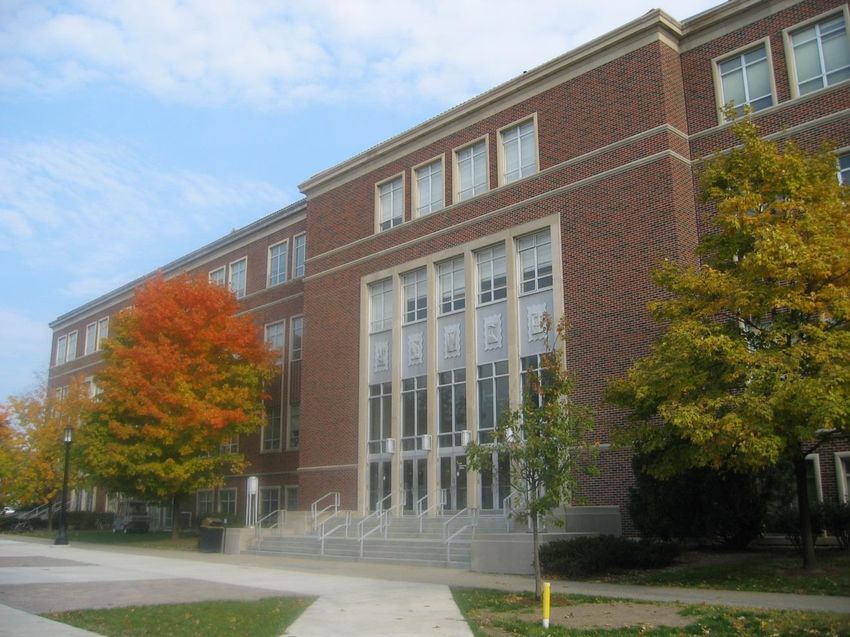
Civil Engineering
  Student Handbook
          for
Policies and Procedures

              2018
    Lyles School of Civil Engineering
   Delon and Elizabeth Hampton Hall
           Purdue University
       West Lafayette, IN 47907
                                        0
                                        Page
Preface - The Civil Engineering Student Handbook is provided to the undergraduate student body as a concise source for information about major policies and procedures associated with completing the degree program for the Bachelor of Science in Civil Engineering. This handbook is also intended to be a useful tool for the students in partnering with the CE faculty and the Undergraduate Office staff to complete a plan of study that will meet the program (curriculum) objectives which form the outcomes or behaviors the student will be able to successfully achieve upon completion of the program. The Civil Engineering Undergraduate Office is responsible for administering the degree program and is involved in all matters pertaining to undergraduate students. In that capacity we, the staff, are committed to assisting students and faculty with Purdue University, College of Engineering, and School of Civil Engineering policies and procedures. The information contained in this student handbook is subject to change as a result of procedures and policy rulings by the federal/state government, Purdue University Trustees, Purdue University Administration, College of Engineering Administration, or the School of Civil Engineering Faculty/Administration. Questions or comments about this document should be directed to: Marty Lah HAMP 1141 765-496-2379 mlah@purdue.edu Julie Jesiek HAMP 1141 765-494-2161 jjesiek@purdue.edu
"Academic Integrity: A Guide for Students"
Written by: Stephen Akers, Ph.D.
Executive Associate Dean of Students
1995, Revised 1999, 2003, 2009, 2013
http://www.purdue.edu/odos/osrr/academic-integrity
-Purdue University values intellectual integrity and the highest standards of academic conduct. To be prepared to
meet societal needs as leaders and role models, students must be educated in an ethical learning environment that
promotes a high standard of honor in scholastic work. Academic dishonesty undermines institutional integrity
and threatens the academic fabric of Purdue University. Dishonesty is not an acceptable avenue to success. It
diminishes the quality of a Purdue education, which is valued because of Purdue's high academic standards.
Fostering an appreciation for academic standards and values is a shared responsibility among students, faculty,
and staff. The information in this brochure is directed to students to define academic dishonesty and how to avoid
it.
DEFINITION OF ACADEMIC DISHONESTY
Purdue prohibits "dishonesty in connection with any University activity. Cheating, plagiarism, or knowingly
furnishing false information to the University are examples of dishonesty." [Section B-2-a, Code of Student
Conduct] Furthermore, the University Senate has stipulated that "the commitment of acts of cheating, lying, and
deceit in any of their diverse forms (such as the use of substitutes for taking examinations, the use of illegal cribs,
plagiarism, and copying during examinations) is dishonest and must not be tolerated. Moreover, knowingly to aid
and abet, directly or indirectly, other parties in committing dishonest acts is in itself dishonest." [University
Senate Document 72-18, December 15, 1972]
More specifically, the following are a few examples of academic dishonesty which have been discovered at
Purdue University.
substituting on an exam for another student
substituting in a course for another student
paying someone else to write a paper and submitting it as one's own work
giving or receiving answers by use of signals, cell phones or any other method during an
exam
copying with or without the other person's knowledge during an exam
doing class assignments for someone else
plagiarizing published material, class assignments, or lab reports
turning in a paper that has been purchased from a commercial research firm or obtained from
the internet
padding items of a bibliography
obtaining an unauthorized copy of a test in advance of its scheduled administration
ii using unauthorized notes during an exam
collaborating with other students on assignments when it is not allowed
obtaining a test from the exam site, completing and submitting it later
altering answers on a scored test and submitting it for a regrade
accessing and altering grade records
stealing class assignments from other students and submitting them as one's own
fabricating data
destroying or stealing the work of other students
falsifying an attendance record
Plagiarism is a special kind of academic dishonesty in which one person steals another person's ideas or words
and falsely presents them as the plagiarist's own product. This is most likely to occur in the following ways:
using the exact language of someone else without the use of quotation marks and without
giving proper credit to the author
presenting the sequence of ideas or arranging the material of someone else even though such
is expressed in one's own words, without giving appropriate acknowledgment
submitting a document written by someone else but representing it as one's own
BASIC TIPS ON AVOIDING CLAIMS OF DISHONESTY
Careful attention to your own academic duties is the best way to avoid allegations of academic dishonesty. If you
are asked to do something that you feel is wrong or unethical, it probably is. Aiding someone in committing an
academically dishonest act is just as serious as receiving the aid. Review course syllabi and make sure you
understand your instructors' expectations and responses regarding academic dishonesty. The following tips may
help you avoid problems:
Do not look around, particularly in the direction of other students' papers, during an exam
since it may appear you are trying to copy from others.
When taking an exam, shield your answer sheet. If you feel someone is trying to copy from
you, ask the proctor if you may move. This will alert the proctor to a potential problem and
help remove suspicion from you as aiding the other student if a claim of cheating arises.
If you are allowed to take materials into a testing site, make sure no notes or materials are
exposed or accessible that could cause one to believe you are using unauthorized aids (cribs).
Should there be any doubt, clarify with your instructor how much collaboration, if any, is
permitted or expected when working on projects or assignments with other students.
Know that it is risky to electronically copy or transmit a computer program or file to other
students. You could be implicated in a cheating incident if others alter that program and
submit it as their own work.
iii Protect your computer log-in identifications and passwords. Other students could use them to
access your work and subsequently implicate you in a cheating case.
Since it is impossible to write everything with complete originality, use quotation marks,
footnotes, and parenthetical textual notes to acknowledge other people's words or ideas
employed in your paper. Check with you instructor for proper techniques for citations and
attribution if you have any doubts.
Do not include sources in a bibliography or reference list if you have not used the sources in
the preparation of your paper. To list unused sources is called padding the bibliography.
Do not acquire previous papers, lab reports, or assignments used in a course with the intention
of copying parts or all of the material. Consult with your instructor on how such materials
may be used as general guides.
Keep rough drafts and copies of papers submitted in courses since other students may get
access to your work and attempt to claim it as their own.
Do not leave copies of assignments in computer labs.
Do not share your current or former assignments, projects, papers, etc. with other students to
use as guides for their work. Such a practice could lead to claims of collaboration if part or all
of your work is lifted by another student. Sometimes friendly assistance may escalate into
claims of blatant dishonesty.
Check with your instructor before turning in a paper or project you submitted in another
course.
Do not give your homework papers, projects, or other assignments to other students to submit
for you. They may use parts of your work.
When completing take-home exams, do not collaborate with other persons unless approved by
the instructor.
Keep your student identification card in your possession or secured. Never loan your
identification to anyone.
Do not make any marks on a graded exam if there is any chance you may submit it for a
regrade. Make all notations on a separate paper.
WHAT TO DO IF YOU SUSPECT OR BECOME AWARE OF CHEATING
Students who cheat gain an unfair advantage over honest students. Although reporting suspected or observed
cheating may seem difficult, failure to do so hurts you as well as Purdue. Observations or knowledge of
academic dishonesty should be reported immediately to course instructors. Even if your observations are reported
anonymously, such information may encourage instructors to do further investigation, detect patterns of cheating
or impose effective preventive measures. If you are uncomfortable speaking directly with an instructor, you are
urged to consult with staff in the Office of the Dean of Students who will advise and assist you in addressing the
problem.
CONSEQUENCES FOR ACADEMIC DISHONESTY
Before any formal action is taken against a student who is suspected of committing academic dishonesty, the
instructor is encouraged to meet with the student to discuss the facts surrounding the suspicions. If the instructor
concludes that the student is guilty, the matter may be resolved with the student through punitive grading.
ivExamples of punitive grading are giving a lower or failing grade on the assignment, having the student repeat the
assignment and perhaps some additional assignment, or assessing a lower or failing grade for the course. The
grade appeals system offers recourse to a student whose grade has been reduced unfairly for alleged academic
dishonesty.
Additionally, instructors are encouraged to refer cases to the Office of the Dean of Students for adjudication
and/or appropriate record keeping. The Office of the Dean of Students will follow established procedures as
provided in the Student Code of Conduct. If found responsible, possible sanctions include a warning, probation,
probated suspension, suspension, or expulsion.
Feel free to make a print of this brochure for yourself. Copies of this brochure are available through the Office of
Student Rights and Responsibilities at no cost, (765) 494-1250.
Published by the Office of the Dean of Students
in cooperation with Purdue Student Government
Schleman Hall of Student Services, Room 207
475 Stadium Mall Drive
West Lafayette, IN 47907-2050
Telephone: (765) 494-1747
http://www.purdue.edu/odos/osrr/academic-integrity/
vTable of Contents
Administrative Staff .......................................................................................... 1
Chapter 1 ~ Advising Policies and Procedures ........................................ 2
1.1 Advisement Procedures for First Year Engineering Students Entering CE ............. 2
1.2 Courses for CE students in the First Year Engineering Program ................................ 2
1.3 Plan of Study Template .............................................................................................................. 3
1.4 General Education Requirements .......................................................................................... 4
1.5 Technical Elective Requirements for CE Students and................................................. 5
Technical Elective Policies for non-Civil Engineering Courses ................................... 6
1.6 Core Course Grade Policy ......................................................................................................... 7
1.7 Credit by Examination............................................................................................................. 10
1.8 Advising ........................................................................................................................................ 11
Chapter 2 ~ Curriculum Enrichment ........................................................ 14
2.1 Minors ........................................................................................................................................... 14
2.2 Honors........................................................................................................................................... 14
2.3 Professional Practice Education Program ....................................................................... 15
2.4 EPICS & GEP................................................................................................................................. 15
2.5 Undergraduate Research Opportunities .......................................................................... 15
2.6 Summer Undergraduate Research Fellowship .............................................................. 16
2.7 Study Abroad ………………………………………………………………………………………………... 17
Chapter 3 ~ Graduation Policies and Procedures ................................ 19
3.1 Candidate Status........................................................................................................................ 19
3.2 Graduation Requirements ..................................................................................................... 19
3.3 Commencement ......................................................................................................................... 20
3.4 Graduate Study .......................................................................................................................... 20
3.5 Graduate Credit Earned while an Undergraduate ........................................................ 20
3.6 Admission to Graduate School while an Undergraduate ............................................ 21
Chapter 4 ~ Additional Information ......................................................... 21
4.1 Scholarships................................................................................................................................ 21
4.2 ECN Account Information ....................................................................................................... 22
4.3 ITaP (Information Technology at Purdue) ...................................................................... 22
4.4 Fundamentals of Engineering (FE) / Fundamentals of Surveying (FS) Exam ..... 22
vi4.5 Student Organizations............................................................................................................. 24
4.6 Career Center, Co-ops, Internships and Industry Opportunities …………………….26
4.7 CODO Process ……………………………………………………………………………………………….. 26
4.8 Transfer of Credits between Curricula …………………………………………………………. 30
viiAdministrative Staff
Department Head
R.S. Govindaraju 494-2256 1141B HAMP govind@purdue.edu
Associate Head
Garrett Jeong 494-2252 4131 HAMP gjeong@purdue.edu
Main Office Staff
Carmen Turner 494-2256 1141A HAMP turne148@purdue.edu
Deb Burrow 494-2166 1141 HAMP dburrow@purdue.edu
Undergraduate Office Staff
Marty Lah 496-2379 1141F HAMP mlah@purdue.edu
Julie Jesiek 494-2161 1147 HAMP jjesiek@purdue.edu
Co-Op and Industrial Relations
Kathy Heath 494-2157 1141E HAMP heathk@purdue.edu
Marketing and Communication
Drew Stone 494-7089 1141H HAMP stone91@purdue.edu
1
PageChapter 1 ~ Advising Policies and Procedures
1.1 Advisement Procedures for First Year Engineering Students Entering CE
First Year Engineering students, who have chosen CE as their professional school and will be
advancing to CE in the subsequent semester, are invited to an orientation session. During the
session, incoming sophomores learn about the CE program and are advised for the following
semester. The registration PIN is also distributed. Sessions are typically held in April for students
entering CE in the fall and in November for students entering CE in the spring. A student is not
officially in CE until all FYE requirements are met.
Orientation session invitations are sent by email prior to the student’s first semester in CE.
1.2 Courses for CE students in the First Year Engineering Program
First Year
First Semester Second Semester
(4) MA 16500 (Calculus I)1 (4) MA 16600(Calculus II)1
(4) CHM 11500(General Chemistry I) (3 or 4) Science Selective 3
(2) ENGR 13100(Transform Ideas to Innov I) (4) PHYS 17200 (Modern Physics)
(3) General Education Elective5 (3) COM 11400 (Speech Communication)4
(3 or 4) ENGL 10600 or 10800 (English (2) ENGR 13200 (Transform Ideas to Innov II)
Composition)2
(16 or 17) Total Credits (16 or 17) Total Credits
Students must fulfill the requirements of the First Year Engineering Program as part of the process
of fulfilling BSCE degree requirements. It is expected that students will have completed 33 credits in
the First Year Engineering Program. Students who do not have the appropriate number of credits
may need to take additional courses.
1) MA 16100 and MA 16200 are common substitutions for MA 16500 and MA 16600.
2) ENGL 10800 can be used to meet the ENGL requirement
3) Options for the Science Selective
General Chemistry II options: CHM 11600, CHM 12400 or CHM 13600
Computer Programming: CS 15900
It is recommended that students intending to study civil engineering select CHM 11600. CS 15900 is
accepted as the science selective course but is not preferred. CHM 11600 maybe required as a
prerequisite for some elective courses. BIOL 11000 can be used for the Basic Science Elective in the 6 th
semester.
4) COM 11400 is required for CE students. It is recommended that CE students take the course while they are in the
First Year Engineering program.
21.3 Plan of Study Template (for students entering CE starting Fall 2014 and later)
The School of Civil Engineering offers a Bachelor of Science in Civil Engineering (BSCE); all students
receive the same degree regardless of their chosen area of emphasis in their plan of study. Students
can explore the nine areas of study within Civil Engineering along with selecting the courses to
design their own plan of study.
Credit Hours Required for Graduation: 132
Sophomore Year
Third Semester Fourth Semester
(4) CE 20300 (Principles and Practices of (3) CE 23100 (Engineering Materials I)
Geomatics)
(2) CE 29202 (Contemporary Issues in CE) (4) CE 27000 (Introductory Structural
Mechanics)
(3) CE 29700 (Basic Mechanics I: Statics) (3) CE 29800 (Basic Mechanics II: Dynamics)
(4) MA 26100 (Multivariate Calculus) (3) MA 26500 (Linear Algebra)
(3) PHYS 24100 (Electricity and Optics) (3) General Education elective1
(2) CGT 16400 (Computer Graphics)
(18) Total Semester Credits (16) Total Semester Credits
Junior Year
Fifth Semester Sixth Semester
(3) CE 33100 (Engineering Materials II) (3) STAT 51100 (Statistical Methods)
(3) CE 34000 (Hydraulics) (3) CE 39800 (Introduction to Civil Engineering
System Design)
(1) CE 34300 (Elementary Hydraulics (3) Science Selective
Laboratory) (BIOL or EAPS)
(3) MA 26600 (Ordinary Differential Equations) (2) CE 39201 (Technical Communication in CE)
(3) General Education elective1 (6) Technical Electives2
(3) Technical Elective2
(16) Total Semester Credits (17) Total Semester Credits
Senior Year
Seventh Semester Eighth Semester
(3) ME 20000 (Thermodynamics I) (3) CE 49800 (Civil Engineering Design Project)
(3) General Education electives1 (3) General Education elective1
(12) Technical Electives2 (9) Technical Electives2
(18) Total Semester Credits (15) Total Semester Credits
1) See Section 2.3 for the General Electives guidelines.
2) Technical electives must be chosen in consultation with an advisor from the School of Civil Engineering. See section 2.4
for the guidelines for choosing technical electives.
31.4 General Education Requirements for CE Students
CE students must complete COM 114 and receive a grade of C- or better. It is recommended that CE students
take this class while they are in the First Year Engineering program to fulfill the FYE general education
elective requirement.
CE students must complete CE 392 and receive a grade of C- or better. It is recommended that CE students
take this class in their Junior year.
CE students must complete a minimum of 15 credit hours of General Education courses in addition to COM
114 and CE392. If a course other than COM 114 is used to fulfill the FYE general education elective
requirement, those credit hours may be included in the required 15 credit hour minimum.
The 15 credit hours of additional General Education courses must be chosen subject to the
requirements listed below. COM 114 cannot be used to fulfill any of these requirements:
A minimum of 6 credit hours must be taken in subjects designated as Social Sciences; one course must be
taken from the Foundational Behavioral/Social Science approved list
http://www.purdue.edu/provost/initiatives/curriculum/course.html
A minimum of 6 credit hours must be taken in subjects designated as Humanities; one course must be taken
from the Foundational Humanities approved list http://www.purdue.edu/provost/initiatives/curriculum/course.html
A minimum of 6 credit hours must be taken from courses: at the 300-level or above OR having a prerequisite
(Non-Introductory) in the same subject*
If a student desires to take classes in a foreign language subject, credit is not allowed for language courses in
the student’s native tongue(s), but literature, culture, drama, and related courses are allowed.
All courses must be taken for a grade. However, credit by examination or granted credit, conditioned solely
at the discretion of the awarding department, can be used to satisfy any part of these requirements.
No course may be used more than once even if the offering department allows it to be repeated for credit.
Other Recommendations
No more than 6 credits of General Education courses should be taken in any one semester.
It is highly recommended that ECON 251 be taken.
All courses are subject to approval when filing the Plan of Study. Preapproved courses are
listed on the Plan of Study Web Tool at http://newton.ecn.purdue.edu/~ce/POS/. This list is reviewed periodically.
To ensure a course will count toward requirements, submit a Plan of Study for review to the CE Main Office with all
necessary signatures.
Courses used to satisfy the General Education requirements must be drawn from the
following list of subjects. Most courses offered in these subjects are allowable, provided that a course is
open to CE students and a course is not focused primarily on professional training, natural science or mathematics.
Social Sciences
AGEC, ANTH, ASL, CDFS/HDFS, COM, ECON, POL, PSY, SLHS, SOC
Humanities
AAS, AD, AMST, ARAB, ASAM, CHNS, CLCS, CMPL, DANC, ENGL, FLL/LC, FR, GER, GREK, HEBR, HIST,
IDIS, ITAL, JWST, JPNS, LALS, LATN, LING, MARS, MUS, PHIL, PTGS, REL, RUSS, SPAN, THTR, WGSS
Students may use one course to meet more than one of the above requirements.
*EXAMPLE: SPAN 10200 is a humanities elective that is non-introductory (has a prerequisite of SPAN 10100) and also meets the
foundational humanities approved list.
41.5 Technical Elective Requirements for CE Students
1. Total credit requirement: CE students must complete thirty (30) credits of technical electives. The
technical elective plan of study must be consistent with career objectives. For instance, one can
elect to emphasize a particular area of civil engineering by taking several courses in that area, or
one can choose a general program in civil engineering by taking courses in several emphasis
areas.
2. Minimum CE credit requirement and associated rules: A minimum of twenty-one (21) credits of
technical electives must come from CE-designated courses. The remaining nine (9) credit hours
required may come from a combination of courses that are not CE-designated but have been
approved for technical elective credit and from additional CE-designated courses. See below for
details regarding approved technical electives that are not CE-designated courses. All technical
electives must be selected in support of the career objectives of the student and be approved by
the advisor.
3. Breadth requirement: At least four (4) courses must be completed from the following list,
guaranteeing sufficient breadth of study in at least four of the emphasis areas:
ARCH: CE 31100 CON: CE 22200 ENV: CE 35000 GEM: CE 40800
GEO: CE 38300 HYD: CE 44000 STR: CE 37100 TRA: CE 36100
4. Design content requirement: At least three (3) courses must be completed from the following list,
guaranteeing sufficient design content:
ARCH: CE 41300, 41400 CON: CE 52200, 52300, 52700
ENV: CE 35300, 45600, 45700 GEM: CE 30300, 30600
GEO: CE 48300, 58300, 58400, 58500, 54900 HYD: CE 44000, 54100, 54300, 54600
MAT: CE 53000 STR: CE 47000, 47300, 47900
TRA: CE 36100, 46100, 56200, 56300, 56500, 56700
5. Sequence requirement: A sequence is defined as a minimum of two (2) technical elective courses
from a given CE emphasis area. Each student must complete at least two (2) such sequences of
technical electives. Note that completing four courses from a single CE area of emphasis does
not meet this requirement; the emphasis areas must be distinct. Certain non-CE designated
courses may be used in satisfying this requirement; see details below in section titled,
“Technical Elective Policies for non-Civil Engineering Courses”, item 6.
6. All technical elective courses must be taken for a grade.
5Technical Elective Policies for non-Civil Engineering Courses
Students in the School of Civil Engineering are encouraged to choose technical electives that are consistent with
their career objectives. In many cases, this can involve courses that are offered outside of the School. The
purpose of the policies below is to provide general criteria for appropriate technical elective courses offered
by other departments.
1. The following categories of courses offered outside of Civil Engineering are generally approved as technical
electives, subject to certain restrictions described later:
300-, 400-, or 500-level courses offered by any school, department, or division in the College of
Engineering or the College of Science at Purdue University.
All Engineering Projects in Community Service (EPCS) courses, including those at the 100- and 200-
level, up to a maximum of three (3) credits.
All 300- and 400-level Aerospace Studies (AFT), Naval Science (NS), and Military Science and
Leadership (MSL) courses, up to a maximum of six (6) credits, applicable only to students who have
completed four semesters in a Purdue ROTC program.
Management (MGMT) courses at a level equal to or higher than MGMT 20000.
Entrepreneurship (ENTR) courses at a level equal to or higher than ENTR 20000.
The following 200-level courses: CEM 20100, ECE 20100, CHM 25500, CHM 25600, CHM 25700, CHM
26100, CHM 26105, CHM 26200, CHM 26205, CHM 26505, CHM 26605.
2. The following courses are considered to be substantially equivalent to courses required for the BSCE
degree and thus are not eligible to be considered as technical electives:
Aeronautical & Astronautical Engineering: AAE 33300 - Fluid Mechanics, AAE 33301 - Fluid
Mechanics Laboratory.
Electrical & Computer Engineering: ECE 30200 - Probabilistic Methods In Electrical And Computer
Engineering
Industrial Engineering: IE 33000 - Probability and Statistics In Engineering II.
Management: MGMT 30500 - Business Statistics.
Mathematics: MA 30300 - Differential Equations and Partial Differential Equations for Engineering
and the Sciences, MA 35100 - Elementary Linear Algebra
Mechanical Engineering: ME 30900 - Fluid Mechanics, ME 32300 - Mechanics Of Materials
Nuclear Engineering: NUCL 32000 - Introduction To Materials For Nuclear Applications
Physics: PHYS 31000 - Intermediate Mechanics, PHYS 50300 - Fundamental Concepts Of Physics,
PHYS 50400 - Principles Of Physics I, PHYS 50500 - Principles Of Physics II.
Statistics: STAT 30100 - Elementary Statistical Methods, STAT 35000 - Introduction To Statistics,
STAT 50100 - Experimental Statistics I, STAT 50200 - Experimental Statistics II, STAT 50300 -
Statistical Methods For Biology
3. All courses outside of Civil Engineering having the Coop or Internship course attribute or associated with
cooperative education, internships, industrial practice, etc. are not eligible to be considered as technical
electives.
4. The following variable title or individual study courses do not have general approval to be considered as
technical electives; however, a student may send a written request to the CE Undergraduate Office to
initiate the process to have a specific course from this list considered for technical elective credit:
Aeronautical & Astronautical Engineering: AAE 49000, AAE 59000
Agricultural & Biological Engineering: ABE 49500, ABE 49800, ABE 49900, ABE 59000, ABE 59100,
ABE 59200
Biomedical Engineering: BME 39500, BME 49500, BME 49800, BME 59500, BME 59600
6 Biological Sciences: BIOL 39500, BIOL 39800, BIOL 49400, BIOL 49500, BIOL 49600, BIOL 49700,
BIOL 49800, BIOL 49900, BIOL 50000, BIOL 54200, BIOL 59500
Chemistry: CHM 49000, CHM 49900, CHM 50200, CHM 59900
Chemical Engineering: CHE 41100, CHE 41200, CHE 49700, CHE 49800, CHE 49900, CHE 59700
Computer Science: CS 39000, CS 49000, CS 49700, CS 59000, CS 59100
Construction Engineering & Management: CEM 49700
Earth & Atmospheric Science: EAS 39100, EAS 49400, EAS 49700, EAS 55000, EAS 59100
Electrical & Computer Engineering: ECE 49500, ECE 49600, ECE 59500
Engineering Education: ENE 49800, ENE 59000, ENE 59500
Entrepreneurship: ENTR 39000, ENTR 49000
Environmental & Ecological Engineering: EEE 49500
Global Engineering Program: GEP 30000, GEP 40000
Industrial Engineering: IE 49000, IE 49900, IE 59000, IE 59500
Interdisciplinary Engineering: IDE 49500
Management: MGMT 29000, MGMT 39000, MGMT 49000, MGMT 59000
Materials Engineering: MSE 49000, MSE 49700, MSE 49900, MSE 59500, MSE 59700
Mathematics: MA 39000, MA 49000, MA 59800
Mechanical Engineering: ME 49700, ME 49800, ME 49900, ME 59500, ME 59700
Nuclear Engineering: NUCL 49700, NUCL 49800, NUCL 59700
Physics: PHYS 47000, PHYS 49000, PHYS 50700, PHYS 57000, PHYS 59000, PHYS 59300, PHYS
59500
Science: SCI 49000
Statistics: STAT 39000, STAT 49000, STAT 51500, STAT 59700, STAT 59800
5. Any course not included in the categories described in item #1 above does not have general approval to be
considered as a technical elective; however, a student may send a written request to the CE Undergraduate Office
to initiate the process to have a specific course considered for technical elective credit.
6. CEM, LS and EEE courses may be used to satisfy the sequence requirement for technical electives in the areas of
Construction Engineering, Geomatics Engineering, and Environmental Engineering, respectively. No other non-
CE courses may be used to satisfy the sequence requirement.
1.6 Core Course Grade Policy
The policy can be summarized as follows:
A student must earn a grade of C- or better in all core courses.
A student must earn a grade of C- or better in a core course in order to use the course as a
prerequisite.
A student shall be dismissed from the School of Civil Engineering after three attempts to
complete a core course where each attempt resulted in a grade of D+, D, D-, E, F, or WF. A
grade of W does not count toward the three attempts. Re-entry will be solely at the
discretion of the Civil Engineering Undergraduate Committee and will be reviewed on a
case-by-case basis. The Undergraduate Committee has the prerogative to set the
requirements, if any, for re-entry.
7What is a core course?
The current core courses in Civil Engineering are as follows:
CE 20300 CE 23100 CE 27000 CE 29202 CE 39201
CE 29700 CE 29800 CE 33100 CE 34000
CE 34300 CE 39800 CE 49800 Basic Science elective
CGT 16400 COM 11400 MA 26100 MA 26500
MA 26600 ME 20000 PHYS 24100 STAT 51100
Note that this list of courses may change as curriculum modifications occur.
Does this policy apply to me?
The policy applies to students who began their first semester in the School of Civil Engineering in
the fall 2008 term. If you are not sure as to when you entered the program, consider the following:
If you satisfied all of the requirements of the First Year Engineering program in the spring
2008 semester or later, you are considered to have entered Civil Engineering in the fall
2008.
If you transferred (including regional campus transfers) or CODOed (change of degree
objective) in the fall of 2008 or later, this policy applies to you.
If you were dropped from Purdue and readmitted, your readmission semester determines
whether or not this policy applies to you. Students readmitted for the fall 2008 semester or
later are subject to this policy.
What about courses I took before entering Civil Engineering?
Since it is not uncommon for students to take Civil Engineering core courses before entering the
BSCE degree program, there are questions as to whether unsuccessful attempts prior to entry will
"count" towards the three attempts policy. To clarify this situation, the following guidelines have
been established:
Any unsuccessful attempt of a Civil Engineering core course shall count towards the three
attempts policy regardless of when the course was taken.
Any unsuccessful attempt of a course listed as officially equivalent to a Civil Engineering
core course by the Registrar's Office shall count towards the three attempts policy if the
attempt occurs after the student has entered the School of Civil Engineering. The list of
officially equivalent courses may be found at:
http://www.purdue.edu/registrar/Forms/Equiv.pdf
8 If a course is usable towards meeting a Civil Engineering core course requirement but is not
considered to be officially equivalent to the core course, no unsuccessful attempts of the
course shall count towards the three attempts policy.
How about transfer courses?
In order to receive credit for a transfer course, you must have received a grade of C- or better in
that course. Therefore, any transfer credit that you receive for a core course automatically counts as
a successful attempt of a core course.
Exception: Purdue transfers ALL grades from regional campuses. If you receive a grade lower than
a C- in a regional campus course that is officially equivalent to one of our core courses, that attempt
will count against you.
What are the impacts of this policy?
The most obvious impact of this policy is that you can be dismissed from the School of Civil
Engineering if you are not successful in getting a grade of C- or better in a core course in three
attempts. Students who have had two unsuccessful attempts of a core course shall be informed in a
timely fashion after grades have been posted for a given semester that they are in danger of being
dismissed. Students entering the BSCE degree program shall be informed about any core courses
that have not been successfully completed and about the number of attempts they may make to
obtain a successful grade in such courses before being subject to the three attempts policy.
On occasion, students may already be in violation of the three attempts policy for a given core
course prior to entry into the program; for example, a student requesting readmission may have
already failed a core course three times. The CE Undergraduate Office reserves the right to deny
entry to such students; such decisions are made at the discretion of the CE Undergraduate Office in
consultation with the CE Undergraduate Committee.
This policy will also affect the time to degree completion for those students who do not obtain
appropriate grades in core courses. It is the intention of the faculty to have students repeat core
courses for which they have not obtained an appropriate grade as soon as possible; this is the basis
for the prerequisite policy. Students are discouraged from trying to "push ahead" and take other
courses for which the unsuccessfully attempted core course is a prerequisite, as this frequently
leads to continued poor performance in the higher-level courses.
Finally, be aware that the prerequisite policy may require a student to change her/his course
registration after semester grades come out, as the myPurdue system always assumes appropriate
performance in all currently enrolled classes when signing up for next semester's classes.
91.7 Credit by Examination
The School of Civil Engineering does not allow credit by examination for any civil engineering courses.
The establishment of credit by examination is encouraged in order to expedite the education of
qualified students. Toward this end, each instructional department shall determine which of its
courses are available for credit by examination and shall establish procedures to determine the
eligibility of candidates, to administer, and to grade such examinations. The examinations shall be
as comprehensive as those given in the course and shall be graded as satisfactory (performance
comparable to that expected of students who receive A, B, or C in the course) or unsatisfactory. The
Registrar shall establish forms and procedures to assure proper distribution of results, and for
satisfactory performance, shall record credit for the course on the student’s record. The testing
coordinator in the Office of the Dean of Students shall schedule and administer written
examinations if requested by the instructional department.
The registrar shall collect from each department a list of courses that are available for credit by
examination. The registrar shall also make this information available to current students,
prospective students, and academic advisors. In addition, each department shall make available
information about courses appropriate for credit by examination and shall identify faculty
members responsible for administering these examinations.
A student eligible to request examination for credit in a course shall be a newly admitted student or
a currently enrolled student who has not received a grade or directed grade in the course, other
than a grade of W.
Requests to take an examination for credit normally shall originate with the eligible student who
must obtain the consent of his/her advisor and the approval of the instructional department;
however, newly admitted students whose previous records indicate high degrees of competence in
particular areas may be invited and authorized to take specific examinations at the discretion of the
instructional department and the academic advisor. Any student receiving such invitation or
approval must meet the examination schedule of the instructional department. In consenting to
requests from currently enrolled students, the advisor and the instructional department shall be
guided by their assessment of the student’s need and ability as demonstrated by performance in
conventional coursework at Purdue.
Part 2 – Academic Regulations and Procedures
(University Senate Document 71-10, January 17, 1972
Section II.F – Academic Program
101.8 Advising
Advising is a collaborative process whereby students and their faculty/staff advisor are
partners in meeting their educational goals. A very important aspect of advising is developing
a plan of study (POS).
In Civil Engineering the term “plan of study” (POS) references a detailed list of general
education electives and technical electives that the student plans to use to meet graduation
requirements. This document is kept on file and referenced by the UG Office when completing a
student’s degree audit for graduation. The POS is typically developed with the assistance of a
faculty advisor. Students who elected not to have a faculty advisor may seek assistance from the
UG office staff in the process of POS development.
The plan of study must:
List all general education electives the student plans to use to meet graduation
requirements (see section 2.3)
List all technical electives the student plans to use to meet graduation requirements
(see section 2.4)
Be signed by both the student and the faculty advisor – if one has been chosen
Be submitted to the UG Office for approval before the end of a student’s 5th semester
The student is ultimately responsible for meeting degree requirements.
Expected Outcomes for the Advising Experience:
Demonstrate an understanding of the CE curriculum including general and technical
elective requirements
Develop a plan of study for achieving goals and select courses each semester to fulfill those
goals
Graduate in a timely manner based on the individual POS
Utilize University resources and services in achieving academic, personal and career goals
In order to measure and document that you have achieved these learning outcomes, you and the
advisor will develop an on-going file of advising resources and records. This file should consist of,
but is not limited to, your basic contact information, plan of study, and copies of each semester’s
form 23A.
11Expectations of Students:
Schedule advising appointments in advance
Be courteous and cancel or reschedule if necessary
Prepare for advising appointments by developing a tentative schedule of classes for the next
term
Check to make sure all prerequisites have been completed for the courses planned for the
next term
Enroll in classes agreed upon by the student and the advisor
Use the recourses provided on the CE website when preparing to preregister for the
subsequent semester
Expectations of Advisors:
Be accessible for meetings during office hours by appointment, telephone, or email
Maintain confidentiality
Monitor and accurately document progress toward meeting educational goals
Understand and effectively communicate curriculum requirements, academic policies, and
procedures
Assist with the registration process
Provide information on resources and make appropriate referrals
Assist in working with and developing relationships with faculty and instructors
Semester Advising Timeline:
Before the end of 4th week of the semester a general e-mail is sent by Undergraduate (UG) Office
to all undergraduate students to remind them of the deadlines and required steps for registration
and plan of study submission.
Failure to schedule a timely advising appointment could result in a student not being able to
register during their time ticket. See section 2.9.
Before the end of the 6th week of the semester students who have not yet completed CE 29201
or have not yet chosen a faculty advisor are encouraged to contact the UG office to make an
appointment with an UG office staff member for course advising for the subsequent semester.
Students who have successfully completed CE 29201 and are requesting a faculty advisor are
assigned to one at the time the Advisor Options Form is submitted. Those students will work with a
faculty advisor for course scheduling for the following semester.
12Before the end of the 8th week of the semester all students assigned to a faculty advisor are
encouraged to contact their advisor to arrange to meet to discuss plan of study development and
course scheduling for the subsequent semester.
Failure to schedule a timely advising appointment could result in a student not being able to
register during their time ticket. See section 2.9.
Advisor Options:
1) Undergraduate Staff Advisor
All students who enter the School of Civil Engineering will be assigned an Undergraduate
Office staff advisor. When a student has been assigned a faculty advisor, the UG staff
advisor will remain as a secondary advisor to the student during the student’s entire
academic career in the School of Civil Engineering. Students advised by the UG staff will
receive their registration PIN during their advising appointment.
2) Faculty Advisor
An Advisor Options Form must be submitted to the CE Undergraduate Office stating
your intention to request/deny this option by the end of your fourth (4th) semester.
If possible, students will be assigned an advisor in one of their areas of interest. Students’
requests for a particular advisor will be considered and accommodated when possible. Once
the faculty advisor is assigned, MyPurdue will list the faculty advisor as primary. He/she is
listed first. The assigned UG staff advisor serves as a backup when the faculty advisor is not
available.
Individual faculty members who elect to delegate to the UG staff the responsibility to advise
students on semester course selection, who already have an approved POS, are required to
inform both the student and the UG office via e-mail before the end of the 6th week of the
semester.
The faculty advisor will continue to be responsible for overseeing revisions of the plan of
study, as well as for providing general career guidance.
Declining to have an Advisor
Students may choose to decline either faculty or staff advisement. Those students follow the
registration guidelines below:
Develop a plan of study that meets graduation requirements.
Schedule an appointment with their assigned undergraduate staff advisor to have
the plan reviewed.
Submit the plan for approval.
Complete a Form 23A each semester. Registration PINs will NOT be distributed to
students choosing this option without a completed Form 23A.
133) Mentor
Students who indicate interest in having a faculty mentor to consult for academic and
general career guidance can be assigned to one at the time they turn in the Advisors Option
Form. They have the option to contact him/her on an as needed basis.
Chapter 2 ~ Curriculum Enrichment
2.1 Minors
There is a list of CE approved minors can be obtained from the undergraduate advisors.
It is the student’s responsibility to communicate with the department of the intended minor about
fulfilling those requirements.
A description of course requirements for the minor must be filed with the Undergraduate Office
in Civil Engineering before the beginning of the student’s last semester
2.2 Honors
The Honors College is designed for those students who enjoy the intellectual challenge of honors
courses, the opportunity to interact closely with distinguished faculty, the advantage of
participating in cutting-edge research and the distinction of graduating with honors from a
university with an international reputation for excellence. An honors component is available in
each sub-discipline in the School of Civil Engineering: construction, environmental, geomatics,
geotechnical, hydraulics and hydrology, materials, structural and transportation. Up to 19 credit
hours can be taken in Civil Engineering to qualify as honors electives, such as:
Courses titles include the word “Honors”;
Courses taken with an Honors contract;
Graduate-level courses that are not required for the student’s major(s); and
Research courses (e.g., undergraduate research, SURF, directed study, independent research)
CE Honors Contract Course - Honors contracted courses supply the student with an enriched
experience in a CE course within the student's plan of study. These courses require a contract
between the professor and the student.
142.3 Professional Practice Education Program
The Professional Practice Education Program (formerly the Co-Op program) is a three or five-year
professional development experience designed to combine practical on-the-job experiences with the
classroom training of a four-year college curriculum. It helps students integrate theory and practice,
confirm career choices, investigate potential job opportunities, and become better graduates. At the
same time Co-ops can earn a substantial portion of their college expenses. The Professional Practice
Education Program is limited to current students who have completed 2-3 semesters of study and
have a GPA of 2.8.
For more information on the program visit: https://engineering.purdue.edu/ProPractice/.
2.4 EPICS and GEP
The following information can be found at the EPICS/GEP link in the Registration Tools section of the CE website.
Community service agencies face a future in which they must take advantage of technology to
improve, coordinate, account for, and deliver the services they provide. They need the help of
people with strong technical backgrounds. Undergraduate students face a future in which they
will need more than solid expertise in their discipline to succeed. They will be expected to work
with people of many different backgrounds to identify and achieve goals. They need educational
experiences that can help them broaden their skills.
The challenge is to bring these two groups together in a mutually beneficial way. In response to
this challenge, Purdue University created:
EPICS: Engineering Projects In Community Service Fall 1995 and
GEP: Global Engineering Program in Spring 2009.
The end result? Benefits to the students, to the community, and the world!
EPICS is a unique program in which teams of undergraduates are designing, building, and deploying
real systems to solve engineering-based problems for local community service and education
organizations. Academic Structure - Each team of 8 to 18 students includes freshmen,
sophomores, juniors, and seniors. Teams are advised by Purdue faculty, staff, and engineers from
local industry, along with graduate teaching assistants. Students earn 1 or 2 academic credits each
semester and may register for up to four years. Projects may last several years, so tasks of
significant size and impact can be tackled.
GEP - Global Engineering Program – has a similar academic structure as EPICS and serves the
students, staff and faculty of College of Engineering, offering comprehensive undergraduate and
graduate academic programs in education, research and learning with focus on diversity, experience,
reputation and effective solutions to the global engineering challenges of the 21st century and beyond.
Civil Engineering allows CE students to use up to six (6) credits of EPICS/GEP credits toward
meeting technical elective requirements.
152.5 Undergraduate Research Opportunities
Undergraduates have multiple options to become involved in research.
CE 499 allows a student to enroll in a research course for academic credit under the supervision of
a faculty member. See your advisor for more information.
Part-time employment as a research assistant is sometimes available through individual professors.
Students are encouraged to express their interests to faculty members with whom they would like
to work. Although a position or project may not be immediately available, something may develop
in the future.
2.6 Summer Undergraduate Research Fellowship
The following information can be found at the SURF link in the Registration Tools section of the CE website.
The SURF program provides students across all engineering, science and technology disciplines
with an intensive research experience, allowing them to work closely with graduate students and
professors in their respective schools.
The interdisciplinary aspect of the projects allows students to learn and work across other
disciplines while still applying the concepts and skills from their own programs. This setting
provides undergraduate students with an avenue to perform research in an academic environment
while exploring future graduate study options.
SURF Program Benefits
Paid, hands-on research under the guidance of a faculty member and a graduate student
Weekly seminars on research methodology, graduate school, and professional development
Student presentations on their research discoveries at the SURF Symposium.
Social Activities with other SURF students.
SURF Office
Purdue University
Neil Armstrong Hall of Engineering, Room 2001
Email: surf@purdue.edu
Phone: 765-496-2349
Office Hours: 8:30 a.m. - 12 noon; 1 - 4:30 p.m., Monday - Friday
162.7 Study Abroad
The following information can be found at the Study Abroad link in the Registration Tools section of the CE
website.
Getting Started
A. Stop by the GEP (Global Engineering Program) in HAMP room 1259. They will have
information about Civil Engineering Departmental Programs as well as other study abroad options
such as Purdue administered programs and exchange programs with partner universities.
B. Talk with you advisor about the GEP options and other possibilities they offered.
C. At the Study Abroad Office in YONG Hall room 105 you can find information about 300+
programs. Before you go, use their “Program Search” option on their web page
http://www.studyabroad.purdue.edu/
Step 1: Study Abroad Pre-planning Sheet
The pre-planning sheet is meant to encourage you to reflect on your personal circumstances, assess
your priorities, determine your academic and personal objectives, and identify your constraints so
you can consider your study abroad options more critically. In addition, a study abroad advisor can
more readily suggest suitable programs if you are able to discuss your reasons for and concerns
about studying abroad.
Step 2: Explore Your Options
Once you have completed your pre-planning worksheet, do a Program Search to investigate
possible options. Be aware of the differences (financial, academic and other) between the types of
programs offered– departmental, Purdue administered, or exchange. Alternatively, you may want
to schedule a meeting with a study abroad advisor by calling the Study Abroad Office at (765) 494 -
2383. Be ready to discuss your objectives, preferences, and factors that might hamper your plans.
NOTE: Applicants for Departmental programs do not need to meet with a study abroad
advisor. Proceed to the program's web page and continue the application process.
Step 3: Investigate your options more carefully.
At your meeting, the study abroad advisor likely will recommend a few programs. Now, it’s up to
you to investigate which of the programs will best meet your needs. For each program under
consideration, examine the academic system, level of academic and social support, accommodations
options, available extracurricular activities, and other factors that will affect your study abroad
experience. Make sure you also meet the program’s eligibility requirements.
Step 4: Select a first choice program and a serious second choice.
You can only apply to one program and name one alternate.
17 Step 5: Develop a plan of study
Students receive direct credits for courses taken overseas. These will be recorded on your Purdue
academic record and affect your GPA. To ensure you are applying to the program that will allow
you to graduate on time, developing a study plan as early as possible is crucial. Many programs also
request a list of courses at the time of application so you need to be ready with course choices by
the time you complete your host institution’s application form.
Step 6: Apply
Before applying to a program, make sure you have thoroughly investigated your options by
completing the steps outlined in the Getting Started section.
- To apply, go to the web flyer of the program you have selected. Only one application per
student per term will be considered.
- Select the “Click Here to Apply” link on the web flyer to access the online application.
NOTE:
Applying to an exchange, co-sponsored, or direct-enroll program for the summer, semester, or
academic year involves a 2-step process. First, you must apply and be approved to study
abroad. Only after you receive Purdue Study Abroad approval can you formally apply to your
overseas host institution. Applicants for departmental programs should meet with the Program
Leader (see program web page) before applying online.
After you submit the online application, the screen will take you to your “My Study Abroad” page
which will contain a checklist and instructions for each of the documents you need to submit in
support of your application. These include: a transcript, a personal statement, recommendations, a
photo, and proof that you have a passport or are applying for one.
When your application is complete, it will go through the Purdue review.
In a week or two after your application is reviewed, you will be notified whether or not you have
been accepted to the Purdue Study Abroad Program. Heed the instructions for the next steps you
need to take!
Study Abroad Deadlines
September 15:
Spring semester programs
February 1:
Summer internship programs (London & Sydney)
Summer CIC programs
Summer & fall programs at the American University of Cairo (AUC)
Academic year exchange programs in Japan
March 1:
All other summer programs
All other fall and academic year programs
18You can also read


