SCHOOL DISTRICT OF BLACK HAWK COURSE BOOK
←
→
Page content transcription
If your browser does not render page correctly, please read the page content below
SCHOOL DISTRICT OF BLACK HAWK
         COURSE BOOK

                                       2019-2020

The Black Hawk School District does not discriminate against pupils on the basis of sex, race, religion, national
    origin, ancestry, creed, pregnancy, marital or parental status, sexual orientation, or physical, mental,
 emotional, or learning disability or handicap in its educational programs or activities. Federal law prohibits
  discrimination in employment on the basis of age, race, color, national origin, sex, religion, or handicap.
Table of Contents
Nondiscrimination Policy (Sections 1-2)                                                     3
Grading Scale                                                                               3
Minimum Graduation Requirements for the Classes of 2019, 2020, 2021 & 2022                  4
Provisions for Individual Differences                                                       5
College Entrance Requirements                                                               5
What Should I do to get ready for College?                                                  6
College Admission Requirements                                                              7
UW System College Preparatory Course Requirements                                           8
Freshman Admission Guidelines                                                               8
Campus-Specific College Preparatory Course Requirements                                    9
Majors & Careers                                                                           11
Wisconsin Technical College System Application/Enrollment Timeline                         12
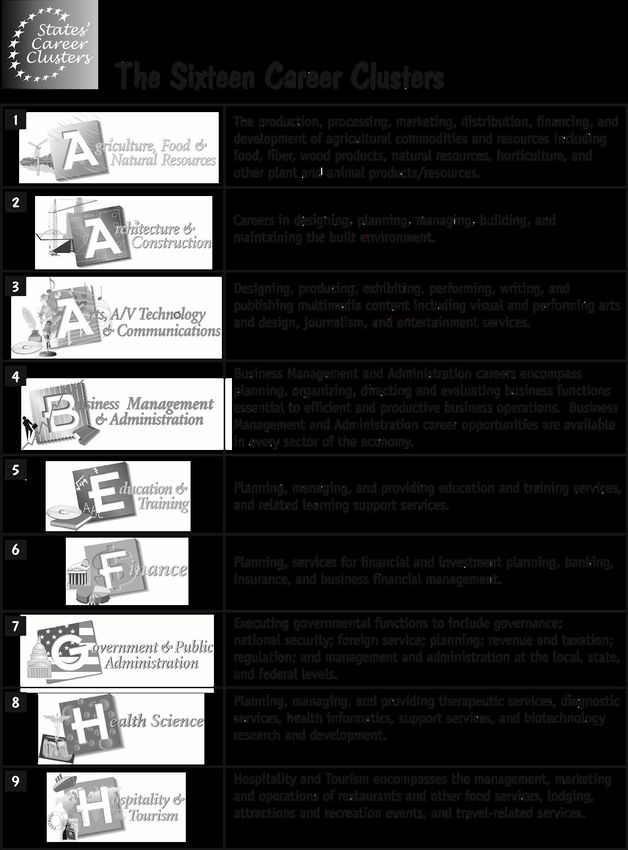
Career Clusters Interest Survey                                                            14
Four-Year Program Plan                                                                     20
List of Academic Departments and Course Descriptions                                       21
Agriculture                                                                                22
Art                                                                                        23
Business                                                                                   24
English                                                                                    25
Health Education                                                                           26
Physical Education                                                                         26
Mathematics                                                                                27
Music                                                                                      28
Science                                                                                    29
Social Studies                                                                             30
Technology Education                                                                       31
World Language                                                                             32
World of Work                                                                              33
Wisconsin’s Early College Credit Program                                                   34
Wisconsin Virtual School-Your Virtual Education Partner                                    35
COMPASS Learning                                                                           36
Courses Available through JAMS+B2 (Juda, Albany, Monticello & Brodhead School Districts)   36
Study Hall, Student Volunteers, Independent Course Option and Distance Learning            37

                                                                                            2
Nondiscrimination Policy (Sections 1-2)
  1. With respect to employment and personnel operations, the School District of Black Hawk does not discriminate
     on the basis of religion, race, color, national origin, ancestry, age, sex, physical appearance, marital status,
     handicap, disability, arrest or conviction record, political beliefs, sexual orientation, gender identity, gender
     expression, less than honorable discharge, source of income, association with a person with a disability or the
     fact that an individual is a student. Employees shall function in a harassment-free work atmosphere and enjoy
     working conditions free from physical, verbal, or psychological harassment.
         a. With respect to educational programs, no person shall be denied admission to any District school, or be
              denied participation in, be denied the benefits of, or be discriminated against in any curricular,
              extracurricular, pupil services, recreational or other program or activity because of the person's sex,
              race, color, national origin, ancestry, religion, creed, pregnancy, marital or parental status, sexual
              orientation, gender identity, gender expression, or disability including her or his physical, mental,
              emotional, or learning disability.
         b. This POLICY also prohibits discrimination under related federal statutes, including Title VI of the Civil
              Rights Act of 1964 (race and national origin), Title IX of the Education Amendments of 1972 (sex), and
              Section 504 of the Rehabilitation Act of 1973 (handicap).
  2. The POLICY statements in paragraphs 2.a. and 2.b. above include, but are not limited to, the following areas:
         a. Admission or enrollment into any school, class, courses, program or activity;
              (This does not prohibit placing a pupil in a school, class, program, or activity based on objective
              standards of individual performance or need.)
         b. Interactions in the classroom, counseling, as well as with other support staff;
         c. Standards and rules of behavior, including pupil harassment;
         d. Disciplinary actions, including suspensions and expulsions;
         e. Acceptance and administration of gifts, bequests, scholarships, other forms of recognition, such as aids,
              benefits, awards, or services to pupils from private agencies, organizations or persons;
         f. Instructional and library media materials selection policy;
         g. Methods, practices, materials, attitudes, and interpretations used for testing, assessment, evaluating,
              and counseling pupils;
              (This does not prohibit the use of special testing or counseling materials or techniques to meet the
              individual needs of pupils.)
         h. Facilities;
         i. Opportunity for participation in athletic programs or activities;
         j. School-sponsored food service programs;
         k. Graduation requirements.

                         Section 504/ Title II ADA, Title VII of the Civil Rights Act of 1964,
                                                 s. 111.36, s 118.13

                                                                                                                     3
Minimum Graduation Requirements for the Classes of 2019, 2020, 2021 & 2022
Black Hawk High School students will be required to successfully earn 24 credits to graduate. Students must pass Health
in order to qualify for graduation. The grades for all classes will be included in a student’s grade point average and rank
in class.
All high school students are expected to carry a full class load (six or seven credits/year). If a failing grade is received in a
course, NO credit is given and a failed required course is repeated. One half credit shall be awarded for each semester
for a course which is passed with a grade of D- or higher. All students will earn a Pass/Fail grade and half a credit per
year for the Intervention/Enrichment Period.
Course requirements include: (18 Credits)
Title No. of Credits/Years
English 4.0
Health (credit earned in 7th grade) 0.5
Mathematics 4.0
Physical Education 1.5
Science 4.0
Social Studies 3.5
Computer Enrichment 0.5
Required Course 9th Grade 10th Grade 11th Grade 12th Grade
AP English 12 or
English English 9 English 10 English 11 Oral and Written
Communications
Geometry, Advanced Advanced Algebra,
Geometry, Advanced
Algebra, Advanced Advanced Math,
Math Algebra or Geometry Algebra, or
Math, Transitional Calculus, Statistics or
Transitional Algebra
Algebra, or Statistics Personal Finance
Integrated Science, Integrated Science,
Physics, Consumer Physics, Consumer
Science Biology Chemistry Chemistry, Ecology, Chemistry, Ecology,
and/or Anatomy and and/or Anatomy and
Physiology Physiology
Civics (pass the
Wisconsin Mandated
Social Studies Geography World History US History Civics test) and one
semester of
Sociology
Physical Education Students must complete 1.5 credits of Physical Education for graduation.
Health Education One half (1/2) credit of Health is required for graduation. Credit earned in 7th grade Health.
Computer
Computer Education
Enrichment
Community Service All students are required to obtain 20 hours of community service for graduation
4
Grading Scale
                        93-100          =       A                       73-76           =       C
                        90-92           =       A-                      70-72           =       C-
                        87-89           =       B+                      67-69           =       D+
                        83-86           =       B                       63-66           =       D
                        80-82           =       B-                      60-62           =       D-
                        77-79           =       C+                      59 and below    F

Weighted Grades Policy (School Board Approved/Began 2018-2019 school year)
The purpose of weighted grades is to encourage students to enroll in our most rigorous academic courses in
order to maximize preparation for their post-secondary education.

Weighted Grade Qualification: In order to receive the additional weighted points, a student must complete
the course with a semester grade of a D or higher.

I. Definitions:
    ● AP Courses – Advanced Placement (AP) courses approved through the College Board.
    ● Dual Credit Courses – Courses offered for credit by an accredited post-secondary institution through an
        adjunct agreement with Black Hawk High School.
    ● Honors or Advanced Courses – Courses that have been designated as an advanced course of study due
        to specific pre-requisite course tracks.

II. Formula - The weight from a weighted course will be added to the GPA prior to averaging of the GPA at the
conclusion of each semester. We will continue to use a 4.0 GPA scale.

III. Classification of Courses Tier 1 (no weight) : All courses not specified in Tier 2 or Tier 3.

Tier 2 (0.5 weight per semester) Courses denoted as Advanced or Honors (H) 2-year Institution Dual Credit
Courses – all departments Current Tier 2 Qualified Courses: Advanced Math – Calculus - AP English 12

Tier 3 (1.0 weight per semester) AP CAPP 4-year Institution Dual Credit Courses or 2 year Institution transfer
guarantee Current Tier 3 Qualified Courses: JAM Courses: English 101 – English 104 – Physics – Pre-Calculus –
Statistics – Calculus, Southwest Technical CollEDGE Up, coursework in Gear Up , Lab Science, or Nursing.
Online or SRTNCY AP coursework

                                                                                                                 5
Provisions for Individual Differences
Black Hawk High School attempts to meet the individual needs of students by providing the following programs:
(1) Regular Programs: The majority of the students will be placed in regular classes which offer a sound, general
education for either entrance into college, technical school or into the world of work.
(2) Exceptional Educational Need Program: These programs are available to students who have a definable handicapping
condition, as defined by state law, and have a need for special education. The least restrictive environment is utilized in
student placement, allowing for regular class mainstreaming as much as possible. Currently, our E.E.N. programs include
Learning Disabled, Cognitive Disabled-Borderline, Speech Therapy, and Emotional Disturbance.
(3) Section 504 Plans: For students who have a physical or mental impairment which substantially limits one or more
major life activity (walking, seeing, hearing, breathing, learning, working, caring for oneself, and performing manual
tasks), a record of such impairment, is regarded as having such an impairment, Black Hawk Schools will provide
reasonable accommodations in order to ensure those students with a free and appropriate education.
(4) If you feel you would qualify for or need Exceptional Education Need Programming, Section 504 planning, Title IV or
ADA accommodations, contact Mr. Willy Chambers, School Superintendent and Special Education Director, at
chawil@blackhawk.k12.wi.us or 608-439-5371, ext. 108.
College Entrance Requirements
Entrance requirements vary somewhat among different colleges and universities. Colleges may change their entrance
requirements on a yearly basis. Students interested in attending a particular college should contact the guidance office
to obtain specific information. This should be done early in your high school career.
College Entrance Examinations – All four-year colleges in Wisconsin public and private require an entrance examination
(ACT or SAT). In February 2005, ACT began a writing assessment to the ACT test. This section is optional but
recommended by UW-Systems (NOTE: Some UW-Systems require the writing assessment, example UW-Madison). See
the counselor for information concerning the school or schools you are considering attending.
The Technical Colleges and their programs require a high school diploma, college application and they require a college
entrance test. The college entrance exams maybe one of the following: Compass, ACT, Asset, Accuplacer, TABE, or other
test as determined by the college. Students considering attending Technical Colleges should apply early in their senior
year to increase chances of being accepted. Some programs close early for example Nursing and other programs have
lengthy waiting lists.
Entrance requirements of other schools vary, depending on the type of school, but it can no longer be assumed that
merely graduating from high school guarantees automatic acceptance at Technical and/or trade schools. Many
specialized courses of study (practical nursing, engineering, technology, etc.) require a certain grade point average plus
basic courses in English, Math, Science and Social Studies. To be absolutely certain that you will qualify for the school
of your choice, see your counselor early in your high school career.
Colleges continue to increase their admission requirements. See information provided by individual colleges for specific
requirements. The following information was taken from the 2018-2019 Introduction to the University of Wisconsin
Systems catalog and Wisconsin’s Technical College Guidebook. For more information on the UW Systems, check out
their web page at: uwhelp.wisconsin.edu. For more information on the Technical Colleges, look at their web page at:
wistechcolleges.org.
6What Should I do to get ready for College?
Standardized Test Requirement
UW System admissions offices use standardized test results as one of the criteria for admission. The UW System
requires all new freshmen applicants to submit the results of either the ACT or SAT. Although the ACT is preferred,
students will not be disadvantaged in the admission process by taking one test rather than the other.
We recommend taking the ACT or SAT in the spring of your junior year and having the results sent to the campuses
you're interested in.
In February 2005, the ACT office began the Writing Assessment to the ACT test. This writing component is optional but
encouraged by all UW Systems. UW-Madison REQUIRES the writing assessment. Some UW Systems will use the writing
results as a sample of a potential student or placement in English courses.
Special Considerations
If your class rank is not available or you don't meet standard admission requirements, you may be considered for
admission on the basis of other measurable criteria that show a reasonable probability of success. These criteria may
include standardized or institutional achievement tests, alternative high school credits, specified courses or grade point
average or demonstration of exceptional talent. Special consideration may also be given on the basis of age or veteran
status and to students who have been disadvantaged as a result of their education, family income or ethnic background.
Alternative Backgrounds
If you are not a high school graduate, you must provide proof that you have satisfactorily completed the requirements
for a high school equivalency certificate or diploma from a recognized high school, school system or state department of
education/public instruction, based on the General Education Development exam, the Wisconsin High School
Equivalency Diploma or other established criteria.
We suggest that you communicate with the admissions office at the campus you plan to enter.
Applying for Admission
We encourage you to visit the Web site apply.wisconsin.edu and use the UW System electronic application for
admission. A paper application is available from the UW System admissions offices or can be downloaded from their
web site. For information and help with the electronic application, or for a copy of the paper application, contact the UW
HELP office at 800-442-6459.
You will be required to submit an official high school transcript and official college or university transcripts from all
institutions previously attended. New freshmen applicants are also required to submit official ACT or SAT score reports.
The admissions office will notify transfer applicants if ACT/SAT scores are required.
It is to your advantage to apply early! UW System campuses begin processing fall semester applications on September
15 of the year before you plan to attend.
Application priority dates and deadlines vary from campus to campus, and sometimes among different programs at one
campus.
The UW System has an enrollment management policy that limits the number of students each campus can
accommodate. Specific programs may also have enrollment caps. Even applicants who meet minimum admission
requirements may not be admitted.
7The Admission Decision
High school seniors notified of admission before finishing their senior year are expected to graduate, successfully
complete course work in progress at the time they applied and maintain the class rank required for admission.
UW System institutions reserve the right to rescind admission if a student fails to meet conditions on which admission
was based.
Students can pick up a copy of the University of Wisconsin System Introduction Booklet, The Wisconsin Technical
Colleges Catalog and Wisconsin’s Private Colleges Booklets in Mrs. Bartholf's office. In the Guidance office, a student
can get information about technical colleges and private schools. Students need to have the communication skills
needed to make an effort to seek help from the guidance office.
College Admission Requirements
High School Requirements:
High school course work should prepare you for college by helping develop strong skills in at least four areas - English,
mathematics, social science, and natural science. Foreign language is also required for admission to some campuses and
is strongly recommended by others.
Core College Preparatory Requirements:
All freshmen seeking admission to the UW System is expected to have the academic background necessary for effective
learning. Core college preparatory credits in the following areas are required.
English - Accepted English courses stress an understanding of composition, literature, and rhetoric. Several campuses
require that at least three of the four credits in English include composition and literature. Most regular and advanced
English courses are accepted. Courses not accepted tend to be those that emphasize applied skills, performance or
technical production.
Mathematics - Algebra, geometry and other mathematics courses requiring algebra or geometry as prerequisites are
accepted. Most campuses require both algebra and geometry. In most cases, courses are not accepted in mathematics
if they are taught prior to first-year algebra, do not have algebra or geometry as a prerequisite or are computer classes.
Social science - Courses accepted in social science include history, political science, geography, and theoretical studies of
culture, economics, and human behavior and societies (such as psychology and sociology). Courses in applied social
science are not accepted.
Natural science - Courses accepted in natural science include biology, chemistry, and physics. These courses emphasize
theory and usually have a significant laboratory component. Other science courses often accepted include astronomy,
earth science, geology and physical science.
8UW System College Preparatory Course Requirements
The range of courses offered at today's high schools is designed to prepare students with differing interests and abilities
for a variety of life-after-high-school options.
"College prep" courses are particularly important for providing the academic background needed to succeed at a college
or university. A college preparatory program helps develop competence in four primary areas—English, mathematics,
social studies, and natural science.
All UW System campuses require new freshmen to have completed a minimum of 17 high school credits. Thirteen of
these credits must be "core college preparatory" (English, mathematics, natural science, and social science/history); an
additional four electives are required.
Credits
Subject
English 4 credits
Mathematics 3 credits
Natural Science 3 credits
Social Science/History 3 credits
In addition to the "core college preparatory" credits identified, students need to complete a minimum of four elective
credits as follows:
Subject Electives:
An additional 4 credits may be chosen from English, mathematics, natural science, social science/history,
foreign language, fine arts, computer science, and other academic areas. (Two years of a single foreign
language are required for admission to UW-Eau Claire and UW-Madison, and strongly recommended at other
UW System campuses.) Some UW System campuses may also accept technical and career courses for a portion
of these 4 elective credits.
All students are encouraged to exceed the minimum number of college preparatory credits required for admission.
Students who choose a rigorous high school curriculum (including senior year coursework) are more successful in
college. Strong academic preparation for college helps to ensure success.
All UW System campuses require a minimum of 17 college preparatory credits. For more specifics research
www.uwhelp.wisconsin.edu or see Mrs. Bartholf for further information.
Freshman Admission Guidelines
Beginning date for application submission: Applications for admission are processed beginning September 15 for the
following fall semester at all UW System campuses.
Profile of Admitted Freshmen: Some campuses have a general profile of admitted freshmen. The ranges given represent
the middle 50 percent of admitted freshmen. This means that 25 percent of admitted freshmen are above the range and
25 percent of admitted freshmen are below it.
Example: A profile shows ACT composite score as one criterion and the range given for that criterion is 23–27. This
means that 50 percent of admitted freshmen have ACT composite scores between 23 and 27; 25 percent of admitted
freshmen have ACT composite scores higher than 27; and 25 percent of admitted freshmen have ACT composite scores
below 23.
9Campus-Specific College Preparatory Course Requirements
College English Math Natural Science Social Studies Electives
3 Credits:
UW Colleges Must Include at 4 Credits: From the
uwc.edu 3 Credits: Natural 3 Credits: Unspecified
4 Credits: Unspecified Least one credit of previous areas, foreign
Science -Unspecified college preparatory
(listing of two year college preparatory Algebra and the
college preparatory credits
language, fine arts,
colleges) credits. equivalent of one computer science, and
credits
credit other academic areas.
of Geometry
4 Credits: Two Credits
must be from a single
3 Credits: Algebra, foreign language. Two
UW-Eau Claire 4 Credits: Must Geometry, and one 3 Credits: Freshman 3 Credits: Must include additional credits may
include three credits credit of advanced science is considered one credit of be from the previous
uwec.edu of literature and/or college preparatory one of the natural World/American areas, fine arts,
715-836-5415 composition. mathematics (Algebra science credits History computer science, and
II /Higher Algebra). other academic,
technical and career
areas.
4 Credits: Two credits
must be from the
previous areas or
foreign language. Two
3 Credits: Algebra and
UW-Green Bay 3 Credits Natural credits may be from the
4 Credits: Unspecified higher (at least one 3 Credits: Unspecified
Science- Unspecified previous areas, fine
uwgb.edu college preparatory additional credit of
college preparatory
college preparatory
arts, computer science,
920-465-2111 credits Advanced college credits
credits business, family and
preparatory math.
consumer education,
and other academic,
technical and career
areas.
3 Credits: Must
include at least two
4 Credits: From the
3 Credits: Algebra, credits from Biology,
3 Credits: Unspecified previous areas, foreign
Geometry, and Chemistry, Physics,
UW-La Crosse college preparatory language (most
4 Credits: Unspecified Advanced Algebra. Earth Science, or
credits (Most admitted admitted students have
uwlax.edu college preparatory (Most admitted Advanced courses in
students have completed three
608-785-8939 credits. students have these disciplines.
completed four credits), fine arts,
completed four (Most admitted
credits). computer science, and
credits). students have
other academic areas.
completed four
credits).
3 Credits: Students
should complete
rigorous college
preparatory math,
including Algebra, 4 Credits: two credits of
Plane Geometry, and a single foreign
3 Credits: Students
4 Credits: Students Advanced Math or a 3 Credits: Students language are required.
should complete
should select rigorous Three-Year sequential should select rigorous (Most admitted
UW-Madison rigorous college
college preparatory integrated curriculum. college preparatory students have
preparatory courses.
admissions.wisc.edu English courses that (Most admitted
(Most admitted
courses. (Most completed four
608-262-3961 emphasize literature, students have admitted students credits). Two credits
students have
composition, or completed at least have completed four may be from the
completed four
speech/rhetoric. four credits) or more credits). previous areas, fine
credits).
Transitional and arts, and other
terminal math, academic areas.
statistics, probability,
and computer science
courses will not fulfill
this requirement.
Apply online to any UW campus:
www.apply.wisconsin.edu
10College English Math Natural Science Social Studies Electives
4 Credits: At least two
credits must be from
foreign language,
speech/communication
, or other academic
3 Credits: Algebra,
UW-Milwaukee areas. Note: Although
4 Credits: Must Geometry, and
3 Credits: Unspecified foreign language is not
uwm.edu include three credits higher. (Engineering
college preparatory required for admission,
414-229-4397 of literature and/or and Applied Science
credits. students may fulfill
composition recommends a fourth
graduation
credit).
requirements in foreign
language by completing
two years of a single
foreign language in
high school.
4 Credits: From the
UW-Oshkosh 4 Credits: Unspecified 3 Credits: Algebra I, 3 Credits: Unspecified 3 Credits: Unspecified previous areas, foreign
uwosh.edu college preparatory Geometry, and college preparatory college preparatory language, fine arts,
920-424-0202 credits. Algebra II. credits. credits. computer science, and
other academic areas.
4 Credits: From the
previous areas, foreign
language, fine arts,
computer science, and
other academic areas.
Note: Although foreign
UW-Parkside 4 Credits: Must
3 Credits: Algebra, 3 Credits: Must 3 Credits: Unspecified language is not
include three credits
uwp.edu of literature and
Geometry, and include at least one college preparatory required for admission,
262-595-2495 Higher. credit of a lab science credits. students may fulfill
composition.
graduation
requirements in foreign
language by completing
two years of a single
foreign language in
high school.
4 Credits: From the
previous areas, foreign
language, fine arts,
computer science, and
other academic,
UW-Platteville technical, and career
4 Credits: Unspecified 3 Credits: Must 3 Credits: Unspecified areas. Note: Although
uwplatt.edu 3 Credits of Algebra,
college preparatory include two credits of college preparatory foreign language is not
608-342-1125 Geometry and Higher
credits lab science credits. required for admission,
800-362-5515 students may fulfill
graduation
requirements by
completing two years
of a single foreign
language in high school.
4 Credits: From the
previous areas, foreign
UW-River Falls 3 Credits: Must
4 Credits: Unspecified 3 Credits: Algebra, 3 Credits: Unspecified language, fine arts,
include two credits
uwrf.edu college preparatory Geometry, and
from Biology,
college preparatory computer science, and
715-425-3500 credits. Higher. credits other academic,
Chemistry, or Physics.
technical and career
areas.
4 Credits: Three 4 Credits: two credits
credits must be must be from the
literature and previous areas, foreign
composition. The 3 Credits: Must language, fine arts, or
fourth credit may be include Algebra and computer science
UW-Stevens Point any non-remedial other college 3 Credits: Unspecified 3 Credits: Unspecified (excluding
uwsp.edu course offered preparatory courses college preparatory college preparatory keyboarding). Two
715-346-2441 through the English with an Algebra credits. credits. credits may be from the
department that and/or Geometry above areas and other
meets Department of prerequisite. academic, technical,
Public Instruction and career areas
(DPI) graduation (excluding cooperative
requirements. education).
11College English Math Natural Science Social Studies Electives
4 Credits: From the
previous areas, foreign
language, fine arts,
3 Credits: Algebra, computer science, and
Geometry, and other academic,
UW-Stout Algebra II. A fourth technical, and career
4 Credits: Must
year is strongly 3 Credits: Unspecified 3 credits: Unspecified areas. Note: Although
uwstout.edu include literature,
encouraged for college preparatory college preparatory foreign language is not
715-232-1232 composition, rhetoric,
majors in science, credits. credits. required for admission,
and speech.
technology, students may fulfill the
engineering and global perspective
mathematics requirement by
completing two years
of a single foreign
language in high school.
4 Credits: From the
4 Credits: Must previous areas, foreign
UW-Superior include three 3 Credits: Algebra, 3 Credits: Unspecified 3 Credits: Unspecified language, fine arts,
uwsuperior.edu credits of Geometry, and college preparatory college preparatory computer science, and
715-394-8230 composition and higher. credits. credits. other academic,
literature. technical, and career
areas.
Majors & Careers
Choosing a Major:
The first year or two of college provides time for you to test your abilities, pursue your interests and explore new ideas
while considering one or more majors.
By the end of your freshman or sophomore year after talking with faculty, university career planning counselors and
academic advisers, you should have declared or selected a major. You can change majors, but you may have to take
more courses, which adds to the time and cost of earning a degree.
Majors
Do some “major exploration” at uwhelp.wisconsin.edu/major mania, the searchable Website of UW System
undergraduate programs.
The University of Wisconsin System offers a broad range of more than 300 undergraduate programs.
How Do I Get Help with Career Planning and Placement?
Visit uwhelp.wisconsin.edu/careers for help with preparing for life after college. There is plenty of great information to
help you think about majors and career choices. You may take a self-assessment, explore fact sheets about majors in
the UW System, explore occupations related to your interests and abilities, visit Career Planning and Placement Office
Web sites in the UW System.
While enrolled at a campus be sure to visit the placement and career development office. You can take vocational and
aptitude tests, receive career guidance, learn how to prepare a resume and fine-tune your interviewing skills. You can
review job announcements, send credentials to prospective employers and possibly arrange for an on-campus interview.
Counselors will help guide you on a path to a successful and rewarding career.
Visit the College Major Validation page at uwhelp.wisconsin.edu/careers to find out about occupations related to
major(s).
12Wisconsin Technical College System Application/Enrollment Timeline
Admission Earliest Latest Expected Next Step
College Requirements Application Application Date Turn-Around
Date Time
Application & $30 September 1 of Open until filled 2 weeks Students
Blackhawk senior year receive
608-743-4595 Transcript acknowledgeme
nt letter and
blackhawk.edu
checklist
ACT, SAT or COMPASS
Application & $30 Friday before Labor No closing date, 2-3 weeks Students
Day based on availability receive
Chippewa Valley checklist
Transcript
715-833-6200
cvtc.edu
ACT, Accuplacer, Asset, TABE
or Compass
Application & $30 12 months prior to 8 days prior to start 2-3 weeks Students
anticipated of term, based on receive
Fox Valley enrollment availability checklist
Transcript
800-735-3882
fvtc.edu
ACT, COMPASS, Asset or
Accuplacer
Application & $30 October 1 of senior No closing date 2-4 weeks Students
year receive
Gateway acknowledgeme
Transcript
800-247-7122 nt letter with
gtc.edu program
ACT, Compass, ASSET, SAT or admission
Accuplacer requirements
Application & $30 Second semester of No closing date, 1-2 weeks Students
Lakeshore junior year based on availability receive
888-468-6582 Transcript acknowledgeme
nt letter and
gotoltc.edu
checklist
ACT or Accuplacer
Application & $30 September 1 of Deadlines vary by 2-4 weeks Students
Madison College senior year program receive
608-246-6210 Transcript acknowledgeme
nt letter and
madisoncollege.edu
checklist
ACT or Compass
Application & $30
Mid-State Students
Second semester of Up to the start date
715-422-5596 Transcript 2-3 weeks receive
junior year of term
mstc.edu checklist
ACT, Accuplacer or SAT
Application & $30
Milwaukee Area Summer, May 15 Students are
Transcript October 1 of senior
414-297-6542 Fall, August 15 2-3 weeks informed of
year
matc.edu Spring, December 15 next steps
ACT (over 18), Compass or
Accuplacer
Application & $30
Moraine Park Students
July 1 after junior
800-472-4554 Transcript No closing date 2 weeks receive
year
morainpark.edu checklist
ACT, Accuplacer or Compass
13Earliest Expected
Application Latest
College Application Turn-Around Next Step
Requirement Application Date
Date Time
Application & $30
Transcript
Nicolet Area Students are
ACT, Accuplacer, Asset, SAT, September 1 of
715-365-4451 No closing date 1-2 weeks informed of
or TABE and College senior year
nicoletcollege.edu next steps
Readiness Survey and UW
test for Transfer
See Program Requirements
Application & $30
Northcentral Open until filled.
Students are
Contact Admissions
715-675-3331 Transcript End of junior year 2-4 weeks informed of
for program
ntc.edu next steps
availability
ACT or Accuplacer
Application & $30
Transcript
Northeast
Wisconsin ACT, Asset, Compass, Monday after Labor Varies, up to 2 weeks New student
2-4 weeks
888-385-6982 Accuplacer, HESI (for Day of senior year into term orientation
nwtc.edu some health programs) or
TABE
See Program Requirements
Application & $30
Southwest
Students are
Wisconsin Transcript
After junior year No closing date 1-2 weeks informed of
800-362-3322
next steps
swtc.edu ACT, Compass, TABE or
Accuplacer
Application & $30
Waukesha County
Deadlines vary, Students
262-691-5200 Transcript October 1 of
based on 2 weeks receive
wctc.edu senior year
availability checklist
ACT, Compass, ASSET or
Accuplacer
Application & $30
Western Deadlines vary, Students
800-322-9982 Transcript After junior year based on 2-3 weeks receive
westerntc.edu availability checklist
ACT or Compass
Application & $30
Wisconsin
No closing date, Students
Indianhead Transcript October 1 of
based on 1-2 weeks receive
800-243-9482 senior year
availability checklist
witc.edu ACT, Compass, ASSET or
Accuplacer
To apply online to any of the Technical Colleges go to:
www.wistechcolleges.org
14Career Clusters Interest Survey
1516
17
18
19
20
Four-Year Program Plan
The following is a Four-Year Planning Chart. It is provided for your convenience in helping you to get an
appropriate picture of your overall high school subject pattern.
The completed form will indicate previous course work and anticipated course enrollment.
Your future plans, interests, abilities and past achievements should be the determining factors in selecting
your future course work.
Required courses are included in a suggested pattern and the student is required to enroll in at least six (6) or
seven (7) credits of classes for the entire school year. Those students who are credit deficient (failed required
courses or elective courses) WILL need to make up credits to meet the graduation credit requirement.
Students will also earn half a credit per year for the Intervention and Enrichment period.
Freshman Year Junior Year
English - 1 cr English - 1 cr
Science - 1 cr Science - 1 cr
Physical Ed - 1/2 cr Physical Ed - 1/2 cr
Social Studies - 1/2 cr Social Studies - 1 cr
Mathematics - 1 cr Mathematics - 1 cr
Computer Enrichment - 1/2 Electives - 2-4 cr
cr
Health (7th grade) - 1/2 cr
Electives - 2-4 cr
Sophomore Year Senior Year
English - 1 cr English - 1 cr
Science - 1 cr Science - 1 cr
Physical Ed - 1/2 cr Physical Ed - 1/2 cr
Social Studies - 1 cr Social Studies - 1/2 cr
Mathematics - 1 cr Social Studies - 1/2 cr
Electives - 2-4 cr Mathematics - 1 cr
Electives - 2-4 cr
21List of Academic Departments and Course Descriptions
*******************************************************************
The individual class teacher writes the course descriptions. Course descriptions
are reviewed and revised yearly, or as needed.
*******************************************************************
All Classes within this course book are offered to all students.
Furthermore, all Career and Technical Education (CTE) programs, courses, and related activities are open to all
students. While the district does not discriminate, preference for the CTE or elective courses will be given first
to seniors, second to juniors, third to sophomores, and fourth to freshmen. (Elective courses are Agriculture,
Art, Business, Music and World Languages).
Furthermore, classes that are disproportionate in size or gender will be adjusted with preference given first to
seniors, second to juniors, third to sophomores and fourth to freshmen.
22Agriculture
The following courses are open to all students, boys or girls, who have a genuine interest in the Agri-Science Industry.
Each student enrolled in the Agriculture program will establish a Supervised Agriculture Experience Program (SAE)
and keep records yearly. FFA is an intra-curricular part of the Ag program, and all students are considered FFA
members when they take an agriculture course. If students want to become an FFA officer, they will be required to
be enrolled in Ag 10 and equivalent year-long courses for their Junior and Senior year (with instructor approval).
Course Title & Number Credit Description
Agriculture 9 1 Open to all students, mainly freshmen and a prerequisite for Ag 10, 11 and Senior
400 Ag Seminar. Within this course units will be taught that cover: The Industry of
Grade 9-12 Agribusiness, Principles of Agronomy (weeds and crops), FFA, Parliamentary
Procedure, Supervised Occupational Experience Programs (SAE), Records, Dairy
Cattle CDE Fundamentals and Basic Soils and Conservation practices. Basics for
proper functioning as an Ag student are stressed. Additional units include:
reciting the FFA creed, Basic Carpentry (hand tools), and Leadership activities.
Agriculture 10 1 Animal production/science courses impact information about the care and
401 management of domestic and farm animals. This course is articulated with SWTC
Grade 10-12 Animal Science course, and will cover animal nutrition, health, behavior,
selection, reproduction, anatomy and physiology and marketing. Other units
covered in Ag 10 include parliamentary procedure review, FFA review and
complete records for SAE program, five minute speech for each individual,
livestock and meats CDE’s and various leadership activities. Prerequisite: Ag 9
Agriculture 11 1 Students will learn the basic skills of food science first semester and second
402 semester will focus mainly on small engines and dairy science and cover
Grade 11-12 parliamentary procedure review, SAE record books, public speech presentation
(10 minutes), CDE’s and various leadership activities. Prerequisite: Ag 9 or
instructor approval
Senior Ag Seminar 1 Senior Ag is the final course in the progression of Ag courses offered at Black
403 Hawk High School. Areas of study covered will be Agribusiness, Basics of
Grade 12 Electricity, Employability Skills and Work Ethic, Leadership styles, Careers within
the industry, cooperatives, personal finance, human relationships, and effective
communication, decision-making and problem solving, leadership qualities.
Prerequisite: Ag 9 or instructor approval.
Livestock & Crop 1/2 This course provides fundamental knowledge of the animal science field. Topics
Production/Veterinary include marketing and economics in livestock production, animal health, animal
Science environments, anatomy and physiology, genetics and reproduction, animal
428 feedstuffs, and job related safety. Participants will experience animal concepts
Grade 9-12 through the completion of hands-on activities. Crop production offers instruction
in plant science and gives attention to soils, chemicals, fertilizer, marketing, plant
feeding, field crop management, and economics in field crop production.
23Art
There is a popular belief that art is an inherent talent which only some are born with. That couldn’t be further from the truth.
Artists become successful from solving problems by research and practice. Just like any other subject, art can be learned.
However, the major difference between art and many other subject areas is that art has many answers. Artists have the
ability to use creative thinking to solve problems in endless ways. Creative thinking is a skill which will come in handy in your
future. Whether you’re thinking of a new way to market a product or just want to solve an organizing problem, creativity
allows you to come up with innovative solutions.
Course Title & Number Credit Description
Studio Art 1/2 This course emphasizes skills development and the use of the creative process.
350 Each time a skill has been learned, students will be encouraged to make creative
Grade 9-12 applications of those skills. Students will learn about different ways of making art
through art history, demonstrations and experimentation. A variety of materials
will be used, to name a few: oil pastels, charcoal, watercolor paint, prismacolor
colored pencils, acrylic paint, glass and clay.
All students will maintain a sketchbook for all homework and will keep all
completed projects until the end of the semester. At the end of each semester
student’s final will be to showcase their work to the class, to show progress and
two of their most successful pieces to mat and display in the Spring Art Show.
Grading is based on timely completion of homework, creative application of skills
on projects, application of elements and principles of design and class
participation.
Supplies you MUST have for this course: a fine tip black sharpie, several #2 pencils,
several erasers and a spiral bound sketchbook.
This course may be repeated for credits as many semesters as desired. However, if
you score below a C- then you may NOT be able to retake it.
Studio Art can be taken as an independent class (due to scheduling conflicts) as
long as the student has been in art before and have scored a B or higher.
24Business
Business education should play an integral part of the total educational program for several reasons. The world of
business enters our lives every day in one form or another. Whether it is working with a word processing program or
simply balancing a checkbook, business has a direct effect with the success of individuals. It should be education,
which provides the student with realistic knowledge, and skills, which he/she views as relevant to their personal goals
and objectives. Students should be encouraged to make business education a part of their total educational program.
Course Title & Number Credit Description
Desktop Publishing & 1 Learn design principles, budgeting, photography, and advertising while completing
Yearbook the high school yearbook and other desktop publishing projects. Time is required
446 outside of class to take sport photos, order sport photos, and take pictures for the
Grades 9-12 yearbook. If you like hands-on learning, this is for you. This class may be taken
more than year. No Prerequisite
Introduction to Business 1/2 The course is designed to provide you an overview of business and technology skills
and Technology required for today's business environment. Knowledge of business principles, the
452 impact of financial decisions, and technology proficiencies demanded by business
Grade 9 combine to establish the elements of this course. Emphasis is placed on developing
proficient fundamental computer skills required for all career pathways. Students
will learn the essentials for working in a business environment, and go beyond the
basics of word processing, spreadsheets, e-mail, and presentation software.
No Prerequisite (Required for Graduation)
Accounting I 1 Accounting - Learn the language of business! Accounting will help you prepare to
453 study business, run your own business, and prepare for the future. Accounting will
Grade 10-12 teach you how to plan, keep, summarize, and interpret financial records of a
business. Prerequisite: Junior or Senior Standing
Business & Marketing 1 In this course you will learn the basics needed to plan and launch your own business
Essentials and the basics of marketing structure, principles, and practices. Do you have what
447 it takes to start a new business? Do you have an idea for a business but need the
Grade 9-12 tools to get started? This course will provide you with the core skills you need to
become successful.
25English
Effective communication is an essential ingredient for successfully meeting the challenges of everyday living. Whether
one is reading want ads, writing a purchase order or preparing a company report, he or she is continually involved in
trying either to express his or her own ideas or to understand someone else. Thus, every person must strive to develop
his or her communication skills to the best of their ability. The English Department offers a variety of courses to help the
student to understand and develop communication skills. Whether the student is planning to enter the job market
immediately upon graduation or to seek further education, there is a sequence of courses available to help prepare for
communication needs.
Course Title & Number Credit Description
English 9 1 English 9 builds upon students’ prior knowledge of grammar, vocabulary, and
100 writing mechanics to continue developing students’ reading, writing and
Grade 9 speaking skills necessary to advance to English 10 and achieve proficiency in the
Common Core Standards. Students read, respond to, and create various genre
of literature, including short stories, realistic fiction and tragic drama; and
non-fiction, including biographies, essays, and speeches. Prerequisite: None
English 10 1 English 10 continues to develop students’ reading, writing and speaking skills
110 necessary to advance to English 11 and achieve proficiency in the Common Core
Grade 10 State Standards. Students read, respond to, and create various genre of
literature, including short stories, historical fiction and mythology; and
non-fiction, including biographies, essays, and speeches. Prerequisite: English 9
English 11 1 English 11 further advances students’ reading, writing, and speaking skills, with
117 an eye on more independence and more depth. As with English 9 and 10,
Grade 11 students seek and explore various texts and text types in order to prompt more
nuanced thinking and to encourage growth as writers. Prerequisite: English 10
Written 1/2 Students develop writing skills through prewriting, drafting, revising, and editing.
Communications Students complete writing assignments designed to help the learner analyze
124 audience and purpose, research and organize ideas, and format and design
Grades 11-12 documents based on subject matter and content. Students develop critical
reading and thinking skills through the analysis of a variety of written documents.
A dual credit course. Upon completion students will receive one credit towards
their high school diploma, and three credits toward their technical or associate
degree. Prerequisite: Junior or Senior standing
Oral and 1/2 Students demonstrate competency in speaking, verbal and nonverbal
Interpersonal communication, and listening skills through individual presentations, group
Communication activities and other projects. A dual credit course. Upon completion students
125 will receive one credit towards their high school diploma, and three credits
Grades 11-12 toward their technical or associate degree. Prerequisite: Junior or Senior
standing
26Health Education
Course Title & Number Credit Description
Health Education 1/2 This course focuses on you and the interrelationship of your level of health and the
763 way you live. Through this course the student will see and understand that many
(1/2 credit needed for factors, which are within their control, influence their own health and well-being.
graduation credit will Units that will be covered include: mental and social health, human sexuality,
be received in 7th grade) personal health, sexually transmitted diseases, and tobacco, alcohol and other drugs.
The make-up of the class will determine the depth and direction the class will take.
Prerequisite: None
Physical Education
Physical Education is required as a freshman. Four semesters of physical education are required sometime during your high school
career. Only one class shall be taken during each semester. Once a student has completed their four semesters of physical
education, they will not be permitted to take more credits of physical education unless approved by the physical education teacher.
NOTE on Physical Education Classes: fitness will be an integral part of every physical education class and the physical fitness test will
be required for all students signed up for physical education regardless of the section requested.
Course Title & Number Credit Description
Personal Conditioning 1/2 This will be a semester course in weight lifting, medicine ball, agility, and speed
651 training.
1st & 2nd Semester
Grade 9-12
Physical Ed. 10-12 1/2 PE 10-12 will provide students with the opportunities to participate in some of the
652 following activities: flag football, archery, volleyball, basketball, bowling, weight lifting,
1st & 2nd Semester softball, and fitness testing. Activities will be offered throughout the school year
1/2 credit per semester depending on the season and/or availability to go outside.
Grade 9-12
27Mathematics
The Math Department believes that every individual has a natural need for basic skills in the area of mathematics. From the
everyday use of basic arithmetic to the advanced fields of mathematics research, everyone is involved and affected by the world of
mathematics. As the abilities and interests of individuals may vary somewhat from one to another, so also will high school student's
needs for specific mathematical skills vary from one to another. Thus, the mathematics curriculum has been designed to provide
each student with the opportunity to pursue his or her mathematics education along the lines of his or her greatest interests and to
the utmost of his or her abilities.
Course Title & Number Credit Description
Algebra 1 The content of Algebra is organized around families of functions. As you study each
153 family of functions, you will learn to represent them in a multiple of ways – as verbal
Grade 8-12 (depending on descriptions, equations, tables, and graphs. You will also learn to model real-world
previous year) situations using functions in order to solve problems arising from those situations. In
addition to its Algebra content, Algebra includes lessons on probability and data analysis
as well as numerous examples and exercises involving Geometry.
Transitional Algebra 1 This is a class for students who have successfully completed Geometry and Algebra, but
151 require further preparation for Advanced Algebra. Topics include the studies of families
Grade 10-12 of functions, linear programming and matrices, analytic geometry, complex numbers and
quadratic equations, exponential and logarithmic functions, rational functions, and
probability and statistics.
Geometry 1 This class is for students that have successfully completed Algebra. Plane Geometry is
154 the area of mathematics where a student learns properties of points, lines, planes,
Grade 9-12 (depending on congruence and similarities of triangles, and special properties of triangles
previous year) quadrilaterals, and circles. The logic in geometry requires the student to develop both
deductive and inductive reasoning skills. A good foundation in Algebraic concepts will be
a help to the students as many applied geometric problems are solved by reducing the
problem to an equation. Prerequisite: Successful completion of Algebra.
Advanced Algebra 1 Advanced Algebra continues where Geometry leaves off. In order to prepare the college
155 bound student, such topics as analytic geometry, trigonometry, sequences/series,
Grade 10-12 probability, statistics, complex numbers and quadratic equations are explored, as well as
relations and functions, exponential and logarithmic functions, trigonometric functions
and matrices. Prerequisite: Geometry.
Advanced Math 1 Advanced Math is designed as a pre-calculus course including topics that are explored in
156 Advanced Algebra, with emphasis on graphic descriptions of functions. Introduction to
Grade 11-12 calculus will follow, only after the regular pre-calculus material is completed.
Prerequisite: Advanced Algebra.
Calculus 1 Calculus is the study of the variation of a function with respect to changes in the
160 independent variable, or variables, in particular, the study of slopes of curves,
Grade 12 non-uniform velocities, accelerations, forces, approximations to the values of a function,
maximum and minimum values of quantities, etc. Prerequisite: Advanced Math.
Personal Finance 1 This class covers a wide variety of topics useful when the student is out on their own. Car
157 ownership, banking, insurance, loans and income taxes are some of the areas covered.
Grade 12 Probability and statistics are also included. Prerequisite: Senior Standing.
28Music
Music is an essential part of the curriculum. It is one of the few non-verbal mediums for expression of feelings and ideas. Because
of this fact, it is important that music be a part of everyone's educational life. The Music Department offers musical experiences,
which include vocal and instrumental music. There are opportunities to experience a variety of music in choir, pep band and band.
Course Title & Number Credit Description
Mixed Choir 1 The Mixed Choir is a vocal ensemble focused on vocal development and technique. This choir
602 will sing a varied repertoire of music and perform in the fall, winter, spring, and large group
Grade 9-12 concerts. Students will be required to attend all concert and large group contests, which
some are held outside of the school day. Students have opportunities to participate in Solo
and Ensemble Festival. Students will also gain life skills including better understanding of our
world, respect, cooperation, teamwork, and integrity.
This course maybe repeated for credits as many semesters as desired. However, if you score
below a C- or have a responsibility or respect grade below a B at the end of the semester,
then you will be placed on a probationary period with the possibility of removal from choir.
Independent Study: Is available only if there is a direct conflict with another class during the
choir period.
Concert Band 1 The concert band's main focus is on musical development of the individual and ensemble
601 through quality music. Students will have a few summer rehearsals and then perform in the
Grade 9-12 Wiota 4th of July Parade (the Sunday following the 4th), Gratiot Labor Day Parade, and Monroe
Cheese Days Parade held every other year on even years.
Parades and all Football pep bands are required. ¾ of all basketball pep bands are required.
Individual or small group lessons outside of rehearsals are required. Required performances
include: winter and spring concerts, large group and graduation. Students are encouraged to
participate in Solo & Ensemble contests. Prerequisite: Band background or audition with
teacher
29Science
Science is not merely a discipline but a way of life - a frame of mind which allows a defensible or productive approach to the
problems of everyday living. The Science Department believes that a carefully designed science program in the high school can
greatly benefit all students of every ability level. The Science Department believes also that learning comes about most effectively
and efficiently when the learner is also a doer. This, coupled with the general methods of lecture-discussion, pure discussion,
demonstration and formal problem-solving, provides for the probable success of every student.
Course Title & Number Credit Description
Biology 1 Biology is the study of life on Earth, the organisms who inhabit it and their interrelationships.
200 The topics covered in general biology are: the process of science, structure and function of
Grade 9-10 living things, diversity of living things heredity, genetics, biotechnology, and ecology.
Prerequisite: None
Integrated Science 1 Integrated Science is designed to provide students with an integrated approach to three
202 traditional science disciplines (life science, physical science, earth/space science) in addition to
Grade 11-12 science as inquiry, science & technology, science and social perspectives, and the history &
nature of science. The course looks to show students how the disciplines of sciences are related
and how they impact society and the individual. Prerequisite: None
Chemistry 1 Chemistry is the science of the composition, structure, properties and reactions of matter,
204 especially atomic and molecular systems. The course includes the following major topics:
Grade 10-12 atomic structure, periodic table, chemical formulas and reactions, the mole, and chemical
bonds. Prerequisites: Biology
Physics 1 Physics is the study of the physical properties concerning matter. This course includes the
206 following major topics: Classical Newtonian Mechanics, such as linear motion, dynamic forces,
Grade 11-12 and vector trigonometry; Sound and Light Waves; Electricity and Magnetism, and Modern
Physics. Prerequisite: Chemistry, Adv. Algebra or currently taking Adv. Algebra
Anatomy & Physiology 1 This course will be offered to qualified juniors and seniors that are interested in pursuing a
208 career in the health sciences. Topics covered include: basic body systems, pathology and
Grade 11-12 disease, histology, medical ethics, an overview of healthcare systems and professions in
America, and current topics in medicine. Prerequisite: Biology and Chemistry (concurrently)
Ecology 1/2 This one semester course will be designed to help students understand the interrelationships
215 between humans, their environments and the balances necessary to maintain resources for the
Grade 11-12 future. Units will include the interdependence of organisms in various biomes and habitats,
weather impact on environments, human impact on weather and environmental conditions,
field work to understand measurable data and its importance, as well as an exploration of
ecological careers and processes of governments to impact the environment. Instructional
methods will include: reading, lecture, lab and field activities, special presenters and field trips.
Consumer Chemistry 1/2 Chemistry is everywhere. We are both the benefactors and subjects to its influence. This one
216 semester class will be an exploration of the chemistry in cosmetics, foods, petroleum, water, as
Grade 11-12 well as the use of chemistry in normal parts of life. We will learn to understand the FDA labels
and why things are listed on them the way they are. How does Jelly Belly get so many flavors?
Yep, we’ll chat about that too. Instructional methods will include reading, discussion, lab and
field activities.
30You can also read


