School of Psychology 2014-2015 AGuidefor
←
→
Page content transcription
If your browser does not render page correctly, please read the page content below
School of Psychology
2014-2015                                       A Guide for
                                               Undergraduates
                                                                  1
  School of Psychology— A Guide for Undergraduates
Admissions Tutors

                 Dr Marc Buehner                   Dr Lewis Bott
                 School Leavers                    Widening Access
                 BSc Psychology & BSc Psychology   Overseas Applications
                 with Professional Placement
                                                   Email: BottLA@cardiff.ac.uk
                 Email: BuehnerM@cardiff.ac.uk

                                                                                 2
School of Psychology— A Guide for Undergraduates
Contents

     The School of Psychology Overview             4

     Facilities                                    7

     Always Listening and Improving                8

     Admission                                     10

     Academic Staff and their Research Interests   15

     Programmes of Study                           19

     Programme Specifications                      21

     Teaching, Learning and Assessment Policy      39

     Structure of Degree Programmes                47

     Year 1 Module Information                     50

     Year 2 & Placement Module Information         53

     Final Year Module Information                 57

     Session Dates                                 65

                                                              3
School of Psychology— A Guide for Undergraduates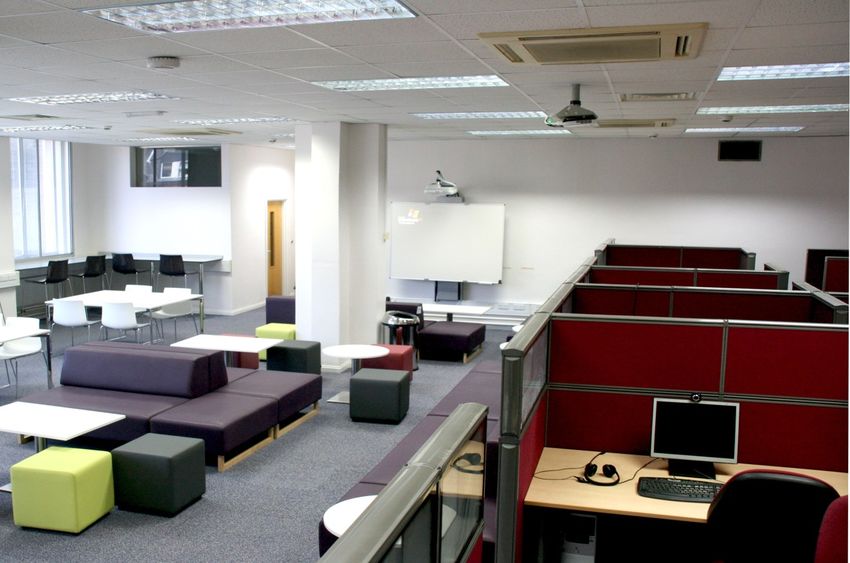
School of Psychology: Overview

          The School of Psychology at Cardiff University
         provides a stimulating academic environment for
         students within the context of a highly rated
         teaching and research unit. The Cardiff School of
         Psychology received excellent scores in the 2008
         Research Assessment Exercise (RAE), appearing
         at the top of our subject table. The Expert Panel's
         recognition of the high quality and relevance of
         our research has been continued from the
         previous assessments (1996, 2001) where the
         School received the highest possible ratings of 5*.

         The School is one of the largest psychology Professor Ed Wilding
         departments in the United Kingdom and has an Head of School
         academic teaching staff of 50, including 29
         professors. The School attracts research grants
         totalling in excess of six million pounds each year
         from the major Research Councils and other bodies such as the Home
         Office, the Ministry of Defence, the Health and Safety Executive, the
         Wellcome Trust and other charities, as well as from industry. At the heart of
         the School's mission is a dedication to the study and teaching of psychology
         from a scientific perspective, maintaining a balance between the major
         issues of contemporary relevance in the applied domain and fundamental
         questions about the determinants of human behaviour. Consistent with its
         commitment to research-led learning and teaching and the pursuit of
         research of international excellence across a wide range of contemporary
         psychology, the School's researchers are aligned with four focal areas:

            Neuroscience
            Cognitive Science
            Developmental and Health Psychology
            Social and Environmental Psychology

         The courses are taught through a wide range of media. Traditional lectures

                                                                                         4
School of Psychology— A Guide for Undergraduates
are supplemented by video demonstrations, practicals and small group
        seminars & discussion groups which encourage and help students in
        presenting arguments, setting out ideas, communication skills and analytical
        competence. Practical work, conducted both in the laboratory and in the
        field, enables students to learn interviewing techniques, survey work,
        psychometric testing and experimental skills. From the outset, there is a
        strong emphasis upon IT; computer workshops introduce students to
        statistical analysis and the application of the Internet as a primary teaching
        and learning tool as well as allowing the development of 'transferable skills'
        such as word processing, data analysis and presentation and the use of
        spreadsheets. Personal contact with academic staff at all levels is sustained
        by the extensive use of tutorial work throughout the degree programme.
        Upon commencing the degree, each student is assigned a member of the
        academic staff as his or her Personal Tutor. The role of the Personal Tutor
        is to provide advice and pastoral guidance throughout the programme and
        to help the student with any problems, academic or personal, which may
        arise.

        In addition, students reading for a degree in the Psychology with
        Professional Placement Programme gain supervised experience of working
        in a professional psychology setting during their third year.

                                                                                         5
School of Psychology— A Guide for Undergraduates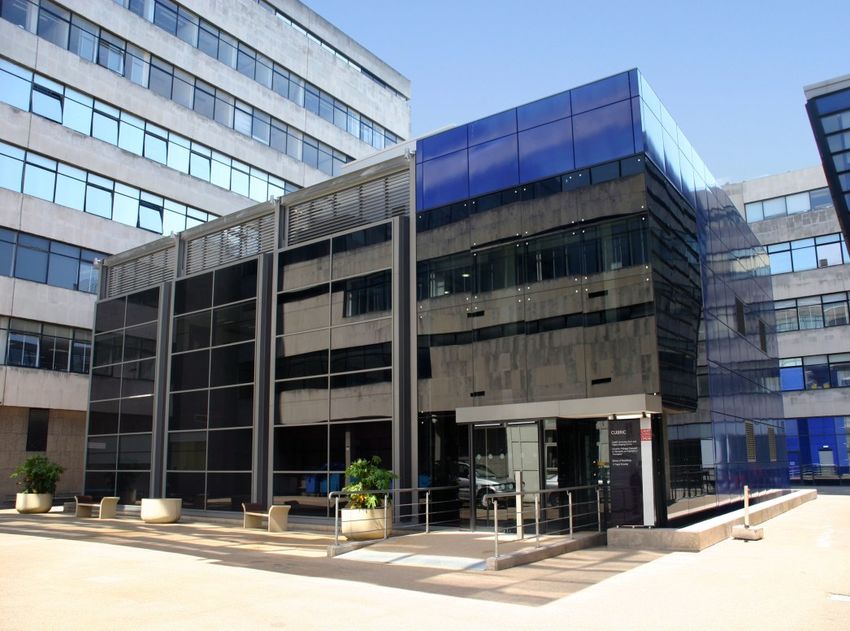
Degree Programmes
The School offers two undergraduate degree programmes:
BSc Honours Psychology (3 years)
BSc Honours Psychology with Professional Placement (4 years)
Both of these degree programmes are recognised by the British Psychological
Society (BPS) for Graduate Basis for Chartered Membership.
We also offer the following opportunities for graduates to study at Cardiff:
Graduate Diploma in Psychology
Graduate Diploma in Psychology Entry Programme
MSc Neuroimaging Methods and Applications
MSc in Social Science Research Methods
Doctorate in Educational Psychology
Doctorate in Clinical Psychology
There are also over 60 students studying for a PhD or MPhil by research.
6
School of Psychology— A Guide for Undergraduates
Facilities

                                                   Psychology books and journals are primarily
                                                   held in two libraries with circa 15,000
                                                   Psychology titles together with 200 Psychology
                                                   journals. A crucial element in the School's
                                                   teaching is a graded sequence of practical work
                                                   that is designed to emphasise the importance of
                                                   empirical approaches to psychology.

                                           The School has excellent, purpose-built research
                                           facilities, and students have available a number
The Arts and Social Studies Library (ASSL)
                                           of laboratories in which to conduct their practical
                                           studies, in particular their final year research
                                           project. These include a fully-equipped suite of
  cognitive and social psychology laboratories, the behavioural neuroscience
  laboratories, the family relations laboratory, perception and human factors
  laboratories.

  The School also has the Cardiff University Brain Research Imaging Centre (CUBRIC)
  located on site, which features the latest brain scanning technologies, thus providing
  a world-class facility based around complementary applications for human-based
  brain imaging. In addition, there are excellent video facilities and sound-proof and
  echo-free rooms.

  Computer-based learning plays a prominent role in the teaching of the School.

  The School has outstanding teaching laboratories; our main computer teaching
  laboratory has 135 networked computers, there is a computer laboratory for running
  experiments containing 16 computers and there are additional private experimental
  rooms with computers provided.

  In addition to their use in teaching, the main laboratory is also available for general
  computer use, internet access and access to subject specific databases such as
  PsycINFO and Web of Science.

                                                                                                     7
School of Psychology— A Guide for Undergraduates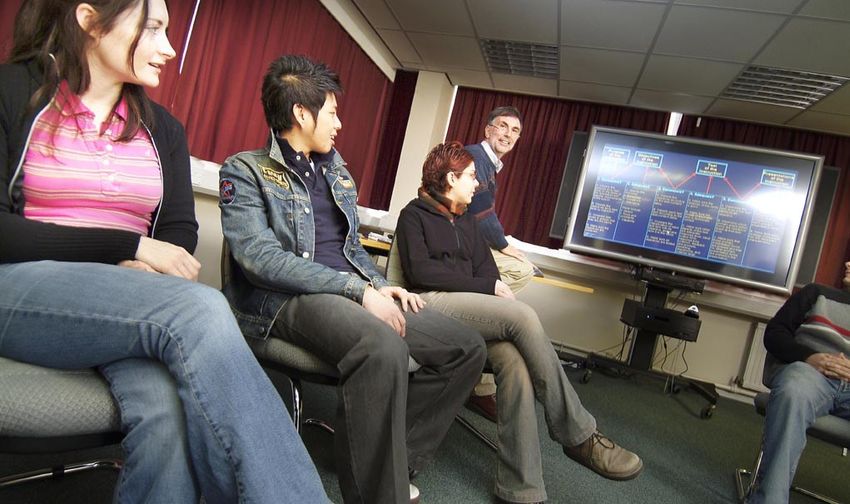
CUBRIC—Cardiff University Brain Research
      Imaging Centre

                                                                       Always Listening and Improving

      We are always interested in hearing students views on how to improve the School
      of Psychology. Here are some of the recent suggestions and the actions we took:

                   Suggestion                                                         Action

     Space to work in groups as well as            We have completely refurbished a first floor room providing an interactive
     quiet study areas in the School               space for working together. We designed it using many student suggestions:
                                                   it has Skype booths and projectors that are suitable for interactive powerpoint
                                                   presentations; a projector showing School and University news and events;
                                                   multi-purpose seating areas and arrangements that make the room suitable
                                                   for social and academic occasions too (see accompanying photo).

     An IT help-desk to assist with                We have introduced a help-desk running once a week throughout the year
     computing and related issues

     More feedback on examinations                 The provision of generic feedback has been introduced after each set of
                                                   examinations – providing a question-by-question explanation of how marks
                                                   were gained for each answer. The feedback is published on the School’s
                                                   web pages.

                                                                                                                           8
School of Psychology— A Guide for Undergraduates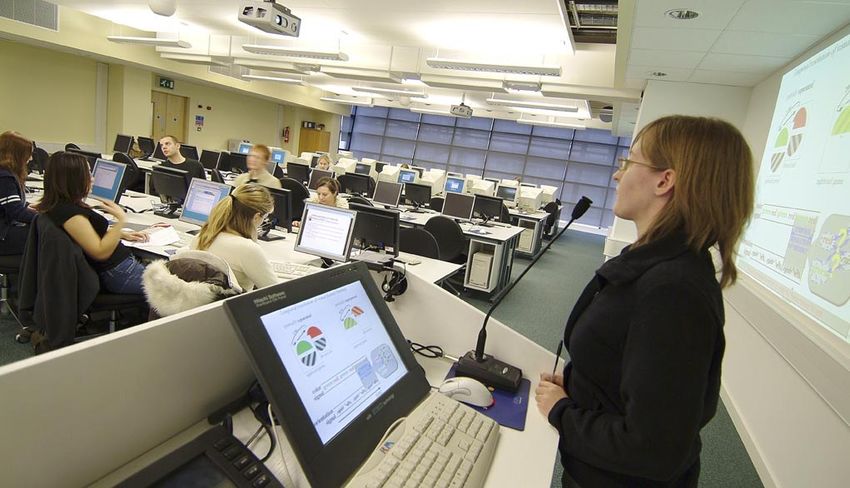
Suggestion                                                      Action

   Exam feedback discussions with staff       After Year 1, Semester 1 exams, Personal Tutors discuss performance with
   to help understanding of how to            tutees at scheduled meetings
   improve performance

   To know about the research that staff in We established a module at the start of the first year that includes talks by
   the School are involved with             staff about their current research to give a flavour of the work going on in the
                                            School and a means by which research skills and critical thinking are taught.

   More targeted feedback and comments        We introduced electronic submission and marking that enables staff to make
   on coursework assignments                  comments in the relevant assignment text.

   To be able to hand in coursework from      By changing to a submission mechanism using Learning Central, we have
   off-campus computers                       been able to provide this facility.

   Not to have all exams at the end of We revised our degree programmes so that modules are split between the
   each year                           two semesters and examined at the end of each

   Some of the first year to count towards    We revised the programme so that the second semester of the first year
   the degree, to sustain motivation in       counts towards the final degree.
   Year 1

   More help with the transition from         We created a first semester designed specifically to help students
   school to University                       understand how study at University differs from school and to teach the
                                              necessary skills required to manage it.

   More psychology-orientated       Careers Our Careers link staff member now provides regular targeted advice and
   advice                                   information on potential careers for which psychology is relevant

   Members of the Student Psychology The School established regular meetings with Society reps and provided
   Society requested more involvement some financial support for visiting speakers and BPS student conference
   with the School staff              attendance. Awards have followed this partnership initiative, for example, the
                                      2011 Cardiff University Course Representative of the Year Award; 2013:
                                      Student Society Best University Society at the National Placement and
                                      Internship Awards.

                                                                                                                       9
School of Psychology— A Guide for Undergraduates
Undergraduate Common Room

                                                           Admission to the School

    The quality of students recruited to read psychology in Cardiff is high. At present,
    our intake stands at approximately 200 full time students.

    Our standard A-Level offer is AAB (excluding General Studies) if the student has
    taken at least one of the following subjects - Biology, Human Biology, Chemistry,
    Physics or Maths. If the student has not taken any of these subjects, a typical offer
    would be AAA (excluding General Studies).

    Twelve- and six-unit AVCE/GNVQs are also accepted as long as they are
    combined with one or two A2 qualifications, respectively. In addition to this, at
    least a grade B GCSE is required for English language or Welsh as a first
    language, and Mathematics/Statistics; psychology uses statistical methods which
    is why some basic knowledge and skill in mathematics is required.

                                                                                            10
School of Psychology— A Guide for Undergraduates
Other qualifications are also accepted (e.g. BTEC, International Baccalaureate),
details of which can be obtained by contacting the relevant Admissions Tutor, or
referring to the School's undergraduate admissions policy on the web: http://
psych.cf.ac.uk
Mature students represent approximately 5% of our total student number gaining
admission to the degree programmes. We consider a wide range of
qualifications for mature students, such as Access courses, and would normally
look for evidence of recent academic study before making an offer.
Overseas students also make up a small but growing proportion of our student
intake and are encouraged to apply. Again, these applications are considered
on an individual basis and overseas qualifications are equated to our standard
offers.
11
School of Psychology— A Guide for UndergraduatesWidening Access
Applications from students with diverse social, cultural and educational back-
grounds are encouraged. Whilst the majority of applications to the School of Psy-
chology are from candidates offering 3 subjects at A-level, the School also consid-
ers applicants with non-standard qualifications and experience, for example, those
with combinations of qualifications and relevant personal and professional experi-
ence that may have been obtained over the course of several years prior to the
application.
The School has different entry (admissions) criteria for such applicants in recogni-
tion of the skills relevant to the degree courses that can be acquired in a variety of
settings, and the fact that mean GCSE and A2 grades have increased in recent
years.
For applicants offering a combination of formal qualifications other than A- levels,
and/or relevant experience, there is no absolute level that we can specify in ad-
vance that has to be achieved. Rather, it is a matter of viewing the combination of
skill sets and qualifications holistically. In general, however, when qualifications
other than A- levels and GCSEs (or O levels) are offered, we are looking for evi-
dence of an excellent level of achievement on a given course (e.g. Access,
GNVQ).
We have received much interest from Access students, many of whom unfortu-
nately have been under the misapprehension that a pass gains automatic entry to
any University course. This is not the case, although such courses do provide
valuable foundations, particularly when combined with other qualifications.
12
School of Psychology— A Guide for UndergraduatesIt is advisable that students considering taking an Access course should
discuss the School’s requirements with the Widening Access Admissions
Tutor before applying.
Finally, for all applicants to Psychology programmes, evidence of recent study is
a pre-requisite.
13
School of Psychology— A Guide for UndergraduatesDisabilities
The School of Psychology welcomes applications from disabled students
and admits all students on the basis of their academic abilities alone. You
can contact the School’s Disability Officer, Dr Todd Bailey, on 029 2087
5375 or e-mail: BaileyTM1@cardiff.ac.uk
We encourage students to disclose their disabilities and/or specific learning
requirements to enable us to make the necessary reasonable adjustments.
If you have a disability and would like to visit the department and talk to a
member of staff about the courses we run and any specific requirements
you may have, please feel free to contact us on 029 2087 6707 or e-mail
psychology-ug@cardiff.ac.uk
For further information about the University’s disability policies please
contact Mathew Williams on 029 2087 4844 or e-mail:
WilliamsME1@cardiff.ac.uk
The School treats all applications equally and fairly according to the
University’s Equal Opportunities policy. Applications from disabled
students are dealt with on an individual basis.
Applications for undergraduate degree programmes must come via the
UCAS system. Upon making an offer we invite each prospective student to
visit the School at an Open Day. This allows the student to see the facilities
of the School, hear in more detail the nature of the degree programmes and
talk to and ask questions of both the staff and current undergraduate
students.
14
School of Psychology— A Guide for UndergraduatesAcademic Staff - Research Interests
Prof John Aggleton Neuroscience of learning and memory.
Dr Todd Bailey Language Processing, Phonological and Lexical Development, and Category
Learning.
Prof Jacky Boivin Health Psychology; Stress and Coping, Reproductive Health.
Dr Lewis Bott Language Comprehension and Human Concept Learning
Dr Marc Buehner Cognitive Psychology; Causal Learning & Reasoning, Time Perception, Decision
Making.
Dr Chris Chambers Neuroscience of Human Attention and Cognitive Control; Transcranial Magnetic
Stimulation and Functional Brain Imaging
Dr Simon Claridge * Systemic Organisation to support resilience in Learning and Inter/Intra-personal
Development; Psychological Consultation to promote change (Individual and
Systemic levels).
Prof John Culling Auditory perception, Hearing Impairment, Cochlear Implants
Dr William Davies Genetic and Epigenetic influences on Behaviour and Vulnerability to
Neuropsychiatric Diseases.
Dr Christina Demski Environmental and Social Psychology, Risk Perception, Environmental Values,
Attitudes & Behaviour, Perception and Engagement with Energy Issues.
Dr Dominic Dwyer Associative Learning, Behavioural Neuroscience, and Face Processing.
Dr Lisa Evans Cognitive and Electrophysiological Deficits associated with Schizophrenia;
Episodic Memory; Brain imaging.
Prof Tom Freeman Visual and Auditory Psychophysics, Active Perception, Oculomotor Control.
Dr Sofia Gameiro Transition to parenthood, parent-child and couple relationships, reproductive
decision-making and quality of life.
Dr Merideth Gattis Cognitive Psychology and Cognitive Development.
Prof Mark Good Neuroscience of Learning and Memory, Animal Models
of Dementia
Prof Stephanie van Goozen Emotion, Developmental Psychopathology, Anti-Social Behaviour.
Prof Kim Graham Human Long-Term Memory and Perception, Neuropsychology and Brain Imaging
Prof Geoff Haddock Social Psychology, Attitudes and Mindfulness.
15
School of Psychology— A Guide for UndergraduatesDr Jo Haddon Behavioural Neuroscience; Executive (Dys)function.
Dr Maciej Hanczakowski Long-term memory and metacognition.
Prof Dale Hay Developmental Psychopathology, Social development in infancy and childhood.
Dr Ulrich von Hecker Social Psychology, Social Cognition, Spatial processes in reasoning, metaphoric
thinking
Dr Craig Hedge Impulsivity, Response Inhibition, Selective Attention, Working Memory and
Individual Differences.
Prof Rob Honey Associative Learning; Behavioural Neuroscience; Neural Networks.
Dr Trevor Humby Developmental Origins of Adult Disease, Imprinted Genes, Epigenetics, Cognition,
Behaviour, Brain Development, Role of Genetics in Dementia and ADHD
Dr Mark Johansen Categorization and Associative Learning.
Dr Catherine Jones Cognitive neuroscience, Social Cognition, Autism spectrum disorder, Temporal
processing.
Prof Derek Jones Neuroimaging; MRI, Brain Structure, White Matter Pathways.
Dr Kate Langley Developmental psychopathology; the role of genetic and environmental factors in
ADHD and associated childhood disorders.
Prof Andrew Lawrence Affective and Social Neuroscience; Impulsivity; Psychoneuroimmunology;
Dementia.
Prof Sue Leekam Cognitive and Social Development, Autism Spectrum Disorders
Dr Michael Lewis Face and Emotion Recognition; Facial Feedback; Facial Attractiveness
Prof David Linden Biological Psychiatry, Genetics & Neuroimaging, Working Memory, Neuroscience
of Social Judgements, Neurofeedback
Dr Bill Macken Auditory and Speech Processing, Distraction, Sensori-Motor Processing, Memory
Prof Greg Maio Attitudes and Behaviour, Values, and Mental Representations of Children
Prof Antony Manstead Emotion; Prosocial Behaviour; Attitudes and Behaviour; Social Identity
Dr David McGonigle Sensory Perception, Plasticity, and Recovery of Function, focusing in particular on
the Somatosensory System. Techniques: Neuroimaging, and NeuroStimulation
(tDCS).
16
School of Psychology— A Guide for UndergraduatesDr Kevin Murphy fMRI methods Development; Vascular influences on Neurovascular Coupling;
Measures of Cerebrovascular Health.
Dr Andrew Nelson Neuroscience of learning and memory.
Dr Jean Parry * Accessing the views of Children. Alternative Curriculum at KS4. Inclusion
Issues, particularly the development of Pedagogy to support inclusion.
Prof John Pearce Theories of Learning and Motivation. Spatial learning.
Prof Nick Pidgeon Risk and the Environment, Social Psychology, Occupational Psychology.
Prof Wouter Poortinga Environment and Health; Risk and the Environment; Environmental Behaviour
Ms Gillian Rhydderch * Constructionist Models of Change and the links between Professional Training
and the Practice of Educational Psychologists.
Dr Simon Rushton Visual Guidance of Action
Dr Job van der Schalk Reactions to other people’s Emotions and its role in Cooperative Behaviour
Prof Krish Singh Multimodal Neuroimaging of Cortical Function using Magnetoencephalography
(MEG), Functional Magnetic Resonance Imaging (fMRI) and MR Spectroscopy;
Visual Perception; GABAergic Inhibition and Individual Variability; Healthy
Ageing; Pharmaco-MEG; Use of these techniques in Epilepsy, Dementia,
Schizophrenia and Affective Disorders.
Dr Katherine Shelton Developmental Psychology and Family Relationships. Young people with
experiences of homelessness and adoption.
Prof Andrew Smith Non-auditory effects of noise; Stress; Fatigue; Nutritional Neuroscience; the
Psychology of the Common Cold.
Prof Robert Snowden Abnormal and Forensic Psychology; Visual Perception; Attention.
Dr Petroc Sumner Perception, action and decisions, with clinical applications. Also science in the
media.
Dr Seralynne Vann Neuroscience of Learning and Memory; Anterograde Amnesia
Dr Cerith Waters The Impact of early adversity on children's development. Mindfulness based
psychological therapies.
Prof Peter White Visual Impressions of Forces and Causality, Causal Judgement and Causal
Understanding.
17
School of Psychology— A Guide for UndergraduatesDr Lorraine Whitmarsh Risk and the Environment; Environmental Attitudes and Behaviour; Social Change
Prof Ed Wilding Human Long-Term Memory and Memory Control. The Brain Regions that support
Human Memory.
Prof Lawrence Wilkinson Genetic and Epigenetic Mechanisms underlying Brain Development and Function.
Prof Richard Wise Functional Magnetic Resonance Imaging methods development and application to
study Neuro-vascular Coupling.
Dr Dimitrios Xenias Environmental Psychology, Sustainability and Behaviour Change, Perceptions of
Climate Change, Behavioural Spill-Over.
* Professional Tutors
18
School of Psychology— A Guide for UndergraduatesProgrammes of Study
The School of Psychology runs two undergraduate degree programmes,
under a modular system: a three-year full-time programme and a four-year
sandwich programme. The four-year degree in Psychology with Professional
Placement is a special feature of the School whereby the third year is spent
on a supervised, career-related placement. The academic content of both
degrees is the same in all years of study.
Year 1 (Level 4)
In the first semester of year 1, students take three double modules, which
introduce a wide range of psychological topics, and involve a significant
element of practical work. Level 4 comprises the first semester of the first
year only and is designed to help students make the transition from school to
university study.
Year 1 & 2 (Level5)
Level 5 commences in the second semester of the first year. This semester
introduces students to the increased level of study necessary for Level 5
work and provides a bridge between Level 4 and Year 2. Students take
three double modules in this semester. Year 2 continues the progression
towards more independent thinking and study skills with a further six double
modules that build on the foundation of the first year and continue to develop
the main themes in contemporary psychology.
Professional Placement
Students taking the four year Psychology with Professional Placement
degree spend the year between the second and final years in a professional
placement approved by the School. These placements are subject to
availability and to satisfactory academic progress. The placement is
regularly monitored by a tutor from the School and students must submit a
report of their work.
19
School of Psychology— A Guide for UndergraduatesFinal Year (Level 6)
The School offers a range of modules in the final year which are designed to
build on the work from the previous two years and to focus on students'
interests within their degree programme. The modules offered are:
Research Project: in which you design and carry out an empirical
project with personal supervision from a member of staff.
Option Modules: you choose from a range of modules in psychology
which focus on specific aspects of the subject or current theoretical
approaches, and which are likely to change from year to year. The option
modules cover the following BPS areas: Cognitive Psychology, Biological
Psychology, Social Psychology, Developmental Psychology and Individual
Differences.
20
School of Psychology— A Guide for UndergraduatesProgramme Specifications
Introduction: BSc (Hons) Psychology
This Programme Specification is a concise summary of the main features of the
BSc (Hons) Psychology at Cardiff University and of the learning outcomes that a
typical student might reasonably be expected to achieve if she/he takes full ad-
vantage of the learning opportunities that are provided. More detailed information
on the learning outcomes, content, and the teaching, learning and assessment
methods for each module can be found in the Module Descriptions and the Stu-
dent Handbooks.
1. Awarding Institution Cardiff University
2. Teaching Institution Cardiff University
3. Programme British Psychological Society (re-accredited in
Accredited by 2011/12)
4. Final Award BSc (Hons) Psychology
5. Programme Psychology
6. UCAS code C800
7. Relevant QAA subject Psychology
benchmarking group
8. Date of production August 2012
revision
21
School of Psychology— A Guide for Undergraduates9. Programme Aims
The three principal aims of the Programme are:
To encourage and develop an appreciation of and interest in the discipline of
psychology
To provide an education in the discipline of psychology presented as a
coherent and systematic field of study, for those who will undertake further
study and research in psychology, or in a related field, or who will study
psychology no further than first degree level.
To enable students to enter subsequent phases of their careers with
competence and initiative.
More specifically the Programme aims to:
Provide students with the opportunity to extend their knowledge and
understanding of historical and current texts associated with Psychology;
Develop students’ practical and experimental skills;
Assist students to develop their academic writing skills and their practical
techniques;
Encourage students to progressively take ownership and direction of their
learning so that they develop as independent life-long learners.
10. Programme Outcomes
The Programme Outcomes have been informed by:
The requirements of the British Psychological Society.
QAA Higher Education Quality Assurance and Standards Framework: H level.
QAA Benchmarking Statements for Psychology.
The School of Psychology's Strategic Plan.
The School of Psychology's Teaching, Learning and Assessment Policy.
The University's Policy on Student Learning.
22
School of Psychology— A Guide for UndergraduatesStudents who gain the award will have demonstrated achievement of
the following Learning Outcomes, as set out under A, B, C, D, below:
A Knowledge and Understanding
Intended Outcomes: Upon completion of the programme a typical
student will be able to:
Demonstrate knowledge and understanding of psychological facts,
theories, ideas, methods, concepts and principles and appreciate their
significance.
Demonstrate an understanding of psychology as a coherent and
developing scientific discipline.
Teaching and Learning Strategies and Methods
Learners play the leading role in their own education. The School facilitates
learning by: identifying appropriate readings, communicating knowledge and
understanding through lectures, practical classes and tutorials. The student
engages critically with the material presented by: writing practical reports and
essays, participating in class discussions and in tutorials and through team
work.
Assessment
Knowledge and understanding are assessed both summatively and
formatively via multiple choice and conventional written examinations, essay
writing, practical and project reports.
Formative feedback is provided at practical classes and in tutorials via oral
presentation.
23
School of Psychology— A Guide for UndergraduatesB Intellectual Skills
Intended Outcomes: Upon completion of the programme a typical student
will be able to:
Demonstrate the skills/abilities necessary for scientific research in
psychology, including abilities to formulate research hypotheses, design
and conduct empirical studies, analyse data, and interpret findings.
Demonstrate the skills in comprehending and evaluating psychological
material, including the abilities to communicate clearly and concisely the
concepts of literature and critically appraise the literature, in both written
and oral presentation.
Teaching, Learning Strategies and Methods
Intellectual Skills are promoted via lectures, seminars and group discussions,
tutorials, group work. Application of these skills is developed via tutorial
presentations, research practicals and a research project.
Assessment
Summative assessment is by means of unseen written examinations, essay
writing, practical reports and research project.
Feedback is provided via seminars, tutorials and project supervision.
C Discipline Specific, including Practical Skills
Intended Outcomes: Upon completion of the programme a typical student
will be able to:
Conduct safely, ethically and competently psychological research studies
involving human and non-human animals.
Record, analyse statistically, present (written and orally) and interpret data
24
School of Psychology— A Guide for Undergraduatesfrom psychological experiments.
Teaching, Learning Strategies and Methods
Writing for different Psychology audiences is achieved via preparation of essays,
practical reports and the research project. Practical Skills are promoted via
experimental work including group and project work.
Acquisition of competence in practical skills is progressive. At years 1 and 2
students have detailed guidance to ensure that they have a firm foundation in
relevant experimental skills. Tutors ensure that an acceptable level of
competence is achieved before students progress to the final year. At final year
students have an element of independence and are required to design, conduct,
analyse and report individual project work. Students meet regularly with a
supervisor to discuss methodologies and practical work.
Assessment
Students’ ability to write for different Psychology audiences is determined
through summative assessment of essays, practical reports and project.
D Transferable Skills
Intended Outcomes: Upon completion of the programme a typical student
will be able to:
Communicate ideas, principles and theories effectively by both oral and
written means.
Use information technology e.g. the Internet, reference database,
spreadsheets, word processing, graphics and statistics packages.
Perform and interpret statistical analyses of data.
Work and communicate effectively both as an individual and in a team.
Demonstrate effective time-management skills and the ability to meet
deadlines.
25
School of Psychology— A Guide for Undergraduates Be aware of ethical guidelines.
Teaching, Learning Strategies and Methods
The communication of ideas and team work are an integral part of all modules
via tutorials and practicals. Promotion of IT skills is via programme–wide
compulsory modules at years 1 and 2. The research project at Level 6 is
designed to develop these IT and statistical analysis skills through independent
research.
Assessment
Assessment of Transferable Skills is via essays, team work in practical classes
and the independent research project.
The School of Psychology, in liaison with the University Careers Service,
provides Personal Careers Development programmes in year 2 and an annual
general careers talk in the final year.
Students also have the opportunity to attend University approved courses
provided by the Careers Service, and by the Students' Union, which focus on
Transferable Skills.
Additional Information
11. Programme structure and requirements, courses and awards
Details of the Programme structures and requirements, courses and awards are
available in the Student Handbook.
In summary, the Programme is offered in full-time (3 year) mode only. Students
take 60 credits in the first semester of Year 1, which do not count towards the
final degree classification. In the second semester of Year 1 and Year 2,
students take modules to the value of 180 credits. In the final year, students take
120 credits. Modules are compulsory in years 1 & 2 and optional in the final year
26
School of Psychology— A Guide for Undergraduates(with the exception of the research project).
Details of the criteria used to assess student work are to be found in the Student
Handbooks. Performance in Level 5 contributes 30% towards honours
classification and Level 6 contributes 70% towards the honours degree. The
degree of difficulty of the modules progresses as the Level increases. For
example, Level 6 modules are more challenging than those at Level 5. The
different Learning Outcomes demonstrate the increasing demands at each Level
and hence student progression through the Programme.
12. Other Features
The distinctive features of the Programme include:
the opportunity for students to learn in a School which was graded
‘Excellent’ in the last Teaching Quality Assessment, achieved Grade 5* in
the 2001 Research Assessment Exercise and was ranked top in the UK on
Research Power in the 2008 RAE;
the involvement of research-active staff in Programme design and delivery;
the variety of modules on offer;
the emphasis on independent learning in a research-led environment;
the emphasis on acquisition of high quality practical skills and the
development of innovative ideas;
the emphasis on safety and ethical issues;
membership of British Psychological Society and an awareness of
professional standards and progression;
flexibility, permitting graduates to pursue professional careers as
psychologists, as well as a wide range of other careers, including
postgraduate research.
27
School of Psychology— A Guide for UndergraduatesCriteria for admission to the Programme
See Programme Regulations and Psychology Undergraduate Admissions
Policy.
Information about assessment regulations
See Programme Regulations
Indicators of Quality
TQA rating of 'worthy of recognition and reward'.
BPS re-accreditation of programme 2005/06, 2011/12.
RAE 5* rating in 2001 and top research power ranking in 2008.
Degree classification results.
High A level points at intake.
Methods for evaluating and improving the quality and standards of
learning
The School complies with the entire range of University obligations concerning
the monitoring, review and amendment of its programme (see Academic
Quality System (Quality Compendium), in particular the processes of Annual
Review, Quality Progress Review, Periodic Review, Academic Validation of
Programme of Study, External Examiners' Reports).
In addition, Professional Body (BPS) requirements and accreditation reports
play a large part in determining programme development and ensuring quality
of teaching and learning standards. At School level, a comprehensive
committee structure ensures full and thorough consideration of all matters,
checks and balances, relating to all aspects of the programme and those
concerned with it. An active Staff/Student Panel forms an integral part of this
structure and a system of student evaluations (of modules, levels of study and
at programme exit), combine with self and peer evaluation of teaching, to form
a continuous review process and feedback mechanism.
28
School of Psychology— A Guide for UndergraduatesParticular support for learning (See also 12 'other features')
1. Up-to-date computing facilities with a dedicated undergraduate
computing laboratory containing 135 machines and advanced teaching
technologies - exceeds all facilities elsewhere in UK Psychology
Schools.
2. A range of specialised experimental laboratory facilities provide
students with a broad choice of areas in which to carry out their
independent research projects.
3. A wide range of networked and local software packages enhance the
student learning environment.
4. Library facilities in support of psychology derive from an annual
allocation of approximately £150,000 and include 200 psychology
journals.
5. New students are given training by Information Services staff in the use
of information resources.
6. A School 'Orientation' for new students serves to introduce a range of
IT and library software skills as well as an introduction to the
programme of study, the conduct of research, essay-writing, and the
School's support facilities.
7. The School's support team of 12 technicians and 20 admin/clerical staff
provide an efficient service to academic teaching staff and students, to
enable maximum focus on quality teaching and learning.
8. World class teaching staff who are leaders in the field are a key
strength, bringing breadth of coverage in research to support breadth
and relevance to the programmes of study.
29
School of Psychology— A Guide for UndergraduatesIntroduction: BSc (Hons) Psychology with Professional Placement
This Programme Specification is a concise summary of the main features of the
BSc (Hons) Psychology with Professional Placement at Cardiff University and of
the learning outcomes that a typical student might reasonably be expected to
achieve if she/he takes full advantage of the learning opportunities that are
provided. More detailed information on the learning outcomes, content, and the
teaching, learning and assessment methods for each module can be found in
the Module Descriptions and the Student Handbook.
1. Awarding Institution Cardiff University
2. Teaching Institution Cardiff University
3. Programme Accredited by British Psychological Society (re-accredited in
2011/12)
4. Final Award BSc (Hons) Psychology with Professional
Placement
5. Programme Psychology
6. UCAS code C810
7. Relevant QAA subject Psychology
benchmarking group
8. Date of production revision August 2012
30
School of Psychology— A Guide for Undergraduates9. Programme Aims
The four principal aims of the Programme are:
To encourage and develop an appreciation of and interest in the discipline
of psychology, especially as it applies to the world of work.
To provide an education in the discipline of psychology presented as a
coherent and systematic field of study, for those who will undertake further
study and research in psychology, or in a related field, or who will study
psychology no further than first degree level.
To enable students to enter subsequent phases of their careers with
competence, initiative and work experience.
To develop an appreciation of, and competence in, the use and application
of psychological principles and methods in work situations and contexts.
More specifically the Programme aims to:
Provide students with the opportunity to extend their knowledge and
understanding of historical and current texts associated with Psychology.
Develop students’ practical and experimental skills;
Assist students to develop their academic writing skills and their practical
techniques.
Encourage students to progressively take ownership and direction of their
learning so that they develop as independent life-long learners.
Provide experience of psychology as it is applied in the work domain.
10. Programme Outcomes
The Programme Outcomes have been informed by:
The requirements of the British Psychological Society.
QAA Higher Education Quality Assurance and Standards Framework: H
level.
31
School of Psychology— A Guide for Undergraduates QAA Benchmarking Statements for Psychology.
The School of Psychology's Strategic Plan.
The School of Psychology's Teaching Learning and Assessment Policy.
The University's Policy on Student Learning.
Students who gain the award will have demonstrated achievement of the
following Learning Outcomes, as set out under A, B, C, D, below:
A Knowledge and understanding
Intended Outcomes: Upon completion of the programme a typical
student will be able to:
Recognise the work of a professional psychologist in a specified area of
applied psychology.
Demonstrate knowledge and understanding of psychological facts,
theories, ideas, methods, concepts and principles and to appreciate their
significance in the applied context.
Demonstrate an understanding of psychology as a coherent and
developing scientific discipline.
Demonstrate an understanding of the relationship between theoretical
and applied psychology.
Teaching, Learning Strategies and Methods
Learners play the leading role in their own education. The School facilitates
learning by: identifying appropriate readings, communicating knowledge and
understanding through lectures, practical classes and tutorials. The student
engages critically with the material presented by: writing practical reports and
essays, participating in class discussions and in tutorials and through team
work.
32
School of Psychology— A Guide for UndergraduatesAssessment
Knowledge and understanding are assessed both summatively and
formatively via multiple choice and conventional written examinations, essay
writing, practical, written placement and project reports.
Formative feedback is provided at practical classes and in tutorials via
oral presentation
B Intellectual Skills
Intended Outcomes: Upon completion of the programme a typical
student will be able to:
Demonstrate the skills/abilities necessary for scientific research in
psychology, including abilities to formulate research hypotheses, design
and conduct empirical studies, analyse data, and interpret findings.
Demonstrate the skills in comprehending and evaluating psychological
material, including the abilities to communicate clearly and concisely the
concepts of literature, appraise the literature critically, in both written and
oral presentation.
Demonstrate the skills and abilities involved in the use and application of
psychological principles and methods in work situations and contexts.
Teaching, Learning Strategies and Methods
Intellectual Skills are promoted via lectures, seminars and group discussions,
tutorials, group work. Application of these skills is developed via tutorial
presentations, research practicals, project, and a work placement.
Assessment
Summative assessment is by means of unseen written examinations, essay
writing, practical reports, work placement report and research project.
Feedback is provided via seminars, tutorials and project supervision
33
School of Psychology— A Guide for UndergraduatesC Discipline Specific, including Practical Skills
Intended Outcomes: Upon completion of the programme a typical
student will be able to:
Conduct safely, ethically and competently psychological research studies
involving human and non human animals in both the laboratory setting and
the work environment.
Record, analyse statistically, present (written and orally) and interpret
data from psychological experiments.
Teaching, Learning Strategies and Methods
Writing for different Psychology audiences is achieved via preparation of essays,
practical reports, and the project. Practical Skills are promoted via experimental
work including group and project work and work placement.
Acquisition of competence in practical skills is progressive. At years 1 and 2
students have detailed guidance to ensure that they have a firm foundation in
relevant experimental skills. Tutors ensure that an acceptable level of
competence is achieved before students progress to the final year. At the final
year students have an element of independence and are required to design,
conduct, analyse and report individual project work. Students meet regularly with
a supervisor to discuss methodologies and practical work.
Assessment
Students’ ability to write for different Psychology audiences is determined through
summative assessment of essays, practical reports, project and the work
placement report.
D Transferable Skills
Intended Outcomes: Upon completion of the programme a typical
student will be able to:
Communicate ideas, principles and theories effectively by both oral and
written means.
Use information technology e.g. the Internet, reference database,
34
School of Psychology— A Guide for Undergraduatesspreadsheets, word processing, graphics and statistics packages.
Perform and interpret statistical analyses of data.
Work and communicate effectively both as an individual and in a team.
Demonstrate effective time-management skills and the ability to meet
deadlines.
Be aware of a range of techniques used in the workplace by practising
applied psychologists and have a working knowledge of the constructs that
underpin them.
Be aware of ethical guidelines.
Teaching, Learning Strategies and Methods
The communication of ideas and team work are an integral part of all modules
via tutorials and practicals. Promotion of IT skills is via programme–wide
compulsory modules at years 1 and 2. The research project at final year is
designed to develop these IT and statistical analysis skills through independent
research.
Assessment
Assessment of Transferable Skills is via essays, team work in practical classes
and the independent research project.
The School of Psychology, in liaison with the University Careers Service,
provides Personal Careers Development programmes (year 2) and an annual
general careers talk in the final year.
Students also have the opportunity to attend University approved courses
provided by the Careers Service, and by the Students' Union, which focus on
Transferable Skills.
Additional Information
11. Programme structure and requirements, courses and awards
Details of the Programme structures and requirements, courses and awards are
available in the Student Handbook.
35
School of Psychology— A Guide for UndergraduatesIn summary, the Programme is offered in sandwich (4 year) mode only.
Students take 60 credits in the first semester of year 1, which do not count
towards the final degree classification. The second semester of Year 1 & 2,
students take modules to the value of 180 credits. At final year, students take
120 credits. Modules are compulsory in Year 1 & 2 and optional at final year
(with the exception of the research project). Students also submit a Placement
Report in the final year. Details of the criteria used to assess student work are
to be found in the Student Handbooks. Performance in Level 5 contributes 30%
towards honours classification, the placement year contributes 10% and the
final year contributes 60% towards the degree classification. The degree of
difficulty of the modules progresses as the Level increases. For example, final
year modules are more challenging than those at Level 5. The different
Learning Outcomes demonstrate the increasing demands at each Level and
hence student progression through the Programme.
12. Other Features
The distinctive features of the Programme include:
the opportunity for students to learn in a School which was graded
‘Excellent’ in the last Teaching Quality Assessment, achieved Grade 5* in
the 2001 Research Assessment Exercise and was ranked top in the UK
on Research Power in the 2008 RAE.
the involvement of research-active staff in Programme design and
delivery.
the variety of modules on offer.
the emphasis on independent learning in a research-led environment.
the emphasis on acquisition of high quality practical skills and the
development of innovative ideas.
the emphasis on safety and ethical issues.
membership of British Psychological Society and an awareness of
professional standards and progression.
flexibility, permitting graduates to pursue professional careers as
psychologists, as well as a wide range of other careers, including
36
School of Psychology— A Guide for Undergraduatespostgraduate research.
availability of placements in a wide variety of work situations, the quality
of which is monitored through feedback mechanisms.
Criteria for admission to the Programme
See Programme Regulations and Psychology Undergraduate Admissions
Policy.
Information about assessment regulations
See Programme Regulations
Indicators of Quality
TQA rating of 'worthy of recognition and reward'.
BPS re-accreditation of programme 2005/06 and 2011/12.
RAE 5* rating in 2001 and top research power ranking in 2008.
Degree classification results.
High A level points at intake.
Methods for evaluating and improving the quality and standards of
learning
The School complies with the entire range of University obligations
concerning the monitoring, review and amendment of its programme (see
Academic Quality System (Quality Compendium), in particular the processes
of Annual Review, Quality Progress Review, Periodic Review, Academic
Validation of Programme of Study, External Examiners' Reports).
In addition, Professional Body (BPS) requirements and accreditation reports
play a large part in determining programme development and ensuring quality
of teaching and learning standards. At School level, a comprehensive
committee structure ensures full and thorough consideration of all matters,
checks and balances, relating to all aspects of the programme and those
concerned with it. An active Staff/Student Panel forms an integral part of this
structure and a system of student evaluations (of modules, levels of study and
at programme exit), combine with self and peer evaluation of teaching, to
37
School of Psychology— A Guide for Undergraduatesform a continuous review process and feedback mechanism.
Particular support for learning (See also 12 above 'other features')
1. Up-to-date computing facilities with a dedicated undergraduate
computing laboratory containing 135 machines and advanced teaching
technologies - exceeds all facilities elsewhere in UK Psychology Schools.
2. A range of specialised experimental laboratory facilities provide students
with a broad choice of areas in which to carry out their independent
research projects.
3. A wide range of networked and local software packages enhance the
student learning environment.
4. Library facilities in support of psychology derive from an annual allocation
of approximately £150,000 and include 200 psychology journals.
5. New students are given training by Information Services staff in the use
of information resources.
6. A School 'Orientation' for new students serves to introduce a range of IT
and library software skills as well as an introduction to the programme of
study, the conduct of research, essay-writing, and the School's support
facilities.
7. The School's support team of 12 technicians and 20 admin/clerical staff
provide an efficient service to academic teaching staff and students, to
enable maximum focus on quality teaching and learning.
8. World class teaching staff who are leaders in the field are a key strength,
bringing breadth of coverage in research to support breadth and
relevance to the programmes of study.
38
School of Psychology— A Guide for UndergraduatesTeaching, Learning and Assessment Policy
The purpose of this policy document is to explain the School of Psychology’s
strategy regarding teaching, learning and assessment and how the School
seeks to develop students academically through the years of their programme
of study.
OVERALL PHILOSOPHY
The School’s educational philosophy rests upon the precept that good
research benefits good teaching. All teaching and learning is research-led.
The course develops from a first semester in Year 1 in which a focus on the
acquisition and practice of scientific thinking skills is combined with an
introduction to the main research areas in psychology, advances in the second
semester with the development of critical thinking at Level 5 and progresses
through Year 2, culminating in advanced understanding of cutting-edge
research by the end of Level 6.
Learners play the leading role in their own training. The School facilitates
learning by identifying appropriate readings and organizing practicals. These
are supported by lectures, seminars and tutorials.
A large proportion of the assessment in the School’s psychology programmes
is carried out via unseen written examination. This reflects our belief that
examination is the best vehicle for testing a student’s unaided knowledge,
understanding, powers of communication, critical analysis and skills.
All undergraduate psychology assessments are summative (they contribute to
the final module mark) with formative feedback being provided to students via
tutorials, practicals and coursework comment/mark sheets. Students on the
Placement programme submit a placement report following their year out
which is assessed and contributes to degree classification.
39
School of Psychology— A Guide for UndergraduatesLEVEL 4
Philosophy
Year 1 Semester 1 courses are designed primarily to facilitate the transition
from school to university level of study by focussing on the acquisition and
practice of scientific thinking skills and the fundamentals of research
methodology, combined with basic information on a broad range of research
topics. The British Psychological Society’s (BPS) requirements for accredited
programmes reinforce this approach. The School’s teaching and learning
strategy at Level 4 is designed to provide this broad foundation of skills and
knowledge through a series of practical classes and lectures supported by
seminars conducted by Graduate Teaching Assistants and tutorials
conducted by Postgraduate Tutors. We aim to equip the student with basic IT
and information-finding skills that will be necessary for higher levels.
Courses
The courses in the first semester of Year 1 are structured around the key
fundamentals for the study of psychology, including practical work, an
introduction to the School’s research work, research design, statistics and
computing. We introduce students to scientific thinking skills, in a module
where the process of devising and carrying out research is explained and
illustrated with key examples, and students are given exercises designed to
facilitate the development of their own thinking skills, particularly in relation to
the critical appraisal of research. At Level 4 we expect students’ reading to
be mainly from textbooks and review articles, supplemented as appropriate
with original research papers.
Readings
Textbook readings are the primary source of information, with the aim of
providing students with a coherent picture of current knowledge.
40
School of Psychology— A Guide for UndergraduatesLectures
One-hour lectures aim to supply a framework and structure to each of the
modules from which the students can guide their studies.
Seminars/ Tutorials/ Activities
Post-graduate research students deliver the majority of seminars and
tutorials in Year 1, with academic staff contributing six tutorials in support of
Personal Development Planning (PDP), Personal Tutoring and to
encourage critical thinking, particularly in relation to the Current topics in
Psychological Research module. Weekly activities are scheduled to
provide hands-on experience of psychology that dove-tail with the
introductory lecture course. The role of Graduate Teaching Assistants
(GTAs) and Postgraduate Tutors in Year 1 is an important one. The GTAs
are aided by tutorial packages prepared by academic staff. They receive
training in small group teaching, and are responsible to members of
academic staff for their teaching and marking duties.
Practicals
Practical classes are run that introduce students to some classic research
findings in psychology, and allow them to get 'hands-on' experience of
experimental work. The practicals are designed to complement the lecture
courses, and to mirror the developing statistical and computing knowledge
of the students. The practicals are assessed by short written reports that
emphasise the methodology of the experiment, and the basics of clear
reporting, rather than in-depth knowledge of the subject matter. Whilst
taught by members of academic staff, the practical reports are first marked
by PhD students and second marked by academic staff.
Computing
We aim to equip students with a basic set of skills necessary for their future
development as psychologists. To this end we aim for them to be able to
41
School of Psychology— A Guide for UndergraduatesYou can also read


