Family Guide 2020 - 2021 - Important information for parents/guardians on the Clark County School District Reopening Plan in a full-time ...
←
→
Page content transcription
If your browser does not render page correctly, please read the page content below
2020 - 2021

Family   Important information for
         parents/guardians on the

Guide
         Clark County School District
         Reopening Plan in a full-time
         distance education model.

                     August 14, 2020, Version 2
A Message From The Superintendent

 To the students and parents/guardians of the Clark County School District,

 Thank you for your commitment to education and your willingness to adapt and persevere as we
 face the challenges of the upcoming school year together. While student success is at the core of
 everything we do, the safety and health of our employees and students is our foremost priority
 as we work to reopen our schools.

 This Family Guide has been developed with information and guidance for our students and their
 families on the Clark County School District (CCSD) Reopening Our Schools Plan and the full-
 time distance education model. If/when the Board of School Trustees recommends transitioning
 to a new educational model, such as hybrid learning or face-to-face instruction, we will provide
 additional guidance.

 Please reach out to your school principal with any questions, concerns, or suggestions as plans
 develop and the school year begins. I am confident that 2020-2021 will bring our schools and
 community together with a bond that is stronger than ever.

 Superintendent Dr. Jesus F. Jara

 LET’S HAVE
 A GREAT YEAR!
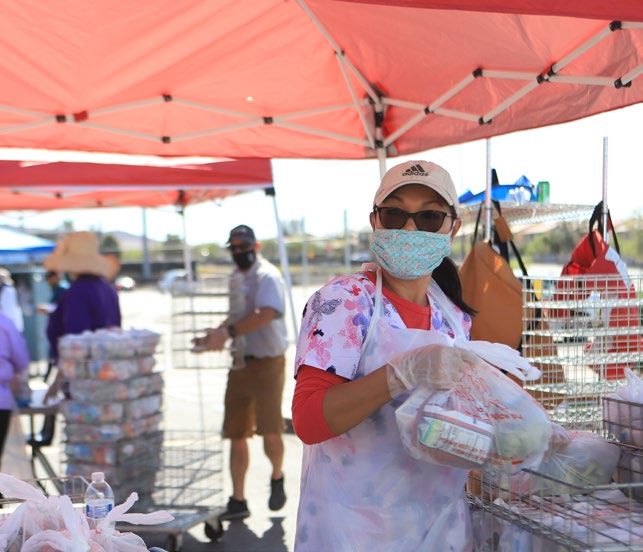
TABLE OF CONTENTS

       5	REGISTRATION

           Learn what is required to register your child
           for the new school year

       7	FOOD SERVICE

           Learn about meal service during distance
           education

     10	FULL-TIME DISTANCE EDUCATION

           Guidance and expectations for the full-time
           distance education model

     18	ACCESS TO TECHNOLOGY

           Information about device distribution, internet
           access, and online learning

     24	PARENT TRAINING AND RESOURCES

           Community resources, important links,
           and more

     27	HEALTH AND WELLNESS

           Guidance on safety protocols, contact tracing,
           and testing sites

     28	STAYING INFORMED

           How the District and schools will communicate
           and where to go for additional information

     This guide will be updated regularly. For the latest
     information, please visit reconnect.ccsd.net.

            3
INTRODUCTION TO THE APPROVED
   REOPENING OUR SCHOOLS PLAN

Four principles have continuously guided the development of the Clark County School District Reopening Our
Schools Plan.

                                              • Ensure the safety and well-being of all students
                                                and employees.
                REOPENING                     • Promote equity and accessibility to learning for
              OUR SCHOOLS                       all students.
                   GUIDING
                 PRINCIPLES                   • Provide instructional delivery systems to meet the
                                                needs of all students.
                                              • Foster positive relationships and interactions.

The Board of School Trustees voted on July 21, 2020, to reopen schools in a full-time distance education
model. This guide provides our parents/guardians with important information on navigating the start of the
school year and supporting students with successful execution of full-time distance education.

  ✔ Schools will open for the 2020-2021 school year in a full-time distance education instructional model.

      –	Updates related to health and wellness will be provided to the Board of School Trustees at regular
         intervals to inform an eventual transition to hybrid learning or face-to-face instruction.

  ✔ Middle school schedules will operate on a semester-based instructional model, offering students four courses
    that will be completed in one semester (instead of over the course of a full year).

  ✔ 	High school schedules will operate on a traditional year-long course instructional model, with principals
     having the discretion to determine the number of six to eight courses.

TRANSITIONING BETWEEN MULTIPLE
REOPENING SCENARIOS
The District is prepared to transition between multiple potential reopening scenarios, including full-time distance
education for all students, in-person instruction following social distancing protocols, and hybrid learning.

The decision to transition from one scenario to another within the Reopening Our Schools Plan will continue
to be guided by public health conditions, school staffing scenarios, and additional relevant information. The
Superintendent and Board of School Trustees will determine the scenario that the District will support at any
given time.

Should the decision be made to transition to hybrid
learning or face-to-face instruction for all students at a
future date, additional guidance will be provided.

                                                       4
REGISTRATION INFORMATION

Registration Began April 16, 2020
   Classes Begin Aug. 24, 2020

Parents must register all new and returning students to the Clark
County School District.

Registration is done through the CCSD online registration system.
Parents of currently enrolled students may complete online                   Children who have attained the age of six who do not meet the
registration using their Infinite Campus account. New families to            entrance requirements will be placed in kindergarten.
CCSD may register online at register.ccsd.net or visit their zoned
                                                                             Children who have attained the age of seven who do not meet the
school. After completing the online registration, parents must bring
                                                                             entrance requirements will be assessed to determine if the student is
the required documents to their child’s zoned school to complete the
                                                                             developmentally ready for first or second grade.
registration process. Parents should contact their zoned school for
questions regarding registration.                                            Children in Nevada between the ages of seven and 18 must be enrolled
                                                                             in and attend school for the entire time school is in session, pursuant
Schools have encountered difficulties with                                   to NRS 392.040.

communications due to out-of-date contact
                                                                             Registration Required Documents
information or voicemail accounts that are full.
The District is asking all parents/guardians to                              1. Proof of Address
                                                                             One form of proof of address is required. A recent utility bill
complete student registration and make sure all                              (telephone and cable bills are not acceptable), current mortgage
contact information is accurate.                                             statement, rental receipt, residential lease agreement, or sales
                                                                             contract are acceptable forms of proof of address.
Visit ccsd.net/zoning or call the Demographics and Zoning Office at
702-799-6430 for information.                                                2. Parent/Guardian Personal Identification
                                                                             A driver’s license, picture identification, and/or passport are
                                                                             acceptable forms of personal identification. Permanent and temporary
Age and Entrance Requirements                                                guardians should be prepared to provide proof of guardianship at
Children must meet the following minimum age and entrance                    the time of registration.
requirements on or before Sept. 30, 2020, to be admitted to
kindergarten, first, or second grade. (Nevada Revised Statutes -             3. Proof of Child’s Identity
NRS 392.040)                                                                 An original birth certificate, passport, or a certified birth card
                                                                             issued by a health district are acceptable documents for proof of a
   ✔ Kindergarten students must have attained the age of five years
                                                                             child's identity.
     old by Sept. 30 to attend kindergarten.

   ✔ First-grade students must have attained the age of six years            4.	Immunization Record
     old and demonstrate proof of completing kindergarten at a               NRS 392.435 Immunization of pupils: Certificate prerequisite to
     public, state-licensed private, state-exempt private, or approved       enrollment; conditional enrollment; effect of failure to immunize;
     homeschool program.                                                     report to Health Division; inclusion of certificate in pupil’s record.
                                    OR                                       Unless excused because of religious belief or medical condition,
   ✔ Demonstrate proof of completing kindergarten and promotion              a child may not be enrolled in a public school within Nevada
     to first grade while being a resident of another state in               unless the child has been immunized and has received the proper
     compliance with the age and entrance requirements of that               boosters for that immunization or is complying with the schedules
     state. Proof must be verified through a report card issued by           established pursuant to NRS 439.550.
     the last out-of-state public or private kindergarten.                   For detailed information concerning immunization requirements
                                                                             for children attending CCSD schools, visit ccsd.net/parents/
   ✔ Second-grade students must have attained the age of seven
                                                                             enrollment#proofImm.
     years old and demonstrate proof of completing kindergarten
     and first grade at a public, state-licensed private, state-exempt       For assistance with obtaining immunizations, parents may contact
     private, or approved homeschool program.                                the Southern Nevada Health District at 702-759-0850.

                                                                         5
Infinite Campus is the District’s Student Information System, electronic grade book,
and parent/guardian and student portal.

The Campus Parent/Student application provides access to information to understand,
monitor, and participate in the educational process.

A mobile app is also accessible for any Apple iOS or Android device.

For more information about Infinite Campus, visit ccsd.net/infinite-campus.

Campus Parent/Student will be live for the 2020-2021 school year beginning
Aug. 24, 2020. Campus Student usernames and passwords have been changed to
the students' Google credentials. Parents/guardians who have a Campus Parent
account from the previous school year will continue to use the same username and
password. If you do not have an account, please contact your child’s school.

If you are having trouble accessing your Campus Portal account, or need
assistance, please contact the Portal Liaison or school designee at your child's
school. You may also email portalsupport@nv.ccsd.net, or call the Portal Help
Desk at 702-799-PORT (7678), Monday-Friday, 6:00 a.m.-5:00 p.m. PST.

Please visit for a school telephone directory https://ccsd.net/district/directory/
resources/pdf/school-telephonedirectory.pdf

WHAT DOES THE CAMPUS PARENT/STUDENT APPLICATION DO
FOR YOU?
                                                  Infinite Campus will provide detailed,
                                                  real-time information including:

                                                  ✔ Calendar
                                                  ✔ Assignments
                                                  ✔ Grades
                                                  ✔ Grade Book Updates
                                                  ✔ Attendance
                                                  ✔ Schedule
                                                  ✔ Academic Plan
                                                  ✔ Fees/Payments
                                                  ✔ Reports
                                                  ✔ District and School Notices
                                                  ✔ Cafeteria Balance
                                                  ✔ School Meals Application
                                                  ✔ Health (Immunizations Only)

                                         6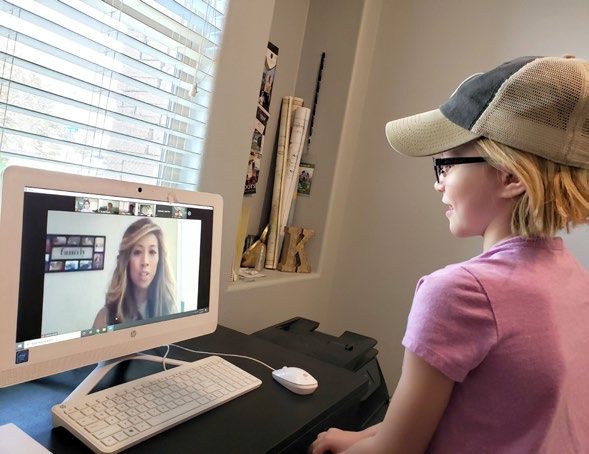
CCSD MEAL DISTRIBUTION PLAN
  DURING FULL-TIME DISTANCE EDUCATION

Ongoing discussions are continuing daily with the
United States Department of Agriculture (USDA)
requesting the continuation of the Summer Food
Service Program along with the nationwide waivers.
In the event the District receives USDA waivers, a
plan may result in the ability to provide meals to
all students at area-eligible locations outside the
cafeteria setting. Updates on potential waivers and
USDA decisions impacting food distribution for
students will be shared as received.

The Food Service Department, while fostering community partnerships, is dedicated to meeting the nutritional needs of students by
providing quality meals with exceptional customer service. Updates about meal distribution will be communicated to parents/guardians.

AUGUST 1 - AUGUST 21, 2020
The Clark County School District (CCSD) will continue to provide meals to students through August 21, 2020 at current food
distribution sites. Meals at the majority of CCSD’s food distribution sites are served Monday - Friday 7 a.m. – 10 a.m. Free for any
child 2 – 18 years old. To find a site near you, or for times and locations of mobile food distribution sites, visit ccsd.nutrislice.com.

AUGUST 24, 2020 - UNTIL FURTHER NOTICE
CCSD’s school year begins on August 24, 2020, and CCSD must distribute meals under the National School Lunch Program (NLSP) and
School Breakfast Program (SBP) guidelines outlined by the United States Department of Agriculture (USDA).

   ✔ Following current USDA guidelines, students will need to meet free and reduced-price meal program eligibility in order to receive
     meals at no cost. Free/reduced eligible students will receive meals at no cost and paying customers will need to pay for meals
     they receive.

      •	293 CCSD schools offer meals at no cost to all enrolled students, regardless of individual household eligibility and without a meal
         benefit application. For more information along with a complete list of provision schools, please visit ccsdfs.info/provision.

      •	Application for meal benefits must be completed each school year and only one application is needed per household.
         Applications can be completed online at www.myschoolapps.com or by paper available at schools as well as the main Food
         Service Department Office located at 6350 E. Tropical Parkway, Las Vegas, NV 89115.

      •	Processing of an application takes 7-10 operating days (to reduce processing time we encourage you to apply online).
         For more information call the Free and Reduced Food Service Office at 1-800-819-7556.

   ✔ Only students enrolled in a CCSD school may receive meals at CCSD school sites.

   ✔ Verification of the above two items must be completed by Food Service personnel prior to meal distribution.

Ongoing discussions are continuing daily with the Nevada Department of Agriculture requesting the continuation of the Summer Food
Service Program along with the nationwide waivers.

For more information and answers to frequently asked questions, please visit ccsd.net/departments/food-service/.

                                                                    7
ATTENDANCE EXPECTATIONS

Students are expected to engage with their schedule of courses and classes on a daily basis.
To be counted as present or participating, the students must either:

    1.   Complete coursework during the same day the class meets; and/or
    2.   Attend a real-time class session; and/or
    3.   Meet or communicate with the licensed teacher or substitute about their progress.

Educators will mark the students as present once they complete one or more of the above-
mentioned distance education activities.

If a student is not able to complete the activities above, the Infinite Campus portal will
mark the student as not present that day with the initials DNP, meaning Distance Education
Non-Participation. Students may submit work beyond the hours of the school day on the
same instructional day and subsequently be counted as present for the date and course.
Educators can remove the DNP code once student participation is verified. Please note that
the Infinite Campus portal is updated nightly and may not change the DNP coding until the
system runs again the following day.

Following Nevada Revised Statute 392.130, after the third consecutive day of non-
attendance, the parents or guardians will be notified via postal mail.

If you have any questions about attendance or DNP notification, please contact your child’s
teacher or the school office.

                                             8
ATHLETICS AND ACTIVITIES

      The Clark County School District is suspending
  NIAA sanctioned sports for all of its member schools
effective Wednesday, July 22, 2020, until further notice.

    Enacting a full-time distance education model for the start of the
    2020-2021 school year suspends face-to-face instruction and effectively
    suspends activities at schools, including NIAA sanctioned sports.

    During the suspension, CCSD schools are not to compete in games or
    contests. Schools are not to conduct practices in NIAA sanctioned sports
    at any location. Schools are not to allow students or coaches to use the
    school’s athletic facilities for practices, intramurals, games, or contests
    in any NIAA sanctioned sport regardless of the affiliation (club or
    otherwise) of the group seeking to use the facilities.

    Additional information will be sent to schools, as it becomes available.

    For more information, please visit https://www.niaa.com/landing/index.

                                       9
COMPONENTS OF DISTANCE EDUCATION

                                                  Full-time distance education requires that all learning
                                                  take part outside of the school buildings at this time,
                                                  with opportunities for online instruction and times of
                                                  independent study. CCSD’s full-time distance education
                                                  model supports students, families, and educators
                                                  through the following components:

CANVAS LEARNING MANAGEMENT                                            VIDEO CONFERENCING
SYSTEM (LMS)                                                          Creating live audio and video connections between multiple
The Canvas Learning Management System (LMS) is an                     students. Google Hangouts Meet is used to conduct student-
online platform that helps with the delivery of instruction,          based, video conferencing experiences.
resources, and other tools to assist with distance education.
With an LMS, students can access it at anytime and anywhere.
Teachers can access content and other tools such as Google
Classroom from within Canvas. To learn how to access Canvas,
please visit:
                                                                      AUDIO CONFERENCING
                                                                      While online meeting platforms may be used during distance
  PARENTS: https://bit.ly/canvasparent5                               education, telephonic conference calls with multiple students
  STUDENTS: https://bit.ly/canvasstudent10                            may occur to optimize access and instruction. Online meeting
                                                                      platform attendance without the video function is audio
                                                                      conferencing.
See page 24 for parent/guardian
training opportunities.
                                                                      VIRTUAL OFFICE HOURS
                                                                      Dedicated blocks of times when educators provide one-to-
REAL-TIME SYNCHRONOUS INSTRUCTION                                     one interactions with students to support individualized
                                                                      instruction and clarification seeking efforts from students
With this type of instruction, learning is happening in real          and families regarding course content and asynchronous
time for students. This includes video conferencing lessons,          assignments. Virtual office hours may occur through video or
live webinars, interactive live chat discussions, virtual, and        audio conferencing methods.
face-to-face instruction.

                                                                      WELLNESS CHECKS
RECORDED/ASYNCHRONOUS INSTRUCTION
                                                                      Licensed professionals will establish times for student and
In this type of instruction, learning does not occur at the           family check-in protocols. The wellness check-in process may
same time for students. This includes recorded video content          occur virtually or in-person to determine student academic,
and other digital media and content for students to work              social emotional, or health needs. This process is intended
through independently.                                                to optimize the general well-being of students involved
                                                                      in distance education. The process may also evaluate and
                                                                      address issues with connectivity and technology access.

                                                                 10
COMPONENTS OF DISTANCE EDUCATION
WEEKLY INSTRUCTIONAL PLAN
This is a guide to
structure student
learning and
communicate weekly
schedules and
distance education
requirements for
students. The plans
will outline learning
times that may occur
with the entire class
(synchronous) or
individual learning
(asynchronous) along
with other supports
for students and
families.
LEARNING LINE: 702-799-6644
CCSD families have access to the Learning Line, a service in which CCSD personnel
provide support for all students via telephone to maximize learning through
distance education. This service may be reached at 702-799-6644. Educators are
available Monday through Friday from 8:00 a.m. until 4:00 p.m. to assist students in
both English and Spanish during scheduled school days.
11ROLES AND EXPECTATIONS
Defining roles and supports during full-time distance education is essential.
Expectations are listed for each stakeholder involved, although this listing may not
be all inclusive and may vary by school. Understanding that every family situation is
different and that many are also balancing work demands, parents/guardians should
contact their school administrator to discuss special accommodations as needed. For a
school telephone directory, please visit https://ccsd.net/district/directory/resources/
pdf/school-telephonedirectory.pdf.
STUDENT
✔ Maintains positive attendance and course progress.
✔ Completes assignments and tasks as assigned.
✔ Exhibits good study habits.
✔ Reaches out to teachers when requiring assistance.
✔ Attends daily and weekly required real-time, synchronous
sessions or recorded sessions.
✔ Participates in any proctored assessments, if applicable.
✔ Uses the virtual office hours as posted by teachers to obtain
additional support and guidance.
PARENT/GUARDIAN
✔ Communicates with the child's instructor(s) through
virtual office hours.
✔ Actively assists the child with their learning and
directly participates with students, specifically in early
elementary grade levels.
✔ Provides support, guidance, and assistance.
✔ Fosters a conducive area for learning in the home
(such as a quiet space away from distractions).
✔ Encourages and recognizes positive gains and
achievements.
✔ Actively monitors child’s progress in assigned courses.
12ROLES AND EXPECTATIONS
LICENSED EDUCATOR
✔ Instructs students and provides daily virtual office hours.
✔ Participates in collaborative lesson planning and professional learning prior to
and during active distance education.
✔ Conducts daily and weekly real-time, synchronous session(s) minutes with all
students and records the session(s) in Canvas.
✔ Arranges for daily communication and follows attendance processes.
✔ Works with support professionals assigned to students with disabilities and
accommodations.
✔ Facilitates resources for students with IEPs or Section 504 Accommodation
Plans and ELLs.
✔ Contacts parents/guardians, as needed.
✔ Attends and participates in all required parent/guardian meetings (i.e.,
IEP/504, ELL, etc.).
✔ Provides emergency substitute plans and instructions as traditionally required.
ADMINISTRATOR
✔ Provides initial and ongoing parent/guardian communication, support,
and guidance.
✔ Leads master scheduling and provides access to content to support
instructors, while considering the instructional needs of all students.
✔ Includes schedules for real-time, synchronous sessions and virtual office
hours by grade-level and/or content area subject.
✔ Facilitates the development and implementation of weekly instructional
guides for every student.
✔ Monitors Individualized Education Programs (IEP)/Section 504
Accommodation Plans/English Language Learner (ELL) supports to
ensure compliance and differentiated learning.
✔ Monitors two-way communication efforts between educators and students
through Infinite Campus and the LMS.
✔ Manages wellness checks and assigns students to wellness teams as needed.
✔ Identifies teachers and staff who serve as a team of expert users to increase
the “bandwidth” of support for teachers.
✔ Observes instruction and provides feedback to licensed educators.
13STUDENT CLASS SCHEDULES
Distance education involves a full-day time commitment for students to meet the learning
standards. The components of distance education, such as synchronous and asynchronous
instruction, audio or video conferencing, Canvas, virtual office hours, weekly instructional
guides, and wellness checks serve as structures to provide and promote students’ learning
within whole-group instruction, small-group instruction, and one-on-one instruction.
All synchronous (real-time learning) sessions will be recorded to assist students and families
with potential schedule challenges and promote mastery of skills and concepts.
Each child’s schedule
will be determined
LEVEL SYNCHRONOUS (REAL-TIME LEARNING) and communicated
LEARNING REQUIREMENTS
by the school principal,
PRIMARY (GRADES PREK-2) 60 - 90 MINUTES PER DAY including a weekly
instructional guide.
INTERMEDIATE (GRADES 3-5) 90 - 120 MINUTES PER DAY Student course
assignments will
MIDDLE (GRADES 6-8) 120 MINUTES PER WEEK PER COURSE,
FOR EACH OF THE FOUR COURSES depend on the
individual needs
HIGH (GRADES 9-12) 60 - 90 MINUTES PER WEEK PER COURSE, of student
FOR EACH OF THE SIX TO EIGHT COURSES
academic plans.
The other components of the instructional day for students will be thoughtfully
planned to include asynchronous instruction (independent learning), including
independent work, paper correspondence, use of online tools and resources for
instruction, and group work.
Instructional schedules for students with individualized
education plans (IEPs) must meet the instructional requirements
and structures established in each student’s IEP, including co-
taught classroom instruction. Instruction for students with Section
504 Accommodation Plans must include required accommodations.
Instruction for English Language Learners (ELLs) must promote
concept and skill development and language acquisition.
14ASSESSMENT AND STUDENT DATA
Students will be participating in assessments remotely during
distance education to ensure critical information about student
progress is shared with educators and families to inform next
steps in learning.
BALANCED ASSESSMENT MAP GROWTH
Assessment is an important part of teaching and learning. It As prescribed in the minimum requirements for distance
helps us get information on what students are ready to learn education plans established by the Nevada Department
and if there are any skills they need extra help with. There of Education, school districts must determine students’
are two types of assessments educators use - formative and academic needs as a result of the COVID-19 pandemic and
summative. provide support as necessary. Therefore, MAP Growth will be
administered remotely for Grades K-10.
Formative Assessment: work that your child does as they
are learning new skills. Teachers and families can monitor a Elementary Schools:
child’s progress and gather information to help the child grow • Students in Grades K-5 will participate in the
along the learning journey. These are low stakes and should reading and mathematics assessments.
be used to monitor learning. Parents/guardians can use this
information to work with their child on filling the gaps in • Students will participate in the fall, winter, and
learning before the summative assessment is given. Examples: spring test administrations.
discussions on Google Meet, comprehension questions after
Secondary Schools:
reading a book, or practice problems on MAP Accelerator/
Khan Academy. • Students in Grades 6-10 will participate in the
reading and mathematics assessments.
Summative Assessment: work that your child does when
they are ready to show they learned a new grade level skill. • Students will participate in the corresponding
Teachers can use these results to give grades. Families can assessment if they are actively enrolled in the
use this information to check that their child is on track for course.
the next grade level or check for college and career readiness. MAP Growth will be administered remotely for all students in
Examples: performance tasks where students show what they Grades K-10 with proctoring support from parents/guardians
have learned by transferring their knowledge to an authentic in collaboration with the classroom teacher. Additional
real-world situation, a selected-response test, or an interview. assistance will need to be provided for primary students.
The MAP Growth fall testing window has been extended
through September 30, 2020.
Resources have been provided to assist families with testing
from home.
MAP Testing at Home Guide for Families https://drive.google.
com/file/d/1t-nPgyrNxOyloWaztc-kHON3KTKAmwfD/view
15ASSESSMENT AND STUDENT DATA
WIDA SCREENER
The WIDA Screener ensures language supports are provided for
English Language Learners (ELLs).
When parents/guardians register their children for school,
they answer a few questions about languages spoken in the
home. That helps schools know which students might need
extra support with learning English. Schools use the WIDA
Screener test to identify which students need additional help
and ensure educators provide language support for your child.
Schools are required to give this test within 30 calendar days
at the beginning of the school year (or 14 calendar days if a
student registers later in the school year).
Because we are starting the 2020 school year in a distance
learning model, the testing process will look a little different.
Schools will make an appointment with parents/guardians
to have students come to the school to take the test. While
students are testing, staff at the school will make sure
everyone is following social distancing guidelines, like
keeping 6 feet apart and always wearing a mask. Schools can
also help with providing buses to get students to and from
school. More information will be provided by your child’s
school when arranging a time for the test.
CIVICS EXAM COLLEGE AND CAREER READINESS
All high schools must administer the civics exam as required College Recruitment
by law.
The college recruitment process may be different for each
college or university; however, Nevada’s Phase 2 recruitment
ADVANCED PLACEMENT TESTING PLAN events for the University of Nevada, Las Vegas (UNLV);
the University of Nevada-Reno; Nevada State College; and
Advanced Placement (AP) testing is scheduled for May 2021. the College of Southern Nevada will continue virtually by
At this time, College Board is scheduled to offer traditional, appointment with admissions representatives and some
face-to-face AP exam administration for the 2020–2021 small-group guided tours. Students may contact the college
school year. Please visit the 2021 AP Exam Schedule (https:// or university admissions department to schedule individual
apcentral.collegeboard.org/courses/exam-dates-and- virtual meetings with representatives.
fees/2021-exam-dates) to view the full exam schedule.
Digital resources and online support will continue through AP UNLV is offering in-person campus tours in Las Vegas
Classroom throughout the school year. in small groups to maintain social distancing guidelines.
UNLV maintains a calendar of digital events at
http://unlv.today/events.
ASVAB TESTING
ASVAB requires each high school to identify students needing
ASVAB testing in Fall 2020. ASVAB requests to limit testing
groups to only “essential testers” (seniors on track for the
College and Career Readiness diploma or students actively
considering military enlistment).
16ASSESSMENT AND STUDENT DATA
CAREER AND TECHNICAL EDUCATION
ASSESSMENTS
Pilot testing is conducted for new or revised
Career and Technical Education programs of study
beginning December 2020, through January 2021.
Selected schools with enrollments in selected
programs will participate. All completer-level
students must test in accordance with NAC 389
during an identified February-March testing
window. Any student who tests and meets the
minimum requirements for the Certificate of Skill
Attainment (3.0 GPA) in their program may retest.
The Nevada Department of Education developed
contingency, online testing plans for participating
students during the previous school closures and
are ready to implement again, if needed.
ACT
The ACT assessment was selected as the Nevada
College and Career Readiness (CCR) assessment Family Support
and is mandated by Nevada Revised Statute (NRS)
390.610 as a graduation requirement. Students in
Grade 11 participate in the ACT at their enrolled
for FAFSA
school on the date provided by the school
administration. Schools may choose to administer Application
the ACT using paper/pencil or online formats.
Resources for parents/guardians and students are In collaboration with all Nevada
available at: System of Higher Education (NSHE)
institutions, the District will provide
https://www.act.org/content/act/en/students- virtual FAFSA nights in October 2020.
and-parents.html These will be live, virtual meetings to
cover Financial Aid Essentials. Each
https://pages.act.org/free-practice-act-test.html NSHE school will discuss scholarship
Standard Administration (Paper): and admission information, and
February 23, 2021 students will be connected with experts
available for one-on-one assistance.
Accommodations Administration (Paper): There are four events scheduled for
February 23-26, 2021, and March 1-5, 2021 October 2020. Confirmed details will be
provided in the upcoming months.
Standard and ACT-Approved
Accommodations (Online): High Schools may also conduct their
February 23-25, 2021, and March 2-4, 2021 own virtual FAFSA workshops and
events with families.
17TECHNOLOGY AND INTERNET ACCESS
DEVICE DISTRIBUTION
CCSD is working to ensure all students
and families expressing a need for
devices are provided with appropriate
resources, including internet access,
as we prepare for future one-to-one
technology access for all.
For support with devices or internet
connectivity, call 1-888-616-2476.
Schools will communicate directly with their families to
assess technology needs and arrange for distribution of CANVAS LEARNING
Chromebooks or other devices for those students without one
during the week of August 3, 2020. MANAGEMENT
Pre-K students and students in Life Skills (LIF), Functional
Life Skills (FLS), and Autism self-contained programs will be
SYSTEM
issued iPads for distance education. Canvas Learning Management is the main system that will be
used for communication and instruction. Canvas is the online
Parents and students must sign and return the Mobile Device classroom available for any CCSD courses. To learn how to
Agreement before the device can be issued to the student. access Canvas, please visit:
Alternate plans will be determined for students without PARENTS: https://bit.ly/canvasparent5
connectivity.
STUDENTS: https://bit.ly/canvasstudent10
INTERNET ACCESS Please use Google Chrome or Mozilla Firefox for the best
experience when using Canvas LMS.
In collaboration with the Las Vegas Chamber of Commerce,
Las Vegas-Clark County Library District, and local businesses,
CCSD has established Wi-Fi Partners and created a Free Wi-
Canvas Mobile App
Fi Directory for students. This online directory provides a Instructure has produced a Canvas app available for iOS
list and interactive map of free Wi-Fi hotspots available for or Android. The Canvas app allows the viewing of courses,
student use, sponsored by organizations and businesses in the content, and assignments. It will also allow you to complete
Greater Las Vegas area. Visit http://ccsd.net/district/mobile- some of your assignments, discussions, and quizzes. Search
device-initiatives/wifi-partners-list.html to view a list of for “Instructure” in the app store to find the app available for
Wi-Fi partners. your device.
CCSD school buses equipped with Wi-Fi hot spots may also be
deployed around the county as needed, once classes resume
on August 24.
18TECHNOLOGY AND INTERNET ACCESS
TEACHING DIGITAL
CITIZENSHIP
Digital citizenship is the norms of appropriate, responsible
technology use. It’s important we help today’s youth
navigate digital communication, cyberbullying, internet
safety, and other digital dilemmas. When it comes to being
a good consumer and educator in a digital world, it’s hard to
determine what is and is not common sense.
CommonSense.org is an independent, nonprofit organization
that offers free K-12 digital literacy and citizenship
curriculum for educators and families. Common Sense
GOGUARDIAN Education provides teachers with resources to harness the
power of technology for learning and life. Common Sense
Media provides families with reviews and advice they need to
To help ensure the safety and security of our students,
make smart choices in the digital age. At CommonSense.org
CCSD has implemented a content filtering application
you will find learning resources for supporting today’s youth
called GoGuardian, that will block students from accessing
in becoming a good digital citizen.
dangerous or inappropriate websites when they are logged
into a Chromebook or Chrome browser on Windows or Mac OS
computers.
ACCEPTABLE USE
POLICY (AUP) AND
The GoGuardian filter is deployed to the students' nv.ccsd.net
user accounts. It will be applied whenever a student logs in to
ACCOUNT ACCESS
Chrome OS or the Chrome browser with his or her nv.ccsd.net
account, regardless of whether the device was issued by CCSD.
GoGuardian will NOT filter content or impact the browsing
experience of non-CCSD accounts (private Gmail accounts, etc.). Students are not eligible to receive a technology device
without an approved Acceptable Use Policy (AUP) on file in
Through the use of this tool, we hope to: Infinite Campus.
✔ Encourage safer practices and responsible browsing Students are required to have parent/guardian permission
habits. each school year to access District network resources. Student
Active Directory (AD) and Google G-Suite for Education
✔ Help protect students against harmful and inappropriate (Google) accounts are automatically enabled and disabled
online material based on the status of their AUP in Infinite Campus.
✔ Help students stay “scholarly” and more focused when Parents/guardians can view their Online Registration (OLR)
learning online selection for the Acceptable Use Policy by logging in to
✔ Help assess students’ progress towards class assignments Parent Portal at https://campus.ccsd.net/campus/portal/
parents/clark.jsp, clicking More, then Online Registration
✔ Facilitate communication between teachers and students PARENTS ONLY. The selection can viewed in the Application
during class time. Summary PDF of OLR. If a parent/guardian wants to change
their selection for the AUP, they can reach out to their child’s
school to fill out a CCF-588 Annual Release and Network
Access Form.
19TECHNOLOGY AND INTERNET ACCESS
CONNECTING
KIDS NEVADA
STUDENT USERNAMES CAMPAIGN
AND EMAIL ADDRESSES The Nevada COVID-19 Response, Relief and
Recovery Task Force – in coordination with
Parents/guardians are now able to access their child’s username community partners – has launched a
and CCSD email address by logging into the IC Campus Portal, statewide initiative to connect our students
campusportal.ccsd.net, clicking MORE, then CCSD Standard Accounts. with internet service and devices.
Students can also retrieve their username information and/or reset
their password by visiting myaccount.ccsd.net. The Connecting Kids Nevada
campaign encourages parents
to participate in the Clark
County School District
technology needs survey:
https://aarsiapps.ccsd.net/
survey/.
The initiative also is launching
a newly created Family
Support Center (FSC) that will
have live operators, Monday
through Saturday, from 7 a.m.
to 6 p.m., to connect families
with devices and connectivity.
The FSC phone number is
1-888-616-2476 and will be
active for 60 days starting
Aug. 12.
The initiative’s website, https://
connectingkidsnv.org/, contains important
STUDENT PASSWORD RESET information and will be updated on an
ongoing basis.
Student passwords will not expire in August 2020.
If needed, students may utilize the self- The District will subsidize in-home Internet
service password reset tool on myaccount.ccsd. connections for families without in-home
net. Additional validation questions have been internet connectivity who meet certain
implemented to increase security. Additional eligibility requirements through the 2020-2021
student resources are available at stutech.ccsd.net. school year. The District subsidy will cover 100%
of the family’s costs of the in-home internet
service during the school year. A variety of
connection options are available; the FSC will
help determine the appropriate options to meet
the needs of the families requesting service.
20SUPPORTING OUR STUDENTS
SUPPORTING OUR STUDENTS WITH DISABILITIES
The District recognizes its obligation to provide a Free Appropriate data, etc.), including any information collected during the closure,
Public Education (FAPE) for students with disabilities. Due to the should be incorporated in order to develop appropriate goals and
COVID-19 pandemic, the District, in collaboration with parents, accommodations for the student’s distance education program.
will make adjustments to each students’ Individualized Education
IEP Meetings
Program (IEP) to provide reasonable and accessible educational
programming during distance education. School staff will be All IEP meetings will be conducted virtually through a digital
contacting parents to coordinate this process to provide a FAPE to platform, including Google Meet or telephone for annual IEPs and
students with disabilities, including the when parents do not agree with a proposed
coordination of related services if it is IEP revision.
designated in the IEP. Additionally, when Section 504 Accommodation Plans and
it is necessary, staff will contact parents Meetings
and discuss the process of assessments to
facilitate IEP development. Section 504 of the Rehabilitation Act
of 1973 prohibits discrimination based
Delivery of Equitable Access to on disability in any program or activity
Educational Opportunities operated by school districts. Requests for
During distance education, school disability-related accommodations should
staff will consider alternative ways to be addressed as soon as practicable to
provide equitable access and appropriate ensure Section 504 eligible students are
educational opportunities for students provided equitable access to all student
with disabilities, including exploring all programs, activities, and services provided
available supplementary aids and services by the District. Section 504 teams should
through online and/or virtual platforms, make appropriate determinations of
and/or other activities, such as paper eligibility based upon the information
correspondence. presented by parents and school personnel.
Parents may be asked to provide formal
Each student’s IEP will be implemented through the distance
consent for District staff to contact the student’s health care
education program, until such a time as an agreed upon annual IEP,
providers if additional information is required.
IEP Revision, or IEP Revision Without a Meeting at the Request of
the School District, is completed. An IEP Revision cannot replace Section 504 teams should determine the appropriate
an annual IEP that was scheduled, but not completed, during accommodations to facilitate access to, and participation in,
the 2019-2020 school year. Annual IEPs must be completed when distance education, which could include the Learning Line as
required (i.e., immediately due or overdue). All staff will follow well as a review of distance education resources. All Section 504
standard procedures, to include providing the procedural safeguards meetings must be held virtually or via telephone.
rights booklet with parents. Homebound Information
IEP Revisions during Distance Education of the School All requests for homebound services will follow standard procedures.
District
• If a parent requests homebound services, the following options
Due to distance education requirements, schools must revise IEPs will be considered based on the student’s presented needs: a
for all eligible students under the Individuals with Disabilities Section 504 plan; supplemental health services for a student
Education Act (IDEA). While schools are operating in distance currently on an IEP or 504 plan; or follow the homebound
education, the IEP Revision Without a Meeting at the Request of application process.
the School District must be conducted virtually through a digital
• All homebound instruction will be conducted through distance
platform, including Google Meet or telephone. Each student’s
education.
teacher or case manager will contact their parent/guardian to
develop an IEP Revision, as needed, to enable provision of a FAPE • All homebound IEPs must also be revised for distance
through distance education. If an agreement cannot be reached, education.
then a virtual IEP meeting will be scheduled. • All students in homebound should be included in the teacher
During the development of each IEP, any relevant existing data contact and virtual classes to promote inclusivity.
(i.e., parent or teacher input, observational data, prior testing
21SUPPORTING OUR STUDENTS
SUPPORTING OUR ENGLISH LANGUAGE LEARNERS
The English Language Learner Division (ELLD) offers multiple ✔ Parent/Guardian workshops and videos discussing how
resources and unique opportunities for parents/guardians to support students’ language development in the home
to build capacity to support language development at home
and support student success in school during distance ✔ Daily activities to promote language development
education. Student achievement and school improvement is ✔ Social-emotional resources
a shared responsibility in which families and school staff are
equal partners. Parents and guardians can contact ELLD for ✔ Access to ELLD staff for additional support
additional support or information, by calling 702-799-2137.
✔ Supports and resources available in both English and
English Language Learner (ELL) Resources for Parents and Spanish
Guardians Canvas course provides parents/guardians access
to learning activities and resources for supporting students’
learning during distance education, including:
Parent/Guardian workshops topics include:
Workshop Title Description
Navigating This session provides families with information and resources available to support academic and socio-
Learning from Home emotional learning in the home. Information shared includes the importance of creating and following
(Grades PK-12) a conducive learning environment for your students, student learning extension opportunities offered
by the Clark County School District (CCSD), and ideas for navigating learning at home.
Language This session provides families with information and resources available to support language
Development development in the home. Information shared includes ideas for supporting social and academic
at Home language as well as interactive games families can replicate at home to promote language development
(Grades PK-12) in everyday interactions. This session also provides parents/guardians an understanding of how
students are identified as English language learners based on language development levels.
Newcomer This session assists families and students with making a smooth transition into the school community.
Orientation: Parents/guardians leave this session with the knowledge necessary to navigate new educational
Exploring CCSD experiences as well as find out about the available supports that promote student success.
(Grades PK-12)
Discovering Future This session equips families with tools and resources to help guide their students to explore diverse
Opportunities career options. Parents/guardians complete an online career assessment to discover their career
(Grades 3-12) matches, median salary, and job availability and receive instructions on how to complete the
assessment at home with their students. Parents/guardians learn about the importance of aligning
academics with career goal setting for students to discover their own future opportunities.
STEM: Engineering This session is designed to spark interest in STEM practices. Parents/guardians will experience
Adventures engineering challenges, such as building a parking garage and a water tower. Parents/guardians
(Grades 2-12) receive suggestions and/or materials to engage their families in similar challenges at home.
22SUPPORTING OUR STUDENTS
SUPPORTING OUR ENGLISH LANGUAGE LEARNERS
The Teaching and Learning: English Language Learner Division website provides
tools to help families engage in their child’s education.
Please visit: https://teachingandlearning.ccsd.net/ell/
✔ NEWCOMER TOOLKIT:
https://teachingandlearning.ccsd.net/ell/newcomer-toolkit/
Provides resources and lessons on how to help students acclimate to U.S.
schools, build literacy and language, and develop peer mentors.
✔ LONG-TERM TOOLKIT:
https://teachingandlearning.ccsd.net/ell/long-term-toolkit/
Provides resources to accelerate the development of the students’ academic
literacy and language proficiency, leading to college and career readiness.
NEWCOMER MESSAGE LINE:
(702) 799-0800
Newcomer students and families can call and leave a message regarding guidance
and support opportunities for continued student learning. Calls will be returned in
24 hours. Support is available in the following languages: Amharic, Arabic, Bengali,
Dari, Farsi, French, Hindi, Kinyarwanda, Lingali, Pashto, Spanish, Swahili, Tigrinya,
and Urdu.
Newcomer Support and Integration Services (NSIS) assists eligible newcomer and
refugee children to successfully transition to a new way of life in Nevada and
specifically help them adjust to the new school, academic expectations, and social
environment. Community partnerships have been established to assist newcomer
families with available wrap-around services and integration services.
Information about resources can be found on the NSIS website:
https://teachingandlearning.ccsd.net/ell/newcomer-support-and-integration-
services/
"Community partnerships have been established to assist newcomer families
with available wrap-around services and integration services."
23PARENT/GUARDIAN TRAINING
FOR DISTANCE EDUCATION
TUTORING AND
ACADEMIC
SUPPORT
CCSD families have access to
the Learning Line, a service
in which CCSD personnel
provide support for all
students via telephone to
maximize learning through
distance education. This
LIVE AND RECORDED service may be reached at
INTERACTIVE 702-799-6644. Educators are
SESSIONS AVAILABLE available Monday through
FACES, in collaboration with District and community
partners, will provide academic and social-emotional Friday from 8:00 a.m. until
parent/guardian training opportunities through the
University of Family Learning (UFL) Online.
4:00 p.m. to assist students
The “Distance Education Support for Families” series will be in both English and Spanish
made available through scheduled live/interactive sessions
and pre-recorded content/videos available any time on
during scheduled school days.
the FACES website. (https://bit.ly/facesuflonline). If
you have any suggestions for future modules, please email
faces@nv.ccsd.net.
ELL Navigating Learning from Home Parent/Guardian
Workshop
Parent/Guardian workshops and online videos are available
to assist families of English Language Learners with
navigating support and services available.
Videos are available in both English and Spanish on CCSD
Learns: English Language Learner Division and on FACES
website. (https://bit.ly/facesuflonline).
The English Language Learner Division will continue to
offer virtual sessions in the fall. Plan ahead with a school calendar
Parents/Guardians can access resources and information that contains a listing of holidays
on workshops via ELL Google Classrooms: For Students and and staff development days:
Families.
https://ccsd.net/schools/back-to-
school/calendar.php
24PARENT RESOURCES
CLARK COUNTY
DAY CAMPS
Starting August 24, 2020, 13 Clark County “School Daze”
day camp facilities will provide access to distance learning
for children from five to 12 years of age. The camps will run
Monday through Friday, 7 a.m. to 6 p.m.
Socially distanced activities will include educational
time, games, arts n’ crafts, sports, and themed activities.
Registration is now open and can be done online at
www.clarkcountynv.gov/parks. Limited in person
registration is available. Please contact individual sites
for more information:
Aquatic Springs Pool
7025 South Fort Apache Road, 89148
Bob Price Recreation Center
2050 Bonnie Lane, 89156
Cambridge Recreation Center
3930 Cambridge St., 89119 ALL RESOURCES LISTED ON THIS
Desert Breeze Recreation Center PAGE MAY BE FOUND HERE:
8275 Spring Mountain Rd., 89117
https://ccsd.net/schools/
Hollywood Recreation Center
1650 S. Hollywood, 89142
back-to-school/resources.php
Mountain Crest Neighborhood Services Center
4701 N. Durango, 89129
Paradise Recreation Center
4775 S. McLeod & Tropicana, 89121 Parents and participants will be required to go through a
daily intake process that includes temperature checks and
Parkdale Recreation Center completing a Daily Wellness Acknowledgement Form. Staff
3200 Ferndale St., 89121 working in the program will be required to wear masks and
parents are asked to provide a personal, reusable mask for
Pearson Community Center
their child. Participants are required to bring their own lunch
1625 West Carey, 89106
and snack that doesn’t require heating or cooling.
Walnut Recreation Center All surfaces and equipment will be cleaned with disinfectant
3075 N. Walnut Rd., 89115 regularly. Program availability is based on
a first come, first served basis. The program will continue
West Flamingo Senior Center until kids can return to school.
6255 W. Flamingo, 89103
For more information on the “School Daze” program visit
Whitney Recreation Center www.clarkcountynv.gov/parks or call 702-455-8200 or email
5712 E. Missouri Ave, 89122 CCParks@ClarkCountyNV.gov.
Winchester Dondero Cultural Center
3130 Mcleod Dr. 89121
25PARENT RESOURCES
Mental Health Resources
ALL RESOURCES LISTED ON THIS •
https://www.ccsd.net/community/mentalhealth/
PAGE MAY BE FOUND HERE: • The CDC:
Mental Health and Coping During COVID-19
https://ccsd.net/schools/
back-to-school/resources.php • The Child Mind Institute:
Talking to Kids About the Coronavirus
Students may experience hunger, abuse, or lack of
healthcare in their homes and with their families.
Know local resources and be prepared to help.
Behavior Resource • Anxiety and Depression Association of America:
The Harbor Juvenile Assessment Center remains open with 7 Science-Based Strategies to
limited hours for operation during this time and we have Cope With Coronavirus Anxiety,
consolidated to one location. We are operating 7 days a week, by Psychologist Jelena Kecmanovic
8 a.m. to 10 p.m. at the Harbor Mojave for the time being. We
are conducting assessments with families by phone in place • The Jed Foundation:
of in person due to the public health concerns related to Tips for Self-Care and Managing Stress
COVID-19 and still have resources to connect families to with • National Association of School Psychologists:
the exception of resources based in large group settings. We are Talking to Children About COVID-19:
accepting and encouraging new referrals from CCSD. Any Social A Parent Resource
Worker, Teacher, Counselor, Administrative Staff (any individual
really) can refer a youth to The Harbor through our website, • The Center for the Study of Traumatic Stress:
theharborlv.com and we reach out directly to the family, same Coronavirus and Emerging Infectious Disease
day and continue trying for at least 7 days to make contact. Outbreaks Response
Families are also welcome to contact us at any time for support
at 702-455-6912.
Grief Resources
• Helping Parents Guide Children Through
the Grief Process
• Helping Parents Guide Teens Through
the Grief Process
Las Vegas - Clark County Library District
EDUCATIONAL RESOURCES
• Access to a library e-card (this provides anyone access to all the Library District’s digital
resources): https://lvccld.org/ecard/
• Curbside service and easy in / easy out holds pickup of collection materials:
https://lvccld.org/partial-reopening/
• An interactive Tools for School Success! poster. It’s color-coded by subject, and takes kids right to
the database: https://lvccld.org/toolsforschoolsuccess
26HEALTH AND WELLNESS
The risk of spreading COVID-19 increases as students and SOCIAL DISTANCING:
staff members have close contact or prolonged interactions KEEP A SAFE DISTANCE TO SLOW THE SPREAD
with increasing numbers of people. COVID-19 is mostly spread
https://www.cdc.gov/coronavirus/2019-ncov/prevent-
person-to-person by respiratory droplets released when people
getting-sick/social-distancing.html
talk, cough, or sneeze. It is thought that the
virus may spread when inhaled or spread to
hands from a contaminated surface and then
HANDWASHING
making hand contact with the eyes; nose; or
mouth, causing infection. Handwashing and the use of alcohol-based hand sanitizers helps
to prevent infections and reduce the number of viable pathogens
When interacting with others who are not on the hands. Access to handwashing supplies is essential. These
suspected or confirmed to have COVID-19, the supplies include soap, hand sanitizer with at least 60 percent
Centers for Disease Control (CDC) recommends alcohol (for parents and older children who can safely use hand
following everyday prevention actions. sanitizer), paper towels, tissues, and no-touch trash cans.
Therefore, personal prevention practices such as
social distancing; handwashing; hand sanitizing; Handwashing is the single most effective infection control
not touching eyes, nose, or mouth; wearing intervention (CDC).
cloth face coverings; staying home when sick; and environmental
Hand hygiene is performed by washing hands with soap and
practices, such as frequent cleaning and disinfection of frequently
water for at least 20 seconds or using hand sanitizer with 60-95
touched surfaces, are important principles.
percent alcohol content until the product dries. If hands are
To lower the risk of infection transmission, schools must visibly soiled, use soap and water.
promote healthy behaviors that reduce the spread of illness.
When and How to Wash Hands: https://www.cdc.gov/
handwashing/when-how-handwashing.html
SOCIAL DISTANCING Handwashing videos: https://www.cdc.gov/handwashing/
Social distancing, also called “physical distancing,” means videos.html
keeping space between yourself and other people outside of
your home. To practice social or physical distancing:
WEARING MASKS
• Stay at least 6 feet (about 2 arms’ length) from other
While cloth face coverings are not considered personal protective
people.
equipment (PPE), they are useful to prevent the spread of disease.
• Do not gather in large groups and avoid close contact Face coverings may be challenging for students (especially younger
with other people (close contact is being within 6 feet students) to wear in all-day settings, such as school. Cloth face
of another person for 15 minutes or longer). coverings are meant to protect other people in case the wearer
is unknowingly infected but does not have symptoms. Cloth face
• Stay out of crowded places and avoid mass gatherings. coverings are not surgical masks, respirators, or other medical PPE.
Cloth face coverings should be washed daily in a washing machine.
• Use distance learning methods for general assemblies,
special events, and other activities that would avoid Do not touch the face (eyes, nose, or mouth) at any time, including
large gatherings of 50 or more students. while wearing a cloth face covering and wash hands frequently.
Note: Cloth face coverings should not be placed on:
We all want our children back in schools. • Children younger than 2 years old.
So, please, listen to our public health • Anyone who has trouble breathing, is unconscious, is
officials and be a good neighbor – wear incapacitated, or has a disability that prevents them
from wearing a cloth face covering or otherwise unable
a mask and practice social distancing. to remove the cloth face covering without assistance.
Once our entire community follows this • Students unable to wear a face mask due to medical
common sense advice, the faster the concerns (medical concerns not addressed in the
exemption portion of the Nevada Medical Advisory
COVID infection rate will go down, and
Guidance, will require a note from the Licensed Health
the sooner that students can return to Care Provider for access to CCSD property).
the classroom!
27You can also read


