2020-2021 Edition STUDENT HANDBOOK ACADEMIC POLICIES AND PROCEDURES FOR THE - Bachelor of Science Program in Biomedical Sciences - The City ...
←
→
Page content transcription
If your browser does not render page correctly, please read the page content below
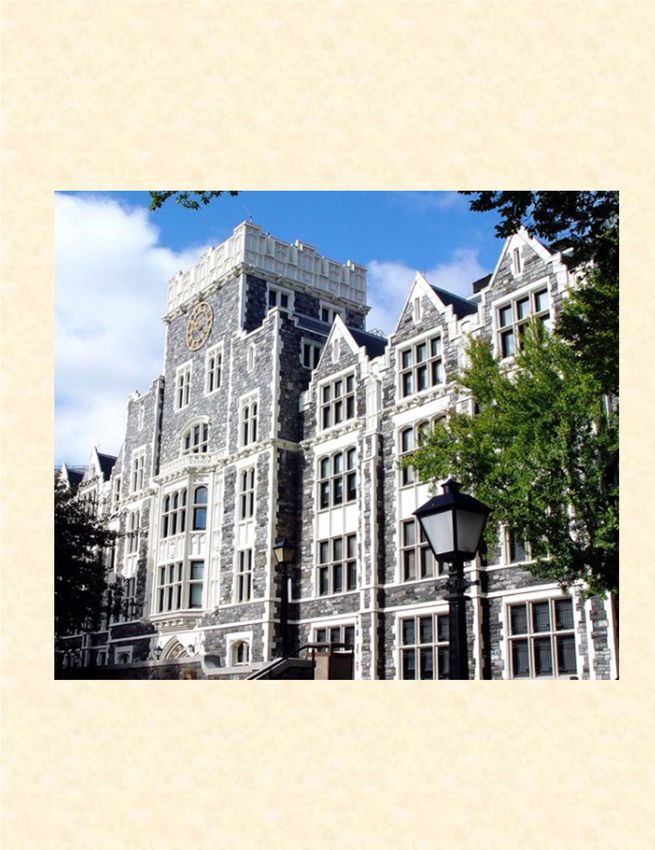
STUDENT HANDBOOK
 ACADEMIC POLICIES AND PROCEDURES FOR THE
Bachelor of Science Program in Biomedical Sciences
                 2020-2021 Edition
The CUNY School of Medicine/Sophie Davis Biomedical Education (CSOM/SBE) Program represents that the information in this publication is accurate as of the press date. The academic requirements, policies and procedures set forth in this handbook are subject to change without advance notice. Circumstances may require that a given course be withdrawn, or that alternate offerings be made without advance notice. This edition supersedes all previous publications. For information regarding the MD program policies and procedures please visit https://www.ccny.cuny.edu/sites/default/files/2020- 08/MD_StudentHandbook_2020_2021.pdf Please note all admitted and registered CCNY students are assigned a CCNY e- mail address. The email address is: userID@citymail.cuny.edu In the event that a student’s email address is changed, the student must notify the Office of Academic Records/Registrar in Room 102 of the Harris Building (telephone: 650-7156/7160) so that the school records can be updated. Change of Name, Phone Number, Address, Social Security Number Any student may change his/her address, (billing, home, and mailing) in CUNYfirst Student Services Center. However, to change the permanent address, name or social security number, students are required to complete a form, provide supportive documentation and submit, in person, to the CCNY Office of the Registrar and the CUNY School of Medicine Office of the Registrar, respectively. More detailed information regarding E-mail Correspondence Policies are listed within this handbook
Contents

   INTRODUCTION .................................................................................................................. 11

I. CURRICULUM ..................................................................................................................... 11

   A. OVERALL CURRICULUM STRUCTURE ..................................................................... 11

   B. CURRICULUM REQUIREMENTS, REGULATIONS, AND OPTIONS FOR THE BS
       DEGREE (Sophie Davis Biomedical Education Program) ............................................... 14

   Registration ............................................................................................................................ 14

   Schedule Changes and Dropping Courses .............................................................................. 14

   City College Regulations on Dropping Courses .................................................................... 14

   Electives Requirement ............................................................................................................ 15

   Independent Study. ................................................................................................................ 16

   Advanced Placement Credit. .................................................................................................. 16

   Transfer College Credit .......................................................................................................... 17

   E-Permit Courses ................................................................................................................... 17

   ACADEMIC POLICIES, RULES, AND REGULATIONS ................................................. 18

   A. GUIDELINES FOR MEDICAL COURSES ................................................................... 18

   B. GRADING POLICIES AND REQUIREMENTS ............................................................ 19

   Satisfactory Academic Progress. ........................................................................................... 19

   Student Academic Progress Committee ................................................................................ 19

   BS Program Grade Requirements….………………………………………………………..20

   Courses in Which a Grade of "B-" or Better Is Required…………………………………….20

   Courses in Which a National Board of Medical Examiners (NBME) Subject Examination Is
   Required…………………………………………………………………………………….20

   Courses in Which a Grade of "C" or Better Is Required……………………………………21

                                                                                                                                                  8
Courses in Which a Temporary Grade of “Y” [Year-long] is given…………………….…..22
Required Minimum Grade Point Average……………………………………………….…..22
Grades Given in Failed MED Courses in the BS Program (Not a customized exam)…….…22
Grades Given When the National Board of Medical Examiners (NBME) Subject
Examination is Failed………………………………………………………………………..23
Grades Given in Failed Non-MED Courses…………………………………………………23
Course Reassessment Policy .................................................................................................. 23
Requirement for Promotion to the Next Academic Year ....................................................... 25
Academic and Professional Probation ................................................................................... 25
Repetition of a Failed Course. ............................................................................................... 25
Repeating an Academic Year ................................................................................................. 25
Protocol for Repeating an Academic Year ............................................................................ 26
Requirements for the Awarding of the Baccalaureate Degree ............................................... 27
Adverse Academic Actions and Appeals Procedures ........................................................... 27
Guidelines for Academic Due Process ................................................................................... 27
Grade Appeals Procedure……………………………………………………………………28
Dismissal ................................................................................................................................ 28
Notifying Students of Adverse Academic Decisions ............................................................. 29
Appeals Procedure ................................................................................................................. 29
Resignation from the CUNY School of Medicine/ Sophie Davis Biomedical Education
Program .................................................................................................................................. 30
III ETHICS & PROFESSIONALISM........................................................................................ 31
Professional Behavior Documentation Forms....................................................................... 31
Ethics and Professionalism Committee……………………………….……………………..31
A. Absence Policy and Issues of Professionalism .................................................................. 32
B. Academic Integrity Policy ................................................................................................. 33
9C. Completion of Course Evaluations ................................................................................... 34
D. Student Code of Honor ...................................................................................................... 36
IV ADDITIONAL SCHOOL POLICIES .................................................................................. 36
A. Advising Systems ............................................................................................................. 36
B. Leaves of Absence ........................................................................................................... 37
C. Mistreatment policy........................................................................................................... 38
D. Policies and Practices to ensure the confidentiality of sensitive health, psychological and/or
psychiatric information ...................................................................................................... 39
E. Policies on Teaching and Evaluation by Members of the Medical School Administration
................................................................................................................................................ 40
F. Policy of Professional Behavior ......................................................................................... 40
G. Technical Standards, U1-M4 Students ............................................................................. 41
H. E-mail Correspondence Policy……………………………………………………………43
I. Change of Name, Phone Number, Address, Social Security Number.............................. 43
J. CSOM Drug Policy……………………………………………………………………….44
K. Useful Links………………………………………………………………………………47
10ACADEMIC POLICIES AND PROCEDURES
INTRODUCTION
The Educational Program at the CUNY School of Medicine/Sophie Davis Biomedical
Education (CSOM/SBE) is designed as an integrated curriculum in medical studies. During the
first three years of the Program, students fulfill all requirements for the BS degree in Biomedical
Sciences. After receiving the BS degree, students will be eligible for admission to the MD portion
of the program, upon completion of which they will be granted the MD degree. The City College
of New York confers both degrees.
CSOM/ SBE students have been carefully selected for their ability to meet the demands of this
challenging program. They are expected to satisfy not only the academic requirements of
CSOM/SBE, but also the additional requirements of the City College of New York. These
requirements are designed to ensure that students receive the broad-based education that will
prepare them to meet the constantly changing demands of the medical profession in accordance
with the highest ethical standards and the goals of CSOM/SBE.
I. CURRICULUM
A. OVERALL CURRICULUM STRUCTURE
The curriculum of CSOM/SBE has been designed to promote the maximum intellectual and personal
development of each student and to foster student interest in practicing primary care medicine in
underserved communities.
The overall curriculum map for each year in the program can be found on the CSOM Registrar
website https://www.ccny.cuny.edu/csom/cuny-school-medicine-office-registrar
The City College Bulletin of Undergraduate Programs contains course descriptions for all required
courses at: https://www.ccny.cuny.edu/registrar/bulletins
Undergraduate Curriculum Map
FIRST YEAR (U1) - FALL SEMESTER
NUMBER COURSE TITLE CREDITS
BIO 20700 Biology of Organisms 4
FIQWS Freshman Inquiry Writing Seminar- Creative Expression: 3
10013 Narrative Medicine
FIQWS Freshman Inquiry Writing Seminar- Creative Expression: 3
10113 Composition
11PHYS 20300 General Physics I 4
NSS 10000 New Freshman Seminar 0
WCIV 10100 World Civilizations: Prehistory to 1500 A.D. 3
or any other course that meets the Pathways requirement
designation of World Cultures and Global Issues
TOTAL 17
FIRST YEAR (U1) - SPRING SEMESTER
MED 10200 Principles of General Chemistry 5
PHYS 20400 General Physics II 4
USSO 10100 The Development of the United States and its People 3
or any other course that meets the Pathways requirement
designation of US Experience in its Diversity
ENGL 21003 Writing for the Sciences 3
MED 11209 Introduction to Population Health and Community-Oriented 3
Primary Care
Elective 3
MED 10100 Professional Foundations 0
TOTAL 21
SECOND YEAR (U2) - FALL SEMESTER
MED 20300 Bio-Organic Chemistry 5
PSY 10200 Applications of Psychology in the Modern World 3
MED 22309 Fundamentals of Epidemiology and Biostatistics 4
MED 29309 Practice of Medicine 1 2
Electives 6
TOTAL 20
SECOND YEAR (U2) - SPRING SEMESTER
NUMBER COURSE TITLE CREDITS
12MED 20400 Molecules to Cells I 4
MED 20000 Introduction to Human Genetics 3
MED 22409 Population Health and Community Health Assessment 3
MED 24409 Evaluation in Healthcare Settings 6
MED 29409 Practice of Medicine 1 2
Electives 6
TOTAL 24
THIRD YEAR (U3) - FALL SEMESTER
NUMBER COURSE TITLE CREDITS
MED 30501 Molecules to Cells II 4
MED 32509 US Healthcare Systems & Policy 3
MED 30000 Introduction to Biomedical Ethics 3
MED 39509 Practice of Medicine 2 2
Electives 6
TOTAL 18
THIRD YEAR (U3) - SPRING SEMESTER
NUMBER COURSE TITLE CREDITS
MED 33609 Clinical Anatomy 5
MED 37609 Fundamentals of Organ Systems 15
MED 39609 Practice of Medicine 2 2
TOTAL 22
13B. CURRICULUM REQUIREMENTS, REGULATIONS, AND OPTIONS FOR THE BS
DEGREE (CSOM/SBE)
Registration
CCNY regulations apply to registration for all courses in the BS portion of the
curriculum. Students must register on time for all courses required under the prescribed
curriculum to maintain their enrollment in the Sophie Davis Biomedical Education Program. A
student who fails to register or registers for non-required courses instead of the prescribed
curriculum during the registration period allowed by the College will be considered to have
resigned from the Sophie Davis Biomedical Education Program unless there is prior written
approval from the Associate Dean for Student Affairs.
Schedule Changes and Dropping Courses
Students must follow the prescribed Sophie Davis Biomedical Education Program
curriculum as scheduled, taking each course (including electives) no later than the semester and
year in which it is scheduled to be taken. It is especially important that students take MED
courses at the prescribed time, completing each one in sequence as scheduled. A student who
wishes to postpone or drop any course, or take any course out of order must first obtain the
written permission from the CSOM/SBE Program Associate Dean for Student Affairs.
In general, a student will not be permitted to postpone or drop a required MED course except
under the most unusual, compelling circumstances.
A student will not be permitted to drop a course which the student is repeating, except
under unusual circumstances and only after consultation with the CSOM/SBE Program
Associate Dean for Student Affairs. A student who drops any required course (including a
course needed to fulfill the electives requirement) or who does not take a course by the time it
is scheduled to be taken, risks jeopardizing his or her academic progress and standing. If a
student does not take a course at the proper time, it is usually difficult, and sometimes
impossible, to schedule the course later in the curriculum. Since many courses are prerequisites
for subsequent courses, not taking a course at the prescribed time may lead to problems in
scheduling later courses as well.
Each student must successfully complete all courses required for graduation to be eligible to
receive the BS degree (see "Requirements for the Awarding of the Baccalaureate degree,"
below).
City College Regulations on Dropping Courses
After the registration period, a student may drop a course during the time allowed by the City
College. To drop a course without an academic penalty, the student must drop the course early in
the semester and obtain the written approval of both the course instructor and the CSOM/SBE
Program Associate Dean for Student Affairs. If the student drops the course during the first three
weeks of the semester, the course will not appear on the student's transcript. A student who drops
a course during the fourth through approximately the tenth week of the semester and obtains the
written approval of both the course instructor and the CSOM/SBE Associate Dean for Student
Affairs will receive the non- penalty grade of "W" [withdrawal without penalty] in the course;
although this grade will appear on the student's transcript, it will not be counted when the
student's GPA is calculated. Instructors cannot assign the grade of "W" [withdrawal without
14penalty]. Students should consult the official college academic calendar for the exact dates of
drop deadlines (https://www.ccny.cuny.edu/registrar/academic-calendar).
A student who does not complete the formal drop procedure and stops attending the course
without notifying their instructor will be assigned a grade of "WU" [withdrew unofficially -
withdrawal without approval], which will appear on the student's transcript. The "WU" [withdrew
unofficially] grade is treated as an "F" [failure] and is assigned zero points when the student’s
GPA is calculated.
Dropping courses--even if the non-penalty grade of "W" is assigned--can have serious negative
consequences. City College regulations stipulate that a student who drops 12 credits or more
within two academic years, be placed on academic warning. A student who drops 18 or more
credits may be subject to dismissal. Dropping courses may also cause a student to become
ineligible for financial aid since many financial aid programs require that recipients meet specific
academic progress guidelines.
BS Program Electives Requirement
Students are required to successfully complete a total of 19 credits in free elective courses for
the BS program. Of these, at least 2 credits must be fulfilled with courses designated as Regular
Liberal Arts and Sciences courses in order to complete the Liberal Arts and Sciences
requirement. Eligibility as Regular Liberal Arts and Sciences courses is determined in
accordance with the NYS Education Department definition: “The Liberal Arts and Sciences
comprise the disciplines of the humanities, natural sciences and mathematics, and social
sciences. Therefore, a student may take as an elective any course in the College of Liberal Arts
and Sciences that meets this requirement.
Students are strongly advised to fulfill the electives requirement as prescribed in the
curriculum of the Program, by no later than the Fall semester of the third year, since the
demands of the remainder of the curriculum make it extremely difficult, and often impossible,
to take electives.
Students may apply up to eight credits in "Independent Study" (see the following section)
toward the free electives requirement; a student can register for a maximum of four credits of
Independent Study in any one semester.
Students may also receive free elective credit for Advanced Placement examinations and
International Baccalaureate coursework taken in high school (see "Advanced Placement
Credit,” below, for exceptions) and for college courses taken at other institutions (see "Transfer
College Credit" and "e-Permit Courses," below).
For a course to be counted in fulfilling the curriculum electives requirement, a student must
take the course on a letter grade basis and earn a grade of "C" or better (a grade of "B-" or
better or a grade of "Pass" in "Independent Study") depending on the way in which the course is
graded and what our equivalent course grade requirements are.
The free elective credits required for graduation may come from any combination of credits
transferred at the time of admission, including CCNY courses in any division, e-Permit courses
taken at other CUNY institutions, or credits transferred from work at other colleges.
15Independent Study
Students may pursue a program of Independent Study under the direction of a CSOM/SBE
faculty member.
To set up an Independent Study project, a student should first meet with the faculty member
who teaches or conducts research in the area of the student's interest to discuss the project.
Together they should determine the topic of the project and write up a brief, but thorough,
description of it.
The faculty member and student should also decide upon the number of hours per week the
student will devote to the Independent Study project, the number of credits (between one and
four) the student will receive, and the way in which the project will be graded, i.e., on a letter
grade "A"[A+, A, A-], "B"[B+, B, B-] or “Pass/Fail” basis.
The student must submit this information on the Independent Study Form to the
CSOM/SBE Program Associate Dean for Student Affairs for final approval. If approval is
granted, the student then submits the approved Independent Study paperwork to the Office of
Academic Records/Registrar in order to be registered in the course.
On occasion, a student may have an opportunity to conduct an Independent Study project
with a physician or scientist from another institution, such as a teaching hospital. In such cases,
the project must be co-sponsored and co-supervised by a member of the CSOM/SBE faculty.
Students may apply up to eight credits of Independent Study, whether taken on a letter
grade or “Pass/Fail” basis, to fulfill the electives requirement for graduation.
Advanced Placement Credit
Students who completed Advanced Placement (AP) programs in high school and took
Advanced Placement examinations may receive college credit. Generally, for scores 3, 4 or 5,
City College will award course credit. For a complete list of AP equivalencies Guidelines:
https://www.ccny.cuny.edu/admissions/advanced-placement-ap-equivalencies-guidelines
AP credit in Physics 1, B or C, Psychology, English Literature and Composition or
World History, U.S. History or Government & Politics US (or any other elective credit
designated as fulfilling the World Culture & Global Issue or US Experience in Its Diversity
requirements.) fulfill general education curriculum requirements. AP credit in subjects other
than the above-mentioned may be applied to fulfill the electives requirement.
Students should request that the College Board, Advanced Placement Program, (609) 771-
7300 or (888) 225-5427; http://www.collegeboard.com/student/testing/ap/exgrd_rep.html send
their scores on Advanced Placement examinations taken in high school to:
The City College of New York (code 2083)
Office of Transfer Evaluations Services
Administration Building, Room 101
160 Convent Avenue
New York, NY 10031
16Transfer College Credit
Students who have taken college courses prior to enrolling in CSOM/SBE may receive
credit for these courses, with the following stipulations:
For the course to be counted in fulfilling graduation requirements, the student must
have taken the course on a letter grade basis and earned a grade of "C" or better;
Transfer college credit may be used to fulfill the electives requirement and general
education curriculum requirements. Transfer college credit will not be granted for
required MED courses.
A student who, before entering CSOM/SBE, has taken a course at a college or University
other than CUNY, should arrange to have an official transcript sent to:
The City College of New York
Office of Transfer Evaluations Services
Administration Building, Room 101
160 Convent Avenue
New York, NY 10031
E-Permit Courses
A student who plans to take college courses at a CUNY college other than City College after
enrolling in CSOM/SBE must apply for an e-Permit. E-Permit facilitates the process of
obtaining permission to register at other CUNY colleges. E-Permit courses may fulfill general
education requirements for graduation, but they cannot substitute for any required MED
courses.
For an e-Permit course to be counted in fulfilling requirements for graduation, a student must
take the course on a letter grade basis (not Pass/Fail) and earn a grade of "C" or better.
If a student plans to take a course at another CUNY college, the student should first meet with
the CSOM/SBE Program Associate Dean for Student Affairs for academic advisement and
program approval and then file for an e-Permit, following the College’s guidelines:
https://www.ccny.cuny.edu/registrar/e-permit-information
E-Permit course grades are recorded on the official transcript and are included in
calculating the student's City College GPA.
17II. ACADEMIC POLICIES, RULES, AND REGULATIONS
A. GUIDELINES FOR MEDICAL COURSES
Information on course content, course requirements, grading policies and course
reassessment policy in MED courses will be provided to students at the beginning of each
course by the Course Director according to guidelines approved by the CUNY School of
Medicine Curriculum Committee.
In MED courses, the Course Director, in consultation with the Department Chairperson, will
set all course policies and requirements and evaluate the performance of students in the course.
Attendance at all required class sessions is mandatory for all MED courses within the
parameters set forth in the Attendance Policy of CSOM/SBE (see “Attendance Requirements,”
below).
The NBME standardized subject examination in Biochemistry will be administered at the
end of the M2C course and will serve as the final comprehensive examination. No numerical
credit will be given towards the final course grade from the NBME subject examination.
Students must pass this examination at the 11th percentile. If the Course Director and
Department Chairperson determine the NBME exam insufficiently matches the course material,
they may request the Curriculum Committee to waive the requirement prior to the beginning of
the course. Furthermore, no numerical credit will be given towards the final course grade from
the NBME subject examination (see “Courses in Which a National Board of Medical Examiners
Subject Examination is required,” below).
In all MED courses, students must attain a minimum final score of 70 to pass the course. In
MED courses a score of 70 percent is equivalent to a grade of “B-,” with the exception of
Principles of General Chemistry (MED 10200) and Bio-Organic Chemistry (MED 20300),
where a minimum grade of “C” is required.
In all MED courses, with the exception of Principles of General Chemistry (MED 10200) and
Bio-Organic Chemistry (MED 20300), a score of 85 percent or higher is required for a final
course grade of “A-.”
Ultimate evaluation and grading of student performance in the course will be made by the
Course Director and Department Chairperson. For team-taught courses the evaluation will also
include consultation with the faculty. Assessment of the pattern of progress of each student
throughout the curriculum is reserved for the Student Academic Progress Committee.
All course grades will be submitted by the deadline established by City College.
18B. GRADING POLICIES AND REQUIREMENTS
Satisfactory Academic Progress
Satisfactory Academic Progress is a standard used to measure a student’s successful completion
of coursework toward a degree.
In order to be making satisfactory academic progress, students must:
Meet all academic standards established by the City College of New York (as specified
in the CCNY Bulletin of Undergraduate Programs), including maintaining at least the
required minimum grade point average of 2.0 (“C”) for the BS degree.
Successfully complete the prescribed CSOM/SBE curricula for each year of study.
Earn passing grades in all courses required for graduation (described in the following
section).
The Student Academic Progress Committee of CSOM/SBE meets regularly to review the
progress of each student toward acquiring the competencies described in the Educational
Program Objectives (EPOs). Students who fail to fulfill the above requirements may be placed
on academic probation, given the opportunity to repeat an academic year, placed on
administrative leave, or dismissed from the program (see “The Student Academic Progress
Committee,” below).
THE STUDENT ACADEMIC PROGRESS COMMITTEE (SAPC)
The Student Academic Progress Committee is a standing committee of CSOM/SBE. The
committee consists of voting members from the teaching faculty and non-voting ex-officio
members. The committee also includes student members who only attend during policy
discussions.
The responsibilities of the Student Academic Progress Committee include:
reviewing the progress of each student as indicated by grades, narrative assessments and
other information on performance reported to the committee, with individual grades
evaluated in the context of overall achievement;
seeking methods for enhancing the achievement of all students;
making appropriate recommendations concerning the academic status of each student.
In reviewing the performance of a student, the Student Academic Progress Committee may
decide that the student:
be promoted to the next academic year;
be awarded the Bachelor of Science degree;
be placed on administrative leave;
in some cases, be granted a leave of absence (academic or personal); Leave of Absence
requests should be submitted to the Office of Student Affairs.
be placed on academic probation;
repeat a failed course during the next academic year;
be granted the opportunity to repeat an academic year;
be dismissed from the Program.
BS Program Grade Requirements
All courses required for graduation must be taken for credit and for a letter grade, except those
19courses indicated below (see “Courses in Which a Grade of "B-" or Better Is Required,”
“Courses in Which a Grade of "C" or Better Is Required,” below).
Information on the evaluation and grading procedures in non-MED courses will be
provided by each instructor at the beginning of the course.
Grades become permanent one year after completion of the course. Possible grades include:
A letter grade indicating the student's level of performance in the course, if the student
successfully completes all course requirements;
A grade of "INC” [incomplete] if the student had been doing passing work but was
unable to complete the course for an acceptable reason (e.g., missing the final exam
because of serious illness) or if the student’s in-class average was satisfactory, but
the student failed the NBME subject examination;
A grade of “PEN” [pending] (see "Grades Given in Failed MED Courses in the BS
Program," below) if the student's overall average was unsatisfactory the Course
Director should indicate if a reassessment examination is recommended pending
approval by the Office of Academic Records after reviewing previous reassessment
history. For students not eligible to reassess, the grade will be changed to an “NC” [no
credit].
An evaluation of "INC" [incomplete] or “PEN” [pending] must be accompanied by a
narrative stating both the reasons for the grade and the Course Director's recommendations as
to what the student must do to satisfy the course requirements. The Course Director may
recommend, for example, that the student complete the course by:
Passing a special or review program devised by the Course Director; or
Passing a reexamination (with time and place specified);
Or both.
If the Course Director considers it appropriate, a passing grade may also be accompanied by
a brief narrative further evaluating the student's performance.
Upon satisfactory completion of the Course Director’s recommendations, grades of INC
and PEN will be changed to the appropriate letter grade. Unsatisfactory completion will result
in the grade being changed to a failing grade.
Courses in Which a Grade of "B-" or Better Is Required
Students are required to complete all the MED courses in the BS curriculum (except as noted
below) at an "A" [A+, A, A-] or "B" [B+, B, B-] level. A grade of “P” (Pass) will not suffice.
Courses in Which a National Board of Medical Examiners (NBME) Subject
Examination Is Required
Subject Examinations will be administered in all courses where standardized and nationally
normed subject exams are available from the National Board of Medical Examiners (NBME).
*The following policy applies:
A Course Director, in consultation with the Department Chairperson, may elect to not
20administer the NBME exam but must obtain approval from the Curriculum Committee
prior to the beginning of the course;
Students may be allowed to take the NBME exam as part of the course requirements, even
when the requirement to pass the NBME exam is dropped from course requirements.
These policies will be noted in the course syllabus;
The NBME subject examination will serve as the final comprehensive exam;
No numerical credit will be given towards the final course grade from the NBME
subject examination;
In courses where the NBME subject examination is required for the BS degree, it must
be passed with a score equivalent to a minimum percentile of 11 or greater. In cases in
which there is no specific score assigned to the 11th percentile, the next lower score that
is closest to the 11th percentile will be used as the passing score. This requirement does
not apply to customized NBME subject exams.
In courses where the NBME subject examinations are required, they must be passed.
Students who fail may be allowed only one retake.
*The policies above do not apply to customized NBME examinations.
Courses in Which a Grade of "C" or Better Is Required
Students must earn a grade of "C" or better in the following academic courses required
for graduation. A grade of “P” (Pass) will not suffice.
MED10200 Principles of General Chemistry
MED20300 Bio-Organic Chemistry
BIO20700 Biology of Organisms
FIQWS10013 Freshman Inquiry Writing Seminar – Creative Expression: Narrative
Medicine
FIQWS10113 Freshman Inquiry Writing Seminar – Creative Expression: Composition
ENGL21003 Writing for the Sciences
PHYS20300 General Physics I
PHYS20400 General Physics II
PSY10200 Applications of Psych ology in the Modern World
USSO10100 The Development of the United States and Its People, or any other
course that meets the Pathways requirement designation of US Experience
in its Diversity
WCIV10100 World Civilizations: Prehistory – 1500 A.D., or any other course that meets
the Pathways requirement designation of World Cultures and Global
Issues.
All electives counted in fulfilling the electives requirement for graduation, except for
Independent Study, which may be graded Pass/Fail.
21Courses in Which a Temporary Grade of “Y” [Year-long] is given
Students in some MED courses that extend for two semesters receive a temporary grade of
“Y” [year-long] in the first semester. The letter grade finally awarded for both semesters is
based on all work done in the course. A grade of “Y” [year-long] will be given at the end of the
first semester in the following courses, MED 20400-MED 30501 (Molecules to Cells I-II).
If a student is dismissed (or resigns) from CSOM/SBE and the student is registered for a
course(s) that extends into the next semester, the student cannot be granted a grade of
"Y"[year-long]. If there has been an evaluation that can adequately assess the student's
performance, then the Course Director may give the student a grade for the semester completed.
If the Course Director cannot assess the performance of the student, the student may appeal
to the SAPC in order to be assigned a grade of “NC” [no credit] or “W” [withdrawal].
Required Minimum Grade Point Average
Students must maintain at least a "C" average, the minimum grade point average allowed
by City College, as stipulated in the CCNY Bulletin of Undergraduate Programs.
City College regulations require that a student with a GPA below 2.0 (1.75 or lower if a
first-year student) be placed on academic probation. A student on GPA probation has one year
to improve the GPA to 2.0 or better. Failure to do so will lead to dismissal from the school.
Grades Given in Failed MED Courses in the BS Program
If a student's overall average in a MED course [except in General Chemistry (MED 10200)
and Bio-Organic Chemistry (MED 20300)] is unsatisfactory, the student will receive a grade of
“PEN” [pending] in that course (see "Guidelines for Medical Courses," above). If the Course
Director recommends the student for a reassessment program and the student is eligible, the
student will take a reassessment examination. If the student successfully passes the
reassessment examination, the grade of “PEN” [pending] will be changed to a passing grade.
Since only the passing grade will appear on the student's final transcript, because the student's
original performance in the course was unsatisfactory, the student will not be eligible to receive
a grade higher than the minimum passing grade (i.e., B-).
If a student does not pass the reassessment examination and is eligible to retake the course
during the following academic year, the grade of “PEN” [pending] will be converted to a grade of
“NC” [no credit]. When a student repeats an MED course, the student is required to repeat all
course requirements, including retaking and passing the NBME subject examination. Under
these circumstances, the student will be eligible to receive a grade of "A" in the retaken course,
since the student's transcript will include both grades (the “NC” [no credit] and the grade in the
retaken course) and will thus record the original unsatisfactory performance.
If a student fails an MED course and subsequently is dismissed or resigns from CSOM/SBE
Program, the Course Director may give the student a non-passing grade of "C" (in courses in
which a grade of "B-" is required to pass the course), "P," or "F," depending on the student's
performance in the course. A grade of “PEN” [pending] may be changed to a grade of “NC” [no
credit] on appeal to the Student Academic Progress Committee.
If a third-year student who is not eligible to repeat a course in the next academic year (either
because the student is repeating an academic year or has previously repeated an academic year)
achieves a grade in a third year MED course that is below a “B-” (i.e., 70), that student would
ordinarily be dismissed. However, if the student’s overall grade is the minimum CCNY passing
grade of 60 or higher, the Course Director may award a grade of “C” or “P” as a final course
22grade.
If the student successfully completes all other third-year courses, the Student Academic
Progress Committee may then recommend to award the student the BS degree, but the student
would NOT be approved for admission to the medical school.
Failure of a second course in the third-year will be grounds for dismissal.
Grades Given When the National Board of Medical Examiners (NBME)
Subject Examination is Failed
If a student passes a course based on passing the course assessments as defined by the
course director and the syllabus, but the student fails the NBME subject examination, the
student will receive a grade of “INC” [incomplete]. The student will be required to take a
second NBME subject examination.
If the student then successfully passes the NBME subject examination, the grade of "INC”
[incomplete] will be changed to a passing grade. The grade assigned will be determined by
the grading policies and standards of the course. In this case, the student may be eligible to
receive a grade higher than the minimum passing grade.
If a student fails the NBME subject examination on the second attempt, the grade of “INC”
[incomplete] will convert to “PEN” [pending].
If the student is eligible to repeat the course during the following academic year, the student
will receive a grade of “NC” [no credit] for the course.
Grades Given in Failed Non-MED Courses
For unsatisfactory performance in a required, non-MED course (including electives), a
student will receive a grade of “C-,” “D,” “F,” or "WU" [withdrew unofficially] (see "City
College Regulations on Dropping Courses," above) and, if eligible, will be required to take the
course again. Both grades (the originally failed course and the retaken course) will appear on
the student's transcript.
Course Reassessment Policy
Course reassessment means a student has not successfully completed an academic course;
i.e., has failed a course, is not prepared to proceed, and must correct the deficit before
progressing to the next course.
City College courses, including General Chemistry (MED 10200) and Bio-Organic
Chemistry (MED 20300) that are failed and repeated are counted as part of the total number
of course failures (reassessments).
A student may be permitted a maximum of five (5) reassessments during the BS Program.
If a student fails a course, but the student has already reassessed the maximum of five (5)
courses, and the student has not repeated an academic year, the student will be given the
opportunity to repeat the academic year.
If a student fails a course, but the student has already reassessed the maximum of five (5)
courses, and the student has repeated an academic year, the student will be recommended for
23dismissal from the Program.
A student who is given the opportunity to repeat an academic year will have a curriculum
developed for that year in consultation with the CSOM/SBE Program Associate Dean for
Student Affairs and the Course Director of the failed course.
Special regulations for reassessment in a course where a National Board of Medical
Examiners (NBME) Subject Examination is required
If a student is eligible to participate in a course reassessment program, a reassessment
examination will be administered as follows:
Failed the NBME Subject Examination only
If a student successfully meets all course requirements except for passing the NBME
subject examination, the student will receive a grade of “INC” [incomplete]. The student will
be required to take a second NBME subject examination. In this situation, retaking the subject
exam does not count as a reassessment. However, if a student fails the NBME subject
examination on the second attempt, the grade of “INC” [incomplete] will convert to “PEN”
[pending] and it results in a course failure. Eligibility to repeat the course in the next academic
year will depend on the student’s academic history, (see "Grades Given When the National
Board of Medical Examiners (NBME) Subject Examination is Failed," above).
Failed the Course, but passed the NBME Subject Examination
If a student passed the NBME subject examination, but the student's overall average in a
MED course is unsatisfactory (less than B-), the student will receive a grade of “PEN” [pending]
in that course (see "Guidelines for Medical Courses," above). If the Course Director
recommends the student for a reassessment program and the student s eligible, the student will
take a course reassessment examination.
Failed the Course and the NBME Subject Examination
If a student’s overall average in a MED course is unsatisfactory, and the student fails the
NBME subject examination, the student will receive a grade of “PEN” [pending] in that course
(see "Guidelines for Medical Courses," above). If the Course Director recommends the student
for a reassessment program and the student is eligible, the student will take a course
reassessment examination.
If the student passes the course reassessment, the student then will be eligible to retake the
NBME subject examination.
If the student fails the course reassessment, the student has failed the course (see “Grades
Given in Failed MED Courses," above). Under no circumstances will the student be permitted
to retake the failed NBME subject examination, since no numerical credit is given towards the
final course grade from the NBME subject examination (see "Courses in Which a National
Board of Medical Examiners (NBME) Subject Examination Is Required," above).
Course reassessment results are reported in accordance with the grading policies of the
School (see "Grades Given in Failed MED Courses," above).
Requirement for Promotion to the Next Academic Year
Students must successfully complete all requirements in each year of the curriculum in order
24to be promoted to the next academic year. Students will not be promoted to the next year while
carrying academic deficiencies, except on the specific recommendation of the Student
Academic Progress Committee.
Academic and Professional Probation
Academic or Professional Probation is a formal designation. If placed on probation, the
student will have 12 months of academic work to improve academic/professional standing.
Failure to improve academic/professional standing by the end of the 12-month period of
academic work will result in recommendation for dismissal. Students will receive this
designation for academic performance and/or professional conduct deemed by SAPC to warrant
this designation.
The Student Academic Progress Committee will recommend academic probation for any
student who fails to successfully complete one or more required courses in a semester (see
"Curriculum Requirements" and "Grading Policies and Requirements," above). Circumstances
considered grounds for placement on academic probation also include the criteria for academic
probation established by City College (e.g., failure to maintain the minimum required GPA of
2.0), as specified in the CCNY Bulletin of Undergraduate Programs.
To be removed from academic probation, a student must clear his or her record of all
academic deficiencies within one year. If the student's academic performance does not improve,
the student will be recommended for dismissal from CSOM/SBE.
The SAPC will determine what actions a student must undertake in order to be removed
from professional probation. The determination will be based on the action that caused the
student to be placed on probation.
Repetition of a Failed Course
The Student Academic Progress Committee may recommend that a student who fails one
required academic course in an academic semester be allowed to repeat that course in the next
semester or in the next academic year. The academic program for that student must be
approved by the CSOM/SBE Program Associate Dean for Student Affairs. Failure of a course
which is being repeated will result in recommendation for dismissal from the Program.
Repeating an Academic Year
The Student Academic Progress Committee may recommend a student repeat an academic
year if the student has such serious academic deficiencies that he or she is unprepared for the next
year of the curriculum but, in the committee's opinion, may be able to continue with the
program if he or she repeats the year and corrects those deficiencies. An opportunity to repeat
an academic year may be recommended, for example, if a student:
25 Fails to earn removal from academic probation within one year;
Fails a course and is not eligible for a reassessment;
Has reassessed the maximum number of courses permitted under the Course
Reassessment Policy (see “Course Reassessment Policy,” above) and has not previously
repeated an academic year;
Fails after reassessment.
A student given the opportunity to repeat an academic year must retake and successfully
complete the requirements for all courses failed in the previous academic year. Additional
courses and activities for the student will be determined in consultation with the CSOM/SBE
Program Associate Dean for Student Affairs. The repeated academic year will be designed to
provide the student with the best preparation possible for improved academic performance in
subsequent years.
All course work during a repeated academic year must be completed successfully by the end
of each semester; reassessment of courses being repeated is not allowed, but retaking a failed
NBME subject examination in a course being repeated is allowed. Failure of course work
during a repeated academic year is grounds for dismissal from CSOM/SBE.
A student cannot repeat more than one academic year, except under exceptional circumstances
and with approval of the SAPC.
Protocol for Repeating an Academic Year
If a student has been allowed to repeat an academic year, the student will be responsible to
meet with the following individuals:
The Director(s) of the failed course(s) in order to:
- assess the reasons for the failure;
- plan an approach to re-taking the course;
- identify courses at CCNY or other CUNY campuses that might help the student
prepare to re-take the course.
The Associate Dean for Student Affairs (or his/her designee) in order to:
- plan and approve the courses (CCNY/CUNY) to be taken in the next term;
- discuss the pattern of course failure and the potential career impact;
- discuss possible reasons for course difficulties;
- discuss available personal support services.
His/her advisor for support and guidance.
The Director of Academic Records/Registrar to be sure that all of the academic
requirements are met.
A learning specialist at the Learning Resource Center to assess the reasons for the
serious deficiencies and to recommend approaches to address them.
26Requirements for the Awarding of the Baccalaureate Degree
To be eligible for graduation, students must have successfully completed the entire
curriculum and other academic requirements of CSOM/SBE
a. General Requirements
Recommendations for graduation are based upon satisfactory completion of the curriculum
of CSOM/SBE in accordance with the requirements of the Board of Regents of the State of New
York, the Trustees of the City University of New York, and the faculty of CSOM/SBE.
In order to receive the BS degree, a student must resolve all fiscal obligations to the City
College of New York and to CSOM/SBE in a satisfactory manner.
The School of Medicine reserves the right to withhold the BS degree from any candidate
whom the Student Academic Progress Committee has not recommended for graduation on
grounds of moral or ethical unfitness for the profession of medicine.
Students have the right to appeal denial of graduation decisions to the Dean of CSOM/SBE
(see “Appeals Procedure," below). A student who refuses to accept the official notification letter
loses the right to appeal the decision.
b. Requirements for Graduation
Graduation for the BS degree requires successful completion of at least 120 credits of
course work
• Total Number of Credits Required for Graduation with the BS degree.
MED credits 71
Major electives 19
Science credits 12
Humanities and Social Science credits 18
Total 120
Adverse Academic Actions and Appeals Procedures
Guidelines for Academic Due Process
If a student does not meet the academic standards of the school and his or her record will be
considered for academic probation, repeating an academic year, adm i nist rati ve leave, or
dismissal, the Chair of the Student Academic Progress Committee will officially notify the
student by email that his or her academic status will be reviewed by the committee. The
student will be advised to meet with the CSOM/SBE Program Associate Dean for Student
Affairs, who will act in the capacity of student advocate and advise the student on the
proceedings. .
Academic Due Process Notification: The student will be notified that their record will be
discussed at the SAPC meeting and informed of the option to present their case in writing
and/or in person. The letter must provide information on the reasons they are being discussed,
and the students’ rights as per the student handbook.
27Student is officially notified via receipt email from the registrar’s office (Academic Due
Process Notification)
1. Letter CC: Associate Dean for Student Affairs, Deputy Dean of Medical Education or
his/her designee, SAPC Chair, Registrar
Academic Due Process Notification of Dismissal Hearing: When a student is being considered
for dismissal, the SAPC will first review the case at its regular meeting and then decide whether
to proceed with a Dismissal Hearing. If the SAPC determines that grounds for dismissal for
academic performance or professional conduct may exist, a dismissal hearing will be conducted
to consider this action. The policies and procedures outlined under Process for Consideration of
Dismissal (below) will be implemented.
If SAPC decides the student should not be considered for dismissal at this time, a letter
appropriate to their current status (i.e. Monitored Academic Status, Probation) will be sent to
the student. Students being considered for dismissal will be informed that they may submit a
written statement and/or appear before the committee as per the student handbook.
Grade Appeals Procedure
If there is a disagreement on a final MED course grade between the Course director and
the student, the following guidelines govern the grade appeals.
Within five business days after posting of the final course grade, the student must submit a
written communication, via CCNY CityMail account, to the Course director, outlining the
reason(s) for the grade appeal, and requesting a meeting to review his or her course grade.
At the meeting, the course requirements and grading policies and the student’s performance
will be reviewed.
Within 5 business days of the meeting, the course director will inform the student of their
decision. The decision may be to maintain the original grade or to change the grade and
submit an amended grade to the Office of Academic Records.
If the student believes he/she was not accorded due process, or the decision regarding the
final grade was arbitrary, capricious, or reflective of bias, the student has 5 business days
after receiving the decision from the course director to appeal the decision to the Deputy
Dean for Medical Education or his/her designee. A request to appeal must be made via
written communication, using the CCNY CityMail email account, requesting a meeting to
review his/her course grade.
After the review, the Deputy Dean or designee will have 5 business days to inform the
student of his/her decision. The designee can advise the course director to maintain the
original grade or to submit an amended grade to the Office of Academic Records.
The decision of the Deputy Dean or designee will be final.
Dismissal
The Student Academic Progress Committee may dismiss a student from CSOM/SBE if a
student has such serious academic or professional deficiencies that, in the committee’s opinion,
the student is unable to continue with the program. Dismissal may occur, for example, if a
student:
Fails to earn removal from academic probation within one year, especially when the
student has multiple or repeated academic deficiencies;
28You can also read


