Medical Marijuana Ordinances: Problems Local Governments Are Facing - Matthew R. Silver, Esq.
←
→
Page content transcription
If your browser does not render page correctly, please read the page content below
Medical Marijuana Ordinances:

Problems Local Governments
         Are Facing

                     Matthew R. Silver, Esq.
                     Best Best & Krieger LLP
                                       1
CONTACT INFORMATION

   Matthew R. Silver, Esq.
      (949) 263-6588
 Matthew.silver@bbklaw.com

                             2
WHY DO WE CARE?
Negative secondary effects
Explosive growth
State law and “compassionate use”
Political hot button
Not going away
Land uses in local hands
3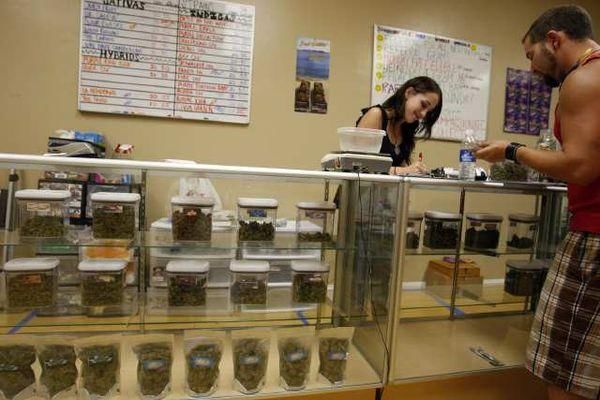
WHAT WE WILL COVER
Federal Law
4
WHAT WE WILL COVER
Federal Law
California Law
Compassionate Use Act (“CUA”)
Medical Marijuana Program (“MMP”)
5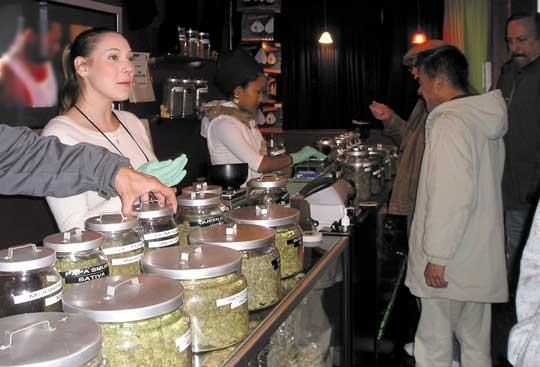
WHAT WE WILL COVER
Federal Law
California Law
Compassionate Use Act (“CUA”)
Medical Marijuana Program (“MMP”)
Medical Marijuana Dispensaries
Regulation, enforcement and permitting
6
WHAT WE WILL COVER
Federal Law
California Law
Compassionate Use Act (“CUA”)
Medical Marijuana Program (“MMP”)
Medical Marijuana Dispensaries
Regulation, enforcement and permitting
Marijuana Grow Facilities
Regulation, enforcement and permitting
7
WHAT WE WILL COVER
Federal Law
California Law
Compassionate Use Act (“CUA”)
Medical Marijuana Program (“MMP”)
Medical Marijuana Dispensaries
Regulation, enforcement and permitting
Marijuana Grow Facilities
Regulation, enforcement and permitting
Code Enforcement Remedies
8
WHAT WE WILL COVER
Federal Law
California Law
Compassionate Use Act (“CUA”)
Medical Marijuana Program (“MMP”)
Medical Marijuana Dispensaries
Regulation, enforcement and permitting
Marijuana Grow Facilities
Regulation, enforcement and permitting
Code Enforcement Remedies
Cost Recovery
9
FEDERAL LAW

10 Federal Controlled Substances
Act
Marijuana used for any purpose
is a federal crime
Any distribution of marijuana
anywhere is illegal
11Gonzales v. Raich (2005) 545 U.S. 1
Federal law enforceable despite California’s
Compassionate Use Act and Medical Marijuana Program
(later in the presentation)
There is no federal medical necessity defense
The Commerce Clause allows Congress to regulate
controlled substances including marijuana for any and all
purposes
Federal and state preemption issues: local governments
should avoid raising federal preemption claims or
defenses
12CALIFORNIA STATE LAW
13California’s Compassionate
Use Act of 1996
California voters approved the new law by
initiative
Main goals:
1. Seriously ill Californians (suffering from “cancer,
anorexia, AIDS…or any other illness for which
marijuana provides relief….”) and a doctor’s
recommendation; and,
2. Limits criminal liability under California law.
14Limitations of California’s
Compassionate Use Act
ONLY a criminal defense to possession,
cultivation and distribution and only in certain
circumstances.
15Limitations of California’s
Compassionate Use Act
Non-medical reasons are not a basis.
16Limitations of California’s
Compassionate Use Act
Uncertainty
Transportation covered?
Definition of primary caregiver?
17Limitations of California’s
Compassionate Use Act
Does NOT require cities to allow marijuana
dispensaries (currently).
18SB 420 - “Medical Marijuana Program
Act” Health & Safety Section 11362.7
Aimed to clarify scope of Compassionate Use
Act
19SB 420 - “Medical Marijuana Program
Act” Health & Safety Section 11362.7
Most ironic Senate Bill number ever
20SB 420 - “Medical Marijuana Program
Act” Health & Safety Section 11362.7
Clarified immunity from criminal prosecution if
person with marijuana has qualified patient or
caregiver status.
21SB 420 - “Medical Marijuana Program
Act” Health & Safety Section 11362.7
Also…
Allows transport of medical marijuana;
Allows collective or cooperative to grow medical
marijuana:
Criminal defenses
22SB 420 - “Medical Marijuana Program
Act” Health & Safety Section 11362.7
Still not a required land use
23Dispensaries
and collectives
Proliferation of
retail marijuana
distribution
businesses
Selling marijuana
“over the counter”
2425
Primary Caregiver
Definition:
“An individual who has “consistently assumed
responsibility for the housing, health, or safety of
a patient.”
Includes typical care facilities.
No more than one patient outside their own city or
county.
Not a distribution facility.
26MARIJUANA DISPENSARIES
Enforcement
Regulation
Permitting
27To Allow or Not to Allow?
(Pondering the question)
28THE LAW
29Local zoning regulations
and business license
requirements are not
preempted by CUA or MMP
30…Except:
Long Beach –
Enacted ordinance allowing
limited number of dispensaries
with permits.
invalid.
31Result: a local entity may, if not
must, prohibit dispensaries in their
jurisdiction.
32Latest Developments
February 2012 - City of Lake Forest v.
Evergreen Holistic Collective
Fourth Appellate District says that total ban on
marijuana dispensaries is preempted by MMP
Case has been depublished pending Supreme Court
review
March 2012 - People ex rel. Trutanich v. Joseph
Second Appellate District says that MMP does not
permit dispensing or selling marijuana
33Latest Developments
July 2012 - County of Los Angeles v. Alternative
Medicinal Cannabis Collective
Second Appellate District says that total county ban on medical
dispensaries is preempted by MMP
Court used same reasoning in City of Lake Forest case, so likely
to be depublished as well pending Supreme Court review
In the meantime, however, technically still citable authority
July 2012 - 420 Caregivers, LLC v. City of Los Angeles
Second Appellate District says that MMP allows local regulation
of location, operation, and establishment of marijuana
dispensaries
34Latest Developments
September 4, 2012 – County of Riverside v.
Superior Court
Fourth Appellate District upholds County of Riverside
ban on marijuana dispensaries
35Latest Developments
Summary
As of now, counties and cities can enact total bans
on marijuana dispensaries
Supreme Court to eventually make ultimate decision
36But….
Federal law = still illegal
37On a collision course.
Feds support local prohibition; not the
same for local permitting schemes.
38THE
POLICY
39OPTION 1: PROHIBIT
(Current option)
40Nuisances and Negative
Secondary Impacts
Homicides, burglaries, robberies and thefts;
Fraudulent physician recommendations;
Sales to customers with bogus identification cards;
DUI;
Sales to minors;
Illegal sales of other narcotics;
Terrified neighbors;
Reduced property value (even more);
Potential federal conflict 41OPTION 2: PERMIT AND TAX
(Subject to Supreme Court ruling)
42*Note: possible special requirements for new taxes.
43Sample provisions:
Limit total number depending on zoning and
distancing
Need to deal with existing ones
Conditions and deadlines to register with city
Permitted use or CUP?
*Note: due to Long Beach case, Supreme Court
must change current law to allow permitting.
44Sample:
Each collective must identify a location within 7
days of effective date of ordinance
Each collective must obtain pre-inspection from
the Department of Building & Safety
Each collective must file a registration form with
the Department of Building & Safety after
complying with pre-inspection requirements
Process must be completed in 180 days.
45Sample Site Requirements
Cannot be within a certain distance of sensitive
sites
Cannot be on a lot abutting, across the street
from or have a common corner with a
residentially zoned lot or residential use
There are lighting limitations and signage
requirements.
46Some Conditions of Operation
Cameras & Alarm system
Permitted hours: 10:00 a.m. to 8:00 p.m.
Non-profit only; cash contributions allowed, in
compliance with state law
No minors, no alcohol, no use of marijuana on the
premises
No felons in management
No more than $200 in cash overnight, twice daily bank
drops of cash required
State licensed and uniformed security guard.
47Sample - Records & Inspection
Information as to managing members
Information regarding members and
recommendations/identification cards
All receipts and expenses
Inventory record of all marijuana
Testing log and annual audit
Proof of registration
All records, except medical records may be inspected by
PD.
48Violations and Sunset Clause
It is unlawful to:
violate state laws pertaining to medical marijuana
operate an unregistered collective
distribute, cultivate etc. marijuana for a medical purpose
unless registered
knowingly make any false, misleading or inaccurate
statements in any forms, records etc.
After two years all collectives must immediately cease
operation.
49Still have to enforce against
violators of local laws…
50MARIJUANA GROW FACILITIES
Enforcement
Regulation
Permitting
51Similar to dispensaries…
Not in CUA or MMP
Local regulation (zoning code)
Federal enforcement conflict
Check for compliance with CA Building
Standards Code
More rural communities?
52Similar to dispensaries…
Check for incompatible
uses
Carefully drafted
regulations
Does your current
code inadvertently
allow them?
53CODE ENFORCMENT
54TOOLS
55TOOLS…
TRO
Preliminary Injunction
Permanent Injunction
Administrative Nuisance Abatement
Health and Safety Code Section 11570
(Drug Abatement Act)
B&P 17200 et seq.**
56…TOOLS
Red Tags
Stop Work Order
Other Uniform Code Tools
57…TOOLS
Administrative Citations
Abatement Warrant
Inspection Warrant
Receivership
Civil Penalties
Criminal (not recommended)
District Attorney Action
58COST RECOVERY
59Cost Recovery…
Code enforcement as a whole can be
cost neutral or even revenue plus.
60Cost Recovery…
Abatement costs = local ordinance +
Government Code 38773
Attorney’s fees = ordinance + GC 38773.5(b),
and
H&S 11570, 17200 (indirect)
“prevailing party”
61Cost Recovery…
Liens (GC 38773.1)
Special Assessment (GC 38773.5(a))
CONTACT ME FOR FURTHER
INFORMATION
62CONTACT INFORMATION
Matthew R. Silver, Esq.
(949) 263-6588
Matthew.silver@bbklaw.com
63You can also read


