Maddie's Shelter Medicine Program - at the University of Florida - Proposal for Program Years 4-6
←
→
Page content transcription
If your browser does not render page correctly, please read the page content below
Maddie’s® Shelter
Medicine Program
at the University of Florida

Proposal for Program Years 4-6

A proposal for continued pursuit of excellence in Shelter Medicine
training, research, and service to enhance the health and welfare
of homeless animals.
Maddie’s® Shelter Medicine Program
at the University of Florida
PROPOSAL FOR PROGRAM YEARS 4-6

Contents
LETTER FROM THE PROGRAM DIRECTOR ........................................................................... 1
EXECUTIVE SUMMARY ........................................................................................................ 3
THE CURRENT ENVIRONMENT ............................................................................................ 4
CORE STRATEGIES ............................................................................................................... 6
 1|Veterinary Student Education............................................................................................................6
  Required Core Curriculum ....................................................................................................................6
  Elective Curriculum .................................................................................................................................7
  Certificate in Shelter Medicine............................................................................................................7
 2|Advanced Training of Shelter Medical Professionals ...................................................................9
  Residency Program................................................................................................................................9
  Internship Program ............................................................................................................................. 11
  Continuing Veterinary Education ..................................................................................................... 11
 3|Shelter Assessment and Consultation Services............................................................................. 12
  Comprehensive Shelter Health Assessments................................................................................... 13
  Targeted Consultations ...................................................................................................................... 14
 4|Development of New Knowledge ................................................................................................. 16
NEW DIRECTIONS: DISTANCE EDUCATION ....................................................................... 18
NAMING AND RECOGNITION OF MADDIE’S FUND® ....................................................... 21
PROGRAM SUSTAINABILITY ............................................................................................. 23
PROGRAM PERSONNEL .................................................................................................... 25
APPENDICES ...................................................................................................................... 28
 Key Objectives, Program Years 4-6 ................................................................................................. 29
 Consultation Report Example Table of Contents ............................................................................. 30
 Shelter Medicine Elective Curriculum ................................................................................................. 32
 Resident Training Modules ................................................................................................................... 35
Maddie’s® Shelter Medicine Program at the University of Florida

                                         LETTER FROM THE PROGRAM DIRECTOR
                                         Julie Levy, DVM, PhD, DACVIM

                                         The first three years of Maddie’s Shelter Medicine Program have
                                         been an enriching and gratifying whirlwind of activity. We hit the
                                         ground running in the summer of 2008 and since the very beginning
                                         have dedicated ourselves to collaboration, discovery, and program
                                         development, all with the goal of enhancing the health and welfare
                                         of homeless animals.
                                         We have worked directly with and in animal shelters, providing on-
                                         site consultations for dozens of agencies in the Southeast and beyond.
                                         No two shelters are exactly alike, and in our consultations we find
                                         ourselves responding to deadly disease outbreaks, fine-tuning best
                                         practices, or performing top-to-bottom comprehensive assessments.
These shelter visits often have an immediate impact for our shelter partners and the animals they serve,
resulting in reduced disease, improved quality of life, and increased live releases.
Despite these immediate gains in lifesaving capacity and animal welfare, we find ourselves faced with
questions we can’t answer and large gaps in fundamental knowledge regarding the needs of sheltered
populations. Often the source of disease is unclear, diagnostic tests are inadequate, or the optimal treatment
is unknown. In these situations, our in-shelter research programs are designed to solve the problems that
prevent shelters from reaching their life-saving potential. Not only do our studies supply useful information for
the entire field of Shelter Medicine, but the diagnosis and treatment of individual animals in shelter studies
provides immediate relief of suffering and limits the spread of diseases to other animals. Recognizing that
discovery is only as good as the ability to translate new knowledge into practical solutions, our annual Shelter
Medicine conferences and research publications serve to disseminate our findings to the veterinarians who will
put them to use.
As the model for animal sheltering undergoes an international shift from reactive animal control to proactive
shelter- and community-wide animal welfare, shelters increasingly tailor programs and interventions to the
specific needs of individual animals to achieve higher save rates. Attempts to make this transition have
revealed that there remains a shortage of veterinarians with the
skills to minister to the unique needs of sheltered animals as well
                                                                          “…we believe the greatest
as a lack of appreciation by shelter managers for the central role
veterinarians must play if shelters are to meet their life-saving            need is to increase the
goals. Addressing the need for specially-trained professionals,            number of mission-driven
our residency training program is preparing veterinarians to be          veterinarians skilled in the art
leaders in their field, with expertise in medicine, surgery, welfare,        and science of Shelter
population management, infection control, and forensics. These
experts will provide the foundation for our emerging specialty for
                                                                                   Medicine...”
years to come.
For veterinarians-in-training, we adopted an ambitious agenda of new coursework development that starts in
their first semester and continues through all four years of the curriculum. Virtually every student at the UF
College of Veterinary Medicine now gains real-life experiences in animal shelters during Shelter Medicine
clerkships and externships. The pinnacle of our student training is the Certificate in Shelter Medicine, which

                                                                                                            Page 1
Maddie’s® Shelter Medicine Program at the University of Florida

recognizes a total of 15 credits of elective coursework and clinic training specifically devoted to the care of
sheltered animals. With this exposure, our students graduate with a strong sense of altruism and an
understanding of how veterinarians are uniquely positioned to use their skills to enhance the well-being of
sheltered animals.
In surveying the state of Shelter Medicine, the strengths of other Shelter Medicine programs, and where the
most critical gaps remain, we believe the greatest need is to increase the number of mission-driven
veterinarians skilled in the art and science of Shelter Medicine. We propose to achieve this via an expansion
of Maddie’s® Shelter Medicine Program to develop an online distance learning curriculum in Shelter Medicine
                                          available to students at other veterinary schools and to veterinarians
                                          around the world. Distance learning is an increasingly effective means
    “This distance education              of delivering education beyond the confines of a single institution,
                                          allowing those in remote locations and working professionals the
    program represents an
                                          access and flexibility they seek in training opportunities. Our planned
    opportunity to leverage               program of study leading to the Certificate in Shelter Medicine will
    our program’s breadth                 recognize participants who have completed an intensive training
    and depth in a way that               program in this field, providing a valuable credential for employment
    will help raise the prestige          in animal sheltering. This distance education program represents an
                                          opportunity to leverage our program’s breadth and depth in a way
    and impact of Shelter                 that will help raise the prestige and impact of Shelter Medicine around
    Medicine around the                   the globe.
   globe.”
                                       Three years seems barely the blink of an eye in the world of Shelter
                                       Medicine. We at Maddie’s® Shelter Medicine Program have been
                                       keen to make the most of every moment, to collaborate with others in
the field and build a robust program at the University of Florida that trains veterinary students and
veterinarians while helping address the current and future needs of our sheltering partners. As we move
forward, we look to technology as a tool to expand our capacity and scale up our impact. The future is
bright for Shelter Medicine, and we are grateful to Maddie’s Fund® for having confidence in our ability to be
a part of it.

Sincerely,

Julie Levy, DVM, PhD, DACVIM
Director, Maddie's® Shelter Medicine Program

                                     Maddie's® Shelter Medicine Program
                                         College of Veterinary Medicine
                                                     University of Florida
                                             2015 SW 16th Ave 100126
                                                   Gainesville, FL 32608
                                                         352-273-8660
                                        sheltermedicine@vetmed.ufl.edu
                                            www.UFShelterMedicine.com
                                                                                                            Page 2
Maddie’s® Shelter Medicine Program at the University of Florida

EXECUTIVE SUMMARY
Maddie’s® Shelter Medicine Program at the University of Florida has swiftly become one of the most
comprehensive Shelter Medicine programs available. With an eye to collaboration and discovery, we have
approached the advancement of the lifesaving goals of sheltering programs through four core strategies that
we propose to continue and build through program years four through six.
To help build a corps of veterinarians skilled in the art and science of Shelter Medicine, we will educate
veterinary students at the University of Florida. We propose to cultivate the next generation of shelter
veterinarians through the teaching of Shelter Medicine topics in the required veterinary student curriculum and
the continuation and expansion of elective offerings. We will offer the Certificate in Shelter Medicine to
students at UF, leading them through an intensive training program and certifying their achievement upon
graduation.
The future of Shelter Medicine rests in no small part on the shoulders of our advanced trainees, residents in
Shelter Medicine who spend three years in a rigorous course of study to become experts in the field. We will
admit one new resident annually, guiding each through didactic, clinical, and research training. Residents will
benefit from mentored shelter-based training in consultation and outbreak intervention and prevention. They
will also contribute to the teaching efforts of the program in the classroom and at conferences and seminars.
We propose the addition of a Shelter Medicine Intern position, taking advantage of our training infrastructure
to further build the corps of highly trained professionals working in shelters. We will continue to build
collaborative relationships with other Shelter Medicine training programs.
Through our shelter health assessment and consultation service, we propose a continuation of our partnerships
with sheltering and welfare agencies to identify challenges and solutions in sheltering systems. Faculty,
residents, interns, veterinary students, and program staff will consult and advise shelters on all aspects of
shelter operations affecting animal health and welfare. Shelters will continue to be able to reach out to our
program for assistance and expertise when faced with disease outbreaks or large-scale events and we will
work with them to formulate lifesaving solutions and prevent future recurrences.
Our research program will continue under the direction of our program faculty, seasoned investigators who
will oversee resident and student projects from inception to publication. With a focus on solving existing and
                             emerging threats to successful sheltering programs, our research projects will build
                             the body of Shelter Medicine knowledge and empower shelter veterinarians and
                             managers to make the best decisions for the animals in their care.
                            Finally, we propose an expansion of our program to address the paucity of
                            structured training opportunities in Shelter Medicine for veterinary students and
                            veterinarians both in the US and internationally. We propose the creation of a
                            distance education Certificate in Shelter Medicine which will build on the current
                            Certificate program, leveraging today’s technologies to train tomorrow’s shelter
                            veterinarians regardless of their geographic location.
                            We appreciate the support Maddie’s Fund® has shown our program and our
                            field, and we look forward to the opportunity to build on the success Maddie’s
                            Fund® has made possible to date.

                                                                                                            Page 3
Maddie’s® Shelter Medicine Program at the University of Florida

THE CURRENT ENVIRONMENT:
ANIMAL SHELTERING AND SHELTER MEDICINE
Over the past 10 years, Shelter Medicine has emerged as a recognized and respected discipline in
veterinary medicine. Many pivotal changes in the philosophy of animal sheltering and the role of veterinarians
in shelters have contributed to the growth of Shelter Medicine. Increasingly, shelters are embracing the
philosophy that the health and welfare of cats and dogs in their care should be protected and nurtured,
developing a humane ethic that treats animals as individuals while raising the
bar to increase overall animal placement and decrease euthanasia. Shelters
are eagerly seeking resources and educational opportunities to guide the quest          “When I decided I wanted
for more progressive and proactive care to fulfill their mission of saving more         to be a veterinarian, I did
lives. The role of veterinarians in animal sheltering has morphed from a                so because I wanted to be
primary focus on spay/neuter surgeries to a more comprehensive responsibility           a shelter veterinarian. I
for the health and welfare needs of shelter animals. Shelter veterinarians are          couldn’t have started
now regarded as a key resource for ensuring that healthy, happy animals are             veterinary school at a
placed into homes.                                                                      more appropriate time.
                                                                                        The Shelter Medicine
Based on increased recognition of the importance of Shelter Medicine to                 program at UF offers an
animal welfare and the drive of their students, many veterinary schools are             internship, a residency and
seeking to incorporate Shelter Medicine topics in their student curriculum. Of          now has options for a
the 28 veterinary schools in the U.S., 18 offer some degree of Shelter Medicine         Shelter Medicine
content to students, including didactic courses and mentored externships for            certificate, which
hands-on experience in shelters. Eight schools have advanced Shelter Medicine           credentials an
programs for training specialists (residents, interns, and postdoctoral fellows) to     achievement in the field I
serve as expert resources to shelters and to expand the educational                     am so passionate about.”
opportunities for more students and veterinarians in Shelter Medicine. Two task
forces have been formed to support these advanced training programs - the                             Lauren Unger
Shelter Medicine Residency Standards Task Force for development of minimum                         DVM Candidate
standards for training of Shelter Medicine specialists, and the Organizing                           Class of 2012
Committee for the Board Specialty in Shelter Medicine.
In addition to establishment of training programs for veterinary students and Shelter Medicine specialists,
other landmark events have contributed to the reputation of Shelter Medicine as an integral component of
successful sheltering and animal welfare. Two Shelter Medicine textbooks have now been published, instantly
                                           becoming valuable resources for students and veterinarians. In
                                           addition, the Association of Shelter Veterinarians (ASV) has grown from
                                           a small grassroots network to a global organization of over 750
                                           shelter veterinarians and student chapters in 22 veterinary schools. This
                                           professional organization sponsors several different venues for
                                           advancement of Shelter Medicine and education of shelter
                                           veterinarians, including the annual international conference on Shelter
                                           Medicine at the North American Veterinary Conference. In 2010, the
                                           ASV published the Guidelines for Standards of Care in Animal Shelters,
                                           the first ever document developed by Shelter Medicine experts to
Shelter Medicine is increasingly seen as a provide   scientific and humane guidelines for care of shelter animals.
fundamental element of successful animal
sheltering.

                                                                                                              Page 4
Maddie’s® Shelter Medicine Program at the University of Florida

Collectively, veterinary school-based training programs, Shelter Medicine textbooks, the ASV, and greater
availability of educational conferences have stimulated and sustained the growth of Shelter Medicine and the
entry of trained professionals into the field. With the expertise of their veterinary allies, shelters are saving
more lives, and our field will continue to be instrumental in moving toward a no-kill nation.
Yet despite the growth and advances in Shelter Medicine, there are critical unmet needs hindering progression
toward the goal of saving all healthy and treatable shelter dogs and cats. There is an unmet need for Shelter
Medicine educational opportunities to expand to reach students even in veterinary schools where no Shelter
Medicine curriculum is currently available. The repercussions of this gap reverberate into the field, where
most animal shelters do not have veterinarians to oversee wellness programs and/or comprehensive treatment
programs, and there are an insufficient number of veterinarians with the skills and interest to fill existing
needs. In addition to the inadequate number of shelter practitioners, there is a critical shortage of trained
Shelter Medicine specialists to educate future generations of shelter veterinarians and to develop new
knowledge for advancing the field.
Bearing in mind these considerations about the state of the field, in fall of 2010 our faculty, residents, and
staff engaged in a strategic planning retreat. Facilitated by an expert from UF’s Office of Training and
Organizational Development, we explored the strengths of our program, the opportunities and needs in
Shelter Medicine, and our goals and vision going forward
through years 4-6. It is that discussion which guides the
current proposal.
The mission of Maddie’s® Shelter Medicine Program at the
University of Florida is to enhance the health and welfare
of homeless animals through education, innovation, and
advancement of the life-saving goals of sheltering
programs. To fulfill this mission, we employ four core
strategies: 1) Training of veterinary students in the
problems of homeless animals, animal sheltering systems,
Shelter Medicine, and opportunities for careers in the field;
2) training of Shelter Medicine professionals to fill the
current shortage of skilled providers; 3) provision of
shelter assessment and consultative services; and, 4)
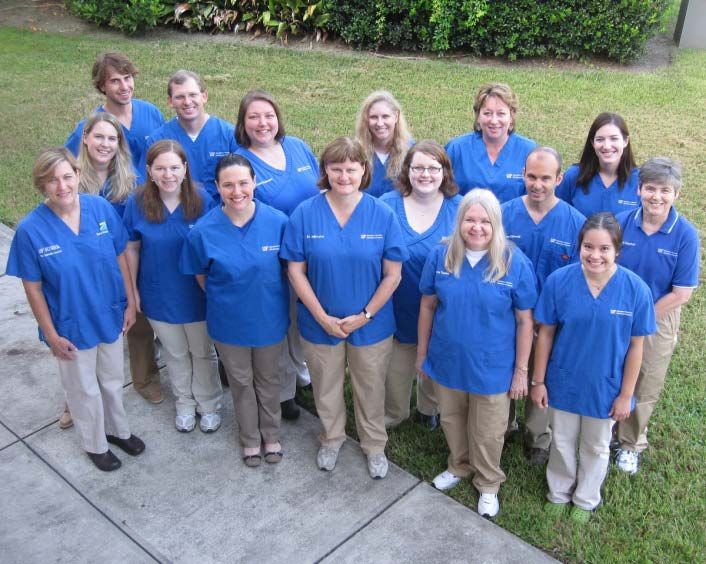
development of new knowledge to solve existing and                          Maddie’s® Shelter Medicine team
emerging threats to successful sheltering programs.                           at the University of Florida

                                                                                                              Page 5
Maddie’s® Shelter Medicine Program at the University of Florida

CORE STRATEGIES
Maddie’s® Shelter Medicine Program is a comprehensive program, approaching the enhancement of the
health and welfare of homeless animals through four core strategies: veterinary student education, advanced
practitioner training, shelter assessment and consultation services, and research to develop and disseminate
new knowledge.

1|Veterinary Student Education
Training of veterinary students in the problems of homeless animals, animal sheltering
systems, Shelter Medicine, and opportunities for careers in the field
Veterinary students at the University of Florida are passionate, altruistic, and in search of career opportunities
that are professionally fulfilling. Providing extensive training in Shelter Medicine to students at an
impressionable stage of their career development serves several purposes. First, veterinarians with strong
skills in companion animal group health and sterilization needed by shelters are in critically short supply.
Second, students who are exposed to the animal sheltering system in this country and witness the problem of
animal homelessness first-hand will graduate with a clear comprehension of the urgency of the crisis. They will
understand how veterinary professionals are uniquely
positioned to provide key leadership to benefit shelters and
the animals they serve. Not only will this help build a corps
of mission-driven clinicians to staff shelters, but even those
who do not choose a career in Shelter Medicine are likely
to be supportive of those who do or to help in smaller ways
through their own private practices.
Much of the past three years has been spent in developing
an ambitious training program in Shelter Medicine for
students at the University of Florida. We have developed a
well-rounded Shelter Medicine training program that
reaches all students in their core (required) course work and
                                                                   Veterinary students in a Special Projects elective: Challenges
provides advanced elective opportunities for those with a          and Controversies Facing Bully Breeds in Animal Shelters
special interest in Shelter Medicine. This curriculum touches
students in every year of their training, providing an opportunity to capture their interest early and
reinforcing it at each step of their journey from student to veterinary professional. Didactic courses in Shelter
Medicine are also available to graduate students.

Required Core Curriculum
      VEM 5001      Career Opportunities in Veterinary Medicine (Freshmen)
                           My Career as a Shelter Veterinarian
      VEM 5041      Contemporary Topics in Animal Welfare and Ethics (Freshmen)
                           Community Cats: Problems and Solutions
      VEM 5325      Small Animal Medicine (Juniors)
                           Feline Population Medicine
      VEM 5503      Epidemiology (Sophomores)
                           Case Studies in Canine and Equine Influenza
                           Infection Control in Veterinary Hospitals and Animal Shelters

                                                                                                                     Page 6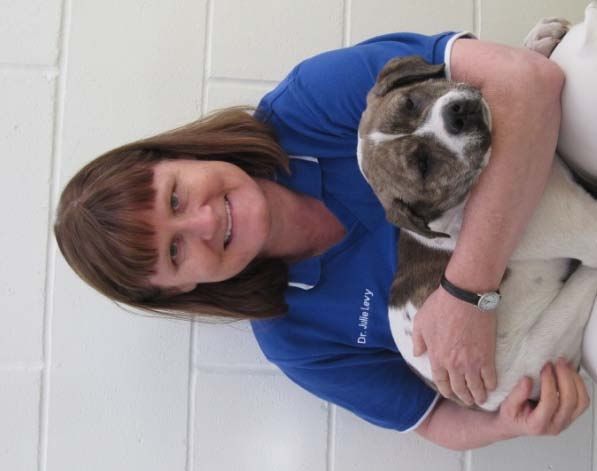
Maddie’s® Shelter Medicine Program at the University of Florida

Elective Curriculum
       VEM 5061             Introduction to Veterinary Disaster Response (all classes)
       VEM 5320             Shelter Animal Behavior and Welfare (Seniors)
       VEM 5322             Introduction to Shelter Medicine (Juniors)
       VEM 5324             Veterinary Forensic Medicine (Juniors)
       VEM TBA              Community Cat Management (Juniors and Seniors)
       VEM 5891             Shelter Animal Medicine Clerkship (Juniors and Seniors)
       VEM 5892             Shelter Medicine Externships (Juniors and Seniors)
       VEM TBA              Consultations in Shelter Animal Medicine Clerkship (Juniors and Seniors)
       VEM 5912             Supervised Research Special Project (all classes)
       VEM 5991             Individualized Investigation (all classes)

         To date, we have taught nine elective courses in Shelter Medicine to veterinary students at the
         University of Florida College of Veterinary Medicine, with a cumulative enrollment of more than
         three hundred.

Certificate in Shelter Medicine
Newly developed at the University of Florida is our Certificate in Shelter Medicine for veterinary students, a
credential that documents their intensive study and expertise in this emerging area of veterinary medicine.
Certificate training programs are unique to the College of Veterinary Medicine, and the Certificate in Shelter
Medicine joins other respected certificate programs in International Veterinary Medicine, Aquatic Animal
Health, and Food Animal Medicine. Completion of a certificate program is recognized as an elite
accomplishment during graduation ceremonies and recorded on the veterinary
diploma.
The Certificate in Shelter Medicine will expose students to a cross-section of
opportunities in the field, including care of sheltered animals, animal disaster              “Shelter Medicine is
management, cruelty investigations and forensics, shelter animal behavior and                 an exceptionally
welfare, high-quality high-volume sterilization surgery, and research in Shelter              rewarding field, with
                               Medicine. A Special Projects elective offers the               the opportunity to
                               opportunity for mentored in-depth study of a topic             represent and care for
                               of current importance in Shelter Medicine, such as             thousands of animals
                               working with a shelter to perform a shelter                    that may have no
                               population management analysis, an infectious                  other advocates. The
                               disease outbreak intervention, or the creation and             Certificate in Shelter
                               implementation of Shelter Medicine protocols. The              Medicine will help
                               certificate will identify students who have completed          open doors in the field
                               an intensive training program in this field, providing         and will prepare me to
                               a valuable credential for students seeking                     be an effective shelter
                               employment in animal sheltering or the pursuit of              veterinarian.”
                               residency training.
                                                                                                       Lauren Gray
In-shelter training is a core   The certificate program includes 8 units of required                DVM Candidate
component of the Certificate    courses, clerkships, and externships and 7 units of                  Class of 2013
in Shelter Medicine.

                                                                                                                Page 7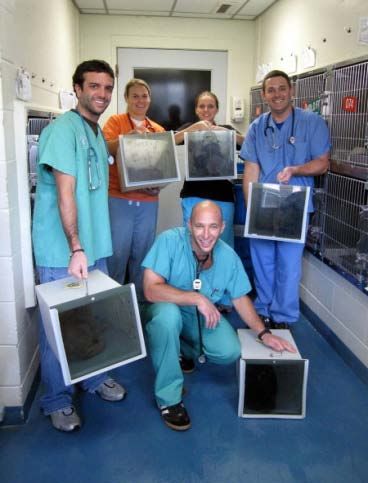
Maddie’s® Shelter Medicine Program at the University of Florida

electives selected from 11 units of elective offerings. All required and elective credits also fulfill credits
toward the DVM degree with the exception of 1 unit of elective credit for attending a Shelter Medicine-
related continuing education meeting. Students are also required to join the Association of Shelter
Veterinarians and to participate in the professional electronic discussion group.
Certificate course offerings span all four years of the curriculum and are offered at least once each year.
Students must enroll in the certificate program by the end of the junior year, but are encouraged to enroll as
soon as they identify interest in the program. A faculty advisor from the Shelter Medicine Program will be
appointed for each enrolled student. The Shelter Medicine program will maintain a database of each
student’s progress and will report completed certificates to the Office of Instruction.

                  CERTIFICATE IN SHELTER MEDICINE CURRICULUM REQUIREMENTS

         Course #                                 Course                                       Credit

         VEM 5322                    Introduction to Shelter Medicine                     1         Required
         VEM 5061                   Introduction to Disaster Response                     1         Required
         VEM 5891                   Shelter Animal Medicine Clerkship                     2         Required
         VEM 5892                      Shelter Medicine Externship                        2         Required
         VEM 5892                        Spay/Neuter Externship                           2         Required
         VEM 5892                    Shelter Medicine Externship #2                       2          Elective
         VEM 5324                     Veterinary Forensic Medicine                        1          Elective
         VEM 5310                 Shelter Animal Behavior and Welfare                     1          Elective
         VEM TBA                      Community Cat Management                            1          Elective
         VEM TBA           Consultations in Shelter Animal Medicine Clerkship             1          Elective
         VEM 5991               Individualized Investigation (shelter topic)              2          Elective
         VEM 5912                  Supervised Research Special Project                    2          Elective
      No DVM credit           Continuing Education Meeting (shelter topic)                1          Elective
      No DVM Credit           Association of Shelter Veterinarians List-Serve             0         Required

        A total of 22 veterinary students are currently enrolled in the Certificate in Shelter Medicine,
        making Shelter Medicine the most popular certificate program available at the UF College of
        Veterinary Medicine. Two seniors will be the first to earn their Certificates in May of 2011.

                                                                                                                Page 8
Maddie’s® Shelter Medicine Program at the University of Florida
2|Advanced Training of Shelter Medical Professionals
Training of shelter medical professionals to fill the current shortage of veterinarians with the
expertise and passion to spend a career in Shelter Medicine
Residency Program for Training Shelter Medicine Specialists
The residency training program at the University of Florida is designed to address the critical shortage of
specialists in Shelter Medicine. Residents are experienced veterinarians who are returning to the University
environment to complete an intensive three-year advanced training program to become Shelter Medicine
specialists. Residents will receive in-depth training in epidemiology, infectious diseases, internal medicine,
surgery, facilities management, data management, disaster medicine, behavior, environmental enrichment,
and forensics. As of this writing, only three other residency training programs exist and only eight
veterinarians have completed this level of training. Once trained, these experts will populate positions in
academia, progressive animal shelters, and consulting agencies to help shelters
develop effective medical programs that keep shelter animals healthy and Over the course of their
happy, facilitating their placement into homes. They will build the foundation training, Shelter
for our emerging specialty of Shelter Medicine for years to come. Medicine residents will
be responsible for
We will train three residents at a time, adding one new resident a year to the
completing shelter
three-year training program. This will result in the presence of a first-, second-,
assessments in a wide
and third-year resident in the training program and will provide a critical
range of areas:
mass for a robust learning environment. If a suitable candidate for a residency
population management,
position cannot be recruited one year, the position may be temporarily
facilities, intake,
replaced with a one-year internship in Shelter Medicine. Residents will
vaccination, parasite
develop critical thinking skills and detailed knowledge in topics of importance
control, cleaning and
to Shelter Medicine via participation in journal clubs, seminar series, national
disinfection, nutrition
on-line shelter rounds, conferences, clinical rotations, phone/email consultations
and feeding, medical
with shelters, and on-site shelter consultations and investigations.
services, stress control
A core component of the training program will be participation in detailed on- and enrichment, animal
site shelter consultations, forensic investigations, and animal disaster responses behavior assessment,
alongside Shelter Medicine faculty. During this component of training, residents and euthanasia.
will develop the ability to systematically gather data, make observations, and Residents will also
communicate recommendations. In the provide shelters with
third year of the program, senior recommendations on
residents will complete these facility design to
consultations independently with enhance animal health,
responsibility for planning the welfare, and live release.
assessment, supervising other
residents, and preparing the final
report. Shelter Medicine faculty supervisors will take a supportive
role when the senior residents lead the consultation visits.
Disease outbreaks continue to be a frequent source of suffering,
Residents develop expertise through an disruption of services, and loss of life in shelters. Residents will serve
intensive course of study that includes as an emergency resource for shelters experiencing disease
shelter consultation.
outbreaks, helping to identify the source, developing an intervention
Page 9Maddie’s® Shelter Medicine Program at the University of Florida
strategy, and making recommendations for the prevention of future
Residents will develop the outbreaks. Each resident will be assigned to consult on at least one
ability to recognize, outbreak of ringworm, distemper, parvovirus and panleukopenia.
diagnose, and manage
disease outbreaks using tools In order to expose residents to the wide range of sheltering practices
such as diagnostic testing, currently in place, each resident is expected to visit at least 75 different
titer analysis, quarantine, shelters during the three-year program. Shelter visits will be selected to
isolation, treatment, include a variety of different sheltering models, including open admission,
communication, and facility adoption guarantee, nonprofit, municipal, rural, urban, successful, and
decontamination. struggling shelters in different regions of the country. During these visits,
residents will explore the facility’s philosophy toward intake and
disposition of animals, the standard of care animals receive during their
stay in the shelter, and the general effectiveness of the agency in meetings its mission. The shelter visits, though
informal, also provide an opportunity for shelter veterinarians and managers to seek advice from these
specialists-in-training.
Residents will develop the skills to create new knowledge by designing and carrying out a research project on
a topic of current importance to Shelter Medicine. They will each identify an important unresolved issue in
Shelter Medicine, develop a hypothesis-driven research proposal,
implement their research, and prepare a manuscript for publication. In
recognition that new information would not be valuable if it remained
cloistered in our Ivory Tower the residents will present their findings to
their peers in Shelter Medicine and at national meetings. In addition, two
other publications, such as a case study or review article, are required.
Residents will hone their clinical and surgical skills during clinical
rotations with specialists in veterinary schools or specialty practice.
Clinical rotations will be selected to understand the specialist’s approach
to diagnosis, treatment, and prevention of conditions commonly found in Residents are trained to identify
shelter animals and will include dermatology, ophthalmology, behavior, signs of animal cruelty.
exotics/zoological medicine, internal medicine, clinical pathology,
necropsy, community practice, and high-quality high-volume spay/neuter. These rotations will prepare
residents to provide the highest level of care for shelter animals and to develop standardized medical care
protocols for common conditions.
Each resident will also contribute to the teaching of veterinary students in their didactic and clinical
coursework. They will lead students on their weekly visits to the local animal control agency where they will
discuss issues of animal housing, population management, behavioral welfare, sanitation, and preventive
Shelter Medicine. The residents will work one-on-one with the students to provide routine preventive health
care as well as special care required for individual animals at the shelter. Under this mentoring, the students
will learn not only about the needs of homeless animals in shelters but also about how they, as future
veterinarians, are uniquely positioned to help them.
To date, we have enrolled three residents in Shelter Medicine. The first resident completed
training in summer 2010 and is now clinical assistant professor of Shelter Medicine at UF.
Page 10Maddie’s® Shelter Medicine Program at the University of Florida
Internship Program for Intensive Training in Shelter Medicine
While the development of an expert level of knowledge in Shelter Medicine is the goal of the residency
training program, we acknowledge that a highly effective shelter veterinarian need not necessarily complete
such a thorough and in-depth course of study. A one-year internship in
Shelter Medicine would provide trainees a mentored environment with
intensive training in the field. The internship may serve to cultivate interest in
a full-fledged residency program, but as a stand-alone program it will
provide the level and depth of training that produces a skilled practitioner
well-equipped for shelter practice. The higher turnover rate of a one-year
training program will also help to build the corps of practitioners with
specialized training, populating shelters with the veterinarians they urgently
need.
The development of a rigorous training program for Shelter Medicine
residents at Maddie’s® Shelter Medicine Program has resulted in the creation
of a powerful infrastructure that can be tapped for training Shelter Medicine
interns. In addition to training modules, interns will participate in shelter Advanced trainees will play
important roles as future
consultations, the Shelter Medicine clerkships, journal clubs, specialty rotations in Shelter Medicine educators
the teaching hospital, and other training activities. Each intern will be expected and mentors.
to write a review paper or case report on a topic of importance for Shelter
Medicine. We propose to admit one new intern each year for years four
through six.
Continuing Veterinary Education
Thousands of veterinarians serve homeless animals through their employment at shelters, their care of animals
at private veterinary clinics, and their volunteerism for foster programs, feral cat TNR groups, and other
community efforts to save animals. Already committed to applying their healing skills to improve the plight of
homeless animals, these veterinarians crave information to better protect the health of shelter pets, improve
the quality of their lives, heal wounded bodies and spirits, and help shelters achieve their life-saving goals.
Shelter Medicine topics are becoming a staple of national veterinary conferences, a testament to the appeal
of this subject across the veterinary profession. The increasing
acceptance of Shelter Medicine as a unique and important
focus of practice has helped to elevate the visibility and
stature of the specialty.
Maddie’s® Shelter Medicine Conference has developed into
an annual event that draws a national audience. The
conference initially offered content that appealed to shelter
veterinarians, technicians, and managers. Now that entry-level
Shelter Medicine material is presented at virtually every
national veterinary and animal welfare meeting, the
Gainesville conference will be reconfigured as a more
focused specialty-level conference directed at experienced
Our conferences have drawn attendees from shelter veterinarians. Like other specialty meetings, we expect
across the US and from such international this conference will become a leading venue for revealing
locations as Canada, Brazil, and Ecuador.
new research findings, discussion of new approaches toward
Page 11Maddie’s® Shelter Medicine Program at the University of Florida
improving outcomes for shelter animals, and recruitment of even more veterinarians into the profession of
advanced Shelter Medicine. These conferences will also promote networking within the Shelter Medicine
community. The international reach of the conference will be increased via capture of conference
presentations for subsequent delivery via distance continuing education.
Maddie’s® Veterinary Forensics Conference will continue to be offered
annually to provide training for shelter veterinarians in cruelty
investigations and forensic techniques. The drive to save not only
healthy shelter animals, but also the victims of abuse, neglect, puppy
mills, hoarding, and blood sports has led to a need to advance training
in the veterinary rehabilitation of these victims and well as the
prosecution of the perpetrators. Veterinarians are emerging not only
as providers of care but also as expert witnesses in the battle against
animal cruelty. The veterinary forensics conference will combine expert
presentations with hands-on wet labs to give participants tangible tools Maddie’s® Shelter Medicine Conference is
to take back to their practices. being reconfigured as a specialty-level
conference for experienced shelter
In addition to hosting the annual conferences, both faculty and residents veterinarians.
will continue to make presentations on topics in Shelter Medicine at
regional, national, and international veterinary continuing education meetings. They will be available for
participation in Shelter Medicine programs at other institutions. These activities will help build the corps of
skilled Shelter Medicine practitioners in all corners of the profession.
Conferences in the first three years of the program have drawn nearly 700 attendees from across
the country and international locations. Additional lectures and continuing education
presentations have reached more than 1500 participants.
3|Shelter Assessment and Consultation Services
Shelter evaluation and extension services, including shelter assessments and provision of
disease control consultation to enhance the welfare of the animals and the efficiency of the
programs in achieving their life-saving goals
A core strategy of the Maddie’s® Shelter Medicine Program at UF is shelter health assessments provided
through formal consultations. The overall objective of the health assessment service is to optimize our sheltering
partners’ lifesaving capacity as well as the health and welfare of animals in their care. The consultation
process identifies areas for improvement and provides best practices to support humane care and increase
the numbers of animals released alive. Faculty, staff, and trainee residents and veterinary students will
conduct and participate in shelter health assessments and consultations to provide expertise to sheltering
partners while training specialists and students.
The scope of shelter health assessments varies from comprehensive to targeted. Comprehensive assessments
include detailed evaluations of all shelter operations affecting animal care and outcomes in addition to
analysis of population statistics. Targeted assessments focus on solving a specific challenge such as a disease
Page 12Maddie’s® Shelter Medicine Program at the University of Florida
Collaboration outbreak intervention. Targeted consultations may also capitalize on an
Fueling Transformation opportunity for change to ensure best practices, such as developing new
In September 2008, a housing for cats or assisting with design for a new or expanded facility.
collaborative consultant team
from across the country Comprehensive Shelter Health Assessments
gathered in Jacksonville, Florida An animal shelter is a complex institution and a range of factors
for a shelter health assessment contribute to the care, health, and well-being of sheltered animals. A
spearheaded by Maddie’s® comprehensive assessment examines the multitude of operational,
Shelter Medicine Program at the
programmatic, and management topics in a multi-phase process, requiring
University of Florida.
substantial investment by both the shelter management team and our
Five faculty, two staff, one consultant team.
intern, and five Shelter Medicine
residents represented Maddie’s ® The first phase is completion of a questionnaire by the shelter
Shelter Medicine Programs at management and medical team and provision of shelter operation
UF and Cornell University and protocols and population statistics for review by the consultants.
the Koret Shelter Medicine Information provided by the questionnaire, protocols, and population
Program at UC-Davis. analyses is essential in planning assessment objectives for the consultant
team. Since population management is the foundation for all other areas
After a week onsite and
countless hours of followup concerning animal health and welfare in the sheltering facility, substantial
work, the consultant team’s time is devoted to analyses of historical and current population statistics
findings and recommendations to identify issues that
were presented and swiftly affect movement of Protocol and
embraced by the shelter’s animals through Population Data
veterinarians and managers. Review
different pathways
They modified animal care from intake to outcome.
operations, revised plans for a This preparation phase
new facility, and enlisted their (Optional) Site Visit by
generally requires Followup Faculty and
community resources to build up Consultation Trainees
about 160 hours for
partnerships for saving lives.
The result was an immediate and
completion by faculty
marked improvement in animal and residents.
welfare and live release.
The second phase of a Ongoing Report of Findings
Highlighted at national comprehensive Communication and
and Advisement Recommendations
conferences and frequently assessment is a site visit
referenced during resident by the consultant team
training, this consultation has for observation of
since become a model for the shelter operations and may include
transformative potential of interviews with shelter staff and animal welfare stakeholders in the
shelter health assessments and community. If warranted, diagnostic samples may be collected from
the role of veterinarians in the
animals to determine disease status and prevalence. Observations and
health and welfare of sheltered
populations. diagnoses that critically impact animal welfare and recommendations for
initial remediation of these concerns are provided to the shelter
Collaborative shelter health management/medical team at the end of the site visit. This phase usually
assessments are now a requires four days on site.
permanent fixture in the resident
training program. The third phase of a comprehensive assessment is preparation of a report
that includes detailed discussions of population management analyses
Page 13Maddie’s® Shelter Medicine Program at the University of Florida
and observed shelter practices, with recommendations for best practices
and policies to enhance animal welfare and increase positive outcomes. The recent addition of
Recognizing the vital importance of a community approach to lifesaving, veterinary student
the report also contains suggestions for extending community outreach participation in shelter
to garner more options for animal placement. This phase typically health assessments has been
requires about 160 hours for completion. successful in both training
the students and nurturing
Consultation doesn’t end when the report is submitted. Regular ongoing their interest in further study
communication with shelter management is vital to assist with in the field. Four of the five
implementation of recommendations, to monitor and measure the students who have served on
outcomes, and to provide troubleshooting for problems that arise. The shelter assessment teams
cementing of a long-term partnership between the shelter and our subsequently enrolled in the
program is of paramount importance to achieve the best possible Certificate in Shelter
outcomes for the animals. In addition, some shelter partners take the Medicine.
next step and invite the consultant team back for a followup consultation
to identify areas for continued improvement and further fine-tune
sheltering practices. The many hours invested in a comprehensive shelter health assessment can provide a
tremendous payoff in terms of improved animal health and well-being and increased lifesaving capacity.
To date, our team has performed seven comprehensive shelter assessments and conducted follow-
up consults with three of these to review progress in implementation of recommendations. The
assessments have included both adoption guarantee agencies and open admission shelters
throughout Florida and as far away as Illinois and Wisconsin. Collectively, these shelters care for
more than 77,600 cats and dogs annually.
Targeted Consultations
When there is a specific problem to address or shelter health question to answer,
targeted consultations represent an important opportunity to have a significant
impact on the health and well-being of shelters’ animals. Targeted consultations
vary with regard to reason for the consult and total time investment.
In some cases, our program’s experts are called upon to assist with infectious
disease outbreaks resulting in significant morbidity and mortality, which strike in
both animal control and adoption guarantee agencies. Diagnostic testing and
population/housing analyses are conducted by our faculty and residents to
determine the disease agents and formulate intervention strategies. The disease
agents commonly encountered include canine distemper virus, canine and feline
parvovirus, canine influenza, canine respiratory coronavirus, feline respiratory
pathogens, and pathogenic streptococcal bacteria. Other consultations have
On-site observations are a involved recommendations for treatment, control, and prevention of feline
vital part of any shelter respiratory and enteric pathogens based on surveillance diagnostic testing
health assessment. conducted by Shelter Medicine residents as part of their in-shelter research.
Page 14Maddie’s® Shelter Medicine Program at the University of Florida
Trends and events in animal sheltering and welfare
sometimes require large-scale interventions. These
consultations have provided new opportunities for
Maddie’s® Shelter Medicine Program to provide expertise
and positively impact the welfare of animals in large-scale
field response situations. The 2009 investigation and closure
of a cat sanctuary based on reports of compromised animal
health and welfare led to our collaboration with numerous
animal welfare and disaster response agencies from across
the state. Maddie’s® Shelter Medicine Program led the
medical team, conducting physical examination and
infectious disease testing of nearly 600 cats over a three Collaboration is key for large-scale interventions.
day period. The fall of 2010 brought a multi-agency response to 221 imported dogs quarantined in a
temporary shelter due to an outbreak of canine distemper and parvovirus. The reputation and expertise of
Maddie’s® Shelter Medicine Program at UF led the State Veterinarian of Florida to call on our program to
oversee the care of these dogs and the more than 200 volunteers providing it. The intervention strategy
designed and implemented by our team resulted in the saving of 113 dogs from these deadly and brutal
diseases. Interventions such as these result in incomparable learning experiences for all involved: faculty,
staff, residents, and veterinary students. Other responders increasingly appreciate the value of including
trained Shelter Medicine veterinarians in large-scale cases.
Over the past three years, our faculty and Shelter Medicine residents have conducted targeted
consultations for 60 animal control shelters, adoption guarantee agencies, and cat sanctuaries
located in Florida, Georgia, Delaware, New York, Pennsylvania, and South Carolina.
Collectively, these agencies care for more than 233,000 dogs and cats each year.
Shelter heath assessment is a powerful tool for forging a positive outcome for literally thousands of animals.
Comprehensive and targeted consultations provide important opportunities to educate shelter professionals on
best practices to support animal health and welfare, and ultimately, the number of lives saved. Finally, the
consultations and large-scale field responses provide fertile ground for training veterinary students and
Shelter Medicine residents about the challenges facing
different types of sheltering operations and potential
solutions for overcoming these challenges so that more
animals have a comfortable and enriched life.
In the next years of the program, there will be continued
emphasis on working with a diverse range of sheltering
agencies. While we believe that every shelter, whether
animal control or adoption guarantee, would greatly
benefit from a health assessment, we have learned that the
demand for this service far exceeds our capacity to deliver.
With a limited capacity for shelter consultations in any
Shelter health assessments focus on protecting given year, it is important to ensure that the training value
individual animal welfare in the context of shelter of each consultation is maximized for participating Shelter
operations.
Page 15Maddie’s® Shelter Medicine Program at the University of Florida
Medicine residents and veterinary students, while keeping in mind the value to our shelter partners. As we
seek to understand the issues for different sheltering models, we will consult for both adoption guarantee and
traditional shelters. Veterinary student involvement and training will be enhanced through the new
Consultations in Shelter Animal Medicine Clerkship.
4|Development of New Knowledge
Development and dissemination of new knowledge to solve existing and emerging threats to
successful sheltering programs
Research and scientific investigation is vital if we are to solve the sheltering challenges of today and
tomorrow. Knowledge gained through scientific investigation and shared with the sheltering and animal
welfare community via publications and presentations advances the field of Shelter Medicine. These scholarly
pursuits promote recognition of Shelter Medicine as an evidence-based discipline in the veterinary culture,
leading to awareness of the importance for embedding Shelter Medicine topics in veterinary school curricula
and supporting the need for training specialists in the field. Most importantly, solving problems that impact
shelter animal well-being via scientific investigation is vital to saving more lives.
Over the past three years, our research program has made significant contributions toward advancing the
well-being of shelter animals and is recognized as one of the leaders in shelter-based research. Questions
addressed by our practical and timely
projects originated from problems and
controversies observed during shelter
consultations and in conversations with
other Shelter Medicine experts around
the country. Research projects are
conducted by faculty, interns and
residents, graduate students, and
veterinary students affiliated with
Maddie’s® Shelter Medicine Program.
Recent projects have included national
In the shelter: At the source: In the community:
and international collaborations with
Fighting the Preventing Taking a holisitic
ravages of population approach to other Shelter Medicine experts and
infectious disease control shelter live scientists. In addition, research projects
euthanasia release on Shelter Medicine topics are part of
• Canine and
feline infectious • High quality, • Importance of the new Certificate in Shelter Medicine.
disease high volume animal
epidemiology, spay and neuter identification for Disseminating our newly found
control, and • Nonsurgical reuniting lost
prevention alternatives for pets knowledge is a fundamental value of
• Validation of sterilization of • Community cat Maddie’s® Shelter Medicine Program,
diagnostic tests cats management including presentation of posters and
for shelter use programs
abstracts at specialty meetings, seminars
at Maddie’s® Shelter Medicine
Conference, publication in peer-
reviewed journals, and inclusion in
textbook chapters written by our faculty.
Page 16Maddie’s® Shelter Medicine Program at the University of Florida
Shelter Medicine research studies will continue to be funded by intramural and extramural grants awarded to
our faculty. These studies will involve residents, graduate students, veterinary students, and in some cases
Shelter Medicine experts and scientists at other institutions. Veterinary student research will be supported by
an annual Maddie’s® Shelter Medicine Research Fellowship, partnered with existing veterinary student
training funds from other sources.
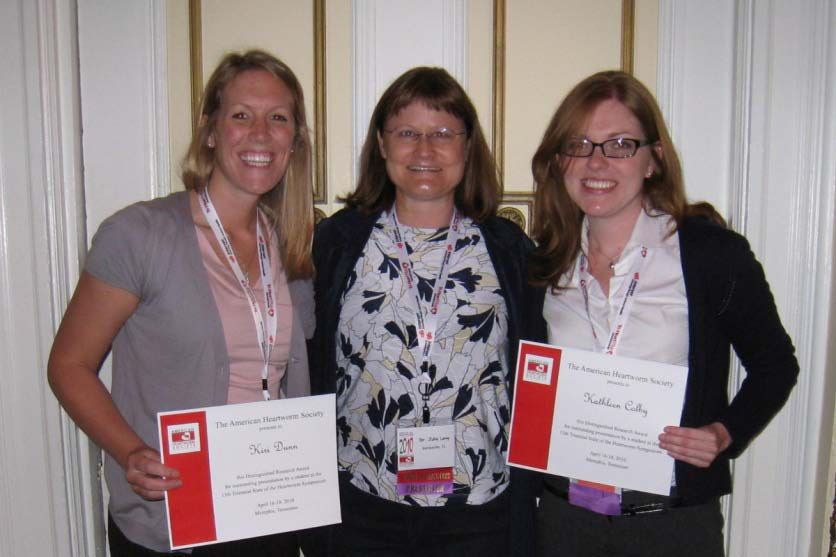
Maddie’s® Shelter Medicine Research Fellows earned recognition
for their research on shelter approaches to heartworm infection.
To date, seven research projects have been conducted by residents, interns, and graduate students
affiliated with our program and eight veterinary students have conducted Shelter Medicine
research projects under the supervision of program faculty. Faculty and trainees have authored
more than two dozen book chapters and peer-reviewed scientific publications.
Page 17Maddie’s® Shelter Medicine Program at the University of Florida
NEW DIRECTIONS: DISTANCE EDUCATION
The first three years of Maddie’s® Shelter Medicine Program at the University of Florida have been devoted
to new initiatives, program development, and collaboration. We have adopted an ambitious agenda of
curriculum development that touches all four years of the veterinary training program and has created clinical
Shelter Medicine support services for local adoption-
guarantee groups and the county shelter.
A combination of coursework, clinical clerkships,
research, and practical experience provide students
with skills ranging from the care of sheltered pets, to
protecting the victims of disasters and cruelty, to solving
the problems that impede progress toward saving all
healthy and treatable animals in shelters. Virtually
every student at the College of Veterinary Medicine
now gains real-life experiences in animal shelters. They
Like the shelters we advise, we must look to the graduate with a strong sense of altruism and an
future, identify needs, and devise effective solutions. understanding of how veterinarians are uniquely
positioned to use their skills to enhance the well-being
of sheltered animals. The Certificate in Shelter Medicine identifies students that have achieved a special level
of competency through intensive study in Shelter Medicine.
The residency training program is a demanding and comprehensive course of instruction that blends didactic
coursework, in-shelter experience, shelter consultation, and research to achieve the highest level of expertise
possible. Veterinarians who complete this training will be prepared to assume positions of leadership,
mentorship, and advocacy toward elevating the care and outcome for animals in shelters. These experts will
provide the foundation for our emerging specialty for years to come.
The future is bright for Shelter Medicine, and we are grateful to Maddie’s Fund® for having confidence in our
ability to contribute to it. It is apparent, however, that the need for veterinarians to staff high-quality medical
programs in shelters and to provide consultations to animal shelters cannot be met by the current supply or
even by those who will complete their training via existing academic programs in the near future. One in three
veterinary schools in the U.S. still offer no formal training option for
sheltering-minded students. International training programs in Shelter
Medicine are also lacking. There is a critical gap and a need to reach It is crucial to develop a
veterinary students and practicing veterinarians, cultivate their interest, more effective means of
and provide them with a solid footing for practicing medicine in the building the corps of
shelter environment. It is crucial to develop a more effective means of experts needed to
building the corps of experts needed to populate shelters with skilled populate shelters with
practitioners. skilled practitioners.
We have been fortunate to make great strides during the first three
years of our program, developing a program with significant breadth and depth in Shelter Medicine. As such,
we have an opportunity to leverage the strength of this program to expand our reach beyond our institution’s
walls. Through facilitated strategic planning and a survey of the current environment, we came to recognize
an imperative to increase Maddie’s® Shelter Medicine Program’s capacity and efficiency in the delivery of
Shelter Medicine training.
Page 18You can also read


