Member guide. Superannuation and Personal Super Plan - Hostplus PDS
←
→
Page content transcription
If your browser does not render page correctly, please read the page content below
Member guide.
Superannuation and Personal Super Plan
Product Disclosure Statement Additional Information
Last Updated 11 April 2019

The information in this document forms part of the Hostplus Superannuation
Fund and Hostplus Personal Super Plan Product Disclosure Statement
16 November 2018
Section 2.
How super
  works
Section 2. How super works.
         The information in this document forms part of the Hostplus Superannuation Fund and Hostplus Personal Super
         Plan Product Disclosure Statement 16 November 2018.

         Superannuation may seem complex but it’s just money put aside for your retirement. Your employer contributes
         9.5% of your ordinary time earnings (which is primarily your salary) to a superannuation fund, where that money
         is invested for you. These contributions are called the Superannuation Guarantee (SG).

         The Government has now fixed the SG percentage rate at its current rate of 9.5% until 1 July 2021 when it will
         gradually increase by 0.5% each year until it reaches 12% for the year starting on or after 1 July 2025.
         The new schedule for increasing the SG rate percentage will be as follows:

           Year                                                                            SG rate percentage

           Current                                                                         9.5%

           Year starting on 1 July 2018                                                    9.5%

           Year starting on 1 July 2019                                                    9.5%

           Year starting on 1 July 2020                                                    9.5%

           Year starting on 1 July 2021                                                    10%

           Year starting on 1 July 2022                                                    10.5%

           Year starting on 1 July 2023                                                    11%

           Year starting on 1 July 2024                                                    11.5%

Page 1        We're here to help - call 1300 467 875, 8am - 8pm, Monday to Friday or visit hostplus.com.au      Last updated 11 April 2019
Year starting on 1 July 2025 12%
2.1 Who’s eligible for SG contributions?
Most employees are eligible. Generally, employees aged over 18, who are paid $450 (before-tax) or more in a
calendar month are covered by the SG legislation, whether they work full-time, part-time or on a casual basis.
2.2 Who isn’t eligible for SG contributions?
Here are some of the employee categories which may be excluded from SG contribution requirements:
employees paid less than $450 in a calendar month,
employees under age 18 who work 30 hours or less a week,
employees paid to do work of a domestic or private nature for 30 hours or less a week, and
employees employed under a Green Army Program.
2.3 How your super account works
Your Hostplus super account is where your employer contributions and your personal contributions are made.
Contributions and positive investment returns are added to the balance. Fees, Government taxes, expenses and
negative investment returns are deducted from the balance.
Page 2 We're here to help - call 1300 467 875, 8am - 8pm, Monday to Friday or visit hostplus.com.au Last updated 11 April 2019Compulsory + Personal contributions - Fees = Your
contributions super
(9.5 % Salary sacrifice contributions Insurance account
Superannuation premiums balance
Guarantee) Transfers from other super funds
Taxes
Government co-contributions and the Low
Income Superannuation Tax Offset (LISTO) Negative
(if applicable) net
investment
Positive net investment returns
returns
Transfers
to other
super
funds
2.4 If you’re a temporary resident
Employers are required to make SG payments on behalf of temporary residents in the same way as any other
employee unless exempted by law from doing so.
While temporary residents remain in Australia their superannuation will remain in the fund until they become
entitled to payment of a benefit. The superannuation benefits of temporary residents can only be withdrawn
under one of the following conditions of release:
after leaving Australia and their visas have ceased,
permanent incapacity,
terminal medical condition, or
death.
If you're an eligible temporary resident (not an Australian or New Zealand* citizen or permanent resident) and
you depart Australia permanently, you can access your super benefits from the fund if six months have not
passed since you departed Australia and your visa expired. Otherwise your account balance will be paid to the
Australian Taxation Office (ATO) ato.gov.au as unclaimed superannuation. Any super benefits paid to eligible
temporary residents is subject to the Departing Australia Superannuation Payment (DASP) withholding tax upon
leaving Australia permanently: see Temporary residents departing Australia
Departed temporary residents will then have to claim back their superannuation from the ATO which may be
done at any time.
Hostplus relies on relief from ASIC under Class Order CO 09/437 and doesn't provide departed temporary
resident members whose benefits are paid to the ATO with notices or statements at the time of or after the
benefits have been paid to the ATO. However if you have any queries, you can contact us and we'll provide
Page 3 We're here to help - call 1300 467 875, 8am - 8pm, Monday to Friday or visit hostplus.com.au Last updated 11 April 2019relevant information about your benefit. Once the account is transferred to ATO, you’ll need to contact the ATO
to claim your benefit. To claim your Departing Australia Superannuation Payment (DASP) go to the Australian
Tax Office's (ATO) website and complete the (DASP) online application.
Please note: On the date you access your super benefits, or your account balance is paid to the ATO, you will also
lose any insurance cover you may have.
*KiwiSaver rules apply to New Zealand citizens: see 2.12.4 UK Pension Transfers and KiwiSaver Transfers
Claiming your super benefit
If you wish to claim a Departing Australia Superannuation Payment (DASP) visit hostplus.com.au/super/get-
your-super-sorted/temporary-residents
2.5 Choosing your super fund
Super Choice gives eligible workers the ability to choose the fund into which their super contributions are paid.
Choosing the right fund now can make a lifetime of difference. So it’s very important to know if you are eligible
and what to do if you are.
For information on Super Choice, including eligibility, talk to your employer, or call 1300 467 875, 8am – 8pm
(AEST), Monday to Friday or go to hostplus.com.au
2.6 Accessing your super
The Federal Government has placed restrictions on when you can access your super. Generally, your super
benefits are preserved in a super or rollover fund until you retire from the workforce on/or after reaching your
preservation age. Your preservation age will vary between 55 and 60 years of age, depending on your birth date.
If you are born after 30 June 1964 your preservation age will be 60.
Date of birth Preservation age
From 1 July 1964 60
1 July 1963 – 30 June 1964 59
1 July 1962 – 30 June 1963 58
1 July 1961 – 30 June 1962 57
1 July 1960 – 30 June 1961 56
Page 4 We're here to help - call 1300 467 875, 8am - 8pm, Monday to Friday or visit hostplus.com.au Last updated 11 April 2019Before July 1960 55
All contributions made into super are preserved until you reach your preservation age or meet a condition of
release. Any amounts that were non-preserved benefits as at 1 July 1999 will remain non-preserved and will not
increase unless you transfer or roll over other non-preserved benefits into Hostplus.
After reaching your preservation age you do not have to cash in your superannuation benefits.You can stay in the
fund as a Hostplus member or otherwise join the Hostplus Pension and continue to enjoy the benefits of being a
Hostplus member in retirement. And in the event of your death, the remaining balance of your account can be
paid to your beneficiaries.
2.7 Early release of your super
Subject to the Hostplus governing rules, early release of preserved benefits can only be paid to you if you satisfy
one of the following conditions of release:
termination of employment after turning age 60 without necessarily retiring permanently,
in the event of your death,
permanent incapacity,
a terminal medical condition exists,
on the grounds of severe financial hardship subject to certain conditions and trustee approval,
on compassionate grounds as approved by the Australian Taxation Office (ATO),
on termination of your employment with an employer sponsor where your preserved benefit is less than
$200,
on your permanent departure from Australia if you are an eligible temporary resident,
To pay the ATO an amount in respect to a First Home Saver Super Scheme (FHSSS) release authority, or
on complying with any other condition of release specified under superannuation law.
2.8 Intra-fund consolidation
Under certain circumstances, a Hostplus member may have more than one membership account with the fund or
have a membership in another division of Hostplus. The fund may automatically merge any duplicate accounts or
memberships you have in other divisions of Hostplus. The fund may use your TFN as the primary identifier in this
process.
When your duplicate accounts are merged, you will be notified of your membership number and the division of
Hostplus you are in. You will have 28 days to advise Hostplus of your membership preference if you are not happy
with the division you have been merged into.
You will retain the highest level of insurance cover you hold and this will be transferred into your merged account
unless you tell us otherwise.
Page 5 We're here to help - call 1300 467 875, 8am - 8pm, Monday to Friday or visit hostplus.com.au Last updated 11 April 20192.9 Death benefit nominations
How does Hostplus determine to whom your death benefit is payable?
In the event of your death, the trustee may pay a benefit to your beneficiaries, such as dependants or legal
personal representative (the executor or administrator of your estate). If the trustee has not found a dependant
or a legal personal representative, the death benefit payment may be made to another person, subject to
Superannuation Law requirements.
A dependant for superannuation purposes (as opposed to tax purposes), includes a spouse (including de facto,
same sex or a spouse from a relationship registered on the Register of Births and Marriages under State or
Territory law), your children (including step, adopted, ex-nuptial or eligible children of same sex couples) and any
other person who is wholly or partially financially dependent on you, or in an interdependent relationship with you
at the time of your death.
You can nominate your dependants or legal personal representatives as the persons or person to whom you’d
like your super benefits to be paid in the event of your death at any time through your Member Online account at
hostplus.com.au
See 3.7 Member Online – your online super account at Hostplus
You can also nominate your preferred beneficiaries when you make an online application to join.
In the event of your death, the recipient(s) of your death benefit will be determined according to whether you
have nominated your beneficiaries as binding or non-binding.
Binding death benefit nominations
A binding death benefit nomination provides you with greater certainty about who will receive your benefit in the
event of your death. In general, a binding nomination legally binds (instructs) the trustee to pay your death
benefit to the person(s) nominated as your beneficiary(ies).
Binding death benefit beneficiary nominations can only apply to:
your spouse (including de facto, same sex or a spouse from a relationship registered on the Register of
Births and Marriages under State or Territory law),
your children (including an adopted child, step child, ex-nuptial child or eligible child of same sex couples),
your legal personal representative (the executor or the administrator of your estate),
any person who is financially dependent on you, and
any person with whom you have an interdependent relationship.*
A person must be a dependant on the date of your death to be considered a beneficiary.
You can nominate beneficiaries by completing the Binding death benefit nomination form available at
hostplus.com.au/super/super-forms.
Binding nominations expire every three years. However, Hostplus will contact you prior to their expiry so you can
update/cancel or change your nomination(s). Your current beneficiaries will also be shown on your member half-
yearly benefit statements.
Page 6 We're here to help - call 1300 467 875, 8am - 8pm, Monday to Friday or visit hostplus.com.au Last updated 11 April 2019We highly recommend you review your nomination(s) if your circumstances change, such as if you divorce,
separate, re-marry, have children or experience the death of a beneficiary.
Non-binding death benefit nominations
If you elect to have non-binding nominations, the trustee will take into consideration your nomination but will not
be bound to follow it.
You can nominate or change your non-binding beneficiaries at any time through your Member Online account at
hostplus.com.au.
The trustee is required to take reasonable steps to identify and pay the benefits to your potential beneficiaries,
after taking relevant factors into account. These may include the nature of your relationship(s) with your
beneficiary(ies) and their financial dependence, or otherwise, at the time of your death.
The trustee would normally pay the death benefit to:
one or more of your dependants – spouse (including de facto, same sex or a spouse from a relationship
registered on the Register of Births and Marriages under State or Territory law), children (adopted
children, step-children, ex-nuptial children or eligible children of same sex couples), whether financially
dependent or not, or any other person the trustee considers was wholly or partially financially dependent
on you, at the time of your death, and/or
any person with whom you have an interdependent relationship*, and/or
your legal personal representative (the executor or administrator of your estate).
Before paying out a death benefit, the trustee will consider any beneficiaries you have nominated, the
information provided by any dependants, your legal personal representative(s) and your will (if you have one).
Please note: A valid binding death benefit nomination overrides any preferred beneficiary nomination(s) you have
made previously.
* Two people are in an interdependent relationship if:
they have a close personal relationship,
they live together,
one or each of them provides the other with financial support, and
one or each of them provides the other with domestic support and personal care.
An interdependent relationship also exists if two people have a close personal relationship but the other
requirements are not satisfied because of a physical, intellectual or psychiatric disability.
No nomination
If you do not make a nomination or make an invalid nomination, the trustee will pay the benefit to your
dependants and/or legal personal representative, as determined by the trustee, at the time of your death.
Page 7 We're here to help - call 1300 467 875, 8am - 8pm, Monday to Friday or visit hostplus.com.au Last updated 11 April 20192.10 Lost members and unclaimed money
The ATO has established a lost member and unclaimed money register, containing details of the superannuation
accounts for members that funds cannot locate and certain members for whom contributions have ceased. All
superannuation funds provide details of lost members and transfer their accounts to the ATO on a twice yearly
basis.
The following type of accounts will be deemed lost or unclaimed and transferred to the ATO:
What’s a ‘lost super’ account? What’s an ‘unclaimed super’
account?
A super account which hasn’t had any contributions or rolled over amounts A super account owned by a
added to it in the past 12 months member aged over 65, who has
not made contact with the fund
for more than five years and to
which no contributions were made
in the last two years
AND OR
The super fund has never had an address (postal or email) for the member An account owned by a member
who owns the account, or, the trustee has made one or more attempts to who has died and the fund’s
send written communications to the member at the member’s last known trustee cannot find anyone to pay
address (or addresses), and the trustee believes, on reasonable grounds, their benefit to
that the member can no longer be contacted at any address known to the OR
fund. An account whose owner was a
AND former temporary Australian
the member has not contacted the fund (whether by written communication, resident and did not claim their
through the online portal or otherwise) within the last 12 months of the benefit within six months of
member's membership of the fund. departure or visa expiry
OR
An account whose owner received
a family law split and the trustee
has been unable to contact them
OR
An account with a balance of less
than $6,000 that belongs to a
member who is ‘lost’
If you think you may fall within these categories, you may want to check with the ATO to see if you are registered as a lost or unclaimed super member.
If you have inactive accounts in any other fund or eligible rollover fund (ERF), you can consolidate them into your Hostplus account.
Page 8 We're here to help - call 1300 467 875, 8am - 8pm, Monday to Friday or visit hostplus.com.au Last updated 11 April 2019In addition, you can make enquiries at the ATO if you have lost contact with a fund and think you may be entitled
to a benefit. Just call 13 10 20 or visit ato.gov.au/super and use SuperSeeker, the ATO's online tool to search for
lost super.
ATO Provision of Details Service
Hostplus wants to keep in contact with our members to provide them with the latest information about their
super account.
To help in keeping a member’s details current, Hostplus uses the ATO Provision of Details Service twice yearly to
update our records where a member is reported as lost, such as:
Where the current address status is Returned or Unuseable
No current address is recorded
Where the current address is active but precedes the latest address as supplied to the ATO.
Records will not be updated where a current address matches the ATO held address or a member has exited the
fund.
On receiving the details from the ATO, Hostplus will update member contact details such as addresses, emails
and phone numbers.
2.11 Our Eligible Rollover Fund (ERF)
If your account balance is less than $6,000 and we have not received contributions for you for more than 18
months, we may transfer your account balance to our ERF. Our nominated ERF is AUSfund.
However, if we have a current address we will write to you and give you the option to reactivate your account
before transferring your Hostplus account to AUSfund.
If your superannuation benefits are transferred to AUSfund, your personal information will be passed on to
AUSfund so they can establish and manage your account, process your contributions, pay benefits, provide you
with membership benefits and services, and correspond with you.
Being transferred to AUSfund may affect your benefits because of the following circumstances:
you will cease to be a member of Hostplus.
any insurance cover with Hostplus will cease.
you will become a member of AUSfund and be subject to its governing rules. If Hostplus can provide
AUSfund with current contact details, AUSfund will send you their current Product Disclosure Statement
(PDS). You can also ask them for a copy. AUSfund has a different investment strategy from Hostplus. For
more details, see the AUSfund PDS.
AUSfund does not offer insured benefits in the event of death or disability.
Should your benefits be transferred into AUSfund, you may request access to, or correction of, any personal
information held by AUSfund by writing to AUSfund's Privacy Officer. AUSfund can be contacted at:
AUSfund Administration
Locked Bag 5132
Page 9 We're here to help - call 1300 467 875, 8am - 8pm, Monday to Friday or visit hostplus.com.au Last updated 11 April 2019Parramatta
NSW 2124, Australia
Email: admin@ausfund.net.au
Web: unclaimedsuper.com.au
Phone: 1300 361 798 between 8.30am – 5pm Monday to Friday
If calling from outside Australia: + 61 3 9814 6400
Fax: 1300 366 233
If faxing from outside Australia: + 61 8 8205 4990
2.12 Understanding contributions
2.12.1 Boosting your super
For many people, SG contributions alone may not be enough to cover the cost of retirement. That’s why the
Government encourages you to maximise your retirement savings by providing generous tax advantages for
extra super contributions you make.
What’s more, if you organise your super early, adding just a little to your account could reap big rewards in the
long term. In addition to your employer contributions you can add to your super in a variety of ways:
rolling over super from other accounts into Hostplus – for more information click here.
contributions from your after-tax salary (known as non-concessional contributions*). We will need your
Tax File Number to accept personal contributions.
contributions from your before-tax salary. These (concessional**) contributions include salary sacrifice.
Speak with your employer to check if you can make before-tax contributions as they will need to arrange
this for you.
Government co-contributions, if you are eligible.
the low income superannuation tax offset (LISTO), if you are eligible.
your spouse could split their before-tax contributions with you.
spouse contributions if you are a low income earner (see Spouse contributions).
We can accept personal contributions from you by cheque regular direct debit deductions and electronic
transfer, subject to you providing us with your valid TFN. Go to Member Online for payment options.
You can also make a contribution by BPAY®. Visit Member Online for payment details or complete the Direct
Debit authority form available at hostplus.com.au
2.12.2 The power of compounding
Compound interest is where you reinvest the interest you earn into your investment, so you can then earn
interest on both the original funds as well as past interest payments.
For example, if you earn 10% p.a. on a $1,000 investment and reinvest that money, the next year you earn 10%
on the original $1,000 plus the $100 you have reinvested. Over time, the rewards of compounding can be great.
Page 10 We're here to help - call 1300 467 875, 8am - 8pm, Monday to Friday or visit hostplus.com.au Last updated 11 April 2019The trick is to start early to enjoy the benefits of compound interest. Because a little now can mean a lot later.
For example, if Kate starts contributing an extra $25 a week at age 20 she may end up with an extra $521,911
when she retires at 65. Meanwhile Brendan starts contributing an extra $25 at age 40 and may only receive an
extra $98,717 when he retires.
The table below shows the difference you may make to your super benefit by starting early.
If you start adding $25 a week to your super at Age 20 Age 30 Age 40
Total amount added $58,500 $45,500 $32,500
Extra benefit at retirement $521,911 $232,685 $98,717
Source: JANA Investment Advisers Pty Ltd. Earnings are calculated at a compound interest rate of 8% p.a. with amounts being fully invested until age
65. These assumptions are for illustrative purposes only and don’t account for fees and tax. Investment returns are not guaranteed. Returns can be
higher or lower than set out in this example. This is not a prediction or estimate of actual retirement savings.
2.12.3 Super rollover
If you have multiple super accounts, you’re probably paying multiple fees. By rolling all your accounts into
Hostplus, you’ll pay just one set of fees. It could save you thousands of dollars over the long term and mean more
money for you at retirement.
Hostplus doesn’t charge you to roll existing accounts into Hostplus. But before you cancel existing
arrangements with another fund, check to see if they charge any exit fees/penalties and whether the cancellation
will affect any related insurance cover.
You can search to see if you have other super accounts and roll them over to Hostplus. Click here for more
information
Please note: Hostplus must complete a standard rollover (to a fund other than a Self-Managed Superannuation
Fund) as soon as practicable but no later than 3 business days after receiving the request containing all mandated
information. The three day rollover clock starts when Hostplus has received a rollover notification that is
complete. During blackout periods (each January and July) the fund may be unable to process rollovers within the
mandated three day period and will instead process rollovers within 3 business days after the blackout periods
ends. These are indicative timeframes only which may be subject to change in the future. Additional time may
also be allowed for rollovers where a member’s funds are invested in Choiceplus.
2.12.4 What if I want to transfer some of my super from my Hostplus account to
another fund?
You may rollover part of your account balance from Hostplus to another complying super fund if the amount you
transfer does not reduce your Hostplus account balance to less than $5,000.
Rolling over your benefit may have an impact on your insurance cover, as continuation is subject to maintaining
sufficient funds to meet insurance premiums. If your cover lapses, you will need to reapply for insurance
Page 11 We're here to help - call 1300 467 875, 8am - 8pm, Monday to Friday or visit hostplus.com.au Last updated 11 April 2019cover and may be subject to underwriting.
Members are free to make multiple transfers provided a minimum $5,000 account balance is maintained after any
transfer. If a transfer results in the account balance dropping below $5,000 the Trustee has discretion whether
the transfer occurs. Consideration will be given on application.
Existing Choiceplus superannuation members may (as a once off when commencing a new Hostplus Pension and
excluding TTR accounts) transfer their Choiceplus held shares, exchange traded funds (ETFs) and listed
investment companies (LICs) via an asset transfer, without the need to sell down. For more information on asset
transfers please see 5.29 A closer look at our Choiceplus option.
2.12.5 UK Pension Transfers and KiwiSaver Transfers
UK Pension Transfers
As a result of recent UK legislative reforms, which took effect from 6 April 2015, we are currently unable to
accept transfers of funds from United Kingdom Pension Schemes.
As a result of these changes, superannuation savings held by existing Qualified Registered Overseas Pension
Scheme (QROPS) members may not be released before preservation age, unless as a result of ill-health.
Rollovers between Australian Superannuation Funds that contain UK benefits may also be unable to be
processed unless made to a QROPS complying fund.
For more information on the implications of the UK reforms we recommend you seek advice from an authorised
UK and Australian taxation adviser. For general information please contact us on 1300 467 875 8am -8pm
weekdays AEST.
KiwiSaver Transfers
Under the ‘Tasman retirement savings portability scheme’ if you are living in New Zealand on a permanent basis,
you might be considering transferring your Australian superannuation benefit to your KiwiSaver account. Our
‘How to transfer your Super to a KiwiSaver scheme’ guide lists step by step instructions when you are requesting
a transfer out of your Hostplus account to a KiwiSaver scheme. You can download the guide from our website at
hostplus.com.au
2.13 Contributions from your after-tax salary (non-concessional contributions)
Non-concessional contributions are generally contributions made by or for a member that are not taxed in the
fund. For example, they are made from an individual’s after-tax income. There is a limit to how much of your
after-tax salary you can contribute in a financial year to your super. See Section 7. How super is taxed
Non-concessional contributions in a financial year include:
personal contributions for which you do not claim an income tax deduction,
contributions your spouse makes to your super fund account,
contributions in excess of your small business capital gains tax (CGT) exemption cap amount,
amounts transferred from foreign super funds (except for amounts included in the fund’s assessable
income), and
contributions made for a member who is under 18 years of age that are not employer contributions.
Page 12 We're here to help - call 1300 467 875, 8am - 8pm, Monday to Friday or visit hostplus.com.au Last updated 11 April 20192.14 Contributions from your before-tax salary
A concessional contribution is a contribution that is made by or for you to a complying super fund and is
assessable income of the fund (which means the fund will pay tax on your behalf). Concessional contributions
include SG contributions paid by your employer, additional contributions made by your employer, salary
sacrificed contributions deducted from your before tax-salary and personal contributions for which you have
claimed a tax deduction. There is a limit to how much of your before-tax salary you can contribute in a financial
year to your super.. See Section 7. How super is taxed
2.14.1 Salary sacrifice
Some employers allow you to make contributions to super from your before-tax salary. These contributions are
known as salary sacrifice and are subject to contribution caps. See Section 7. How super is taxed. Making extra
super contributions by salary sacrificing can reward you with tax benefits – 15% tax is deducted from your super
money, which is lower than most people’s personal tax rate which can be as high as 45% (plus Medicare levy).
It is important to note that some employers may:
base their SG contributions on the reduced salary,
not offer salary sacrifice.
Before entering into a salary sacrifice arrangement you should seek professional advice and obtain a copy of our
Salary sacrifice brochure available at hostplus.com.au/forms-and-brochures. Generally, if the average tax rate
payable on your income is greater than 15%, you will benefit from salary sacrificing in that, the amounts that you
sacrifice will be taxed at 15%. But you must be careful not exceed the concessional contribution caps.
2.14.2 Claiming a tax deduction for personal contributions
If you are self-employed or your employer does not offer salary sacrifice arrangements you can still contribute
extra to super and enjoy concessional tax benefits by making a personal contribution from your after-tax salary
and claiming a tax deduction. You can reduce your taxable income and the amount of income tax you pay by
converting non-concessional personal contributions into concessional contributions. However you will have to
be mindful not to exceed your contribution limits because you may pay extra tax. For information about
contribution limits and contribution tax. See Section 7. How super is taxed
From 1 July 2017, you can contribute to super regardless of the amount of salary or wages that you earn by
claiming a full deduction for personal contributions made until age 75.You can only claim a deduction for
contributions made before the 28th day of the month following the month in which you turned 75. If you’re aged
65 to 75, you will need to meet the work test in order to claim a tax deduction.
If you’re under the age of 18, you can only claim a tax deduction for super contributions if your income comes
from operating a business or gainful employment.
To claim a tax deduction for personal contributions made:
you must give Hostplus a notice of intent to claim at the earliest of either the date you lodge your income
tax return for the financial year in which you made a personal contribution,
Page 13 We're here to help - call 1300 467 875, 8am - 8pm, Monday to Friday or visit hostplus.com.au Last updated 11 April 2019or at the end of the financial year following the year in which you made the personal contribution.
You must complete and send to Hostplus the ATO form Notice of intent to claim or vary a deduction for
personal super contributions (NAT 71121) available from the ATO website. Hostplus is required to acknowledge
your request before you are able to claim a tax deduction. Please note Hostplus should receive the notice prior to
making any benefit payment or rollover(full/ partial) from your account.
2.14.3 Increase your super with Government co-contributions
If you’re a low or middle income earner and you make voluntary contributions to your super from your after-tax
pay, the Government may also contribute to your super. This Government payment is called a co-contribution
(conditions apply).
To ensure that Hostplus is able to process your Government co-contribution, your name, date of birth, address
and TFN held with Hostplus must match the records held with the ATO.
If there are any inconsistencies Hostplus will be unable to accept your co-contribution. Please ensure that your
details are kept up to date. For further information, contact the ATO on 13 10 20 or call Hostplus 1300 467 875.
Are you eligible?
To qualify for the co-contribution you'll need to:
make an after tax personal contribution to your super up to the non-concessional contribution cap for the
relevant financial year (if you claim a tax deduction for your personal contribution you may not be entitled
to a Government co-contribution),
have a Total Superannuation Balance^ that is less than the transfer balance cap in the relevant financial
year ($1.6 million for the 2018-19 financial year),
be in full-time, part-time or casual employment, or be self-employed,
have at least 10% of your total income (assessable income and reportable fringe benefits) attributable to
eligible employment, running a business, or a combination of both,
be under 71 years of age,
be a permanent resident of Australia,
have lodged a tax return,
have provided your TFN to Hostplus
At the end of the financial year in which you have made after-tax contributions, all you need to do is submit your
usual income tax return. The ATO will work out any co-contribution amount you would receive and forward it to
your Hostplus account.
Your maximum super co-contribution depends on your income. If your income is equal to or less than the lower
income threshold ($37,697 for the 2018 -19 income year) you can get a co-contribution of up to the full
'maximum entitlement'. For every dollar that you earn above the lower income threshold, your maximum
entitlement is reduced by 3.333 cents. You cannot get a super co-contribution if your income is at or above the
higher income threshold ($52,697 for the 2018 - 19 income year).
The amount of your super co-contribution depends on the amount of non-concessional (after-tax) contributions
you put into super and the 'matching rate' for the financial year you made the contribution.
Page 14 We're here to help - call 1300 467 875, 8am - 8pm, Monday to Friday or visit hostplus.com.au Last updated 11 April 2019For the 2018 -19 financial year the approximate Government matching contribution rate paid into your super is
as per the table below, You can also find out how much you may be eligible for with the Super co-contribution
calculator at moneysmart.gov.au
If you make a contribution of:
$1,000 $500 $200
And your income is: The Government give you:
$37,697 or less $500 $250 $100
$39,697 $433 $250 $100
$41,697 $367 $250 $100
$43,697 $300 $250 $100
$45,697 $233 $233 $100
$47,697 $167 $167 $100
$49,697 $100 $100 $100
$52,697 or more $0 $0 $0
^Your total superannuation balance is the total value of your accumulation and retirement phase interests (including rollover amounts not yet included
in those interests) across all of your superannuation accounts, reduced by the sum of any structured settlement contributions.
If you have more than one superannuation account
To ensure your Government co-contribution is invested in your Hostplus account, you must complete a
Superannuation fund nomination form and return it to the ATO Nomination forms are available from the ATO
by calling 13 10 20 or visit ato.gov.au.
Page 15 We're here to help - call 1300 467 875, 8am - 8pm, Monday to Friday or visit hostplus.com.au Last updated 11 April 20192.14.4 Low Income Superannuation Tax Offset (LISTO)
The LISTO provides a contribution equal to 15% of total concessional contributions made for low income
earners with an adjusted taxable income of up to $37,000. The maximum LISTO that can be paid is $500 and the
minimum $10 (not indexed). Eligibility is determined by the ATO who will make the payment directly to a
member’s super account.
A person is entitled to the low income superannuation tax offset if they satisfy the following requirements:
the individual has concessional contributions for the year made to a complying super fund,
the individual’s adjusted taxable income does not exceed $37,000,
the individual is not a holder of a temporary resident visa (New Zealand citizens in Australia do not hold a
temporary resident visa and are as such, eligible for the payment),
the individual satisfies an income test in which 10% or more of their total income is derived from business
or employment.
2.14.5 Spouse contributions*
Contributing to your spouse’s super could have big benefits. For instance, if your spouse is a low income earner
or doesn’t work, you can earn a tax rebate of up to $540 a year for contributions you’ve made on their behalf. It
doesn’t matter how much you earn. Of course, there’s the long term benefit of building a valuable retirement
nest egg, too.
Are you eligible?
You can make contributions for your spouse as long as you are living together and you are both Australian
residents. A spouse is:
a person who is legally married to you,
a person who lives with you on a genuine domestic basis in a relationship as a couple, or
a person (whether the same sex or different sex)
with whom you are in a relationship that is registered under law of a State or Territory.
Government regulations don’t allow spouse contributions if you are your spouse’s employer or a couple living
apart. If you stop living with your spouse, you’re not eligible to continue making spouse contributions.
The receiving spouse must be under 70 years of age and work at least 40 hours in 30 consecutive days during the
financial year in which the spouse contribution is made. If under 65, they do not need to work. Each time you
make a spouse contribution, you must confirm that you and your partner are still living together and you still
meet eligibility criteria.
Adding up your rebate
For every dollar of spouse contributions, you can claim 18% of the contribution as a tax rebate – up to a
maximum rebate of $540 a year (based on a $3,000 contribution) if the receiving spouse’s total assessable
income (plus reportable fringe benefits amounts and reportable employee super contributions, if any) is less than
$40,000 for an income year.
Page 16 We're here to help - call 1300 467 875, 8am - 8pm, Monday to Friday or visit hostplus.com.au Last updated 11 April 2019Tax offsets will not be available if the receiving spouse has exceeded their non-concessional contributions cap in
the relevant financial year or they have a total superannuation balance^ equal to or exceeding the transfer
balance cap as at 30 June before the start of the financial year in which the contribution was made.
To calculate the amount of tax offset you can receive for contributing to an eligible spouse, multiply 18% to the
amount lesser of:
1 $3,000 less the amount by which total spouse income exceeds $37,000; or,
2 the sum of the spouse contributions made in a given financial year.
For example, Mia contributes $3,000 on behalf of her spouse David who earns $38,000 per year.
The tax offset is calculated as 18% of the lesser of:
$3,000 less every dollar over $37,000 that David earns ($3,000 - $1,000); or,
The value of the spouse contribution ($3,000).
In this example, $2,000 is the lesser figure and so, Mia is entitled to a $360 tax offset ($2,000 * 18%).
*Your total superannuation balance is the total value of your accumulation and retirement phase interests
(including rollover amounts not yet included in those interests) across all of your superannuation accounts,
reduced by the sum of any structured settlement contributions.
Page 17 We're here to help - call 1300 467 875, 8am - 8pm, Monday to Friday or visit hostplus.com.au Last updated 11 April 20192.14.6 What contributions can be made and when
Member age
Under 65 Over 65 under 70 Over 70 75 and
under over
75**
Personal Any person, irrespective of A member may make personal Not
Contributions*** their work status, may make contributions if they have been allowed.
personal contributions. gainfully employed for at least 40
hours in 30 consecutive days
during the current financial year†
Spouse* Contributions Can be made at any time, Can be made if the Not Not
irrespective of the age and receiving member allowed. allowed.
employment status of the has been gainfully
receiving spouse. employed at
least 40 hours in 30
consecutive days
during the financial
year†
Downsizer Not allowed Eligible Australians aged 65 or older (there is no
Superannuation maximum age) can make a ‘downsizer
Contributions contribution’ of up to $300,000 each into their
superannuation where the proceeds come from
selling their home. For more information see
2.14.9 Downsizer superannuation contributions
Page 18 We're here to help - call 1300 467 875, 8am - 8pm, Monday to Friday or visit hostplus.com.au Last updated 11 April 2019Employer Contributions An employer can make: An employer can make:
• mandated employer • mandated employer contributions (including SG
contributions (including SG and award
and award contributions), contributions), and
and • (provided the member is aged under 75)
• additional employer additional employer contributions such as salary
contributions (over and above sacrifice if the member has been gainfully
the mandated contributions employed for at least 40 hours in 30 consecutive
such as salary sacrifice). days during the current financial year†
* In order to make spouse contributions, the person contributing and the person receiving the contribution must satisfy the definition of a spouse. A
spouse includes: a person (whether of same or opposite sex) with whom the person is in a relationship that is registered under the Register of Births
and marriages under State or Territory law, or a person, who although not legally married to the person, lives with the other person on a genuine
domestic basis in a relationship as a couple.
** Over 75 but less than 28 days after the month in which members turn 75.
2.14.7 Super splitting
While super funds aren’t required to offer super splitting, Hostplus offers the benefits of super splitting to
members to help boost your spouse's super savings. Under Hostplus super splitting rules, eligible funds can be
split between spouses and de facto couples after the end of each financial year.Split contributions will be
transferred from the member’s Hostplus account to their spouse’s or de facto’s Hostplus account where they
will be fully preserved. Split funds will be allocated in arrears once a year.
Only concessional contributions (employer SG, salary sacrifice, additional employer contributions and deductible
contributions) are eligible for super splitting with a spouse. You can split up to 85% of these concessional
contributions.
You cannot split:
personal after-tax contributions,
amounts rolled over or transferred from another fund, and
amounts subject to a family law payment split.
Example
On 1 July 2018, Adam’s superannuation account had $50,000. During the period 1 January – 30 June 2018, Adam
received $5,000 in employer contributions.
He also made a personal contribution of $2,000 in March 2018, as well as rolling over $10,000 from a previous
complying superannuation fund.
The amount that Adam can split with his wife, Sarah, is:
Page 19 We're here to help - call 1300 467 875, 8am - 8pm, Monday to Friday or visit hostplus.com.au Last updated 11 April 201985% of $5,000 = $4,250 (employer contributions)
Total = $4,250
The $2,000 personal contribution made in March 2018 and the $10,000 rollover are not eligible for splitting.
A $60 contribution splitting fee will be payable by the splitting member for each transaction which will be
deducted from the member’s account. The fund needs to receive contribution splitting advices by 31 May of the
current year for the previous financial year’s contributions.
To find out more about super splitting, call Hostplus 1300 467 875. The split amount must be more than $1,000.
A member’s account balance cannot be less than $1,000 after the split. You may also consider seeking advice
from a licensed financial adviser.
2.14.8 First Home Super Saver Scheme (FHSSS)
The Australian Government’s FHSSS is designed to help more first home buyers get into the property market.
You can make eligible voluntary contributions into your super up to a maximum of $15,000 a year with a $30,000
lifetime limit. This extra money can then be used to calculate any associated earnings by the ATO that you can
withdraw and use towards the purchase of your first home.
Eligible voluntary contributions made from 1 July 2017 can be withdrawn from 1 July 2018 and will not impact
your social security entitlements.
Participants in the FHSSS must:
be aged 18 years or older,
have never owned a property before and,
have never previously requested a release authority in relation to a First Home Super Saver Scheme
determination.
Please note: If you have previously owned a home and suffered a financial hardship, you may still be eligible to
participate in the FHSS scheme subject to ATO’s approval.
When you are ready to withdraw the money from your super account under the FHSSS, you can apply to the ATO
online using your MyGov account. The ATO will work with you and Hostplus to help you determine the amount
that can be withdrawn from your super account to buy your first home.
At the time of your application, the ATO will calculate and apply any earnings that can be released. You can only
apply to release the money under this scheme once.
Salary sacrifice contributions and personal contributions claimed as a tax deduction, together with associated
earnings are taxed at 15%. When withdrawn as part of the FHSSS the total amount will be taxed at the marginal
tax rates less a 30% tax offset.
For more information about the FHSSS please visit ato.gov.au/Individuals/Super/Super-housing-
measures/First-Home-Super-Saver-Scheme
Page 20 We're here to help - call 1300 467 875, 8am - 8pm, Monday to Friday or visit hostplus.com.au Last updated 11 April 20192.14.9 Downsizer superannuation contributions
From 1 July 2018, eligible Australians aged 65 or older can make a ‘downsizer contribution’ of up to $300,000
each into their superannuation where the proceeds come from selling their home.
This measure applies to the sale of your home, which must be your main residence, where the exchange of
contracts for the sale occurs on or after 1 July 2018.
Existing contribution caps and restrictions do not apply to the Downsizer contribution, which is a great way to
make the most of your super.
Am I eligible?
To qualify for the downsizer contribution, you must meet all of the following criteria:
You are at least 65 years old when you make the downsizer contribution (there is no maximum age limit);
You are contributing to super from the sale of your home where the contract of sale was exchanged on or
after 1 July 2018;
You or your spouse owned your home (which was not a caravan, houseboat or other mobile home) in
Australia for 10 or more years before the sale;
Your home is in Australia and is not a caravan, houseboat or other mobile home;
Any gain or loss on the sale of the home has qualified (or would have qualified if the home was a pre-CGT
asset) for the main residence CGT exemption in whole or part;
You chose to treat the contribution as a downsizer by completing and sending a Downsizer Contribution
form to Hostplus;
You make the contribution within 90 days of selling your home (generally date of settlement), or such
longer time as allowed by the ATO; and
You have not previously made a downsizer contribution.
Existing restrictions do not apply
If you are aged 65 or over and qualify you won’t be restricted from making a downsizer contribution if you:
are not working;
are aged 75 or over;
have a total super balance of $1.6 million; and,
have maxed out the non-concessional contribution cap.
Things to note
Buying and selling a home attracts costs and stamp duties. Your Age Pension entitlements may be
reduced or lost.
If your downsizer contribution to Hostplus is ineligible, it may be returned to you or be treated as an
excess non-concessional contribution subject to additional tax.
You cannot claim a tax deduction for a downsizer contribution.
Page 21 We're here to help - call 1300 467 875, 8am - 8pm, Monday to Friday or visit hostplus.com.au Last updated 11 April 2019You can only make one downsizer contribution in your lifetime.
Existing contribution caps and restrictions will not apply to downsizer contributions; however, it will count
towards your transfer balance cap, currently set at $1.6 million if you move your super to a retirement phase.
Also, if you exceed your total super balance cap (which is also $1.6 million) due to making the downsizer
contribution, you will not be able to make additional future contributions into super.
For more information about downsizer super contributions please visit ato.gov.au/Individuals/Super/Super-
housing-measures/Downsizing-contributions-into-superannuation
Page 22 We're here to help - call 1300 467 875, 8am - 8pm, Monday to Friday or visit hostplus.com.au Last updated 11 April 20192.14.10 Contribution limits
Contribution
type Cap per person 2018 - 2019 Financial Year
Concessional $25,0001
contributions* From 1 July 2018, if you don’t reach your annual concessional contributions cap of $25,000, you
may carry forward the unused portion of your cap for up to 5 years, provided your total
superannuation balance is less than $500,000. After 5 years unused amounts carried forward will
expire.
Page 23 We're here to help - call 1300 467 875, 8am - 8pm, Monday to Friday or visit hostplus.com.au Last updated 11 April 2019Contribution
type Cap per person 2018 - 2019 Financial Year
Non- For anyone aged 64 years old or younger
concessional $100,0002
contributions
You must have a total super balance^ of less than the general transfer balance cap ($1.6 million
for the 2018/19 financial year) on 30 June of the previous financial year to be eligible to make a
non-concessional contribution in the relevant financial year.
You may be eligible to bring forward your non-concessional contribution of up to three times the
yearly non-concessional contributions cap in a single year. The amount of non-concessional
contributions cap that can be brought forward in the 2018/19 financial year will depend on your
total super balance on 30 June 20183.
If your total super balance is less than $1.4 million, your non-concessional contributions cap for
the first year is $300,000 with a bring forward period of 3 years;
If your total super balance is $1.4 million to less than $1.5 million, your non-concessional
contributions cap for the first year is $200,000 with a bring forward period of 2 years;
If your total super balance is $1.5 million to less than $1.6 million, your non-concessional
contributions cap for the first year is $100,000 with no bring forward period; and,
If your total super balance is $1.6 million or more, you cannot make any non-concessional
contributions.
For anyone aged 65 to 74 years old on 1 July
$100,000 and is subject to satisfying the 'at work test'.
You are not eligible to bring forward your non-concessional contributions in a single financial
year.
Page 24 We're here to help - call 1300 467 875, 8am - 8pm, Monday to Friday or visit hostplus.com.au Last updated 11 April 2019Contribution
type Cap per person 2018 - 2019 Financial Year
For anyone aged 75 or over
Members aged 75 or over will not be able to make non-concessional contributions. The
contribution can only be accepted if made within 28 days after the month in which you turn 75
and the ‘at work test’ is passed.
^Your total superannuation balance is the total value of your accumulation and retirement phase interests
(including rollover amounts not yet included in those interests) across all of your superannuation accounts,
reduced by the sum of any structured settlement contributions.
1. This amount is indexed to Average Weekly Ordinary Time Earnings, but only increases in increments of $2,500.
*From 1 July 2018, if you don’t reach your annual concessional contributions cap of $25,000, you may carry
forward the unused portion of your cap for up to 5 years, provided your total superannuation balance is less than
$500,000.
2. The non-concessional cap is indexed as concessional contributions cap in line with Average Weekly Ordinary
Earnings (AWOTE).
3. Transitional arrangements apply to members who brought forward their non-concessional contributions cap
in the 2016-17 or 2017-18 financial years but have not used their full bring-forward space before 1 July 2018.
4. The ‘at work test’ means you must be in gainful employment for at least 40 hours within a 30 consecutive day
period in the financial year in which you contribute.
2.14.11 Maximum superannuation contribution base
This is the maximum limit used to calculate the SG contributions on any employee’s earnings base for each
quarter of the financial year. Generally, employers do not have to pay SG contributions for any earnings above
this limit unless the terms of your employment provide otherwise (for example, under your contract of
employment, any applicable award or other industrial agreement). For the 2018 – 19 income year the maximum
contribution base per quarter is $54,030.
2.14.12 Contribution payment options
Hostplus offers the following payment methods:
Payment How You need to
type
Page 25 We're here to help - call 1300 467 875, 8am - 8pm, Monday to Friday or visit hostplus.com.au Last updated 11 April 2019BPAY® Online through your bank Visit Member Online at hostplus.com.au for your reference
account or by phone banking. number.
Or call 1300 467 875
Direct Send a completed Direct Debit Complete the Direct Debit authority form available at
debit authority form available hostplus.com.au/forms
at hostplus.com.au/forms to:
Locked Bag 5046,
Parramatta
NSW 2124
Payroll Deducted from your after-tax Arrange with your employer.
deduction salary.
Cheque Send your cheque to: Complete a Member voluntary contribution form available at
hostplus.com.au/forms which you can send with your
Locked Bag 5046, cheque.
Parramatta OR send a letter with your membership number (if known), full
NSW 2124 name, address and date of birth also explaining that it is for a
member voluntary contribution.
Remember to also write your details and member number on
the back of the cheque.
® Registered to BPAY Pty Ltd ABN 69 079 137 518
2.14.13 Types of benefits
There are a number of benefits you may receive, subject to meeting the applicable criteria, including:
Retirement benefit
Your super balance may be payable to you when you retire permanently from the workforce, having reached your
preservation age. Your balance may also be paid to you if you leave your employer after age 60 irrespective of
whether you are retiring permanently from the workforce.
Once you attain age 65 you can access your super funds even if you have not yet retired from the workforce, as a
lump sum. Or you can stay in the fund as a Hostplus member or otherwise join the Hostplus Pension and continue
to enjoy the benefits of being a Hostplus member in retirement. And in the event of your death, the remaining
Page 26 We're here to help - call 1300 467 875, 8am - 8pm, Monday to Friday or visit hostplus.com.au Last updated 11 April 2019balance of your account can be paid to your dependants, estate if neither is available to other beneficiaries,
subject to the law's requirements.
Unrestricted non-preserved benefit when you have not reached a condition of release
You may withdraw the unrestricted unpreserved benefit at any time regardless if you have met a condition of
release. You are not obliged to take this benefit as there may be tax implications and if you want you can simply
retain your benefit in the fund. Check your latest Hostplus superannuation statement to find out if you have an
unrestricted unpreserved benefit component.
Termination of employment benefit
You may withdraw your super if you stop working for a standard employer-sponsor who contributes on your
behalf to Hostplus, and you have a total preserved benefit of less than $200 at the time of the termination.
Death, Total & Permanent Disability (TPD) and Terminal Illness benefit
In the event of your death, your account balance and any insured benefit (if applicable) will be paid to your
dependents or legal personal representatives.
See section 2.9 Death benefit nominations.
If you become totally and permanently disabled or a terminal illness exists (and you provide the trustee with the
required documentation) you may be eligible to receive your account balance and any insured benefits (if
applicable) before your preservation age is attained.
Death, TPD and terminal illness benefits can be paid as a lump sum or a pension.
To find out more about insurance cover, go to the online Member Guide information - Section 8: Insurance in
your super
Income protection benefit
If you have income protection and are temporarily totally or partially disabled, you may be eligible to receive
income protection benefits. Income protection benefits are generally paid on a monthly basis.
To find out more about insurance cover, go to the online Member Guide information - Section 8: Insurance in
your super
2.15 Proof of identity
2.15.1 What are the proof of identity requirements when I rollover or withdraw my
benefits
Under the Anti-Money Laundering and Counter Terrorism Financing Act (AML/CTF Act) superannuation funds
are required to identify, monitor and mitigate the risk that the fund may be used for the laundering of money or
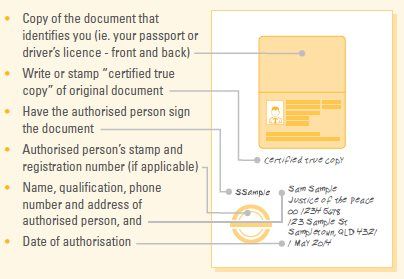
the financing of terrorism. Because of this you may be required to provide certified proof of identity before you
withdraw, rollover your benefit from the fund or commence an income stream^. You will need to provide identity
documents when you are rolling to a SMSF. At a minimum, you may be required to provide the fund with evidence
that verifies your full name, your date of birth, and your residential address.
In the event of a death claim, we would also require documentation to verify dependants and/or legal personal
representatives’ identities. These may include, but are not limited to, certified copies of marriage certificates,
wills, birth certificates and letters of administration.
The trustee also reserves the right to request additional information. If you do not provide this information your
payment may be delayed or refused.
Page 27 We're here to help - call 1300 467 875, 8am - 8pm, Monday to Friday or visit hostplus.com.au Last updated 11 April 2019You can also read


