MERSHON CENTER for INTERNATIONAL SECURITY STUDIES
←
→
Page content transcription
If your browser does not render page correctly, please read the page content below

MERSHON CENTER
                       for
INTERNATIONAL SECURITY STUDIES
     A N N U A L   R E P O R T   2013 –2014
Mission Statement
The mission of the Mershon Center is to advance the
understanding of national security in a global context.
The center does this by fostering research on the
use of force and diplomacy; the ideas, identities
and decisional processes that affect security;
and the institutions that manage violent conflict.

  Table Of Contents

  RESEARCH
       Highlights......................................................................................................4
       Research........................................................................................................8
       Graduate Student Projects.....................................................................17

  STUDENTS
       Ralph D. Mershon Study Abroad Scholarship................................. 20
  FACULTY PUBLICATIONS AND HONORS
       Books.......................................................................................................... 22
       Articles, Essays and Book Chapters................................................... 31
       Honors, Awards and Service................................................................. 41

  EVENTS
    Conferences...............................................................................................47
    Calendar of Events ................................................................................. 49
  Oversight Committee .................................................................................. 52

  © 2014 Mershon Center for International Security Studies. All rights reserved.
  The views expressed herein are not necessarily those of the Mershon Center or The Ohio State University.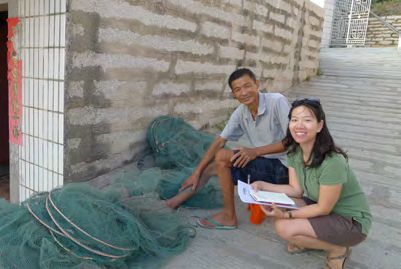
A   N   N   U   A   L   R   E   P   O   R   T    THE MERSHON CENTER for International Security Studies 1

About the Center

The Mershon Center for International Security Studies is the fulfillment
of a bequest by Colonel Ralph D. Mershon to The Ohio State University
for the exploration of matters pertaining to national security.

                           Ralph D. Mershon                           The Mershon Center encourages collaborative,
                           was a man of action                        interdisciplinary research projects within the university
                           in public life. He organized               and with other institutions around the world. The center
                           the American engineers for                 is currently sponsoring three major initiatives on Climate,
                           service in World War I and                 Security, Health and Resilience; Peace Studies; and the
                           led a public effort to create              Comparative National Elections Project.
                           legislation that was the
                           forerunner of the Reserve                  Mershon supports multidisciplinary teams and individual
                           Officer Training Corps in the              faculty research, as well as hosts visiting scholars and
                           United States. He also was a               supports student research. The Mershon Center also
                           contemplative and inventive                organizes conferences, symposia and workshops that
                           person who held a number                   bring together scholars, government officials and business
                           of important patents for his               leaders from around the world to discuss the latest
                           work in electrical engineering.            research in national and international security affairs.
Col. Mershon died February 14, 1952, and is buried in
Zanesville, Ohio.

The Mershon Center is also supported by community gifts
and grant money. The center’s mission is to advance the
scholarly study and intellectual understanding of national
security in a global context. The center does this by
fostering research in three areas of focus:
• use of force and diplomacy
• ideas, identities and decisional
  processes that affect security
• institutions that manage violent conflict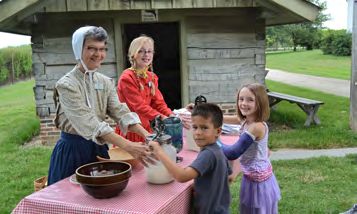
2    THE OHIO STATE UNIVERSITY

                        From the Director

                        Since 1967, the Mershon Center for International Security Studies has worked to fulfill
                        the vision of Ralph D. Mershon. He gave his generous gift to The Ohio State University
                        just over 50 years ago to ensure that civilians would study military activities.

                        The Mershon Center aims to advance the understanding           colleagues in multiple disciplines bring their diverse
                        of national security by examining it in a global context. We   theoretical perspectives and expertise to engage in
                        focus on three big questions:                                  discussions about some of the most important international
                                                                                       questions of our time.
                        • How are force and diplomacy used in world affairs?
                        • How do cultures and ideas influence                          This report covers many great developments. Randall
                          international security?                                      Schweller became the editor of Security Studies, bringing
                        • How can institutions be created to manage                    the leading interdisciplinary journal to the center, and
                          international conflicts and violence?                        complementing International Theory, which is edited
                                                                                       by Alex Wendt. Alice Conklin received the Pinkney
                        The center addresses these by funding faculty research,        Prize for Best Book in French History from the Society
                        graduate student projects and undergraduate research           for French Historical Studies for In the Museum of Man:
                        and study abroad. It also brings to the Ohio State campus      Race, Anthropology, and Empire in France, 1850-1950.
                        leading scholars and policymakers who are trying to find       Geoffrey Parker received the British Academy Medal and
J. Craig Jenkins
                        the best answers to problems related to these questions.       Distinguished Book Prize from the Society for Military
                        Our aim is to draw out the implications of those answers for   History for Global Crisis: War, Climate Change and
                        both policymakers and citizens more generally.                 Catastrophe in the 17th Century, adding to the recognition
                                                                                       that it has received. Among the notable books of the year
                        As is clear in Iraq, Syria, Afghanistan and the Ukraine, the   was Peter Mansoor’s Surge: My Journey with General
                        most vexing problems involve social change, mobilization       David Petraeus and the Remaking of the Iraq War, which
                        of people for collective action and construction               has received considerable press attention.
                        of legitimate governance. They also often include
                        understanding how humans and social systems are likely         This annual report is dedicated to the memory of Chadwick
                        to behave, how leaders are likely to decide and how we         Alger, longtime affiliate with the center and Emeritus
                        can avoid major intelligence failures and bad policies, or     Professor of Political Science and Public Policy. Springer
                        at least contain their consequences.                           Press honored Chad’s 90th birthday by publishing two
                                                                                       volumes of his collected papers on the U.N. system
                        The Mershon Center is fortunate in that it can draw on         and peacebuilding and a festschrift of papers on his
                        many talented people in numerous disciplines at Ohio           contributions.
                        State. Four federally funded national resource centers —
                        for East Asia, the Middle East, Eastern Europe and Russia,     To learn more about our research and videos of our many
                        and Latin America — cooperate with Mershon. Moreover,          talks and events, please visit us at mershoncenter.osu.edu.

                                                                                       —J. Craig Jenkins
A   N   N   U   A   L   R   E   P   O   R   T   THE MERSHON CENTER for International Security Studies 3

BY THE NUMBERS

General                                                            Students
 Number of faculty research projects supported: 12                  Number of graduate students at events: 315 or 22.1%
 Number of student travel and research                              Number of research assistantships
   grants awarded: 20                                                 supported (25% each): 4
 Number of study abroad scholarships awarded: 12                    Number of undergraduates at events: 407 or 28.6%
 Number of departments whose faculty                                Number of undergraduate student employees: 4
   and students were supported: 18
                                                                   Website
Events                                                              Average number of unique visitors per month: 1,836
 Number of speaker events held: 43                                  Average number of visits per month: 2,731
 Number of conferences sponsored: 3                                 Average number of page views per month: 8,335
 Total number of attendees: 2,183                                   Number of countries in which website was viewed: 68
 Average number of people per event: 51
                                                                   Online Archives
 Number of collaborating colleges,
   departments and units: 20                                        Number of streaming video views: 8,294

 Number of colleges, departments and units reached: 45              Number of unique visitors who viewed
                                                                      streaming videos: 285
Faculty                                                             Number of countries in which streaming
 Number of books published: 27                                        videos were viewed: 25
 Number of articles published: 362                                  Number of podcasts downloaded: 414,582
 Number of journal issues edited: 20                                Number of people who downloaded podcasts: 3,239
 Number of times quoted or cited in the media: 473
4    THE OHIO STATE UNIVERSITY

HIGHLIGHTS

Kathryn Bauer (second from left) posed for an O-H-I-O shot on the   This propaganda poster               Lindsey Ibanez (right), doctoral student in sociology, interviewed a
Great Wall of China with students from the Food Safety, Security    promoted the 1300th jubilee          street vendor in Leon, Nicaragua, for her research on food insecurity
and Production program in Beijing. She traveled on a Mershon        of the Bulgaria, which               in Nicaragua.
Study Abroad Scholarship. Second from right is program advisor      faculty affiliate Theodora
Maurice Eastridge.                                                  Dragostinova is researching
                                                                    for her project “Unlikely
                                                                    Encounters in the Cold War:
                                                                    Bulgaria and the Global Order.”

                                                                                                                                                                                Photo by Kevin Fitzsimons
Zoe Pearson (left) interviewed     Shahreena Shahrani (right)       Aaron Friedberg, professor of        Tyler Parker visited the Citadel    President H.E. Hassan Sheikh
this woman who legally grows       interviewed Palestinian-         politics and international affairs   in Amman, Jordan, overlooking       Mohamud of Somalia spoke
coca in the Chapare region of      Jordanian writer Ibrahim         at Princeton University, gave        the Raghadan Flagpole during        at Ohio State on “Somalia’s
Bolivia for her dissertation on    Nasrallah for her dissertation   the Joseph J. Kruzel Memorial        the AMIDEAST Intensive              Roadmap to Peace.”
coca control policies, coca-       on the marriage crisis among     Lecture on “A Contest for            Summer Arabic Program. He
based livelihoods and the war      youth in Jordan and its          Supremacy: China, America            traveled on a Mershon Study
on drugs.                          relationship to the state.       and the Struggle for Mastery         Abroad Scholarship.
                                                                    in Asia.”

Joshua Rovner (second from right) won the Edgar S. Furniss Book     John Carlarne (left), peace studies coordinator; Craig Jenkins (second from left), Mershon Center
Award for Fixing the Facts: National Security and the Politics      director; and Christopher Gelpi (right), Chair in Peace Studies and Conflict Resolution, with students at
of Intelligence (Cornell, 2011). He was with Furniss committee      the Student Peace Conference and Peace Awards.
members (l to r) Bob McMahon, Ralph D. Mershon Professor of
History; Craig Jenkins, director of the Mershon Center; and John
Mueller, senior research scientist.
A   N   N   U   A   L   R   E   P    O   R   T    THE MERSHON CENTER for International Security Studies 5

HIGHLIGHTS

Concern for faith, future led
Sauders to endow Peace Chair
January 2013 saw the dawn of a new era at the
Mershon Center with the hiring of Christopher
Gelpi as Chair in Peace Studies and Conflict
Resolution.
Since then, Gelpi and peace studies
coordinator John Carlarne have begun a full
program of activities including courses that
have reached more than 3,000 students;
research on American public opinion about war
and the effectiveness of training in nonviolent
communication; and community outreach
events engaging students and the business
community.
                              What most people
                              don’t know is how
                              this program was
                              made possible
                              by a donation to
                              endow the Peace             Sauder Village in Archbold, Ohio, features a walk-through-time experience with costumed guides and artisans who
                                                          engage with guests and relate the lives of our ancestors to today. Photo courtesy of Debbie Sauder David.
                              Chair from Erie and
                              Orlyss Sauder, first
                              pledged back in             With ingenuity and determination, Sauder                 company’s 2,400 employees ship over 48,000
                              1990.                       Woodworking Co. incorporated and                         cartons per day, with sales of nearly $500
                                                          production began.                                        million annually.
                              “The Peace
                              Studies proposal            In 1953, Sauder introduced an entirely new               Of particular importance to the Sauder family
                              touched his                 concept: a patented table that could be                  was their participation in the Mennonite Church.
Erie J. Sauder (1904–1997)    heart,” said Erie’s         shipped flat in boxes and put together in                In 1953, Erie was one of 11 businessmen who
                              granddaughter,              the home. Today, Sauder Woodworking is                   formed the Mennonite Economic Development
Debbie Sauder David, who now presides over                North America’s leading producer of ready-               Associates (MEDA), whose mission is to create
one of Erie’s other legacies, Sauder Village,             to-assemble furniture and the nation’s fifth-            business solutions to poverty. After World
                              Ohio’s largest              largest residential furniture manufacturer. The          War II, Sauder made 18 trips to Paraguay to
                              living history                                                                       help Russian Mennonite refugees and native
                              destination                                                                          Paraguayans become more self-sufficient.
                              in Archbold.                                                                         Today Debbie Sauder David is chair of the
                              “Grandpa believed                                                                    board for MEDA, which has helped more than
                              the world was a                                                                      20 million families around the world — mostly
                              better place when                                                                    women, youth and the rural poor — through
                              people tried to                                                                      tools such as financial services, improved
                              understand and                                                                       technology, business training, access to
                              help each other                                                                      markets and equity investment.
                              versus putting up
                              walls or drawing                                                                     In 1976, Erie Sauder founded Sauder Village
                              lines in the sand.”                                                                  to interpret 19th-century rural lifestyles in the
                                                                                                                   Black Swamp region of Northwest Ohio. It
                             A pioneer furniture                                                                   began with the purchase of a 15-acre farm, later
Debbie Sauder David
                             manufacturer and                                                                      expanding to a 235-acre complex that brings
entrepreneur, Erie J. Sauder (1904–1997) was                                                                       history to life.
born and raised on a farm in Archbold. In 1934
he started a woodworking business in a barn                                                                        “One thing that makes Sauder Village special is
behind his home.                                                                                                   the walk-through-time experience,” said David.
                                                                                                                   “You can walk through houses, farms, gardens
Originally building custom cabinets and church                                                                     and community shops from 1803 when Ohio
pews, he began crafting small tables out of               Former Ohio State University President E. Gordon Gee     became a state through the 1920s.”
leftovers from expensive fine woods. In 1940              (standing in academic robes) presented an honorary
these tables caught the attention of a traveling          doctorate to Erie Sauder during an intimate ceremony     The 98-room Sauder Heritage Inn and
                                                          at Sauder Heritage Inn on the grounds of Sauder          Conference Center, along with a restaurant,
salesman who ordered 25,000 — a seemingly                 Village in Archbold, Ohio, just a week before Erie’s
daunting quantity for a fledgling company.                death in 1997. Photo courtesy of Debbie Sauder David.    bakery and campground, make Sauder Village
                                                                                                                   a complete destination.
6 THE OHIO STATE UNIVERSITY
HIGHLIGHTS
Mershon faculty publish 27 In the Museum of Man: Anthropology, Race, Rovner, Friedberg highlight
and Empire in France, 1850-1950, by Alice
books, hundreds of articles Conklin (Cornell, 2013), based on a 2009
Mershon Center events
Faculty members at the Mershon Center for conference Each year the
International Security Studies have always Miseducating Americans: Distortions of Mershon Center
been among the most productive at The Ohio Historical Understanding, by Richard Hamilton gives the Edgar
State University. In 2013–14 they published 27 (Transaction, forthcoming) S. Furniss Book
books, edited 20 issues of academic journals Award to an
and authored 362 articles, chapters, essays A Dangerous World? Threat Perception and author whose
and reports. U.S. National Security, edited by John Mueller first book makes
and Christopher A. Preble (CATO Institute, 2014) an exceptional
Among the year’s most important faculty books
Other books based on Mershon Center support contribution to the
were:
are forthcoming from Kevin Boyle, Nicholas study of national
Music in America’s Breyfogle, Stephanie Smith and Alexander and international
Cold War Diplomacy, by Wendt. See the Publications section for details. security. The
Danielle Fosler-Lussier center also holds
(California, forthcoming), Carlarne, Gottlieb win grant a memorial lecture
supported by three Joshua Rovner won the
from U.S. Institute for Peace Edger S. Furniss Book Award in honor of Joseph
Mershon Center grants for Fixing the Facts: National J. Kruzel, an Ohio
Mershon affiliates John Carlarne and Security and the Politics of State faculty
Voting in Old and New Intelligence (Cornell, 2011).
Esther Gottlieb won a Public Education for member killed
Democracies, edited by
Peacebuilding Support grant from the United in Sarajevo, Bosnia, while serving as deputy
Richard Gunther, Paul
States Institute for Peace for their project assistant secretary of defense.
Beck, Pedro Magalhães
“Business for Peace Collaboratory.”
and Alejandro Moreno In 2013-14, Joshua Rovner won the Furniss
(Routledge, forthcoming Through this project, Gottlieb and Carlarne Award for Fixing the Facts: National Security
in 2015), the second edited volume from the seek to establish an online laboratory and the Politics of Intelligence (Cornell, 2011),
Mershon-supported Comparative National where Ohio State students and scholars which explores the complex interaction
Elections Project can collaborate with Ohio businesspeople, between intelligence and policy and shines a
policymakers and peace practitioners. The goal spotlight on the problem of politicization. He
For Peace and Money: French and British
is to think strategically about how business spoke at the Mershon Center in November 2013.
Finance in the Service of Tsars and
affects peace and how peace and conflict
Commissars, by Jennifer Siegel (Oxford, The Kruzel Lecture was given in November 2013
impact profitability and competitiveness.
forthcoming), supported by two Mershon by Aaron Friedberg, professor of politics and
Center grants The USIP grant funded the Business for Peace international affairs at Princeton University, on
Collaborative panel discussion held March 25 “A Contest for Supremacy: China, America and
Cities and Stability:
at the Mershon Center. Moderated by WOSU’s the Struggle for Mastery in Asia.” Friedberg
C I T I E S and Urbanization,
Ann Fisher, the panel included: served from 2003 to 2005 as deputy assistant
S TA B I L I T Y Redistribution, and
Regime Survival in • Patrice McMahon, associate for national security affairs and director of policy
China, by Jeremy professor of political science, planning in the Office of the Vice President.
Wallace (Oxford, 2014), University of Nebraska-Lincoln
supported by two • Christopher Gelpi, Chair of Peace
Urbanization,
Redistribution, &
Mershon Center grants Studies and Conflict Resolution
Regime Survival
in China Additional products of • Yoram Haftel, associate professor
J E R E M Y L. W A L L A C E Mershon Center support of international relations, Hebrew
include: University of Jerusalem
International Volunteer Tourism: Critical • Mason Foster Ye, business scholar and
Reflections on Good Works in Central managing member of The Foster Groupe LLC
America, edited by Katherine Borland and
Abigail E. Adams (Palgrave,
2013), based on a 2011
conference
Photo by Jon McAllister
The Business for Peace Collaborative panel included (l to r) Mason Foster Ye, Aaron Friedberg gave the Joseph J. Kruzel Memorial
Christopher Gelpi, Yoram Haftel and Patrice McMahon. Lecture on “A Contest for Supremacy: China, America
and the Struggle for Mastery in Asia.”A N N U A L R E P O R T THE MERSHON CENTER for International Security Studies 7
Students organize peace Book awards, Fulbrights (history) Kirsten Hildonen and Ian
Johnson were selected for the Fulbright-
conference, awards ceremony highlight faculty honors Hays Doctoral Dissertation Research
Each year the student Peace Studies Society Mershon faculty members continue to win the Abroad program. Hildonen traveled
at Ohio State organizes a speaking event and highest honors in their fields, including major to Serbia and Johnson to Russia.
awards ceremony to recognize the efforts of book awards, scholarships and grants. Major grants included:
undergraduates who have contributed to the Among the book awards were: • Mitchell Lerner, director of the Institute for
cause of peace and justice. Almost 70 people
attended a half-day conference held January 24 • The Great Powers and the International Korean Studies, won a major grant from the
at the Mershon Center. System: Systemic Theory in Empirical Korea Foundation to develop and coordinate
Perspective by Bear Braumoeller Korean studies courses for undergraduate
Sessions at the conference included “Speak students at Big Ten universities.
(Cambridge, 2013) won the Best Book Award
Peace in a World of Conflict,” with Tom from the International Studies Association, • Nicholas Breyfogle, associate professor
Carlisi and Jeff Brown of the Center for and the J. David Singer Award from of history, was part of group that won a
Compassionate Communication, and “Peace International Studies Association Midwest. £123,000 grant from Britain’s Leverhulme
through Service in Rotary,” with the Rotaract
• Alice Conklin’s Mershon-supported Trust for “Exploring Russia’s Environmental
Club of OSU.
book In the Museum of Man: Race, History and Natural Resources.” The
A human rights panel and discussion included Anthropology, and Empire in France, 1850- scholars will carry out collaborative
Patrick Coy, director of the Center for Applied 1950 (Cornell, 2013) won the Pinkney Prize fieldwork at three ecologically significant
Conflict Management at Kent State University; for Best Book in French History from the sites in Russia over a four-year period.
Julie Hart, professor of sociology and peace Society for French Historical Studies. • Theodora Dragostinova, Yana Hashamova,
and justice at Ohio Dominican University; and
• Former affiliate Ted Hopf won the Marshall Scott Levi, Pranav Jani, Brian Joseph and
John Carlarne, peace studies coordinator at the
Shulman Book Prize for his Merhson- Mytheli Sreenivas were part of an Ohio
Mershon Center.
supported book Reconstructing the Cold War: State faculty group that won a $175,000
Integral to the conference was the Student The Early Years, 1945-1958 (Oxford, 2012). grant from the Andrew W. Mellon Foundation
Peace Award, given by the Peace Studies to organize a John E. Sawyer Seminar
• Surge: My Journey with General David
Society with support from the Mershon Center. comparing Eastern Europe and South Asia.
Petraeus and the Remaking of the Iraq
Lauren Chen, a biomedical science major, was
recognized for her work to empower children in
War by Peter Mansoor (Yale, 2013) was Mershon welcomes former
a finalist for the inaugural Guggenheim-
the slums of Lenana, Kenya.
Lehrman Military History Prize and runner-
director as visiting scholar
Two students also were recognized for their up for best biography/autobiography from The Mershon Center welcomed Charles F.
contributions to peace: William Lee, an the Southern California Book Festival. Hermann as a visiting scholar in spring 2014.
international studies major, for his work on Hermann has a long history at the center, where
• Geoffrey Parker’s Global Crisis: War, Climate
human rights in North Korea, and Swati Kumar, he served as associate director starting in 1970
Change and Catastrophe in the 17th Century
a business major, for her work on effective and then as director from 1980 to 1995.
(Yale, 2013) won the British Academy Medal,
altruism. Distinguished Book Prize from the Society for Hermann then became founding director of the
The Rotaract Club of OSU also sponsored Military History and History Book of the Year George H.W. Bush School of Government and
its Peace Through Service Award at the from The Times and Sunday Times of London. Public Service at Texas A&M, where he now is
conference, recognizing the Business Builders Several Mershon affiliates won Fulbright the Brent Scowcroft Chair in International Policy
Club at Fisher College of Business for its scholarships, including: Studies and International Affairs.
Alleviating Poverty Through Entrepreneurship
• Mershon faculty affiliate Philip Brown, Hermann’s expertise is in American and
program.
professor of Japanese and East Asian comparative
The Student Peace history, won a 2014 Fulbright fellowship to foreign policy,
Conference and research “Dam Imperialism: The Case of crisis management
Peace Awards the Wusantou Dam, Tainan, and Related and simulation.
was sponsored Projects” at the Institute for Taiwan His most recent
by the Mershon History at Academia Sinica in Taipei. edited book is
Center and Central When Things Go
• Mershon affiliated doctoral students (history)
Ohioans for Peace, Wrong: Foreign
John Knight and John Douglas Johnson,
with support from Policy Decision
won 2013–14 Fulbright scholarships. Knight
Ohio Council of Making Under
spent a year in China researching “Is This the
Churches and Adverse Feedback
Final Struggle? Popular and Elite Attitudes
Columbus Rotary. (Routledge, 2012).
within China toward the International Socialist
Movement, 1917–1956,” while Johnson went In April, he spoke
to Volgograd, Russia, to research “Building on “Critical Foreign
Lauren Chen co-founded a an Electric Future: The Volga Hydroelectric Charles Hermann, now Policy Decisions:
nonprofit organization called at Texas A&M University, Continue or
The Supply, dedicated to Station and the Construction of Late visited the Mershon Center
empowering children in Lenana, Socialism in the Soviet Union, 1950–1961.” in spring 2014. He served as Change Course?”
Kenya, through education and director of the center from
civic engagement. • Mershon affiliated doctoral students 1980 to 1995.8 THE OHIO STATE UNIVERSITY
RESEARCH
Nicolle Etchart spent 10 weeks Kelly Klein (left), doctoral Kevin Hachey (right) Daniel Curzon found maps
researching the Reducing student in dance, interviewed interviewed Oliver Rosenbauer, like this one created by
Emissions from Deforestation the artistic director of press officer for the World American officers in China
and Degradation (REDD+) the Tibetan Institute for Health Organization, about the while researching the Boxer
initiative for her dissertation Performing Arts in McLeod impact violence has on Relief Expedition of 1900–
on “Nature, Carbon and the Ganj, India, headquarters for polio vaccination efforts 1901 in the Central Archives,
Struggle over Value the Tibetan government in in Afghanistan. Washington, D.C.
in Ecuador.” exile.
Nisha Rao drove this van nicknamed the “Green Mamba” into the Participants in the Comparative National Elections Project, led by Ayşe Baltacıoğlu-Brammer
field every day while researching the impact of poverty on sexual Richard Gunther, professor emeritus of political science, met in uncovered this Ottoman
health decisions in Malawi. Marrakesh last spring to launch the fourth phase of the project. document dating to 1497CE
during research in Istanbul
for her dissertation on
Safavid conversion efforts
in Ottoman Anatolia.
Carolyn Morgan (center) interviewed Maher Fakhouri (right) and Michael Hugo of Paul Niebrzydowski visited Young Rae Choi (right) interviewed a fisherman
migra e.V., an integration center for immigrants in Pomerania, for her dissertation on the Warsaw memorial to mending his net in the Guangmingcun area
anti-immigrant sentiment in Germany. victims of the Katyn massacre for her dissertation on urbanization and land
while researching the postwar reclamation along the coast of China.
effort of the American Relief
Administration in Poland.A N N U A L R E P O R T THE MERSHON CENTER for International Security Studies 9
RESEARCH
Project: in the developing world. While mitigation efforts have
a global effect by reducing greenhouse gasses in the
Climate, Security, Health and Resilience atmosphere, adaptation efforts have a more localized
effect with greater potential to reduce instability.
Principal Investigators:
Two innovations separate this research from other projects
J. Craig Jenkins, Mershon Center for on environmental security. First, the working group plans
International Security Studies to develop a new theoretical framework by concentrating
not on where conflict over resources has broken out, but
Ellen Mosley-Thompson, Byrd
on where people are coping with scarcity and vulnerability
Polar Research Center
in peaceful ways. They believe the pursuit of environmental J. Craig Jenkins
Geoffrey Parker, Department of History security can be channeled into cooperative arrangements
that promote sustainable development.
Daniel Sui, Department of Geography
Second, the Climate, Security, Health and Resilience
Lonnie Thompson, School of Earth Sciences (CSHR) initiative takes two complementary approaches
Climate change has been linked to the disruption of to past and future. On the one hand, project leaders seek
civilization, food scarcity and war. Although the number of to “rewind” the tape of history to study similar climate-
armed conflicts across the globe has declined since the induced catastrophes in the past; on the other, they
end of the Cold War, many scholars believe climate change hope to “fast forward” the tape to attempt predictions
could reverse this trend. of what might happen in the future based on our best
understanding and climate models.
Rising temperatures are thought to increase the Ellen Mosley-Thompson
likelihood of extreme weather such as droughts, floods A major feature of CSHR is a series of workshops to
and hurricanes, disrupting food supplies and leading to take place in coming years on climate and health,
conflict over dwindling resources, outbreak of disease climate and food security, climate and water security,
and migration from environmentally stressed areas. Of climate and population dynamics and climate and
particular importance is water scarcity, expected to affect human conflict. These events will be designed to
5 billion people by 2025. answer questions such as:
Yet without specific evidence linking climate change to • How does climate and associated climate
armed conflict, the Intergovernmental Panel on Climate change affect disease and human health?
Change took only a cautious position on climate security
• How does climate affect international security,
in its most recent assessment report.
including the spawning of instability and violence
and new areas of international engagement? Geoffrey Parker
To fill in this gap, affiliates of the Mershon Center for
International Security Studies, Byrd Polar Research
• How does climate affect the resilience of societies and
Center and Center for Urban and Regional Analysis
their ability to adapt and adjust to climate challenges?
at Ohio State have come together to organize an
interdisciplinary working group on the security
CSHR also will encourage the preparation of faculty
implications of climate change.
proposals for outside funding to private, federal and
international agencies such as the National Science
The research group is focusing on two questions: Foundation, National Institutes of Health, Gates Foundation
and Mellon Foundation.
• How does climate change pose a risk for U.S. national
interests around the world? The working group is The initiative maps onto all three of Ohio State’s Discovery
looking not just at the link between climate and Themes: energy and environment, food production and Daniel Sui
conflict, but at which states and regions are most security and health and wellness, as well as onto the
vulnerable to destabilization due to civil conflict and College of Arts and Sciences’ initiative on environment,
humanitarian emergencies. This nexus of climate energy and sustainability.
change and fragile states has the most potential
for regional spillovers that affect U.S. interests. It is also linked to two areas of focus at the Mershon Center
— ideas, identities and decisional processes that affect
• How should resources be deployed to protect U.S. security, and institutions that manage violent conflict — as
interests from the effects of climate change? Under well as to the broad mission of Byrd Polar — to conduct
the Copenhagen accords, the United States agreed multidisciplinary investigations of polar, alpine and tropical
to finance climate mitigation and adaptation projects processes to understand their role in the Earth’s ever-
evolving climate system.
Lonnie Thompson10 THE OHIO STATE UNIVERSITY
RESEARCH
Project: Such findings are especially important in countries like
Brazil and South Africa, where local governing bodies
Insecure Democracy: Risk and Political rely on citizen participation for distribution of resources,
Engagement in South Africa community development and mitigating a history of violent
economic conflict. Without such participation, vulnerable
Principal Investigator: citizens can be caught in a pernicious and self-reinforcing
trap of poverty.
Sarah Brooks, Department of Political Science
The anti-Apartheid campaign in South Africa is an iconic To research this issue, Brooks is commissioning a
example of a large social movement that led to a complete 1,200-person face-to-face survey in Cape Town and
Sarah Brooks overhaul of laws and government. Yet, for as engaged Johannesburg similar to one she previously ran in
as South Africans were during that struggle, they are Sao Paulo and Recife, Brazil.
conspicuously unengaged in community issues now.
Questions will identify individual perceptions of
In 2011, just 11 percent of South Africans reported they had vulnerability to loss of income and victimization by violent
attended a protest or demonstration, and a majority said crime, the range of assets people have to cope with such
they would “never do this.” Sarah Brooks would like to risks and their participation in local political meetings.
know why. The location of all survey participants will be geo-
referenced, and the data overlaid with maps of poverty
In this project, Brooks posits that the falling level of political and violent crime.
participation in South Africa is due not to any formal
barriers to active citizenship but to insecurity associated This survey will allow Brooks to identify the political causes
with the risks of violent crime and income loss, which and consequences of insecurity, and to explain how
foreclose for some the opportunity to engage. individual perceptions of risks and assets influence the
likelihood of participation in democratic institutions.
This project builds on Mershon-supported research that
Brooks conducted in Brazil, which found that citizens facing It also will form the basis of an application to the National
high risks of income loss or victimization by violent crime, Science Foundation for support of a cross-national study
without adequate means to buffer against those risks, of the effects of risk on democracy, as well as a book that
systematically engage less in democratic politics. contributes to dialogue on the “crisis of democracy” rooted
in inattention to society’s most vulnerable members.A N N U A L R E P O R T THE MERSHON CENTER for International Security Studies 11
Project: The objectives of the Peace Education and Training
Repository (PETR) are to:
Peace Education and Training Repository
• provide resources for lifelong learning
Principal Investigators:
• include a broad range of philosophical,
John Carlarne, International Studies Program belief-based and cultural perspectives
Esther E. Gottlieb, Office of International Affairs
• draw resources from around the world,
The field of peace studies and conflict resolution is only not just the “global North”
about 60 years old, but in that time it has evolved to ask John Carlarne
researchable questions about nonviolent approaches to • provide free resources, open to all users in
resolving international conflict and developed shareable a variety of languages and formats
information resources to show how education programs
can promote peace and reconciliation. • attract participation from practitioners,
researchers and policymakers alike
In this project, Carlarne and Gottlieb capitalize on the
field’s accumulated knowledge by creating an online data To build this unique resource, Carlarne and Gottlieb
portal designed to document peace education training have engaged a graduate assistant, Lee Heward, to
curricula and materials from around the world. Networks find and scan a wide range of peace-building resources
for shared learning about education and leadership are previously unavailable for public use. These resources
important because many communities in the world struggle include materials from the archives of Chadwick Alger,
with similar problems and can benefit from learning about who devoted 50 years of his research to peace and its
promotion. Esther E. Gottlieb
each other’s experiences.
This portal will be the first step in developing a The Alger archives are being used to develop a prototype
comprehensive one-stop resource tool that combines repository that will be free and open to all. Carlarne and
information about global research, education and peace- Gottlieb plan to use this seed project as the basis for
building programs that affect community, national and seeking external funding from business and philanthropic
international peace and security. The repository will form foundations, and to involve their students in the creation
the core resource for lifelong peace leadership education. and development of the full repository.
The role of education in peacebuilding and conflict Effective leadership requires key knowledge, skills and
resolution has been well documented. By consulting abilities, especially in peace work, which is often carried
case studies, education modules and experiments out at the grassroots level under difficult circumstances
in peacebuilding, users can learn how education with few resources. The Peace Education and Training
complements and promotes the reconciliation process. Repository will provide a way to keep the hard-won lessons
Having access to a repository of case studies can provide and insights gained by peace practitioners, researchers
leaders with options for the use of nonviolent methods in and policymakers from being lost to history.
the face of conflict.12 THE OHIO STATE UNIVERSITY
RESEARCH
Project: Timber was another resource forcibly taken by both armies,
which needed it to construct winter quarters, roads and
War Materials: Armies, Civilians and the Struggle weapons and to use for firewood. Although the South had
for Resources During the American Civil War the nation’s largest reserves of pine and oak before the
war started, Cashin argues, areas of sustained combat
Principal Investigator: experienced rapid deforestation, leading to environmental
degradation, death of wildlife and soil erosion. Both
Joan Cashin, Department of History sides also burned forests in an attempt to conceal their
Was the U.S. civil war a “total war”? Most scholars believe movements or fend off attack.
it did not start out that way, but became a total war in the
Joan Cashin summer of 1862 when U.S. Gen. John Pope issued orders Cashin argues that Southern civilians reacted with shock
allowing union troops to live off the land, taking what they and fury to the actions of both armies, writing letters,
needed from Southern civilians. holding public meetings, rioting or even shooting at
troops. Civilians realized early on that both armies posed
In this book project, Joan Cashin disagrees with prevailing a direct threat to their own survival. Some civilians
scholarship, arguing that the Civil War was from the were imprisoned, and thousands became refugees
beginning a total war, with troops from both militaries when their own homes became unlivable. Yet while the
starting to confiscate large amounts of both food and image of the rampaging Union army lives on in historical
timber from civilians as early as the spring of 1861. memory, Cashin says, the destruction of resources by the
Confederate army has been largely forgotten.
Although both the U.S. Army and the Confederacy did
poorly at feeding their troops early in the war, the North A grant from the Mershon Center allowed Cashin to travel
became more efficient at supplying rations as the war to the National Archives in Maryland for three weeks to
went on. Even so, some soldiers made freelance foraging examine records from the U.S. Quartermaster General,
raids, while other units were authorized to take food from Confederate Quartermaster Department and U.S. Army
civilians, Cashin argues. Yankee soldiers also destroyed Judge Advocate General.
farms to keep food from Southern troops. The result was
widespread food insecurity, hunger and even starvation. Her book brings a fresh perspective to the study of
the Civil War, examining military-civilian relations;
But Union troops weren’t the only ones forcibly taking food environmental history; the history of food, agriculture
from Southern civilians, Cashin argues; Confederate troops and diet; and gender relations since soldiers often took
did the same, as well as destroyed food to keep it out of resources from women managing farms while the men
the hands of the enemy. Southern civilians were shocked were at war.
at such treatment from their own military, yet this foraging
took place throughout the war. In 1863 the Confederate The book also demonstrates how collective memory
government passed a “tax in kind” allowing agents to seize can be selective, as people who have suffered in war
food in lieu of taxes; the law was widely resisted. don’t always want to remember what their own soldiers
did to them.A N N U A L R E P O R T THE MERSHON CENTER for International Security Studies 13
Project: By focusing on national commemorations, Dragostinova
explores the importance of national ideology for the
Unlikely Encounters in the Cold War: Communist regime during times of economic and political
Bulgaria and the Global Orderw turmoil. She reconstructs the dynamics on three levels:
Principal Investigator: • how the central authorities saw the
events they orchestrated
Theodora Dragostinova, Department of History
• how regional officials fine-tuned national
The late 1970s and early 1980s were a time of turmoil
policies to reflect local needs
across much of Eastern Europe as movements like
Charter 77 and Solidarity caught world attention. Yet in Theodora Dragostinova
• how ordinary Bulgarians perceived the commemorations
Bulgaria, the Communist Party organized a lavish multiyear
extravaganza to celebrate the 1300th anniversary of the Exploring the international aspects of the celebrations, she
Bulgarian state. examines the messages Communist officials disseminated
abroad in other Communist countries, the capitalist West
Within Bulgaria, the regime built monuments and museums,
and non-aligned countries.
organized concerts and exhibitions, commissioned
historical novels and films and held celebrations involving Her work shows how soft diplomacy became an important
the entire population. Internationally, the party invited arena of global interaction during this time, challenging
culture figures from abroad; sponsored events in Europe, the clear-cut divisions of the Cold War. Although
Africa, Asia and North and South America; and assembled the commemorations began as an exercise in state-
heads of state at the newly built convention center in Sofia. controlled internationalism, the events gained a degree
of independence as savvy intellectuals played to the
In this book project, Theodora Dragostinova puts the 1300
sensibilities of their audiences in both the East and West.
Years Bulgaria Jubilee in a global context to tell the story of
the 1970s through the experiences of a small state. Within This more fluid form of cultural diplomacy coincided with
Bulgaria, she shows how the social contract between larger globalization trends, helped prepare both Eastern
the communist regime and its citizens was redefined in Europe and the world for the fall of Communism in 1989
complex ways. and defined the nature of the post-socialism transition,
Dragostinova argues.
A grant from the Mershon Center allowed Dragostinova to
spend five weeks working in the archives of the Bulgarian
Communist Party and Ministry of Foreign Affairs, as well as
conducting oral history interviews in Sofia. She also spent
a week at the UK National Archives in London as well as a
week at the Open Society Archives in Budapest.14 THE OHIO STATE UNIVERSITY
RESEARCH
Project: The first edited book from this project, Democracy,
Intermediation, and Voting on Four Continents, was
Comparative National Elections published by Oxford University Press in 2007. The second,
Project: Launching Phase IV Voting in Old and New Democracies, edited by Richard
Gunther, Paul A. Beck, Pedro Magalhães and Alejandro
Principal Investigators: Moreno, is scheduled for publication by Routledge in 2015.
Richard Gunther, Departments of With support from grants by the Mershon Center and
Political Science and Sociology European Union, researchers met last spring in Marrakech,
Morocco, to hammer out the research agenda and
Paul Beck, Departments of Political Science
Richard Gunther questionnaire design for their next round of surveys,
and Sociology, School of Communication initiate the themes for new cross-national research teams
William “Chip” Eveland, School of Communication, and plan the project’s next round of publications. At the
Marrakech meeting, a number of decisions were made that
Department of Political Science
will greatly enhance the Mershon Center’s visibility as
Erik Nisbet, School of Communication, the principal institutional supporter of this groundbreaking
Department of Political Science project.
William Liddle, Department of Political Science The project website will be moved from the University
of Lisbon to Ohio State, and all data standardization, file
The Comparative National Elections Project (CNEP) is a building and data archiving will be transferred from the
multi-year, multi-country examination of citizen voting University of Cape Town. This centralization will streamline
behavior and political attitudes in democracies around
Paul Beck the administration of the project under the leadership of
the world. In addition to the conventional factors that Mershon faculty Richard Gunther and Paul Beck.
explain voting decisions, it has pioneered a focus on the
communication processes through which voters receive CNEP is rapidly expanding, and is now the second largest
information about policies, parties and candidates during cross-national electoral survey project in the world. Its
election campaigns, along with more intensive analyses of merged data set of more than 45,000 personal interviews
sociopolitical values, and differing understandings of and is based on 26 surveys conducted on five continents.
support for democracy.
It will soon expand with the addition of data from recent
CNEP involves five Mershon Center faculty, as well as electoral studies or surveys currently being conducted in
more than two dozen researchers in other countries. Germany, Indonesia, South Africa, the Dominican Republic,
Mexico, the United States, Brazil, Colombia, Turkey and
Uruguay. Other countries are expected to be added in
William “Chip” Eveland
future years.
Erik Nisbet
William LiddleA N N U A L R E P O R T THE MERSHON CENTER for International Security Studies 15
Project: Far from going extinct, diplomatic history is now
described as in a “creative frenzy” on the cutting edge
Domestic Politics and the Shaping of methodological sophistication. However, the field’s
of American Diplomacy evolution is causing some to question whether it has gone
too far in abandoning past methodologies.
Principal Investigator:
While new approaches have improved scholarly
Mitchell Lerner, Department of History understanding of American international relations, Lerner
In 2008, the Society for the History of American Foreign argues, they also risk crowding out more traditional
Relations (SHAFR) launched its annual Summer Institute, approaches rooted in power relations and political realism,
a seminar program in which diplomatic historians early economics and development. This is especially apparent Mitchell Lerner
in their careers gather for five days of discussion and in the de-emphasis of the relationship between American
instruction on a theme related to the conduct of foreign relations and domestic politics.
American diplomacy.
Domestic politics plays a central role in foreign relations,
The 2015 SHAFR Summer Institute will be hosted at Lerner argues. Political campaigns and elections, the
The Ohio State University, directed by Mitch Lerner and influence and constraints of rhetoric, the role of lobbying
organized around the theme “Domestic Politics and the groups and special interests, implementation of state
Shaping of American Diplomacy.” power and policy, development of alliances, the influence
of media, questions of legitimacy and public opinion and
In 1980, historians such as Charles Maier of Harvard more all act to shape and frame American diplomacy, which
were lamenting the impending extinction of diplomatic can’t be understood apart from this context.
history, reflecting the widespread belief that the field was
dependent on government sources at a time when history The 2015 SHAFR Summer Institute will bring together 10 to
was turning its focus to social and cultural methodologies. 15 assistant professors and advanced doctoral students to
examine these questions through a series of discussions
However, reports of diplomatic history’s demise were led by prominent historians of American diplomacy as well
greatly exaggerated, as the field embraced new as at least one policymaker and publisher. Participants will
methodologies, incorporating the role played by race, read from an extensive reading list in advance as well as
gender and ideology into its literature. Scholarship circulate their own research.
changed for the better, combining diplomatic history’s
emphasis on internationalization, multi-archival research The objective is to develop a network of diplomatic
and transnationalism with newer methodological historians trained in both traditional and modern
approaches, returning the field to the forefront of methodologies of the field, and committed to reintroducing
the profession. the relationship between politics and diplomacy so as to
better understand the processes that affect international
relations.16 THE OHIO STATE UNIVERSITY
RESEARCH
Project: Tsipursky argues that to secure popular legitimacy for
a socialist modernity, Soviet officials had to present an
The Soviet Domestic Front of the appealing version of Soviet culture — one in which people
Cultural Cold War, 1957–1970 could find meaning and joy. His research shows that young
people participated enthusiastically in official Soviet
Principal Investigator: cultural activities, questioning the widespread notion that
they scorned state-sponsored culture.
Gleb Tsipursky, Department of History
Much has been written about politics and diplomacy in the This widespread participation places state-sponsored
Cold War, but less about its cultural influences and even popular culture at the heart of the Cold War, with great
Gleb Tsipursky less about how the Cold War affected culture within the significance for policymaking. For example, Tsipursky
Soviet Union itself. argues that popular culture of this era shaped the beliefs
and practices of the Gorbachev generation, making them
Gleb Tsipursky fills this gap by exploring the effectiveness more attuned to the West and more likely to seek peaceful
of U.S. cultural diplomacy on Soviet grassroots, the impact solutions to the superpower struggle.
of Western cultural propaganda on Soviet domestic and
foreign policy and how culture shaped Soviet and non- Tsipursky’s research sheds light on current beliefs and
Soviet perceptions of each other. practices in Russia. Cold War efforts to build a Soviet
modernity convinced many citizens that they live
While mainstream narratives portray Soviet culture as drab, progressive and modern lives as good or better than their
militant and politicized, Tsipursky challenges this notion counterparts in the West. It also helps explain current
by examining state-sponsored cultural entertainment for efforts by Russian authorities to manage youth cultural
young people during the early Cold War. In 1962 alone, tastes by sponsoring nationalistic performances by the
more than 9 million amateur performers participated in a youth movement Nashi, and repressing protest groups like
variety of state-sponsored concerts, dances, shows and Pussy Riot.
festivals in a network of clubs.
A grant from the Mershon Center allowed Tsipursky
Tsipursky argues that through these activities the Kremlin to travel to Moscow to research Soviet domestic
was attempting to build a socialist version of modernity as cultural diplomacy, or the state’s use of internal cultural
an alternative to the Western model. While this socialist establishments to influence foreign visitors. He examined
modernity powerfully shaped the Soviet citizenry’s beliefs youth café records, tour group leader reports and accounts
and values, it was not without controversy. from foreign visitors and conducted interviews with
participants.
Many young people expressed a preference for Western
popular culture such as jazz and rock, while hardliners saw The findings will be incorporated into Tsipursky’s
Western culture as subversive. This put club owners in an forthcoming book, Socialist Fun: Youth, Consumption, and
awkward position: If they offered Western activities, they State-Sponsored Popular Culture in the Cold War Soviet
risked censure but increased ticket sales. Young people Union, 1945–70.
exerted powerful influence by choosing whether to attend
or perform at an event.A N N U A L R E P O R T THE MERSHON CENTER for International Security Studies 17
Graduate Students
Ayşe Baltacıoğlu-Brammer (History) journeyed to Istanbul Nicole Etchart (Geography) spent 10 weeks in Ecuador
for five months with the help of the Mershon Center to with the aid of the Mershon Center to pursue her research
conduct archival research. She used the hundreds of in the political, economic and social landscape of the
documents found in four archives and libraries for her struggle around payment schemes for ecosystem services.
dissertation, which examines Safavid conversion efforts She focused specifically on the carbon mitigation initiative
in Ottoman Anatolia and their effects on the relationship known as Reducing Emissions from Deforestation and
between the Ottoman government and its subjects who Degradation (REDD+) for her dissertation, “Nature, Carbon Ayşe Baltacıoğlu-
converted to Kızılbaş/Shi’ite Islam from the 1450s to the and the Struggle over Value in Ecuador.” Her combination Brammer
1630s. Some questions her research answered were: What of archival and field research that included interviews
was the religious atmosphere in Anatolia in the late 15th with indigenous leaders, intermediary organizations,
century? What were the main reasons for conversion from researchers, designers of REDD+, leaders in Ecuador’s
Sunni Islam to Twelver Shi’ite Islam? What forms did Safavid forest industry and key government officials in the Ministry
propaganda take in Anatolia, and what was the Ottoman of the Environment looked into the tension between
response? Through her work she was able to further shape Ecuador’s plans for agricultural and forestry modernization
her dissertation topic using specific examples from primary and its programs dedicated to protecting and re-foresting
Young Rae Choi
sources as well as support her article, “‘Heresy’ or Tax- the forests damaged by climate change and anthropogenic
evasion? The Formation of Kızılbaş Communities in Anatolia disturbance. She is looking forward to continuing her
and Ottoman Responses, 1450s–1630s,” published in the research and studying the ways that REDD+ is shaping
International Journal of Turkish Studies. Ecuador’s national agrarian development pathways and
peasant livelihoods.
Young Rae Choi (Geography) used Mershon Center
funds to travel to China from June to December 2013 to Kevin Hachey (Medicine) visited Geneva, Switzerland, for
gather information on coastal reclamation for her doctoral five weeks with the assistance of the Mershon Center. He
dissertation. Her work aims to understand the rise of set out to research his thesis for his MPH in epidemiology Nicole Etchart
the latest reclamation fever and how this is creating in the College of Public Health focused on the correlation
new material, discursive natures and new subjectivities between violence and the incidence of polio in
among coastal populations. She traveled to Beijing and Afghanistan. Through interviews with members of the
a number of cities in Hebei province as well as Xiamen international polio eradication team, he pursued several
University in Xiamen, Fujian province. Through visits hypotheses: 1) violence impacts vaccination rates, which in
to fishing villages, she observed internal migration due turn allows the spread of polio; 2) conflict damages water
to reclamation that leads to deterioration of the marine and sanitation infrastructure, increasing transmission of
environment in addition to a hierarchical structure between the polio-causing virus; and 3) exposure to violence can
Kevin Hachey
local employees and non-local employees. After interviews cause emotional stress in children capable of reducing
with academics and policymakers, she found that there vaccine efficacy. He found that vaccine efficacy is not an
are extensive policies on coastal reclamation, but the core issue, but rather inaccuracy in reporting is the problem
issue lies in understanding and implementing such policies. with vaccination data. Violence and corruption in the area
By exploring local budgets and constraints, her research also may lead to mistakes in local planning, estimates
suggests that the demand for new land created by coastal and quality control, as well as problems in providing
reclamation is driven not only by real use, but also by those medical assistance in rural regions. Hachey is now revising
who consider the land an investment asset. his thesis after gaining a deeper understanding of the
political and logistical realities of vaccination campaigns Margaret Hanson
Daniel Curzon (History) spent a week in Washington, D.C., in Afghanistan.
researching two topics for chapters in his dissertation, Not pictured:
“Cherry Tree and Eagle: The Empire of Japan and the Margaret Hanson (Political Science) traveled to Tajikistan, Daniel Curzon
United States of America in the Strategic Situation Kazakhstan and Russia during the summer of 2013 to
around the Pacific Rim from 1880–1920.” With Mershon research the implementation of land and property rights
Center funding, he was able to access documents at reform in former Soviet states. Her study seeks to explain
the Central Archives, College Park Branch Archives and why individual ownership of land contrasts sub-nationally
Library of Congress. Focusing on the Allied Expeditionary among comparable provinces and municipalities despite
Force, 1918–1920, in Siberia, as well as the Boxer Relief the fact that federal legislation dictates these reforms.
Expedition, 1900–1901, in Northern China, the research During her time abroad, she has conducted countless
suggests that Japanese and American military forces interviews with farm directors and agriculture and other
were more willing to work together in the region than their ministry officials. Hanson discovered that the Western
governments may have been. A certain level of respect assumption that secure property rights lead to investment
between the powers existed before the start of World then economic growth is not present in these former
War II, and the two nations seemed able to limit the other Soviet states. Even though research is still in progress, she
powers’ capabilities in the region. has found that property rights to land were not secure by
almost any standard definition, and even so citizens were
investing at great risk to their own personal finances.You can also read


