MIDWEST FLYER AGAZINE - JUNE/JULY 2018 - Midwest Flyer Magazine
←
→
Page content transcription
If your browser does not render page correctly, please read the page content below

M IDWEST FLYER
         AGAZINE                                                      JUNE/JULY 2018

                                                                                        rs
                                                                                  0 Yea
                                                                                4
                                                                     b r a ting
 Published For & By The Midwest Aviation Community Since 1978   Cele

                                       midwestflyer.com

WATCHING OUT FOR
  AIRPORT ACCESS
  For over a year now, AOPA has been
  hard at work to improve access and
  transparency for general aviation at
  certain FBOs across the country. While
  most FBOs are doing a great job of
  providing aeronautical services for GA
  pilots and aircraft owners, there are
  some locations that appear to be
  imposing unreasonable costs and
  forcing users to pay for services they
  don’t want or need.                                                                             Photography courtesy of Chris Rose

  At this year’s Sun ‘n Fun, we announced our ‘Airport Access Watch List,’
  facilities home to 10 FBOs that we believe are doing just that. These
  locations may also potentially be in violation of FAA grant assurances –
  certain standards they agreed to uphold – having previously accepted
  federal funds from the FAA.
  The list is based on more than a year’s worth of data and analysis, combined
  with more than 1,000-member complaints. Our top priorities with the watch
  list locations are to improve transparency and access as well as promote
  competition where practicable.
  Many other airports have taken steps to become friendlier to pilots –
  locations we’re calling ‘self-help’ airports — including Orange County and
  Santa Barbara, California; Waukegan, Illinois; Syracuse, New York; Heber City,
  Utah; and Cedar Rapids, Iowa.
  The airports on the Watch List have the potential to follow in the footsteps
  of other self-help airports to improve access and transparency for GA, and
  we look forward to helping them make those changes.
  For more information about our work on FBO pricing or to submit a
  complaint please visit aopa.org/FBOpricing.

   Mark R. Baker
   President & CEO, AOPA

*For more information on the Aircraft Owners and Pilots Association and the issues that affect your flying go to www.aopa.org today.

                                                                                              JUNE/JULY 2018 MIDWEST FLYER MAGAZINE 3
Vol. 38. No. 4
                                Contents
  ON THE COVER: Vic Riffel – a resident at the air park at Lloyd Stearman Field
                                                                                                    ISSN: 0194-5068                                                       June/July 2018

  (1K1) in Benton, Kansas – flying his 1941 Boeing A75N1 PT-17 Stearman. The photo
  ship was a 1957 Cessna L-19 Bird Dog flown by fellow air park resident, Greg Largen.
  Complete story on Lloyd Stearman Field beginning on page 26.            Nick Moore Photo
                                                                                                                                           M IDWEST FLYER              AGAZINE                                                                         JUNE/JULY 2018

                                                                                            (www.gravityimagesonline.com)

  HEADLINES
    AOPA Releases New ‘Destinations’ Platform To Inspire & Inform Pilots................... 40
    ER, UND & SIUC Place First, Second & Third At NIFA SAFECON........................... 45
    Minnesota Council of Airports & MNDOT Honor State’s Finest!................................ 51
    Wisconsin Aviation Conference Recognizes Service
  		 & Rewards Future Aviation Professionals............................................................... 48
  COLUMNS                                                                                                                                               Published For & By The Midwest Aviation Community Since 1978                               Celeb
                                                                                                                                                                                                                                                        rating
                                                                                                                                                                                                                                                                 40
                                                                                                                                                                                                                                                                      Yea
                                                                                                                                                                                                                                                                          rs
                                                                                                                                                                                                                                                                                              1/8/18
                                                                                                                                                                                                                                                                                                       8:20
                                                                                                                                                                                                                                                                                                              PM

    AOPA Great Lakes Regional Report: Concerns Addressed Over Massive                                                                                                                         midwestflyer.com

  		 Powder River Training Complex Special Use Airspace - by Kyle Lewis................. 20
                                                                                                                                MFM JuneJuly2018 Issue Backup.indd 1                                                                                                       5/20/18 11:04 PM

                                                                                                                                                                                                                                               1
                                                                                                                                                                                                                                        indd
                                                                                                                                                                                                                                  white.
                                                                                                                                                                                                                            ars
                                                                                                                                                                                                                       40 Ye

    Ask Pete! How Accurate Are Aircraft Book Values? - by Pete Schoeninger.............. 17
    Aviation Law: The Importance of An Aircraft Pre-Purchase Inspection
  		- by Greg Reigel....................................................................................................... 8
    Dialogue: Feedback – Why It Is So Important! - by Dave Weiman............................. 5
    From AOPA Headquarters: It’s up to us - by Mark Baker........................................... 19
    From The Right Seat: Part 2 - by Woody Minar.......................................................... 15
    Instrument Flight: Single Pilot Resource Management
  		- by Michael J. “Mick” Kaufman................................................................................ 9
    Minnesota Aeronautics Bulletin: Celebrating The 50th Anniversary of
  		 The Minnesota Aviation Maintenance Technician Conference
  			- by Cassandra Isackson..................................................................................... 49                                                                                 24
    Minnesota Education Section: Drone Restrictions In Federal Wilderness Areas
  		 - by Jonathan Beck................................................................................................ 54
    Pilot Proficiency: Pattern Operations Revisited - by Harold Green............................ 12
    Wisconsin Aeronautics Report: Professional Aviation Education Programs
  		 In Wisconsin - by Meredith Alt…46
  FEATURES
    Why You Should Be An AOPA Foundation Donor - by Bill Blake.............................. 22
    Seaplane Flying In The Great Lakes Region - by Steve Smith.................................. 24                                                                                                  36
    The Beauty & Uniqueness of Stearman Field - by Grant Boyd.................................. 26
    The Voice of The Red Baron Stearman Squadron Goes Silent - by Dave Weiman.. 28
    SimpleFlight Radio Helping To Spread Passion & Enthusiasm For Aviation............. 32
    Bem Vindos ao Brasil - by Yasmina Platt................................................................... 34
    A Flight To & From Sun ‘n Fun With Lightspeed - by Dave Weiman.......................... 36
    A Flight Back To Another Era - by Bill Blake.............................................................. 41
    Home At Last! Memphis Belle Exhibit Unveiled At National Museum of the
  		 U.S. Air Force - by Dave Weiman........................................................................... 43
                                                                                                                                                                                                     43
  SECTIONS
     Air Racing..........................................48          Indiana Aviation Industry News.........45
     Calendar.......................................57-59            Midwest Seaplane Pilot.....................24
     Classifieds..........................................60         Minnesota Aviation Industry News.....55
     Destinations.......................................34           People In The News..........................28
     Flight Experiences.............................41               Products & Services..........................32
     Flight Training....................................14           Wisconsin Aviation Industry News.....48
     Illinois Aviation Industry News...........45
                                                                                                                                                                                                     45

4 JUNE/JULY 2018 MIDWEST FLYER MAGAZINE
Dialogue
                                  Feedback – Why It Is So Important!
                     by Dave Weiman
                                                                  dialogue between you and our contributing editors.

W
              hether you are a professional                           After you read a column or article, if you like it or wish to
              pilot, aircraft technician,                         make a comment or suggestion, please send an email to the
              airport manager, flight                             contributing editor directly, or send me an email at dave@
instructor, fixed base operator, aircraft                         midwestflyer.com and I will forward your comment to them.
manufacturer or supplier, support service                         You can usually find the email address of each contributing
professional, business owner or manager,                          editor in the EDITOR’S NOTE at the end of each column.
air traffic controller, state or federal                              This issue of Midwest Flyer Magazine features travel
aviation official, doctor, lawyer, or high                        destinations and flight experiences, tributes to special aviators,
school teacher or university professor, you need feedback from    state airport conference news and information, and our
time to time to make sure you are doing a good job and know       regular columns on aviation law, instrument flight, pilot
where you can improve to meet your professional objectives.       proficiency, aircraft ownership, state aeronautics, and state,
Those of us in aviation as a hobby, also need feedback to         regional and national issues.
improve our skills, and will usually get this feedback during         If you are receiving a sample copy of Midwest Flyer
flight training or our biennial flight review.                    Magazine for the first time, and like what you see and are
    Fortunately, the contributing editors of Midwest Flyer        not yet a “paid subscriber,” we encourage you to subscribe
Magazine have received mostly positive feedback from readers,     online at www.MidwestFlyer.com, or complete and mail us
and some great suggestions for future articles. All of the        the subscription order form on page 62 in this issue. In the
input has been valuable and positive to help make the general     meantime, thank you for being a part of the Midwest aviation
aviation community stronger, but we encourage even more           community and for always striving to improve!                    q

                                                      If the sky is home,
                                                  we’re your home away from home.

                                                                             Land or lease at
                                                                           one of our airports.
                                                                           Go to MetroAirports.org
                                                                        and click on General Aviation.

   Minneapolis-St. Paul International | St. Paul Downtown | Flying Cloud | Anoka County-Blaine | Crystal | Lake Elmo | Airlake

                                                                                        JUNE/JULY 2018 MIDWEST FLYER MAGAZINE 5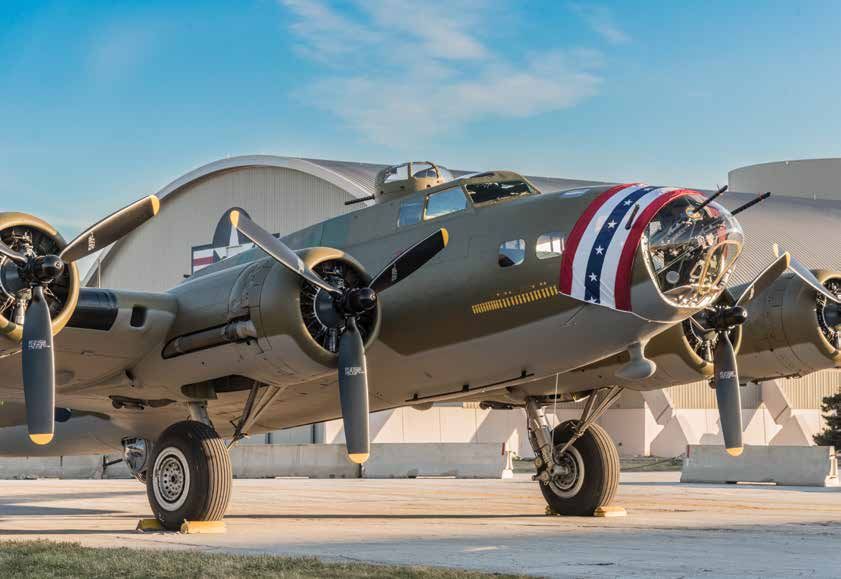
MIDWEST FLYER
           JUNE/JULY 2018               MAGAZINE
                                                                                                                       Index To Advertisers
           Serving The Midwest Aviation Community Since 1978                 Academy College............................................17            LodgingsAtPioneerLane.com..........................60
                                                                             Adventure Seaplanes.....................................24               Maxwell Aircraft Service.................................18
                            Editor/PublishEr                                 Aero Insurance................................................29         Metropolitan Airports Commission................... 5
                             Dave Weiman                                     Aircraft Owners & Pilots Association (AOPA).. 3                          Mid-Continent Insurance.................................60
                          Production dirEctor                                AircraftInsurance.com.....................................60             Midwest Flyer Magazine........ 6, 16, 33, 48 & 62
                            Peggy Weiman                                     Airlake Airport.................................................. 5      Miminiska Lodge, Ontario (Wilderness North).63
                            Photo Journalists                                Airpac..............................................................38   Minneapolis-St. Paul International Airport........5
                   Chris Bildilli, Brad Thornberg,
                                                                             Anoka County-Blaine Airport........................... 5                 Minnesota Aviation Trades Ass'n (MATA)..... 55
                 contributing Editors & PhotograPhErs                        Avfuel Corporation..........................................61           Minnesota DOT Office of Aeronautics...... 49-51
               Meredith Alt              Michael Kaufman                     Aviation Insurance Resources........................60                   Minnesota Petroleum Service.........................20
              Randy Arneson                  Kyle Lewis
              Mark R. Baker               Dan McDowell
                                                                             Beaver Aviation, Inc............................... 16 & 48              Minnesota State University – Mankato...........64
              Jonathan Beck                Woody Minar                       Bolduc Aviation Specialized Services.... 21 & 48                         Morey Airplane Company...............................60
                 Bill Blake                 Nick Moore                       Bolton & Menk, Inc........................................... 8          NewView Technologies, Inc................... 19 & 48
                Grant Boyd              Rachel Obermoller                    Brackett Aircraft Co., Inc.................................64            North Star Aviation..........................................64
                 Hal Davis                 Yasmina Platt                     Cape Air..........................................................17     Northland Aerospace......................................54
               Harold Green                  Stan Ross                       Cessna Aircraft Co..........................................48           OMNNI Associates..........................................30
               Max Haynes                Pete Schoeninger
                                                                             Chicago Piper.................................................. 2        Pat O’Malley’s "Jet Room" Restaurant...........22
            Cassandra Isackson              Steve Smith
                                                                             Cirrus Aircraft..................................................13      Phillips 66........................................................27
                                                                             Connell Aviation Group...................................33              Piper Aircraft, Inc..............................................2
                               ADVERTISING                                   Crystal Airport.................................................. 5      Racine Commercial Airport.............................48
                      PHONE: 608-772-1776                                    Des Moines Flying Service, Inc....................... 2                  Rice Lake Regional Airport - Carl's Field........60
                              EMAIL:                                         Dodge Center Aviation, LLC...........................60                  Rotax Engines.................................................31
                                                                             EAA AirVenture Oshkosh 2018........................7                     St. Paul Downtown Airport................................5
                        info@midwestflyer.com
                                                                             Eagle Air.........................................................60     Schweiss Doors..............................................35
                                 EDITORIAL                                   Eagle Fuel Cells..............................................40         Short Elliott Hendrickson Inc. (SEH).................9
                      PHONE: 608-772-1776                                    Eagle River Union Airport...................... 36 & 40                  Skycom Avionics, Inc......................................64
                             EMAIL:                                          Flying Cloud Airport......................................... 5          S. St. Paul Municipal Airport (Fleming Field)..27
                      dave@midwestflyer.com                                  Fond du Lac Skyport.......................................48             Southern Wisconsin Regional Airport.............60
                         ISSUE CLOSING DATES                                 Garmin............................................................64     Spring City Aviation.........................................23
                                                                             Hangar Building Sites (South St. Paul, MN)...27                          Steve Hahn Real Estate Broker......................60
           DEADLINE                                    ISSUE
                                                                             Hangar For Sale (Juneau, WI)........................60                   The Green Earth Deicer Company, Inc..........34
           October 15                    December - January
                                                                             Hangars For Rent (Janesville, WI)..................60                    Thunderbird Aviation.............................. 15 & 17
           December 15                      February - March
                                                                             Harbor View Float-In.......................................25            Trimcraft Aviation............................................48
           February 15                            April - May
                                                                             Harbor View Pub & Eatery..............................25                 Tri-State Steuben County Airport....................60
           April 15                                June - July
                                                                             Harbor View/Price County Airport                                         United Express................................................17
           June 15                       August - September
                                                                                 Fly-In & Airshow........................................25           Washington Island Airport (2P2).....................37
           August 15                     October - November
                                                                             Horizon Aircraft Engine Services, Inc.... 21 & 48                        West Bend Air, Inc..........................................48
                               COPYRIGHTS                                    Jet Air Group...................................................48       Wiley Properties..............................................10
           MIDWEST FLYER MAGAZINE is published bimonthly                     Lake Elmo Airport............................................ 5          Wisconsin Aviation, Inc.................... 48, 60 & 61
           by Flyer Publications, Inc. Copyright 2018 by Flyer               Leading Edge Air Foils LLC............................31                 Wisconsin Aviation Trades Ass’n (WATA)......48
           Publications, Inc. All rights reserved. Nothing in whole or
           in part may be reproduced without the written permission
                                                                             Leineweber Law LLC......................................26               Wisconsin DOT Bureau of Aeronautics.46 & 47
           of the publisher.
                            DISTRIBUTION
           Readership consists principally of aircraft owners,
           fixed base operators, airport managers, and aircraft
           maintenance shops in Wisconsin, Minnesota, North
           Dakota, South Dakota, Illinois, Iowa, Michigan,
                                                                                                  If Your Business Is Not Listed Above
           Indiana, Missouri, Kansas, Nebraska, and Ohio.
                                                                                                           Call 608-772-1776
                             SUBSCRIPTIONS
                           USA - $20 per year                                                     Or Email dave@midwestflyer.com
                         CANADA - $39 per year
                            (In U.S. Funds)                                                             www.midwestflyer.com
                            SUBSCRIBE ONLINE
                        www.MidwestFlyer.com
                     EMAIL-OR-MAIL ALL ORDERS
                      & CORRESPONDENCE TO:                                    DISCLAIMER: Midwest Flyer Magazine is a publication of Flyer Publications, Inc. Midwest Flyer Magazine
                                                                              endeavors to only accept reliable advertisements from legitimate businesses and organizations, but shall
                         info@midwestflyer.com                                not be responsible for the reliability of advertisements, their contents, and the businesses and organizations
                    MIDWEST FLYER MAGAZINE                                    that purchase them. The publishers reserve the right to decline or discontinue any advertisement without
                         6031 Lawry Court                                     explanation. Furthermore, the information provided may be the expressed opinion of the authors only, and
                                                                              readers are advised to seek the advice of their personal flight instructor and others, and refer to the Federal
                    Oregon, WI 53575-2617 USA                                 Aviation Regulations, FAA Aeronautical Information Manual and other instructional materials regarding any
                                                                              procedures discussed herein.
          6 JUNE/JULY 2018 MIDWEST FLYER MAGAZINE

Listing Writers EtC MASTER JuneJuly 2018.indd 1                5/20/18 10:46 PM
It doesn’t matter what you see; you just have to see it for yourself.

EXPERIENCE OSHKOSH                                  World’s Greatest Aviation Celebration ®

                                                    Help build the One Week Wonder RV-12
                                               Commemorating the RAF 100th anniversary
                                                   1,000 forums and hands-on workshops
                                                            Year of the Tanker celebration
                                                                         900+ exhibitors

                                                                JULY 23-29
                                                        BUY NOW & SAVE!
                                                          EAA.org/Midwest

                                                                                             © 2018 EAA
Aviation Law - On Your Side
                    The Importance of An Aircraft Pre-Purchase Inspection
           by Greg Reigel, AAL                 standard specifications, limitations        associated with a pre-purchase
       Copyright 2018. All Rights Reserved     and requirements of the applicable          inspection, the agreement should
                                               maintenance and/or operations manual;       address which party is responsible for

  I
        n most aircraft                            • All of the aircraft's calendar,       what expenses related to the inspection.
        transactions,                          cycle and hourly inspections per                Also, the buyer should make
        the buyer                              the manufacturer’s recommended              the agreement contingent upon the
  should have a pre-                           maintenance program are completed           buyer’s satisfaction with results of
  purchase inspection                          and current with no extensions or           the inspection. If the pre-purchase
  performed on the                             deferrals, and with no non-standard         inspection discloses that the aircraft
  aircraft. Why?                               or recurring inspections required           isn't as represented by the seller or as
  To make sure the                             outside of the standard manufacturer’s      expected by the buyer, then the buyer
  buyer knows what                             recommended maintenance program;            should have options to either get out
                                 Greg Reigel
  the buyer is getting                             • All mandatory service bulletins (or   of the transaction or to require that the
  before the buyer closes on the purchase.     equivalents) and airworthiness directives   seller correct any discrepancies. It is
  The pre-purchase inspection allows the       applicable to the aircraft have been        much better to discover discrepancies
  buyer to confirm that:                       completed and/or are in compliance          before the buyer pays for the aircraft
       • The aircraft is in an airworthy       and current, without recurring incident     than it is to find out at a later time
  condition;                                   if such terminating action is available;    when the buyer's recourse may be
       • The aircraft has a current,               • The aircraft doesn't have any         limited.
  valid, and effective standard category       undisclosed history of material damage;         So, if you are an aircraft buyer and
  airworthiness certificate issued by              • The aircraft doesn't have any         you want to make sure you are getting
  the FAA (FAA Aeronautical Center             corrosion outside of manufacturers’ in-     everything for which you are paying,
  Form 8100-2) without restriction or          service limits;                             make sure you have a pre-purchase
  limitation;                                      • All aircraft and engine               inspection performed by a mechanic or
       • The aircraft is in compliance with    maintenance and/or warranty programs        repair station you trust. It is worth the
  its type certificate;                        are current and fully paid.                 expense.
       • All of the aircraft's airframe,           The purchase agreement (which
  engine and/or propeller logbooks, as         should be used in all aircraft                  EDITOR’S NOTE: Greg Reigel is
  well as the maintenance records, are         transactions) can specify who               an attorney with Shackelford, Melton,
                                               will perform the inspection, what           McKinley & Norton, LLP, and represents
  original and complete;
                                                                                           clients throughout the country in
       • The aircraft's engine(s) and          qualifications that individual must
                                                                                           aviation and business law matters. For
  all other systems and installed              possess and where the inspection will       assistance, call 214-780-1482, email
  equipment are operating in a                 take place. Although the buyer is           greigel@shackelfordlaw.net, or Twitter
  manner that is consistent with the           usually responsible for the expenses        @ReigelLaw.                            q

                                                                                            Sporty’s Opens Doors Wider For
                                                                                                 50,000 Young People
                                                                                           OSHKOSH, WIS. – A milestone was
                                                                                           reached by the Experimental Aircraft
                                                                                           Association (EAA) on March 8, 2018,
                                                                                           as 50,000 Young Eagles have now taken
                                                                                           the next step in their aviation journeys
                                                                                           by enrolling in Sporty’s Learn to Fly
                                                                                           Course after their EAA Young Eagles
                                                                                           flights. The concept for free online
                                                                                           courses was developed with input from
                                                                                           EAA Young Eagles pilots. Sporty’s filled
                                                                                           that role by offering its popular online
                                                                                           flying course at no charge!              q
  8 JUNE/JULY 2018 MIDWEST FLYER MAGAZINE
Instrument Flight
Single Pilot Resource Management
pilots, need to develop flow patterns and use acronyms to get things done in a
by Michael J. “Mick” Kaufman
logical and systematic order.
A
In the beginning of this article, I mentioned “Aviate - Navigate - Communicate.”
s pilots,
Recently, during some flight training, I watched the pilot whom I was training get
we have
off course and deviate from his altitude while he fine-tuned the fuel flows on his
all heard
engine analyzer. This was truly a case of not prioritizing tasks, and this is a very
or seen references
common mistake that has developed with the adaption of sophisticated engine
to the FAA terms
analyzers. As we move into the future, we will see more aircraft equipped with full
crew resource
authority digital engine controls (FADEC) that set maximum engine performance.
management
In the meantime, we need to set our priority on flying the airplane first.
Michael Kaufman (CRM), single
pilot resource
management (SRM) and aeronautical
decision-making (ADM). These are
terms that we do not use every day,
but they are important, especially in Let’s show the world
“instrument” flying and when we go for what we can do together.
a check-ride.
When I fly with an instrument-rated Day by day. Project by project.
pilot, I observe the way they use all of
their resources and how they prioritize Together we’re planning and
tasks. In some cases, the training flight engineering what’s possible
ends as part of the post flight discussion,
or if needed, I interject some comments and moving the world forward.
during the flight. Many of us have
heard the expression “Aviate-Navigate-
Communicate” and the five (5) T’s,
Airport Engineering, Architecture,
both of which I will explain later in this
article. Construction Administration, Design-build,
By definition, crew resource Environmental, Funding/Grants, GIS, Land
management or cockpit resource Acquisition, Planning, Public Involvement,
management (CRM) is a set of training Surveying, System Planning and Zoning.
procedures for use in environments
where human error can have devastating
effects. Used primarily for improving air
safety, CRM focuses on interpersonal
communication, leadership and For more information:
decision making in the cockpit. We, as Joel Dresel
GA pilots, have to work harder to fly jdresel@sehinc.com | 800.325.2055
our aircraft because in most cases we sehinc.com
are single pilots and the workload is
the same or higher in some cases, and
our cockpits are not as sophisticated
as larger aircraft flown with two-pilot
crews. On the other hand, some of our
GA aircraft have cockpits that would
put most airline cockpits to shame,
DRAWING SCALE IN FEET
0 100 200 300
EXIST. NDB
EXIST.
40:1
TERPS
but GA pilots seldom learn to use this
DEPART NT
URE EME
FUT. SURFAC
40:1 EAS
E
Building a Better World
TERPS LINE
DEPART
PIPE
URE
SURFAC
E
TY
NT
PER
EME
EAS
PRO
LINE
PIPE
T
POR
AIR
ST.
EXI
EXIST. & FUT. 25' BRL
for All of Us
FUTURE AIRPORT PROPERTY
modern equipment properly. So, enter
FUT. MN/DOT CLEAR ZONE
500' X 1,000' X 800'
FUT. TSA
FUT. FAA RPZ FUT. 35' WIDE PARALLEL TAXIWAY
500' X 1,000'
131'
79'
X 700'
EXIST. & FUT. 500' OFA
CENTRAL PORTION OF RPZ FUT. TAXIWAY OFA
TO BE REMOVED WHEN RWY IS EXTENDED
300'
EXIST.
single-pilot resource management
FUT. 200'
PAPI
FUTURE AIRPORT PROPERTY
PAPI
Engineers | Architects | Planners | Scientists
ROAD HAS BEEN CLOSED
EXIST. EASEMENT
14
FUTURE RUNWAY 3,500' x 75'
EXISTING RUNWAY 3,304' x 75'
FUT. RUNWAY 14 FUT. 150' RSA
STA. 98+04 196' RWY EXT.
ELEV. = 1287.00' FUT. 250' OFZ
CSAH NO. 2 EXIST. 150' RSA
ELEV. = 1291.5' + 15' = 1306.5'
97.4' CLEAR EXIST. 20:1
43.9' CLEAR EXIST. 40:1 EXIST. 250' OFZ
87.9' CLEAR FUT. 20:1
39.2' CLEAR FUT. 40:1 EXISTING RUNWAY 14
STA. 100+00
ELEV. = 1286.80' ROAD HAS BEEN CLOSED
(SRM), which is an adaptation of crew
EXIST. & FUT. 500' OFA
EXISTING AIRPORT PROPERTY
X 800'
X 1,000'
ZONE 500'
CLEAR
MN/DOT
EXIST.
EXIST. & FUT. 25' BRL
EXIST. FAA RPZ
500' X 1,000' X 700'
FUT. 8' FENCE
resource management (CRM) training
E
SURFAC
TURE
DEPAR
40:1
FUT. E
SURFAC
TURE
DEPAR
40:1
EXIST.
for single-pilot operations. We, GA
JUNE/JULY 2018 MIDWEST FLYER MAGAZINE 9
After takeoff, I do a very rough job of leaning the mixture,        When I see the iPad sitting on the pilot’s knee, I know
and when the workload has reduced to almost zero, I fine            this flight may prove to be interesting during a hand-flown
tune my fuel flows using my engine analyzer.                        approach. Before the iPad, I purchased a chart holder that was
    It is important to have a well-organized cockpit, which         in my scan (FIG-1), as I knew getting pertinent information
is one of the strong points of a                                                                   and looking down at my knee
new aircraft, and which has been                                                                   would set me up for an unusual
designed to help the pilot with fuel                                                               attitude if I had to hand fly the
flows.                                                                                             aircraft.
    In the 1950s and up to                                                                             In a previous issue of Midwest
the middle 1960s, aircraft                                                                         Flyer Magazine, I wrote about
manufacturers placed instruments                                                                   acquiring and memorizing
wherever they fit. Then came what                                                                  pertinent information from the
was known as the “T” style panel,                                                                  approach chart and never looking
which developed an improved                                                                        at the chart once inside the final
instrument scan.                                                                                   approach fix (FAF).
    My 1966 Piper Cherokee                                                                             In the April/May 2018 issue, I
was a good example of a pre-T                                   FIG-1                              wrote about copying and reading
style panel that made the                                                                          back clearances and how the brain
instrument scan difficult. The pilot does eventually adapt,         is a computer with only a limited amount of processing
but transitioning to a different aircraft then becomes more         power. I find that when there is too much information to
difficult.                                                          process, the pilot gets overwhelmed and in trouble.
    We often question why the airlines do not update their              Several years ago, I was doing an instrument proficiency
equipment, and the answer is that they want to keep all the         check (IPC) with a pilot who had too much information.
airplanes the same so a pilot can fly any Boeing 737-300,           There was the usual Garmin 530 navigator and a multi-
for instance, as they are all the same. All switches are in the     function display (MFD), displaying a course overlay; a
same place and all of the avionics are identical. Not so in         Garmin 796 with approach plate display; an iPad with
our GA aircraft, except for the newer aircraft coming off           ForeFlight and, of course, ForeFlight on the iPhone. It was
the line. I never fly an aircraft in hard IFR until I become        a disaster to watch the pilot push buttons on all of these
familiar with that specific aircraft. A Garmin 430 could have       devices, and when two of the devices showed the aircraft in
a different firmware update or a different interface to the         different locations, it would have been all over had we been in
CDI or autopilot than the last airplane I flew with the same        hard instrument meteorological conditions (IMC). We ended
equipment. Another case that may cause some confusion               up turning off everything but the Garmin navigator which
could be that the pilot who flew the aircraft previously            displayed the approach chart on the MFD and de-cluttered
changed some of the pilot option settings.                          the primary flight display (PFD) to become an attitude
    Besides knowing our aircraft and avionics well, there are       indicator and HSI. The pilot learned a lesson and hand flew a
other items we can do to enhance SRM.                               perfect precision approach.
    We need to enhance our personal organization of the                 Yes, you can have too many resources in SRM and not
cockpit by the way it is designed and place items there. With       manage them well. You can also have too many resources
the advent of the iPad and the fantastic software known as          available on a single box or navigator. A pilot needs to find
“ForeFlight,” we need to have the information in the pilot’s        what resources are important to him and not just randomly
scan.                                                               push buttons and turn knobs.
                                                                        It is interesting as an instructor to watch pilots as
                                                                    they push buttons and twist knobs, and when I ask what
                                                                    information they are looking for, they do not have an answer.
                                                                        The answer is to pick one or two screens that represent
                                                                    the most useful information and then custom design the
                                                                    pilot changeable fields to provide the information that is
                                                                    important.
                                                                        A Garmin 530 has five (5) user programmable fields
                                                                    on the right side of the display on the Nav 2 page. I use
                                                                    waypoint, desired track, track, distance and groundspeed. You
                                                                    may prefer different fields to display or may prefer the Nav 1
                                                                    page as your primary display, which has six (6) fields.
                                                                        When it comes to checklists, I only use a written one
                                                                    on the ground and then only when not moving. This does
10 JUNE/JULY 2018 MIDWEST FLYER MAGAZINE
not mean that I do not use in-flight EDITOR’S NOTE: Michael J. “Mick” Kaufman is a Certified Instrument Flight
checklists, but not written ones as a Instructor (CFII) and the program manager of flight operations with the “Bonanza/
single pilot. I use acronyms and flow Baron Pilot Training” organization. Kaufman conducts pilot clinics and specialized
instruction throughout the U.S. in a variety of aircraft, which are equipped with
patterns as I feel it is too risky to bury
a variety of avionics, although he is based in Lone Rock (KLNR) and Eagle River
my head to read a checklist when it (KEGV), Wisconsin. Kaufman was named “FAA’s Safety Team Representative of
is necessary to have my eyes outside the Year” for Wisconsin in 2008. Email questions to captmick@me.com or call
looking for traffic. We must accept the 817-988-0174.
fact that there are no electronic boxes DISCLAIMER: The information contained in this column is the expressed
that will alert you of a possible collision opinion of the author only, and readers are advised to seek the advice of their
100% of the time. personal flight instructor and others, and refer to the Federal Aviation Regulations,
FAA Aeronautical Information Manual and instructional materials before attempting
To get the greatest benefit from
any procedures discussed herein. q
SRM, you also need a practical
framework for application in day-to-
day flying. One such approach involves
regular evaluation of: Plan, Plane, Pilot,
Passengers, and Programming. In this
article, we have only scratched the
surface on a few of these items, which I
have found while instructing. You can
use these items to evaluate your own
shortcomings while flying.
Since I started writing this article, I
had the opportunity to fly with several
pilots and saw one of them duplicate
the button-pushing scenario I described
earlier. It seems as if there is a button
to push or a knob to twist, we need to
do it – a case of too much information
available to us, and we have no idea
what we are looking to find.
Today, we have so many more
resources available to us while flying that
would have only been a dream 25 years
ago. We should use those resources to
make better decisions before we fly and
during the flight. This brings up another
item to consider, and that is labeled
“aeronautical decision-making” (ADM).
There is no one right answer in
aeronautical decision-making. Each
pilot is expected to analyze each
situation in light of experience level,
personal minimums, and current
physical and mental readiness level,
and make his own decision. As a flight
instructor, I find that we cannot teach
good decision-making in my opinion,
which may be argued by some. I do say
however, instructors can influence good
decision-making to the pilots they fly
with.
Till the next issue of Midwest
Flyer Magazine, fly safe, fly often and
stay out of those spring and summer
thunderstorms!
JUNE/JULY 2018 MIDWEST FLYER MAGAZINE 11Pilot Proficiency
Pattern Operations Revisited
by Harold Green this statement, in my opinion, is based on several facts. First,
military pilots have been trained extensively and intensively
I
t seems that traffic patterns at pilot- in this approach from their earliest training days. Second,
controlled airports remain a source military aircraft usually have much better visibility from the
of concern for general aviation, as cockpit than do general aviation aircraft. Third, military pilots
the majority of accidents happen in the are required to maintain currency at a much higher level than
pattern. It would be oversimplification general aviation pilots. Fourth, military pilots are much more
to say that this is due to the fact that adept at upset recovery than the average general aviation pilot.
this is where airplanes congregate, Fifth, almost all military fixed-wing operations are conducted
Harold Green
so what do you expect? In fact, the under a controlled environment.
accidents tend to be clustered around a couple of simple acts: Frankly, I feel a much better approach is proper training.
overshooting the turn to final, and failure to observe traffic Perhaps this should be included in a biennial flight review
pattern protocol. (BFR) as well.
First, think about the turn to final. All too often the A significant factor in a successful pattern and landing
pilot loses track of the location of the runway and when operation is to be consistent in track and airspeed. Once this
turning to final, finds that the runway has been overshot. has been accomplished, the only variable becomes the wind.
This is particularly a problem when there is a tailwind on This is a much better situation than having to compensate
base causing the final course to be overshot. In an attempt to with varying airspeed and track in addition to the wind. First
correct, a steep turn is entered, and in frustration, rudder is off, since most pilots tend to look for the runway all the way
used incorrectly. The combination of increased angle of attack through the turn from downwind to base and from base to
associated with a steep turn results in a stall, and the non- final, this adds to the difficulty. This does a couple of things
coordinated use of rudder results in a snap roll or spin, neither that are, in my opinion, counter-productive.
of which can be recovered from low altitude. Most of these Turns tend to be arcs because the pilot is not paying
accidents happen at pilot-controlled airports. Therefore, the attention to the track, but rather the runway. This usually
following comments are directed principally to non-towered means a different distance to the touchdown point and hence
operations whether on or off airport. time, and therefore, a different altitude at the threshold from
Currently, there are discussions focusing on a revised one landing to another. A runway has yet to be moved on
pattern to correct the problem. This revised pattern is an me once I’m in the pattern, so I don’t need to watch it while
adaptation of the military overhead approach in that a turning. It’s not going anywhere. Far better to pay attention
continuous turn from downwind to final is advocated. In to a turn to 90 degrees to the runway, plus or minus any
my opinion, this is a very bad idea for several reasons. First, crab required to keep the track at 90 degrees to the runway
while in that turn, the pilot cannot see the runway because centerline, and then level the wings.
the wing blocks the view in a high-wing airplane and the view This allows the pilot to more accurately judge the height
is blocked by the window top in a low-wing airplane. Both and distance to the runway because the visual distortion
block the view toward anyone entering the pattern on final caused by looking along a wing is not there and allows a more
or base. Further, part of the problem is that pilots generally effective view of potential traffic conflicts approaching from
try to look at the runway while in the turn from base to outside the pattern because both high and low wings tend
final and therefore, violate the old adage: Aviate, Navigate, to block traffic view while in a turn. Also, this gives a more
Communicate. effective means of judging when to turn to final because
Entering the pattern on base or final is not recommended, one can see how fast that imaginary extended centerline is
but reality is that it happens on a daily basis. Usually a call approaching and simultaneously providing an opportunity to
is made to the pattern to announce this, but not always. judge wind effects.
Therefore, the continuous turn increases the risk of collision. In addition to these considerations, it would seem
On the other hand, flying the standard pattern, when done logical to emphasize during training, including the BFR,
properly, results in a 90-degree ground reference turn from that coordination and pitch control are key elements to any
downwind to base with wings level on base. This permits maneuver, but absolutely essential in the landing pattern. The
much better visibility of any traffic entering on final and stabilized approach is still one of the best techniques.
also allows the pilot to judge the aircraft height and position Lastly, we should all recognize that there will be times when
without the perspective distortion caused by sighting down a we overshoot that turn onto final by too much to safely
wing pointing at an angle toward the runway. recover and the ONLY appropriate action then is a go-
One argument used in favor of the circling approach is around. But whatever happens, remain coordinated and watch
that the military uses it successfully and safely. The issue with the pitch and hence airspeed.
12 JUNE/JULY 2018 MIDWEST FLYER MAGAZINEOne hears the comment, “That is all well and good, but environment.
what about when you’re in a towered environment and you The first lesson to remember is that the pilot in the pattern
can’t willy-nilly choose when you turn base or final?” The assumes the right of way over anyone entering the pattern.
answer is also simple. If this technique is practiced, the pilot Further, the pilot closest to the runway in the pattern, has
will soon learn to judge that point at which a stabilized final priority. This is not regulatory… It is just general practice.
approach can be completed regardless of where and how the Hence, when someone declares they are on final 10 miles
pattern is flown. out, they are, by implication, attempting to establish priority
The other major issue is “collision avoidance” in the over someone already in the pattern. I know a few (very few)
pattern. Much has been said on this issue in previous pilots who would do this deliberately, but I believe most of
columns, but repetition seems to be in order. pilots who do this are unaware of the implications. It is far
There seems to be a continuing problem with the preferable for the aircraft 10 miles out simply to state position
definition of what and where the pattern is. Just the other day and intentions, but not to try and butt in line to land.
I heard someone say, “Airplane on a 10-mile final for ten.” At this point, no matter what statement is used, more than
Really? Just where is the pattern? And when did we stop using a few pilots will say: “Any traffic in the area, please advise.”
individual numbers when referring to the runway? The FAA has declared in the Aeronautical Information
Another issue with patterns is the tendency of some folks Manual (AIM), 4.1.9.g.1 that this phraseology should not be
to think that as long as they enter on the sacred 45 degrees to used under any circumstances.
the downwind, they don’t have to worry about other aircraft There is one area in the referenced section of the AIM
already in the pattern. It is not unheard of to be cut off on that I feel should be expanded upon. That is in the discussion
downwind because someone just enters without thought to of announcements to be made when executing practice
anyone else on downwind. Sometimes this happens because instrument approaches. The AIM calls for announcement at
the plane entering the pattern is much slower than the one specific points in the approach: departing the final fix on a
already in the pattern. At other times it happens because the non-precision approach, marker or marker beacon, or on final
offender is simply not used to flying in a pilot-controlled on a precision approach. To a non-instrument rated pilot,
Let Us Help You Move Up To A CIRRUS!
Flight For The 21st Century!
Al Waterloo Gary Black
Regional Sales Director, Chicago Territory Great Plains Regional Sales Director
773-372-0104 612-810-4712
AWaterloo@cirrusaircraft.com GBlack@cirrusaircraft.com
www.cirrusaircraft.com
JUNE/JULY 2018 MIDWEST FLYER MAGAZINE 13
Cirrus Oct 2016.indd 1 9/2/16 4:54 PMor one unfamiliar with the specific procedure, this means and clear of clouds while remaining in Class G airspace.
very little. Stating position relative to the airport, the runway Under these circumstances, it is also possible that an airplane
involved and lastly the fix would be far more informative. on a legal IFR approach can collide with an airplane in the
Including the fact that the approach is being executed is pattern flying legal VFR. The result is that both pilots will be
important because then everyone should be aware that maybe legally dead. The best approach is to be aware of the activity
the pilot isn't looking outside as much as desired and extra and simply get out of the way and let the aircraft on an
vigilance may be required. instrument approach land.
While not in the AIM, I believe it is wise to state In short, precision in flying the pattern, coupled with
intentions upon completion of the approach. If it is going to proper communications, can go a long way toward bringing
be a low approach, you should state that and the direction the accident rate down.
in which you are going to exit the pattern. If you are going
to circle to land, you should say so and define the runway to EDITOR’S NOTE: Harold Green is an Instrument and
which you are circling. If flying a practice approach, and there Multi-Engine Instrument Instructor (CFII, MEII) at Morey
Airplane Company in Middleton, Wisconsin (C29). A flight
is conflicting VFR traffic, consider terminating the approach
instructor since 1976, Green was named “Flight Instructor of
at or above pattern altitude, and be sure and tell the other the Year” by the Federal Aviation Administration in 2011, and
folks when you do it. is a recipient of the “Wright Brothers Master Pilot Award.”
Many non-towered airports are served by approach control Questions, comments and suggestions for future topics are
from a nearby towered airport. Assuming there are two radios welcomed via email at harlgren@aol.com, or by telephone at
in the airplane, it is wise to have one tuned to approach and 608-836-1711(www.MoreyAirport.com).
one to the Common Traffic Advisory Frequency (CTAF).
That way if there is someone executing an approach, those DISCLAIMER: The information contained in this column
is the expressed opinion of the author only, and readers are
aircraft in the pattern can be aware of that fact and act
advised to seek the advice of their personal flight instructor
accordingly. Typically, the non-towered airport is in Class G and others, and refer to the Federal Aviation Regulations, FAA
airspace until 700 feet AGL. Therefore, while not particularly Aeronautical Information Manual and instructional materials
wise, legal pattern activities only require one-mile visibility before attempting any procedures discussed herein. q
Flight Training
AOPA Releases Flight Training Experience Survey
T
he Aircraft Owners and Pilots Association’s (AOPA)
AOPA will use the survey results to recognize outstanding
“You Can Fly” initiative announced that the 2018
individual aviation educators and flight-training businesses
Flight Training Experience Survey is available to take
that deliver top-notch service. AOPA also uses the data from
online and will remain open until August 13. the survey to provide “report cards” to flight schools and
Each year, AOPA requests feedback from recent student
CFIs. Based on AOPA’s extensive research, the Flight Training
pilots and pilots who have received instruction within the last
Experience Survey considers four key factors of an optimum
year about their experiences and the quality of instruction
flight-training experience: educational quality; focus on the
from flight schools and CFIs nationwide. customer; community; and information sharing.
The 2018 Flight Training
Experience Awards will be presented
at AOPA’s new You Can Fly Academy
at Frederick Municipal Airport in
Maryland during Redbird Migration
2018, Oct. 9-11.
In 2017, survey participants
reviewed 1,048 flight schools and 2,012
certificated flight instructors.
The AOPA You Can Fly program is
entirely funded by charitable donations
to the AOPA Foundation, a 501(c)(3)
!"#$%&'()"*&+,-#(%.&/01000&$2!34!"!#$%%!&'()*+' organization. Visit the website to learn
more about supporting You Can Fly
715.479.7442 • WWW.ERAIRPORT.COM • EAGLE RIVER, WI (EGV) (https://foundation.aopa.org). q
14 JUNE/JULY 2018 MIDWEST FLYER MAGAZINEFrom The Right Seat
From The Right Seat – Part 2
by Woody Minar I jokingly said, “I had my eyes closed.”
T
Being based at a non-towered airport, I like my instrument
he student’s job is to learn and have students to get the experience of getting their clearances from
a safe flight. The instructor’s job is Clearance Delivery at a towered airport. For practice, one of
to help make that possible. my students would watch videos of pilots getting a myriad of
A student of mine was on an accelerated instructions delivered at a rapid pace and he would try to keep
course to get her private pilot certificate up. When the time came to get his clearance, he was ready to
(it took 18 days) and she was doing quite copy it with CRAFT written on his note paper:
well except for this one day. We were doing • Clearance limit, the end point of the clearance (usually,
takeoffs and landings and she was all over but not always, the destination airport).
the place on final. She kept saying, “Dude.” Woody Minar • Route
(She liked calling me Dude.) “You gotta • Altitude, the initial altitude to be maintained by the
help me.” flight, plus, in many cases, a time at which cruise altitude
My cool, calm reply was, “What should you do?” clearance may be expected.
“Dude! Dude!” (I’m sure she was fearing for her life trying • Frequency
to prevent premature contact with the terrain.) “You gotta • Transponder (code) & Time (void time).
help me!” Knowing how bad he was going to be at this (his words),
Again, I calmly said, “What should you do?” he asked Clearance Delivery to speak slowly. The controller
“Go around?” she exclaimed. said, “I can speak very slowly,” as if speaking in sloooow
“That’d be a really good idea,” I responded, as she was moooootion. He then delivered the clearance “Cleared...
weaving back and forth towards the PAPI. Direct to… Osceola… as filed.” My student read it back
She later asked me, “How can you remain so calm?” perfectly and politely thanked the controller.
Charter Services
Flight Training k Maintenance
Aircraft Management k Aircraft Sales
Pilot Shop k Scenic Flights
Price Match Guarantee
FLYING CLOUD AIRPORT CRYSTAL AIRPORT
14091 Pioneer Trail 5800 Crystal Airport Road
Eden Prairie, MN 55347 Crystal, MN 55429
952.941.1212 763.533.4162
www.thunderbirdaviation.com k fly@thunderbirdaviation.com
JUNE/JULY 2018 MIDWEST FLYER MAGAZINE 15Returning home from Florida, after Chicago Center “This autopilot keeps telling me what to do. I could just as well
gave me a lengthy re-route, Center kept calling another have stayed home with my wife.” His name is safe with me!
aircraft. After a half dozen attempts with no answer, we heard Flying a construction owner to the oil fields near Tioga,
“Bonanza 12345, if you don’t answer up, you owe me a buck.” North Dakota, we would always be wheels up before 5:00 am.
I wonder if she collected. One time he brought donuts. I really wasn’t ready to eat at
On a local IFR training flight, I heard Minneapolis that time of day, so I waited a couple of hours into the four-
Approach ask a King Air how the ride was at their altitude. hour trip. I grabbed a donut and WHAM! Right into the mic.
“There’s not enough o’s in smoooooooth,” was the response. The owner nearly busted a gut laughing. About a half hour
My student pilot was doing his three takeoff and landing later with donut in hand, you guessed it, WHAM! He did the
requirements at a local towered airport. As is the custom, I’m same thing. “Well, Gene, there’s a saying, ‘he who laughs last.
in the tower watching. On my student’s second landing, the . .’” He just smiled and chuckled as he cleaned the powdered
controller asked me if he could mess with my student. I said, sugar off the mic of MY spare headset.
“Sure.” After the student landed, the controller said, “You’ve When talking about aircraft performance during a
landed. You can open your eyes now.” Without skipping a practical test, I’m looking for comprehension of air density
beat, the student pilot replied, “Thank you!” and its effect on aircraft performance. I used to ask, in
Another instructor and I were up with our student pilots the context of takeoff and landing distances, “What’s the
giving lessons when I got a call from the other instructor. difference between a 90-degree day and a 20-degree day?”
“Woody. Are you out there?” The answer I got was “70 degrees.” Later as I watched the
“Yah. What’s up?” applicant check the oil on the preflight, I asked, “When do
“I’ve got engine problems and can’t make it back to the you need to add oil?” Here it comes… “When it needs it.” Oh
airport and I’m going to have to put it down in a field.” After my.
some coordination on the radio – he from the ground and me And during an IFR oral exam with an applicant, I asked,
in the air – I found his location, and followed the roads back “You’re at a Class D airport. When would you need to file an
to the airport, where I got in our car to pick him up, along IFR flight plan?” I was expecting to hear something about
with his student. Riding back, the instructor asked, “So, what visibility and ceiling requirements. Instead I got, “When it’s
did you two do today? Stalls? Steep Turns? Ahhhh, Search and IFR.” At times, I can only shake my head.
Rescue?”
EDITOR’S NOTE: Woody Minar is a DPE, Master CFI,
I was giving high-performance training in our Cherokee
CFII, MEI, CFI-G, ASEL/ASES/AMEL/AMES based at Osceola
Six-300 to one of our Wild River Flying Club members at Municipal Airport (KOEO) in Osceola, Wisconsin. He was the
Osceola, Wisconsin (KOEO). We landed at St. Paul (KSTP) 2012 Flight Instructor of the Year for the Great Lakes Region,
and after taxiing off the runway and holding on the taxiway to and the FAA Safety Team Representative of the Year for the
clean up the plane, my student turned to me and said, “They Great Lakes Region in 2013.
make it look so easy on TV,” as he had accidentally broadcast
it with a keyed mic on tower frequency. “Yes, they do,” DISCLAIMER: The information contained in this column
is the expressed opinion of the author only, and readers are
someone said.
advised to seek the advice of their personal flight instructor
I’m checking out another pilot in the same plane. It was a and others, and refer to the Federal Aviation Regulations, FAA
very turbulent day and he was learning to use the autopilot. It Aeronautical Information Manual and instructional materials
kept alerting him to trim up, then down, and then up. He said, before attempting any procedures discussed herein. q
Join Midwest Flyer on
Facebook!
If you would like to
read an article from our
previous issues go to
www.midwestflyer.com
16 JUNE/JULY 2018 MIDWEST FLYER MAGAZINEAsk Pete
Ask Pete! Q: My friend has a Cessna 140, and recently took me for
a ride. Before takeoff, I asked him if he had done a weight
by Pete Schoeninger and balance calculation because I weigh 200 lbs. and he
Q: Recently, you said you think “book” weighs the same. He said it would not be necessary to do a
retail figures on airplane prices are not center of gravity (C.G.) calculation, but he quickly added
always real accurate. Why is that? up my weight and his, the weight of the fuel on board (15
A: I have seen many owners look gallons), plus the empty weight of the airplane, and said we
at “Aircraft Value Reference” (VREF) were good to go (400 lbs. pilot and passenger; 90 lbs. fuel;
figures on the AOPA website and use that 950 lbs. empty weight = 1440 lbs.). 1440 lbs. is 10 lbs. under
as a basis for valuation of their airplane. the aircraft’s gross weight of 1450 lbs. So, we were just okay
Frankly, since our fleet now averages weight wise, but shouldn’t he have calculated C.G. as well?
over 40 years of age, probably no two A: No, believe it or not, if his empty C.G. was in a certain
40-year-old airplanes of any make/model Pete Schoeninger range. Several older (circa 1930s and 1940s) two-seat, side-
have the same value. So many factors by-side airplanes have information in their type certificate
affect airplane values that I could write a book about it. Just data sheet about this. The reasoning is if your empty airplane
glancing online to find true value of your airplane might give is within a narrow C.G. range, and everything you can put
you a ball park estimate if your newer airplane is all-around in it (people, gas, bags) are all located close to the C.G., your
average, but it is probably NOT going to give you an accurate end C.G. will be okay. Do an Internet search for “Cessna
value of your older airplane. 140 Type Certificate Data Sheet” and type certificate A-768
Here’s one example: Most two-year-old Skyhawks are should be available in a PDF file. Open that and you will see
still pretty nice looking, have relatively few hours on them, that if the empty weight of the airplane falls between 12.3 -
and have similar equipment, and are worth similar dollars. 14.7 inches from datum point (wing leading edge), it is not
Bluebook figures for those airplanes will be quite accurate. necessary to compute C.G. The type certificate states that the
But 40-year-old Skyhawk values can range from $20K to loaded C.G. must range between 13.5 – 17.7 inches aft of the
$60K based on equipment, history, corrosion, maintenance datum point. This situation is because both seats, and fuel, are
records, optional equipment, paint, interior condition, etc. located at just about the center of gravity. A maximum of 80
We’ll
help you
get there!
s Commercial Aviation BS
s Commercial Pilot AAS
s Aviation Business AAS
s Aircraft Dispatcher
Info on program outcomes at academycollege.edu/ged
in partnership with
952-851-0066 • www.academycollege.edu
JUNE/JULY 2018 MIDWEST FLYER MAGAZINE 17lbs. of baggage is allowed if gross weight is not exceeded. So, A: One thing that can happen fairly quickly to a damaged
loading the airplane with people and gas will barely move the airplane is that the radios get stolen. With that airplane
C.G., so it will be within acceptable range if you start with an sitting outside in an obviously damaged state, it would be
empty C.G. as specified in the type certificate. easy pickings for a thief. Many radios can be removed in a few
minutes with an Allen wrench or skinny slotted screwdriver.
Q: I’ve recently moved to a new area of the country and Sometimes an adjuster will hire round the clock security for
asked the local shop to do an annual inspection on my 1975 a damaged airplane until it can be moved to a secure storage
C-182 Skylane. When I picked the plane up a few days later, it area. If you don’t have full coverage hull insurance and find
still had some squawks! Local airplane owners generally give the yourself in this predicament, you should consider hiring a
shop pretty good marks, but I am not happy. What’s your take? local deputy or police officer or private security service to
A: Remember the classic line from the movie Cool Hand guard your plane for a few hours or overnight until you can
Luke: “What we have here is a failure to communicate.” I get it moved. It is money well spent. I know of one airplane
sense that in your situation. When you dropped off your that spent one night in a hayfield next to a road. The next day
airplane, did you give the mechanic a list of squawks? When the prop was gone. New props cost about $3,000 to $4,000,
mechanics do an annual inspection, it is pretty hard to know and a couple hundred bucks to the local Gestapo could have
that (for instance) the nosewheel shimmies about once every prevented this.
30 landings, or that occasionally the alternator drops off line,
or that once in a while the left fuel gauge stays stuck on full, Q: I recently got my tailwheel endorsement in a J-3 Cub.
etc. Mechanics can fix airplanes, but not read minds. It seemed to be more difficult to keep it running straight
And when you picked up the airplane, you should have during landing rollout than on take-off. Have you noticed
spoken with the shop personnel to get input on the condition this?
of your plane. For instance, your brakes are okay now, but do A: When you go to full power to take off, your rudder
not have a lot of life left in them; or there is an Airworthiness gets a pretty good blast of air going past it, making the rudder
Directive inspection on the muffler due in 20 hours, etc. If very effective for steering. But on landing, the airflow over
you never saw or spoke with them, when the airplane was the tail is much less, thus the rudder is less effective, requiring
pushed outside and signed off, it was legal to fly, but some more rudder input to make a steering correction than on
communication (and a smile) from both sides would get takeoff. What might help is as soon as you are certain the
you more out of your inspection. For instance, that muffler tailwheel is on the ground, hold full aft (up) elevator. This will
inspection COULD have been done while the airplane was put more weight on the tailwheel, which is steerable to some
apart during the annual inspection for far less cost than degree.
bringing it back in 20 hours and taking the engine cowl off,
etc. Q: You said there were some “salesmen secrets” you might
share with me someday. How about now?
Q: My airplane was badly damaged when I had a forced A: OK, here are a few I learned from the school of hard
landing last fall, ending upside down in a cornfield. I called knocks about selling airplanes: 1) A caller who wants to come
my insurance carrier, and an adjuster soon came out, and out to the airport and see an airplane on Sunday afternoon
made arrangements to have the airplane moved to a nearby is often a looker, not a buyer. In my experience, serious (and
airport, and then he removed all of the radios. He gave me a financially qualified) buyers are usually not Sunday afternoon
receipt for the radios, but I wonder why he took them? He lookers. 2) A suspect who called about an airplane and whose
did call me a few days later and we negotiated a reasonable first question is “What’s your bottom dollar?” is probably not
settlement on “totaling” the plane. But why did he initially a serious buyer, as he has not seen the airplane, has not seen
take the radios out? the maintenance records, has not had his mechanic look at it,
etc. 3) If someone calls and wants to schedule a “demo ride”
in the airplane for sale, he usually wants just that – a ride. In
most routine airplane sales, a demo ride, if any, is usually one
of the last things done.
get a fairly good opinion of the condition and bid accordingly.
EDITOR’S NOTE: Pete Schoeninger appraises airplanes
for estates, divorces, partnership buyouts, etc. He is a
40-year general aviation veteran, having been a co-owner
of a fixed base operation for 5 years, manager of a fixed
base operation for 15 years, an airport manager for 9 years,
a snow removal supervisor for 12 years, line boy for 4
years, and a hangar sweeper for 40 years! Contact Pete at
PeterSchoeningerLLC@gmail.com or call 262-533-3056 to
have him appraise your aircraft. q
18 JUNE/JULY 2018 MIDWEST FLYER MAGAZINEYou can also read


