MUSEUM MAGAZINE SPRING/SUMMER 2020
←
→
Page content transcription
If your browser does not render page correctly, please read the page content below
p01 W&D Spring 2020 cover_Layout 1 09/03/2020 10:05 Page 1

                                                              MUSEUM
                                                             MAGAZINE
                                                             SPRING/SUMMER
                                                                       2020
p02-03 W&D Spring 2020_Layout 1 09/03/2020 10:07 Page 2

                WD@LCҢCOWNL@NCLIVINFMUSDUM
                 We are an independent MuseujҢ^d[oeq[]h`qorpq,
                 we rescue and conserve historic buildings, we
                 teach traditional trades and crafts to ensure their
                 preservation and we share the untold stories of
                 rural life and those who lived it in the South East
                 of England.

                        Weald & Downland Living Museum
                           Opening Dates and Times
          Open daily from 1 January-23 December and 26-27 December            Museum office
          2020                                                                Tel: +44 (0)1243 811363
          Museum                                                              Information line: +44 (0)1243 811348
          10.30am-6pm (shop closes 5.30pm) (during British Summer Time)       Email: office@wealddown.co.uk
          10.30am-4pm (outside British Summer Time)                           Annual Membership: +44 (0)1243 811893
          Free car and coach parking. Dogs on leads welcome. Waterside
          café, picnic areas and gift shop.                                   Museum Director: Simon Wardell
          Waterside café                                                      Magazine Editor: Diana Zeuner
          Open 7 days a week from 9am-5pm during BST and 9am-4pm              Advertising: Katie Jardine
          at other times.                                                     Tel: +44 (0)1243 811010
          Breakfast served: 9am-12noon – takeaway options available           Registered as a charity No. 306338
          Lunch served: 12noon-3pm
                                                                              ISSN 0953 6051
          Cake, drinks, ice-creams and items from our counter available
          all day.
          The café is dog-friendly, with pets accepted in the first section   Weald & Downland Living Museum Magazine
          of the interior space and on the deck outside.                      is printed on Amadeus Gloss woodfree paper
          Free Wi-Fi is available to café customers.                          with ISO 14001 environmental certification
                                                                              and covered by the European EMAS standard,
          Weald & Downland Living Museum                                      produced from well managed forests.
          Singleton, Chichester
          West Sussex PO18 0EU                                                Typeset by Dorchester Typesetting Group Ltd,
                                                                              Dorchester, Dorset
          Website: www.wealddown.co.uk                                        Printed by Pensord (www.Pensord.co.uk)

      2                                                                       Weald & Downland Living Museum SPRING/SUMMER 2020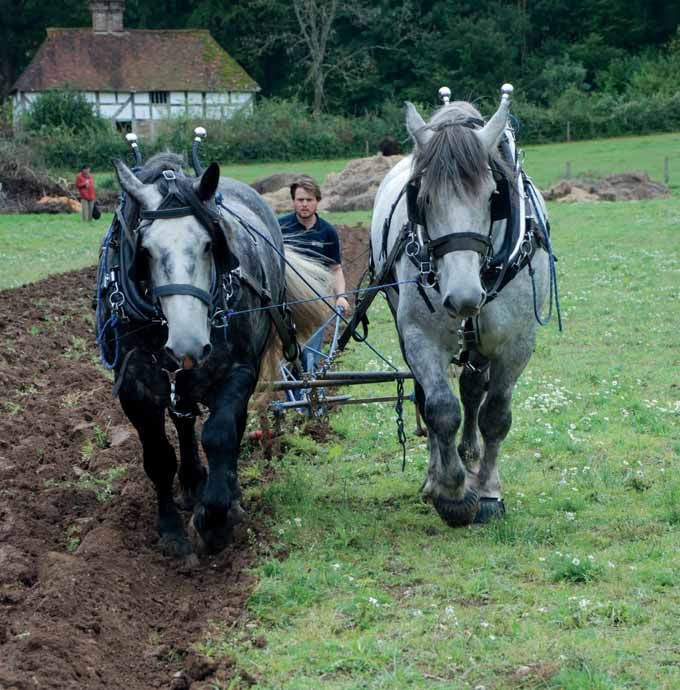
p02-03 W&D Spring 2020_Layout 1 09/03/2020 10:07 Page 3

      Welcome
                                                                    Welcome to the Spring/Summer issue of our magazine as we
                                                                    celebrate a significant milestone in the Museum’s history – our
                                                                    50th anniversary year. As I start my third year in the role of
                                                                    Director, I am delighted to have signed off our five-year Strategic
                                                                    Plan which you will read more about in this issue as we work
                                                                    towards achieving the five key aims between now and 2024.
                                                                       An important element of the Strategic Plan is to re-examine the
                                                                    condition of our collection of historic buildings, which now numbers
                                                                    53! Over the years a great deal of care and attention has been
                                                                    given to the various structures at the Museum, but it has been some
                                                                    while since we had a comprehensive survey on some of our most
                                                                    important buildings. Last year we commissioned a full survey on the
                                                                    medieval house from North Cray and Titchfield Market Hall. We are
                                                                    now working through the results of those surveys and it is clear that
                                                                    both structures will require work over the coming months.
                                                                       As part of our 50th celebrations, the Golden Future Campaign
                                                                    will focus in the coming year on raising funds to support the repair
                                                                    work to North Cray and the dismantling and structural conservation
                                                                    of Titchfield Market Hall, among other activity at the Museum. We
                                                                    will update you on progress with both these significant projects in
                                                                    our Autumn/Winter issue.
                                                                       Also for this year we have announced a packed programme
                                                                    with a seasonal focus, and have expanded our Historic
                                                                    Life Weekends to 12. These events give the Museum a
                                                                    great opportunity to present the unique aspects of
                                                                    our offer, from exploring social history associated
                                                                    with our historic buildings to demonstrating                   The
                                                                    many of the region’s traditional crafts.
                                                                       I hope you enjoy reading this issue                    Weald &
                                                                    of the magazine and, as ever, thank                    Downland
                                                                    you for your continued support
                                                                    of the Weald & Downland                         Living Museum
                                                                    Living Museum.                           Golden Anniversary
                                                                    Simon Wardell                                                               Stakes!
                                                                    Museum                                      The Museum is excited to announce
                                                                    Director                           a ‘Golden Anniversary’ race at Goodwood on
                                                                                                    23 September 2020 to celebrate the Museum’s
                                                                                               50th anniversary. We are grateful for this generous

      Contents
                                                                                                 offer from our neighbours over the hill, and would
                                                                                                      especially like to thank our Vice President, the
                                                                                                             Duke of Richmond. More details will be
      Campaign Ambassadors .......................................8                                                 available shortly, and an email will
                                                                                                                        be sent to our members soon.
      Historic Life Weekends ...............................................17
                                                                                                                     Don’t miss out on timely updates
      50 Years Ago .......................................................................24                          from the Museum: please get in
      Spring Food Festival.........................................................................29                        touch with membership@
                                                                                                                            wealddown.co.uk to make
      What’s On...........................................................................................34
                                                                                                                                  sure all your contact
      Tales of the Downs and beyond .............................................................40                                          details are
      Sole Street Activity Hub..................................................................................48                          up-to-date.

      Courses......................................................................................................................51
                                                                                    Front cover main image – Downland Gridshell – VLA Photography

      Weald & Downland Living Museum SPRING/SUMMER 2020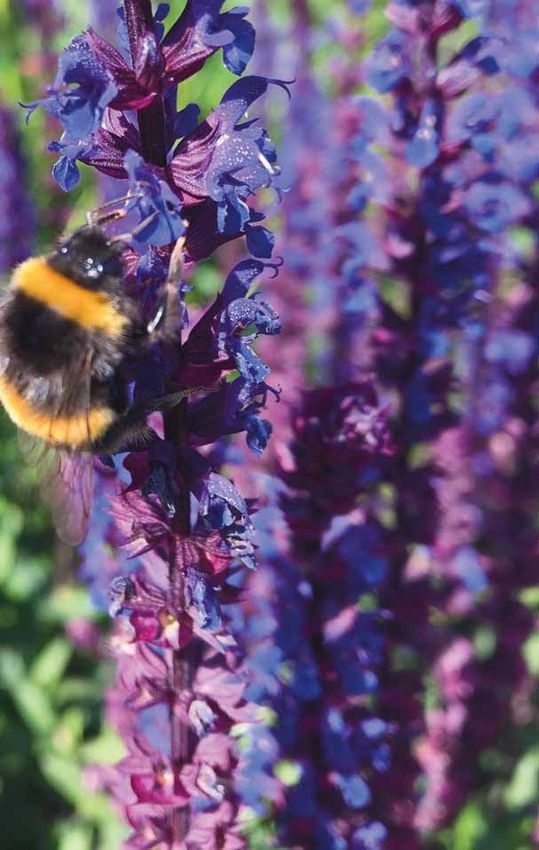
p04-07 W&D Spring 2020_Layout 1 09/03/2020 10:49 Page 4

      Take in all the joys
      of Spring at the
      Museum!
      The Museum comes to life in the glorious season of Spring, with all               Don’t miss –
      the promise of new shoots and young life popping up everywhere.
      Enjoy a day among our historic buildings in the beautiful South                Historic Life Weekend:
      Downs, just drinking it all in quietly, or bringing along the family to      Baking Through the Ages
      join in with a host of great events we have planned. There’s more                         21-22 March
      on our website about all our activities this year – we look forward to
      seeing you!                                                                     Easter at the Museum
                                                                                 Easter Holidays 4-19 April &
                                                                                        Easter on 10-13 April

                                                                                        Spring Food Festival
                                                                                                    2-3 May

                                                                                           Museum at Night:
                                                                                Mysterious Animals (ticketed)
                                                                                                  15-16 May

                                                                                      Historic Life Weekend:
                                                                                       Wood Craft & Trades
                                                                                                   23-25 May

                                                                                   Half-term at the Museum:
                                                                                                     Nature
                                                                                                  25-29 May

                                                                                      Historic Life Weekend:
                                                                                                  Wildflowers
                                                                                                     6-7 June

                                                                                      Historic Life Weekend:
                                                                                            Herbal Heritage
                                                                                                   20-21 June
p04-07 W&D Spring 2020_Layout 1 09/03/2020 10:49 Page 5

         50 YEARS
               AND COUNTING!
       BREAKING NEWS – MUSEUM REACHES OVER
       £500,000 OF ITS £1 MILLION HERITAGE ENDOWMENT
       FUND TARGET FOR THE GOLDEN FUTURE CAMPAIGN
       2020 marks 50 years since the Weald & Downland Living Museum first opened and it is celebrating with an
       ambitious fundraising campaign.

       Since the launch of the campaign last autumn, the Museum has already received a contribution of £250,000
       for its Heritage Endowment Fund. Crucially, the generous legacy gift has been match-funded by the Heritage
       Fund (formerly the Heritage Lottery Fund) taking the total to over £500,000. Weald & Downland Living
       Museum is one of just 15 national charities that has been awarded match-funding, which will help the Museum
       meet its £1 million endowment target.

       In addition, £27,000 of contributions have been donated to the Heritage Endowment Fund by individuals,
       trusts and foundations, all of which will be match-funded. There has also been a generous donation from the
       Sargent Charitable Trust for the Museum’s 50 Fund.

       Nicola Pratt, Fundraising & Development Manager, said: “The Golden Future Campaign is an ambitious project
       and reaching the halfway mark for our Heritage Endowment Fund is a huge step for the campaign. The
       funds raised will have a vast impact on the Museum for visitors, the local area and future generations.
       The campaign will enable us to enrich the visitor experience, improve facilities and underpin
       the protection of the buildings and artefacts in our care. I would like to personally thank
       all those who have supported the efforts to date and I hope it will inspire others
       to get involved.”

       Find out more about the four pillars to our campaign on the next
       pages. It runs throughout the 50th anniversary year and will
       continue until the end of 2021 with a total fundraising
       target of £2 million. To find out more please visit

                                                RE ST
       www.wealddown.co.uk/goldenfuture

                                              TU
                                          R FU R PA
                                        OU OU
                                   G I VING
                                      N
                              STIN SER
                           NVE ON
                          I      C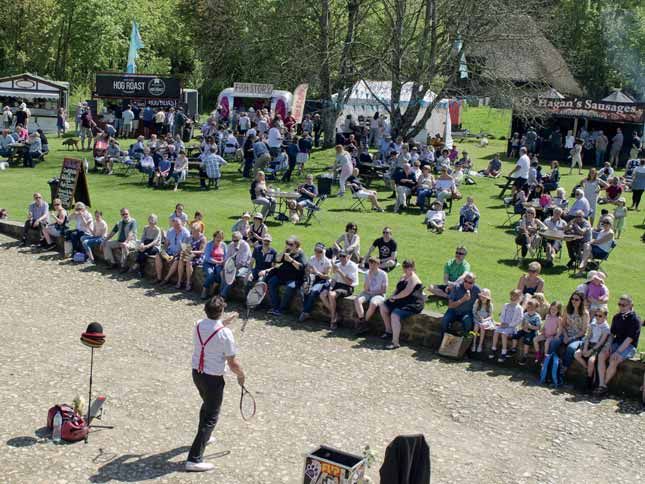
p04-07 W&D Spring 2020_Layout 1 09/03/2020 10:51 Page 6

        THE GOLDEN FUTURE
          CAMPAIGN

      ACCESS                                                 TITCHFIELD
      FIRING UP THE IMAGINATION
      OF FUTURE GENERATIONS
                                                             MARKET HALL
                                                             RESTORING THE HEART
      Many memories are made on a school trip here.
      8IPdoesn’t remember the toilet in Bayleaf?            OF THE MUSEUM
      Can you help us bring 4,000 children a year the        Standing at the heart of the Museum’s market square
      chance to learn and be inspired by our history?        is Titchfield Market Hall, iconic and recognisable to
      How DBOZou Ielp? Your donations small or large        many. Surviving for 400 years, and one of the first
      will make a difference                                 buildings to be re-erected on site, this stand-alone
                                                             centrepiece is now in need of repair.
      - £500 will cover UIFcost of coach hire for one day
      - £4.50 covers the cost of the entry fee for one       As with all timber framed, historic buildings, Titchfield
        student                                              Market Hall requires continual maintenance. With
      - £28 covers an award winning 45 minute workshop       environmental elements playing their part, the time
      - £56 covers a 90 minute school workshop               has now come for major conservation works to take
                                                             place. Dating from 1619, achieving the extensive
      INSPIRE FUTURE GENERATIONS                             work Titchfield Market Hall needs will be painstaking
                                                             work. The Market Hall will be completely dismantled,
      www.justgiving.com/campaign/wdlmschoolsbursary         conserved and rebuilt.

      Text BURSARY 5 to 70085 to donate £5.
      This costs £5 plus a standard rate message

                                                                                   DONATE NOW
                                                                               SUPPORT THE CAMPAIGN
                                                                        wealddown.co.uk/donate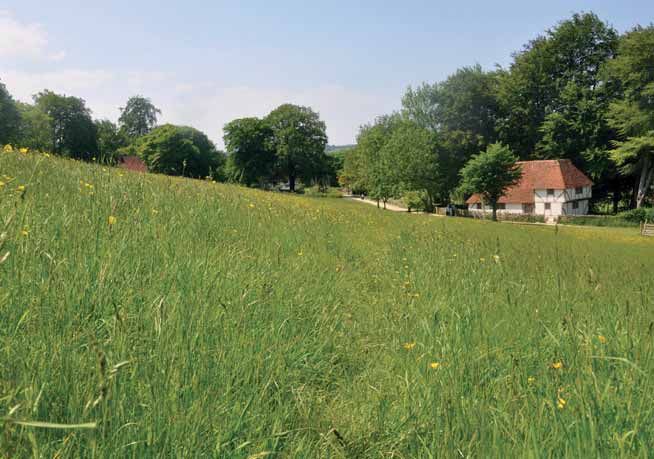
p04-07 W&D Spring 2020_Layout 1 09/03/2020 10:52 Page 7

      ENDOWMENT                                                THE 50 FUND
      UNDERPINNING THE                                         BRINGING RURAL HISTORY TO LIFE
      MUSEUM’S FUTURE                                          A core purpose of the Museum is to conserve our
                                                               collection of historic buildings and bring them to life
      50 years is only the beginning and our Endowment         with live demonstrations.
      provides the financial resilience we need to educate
      and inspire future generations.                          At the mercy of mother nature, the conservation needs
                                                               of our buildings and finding the resources to bring
      We have a unique opportunity to grow our modest          them to life, year-round, is a significant challenge.
      Endowment with matched funding from the
      Heritage Fund. All donations we raise towards our        The 50 Fund will provide the financial means to meet
      Endowment will be matched, pound for pound,              this challenge. With it, we can respond confidently to
      by the Heritage Fund.                                    our conservation needs and increase our team size,
                                                               bringing more buildings to life,
      The Endowment creates a truly lasting legacy for         more frequently.
      the Museum. Donations are not spent. They are
      invested in perpetuity and generate funds for the
      Museum forevermore.

                                                                 THE GOLDEN FUTURE CAMPAIGN.
                                                                BE PART OF SOMETHING HISTORIC.
                                                   For more information about the campaign, or find out how to get involved:
                                                             01243 811041 / 01243 811016     fundraising@wealddown.co.uk
                                                                                                      Follow us at:
p08-09 W&D Spring 2020_Layout 1 09/03/2020 10:54 Page 8

      Campaign
      Ambassadors
                                                     The Museum has been incredibly
                                                lucky to have had the support of many
                                        passionate individuals over the past 50 years.
                                        And now, for our Golden Future Campaign we
                             are delighted to reveal our new Campaign Ambassadors.

                               Hugh Bonneville, Golden         innovative readers-and-writers website mosse-
                               Globe winner and Emmy           labyrinth.co.uk, and wrote and validated his own MA
                               nominee; TV, film and theatre   Creative Writing that he taught for the University of
                               actor and West Sussex           Sussex at West Dean College. He has delivered
                               resident. Currently starring    successful writing workshops for Guardian Master-
                               as Robert, Earl of Grantham,    classes, Edinburgh Book Festival, Cheltenham
                               in ITV’s Downton Abbey,         Festival, Chichester Festival Theatre and others.
                               now a major motion picture.        “Special places create an environment that
                                 “I am delighted to support    inspires us. When we have space and time to think –
      the Weald & Downland Living Museum in celebrating        that is where really useful thoughts occur. Curating
      all that this innovative institution has achieved        such an environment is an extraordinary skill. Half a
      over the past 50 years, to ensure it can continue its    century of determination and persistence, sometimes
      inspiring work for the next generation and beyond.       against the odds, is a triumph. Today, I am proud and
      This wonderfully vibrant museum of architecture          grateful to celebrate 50 years of the exceptional
      shows how life and work has adapted and changed          Weald & Downland Living Museum.”
      down the centuries. It transports us through time,
      bringing our shared history to life, inviting us to                            Dr Jonathan Foyle, architec-
      explore our past and ignite our imagination for the                            tural historian, broadcaster
      future. With its wide ranging calendar of live events                          and heritage advocate, pre-
      relating to conservation and preservation, as well as                          senter of BBC2’s Climbing
      demonstrations of traditional crafts, the museum                               Great Buildings.
      experience really does offer something for everyone”.                             “Descriptions of history
                                                                                     seldom convey a visceral
                              Greg Mosse lives in West                               experience. That’s the glory of
                              Sussex and is a writer – and                           the historic environment.
                              encourager of writers. With a                          While millions visit the grand
                              degree in drama and English      set-pieces of cathedrals, palaces and castles, the
                              from Goldsmiths College          everyday sort of houses that sustained our ancestors
                              (London) Greg has worked in      have been lost, or evolved beyond recognition
                              publishing and teaching, but     through countless comforts and mod cons. The
                              his first love is writing. He    Weald & Downland Living Museum allows you to step
                              helped his wife, local author    back in time, to smell and feel and touch the past
                              Kate Mosse, to develop the       they knew.”

      8                                                        Weald & Downland Living Museum SPRING/SUMMER 2020
p08-09 W&D Spring 2020_Layout 1 09/03/2020 10:54 Page 9

                                    Ruth Goodman, social and                                Dr Keay is currently Director
                                    domestic historian, host of                             of The Landmark Trust. A
                                    several television series                               British architectural historian,
                                    including Victorian Farm,                               author and broadcaster,
                                    Tudor Monastery Farm and                                she recently presented pro-
                                    Victorian Farm Christmas,                               grammes about the work of
                                    as well as presenting films                             the trust, including on Land-
                                    for The One Show and                                    mark’s restoration of Llwyn
                                    Coast, and regular visitor                              Celyn, a late medieval house
                                    to the Museum.                                          in the Black Mountains, in
          “I love the Weald & Downland Living Museum for          Restoration: Historic House Rescue. She worked
      so many reasons. I love the peace and quiet, the way        as a curator for Historic Royal Palaces and as
      it sits in the historic landscape and gently celebrates     Properties Presentation Director of English Heritage,
      the traditional forms of land management. The               responsible for curating and presenting to the public
      coppiced woodland ringing with the sounds of the            420 historic sites. She is a governor of Bedales
      axe and redolent with charcoal burners’ smoke               School in Hampshire.
      welcome me like a homecoming.                                  “I have always loved the Weald and Downland
          “The gardens are an inspiration, full of lessons        Museum. Seeing such a fascinating collection of
      from the past with techniques, varieties and materials      historic buildings in one place, their wonderful crafts-
      that perhaps can lead us into a less polluting future.      manship revealed and their functions brought to life
      As for the buildings that form the core of the              is pure magic.”
      Museum’s work, I adore their ordinariness. They help
      me to feel a connection with the past, but also see                                     Christopher and Annie
      the distance travelled, showing the pathways, high-                                     Timothy live in West
      ways and byways, that connect this with that, making                                    Sussex and have been
      sense of our present cultural landscape.                                                long-standing supporters of
          “And of course I love being able to do things. The                                  the Museum. Christopher
      active taking part, experimenting with history,                                         is best known for his role
      the hands-on sort of historical experience that is                                      as James Herriot in All
      so well supported and explored at the Weald &                                           Creatures Great and Small,
      Downland Living Museum. It is a rare place indeed                                       as well as for the BBC
      that encourages people to get so stuck in and it                                        soap opera, Doctors, and
      attracts visitors, course attendees, volunteers and                                     Eastenders, as well as
      staff whose knowledge, enthusiasm and energy are                                        appearing at Chichester
      a delight.”                                                 Festival Theatre. Timothy appeared with his former
                                                                  co-star Peter Davison recently in Vintage Roads
                                Dr Simon Thurley CBE              Great & Small. Annie is an accomplished artist.
                                and his wife Dr Anna Keay            They say: “We have been big fans of the W&DM
                                OBE are leading figures in        for many years- it gets better and better, whether you
                                the worlds of architecture,       are 8 months, 8 years or 80 it’s perfect.” Christopher
                                museums and heritage. Dr          adds: “Beautiful, informative and sensitively organ-
                                Thurley is a leading architec-    ised . . . and before I begin to sound like a sales pitch
                                tural historian who was Chief     . . . I love it”. And Annie says: “We had great fun
                                Executive of English Heritage     taking our daughter to the Weald & Downland Museum
                                2002-2015. Prior to that he       and now we enjoy it with our granddaughter . . . it’s a
                                held the lead roles at Historic   very special place.”
      Royal Palaces and the Museum of London. He is
      currently Gresham College Professor of the Built
      Environment and a Senior Research Fellow at the
      Institute of Historical Research, University of London,
      and on the board of the British Library.
p10-11 W&D Spring 2020_Layout 1 09/03/2020 10:54 Page 10

                   Antique Buildings Ltd
                           Dunsfold, Godalming Surrey GU8 4NP

                                     01483 200477
                                   We have Immense Stocks of:

           ANCIENT OAK BEAMS
           WIDE OAK
           FLOORBOARDS
           HAND MADE BRICKS
           ROOF TILES
           FLOOR TILES
           BARN FRAMES
                                                  Please see:
                         www.antiquebuildings.com

       URBAN
        NATURE Tree Surgery      DARREN DOCHERTY
              Tree surgery, stump grinding & hedge cutting
                      City & Guilds NPTC qualified,
                    fully insured & all waste recycled
             6SULQJ&RWWDJH+XQVWRQ5RDG&KLFKHVWHU3213

                                      07804 893111
                             info@urbannaturetreesurgery.co.uk
           www.urbannaturetreesurgery.co.uk
      10                                                   Weald & Downland Living Museum SPRING/SUMMER 2020
p10-11 W&D Spring 2020_Layout 1 09/03/2020 10:54 Page 11
Putting the world on pause . . .
at the Weald & Downland Living Museum
In our fast-paced world, people from all walks of life The Museum is a dog-friendly site with beautiful
are looking for ways to improve their health and woodland, period gardens, farm animals and a lake-
wellbeing through mindfulness and relaxing activi- side café. The buildings are spread out across the
ties. The Weald & Downland Living Museum offers rural landscape, making it perfect for families and
a haven for people looking to take a deep breath visitors of all ages to discover and experience the
and put the world on pause. sights, sounds and smells, and get a real taste for the
It may seem that ‘mindfulness’ is nothing more than life our ancestors lived, truly allowing you to immerse
the latest buzzword, but at the Museum it’s more than yourself in the past.
a fad. The chance for relaxation and respite from the The interactive nature of the Museum also boosts
stresses of the modern world is integrated into every mindfulness – from demonstrations of how everyday
aspect of the visitor experience. Set in the South Downs activities such as cooking and milling were carried out
National Park, the natural setting helps to generate a in the past, to the range of traditional arts and crafts
calming atmosphere and gives visitors a picture of courses on offer, there is a chance for visitors to
the past through stunning traditional architecture, pause, reflect, slow down and learn new skills.
providing a fresh perspective on current worries. Find out more at www.wealddown.co.uk
For many of its 50 years visitors have commented on how peaceful and reviving the Museum is, and
our Marketing Manager, Emma Keen, agrees: “There is something very restful about the atmosphere
here. Our buildings and architecture give visitors a real connection to the past, and I think that leads
us all to reflect and see our present with fresh eyes. There’s also a chance to learn something, from
historical facts to new skills, and people often leave with a real sense of achievement at having
improved themselves. It’s well known that being outdoors can boost wellbeing and there are few places
more beautiful than the South Downs National Park to enjoy the fresh air and the natural world. It’s
undoubtedly a beautiful place to work and it’s very satisfying to see how happy and relaxed visitors
are after their visit. It’s definitely something we aim to make sure continues in the future.”
Weald & Downland Living Museum SPRING/SUMMER 2020 11p12-15 W&D Spring 2020_Layout 1 09/03/2020 10:56 Page 12
Hat-maker Rachel Frost demonstrates
her skills at the Museum each year
in the medieval shop from Horsham in
the Market Square where she helps
visitors experience a traditional felt
hatter’s workshop
Keeping alive the skill
of felt hat making
live in the Scottish Borders where I have been
I since graduating from Edinburgh College of
Art in 1998 and work as a multi-disciplinary
craftswoman and historian. My first felt hat was
made from Scottish blackface wool, gleaned from
neighbouring fields and fences. Needless to say it
wasn’t a very good hat, but it sparked an interest
and opened a door to a deeply satisfying and un-
expected career path.
Trading as ‘The Crafty Beggars’ I specialise in
making hand-felted historical hats for the heritage
industry, supplying museums, re-enactors, theatres,
film and television companies including The Globe,
Hampton Court Palace, the V&A and the BBC’s Tudor
Monastery Farm series.
Although the technique of making felted head
wear can be traced back thousands of years, evi-
dence suggests that Britain’s history of feltmaking is
not so long. It was not until the 16th century with the
availability of better felting materials and the introduc-
tion of more advanced techniques by immigrant
Huguenot feltmakers, that Britain’s hatting industry
really developed. This was further advanced by the
availability of beaver fur from the Americas, enabling
new outlandish styles to be created with taller crowns
and wider brims, helping establish Britain’s global
reputation over the years to come.
In 2008 I received the Janet Arnold award, which
is given to facilitate the research of extant examples
1
of historical dress. Focusing on Britain and Ireland, I
12 Weald & Downland Living Museum SPRING/SUMMER 2020p12-15 W&D Spring 2020_Layout 1 09/03/2020 10:56 Page 13
J Rutter
2 3
(1-3) Rachel Frost in her recreated felt-hatters workshop in the Horsham shop at the Museum.
visited museums and private collections to study and some of which date back to the 17th century. One of
document their oldest felt hats. I was delighted to find the most significant pieces of equipment to become
that there were many surviving examples dating from obsolete through mechanisation was the ‘bow carder’
as far back as the 16th century and was impressed by whose function was to open up the fibres and
the quality of the felt, which would have been made arrange them in a manner ready for the felting
entirely by hand. These hats illustrated just how much process. The introduction of this unlikely looking tool
knowledge of this hand craft has been lost, which in played a key role in the development of the felt hat
turn encouraged me to both improve my own skills making industry. Resembling a 7ft long violin bow, its
and learn more about the history of the skill. striking image was often used as a symbol of the felt-
Considering that Britain was globally recognised making guilds. Many of the tools described in period
for its felt hat making skills long before mechanisa- accounts have little or no explanation as to how they
tion, there is surprisingly little surviving evidence of would be used, in which case, I will often reconstruct
the pre-industrial craft itself, which seemed to vanish them anyway and experiment until their use becomes
without a trace. Since its decline in the mid-19th apparent.
century, there has been very little research on the After initially focusing my research on the tradition
subject which has made my studies both challenging within Britain, I started to explore the rest of Europe
and rewarding. where this specific technique was also practised. I
My research is predominantly practice-based, but discovered that although the craft died out here some
includes a large element of academic research, which 150 years ago, there were some rural areas on the
typically involves the study of old manuals, archive continent where it had hung on longer and that there
film footage, museum collections and scouring the were still a couple of very old hat makers alive that
web in multiple languages in the hope of finding even had used this technique, one in Austria and one in
the smallest of clues. I often liken my research to that Hungary. Despite my best efforts, I could not per-
of a detective! suade the Austrian hatter to share his knowledge with
I have consciously avoided the study of any mod- me; however the hatter in Hungary was much more
ern millinery techniques, as I feel, to gain the best open and it is to him that I owe a large proportion of
understanding of a pre-industrial craft, it is important my current knowledge. Both these hatters have since
to restrict your practice to using only the knowledge, passed away.
tools, and materials available at that time. These tools I discovered that the craft had been taken to South
I make myself based on various written sources, America in the 17th century and that there too were a ➔
Weald & Downland Living Museum SPRING/SUMMER 2020 13p12-15 W&D Spring 2020_Layout 1 09/03/2020 10:56 Page 14
L Winram
Rachel as a journeywoman hatter.
14 Weald & Downland Living Museum SPRING/SUMMER 2020p12-15 W&D Spring 2020_Layout 1 09/03/2020 10:57 Page 15
Lion TV
Y Frost
Left, preparing fur for felting using a traditional ‘bow carder’. Right, felt hats made by Rachel Frost for the BBC’s
Tudor Monastery Farm.
➔ handful of indigenous, last generation hatters still
practising this craft. I then realised that I was studying
a craft that was on the brink of global extinction, and
with my existing knowledge, I was in a unique posi-
tion to be able to document and preserve the skills
of these last craftsmen. And so, I am travelling to meet
as many of these hat makers as I can to both expand
my own knowledge and preserve it for future gener-
ations. My next trip is to Mexico where I will meet
Lucino Martinez, aged 78, who is the last traditional
felt hat maker in that country.
This idea of travelling was once an important part
of the formal training of all feltmakers. After a seven
year apprenticeship they would become ‘journey-
men’ and spend several years working for different
masters before they could be considered by the guild
to become masters in their own right. There are many
customs associated with the journeyman’s travels,
one of which is the uniform which identifies him (or
her). In acknowledgement of this, I too have a uni-
form, inspired by the clothing worn at the time of the
last British journeymen hatters and which includes
two rows of fine silver buttons that are the journey-
man’s collateral, should I need it!
I am originally a Sussex girl, and so I am always de-
lighted to be asked back each year to demonstrate
as part of the Museum’s interpretation programme. If
you happen to visit while I am there, you will find me
working in the Horsham shop where you can step
back in time and experience a functioning felt hatter’s
workshop, and I will be delighted to tell you all about
my adventures!
Rachel will be at the Museum for the Historic
Life Weekend: Heritage Crafts & Skills at Risk Depiction of a hatter’s bow being used. Universal
on 1-2 August and for some days either side of Magazine 1750 (Collection of R Frost)
this, to be arranged.
Weald & Downland Living Museum SPRING/SUMMER 2020 15p16-19 W&D Spring 2020_Layout 1 09/03/2020 11:07 Page 16
ǁĂƌĚ ǁŝŶŶŝŶŐ ĐŚĂƌƚĞƌĞĚ ĂƌĐŚŝƚĞĐƚƵƌĂů ƉƌĂĐƚŝĐĞ
ŽĨĨĞƌŝŶŐ Ă ƵŶŝƋƵĞ ĐŽŵďŝŶĂƚŝŽŶ ŽĨ ĚLJŶĂŵŝĐ ĂŶĚ
ĨŽƌǁĂƌĚͲƚŚŝŶŬŝŶŐ ĐƌĞĂƚŝǀĞ ĚĞƐŝŐŶĞƌƐ ĐŽŵďŝŶĞĚ
ǁŝƚŚ ŵĂŶLJ LJĞĂƌƐ ŽĨ ĐŽŶƐĞƌǀĂƚŝŽŶ ĞdžƉĞƌŝĞŶĐĞ͕
ĞdžƚĞŶƐŝǀĞ ůŽĐĂů ŬŶŽǁůĞĚŐĞ ĂŶĚ Ă ƌĞƉƵƚĂƚŝŽŶ ĨŽƌ
ƉƌŽĨĞƐƐŝŽŶĂů ŝŵƉůĞŵĞŶƚĂƚŝŽŶ ŽĨ Ă ǁŝĚĞ ƌĂŶŐĞ ŽĨ
ďƵŝůĚŝŶŐ ƉƌŽũĞĐƚƐ͘ tĞ ƐƉĞĐŝĂůŝƐĞ ŝŶ͗
ŽŶƐĞƌǀĂƚŝŽŶ
,ŝƐƚŽƌŝĐƵŝůĚŝŶŐƐ
ŽŶƚĞŵƉŽƌĂƌLJ ĞƐŝŐŶ
ZĞƐŝĚĞŶƚŝĂů
ĚƵĐĂƚŝŽŶ
ŽŵŵĞƌĐŝĂů
ĐĐůĞƐŝĂƐƚŝĐĂů
DĂƐƚĞƌWůĂŶŶŝŶŐ
ΖZĞŐŝƐƚĞƌŽĨƌĐŚŝƚĞĐƚƐĐĐƌĞĚŝƚĞĚŝŶ
ƵŝůĚŝŶŐŽŶƐĞƌǀĂƚŝŽŶ͛
ǁǁǁ͘ŶLJĞƐĂƵŶĚĞƌƐ͘ĐŽ͘ƵŬ
ϯŚƵƌĐŚ^ƚƌĞĞƚ͕'ŽĚĂůŵŝŶŐ͕^ƵƌƌĞLJ'hϳϭ
Yd͗ϬϭϰϴϯϰϭϴϲϬϬ
ġłůġŢŸŢųťĮŸŪůůŪůŨġńũŢųŵŦųŦťġŃŶŪŭťŪůŨġńŰŮűŢůźġŵũŢŵġũŢŴġŸŰųŬŦťġŪůġ
ŵũŦġŔŶŴŴŦŹġŢųŦŢġŴŪůŤŦġIJĺĹĶĭġŨŢŪůŪůŨġŢġŸŦŭŭĮťŦŴŦųŷŦťġųŦűŶŵŢŵŪŰůġŧŰųġ
űųŰŧŦŴŴŪŰůŢŭŪŴŮĭġųŦŭŪŢţŪŭŪŵźĭġũŪŨũġŲŶŢŭŪŵźġŤųŢŧŵŴŮŢůŴũŪűġŢůťġűųŰūŦŤŵġ
ŮŢůŢŨŦŮŦůŵġŴŬŪŭŭŴįġņŹűŦųŪŦůŤŦťġŪůġŢŭŭġŵźűŦŴġŰŧġţŶŪŭťŪůŨġűųŰūŦŤŵŴĭġ
ŧųŰŮġŭŢųŨŦġŤŰŮŮŦųŤŪŢŭġŵŰġŵũŦġŴŦůŴŪŵŪŷŦġųŦůŰŷŢŵŪŰůġŰŧġŭŪŴŵŦťġ
ţŶŪŭťŪůŨŴĭġţŦŴűŰŬŦġůŦŸĮţŶŪŭťŴġŰųġŦŹŵŦůŴŪŰůŴġŢůťġųŦŧŶųţŪŴũŮŦůŵŴįġġ
ġ
ʼnŶůŨŦųťŰŸůĭġŃųŪŵŵŦůŴġōŢůŦĭġŇŰůŵŸŦŭŭĭġ
ŘŦŴŵġŔŶŴŴŦŹġŃŏIJĹġıŔŕġTelephone ıIJijĵĴġĶĵijıĶķġ
Email ŮŢųŵŪůŁŮŴţŤįŶŬįŤŰŮġwww.msbc.uk.com
16 Weald & Downland Living Museum SPRING/SUMMER 2020p16-19 W&D Spring 2020_Layout 1 09/03/2020 11:07 Page 17
Historic
Life Weekends
Our expanded Historic Life Weekends programme for 2020
focuses on wide-ranging subjects connected with our exhibit
buildings and rural life collections. People really enjoy this very
special chance to chat to experts and craftspeople and see Ħ!LIFE WEHEISKTEONRDI:C
& Tra/
#1
live demonstrations and displays – a relaxing day out with a
difference.
des
23 ӣ
25
10.3 MAY 20
0AM 2
- 6PM 0
Wood Craft & Trades: 23-25 May
Wood is an essential building material, for homes, furniture
and much more. Over this weekend find out about the way
it is worked into different forms, with live demonstrations www
.wea
from a range of craftspeople and displays. Discover lddo
wn.
which trees are used for which purposes? How has this co.u
k
resource been managed and used in the past and today?
How do people learn these craft skills?
Wildflowers: 6-7 June
(open on 6 June until 9pm)
A rich diversity of plants in meadows, at field edges as well
as in gardens has been a feature of the countryside of our
region for many centuries. Find out more about wildflowers,
and the insects, birds or small mammals they support over &)! LIFE WEHEISKTEONRDI:C
the course of this weekend. There will be a series of £,4"
live demonstrations, displays and talks, as 6&7
J
/0
10.3 UNE 20
0AM 2
well as a linked exhibition in the - 6PM0
Michael Burton Gallery.
www
.wea
lddo
wn.
co.u
kp16-19 W&D Spring 2020_Layout 1 09/03/2020 11:07 Page 18
ORIC
HIST END:
K
WEE
LIFE
al
Herbage
Herit NE 2
020
21 JU - 6PM Herbal Heritage: 20-21 June
20 & 0.30AM
1 Midsummer is one of the best times to enjoy the six historic
gardens at the Museum, and find out about historical ideas and
uses for different herbs. Through live demonstrations, display,
guided walks and talks you can find out more about herbal
knowledge – medicinal and culinary – from the Saxons to
the 20th century. Heritage seeds and herbs will be on sale
in the Museum shop.
k
co.u
do wn.
eald
www.w
Agriculture – the role of horses: 4-5 July
The seasons and weather conditions dictate the times to sow, harvest
and undertake many different tasks needed to look after a farm or
estate. During this weekend, we will have live demonstrations with
C horses and other farming implements to show how the machinery
ORI
HIST END: was used and the ways it has developed over time. This includes
E K
WE
LIFE
ultu re the role of horses working alongside people in the agricultural
A g r i c % ,/0"020
tasks. This weekend complements the demonstrations at the
,)" , # 0
Autumn Countryside Show on 3/4 October, at the end of the
LY 2
1%"/ 4 & 5 J0UAM - 6PM
10.3
harvest season.
Heritage Crafts and Skills at Risk: 1-2 August
Many traditional skills and crafts are at risk, with few
people having a working knowledge of them. This
weekend will bring together craftspeople practicing a
range of different skills providing the opportunity to
.uk
n.co see their skills first hand, with displays and live
dow
eald
www.w demonstrations of the tools and techniques needed
for each. Many of the crafts are listed in the Her-
itage Craft Association’s Red List of Endangered
IS TORIC : Crafts. Also this weekend, watch demonstra-
H EN D
K
IFE WEE tions of different methods of charcoal burning
L
age
Herit &Ģ0 – from a traditional earth burn to modern
0(
mini-kiln methods. Very few craftspeople are
/
#1 at Risk T 2020
associated with these skills and seeing
the range of charcoal burns together is
US 6PM
AUG -
1 & 2 10.30AM something not to miss.
k
co.u
down.
eald
www.wp16-19 W&D Spring 2020_Layout 1 09/03/2020 11:07 Page 19
ORIC
HIST END:
E EK
W
LIFE
The
um
Muset 50
The Museum at 50: a 2020
SEPT PM
5-6 September 5 & 6 0AM - 6
10.3
50 years ago this weekend the Museum
formally opened to the public. The conser-
vation of historic buildings and sharing
information about them was firmly at the
forefront of the Museum’s mission. During this
weekend we will have a series of live demonstra-
k
tions and displays linked to building conservation. co.u
do wn.
A series of speakers will explore the early years eald
www.w
of the Museum’s development, the Museum
today and discuss topics for the next half-century.
We have invited organisations who share similar ORIC
HIST END:
EK
interests and aims to be present at this celebratory WE
LIFE
ric
Hismtoes &
weekend.
Ho onies
Historic Homes & Harmonies: 17-18 October Harm 17 &
18 O C
10.3
ER 2
0A
020
TOB M - 6PM
Come and listen to music played in the different historic
homes at the Museum – some traditional melodies or songs,
some played on historic instruments, and others that may be a
more modern continuation of a musical tradition.
.uk
n.co
dow
Fire & Light: 7-8 November eald
ww w.w
Today we can come home to a house that can often be heated
quickly, with the means to cook rapidly and light at the flick
of a switch. A walk through the Museum during this
weekend will give a better idea of how homes in the
past were lit and heated, the resources needed for
ORIC
this and what this meant for everyday life. Discover HIST END:
E EK
W
demonstrations of lighting a fire with a flint and steel, LIFE
&
Fireght
listen to talks on woodland management and access, and
experience making and using candles and efficient
cooking over an open fire. Li 2020
NOV PM
7 & 8 0AM - 4
10.3
A full programme of talks and demonstrations will be
available on the website a month before each event.
Book your tickets online or contact our friendly team on
uk
01243 811363. .co.
d own
eald
ww w.wp20-23 W&D Spring 2020_Layout 1 09/03/2020 13:38 Page 20
of very intense logistics, we now have a fascinating
exhibition very different to our usual displays!
The People’s show
There are 35 groups of objects lent by 27 different
exhibitors – and the variety of material is wonderful,
ranging from china and glass, to wood carvings and
– on the road!
boxes, milk and Fairy Liquid bottles to snow globes
and cine cameras.
In some cases we have accommodated exhibitors’
entire collections, whilst others show only a small
sample of what has been amassed over the years. The
he People’s Show is one of the many events stories behind the collections are often as intriguing
T we’re holding to mark the Museum’s 50th
anniversary, and opened in February in the
Michael Burton Gallery and runs until 11 May. It’s all
as the objects themselves! Being inspired by older
relatives when a child – or by your child when an
adult – virtually all participants have a different story
about you – our supporters and visitors and the to tell and reason for collecting what they do.
things you like to collect. It is the exhibitors and their stories which really
When we launched the project last year we received connect the show to the Museum. Whilst we care for
a very heartening response from our visitors, volun- and present internationally renowned collections of
teers and demonstrators who agreed to lend their buildings and artefacts, it is the people associated
collections for this rather special event. After months with them who give life to this Living Museum. We are
2
1 3
4 5 6 7
(1 & 2) Volunteer Jeff Ayling gets to work making bespoke display cabinets for The People’s Show. (3) The
People’s Show up and running. (4-7) Just a taste of some of the objects on view – woodcarvings, razor blades,
cine cameras – and Bagpuss.
20 Weald & Downland Living Museum SPRING/SUMMER 2020p20-23 W&D Spring 2020_Layout 1 10/03/2020 09:26 Page 21
also all about those who made the Museum a reality
– our founder Roy Armstrong and his colleagues who Exhibitions 2020
got the idea off the ground in the first place, and all Enjoy our range of fascinating exhibitions in the
the staff and myriad volunteers who have contributed Michael Burton Gallery in Longport Farmhouse!
over the last 50 years to make the Weald & Downland
The People’s Show – 13 February – 11 May
such a unique and special place.
Until our new visitor centre and gallery was com- Wildflowers – 4 June-6 July
pleted recently the Museum didn’t have a specialist Heritage Craft Skills – 16 July-10 August
display space for our collections or visiting exhibitions,
Longport Farmhouse – 20 August-5 October
so had very little display hardware. We did purchase
display boards for exhibitions when the Michael Schools Pop-up – 12-23 October.
Burton Gallery opened last year, but for The People’s A Weald & Downland Celebration – 10 Years
Show cabinets were required as most of the objects of our National Park: an exhibition of Gordon
were 3D and couldn’t be hung. To this end, collections Rushmer’s watercolours – 3-23 November
volunteer Jeff Ayling has spent the last three months
Fireplaces – 10 December – 12 January 2021
or so tirelessly constructing display cabinets for the
show, which will also be an invaluable resource for
future displays around the Museum.
Whatever your interests, the People’s Show will
have something with which you can connect, be
it the stories of the individual exhibitors or the
collections themselves – whether your interest lies
Two of Gordon Rushmer’s watercolours painted in the
with historic musical instruments, snow globes or
South Downs National Park (3-23 November).
the Clangers! Don’t miss it!
My Museum
Julian Bell, and interpretation. This means that my skills are
Curator transferable from one collection to another and so I
have been fortunate to be responsible for a variety of
materials during my museum career ranging from
industrial heritage in Manchester, to textiles and cos-
tume at the V&A, to maritime history at Greenwich.
How long have you been at the Museum?
I started at the beginning of August 2002, a week after Why should we collect artefacts and stories from
the Gridshell had been officially opened. Prior to my the past?
interview for the post of Curator I was given a tour of This is something which not many people stop and think
the Museum by the Warden, Doug Green, and he told about. We’re a museum – that’s what museums do! It’s
me that I’d likely be here for five minutes or the rest a vitally important thing to appreciate though. Besides
of my life! Well, the five minutes has long gone and being of general interest, our collections and the stories
it’s 17 years and counting . . . related to them give us all a sense of place in the past
and a real connection to our forebears who lived and
What made you specialise in rural life? worked in our area. For me it is about the people who
Although I now have significant experience of rural our objects represent. All our collections, whether
life collections, my professional museum training artefacts or buildings, are all about people. Those who
focussed on the management of historic collections made them, lived in them, worked with them, donated
in general, including the care and conservation of them, or who ultimately now care for them. This is
objects, their documentation, research, good storage what makes our museum such an individual place. ➔
Weald & Downland Living Museum SPRING/SUMMER 2020 21p20-23 W&D Spring 2020_Layout 1 09/03/2020 11:17 Page 22
➔ What do you enjoy about being a curator? What are the highlights of your time here?
There are two main things. The first is the privilege of There have been such a huge number of memorable
handling real history; dealing with objects and stories activities with which I’ve been involved during the past
from real people and keeping that information alive 17 years it’s very difficult to narrow them down – but two
for others to enjoy and relate to. The second is the tend to stick out in my memory. The first was in 2008
huge variety of tasks with which I become involved. when I was approached by a teacher at Bosham School
I can be documenting and recording small hand tools to borrow an item from the collection for use with a
one day, and the next I could be dismantling a build- graphic novel the children were studying for a
ing in preparation for its transfer to the Museum. Christmas project. The main character of the novel is
an old lady who lives in a shepherd’s hut and this was
What was the concept behind The People’s Show, the item the school wished to borrow. Normally we
which is on now until 11 May? lend fairly small items but I saw this as a challenge and
opportunity which couldn’t be passed by! We duly
To celebrate the 50th anniversary of the Museum
loaded one of our shepherd’s huts and delivered it to
opening I wanted to put on an exhibition which was a
the school whilst the children were in assembly and
little different to those we normally display and which
located it in the grounds – ready for a surprise when
fitted with the Museum’s core values – in particular,
they came out of class. It worked so well, and the
people. It would have been quite easy to bring out
children got such a lot out of having the hut there that
some of the themes from our artefacts in the Gridshell the same teacher approached us again a few years
for our visitors to see, but I rather wanted to celebrate later to do the same thing when she moved to
their involvement with the Museum. As I said above, Fishbourne. The second memory was the recent,
people are fundamental to our Museum. The People’s successful hosting of the Bodgers Ball in 2018, the
Show celebrates the fact that the vast majority of us annual get-together of the Association of Pole-lathe
collect something, even if we don’t consciously do so, Turners & Greenwood Workers. This fantastic event
and the reasons behind this collecting are as varied and brought together some 450 members to demonstrate
interesting as the objects themselves. The People’s their skills at the Museum in the biggest countrywide
Show will exhibit some 35 different groups of objects gathering of its sort. A logistical nightmare both be-
from 27 different collectors; ranging from china, glass fore and during the event was balanced by the warmth
and artworks to cine cameras, milk bottles and and passion of the participants and our visitors.
Bagpuss! Visitors will undoubtedly find something to
relate to amongst the exhibits. Here’s to another 17 years!
Julian Bell in the artefact collection store in the Downland Gridshell.
22 Weald & Downland Living Museum SPRING/SUMMER 2020p20-23 W&D Spring 2020_Layout 1 09/03/2020 11:17 Page 23
Highlights from new collection donations
Fire Dogs
Last autumn the
Museum was given a pair of
cast iron fire dogs by Lesley Evans of
Walberton, West Sussex. We have a number of sets
of fire dogs in the collection, but these have a particular
history. They belonged originally to her late father (John
Denner) who acquired them from the former ‘Staff of
Life’ pub in Haslemere, Surrey when he bought it in the
late 1970s/early 1980s. It had ceased life as a pub and
he bought it as a private dwelling. The dogs were in the
large inglenook fireplace of the house when Mr Denner
moved in. Each dog has the date ‘1571’ between the top,
cast scrolls. The letters ‘ER’ appear below the date on
each dog, with the letters separated by a five-petal
flower – possibly a rose. During his ownership of the
dogs, John had them dated to c.1570 which suggests
they are contemporary to the original pub and not
copies of other examples. They could well be of local
manufacture with the adjoining village of Hammer
historically having a number of foundries.
School Desk
This iconic
school desk was given
to the Museum very recently by Ros
Burnard of Cranleigh, Surrey. It was bought
from her daughter’s nursery school teacher some 25
years ago for her daughter to use at home and comes
complete with the original inkwell and years of wear.
Ros thinks it may have originally been rescued with two
other examples from Grafham School near Bramley,
Surrey as her husband loaned his van to collect them
for the nursery school teacher in the first place. It is
almost identical to another school desk we already have
in our collection but they do prove popular items for the
Museum to lend and so having a second will be useful.
a very traditional way of making
Rush light holder inexpensive light. Much cheaper
This forged item and easier to manufacture than
doubles as a candlestick and candles, they used the dried
a holder for reed or rush lights and was centre of a rush, soaked in fat,
given to the Museum by Mary Murphy. It is mounted and required an iron clamp to
on a block of wood for stability and was found in the hold it in position. Holders like
outbuildings by Mary’s parents when they moved into this were usually made by local
a property in Gomshall, Surrey in 1948. Rushlights were blacksmiths.
Weald & Downland Living Museum SPRING/SUMMER 2020 23p24-29 W&D Spring 2020_Layout 1 09/03/2020 11:31 Page 24
50 years ago –
the Museum
opened to the public
t was 1970 and after five years of feverish until 11 October, 7,198 visitors came through the
I activity the trustees and volunteers who had put
in so much effort were ready to throw open the
gates and admit visitors.
gates, taking £1,802, a massive injection to funds at
the time!
That year also saw a number of buildings rescued
There were seven exhibits for people to see, from destruction and decay and dismantled and
including Winkhurst from Kent (then thought to be brought to the Museum ready for re-erection, includ-
a farmhouse but subsequently re-interpreted as a ing the hall from Boarhunt, Hampshire, the medieval
Tudor kitchen); the granary from Littlehampton, West house from Sole Street, Kent and cattle sheds from
Sussex; the treadwheel house from Catherington, Lurgashall and Rusper in West Sussex.
Hampshire; the toll house from Upper Beeding, West In the same year a £100,000 fundraising appeal
Sussex; the charcoal burners’ camp, the saw pit and began – very ambitious for its time – and the Friends
the Saxon weavers’ hut. of the Open Air Museum was launched at West
To begin with the Museum was open for six Dean village hall. Work on saving and re-erecting
weekends, trial runs anticipating the first full season historic buildings and collecting rural life artefacts
the following year. From that first day, 5 September, continued apace . . .
“ A complete village with houses, cottages, farm buildings,
inns and shops may be ‘created’ in the south of England . . .
The strange thing about the little community is that it would
be a museum. An open air museum of buildings through
the ages is now becoming more than just a dream for
24
a well-known university lecturer from Storrington.
”
Worthing Gazette, March 1967 (the first news article to cover the Museum)
Weald & Downland Living Museum SPRING/SUMMER 2020p24-29 W&D Spring 2020_Layout 1 09/03/2020 11:31 Page 25
Top, a busy scene on the first day of opening, 5 September 1970, as cars stream in past the toll house from
Upper Beeding. Manning the ticket desk is Kim Leslie, the Museum’s honorary treasurer. Above left, thatching
in progress on the re-erected treadwheel from Catherington early in 1970. Above right, The Museum’s first
publicity poster, 1970.
➔
Weald & Downland Living Museum SPRING/SUMMER 2020 25p24-29 W&D Spring 2020_Layout 1 09/03/2020 11:31 Page 26
The Museum’s founder,
Dr Roy Armstrong
“ Roy was ideal in countering The Museum’s founder, Roy Armstrong, was de-
scribed by Kim Leslie in the 2010 book about the
any opposition. Criticism Museum’s development as “Historian – teacher –
visionary”.
was never a deterrent. He Educated at Dulwich College and Oxford, history
teaching appointments followed. But against the
ignored it. His other strength background of war, unemployment and depression,
was his ability to bring Roy was led to the Workers Educational Association
(WEA) for which he became the West Sussex organ-
together professionals, experts iser in 1932, eventually coming under the aegis of
Southampton University. He was particularly con-
and influential people to cerned with social issues, extending educational
”
opportunities into rural communities, and town and
advise and guide. country planning. The opening of Worthing Adult
Educational Centre in 1948 was one of his landmark
Building History: Weald & Downland Open Air
Museum 1970-2010 – the first forty years achievements. Through articles, publications and
pioneering methods of teaching Roy’s mission was to
make knowledge and ideas widely accessible.
He made a home on the outskirts of Storrington,
then a focus of intellectualists and idealists. Fun-
damental to Roy’s all-embracing tolerance was
fellowship and sharing. Gradually his work shifted
towards teaching local studies, the prelude to Roy
Armstrong, the local historian who founded the Weald
& Downland Open Air Museum.
He believed that an intimate knowledge of one’s
own community led to a better understanding of the
wider world. He was appointed historical adviser
in the establishment of Arundel Museum in 1963,
co-founded the Wealden Buildings Study Group,
and became a founder member of the Vernacular
Architecture Group. His A History of Sussex (1961),
went to four editions.
It was the destruction of medieval buildings to
make way for Crawley New Town which was the first
trigger setting in motion the creation of the Museum.
The idea of a museum was first discussed at a con-
ference on timber-framed buildings of the Weald in
1965, and in the following year a committee was set
up to promote an “open air museum of the Weald”
Roy Armstrong, photographed in 1989 shortly after
(there was no ‘Downland’ at that time). Roy and
the opening of the Bayleaf Medieval Farmstead those he gathered around him were alarmed at the
project. statistics. In Surrey over 350 historic buildings were
destroyed between 1951 and 1965.
26 Weald & Downland Living Museum SPRING/SUMMER 2020p24-29 W&D Spring 2020_Layout 1 09/03/2020 11:31 Page 27
Threatened buildings were freely available. Some
6 MILLION
in the worlds of history and museums were sceptical.
However, much work went into seeking an appropri-
ate site, and there were a number of false starts, but
eventually in 1967 Edward James offered Roy a section
VISITORS
of his estate at West Dean where he had set up a
foundation to nurture arts and crafts. Money was
another challenge: to begin with there was just
£11.17s.2d (£11.86) in the bank.
AND COUNTING!
For his dedicated work in founding the museum
Roy was made MBE in 1972, and in 1992 he received
an honorary degree of Doctor of Letters from the
University of Sussex. Roy died in 1993 and in 1998
the Museum re-erected the 16th century smoke-bay
house, Poplar Cottage, as a memorial to Roy.
Accepting his doctorate, Roy declared that he was
“someone fortunate enough to be provided with a
platform and the means of bringing individuals ACCESS
together who share similar aims.” His ability to do this MAKING THE MUSEUM AN EXPERIENCE FOR EVERYONE
with such success, Kim Leslie says, was Roy’s
supreme achievement.
“ Whatever the tasks, we all knew we were involved in pioneer
work, all sharing in Roy Armstrong’s dream. For quite a lot
of volunteers time away from the excitement of the museum site
was time lost. Caught up in this very special atmosphere, the
museum changed the direction of several peoples’ lives. There
was an excitement in the air, still nostalgically remembered
today by those touched by Roy’s infectious enthusiasm.
”
Building History: Weald & Downland Open Air Museum 1970-2010 – the first forty years
Historic Life Weekend: Museum at 50
➔
To mark our anniversary year we have planned a number of events, including a special celebration in
September, when the Museum officially opened to the public 50 years ago. Historic Life Weekend:
Museum at 50 will include demonstrations and displays featuring building conservation, with a number
of expert speakers talking about the development of the Museum and the many successful restoration
projects it has undertaken. The 50th anniversary promises to be a landmark year in the history
of the Weald & Downland Living Museum. Live events, immersive demonstrations
and our Golden Future fundraising campaign all aim to secure the
Museum’s future and guarantee the preservation of historic
buildings for the enjoyment and education of visitors
for many more years to come. To find out more
visit https://www.wealddown.co.uk/
Date for your diary – 5-6 septemberp24-29 W&D Spring 2020_Layout 1 09/03/2020 11:31 Page 28
Other anniversaries this year –
40 years ago (1980) 30 years ago (1990)
• The Museum leased redundant farm buildings at Charlton • More than three million people had visited the museum
from the Goodwood Estate to house the Museum’s • Chris Zeuner, Honorary Curator, Keeper and then
Museum Director 1971-2001 was appointed OBE
rural life and building parts collections and the master
carpenter’s workshop • Publication of Weald & Downland Open Air Museum: The
• Saved and dismantled this year were the house from
Walderton and the barn from Cowfold, both from West
Founding Years 1965-1970 by Kim Leslie, the Museum’s
first honorary treasurer
Sussex, among others 20 years ago (2000)
• Re-erected on site were the wagon shed from Wiston,
the saw-pit shed from Sheffield Park, the pugmill house
• Work began on the Downland Gridshell which went on
to win numerous awards
from Redford, all from West Sussex, and the carpenter’s
shop from Windlesham, Surrey and the brick-drying shed
• Horse whim from West Kingsdown, Kent and open shed
from Charlwood, Surrey re-erected on site
from Petersfield, Hampshire
10 years ago (2010)
• The upper hall from Crawley was completed, enabling
the establishment of the library and meeting facilities
• Museum celebrates 40th anniversary of opening to the
public
• Building History – Weald & Downland Open Air Museum
1970-2010: the first forty years published; ed. Diana
Zeuner
• Hay barn from Ockley re-erected on site
*Building History –
Weald & Downland Open Air Museum 1970-2010:
the first forty years and other booklets and articles on the
Museum’s history can be accessed through the Museum’s
Armstrong Library – email library1@wealddown.co.uk,
or call 01243 811363.
Discover more about
the Museum on social media . . .
. . . and please tag the Museum when you visit, using #WDLM/@wealddownmuseum
Margaret, Tripadvisor, January to be seen to be believed. Following the guides talk
2020 you are given access to the artefacts store, where
“We had a wonderful day, even in January. There was items not on display are stored, truly amazing”.
so much to do and see and it was very interesting.
The staff are so friendly and knowledgeable. It is their Charlie Fraser-Fleming, Facebook Review,
50th anniversary this year and I would recommend Feb 2020
everyone supports the venture to continue to save “Excellent place to visit and relax. So much to see and
these lovely buildings and crafts. The Repair Shop enjoy. Around 50 historic buildings to walk around.
was filming the day we were there too. Good, reason- Fascinating.”
ably priced lunch with great views from the restaurant
– what more could you want?” Instagram comment by south_scenes, Feb
2020
Andy, Tripadvisor, Feb 2020 “Vivid memories of my school outing about 30 years
“This is a fantastic place and has a wealth of homes ago. We were fascinated by how people lived all
and facilities from many years. On site demonstrations those years ago – especially remember the large
are worth watching as they take you back in time with building with the huge fire and best of all for
both an excellent commentary and display of older us kids was the loo hanging out of the side of the
techniques. Also visited the gridshell exhibit, this has window!”
28 Weald & Downland Living Museum SPRING/SUMMER 2020You can also read


