2020 First Years' Academic and Support Guide - Rhodes University
←
→
Page content transcription
If your browser does not render page correctly, please read the page content below
First Years'   2020
                                 Academic and Support Guide
Contact: Dean of Students

Tel: 046 603 8181
E-mail: studentaffairs@ru.ac.za

Postal Address
The Division of Student Affairs
Rhodes University
P.O. Box 94
Grahamstown/Makhanda
6140
Eastern Cape
South Africa

                                 www.ru.ac.za
First years' Academic
 and Support guide
PAGE 2

CONTENTS

Vice-Chancellor's welcome message  .  .  .  .  .  .  .  .  .  .  .  .  .  .  .  .  .  .  .  .  .  .  .  .  .  .  .  .  .  .  .  .  .  .  .  .  .  .  .  .  .  .  .  .  .  . 5
Director of Student Affairs’ welcome message .  .  .  .  .  .  .  .  .  .  .  .  .  .  .  .  .  .  .  .  .  .  .  .  .  .  .  .  .  .  .  .  .  .  .  .  .  .  .  . 7
SRC welcome message  .  .  .  .  .  .  .  .  .  .  .  .  .  .  .  .  .  .  .  .  .  .  .  .  .  .  .  .  .  .  .  .  .  .  .  .  .  .  .  .  .  .  .  .  .  .  .  .  .  .  .  .  .  .  . 8
General information .  .  .  .  .  .  .  .  .  .  .  .  .  .  .  .  .  .  .  .  .  .  .  .  .  .  .  .  .  .  .  .  .  .  .  .  .  .  .  .  .  .  .  .  .  .  .  .  .  .  .  .  .  .  .  .  .  . 9
Definitions  .  .  .  .  .  .  .  .  .  .  .  .  .  .  .  .  .  .  .  .  .  .  .  .  .  .  .  .  .  .  .  .  .  .  .  .  .  .  .  .  .  .  .  .  .  .  .  .  .  .  .  .  .  .  .  .  .  .  .  .  .  .  . 10
Orientation week 2020 .  .  .  .  .  .  .  .  .  .  .  .  .  .  .  .  .  .  .  .  .  .  .  .  .  .  .  .  .  .  .  .  .  .  .  .  .  .  .  .  .  .  .  .  .  .  .  .  .  .  .  .  .  . 12
Academic orientation  .  .  .  .  .  .  .  .  .  .  .  .  .  .  .  .  .  .  .  .  .  .  .  .  .  .  .  .  .  .  .  .  .  .  .  .  .  .  .  .  .  .  .  .  .  .  .  .  .  .  .  .  .  .  . 12
First years’ orientation programme  .  .  .  .  .  .  .  .  .  .  .  .  .  .  .  .  .  .  .  .  .  .  .  .  .  .  .  .  .  .  .  .  .  .  .  .  .  .  .  .  .  .  .  .  .  . 13
Academic orientation programme  .  .  .  .  .  .  .  .  .  .  .  .  .  .  .  .  .  .  .  .  .  .  .  .  .  .  .  .  .  .  .  .  .  .  .  .  .  .  .  .  .  .  .  .  .  .  . 15
Additional important information .  .  .  .  .  .  .  .  .  .  .  .  .  .  .  .  .  .  .  .  .  .  .  .  .  .  .  .  .  .  .  .  .  .  .  .  .  .  .  .  .  .  .  .  .  .  .  . 17
Academics  .  .  .  .  .  .  .  .  .  .  .  .  .  .  .  .  .  .  .  .  .  .  .  .  .  .  .  .  .  .  .  .  .  .  .  .  .  .  .  .  .  .  .  .  .  .  .  .  .  .  .  .  .  .  .  .  .  .  .  .  .  . 18
    Academic support  .  .  .  .  .  .  .  .  .  .  .  .  .  .  .  .  .  .  .  .  .  .  .  .  .  .  .  .  .  .  .  .  .  .  .  .  .  .  .  .  .  .  .  .  .  .  .  .  .  .  .  .  .  .  . 18
    Extended Studies Programme .  .  .  .  .  .  .  .  .  .  .  .  .  .  .  .  .  .  .  .  .  .  .  .  .  .  .  .  .  .  .  .  .  .  .  .  .  .  .  .  .  .  .  .  .  .  .  . 18
    Making curriculum choices  .  .  .  .  .  .  .  .  .  .  .  .  .  .  .  .  .  .  .  .  .  .  .  .  .  .  .  .  .  .  .  .  .  .  .  .  .  .  .  .  .  .  .  .  .  .  .  .  . 19
    Course changes  .  .  .  .  .  .  .  .  .  .  .  .  .  .  .  .  .  .  .  .  .  .  .  .  .  .  .  .  .  .  .  .  .  .  .  .  .  .  .  .  .  .  .  .  .  .  .  .  .  .  .  .  .  .  .  .  . 19
Academic deans and faculty staff  .  .  .  .  .  .  .  .  .  .  .  .  .  .  .  .  .  .  .  .  .  .  .  .  .  .  .  .  .  .  .  .  .  .  .  .  .  .  .  .  .  .  .  .  .  .  . 20
    Faculty of Humanities .  .  .  .  .  .  .  .  .  .  .  .  .  .  .  .  .  .  .  .  .  .  .  .  .  .  .  .  .  .  .  .  .  .  .  .  .  .  .  .  .  .  .  .  .  .  .  .  .  .  .  .  . 20
    Faculty of Commerce  .  .  .  .  .  .  .  .  .  .  .  .  .  .  .  .  .  .  .  .  .  .  .  .  .  .  .  .  .  .  .  .  .  .  .  .  .  .  .  .  .  .  .  .  .  .  .  .  .  .  .  .  . 21
    Faculty of Education .  .  .  .  .  .  .  .  .  .  .  .  .  .  .  .  .  .  .  .  .  .  .  .  .  .  .  .  .  .  .  .  .  .  .  .  .  .  .  .  .  .  .  .  .  .  .  .  .  .  .  .  .  . 22
    Faculty of Law .  .  .  .  .  .  .  .  .  .  .  .  .  .  .  .  .  .  .  .  .  .  .  .  .  .  .  .  .  .  .  .  .  .  .  .  .  .  .  .  .  .  .  .  .  .  .  .  .  .  .  .  .  .  .  .  .  . 23
    Faculty of Pharmacy  .  .  .  .  .  .  .  .  .  .  .  .  .  .  .  .  .  .  .  .  .  .  .  .  .  .  .  .  .  .  .  .  .  .  .  .  .  .  .  .  .  .  .  .  .  .  .  .  .  .  .  .  . 24
    Faculty of Science .  .  .  .  .  .  .  .  .  .  .  .  .  .  .  .  .  .  .  .  .  .  .  .  .  .  .  .  .  .  .  .  .  .  .  .  .  .  .  .  .  .  .  .  .  .  .  .  .  .  .  .  .  .  .  . 25
Student wellness and support .  .  .  .  .  .  .  .  .  .  .  .  .  .  .  .  .  .  .  .  .  .  .  .  .  .  .  .  .  .  .  .  .  .  .  .  .  .  .  .  .  .  .  .  .  .  .  .  .  . 26
Being Well & Aware workshops for first years .  .  .  .  .  .  .  .  .  .  .  .  .  .  .  .  .  .  .  .  .  .  .  .  .  .  .  .  .  .  .  .  .  .  .  .  .  .  . 26
Hall and SRC activities and events for first years .  .  .  .  .  .  .  .  .  .  .  .  .  .  .  .  .  .  .  .  .  .  .  .  .  .  .  .  .  .  .  .  .  .  .  .  . 27
A-Z .  .  .  .  .  .  .  .  .  .  .  .  .  .  .  .  .  .  .  .  .  .  .  .  .  .  .  .  .  .  .  .  .  .  .  .  .  .  .  .  .  .  .  .  .  .  .  .  .  .  .  .  .  .  .  .  .  .  .  .  .  .  .  .  .  .  .  . 28
    Alcohol on campus .  .  .  .  .  .  .  .  .  .  .  .  .  .  .  .  .  .  .  .  .  .  .  .  .  .  .  .  .  .  .  .  .  .  .  .  .  .  .  .  .  .  .  .  .  .  .  .  .  .  .  .  .  .  . 28
    Ambulance services  .  .  .  .  .  .  .  .  .  .  .  .  .  .  .  .  .  .  .  .  .  .  .  .  .  .  .  .  .  .  .  .  .  .  .  .  .  .  .  .  .  .  .  .  .  .  .  .  .  .  .  .  .  . 28
    Animals on campus  .  .  .  .  .  .  .  .  .  .  .  .  .  .  .  .  .  .  .  .  .  .  .  .  .  .  .  .  .  .  .  .  .  .  .  .  .  .  .  .  .  .  .  .  .  .  .  .  .  .  .  .  .  . 28
    Awards .  .  .  .  .  .  .  .  .  .  .  .  .  .  .  .  .  .  .  .  .  .  .  .  .  .  .  .  .  .  .  .  .  .  .  .  .  .  .  .  .  .  .  .  .  .  .  .  .  .  .  .  .  .  .  .  .  .  .  .  .  .  . 29
    Bereavement .  .  .  .  .  .  .  .  .  .  .  .  .  .  .  .  .  .  .  .  .  .  .  .  .  .  .  .  .  .  .  .  .  .  .  .  .  .  .  .  .  .  .  .  .  .  .  .  .  .  .  .  .  .  .  .  .  .  . 29
    Books .  .  .  .  .  .  .  .  .  .  .  .  .  .  .  .  .  .  .  .  .  .  .  .  .  .  .  .  .  .  .  .  .  .  .  .  .  .  .  .  .  .  .  .  .  .  .  .  .  .  .  .  .  .  .  .  .  .  .  .  .  .  .  . 29
    Bursaries .  .  .  .  .  .  .  .  .  .  .  .  .  .  .  .  .  .  .  .  .  .  .  .  .  .  .  .  .  .  .  .  .  .  .  .  .  .  .  .  .  .  .  .  .  .  .  .  .  .  .  .  .  .  .  .  .  .  .  .  .  . 29
    Cafeteria .  .  .  .  .  .  .  .  .  .  .  .  .  .  .  .  .  .  .  .  .  .  .  .  .  .  .  .  .  .  .  .  .  .  .  .  .  .  .  .  .  .  .  .  .  .  .  .  .  .  .  .  .  .  .  .  .  .  .  .  .  . 30
    Career counselling  .  .  .  .  .  .  .  .  .  .  .  .  .  .  .  .  .  .  .  .  .  .  .  .  .  .  .  .  .  .  .  .  .  .  .  .  .  .  .  .  .  .  .  .  .  .  .  .  .  .  .  .  .  .  . 30
    Cell phones .  .  .  .  .  .  .  .  .  .  .  .  .  .  .  .  .  .  .  .  .  .  .  .  .  .  .  .  .  .  .  .  .  .  .  .  .  .  .  .  .  .  .  .  .  .  .  .  .  .  .  .  .  .  .  .  .  .  .  . 30
    Certification of documents .  .  .  .  .  .  .  .  .  .  .  .  .  .  .  .  .  .  .  .  .  .  .  .  .  .  .  .  .  .  .  .  .  .  .  .  .  .  .  .  .  .  .  .  .  .  .  .  .  . 30
    Clubs and societies .  .  .  .  .  .  .  .  .  .  .  .  .  .  .  .  .  .  .  .  .  .  .  .  .  .  .  .  .  .  .  .  .  .  .  .  .  .  .  .  .  .  .  .  .  .  .  .  .  .  .  .  .  .  . 30
    Communication with the University  .  .  .  .  .  .  .  .  .  .  .  .  .  .  .  .  .  .  .  .  .  .  .  .  .  .  .  .  .  .  .  .  .  .  .  .  .  .  .  .  .  .  . 31
    Community engagement  .  .  .  .  .  .  .  .  .  .  .  .  .  .  .  .  .  .  .  .  .  .  .  .  .  .  .  .  .  .  .  .  .  .  .  .  .  .  .  .  .  .  .  .  .  .  .  .  .  .  . 31
    Computer facilities .  .  .  .  .  .  .  .  .  .  .  .  .  .  .  .  .  .  .  .  .  .  .  .  .  .  .  .  .  .  .  .  .  .  .  .  .  .  .  .  .  .  .  .  .  .  .  .  .  .  .  .  .  .  . 32
                                                                                                                                                                                                                    PAGE 3

    Counselling Centre .  .  .  .  .  .  .  .  .  .  .  .  .  .  .  .  .  .  .  .  .  .  .  .  .  .  .  .  .  .  .  .  .  .  .  .  .  .  .  .  .  .  .  .  .  .  .  .  .  .  .  .  .  .  . 33
    Criminal offences .  .  .  .  .  .  .  .  .  .  .  .  .  .  .  .  .  .  .  .  .  .  .  .  .  .  .  .  .  .  .  .  .  .  .  .  .  .  .  .  .  .  .  .  .  .  .  .  .  .  .  .  .  .  .  . 33
Disabilities . . . . . . . . . . . . . . . . . . . . . . . . . . . . . . . . . . . . . . . . . . . . . . . . . . . . . . . . . . . . . 33
Environmental concerns . . . . . . . . . . . . . . . . . . . . . . . . . . . . . . . . . . . . . . . . . . . . . . . . . . . 34
Event organisation on campus . . . . . . . . . . . . . . . . . . . . . . . . . . . . . . . . . . . . . . . . . . . . . . . 34
Examinations . . . . . . . . . . . . . . . . . . . . . . . . . . . . . . . . . . . . . . . . . . . . . . . . . . . . . . . . . . . 34
Fees . . . . . . . . . . . . . . . . . . . . . . . . . . . . . . . . . . . . . . . . . . . . . . . . . . . . . . . . . . . . . . . . . 36
Fire safety . . . . . . . . . . . . . . . . . . . . . . . . . . . . . . . . . . . . . . . . . . . . . . . . . . . . . . . . . . . . . 36
Harassment . . . . . . . . . . . . . . . . . . . . . . . . . . . . . . . . . . . . . . . . . . . . . . . . . . . . . . . . . . . . 38
Health Care Centre (HCC) . . . . . . . . . . . . . . . . . . . . . . . . . . . . . . . . . . . . . . . . . . . . . . . . . . 38
HIV/AIDS . . . . . . . . . . . . . . . . . . . . . . . . . . . . . . . . . . . . . . . . . . . . . . . . . . . . . . . . . . . . . . 40
Insurance . . . . . . . . . . . . . . . . . . . . . . . . . . . . . . . . . . . . . . . . . . . . . . . . . . . . . . . . . . . . . 40
International students . . . . . . . . . . . . . . . . . . . . . . . . . . . . . . . . . . . . . . . . . . . . . . . . . . . . . 40
Leave of Absence (LOA) . . . . . . . . . . . . . . . . . . . . . . . . . . . . . . . . . . . . . . . . . . . . . . . . . . . . 41
Legal problems . . . . . . . . . . . . . . . . . . . . . . . . . . . . . . . . . . . . . . . . . . . . . . . . . . . . . . . . . . 42
Library services and hours . . . . . . . . . . . . . . . . . . . . . . . . . . . . . . . . . . . . . . . . . . . . . . . . . . 42
Lost property . . . . . . . . . . . . . . . . . . . . . . . . . . . . . . . . . . . . . . . . . . . . . . . . . . . . . . . . . . . 43
Meals . . . . . . . . . . . . . . . . . . . . . . . . . . . . . . . . . . . . . . . . . . . . . . . . . . . . . . . . . . . . . . . . 43
Oppidan facilities . . . . . . . . . . . . . . . . . . . . . . . . . . . . . . . . . . . . . . . . . . . . . . . . . . . . . . . . 44
Parking on campus . . . . . . . . . . . . . . . . . . . . . . . . . . . . . . . . . . . . . . . . . . . . . . . . . . . . . . . 44
Photocopying and printing . . . . . . . . . . . . . . . . . . . . . . . . . . . . . . . . . . . . . . . . . . . . . . . . . . 44
Policies of the University . . . . . . . . . . . . . . . . . . . . . . . . . . . . . . . . . . . . . . . . . . . . . . . . . . . 44
Pregnancy . . . . . . . . . . . . . . . . . . . . . . . . . . . . . . . . . . . . . . . . . . . . . . . . . . . . . . . . . . . . . 45
Psychological Wellness . . . . . . . . . . . . . . . . . . . . . . . . . . . . . . . . . . . . . . . . . . . . . . . . . . . . 45
Residence support . . . . . . . . . . . . . . . . . . . . . . . . . . . . . . . . . . . . . . . . . . . . . . . . . . . . . . . 46
Safety and security . . . . . . . . . . . . . . . . . . . . . . . . . . . . . . . . . . . . . . . . . . . . . . . . . . . . . . . 46
Sexual assault procedures and management . . . . . . . . . . . . . . . . . . . . . . . . . . . . . . . . . . . . . 48
Sport at Rhodes . . . . . . . . . . . . . . . . . . . . . . . . . . . . . . . . . . . . . . . . . . . . . . . . . . . . . . . . . 49
Student Disciplinary Code . . . . . . . . . . . . . . . . . . . . . . . . . . . . . . . . . . . . . . . . . . . . . . . . . . 49
Student funding . . . . . . . . . . . . . . . . . . . . . . . . . . . . . . . . . . . . . . . . . . . . . . . . . . . . . . . . . 50
Student identity cards . . . . . . . . . . . . . . . . . . . . . . . . . . . . . . . . . . . . . . . . . . . . . . . . . . . . . 50
Student Representative Council . . . . . . . . . . . . . . . . . . . . . . . . . . . . . . . . . . . . . . . . . . . . . . 51
Student Services Council . . . . . . . . . . . . . . . . . . . . . . . . . . . . . . . . . . . . . . . . . . . . . . . . . . . 51
Substance abuse . . . . . . . . . . . . . . . . . . . . . . . . . . . . . . . . . . . . . . . . . . . . . . . . . . . . . . . . 52
Suicidal and para-suicidal crises . . . . . . . . . . . . . . . . . . . . . . . . . . . . . . . . . . . . . . . . . . . . . . 53
Medical services . . . . . . . . . . . . . . . . . . . . . . . . . . . . . . . . . . . . . . . . . . . . . . . . . . . . . . . . . . 55
Useful advice . . . . . . . . . . . . . . . . . . . . . . . . . . . . . . . . . . . . . . . . . . . . . . . . . . . . . . . . . . . . . 60
PAGE 4Vice Chancellor’s welcome message
It is with great delight that I welcome you, our new students, to Rhodes University. If you have been
counting days to the start of your exciting new experience at Rhodes University, we too have been waiting
expectantly for your arrival. Welcome! You are about to embark on an important and exciting adventure of
your life – a journey of self-discovery.
You are joining a 116-year old university with an enviable reputation for and legacy of academic excellence
and of nurturing the exceptional intellectual talent of young people like you. Our University enjoys the best
pass and graduation rates of any South African university. We have outstanding postgraduate success rates
and enjoy one of the best research outputs per academic staff member of any South African university.
Our academics are at the forefront of knowledge creation and knowledge dissemination in their fields of
research. This means that our students are taught by academics who are actively engaged in creating new
knowledge. You have chosen wisely indeed!
We are proud of and strive to maintain our reputation as an outstanding university that provides high-quality
formative education for its students. A university is a space for contestation of ideas; ideas are the lifeblood
of our intellectual endeavour. And so, not only do we expose our students to new knowledge, skills and
competences, we also develop and nurture their ability and capacity to reason, analyse, reflect, and to argue
using knowledge. Our approach to teaching and learning is one that seeks to expose our students to the
nature of knowledge and induct them to the intricacies and the mysteries of creating new knowledge and
adapting or applying old knowledge in new contexts.
Rhodes University is a learning community. We learn from and through each other, and for us learning
extends beyond a lecture theatre, seminar room, library, or laboratory. It also occurs in sports and social
clubs, student societies, extra-curricular activities and through participation in community engagement
initiatives. Your involvement in these and other activities outside of the classroom is essential for your
holistic development, growth and education. You must, however, learn to balance your academic demands,
extracurricular activities and social life in order to become a well-rounded and well-educated graduate of
Rhodes University.
One of the exciting aspects of the university experience is the opportunity to meet and interact with other
young people who come from different social, economic, geographic, linguistic and cultural backgrounds.
This diversity is essential to create a vibrant intellectual, social and cultural environment which is key to
achieving academic excellence. Our University works hard to create a caring and supportive institutional
culture and an affirming environment which values and celebrates diversity and respects and appreciates
PAGE 5individual difference. We encourage you to keep an open mind and be willing to share your ideas, perspectives,
views and experiences with other students in a manner that enhances understanding of what it means to be
fully human. More importantly, we encourage you to form new bonds of friendship with other young people
whose lived experiences may be different from yours.
As an institution “where leaders learn” and with the motto Vis Virtus Veritas (Truth, Virtue and Strength),
we encourage our students to develop the capacity to raise critical, complex and uncomfortable issues that
face our society and humankind. Using the power of reasoned and rational argument and logic, they can
persuade those who may hold views that are different from theirs. Use of intimidation, coercion and violence
as a legitimate form of engagement can never be tolerated at Rhodes University. We encourage our students
to endeavour at all times to uphold the values that we cherish deeply in an institution of higher learning:
treating each other with respect, dignity and honesty. Every member of the Rhodes University community
enjoys all the rights enshrined in our Constitution. In particular, no one has a right to interfere with the bodily
integrity of another person without their consent. Our University has a zero-tolerance to sexual and gender-
based violence. There is no place for behaviour motivated by xenophobia, racism, sexism, homophobia,
transphobia and all other forms of intolerance, bigotry and chauvinistic attitudes at Rhodes University.
Rhodes University’s orientation programme is designed not only to provide you with information on courses
that are on offer at Rhodes University but also to expose you to the wide array of services and opportunities
provided by the University to enrich your experience and enhance your chances of success.
Our academic and support staff are here to support you; they are here to help you realise your dreams,
hopes and aspirations; they are here to help you navigate the important transition into adulthood; they are
here to make your university experience a positive, rewarding and a fulfilling one. As a small University
with dedicated, committed and professional staff, we are able to offer that personal touch that may make
a difference in your life. We encourage you to use all the professional assistance and support services
available to you.
Use your time at Rhodes wisely; discover your passion and find your purpose in life. And, as Donovan Bailey
advises, follow your passion, be prepared to work hard and sacrifice, and above all don’t let anyone limit
your dreams.
We wish you much success in the years ahead at Rhodes University. Welcome to a place of hope, welcome
to a place that inspires imagination, and welcome to a place that nurtures creativity, welcome to a place of
ideas!
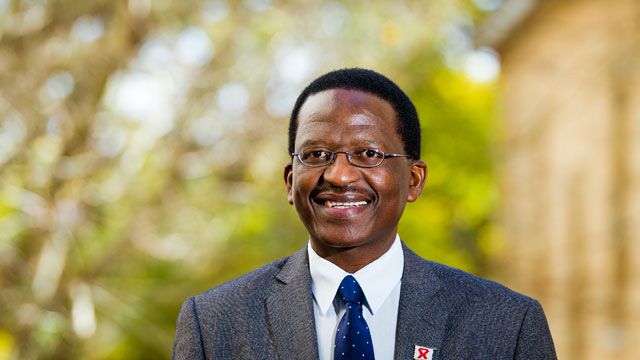
Dr Sizwe Mabizela
Vice-Chancellor
PAGE 6Director of Student Affairs’ welcome message
Congratulations on being admitted to Rhodes University, you are now part of the Rhodes University
community. The Division of Student Affairs wish to ensure that your journey is a seamless one, filled with
growth and most importantly with academic success. This new stage in your life may be daunting and
exciting as you will be adjusting to a new cultural, social and academic environment. During this time of
adjustment and transition, we are here to ensure you are supported throughout your academic journey.
The Division offers a wide range of new experiences outside the classroom. Through the different services
offered by the Division, the University aims to ensure the holistic development of our students. The University
wishes to create an opportunity for growth and development in support of the academic project.
We invite students to take advantage of our services that are positioned to ensure ethical leadership,
responsible citizenry and academic success. We particularly provide services that ensure your wellbeing is
taken care for in the areas concerning emotional wellbeing, health, personal welfare as well as providing
development and leadership opportunities. These life-changing opportunities are located in three sections
that constitute the Division of Student Affairs, Wellness Section, Sport Administration and Student Services.
This guide aims to introduce you to the services offered by the three sections.
Humiliating initiation practices are prohibited at Rhodes University. The University condemns acts of
harassment (sexual or otherwise) including the bullying, belittling, embarrassing, frightening or humiliating
other persons, and all forms of demeaning behaviour, including shouting or screaming at new students.
The University will take swift action against any individual or groups found to not be honouring the spirit of
respect inherent in all orientation programmes.
Whenever you are in need and do not know where to go, please visit the Division of Student Affairs Offices.
We are here to listen, refer, guide and support.
Ndininqwenelela okuhle kwizifundo zenu.
All the best with your studies.
Nomangwane Mrwetyana
Director: Student Affairs
PAGE 7SRC welcome message
It gives me great pleasure to welcome you to Rhodes
University on behalf of the 2020 Student Representative
Council (SRC). This is a new space that will bring
new opportunities and challenges into your life. The
transition from being a learner in high school to being
a student in university comes with a lot of freedom
that is coupled with complexities that will require great
responsibilities.
For most of you, this might be the first time you are far
away from home, some of you will probably feel lost and
alone. Some of you will adjust to this space quicker than
others. Given that we are students ourselves, we as the
SRC have been there before. We know how it feels and are
familiar with the experience. This is why the 2020 SRC,
alongside our substructures, have entrusted ourselves
with the task of being there to guide and support you.
We also hope to make the overall experience of your first
year relatively easy and memorable.
You have made it to Rhodes University, pat yourself on the back for this is a great achievement! There were
many applications and yours was successful! You are privileged to be part of this university, a university that is
internationally recognised, well known for its academic excellence, and prides itself in the leadership it produces.
Remember the main reason you are here is to get the degree, NEVER FORGET THAT! Pay enough attention
to your academics and don’t be shy to ask for assistance. Some of you are the first in your families to
have made it into university, make the most of this opportunity. As the SRC, ours is to guide, support and
represent you; to help you realise your ambitions and achieve them. We will support you in becoming a
leader and a graduate who will be a pioneer for change.
Grahamstown is a very small town. You will not find some of your favourite restaurants, shops and the like.
It can get lonely and dry sometimes, hence we urge you to participate in extramural activities, to network
and make friends. Always make sure to strike a balance between your academic and social life. We wish
you every success as you are about to start this new journey and we are confident that you will find it an
immensely rewarding experience.
Allow me to introduce to you the Student Representative Council of 2020:
Katlego Sharon Mphahlele President
Masixole Njengele Vice-President
Shanti Khosa Secretary General
Ubenathi Sisusa Treasure General
Laura Eastham Academic
Tanaka Makaure Activism & Transformation
Leboghang Nkambule Community Engagement
Putuma Balintulo Environmental
Beverly Chanaiwa International Affairs
Xiletelo Mabasa Media
Naledi Zihle Oppidan
Ryan Osborn Projects Manager
Zenande Myephika Residence
Zandile Gcumisa Student Benefits & Sponsorship
Litha Stuurman Sports and Societies
And in those few words, we welcome you to Rhodes University! Siyanamkela kwi University yase Rhodes.
Rea le amogela mo University ya Rhodes.
PAGE 8
Katlego Sharon Mphahlele
PresidentGeneral information
This booklet contains the 2020 orientation week programme, information about each faculty and the
subjects on offer.
Advice and guidance is also available from the Career Centre (Steve Biko Building), faculty deans, your
hall warden, house warden and lecturers. There is an SRC Helpdesk in Eden Grove, and students there are
happy to answer any questions you may have. If you are still in doubt about anything, ask a student guide,
staff member, hall or house warden, sub-warden or a member of your house committee.
In planning your curriculum, you need to make full use of the following resources:
• this booklet: read it carefully
• the Rhodes University website: check the details of the subjects which interest you.
https://www.ru.ac.za/academic/faculties/
The booklet also contains information about all the services that are available to you at Rhodes, how to
access computing facilities and the internet, and what to do when you get sick, need a Leave of Absence or
suffer some unexpected misfortune. It also contains important rules about the residential system, student
discipline, and the examinations.
As a student, you must register each year, so that we have a record of your progress. Your administrative
registration ensures that the University has an up-to-date record of all your personal details such as your
home address, local Grahamstown address, medical aid, car registration, etc. We also take a photograph of
you for our records, which appears on your student card.
Remember to quote your student number in all correspondence with the University; this is our primary
means of identifying you in our records. Please also note that the University will use your Rhodes email
address to communicate with you, so check it regularly.
PAGE 9Definitions
Academic transcript: An official summary of all the courses a student has taken and the marks achieved for
each. Obtainable from the Student Bureau.
Aegrotat: An Aegrotat is a certification one obtains if one is unable to attend an examination because of
genuine ill health, or for some other serious reason, such as the death of a member of your family. The
Aegrotat then allows one to write another (equivalent) examination later (usually early the following year),
known as an Aegrotat examination. Applications to sit such examinations must be made within one week
of missing the examination on ROSS and must be supported by a doctor’s certificate or other proof that the
request is genuine.
Class rep: An elected member of the class who represents the views of the class in the academic departments.
Course: One of several programs in a particular subject for example, ‘English 1’ is a single course, which is
followed in second year by ‘English 2’ and in third year by ‘English 3’.
Curriculum approval: Your curriculum is the group of subjects, which you have chosen to study for the year.
This choice must be formally approved by the Dean or his/her assistant at the start of each year and entered
into university records.
Credit: A course, which has been passed by a student (a pass mark at Rhodes is 50%).
Curriculum approval: The process through which you choose your subjects for the year (this is subject to
various constraints). This choice must be formally approved by the Dean or his/her assistant at the start of
each year, and entered into the University’s records.
Dean: The academic leader of each faculty e.g. the Dean of Science, Humanities, Law, etc.
Degree: What you aim to achieve after three/four years of study, after you have passed the requisite number
of courses with credits in two major subjects and other ancillaries (the total number of credits varies from
faculty to faculty).
DP certificate: Duly Performed certificate. In order to write final examinations, students must be able to
show that they have attended the required amount of classes (usually 80%), written all tests and handed in
all classwork. If you do not perform, you will be notified that you have lost your DP certificate.
Extended DP: Special permission from the Dean to register (often with conditions) for a course that was
failed, without having to attend the lectures of the course, provided that the student participated in the
course and earned a DP in the course the previous year. A DP can only be extended for one year.
Faculty: A grouping of academic departments (e.g. The Departments of English, Anthropology, Politics, etc.
are all part of the Humanities Faculty).
FI: 45 – 49%
F2: 30 – 44%
F3: 0 – 29%
F: Fail
F1S/ F2S: Fail: Permitted to write a supplementary examination in this course in January/ February of the
following year.
FSS: Fail: Permitted to write a supplementary examination in this course of condition that attends summer
school for the course.
F1N/ F2N: Fail with permission to write a “re-write” examination in this course in November/ December of
the current year.
PAGE 10
FSM: Failed sub-minimumHead of Department: Each department (e.g. statistics) has a head of department, an academic (usually a
professor) who teaches and is also in charge of running the administrative aspects of the department.
Major: A subject which a student takes successive courses in, usually over 3 years. For example, English
would be a major subject if the student completes ‘English 1’ in first year, followed by ‘English 2’ in second
year, and followed in third year by ‘English 3’. Each student must have two major subjects in their degree.
Plagiarism: The unacceptable practice of presenting material that has been written by someone else, as
one’s own work. All sources must be clearly acknowledged. Penalties for plagiarism at Rhodes are severe.
Professor: A senior academic within a department in a faculty.
Registration: The official record of a student’s personal details, identity, and details about the courses they
are taking, year by year. Students must register at the start of each academic year.
Semester: The academic year is divided into two semesters. The first semester starts in February and ends
in June. The second runs from July to November. A semester credit is a half-year course, worth half a credit.
Supplementary exams: These are repeat examinations offered only under special circumstances in some
faculties for students who have failed exams and have met the relevant faculty requirements to qualify for
such examinations.
Swot days: Usually the Monday to Thursday, following the last day of lectures of semester one (mid-year)
and semester two (end-of-year).
PAGE 11Orientation week 2020
BE PREPARED
Please ensure that during orientation week you carry with you at all times:
• This orientation programme booklet;
• your student card (as soon as you get one).
At the end of each day, try to prepare thoroughly for the next day, decide on your programme and work out
where you must go.
During this week, you will often be asked for your student number (shown in your acceptance letter, and on
your student card e.g. 20M1234).
We recommend that you take a preliminary timetable when you go to have your curriculum formally
approved. Your subject choice should be checked when it is captured on the computer system and you will
not normally be allowed to register for subjects with clash.
NOTE: curriculum approval does not happen in departments in spite of what some notices may say. What
you do in departments is limited to signing up for tutorials and possibly practicals. Within a few hours of
having your curriculum approved, your courses will be visible on your personal course record.
You should check this on ROSS (ross.ru.ac.za) and notify your faculty dean as soon as possible if the courses
listed are not correct.
Administrative registration and formal curriculum approval must be completed before you may attend any
lectures.
ACADEMIC ORIENTATION
Studying at a tertiary level requires a very different understanding of what you need to do as a learner and
how you need to go about doing those things.
During orientation week, you will also have the opportunity to think about what different groups of subjects
can offer you by attending the panel discussions where members of staff specialising in these areas and
students from these areas will try to give you a taste of what they offer. You will then have an opportunity
to ask questions of the panel.
Please note that some subjects will appear in more than one panel.
Remember, also, that you do not have to take only subjects from one panel-area. Unlike other places, Rhodes
University offers you the opportunity to combine subjects in any way you like provided your timetable will
allow it. This will even include taking subjects from different faculties if you want to. Believe it or not, a
combination of music and musicology and mathematics of computer science is not unusual!
So, enjoy the week. Go to as many panels as you possibly can and expose yourself to an entirely new world
of thinking and interest that has opened up to you now you are registered at Rhodes University!
PAGE 12First years’ orientation programme
FRIDAY 31 JANUARY
14h00 Local and international student registration Student Bureau
16h00 Residences open for first years All residences
17h00 - 18h30 Supper Dining halls
SATURDAY 01 FEBRUARY
07h00 - 18h00 Administrative registration & welcome first years All residences
09h00 - 17h00 Parents library tour Main Library
13h00 - 14h00 Lunch & SRC dining hall visits Dining halls
15h00 - 16h30 Parents' walking tour Drostdy lawns
15h00 - 16h30 Students' walking tour From residences
17h00 - 18h30 Supper Dining halls
SUNDAY 2 FEBRUARY
09h00 - 10h00 Faculty Deans talk to parents Monument
10h00 - 10h30 Dean of Law talk to parents Monument
10h00 - 11h00 Student Professional Services exhibition Monument
11h00 - 12h00 VC & SRC President address Monument
13h00 - 14h30 Welcome reception for parents, guardians, 1st years Dining halls
15h00 - 16h30 Parents' walking tour Drostdy lawns
15h00 - 16h30 Students' walking tour From residences
17h00 - 18h30 Supper Dining halls
18h30 SRC Acoustics Evening Drostdy lawns
MONDAY 3 FEBRUARY
09h00 - 10h30 Compulsory session for first years: student services Monument
11h00 - 12h30 Faculty Deans talk to first years Monument
13h00 - 14h00 Meatless Monday lunch & SRC dining hall visits Dining halls
14h15 - 16h15 Academic orientation See O-Week guide
16h30 - 17h30 Being well and aware workshops Barratt 1 & 2/Drama theatre
17h00 - 18h30 Meatless Monday supper Dining halls
19h00 - 20h00 Wardens' welcome address Residences
20h00 Hall/residence events Residences
TUESDAY 4 FEBRUARY
08h45 - 16h00 Academic orientation See O-Week guide
13h00 - 14h00 Lunch & SRC dining hall visits Dining halls
16h30 - 17h30 Being well and aware workshops Barratt 1 & 2/Drama theatre
PAGE 13
19h30 - 22h00 RU Jamming (upper campus) Great HallWEDNESDAY 5 FEBRUARY
08h45 - 16h00 Academic orientation See O-Week guide
13h00 - 14h00 Lunch & SRC dining hall visits Dining halls
16h30 - 17h30 Being well and aware workshops Barratt 1 & 2/Drama theatre
19h30 - 22h00 RU Jamming (lower campus) Great Hall
THURSDAY 6 FEBRUARY
08h45 - 16h00 Academic orientation See O-Week guide
13h00 - 14h00 Lunch & SRC Purple Thursday Steve Biko lawns
16h30 - 17h30 Being well and aware workshops Barratt 1 & 2/ Drama theatre
19h00 - 22h30 RU Jamming final Great Hall
Returning students allowed back into residence Residences
FRIDAY 7 FEBRUARY
09h00 - 16h00 Formal curriculum approval See O-Week guide
13h00 - 14h00 Lunch Dining halls
08h45 - 16h00 Academic orientation See O-Week guide
19h00 - 21h00 SRC sports & societies extravaganza Great Field and Great Hall
SATURDAY 8 FEBRUARY
09h30 - 12h30 SRC Extravaganza Union Lawns
Where’s Rhodie
Community Engagement & Environmental Extravaganza
Self-defence training by Mr Gary Grapentin Alec Mullins Hall
13h00 - 14h00 First years’ Purple Event Great Field
PAGE 14Academic orientation programme
MONDAY 3 FEBRUARY 2020
Venue: Barratt lecture theatres
14h15 – 15h05 Chemical & Medical Sciences
15h10 – 16h15 Creative Arts (Drama, Fine Art, Music)
16h30 Workshops/drama production for first years
TUESDAY 4 FEBRUARY 2020
Venue: Barratt lecture theatres
08h45 – 09h35 Life Sciences
09h40 – 10h30 Media, Art & Culture (Art History & Visual Culture; Journalism & Media Studies;
Anthropology)
10h35 – 11h25 Accounting
11h30 – 12h15 Learning at school, learning at university (CHERTL)
12h20 – 13h10 Academic writing (DVC: Academic and Student Affairs)
LUNCH
14h15 – 15:05 Education
15:10 – 16:00 A Focus on Economics
16h30 Workshops/drama production for first years
Library presentations
• Library presentations and library tours run throughout the day at the following times:
09h00; 10h00; 11h00; 12:00; 13h00; 14h00; 15h00.
• It is only necessary to attend one library presentation during the week.
• Sessions are held in the Main Library, on level 2 in the Xstrata Training Room
WEDNESDAY 5 FEBRUARY 2019
Venue: Barratt lecture theatres
08h45 – 09h35 Studying Language (School of Languages & Literatures; Literary Studies in English;
English Language & Linguistics)
09h40 – 10h30 Studying Literature (School of Languages & Literatures; Literary Studies in English;
English Language & Linguistics)
10h35 – 11h25 Sports Performance & Ergonomic Sciences
11h30 – 12h20 Learning at school, learning at university (CHERTL)
12h25 – 13h10 Academic Writing (DVC: Academic and Student Affairs)
LUNCH
14h15 – 15h05 Business Science
15h10 – 16h00 Social Sciences (Anthropology; Psychology; Sociology)
16h30 Workshops/drama production for first years
Library presentations
Library presentations and library tours run throughout the day at the following times: 09h00; 10h00;
11h00; 12:00; 13h00; 14h00; 15h00. It is only necessary to attend one library presentation during the
week Sessions are held in the Main Library, on level 2 in the Xstrata Training Room
Basic Computer training sessions
PAGE 15
Basic Computer training sessions run throughout the day at the following times: 09h00; 10h00; 11h00;
12:00; 14h00; 15h00. Sessions are held at the Jac LabsTHURSDAY 6 FEBRUARY 2020
Venue: Barratt lecture theatres
08h45 – 09h35 Computing, Software Development & Business Science
09h40 – 10h30 Ideas and Events (History; Philosophy; Political & International Studies)
10h35 – 11h25 Earth & Environmental Sciences
11h30 – 12h20 Learning at school, learning at university (CHERTL)
12h25 – 13h15 Academic writing (DVC: Academic and Student Affairs)
LUNCH
14h15 – 15h05 Law (Law; Commerce; Humanities; Science)
15h10 – 16h00 Studying the world of work (Human Kinetics & Ergonomics; Management;
Psychology; Sociology)
16h30 Workshops/drama production for first years
Library presentations
Library presentations and library tours run throughout the day at the following times: 09h00; 10h00;
11h00; 12:00; 13h00; 14h00; 15h00. It is only necessary to attend one library presentation during the
week. Sessions are held in the Main Library, on level 2 in the Xstrata Training Room
Introduction to RUConnected and ROSS training sessions
Introduction to RUConnected and ROSS training sessions run throughout the day at the following times:
09h00; 10h00; 11h00; 12:00; 14h00; 15h00. Sessions are held at the Jac Labs
FRIDAY 7 FEBRUARY 2020
Formal curriculum approval
09h00 – 16h00 Faculty of Humanities Eden Grove, top floor, Seminar Room
Faculty of Science Eden Grove Blue
Faculty of Commerce Eden Grove Red
Faculty of Pharmacy Chemical Pharmaceutical Sciences
building
Faculty of Education Big Lecture Theatre, Education building
11h00 – 12h00 Career development in the 21st century Barratt lecture theatres
12h00 – 13h00 Career development in the 21st century Barratt lecture theatres
(repeat)
LUNCH
14h00 – 15h00 International Students only Barratt lecture theatres
(internationalisation, visa, immigration,
medical aid, exchange programmes)
16h30 Workshops/drama production for first years Barratt lecture theatres
PAGE 16ADDITIONAL IMPORTANT INFORMATION
It is important for you to attend a library presentation and tour, there are several presentations daily running
Tuesday, 4 February to Friday, 7 February. These presentations will enable you to gain an understanding of
how the library functions. The presentation and tour is repeated every hour from 09h00.
It is important for you to attend a Basic computer training session on Wednesday, 5 February 2020 there
are six presentations running on the hour from 09h00 at the Jac Labs.
It is important for you to attend an Introduction to RUConnected and ROSS training session on Thursday,
6 February 2020 there are six presentations running on the hour from 09h00 at the Jac Labs. Since all
Rhodes students have to use computers at some point, there are workshops for beginners and new students.
The session will enable you to gain an understanding of how the Rhodes computer services functions. The
session covers how to log in, check emails, write essays and print, how to use ROSS, RUConnected, etc.
The workshop is repeated every hour. It is important that you attend one of the workshops.
It is important for you to attend a Career development in the 21st century on Friday, 7 February 2020, held
at the Barratt Lecture Theatres. There are two sessions to choose from at 11h00 and at 12:00.
If you are an international student it is important for you to attend the Internationalisation session where
subjects such as visa, immigration, medical aid, and exchange programmes will be covered. This session
is compulsory for international students and will be on Friday, 7 February 2020, at 14h00 in the Barratt
lecture Theatres.
PAGE 17Academics
ACADEMIC SUPPORT
Our academics, administrators and support staff work hard to create an environment that will help you to
realise your potential. If you find that you are struggling with your academic studies in the first few weeks,
seek help:
• First, approach your tutor or lecturer, and speak to them about your difficulties. Most departments offer
some guidance for the first assignment, etc.
• Speak to your sub-warden or warden, and to your fellow students. They can offer support and advice.
• Speak to the dean of your faculty he or she may advise that you drop one of your subjects and adjust
your programme.
• Extended Studies Programmes have been specially devised to help students who have been admitted to
Rhodes without meeting the usual entrance requirements (see below).
• Do not keep your problems to yourself. Seek help.
EXTENDED STUDIES PROGRAMME
Extended Studies Programmes are offered in the faculties of humanities, science and commerce. Students
who do not automatically qualify for direct admission to Rhodes University, are selected and invited to be
part of the programme, using a variety of criteria. The programmes help students adapt to the faculties’
academic requirements through carefully structured courses in supportive learning environments. All courses
in the programmes earn credits that contribute towards achieving a degree, and students can complete their
BSc, BCom, BA or BSocSc degrees in four years.
Each faculty programme operates differently. The science Extended Studies Programme has stand-alone,
year-long courses that are separate from the mainstream. In the Humanities Extended Studies Programme
students take fewer than normal mainstream courses in their first year of study, and are supported during
this time with extra classes. For both of these programmes, the first year is therefore limited in terms of
choice of courses, but from second-year students have a wider choice of courses and degrees, which they
complete along with mainstream students. In contrast, the commerce Extended Studies Programme is
structured over the first two years and includes a mixture of supported mainstream courses and extended
courses. Again there is more choice in courses that can be taken in the later years of study. Extended Studies
students are also provided with computer, information and academic literacy courses, and other faculty-
specific courses where necessary.
For more information on individual programmes see:
Humanities Judith Reynolds Room 217D, Theatre Block
Science Karen Ellery Room 215, Theatre Block
Commerce Ivy de Vos Room 217A, Theatre Block
Or visit the website: https://www.ru.ac.za/teachingandlearning/esu/
PAGE 18MAKING CURRICULUM CHOICES
In the course of orientation week, you will need to make decisions about the subjects you want to study in
your first year.
Rhodes University offers two kinds of degrees at undergraduate level: professional qualifications and general
formative degrees. Professional qualifications including the LLB and BPharm degrees lead directly to a
career in a particular area. The general formative degree, such as the BA, BSocSci, BSc and BCom, exposes
students to a wide range of subjects in the early years of study. Two subjects are then chosen as ‘majors’ to
study at third-year level.
Many students come to the University thinking they are going to do a ‘BA Psychology’ or a ‘BSc, Computer
Science’, but what may, in fact, happen is that you will do a Bachelor of Arts degree in which Psychology
may be one of your majors, or a Bachelor of Science degree in which Computer Science may be a major.
There are many benefits to doing a general formative degree rather than a narrowly focused program, which
leads you to careers in only one subject area. You may well find that the area in which you think you want to
study this week is actually very different to what you imagined. You might also find that you absolutely love
another subject and that this is what you want to study. Yet another advantage of a general formative degree
is that it allows you to find a different way to attain your dream of graduating if you happen to fail a subject.
The structure of the degree allows you to be guided by the Dean, or another senior staff member, towards
success if you do have problems along the way.
COURSE CHANGES
Students sometimes find that after attending a few lectures in one of their courses, they wish to change to
a different course. While it is not advisable to switch a course after teaching has begun (because you will
miss lectures, and be under pressure to catch up on reading and other work), there is a two-week grace
period at the start of the academic year during which such changes can be made. After which no further
changes will be permitted.
If you wish to change one or more of your courses, go to your Faculty Dean for advice before making the
change on ROSS or at the Student Bureau.
Unless you change your registration in this way, you will encounter enormous problems later such as not
being allowed to write examinations in subjects for which you are not registered, or being charged fees for
handouts for courses you have not taken.
It is your responsibility to ensure that you have a registration certificate that accurately reflects all the
courses for which you are registered. If you wish to drop a course then you can do this on ROSS or via the
Dean of your Faculty.
Make sure that your registration is accurate. If you don’t, your transcript will reflect that you did not write
(DNW) the examination for that subject.
PAGE 19Academic deans and faculty staff
ALL students MUST attend one of the Faculty presentations on Sunday 2nd February 2020. These will
provide a basic outline of how the Faculty functions and the degrees that are offered. You can receive further
advice from Faculty staff on Thursday, 6th February throughout the day.
By Friday morning, all first year students must have a very clear idea of what subjects they will enrol for.
FACULTY OF HUMANITIES
Dean: Professor Tom Martin
Deputy Dean: Professor Mark de Vos (Academic)
Deputy Dean: Professor Enocent Msindo (Research)
The Faculty of Humanities is by far the largest Faculty at Rhodes University with eleven academic departments
and two schools, it offers a rich variety of courses within four broad categories:
• Arts: Fine Art, Drama, Music
• Languages: isiXhosa, English, Afrikaans, English Language and Linguistics, French, German, Latin,
Greek, and Chinese
• Professional Courses: Journalism and Media Studies
• Social Studies: Sociology, Psychology, Anthropology, Political Studies, History, Philosophy, Art History
and Visual Culture, Classical Civilization
The Faculty of Humanities offers a very wide range of possible degrees and course combinations, Students
can major in journalism and politics, classics, and french, german isixhosa, afrikaans or any other language
offered or management and industrial sociology or organizational psychology, fine art and history. information
systems and english or philosophy. anthropology, computer science and music. mathematics, drama or
linguistics. there are many possible combinations; students are requested to read the rules of their degrees
to make sure they are on track to complete their degree within the allocated period.
The faculty offers an excellent liberal arts education – an education for life which is formative for any career
choice. A liberal arts education provides students with critical reasoning skills, in particular, the ability to
analyse and evaluate arguments, to probe for hidden assumptions to organize complex material in coherent
ways. A humanities degree enhances student’s ability to understand the views of others, to communicate
well, to cope with ambiguity and uncertainty. And to acknowledge one’s own ignorance. An education
introduces students to the formative moments of their histories, their societies, and their identities. It
allows students to enjoy worlds of music and drama and literature and languages. All of the above may
be combined with degrees or courses, which are more immediately career-orientated than the liberal arts
education. Specialised degrees in journalism or fine art or music are offered. However, all within the context
of a broader, rather than technical, education. A humanities degree opens worlds; it provides education and
not training. As such, it provides students with critical skills and characteristics, which are so important for
our individual and national development.
PAGE 20FACULTY OF COMMERCE
Dean: Professor Dave Sewry
Deputy Dean: Professor Lynette Louw
A commerce degree from Rhodes University provides vibrant, motivated, hard-working graduates with a
qualification that is vital in forging a career within the competitive and exciting world of commerce.
The Faculty of Commerce consists of four academic departments, namely: accounting, economics,
information systems, and management.
The Faculty of Commerce awards the following degrees:
The Bachelor of Business Science, a four-year career-focused degree premised on the application of
quantitative methods. The curriculum enables students to specialize in one or more of the following fields:
economics, information systems, management, quantitative management and computer science.
The Bachelor of Commerce is a three-year degree with the aim of providing the graduate with a good
academic grounding in the major areas of commerce. The four curricula offered are:
• The general curriculum which allows for a wide combination of subjects in second and third year,
including at least two major subjects
• The accounting curriculum, which is aimed at students wanting to enter the accounting profession.
• The law curriculum is available to students who would like to enter the legal profession or to follow
a BCom degree with a legal emphasis. A candidate who follows this curriculum can gain enough
exemptions from the LLB degree subjects to complete the LLB requirements in two further years of
study.
• The inter-faculty curriculum enables students to include a science or humanities major in their BCom
degree.
The Bachelor of Economics degree is designed for students who want to include the maximum number of
Economics courses and related subjects in their curriculum.
The Commerce Extended Studies Programme is intended to supplement the instruction of major subjects
within the commerce faculty. Students enrolled in the Commerce Extended Studies Programme receive
additional literacy and numerical instruction via extended, augmented or developmental courses. After
successfully completing two years of the program, students may proceed to the regular degree streams
offered by the faculty.
PAGE 21FACULTY OF EDUCATION
Dean: Professor Di Wilmot
Deputy Dean: Professor Eureta Rosenberg
The Faculty of Education is committed to the provision and understanding of quality education, and to
the transformation of education at local, national and global levels. It is concerned with education in the
broadest sense, including the learning of children and adults, the professional preparation of initial and in-
service teachers, non-formal education, the leadership and management of educational systems and the
professional development of academics in higher education. The faculty is actively involved in research,
national policy development, and professional and community work within service learning and mutually
beneficial community engagement programs.
There are two ways of becoming a qualified teacher at Rhodes. The first way is by completing a four-year
Bachelor of Education degree for Foundation Phase Teaching (Grades R to 3). This new program, which is
in its fourth year of being offered at Rhodes, addresses the need for more competent and inspiring isiXhosa
home language teachers in the Foundation Phase. The second way of becoming a teacher at Rhodes is by
capping an undergraduate degree (BA, BSc, BCom) with a one-year Postgraduate Certificate in Education
(PGCE).
Three PGCE programs are currently offered:
• Foundation Phase Teaching (Grade R-3)
• Intermediate Phase Teaching (Grade 4-6)
• Senior Phase/FET Teaching (Grades 7-9 and 10-12)
There are certain subject requirements at each of these levels and it is important for a student intending to
take this route to discuss these with the Head of the Education Department or the Dean of Education at the
outset of their bachelor’s degree.
The Faculty of Education strives to be the faculty of choice for teacher education in South Africa. We are
committed to producing critical, creative, ethical, competent, reflective and reflexive teachers, researchers
and leaders in education. We strive in everything we do to encourage reflective practice among our students
since it was precisely the absence of critical engagement that has left this country’s education system in
the precarious position it is in today. Professional growth, through creative and critical engagement with
theory, practice, and context, is fundamental to our work. We ensure that all students succeed by offering
appropriate high-quality academic support for our students. Student success (measured by its student
retention and throughput rates) is of the best in South Africa.
PAGE 22FACULTY OF LAW
Dean: Professor Rosaan Kruger
Deputy Dean: Prof Laurence Juma
Rhodes University was the first university in the country to appoint a full-time law professor in 1905. We
have a long and proud tradition of legal education which, together with our committed involvement in
research and community engagement, brings us in line with the university’s vision of engaged, relevant, up-
to-date and responsive higher education.
The faculty offers three degree-programs:
• LLB (at undergraduate level);
• LLM (at postgraduate level, by thesis only); and
• PhD (at postgraduate level, by thesis only).
There are three pathways to obtaining an LLB degree at Rhodes University:
• Students obtain a first bachelor’s degree in any of the other faculties at Rhodes with Legal Theory as one
of their major subjects, whereafter they apply to the faculty for admission to the LLB to be completed
in two years;
• Students complete their first year of study, registered for a bachelor’s degree in any of the other faculties
at Rhodes University with a curriculum inclusive of Legal Theory as a major, and apply for admission to
the LLB degree after the first year to complete the degree in after a total of four years at the university;
• Students obtain a Bachelor’s degree without any law courses or insufficient law courses, and apply to
the Faculty of admission to the LLB to be completed in three years.
Details and examples of curricula, and details as to the rules of the Faculty can be found in our Survival
Guide: can be found at https://www.ru.ac.za/law/studying/
For each of these pathways entrance requirements exist, as set out in the Rhodes University Calendar and
survival guide.
In Legal Theory 1, 2, and 3 academic support is provided to students in the form of tutorials that are
compulsory at first and second year level. At these levels students are divided into small groups in which
their learning is guided by a tutor who is trained and supervised by the course lecturers. Tutorials for Legal
Theory 3 students are conducted by academic staff.
The Faculty of Law is housed in Lincoln House on St Peter’s Campus. Tutorials for Legal Theory 1 students
are conducted at the faculty, while lectures for this course are held on the main campus. Lectures for LLB
students are held in Lincoln House. The Alastair Kerr Law Library is situated on the ground floor of Lincoln
House and has an extensive collection of South African legal publications, and a significant collection of
international and comparative legal materials. The library hosts a 30-station computer lab for student use
and has printing and photocopying facilities. The library also subscribes to numerous electronic databases,
which students can access for purposes of their research and learning. Numerous study areas are available
throughout the library.
Integral to our legal education is our Law Clinic. The Grahamstown office of the Clinic is situated in New
Street, and the clinic has a branch office in Queenstown. The clinic provides free legal advice to indigent
members of our community, while it exposes our students to legal practice and hones their skills on
consultation, communication, case management, and file management. Prospective legal theory students
and their parents are invited to direct further enquiries to the dean of the faculty at r.kruger@ru.ac.za.
PAGE 23FACULTY OF PHARMACY
Dean: Professor Sandile Khamanga
Deputy Dean: Dr Carmen Oltmann
The mission of the Faculty of Pharmacy at Rhodes University is to promote pharmaceutical care through
education, research, scholarship, creative endeavour and service.
The Faculty falls under two general areas of control: The university itself and the South African Pharmacy
Council (SAPC), which is the statutory, body controlling the profession of pharmacy in South Africa.
It is a multi-discipline, single department separated into divisions to form a professional faculty. This is
because, as a profession, pharmacy comprises a closely integrated body of knowledge and skills. Any
student studying for the BPharm degree is therefore required to take very nearly all courses given by the
faculty.
The Faculty of Pharmacy at Rhodes is comprised of four divisions:
• Pharmacology
• Pharmaceutics
• Pharmaceutical Chemistry
• Pharmacy Practice
The course for the BPharm is of four years’ duration. At Rhodes University, the cognate departments of the
university (chemistry, botany, computer science, and mathematics) teach some first year courses.
Performance in a course is assessed in terms of:
• The results of prescribed examinations, and/or
• Assessment of such essays, exercises, tests, reports, assignments and practical
The Bachelor of Pharmacy degree (BPharm) offered at Rhodes University grants access to an internship and
professional competency evaluation. Internships can be completed in the community, hospital, industrial
or academic setting. Interns are required to work at an accredited training site for at least twelve months,
and are required to successfully complete the pre-registration exam and submit evidence of Continuing
Professional Development (CPD). Successful completion of the internship is followed by registration as a
Community Service Pharmacist (CSP), and working as a CSP in the public sector. Successful completion of
the CSP year allows registration with the South African Pharmacy Council as a fully qualified pharmacist,
which permits the applicants to practice the profession of pharmacy within the Republic of South Africa.
The work of a registered pharmacist may be performed in the following sectors: manufacturing, wholesale,
community, hospital, research, or academia.
Pharmacy as a profession provides an essential component of the health services of the nation and involves
a multi-disciplinary degree, which forms a unique link between the broad fields of the basic sciences and
the pharmaceutical sciences.
Pharmacy is the channel through which the advances of modern science and technology provide the agents
needed in the prevention, diagnosis and treatment of disease.
Further details will be presented during orientation week and can be found at the faculty website:
http://www.ru.ac.za/pharmacy or in the Faculty of Pharmacy handbook.
PAGE 24FACULTY OF SCIENCE
Dean: Professor Tony Booth
Deputy Deans: Professor Jo Dames & Mrs Joyce Sewry
The Faculty of Science is a grouping of fourteen academic departments, which teaches subjects such as
physics,zoology, and chemistry, which are normally taken only in science degrees. Some of the department’s
offer courses which may also form part of a humanities degree (such as geography) and others offer courses
that may also form part of a commerce degree (such as mathematics).
The departments in the Science Faculty are Botany, Biochemistry & Microbiology, Biotechnology Innovation
Centre, Chemistry, Computer Science, Environmental Science, Geography, Geology, Human Kinetics &
Ergonomics, Ichthyology & Fisheries Science, Mathematics, Physics & Electronics, Statistics, and Zoology
& Entomology.
The Science Faculty offers four degrees:
• The BSc (Bachelor of Science) is the usual first degree in the Faculty and requires a minimum of three
years of study after school. A wide range of subjects, most of which are scientific in nature, can be
studied in order to qualify for this degree. This degree may be taken over three or four years depending
on school results.
• The BSc(InfSys) (Bachelor of Science) (Information Systems) is a three-year degree intended for
students who wish to become computer specialists in a commercial environment. It has a more rigid
curriculum than the ordinary BSc degree.
• The BSc(Hons) (Bachelor of Science with Honours) may be regarded as a fourth year to an ordinary
BSc in which the student normally studies one of the subjects taken in the final year of the BSc, but in
greater detail. The usual entrance requirement is that students must have obtained at least a second-
class pass (60% or more) in this subject in the ordinary degree.
• The BSc Extended Studies Programme. This program is taken by students with the ability to complete a
degree but whose socio-economic and educational background has not fully prepared them for first year.
These students spend two years in this program, after which they join the mainstream BSc students.
The faculty places great emphasis on the undergraduate experience but also focuses on research and
postgraduate education, and all departments offer MSc and PhD degrees.
PAGE 25You can also read


