Academic Catalog 2018-2019 - Mexican American Catholic College
←
→
Page content transcription
If your browser does not render page correctly, please read the page content below
Academic Catalog 2018-2019

MEXICAN AMERICAN CATHOLIC
         COLLEGE

           Academic Catalog

           2018-2019 Edition
   Volume 10 • Number 2 • April 2019
Mexican American Catholic College
                                                  3115 W. Ashby Place
                                                 San Antonio TX 78228

                                                    Phone: 210-732-2156
                                                   Toll Free: 866-893-6222
                                                  Website: www.maccsa.org
                                                  Email: macc@maccsa.org

                                             Non-Discrimination Policy
MACC does not discriminate in any manner contrary to law or justice on the basis of race, color, gender,
age, religion, disability, veteran’s status or national origin in its educational programs or activities, including
employment and admissions. At the same time, MACC maintains its right and duty to uphold the values,
beliefs, moral mandates, and social justice teachings of the Roman Catholic Church. To further its ecclesial
mission, MACC shall give consideration to recruiting, admitting, and hiring students and personnel who will
support the values inherent to its Catholic identity.

                                                              Disclaimer:
This Catalog is not a contract nor an offer to enter into a contract. While every effort is made to ensure the accuracy of the infor-
mation provided in this Catalog, it must be understood that all courses, course descriptions, designations of instructors, curricu-
lar and degree requirements and other academic information described herein are subject to change or elimination at any time
without notice or published amendment to this Catalog or Catalog Supplements. In addition, The Mexican American Catholic
College reserves the right to make changes at any time, without prior notice, to other programs, policies, procedures and infor-
mation, which are described in this catalog only as a convenience to its readers. Fees and all other charges are subject to change
at any time without notice. Students should consult the appropriate academic or administrative personnel for currently accurate
information on any matters described in this Catalog or Catalog Supplement.
Table of Contents

About MACC				                            7

The MACC Community			                    13

      Board of Trustees 		               13

Campus Life 		                           14

Degree Programs in Pastoral Ministry     17

      BA in Pastoral Ministry            18
      Collaborative Program              21
      Pre-Theology                       21
      Diaconal Studies                   22
      Certificate in Pastoral Ministry   23
      English as a New Language          24

Undergraduate Course Descriptions        26

Graduate Programs		                      38

      MA in Pastoral Ministry		          38

Graduate Course Descriptions		           41

Academic Policies 				                   47

Enrollment Policies and Services         52

Financial Policies		                     59

Appendices		                             57

     A: Grade Scale		                    61
     B: Degree Plans                     62
     C: UIW/MACC Equivalencies           68
     D: Academic Calendar                66
     E: Tuition Fee Schedule             67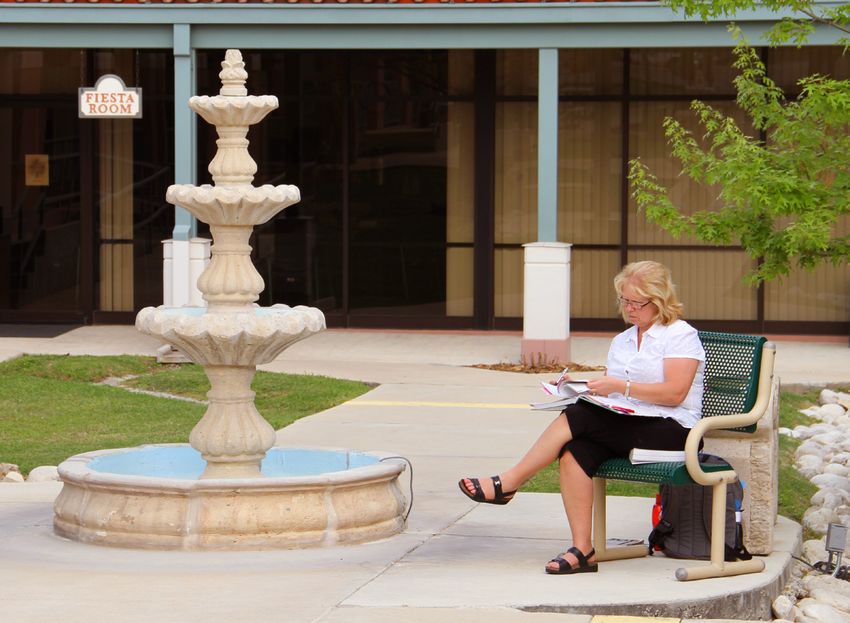
About MACC

The Logo                                                              The Seal
The stylized flower symbol is formed by the convergence of four       The MACC seal incorporates the
C’s representing the heart of what MACC’s mission strives to ac-      College’s name, logo, and the
complish: Cross-Cultural Conversion and Communion. The differ-        year it was established. MACC
ent color of each petal represents the diversity in our Church and    has been educating leaders for
society. The cross and golden circle are symbolic of Christ in the    service and ministry for over for-
Eucharist who draws the four C’s into a unity in diversity. The im-   ty years, first as a cultural center
age of Our Lady of Guadalupe has the same four-petal flower above     and now as a bilingual Catholic
her womb, marking the presence of Jesus Christ. Speaking in the       College.
language and symbols of our indigenous ancestors, Mary models a
perfectly inculturated evangelization. MACC is dedicated to follow
her example in the new evangelization of the Church in America.

                                                                                                             7
About MACC

    Our Mission
    MACC’s mission is to empower and educate leaders for
    service in a culturally diverse Church and society by of-
    fering a biliterate, multicultural formation program that
    can lead to a BA and MA degree in Pastoral Ministry.

    MACC’s mission is accomplished through the following
    core purposes:

    • To offer biliterate, educational and ministry forma-
      tion programs –including language and cultural
      studies – that meet the pastoral priorities of the Cath-
      olic Church especially for leadership in Hispanic
      Ministry;
    • To conduct interdisciplinary research, publish re-
      sources, and provide certificates in specialized train-
      ing and continuing education;
    • To confer post-secondary degrees of higher educa-
      tion in religious studies, namely Bachelor of Arts
      and Master of Arts degrees in Pastoral Ministry, that
      are offered consistent with the teachings of the Mag-
      isterium of the Roman Catholic Church, and in ac-
      cordance with the exemption granted by the State of
      Texas from Chapter 132.002(a)(2) of the Texas Educa-
      tion Code;
    • To provide other educational and charitable services
      that meet the strategic goals set by the Board of Trustees and that continue MACC’s historical com-
      mitment to the Gospel of Jesus Christ and the Church’s teachings on the sacredness of human life,
      peace, justice, respect for cultural diversity, and public policies that promote the common good.

    Our Catholic Identity
    MACC’s Catholic identity is inte-       the celebration of the Eucharist, a   As an independent Catholic insti-
    gral to every dimension of the in-      commitment to social justice and      tution of higher learning, MACC
    stitution—its mission, goals, cur-      global solidarity, and an ongoing     is committed to upholding aca-
    riculum, library, research, and         dialogue between faith and rea-       demic freedom and integrity.
    community life. MACC’s Catho-           son. Together, MACC’s teachers        MACC’s governance and admin-
    lic identity is a living reality that   and students seek the truth that      istration is carried out in faithful
    is expressed in relationships of        leads to a deeper encounter with      union with the Archbishop of
    mutual respect, daily prayer and        Jesus Christ.                         San Antonio, the United States

8
About MACC
Conference of Catholic Bish-
ops (USCCB), and the Holy See.
In the Spirit of Ex Corde Eccle-
siae and the USCCB’s published
guidelines for its implementa-
tion, MACC requires all faculty
who teach “Catholic theological
disciplines” to seek a manda-
tum from the Archbishop of San
Antonio, to sign a profession of
faith, and to pledge an oath of fi-
delity as suggested by the motu
proprio issued by John Paul II in
the Apostolic Letter Ad tuendam
fidem.

Our History
MACC began as a cultural cen-
                                      ence, fostering leadership, and      a very successful capital cam-
ter in 1972, a time of great social
                                      promoting understanding and          paign, MACC’s beautiful new
change and renewal in the Cath-
                                      appreciation of cultural diversity   campus and facilities opened in
olic Church. Mexican Ameri-
                                      in the Church and society. What      the spring of 2000. Thousands
cans and other minorities joined
                                      began as a very specific mission     of students have benefitted from
the struggle for civil rights in
                                      soon became a model for other        MACC’s specialized programs.
the 1960s and ‘70s, courageous-
                                      Hispanic pastoral centers around     Alumni presently serve as bish-
ly risking security, reputation,
                                      the country and a key resource       ops, priests, deacons, diocesan
and life itself to ensure liberty
                                      for translations, innovative pro-    directors, and in many other lay
and justice for all Americans.
                                      grams, and the development of        leadership positions throughout
Mexican Americans took pride
                                      the USCCB’s national plan for        the country.
in their unique identity as loyal
                                      Hispanic Ministry.
American citizens with strong
                                                                           In 2008, MACC reorganized as a
cultural roots and resisted the
                                  In the following decades, MACC           Catholic college designed to meet
assimilation of their treasured
                                  embraced a broader mission to            the growing needs in Hispanic
Spanish language and Mexican
                                  foster unity in the culturally di-       Ministry for biliterate theological
traditions.
                                  verse Church and society of the          education at the post secondary
                                  United States. MACC achieved             level. MACC has degree-grant-
Within this social context and in
                                  accreditation for its ministry for-      ing authority through an ex-
response to the call of the Sec-
                                  mation program in Hispanic and           emption from the Texas Higher
ond Vatican Council, MACC was
                                  Multicultural Ministry from the          Education Coordinating Board
established as the first pastoral
                                  United States Conference of Cath-        rules and regulations because it
center dedicated to researching
                                  olic Bishops in 1998. Through            is primarily a religious institu-
the Mexican American experi-

                                                                                                                 9
About MACC
     tion of Higher Education. (See      include MACC or its students. • St. Mary’s Seminary in Hous-
     H.E.B. Ministries v. Texas Higher   Although the institutions may          ton, TX
     Education Coordinating Board,       accept certain course work in
     235 S.W.3d 627 (2007)). MACC        transfer toward a credential from • The Catholic Church Exten-
     achieved certification from the     MACC or collaborates in other          sion Society
     U.S. Department of Homeland         ways for generation of course
     Security to sponsor student vi-     credits of program credentials,
     sas, and is now working towards     other colleges or universities Membership
     regional accreditation. MACC is     may or may not accept this work
     also approved by the Veteran’s      in transfer, even if it appears on
     Administration to train veterans    their transcript. This decision is • The Association of Catho-
     and other eligible persons.         made by the institution subse-         lic Colleges and Universities
                                         quently considering the possibil-      (ACCU)
     MACC is in close partnership ity of accepting such credits.
     with the University of the Incar-                                      • The National Catholic Coun-
     nate Word, the Oblate School of                                            cil on Hispanic Ministry (NC-
     Theology, Assumption Semi- Collaboration                                   CHM)
     nary, and other institutions of
     higher education and ministry MACC collaborates closely with • La RED – A National Net-
     formation. MACC also serves other institutions and is a mem-               work for Latino Youth and
     the Archdiocese of San Antonio ber of several professional as-             Young Adult Ministry
     by offering courses for their Dea- sociations, including the follow-
     conate Formation Program, and ing:                                     • National       Federation    for
     MACC’s mobile faculty teach • The Catholic Archdiocese of                  Catholic Youth Ministry (NF-
     in workshops and conferences            San Antonio                        CYM)
     throughout the country and in
     international settings.             • The Texas Catholic Confer- • The National Catholic As-
                                             ence (TCC)                         sociation of Diocesan Direc-
                                                                                tors for Hispanic Ministry
     Regional Accreditation              • The USCCB’s Secretariat of           (NCADDHM)
                                             Cultural Diversity in the
     MACC is not regionally accred-          Church                         • National Leadership Round-
     ited. The Board, faculty, and staff                                        table on Church Management
     are committed to offering the • Assumption Seminary                        (NLRCM)
     academic programs according to
     the high standards expected of • University of the Incarnate
     accredited institutions. MACC           Word                           Related Institutions
     has signed articulation agree-
     ments with regionally accredited • Mundelein Seminary (St. Since its founding, MACC has
     institutions to collaboratively         Mary of the Lake University) worked very closely with many
     offer specific courses and pro-                                        institutions of higher education
     grams. The accreditation of these • St. Meinrad’s Seminary             to educate leaders for ministry.
     institutions does not extend to or                                     This spirit of collaboration is

10
About MACC
central to MACC’s core values
and mission. MACC has inter-in-
stitutional agreements with the
following, related institutions:
Assumption Seminary traces
its roots back to 1874 when the
Archdiocese of San Antonio was
established in what was then
mission territory. This long his-
tory of priestly formation has re-
sulted in hundreds of priests and
several bishops who have served
and currently minister through-
out the United States. To prepare
seminarians for intercultural
ministry, Assumption was in-
strumental in founding MACC
in 1972. It was housed there un- enroll in MACC’s Pre-Theology, common mission elements, in-
til 2000 when its own campus Graduate, and language courses cluding a commitment to de-
opened across the street. This (Spanish & ESL). velop leaders in a culturally di-
close proximity allows the two verse world and to engender a
institutions to continue to share The University of the Incarnate spirit of Christian service and
campus facilities and work close- Word (UIW) has a stellar repu- social justice in their students
ly to fulfill the requirements of tation for excellence in higher and faculty. The two institutions
the USCCB’s Program for Priest- education dating back to 1881 have collaborated for more than
ly Formation and the Education when it was formally established forty years in delivering quality
of Seminarians. The Rector of by the Sisters of Charity of the education in the area of pastoral
Assumption Seminary is an ex- Incarnate Word. Formerly a col- ministry with special emphasis
officio member of the MACC lege, it was fully accredited by on the Hispanic community to
Board, and faculty appointed to the Association of Colleges and students from many countries in
Assumption Seminary by the Secondary Schools in 1925. The the world, particularly from San
Archbishop may also serve as graduate division was added in Antonio, South Texas, Mexico,
adjunct faculty of MACC. Col- 1950, and the school became co- and Latin America. Because of
lege-level students accepted at educational in 1970. In 1996, it this long-standing history of col-
Assumption Seminary will also became a university. In 1998, the laboration, UIW is committed to
be admitted into MACC’s Bach- university was accredited by the supporting and assisting MACC
elor of Arts in Pastoral Minis- Southern Association of Colleges in achieving academic autonomy
try program and will major in and Schools to award doctoral and accreditation. Through a Col-
Philosophy upon satisfaction degrees in addition to bachelor’s laborative Academic Arrange-
of MACC admissions require- and master’s degrees. ment with UIW, a student can
ments. Seminarians can also UIW and MACC share many obtain a complete dual Bachelor
11About MACC
of Arts in Pastoral Ministry, with Oblate School of Theology is ac- and the President of MACC
a certificate of completion from credited by the Commission on serves as a trustee on the OST
both institutions. Students who Colleges of the Southern Asso- Board.
want to participate in the dual ciation of Colleges and Schools
degree program should contact and by the Association of Theo- Our Lady of the Lake and St.
the Registrar for additional in- logical Schools in the United Mary’s University are Catholic
formation. States and Canada to award mas- universities located within three
ter’s degrees and the Doctor of miles of MACC. Both institu-
Oblate School of Theology Ministry degree. OST transfers tions have a long and prestigious
(OST) was founded in 1903 as a some of MACC’s language and history in Catholic higher educa-
seminary and continues to pre- pastoral ministry courses, and tion. They are accredited by the
pare men for the priesthood from MACC’s pre-theology program Southern Association of Colleges
dioceses across the United States can fulfill some of its degree and Schools to award bachelors,
and from a number of religious programs’ prerequisite require- masters, and doctoral degrees.
communities. Today, the school ments. MACC and OST enjoy MACC works with both univer-
also prepares men and women a collaborative and mutually en-sities to promote intercultural
religious and laity from Catholic riching relationship. education, Hispanic and multi-
and other Christian traditions cultural ministry, social justice
for a variety of ministries. An OST representative serves on initiatives, and library agree-
the MACC Board of Directors, ments.
12The MACC Community
Board of Trustees Members Dr. Scott Woodward, VP for Aca-
demic Affairs and Dean, Oblate
Officers Most Rev. Michael J. Boulette, School of Theology (San Anto-
Auxiliary Bishop, Archdiocese of nio, TX)
†Most Rev. Patrick F Flores, DD, San Antonio (San Antonio, TX)
Archbishop of San Antonio, Ex-Officio Members
Chair Emeritus (San Antonio, Rev. Jonathan Felux, Director Most Reverend Gustavo García-
TX) of Vocations and Seminarians,
Siller, DD, Archbishop of San
Archdiocese of San Antonio (San
Antonio (San Antonio, TX)
Very Rev. Larry Christian, Vicar Antonio, TX)
General, Archdiocese of San An- Dr. Arturo Chávez, MACC Presi-
tonio and Pastor, St. Ann Catho- Dr. Glenn Edward James, Asso- dent and CEO (San Antonio, TX)
lic Church, Chairman (San Anto- ciate Provost for Institutional Ef-
nio, TX) fectiveness, University of the In-
carnate Word (San Antonio, TX)
Very Rev. Jaime Robledo PSS,
Rector, Assumption Seminary, Ms. Joan Martínez, Director of
Vice-Chair, (San Antonio, Texas) the Academy for Lay Ecclesial
Ministries, Archdiocese of San
Sister Rose Weidenbenner, RSM Antonio (San Antonio, TX)
Administrative Assistant &
Grant Development, ARISE, Sister Jane Ann Slater, Chancel-
Treasurer (Alamo, TX) lor & Archbishop’s Liaison to In-
stitutions of Higher Education,
Archdiocese of San Antonio (San
Antonio, TX)
13Campus Life
Student Conduct academic accommodations. In istry formation programs. The
accordance with Section 504 of Student Services and Housing
the Rehabilitation Act of 1973 Department oversees all matters
The Mexican American Catho-
and with the Americans with of campus life.
lic College is committed to the
Disabilities Act of 1990, MACC
education of the whole person
provides disability services to
and takes seriously the intellec-
students who furnish the appro- International Student
tual, moral, and spiritual de- Services
priate documentation.
velopment of all of its students.
The college expects its students MACC welcomes the applica-
always to strive to live in ac- Health Services
tions of international students.
cordance with Christian virtue
and to encourage one another to Students are required to carry We provide an array of services
live this way. The College Honor their own health insurance. The to international students, includ-
Code, available in the Student Student Services and Housing ing programs in both English
Handbook, articulates this ex- Department furnishes a compre- and Spanish as Second Languag-
pectation and calls students to hensive list of health providers to es (ESL and SSL), programs that
work toward their degree com- students. Additional information build intercultural competencies,
pletion with utmost integrity. is also included within the Stu- comfortable and secure housing,
dent Handbook. In accordance academic support services, and a
with Texas law, all students are hospitable campus culture.
Dining Services required to be vaccinated against The Registrar is the Designated
meningitis. School Official (DSO) assigned
Those students who live on cam- to provide assistance to interna-
pus may prepare their own meals tional students (see section 6 In-
in the Fiesta Room’s kitchen and/ Housing ternational Students). This assis-
or purchase a meal plan. Meal tance includes the following:
plans include breakfast, lunch, While most of MACC degree-
and dinner in Assumption Sem- seeking students live off cam- 1. Helping with prospect inqui-
inary’s St. Joseph’s Dining Hall. pus, housing is available on a ries.
The cafeteria is open seven days beautifully landscaped cam- 2. Facilitating the admission
a week and is staffed by the pus. MACC’s campus is secure process and payment of the
Hermanas Josefinas, a Mexican and housing facilities include SEVIS fee.
congregation of Sisters that has four dormitories that provide 3. Applying for F-1 student
served the seminary for several both private and shared quar- visa.
decades. The cafeteria has a var- ters. The bedrooms are fully 4. Providing guidance, resourc-
ied menu that offers nutritious furnished, air conditioned, and es, and support for mainte-
and delicious options. wired for telephone and inter- nance of F-1 status, housing
net services. Each dormitory has arrangements, and associated
laundry facilities and a common issues.
Disability Services area. MACC’s student body is a 5. Conducting a comprehensive
culturally diverse community, orientation.
Students with disabilities must and living on campus can great- 6. Offering services to help with
register with the Academic Dean ly enhance the overall quality of
in order to receive appropriate home-to-college transition.
MACC’s educational and min-
14Campus Life
The Elizondo Library focused collection of books, pe- tion card and in good standing
and Archives riodicals, audiovisual resources, with the library. The library’s re-
and reference materials in Span- sources are also available to stu-
The Mexican American Catholic ish and English. The archives also dent researchers from other col-
College has a unique on-campus contain original manuscripts, leges and universities and to the
library and archival collection primary documents, records, general public.
named in honor of Rev. Virgil- and other valuable historical and
contemporary material for schol-
io Elizondo, MACC’s founding
arly study. Students can use the The Mabee Library at
president and a pioneer in His-
computer resources located in the University of
panic Ministry and theology.
The purpose of the Elizondo Li- the library to access the Internet Incarnate Word
brary and Archives is to provide and electronic databases.
biliterate educational resources The library staff and volunteers The J. E. and L. E. Mabee Library
and support services that fur- are available to provide guid- at the University of the Incar-
ther advance MACC’s mission. ance to students in their research nate Word is an extraordinary
The library is located on the first projects. Borrowing privileges academic and intellectual center
floor of the Our Lady of Guadal- are extended only to persons that is also available for MACC
upe Student Center and houses a with a valid MACC identifica- students through an inter-insti-
15Campus Life
tutional agreement. The library
is located on the UIW campus
and houses a collection of more
than 300,000 items in various
formats. The library also main-
tains current subscriptions to
some 39,000 unique serial titles.
The audiovisual collection fea-
tures more than 17,000 items in
many formats to support the
academic curriculum and to cul-
tivate the visual arts. Some of
the areas covered are musical
compositions, feature films, doc-
umentaries, plays, and foreign
language materials. Computers
are available in the Student Cen-
ter Atrium for student research
and word processing. Students
enrolled in the dual MACC/UIW
BA program, can access the Ma- in the Texas inter-library lending sity Library
bee library’s resources online. program. • The National Autonomous
University of Mexico Exten-
sion Campus
The Louis J. Blume Additional Library • Trinity University
Library at St. Mary’s Resources • San Antonio College
University • The University of Texas at
Students enrolled in MACC’s San Antonio
courses have access to library re- San Antonio Public Library
The Blume Library is located less sources from several local colleg- •
than a mile from MACC and has es and universities with which (various locations
an extensive collection of books, MACC has inter-institutional
eBooks, government documents, agreements or are located in the
music CDs, videos, etc. The Li- area. These libraries may be uti-
brary’s collection includes a com- lized during the regular insti-
prehensive collection of print tutional schedules and hours. A
and online materials. MACC partial list includes the follow-
students and faculty can estab- ing:
lish library privileges with a
valid MACC identification card • Oblate School of Theology Li-
and borrow a maximum of four brary
items at a time. They can also ac- • Archdiocese of San Antonio -
cess an array of online databases Catholic Archives
and catalogues, and participate • Our Lady of the Lake Univer-
16Degree Based Programs
All of MACC’s programs incorporate and adapt the standards for ministry formation outlined in the
document Co-Workers in the Vineyard of the Lord and Church’s framework for ministry in Hispanic
and other culturally diverse settings. These programs include:
Bachelor of Arts in Pastoral
Ministry (121 hrs)
BAPM - Philosophy, Catholic
Leadership, and Catechetics ■ □
BAPM - PreTheology, second
major/concentration option
Certificate of Pre-Theology (45-
54 hrs)
PT-Diaconal Studies (54 hrs)
PT-Pastoral Ministry (45 hrs) ■ denotes option to participate in a Collaborative program with University
- The Bible, Catechetics & Evan- of the Incarnate Word
gelization, and Pastoral Family • indicates a graduate program
& Youth □ Identifies programs in which students are normally required to demon-
strate oral competency in both Spanish and English prior to graduation.
PT-Philosophy (54 hrs)
MACC Curriculum
Master of Arts in Pastoral Min- MACC’s comprehensive curriculum aims to accomplish the follow-
istry (36 hrs) • ■ □ ing goals:
MAPM – General Ministry, Mis- 1. To provide students with a multidisciplinary breadth of knowl-
sion Leadership, Parish Leader- edge in liberal arts studies and Catholic culture;
ship, and Catechesis and Forma- 2. To deepen catechesis through a systematic education in the faith,
tion, Youth Ministry Sequence and a solid foundation in theology for ministry.
3. To fulfill the philosophy requirements of the USCCB for semi-
Graduate Certificate in Pastoral narians at the college (and pre-theology levels)
Studies (18 hrs) • ■ 4. To ensure language proficiency for ministry in a bilingual (Eng-
lish & Spanish) pastoral setting, and for graduate studies in Eng-
Graduate Certificate in Mission lish.
Leadership (18 hrs) • ■ 5. To equip students with the leadership skills and intercultural
competencies needed for effective pastoral ministry in today’s
English as a New Language multicultural, dioceses, parishes, and institutions.
(ENL) Studies (contingent on
student’s needs) The curriculum is offered as part of a wholistic program that inte-
grates the four pillars of ministry formation for lay ecclesial minis-
Unless otherwise specified, all ters and candidates for ordination – the human, spiritual, intellec-
programs are at the undergradu- tual, and pastoral dimensions. The B.A. degree program specifically
ate level and offered exclusively at addresses the intellectual dimension of lay ministers and those
MACC.
17Undergraduate Programs
studying for ordination whose cluded in the Appendix. tions. MACC accepts the transfer
first language is Spanish and for of general education credits from
domestic students who need to Core Curriculum/ accredited institutions where ap-
learn Spanish for ministry. plicable to our core curriculum
General Education and subject to transfer credit
Bilingual Programs guidelines. Although students
MACC requires students to
The 5th edition of the Program are expected to complete most of
demonstrate an interdisciplin-
of Priestly Formation recognizes their general education require-
ary breadth of knowledge in lib-
the growing pluralism in Church ments at UIW or other accred-
eral arts studies prior to gradua-
and society in the United States ited institutions, MACC requires
tion. To this end, students must
and recommends “the study of students to take a capstone
complete a total of 43 semester
the Spanish language and His- course (CLST 3335 U.S. Cultural
hours of college-level, general
panic cultures as well as other and Religious Patterns) designed
education courses in the follow-
pastorally appropriate languages to assess the student’s breadth of
ing areas of knowledge: humani-
and cultures.” (PPF 182) knowledge, research and writing
ties and/or fine arts, social and
skills, and integration of general
behavioral sciences, and natu-
MACC is committed to advance education subjects.
ral sciences and mathematics.
the Church’s guidelines for lan-
MACC offers general education
guage and intercultural compe- Language Studies forms an inte-
courses in language, cultural,
tencies in the formation of lead- gral part of our core curriculum.
and social studies. Since biliter-
ers for service in Hispanic and Because we focus on the needs of
acy is a central goal of MACC’s
other culturally diverse commu- Hispanic Ministry, MACC offers
curriculum, general education
nities. an array of courses and resources
courses are primarily offered in
for the study of both English and
Spanish as needed by interna-
Spanish. A central goal of the
Bachelor of Arts in tional students to meet gradua-
BA curriculum is that students
tion requirements.
Pastoral Ministry achieve competence in their sec-
ond or additional language.
(BAPM) Degree MACC does not provide all the
general education courses re-
The BAPM programs consist of The BA program is aimed at pre-
quired for a Bachelor of Arts
a minimum of 121 hours of un- paring those learning English
Degree; therefore, MACC has
dergraduate-level coursework, to continue their graduate stud-
forged a collaborative learning
including 43 hours of core cur- ies in English and those learn-
arrangement with the Univer-
riculum; 39 hours of foundation- ing Spanish to achieve a level of
sity of Incarnate Word (UIW) to
al courses in philosophy, theol- competence that will allow them
provide students with affordable
ogy, and scripture; and 39 hours to continue toward their mastery
access to an array of general ed-
in one of three concentration of the language.
ucation courses. The UIW core
options: Philosophy, Catholic curriculum meets most of the
Leadership, or Catechetics. The All students will be required to
MACC requirements. Therefore,
following is a comprehensive take two composition courses
students are advised to first con-
overview of the undergraduate for second language learners at
sider UIW, but they can also en-
BAPM program, and the corre- MACC as part of their required
roll in courses approved by the
sponding academic plan is in- General Education curriculum.
Academic Dean at other institu-
ENL students should refer to
18Undergraduate Programs
the “Completion of the ENL Pro- (*Modern Language, 6 hrs) THEO 2382 Sacramental Theol-
gram” for more information. ogy: The Faith Celebrated
Students will additionally choose THEO 3380 Theology of the
9 hours of elective courses from Creed: The Faith Professed
any of the following areas of
study: ancient or foreign lan- THEO 3381 Jesus Christ: God
guages, classical literature, fine and Man
or performing arts, theology,
philosophy or pastoral ministry. THEO 3385 Moral Theology: The
Faith Lived
MACC’s BAPM Core Curricu-
lum is summarized below. THEO 4385 Catholic Spiritual
Traditions: The Faith Prayed
Core Curriculum Requirements
(generally transferred to MACC THEO 4387 Ecclesiology
and are, therefore, excluded from our Philosophy, Theology,
course descriptions) Concentrations
Scripture Foundation
Rhetoric 6 hours
Literature 3 hours The major area of study includes MACC’s curriculum integrates
Arts 3 hours 39 hours of foundational phi- the four elements of ministry
Math 3 hours losophy, theology, and scripture formation: the human, spiritual,
Natural Science courses. These requirements are intellectual, and pastoral dimen-
4 hours
included below. sions. Congruent with this, the
History 3 hours BAPM requires that students
Wellness 2 hours select an area of concentration
PHIL 1310 Philosophy in the
Physical Education 1 hour Catholic Tradition that meets the requirements of
Modern Language* 6 hours ministry formation while also
Electives 9 hours THEO 1320 Introduction to The- meeting the student’s academic
ology and Biblical Studies interests and needs. To this end,
MACC has structured three ar-
Core Curriculum Requirements THEO 1341 Introduction to Lit- eas of concentration: Catechetics,
(generally completed at MACC and urgy Catholic Leadership, and Philos-
included in course descriptions) ophy. The 39-hour concentration
THEO 2320 Catholic Biblical In- of study are described separately
CLST 3335 U.S. Cultural and Re- terpretation: Old Testament in the following sections.
ligious Patterns
PHIL 2321 Ancient Philosophy Concentration in Philosophy
PSTR 3340/3342 Pastoral Span- (39 Hours): This concentration
ish I and II (*Modern Language, THEO 2332 Catholic Biblical In- prepares students for the study
6 hrs) terpretation: New Testament of Theology and is based on the
Church’s most fundamental be-
ENL 4370/4371 Composition in PSTR 2351 History of the Catho- lief in the compatibility of reason
an Acquired Language I and II lic Church
19Undergraduate Programs
and faith. The overall goal is to tioned above.) Requirements include the fol-
enable graduates to understand lowing:
their future theological studies PSTR 1325/1335 Ecclesiastical
within the context of the Catho- Latin I and II PSTR 1372 Cross-Cultural Com-
lic intellectual tradition. This petencies for Pastoral Ministry
concentration meets the U.S. PSTR 2325 Liturgical and Sacred
Catholic Bishops’ requirements Music PSTR 2322 Faith Development
in Philosophy for admission into and Catechesis in a Multicultur-
a major seminary for studies to- PSTR 2335 Sacred Art and Archi- al Context
wards ordination. tecture
PSTR 2373 Hispanic Ministry in
Requirements include two Foun- PSTR 3340/3342 Pastoral Spanish the 21st Century
dation courses - PHIL 1310, PHIL I and II
2321 - and the following: PSTR 3330 Canon Law for Minis-
Concentration in Catholic try in a Multicultural Context
PHIL 1311 Classical Logic Leadership (39 Hours): This
concentration is for those seek- PSTR 3374 Stewardship and Fi-
PHIL 2323 Medieval Philosophy ing to serve the Church in key nancial Management for Catho-
lay pastoral ministry leadership lic Leaders
PHIL 2342 Philosophy of Nature positions in diocesan offices, in
and Being Catholic schools and o rganiza- PSTR 4378 Ethics and Account-
tions, and as parish administra- ability for Catholic Leaders
PHIL 3325 Modern Philosophy tors according to the guidelines
outlined in Co-Workers in the 21 hours of Pastoral Ministry,
PHIL 3327 Contemporary Phi- Vineyard of the Lord. The over- Philosophy, and/or Theology
losophy all goal is to provide the student electives by advisement
with an in-depth knowledge of
PHIL 3351 Philosophical An- the Church’s teachings and a Concentration in Catechetics (39
thropology pastoral plan for implementing hours): Catechetics is the teach-
best practices for church man- ing of basic Catholic doctrine.
PHIL 3384 Epistemology agement, ethical pastoral care, This concentration prepares cat-
and faithful leadership in today’s echetical leaders to oversee dioc-
PHIL 4363 Natural Theology complex cultural settings. esan, parish, and school-based
PHIL 4386 Philosophical Ethics
12 hours of Pastoral Ministry,
Latin, Philosophy, and/or Theol-
ogy electives by advisement
Priestly Formation Requirements.
All students in priestly formation
complete 4 of the following require-
ments in place of the electives men-
20Undergraduate Programs
programs for evangelizing and Summative Assessment: THEO
educating adults, teens, children, 4387 Ecclesiology
and families in the Catholic faith.
The courses draw from the rich Language Proficiency: Core
array of the Church’s documents Modern Language and/or con-
on evangelization, catechesis, centration electives
culture, and Hispanic Ministry.
The overall goal is to enable the Credits: A minimum of 121
graduate to design and imple- hours is required.
ment a comprehensive approach the pastoral ministry courses of
to catechesis that begins with the Resident Credits: Of the 121 the PMIN major at MACC while
family, builds on the assets of hours of required courses, 45 simultaneously fulfilling UIW’s
the community and culture be- must be completed at MACC. program requirements. As stu-
ing served, and is centered in the dents of both institutions, they
sacramental life of the Church. Upper-Division Credits: A mini- are subject to the admission
Requirements include: mum of 36 of the 45 hours of standards and academic policies
resident credit must be upper- at each institution, which works
PSTR 1350 Foundations of Evan- division hours. collaboratively with and oper-
gelization and Catechesis ates independently of the other.
Major: A minimum of 15 of the MACC students must declare
PSTR 2352 Catechetical Content, 36 hours of upper-division resi- their intention of enrolling in the
Methods, and Curriculum dent credit must be major pro- collaborative program before be-
gram requirements. ginning either program.
PSTR 2354 Baptismal Catechu-
menate (RCIA) and Catholic For- Collaborative Programs Certificate of
mation
with UIW in Pastoral Pre-Theology
PSTR 3356 Family, Culture, and Ministry (PMIN)
The Pre-Theology (PT) certificate
Catechesis
MACC’s BAPM and MAPM is designed to prepare students
for graduate level study in theol-
PSTR 3358 Youth and Young (PMIN) programs are also of-
fered as collaborative academic ogy. Students who already hold
Adult Ministry
arrangements with the Universi- a bachelor’s degree or who are
primarily interested in prepar-
24 hours of Pastoral Ministry, ty of the Incarnate Word (UIW).
ing themselves for further study
Philosophy, and/or Theology Students must concurrently
enroll each semester in the bi- in Theology may enroll in this
electives by advisement
lingual Bachelor of Arts degree program, which includes three
different tracks – Philosophy,
Additional BAPM Require- with a major in Pastoral Minis-
Diaconal Studies, and Pastoral
ments. The following require- try (PMIN) via UIW’s Pastoral
Institute, which serves the Cath- Ministry. Its requirements are
ments apply:
olic community through educa- outlined below.
Capstone: CLST 3335 U.S. Cul- tion and ministerial formation.
tural and Religious Patterns PMIN students take all
21Undergraduate Programs
PT: Philosophy Additional Pre-Theology Re- THEO 1320 Introduction to The-
quirements. The following re- ology and Biblical Studies
Theology & Scripture (15 Hours) quirements pertain to the 54-
THEO 1320 Introduction to hour program. Catechism of the Catholic
Theology and Biblical Studies Credits: A minimum of 54 hours Church, 6 hrs
is required.
THEO 2382 Sacramental Theol- Resident Credits: Of the 54 hours The Candidacy (Years 2 through 5)
ogy: The Faith Celebrated of required courses, 30 must be
completed at MACC. THEO 1341 Introduction to Lit-
THEO 3380 The Theology of the urgy
Creed: Faith Professed Upper-Division Credits. 24 hours
of resident credit must be upper- PSTR 1350 Foundations of Evan-
THEO 3385 Moral Theology: division courses. gelization and Catechesis
The Faith Lived
PT: Diaconal Studies THEO 2320 Catholic Biblical In-
THEO 4385 Catholic Spiritual terpretation: Old Testament
Traditions: The Faith Prayed Diaconal Studies (DSP) are for
men discerning a ministry as a THEO 2332 Catholic Biblical In-
Philosophy (33 Hours): permanent deacon. The Arch- terpretation: New Testament
See the eleven (11) PHIL courses diocese of San Antonio works
listed in the BAPM-Philosophy closely with each applicant, who, PSTR 2351 History of the Catho-
section. upon admittance, completes an lic Church
aspirancy year followed by four
Electives (select 6 hrs from the list years of formation and study. PSTR 2352 Catechetical Content,
below) Courses are typically offered Methods & Curriculum
ENL 4370/4371 Composition in Monday and Wednesday eve-
an Acquired Language I and II ning to accommodate students’ THEO 2382 Sacramental Theol-
schedules. ogy: The Faith Celebrated
PSTR 1325/1335 Ecclesiastical
Latin I and II The Aspirancy Year: PSTR 3330 Canon Law for Min-
istry in Multicultural Communi-
PSTR 2325 Liturgical & Sacred PHIL 1310 Philosophy in the ties
Music Catholic Tradition
THEO 3381 Jesus Christ: God
PSTR 2335 Sacred Art and Archi- and Man
tecture
SPAN 3340/3342 Pastoral Span-
ish I and II
THEO 1341 Introduction to Lit-
urgy
22Undergraduate Programs
THEO 3385 Moral Theology: The p.m. to 9:15 p.m., and Saturday is a three-year degree program,
Faith Lived and Sunday classes meet from which will be taught during the
9:00 a.m. to 5:00 p.m. Distance weekends under three modali-
THEO 4320 Evangelization and education options are available. ties: face-to-face, hybrid and re-
the Writings of St. Paul and students may complete the mote. Two courses are offered
program requirements by enroll- each Fall and Spring semester,
THEO 4385 Catholic Spiritual ing in equivalent day or evening and an additional course and a
Traditions: The Faith Prayed classes instructed in English or retreat are offered each Summer.
Spanish.
THEO 4387 Ecclesiology Coursework. The certificate
The Certificate in Pastoral Min- consists of 45 hours of under-
Practica, 6 hrs: Homiletics & Lit- istry incorporates the standards graduate-level coursework, in-
urgy for pastoral formation, in cul- cluding 33 Core requirements
turally diverse environments and 12 hours of concentration
Elective by advisement including Hispanic, stipulated coursework. Participants may se-
by the Collaborators in the Vine- lect a concentration from the fol-
PT: Pastoral Ministry yard of the Lord document. This lowing three options: the Bible;
new program of studies offers Evangelization and Catechesis;
This three-year, 45-hour (Cert) not only a systematic academic and Pastoral Ministry, the Fam-
Certificate is ideal for Spanish- deepening in the faith, but also ily and Youth. Requirements in-
speakers who are available for solid theological foundations for clude the following:
part-time studies, nights and the practice of pastoral ministry.
weekends. The courses are of- Pastoral Ministry (9 hours)
fered exclusively in Spanish, and Curriculum. This curriculum PSTR 1372 Cross-Cultural Com-
each course is offered within a responds to the need for proper petencies for Pastoral Ministry
two month period – a total of preparation of effective leaders
meetings. Thursday and Friday and leaders in parishes, move- PSTR 2091 Retreat: Human De-
ments, and organizations. velopment
PSTR 2373 Hispanic Ministry in
the 21st Century
PSTR 3330 Canon Law for Min-
istry in Multicultural Communi-
ties
Theology (24 hours)
THEO 1320 Introduction to The-
ology and Biblical Studies
THEO 1341 Introduction to Lit-
urgy
evening classes meet from 6:30
Courses are taught in Spanish. It THEO 2320 Catholic Biblical In-
23Undergraduate Programs
terpretation: Old Testament
THEO 2332 Catholic Biblical In-
terpretation: New Testament
THEO 2332 Catholic Biblical In-
terpretation: New Testament
THEO 2382 Sacramental Theol-
ogy: The Faith Celebrated
THEO 3380 Theology of the
Creed: The Faith Professed
THEO 3385 Moral Theology: The
Faith Lived PSTR 2322 Faith Development English as a New
& Catechesis in a Multicultural Language (ENL) Studies
THEO 4385 Catholic Spiritual Context
Traditions: The Faith Prayed Bachelor of Arts graduates of
PSTR 2352 Catechetical Content, MACC must be competent in
Concentrations Methods, and Curriculum their command of the English
language. For students whose
Concentration in the Bible: PSTR 2354 The Baptismal Cat- native language is not English,
echumenate (RCIA) and Catholic MACC offers an ENL Program
PSTR 3360 ST: Gospel of Luke Formation structured according to students’
and Acts of the Apostles English language proficiency. At
Concentration in Pastoral Ministry, the time of a student’s admis-
PSTR 3360 ST: The Prophets and the Family and Youth: sion, the level of instruction in
Catholic Social Teaching which s/he should matriculate
PSTR 3356 Family, Culture and is determined by the results of a
PSTR 3360 ST: Johannine Writ- Catechesis MACC-administered placement
ings test.
PSTR 3358 Youth and Young
THEO 4320 Evangelization and Adult Ministry Principles of Learning a New
the Writings of St. Paul Language. Learning a new lan-
PSTR 3360 Special Topics in Pas- guage requires:
Concentration on Evangelization toral Studies
and Catechesis: Time and Patience: It takes chil-
THEO 4348 Theology of the dren about 3 years to speak their
PSTR 1350 Foundations of Evan- Body native language well. Children
gelization and Catechesis naturally listen to and absorb
a language BEFORE they can
speak well, and the progression
24Undergraduate Programs
is the same for adults acquiring is applied to tuition costs for required to take an additional
a new language. Learning a new each semester. six (6) hours in the English lan-
language usually takes 4-7 years guage curriculum (ENGL).
to reach complete proficiency. Advanced ENL. Advanced ENL
students who successfully com- The requirement may be fulfilled
Dedication and Self-Discipline: plete the ENL 0343 Integrated with 6 hours of core composi-
Excellent language classes re- English Skills IV course will tion in English (English 1301 and
quire careful preparation by register for the two advanced, 1302). Examination and course
skilled instructors, but 80% of college-level credit-earning ENL content options are available by
the responsibility for language Composition in an Acquired advisement.
learning falls to the student. Language courses (ENL 4370
Time inside the classroom repre- and ENL 4371), which serve
sents only a small part of the lan- as “bridge” courses between Additional Undergradu-
guage acquisition process; the the ENL program and the col- ate Requirements.
majority of language learning lege-level English Composition
and retention occurs through courses. In addition, after com- Grades. A minimum grade of C
independent study and prac- pleting the four levels of the ENL (or a grade of 70 or higher) is re-
tice outside of class. LACK OF Program (or scoring the equiva- quired to satisfactorily complete
PROGRESS MAY INDICATE IN- lent on the Placement Test) stu- each degree and certificate re-
SUFFICIENT TIME DEDICAT- dents will take an exit test to as- quirement/course.
ED TO ENGAGING THE TAR- sess English Proficiency. If they
GET LANGUAGE OUTSIDE OF achieve an appropriate score, GPA. A minimum 2.0 cumu-
CLASS. students transition out of the lative GPA is required in all
ENL Program and can proceed coursework that is applicable to-
Instruction Levels. At MACC, to meet their regular English ward the program, certificate, or
students receive instruction in curriculum requirements. degree. Grades for developmen-
the core language skills at four tal coursework are calculated as
levels: beginner, basic, interme- Completion of the ENL Pro- part of the GPA but are not ap-
diate and advanced. As students gram. Once students have suc- plicable towards any program,
progress in the ENL Program, cessfully completed the ESL pro- certificate, or degree.
they gradually begin to make gram, and passed the English
the transition to the regular un- Proficiency Exit Test, they are
dergraduate curriculum. All
four levels of ENL instruction
can incorporate 3-12 hours of
ENL non-college-level credit in-
struction per week, according to
students’ needs.
Each ENL course includes an
integrated Language Lab com-
ponent, allowing access to our
web-based Language Learning
program. A flat technology fee
25Undergraduate Course Descriptions
Cultural Studies and logical defense of the thesis examinations. Students will ex-
through convincing arguments. plore a variety of literary forms,
(CLST) Core-English I (generally trans- including drama, short fiction,
ferred to MACC) [Equivalent to and poetry. Class discussions
CLST 3335 SPAN 1350 Composition] will engage ongoing, scholarly
US Cultural and Religious Pat- conversations about particular
terns ENGL 1302 themes, ideas, and representation
This course will guide students Research & Rhetoric of reality developed through-
in using social theory to explore This course develops students’ out assigned works. Our goal,
and understand cultural and re- ability to communicate clearly through class discussion and ex-
ligious patterns that define con- and effectively through the writ- tensive writing about literature,
temporary U.S. society. Drawing ing of argumentative essays is to increase our collective un-
from history and modern mass and the presentation of a major derstanding and appreciation of
media, students will identify research project. Students will literary interpretation and anal-
and analyze social values, at- further learn to recognize and ysis. Core-Literature (generally
titudes, mindsets, norms, and apply the principles of rhetoric transferred to MACC) [Equiva-
behaviors that define U.S. cul- and logic in a variety of written lent to SPAN 2361 Literature I]
ture. The course will study the contexts. Topics include but are
cultural characteristics of Native not limited to the critical analy-
Americans, Euro-Americans, sis of expository prose and litera-
English as a New
Anglo-Saxons, African Ameri- ture; the use of critical thinking Language (ENL)
cans, Asians, Hispanics, and oth- to enhance communication; the
er groups that shape the unique employment of style, tone and ENL 0310
identity of the United States as a credibility in the writing pro- Grammar I
pluralistic society. cess; and the identification of the
This is an introductory course
norms and protocols of academic in English Grammar for nonna-
discourse. Core-English II (gen- tive speakers who have little or
English (ENGL) erally transferred to MACC) no background in this language.
[Equivalent to SPAN 3352 Re- The course uses an integrated-
ENGL 1301 search & Rhetoric] skills approach to help students
Composition understand and practice Eng-
This is a writing-intensive ENGL 2361 lish grammar so they can gain
course that focuses on numer- Literature I confidence and use language ac-
ous rhetorical modes to develop This course is an introduction curately and fluently. Beginner
well-written compositions. Stu- to literary analysis and exam- Level content includes: the Verb
dents will learn to write different ines classic works of literature Be, Present and Past, Simple Pres-
types of essays and will be intro- from Spain, England, and the ent Statements and Questions,
duced to creative, academic, and US. Students will read a range Present Progressive, Nouns, Pro-
business writing with an em- of literature, including poetry nouns, and Simple Past.
phasis on grammar and syntax. and religious writings. Students
The course will develop the stu- will practice critical analysis
dent’s ability to write clear thesis through discussion, reports, and
statements for academic writing
26Undergraduate Course Descriptions
ENL 0313 have opportunities to test their sions, and making inferences.
Integrated English Skills I comprehension of native English Prerequisite: The four ENL Level 1
This beginning level course will speakers through listening activ- courses, or Placement Test
integrate academic reading, vo- ities. Pronunciation and vocabu-
cabulary building, listening/ lary building are highlighted toENL 0326
speaking, and writing skills in improve listening comprehen- Reading and Writing II
order to build a strong founda- sion and speaking fluency. This is the second level course in
tion in English. Working with English for nonnative speakers
a variety of written and spoken ENL 0320 who have little background in
materials, students learn to iden-Grammar II this language. Students contin-
tify the main idea, context clues,This is the second level course ue to develop reading compre-
and signal words. Students also in English Grammar for nonna- hension skills and vocabulary
gain experience previewing, tive speakers who have little or as they learn to organize and
predicting, drawing conclusions, no background in this language. write paragraphs with a topic
scanning, and summarizing. The course continues an inte- sentence and supporting details.
This course may be taken in con- grated-skills approach to help The course covers basic, opinion,
junction with the three other ENL students study and practice Eng- narrative, persuasive, problem-
Level 1 classes. lish grammar so they can speak solution, and compare/contrast
and write with greater accuracy paragraphs. Prerequisite: ENL
ENL 0316 and fluency. Basic Level content 0316 or Placement Test
Reading and Writing I builds on the foundation of the
This is an introductory course in previous course, with additional ENL 0328
English for nonnative speakers structures such as Imperatives, Speaking and Listening II
who have little or no background Adjectives, There is / There Are, This is the second level course in
in this language. Students read, Modals, and an introduction to the speaking and listening for non-
study, and practice creating sim- Future tense. Prerequisite: ENL native speakers who have a be-
ple sentences and progress to 0310 or Placement Test ginning foundation in English.
writing basic paragraphs with By continuing to practice the
a topic sentence and supporting ENL 0323 sounds and rhythm of American
details. Integrated English Skills II English, students at the basic lev-
This basic level course will inte- el will begin to understand and
ENL 0318 grate academic reading, vocabu- express themselves with greater
Speaking and Listening I lary building, listening/speak- confidence and independence.
This is a beginning level course ing, and writing skills in order Students have further opportu-
in speaking and listening for to strengthen the foundation nities to test their comprehen-
nonnative speakers who have developed in the beginning level sion of native English speak-
little or no background in Eng- course. Working with a variety ers through listening activities.
lish. By practicing the sounds of written and spoken materials, Pronunciation and vocabulary
and rhythm of American Eng- students improve the capacity to building are highlighted to im-
lish, students will begin to un- identify facts, sequence, the main prove listening comprehension
derstand and express them- idea, and context clues. Students and speaking fluency. Prerequi-
selves in the fundamentals of also gain experience scanning, site: ENL 0318
oral communication. Students summarizing, drawing conclu-
27Undergraduate Course Descriptions
ENL 0330 progress to persuasive, compare/ Perfect, Modals, Adverbs, Ger-
Grammar III contrast, and problem-solution unds, and Infinitives. Prerequi-
This is an intermediate course essays. Prerequisite: ENL 0316 and sites: ENL 0310, ENL 0320, and
in English Grammar for nonna- ENL 326; or Placement Test ENL 0330; or Placement Test
tive speakers who have a strong
foundation in grammar. The ENL 0338 ENL 0343
course continues an integrat- Speaking and Listening III Integrated English Skills IV
ed-skills approach to help stu- This is the second level course This is an advanced course in
dents study and practice English in speaking and listening for English for nonnative speakers
grammar so they can speak and nonnative speakers who have a who are preparing for Universi-
write with greater accuracy and beginning foundation in Eng- ty-level course work. The course
fluency. New structures include lish. By continuing to practice will enhance academic reading,
expansion of the Future tense, the sounds and rhythm of listening/speaking, and writing
Present Perfect, Modals, Ad- American English, students skills in order to fulfill higher
verbs, Gerunds, and Infinitives. at the basic level will begin to academic requirements. Prerequi-
Prerequisites: ENL 0310 and ENL understand and express them- site: ENL 0333
0320; or Placement Test. selves with greater confidence
and independence. Students ENL 0346
ENL 0333 have further opportunities to Reading and Writing IV
Integrated English Skills III test their comprehension of na- This is the fourth level course
This is an intermediate course tive English speakers through in English for nonnative speak-
in English for nonnative speak- listening activities. Pronuncia- ers who demonstrate mastery
ers who have a solid foundation tion and vocabulary building of reading and writing at the
in this language. Students will are highlighted to improve intermediate level. As students
refine their skills in grammar listening comprehension and sharpen reading skills and use
and academic writing, focusing speaking fluency. Prerequisite: increasingly complex grammar
on narrative, persuasive, illustra- ENL 0318 structures, they learn to orga-
tive, descriptive, analytical, and nize and write a persuasive
cause and effect essays. Prerequi- ENL 0340 paragraph, a persuasive essay, a
sites: the four ENL Level 2 classes, Grammar IV compare/contrast essay, a cause-
or Placement Test. This is an advanced course in effect essay, and an essay with
English Grammar for nonnative two or more structures.
ENL 0336 speakers who demonstrate mas- Prerequisite: ENL 0316, ENL 0326,
Reading and Writing III tery of English Grammar at the and ENL 0336; or Placement Test
This is an intermediate course in intermediate level. The course
English for nonnative speakers continues an integrated-skills ENL 0348
who have a strong foundation in approach to help students study Speaking and Listening IV
this language. Students contin- and practice English grammar This is the fourth level course
ue to strengthen reading skills so they can speak and write with in speaking and listening for
as they learn to organize and greater accuracy and fluency. nonnative speakers who have
write narrative, descriptive, and New structures include expan- a solid background in English.
opinion paragraphs, and then sion of the Future tense, Present A variety of listening input,
28You can also read


