2021-2022 Academic Catalog - 1-800-MMI-ROTC FAX (334) 683-2383 1101 Washington Street - Marion Military Institute
←
→
Page content transcription
If your browser does not render page correctly, please read the page content below
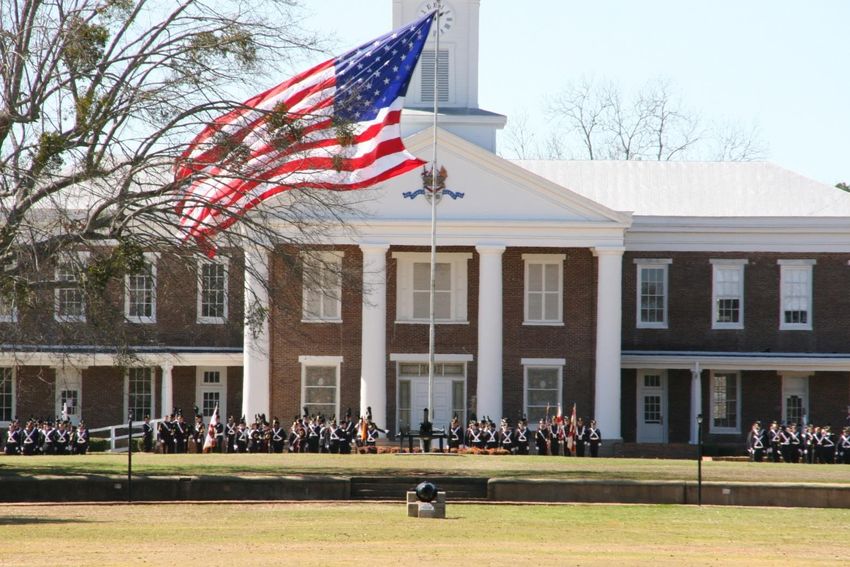
2021-2022

Academic Catalog

          1101 Washington Street
               Marion, AL 36756

             Admissions Office
             1-800-MMI-1842
           ROTC Enrollment Office
             1-800-MMI-ROTC
            FAX (334) 683-2383

      Homepage: http//www.marionmilitary.edu
Table of Contents

A Message from the President.......................................................................................................................................................... Page 4
Academic Calendar ........................................................................................................................................................................... Page 5
About Marion Military Institute ........................................................................................................................................................ Page 6
Notice of Availability of Information................................................................................................................................................. Page 8
Programs .......................................................................................................................................................................................... Page 9
Academic Policies............................................................................................................................................................................ Page 11
Admissions Information .................................................................................................................................................................. Page 18
Degree Program Information .......................................................................................................................................................... Page 23
Course Descriptions ........................................................................................................................................................................ Page 28
Cost, Financial Aid, and Scholarship Programs ............................................................................................................................... Page 38
MMI Foundation and Board of Trustees and Advisors ................................................................................................................... Page 48
Administration, Staff and Faculty ................................................................................................................................................... Page 50

                                                                                                    2
NOTICE
The contents of this catalog are informational only. This catalog is not the basis of a contract between the
student and the College. Marion Military Institute will always make every effort to provide accurate
information relative to academic policies, instruction and course offerings as indicated; however, the College
has the right to change any provision without notifying students individually.

                          STATEMENT OF NONDISCRIMINATION
It is the official policy of the Alabama Community College System and Marion Military Institute, a
postsecondary institution under its control, that no person shall be discriminated against based on the grounds
of race, color, national origin, religion, marital status, disability, gender, age or any other protected class as
defined by federal and state law. No person shall be excluded from participation in, or denied the benefits of,
any educational program and activity on the basis of race, color, national origin, religion, marital status,
disability, gender, age or any other protected class as defined by federal and state law.

                                                       3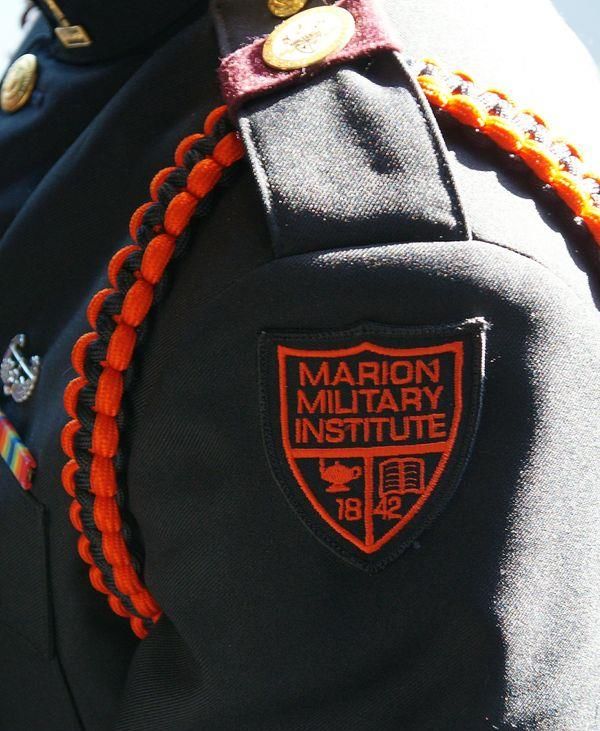
Welcome from the President

Welcome to Marion Military Institute (MMI)!

By choosing MMI to begin your higher education journey, you have given yourself the opportunity to
achieve something special. Our high quality college education embedded within an immersive military
environment and focused on leader development is unique, and something only found in schools like the
U.S. Service Academies. It is a true whole-person education that will advance your intellectual, leadership,
character, social, and physical development.

When you graduate from MMI, you will leave better educated, and a better person, with more advanced
leadership skills and a more mature and responsible character than your peers who did not have this
experience. This will help you to be more successful and more competitive when you transfer to your
four-year school and beyond. In short, MMI’s extraordinary education will put you on a path to an
extraordinary life.

I look forward to you joining the ranks of our historic Corps of Cadets and becoming part of the rich
tradition and legacy that defines MMI.

                                                    4
Academic Calendar
                           2021-2022

                             Fall Semester
August 12                          Registration
August 16                          Classes Begin
August 20                          Drop/Add Period and Late Registration Ends
September 6                        Labor Day – Observed
September 29                       Midterm Grades Due
October 8-9                        Family Weekend
October 14                         Last Day to Withdraw from Individual Course
November 11                        Veteran’s Day -- Observed
November 22-26                     Thanksgiving Break
December 10                        Last Day of Class for Fall Semester
December 10                        Last Day to Entirely Withdraw from College
December 13,14, & 15               Final Exams
December 17                        Fall Graduation and Commissioning

                            Spring Semester
January 6                          Registration
January 10                         Classes Begin
January 14                         Drop/Add Period & Late Registration Ends
January 17                         Martin Luther King Holiday -- Observed
March 2                            Midterm Grades Due
March 10                           Last Day to Withdraw from Individual Course
March 14-28                        Spring Break
May 6                              Last Day of Class for Spring Semester
May 6                              Last Day to Entirely Withdraw from College
May 9,10, & 11                     Final Exams
May 11                             SAP Convocation
May 13                             Honors Convocation
May 14                             Spring Graduation and Commissioning

                               5
About
              MMI
    •   MISSION
    •   VISION
    •   CAMPUS
    •   HISTORY
    •   ACCREDITATION
    •   NOTICE OF AVAILABILITY OF
        INSTITUTIONAL AND FINANCIAL
        INFORMATION

6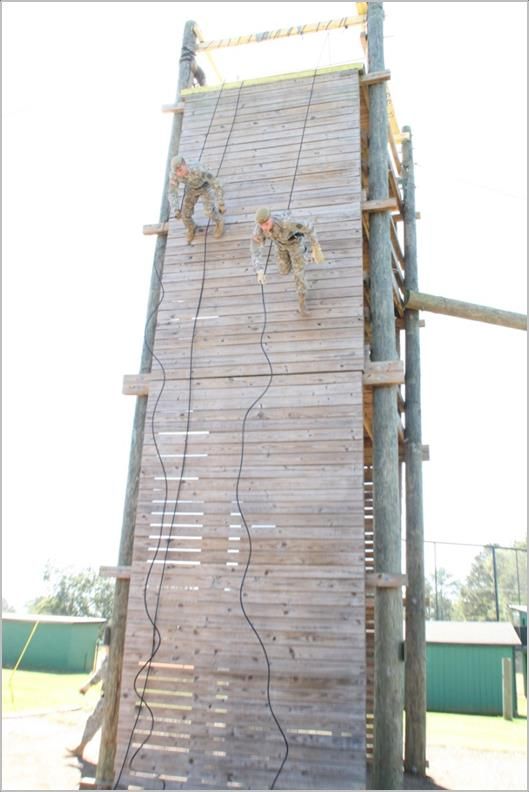
MISSION                                                                        standards for the development of character, academic excellence,
                                                                               and military traditions, which have been the hallmarks of MMI ever
Marion Military Institute, a two-year public institution of higher             since.
learning, educates and develops cadets as future leaders through an
immersive experiential military environment which integrates                   Hopson O. Murfee, MMI’s second president, was one of the foremost
intellectual, character and physical development in order to prepare           advocates of a student run government that focused on honor and
them for success in four-year colleges, U.S. service academies, and in         ethics within the student body. Because of this, MMI was one of the
military and civilian careers.                                                 first schools in the south to establish a student government
                                                                               association as well as an honor system, both of which are still very
VISION 2022                                                                    much a part of the Corps today. Under H.O. Murfee’s leadership the
                                                                               school achieved national recognition. William Howard Taft served as
Marion Military Institute will be nationally recognized as the premier         President of the Board of Trustees, and Woodrow Wilson, President
leader development college of Alabama with whole cadet enrichment              of Princeton University at the time, was the featured speaker at the
through an immersive and intentional experiential learning                     convocation held in the MMI Chapel in 1905. In tribute to Woodrow
environment, a relevant, rigorous and robust academic program and              Wilson and Princeton University, MMI’s school colors were changed
character and leadership education development system.                         to orange and black, and the tiger was adopted as the mascot.

CAMPUS                                                                         The Service Academy Program had its beginnings at MMI with the
                                                                               establishment of the Army-Navy department in 1910. The Army
The Marion Military Institute (MMI) campus encompasses 148 acres               ROTC program was introduced in 1916 in response to WWI, and the
including a Leaders Reaction Course (LRC), lighted athletic field,             Army ROTC Early Commissioning Program was established in 1968 at
baseball and softball fields, nine-hole golf course, student center, and       the height of the Vietnam War.
six tennis courts. Additionally, the campus features academic
buildings including biology, chemistry, and physics labs; dormitories;         Until World War II, the campus consisted of primarily two buildings;
dining facility; Middlebrooks Fine Arts building, Baer Memorial Library        the Chapel and Old South (Lovelace) Barracks, both from the old
featuring the college’s Academic Success Center; and a Career Center.          Howard College era. The MMI campus currently encompasses over
A multi-purpose athletic center houses a large stage, twenty-five              160 acres and includes 38 buildings.
meter indoor swimming pool, a fitness center including a cardio
room, health center, and a collegiate basketball court. The                    MMI continued as a private institution that included both a high
centerpiece of the campus is its historic chapel built in 1857 featuring       school and a junior college governed by an MMI Board of Trustees
six historic, stained glass windows.                                           until 2006 when the Alabama legislature voted to merge the institute
                                                                               into the Alabama Community College System. The high school was
The campus is fully equipped for instructional and student life                disestablished, and MMI became a military junior college only. Today
enrichment purposes. Computer labs are in place for student and                MMI is a member college of the ACCS and is governed by the ACCS
instructor use, along with computers in science labs, library,                 Board of Trustees. The legislation retained the original MMI Board of
Academic Success Center, and Career Center. The Academic Success               Trustees as the new MMI Foundation Board of Trustees and Advisors
Center houses advanced technology with which tutors can more                   with the role of governing the MMI Foundation that supports MMI
readily assist students in all disciplines relative to MMI course              fundraising and houses the endowment. Additionally, this Board now
offerings. The student center features a grill and coffee shop along           provides advice and counsel to the MMI President and the
with furnishings conducive to student interaction.                             ACCS. MMI is accredited by the Southern Association of Colleges and
                                                                               Schools Commission on Colleges (SACSCOC) to award the associates
                                                                               degree. Additionally, MMI is a member of the Association of Military
Additionally, for safety purposes, security cameras are placed
                                                                               Colleges and Schools of the United States and the National Junior
campus-wide in appropriate places where the security and safety of
                                                                               College Athletic Association.
either property or persons would be enhanced. Cameras are limited
to uses that do not violate the reasonable expectation of privacy as
                                                                               ACCREDITATION
defined by law.
                                                                               Marion Military Institute is accredited by the Southern Association of
HISTORY                                                                        Colleges and Schools Commission on Colleges to award the associate
                                                                               degree. Contact the Commission on Colleges at 1866 Southern Lane,
Marion Military Institute (MMI) is the nation’s oldest military junior         Decatur, Georgia 30033-4097 or call 404-679-4500 for questions
college tracing its origin back to 1842 with the founding of Howard            about the accreditation of Marion Military Institute.
College in Marion, Alabama. During the Civil War, the Chapel and
Lovelace Hall, both built in 1857, were used as Breckinridge Military          Note: This accreditation statement is published solely for
Hospital, treating both Union and Confederate soldiers. Howard                 accreditation-related purposes. Specific questions regarding Marion
College remained in Marion until the Alabama State Baptist                     Military Institute’s educational programs, admissions, financial aid,
Convention made the decision to move the college to Birmingham,                and other specific MMI related questions should be forwarded
Alabama in 1887. It later became Samford University. At the time of            directly to the institution.
the move, Colonel James T. Murfee was the Howard College
president, a position he had held since coming to Marion in 1871 from
the University of Alabama. Murfee, along with several of the faculty
and trustees, chose to remain on the existing campus in Marion and
formally establish MMI. He and the new MMI Board of Trustees
developed and implemented institutional policies demanding high

                                                                           7
NOTICE OF AVAILABILITY OF INSTITUTIONAL AND FINANCIAL
INFORMATION

Institutions of higher education are required by legislation to provide
consumer information to prospective as well as enrolled students.
Marion Military Institute has developed a page on the MMI website
to provide the required information in an easily accessible format.
Following links on the page will either provide the information in a
pdf file or connect to areas on the MMI website where the
information can be located.

The types of information available include, but are not limited to:
completion/graduation and transfer rates; financial assistance
available to students; campus crime statistics; athletic program
participation rates and financial support; information about students’
rights under FERPA; cost of attendance, and other institutional
information.

Some information may be distributed by other methods. If the
information is not posted, there is a name and email address for the
person on campus who can assist in locating the desired information.
This information is also e-mailed annually to all students.

For additional assistance, please contact the following office:

Office of Institutional Research
Marion Military Institute
(334) 683-2362

                                                                          8
MMI
About Marion Military Institute
                 Programs
                  •   EARLY COMMISSIONING PROGRAM
                      (ECP)
                  •   GENERAL BRUCE K. HOLLOWAY
                      SERVICE ACADEMY PROGRAM (SAP)
                  •   AIR FORCE ROTC (AFROTC)
                  •   MARINE CORPS PLATOON LEADERS
                      COURSE (PLC)
                  •   LEADERSHIP EDUCATION PROGRAM
                      (LEP)

             9
EARLY COMMISSIONING PROGRAM (ECP)                                                 AIR FORCE ROTC (AFROTC)

The Early Commissioning Program provides the opportunity for                      MMI cadets may pursue a commission as an Air Force officer through
cadets to receive a commission as an Army officer two years earlier               the Air Force ROTC program which is offered in coordination with the
than their peers at four-year colleges or universities. To be eligible for        Air Force ROTC program at the University of Alabama. Cadets
this unique, accelerated program, a cadet must qualify for the                    complete two years at MMI before transferring to a senior college or
program and commit to a basic term of service in the U.S. Army in                 university to complete the commissioning program for the United
either an active duty or reserve forces duty status. Cadets qualify for           States Air Force. In order to participate in this program, cadets must
the ECP in one of the following ways: completion of the Army ROTC                 have an ACT composite score of 22 or higher or SAT equivalent.
Basic Camp in the summer prior to admission; prior military service
with at least completion of the basic training component or the                   MARINE CORPS PLATOON LEADERS COURSE (PLC)
equivalent; or at least 3 years of JROTC and approval of the Professor
of Military Science. An advanced ROTC cadet must successfully pass a              The Platoon Leaders Course (PLC) is a program coordinated with the
standard army physical (medical examination) and have no previous                 University of Alabama’s USMC Officer Selection Officer designed to
record of arrests or convictions.                                                 provide college freshmen, sophomores, and juniors with the
                                                                                  opportunity to earn a Marine officer’s commission. Upon completion
     1.   For admission to the Early Commissioning Program, the                   of summer training, applicants may begin receiving a monthly
          applicant must have a minimum of a 17 composite on the                  stipend. At the completion of a bachelor’s degree at a four-year
          ACT (equivalent on the SAT) and a minimum high school                   university, applicants are commissioned as Second Lieutenants in the
          grade point average of 2.00.                                            United States Marine Corps.
     2.   For consideration for an ECP scholarship, the applicant must
          have a minimum of a 19 composite on the ACT (equivalent                 LEADERSHIP EDUCATION PROGRAM (LEP)
          on the SAT) and a minimum high school grade point average
          of 2.5.                                                                 The Leadership Education Program at MMI is designed specifically for
                                                                                  those students who wish to enroll at MMI without incurring a military
Upon successful completion of the Advanced ROTC courses and the                   service obligation. Cadets enrolled in the Leadership Education
Early Commissioning Program, the cadet will be commissioned as a                  Program realize the value provided through obtaining an associate’s
second lieutenant in the Army. Upon achieving a baccalaureate                     degree in a military environment. These cadets experience a
degree, a second lieutenant may be eligible to compete for                        disciplined lifestyle while earning an associate’s degree and gaining
continuous active duty or enter active duty for training and remain               practical experience in leadership and organizational management.
with the National Guard or Army Reserve.                                          LEP cadets enroll in four semesters of basic military science.

THE GENERAL BRUCE K. HOLLOWAY SERVICE ACADEMY PROGRAM                             For admission to the Leadership Education Program, the applicant
(SAP)                                                                             must have a minimum of 16 composite on the ACT (equivalent on the
                                                                                  SAT) and at least a 2.0 high school cumulative grade point average.
Each year, young men and women attend Marion Military Institute to
prepare for admission to the service academies. The General Bruce K.
Holloway Service Academy Program, established in 1910 and the
oldest such program in the United States, offers solid academic
preparation, military training, leadership, and physical development.

All cadets pursuing an appointment are enrolled in collegiate
coursework in consultation with the Service Academies. Special
attention is also given to physical conditioning.

Cadets must, as a minimum, meet all ROTC standards, in addition to
the academic standards noted in the next paragraph. It is very
desirable that candidates show participation in high school sports,
other high school activities, and indicate their willingness and ability
to participate in the overall MMI program. The only exceptions to
these criteria may be those candidates sponsored by a specific service
academy.

The College has established additional admission requirements for
those pursuing an appointment. The applicant must have a score on
the SAT of 1160 or more (ACT composite of 24 or more) with both a
math and verbal score of 540 or more (ACT math and English of 24 or
more), and at least a 3.0 high school grade point average. The only
exceptions to these criteria may be those made by the sponsoring
Academy or those candidates deemed eligible for the program by the
Director of the Service Academy Program.

                                                                             10
MMI
Academic Policies
• CLASSIFICATION OF STUDENTS
• REGISTRATION FOR COURSES AND CHANGES
IN THE CADET SCHEDULE
• REPEATING A COURSE
• CLASS ATTENDANCE
• GRADING SYSTEM
• PRESIDENT’S AND DEAN’S LISTS
• FINAL GRADE APPEAL PROCEDURE
• ACADEMIC STANDARDS OF PROGRESS
• GRADUATION AND DEGREE REQUIREMENTS
• GRADUATION HONORS
• VERIFICATION OF LEARNING DISABILITIES
• ACADEMIC INTEGRITY POLICY
• STUDENT EDUCATIONAL RECORDS
11CLASSIFICATION OF STUDENTS cadet’s transcript.
A cadet enrolled for 12 or more semester hours of credit is classified After the first week of class and through the date specified in the
as full-time. In order to make satisfactory progress toward the academic calendar, a cadet may withdraw from individual courses.
associate’s degree, however, it is recommended that cadets carry at While enrolled, however, a cadet must at all times maintain a full class
least 15 to 16 hours of credit each semester. The associate’s degree load which is defined as twelve credit hours. Audited courses and
requires 64 college-level credits, excluding any developmental courses from which a student withdraws are subject to the same fees
courses. Any cadet who wishes to take more than 19 hours of credit as regular courses. Cadets may withdraw from the entire semester
per semester must receive approval from both his/her academic through the last day of class, as published in the academic calendar.
advisor and the Chief Instructional Officer prior to registering. At the point of withdrawal, the cadet will receive a grade of W for the
individual course or all courses, as appropriate.
DEFINITION OF A CREDIT HOUR
REPEATING A COURSE
Marion Military Institute (MMI) defines a credit hour per the
U.S. Department of Education’s federal regulation 34 CFR Course forgiveness is implemented when a student repeats a course
and the last grade awarded (excluding grades of W) replaces the
600.2:
previous grade in the computation of the cumulative grade point
average. The grade point average during the term in which the course
“a credit hour is an amount of work represented in was first attempted will not be affected. The official transcript will list
intended learning outcomes and verified by evidence the course and grade each time it is attempted.
of student achievement that is an institutionally
established equivalency that reasonably approximates When a student completes a course more than once, all grades for
not less than – (1) one hour of classroom or direct the course (excluding the first grade) will be used in computing the
faculty instruction and a minimum of two hours of cumulative grade point average. Official transcripts will list each
course in which a student was enrolled.
out of class student work each week for
approximately fifteen weeks for one semester or A student may repeat a course more than once, but that course may
trimester hour of credit, or ten to twelve weeks for be counted only once toward fulfillment of credit hours for
one quarter hour of credit, or the equivalent amount graduation.
of work over a different amount of time; or (2) At
Note: Students should check Financial Aid regulations regarding
least an equivalent amount of work as required in repetition of courses.
paragraph (1) of this definition for other academic
activities as established by the institution including CLASS ATTENDANCE
laboratory work, internships, practica, studio work,
Cadets are expected to attend every class meeting. Attendance is
and other academic work leading to the award of
considered a contract with obligated appointments and specific
credit hours.” expectations of attendance. In the event that a cadet must miss class
due to a school-sponsored activity, the cadet is advised to meet with
This definition is also referenced in the Southern Association of the instructor prior to the absence to arrange completion of missed
Colleges and Schools Commission on Colleges (SACSCOC) work. If a cadet reaches the point of having 4 or more unexcused
Policy Statement on Credit Hours. As part of the Alabama absences in a course that meets 3 days per week, 3 or more
Community College System (ACCS), MMI adheres to all unexcused absences in a course that meets 2 days per week, 2 or
ACCS Board of Trustees policies and its associated procedures. more unexcused absences in a course that meets one day per week,
ACCS Board Policy 201.01 states that all colleges must operate the cadet is subject to being administratively withdrawn from the
under the semester system. In the semester system, one course and receiving the grade of “F” for the course.
semester credit hour is based upon the average number of hours
of weekly instruction during a 15-week period, with an hour of Cadets who have been dismissed from a class due to accumulated
instruction defined as not less than 50 minutes of unexcused absences may appeal the dismissal to an Academic Board,
instructor/student contact. The ratio of weekly contact hours to composed of faculty members and a representative of the Office of
credit hours varies with the type of instruction being used. the Commandant of Cadets. The appeal must be presented in writing
ACCS Board Policy 705.01 and its procedures define the six to the Chief Instructional Officer (CIO) and submitted within one
categories of instruction: theory, experimental laboratory, calendar week following the fourth unexcused absence. The decision
manipulative laboratory, skills/laboratory/practice, of the Academic Board is final.
receptorship, and internship.
Nonattendance does not constitute a withdrawal from class or from
REGISTRATION FOR COURSES AND CHANGES IN THE CADET the college. Marion Military Institute has procedures in place that
SCHEDULE must be followed in the event that a student must leave the college
during the semester. Ceasing to attend and not following these
Currently enrolled cadets have the opportunity to register first. They procedures will result in a grade of “F” for each of the cadet’s courses.
may expect to register prior to the end of the preceding semester.
Cadets may make changes in their class schedule by adding and/or GRADING SYSTEM
dropping classes through the first five days of each semester called
the “drop/add” period. The dropped classes are not recorded on the A grade is awarded in each credit course. The grade is based on the
12student’s demonstrated proficiency as determined by the faculty
member teaching the course. The following grading system is used at Grounds for Appeal
Marion Military Institute.
1. Errors of omission. The cadet contends that a certain test,
Grade Description Quality Points homework, or class project was submitted at the designated
A Excellent 4 time but not graded.
B Good 3 2. Errors in averaging. The cadet contends that an error occurred
C Average 2 in the mathematical calculations of graded material.
D Poor 1 3. Errors in course practices. The cadet contends that there was
F Failure 0 significant disparity between the course syllabus and the
manner in which the course was conducted.
Other markings which may appear on the grade report or transcript
are as follows: Procedures for Appeal
I – Incomplete. A mark used only for students who cannot 1. The cadet must consult with the instructor of the class to ensure
complete coursework because of extreme hardship. The that no calculation or administrative error has occurred.
incomplete must be made up no later than the end of the 2. If no satisfactory agreement is reached with the instructor, the
following semester or the incomplete turns into the grade of F. cadet may submit a written appeal to the appropriate
Department Chairperson. The Chairperson will investigate the
The incomplete grade indicates that a student was passing a course appeal, render a decision, and submit a written report of the
at the end of the semester but was unable to complete the course findings to the student, instructor, and the Chief Instructional
due to extenuating circumstances. The assignment of the “I” grade Officer.
may be awarded after consultation between the student and the 3. If the appeal is denied by the Department Chairperson, the
instructor. If it is determined that an incomplete should be assigned, cadet may forward the written appeal to the Chief Instructional
the instructor will complete the “I” Grade Assignment Form and both Officer. The Chief Instructional Officer will review the appeal,
the instructor and the student will sign the form. The form will then render a decision, and submit a written report of the findings
be forwarded to the appropriate Department Chair for approval. to the cadet.
Information on the form will include a description of the work to be 4. If the cadet is not in agreement with the decision of the Chief
completed and the date for completion. The date for completion may Instructional Officer, he or she may request a hearing before an
not exceed the published last day class for the following semester, Appeals Committee. The committee members will review the
excluding summer. Failure to complete the “I” grade agreement appeal to insure that it meets one of the three allowable
within the specified time period will result in the assignment of a grounds for appeal and explains clearly how it meets the
grade of “F” for the course. A course with a grade of “I” will not count grounds for appeal. If the committee determines that the
as enrolled hours in a subsequent term. appeal has merit for further investigation, a hearing will be
scheduled.
5. The Appeals Committee will forward a recommendation to the
Chief Instructional Officer, who will review the subcommittee’s
AU – Audit. Course taken for no credit. Credit hours will not be
recommendation.
averaged into the grade point average. An audit must be
6. The Chief Instructional Officer will issue a written opinion
declared by the end of the drop/add period and may not be
relative to the subcommittee’s report and forward the opinion
changed thereafter.
to the President.
7. The President’s decision will be final.
W – Official withdrawal from a course within the designated time
period or withdrawal from the institution within a time period
designated by the institution. Credit hours will not be averaged
into the grade point average.
ACADEMIC STANDARDS OF PROGRESS
A cadet who fails, during any term, to attain a cumulative grade point
PRESIDENT’S AND DEAN’S LISTS average at or above the level indicated below for the hours attempted
(inclusive of any developmental courses) will be placed on academic
At the end of each semester, cadets who are enrolled in at least probation for the subsequent term.
twelve credit hours of college-level coursework and who earn a 4.0
grade point average are named to the President’s List. Cadets Hours Attempted Minimum GPA
enrolled in at least twelve credit hours of college-level coursework
12-21 1.50
who earn between a 3.5 and 3.99 grade point average are named to
22-32 1.75
the Dean’s List.
33 or more 2.00
FINAL GRADE APPEAL PROCEDURE
When a cadet does not meet the required retention standard,
institution officials may provide intervention for the cadet by taking
When a cadet believes there are circumstances that warrant the
steps including but not limited to, imposing maximum course loads,
appeal of the final grade received in a course, the student may
requiring regular meetings with the academic advisor, referral to the
appeal the grade. The appeal process must begin within 15 calendar
Academic Success Center, and/or prescribing other specific courses.
days of the first day of class of the subsequent semester.
13meetings with the academic advisor, requiring assembled mandatory
Application of Standards of Progress study hall, making a referral to the Academic Success Center, or
imposing other appropriate measures to assist the cadet in returning
1. When the Cumulative GPA is at or above the GPA required for to proper academic standing.
the total number of credit hours attempted at the institution, the
student’s status is CLEAR. Process for Appeal of Suspension
2. When a cadet’s Cumulative GPA is below the GPA required for
the number of credit hours attempted at the institution, the A cadet who has been academically dismissed from Marion Military
cadet is placed on Academic Probation. Institute may appeal the dismissal through the MMI Appeals
3. When the Cumulative GPA of a cadet who is on Academic Committee. If the cadet contends there were extenuating
Probation remains below the GPA required for the total number circumstances (e.g., documented medical or psychological problems,
of credit hours attempted at the institution but the semester GPA military duty, etc.) that contributed to the academic dismissal, an
is 2.0 or above, the cadet remains on Academic Probation. appeal for reinstatement may be considered by the committee.
4. When the Cumulative GPA of a cadet who is on Academic
Probation remains below the GPA required for the total number The appeal must be filed with the Chief Instructional Officer. If the
of credit hours attempted at the institution and the semester Appeals Committee grants the reinstatement, the conditions
GPA is below 2.0, the cadet is suspended for one semester. The imposed by the committee will be clearly stated. The conditions may
transcript will read SUSPENDED – ONE SEMESTER. include a reduced course load and regular meetings with an academic
5. The cadet who is suspended for one semester may appeal. If, advisor.
after appeal, the cadet is readmitted without serving the one
semester suspension, the transcript will read SUSPENDED – ONE GRADUATION AND DEGREE REQUIREMENTS
SEMESTER / READMITTED UPON APPEAL. The cadet who is
readmitted upon appeal re-enters the institution on Academic Marion Military Institute awards the Associate in Arts (AA) and the
Probation. Associate in Science (AS) degrees. To be eligible to receive a degree
6. A cadet who is on Academic Probation after being suspended for from Marion Military Institute, cadets must adhere to the following
one semester (whether the cadet has served the suspension or requirements.
has been readmitted upon appeal) without having since achieved
Clear academic status and whose Cumulative GPA falls below the 1. Complete a minimum of 64 college-level semester credits
level required for the total number attempted at the institution required for the associate degree, excluding any
but whose semester GPA is 2.0 or above will remain on Academic developmental credits.
Probation until the cadet achieves the required GPA for the total 2. Earn at least a 2.0 cumulative grade point average.
number of hours attempted. 3. Complete and file an Application for Graduation prior to the
7. A cadet returning from a one-term or one-year suspension and, end of the fall semester just before the anticipated final
while on academic probation, fails to obtain the required GPA for semester.
the number of hours attempted and fails to maintain a term GPA 4. Resolve all MMI obligations, financial or otherwise, and
of 2.0, will be placed on a one-year suspension. return all library and college materials.
8. The cadet may appeal a one-term or one-year suspension. 5. Complete at least 25 percent of semester credit hours
9. The permanent cadet record will reflect the cadet’s status required for the degree at Marion Military Institute.
(except when the status is clear). When appropriate, the record
will reflect ACADEMIC PROBATION, ACADEMIC SUSPENSION – Other Guidelines Pertaining to Graduation are as Follows:
ONE TERM, ACADEMIC SUSPENSION – ONE YEAR, ACADEMIC
PROBATION – ONE YEAR, ONE TERM SUSPENSION – 6. Cadets will be permitted to graduate by meeting the
READMITTED ON APPEAL, or ONE YEAR SUSPENSION – requirements of the catalog under which they entered,
READMITTED ON APPEAL. providing graduation is within four years of initial
enrollment. After the four year period, cadets may be
Academic Probation required to meet the requirements stated in the current
catalog.
Cadets placed on academic probation must meet the following 7. Cadets must complete an assessment battery as required to
criteria at the end of their next term of enrollment. measure general education achievement in various areas
for the purpose of evaluation of academic programs. No
1. Attain a cumulative grade point average meeting the minimum score or level of achievement on the battery is
minimum retention standards, or required for purposes of obtaining a degree.
2. Attain a 2.0 grade point average for that term.
For a cadet who is on academic probation, failure to meet one of the GRADUATION HONORS
above-referenced criteria will result in academic suspension of the
cadet for one term. The summer term does not count as a semester College cadets receiving associate degrees with final cumulative
of suspension. A cadet whose cumulative grade point average grade point averages of 3.9 to 4.0 will be awarded Summa Cum Laude
remains below the minimum retention standard but whose term while those with final cumulative grade point averages of 3.70 to 3.89
grade point average continues to be 2.0 or higher will be permitted will be awarded Magna Cum Laude. Graduates with final cumulative
to continue enrollment but will remain on academic probation. When grade point averages of 3.5 to 3.69 will be awarded Cum Laude.
a cadet is placed on academic probation or readmitted after
suspension, college officials may provide academic intervention for
the cadet by imposing maximum course loads, requiring regular
14VERIFICATION OF LEARNING DISABILITIES • Wechsler Individual Achievement Test (if student falls
within age norms)
Qualifications of the Evaluator • Kaufman Test of Educational Achievement (if student falls
within age norms)
The name, title, and license/certification credentials of the evaluator, • Key Math Diagnostic Arithmetic Test-Revised if student
including information about license or certification (i.e., licensed falls within age norms)
psychologist) as well as the area of specialization, employment, and • Test of Written Language-3 (if student falls within age
state in which the individual practices must be clearly stated in the norms)
report. The following professionals are generally considered qualified • Grey Oral Reading test 3 (if student falls within age norms)
to diagnose learning disabilities: clinical psychologists, school
psychologists, neuropsychologists, learning disability specialist,
The Wide Range Achievement Test (WRAT3) is a screening device,
diagnostician, and psychiatrists who have expertise in evaluating the
thus is not appropriate for the diagnosis of learning disabilities.
impact of learning disabilities on an individual’s educational
performance. All reports should be on official letterhead, dated, and
signed. Diagnosis of Learning Disabilities- The evaluator should use direct
language in the diagnosis of a learning disability based on DSM-IV
Current/Comprehensive Documentation criteria: a SPECIFIC statement that a learning disability exists is
required for services and accommodations. Also the evaluator must
describe the substantial limitation(s) to academic learning that are
An evaluation should be no more than three years old.
presented by the learning disability. If the data indicates that a
Documentation should substantiate the need for services based on
learning disability is not present the evaluator should state that
the student’s current level of functioning. A school plan such as an IEP
finding in the report. The report must outline alternative explanations
or a 504 Accommodation Plan is insufficient documentation, but may
and diagnosis.
be included as part of a more comprehensive report.
Verification of Attention Deficit/Hyperactivity Disorders (ADHD)
Identification of Learning Disabilities
Qualifications of the Evaluator
Evaluation should include a clinical interview, assessment of aptitude
AND academic achievement, and a diagnosis of LD.
The name, title, and license/certification credentials of the evaluator
should be stated in the report. The following professionals are
Clinical Interview- Relevant information regarding the student’s considered qualified to evaluate ADD/ADHD: physician, psychiatrists,
academic history and learning abilities should be included. Also, clinical psychiatrists, neurologist, or neuropsychologist who have
medical, developmental, and social histories should be investigated expertise in evaluating the impact of ADD/ADHD on an individual’s
and reported, along with any family history of educational, medical, educational performance. A diagnosis of ADD/ADHD by someone
or psychological difficulties. Medical, social, and psychological whose training is not in these fields is not acceptable. All reports
problems should be ruled out as causes of learning disabilities. should be on official letterhead, dated, and signed.
Assessment of Aptitude- A complete intellectual assessment, with Current Documentation
standard scores reported, is required. The following tests are
recommended for assessment of aptitude; other appropriate
Evaluation should be no more than 3 years old and must provide a
measures may be used at the examiner’s discretion.
clear statement of the presenting problem. Changes may have
• Wechsler Adult Intelligence Scale (3rd Edition)
occurred in the student’s performance since a previous diagnosis, or
• Stanford-Binet Intelligence Scale (4th Edition)
new medication may have been prescribed or discontinued since the
• Woodcock-Johnson Cognitive Processing Battery to substantiate
initial diagnosis was made. Documentation should substantiate the
any processing problems
need for services based on the student’s current functioning and must
define the level of functioning and any limitations supported by
The Slosson Intelligence Test-Revised and the Kaufman Brief
evaluation data.
Intelligence Test are screening devices, and thus are not appropriate
for the diagnosis of learning disabilities.
Identification of ADHD
Assessment of Academic Achievement- Norm-referenced academic
achievement tests, with subtests and standard scores reported, are A comprehensive evaluation should include a clinical interview,
essential. The assessment should include evaluation of reading, math, assessment of attention difficulties, and diagnosis of ADD or ADHD
and written language. Also, it may be useful to include other using DSM-IV criteria. A school plan such as an IEP or a 504
evaluations, such as informal inventories or classroom observations. Accommodation Plan is insufficient documentation, but may be
included as part of a more comprehensive report.
The following standardized tests are recommended for assessment of
academic achievement; other appropriate measures may be used at Clinical Interview- Because ADHD is, by definition, first exhibited in
the examiner’s discretion. childhood and manifests itself in more than one setting, relevant
historical information is essential. The student’s academic history
• Woodstock-Johnson Psychoeducational Battery-Revised should be included. Medical, developmental, and social histories
• Tests of Achievement (to substantiate any processing should be investigated and reported, along with any family history of
problem) educational, medical, or psychological difficulties. A description of the
individual’s presenting attention symptoms should be provided as
15well as any history of such symptoms. A family history of ADHD and DISTANCE EDUCATION POLICY
the student’s medical history also are important.
High school IEP, 504 Plans, and/or a letter from a physician or other Marion Military Institute (MMI) recognizes distance education as a
professional will not be sufficient to document ADD or ADHD. delivery system for instruction. Distance education is a formal
Medication cannot be used to imply diagnosis. educational process in which the majority of the instruction
(interaction between students and instructors and among students)
Assessment of Attention Difficulties in a course occurs when students and instructors are not in the same
place. Distance learning focuses on utilizing technology and
The evaluator should include any assessment data that supports or teaching methods to provide instruction to students outside the
refutes a diagnosis of ADHD. Assessments such as checklists and regular classroom and thereby increases flexibility and scheduling
rating scales are very important, but checklists, surveys, or subtest options.
scores should not be used as the SOLE criterion for a diagnosis of
ADHD. All current policies that apply to on-campus or “traditional
classroom” education apply to distance education courses. This
includes admission, prerequisites, grade requirements, etc.
The evaluator should investigate the possibility of dual diagnosis
and/or co-existing medical and/or psychological disorders that result
The following policy statements apply to distance education courses
in behaviors that mimic ADHD. Medical, social, and psychiatric
at MMI:
problems should be ruled out as causes of ADHD.
1. Distance education courses must be of the same quality and rigor
Diagnosis of ADD/ADHD Using DSM-IV Criteria-Individuals who as those presented on campus as demonstrated through the
exhibit general problems with organization, test anxiety, memory, following procedures:
and concentration do not fit the diagnostic criteria for ADHD. • Instructors will submit course syllabi to the Department
Likewise, a positive response to medication by itself does not confirm Chair for review and approval by the Chief Academic
a diagnosis of ADHD. The diagnostician should use direct language in Officer and Chief Instructional Officer prior to course
diagnosis of ADHD, avoiding the use of terms such as “suggests”, “is implementation.
indicative of”, or “attention problems”. A SPECIFIC statement that the
• Instructors will submit and report scheduled student
student is diagnosed with ADD or ADHD and the accompanying DSM-
learning outcomes to Department Chairs for review.
IV criteria are required for services and accommodations. Also, the
evaluator must describe the substantial limitation(s) to academic
• The Assessment Committee will review annual
institutional effectiveness reports. These reports will
learning presented by the attention disorder. If the data indicate that
include course evaluations and the comparability of
ADHD is not present, the evaluator should state that finding in the
distance education and traditional courses.
report. Additionally, any alternative explanations or diagnosis must
2. Instructors must demonstrate how student work is monitored to
be ruled out.
assure integrity through the following procedures:
• Each instructor or an approved proctor will (1) administer
Diagnosis must be clearly supported (with data provided) using
at least one significant on-campus examination or
relevant test data with standard scores to support conclusions,
assignment per course OR (2) require at least one
including at least:
significant examination or assignment per course be
completed by the student through the LMS online
• WAIS-R monitoring system, Respondus Monitor. The choice of
• Woodcock-Johnson Psychoeducational Battery-Revised, completing the examination or assignment on campus or
including Written Language through Respondus Monitor shall be at the discretion of
• Behavioral Assessment Instruments for ADD/ADHD, each student.
normed on adults • Each instructor will require students to present a formal ID
prior to all video monitored exams or proctored exams.
Recommendations for Accommodations • Each student will be required to use a unique user name
and password to access the course management system,
The diagnostic report should include specific recommendations for Blackboard, and other online instructional interfaces.
academic accommodations and the rationale for such 3. Distance education instructors must support continued
recommendations. If accommodations are not identified specifically communication with and amongst students by:
in the diagnostic report, the student must provide this documentation • incorporating a discussion board or other shared
before services can be provided. A history of accommodations in itself communication tool into the course whereby students and
does not warrant the provision of similar accommodations at Marion the instructor have the opportunity to regularly
Military Institute. The final determination of appropriate and communicate;
reasonable accommodation rests with the Chief Instructional Officer. • sending weekly emails to students in order to encourage
course progress, make announcements regarding the
A summary of diagnostic findings is a component of the report. The coursework, etc.
summary might include an indication of how patterns of 4. Appropriate library/learning resources are made easily accessible
inattentiveness and/or hyperactivity validate the presence of ADHD, for distance education students through access points within the
and the elimination of alternative explanations for academic course management system (Blackboard) and through the Baer
problems (such as poor study habits, lack of motivation, psychological Memorial Library web page.
or medical problems).
165. Students who do not have access to a computer, may lease a Procedures for Reporting Academic Misconduct
laptop through the MMI Laptop Loaner Program, or use campus
computer labs to complete distance education coursework. In the event of suspected academic misconduct, the following
procedure will be followed.
6. All student services must be easily accessible and relative to
distance education students. Access to such services is provided The Instructor for the course will:
within the course management system and through the Academic • document the commission of the act by writing down the
and Cadet Life web pages. date, time, and place of the infraction along with a written
description of the violation;
7. Faculty approved to teach distance education must complete an • collect any evidence of the violation;
orientation to distance education instruction session through the • provide the cadet an opportunity to explain the incident;
Alabama Community College System Quality Matters program prior • complete an Academic Dishonesty Report form, including
to teaching a distance education course. the cadet’s explanation of the incident;
• ask the cadet to sign the form (if the cadet refuses to sign
8. Distance Education faculty members must deliver accurate and the document, the instructor should note the refusal on the
current information. Faculty shall not include in the content or form); and
delivery of a course any information which he or she knows to • submit, within 3 academic/business days of the infraction,
constitute libel, invasion of privacy, infringement of copyright or the completed Academic Dishonesty Report, including any
other literary rights, or otherwise violate the legal rights of others. recommended penalties, and any accompanying evidence
to his/her Department Chair. If extenuating circumstances
ACADEMIC INTEGRITY POLICY prevent the delivery of the form and evidence to the
Department Chair, the instructor is to at least notify the
Because academic integrity is a cornerstone of MMI’s commitment to Department Chair that an infraction has occurred and
the principles of leadership and character development, faculty required paperwork will be forthcoming.
members are responsible for ensuring that cadets uphold
professional standards of research, writing, assessment, and ethics in The Department Chair will:
their areas of study. • review the Academic Dishonesty Report, accompanying
evidence, and recommended penalty(ies), taking into
Definition of Academic Misconduct and Associated Penalties consideration the egregiousness of the infraction and
whether this is the cadet’s first violation of the Academic
Academic misconduct can generally be defined as all acts of Integrity policy or a subsequent violation;
dishonesty in an academic or related matter. Academic misconduct • render a decision, within 3 academic/business days, as to
includes, but is not limited to, the following categories of behavior: agreement or disagreement with the recommended
penalties and notify the Chief Instructional Officer (CIO) of
a. Cheating: use or attempted use of unauthorized materials, the infraction and recommended penalties; and
information, study aids, the answers of others, or computer • confer with the CIO, and both the CIO and the Department
related information. Chair will render a decision as to the penalties that will be
b. Plagiarism: claiming as one’s own the ideas, words, data, assessed. If the Department Chair and CIO are in
computer programs, creative compositions, artwork, etc., agreement with the penalty(ies), the Chair will meet with
done by someone else. Examples include improper citation the cadet, within 3 academic/business days, to provide the
of referenced works, use of commercially available decision.
scholarly papers, failure to cite sources, or copying
another's ideas. If the Department Chair and the CIO do not agree on the resolution
c. Fabrication: presenting as genuine falsified data, citations, and penalties for the infraction, the decision will go to the Chief
or quotations. Academic Officer, who will render a decision within 5
d. Abetting: helping another student commit an act of academic/business days of receiving the relevant materials and
academic dishonesty. Allowing a fellow student to copy inform both the Department Chair and the CIO. The Department
quiz/examination answers or use one’s work as his/her own Chair will then meet with the cadet, within 3 academic/business days,
are examples of abetting. to notify him/her of the decision.
e. Misrepresentation: falsification, alteration, or
misstatement of the contents of documents, academic Appeals Process
works, or other materials related to academic matters,
including works substantially done for one class as work A cadet will have the option to appeal the decision. The cadet must
done for another without receiving prior approval from the notify the Chief Instructional Officer (CIO) in writing, within 3
instructor. academic/business days of receipt of notification of the decision
regarding the penalty assessed, of his/her desire to appeal the
The following is a list of penalties that may be imposed upon any decision.
student found guilty of academic misconduct:
If an appeal is requested, the CIO will assemble the Academic Appeals
1. Requirement to submit additional work or take additional Committee, an MMI standing committee composed of MMI faculty
examinations. and staff, to meet within 5 academic/business days of the receipt of
2. A lower or failing grade on the assignment or examination. the appeal. If the student’s instructor who initiated the case is a
3. A lower or failing grade in the course. member of the standing committee, the CIO will ask another faculty
4. Removal from class. member to take the place of the initiating instructor for the appeals
meeting. The student may be accompanied at the meeting by his/her
17faculty advisor, TAC officer, or a faculty member of his or her choice. right to place a statement with the record, setting forth their
The decision of the Appeals Committee is final. The CIO will notify view about the contested information.
the cadet, in writing, of the Appeals Committee’s decision. 3. Students have the right to consent to disclosures of personally
identifiable information contained in their educational
Honor Council records, except to the extent that FERPA authorizes disclosure
without consent. One exception, which permits disclosure
The process described above addresses the academic consequences without consent, is disclosure to school officials with
of academic dishonesty. Once the case has been decided within legitimate educational interests. A school official is a person
academic affairs, the case will be reported to the MMI Honor Council, employed by the College in an administrative, supervisory,
who may choose to review the incident further as an honor offense. academic, research, or support staff position (including law
enforcement unit personnel and health staff), a person or
Student Complaints Against Faculty or Staff company with whom the College has contracted (such as an
attorney, auditor, or collection agent), or a student serving on
The purpose of this procedure is to provide a means for resolving an official committee, such as a disciplinary or grievance
legitimate complaints. A complaint is defined as a grievance that committee, or assisting another school official in performing
cannot be resolved informally. A student may file a complaint against his or her tasks. A school official has a legitimate educational
a member of the MMI faculty or staff. Prior to a formal written interest if a review of an education record fulfills his or her
complaint, students are encouraged to discuss the matter with the professional responsibility.
faculty or staff member’s direct supervisor to attempt to resolve the 4. Students have the right to file a complaint with the U.S.
grievance informally. If the grievance cannot be resolved informally Department of Education concerning alleged failures by the
or to the student’s satisfaction, the student may file a formal written College to comply with the requirements of FERPA.
complaint. All formal complaints must be filed with the MMI Director
of Human Resources, located in the Administrative Building, within A. Access to Student Records
five (5) business days in which the incident occurred. A written formal Under the provisions of FERPA, all students and former students
complaint must include the following: have the right to inspect their educational records in the Office
of the Registrar. This right of inspection does not apply to any
1. Student name, physical campus address, cell phone
information submitted to this office as confidential prior to
number, and email address;
January 1, 1975, nor to access by students to financial records of
2. The faculty or staff member named in the complaint;
parents. Parents or guardians of a dependent student 18 years
3. The facts on which the complaint is based, including dates,
of age or older may gain access to a student record under certain
times, and witnesses;
provisions as specified by law; otherwise, parents or guardians
4. A summary of what has been done in an attempt to resolve
of a dependent student 18 years of age or older may not see
the situation;
records or receive any grades unless the student specifically
5. The resolution requested.
designates that their records and/or grades be made available to
Written complaints will be received by the Director of Human
the parents or guardians. Release of Information forms must be
Resources, who will review the complaint and discuss it with the
completed by students, in person, through the Office of
appropriate department(s). The Director of Human Resources may
Academic Affairs.
designate a college official to respond to the student. The Director of
Human Resources, or designee, will provide a written response to the
B. Directory Information
student within fourteen (14) calendar days from the time the written
Under the Federal Family Educational and Privacy Rights Act, 10
formal complaint is received.
U.S.C. 1232g, Marion Military Institute may disclose certain
information as “directory information.” Directory information
FAMILY EDUCATIONAL RIGHTS AND PRIVACY ACT OF 1974 (FERPA)
includes the following: name, home address, email address,
A. The Student Notification of Rights Under the Family
telephone number, dates of attendance, enrollment status,
Educational Rights and Privacy Act of 1974.
major fields of study, degrees and awards earned, participation
The Family Educational Rights and Privacy Act (FERPA) affords
in officially recognized activities and sports, weight and height of
students certain rights with respect to their education records, which
members of the athletic teams, photographs, and most recent
include the following:
educational institution attended. If any student has an objection
1. Students have the right to inspect and review their
to any of the aforementioned information being released during
educational records. Students must submit a written request
any given semester or academic year, the student should provide
to the Office of the Registrar that identifies the record(s) they
a written request to the Office of the Registrar during the first
wish to inspect. The Registrar will make arrangements for
three weeks of the respective semester for the information to be
access and notify the student of the time and place where the
blocked.
records may be inspected. If the record is not maintained by
the Registrar, they shall advise the student of the correct
D. Transcripts
official to whom the request should be addressed.
Marion Military Institute will release transcripts of a student’s
2. Students have the right to request amendment(s) of their
work only upon written request from the student. A student’s
educational records that they believe are inaccurate or
request for the release of an MMI Transcript should be
misleading. A student should write the College official
completed through the MMI website:
responsible for the record, clearly identify the part of the
https://marionmilitary.edu/academics/transcript-request-2/.
record they want changed, and specify why the record is
The College reserves the right to deny the release of a
inaccurate or misleading. If the College does not agree as to
transcript if a student has outstanding financial obligations or
the accuracy of the record, the student may request a hearing
outstanding admissions requirements to the College.
before the Academic Appeals Committee. If the student does
not agree with the Committee’s decision, the student has a
18You can also read


