Ridge View High School Curriculum Guide 2020-2021
←
→
Page content transcription
If your browser does not render page correctly, please read the page content below
Ridge View High
School Curriculum
      Guide
    2020-2021

               1
2
Ridge View High School
Curriculum Guide
2020-2021
Richland School District 2
Dr. Baron Davis, Superintendent
763 Fashion Drive
Columbia, SC 29229
Mission
Ridge View Arts Innovation for Medical Sciences Magnet School offers a premier learning environment by
providing authentic, collaborative, engaging, and meaningful learning experiences and opportunities that prepare
students for the 21st century challenges and responsibilities of global citizenship.
Vision
We prepare today for success tomorrow.
Belief Statements
We believe that igniting, inquiring, and inspiring means:
Providing a safe, engaging, and caring environment with mutual respect for all in the learning
community.
Creating relevant and challenging experiences that prepare individual students for life beyond the doors of
Ridge View High School.
Message from the Principal:
Dr. Brenda Mack-Foxworth
It is all "At the View”-Academics, Arts, Activities, and Athletics. High expectations and academic excellence for
student learning are engrained in the DNA of our faculty and staff. Ridge View has created a culture that
maximizes student potential in academically engaging smaller learning communities. This culture nurtures the
interest of students in various areas. Accordingly this Registration Guide has been prepared for students,
parents, teachers, and school counselors. Please review this information carefully. Students will receive
advisement from school counselors and teachers to help them make appropriate course selections. It is imperative
that each student take seriously the selection of courses for the next school year. In addition to providing required
courses, Ridge View attempts to offer elective courses that meet a variety of student interests and needs.
However, budget constraints, the availability of a properly certified teacher and student interests (requests for
courses) determine which elective courses will be taught. We encourage students to stretch their potential and to
take honors, dual credit, and/or advanced placement courses prior to graduating.
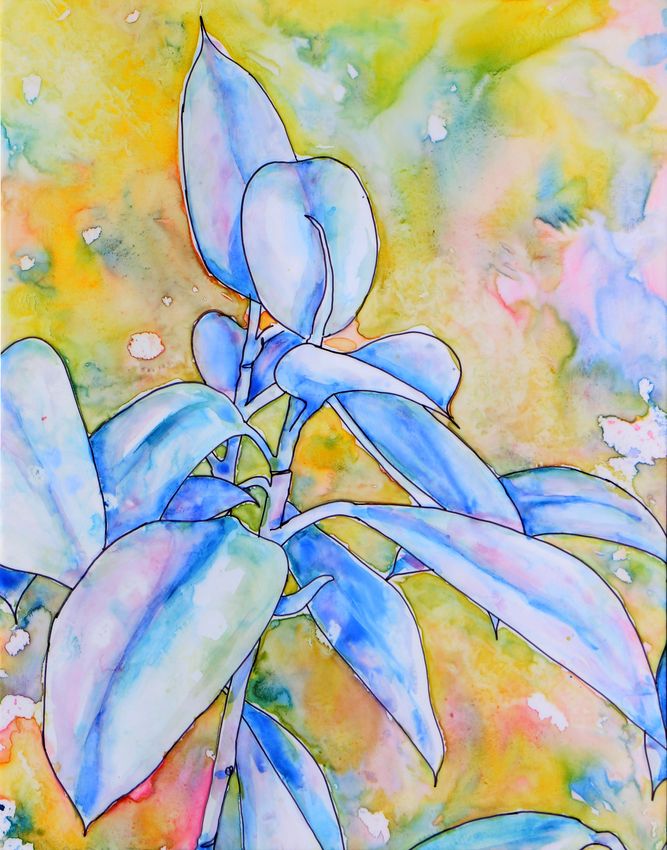
Cover Artist: Zoe Jackson, Class of 2020
34
TABLE OF CONTENTS
Academic Planning & Information
         Profile of a SC Graduate                                                                                               7
         Promotion & Graduation Requirements                                                                                    7
         Requirements for Admission to a Public SC College                                                                      8
         SC Scholarship Information                                                                                             9
         SC Uniform Grading Policy                                                                                             10
         Calculating Grade Point Averages                                                                                      11
         Course Withdrawal & Retake Policies                                                                                   11
         Excessive Absences                                                                                                    11
         Credit Recovery & Auditing a Course                                                                                   12
         Course Selection, Schedule Changes, Waivers, & Dual Credit Courses                                                    13
         Virtual (Online) Courses                                                                                            14-19

Magnet & Small Learning Communities Information
         Institute for Health Sciences Magnet                                                                                20-25
         Scholars Academy Magnet for Business & Law                                                                          26-28
         Arts Innovation for Medical Sciences Magnet (AiMS)                                                                    29
         Advancement via Individual Determination Program (AVID)                                                               30
         Richland 2 Early College Program                                                                                      31
         Blazer Academy Program                                                                                                32
         School for the Arts Program (SFA)                                                                                     32
         Carolina Alliance for the Technologies (CAT): An Engineering & Computer                                             33-34

Career Cluster Information & Templates                                                                                      35-40

Course Descriptions Table of Contents                                                                                          41

School-Wide Summer Reading Information                                                                                         42

Richland 2 Institute for Innovation (R2i2)                                                                                  66-79
NCAA Information                                                                                                            72-76

                             Notification of Compliance Title IX of the Education Amendment of 1972
Richland County School District Two is an equal opportunity employer and provides equal access to educational programs for all students regard-
 less of race, sex, national origin or handicapping condition. Inquiries concerning application of Title IX or complaints alleging noncompliance
       should be directed to the: Personnel Director, Richland School District Two, 763 Fashion Drive, Columbia, South Carolina 29206.

                                                                                                                                              5
ACADEMIC PLANNING INFORMATION
The SC Department of Education’s vision is to ensure that every student meets the 21st Century Profile of the SC
Graduate, so that each student is prepared for the military, the workforce, a community college, or university.
Promotion Standards Graduation Requirements
Class Credits Needed
English 4 Credits
th
Freshman Successful Completion of 8 Grade Math 4 Credits
5 Credits Total Science 3 Credits
Sophomore
to include 1 English & 1 Math Credit US History & Constitution 1 Credit
11 Credits Total US Government 1/2 Credit
Junior
to include 2 English & 2 Math Credits
Economics 1/2 Credit
17 Credits Total
Senior Other Social Studies 1 Credit
to include 3 English & 3 Math Credits
Physical Education or JROTC 1 1 Credit
Student Records Computer Science 1 Credit
By law, student records are private. They may be used
by the school for the promotion of the student's World Language or Career & 1 Credit
welfare. Student records are not open to public Technology Education (CATE)
inspection. Any member of the public or any public
group desiring to inspect student records must Electives: This must include a 1/2 7 Credits
obtain the written consent of the parents, legal credit of Personal Health
guardians, and those students of legal age. Any Total 24 Credits
questions concerning student's records should be
addressed to the School Counseling Dept.
6General Requirements for Admission into a SC Public College or University
For College Freshmen Beginning in Academic Years 2019 & Beyond
• FOUR UNITS OF ENGLISH:
All four units must have strong reading (including works of fiction and non-fiction), writing, communicating,
and researching components. It is strongly recommended that students take two units that are literature based,
including American, British, and World Literature.
• FOUR UNITS OF MATHEMATICS:
These units must include Algebra I, Algebra II, and Geometry. A fourth higher-level mathematics unit should
be taken before or during the senior year.
• THREE UNITS OF LABORATORY SCIENCE:
Two units must be taken in two different fields of the physical, earth, or life sciences and selected from among
biology, chemistry, physics, or earth science. The third unit may be from the same field as one of the first two
units (biology, chemistry, physics, or earth science) or from any laboratory science for which biology,
chemistry, physics and/or earth science is a prerequisite. Courses in general or introductory science for which
one of these four units is not a prerequisite will not meet this requirement. It’s strongly recommended that
students desiring to pursue careers in science, mathematics, engineering or technology take one course in all
four fields: biology, chemistry, physics, and earth science.
• TWO UNITS OF THE SAME WORLD LANGUAGE:
Two units with a heavy emphasis on language acquisition.
• THREE UNITS OF SOCIAL SCIENCE:
One unit of U.S. History, a half unit of Economics, and a half unit of Government are required. World History
or Geography is strongly recommended.
• ONE UNIT OF FINE ARTS:
One unit in appreciation of, history of, or performance in one of the fine arts. This unit should be selected from
among media/digital arts, dance, music, theater, or visual and spatial arts.
• ONE UNIT OF PHYSICAL EDUCATION OR ROTC:
One unit of physical education to include one semester of personal fitness and another semester in lifetime
fitness. Exemption applies to students enrolled in Junior ROTC and for students exempted because of physical
disability or for religious reasons.
• TWO UNITS OF ELECTIVES:
Two units must be taken as electives. A college preparatory course in Computer Science (i.e., one involving
significant programming content, not simply keyboarding or using applications) is strongly recommended for
this elective. Other acceptable electives include college preparatory courses in English; fine arts; foreign
languages; social science; humanities; mathematics; physical education; and laboratory science (courses for
which biology, chemistry, physics, or earth science is a prerequisite).
Notes:
Foundations in Algebra and Intermediate Algebra may count together as a substitute for Algebra I if a student successfully completes
Algebra II. No other courses may be substituted for the three required mathematics courses (Algebra I, Algebra II, and Geometry).
2. Each institution may make exceptions in admitting students who do not meet all of the prerequisites, limited to those individual
cases in which the failure to meet one or more prerequisites is due to circumstances beyond the reasonable control of the student. 3.
The College Preparatory Course Prerequisite Requirements are minimal requirements for four-year public college admission. . 4.
Students should prepare themselves for college-level work by enrolling in challenging high school courses, such as honors,
Advanced Placement (AP), International Baccalaureate (IB), and dual enrollment courses.
Although school counselors are available for academic advising, students and their parents are responsible for
making certain that the student’s Individual Graduation Plan (IGP) meets the requirements of both a high school
diploma and their college of choice.
7SOUTH CAROLINA SCHOLARSHIPS & GRANTS
Palmetto Fellows SC HOPE SC Needs-Based Lottery Tuition
LIFE Scholarship
Scholarship Scholarship Grant Assistance
Method 1: 4-Year Institution No Minimum GPA
Students must have: Students must have Students must required. No Minimum GPA
3.5 Cumulative GPA at 2 of the 3: have: required.
the end of either the 3.0 Cumulative GPA 3.0 Cumulative However, students
11th or 12th grade year at the end of the GPA at the end of must complete the However, students
Minimum SAT Score of 12th grade year the 12th grade year Free Application for must complete the
1200 (EBRW & Math) Minimum SAT Score Federal Student Aid Free Application for
or Composite ACT of 1100 (EBRW (FAFSA) which is Federal Student Aid
score of 27 & Math) or No minimum test available in October
score and rank (FAFSA) which is
Rank in the top 6% of Composite ACT of each year at available in October
the class at the end of score of 24 required www.fafsa.ed.gov. of each year at
Initial either their 10th, 11th, Rank in the top 30% www.fafsa.ed.gov.
or 12th, grade year. of the class at by Students cannot be a
Eligibility recipient of the Life,
Criteria graduation. Must be enrolled
Method 2: Palmetto Fellows,
or Lottery Tuition and attending or Students cannot be
Students must have: 2-Year Institution have completed at
4.0 Cumulative GPA at 3.0 Cumulative GPA Assistance a recipient of the
the time of the grant Life, Palmetto
the end of either the at the end of the disbursement a
11th or 12th grade year 12th grade year Fellows, or Hope
minimum of six Scholarships during
Minimum SAT Score of Place into college credit hours if part-
1400 (EBRW & Math) level courses as the same academic
time or twelve year.
or Composite ACT determined by the credit hours if full-
score of 32 college. time for the term
and must meet all
general eligibility
criteria
1st Year: Up to $6700/ 4-Year: Up to Up to $2800 Up to $2,500/year if Actual award
year $5000/year including the book enrolled full-time or amounts are
allowance for the up to $1,250/year if dependent upon the
2nd Year & After: Up to 2-Year: Up to the first academic year enrolled part time. number of students
$7500/year cost of tuition toward the cost of eligible and
Award including a $300 attendance at an the amount of
Amount book allowance eligible four-year funding available
w/Life Enhancement institution.
per year each academic year.
Grant: Up to $10,000
*w/Life
Enhancement
Grant: Up to
$7,500
Earn at least a 3.0 LIFE Earn at least a 3.0 To receive the LIFE
GPA LIFE GPA Scholarship in their
second year
Earn at least 30 credit Earn at least 30 credit students must:
hours by the end of their hours by the end of
Renewal first academic year. their first academic Earn at least a 3.0
Criteria year. LIFE GPA
Earn at least 30
credit hours by the
end of their first
academic year.
For general eligibility requirements and more detailed information about these scholarships and grant program
administered by the SC Commission on Higher Education, please visit their website at www.che.sc.gov or call
803-737-2260.
8The State Board of Education has adopted a uniform South Carolina Uniform 10-pt Grading
Scale
SC UNIFORM GRADING POLICY
grading scale for all public schools in South Carolina. The
Numerical Letter College Honors Dual Credit
grading scale designates the point range for each letter Average Grade Prep AP/IB
grade, correlates grade points with numerical averages 100 A 5.000 5.500 6.000
and gives weighted credit to Honors, Dual Credit and 99 A 4.900 5.400 5.900
Advanced Placement courses. To the right is the Grade 98 A 4.800 5.300 5.800
Point Conversion Table which became effective August 97 A 4.700 5.200 5.700
15, 2016. Prior to that, students were on a 7-pt grading 96 A 4.600 5.100 5.600
95 A 4.500 5.000 5.500
scale. For more information please see the Uniform
94 A 4.400 4.900 5.400
Grading Scale Policy found here: https://ed.sc.gov/
93 A 4.300 4.800 5.300
districts-schools/state-accountability/uniform-grading- 92 A 4.200 4.700 5.200
policy/ 91 A 4.100 4.600 5.100
All report cards and transcripts will list numerical grades 90 A 4.000 4.500 5.000
89 B 3.900 4.400 4.900
for courses carrying Carnegie units. Transcripts and
88 B 3.800 4.300 4.800
report cards will show course title and level/type of
87 B 3.700 4.200 4.700
course taken (i.e. English I College Prep.) When 86 B 3.600 4.100 4.600
transcripts are received from out-of-state (or in-state from 85 B 3.500 4.000 4.500
non-public schools) and letter grades are recorded, the 84 B 3.400 3.900 4.400
following process will be used to transfer the grades into 83 B 3.300 3.800 4.300
the student's record. Unless numerical averages are 82 B 3.200 3.700 4.200
provided by the sending institution, the following 81 B 3.100 3.600 4.100
conversion system will apply: 80 B 3.000 3.500 4.000
79 C 2.900 3.400 3.900
Grades earned prior to Aug. 2015 that were lower than 70 78 C 2.800 3.300 3.800
received from another school, but which are indicated as a 77 C 2.700 3.200 3.700
passing grade from the sending institution, will be 76 C 2.600 3.100 3.600
converted to a 73 numerical grade. 75 C 2.500 3.000 3.500
74 C 2.400 2.900 3.400
73 C 2.300 2.800 3.300
7-pt Grading Scale 10-pt Grading Scale 72 C 2.200 2.700 3.200
(Courses completed prior (Courses completed after 71 C 2.100 2.600 3.100
to August 15, 2016) August 15, 2016)
70 C 2.000 2.500 3.000
A 96 95
69 D 1.900 2.400 2.900
B 88 85
68 D 1.800 2.300 2.800
C 80 75
67 D 1.700 2.200 2.700
D 73 65
66 D 1.600 2.100 2.600
F 61 50
65 D 1.500 2.000 2.500
64 D 1.400 1.900 2.400
63 D 1.300 1.800 2.300
If the transcript shows that the student has earned a grade
62 D 1.200 1.700 2.200
of P (passing) or F (failing), that grade will be converted 61 D 1.100 1.600 2.100
to a numerical designation on the basis of information 60 D 1.000 1.500 2.000
secured from the sending institution as to the appropriate 59 F 0.900 1.400 1.900
numerical value of the “P” or the “F.” 58 F 0.800 1.300 1.800
57 F 0.700 1.200 1.700
If no numerical average can be obtained for the “P,” an
56 F 0.600 1.100 1.600
earned credit will be awarded and follow UGP 55 F 0.500 1.000 1.500
Administrative Procedures for entering a “P” on the 54 F 0.400 0.900 1.400
transcript. If no numerical average can be obtained from 53 F 0.300 0.800 1.300
the sending institution on the “F,” an “NP” will be entered 52 F 0.200 0.700 1.200
on the transcript. (See Administrative Procedures for 51 F 0.100 0.600 1.100
other transfer grade issues.) 0-50 F 0.000 0.000 0.000
WF F 0.000 0.000 0.000
WP - 0.000 0.000 0.000
FA F 0.000 0.000 0.000
9high school credit prior to the ninth grade year may retake
Calculating the Grade Point Average (GPA) the course at the same difficulty level regardless of the
grade he or she has earned. Retaking the course means
that the student completes the entire course again (not a
subset of the course such as through credit or content
recovery). If the course being retaken has an EOCEP, the
EOCEP must be retaken. All course attempts from middle
and high school will show on the transcript. Only one
course attempt and the highest grade earned for the course
will be calculated in the GPA. A student who retakes a
high school credit course from middle school must
complete it before the beginning of the second year of
high school or before the next sequential course
(whichever comes first). A student in grades nine through
twelve must retake a course by the end of the next school
year or before the next sequential course (whichever
comes first). For all grade levels, all courses will remain
on the transcript. However, only the highest grade will be
used in figuring the student’s GPA.
Excessive Absences & Attendance Recovery
If a student fails a course due to excessive absences and is
Withdrawing from a Course
unable to successfully make up the work, the school will
With the first day of enrollment in the course as the baseline,
record an FA on his/her transcript. The grade of FA will
students who withdraw from a course within three days in a
not carry Carnegie units but will be factored into the
45 day course, five days in a 90 day course, or ten days in a
student's GPA as a 50.
180 day course will do so without penalty.
In order to receive credit for a high school course, a student
The three-, five-, and ten–day limitations for withdrawing
must attend 85 days (for a 90-day semester course) or 170
from a course without penalty do not apply to course or
days (for a 180-day year long course). At the discretion of
course-level changes approved by the administration of a
the school principal, students may be eligible to pay to
school. Students who withdraw from a course with
make up missed days not to exceed four make up days per
administrative approval will be given a WP for the course.
class. All make-up time and work must be completed
Students who withdraw from a course after the specified
within 30 days from the last day of the course(s). The
time of three days for a 45 day course, five days in a 90 day
board or its designee may extend the time for student's
course, or ten days in a 180 day course without
completion of the requirements due to extenuating
administrative approval, shall be assigned a WF, and the F
circumstances as prescribed by state board of education
(as a 50) will be calculated in the student's overall grade
guidelines.
point average. Withdrawal limitations for distance learning,
dual credit, and virtual courses will be established by local
Although absences may be lawful and not relative to
districts in conjunction with partner institutions of higher
truancy charges, all absences out of school are counted
education and VirtualSC enrollment and withdrawal
when considering the awarding of credit. Out of school
deadlines.
suspension days, while lawful, count toward the denial of
credit.
Students who dropout of school or are expelled after the
allowed period for withdrawal but before the end of the If a student has four or fewer absences to make up in
grading period will be assigned grades in accordance with a semester-length course, or eight or fewer absences in
the following policies: a year-long course, he/she may sign up for Attendance
• The student will receive a WP if he or she was passing Recovery to make up the time to earn credit.
the course. The grade of WP will carry no earned units of
credit and no quality points to be factored into the student’s The cost is $30 per block class per absence or $15 per
GPA. skinny class per absence.
• The student will receive a WF if he or she was failing
the course. The grade of WF will carry no earned units of
credit but will be factored into the student’s GPA as a 50.
Retaking a Course
Any student may retake a course at the same level of
difficulty if the student has earned a D, P, NP, WP, FA,
WF, or an F in that course. If the same level course is not
accessible, the course may be retaken at a different level
of rigor. A student who has taken a course for a unit of
10Credit Recovery (Edgenuity or Virtual SC)
Credit recovery is defined as a course-specific, skill-based learning opportunity for students who have previously failed to master
content or skills required to receive credit. Credit recovery refers to a block of instruction that is less than the entirety of the course.
As such, credit recovery is not intended to impact either positively or negatively a student’s GPA. Rather, it is intended to allow
students an opportunity to master the content or skills they failed to master during the regular course. By successfully completing a
credit recovery course, students will be awarded credit earned. Should a student wish to modify his/her GPA, he/she should repeat
the full course for credit and not seek participation in the credit recovery program. Please note that credit recovery is likely to
affect eligibility for National Collegiate Athletic Association (NCAA) play. I should consult my school counselor and/or
college compliance officer for more information.
Eligibility
Students are eligible for a credit recovery course if they have previously taken and failed an initial credit course. Students must
have obtained a grade from 50 - 59% in the initial credit course, or the student is not eligible for credit recovery and must retake the
full course to receive credit. Students who have already received credit for a course are ineligible to participate in credit recovery to
improve their final grade.
Students will be required to complete an application to request placement in a credit recovery course. Written consent of the
student’s parent/legal guardian must be obtained prior to enrollment. Students may take no more than two credit recovery courses at
a time. There are no limits for the number of credit recovery courses that a student may take for the school year or over the course
of grades 9-12.
Instruction and curriculum
The method of instruction for credit recovery courses may vary based upon district resources available, and includes, but is not
limited to, use of an on-line or computer-based program, certified teacher in person or via distance learning, or blended
learning. Individuals charged with facilitating credit recovery courses will receive training in online instructional management and
related technology, when applicable.
Each credit recovery course will be based upon state curriculum standards and objectives for the corresponding subject and will be
aligned across courses within the district. The standards and concepts to be addressed in credit recovery courses will be determined
by the teacher who assigned the student the failing grade in the initial credit course, through a diagnostic tool utilized by the credit
recovery course facilitator or software program, or through another diagnostic assessment offered by the district.
Credit recovery course offerings may be limited by the availability of space, courses, facilitators, and appropriate computer-based
content and/or due to budgetary constraints.
Grading
Students in grades 9 - 11 must complete credit recovery courses taken during semesters one or two within one academic school year.
Graduating seniors must complete credit recovery courses prior to the graduation ceremony in order to participate in graduation.
Summer graduates must complete credit recovery by August 15. Students enrolled in credit recovery courses during a summer
session may extend past August 15, but the course credit will be recorded on the next academic year. Extenuating circumstances
may be considered by the principal.
When a student has shown mastery of the credit recovery material, the student will receive credit for the course. Because end-of-
course examinations focus on assessing a student’s mastery of an entire course, and credit recovery only focuses on a portion of the
course content, students will not be permitted to retake the exam.
If a student passes the credit recovery course with a 60 or higher, the student will receive a grade of “P”. If a student fails the credit
recovery course with a grade below a 60, the grade is entered as an “NP” and transcribed to the numerical grade value of “0” as
indicated by the addition of “NP” to the grade scale chart. Thus, the credit recovery course does not impact the student’s GPA. A
student wishing to modify his or her GPA shall repeat the full course for credit and not seek a credit recovery solution.
Cost
A student’s parent/legal guardian will be responsible for any and all costs associated with participation in credit recovery. A written
application to participate in credit recovery must be completed with parent consent followed by school approval prior to student
participation in credit recovery.
Auditing a Course
Under certain conditions, the district will allow a high school student to audit a course for no grade. The student must obtain
permission before taking the class and must agree to follow all school and classroom attendance, behavior, participation, and course
requirements. The course will be marked for “no credit” and “not included in GPA” at the student level.
Auditing may be allowed once the student has met graduation requirements in that content discipline and if space is available in the
course. The course cannot be taken as a preview nor, once audited, can the course be taken for credit. Any prerequisites for the
audited course must be met. Students who audit AP or IB courses will need to pay for the corresponding tests where applicable and
the auditing of EOC courses will not be allowed. The same guidelines for dropping the audited course or adding it as a credit course
will apply. The principal has discretion in cases of auditing in any other circumstances.
11COURSE SELECTION & SCHEDULE CHANGES
Students and their parent(s)/guardian(s) will have one week to complete the course selection process from home via Parent Portal.
After this designated week, students and their parent/guardian will meet individually with the student’s school counselor and
career specialist to complete the Individual Graduation Plan (IGP), review important grade specific information, and verify or
select those courses needed for promotion and graduation. Details regarding the course selection process are sent via email.
Please make sure to keep an updated email on file.
The courses students select will be the basis for the employment of teachers and the development of the master schedule for the
upcoming school year. Course requests are based upon teacher recommendations, course history, graduation requirements, and
student’s post-secondary plans.
Once the course selection process is complete, course requests will be visible in Parent Portal. Please note: COURSE
REQUESTS ARE NOT A FINAL SCHEDULE! Final schedules will be available online in August via Parent Portal and in
print at orientation also in August. All courses described in this book may not be offered every year. Courses are scheduled based
on student requests, class size, and scheduling feasibility.
Schedule changes will be limited. Any student wishing to make a revision in his/her schedule must do so during orientation prior
to the start of school or within the allowed 5 or 10 day windows. **Students who complete content credit recovery over the
summer will automatically be enrolled in the next sequential course, if applicable, once final grades are posted. Students
do not need to contact their School Counselor or make a schedule change request in this case. All changes should be made
by the first day of school.
Waiver (Override) Policy
Recommendations for the next course in a sequence will be made by the recommending teacher. A parent and student who wish to
discuss the recommendation for reconsideration should request a conference with the Assistant Principal of Curriculum &
Instruction, the counselor and the recommending teacher. A waiver form may be signed by the parent following the conference.
Waivers will be granted only if space is available in the course.
Course Load
Rising freshman, sophomores and juniors must register for at least 7credits each year. Rising seniors must be on campus for a
minimum of four periods each semester. Early dismissal/late arrival are allowed for seniors only. All students are expected to take
an English and a math course each year.
End of Course Assessments:
In courses requiring state end-of-course testing, the district will apply the mandatory 20 percent weighting of the end-of-course
test to the student's final grade. The student will be allowed to take the examination only once, at the end of the regular course
duration and not at the end of an extended period granted through the credit recovery option. The school will treat students who
repeat the course as though they were taking the course for the first time and all requirements will apply.
Dual Credit Courses
To award dual credit, districts must develop detailed agreements with partner institutions of higher education (IHEs), whether two-
year or four-year colleges or technical colleges, that clearly outline the specific courses and associated procedures allowed.
Students may not take college courses on their own time at an institution of higher education with the expectation that the course
would be transcribed back to the high school transcript without first consulting the district to determine if the course is a part of
the agreement between the high school and IHE. Additionally, permission must be granted by the principal of the student’s
home high school prior to the student’s enrollment in a dual credit course to earn both a unit for high school credit and
college credit.
One quality point will be added to the CP weighting for dual credit courses that are applicable to baccalaureate degrees, associate
degrees, or certification programs that lead to an industry credential offered by accredited institutions. College remediation and
orientation classes for dual credit will be weighted as CP. All dual credit courses earned in South Carolina should be transcribed
with the 1.0 quality point weight when the student transfers to a new school. Dual credit courses earned out of state may or may
not carry quality point weightings. When a student transfers, the weight applied at the sending institution according to the state's
regulations will be applied to the student's transcript. The district will not change the weight of a dual credit course to match South
Carolina's process.
In grading dual credit courses, if numerical averages are not provided on the student's transcript, the following conversion will
apply: A = 95, B = 85, C = 75, D = 65, F = 50.
12VIRTUAL COURSES
Students have the opportunity to take online courses during both the school year and over the summer, but must abide by the
following guidelines: 1) Students can register for up to two courses at a time. 2) Because course selection is the basis for the
employment of teachers and the development of the master schedule, students will not be approved to take a course online for
which they already have scheduled for that school year. 3) Failure to complete an online course or to withdraw by the given
deadlines will result in a WF that will adversely affect a student’s GPA. 4) Currently we have two approved options for taking
online courses. Students wishing to take courses for credit outside of these two approved methods including, other online schools,
courses on a college campus, and summer enrichment programs, must have Principal approval if high school credit is awarded. See
your School Counselor for more information regarding this approval process.
Option 1: Virtual SC:
Please visit www.virtualsc.org for the availability of courses, important dates and deadlines, and to register. It is the
responsibility of the student and his/her parent/guardian to register for Virtual SC classes. All Virtual SC classes must be approved
by a school counselor as part of the registration process. Please be sure to email your school counselor within 72 hours of
registering for a course for approval. All Virtual SC courses ARE NCAA approved except the Credit Recovery Courses.
Option 2: Richland 2 District Virtual School:
While we have listed courses that are available through the district’s virtual school, students should see their School Counselor for
the most up-to-date listing of courses available each year, as well as the required registration forms and information. Students are
encouraged to work from home as much as possible, but will be required to take all tests and quizzes in the Testing & Tutoring Lab
located in A-22. All courses must be complete by the given deadlines in May for credit. Please note: These classes ARE NOT
NCAA Approved. Please see the NCAA section in this guide for additional information.
1314 DISTRICT VIRTUAL COURSES
DISTRICT VIRTUAL COURSES

                           15
16 DISTRICT VIRTUAL COURSES
DISTRICT VIRTUAL COURSES

                           17
18 DISTRICT VIRTUAL COURSES
MAGNETS & SMALL LEARNING COMMUNITIES
                                         Institute for Health Sciences Magnets
The Institute for Health Sciences at Ridge View High School is designed to provide learning opportunities and real world
experiences in science related fields. The institute provides project based learning opportunities leading to real world
understanding of science issues evolving in the century. Our mission is to engage students in a challenging and competitive
educational environment through a comprehensive course of study focused in science, mathematics, technology, and other areas
necessary for success in this century.
The Institute for Health Sciences offers two magnet programs: the BioHealth Sciences Magnet and the Allied Health Sciences
Magnet. These two Richland District Two magnets are housed at Ridge View High School. Both programs require students to
submit an online application at www.richland2.org. These highly selective magnet programs accept students based on the
following criteria: application, teacher recommendations, middle school test scores, interview, writing sample, and mathematics
assessment.

The BioHealth Sciences Magnet (IBS) program offers highly achieving honors students a dynamic and challenging curriculum.
The magnet, based on the nationally recognized Project Lead the Way Biomedical Sciences program, uses real world experiences
and hands on learning activities to prepare students for the 21st century. Students must have a strong work ethic to participate in
this rigorous and comprehensive four- year program that includes honors and AP science and math courses. Students will deepen
their academic development through experiential learning to create ethical professionals who lead through problem-solving,
innovative thinking, and collaborative planning.
The Allied Health Sciences Magnet (IAS) program offers motivated college preparatory/honors students a four- year program that
provides an innovative, diverse, and comprehensive curriculum that nurtures academic growth and enables them to reach their
goals to become part of a professional community. Students will participate in experiential learning opportunities uniquely
designed to foster a broader awareness of the demands of colleges, universities, and different professions.

                                        BioHealth Sciences Course Schedule
       First Year                                                             Second Year
       English 1 Honors MAG or Advanced Rhetoric &                            English 2 Honors MAG
       Composition                                                            Geometry Honors MAG or AP Statistics &
       Algebra 2 Honors MAG                                                   Algebra 3 Honors MAG
       Biology Honors MAG                                                     Chemistry Honors MAG
       Principles of Biomedical Sciences IBS Honors                           Human Body Systems IBS
       Human Geography Honors MAG                                             Research Honors
       PE / Health (Suggested to take On-Line)                                World Language
       World Language                                                         Elective
       Elective: Computer Science or Fine Arts
       Third Year                                                             Fourth Year
       English 3 Honors MAG or AP English Language                            English 4 Honors MAG or AP Literature
       Pre-Calculus Honors MAG                                                AP Calculus AB/BC or AP Stats
       Biology 2 H/AP Biology or AP Environmental                             Physics H /AP Physics or Chemistry 2 H/AP
       Medical Interventions IBS                                              Chemistry
       US History Honors MAG or AP US History                                 Biomedical Innovations IBS
       Elective                                                               US Gov’t Honors or AP Government
                                                                              Economics Honors or AP Economics
                                                                              Electives

BioHealth Sciences Magnet Graduation Requirements:
•   All math and science courses must be completed at the honors level. A minimum of four Advanced Placement (AP)
    or University of South Carolina courses must be completed by graduation. The AP courses must consist of AP
    Biology, AP Chemistry, AP Environmental or AP Physics, one AP Math, and another AP course of your choice.
•   Successful completion of all PLTW courses at the honors level.
•   Conduct a research project and present results in oral and written form.
•   Complete a summer internship in the student’s area of interest.
•   Actively participate in major field studies.
•   Successfully complete an electronic portfolio of the student’s work throughout this four-year program
                                                                                                                                 19
Allied Health Sciences Course Schedule
First Year Second Year
Algebra 1 MAG or Algebra 2 MAG Geometry MAG
Biology 1 MAG Chemistry MAG
Principles of Biomedical Sciences IAS Human Body Systems IAS
English 1 MAG or Honors MAG English 2 MAG or Honors MAG
Human Geography MAG or Honors MAG World History MAG or Honors MAG
Physical Education or Personal Health Medical Terminology
Health Science 1 Electives
Elective
Third Year Fourth Year
Algebra 2 MAG or Algebra 3 MAG Algebra 3 MAG or Pre-Calculus MAG
Physics MAG AP Environmental Science
Medical Interventions IAS Biomedical Innovations IAS
English 3 MAG or Honors MAG or AP Language English 4 MAG or Honors MAG or AP Literature
US History Honors MAG or AP US History Government MAG or Honors or AP Government
Health Science 2 Economics MAG or Honors or AP Economics
Electives Health Science Clinicals/CNA
Electives
Allied Health Sciences Magnet Graduation Requirements
• Successful completion of all PLTW courses at the honors or college preparatory level.
• Conduct a research project and present results in oral and written form.
• Complete a summer internship in the student’s area of interest.
• Actively participate in at least two major field studies.
*These tables represent the courses that magnet students will take during this four-year program and the options of
Advanced Placement (AP) courses. It does not represent the periods or sequence.
Institute for Health Science Magnet Required Courses
Students in this magnet take the following courses as required by the program in addition to other academic
courses needed for promotion and graduation.
FIRST YEAR COURSES feedback, critique, and revise and edit writing. Extensive
practice using the conventions of grammar in context provides
ENGLISH 1 HONORS MAG 30240ZHW students with the mechanical underpinnings necessary to be
Grade: 9 Credit: 1 successful in other advance level English courses, and benefits
The course is designed for highly motivated, exceptionally them on the English and Essay section of the ACT and
REQUIRED BIOHEALTH COURSES
talented language arts students who enjoy reading and who are Writing and Language section of the SAT.
willing to put extra time and effort into their studies. Through
the reading and discussion of literary and informational texts ALGEBRA 2 HONORS MAG 41150ZHW
as well as through instruction and practice in expository, Grade: 9 Credit: 1
literary/analytical, persuasive, research and creative writing, Emphasis is placed on critical and analytical thinking, rational
the student will continue to develop high level skills in thinking decision- making, and inductive and deductive reasoning of
and communication. This course is for self- motivated the mathematics.
students whose past achievements and interests in English
indicate they will be able to meet the requirements of the BIOLOGY 1 HONORS MAG 32210ZHW
course successfully. Grade: 9 Credit: 1
This course is an accelerated, comprehensive, investigation-
ENGLISH COMPOSITION & PROSE oriented introduction to biology, stressing the development
ANALYSIS FOR ADVANCED and organization of living forms and life processes and
STUDENTS 302 interactions of life in the natural world. Student-driven
Grade: 9 Credit: 1 design and experimentation will be incorporated throughout
This course is strongly recommended before English 2 H. the course. Students will be expected to submit projects
Course content emphasizes study of scholarly prose and incorporating current biological and biotechnological
writing processes, including literary analysis, style analysis, as principles to enhance their mastery of the content. A state
well as argumentative, comparative, and narrative writing. A mandated End of Course Test must be given to every
special emphasis is placed on student adeptness in composing student enrolled in this course and will count 20 % of the final
clear, cohesive, and coherent prose with a consistent focus on grade.
purpose and audience. Students develop their identities as
writers , learn to locate and use research materials, use model
tests, cite properly, compose and proofread drafts, use
20FIRST YEAR COURSES ALGEBRA 3 HONORS MAG 41130ZHW
REQUIRED BIOHEALTH COURSES
Grade: 11, 12 Credit: 1
HUMAN GEOG HONORS MAG 33100ZHW This course is designed primarily for students who plan to
Grade: 9 Credit: 1 major in mathematics, science, or a related field who are
This class will be interested in recognizing and explaining talented in mathematics. This course expands on topics of
how natural processes and human activities shape our world. Algebra 2 Honors and introduces topics of Pre-Calculus
In addition, we will be concerned about understanding why Honors. Key concepts of this course include: matrix algebra
things are located where they are and how they are related to and systems of equations, functions and their inverses,
the location of other features, knowledge which allows us to polynomial functions and inequalities, rational functions and
see how historical processes and present activities influence inequalities, exponential and logarithmic functions, conic
places. Furthermore, we will study and compare different sections, foundations of trigonometry, and sine and cosine
cultures. The assigned book study correlates with each unit of graphs.
study. Students will participate in class discussions/readings,
research, projects /homework, as well as complete relevant CHEM 1 HONORS MAG 32310ZHW
notes, maps, and understand key geography terms. Although Grade: 10 Credit: 1
not a prerequisite, this course prepares students for AP This rigorous and thorough course prepares the student for
Human Geography. any next step in chemistry, either Chem II/AP or the first
college course by a grounding in chemical principles,
PRINCIPLES OF BIOMED IBS 558000HW beginning with fundamentals of measurements and atoms
Grade: 9 Credit: 1 and carrying through an introduction to organic, the behavior
Students explore concepts of biology and medicine to of gases, and extensive studies of chemistry in solutions
determine factors that led to the death of a fictional person. including behavior of acids and bases. This course includes
While investigating the case, students examine autopsy an extensive set of laboratory experiences increasing
reports, investigate medical history, and explore medical engagement and making the theory real through application
treatments that might have prolonged the person’s life. The of the principles studied. Students contemplating careers in
activities and projects introduce students to human science and comfortable with their skills in math should take
physiology, basic biology, medicine, and research processes this course.
while allowing them to design their own experiments to solve
problems. SCIENCE RESEARCH HONORS 32992ZHW
Grade: 10 Credit: 1
This course will provide a comprehensive introduction to
SECOND YEAR COURSES quantitative research methods in science. A hands-on
inquiry approach will be used to help students develop skills
ENGLISH 2 HONORS MAG 30250ZHW in problem-solving, experimental design, laboratory
Grade: 10 Credit: 1 techniques, statistical analysis, and primary literature
This course requires students to focus on expository, literary/ review. This course also emphasizes written and oral
analytical, persuasive, research and creative writing skills communication and collaboration skills. Students will be
through a study of world literature. The course is designed expected to develop an independent study topic and
for the highly motivated, exceptionally talented language arts formulate a research question with appropriate
student who enjoys reading and who is planning to attend methodology. The course will culminate in the production
post-secondary studies. A state mandated End-of-Course Test of a formal research paper and presentation.
must be given to every student enrolled in this course, and the
score will count 20% of the final grade. HUMAN BODY SYSTEMS IBS 558100HW
Grade: 10 Credit: 1
Students examine the interactions of b o d y systems
GEOMETRY HONORS MAG 41220HZW as they explore identity, communication, power,
Grade: 10 Credit: 1 movement, protection, and homeostasis. Students design
This is an accelerated college-preparatory course is designed experiments, investigate the structures and functions of the
primarily for students who plan to major in mathematics or human body, and use data acquisition software to
science, a related field in college or who are talented in monitor body functions such as muscle movement,
mathematics. This geometry course includes the study of reflex and voluntary action, and respiration. Exploring
plane and solid geometry as well as the study of deductive science in action, students build organs and tissues on a
proofs. Topics include basic geometric figures; properties of skeletal manikin, work through interesting real world cases
triangles; properties of quadrilaterals and other polygons; and often play the role of biomedical professionals to solve
properties of circles, lines, and special segments intersecting medical mysteries.
circles; transformations; coordinate geometry; vectors;
surface area and volume of three-dimensional objects.
Emphasis is placed on critical and analytical thinking,
rational decision-making, and inductive and deductive
reasoning. Students who have already taken Geometry
Honors should register for AP Statistics.
21Grade: 11 Credit: 1
THIRD YEAR COURSES
REQUIRED BIOHEALTH COURSES
Students follow the life of a fictitious family as they investigate
how to prevent, diagnose, and treat disease. Students explore
ENGLISH 3 HONORS MAG 30260ZHW how to detect and fight infection; screen and evaluate the code
Grade: 11 Credit: 1 in human DNA; evaluate cancer treatment options; and prevail
This Honors course for the English 3 level is designed for the when the organs of the body begin to fail. Through real-world
motivated language arts student who enjoys reading and is cases, students are exposed to a range of interventions related to
willing to put extra time and effort into English studies. The immunology, surgery, genetics, pharmacology, medical
student must be able to work independently and demonstrate devices, and diagnostics.
above-average grade level proficiency in writing. This course
concentrates on developing the student’s ability to study and
read literature critically through the major themes and writers
of American literature from the 1600s to the present. FOURTH YEAR COURSES
Expository, literary/analytical, Persuasive, research and
creative writing will be required. Enrollment in this class ENGLISH 4 HONORS MAG 302700ZHW
requires selected reading and assignments during the summer Grade: 11 Credit: 1
that is separate from the school wide summer reading. See the Students will be expected to apply the principles of good
English section of this guide for specifics. Students may take critical reading and writing to the study of British Literature.
AP English Language in place of this course with the The course continues the refinement of the writing process,
recommendation of their English teacher. specifically, expository, literary/analytical, persuasive, research and
creative writing. Students may take AP English Literature in
AP BIOLOGY 327200AW place of this course with the recommendation of their
Grade: 11 Credit: 1 English teacher.
This college level course is designed to prepare students for the
Advanced Placement Test in Biology given in May by College PHYSICS H/ AP PHYSICS I 328200AW
Board. This course will focus on student-driven learning, Grade: 12 Credit: 1
design, and experimentation to allow for the student to perform The topics to be covered in AP Physics I in a quantitative
at an equivalent college level. manner are mechanics, thermodynamics, and waves. All
Most colleges and universities give degree credit for students who are enrolled in this program will be required to
satisfactory performance on this test. Interested students must take the Advanced Placement Examination.
have completed Biology 2 Honors and Chemistry 1CP before
considering this course.. Prerequisite(s): Classes will be Please note: Students who register for the course, but fail to
taken concurrently on an A/B schedule. take the exam will be required to reimburse RVHS the cost of
Please note: Students who register for the course, but fail to the exam (approx. $90).
take the exam will be required to reimburse RVHS the cost of
the exam (approx. $90). CHEMISTRY 2 H/ AP CHEMISTRY 327300AW
Grade: 12 Credit: 1
PRE-CALCULUS HONORS MAG 41310ZHW This college level course is designed to prepare students for the
Grade: 11, 12 Credit: 1 Advanced Placement Test in Chemistry given in May by
This is an accelerated college preparatory course, open to College Board. Most colleges and universities give degree
students in the Institute for Health and Science, designed to credit for satisfactory performance on this test. The Advanced
offer students a foundation for Advanced Placement Calculus. Placement program is offered as a service to students;
Key concepts in this course include: functions and their graphs, therefore, all students who are enrolled in this program will be
polynomial and rational functions, exponential, logarithmic, required to take the Advanced Placement
and logistic growth functions, foundations of trigonometric Examination. Prerequisite(s): Classes will be taken
functions, trigonometric graphs and periodic phenomena, concurrently on an A/B schedule.
analytical trigonometry: identities and equations, conic Please note: Students who register for the course, but fail to
sections, parametric equations, polar coordinates and curves, take the exam will be required to reimburse RVHS the cost of
and vector and complex number quantities. the exam (approx. $90).
US HISTORY HONORS MAG 33200ZHW BIOMEDICAL INNOVATIONS IBS 558300HW
Grade: 11 Credit: 1 Grade: 12 Credit: 1
This course is a rigorous, honors-level class designed In this capstone course, students apply their knowledge
specifically for exceptionally talented, college-bound students. and skills to answer questions or solve problems related to
In studying the history of the United States, this course will the biomedical sciences. Students design innovative
utilize both primary and secondary sources to enhance students’ solutions for the health challenges of the 21st century as
critical thinking, analytical, research, and presentation skills, they work through progressively challenging open-ended
with the overall goal of promoting good citizenship. The course problems, addressing topics such as clinical medicine,
will begin with the colonization of North America in the physiology, biomedical engineering, and public health. They
seventeenth century and will explore the economic, political, have the opportunity to work on an independent project and
social, intellectual, and cultural aspects of nation development may work with a mentor or advisor from a university, hospital,
through the twenty-first century. Every student enrolled in physician’s office, or industry. Throughout the course, students
this course must take a state mandated end-of-course exam are expected to present their work to an adult audience that may
which will count as 20% of the students’ final grade. include representatives from local business and healthcare
Students may take AP US History in place of this course community.
with the recommendation of their Social Studies teacher.
MEDICAL INTERVENTIONS IBS 558200HW
22FIRST YEAR COURSES SECOND YEAR COURSES
REQUIRED ALLIED HEALTH COURSES
ENGLISH 1 MAG 30240ZCW GEOMETRY MAG 41220ZCW
Grade: 9 Credit: 1 Grade: 10 Credit: 1
This CP level course is open to students in the Institute for This college preparatory course includes the study of plane
Health Sciences. Through the reading and discussion of literary and solid geometry as well as the study of deductive
and informational texts as well as through instruction and proofs. Topics include basic geometric figures; properties
practice in expository, literary/analytical, persuasive, research of triangles; properties of quadrilaterals and other
and creative writing, the student will continue to develop high polygons; properties of circles, lines, and special segments
level skills in thinking and communication. This course is intersecting circles; transformations; coordinate geometry;
designed for students who are self-motivated and able to work to vectors; surface area and volume of three-dimensional
a high standard at a quick pace. objects.
ALGEBRA 1 MAG 41140ZCW CHEMISTRY 1 MAG 32310ZCW
Grade: 9 Credit: 1 Grade: 11 Credit: 1
Algebra 1 is a college preparatory course designed to prepare This course is designed for college- bound students with
students for abstract algebraic thinking required in more both technical and liberal arts interests. The teaching of
advanced math courses. Key concepts in this course include: traditional chemistry topics revolves around chemistry
linear functions, systems of linear equations, quadratic functions/ related issues currently confronting our society and the
equations, square roots, factoring techniques, polynomials world. Laboratory exercises are an integral part of the
arithmetic, rational expressions, and exponential growth/decay course. They are used as a vehicle for understanding the
applications. A graphing calculator is required for this chemical concepts important to a rigorous chemistry
course. Each student will take the South Carolina Algebra 1 End course.
of Course Exam at the end of this course, and the score will
count 20 % of the final grade. Students who have already HUMAN BODY SYSTEMS IAS 558100CW
taken Algebra 1 CP in middle school will take Algebra 2 Grade: 10 Credit: 1
MAG. Students examine the interactions of b o d y systems
as they explore identity, communication, power,
BIOLOGY 1 MAG 32210ZCW movement, protection, and homeostasis. Students design
Grade: 10 Credit: 1 experiments, investigate the structures and functions of
This course is designed for students enrolled in the Institute for the human body, and use data acquisition software to
Health Sciences. Students taking this course will receive a monitor body functions such as muscle movement, reflex
comprehensive study of fundamental concepts of biological and voluntary action, and respiration. Exploring science in
sciences. Students will study and expand upon all of the units action, students build organs and tissues on a skeletal manikin,
taught in Biology 1 CP. Various lab experiences will reinforce work through interesting real world cases and often play the role
the content of these concepts. . A state mandated End of Course of biomedical professionals to solve medical mysteries.
Test must be given to every student enrolled in this course and
will count 20 % of the final grade.
PRINCIPLES OF BIOMED IAS 558000CW
Grade: 9 Credit: 1
Students explore concepts of biology and medicine to determine
factors that led to the death of a fictional person. While
investigating the case, students examine autopsy reports,
investigate medical history, and explore medical treatments that
might have prolonged the person’s life. The activities and
projects introduce students to human physiology, basic biology,
medicine, and research processes while allowing them to design
their own experiments to solve problems.
ENGLISH 2 MAG 30250ZCW
Grade: 10 Credit: 1
This CP level course is open to students in The Institute for
Health Sciences. Through the reading and discussion of
literary and informational texts related to world literature, as
well as through instruction and practice in expository, literary/
analytical, persuasive, research and creative writing, the
student will continue to develop high level skills in thinking
and communication. A state mandated End-of-Course Test must
be given to every student enrolled in this course, and the score
will count 20% of the final grade.
23THIRD YEAR COURSES FOURTH YEAR COURSES
REQUIRED ALLIED HEALTH COURSES
ENGLISH 3 MAG 30260ZCW ENGLISH 4 MAG 30270ZCW
Grade: 11 Credit: 1 Grade: 12 Credit: 1
Students will be expected to apply the principles of good Students will be expected to apply the principles of critical
critical reading and writing to the study of American reading and writing to the study of British Literature. The
Literature. This course concentrates on developing the course continues the refinement of the writing process,
student’s ability to study and read literature critically through specifically, expository, literary/analytical, persuasive,
the major themes and writers of American literature from the research and creative writing.
1600s to the present. Expository, literary/analytical,
persuasive research and creative writing will be required. ALGEBRA 3 MAG 411300ZCW
Grade: 12 Credit: 1
ALGEBRA 2 MAG 41150ZCW This course expands on topics of Algebra
Grade: 11 Credit: 1 and introduces topics of Pre-Calculus. Key concepts of
This course is for Allied Health Students who have taken this course include: matrix algebra and systems of equations,
Algebra 1 CP in middle school. This college preparatory functions and their inverses, polynomial functions and
course contains an in-depth study of functions, patterns, inequalities, rational functions and inequalities, exponential
relations, and concepts of the complex number systems. Key and logarithmic functions, conic sections, foundations of
concepts in this course include: linear, quadratic, exponential, trigonometry, and sine and cosine graphs.
absolute value, radical, and rational functions. Students who
have already taken Algebra 2 MAG will take Algebra 3 PRE-CALCULUS MAG 41310ZCW
MAG. Grade: 12 Credit: 1
This is a college preparatory course designed to give
PHYSICS MAG 32410ZCW students a foundation for college calculus but does not
Grade: 11 Credit: 1 provide a strong enough foundation for Advanced Placement
This course stresses the basic concepts of physics. Topics Calculus. Key concepts in this course include: functions and
presented include mechanics, light, thermodynamics, their graphs, polynomial and rational functions, exponential,
electromagnetics, and selected topics from modern physics. logarithmic, and logistic growth functions, foundations of
Students applying to a four year college or university are trigonometric functions, trigonometric graphs and periodic
strongly recommended to take this course. phenomena, analytical trigonometry: identities and equations,
conic sections, parametric equations, polar coordinates and
US HISTORY HONORS MAG 33200ZHW curves, and vector and complex number quantities.
Grade: 11 Credit: 1
This course is a rigorous, honors-level class designed AP ENVIRONMENTAL SCIENCE 327700AW
specifically for exceptionally talented, college-bound Grade: 12 Credit: 1
students. In studying the history of the United States, this The goal of the AP Environmental Science course is to provide
course will utilize both primary and secondary sources to students with the scientific principles, concepts, and
enhance students’ critical thinking, analytical, research, and methodologies required to understand the interrelationships of
presentation skills, with the overall goal of promoting good the natural world, to identify and analyze environmental
citizenship. The course will begin with the colonization of problems both natural and human-made, to evaluate the
North America in the seventeenth century and will explore the relative risks associated with these problems, and to examine
economic, political, social, intellectual, and cultural aspects of alternative solutions for resolving or preventing them.
nation development through the twenty-first century. Every
student enrolled in this course must take a state mandated BIOMEDICAL INNOVATIONS IAS 558300HW
end-of-course exam which will count as 20% of the Grade: 12 Credit: 1
students’ final grade. Students may take AP US History in In this capstone course, students apply their knowledge
place of this course with the recommendation of their and skills to answer questions or solve problems related
Social Studies Teacher. to the biomedical sciences. Students design innovative
solutions for the health challenges of the 21st century as
MEDICAL INTERVENTIONS IAS 558200CW they work through progressively challenging open-ended
Grade: 11 Credit: 1 problems, addressing topics such as clinical medicine,
Students follow the life of a fictitious family as they physiology, biomedical engineering, and public health. They
investigate how to prevent, diagnose, and treat disease. have the opportunity to work on an independent project and
Students explore how to detect and fight infection; screen and may work with a mentor or advisor from a university, hospital,
evaluate the code in human DNA; evaluate cancer treatment physician’s office, or industry. Throughout the course,
options; and prevail when the organs of the body begin to fail. students are expected to present their work to an adult
Through real-world cases, students are exposed to a range of audience that may include representatives from local business
interventions related to immunology, surgery, genetics, and healthcare community.
pharmacology, medical devices, and diagnostics.
24You can also read


