Application for designation as - a technological university
←
→
Page content transcription
If your browser does not render page correctly, please read the page content below
Application for
designation as
a technological
university

About this document
This document forms part of the AIT – LIT
Consortium’s application for designation
as a technological university.

                                                                              Application for
Chapter 1: The context for the new      Chapter 3: The support
TU introduces AIT and LIT and           infrastructure for the new TU
the rationale behind the AIT – LIT      describes the key technology,

                                                                              designation as
Consortium; it describes its progress   professional services, student
towards designation, sets out its       supports and strategies that will
vision, mission and values, outlines    be put in place, as well as a brief

                                                                              a technological
its proposed governance structures      overview of the campuses.
for the new TU, and presents the
socioeconomic impact of the TU.         Chapter 4: Meeting the

                                                                              university
                                        criteria for designation
Chapter 2: An overview of the new       describes how the criteria
TU outlines core details about the      will be met for designation as
proposed new TU, including its          set out in the Technological
approach to teaching and learning,      Universities Act 2018.
research, and apprenticeship
and skills education; it also deals     Chapter 5: The Financial
with the quality processes and          viability of the AIT – LIT
the commitment to engagement            Consortium outlines its financial
and internationalisation.               viability into the future.
Foreword                                                                                             Through this process, we have uncovered
                                                                                                         significant latent capacity in our respective
                                                                                                         institutions which bodes well for the future of our
                                                                                                         new TU. In particular, the €7 million in state funding

    It gives us great pleasure to endorse                                                                received to date has enabled us to significantly grow
                                                                                                         our postgraduate research capacity and provide
                                                                                                         further upskilling opportunities to staff in line with
    this application for technological                                                                   the TU eligibility criteria. We are pleased to say that
                                                                                                         we have now met and surpassed these substantive

    university designation on behalf                                                                     TU metrics, including more than doubling our
                                                                                                         research active student population in a single year.

    of the AIT – LIT Consortium.                                                                         This process has been met with much positivity
                                                                                                         and buy-in from staff across all functions and levels

    This application is the culmination
                                                                                                         of our respective institutes. Their ownership of
                                                                                                         this transformational process and engagement
                                                                                                         with one another has proved extremely

    of several years’ work, years                                                                        productive and has served as a backdrop to the            Professor Ciarán Ó Catháin
                                                                                                                                                                   President, AIT
                                                                                                         development of very strong governance and
                                                                                                         operational teams for the AIT – LIT Consortium.
    where our strategic trajectories                                                                     Indeed, this shared understanding, common

    increasingly converged to the                                                                        purpose and ability to work together has
                                                                                                         already borne fruit in the form of RUN-EU, a
                                                                                                         network of like-minded and regionally focused

    point of our governing bodies                                                                        HEIs committed to societal transformation
                                                                                                         across Europe. The AIT – LIT Consortium was

    formally endorsing the formation
                                                                                                         instrumental in the formation of this alliance
                                                                                                         formally launched on the 1st of November this year.

    of the AIT – LIT Consortium                                                                          Ultimately, this document is an expression of a
                                                                                                         shared commitment and clear capability on the
                                                                                                         part of ideal partners. It is informed by the views
    in October of last year.                                                                             of our staff and students, and is the culmination
                                                                                                         of the work of approximately 200 people across
                                                                                                         all functions in both institutions who took part
                                                                                                         in working groups and other structures, despite
    On appointment we would become Ireland’s            staff, a student-centred ethos, a commitment     the backdrop of uncertainty and challenges
    first cross-regional university and lead            to providing access to an excellent standard     arising from the ongoing pandemic.
    transformational change across our adjacent         of higher education to all who would benefit
    regions, linked by the River Shannon. As a TU, we   from it, and a clear commitment to balanced      We commend this application, and we
    will be orientated towards knowledge-creation,      regional development. It is this commonality     look forward to a bright future as a TU for
    ensuring growth in education provision and          of commitment, alongside our academic            Ireland’s Midlands and Mid-West regions.
    enhanced research opportunities, as well as         complementarity and regional orientation, that
                                                                                                                                                                   Professor Vincent Cunnane
    dynamic community and industry engagement.          underpins our desire and ambition to create      Professor Ciarán Ó Catháin                                President, LIT
                                                        an impactful, contemporary technological         President, Athlone Institute of Technology
    Our journey to this point has uncovered a strong    university to serve communities across
    set of shared values among our students and         Ireland’s Midlands and Mid-West and beyond.      Professor Vincent Cunnane
                                                                                                         President, Limerick Institute of Technology

2           AIT–LIT Consortium                                                                                                                                       Application for designation as a technological university   3
Foreword                                                                                                    developing economy. Their flexibility and agility
                                                                                                                allows them to move quickly to provide research
                                                                                                                and educational support to companies in their
                                                                                                                regions. Both institutes are important elements of

    This application is a defining                                                                              the social fabric of their respective communities
                                                                                                                and these shared commonalities can but influence
                                                                                                                a greater proportion of this island through the
    moment for our two institutions                                                                             formation of a new technological university.

    and the communities we serve in                                                                             We have also seen that the strength of the
                                                                                                                AIT – LIT Consortium and its commitment to
                                                                                                                regional balance goes beyond what might

    the Midlands and Mid-West. It is                                                                            be considered its geographical borders. The
                                                                                                                regionalisation of university education and

    a blueprint for a technological
                                                                                                                research is a compelling ambition that can be
                                                                                                                uniquely achieved in this novel initiative. The
                                                                                                                institute’s joint participation in the recently

    university in a region, up to now,                                                                          awarded Regional University Network
                                                                                                                European University (RUN-EU), supported                            Liam Rattigan
                                                                                                                by the European Commission, enables the
    underserved by the third-level
                                                                                                                                                                                   Chair of the Governing Body, AIT
                                                                                                                consortium to have significant impact at a
                                                                                                                regional, national and international level.

    education sector.                                                                                           In commending this application, we will be forever
                                                                                                                indebted to all those who worked so hard over
                                                                                                                many difficult months to contribute to and craft
                                                                                                                this application which could pave the way for a
                                                                                                                new and exciting chapter in Irish education.
    It is worthy of note that this application from the    collaborative effort of more than 200 people from
    AIT - LIT Consortium to build a new technological      20 working groups, joint project groups and joint
                                                                                                                This application has been thoroughly
    university came about by neither accident nor          steering groups across AIT and LIT who gave of
                                                                                                                examined in all its facets and carries with
    chance. It is in fact built on the vision of leaders   their time and experience. It is informed by staff
                                                                                                                it the endorsement of staff, students, trade
    in two successful institutes who foresee a new         and student surveys, a socioeconomic plan and
                                                                                                                unions and other stakeholders, and we believe
    landscape in education and are prepared to take        the academic commonality and comradeship
                                                                                                                it reaches all of the prerequisites set out in
    on the challenges to deliver a new university          of two of Ireland’s most respected institutes
                                                                                                                the Technological Universities Act 2018.
    model for our communities and regions. This            of technology. It is supported by internal and
    is underpinned by compelling and durable               external stakeholders that understand the positive
                                                                                                                We, the Governing Body of AIT and the Governing
    personal and professional relationships across         socioeconomic impact TU hubs and outreach
                                                                                                                Body of LIT, recommend it to you for approval.
    many aspects of the two institutions, and a            campuses can have on their counties and towns.
    geographical contiguity through adjacent
    regions which will form an unambiguous                 Our two institutes have long-established
                                                                                                                Liam Rattigan
    area that will be served by the new TU.                compatible profiles, with aligned strategies,
                                                                                                                Chair of the Governing Body, AIT
                                                           missions, visions and values, and a strong
    This application points to a strong future serving     student-centred ethos of inclusivity and support.                                                                       Tony Brazil
                                                                                                                Tony Brazil                                                        Chair of the Governing Body, LIT
    a region that stretches along the River Shannon,       The sharing of knowledge over the past year has
                                                                                                                Chair of the Governing Body, LIT
    making this area even more attractive to               further strengthened this relationship. AIT and
    Indigenous SMEs and foreign direct investment,         LIT have reputations for working in tandem with
    by linking knowledge, research, education              local industry and business leaders, providing
    and innovation. It carries within its pages the        work-ready students in an ever changing and

4            AIT–LIT Consortium                                                                                                                                      Application for designation as a technological university   5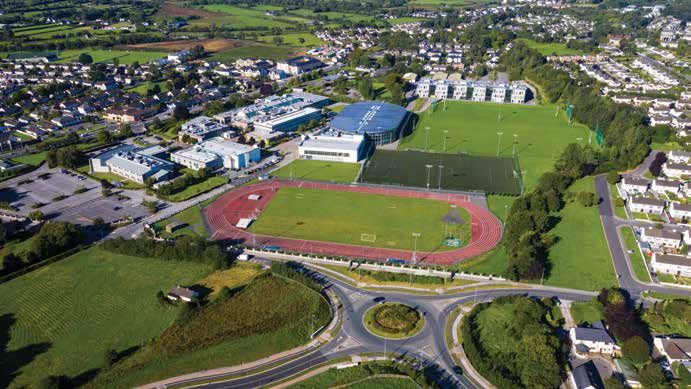
“Building on comprehensive personal and
    professional relationships across many aspects
    of the two institutions, the consortium’s
    ambitions are foregrounded in the strategic
    case for a regional technological university. ”
    Staff Survey

6       AIT–LIT Consortium                            Application for designation as a technological university   7
Table of Contents
2 Overview of the new TU
Characteristics of the new TU 56
2.1 The new TU: collaborative and engaged 58
Centrality of the student 58
2.2 Apprenticeship and skills education in the new TU 64
Growth in demand for apprenticeship skills 64
Excellence in apprenticeship education 66
Progression and transfer for apprenticeship students 67
2.3 The approach to teaching and learning in the new TU 68
1 The context for the new TU
1.1 About AIT and LIT 16
The educational philosophy of the new TU
Pedagogy and assessment
Curriculum framework design
68
71
72
Flexible learning pathways and lifelong learning 74
Athlone Institute of Technology (AIT) 16
Programme provision planning 76
Limerick Institute of Technology (LIT) 17
2.4 The approach to research in the new TU 77
1.2 The strategic case for the AIT – LIT Consortium 19
Research environment 77
1.3 Introducing the AIT – LIT Consortium 22
Enterprise and innovation 81
The commitment of the AIT – LIT Consortium to its regions 24
Research performance: impact and excellence 81
International context for the new TU 27
Building sustainable research capacity 89
TU designation: a natural evolution 28
Researcher ecosystem 92
Foundational attributes 28
Internationalisation of research 93
1.4 The process for designation as a technological university 32
2.5 Internationalisation 97
Progress towards a technological university 32
International context 97
Project governance 34
Internationalisation framework 97
Planning and work packages 34
2.6 Quality strategy and processes in the new TU 101
A submission-ready application 37
Statutory quality framework for higher education 101
1.5 The proposed vision, mission and values of the new TU 39
Quality assurance principles 101
TU vision 39
Processes of quality assurance and enhancement 103
TU mission 39
Quality assurance policies and procedures 103
Our values 41
1.6 Equality, diversity and inclusivity in the new TU 43
3
1.7 Governance of the new TU 44
Governing Body 44 Supports in the new TU
Academic Council 44
Quality assurance and enhancement 44 3.1 Student development at the new TU 110
Organisational structure 46 The value of the student experience 110
1.8 Socioeconomic impact of the TU 48 Student administration 110
Economic impact 48 Student welfare services 111
Social impact 49 Sports, clubs, and societies 111
8 AIT–LIT Consortium Application for designation as a technological university 9
Student Unions                                                              113
     Ensuring access for all students                                            113
     Giving first-year students a sense of belonging                             113
     3.2 The new TU’s people strategy                                            114
     The university of choice for staff                                          114
     Investing in our people                                                     114
     Ensuring HR excellence and innovation                                       115
     3.3 Professional services in the new TU                                     116
     Teaching and learning support                                               116
     Technology supported learning                                               116
     Library services                                                             117
     Information communication and technology services                           119
     3.4 The new TU: a digital campus                                            120
     Overview of the TU digital campus ecosystem                                 120
     The New TU – a digital-first organisation                                   121
     3.5 The new TU’s campuses                                                   125
     AIT current campus profile                                                  125
     LIT current campus profile                                                  125
     Campus development plans                                                    130
     Campus development and the National Planning Framework                      132
     Climate-related objectives                                                  133

     4              Meeting the criteria of the Technological Universities Act 2018

     4.1 Student profile criteria                                                138
     4.2 Staff profile criteria                                                  139
     4.3 Research activity criteria                                              140
     4.4 Engagement criteria                                                     141
     4.5 Governance criteria                                                     142
     4.6 International criteria                                                  143

     5              The financial viability of the AIT–LIT Consortium

     5.1 Projected income and expenditure of the new TU                          148
     5.2 Student numbers in the new TU                                           149
     5.3 Staff numbers in the new TU                                             151
     5.4 Consolidated financial summary                                          152
     5.5 Campus development budget                                               155
     5.6 Assumptions relating to financial projections                           158

10             AIT–LIT Consortium                                                       Application for designation as a technological university   11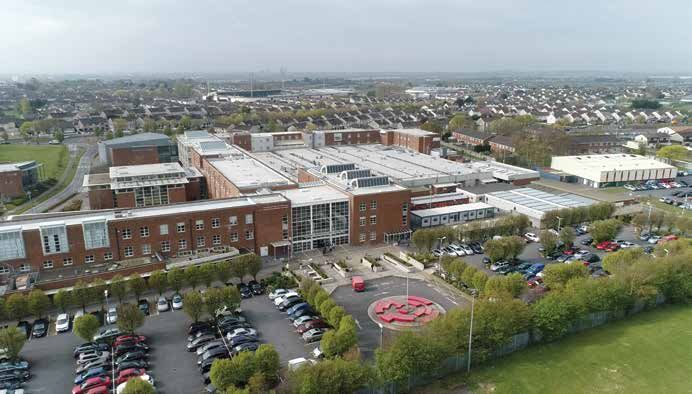
List of figures                                                                                  List of tables

     Figure 1.1       Overview of AIT – LIT technological university                            23    Table 1.1    Timeline for TU designation                                                                                          34
     Figure 1. 2      Higher education participation rates by county                            25    Table 1.2    Academic Steering Group                                                                                              45
     Figure 1.3       AIT – LIT feeder school data                                              25    Table 1.3    Estimates of economic impact                                                                                         49
     Figure 1.4       Technological university regions                                          26    Table 2.1    Craft-based apprenticeships                                                                                          65
     Figure 1.5       RUN Network partners                                                      29    Table 2.2    New generation apprenticeships                                                                                       65
     Figure 1.6       TU readiness as of Q2 2019                                                33    Table 2.3    Number of programmes offered across a range of mechanisms (Source: SRS Returns March 2020 AIT & LIT)                 76
     Figure 1.7       Progress towards a technological university                               35    Table 2.4    Four-stage process for the development of the QAE system                                                             105
     Figure 1.8       Project governance structure                                              36    Table 3.1    Staged integration of ICT systems in the new TU                                                                      119
     Figure 1.9       Working group reporting structures                                        37    Table 3.2    A digital infrastructure blueprint for a digital campus supporting students                                          122
     Figure 1.10      Technological university readiness level: submission ready                38    Table 3.3    Examples of software applications to support teaching, learning, and assessments                                     124
     Figure 1.11      Functions of the organisation                                             47    Table 3.4    Athlone campus: estate details, existing and projected                                                               126
     Figure 2.1       Overview of TU engagement strategy                                        59    Table 3.5    LIT campuses: current estate details                                                                                 129
     Figure 2.2       Summary of the new TU’s networking approach                               60    Table 3.6    LIT building projects under way                                                                                      129
     Figure 2.3       Six pillars supporting excellence in learning and teaching                69    Table 3.7    Athlone campus development plans                                                                                     130
     Figure 2.4       TU graduate attributes                                                    70    Table 3.8    Limerick campus development plans                                                                                    131
     Figure 2.5       Elements required for TU curriculum design                                73    Table 3.9    Tipperary campus development plans                                                                                   132
     Figure 2.6       AIT – LIT Consortium’s symbiotic relationship with industry               73    Table 5.1    TU projected income and expenditure 2019/20 to 2024/25, figures in €000’s                                            148
     Figure 2.7       Key areas of focus for curriculum design                                  75    Table 5.2    TU forecasted student numbers, 2019/20 to 2024/25                                                                    149
     Figure 2.8       Research environment of the new TU                                        79    Table 5.3    Areas of focus and their expected consequences                                                                       150
     Figure 2.9       Research infrastructure of the new TU                                     80    Table 5.4    Staff numbers for the new TU, 2019/20 – 2024/25                                                                      151
     Figure 2.10      Enterprise Ireland research gateways                                       81   Table 5.5    TU Consolidated financial summary, 2019/20-2024/25, figures in €000’s                                                152
     Figure 2.11      Overall research performance (AIT – LIT grouping)                         86    Table 5.6    Non higher education funded projects                                                                                 153
     Figure 2.12      TU publications by subject area (AIT – LIT grouping)                      87    Table 5.7    Purpose built on campus student accommodation                                                                        153
     Figure 2.13      Top four research subject areas of TU publications (AIT – LIT grouping)   88    Table 5.8    Estimated State contribution towards cost of TU development projects, figure in €000s                                154
     Figure 2.14      Collaboration in publication authorship (2015–19)                         88    Table 5.9    TU campus development projects – HE funded                                                                           156
     Figure 2.15      TU collaboration in Ireland                                               90    Table 5.10   Purpose built student accommodation projects, figures in millions                                                    157
     Figure 2.16      TU collaboration in Europe                                                 91
     Figure 2.17      TU collaboration in the rest of the world                                 92
     Figure 2.18      Research expenditure in AIT – LIT Consortium and other IoTs               94
     Figure 2.19      AIT – LIT research enrolment                                              94
     Figure 2.20      Model of sustainable research culture                                     95
     Figure 2.21      The new TU’s internationalisation framework                               98
     Figure 2.22      THEQF: principles of quality assurance and enhancement                    102
     Figure 2.23      Overview of QAE system                                                    104
     Figure 3.1       Aerial view of Athlone campus                                             127
     Figure 3.2       View of sports facilities at Thurles campus                               127
     Figure 3.3       View of sports facilities at Moylish campus                               128
     Figure 3.4       Aerial view of LIT Moylish campus                                         128
     Figure 5.1       Student numbers by ISCED code                                             150

12                AIT–LIT Consortium                                                                                                                                        Application for designation as a technological university         13
1
                  This chapter sets out to introduce
                  the AIT – LIT Consortium, to trace
                  the evolution and development of the
                  consortium and to present the rationale
                  for the new technological university.

                  1.1 Introducing the AIT – LIT Consortium        1.3 The proposed vision, mission,
                  • How the two institutions, Athlone Institute   and values of the new TU
                    of Technology (AIT) and Limerick Institute
                    of Technology (LIT), have come together       1.4 Equality, diversity, and inclusion
                    to seek designation as a technological
                    university.                                   Setting out how the new TU
                  • The commitment of the two institutions        proposes to be proactive in
                    to their regions and how the new TU will      promoting equality, diversity and
                    strengthen this.                              inclusion.
                  • The international context for the new TU,
                    including a brief description of the work
                                                                  1.5 Governance of the new TU
                    the two institutions have already done in

The context for
                    this area.                                    Setting out the new TU’s
                  • How designation as a TU is a natural          organisational structures, including
                    evolution for AIT and LIT.                    the Governing Body and the
                  • The foundational attributes that will frame   Academic Council, as well as its

the new TU
                    the new TU’s ethos and culture.               commitment to quality assurance
                                                                  and enhancement.

                  1.2 An overview of the process for TU
                  designation
                  • The progression through the stages of the
                    process.
                  • Governance structures of the process.
                  • Detailed breakdown of work packages
                    relating to TU development.
                  • Arrival at a submission-ready application.

                                                                   Application for designation as a technological university   15
1.1
                                                                                                                               remote working and innovation centres to deliver
                                                                                                                               the AIT Learning Gate concept that facilitates
                                                                                                                               increasing access to AIT courses at remote centres.

                                                                                                                                                                                                                                                        Chapter 1: The context for the new TU
                                                                                                                               AIT is home to world-leading academics who
                                                                                                                               are at the forefront of exciting research in areas

     About AIT and LIT
                                                                                                                               like smart drug delivery, antimicrobial resistance,
                                                                                                                               virtual reality, and cybersecurity. Home to three
                                                                                                                               strategic research institutes and two Enterprise
                                                                                                                               Ireland technology gateways, AIT conducts high
                                                                                                                               TRL research of international importance. It is
                                                                                                                               partnered with five leading Science Foundation
                                                                                                                               Ireland research centres – CONFIRM, SSPC, ADAPT,
                                                                                                                               CÚRAM and AMBER – which help it contribute to
                                                                                                                               fundamental knowledge generation. It also offers
                                                                                                                               contract services and houses a business incubator
                                                                                                                               which provides business development support
                                                                                                                               for knowledge-based start-ups. The institute is
     Athlone Institute of Technology                            among the reasons it was named Ireland’s Institute of          currently rated 2nd nationally for most Enterprise
                                                                Technology of the Year for 2020. This is the second            Ireland Innovation Vouchers valued at €2,135,000.
     AIT was established in 1970 as Athlone Regional            time in just three years that AIT has won the prestigious
     Technical College (RTC) amid an educational reform         accolade, having previously held this title in 2018.           AIT has a well-developed international market and is
     with the goal of providing technician-level courses                                                                       to the forefront of international partnerships within
     at both certificate and diploma level. The institute       As the sole higher education provider servicing the            the technological higher education sector. AIT has
     quickly outgrew the limitations of this RTC designation,   Midlands, AIT already plays an integral role in educating      partnerships with universities across Europe, Asia
     which prompted a change in nomenclature and a              and upskilling the local workforce in key areas of             and the Americas and encourages AIT students
     shift in public perception towards the value of an         technological advancement. The third-level institute           to study abroad for a semester or full year. Inward
     applied, industry-focused education. AIT became an         offers 200+ industry-focused programmes on a full-time,        mobility also continues to increase year-on-                         “The Technological
     autonomous institution in 1993 and later, in 1998, was     part-time, blended, and online basis which range from          year with international students now comprising
     officially redesignated Athlone Institute of Technology.   higher certificate right through to PhD. AIT’s offerings are   15% of AIT’s full-time student population.
                                                                                                                                                                                                    Universities Act (2018)
     Over the course of its 50-year history, AIT has            distributed across six primary areas – science, health,                                                                             presented AIT and LIT with
     established itself as a centre of academic excellence      business, hospitality, engineering, and informatics.           Since 2008, AIT has invested €130+ million in the
     with an applied, industry-focused offering, world-class    The institute also has agreements with a wide range            development and modernisation of its campus. The                     an opportunity to revisit
     research and development capabilities, and state-          of professional bodies, which benefit students.                institute will soon break ground on a €25 million STEM
     of-the-art facilities. Located in the heart of the Irish                                                                  building which will create capacity for up to 1000
                                                                                                                                                                                                    their mission so as to
     Midlands, AIT is home to 6,000 undergraduate and           In 2018, AIT established an additional faculty dedicated       additional students and 70 staff. Currently, 55% of AIT’s            increase impact, improve
     postgraduate students from 84 nations around the           to Lifelong learning to meet increased demand from             student body is made up of students studying STEM.
     world. AIT has a well established international profile.   learners looking to upskill, change career or return to                                                                             engagement, enhance
                                                                employment. Lifelong learning is crucial to being job-fit
                                                                                                                                                                                                    teaching and learning
     The institute’s student-centred ethos is a cornerstone     in the modern workforce. The institute’s emphasis              Limerick Institute of Technology
     of its success and its students, according to              on applied, industry-focused education translates                                                                                   and to boost capacity,
     StudentSurvey.ie, are the most satisfied with              to an impressive graduate employability rate: 94%              Limerick Institute of Technology, located in counties
     their college experience in Ireland. AIT has held          of its students are employed within six months of              Limerick, Tipperary and Clare, operates under the                    capabilities and profile
     the top spot for six consecutive years and also            graduating. Of that figure, a large majority are employed      Institutes of Technology Acts 1992 to 2006. The                      through the creation of a
     enjoys the highest student response rate nationally        in Athlone and the surrounding Midlands, thanks to an          Institute traces its origins back to the 1852 foundation
     – 69% versus 29% national average. AIT was                 abundance of multinational and indigenous employers.           of the School of Ornamental Art on Leamy Street,                     new entity – a technological
     the first institute of technology and third HEI to                                                                        subsequently re-opened in 1855 on Cecil Street
     receive College of Sanctuary designation.                  AIT has a strong regionally focused outreach agenda            under the auspices of the Limerick Athenaeum. This
                                                                                                                                                                                                    university for the Midlands
                                                                and has delivered part-time programmes in Galway,              evolved over time to what is now one of the leading art              and Mid-West of Ireland.”
     The exceptional student experience offered by AIT, in      Dublin, Cavan, Castlebar, Longford, Tullamore, Mullingar,      and design schools in Europe which is fully engaged
     tandem with its focus on experiential learning, strong     Waterford, and Ballinasloe over the past 10 years              with traditional art and design, visual culture, creative            Staff Survey
     industry ties and innovative research activities, are      and more recently has developed partnerships with              technologies, film, media, and teacher education.

16             AIT–LIT Consortium                                                                                                                                                          Application for designation as a technological university   17
1.2
An international quality review of LIT in 2010 described of achieving sustainable competitive advantage, making
LIT as a mature higher education institution with meaningful differences to the communities it serves and
excellent quality assurance. The institute has over contributing to national and international sustainability.
Chapter 1: The context for the new TU
7,000 students (over 5,500 full-time) and provides RDI has been a partner or coordinator on 48 European
a wide range of programmes spanning the areas Commission-funded projects since 2014. The focus
of applied science, engineering and technology, is on innovative, applied research, in partnership with
The strategic case for
art and design, business and services, humanities, start-up, indigenous and international organisations,
built environment and rural development. and builds on existing and emerging areas of expertise
within LIT. It has a particular expertise in the fields
As with AIT, the Regional Technical Colleges Act
(1993) broadened the institute’s scope and allowed
structures to be set up to formalise research
of biotechnology, Industry 4.0 and sustainability.
LIT has a strong international focus. Links have been
the AIT – LIT Consortium
and development. This Act also increased LIT’s established with other higher education institutions
autonomy. LIT has been awarding master’s degrees in the US, Canada, EU, China, Brazil, Oman and
since 1997 and doctorate degrees since 2002. Malaysia. The institute acknowledges the support
of the European community through Horizon 2020
LIT is a regionally-focused higher education and ERASMUS + programmes. Learner and staff
institute with a national and international outlook. exchanges have taken place and such exchanges will
It empowers its diverse student body by providing continue to be a feature of programme provision. Building on comprehensive personal and
a quality higher education experience, enabling professional relationships across many aspects
economic, social and cultural development. LIT has a distinctive educational philosophy of of the two institutions, the consortium’s ambitions
active learning that prepares its graduates well are foregrounded in the strategic case for a
LIT is strategically located in the core North Munster for the work environment by combing theory with regional technological university. Commensurate
area of the Mid-West region, centred on Limerick. practice. There is an emphasis in access to education with expert guidance on the criteria for a
The region is a major economic development hub, through the provision of flexible learning and access successful merger, the consortium decision
making LIT a primary driver in the balanced regional programmes, including targeted interventions to seek designation is affirmed by:
development. Since 2011, LIT has incorporated aimed at disadvantaged groups in society and those
new campuses in County Tipperary (Thurles seeking retraining and upskilling, thus contributing
and Clonmel) into its provision across a wider directly to the promotion of social inclusion.
region in North Munster. Its provision in County • Geographical contiguity, with • Mutual level/capacity/scale fostering
Clare is supported by the campus in Ennis. The LIT Strategic Plan 2018-2022 and the HEA
adjacent regions, summated to form an equal partnership that is bigger
Mission-Based Performance Compact 2018-
Research, development and innovation (RDI) has 2022 are key parallel drivers that are shaping an unambiguous area that will be than the sum of its parts,
been a key strength of LIT over the last decade. LIT’s educational development and activities, served by the new TU,
There is a need for both basic and applied research underpinned by its core values of excellence, • Significant support from internal and
as while new products and services emerge from innovation, equity, support, and accessibility. • Having compatible institutional external stakeholders,
basic research, LIT’s engagement with industry and
business means that most of the research activities The Technological Universities Act (2018)
profiles, with aligned strategies,
are applied and near to market. While LIT is not a presented AIT and LIT with an opportunity to revisit mission, vision and values and • Well established and demonstrated
research-led institute, its research informs teaching. their mission so as to increase impact, improve student-centred ethos, institution and leadership synergies,
Research-informed teaching is critical to ensure that engagement, enhance teaching and learning and to
graduates are not only work-ready but are armed with boost capacity, capabilities and profile through the • A track record of collaboration
• Academic commonality and
state-of-the-art knowledge and skills when they enter creation of a new entity – a technological university
complementarity as defined by a and engagement.
the workplace. A further priority of LIT’s RDI activities for the Midlands and Mid-West of Ireland.
is to deliver impact, value and innovative solutions technological institute agenda,
for all stakeholders, for the economy and for society.
LIT is aligned with the CONFIRM, Lero and PMTC
SFI research centres, and the Enterprise Ireland Strategic fit, existing relationships, joint research,
technology gateway network. At the heart of LIT’s RDI and joint membership of the EU Regional University
strategy is the ambition to be a strategic knowledge Network (RUN-EU) were also significant drivers
generator and technology transfer partner of choice in the formation of the AIT – LIT Consortium.
for companies and organisations facing the challenges
18 AIT–LIT Consortium Application for designation as a technological university 19“This is a wonderful step forward and I’m very
excited to be working in an institute on the
verge of becoming Ireland’s next technological
university. The people of the Midlands and
Mid-West Regions will benefit greatly.”
Staff Survey
20 AIT–LIT Consortium Application for designation as a technological university 211.3
Figure 1.1 Overview of AIT-LIT technological university
Chapter 1: The context for the new TU
Introducing the Post Graduate
Staff: 1,276
Apprenticeship: 795
AIT–LIT Consortium
Research: 318 Undergraduate
Level 6: 1,690
Post Graduate
Taught: 619
Undergraduate
The 2011 National Strategy for Higher Education to • Research capacity building People of the TU
Level 7: 3,036
20301 established a vision of a robust, modern tertiary • Strategic engagement
education system for Ireland in line with the aims of the • Student experience
European Higher Education Area (EHEA). The Irish
government gave further direction to this vision with The merger of the two well-established and prestigious
the enactment of the Technological Universities Act institutes of technology provides a firm foundation for
2018,2 which set out the process and criteria by which the development of a new and impactful technological
institutes of technology could apply for designation as a university. Such a merger is the established route
technological university. Athlone Institute of Technology to the formation of a technological university. Undergraduate
(AIT) and Limerick Institute of Technology (LIT) The Irish government has committed significant Level 8: 7,291
responded to the Technological Universities Act through initial funding to support implementation of the
a series of initial exploratory discussions and meetings in Technological Universities Act and the formation of
early 2019. These led to the formal establishment of the technological universities. The AIT – LIT Consortium
AIT – LIT Consortium by a resolution of both governing was recently awarded €5 million from the dedicated
bodies in October 2019, with a view to preparing an HEA Innovation and Transformation Fund (2020)
application for designation as a technological university. and €2 million in HE landscape funding (2019) to
progress this technological university application.
Over the past decade AIT and LIT have independently
Total number of students: 13,749
pursued a strategy of developing technological Modelled on current data, the new technological
university capacities. The most recent institutional university will be of significant scale with over 14,000 Apprenticeship: 795
strategic plans3 4, although independently developed, people (13,749 students in 2019/20), and (1276 staff Undergraduate: 12,017 (25% Part-time)
aligned on the core thematic agendas of: in 2019/2020) across its six campuses (as outlined Post Graduate Taught 619 (65% Part-time) AIT
in Figure 1.1). The AIT – LIT Consortium provides a Post Graduate Research: 318
• Equality, diversity, and inclusion wider portfolio of programmes in areas like science, Ennis
• Relevant, contemporary, and high-quality provision engineering, health, business, hospitality, social LIT Thurles
Total number of staff: 1,276
Clonmel
1. Department of Education and Skills (2011). National Strategy for Higher Education to 2030: Report of the Strategy Group.
2. Available at: http://www.irishstatutebook.ie/eli/2018/act/3/enacted/en/html
3. https://lit.ie/admin/LIT/media/LIT/Quality/Quality%20Handbook%202019_2020/Volume%20(3)%20
Institutional%20Strategies/(1)-LIT-Strategic-Plan-2018-2022-(Approved-GB-10-04-18).pdf
4. https://www.ait.ie/uploads/downloads/Strategic_Plan_2019_%28small%29.pdf
22 AIT–LIT Consortium Application for designation as a technological university 23sciences, informatics, teacher education, and art and • A market research study has been undertaken Figure 1.2 Higher education participation rates by county
design. The combined research capacity includes to inform the branding and profiling of the new
research areas of strength in microbiology, toxicology, TU. The market research study, when completed,
Chapter 1: The context for the new TU
bioanalysis, biotechnology, sensor technology, will inform decisions on naming and branding.
manufacturing technology, ICT, sustainable energy, • A governance and structures study will identify a range
and mechanical and polymer engineering. of strategic options for the governance, structures
and functions of the new TU. Final decisions based
The creation of a new technological university in Ireland’s on this report will need to await the appointment of
Midlands/Mid-West regions will have very significant the new governing body and the TU president.
educational, social, civic, geographical, and economic
value impact. The strength of the AIT – LIT Consortium An extensive all staff online survey conducted in
and its commitment to regional balance is affirmed June 2020 provided a mechanism for gauging
by its participation in the recently awarded Regional staff attitudes to the formation of the new TU and a
University Network – European University (RUN-EU),5 parallel study was also conducted with the student
AIT
which is supported by the European Commission body of both institutes to better understand the
and enables the consortium to have influence and student perspective on the TU proposition. 30.0% - 35.0%
impact at regional, national and international levels.
35.0% - 40.0%
Building on this success and on increased capacity, the The commitment of the AIT – LIT
AIT – LIT Consortium now seeks national designation LIT Consortium to its regions 40.0% - 45.0%
as a technological university. The strategic plans of
AIT and LIT identify the priority actions necessary The AIT – LIT Consortium is unique in its geographical
45.0% - 65.0%
to support the institutes in meeting the criteria for reach and regional structure, bordering almost
technological university designation as set out in half of Ireland’s 26 counties. It will transform the
the Technological Universities Act. These include: availability and accessibility of university provision
in its regions, particularly across counties that have
• Increasing access and diversifying up to now had low university participation rates
the student population. (see Figure 1.2 Source: CSO – Census 2016).
• Delivering digital capacity plans to Figure 1.3 AIT – LIT feeder school data
enhance the student experience. The importance of supporting regional communities
• Enhancing teaching and learning of technical with regional public service provision including the
and professional skills that reflect the needs delivery of third-level education that is localised, focused
of industry and ensure student success. and accessible to the communities it serves has been
• Enhancing stakeholder engagement and amplified during the preparation of this application. The
increasing our impact in our regions. AIT – LIT Consortium already plays a significant role
• Increasing RDI capacity in areas that have in addressing the educational deprivation that spans
a clear economic and social impact. the geographical spread of the new technological
• Excellence in all areas of operation and governance. university; Figure 1.3 presents the feeder school data
that is the current catchment area of AIT and LIT.
The AIT – LIT Consortium will continue to develop
the vision of the new TU beyond the submission The new TU will provide access to a university-
of this application. Three ongoing independent level education in the region it serves, as it is not
AIT
< 5%
studies have been commissioned to support the served by any other proposed or established
development of the new TU vision and identity: consortium (Please see Figure 1.4).
5% - 10%
• A socioeconomic study has identified the needs, The AIT – LIT Consortium can leverage many years LIT
added value and impact potential of the new TU. of working diligently to build relationships with social 10% - 20%
This report is available to support this application. and industry partners across the Midlands and Mid-
> 20%
5. See: www.run-eu.eu
24 AIT–LIT Consortium Application for designation as a technological university 25Figure 1.4 Technological university regions International context The HEIs (in corresponding countries and their
for the new TU associated regions) which compose RUN-EU include
Polytechnic of Leiria, Portugal (Centre Region);
Chapter 1: The context for the new TU
The AIT – LIT Consortium is actively committed to Polytechnic of Cavado and Ave, Portugal (Northern
facilitating the inward and outward flow of students Region); Athlone Institute of Technology, Ireland
and staff between international partner institutes and (Midlands Region); Limerick Institute of Technology,
welcomes the academic and cultural enrichment with Ireland (Mid-West Region); NHL Stenden, The
LKIT
that brings. Currently, international students in Ireland Netherlands (Friesland Province); HAMK University,
and abroad comprise 10 per cent of the full-time Finland (Southern Region); Széchenyi István
student population, while international researchers University, Hungary (Győr-Moson-Sopron County);
make up 15 per cent of the research community. AIT and FH Vorarlberg, Austria (Vorarlberg Region).
– LIT also attracts a significant number of students Figure 1.5 lists the partners in the network.
IT Sligo Multi Campus who are resident or domiciled in Ireland and continue
to hold non-Irish passports – these include guest The new TU will build on the significant success of
DkIT workers, immigrants, refugees, and asylum seekers. its constituent institutes in China. Initially, China will
be the largest non-EU market for outward and inward
As founding members of the Regional University mobility, with over 2,000 students studying with partner
IADT Network (https://run-eu.eu), the AIT – LIT Consortium universities in China on programmes approved by the
GMIT AIT has contributed to an established network of Chinese Ministry of Education, including mechanical
AIT TU Dublin like-minded HEIs who are committed to societal engineering, civil engineering, accounting, design,
Ennis transformation in the regions and to addressing pharmaceutical science and software engineering.
Carlow IT regional and global challenges in a sustainable way.
LIT LIT Thurles The alliance members have a regional, as opposed to Inward mobility continues to increase year on
an urban, focus and also have a proven track record year with over 250 students from China and a
Clonmel in the delivery of future and advanced skills activities similar number of international students from other
WIT in teaching, learning, research and engagement countries attending programmes within the AIT
ITT relevant to societal challenges including future industry, – LIT Consortium. The presence of international
CIT sustainable development, environment and climate students has been very positive on campus and
change, ageing population and social inclusion. has helped produce a generation of internationally
minded, socially conscious, agile graduates with a
The alliance members believe this project will make deep and profound respect for other cultures.
a huge difference to their regions and to Europe by
focussing on the translation of the labour market
and societal demands to education and research Student experience
outputs, with measurable downstream societal
benefits. RUN-EU members have a history of AIT-LIT Consortium is home to over 14,000 students
strong engagement with all regional stakeholders, across vibrant campuses in Athlone, Limerick,
public and private, and are knowledge experts in Thurles, Clonmel and Ennis, all of which offer lively and
regional development. The RUN-EU strategic plan enjoyable student experiences. Students of AIT and
West of Ireland. The new TU will be the first cross- the development of Dublin. With its urban hubs places “learning, studying and doing research” at LIT enjoy a fun and rewarding college journey. Each
regional university in Ireland and will ensure growth and regional campuses, the new TU can provide a the centre of the RUN-EU alliance activities. of our campuses is a community of learners, where
in education provision and enhanced research key strategic corridor between rural communities, students get to know classmates and lecturers in a
opportunities, as well as dynamic community towns and cities. Such objectives are in line with The participating HEIs represent a broad range relaxed and positive environment. The performance
and industry engagement across the region. Project Ireland 20406, the government’s long-term of different types of higher education institutions, of AIT and LIT in the annual Irish Survey of Student
strategy to make Ireland a better country for all its sharing a common background in successful Engagement (www.studentsurvey.ie) is testament
Through its support for industry and communities, people. The TU presents an opportunity to enhance, collaboration with industry and regional stakeholders to their student-centred approach to teaching and
the new TU will make its regions more attractive for accelerate and amplify our ambition to contribute to in applied education and research projects, learning, which will be the foundation of engagement
indigenous SMEs and FDI investment by linking to the sustainable development of the region it serves inducing societal impact and transformation. in AIT–LIT TU. Students are supported by an extensive
opportunities in knowledge creation and innovation. and contribute to achievement of United Nations
This in turn will contribute to the development of viable Sustainable Development Goals (SDGs), which
and vibrant communities that can offer an economically will be reflected through our teaching, research,
and socially desirable regional counterbalance to development, innovation and engagement activities. 6. See: https://www.gov.ie/en/campaigns/09022006-project-ireland-2040/
26 AIT–LIT Consortium Application for designation as a technological university 27range of services designed to help them reach “Students engage in active Figure 1 .5 RUN-EU Network partners
their full potential and enjoy the college experience
in a safe, relaxed and supportive environment.
learning – combining
Chapter 1: The context for the new TU
practice with theory in Finland
Students engage in active learning – combining
practice with theory in an experiential model of an experiential model of Häme University of
Applied Sciences
learning that equips them with the essential skills
they need for their chosen careers. Graduating as
learning that equips them
self-starter life-long learners with professionally with the essential skills Ireland
focused degrees, AIT-LIT graduates are job-ready
and in high demand (employability Stats). they need for their chosen Athlone Institute of
Technology
The Netherlands
careers. Graduating as self- NHL Stenden
The cost of student living in Athlone, in Limerick Ireland
and in the regional campus towns is significantly starter life-long learners Limerick Institute
lower than many other university cities, with student of Technology
accommodation located within easy walking with professionally focused
distance of our campuses. The lower student degrees, AIT-LIT graduates Austria
living costs reduce financial pressure and attract FH Vorarberg
students from a wider socio-economic profile. are job-ready and in high Portugal
Hungary
Polytechnic of
demand (employability Cávado and Ave
Szecheny Istvan
University
TU designation: a natural evolution Stats).” Portugal
Polytechnic of Leiria
Achieving full designated awarding powers as a new Staff Survey
technological university is a natural evolution for the
AIT – LIT Consortium. Between them, AIT and LIT
have been awarded The Sunday Times Institute of
Technology of the Year on four occasions (AIT in 2018 waste in the environment globally. Only two projects
and 2020; LIT in 2008 and 2013). The new technological were selected for funding across Europe for the plastics
university will continue to provide students with quality bio-degradation EU-China call in 2019, BioICep was
education and build on their areas of strength. one of them. This success is reflective of the talent and
focus of Ireland’s research and innovation community.
The AIT – LIT Consortium aspires to be recognised
for research impact in its hinterland, disseminated AIT and LIT have a long history of effective regional
through educational and public engagement. AIT, engagement and the new TU will continue that
which was the first institute of technology to join the commitment to the regions it serves. Connected to • Deliver a supportive people-orientated learning • (As a designated awarding body) be committed
prestigious AMBER SFI research centre, is currently industry, the start-up community, and professional environment and student-centred educational to a continuous improvement process
a member of five SFI research centres – CONFIRM, stakeholders to ensure contemporary and relevant experience where students and staff can benefit from that will ensure excellence in educational
AMBER, CÚRAM, ADAPT and SSPC, and has been programmes of study, the TU will also facilitate opportunities for development, with a shared set of provision and associated services.
acknowledged in the U-Multirank’s Top 25 Performing knowledge creation and transfer activities which common aims and clear lines of communication. • Build robust systems, data and operational
Universities in the World for Interdisciplinary Research will enhance regional competitiveness. • Maintain the high academic standards of its protocols that support and protect students.
for two consecutive years. LIT was the first institute founding institutes and will continually enhance • Take an integrated, collaborative approach that
to coordinate an EU research programme within the quality of its teaching, learning, research. listens to the voices of all stakeholders and that
the Specific KBBE Programme “Cooperation”: Foundational attributes • Maintain the high standards of its founding upholds principles of equality, diversity, and inclusion.
Food, Agriculture and Biotechnology, within the FP7 institutes in professional, management, • Optimise the use of digital technologies and the
programme. AIT and LIT have won significant EU The commitment of the AIT – LIT Consortium to support and technical services. extended campus in the delivery of learning.
research funding through Horizon 2020, INTERREG, excellence in education, research, operations, • Value the creativity and professionalism of its staff,
Erasmus and other programmes on multiple occasions, and governance is at the core of this application who will make a vital contribution to the students’
including projects where they have been coordinators for technological university designation. In its experience to the development of academic disciplines
or lead partners. Specifically, AIT and LIT are currently ethos and culture, the new TU will build on the and to engagement with teaching and research.
leading a Horizon 2020 pan European-Chinese best practices, policies, and procedures that are • Listen and respond to the voice of students as an
collaboration aimed at reducing the burden of plastic already in place in AIT and LIT. The new TU will: essential and vital quality assurance activity.
28 AIT–LIT Consortium Application for designation as a technological university 29“AIT and LIT have a long history of effective regional engagement and the new TU will continue that commitment to the regions it serves. Connected to industry, the start- up community, and professional stakeholders to ensure contemporary and relevant programmes of study, the TU will also facilitate knowledge creation and transfer activities which will enhance regional competitiveness.” Socio-Economic Study 30 AIT–LIT Consortium Application for designation as a technological university 31
1.4
                                                                                                                                       Figure 1 .6       TU readiness as of Q2 2019

                                                                                                                                                                                                                                                                                   Chapter 1: The context for the new TU
                                                                                                                                                     Operational TU     TURL 9

     The process for designation
                                                                                                                                       Qualification as Operational     TURL 8

                                                                                                                                                 Submission Ready       TURL 7

     as a technological university                                                                                                                Threshold Ready       TURL 6

                                                                                                                                                     Phased Target      TURL 5

                                                                                                                                                       Gap Analysis     TURL 4

                                                                                                                                                Concept Feasibility     TURL 3

                                                                                                                                                     Initial Research   TURL 2
     Following the enactment of the Technological                         approached collaboratively and participation was
     Universities Act 2018, AIT and LIT independently                     actively encouraged. Staff and students were engaged
                                                                                                                                        Foundation Understanding        TURL 1
     commissioned Professor Simon Marginson of Oxford                     in working groups from the inception of the project and
     University to map out each institute’s strategic options             played a pivotal role in the significant progress that has
                                                                                                                                                                                  1   2   3   4   5    6     7    8    9   10    11     12   13   14   15     16   17   18   19
     to achieve TU designation. The key indicators and                    been made to date. Over 200 people across 20 working
     methodology to establish technology university                       groups and project activities engaged in developing,                                                            TU Metrics                  Academic           Governance            Operational

     readiness were established. A focused work plan and                  managing, and delivering the outputs that were agreed
     priority targets for TU development were defined.                    across the 30 work packages. Working groups were             Key Indicators
     Figure 1.6 shows the level of readiness of each of the               co-chaired by functional leads from both AIT and LIT
     key indicators (on a scale from 1 to 9), at Q2, 2019.                and were given autonomy to develop their team in
                                                                                                                                       TU Metrics                                     Governance and Management
                                                                          response to the agreed work programme. This ensured
     A strategic synergy review of AIT and LIT confirmed                  ownership of an approach that focused on the creation        K1 - TU - Metric - Learner Profile (30%)       K12 - Governance Structures
     a solid basis for AIT – LIT to progress as a TU. In                  of a new TU and not merely the merging of existing           K2- TU - Metric - Learner Profile (4%)         K13- Management Structures
     March 2019, the consortium made a submission to                      institutes. Staff and students also engaged in activities    K3 - TU - Metric - Staff Profile (90%)         K14 - Campuses and Region
     the HEA in line with the HEA’s Landscape document7                   ancillary to the work of the working groups in support       K4 - TU - Metric - Staff Profile (45%)         K15 - Stakeholder Support
     setting out the timeline for progress in the application             of TU deliverables. Engagement with students and staff       K5 - Strategic Research Plan
     for TU designation, as shown in Table 1.1.                           throughout the project to date has sought to be positive,    K6 - HR Plan - People Strategy
                                                                          collaborative, collegiate, and ambitious. The success        K7 - Areas of Strength - Research
                                                                          of this approach and level of engagement bodes well
     Progress towards a                                                   for the culture of the new technological university.
                                                                                                                                       Academic                                       Operational
     technological university
                                                                          The AIT – LIT Consortium has made significant
                                                                                                                                       K8 - Academic Positions / Portfolio            K16 - IT Integration
     The AIT – LIT Consortium took an inclusive approach                  progress in its TU preparations since its formation
                                                                                                                                       K9- Partnerships and Collaborations            K17- Financial Management and Integration
     to the development of the technological university                   early in 2019 and is now at the stage of presenting
                                                                                                                                       K10 - Research Provision                       K18 - Academic Process Integration
     project. Co-directed by the former vice presidents of                its formal application for TU designation. The AIT-
                                                                                                                                       K11 - Internationalisation Activity            K19 - Research Structures
     academic affairs and registrar from AIT and LIT, the                 LIT Consortium is committed to developing a new
     project devised an inclusive methodology to involve                  technological university that will deliver against key
     staff and students and clear timeline to the November                system performance objectives and high level targets
     2020 submission date. All aspects of the project were                (HLTs) while embracing the challenges captured in

     7. See: https://hea.ie/assets/uploads/2017/04/Towards-a-Higher-Education-Landscape.pdf

32              AIT–LIT Consortium                                                                                                                                                                               Application for designation as a technological university        33
Table 1.1 Timeline for TU designation Figure 1 .7 Progress towards a technological university
Chapter 1: The context for the new TU
Date Action
Q4 2019 Formal decision to merge and seek designation as a TU Consortium approved by
both governing bodies
Phase 1 - Application
seeking designation of new
TU approved and submitted
Q1 2020 Establish joint governing body and project team
Q2 2020 Establish inter-institutional working groups
Consortium Proposed
Consortium Application
Q2 2019 Submitted
Established
Q3 2020 Address any shortfalls in relevant criteria AIT and LIT on all criteria for
Q4 2019 Q4 2020
a successful merger
Q4 2020 Develop and submit application for TU designation
the TURN Report. The consortium has built on strong, • A Professional Services Steering Group (PSSG)
positive leadership relationships between AIT and • A TUI–Management IR Forum Appointed Day
LIT to ensure strong collaboration between the staff • A Professional Services Management IR Forum International
Designated Day Q3 2021
and students of both institutions and is progressing • 20 working groups across 30 work packages, Review
with significant organisational transformation. reporting to ASG, PSSG or the project team Q2 2021 Phase 4 - Technological
Q1 2021
• Working groups reporting directly to the TU project University established 1
The AIT – LIT Consortium has met or exceeded the team include Students’ Union, Equality Diversity and September 2021
progress targets set out in the original Landscape Inclusion, GDPR, ORCID Project (Libraries), Marketing
submission, despite the difficulties caused by COVID-19, and Communications, and Heads of Department
and is now on track to deliver the new technological
university by 1 September 2021. As an embedded part of the TU project activities, two Phase 2 - International Phase 3 - Minister designates
Figure 1.7 shows the stages of progress on a timeline. IR forums (consisting of academic and professional panel make AIT-LIT Consortium as a
recommendations to HEA Technological University
management support staff in both institutes) are
working towards agreeing IR matters relevant to the
Project governance creation of the new TU. Position papers have been
shared between trade unions and management, and
The AIT – LIT Consortium has put in place a regular meetings are progressing the defined agendas.
comprehensive governance structure (Figure 18) to
ensure inclusion, robust governance and progress
towards the goal of TU designation. This has Planning and work packages
included establishment of the following elements:
Planning in the initial project phase focused on the
• A project team with an independent external facilitator submission readiness of TU development. Work
and a TU project director in each institution packages were identified to address the critical areas
• A Joint Governing Body TU Steering Group (JGB) of TU development and working groups were assigned
• A Joint Management Steering Group work packages that specified the phased deliverables.
(JMSG), which meets weekly A ‘bottom-up’ approach engaged staff and students
• An Academic Steering Group (ASG) in developing the concept and activities critical to
34 AIT–LIT Consortium Application for designation as a technological university 35You can also read


