National Programme of - Mid day Meals in School - JHARKHAND - Mid Day Meal Scheme
←
→
Page content transcription
If your browser does not render page correctly, please read the page content below
National Programme
         of
 Mid day Meals in School

 Annual Work Plan & Budget
                 2018-19
           JHARKHAND
    (Please do not change serial numbers below)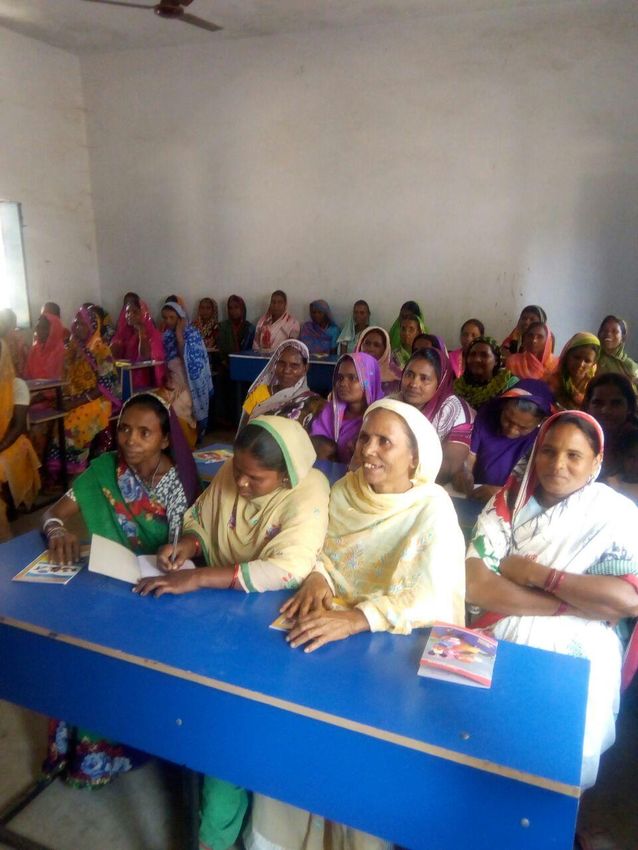
1.    Introduction:
1.1   Brief history
              Education plays a vital and important role in fulfilling the basic needs of a
      common man viz food, shelter and clothing. The main aim of Education is to prepare
      and develop the individual physically, mentally and spiritually to lead a quality life.
      Education is a process through which a person can attain the necessary competencies
      and skills to face the challenges and to survive. According to the 93rd Constitutional
      Amendment, primary education is a Fundamental Right (Article 21A). Four important
      factors are identified for achieving the goal of Education for all. They are Access to
      Education, Enrolment of children, and Retention of the enrolled children and
      Achievement.
              Various schemes were implemented in the primary education sector by the
      Government to reach the most disadvantaged population and thereby to achieve the
      above goals. Access to Primary Education with quality is being provided through
      centrally sponsored Sarva Siksha Abhiyan. Inspite of this, a few children are still
      deprived of Primary Education due to inability of the parents to send their children to
      school due to their poor economical status. For these parents, sending their children to
      school means - incurring extra financial burden of feeding them.
              That being the attitude of the parents the only way of bringing them to school is
      to take care of their food and nutritional needs.
              Without satisfying this basic need, needs of higher order are difficult to reach.
      The most important de-motivating factor in this aspect is the poor nutritional status of
      children. Hence, supplementing the required nutrition should be the priority to draw
      their attention to education.
              On 15 August 1995 Government of India launched the National Programme
      for Nutritional Support to Primary Education. As per this Programme each child
      was provided with, 3 kgs of rice per month for 10 months in a year. The Government of
      Jharkhand implemented the same in class I to V in the State.
              Consequent to the Hon’ble Supreme Court’s direction in 2001 to provide
      Cooked Meal to children, the State Government of Jharkhand launched the cooked
      Mid Day Meal Programme to all Primary School children in Government, Local body
      and Government Aided Schools. Subsequently it was extended to children enrolled
      under Education Guarantee Scheme (EGS), Madarsa/ Makhtab and Alternative &
      Innovative Education (AIE) Centers.

1.2   Management structure
             State level - Mid Day Meal Scheme in Jharkhand is implemented by the
      Department of Human Resource Development which is headed by Principal Secretary
      at the State level. The Principal Secretary is assisted by Director, Primary Education
      and Director, Jharkhand State MDM Authority.
             District level – At the district level District Superintendent of Education is
      responsible for implementation of MDMs. District Superintendent of Education is
      assisted by Deputy Superintendent of Education.
             Block level – Block Education Extension Officer is responsible for
      implementation of MDMs at block level.
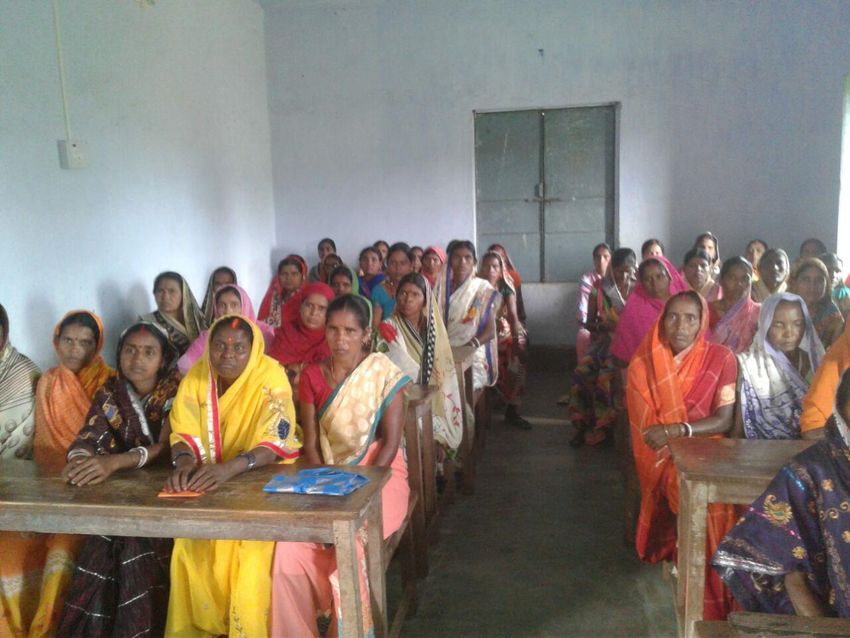
             School level – Saraswati Vahini is the main agency to implement the mid day
      meal scheme at school level. It is a subcommittee of School Management Committee
      and consists of mothers whose children are studying in that particular school. The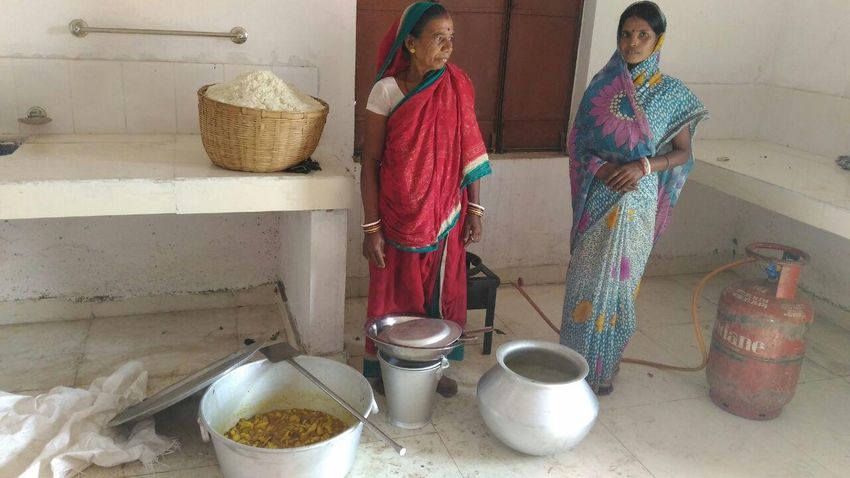
cooking of meal and distribution of cooked meal has been assigned to a group of
        active parent mothers identified amongst the member of Saraswati Vahini.

1.3     Process of Plan Formulation at State and District level.
                 Plan for the MDM scheme is prepared by adopting bottom up approach starting
        from School to District and State level.
                 A system has been developed to collect monthly, quarterly and yearly data
        regularly for smooth running of MDM Scheme. For formulation of plan, Block Education
        Extension Officer of every block collects the data from every school and after compiling
        it at block level, it is submitted to District Superintendent of Education at district level.
        District Superintendent of Education compiles it at district level and after that State plan
        is formulated. During compilation of plan at state level, monthly and quarterly reports of
        the districts are also taken for assessment of the data, submitted by the districts. After
        compilation of data received from the districts, meeting of Districts Superintendent of
        Education is held and appraisal of district level plans and data of districts are checked
        for any inconsistency and any error therein is corrected and then State Plan is finalized
        and after approval of State level MDM Steering-cum-Monitoring Committee forwarded
        to Government of India for necessary action.

2.      Description and assessment of the programme implemented in the current year
        (2017-18) and proposal for next year (2018-19) with reference to:

      2.1   Regularity and wholesomeness of mid - day meals served to children;
            interruptions if any and the reasons therefor problem areas for regular
            serving of meals and action taken to avoid Interruptions in future.
            Mid Day Meal Programme is being run in all the eligible schools/institutions in the
            State with Zero Tolerance. Directions have been issued to all the districts and their
            schools that mid-day-meal shall not be stopped in any case. All out effort is made to
            keep the menu of mid-day-meal as per the interest of the children and to ensure that
            the mid-day-meal is full of nutritive value. For additional nutrition in mid day meal to
            children, Government of Jharkhand is providing eggs/fruits to children thrice a week.

      2.2   System for cooking, serving and supervising mid-day-meals in the
            schools:
            In the schools, Mid Day Meal is prepared by the cook, which is monitored by the
            chairman of the school management committee and mata samiti. Before serving
            the prepared mid-day meals between the children, it is first tasted by the teacher
            and students are fed in a row tied manner.
      2.3   Details about weekly Menu.

            2.3.1 Weekly Menu – Day wise
Sl.No        Days       School Timing    Alpa Madhyantar                     Mid Day Meal
                                          (10:30 AM tos                (01:30 PM to 02:00 PM)
                                            10:45 AM)                           Saturday
                                                                       (11:00 AM to 11:30 AM)
 1          Monday     From 08:00 AM to         One Boiled Egg/     Rice, Dal and Green Vegetables
                       02:00 PM                One apple/Banana
 2          Tuesday    From 08:00 AM to        Murhi/ Chana and        Rice, Chola or Chana Sabji
                       02:00 PM                     jaggery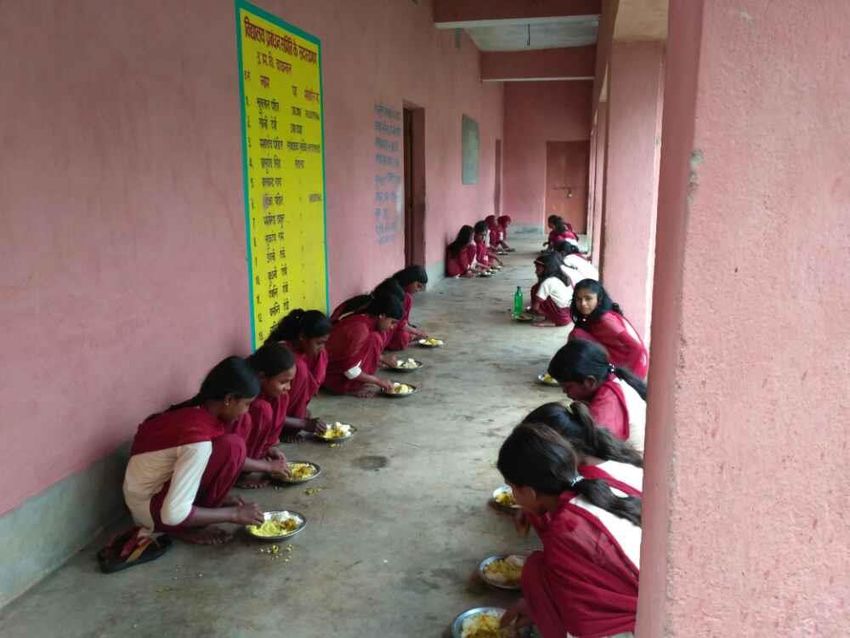
3     Wednesday From 08:00 AM to           One Boiled Egg/      Veg Pulao (Green Vegatables
                02:00 PM                  One apple/Banana     and Soya bean Burry/ Rice and
                                                                             Dal
4      Thursday    From 08:00 AM to          Two Buiscuits     Rice, Dal and Green Vegetables
                   02:00 PM
5       Friday     From 08:00 AM to         One boiled Egg/    Rice, Dal and Green Vegetables
                   02:00 PM                  One orange/
                                               Banana
6      Saturday    From 08:00 AM to               __              Khichedi/ Fried rice (green
                   11:30 PM                                     vegetables)/ Soya bean Burry,
                                                                Enriched with Palak) and Achar
                                                                          with padad
    (Note: - Egg Sabji (Egg Curry) must be provided once in a week in place of Boiled Egg.

        2.3.2 Additional Food items provided (fruits/milk/any other items), if any
              from State/UT resources. Frequency of their serving along with per
              unit cost per day.
              Menu is flexible with Rice, dal, green vegetables being the main menu with
              egg/bananas a week. The implementing agencies cook using the
              seasonally available vegetables. The meal provided is checked at random
              by various officials visiting schools. Whenever the quantity/quality is not as
              per the guidelines, suitable action is initiated against the concerned. All the
              eligible children are covered under this programme. To ensure that eggs/
              banana is served to children elaborate guidelines have been issued. For
              additional nutrition in mid day meal to children, Government of Jharkhand is
              providing eggs/ fruits to children thrice a week. Also Chief Minister of GoJ
              announced 200 ml of flavoured milk to 100000 children in urban areas of 8
              districts of Jharkhand i.e. Ranchi, khunti, Lohardaga, Gumla, Simdega,
              Latehar, Ramgarh and Hazaribagh.

        2.3.3 Usage of Double Fortified Salt,
              Double fortified salt is not available in Jharkhand. After availability the
              usage will be introduced.

        2.3.4 At what level menu is being decided / fixed,
              Menu for mid day meal has been scientifically made after consultation with
              all the districts represented by Saraswati Vahini Chairman, Sanyojika,
              Parents, Children, Teachers, District and Block Level Functionaries and
              experts of nutrition. The content of menu has been kept keeping in view of
              its dietary value and taste of the children of Jharkhand.

        2.3.5 Provision of local variation in the menu, Inclusion of locally available
              ingredients/ items in the menu as per the liking/taste of the children
              Menu is flexible with Rice, dal, green vegetables being the main menu with
              egg/ bananas a week. All the districts have been directed vide letter no. 435
              dated 04.03.14 to add variety in MDM menu in order to enhance the nutrition
              density per portion. Saraswati Vahinis are revising their menu keeping view
              of the local taste and nutrition value.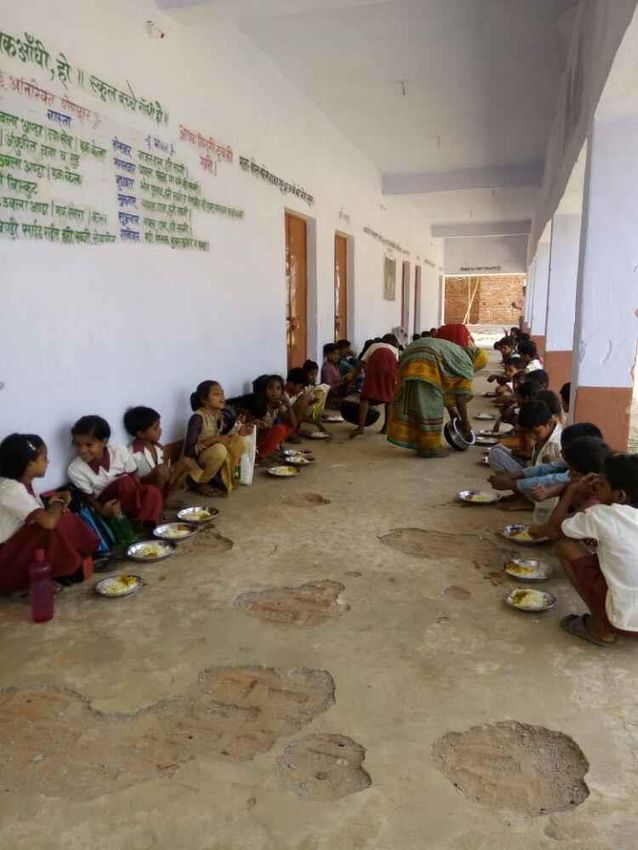
2.3.6 Time of serving meal.
            Mid day meal is being served at school level between 1.30 to 2.00 pm on
            week days Monday to Friday and on Saturday between 11.00 to 11.30 am.

2.4   Fund Flow Mechanism - System for release of funds (Central share and State
      share).
      2.4.1 Existing mechanism for release of funds up to school/ implementing
            agency levels.
            The state government releases the allotment provided under different
            activities of MDM (Central and State) under the sanctioned budget in State
            Budget. Director, Primary Education draws the allotted amount from the
            State Treasury on the basis of authority letter issued by the Accountant
            General, Jharkhand. Director, Primary Education draws the amount
            released by GoI for MDM Scheme and sends the same to the account of
            Jharkhand State Mid Day Meal Authority (JSMDMA). The Director of
            JSMDMA transfers the fund to the Districts MDM account on the basis of the
            demand and needs of districts as per actual children covered under MDM.
            The District Superintendent of Education of the concerned district E-
            transfers the amount received to individual accounts of Saraswati Vahini on
            the basis of actual no. of students serving MDM and keeping in view of the
            norms of the MDM.
            The Saraswati Vahini Chairman, Vice Chairman and Sanyojika of Saraswati
            Vahini jointly withdraw the amount from the account of the Saraswati Vahini
            on fortnightly basis to meet the needs of fuels, condiments, oils and
            vegetables etc. The visual depiction is given as below -

                         Flow of funds and Food grains
            Food grains       a. Cooking Cost
                             b. Honorarium to cooks
                             c. MME
                             d. Transportation Cost
                             e. Kitchen Devices
                             f. Kitchen Shed

                 FCI                                     HRD : DPE        Director, JSMDMA

                            District Wise allotment
                                 of food grains
                 SFC                                        DSE

            Block Godowns                              Saraswati Vahini

               Schools                            Chairman and Convener

                         Cooking by Saraswati Vahini

                             MDM to children

      2.4.2 Mode of release of funds at different levels,
            Included in 2.4.1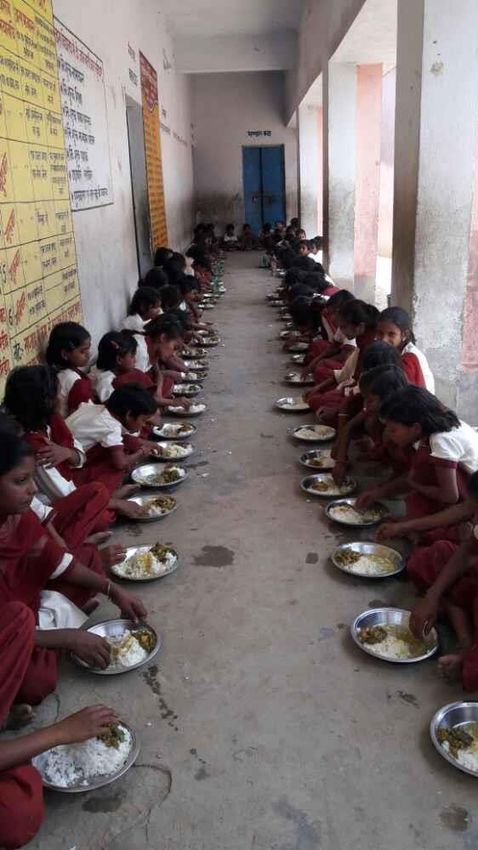
2.4.3 Dates when the fund released to State Authority / Directorate / District /
            Block / Gram Panchayat and finally to the Cooking Agency / School.
            Included in AT-2A of AWP&B Format.

      2.4.4 Reasons for delay in release of funds at different levels.
            PFMS (Public Financial Management System) is introduced in Jharkhand.
            For this reason, the set up of PFMS at state and district level took time. This
            is further being taken up at school level.

      2.4.5 In case of delay in release of funds from State/ Districts, how the
            scheme has been implemented by schools/ implementing agencies.
            The school has been instructed that if the amount is not available under the
            Mid-Day Meal Scheme, then any amount of money in the school can be
            used to run mid day meal.

      2.4.6 Initiatives taken by the State for pre-positioning of funds with the
            implementing agencies in the beginning of the year.
            After the expenditure incurred by the school, the next amount is made
            available. After expenditure by the agency, the amount is paid on the basis
            of the bill received from them.

2.5   Food grains management,

      2.5.1 Time lines for lifting of food grains from FCI Depot- District wise lifting
            calendar of food grains.
            Quarterly              Duration                    period of lifting
           grains lifting
            1st Quarter     April-June               1St March to 25th June.
            2nd Quarter     July-September           1st June to 25th September.
             rd
            3 Quarter       October-December         1St September to 25th December.
            4th Quarter     January-March            1St December to 25th March.

      2.5.2 System for ensuring lifting of FAQ food grains (Joint inspections at
            the time of lifting etc.).
            The problems regarding the availability of food grains, quality etc; are being
            addressed in the meeting with the officials of Food Corporation of India,
            Deputy Commissioner, Civil Supplies and Primary Education Department.
            Senior officials of these departments regularly visit at the time of allocating
            the rice by the Food Corporation of India. The quality of the food grain lifted
            is monitored by joint inspection of the grain being lifted by representative of
            FCI, Deputy Commissioner and District Superintendent of Education. The
            grain of FAQ is only allowed by the inspecting team for lifting under mid-day-
            meal.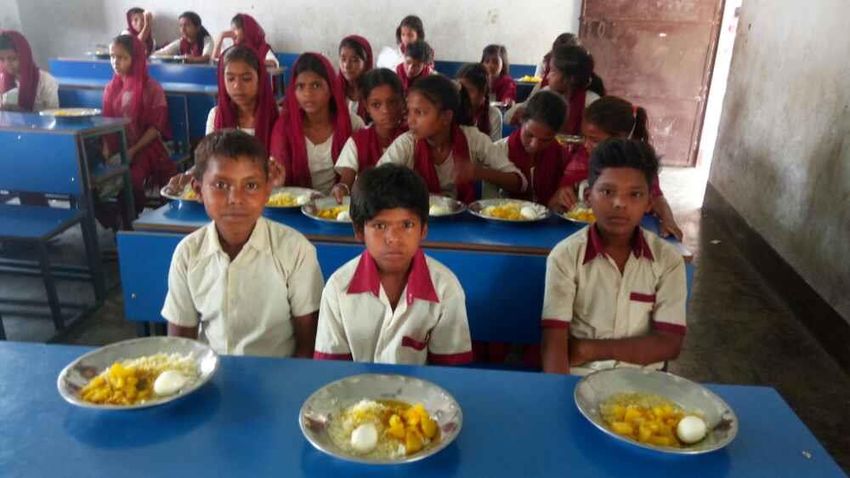
2.5.3 Is there any incident when FAQ food grain was not provided by FCI. If
      so, the action taken by the State/District to get such food grain
      replaced with FAQ food grain. How the food grain of FAQ was
      provided to implementing agencies till replacement of inferior quality
      of food grain from FCI was arranged.
      No such case reported in Jharkhand.

2.5.4 System for transportation and distribution of food grains.
      The GoJ has nominated State Food Corporation (SFC) to lift the grain from
      FCI to block level as per the demand based on the need of the serving
      children of the school. The FCI issue Release Order (RO) and on the basis
      of the RO the grain is lifted from FCI to block level for which transportation
      cost is paid to the SFC as per state norms. From block level under the
      supervision of Block Education Officer, the grains are transported from Block
      godown to schools by their respective Saraswati Vahini. Door step delivery
      has been applied for regular rice pick-up and un-interrupted running of Mid
      day Meal. Currently, door step delivery has been arranged in two districts. In
      the next two or three months, the Door step delivery will be initiated
      throughout the state.

2.5.5 Whether unspent balance of food grains with the schools is adjusted
      from the allocation of the respective implementing agencies (Schools/
      SHGs/ Centralized Kitchens) Number of implementing agencies
      receiving food grains at doorstep level.
      For future allocation of food grains, the balance food grains available with
      the school are deducted before giving next allocation of food grains.

2.5.6 Storage facility at different levels in the State/ District/ Blocks
      /Implementing agencies after lifting of food grains from FCI depot.
      The grains from FCI godowns are lifted by state food corporation and stored
      at block headquarters godowns given by block administration. But need is
      felt for constructing separate storage godowns for MDM grains. From block
      headquarters storage godowns the grains are lifted by school Saraswati
      Vahini and the lifted grains are stored in MDM kitchen shed or if need
      additional storage created in the school keeping view of the number of
      children and quantity of grains. The standard operating guidelines given for
      storage by Government of India and state MDM cell for its safe storage. The
      first cum first out policy is followed to ensure that the children get the fresh
      grains. Storage bins are kept in schools for safe storage. Following safety
      measures pest control and insecticides are used for safe storage.

2.5.7 Challenges faced and plan to overcome them.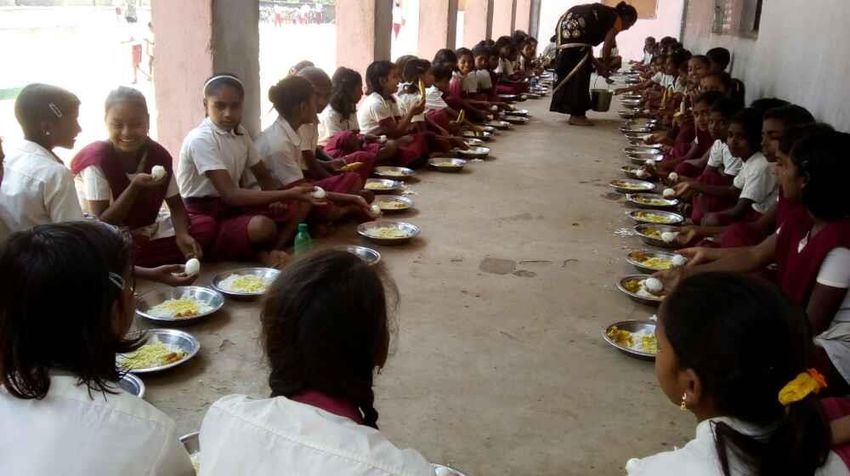
Storage of food grains is taken care of by the Headmaster and Implementing
             Agency. There is a need for storage place in some schools. The kitchen
             sheds are provided with storage facilities like storage bins, proper racks etc
             to overcome the storage problems.

2.6   Payment of cost of food grains to FCI.

      2.6.1 System for payment of cost of food grains to FCI; whether payments
            made at district level or State level
            Allocation of funds from Government of India are sanctioned and released to
            the Dept. of Education. Director, Primary Education draws the allotted
            amount from the State Treasury on the basis of Authority letter issued by the
            Accountant General, Jharkhand. Director, Primary Education draws the
            amount released by GoI for MDM Scheme and sends the same to the
            account of JSMDMA. Director, JSMDMA transfers the fund in the District
            account on the basis of requirement. The District official pays the bills of the
            food grains as raised by the FCI against lifting of the grains by the district.
      2.6.2 Status of pending bills of FCI of the previous year(s) and the reasons
            for pendency.

               pending bills till   bills raised in             payment made
                  2017-18               2017-18          pending bill    current bill
                    3524.02            2181.21             1622.77        1002.85

      2.6.3 Timelines for liquidating the pending bills of previous year(s).
            Reconciliation at State level is in progress. The pending bills will be cleared
            as soon as reconciliation work finishes.

      2.6.4 Whether meetings are held regularly in the last week of the month by
            the District Nodal Officers with FCI as per guidelines dated 10.02.2010
            to resolve the issues relating to lifting, quality of food grains and
            payment of bills.
            Direction has been given to all District Superintendent of Education for
            meeting with FCI on the issues of lifting, quality of food grains and payment
            of pending bills. On regular basis interaction with FCI authority done at
            directorate level by the state Nodal Officer. Any issues of concern are sorted
            out with consultations and mutual understanding.

      2.6.5 Whether the District Nodal Officers are submitting the report of such
            meeting to State Head quarter by 7th of next month.
            No.

      2.6.6 The process of reconciliation of payment with the concerned offices of
            FCI.
The FCI submits bills against lifting of grains to the District Level Nodal
             Officers of MDM that is office of District Superintendent of Educations. The
             DSE's in turn get it reconciliated with the actual lifting of grains by the Block
             level officials of Education Department (BEEOs) from the Release Order
             memos of every block. After this the Nodal Office of the MDM that is DSE's
             sends its officials to reconciliate the bills raised by FCI and the amount due
             for payment against bills raised is verified and then payment is made
             against allotment of funds by the State.

      2.6.7 Relevant issues regarding payment to FCI.
            FCI often refuse to release food grains on pretext of non-payment of cost of
            food grains. The FCI demands for arrear dues of payment of food grains
            cost of preceding years. In absence of matching grant of allotment of funds
            for food grains by the Government of India, Department of School Education
            and Literacy. The GoI gives allotment only for the current year. This results
            in some interruptions due to non-release of grains by FCI on time as per
            allotment of grains to the district.
            Hence it is requested to the Department of School Education and Literacy,
            GoI to release arrear dues of payment for food grains, so this issue could be
            sorted out. It is also requested that at the level of the GoI, MDM Directorate
            instructions should be given to FCI authorities at National Level that in no
            case the release of grains by FCI at state level be stopped against some
            delay in payment of cost of food grains.

      2.6.8 Whether there is any delay in payment of cost of food grains to FCI and
            steps taken to rectify the same.
            Efforts are being made for 100% payment of pending liability of cost of food
            grains to FCI.

2.7   Cook-cum-helpers

      2.7.1 Whether the State follows the norms prescribed by MHRD for the
            engagement of cook-cum-helpers or it has its own norms.
            Yes.
      2.7.2 In case, the State follows different norms, the details of norms
            followed may be indicated.
            The selection of cooks is done by Saraswati Vahini headed by VEC
            chairman. The cooks are amongst the members of mata samiti i.e. mothers
            of children studying in that particular school. The cooks are selected as per
            the norms of the MDMs, GoI which is as follow –
                 1.     upto 50 children - two cooks
                 2.     50-100 – one additional cook
                 3.     on every additional 100 after 100 – one cook
The appointing authority of cook and helpers is Saraswati Vahini after
      approval of the committee. In Jharkhand there is no bar on selection of
      cooks on the basis of caste, creed, religion or gender.

2.7.3 Is there any difference in the number of cook-cum-helpers eligible for
      engagement as per norms and the CCH actually engaged?
      No.

2.7.4 System and mode of payment, of honorarium to cook-cum-helpers and
      implementing agencies viz. NGOs / SHGs / Trust / Centralized kitchens
      etc.
      The allotment of funds as per the cooks serving in a district based on the
      enrollment and GoI norms to the districts. The districts in turn releases
      central and state share namely Rs. 600 per month as central share and
      Rs.400 per month as state share as per the new sharing pattern and norms
      of GoI. The cooks are paid honorarium for 10 months per year as the
      schools are closed for about 2 months and more as holidays in schools.
      Government of Jharkhand is providing additional Rs. 500 as honorarium to
      cook-cum-helper from the state share. This increase is effective from 15th
      September, 15.
      Hence a total of Rs. 600 per month as Central Share and Rs. 900 per month
      as state share is being provided.

2.7.5 Whether the CCH were paid on monthly basis.
      Yes. A cook is paid Rs. 1500 per month in which Rs. 600 per month as
      central share and Rs.900 per month as state share. Every cook is paid for
      10 months in a year.
      *Note Rs. 900 per cook per month as state share is effective from
      September, 2015.
2.7.6 Whether there was any instance regarding irregular payment of
      honorarium to cook-cum-helpers and reason thereof. Measures taken
      to rectify the problem.
      No such cases reported till date.
2.7.7 Rate of honorarium to cook-cum-helpers,

        Central Share       State Share       Total
           600.00             900.00         1500.00

2.7.8 Number of cook-cum-helpers having bank accounts,
      Around 79228 cook cum helpers have bank account i.e. 98%.

2.7.9 Number of cook-cum-helpers receiving honorarium through their bank
      accounts,
      Number of cook-cum-helpers having bank account - 79215
      No. of cases where payment is done through DBT – 40825
No. of cases where payment id done via NEFT - 38403
2.7.10 Provisions for health check-ups of Cook-cum-Helpers,
For the safe and hygiene cooking of mid day meal, it is necessary that
periodic medical check-ups of cook-cum-helpers to be done. All the children
studying in a school are covered under Health Department, School health
and hygiene programme. The health workers visit the schools on monthly
basis to check the health of the children and health card is maintained.
During that period the cooks are also medically checked by the health
workers. In case of any disease they are prohibited to cook the food under
MDM and referred to local PHCs.
2.7.11 Whether cook-cum-helpers are wearing head gears and gloves at the
time of cooking of meals.
Advisory have been given to all the districts for ensuring cooks to wear
head gears and gloves. The cooks are following this guideline and use to
wear them. Monitoring is done on regular basis to ensure this.
2.7.12 Modalities for apportionment of cook-cum-helpers engaged at school
level and working at centralized kitchens, in case of schools being
served through centralized kitchens,
Included in AT-21 of AWP&B Format
2.7.13 Mechanisms adopted for the training of cook cum helpers. Total
number of trained cook cum helpers engaged in the cooking of MDMs.
Details of the training modules; Number of Master Trainers available in
the State; Number of trainings organized by the Master Trainers for
training cook-cum-helpers.
At State level, 3 persons from each district have been trained as master
trainer. After this these three master trainer’s trained 3 persons from each
block as master trainer. Again these three block level master trainers
trained 3 persons from each cluster of the block as master trainer. Further
the cluster level master trainer trained the cook cum helpers of each cluster.
Total no. of trained cook cum helpers – 80288
Details attached herewith.
Number of Master Trainers available in the State - 72
2.7.14 Whether any steps have been taken to enroll cook-cum-helpers under
any social security schemes i.e Pradhan Mantri Jan Dhan Yojana, Pradhan
Mantri Suraksha Bima Yojana, Pradhan Mantri Jeevan Jyoti Bima
Yojana etc. and number of cooks benefitted through the same.
Efforts are being made for enrollment of cook-cum-helpers under social
security schemes. The same will be formulated in FY 2018-19.
2.8 Procurement and storage of cooking ingredients and condiments2.8.1 System for procuring g o o d q u a l i t y ( pulses, vegetables
including leafy ones, salt, condiments, oil etc. and other commodities.
Instructions vide letter no. 144 dated 28.01.2014 have been issued to all
districts for use of AGMARK or BSI mark ingredients under MDM and the
same is being followed. Regular monitoring of this issue is being done from
the State MDM cell.
2.8.2 Whether First In and First out (FIFO) method has been adopted for
using mdm ingredients such as pulses, oil/fats. Condiments salt etc.
or not.
Yes, the FIFO (First-in-First-out) method is being compulsorily followed in
all the schools of Jharkhand.
2.8.3 Arrangements for safe storage of ingredients and condiments in
kitchens.
The school kitchen is provided with storage facilities to overcome the
storage problems. The food grains are stored in storage bins.
2.8.4 Steps taken to ensure implementation of guidelines dated 13.02.2015
on food safety and hygiene in school level kitchens under Mid Day
Meal Scheme.
Every Saraswati Vahini chairman, sanyojika and cooks have been trained on
the issue of safety, nutrition and hygiene of mid-day-meal based on SOPs
given by GoJ. The Saraswati Vahini supervises the cooking of mid-day-meal
by the cooks in the school. The headmaster of the school gives the daily
attendance to the sanyojika and the sanyojika cooks the mid-day-meal as
per the menu of the day and the no. of attendance of the day. The quality of
food is checked by a member of Saraswati Vahini and a teacher of the
school as per roaster before serving it to the children. If the food is found
suitable then only it is served to the children and daily record maintained in
the Swad Panji of the school. Social audit of the mid-day-meal is also done
through Panchayati Raj representatives, members of VEC, SMC and
guardians on regular basis
2.8.5 Information regarding dissemination of the guidelines up-to school
level.
Through meetings, e-mails and wats-app group at state, district and block level.
2.9 Type of Fuel used for cooking of Mid-Day Meals –LPG, Smokeless Chulha,
Fire wood etc.
2.9.1 Number of schools using LPG for cooking MDM
2101
2.9.2 Steps taken by State to provide LPG fuel in MDM in all schools.
Amount for facilitating 100% gas based cooking in schools is already
transferred.2.9.3 Expected date by which LPG would be provided in all schools.
Expected by 2nd quarter of this FY.
2.10 Kitchen-cum-stores.
2.10.1 Procedure for construction of kitchen-cum-store,
As per the enrollment of the children and the norms decided by the GoI the
kitchen shed funds are released to districts as per their demand and need.
After that the funds are released to the respective Village Education
Committee of the school for construction of the Kitchen Shed. The Kitchen
Shed is constructed by the members of the School Education Committee
which is the committee of parents. The technical supervision of construction
of Kitchen Shed is done by the Engineers of SSA. After the completion of the
Kitchen shed the utilization certificate is collected and compiled by the block
level officials of Education Department. The utilization certificate is given by
the Secretary and Chairman of School Management Committee and VEC.
Based on this report of the SMC/VEC submitted through BEEO to the district.
The district sends the utilization to the State after construction; regular
monitoring is done by State, District and SSA technically. The status of
kitchen shed construction is annexed with the AWP&B performa tables AT-
11 and AT-11A.
2.10.2 Whether any standardized model of kitchen cum stores is used for
construction.
As per the model estimate given by the JEPC to state and circulated to
districts.
2.10.3 Details of the construction agency and role of community in this
work.
The responsibility for construction of kitchen shed is given to School
Management Committee.
2.10.4 Kitchen cum stores constructed through convergence, if any
In some districts kitchen sheds have been constructed under other
developmental schemes like IAP and BRGF. Dining halls also been
constructed under these schemes. Details of which have been given in
AT-11A of AWP&B proforma tables.
2.10.5 Progress of construction of kitchen-cum-stores and target for the next
year.
Included in AT-11 and AT-11A of AWP&B proforma tables.2.10.6 The reasons for slow pace of construction of kitchen cum stores, if
applicable.
In majority of the cases construction of kitchen shed is done as per
schedule but in some cases due to local problem and sometimes causity of
water availability in some waters deficient areas, there is slow pace of
construction of kitchen shed.
2.10.7 How much interest has been earned on the unutilized central
assistance lying in the bank account of the State/ implementing
agencies.
Data will be given soon.
2.10.8 Details of the kitchen cum stores constructed in convergence.
Details of the agency engaged for the construction of these kitchen
cum stores.
808 kitchen cum store in Bokaro district is constructed through
convergence in coordination with IAP fund.
2.11 Kitchen Devices
2.11.1 Procedure of procurement of kitchen devices f r o m funds released
under the Mid Day Meal Programme
As per the norms decided by the GoI the kitchen devices funds are released
to districts as per their demand and need. After that the funds are released to
the respective Village Education Committee/SVS of the school for
procurement of kitchen devices. The kitchen devices are procured by the
members of the School Education Committee/SVS which is the committee of
parents. After the procurement of kitchen device the utilization certificate is
collected and compiled at the block level officials of Education Department.
The utilization certificate is given by the Secretary and Chairman of School
Management Committee and VEC. Based on this report of the SMC/VEC
submitted through BEEOs of the district, the district level MDM cell of the
DSE office sends the utilization certificate to the State.
2.11.2 Status of procurement of kitchen devices
Included in AT-12 and AT-12A of AWP&B 2017-18.
2.11.3 Procurement of kitchen devices t h r o u g h c o n ve r g e n c e or
c o m m u n i t y/ C S R
As per financial rules and state norms by the Saraswati Vahinis.
2.11.4 Availability of eating plates in the schools. Source of procurement of
eating plates.
Eating plates are procured under “vidyala vikash kosh” fund.
2.12 Measures taken to rectify2.12.1 Inter-district low and uneven utilization of food grains and cooking
cost
No such measure issue has been reported in case of any such
mismatch the issue is checked and rectified if any and reasons behind
it is also analyzed.
2.12.2 Intra-district mismatch in utilization of food grains and cooking cost.
No such measure issue has been reported in case of any such
mismatch the issue is checked and rectified if any and reasons behind
it is also analyzed. In the monthly meeting at the state level all district level
officers have been instructed regarding mis-match in utilization of food
grains and cooking cost and they have been directed to run the MDM
programme without any deficiency. Also all district superintendent of
education have been instructed for timely delivering of cooking cost at
school level on requirement basis. It is instructed to check on regular basis
that one month extra cooking cost is available to all schools to run MDM
smoothly. Instructions have been given to all DSEs for timely payment of
cost of food grains to FCI. The same has been initiated all over the state.
2.12.3 Mismatch of data reported through various sources (QPR, AWP&B,
MIS etc)
Effective mechanism is prepared to look after the mismatch of data reported
through various ends. Also quarterly verification of record will be done at
state level. Further if required the data entry operators will be trained again
and problem will be looked after.
2.13 Quality of food
2.13.1 System of Tasting of food by teachers/community. Maintenance of
tasting register at school level.
Cooked meal is being tasted by the Headmaster of the school along with
teachers, saraswati vahini and VEC member before serving to the students. A
separate register is maintained in which name and signature of the concerned
teachers/community is registered with date after tasting of food.
2.13.2 Maintenance of roster of parents, community for the presence of at least
two parents in the school on each day at the time of serving and tasting
of mid day meal.
Every school is generally monitored and the record of which has been
kept at the school level in a register kept for MDM inspection. For
transparency details of MDM is displayed on notice board giving details of
number of children served MDM in a day against enrollment, quantity of
grains utilized and served.2.13.3 Testing of food sample by any recognized labs for prescribed nutrient
ion and presence of contaminants such as microbes-coli.
In Jharkhand no such lab is notified. However Civil Surgeon on need basis
tests the food samples as required. Instructions given to districts vide letter
no. 2591 dated 31.12.2013 for implementing the guidelines given by the
JRM. The Quality Test Laboratory accredited by National Accreditation
Board is being selected and necessary testing shall be ensured after
notifying the Quality test laboratory.
2.13.4 Engagement of/ recognized labs for the testing of Meals.
Included in 2.13.3.
2.13.5 Details of protocol for testing of Meals, frequency of lifting and testing
of samples.
NA
2.13.6 Details of samples taken for testing and the results thereof.
NA
2.13.7 Steps taken to ensure implementation of guidelines issued with regard
to quality of food.
NA
2.14 Involvement of NGOs / Trusts.
2.14.1 Modalities for engagement of NGOs/ Trusts for serving of MDM
through centralized kitchen.
Saraswati Vahini, a subcommittee of Village Education Committee has been
assigned the responsibility for implementation of the programme in all
concerned school in the State. On a pilot basis ISCKON has been assigned
to serve cooked meal in the 327 schools of East Singhbhum and 84 schools
of Saraikela-Kharsawan districts. Aanya Social Service Organistion has
given proposal for running Centralized kitchen for MDM in 721 primary
schools in Ranchi and Akshya Patra Foundation for running centalized
kitchen for MDM in 205 school of Bokaro District.
2.14.2 Whether NGOs/ Trusts are serving meal in rural areas.
No. In rural areas MDM is served through saraswati vahini, the body of
mothers of the school and the SMC members.
2.14.3 Maximum distance and time taken for delivery of food from centralized
kitchen to schools.
Within the radius of 20 Kms and nearly 30 minutes to deliver food between
centralized kitchen and school.
2.14.4 Measures taken to ensure delivery of hot cooked meals to schools.Headmaster and teachers of the concerned school jointly have the
responsibility of receiving of cooked meals at the schools from the
centralized kitchen. The centralized kitchen agency transfers the food
cooked from centralized kitchen to schools in a specialized container which
has the capacity of maintaining temperature of food at 60 degree after 4
hours of cooking. In other rural schools where the food is cooked in the
MDM kitchen of the school the food served is hot and freshly served on daily
basis.
2.14.5 Responsibility of receiving cooked meals at the schools from the
centralized kitchen,
Included in 2.14.4
2.14.6 Whether sealed containers are used for supply of meals to schools,
Yes
2.14.7 Tentative time of delivery of meals at schools from centralized kitchen
Nearly 30 minutes to deliver food between centralized kitchen and school.
2.14.8 Availability of weighing machines for weighing the cooked MDM at
school level prepared at centralized kitchen.
Yes.
2.14.9 Testing of food samples at centralized kitchens.
Incharge of centralized kitchen test the food samples on regular basis also
the Deputy Commissioner, District Education Officer, District superintendent
of Education, Regional Education officer and Block Extension Education
Officer also tests the food samples on timely basis.
2.14.10 Whether NGO is receiving grant from other organizations for the mid
day meal. If so, the details thereof.
NA
2.15 Systems to ensure transparency and accountability in all aspects of
programme implementation,
2.15.1 Display of logo, entitlement of children and other information at a
prominent visible place in school.
Instruction has been given to all DSEs for Emergency Plan to be finalized
and Telephone Nos. of Primary Health Center, District Hospitals,
Ambulance, Police; Fire Brigade should be painted at prominent places in all
the schools for immediate use in emergencies. Also the MDM logo along
with weekly menu is to be painted on the walls of school buildings.
Instruction has been issued vide letter no. 2590 dated 31.12.13 to the
officials of ISKCON centralized kitchen to ensure displaying of name and
logo of MHRD and MDM on the delivery vans distributing meals to theschools from the centralized kitchen. The same has been followed by
schools.
2.15.2 Dissemination of information through MDM website
The state level website is under process of construction.
2.15.3 Provisions for community monitoring at school level i.e. Mother
Roaster, Inspection register,
Every school is generally monitored and the record of which has been
kept at the school level in a register kept for MDM inspection. For
transparency details of MDM is displayed on notice board giving details of
number of children served MDM in a day against enrollment, quantity of
grains utilized and served.
2.15.4 Tasting of meals by community members,
Everyday member of the Saraswati Vahini/ SMC and a teacher used to
taste the quality of food prepared for serving MDM to the children before
serving it to the children every day and record is maintained in swad panji
of the school.
2.15.5 Conducting Social Audit
On periodic basis a social audit is done at the level of school and at the
level of panchayat and blocks is done. At school level mukhiya, ward
members, SMC members, parents use to visit the school and do the social
audit. At gram sabha meeting also MDM is reviewed at some districts.
2.16 Capacity building and training for different stakeholders
2.16.1 Details of the training programme conducted for cook-cum-helpers,
State level officials, SMC members, school teachers and others
stakeholders.
At state level the master trainers have been trained with support of GoI and
Akshya Patra in which the SMC chairman, Saraswati Vahini chairman and
cooks and saraswati vahini sanyojika have been trained and the issues of
safety, hygiene and nutrition of mid-day-meal using SOPs guidelines of GoI
are developed by the state MDM cell. The master trainers created for every
district organizes training of cooks and helpers, SMC chairman and sanyojika
at block level on periodic interval.
2.16.2 Details about Modules used for training, Master Trainers, Venues etc.
The training module developed by agencies of GoI has been incorporated
for the state and the same is used for training. The well trained master
trainers uses translated Hindi version of training module and SOPs for
training at ground level.
In training for better understanding of film on safe cooking, serving and
distribution of mid-day-meal, a short documentary film have beendeveloped by the state and same is also shown to the trainee cooks and
others related persons. Copy of the SOPs and soft copy of the
documentary is also been presented with the annual work and plan and
budget 2018-19.
2.16.3 Targets for the next year.
In Jharkhand 100% training of cook cum helpers is done. However if
required training on hygiene and any others aspects will be done on need
basis.
2.17 Management Information System at School, Block, District and State level and
its details.
2.17.1 Procedure followed for data entry into MDM-MIS Web portal.
Based on the reports of the SVS in the given format by GoI for school
level entry of data, school data is collected by the block level officers of
the Education Department and school wise data is entered into the MIS
portal.
2.17.2 Level (State/ District/ Block/ School) at which data entry is made
At district and block level.
2.17.3 Availability of manpower for web based MIS.
At Block level 1data entry operator and at District Level one data entry
operator is engaged. Need of additional MIS data entry operator has been
felt and will be engaged in FY 2017-18. Proposal for engaging specialized
manpower under MDM Authority setup from state to district has been kept
under the AWP&B.
2.17.4 Mechanism for ensuring timely data entry and quality of data.
Regular monitoring is being done by State Monitoring Cell. The MIS web
portal data entry operators at block and district level is trained. Facing any
difficulty guidance is give from the State Level MDM cell.
2.17.5 Whether MIS data is being used for monitoring purpose and details
thereof.
YES.
2.18 Automated Monitoring System (AMS) at School, Block, District and State level
and its details.
2.18.1 Status of implementation of AMS.
AMS already implemented in State of Jharkhand.
2.18.2 Mode of collection of data under AMS (SMS/IVRS/Mobile App/Web
enabled)
SMS.2.18.3 Tentative unit cost for collection of data.
Rs. 34/ month/ school are met with MME fund.
2.18.4 Mechanism for ensuring timely submission of information by schools.
Regular monitoring is done at state level. However facing difficulty in
sending SMS the teachers of the particular school contact the state level
data entry operators to solve the problem. Also where SMS is not sent on
regular basis, teachers are motivated telephonically.
2.18.5 Whether the information under AMS is got validated.
YES.
2.18.6 Whether AMS data is being used for monitoring purpose and details
thereof.
YES.
2.18.7 In case, AMS has not been rolled out, the reasons therefore may be
indicated along with the time lines by which it would be rolled out.
NA
2.19 Details of Evaluation studies conducted by State/UT and summary of its
findings.
Under Process
2.20 Write up on best/ innovative practices followed in the State along with some
high resolution photographs of these best/ innovative practices.
1. Additional Honorarium to cooks –
a. Logic - To increase the morale and workmanship of the healthy
management of the Mid-Day Meal Scheme.
b. Fact – Rs. 500 per cook per month for 10 months in a year is being given
in addition to matching state share.
c. Impact –
i. Rasoiya – Workmanship of the cooks.
ii. MDM – Healthy management and Improved quality of meal.
iii. Students– Nutritive food to children.
2. Door Step delivery –
a. Logic – Door step delivery has been applied for regular rice pick-up and
un-interrupted running of Mid day Meal.
b. Fact – Apart from central share of Rs. 750/MT state is contribution Rs.
200/MT in addition for door step delivery. Currently, door step delivery has
been arranged in two districts. In the next two or three months, the Door
step delivery will be initiated throughout the state.
c. Impact -i. Rasoiya – Rasoiya will be free from lifting of food grains from
block godown to school.
ii. MDM - Assured quality of food grains and Timely delivery of food
grains.
iii. Students – Daily food to children. MDM will not stop in the absence
of rice.
3. Supplementary Nutrition –
a. Logic – Under the supplementary nutrition, children will be given egg/
Fruit for the purpose of meeting the need for protein.
b. Fact – In the form of supplementary nutrition, egg/ fruit is provided three
days a week. For giving egg /fruit to children max. rs. 4.00 per egg per
student per day is made available in Saraswati Vahini's bank account.
c. Impact -
i. Health – Increase in nutritional level among children's health.
Important in brain development of children.
ii.
4. Distribution of LPG -
a. Logic – In view of the adverse impact of the health of the rasoiya and
environment, the Government of India directs that the system of LPG
based kitchen should be maintained in the school.
b. Fact – There is a total of 2101 schools in 39740 schools with LPG based
kitchens. The arrangement of LPG based kitchen will be done in 100% of
the schools in the year 2018-19. The amount has been released for this
purpose.
c. Impact –
i. Health – LPG based kitchen will not adversely affect the rasoiya
and children's health.
ii. Environment – LPG based kitchen will help in keeping the
environment safe. The environment can be protected from
contamination. Saving of wood.
iii. Covenience – LPG based kitchen will be friendly for all weather..
5. 200 ml fortified flavoured milk per child per day is provided for 10000 children in
35 schools of Latehar district by National Dairy Development boards (NDDB).
6. 100% inspection of schools have been done by the officials of the state on
quarterly basis.
7. 100% cook cum helpers and Sanyojika of Saraswati Vahini Sanchalan Samiti
(SVSS) have been trained by master trainer in 2017-18.
2.21 Untoward incidents
2.21.1 Instances of unhygienic food served, children falling ill.
No such incidents reported.2.21.2 Sub-standard supplies,
No such incidents reported.
2.21.3 Diversion/ misuse of resources,
No such incidents reported.
2.21.4 Social discrimination.
No such incidents reported.
2.21.5 Action taken and safety measures adopted to avoid recurrence of such
incidents. Whether Emergency Plan exists to tackle any untoward
incident.
No such incident of concerned has been occurred but state maintains zero
tolerance policy in MDM. Hence in case of any such occurrence
instructions is already given to all the districts for taking appropriate action
within 24 hours and report back the action taken report to state MDM cell
immediately thereafter.
2.22 Status of Rastriya Bal Swasthya Karyakram (School Health Programme)
2.22.1 Provision of micro- nutrients, de-worming medicine, Iron and Folic acid
(WIFS).
As per the direction the IFA Tablets and De-worming tablets are being
distributed to schools under Anaemia control programme and school health
programme of the health department. Regular monitoring is being done from
the State MDM Cell and all the districts to ascertain that no expired
medicines are circulated to schools.
Every school is covered under school health programme of NRHM and
NUHM programme. Every child has been given a health card and the health
workers visit the schools on monthly basis and maintain the record in the
health card. In case of need of specialized medical attention the case is
referred to PHCs for further medical help.
2.22.2 Distribution of spectacles to children with refractive error,
On regular basis the eyes of children are shown at the local PHCs and those
children whose eyes are found defective spectacles are distributed free of
cost in convergence with Health Department under National Rural Health
Mission Programme.
2.22.3 Recording of height, weight etc.
On regular basis height and weight is examined in schools and documented.
2.22.4 Number of visits made by the RBSK team for the health check- up of
the children.On Monthly basis health visits are made for routine check-up and if any child
is found to be need of special attention it is referred to local PHCs.
2.23 Present monitoring structure at various levels. Strategy for establishment of
monitoring cell at various levels viz. Block, District and State level for effective
monitoring of the scheme.
The state has a strong base of monitoring system from state to school level which is
shown hereunder through a flow chart :-
microlevel monitoring system
State level Monitoring Cell
•Officer In charge
•Monitoring Coordinator Information
Analysis
•Information Support Personnel
DSEs & BEEOs
District Level Monitoring Cell
•Officer In charge
Information
•Monitoring Assistant Analysis
•Information Support Person
BEEOs
Block Level Monitoring Cell
•Officer In charge
•Information Support Person
Schools and VECs
Vide notification no. 356 dated 03.02.06, the state government has organized three
tier monitoring committee at state, district and block level under the Chairmanship of
Chief Secretary, Deputy Commissioner and block development officer respectively.
The department has formed comprehensive micro level three tier monitoring system
at State, District and Block level Monitoring Cell. All level Monitoring Cell have the
telephone no. of the member of Village Education Committee/ Headmaster of
schools, where Mid-Day Meal Scheme is running. Monitoring cell randomly talk to
the Headmaster/Member of VEC/Teachers of that particular school and enquire
about the running of the scheme. It has been made compulsory to enquire at least
240 schools on every working day at State level, 25 schools at District and 25
schools at Block level individually. At State, District and Block level, individual officer
has been entrusted the task of monitoring.
Constitution of Committees for monitoring and supervision at various levels-
State level: Director, Jharkhand State MDM Authority has been designated for
constant monitoring of the Programme.
District level: District Collector is nominated as Nodal Officer for implementing the
Programme. Every month in District coordination meeting MDMS is reviewed with
the block level and District level officers. If any problem is reported it is addressed
immediately.Block level: Block level coordination committees meeting is held every month in which officials of all department is present. In the meeting if any problem is raised in connection with the implementation of the MDMS it is sorted out immediately. Guru Goshti: Every month guru goshti is held at the block level in which all the head teachers of the block are present. Meeting is chaired by the Block Education Extension Officer .In the meeting every school is reviewed and report is taken. School level: There are two committees functioning at the school level-Village Education Committee (VEC) and School Management Committee (SMC). Apart from above committee a sub-committee of VEC functions to implement MDMS and supervise the implementation of MDM in the school. Above Committees ensure that good quality food is provided to all children of the school. A memorandum of understanding has been signed with Bharat Sanchar Nigam Limited (BSNL) to provide landline to schools. In two thousand schools BSNL landlines have been installed. Till date monitoring from state/district/block level is done on the mobiles of the head teacher/VEC and SMC members. Almost in 20 % cases mobile is found not reachable or switched off. To overcome this we have decided to install BSNL landline in schools The department also takes quick action on the report, received in monitoring cell and according to need, necessary correspondence with Deputy Commissioner/ District Superintendent of Education of the concerned district has been made to solve the problem properly. In addition to the monitoring the state cell has developed a mechanism of training of manpower for stakeholders of MDM through the different level of monitoring agencies as follows :-
Capacity building in food safety
       Human Resource Development Dept.
                                                                      UNICEF
                     DPE

                                            SGS

                                Standard Operating Procedures
                                    Food Safety Protocols
                                            Film

                             State Level Training of DSEs & DEOs

                            District Level Training of BEEOs, BPOs,
                                           BRPs, CRPs.

                                 Cluster Level Training of the
                                       Saraswati Vahinis

2.24 Meetings of Steering cum Monitoring Committees at the Block, District and
     State level
    2.24.1 Number of meetings held at various level and gist of the issues
            discussed in the meeting,
            Steering committee has been constituted at state and district level and
            meeting is done on periodic basis. The last state level steering committee
            meeting was held in the month of March, 09 2018 and the next meeting is
            scheduled soon. The details of district level and block level steering cum
            monitoring committee is included in Table – AT 10 A of AWP&B 2018-19.

    2.24.2 Action taken on the decisions taken during these meetings.
           Actions are taken as per the suggestions and directions of the steering
           committee at state and district level.

2.25 Frequency of meeting of District Level Committee held under the chairmanship
     of senior most MP of the District to monitor the scheme. Gist of the issues
     discussed and action taken thereon.
     On Quarterly basis this meeting is held in districts under the chairmanship of local
     MP in which all MLAs, Member of Jila Parishad and Municipal parties participate in
     addition to the DCs and other officials as per the instructions of the District Level
     Monitoring Committee recommendations and actions are being taken thereof.

2.26 Arrangement for official inspections to MDM centers/schools and percentage
     of schools inspected and summary of findings and remedial measures taken.
Sl. Level of No. of Number Total No. Remarks*
No monitoring school of days of schools
s/day per year monitored
1 State Level 240 245 58800 Some schools are reviewed even
twice in a year. The problem
schools are re monitored after 3
days to verify ATR.
2 District Level 25 245 147000 The no. of schools monitored
includes all the 24 districts. Hence
a school is monitored more than 3
times in a year.
3 Block Level 25 245 1586375 The no. of schools monitored
includes the figure of all the 259
blocks of State
4 Grand Total 1792175 Hence through various
monitoring levels schools are
monitored for MDM for multiple
times to ensure that MDM is not
hampered.
2.27 Details of the Contingency Plan to avoid any untoward incident. Printing of
important phone numbers (eg. Primary health center, Hospital, Fire brigade
etc) on the walls of school building.
We have decided to install TOLL FREE telephones at State/ District headquarter so
that any irregularity if found can be addressed immediately. Apart from this every
school have been instructed to write the phone numbers of State/ District/ Block
monitoring cell on the wall of the School so that villagers can contact and inform the
status of MDMS. The phone numbers of local PHCs, fire brigades and nearby
police stations are also written on the kitchen sheds in case of need at emergent
time.
2.28 Grievance Redressal Mechanism
2.28.1 Details regarding Grievance Redressal at all levels,
Grievance Redressal is done through state, district and block level monitoring
cell which has been empowered and directed to do grievance redressal on
no tolerance policy within 24 to 72 hours as per need and follow up action is
regularly monitored by the State
2.28.2 Details of complaints received i.e. Nature of complaints etc.
ATNs on the complaints received during FY 2017-18 have already been sent
to GoI for necessary action.
2.28.3 Time schedule for disposal of complaints,On interruption of MDM within 24 hours. On report of any incident of major
concern within 3 hours of reporting and other complaints within 72 hours.
2.28.4 Details of action taken on the complaints.
Every district takes immediate action on the receipt of complaints
2.29 Details regarding Awareness Generation & Information, Education and
Communication (IEC) activities and Media campaign, carried out at
State/district/block/school level.
On regular basis through department of PRD mass media awareness programme is
done by publication of advertisements, rising of hoardings and training of SMC and
VEC members and organizing workshops of PRI members
2.30 Overall assessment of the manner in which implementation of the programme
is contributing to the programme objectives and an analysis of strengths
and weaknesses of the programme implementation.
MDMs have motivated children especially belonging to disadvantaged and
weaker sections of the society.
Community participation through Saraswati Vahini at school level is the
strength of MDMs.
The scheme is very popular all over the state and particularly in the tribal
belts. The students are developing better eating habits since the scheme has
been totally decentralized, the community participation has increased.
Mother’s involvement in supervision of cooked meal is helpful in the
development of the community participation among villagers.
The dropout rates have been reduced. Mid Day Meal is very helpful to
overcome the problem of classroom hunger. Besides it is helping egalitarian
values, as children from various social backgrounds learn to sit together and
share a common meal. The general gap in school participation tends to
narrow.
2.31 Action Plan for ensuring enrolment of all school children under Aadhaar
before the stipulated date.
2.32 Contribution by community in the form of Tithi Bhojan or any other similar
practices in the State/ UT etc.
Not Applicable.
2.33 Availability of kitchen gardens in the schools. Details of the mechanisms
adopted for the setting up and maintenance of kitchen gardens.
Details of kitchen gardens in schools is included in AT-10F of AWP&B. Schools with
land, boundary and proper water facility is directed for setting up and maintenance of
kitchen gardens.
2.34 Details of action taken to operationalize the MDM Rules, 2015.You can also read


