NNN Conference 2020 Welcome to the - Accelerating to 2030: Building Resilient NTD
←
→
Page content transcription
If your browser does not render page correctly, please read the page content below
Welcome to the
NNN Conference
    2020
Accelerating to 2030:
Building Resilient NTD
  Programmes in a
   Changing World
                                                         Virtual Event
   With thanks to our              8 th   –   10 th   September 2020
       sponsors

                         ntd-ngonetwork.org
Workshop 1.4                                8 September 2020
   Applying gender equality and inclusion in NTD
 interventions to achieve equitable health services
      Examples from the Every Child Thrives project

#GenderEquality   #HealthForAll           #ÉgalitéGenre #SantéPourTous

                                  ntd-ngonetwork.org
Welcome

Workshop objectives
• Understand key gender equality and inclusion concepts and
  how to apply a gender lens to NTD interventions
• Learn about integrating gender equality into NTD interventions
  through an example of a deworming intervention for preschool
  age children
    ‒Every Child Thrives project and gender equality integration in
     Côte d'Ivoire and in Kenya
• Discuss the application of gender equality integration and
  mainstreaming to NTD programmes
    ‒Open forum: Q&A session
    ‒Breakout discussions

                             ntd-ngonetwork.org
Introductions
Workshop Leads:
• Sara Marshall, effect:hope and Dr. Julien Ake, Coptiment

Speakers:
• Karen Craggs-Milne, CEO of Conscious Equality Inc.
• Dr. Oka Kouamé, Director of National Nutrition Programme,
  Ministry of Health and Public Hygiene, Côte d'Ivoire
• Joseph Anyango, Every Child Thrives Project Coordinator,
  Kenya

                           ntd-ngonetwork.org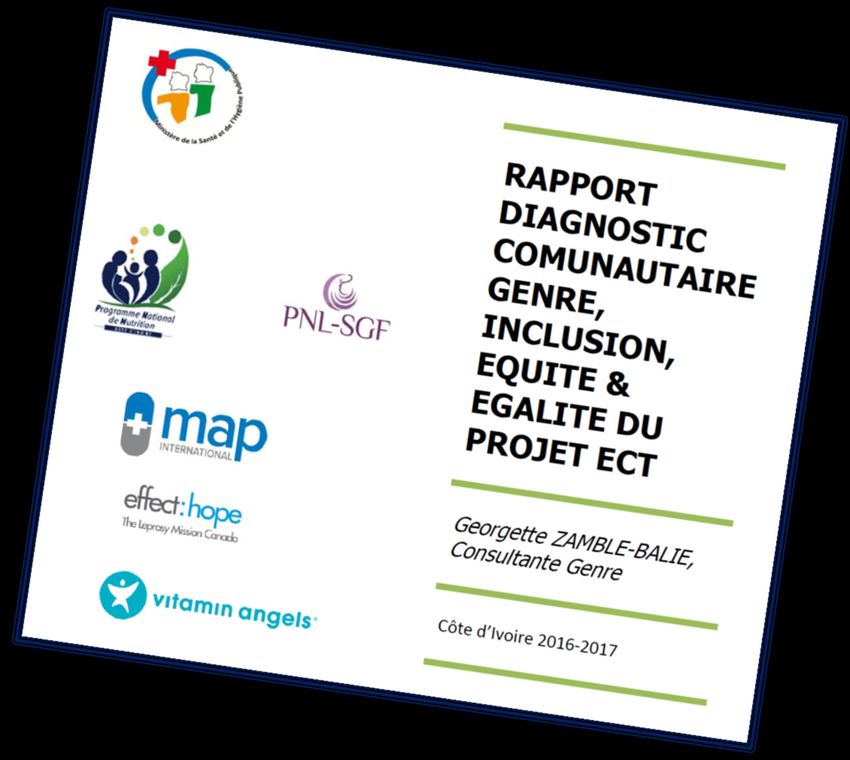
What is your familiarity with gender and inclusion?
Vote here

                       ntd-ngonetwork.org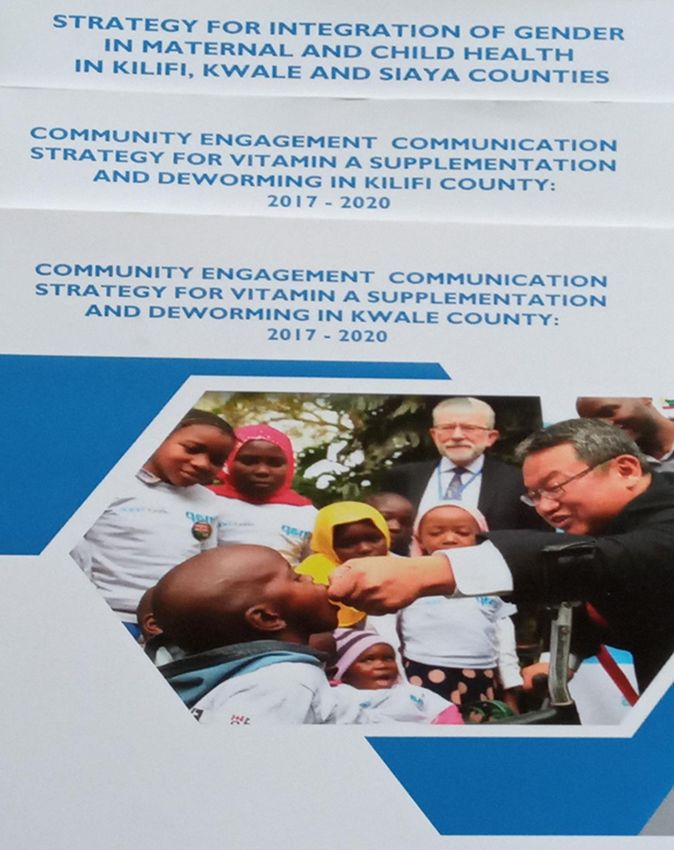
Gender Equality and Inclusion Concepts

                              PRESENTED BY

                    KAREN CRAGGS-MILNE
              CONSCIOUS EQUALITY INCOPORATED
                          WWW.KARENCRAGGS.COM

•   Sex vs. gender
•   Equality vs. equity
•   Discrimination
•   Gender integration, mainstreaming and transformation
•   Gender based analysis

                                 ntd-ngonetwork.org
SEX VS GENDER

SEX = BIOLOGY                            GENDER = ROLES & EXPECTATIONS
Source: https://beyondwordsstudio.com/wp-content/uploads/2019/07/Lancet-social-media-asset-sex-vs-gender.png

                                                 ntd-ngonetwork.org
EQUALITY VS EQUITY

TREATING EVERYONE THE SAME   ADDRESSING DIFFERENCES

                      ntd-ngonetwork.org
TACKLING DISCRIMINATION ON 2 LEVELS

 ISSUES                LEVELS

 ACCESS                INDIVIDUAL

 CONTROL & DECISION-   HOUSEHOLD&
 MAKING                COMMUNITY

 RIGHTS                INSTITUTIONAL

 GENDER BASED          SYSTEMS
 VIOLENCE

                   ntd-ngonetwork.org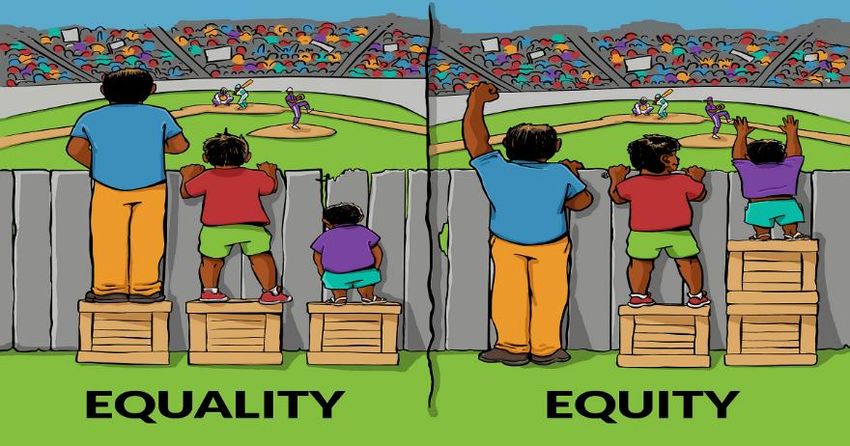
GENDER INTEGRATION, MAINSTREAMING
  & TRANSFORMATION

 GENDER                                   GENDER        TRANSFORMATION
 INTEGRATION                              MAINSTREAMING

Source: https://twitter.com/AbilityRev/status/1087545255782744064/photo/1. Graphic cred: Erik W. Carter, Vanderbilt University

                                                        ntd-ngonetwork.org
GENDER BASED ANALYSIS PLUS
GENDER
STRATEGY
ROLES GENDER EQUALITY
NEEDS RESULTS
BARRIERS PLANNED ACTIVITIES
OPPORTUNITIES ALLOCATED
RISKS RESOURCES
Source: GBA - https://www.justice.gc.ca/eng/abt-apd/pgbap-pacsp.html
https://slideplayer.com/slide/3315659/
ntd-ngonetwork.orgOverview of Every Child Thrives project
Speaker: Sara Marshall
Combined Deworming and Vitamin A Supplementation for
children under five
• Outcomes and approach of the project
• Gender analysis and strategy for project implementation
ntd-ngonetwork.orgEvery Child Thrives (ECT) project
Contributed to the reduction of child mortality by providing
essential combined deworming and vitamin A
supplementation to boys and girls under 5 years (6 to 59
months of age)
ECT integrated deworming with nutrition and immunisation
services for preschool children in Kenya and Côte d’Ivoire
• Strategies for distribution to reach all children included
health facilities, early childhood development centres,
community outreach
• Addressed gender equality barriers to reach all girls and
boys, including children with disabilities
ntd-ngonetwork.orgCombined Deworming & Vitamin A Intervention
Both interventions
give benefit to the
Chemotherapy Treatment
& Iron Supplementation
child
of Preventative
Administration
In-Sync Intervention
Micronutrient
Mass Drug
adds even greater
child
Every Child benefit to each
Thrives.
The opportunity for
health & growth is
fostered
ntd-ngonetwork.orgEvery Child Thrives (ECT) project
Project duration: March 2016 to March 2020 (4 years)
Côte d'Ivoire Kenya
8 Regions: Agnéby-Tiassa, Mé, 3 Counties: Kilifi, Kwale, Siaya
Bélier, Bounkani, Gontougo, Gbeke,
Gôh, Indénie-Djuablin
ntd-ngonetwork.orgECT Gender Equality Strategy
Community gender-based Gender equality strategy framework
analysis findings
1. Need to promote a gender sensitive 1. Gender inequality, lower status of women
community environment and lack of decision-making by women
2. Need to improve decision-making capacity
of women
3. Need to promote partnerships between 2. Intra-household inequality with differential
women and men to promote healthy health impacts on girls and boys
relationships
4. Need to increase involvement of men in 3. Lack of male involvement in maternal and
MNCH child health
5. Need to develop greater gender awareness 4. Gendered dimensions of NTD programmes
towards (within) health programmes and
facilities
6. Need to support people with disabilities
7. Need to improve and collect 5. Insufficient data collection
disaggregated data
8. Need to develop program capacity to Additional
deliver gender and inclusive NTD
programming
ntd-ngonetwork.orgECT Gender Equality Strategy
• ECT Gender equality strategy was adapted to each country
and implementation plans were developed to integrate
gender activities into the deworming and VAS
programming.
• ECT contributed to application of gender lens in MOH
programme delivery, data collection, policies and plans, and
community engagement to improve equity in relation to
gender and disability.
• Examples of ECT gender-related activities and achievements
in each country will be shared, to demonstrate how gender
equality and inclusion can be integrated or mainstreamed
into NTD programmes.
ntd-ngonetwork.orgGender equality integration into a health programme
from Ministry of Health perspective in Côte d'Ivoire
Speaker: Dr. René Oka Kouamé MD, MPH, Director of
National Nutrition Programme, Côte d’Ivoire
• Approaches for integration of gender equality strategy and
activities into interventions
• Performance of project
• Lessons learnt
• Way forward
ntd-ngonetwork.org⌂ 8 Health Regions
⌂ 32 Health districts
⌂ Total Population 2019
Female: 2,664,231 (52%)
Male: 2,459,290 (48%)
⌂ Population of children 6
to 59 months:
Girls: 693,245 (52%)
Boys: 639,919 (48%)
ntd-ngonetwork.orgApproaches for integration of gender equality
strategy and activities into interventions
ntd-ngonetwork.orgSituation Analysis
Status of STH infection and vitamin A deficiency
• Vitamin A deficiency: 30%. Children 6 to 59 months are at
risk
• 113/113 (100%) health districts are endemic for STH
• The combination of STH infection and lack of vitamin A =
public health problem
•Eye conditions and blindness;
•Malnutrition;
•Anaemia: 74.8% of children under 5 are suffering
anaemia;
•Decline in school performance (Absenteeism)
ntd-ngonetwork.orgSituation Analysis
Community Gender Equality, Equity and Inclusion
Analysis
Inequalities:
‒Predominantly masculine decision-making power
‒Non-involvement/low engagement of men in maternal
and child health given gender prejudices and stereotypes
‒Discriminatory practices in sharing of meals and proteins,
at the expense of women and girls
ntd-ngonetwork.orgSituation Analysis
Community Gender Equality,
Equity and Inclusion Analysis
Assets:
‒Lack of particular beliefs
attached to vitamin A and
deworming and a
favourable reception of
communities toward these
‒Deworming and vitamin A
are given to all children
without distinction of sex
ntd-ngonetwork.orgPlanning and Implementation
ntd-ngonetwork.orgLeadership and Governance
• Revision of national guidelines on vitamin A and deworming
to include the concepts of gender and disability
• Development of gender strategy document for ECT project
• Establishment of two technical working groups; one for
nutrition and another for vitamin A and deworming
• Establishment of multisectoral coordination with interior,
education and social affairs ministries (for families, women,
people with disability)
ntd-ngonetwork.orgntd-ngonetwork.org
Health Personnel and Community Volunteers
 Actors                       Number Capacity Building Theme
Ministry of Health Central      48   • Training of Trainers
Level                                • Supervision
                                     • Awareness, advocacy
Ministry of Health Regional    2,741   • Training
and District Levels                    • Supervision
                                       • Awareness
                                       • Distribution in health centres
Ministry of Health              32     • Awareness
communications focal points            • Relations with local radio stations
Local Radio Agents              32     • Mass media awareness
Community Health Workers      17,294 • Community distribution
                                     • Awareness

                                ntd-ngonetwork.org
Service Delivery
• Development and use of gender-sensitive health
training and promotion tools (training manuals,
directives, guides, public announcements, posters,
flyers, community radio broadcasts)
• Combined deworming and vitamin A administered to
girls and boys twice a year in mass campaigns and
routine services
• Official campaign launches by highest authorities of
Ministry of Health with gender-sensitive messaging
ntd-ngonetwork.orgntd-ngonetwork.org
Health Information

• Development of data collection tools that
  systematically take gender and disability variables into
  account in data collection
• Conducted post-coverage surveys to assess and
  improve future mass distribution activities and
  deworming and vitamin A coverage
• Ongoing progress toward integrating the
  disaggregation of data by sex and age in DHIS2

                         ntd-ngonetwork.org
Project Performance
% of health districts covered by the project: 100% (32/32)
Number of Community Health Volunteers trained:
►Women 5,818 (34%)
►Men 11,476 (66%)
Use of new data collection tools in in 100% of districts
Graphics source: https://www.vecteezy.com/free-vector/coronavirus; https://www.vecteezy.com/free-vector/surveys
ntd-ngonetwork.orgProject Performance
Vitamin A and Deworming coverage rates for girls and boys under 5
years who received 2 doses in the previous 12 month period
Results from ECT Baseline, Midterm Review and Endline Evaluation Studies
ntd-ngonetwork.orgLessons Learnt
Successes
• Nutrition Programme partnership with other sectors
(education, social affairs, women and family) and
Immunization Programme, NTD Programme
• Support at the highest level of Ministry of Health in
the promotion of gender equality
• Growing involvement of fathers in their children's
health and care
ntd-ngonetwork.orgLessons Learnt
Challenges
• Inclusion of sex-disaggregated data in DHIS2
• Women's involvement in community mobilisation: the
selection of women for distribution of deworming and
vitamin A
• Sustainability of achievements (competence in the
promotion of gender)
ntd-ngonetwork.orgWay Forward
• Continue raising awareness for more involvement of
men in children's health
• Continue raising awareness for more participation of
women in social mobilisation
• Ensure the ongoing training of actors in gender
equality
ntd-ngonetwork.orgGender equality integration into a health programme
from NGO partner perspective in Kenya
Speaker: Joseph Anyango, ECT Project Coordinator, Kenya
• Approaches for integration of gender equality strategy and
activities into interventions
• Outcomes
• Lessons learnt
• Way forward
ntd-ngonetwork.orgSituation Analysis
• Deworming and vitamin A supplementation are delivered in
separate vertical health programmes that are often school
based and preschoolers (aged 12 - 36 months) are missed
from these programmes
• Community Based Gender Analysis (CBGA):
‒No gender equality protocols had been developed for
any health services
‒Women are involved in seeking services, whereas men
facilitate their travel and take care of other children
‒Societal norms and attitudes are a big deterrent to male
involvement in MNCH services
ntd-ngonetwork.orgDevelopment of Strategies and Guides
1. Gender Equality and
Inclusion Strategy
prioritized information that
enhances uptake of
deworming and vitamin A
through gender sensitive
and participatory
community health
communication
methodologies.
ntd-ngonetwork.orgDevelopment of Strategies and Guides
2. Community Communication Engagement Strategy to
increase deworming and vitamin A uptake through
initiatives that overcome gender-related barriers to
equitable access to and utilisation of services by women,
men and boys and girls. This strategy was culturally
responsive for the target sites.
3. Training and Reporting Tools: Capacity of project staff
and health personnel was developed to understand
integration of gender equality and inclusion in all stages
of programming.
ntd-ngonetwork.orgPlanning, Implementation, Monitoring & Evaluation
• ECT Project planning implementation and monitoring was
done through the various technical working groups, coordination,
and management meetings, and training activities both at County
and National levels where achievements and best practices were
shared and bottlenecks addressed.
• County teams ensured that the contextually specific insights
gained from the CGBA process and project reports were actively
infused and integrated into programmatic activities to shape
how the activities are undertaken and thus ensure effective
outcomes for the program.
• As a result, plans, service delivery and post-event monitoring and
reporting mainstreamed gender equality and inclusion.
ntd-ngonetwork.orgSupportive Supervision
effect:hope, HKI and County Health Leadership conducting supervision visit
at Rabai Health Centre, Kilifi
ntd-ngonetwork.orgProject Results
Number of health Combined deworming
personnel trained: & vitamin A coverage:
►Women 8,308 (66%) ► 78.6% of girls
►Men 4,253 (34%) ► 79.8% of boys
Use of new data collection tools in all 3 counties
Graphics source: https://www.vecteezy.com/free-vector/coronavirus; https://www.vecteezy.com/free-vector/surveys
ntd-ngonetwork.orgOutcomes
1. The vitamin A and deworming reporting tools were
engendered to capture the gender aspects in the
responsive combined deworming and vitamin A
programmes for girls and boys under 5.
2. Community Gender Dialogue leaders continue to
promote men’s participation and women’s decision-
making for positive child health outcomes.
3. Focus Group Discussions at community and county levels
were used to monitor the gender integration and
progression during evaluations.
ntd-ngonetwork.orgLessons Learnt
Successes
1. Data collection and reporting tools currently in use are
disaggregated in age, sex and ability in the 3 counties.
2. Vitamin A and deworming training materials and job
aids integrating gender have been developed for
Community Health Volunteers and Health Workers and are
in use to improve gender programming.
3. Gender Equality Strategy and Community
Communication and Engagement Strategy are in use by
the county health teams and volunteers to mainstream
gender in programming.
ntd-ngonetwork.orgLessons Learnt
Challenges
1. Even though the data is disaggregated by sex in the
counties, it has not been captured in the Kenya Health and
Information Systems national platform.
2. High turnover of health staff and community health
volunteers has affected the smooth cascade of gender
activities to the frontline health workers.
ntd-ngonetwork.orgWay Forward
• For sustainability, sharing the ECT gender integrated vitamin
A and deworming toolkit with other counties for training
health workers and community volunteers in conducting
the gender-responsive combined intervention.
• There is need to advocate for the county health teams to
allocate resources to train and roll out gender programming
in health for improved wellbeing.
ntd-ngonetwork.orgSummary of key lessons learned from Every Child
Thrives project
Speaker: Sara Marshall
Common lessons and considerations for future
• Need to understand the context of health interventions and the
gender-related attitudes and barriers existing outside of the
NTD programme (E.g. in Nutrition, Education, community health
system, governance structures, society)
• We observed different trends in the proportion of men and
women health personnel and distributors, which can have
implications for service delivery
• Specific investment and budgets are required for gender
equality and inclusion activities in order to address systemic
barriers
ntd-ngonetwork.orgSummary of key lessons learned from Every Child
Thrives project
Common lessons and considerations for future
• Collecting data on disability was challenging, requiring a
better understanding of disability by the community
distributors and addressing negative attitudes about
disability
• Need for ‘whole-of-society’ approach and intersectoral
partnership with Ministries for Women/Gender Equality and
Disability/Social Welfare, people from government,
organisations, community groups.
ntd-ngonetwork.orgOpen Forum
Moderator: Dr. Julien Ake
Type your questions in the Chat box
on the Workshop page in the
NNN virtual platform
Graphics source: https://www.vecteezy.com/free-vector/answer
ntd-ngonetwork.orgBreakout Session
Discussion in Breakout Rooms (15 minutes)
Q1 - What are the key points you have taken from the
workshop on integrating gender equality and inclusion into
NTD interventions?
Q2 - How can gender equality and inclusion be integrated
into the NTD interventions you work with?
And what actions can you take in the coming months to
improve the interventions?
Graphics source: https://www.vecteezy.com/free-vector/organization
ntd-ngonetwork.orgBreakout Session
Summary of feedback from Breakout Rooms
• Share 2 to 3 points from each group
Graphics source: https://www.vecteezy.com/free-vector/organization
ntd-ngonetwork.orgConclusion
• Summary of Remarks
• Importance of gender equality and inclusion for resilient
NTD programmes and reaching all people affected by NTDs
‒ NTDs can impact men and women in different ways
‒ people of different genders can experience NTDs differently
‒ Ministries of Health and NGOs need to
consider gender differences in their responses to NTDs and
make interventions more equitable by looking at health services
through a gender lens
‒ MDA programs have the potential to reach marginalized
groups and address gender (and other) inequalities
ntd-ngonetwork.orgTHANK YOU FOR PARTICIPATING!
ntd-ngonetwork.orgntd-ngonetwork.org
You can also read


