Georgia Board of Public Health - Dec. 10, 2019 - Georgia DPH
←
→
Page content transcription
If your browser does not render page correctly, please read the page content below
Georgia Board of Public Health
                                 Dec. 10, 2019

                                    GEO RGIA DEPART MEN T O F PUB L IC H EAL T H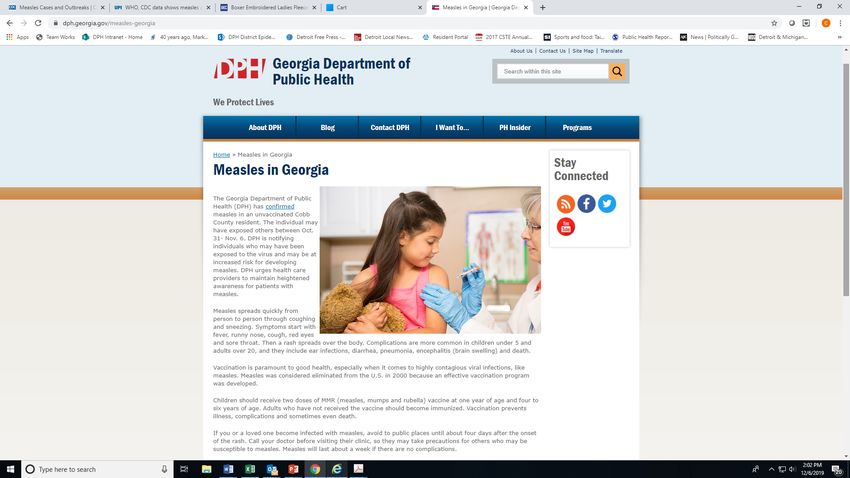
Agenda
• Call to order                    James Curran, M.D., Board Chair
• Roll Call                                 Mitch Rodriguez, M.D., Secretary
• Approval/Adoption of Minutes            Mitch Rodriguez, M.D., Secretary
• Commissioner’s Update          Kathleen E. Toomey, M.D., M.P.H., Commissioner

                                                   GEO RGIA DEPART MEN T O F PUB L IC H EAL T H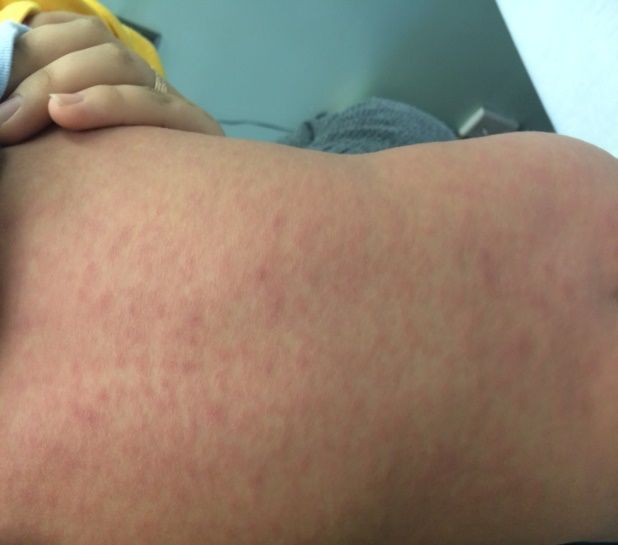
Epidemiology Update: Measles

Board of Public Health / Cherie L. Drenzek, DVM, MS / State Epidemiologist / Dec. 10, 2019

                                                                              GEO RGIA DEPART MEN T O F PUB L IC H EAL T H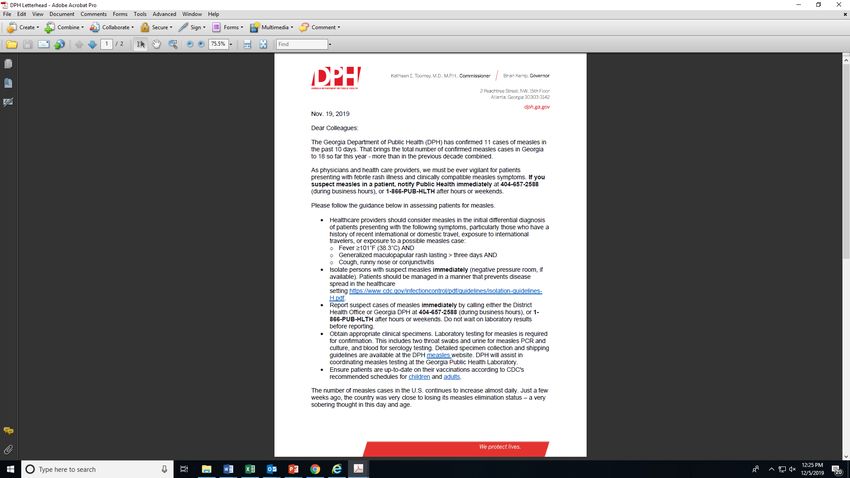
Overview
•   Measles Background/Landscape
•   Epidemiology of Measles (Global, National, and Georgia)
•   Measles Outbreaks
•   Recent Measles Outbreak in Georgia
•   Take Home Messages/Prevention

                                                        GEO RGIA DEPART MEN T O F PUB L IC H EAL T H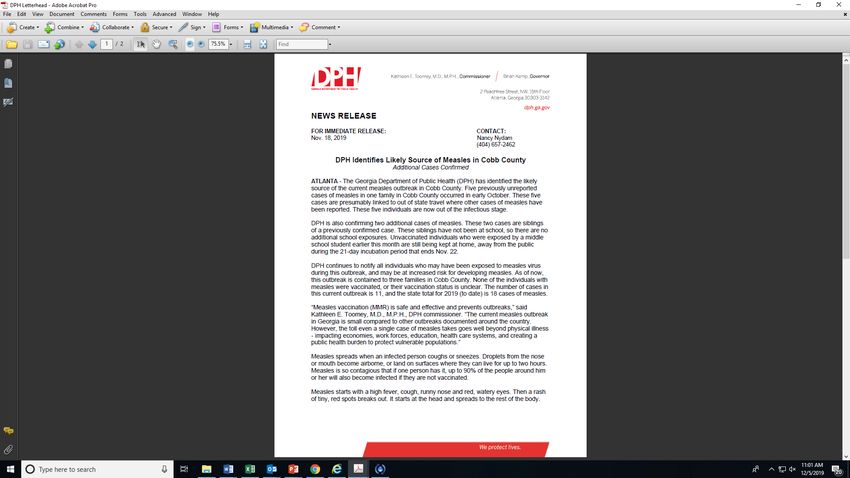
Measles Landscape
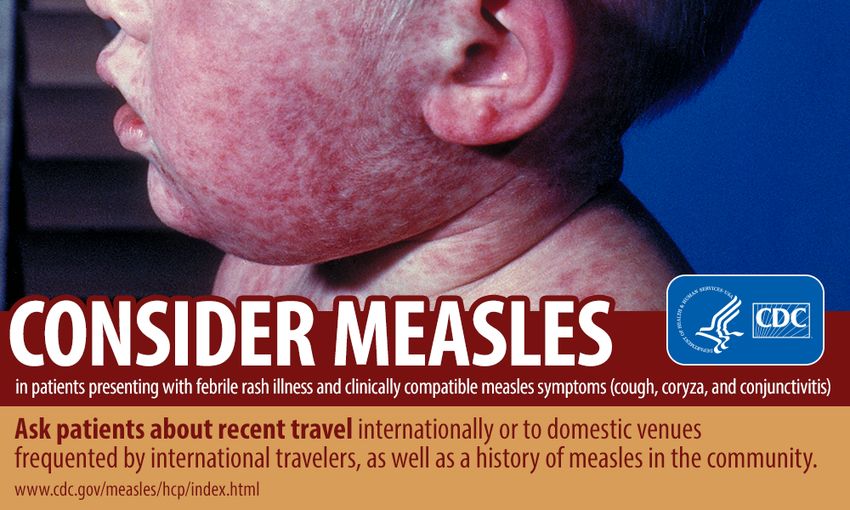
• Measles is viral illness characterized by fever, rash, and the 3 Cs
  (cough, coryza, and conjunctivitis)
• Unique among infectious diseases in that it is considered one of
  the most highly contagious of all.
     o   Spreads when an infected person coughs or sneezes
     o   Contagious 4 days before through 4 days after rash develops
     o   Remains in the air or on surfaces for up to 2 hours
     o   Attack rate 90% among susceptible contacts

•   However, is also highly preventable with MMR vaccine

•   Eliminated from the United States in 2000

                                                                        GEO RGIA DEPART MEN T O F PUB L IC H EAL T H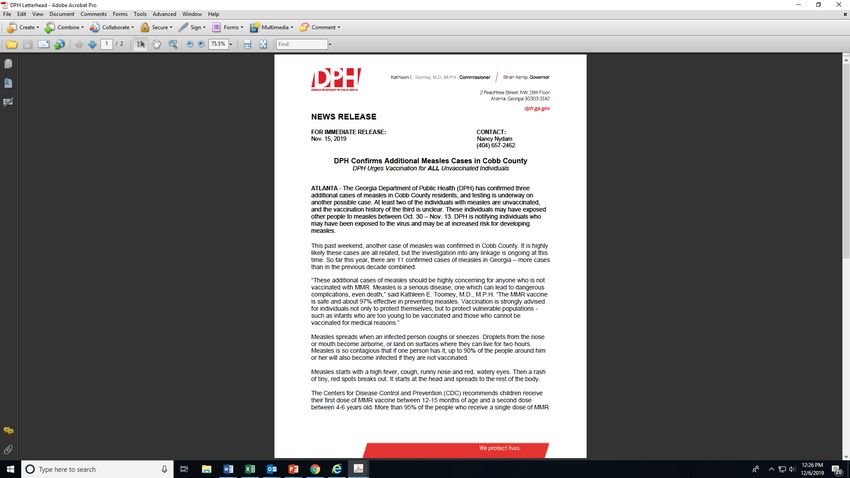
Measles Landscape (cont’d)
• However, this may not be the case for long…

• The epidemiology of measles is changing drastically, both
  globally and in the U.S.
• Measles cases are greatly increasing, in fact, surging, worldwide

• Recent WHO and CDC data show measles cases are up 30%
  from 2017 (to 9.7 million cases globally), including 140,000
  deaths (mostly in children
Measles in the United States
                                        • From January 1 to Dec. 5,
                                          2019, 1,276 cases of measles
                                          were reported from 31 states,
                                          by far the highest number
                                          since 1994
                                        • The vast majority of these
                                          cases were unvaccinated.
                                        • 75% related to New York
                                          outbreaks (threatened U.S.
                                          elimination status)
                                        • Epi pattern: Most cases and
                                          outbreaks were related
                                          originally to international
                                          travel/travelers, followed by
                                          further spread in the U.S.
                                          among pockets of
                                          unvaccinated people.

                               GEO RGIA DEPART MEN T O F PUB L IC H EAL T H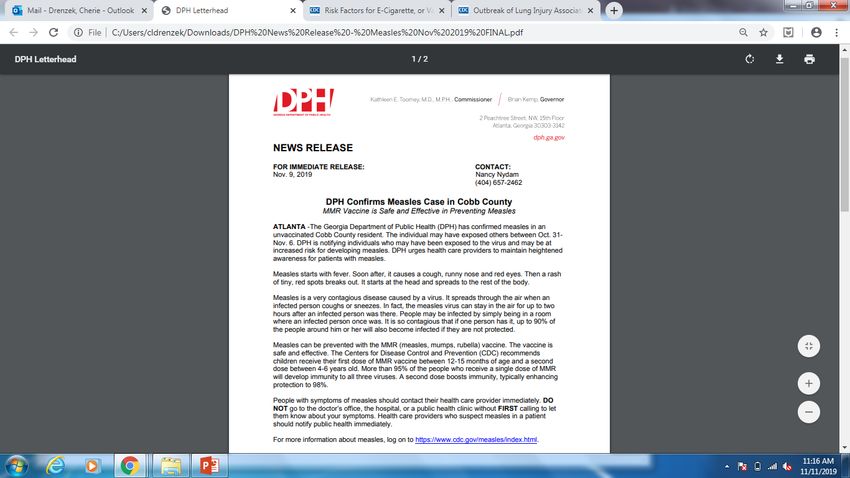
Measles in Georgia, 2010-2019 (as of Dec. 5, 2019)
                      20
                                                                                                               18
                      18
Number of Cases (n)

                      16

                      14
                                                                                                                                  17 of 18
                      12
                                                                                                                                  cases were
                      10                                                                                                          outbreak-
                       8                                                                                                          related
                       6

                       4
                                          2
                       2    1                                         1

                       0
                           2010   2011   2012   2013   2014          2015   2016   2017          2018         2019
                                                              Year

                                                                                   GEO RGIA DEPART MEN T O F PUB L IC H EAL T H
Georgia Measles Outbreaks – 2019
•    Three measles outbreaks were documented in Georgia
     during 2019
•    January outbreak had 3 cases, April outbreak had 3
     cases, and the recent November outbreak had 11
     cases.
•    Pattern among all 3 outbreaks:
     o Involved unvaccinated individuals within families
     o Originated from travel (followed by spread among
         susceptibles)
     o Involved wild-type measles virus
     o No secondary cases were documented in all 3!

                                                           GEO RGIA DEPART MEN T O F PUB L IC H EAL T H
Measles Outbreak, Georgia, Nov. 2019
•   Largest ever in Georgia!

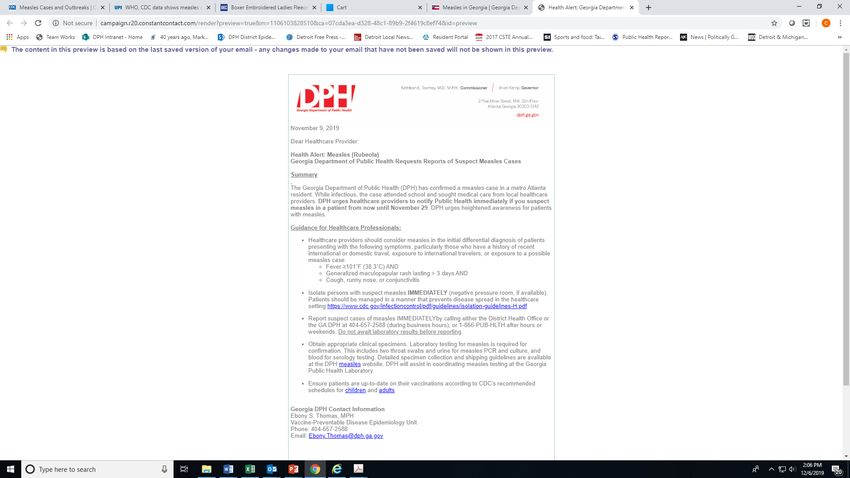
•   Outbreak Detection: The Georgia Public Health
    Laboratory (GPHL) confirmed measles infection
    in an unvaccinated resident of Cobb County on
    November 8, 2019.

•   Measles cases are public health emergencies
    warranting immediate investigation.

•   Goals of the investigation include, broadly, to
    stop spread, to determine the source of the
    infection, to find additional cases (and stop their
    spread) and to educate healthcare providers and
    the public.

                                                          GEO RGIA DEPART MEN T O F PUB L IC H EAL T H
Measles Outbreak, Georgia, Nov. 2019
Our investigation steps to stop spread
• Identified all exposed contacts, particularly
those who may be susceptible to measles
(such as infants, immunocompromised, or
unvaccinated persons) and:
1. offered prophylaxis (MMR or IG) as
appropriate,
2. educated them about symptoms,
incubation, and infectious periods;
3. actively monitored for development of
symptoms through incubation period
4. recommended exclusion from venues
where spread may occur, such as schools
or daycare.
GEO RGIA DEPART MEN T O F PUB L IC H EAL T HMeasles Outbreak, Georgia, Nov. 2019
• On November 15, we identified 3 additional
cases of measles among unvaccinated members
of another Cobb County family.
• Could these 3 be related to the measles case
from Nov. 8?
• On November 16, two more measles infections
were documented among unvaccinated family
members of the Nov. 8 case, for a total of 6 cases
now.
• The investigation steps to stop spread were now
initiated for all 6 cases (along with investigation
into case connections and possible source of the
infections).
GEO RGIA DEPART MEN T O F PUB L IC H EAL T HMeasles Investigation, Georgia, Nov. 2019
• We identified >2,500 people exposed to the 6
cases in places/venues where spread could occur
(like schools, healthcare facilities, etc.)
• All were contacted via email or letter to notify
them of the exposure and ask that they monitor
for symptoms for 21 days (low risk)
• About 50 susceptible individuals were identified
who needed active monitoring throughout the
incubation period (so that we could identify
symptoms early, isolate, and stop spread)
• Rapidly modified our electronic Active Monitoring
platform in SendSS that was used during Ebola
response.
• No secondary cases were documented!
GEO RGIA DEPART MEN T O F PUB L IC H EAL T HMeasles Outbreak, Georgia, November 2019
Source of the Measles Infections?
• On November 18, strong “shoe leather” epidemiology work
identified 5 measles cases that occurred in October—all 5
were among unvaccinated members of another Cobb
County family.
• These cases, unfortunately, had not been reported to DPH,
and were linked to travel.
• Measures to stop spread (identifying susceptible contacts,
active monitoring, etc.) were not needed for these cases
since the 21-day incubation period had passed.
• Epi investigation documented that the 5 October cases were
the index cases, resulting in direct or indirect spread to the
6 others.
GEO RGIA DEPART MEN T O F PUB L IC H EAL T HDPH Communications
GEO RGIA DEPART MEN T O F PUB L IC H EAL T HMeasles Outbreak: Take Home Messages
• Most measles cases and outbreaks are related to international
travel/travelers, followed by further spread in the U.S./GA among
pockets of unvaccinated people.
• Because of the changing epidemiology of measles, we will
continue to be at risk for measles importations and outbreaks. Mitigation/Prevention Strategy:
• Healthcare providers should consider measles in the differential
for febrile rash illnesses and should notify/report to DPH
immediately at 1-866-PUB-HLTH.
• Measles case and outbreak investigations are extremely resource-
intensive, time-sensitive, “all hands on deck” responses affecting
MANY stakeholders
• Cost Considerations: A recent study in Vaccine and by the state of
Arkansas showed that the cost of responding to a single measles
case was at least $50,000!
GEO RGIA DEPART MEN T O F PUB L IC H EAL T HQuestions
For more information, please contact:
Cherie Drenzek, DVM, MS
State Epidemiologist & Chief Science Officer
Georgia Department of Public Health
(404) 657-2609
cherie.drenzek@dph.ga.gov
GEO RGIA DEPART MEN T O F PUB L IC H EAL T HGeorgia Newborn Screening
Board of Public Health / Arthur Hagar, PhD, HCLD & Judith Kerr, MPH / Dec. 10, 2019
GEO RGIA DEPART MEN T O F PUB L IC H EAL T HWhat is Newborn Screening (NBS)?
• Preventative, population-based, public health program
• Conditions likely to cause severe intellectual disability, or death,
prior to the onset of clinical symptoms
• Testing for a panel of conditions to include:
o Metabolic, endocrine, hematologic, immunologic disorders
o Cystic fibrosis
o Congenital hearing loss
o Critical congenital heart disease (CCHD)
GEO RGIA DEPART MEN T O F PUB L IC H EAL T HGoal of Newborn Screening
The goal of the NBS Program is to test all babies born in Georgia for
conditions that can cause major illness, serious intellectual disability,
or even death if not identified and treated early.
GEO RGIA DEPART MEN T O F PUB L IC H EAL T HNBS Screening Panel
Endocrine Cystic Fibrosis
• Congenital Hypothyroidism Metabolic
• Congenital Adrenal Hyperplasia • Galactosemia (Classical)
Hemoglobinopathy • Biotinidase Deficiency
• Sickle Cell Disease • Amino Acidopathies (6)
• Sickle Cell/C Disease • Organic Acidemias (9)
• Sickle Cell/β-Thalassemia • Fatty Acid β-Oxidation Defects (5)
Severe Combined Immuno- Point of Care
deficiency (SCID) • Hearing
Spinal Muscular Atrophy (SMA) • Critical Congenital Heart Disease
GEO RGIA DEPART MEN T O F PUB L IC H EAL T HNBS Laboratory Summary
• Specimens Received (2018) – 147,971
• Laboratory Staff
o Manager, 3 Supervisors, 10 Technologists, 2 Administrative Assistants
• Turnaround Time
o Average = 2.3 days; 98% in 3 days
• Positive Screens Reported to Follow-up Contractor
o Emory Dept. of Human Genetics, CHOA, Augusta University
• Fee: $63/specimen
o No charge for repeats due to a positive initial screen
o NICU infants get two repeat screens at no cost
GEO RGIA DEPART MEN T O F PUB L IC H EAL T HAddition of New Disorders
• Recommended Uniform Screening Panel (RUSP)
o Health and Human Services (HHS) advisory committee accepts
nominations from medical professionals and general public
§ Reviews data on incidence, test availability, treatment options
§ Can approve, reject, request further information
• HHS Secretary can accept or reject recommendation for
addition to RUSP
GEO RGIA DEPART MEN T O F PUB L IC H EAL T HNIH Pilot Studies
Pompe Disease
• 59,332 specimens tested
• 1 infantile onset; 2 late onset
Mucopolysaccharidosis, Type 1 (MPS1)
• 59,332 specimens tested
• 0 confirmed cases
X-linked adrenoleukodystrophy (X-ALD)
• 51,081 specimens tested
• 1 X-ALD; 2 Zellweger Syndrome
Spinal Muscular Atrophy (SMA)
• 83,138 specimens tested
• 5 confirmed cases
GEO RGIA DEPART MEN T O F PUB L IC H EAL T HNew Disorders
• Pompe Disease
• Mucopolysaccharidosis, Type 1 (MPS1)
• X-linked adrenoleukodystrophy (X-ALD)
• Spinal Muscular Atrophy (SMA)
Fiscal Year 2020 - Fee increase from $63.00 to $80.40
GEO RGIA DEPART MEN T O F PUB L IC H EAL T HNew Conditions Implementation
SMA
• National Institutes of Health (NIH) funded pilot started February 6
• Using multiplex assay for SCID & SMA
X-ALD
• Tandem mass spectrometry (MSMS) assay updated to Neobase 2
o Live on October 7
• Will add markers for X-ALD in January 2020
GEO RGIA DEPART MEN T O F PUB L IC H EAL T HNew Conditions Implementation
Pompe and MPS 1
• Will use NeoLSD assay from Perkin Elmer
• Requires installation of 3 new MSMS
o Relocation of GSP instruments
o Scheduled for February 2020
• Instrument installation and optimization
• Method validation
• Plan to go live in April 2020
GEO RGIA DEPART MEN T O F PUB L IC H EAL T HNBS Program Summary
• Education and outreach
• Technical assistance and training to hospitals
• Coordinate system of follow-up and support through
contracted services
o Short-term follow-up: Emory University, Children’s
Healthcare of Atlanta, Augusta University
o Ongoing support: Emory Medical Foods, Sickle Cell
Foundation of Georgia, Grady Hospital
• Coordinate Newborn Screening Advisory Committee
GEO RGIA DEPART MEN T O F PUB L IC H EAL T HNew Conditions – Education and Outreach
May 2019 Webinar via Georgia Chapter of the American Academy of Pediatrics
Update Rules and Regulations
May and June 2019
Two periods for public comment
Blast communication to providers
• Georgia Chapter of the American Academy of Pediatrics
• Georgia Academy of Family Physicians
July 2019
• Georgia Obstetrical and Gynecological Society
• Georgia Hospital Association
• District Health Directors
July 2019 Letter to all submitters’ billing departments
October 2019 Inclusion on newborn screening brochure
Winter 2019 Update physician desk guide to include new conditions
Summer 2020 Update to providers following implementation of all conditions
GEO RGIA DEPART MEN T O F PUB L IC H EAL T HNewborn Screening Technical Assistance and Training
• Project period
o Six months: December 2019 – May 2020
• Specimen Quality
o Unevenly Saturated
o Quantity Not Sufficient
o Oversaturated
• Metro Atlanta facilities
o 13 birthing facilities
o 40 participants
GEO RGIA DEPART MEN T O F PUB L IC H EAL T HGeorgia Newborn Screening Advisory Committee
• Advise DPH on standards, protocols, and guidelines
• Champion the NBS healthcare system
• Ongoing contribution of expertise specific to the NBS system
• Provide advice and recommendations for strategic planning
and evaluation of the NBS system
• Advise and guide the Commissioner when determining which
disorders should be added or removed from the NBS panel
GEO RGIA DEPART MEN T O F PUB L IC H EAL T HDisorder Nomination Process
Nomination of a Presentation to Establishment of
disorder NBSAC a workgroup
GEO RGIA DEPART MEN T O F PUB L IC H EAL T HDisorder Nomination Process
NBSAC votes to
Workgroup review; Recommendation
recommend for Integration into the
presentation to letter to DPH
inclusion on or NBS system
NBSAC Commissioner
exclusion from panel
GEO RGIA DEPART MEN T O F PUB L IC H EAL T HCondition Review - Congenital Cytomegalovirus
• Congenital CMV (cCMV) nominated for inclusion on the Georgia NBS
Panel November 26, 2018
o A thorough evidence review was conducted using universal newborn
screening review criteria
• Delay the recommendation to add or not add cCMV screening to the
Georgia NBS panel pending the conclusion of a long-term prospective
study on blood spot testing with results available in 2021
• In the interim, the workgroup recommends:
o Quarterly workgroup meetings through the duration of the prospective
study
o Annual workgroup updates to Georgia NBSAC on new developments
with cCMV screening and treatment
GEO RGIA DEPART MEN T O F PUB L IC H EAL T HNewborn Screening- Quality Improvement
• Two quality improvement projects funded through the Association
of Public Health Laboratories (APHL)
• Lab project will focus on increasing the reliability of the algorithm
for new conditions by utilizing the Collaborative Laboratory
Integrated Reports (CLIR) tool
• Program project will focus on increasing satisfactory specimen
collection and the timeliness of repeat screens for infants that
require a repeat screen
GEO RGIA DEPART MEN T O F PUB L IC H EAL T HQuestions
For more information, please contact:
Arthur Hagar, PhD, HCLD
Newborn Screening Laboratory
Director of Chemistry & Hematology
Laboratory
404-327-6800
Arthur.hagar@dph.ga.gov
Judith Kerr, MPH
Newborn Screening Program
Child Health Screening Senior Manager
Maternal and Child Health Section
404-657-2878
judith.kerr@dph.ga.gov
GEO RGIA DEPART MEN T O F PUB L IC H EAL T HNext Meeting
The next Board of Public Health meeting is scheduled for
Tuesday, Jan. 14, 2020 @1 p.m.
GEO RGIA DEPART MEN T O F PUB L IC H EAL T HYou can also read


