OBJECTION RE: DEVELOPMENT APPLICATION - JERRARA DOG BREEDING AND SALES DEVELOPMENT APPLICATION 10.2021.253.1
←
→
Page content transcription
If your browser does not render page correctly, please read the page content below
PHOTO: Animal Liberation Queensland

                                      AL.ORG.AU

                                                  DEVELOPMENT APPLICATION

                                               OBJECTION RE:
                                           JERRARA DOG BREEDING
                                          AND SALES DEVELOPMENT
                                          APPLICATION 10.2021.253.1
                                                     AN ANIMAL LIBERATION SUBMISSION
                                                         KIAMA MUNICIPAL COUNCIL
We acknowledge the
  Traditional Owners of
   country throughout
 Australia and recognise
     their continuing
connection to land, waters
       and culture.

 We acknowledge that this
 document was written on
land stolen from and never
   ceded by the Gadigal
          People.

  We pay our respects to
 their Elders past, present
       and emerging.
We don’t have a duty to speak for the animals;
                                        we have an obligation to be heard for the animals.
                                                                                                                  Matt Ball (2006)

DOCUMENT DETAILS

Animal Liberation. 2022. Objection re: Jerrara dog breeding and sales development
application, reference no. 10.2021.253. Prepared by Alex Vince, Nadia Kiternas and Lisa
Ryan.

ABOUT ANIMAL LIBERATION

Animal Liberation has worked to permanently improve the lives of all animals for over
four decades. We are proud to be Australia’s longest serving animal rights
organisation. During this time, we have accumulated considerable experience and
knowledge relating to issues of animal welfare and animal protection in this country.
We have witnessed the growing popular sentiment towards the welfare of animals,
combined with a diminishing level of public confidence in current attempts, legislative
or otherwise, to protect animals from egregious, undue, or unnecessary harm. Our
mission is to permanently improve the lives of all animals through education, action,
and outreach.

INTELLECTUAL PROPERTY RIGHTS

  Animal Liberation 2022

              Unless otherwise noted, copyright and any other intellectual property rights in this publication are owned by Animal
              Liberation. All material in this publication is licensed under a Creative Commons Attribution-NonCommercial-
              ShareAlike 4.0 International Licence. Creative Commons Attribution 4.0 International Licence is a standard form
              licence agreement that allows you to copy, redistribute, remix, transmit and adapt this publication provided you
              attribute the work, you do not use it commercially and you distribute your contribution under this creative commons
              licence. The licence terms are available via creativecommons.org/licenses/by-nc-sa/4.0/.

CONTACT & ENQUIRIES

Alex Vince, Campaign Director
Lisa J Ryan, Regional Campaign Director
                                                                                                                                     PHOTO: RSPCA Victoria

Animal Liberation
Suite 378
846-850 Military Road
Mosman NSW 2088

Web: www.al.org.au
Email: alex@animal-lib.org.au
Phone: (02) 9262 3221
11 January 2022

Mr. Brendan Leo and Mr. Brett Elliott
c/o Kiama Municipal Council
Via email: council@kiama.nsw.gov.au.

Dear Mr. Leo and Mr. Elliott,

We present this submission on behalf of Animal Liberation.

Animal Liberation is grateful to Kiama Municipal Council (‘KMC’) for the opportunity to
lodge a submission in response to the Development Application (‘DA’) No.
10.2021.253.1 and associated Statement of Environmental Effects (‘SEE’) and plans,
lodged by Ms. Annette Gibson for an Animal Training or Boarding Establishment (for
Dog Breeding and Sales) in the Kiama Local Government Area (‘LGA’).

We request that it be noted from the outset that the following submission is not
intended to provide an exhaustive commentary or assessment in response to the
issues contained within the scope of the DA, and/or, the corresponding SEE and plans.

Rather, our submission is intended to provide a general examination and responses to
select areas of key concern. As such, the absence of discussion, consideration or
analyses of any particular aspect or component must not be read as or considered to
be indicative of consent or acceptance. For the purposes of this submission, Animal
Liberation’s focus covers aspects that we believe warrant critical attention and
response.

We also confirm our awareness of the ongoing issues, including valid local community
concerns surrounding a similar DA with the Kiama Municipal Council involving another
Dogs NSW member and breeder, known as Klabauter Standard Schnauzers.

In short, Animal Liberation strongly opposes DA No. 10.2021.253.1 lodged by Ms.
Annette Gibson for an Animal Training or Boarding Establishment (for Dog Breeding
and Sales) in the Kiama LGA. Our points of objection are outlined in the following
objection submission

Kind regards,

Alex Vince
Campaign director

Lisa J Ryan
Regional campaign manager
Nadia Kiternas
Social media strategist
DISCLOSURE & CONSENT

In line with s. 147(4) of the Environmental Planning and Assessment Act 1979
 (‘the EP&A Act’), Animal Liberation confirms its understanding and
acceptance that any submissions made in respect of the proposed
development are available for public inspection under the provisions of the
Government Information (Public Access) Act 2009 ('the GIPA Act').

In line with Amendments to Local Government and Planning Legislation
requiring the public disclosure of donations or gifts when lodging or
commenting on development proposals, Animal Liberation discloses and
confirms that it has not made any political donations and/or of gifts in the
two (2) years preceding the application.

  ANIMAL LIBERATION   OBJECTION SUBMISSION TO DA 10.2021.253.1                 1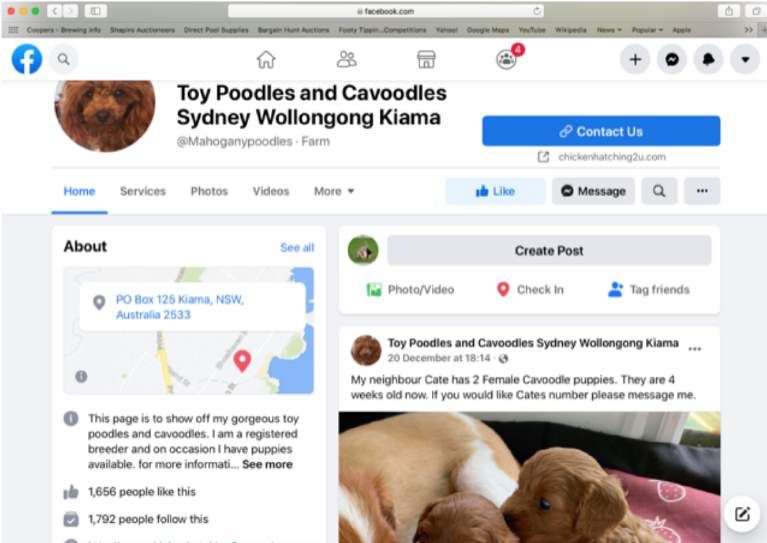
BACKGROUND &
INTRODUCTION
1.1   Animal Liberation understands that Kiama Municipal Council’s
      assessing staff and decision-makers have an onerous responsibility
      with all planning proposals and that the assessment review must
      remain independent, objective and informed during the entire
      process. We acknowledge and appreciate that many planning
      proposals include risks and impacts, including strong public
      interest which can extend beyond the Kiama Local Government
      Area (‘LGA’). Accordingly, the current DA carries an additional
      burden of responsibility that we trust Kiama Municipal Council
      (‘KMC’) will adequately and transparently consider.

      1.1.1   KMC, as a primary consent authority, is required to
              thoroughly assess the adequacy of information provided
              and the measures proposed by the Applicant to mitigate
              any potential risks and impacts (including cumulative
              impacts). This is clearly outlined in the Environmental
              Planning and Assessment Act 1979 (‘EP&A Act’) which
              requires Council to give due consideration to social impacts
              and public interest relating to any proposed development.

      1.1.2   All of these considerations are therefore an important and
              integral part of any comprehensive, objective and
              meaningful development assessment in line with the
              applicable planning instruments. Decision-makers must
              accordingly consider current strong public perceptions,
              expectations, and the overwhelming public opposition
              towards the commercial and intensive breeding, housing
              and selling of companion animals.

1.2   Animal Liberation understands that DA 10.2021.253.1 has been
      submitted by the Applicant, Ms. Annette Gibson, because the
      consent given in DA 10.2018.274.1 has expired. In the current
      Statement of Environmental Effects (‘SEE’), the Applicant notes
      that the original DA (i.e., ‘10.2018.274.1’) imposed a trial
      operational period of 6 (six) months (Gibson 2021a). The SEE
      maintains that this trial period did not commence until after the
      specified date (not provided) because the requisite infrastructure
      remained incomplete. Despite this, the SEE states that “once they
      [the facilities] were [complete], a 6-month trial was conducted”
      (ibid).

      1.2.1   DA 10.2021.253.1 seeks consent for the breeding of up to
              nine (9) fertile female dogs and one (1) fertile male at the
              proposed site (70 Long Brush Road, Jerrara). The SEE
              states that such breeding is proposed to occur “from the
              proponent’s pet dogs” (Gibson 2021a) to produce “teacup
              toy poodles” and Cavalier King Charles Spaniels for
              subsequent sale. We note there is no such Australian

2                                     OBJECTION SUBMISSION TO DA 10.2021.253.1   ANIMAL LIBERATION
1.2.1     National Kennel Council ('ANKC') registered breed
                    described as “teacup toy poodles" and that the Applicant
                    claims to be a Dogs NSW member. The selection of these
                    breeds is particularly problematic. Our related concerns will
                    be briefly outlined in the corresponding section on animal
                    welfare below.

         1.2.2      We further note that the Applicant fails to include any
                    reference to her possible breeding (by association with a
                    neighbour) and marketing/selling of cross bred "cavoodle"
                    puppies (a hybrid of a Cavalier King Charles Spaniels and a
                    toy or miniature poodle) that appear to be in breach of
                    DogsNSW codes of ethics (DogsNSW 2021). The Applicant’s
                    website for their commercial dog breeding is
                    www.chickenhatching2u.com. Associated social media,
                    including a Facebook page (@Mahoganypoodles), provides
                    some details of this cross breeding.

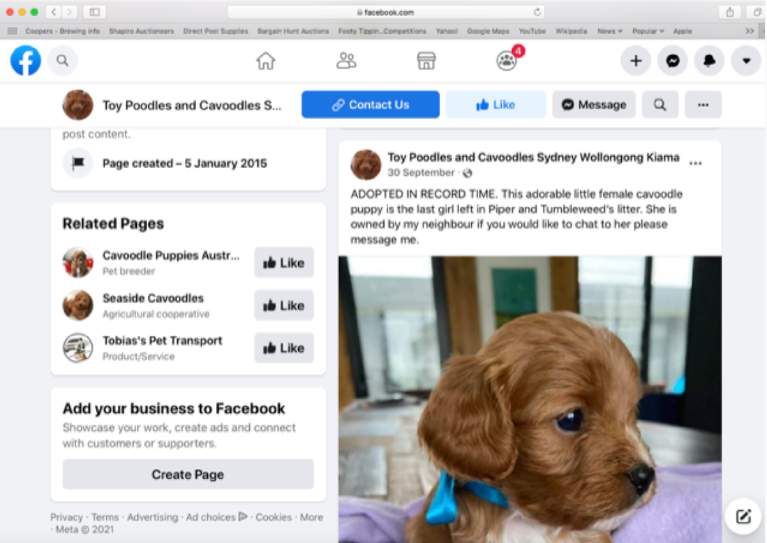
         1.2.3      In the below screenshots from Facebook
                    (@Mahoganypoodles), reference is made to “Cate” and
                    “...Piper and Tumbleweed's litter [who] is owned by my
                    neighbour". As such, it is our understanding that Ms. Cate
                    Menzies is the Applicant's neighbour. It is also our
                    understanding that the dogs described (i.e., ‘Piper’ and
                    ‘Poppy’) are both are Cavalier King Charles Spaniels owned
                    by Ms. Menzies, but that the dog ‘Tumbleweed’ is owned by
                    the Applicant, Ms. Annette Gibson.

                    Fig. 1: Screenshot of @Mahoganypoodles Facebook page

ANIMAL LIBERATION   OBJECTION SUBMISSION TO DA 10.2021.253.1                        3
Fig. 2: Screenshot of @Mahoganypoodles Facebook page
    detailing a female "cavoodle" produced by 'Piper' and
    'Tumbleweed'

    Fig. 3: Screenshot of @Mahoganypoodles Facebook page
    advising that seven (7) "cavoodle" puppies produced by
    the Applicant's neighbour

4                         OBJECTION SUBMISSION TO DA 10.2021.253.1   ANIMAL LIBERATION
1.3      The onus is on the Applicant to provide sufficient and accurate
         information and detail in their application to enable a
         comprehensive, objective and meaningful development assessment
         by the consent authority. It is Animal Liberation’s informed and
         experienced view that the Applicant has failed to do so, as is
         required in line with the applicable planning instruments.
         1.3.1      Animal Liberation has reviewed the application documents
                    and plans prepared by the Applicant (Ms. Annette Gibson)
                    and consultants (e.g., Acoustic Dynamics). Similarly, we
                    have reviewed and considered the relevant planning
                    framework and instruments at Council and State
                    Government levels.

         1.3.2      In general, our review found the Applicant’s DA, SEE and
                    plans to be confusing and void of critical information. In
                    some respects, their contents are potentially misleading.
                     Each of these concerns will be thoroughly outlined in the
                    following objection submission for Council's consideration.

1.4      Animal Liberation is strongly opposed to DA No. 10.2021.253.1
         lodged by Ms. Annette Gibson for an Animal Training or Boarding
         Establishment (for Dog Breeding and Sales) in the Kiama LGA. Our
         points of objection are outlined in the following objection
         submission.

ANIMAL LIBERATION    OBJECTION SUBMISSION TO DA 10.2021.253.1                     5
SUBMISSION
EXECUTIVE SUMMARY
2.1 The documents lodged by the Applicant fail, in all instances, to
meet the requirements which outline the provision of sufficient
information about the proposed development, how it will operate,
and how the proposed development has considered and/or
addressed all the relevant and applicable planning instruments,
including animal welfare requirements and related risks or impacts.
2.2 The Applicant has relied on numerous assumptions and the SEE is
generally void of adequate justification or evidence to support
many non-evidenced conclusions.
2.3 The Applicant has failed to consider other relevant and applicable
State Environmental Planning Policies (‘SEPPs’), and other relevant
planning instruments as contained in the Kiama Council Local
Environment Plan (‘LEP’) and the Kiama Council Development
Control Plan (‘DCP’).
2.4 The Applicant has failed to consider or address “public interest”.
Animal Liberation holds that the proposed development provides
no benefit to the local community or the public at large, and is not
in the “public interest”.
2.5 The Applicant’s EIS SEE has failed to demonstrate any
consultation with relevant agencies to obtain expert technical
guidance or input including the NSW Royal Society for the
Prevention of Cruelty to Animals (‘RSPCA’), the NSW Environment
Protection Agency (‘EPA’) or the NSW Office of Environment and
Heritage (‘OEH’).
2.6 The lack or omission of detail provided in the Applicant’s DA, SEE
and accompanying plans will greatly restrict Council’s ability to
undertake a comprehensive, objective and meaningful development
assessment in line with the mandatory and applicable planning
instruments, and public expectations.
2.7 In Animal Liberation’s informed view, some sections of the
Applicant’s DA, SEE and plans, either by inclusion or omission, are
potentially misleading. As Council would be aware in July 2015,
changes were introduced to the offences, penalties and
enforcement provisions under the Environmental Planning and
Assessment
Assessment Amendment
Amendment Act Act 2014
2014 and the Environmental Planning
and Assessment Amendment (Offences and Enforcement)
Regulation 2015. Critically, these changes included a delayed
offence (September 2015) which directly relates to “the offence of
providing false or misleading information in connection with a
planning matter”.
ANIMAL LIBERATION OBJECTION SUBMISSION TO DA 10.2021.253.1 7SUBMISSION
POINTS OF OBJECTION
A: INCONSISTENCIES WITH EXISTING REQUIREMENTS OR
REGULATIONS
3.1 The Applicant maintains that the proposed development falls
within the definition of “hobby breeder” provided for in the KMC
Development Control Plan 2020 (‘DCP’) (KMC 2020).1 Per the
Applicant’s SEE, DA no. 10.2021.253.1 “seeks Council’s consent for
the breeding of up to 9 fertile female dogs and one fertile male
dog at the subject site from the proponent’s pet dogs” (Gibson
2021). Elsewhere in the SEE, the Applicant reaffirmed that the
proposal “seeks approval for keeping up to 10 dogs for the purpose
of breeding 9 litters per year” (ibid).
3.1.1 In contrast, Topic 8.5 of the DCP defines a “hobby breeder”
as “a person who keeps and/or trains two (2) and not more
than four (4) dogs”, is “eligible to register with the Dogs
NSW and complies with the Animal Welfare Code of
Conduct”. Similarly, Section 8.5.3 stipulates that the
maximum number of dogs kept by “hobby breeders” does
not exceed four (4) dogs and one (1) litter on the premises
at any time (KMC 2020). For “professional breeders”, this
limit rises to “five (5) or more” on the conditions that the
operator “can demonstrate compliance with the relevant
animal welfare codes and the amenity of the neighbourhood
is not adversely affected” (ibid).
3.1.2 As such, the proposal does not meet the conditions under
which the operator may be considered a “hobby breeder”.
Per Topic 8.5 of the KMC DCP, a “professional breeder” is “a
person who keeps, breeds and/or trains 5 or more dogs”
(KMC 2020). The Applicant’s SEE explains that “the
maximum puppies ever possible at the site at one time will
be 27 for a maximum of 8 weeks” (Gibson 2021). Nowhere in
the SEE does that Applicant particularise the number of
“pet dogs” that will be residing on the property at any time
3.2 Given the above, we have demonstrated that the Applicant’s
proposal falls under the conditions of a “professional breeder”
defined within the current DCP. Importantly, this corresponds with
other objective definitions of commercial breeding (Blackman et al.
2
2020). Though many breeders of small dogs regard their activities
as a hobby and few (~2%) describe their breeding as a commercial
1 We note that the accompanying Noise Assessment prepared by Acoustic Dynamics on behalf of the Applicant in 2018 incorrectly cites an
outdated 2012 DCP rather than the current 2020 version (Acoustic Dynamics 2018). This outdated document is again cited by the Applicant
in the Planning Report and SEE provided (Gibson 2021a).
2 The Applicant’s current website (www.chickenhatching2u.com) provides a sample of recent sales that average approximately $6,640.
ANIMAL LIBERATION OBJECTION SUBMISSION TO DA 10.2021.253.1 9B: IMPACTS ON AMENITIES B1: NOISE
3.3 Animal Liberation understands that a noise management plan has
been developed for the proposed site. According to this plan, all
dogs are to be kept indoors during the night with doors and
windows closed. During the day, all dogs are to be supervised in
order to “ensure an appropriate response during a barking event”.
When dogs are unsupervised, however, they are to be placed
within the outdoor run enclosed by an acoustic barrier of sufficient
height to minimise visual or auditory stimulation when dogs are left
in the area. The management plan states that in the event of
barking, the Applicant should adhere to “additional noise
1
management measures”.
3.3.1 According to KMC, barking dogs constitute “one of the most
common complaints made to Council” (KMC 2022). This
corresponds with other Australian studies which have found
that of people whose neighbours’ had dogs, 43% said these
dogs exhibited behavioural problems and 81% identified
“excessive barking” as the main problem (Kobelt et al.
2003). While owners are less likely to identify barking as a
problem (Adams and Clark 1989), this is likely due to the
fact that barking is most likely to occur when the owner is
absent (Kobelt et al. 2003).
3.3.2 The EPA explains that while barking can “signify anything
from playfulness to danger”, there are a range of conditions
under which dogs may bark “excessively”. These may
include conditions wherein they are physically limited to
fixed location without adequate space, when they are
deliberately or unintentionally provoked, when they are
under-exercised, untrained, lonely, bored, sick, hungry,
thirsty, on the wrong diet, neglected, kept in circumstances
unsuitable for their breed or are victims of abuse (EPA
2021).
3.4 The Occupation Certificate ('OC') / Noise Emission Compliance
Assessment produced by Acoustic Dynamics and provided by the
Applicant, the site management plan should include a mechanism
via which “the puppies are conditioned very quickly to learn that
poor behaviour will result in discipline” (Brooker 2021).
3.4.1 Though the OC / Noise Emission Compliance Assessment
produced by Acoustic Dynamics maintains that the
construction of the acoustic barrier described above is
suitable for reducing noise during barking when dogs are
housed, it explains that the granny flat detailed in various
site plans was “constructed to house overly noisy dogs”. As
such, it is unclear whether this was the original purpose of
its construction and/or any council planning consent. No
confirmation has been provided on this matter by the
Applicant. This building, however, is described as
"acoustically isolated" by its design, which includes double
bricks, a lined roof and "acoustically rated windows" (i.e.,
ANIMAL LIBERATION OBJECTION SUBMISSION TO DA 10.2021.253.1 113.4.1 those designed to block the transmission of noise from
within) (Brooker 2021).
3.4.2 The "additional noise management measures" referred to
above are cited within the noise management plan
developed by the Applicant’s consultants (Acoustic
Dynamics 2018; Brooker 2021) as follows:
A the selection of breeding dogs based on behaviour;
B if a puppy barks "excessively", they are first given
verbal instructions to stop and if they continue they
are “isolated from the other dogs” and placed in the
granny flat;
C measure B (above) is intended to "condition" puppies
so that they learn that "poor behaviour will result in
discipline";
D in the event of external stimulation, the puppy is
placed in the granny flat.
3.5 The SEE prepared and submitted by the Applicant claims that the
assessment carried out by Acoustic Dynamics “demonstrates that
the proposed activity will achieve compliance with the relevant
noise criteria for between 6-12 canines” (Gibson 2021a). However,
the document referred to in this instance and provided by the
Applicant as Appendix A was produced in 2018 and contains the
following sentence: “the noise source associated with the
development is a kennel and outdoor run for between six to ten
canines” (emphasis added) (Acoustic Dynamics 2018). The figure of
“6 to 10 canines housed in the facility” is again cited in the
consultants assessment of noise emission to nearby receivers
(emphasis added) (ibid).
3.5.1 Given that the proposal is to use up to nine (9) females and
one (1) male to breed up to twenty-seven (27) puppies per
year, the limit of twelve (12) canines on the property at any
time would necessarily be reached if one female fell
pregnant and produced the two (2) additional puppies the
Applicant expects each female to produce. For instance, the
SEE self-produced by the Applicant states that “a teacup
toy poodle only has a litter of between 1-3 puppies (average
2 puppies per litter)” (Gibson 2021a).
3.5.2 Animal Liberation maintains that the discrepancy between
the figures cited by the Applicant and those utilised by
their consultant (‘Acoustic Dynamics’) reveal considerable
inconsistencies that constitute a structural contradiction. As
a result, the emission levels cited in the 2018 report
significantly underestimate the true figures and should not
be relied upon by Council. Critically, the recent Occupation
Certificate (‘OC’) produced by Acoustic Dynamics stipulates
that “any changes made to the proposal (including
maximum numbers of canines) that would alter the
outcome will require further assessment” (Brooker 2021).
12 OBJECTION SUBMISSION TO DA 10.2021.253.1 ANIMAL LIBERATION3.5.3 At no stage in the OC document can Council confirm the
number of canines under consideration because this figure
is not explicitly articulated. Reference to canines is simply
articulated as referring to “all canines” (Brooker 2021).
Given the notable inconsistencies between the Applicant’s
provision of facts and those contained within externally
produced documents, it is not possible for Council to be
confident in the accuracy of the figures provided by the
Applicant. It is notable that this appears to be an ongoing
source of information requiring clarification as the number
of dogs at the premises constituted a query at the KMC
ordinary meeting held on April 16, 2019 (KMC 2019).
3.5.3 Animal Liberation strongly recommends that Council
request updated and precise figures in order to allow an
independent, objective and informed review of the current
application. Failing to do so risks impinging upon the
amenity of nearby receivers and Section 4.15 of the EP&A
Act.
3.6 Similarly, the SEE prepared and submitted by the Applicant does
not contain the same site specifics as the OC or Operational Noise
Emission Assessment produced by Acoustic Dynamics.
3.6.1 The Assessment cites the granny flat shown on the site plan
as being infrastructure “used to minimise noise transfer to
neighbouring properties” so that the proposal “does not
significantly impact on the amenity of adjoining residents”
(Brooker 2021). The SEE, however, does not identify the
granny flat as being used for this purpose. Rather, it states
that the granny flat may be used for “whelping and as an
isolation facility if required” (Gibson 2021a).
3.6.2 This is in significant contrast to both the 2018 and 2021
assessments produced by Acoustic Dynamics which
specifically identify the granny flat as a core component of
the noise management plan (Acoustic Dynamics 2018;
Brooker 2021). Similarly, it is not aligned with the
corresponding definition of “isolation facility” provided for
in the Animal Welfare Code of Practice for the Breeding of
Dogs and Cats. While the latter includes reference to
“isolation facilities”, it is clear from the content and context
of the COP that this primarily refers to infrastructure used
to prevent the spread of infectious disease elsewhere on
the property or therapeutic isolation due to severe injury
(DPI 2021b).
3.7 Given the above, it is Animal Liberation’s informed conclusion that
the details provided by the Applicant in the SEE are significantly
incompatible with the recommendations made by the consultant
tasked with providing a professional and independent guide to
noise control. As such, we caution Council to consider the
inconsistencies, contradictions and omissions outlined in this
section of our objection.
ANIMAL LIBERATION OBJECTION SUBMISSION TO DA 10.2021.253.1 13C: ANIMAL WELFARE C1: GENERAL
3.8 There is no current stand-alone definition for companion animal
breeding within NSW Planning legislation. The Act and Regulations
which apply to the production of animals fail to acknowledge
companion animals. As such, current animal welfare or protection
legislation in NSW is inadequate and fails to meet the behavioural,
social and emotional needs of dogs. Accordingly, facilities
operating to the current minimum standards do not provide dogs
with an acceptable quality of life. Nor do they adequately prepare
puppies for life as companions. The commercial production of
companion animals is a major animal welfare issue across Australia.
It is increasingly so in NSW and council would be aware of the
current NSW Legislative Council’s Select Committee Inquiry into
puppy farming in New South Wales.
3.8.1 As such, we acknowledge that KMC is somewhat
constrained by current NSW planning legislation that permit
the commercial production of companion animals. Similarly,
current NSW animal welfare legislation, regulations and the
Animal Welfare Code of Practice (Breeding Dogs and Cats)
are seriously outdated, inadequate and provide minimal
protection for animals. However, we wish to respectfully
remind Council that Clause 1(e) contained within section
4.15 of the Environmental Planning and Assessment Act
1979 requires and compels Council, as the consent
authority, to consider “the public interest”.
3.9 The submitted DA and SEE neither acknowledge or reflect the
widespread views and expectations held by the public about how
we treat and interact with companion animals, which many
consider family members (Franklin 2007). The commercial breeding
of dogs currently faces significant public scrutiny (Croney 2019).
3.9.1 For example, the recent Consultation Paper provided by the
Department of Primary Industries (‘DPI’) for the licensing
and regulating of cat and dog breeders identified and
acknowledged a series of instances it considers indicative
of “recent community concerns” relating to the commercial
breeding of puppies in NSW (DPI 2021a). It states that in
2020 there were “some community concerns” regarding
increased activity in relation to higher demands for
companion animals during the COVID-19 pandemic (ibid).
Animal Liberation strongly contends that these concerns
about the commercial breeding and intensive housing of
companion animals, have been prevalent for many years and
are in increasing.
3.9 The Applicant has failed to demonstrate that they will adequately
address the critical animal welfare issues inherent in the operation
of a dog breeding facility. For example, animal welfare is
insufficiently referred to and discussed within the Applicants self-
prepared SEE. The scant references to animal welfare within this
SEE simply recite the inadequate compliance or regulatory
ANIMAL LIBERATION OBJECTION SUBMISSION TO DA 10.2021.253.1 153.9 measures undertaken by the Australian Association of Pet Dog
Breeders ('AAPDB') (i.e., once-yearly audits carried out in order to
ensure members adhere to the Department of Primary Industries
Animal Welfare Code). Importantly, the RSPCA maintains that
"voluntary registration or accreditation programs are not sufficient
to ensure the identification and traceability of breeders" (RSPCA
2010). We maintain that a similar conclusion can be reliably
reached regarding the validity of annual audits and their success in
ensuring positive animal welfare outcomes. Animal Liberation also
submits our strongly held, informed and experienced view that
self-regulation is always a conflicted way of managing animal
welfare, and especially when personal commercial interests and
profits are involved.
3.9.1 In addition, the Applicant has failed to demonstrate how
they will care for the breeding dogs when they have reared
the maximum number of litters. Similarly, there is no
clarification on how this will be enforced by KMC. As such,
Animal Liberation has significant concerns regarding the
welfare of both pups and breeding dogs. This translates into
an informed conclusion that KMC cannot be confident that
animal welfare will be a priority nor that nominal animal
welfare expectations will be met.
3.10 Finally, we strongly maintain that there is no sound basis for the
development of additional puppy breeding facilities. Hundreds of
healthy, loving homeless dogs and puppies in pounds, shelters and
rescue and rehoming organisations, continue to wait for loving
homes, while commercial breeders, like this Applicant, continue to
exploit dogs and puppies for personal financial gain. As a
compassionate society, we have a moral and ethical obligation to
promote adoption rather than supporting personal commercial
greed.
3.10.1 It is important to note that breeders of some dogs,
particularly industry-termed "toy breeds" like teacup
poodles, produce fewer puppies and therefore have less
choice when inserting animals in their breeding cycle (ACA
2021). Note, for example, the Applicant’s admission that
"due to the tiny litters produced by teacup poodles (1-3
puppies), I may produce up to 9 litters per year" (Gibson
2021a).
3.10.2 Elsewhere, the Applicant has explained the cost differences
between puppies sold via their enterprise: 1) "generally, the
smaller the puppy, the more it is going to cost [to buy]"; 2)
"females are more expensive than males"; 3) "more 'in
demand' colors [sic] also have higher price tags" and; 4)
"prices are based on size, colour, gender, etc." (Gibson n.d.-
a)
3.10.3 Importantly, though the Applicant has cited this figure as a
potential limit, it is notable insofar as it significantly
exceeds the average of fewer than four (4) litters per year
produced by over 90% of Australian National Kennel Council
16 OBJECTION SUBMISSION TO DA 10.2021.253.1 ANIMAL LIBERATION3.10.3 ('ANKC’) registered breeders (AKNC 2017; Blackman et al.
2020). Currently, the Applicant has a total of eleven (11)
names on its website's "priority waiting list" (Gibson n.d.-b
3.11 Though the Applicant states that they “usually rest dogs in
between litters” (Gibson 2021a), this is an unacceptably ambiguous
statement and does not accommodate consideration of or
reference to the mandatory requirements under the NSW Animal
Welfare Code of Practice – Breeding Dogs and Cats ('COP'),
including restrictions around back-to-back litters (DPI 2021b).
C: ANIMAL WELFARE C1: BREED SELECTION
3.12 Animal Liberation is significantly concerned about commercial,
profit driven breeding as it focuses on commercial returns as a
‘business’. The cross breeding of dogs by in-experienced and profit
driven breeders also potentially risks not only the health and
wellbeing of dogs and their progeny, but also potentially misleads
consumers. Most purebred dogs have some level of hereditary
conditions. When such dogs of different breeds remain untested
for any hereditary conditions and are cross bred, the very real
potential exists to double up and compound such hereditary
conditions.
3.12.1 The Applicant states they intend to breed “teacup toy
poodles” and King Charles cavalier spaniels (Gibson 2021a).
Research shows that teacup dogs are more likely to suffer
from severe health issues ranging from allergies, collapsed
trachea, diabetes, epilepsy, hypothyroidism, patella
luxation, and heart defects/disease (Princess Animal
Hospital n.d.; HSVMA 2011; Maeda et al. 2019). Due to their
small stature and thin bones, toy dogs are also more likely
to sustain injuries that can be difficult to treat (Animal
Health Centre n.d.). King Charles Cavaliers are also
predisposed to have certain diseases and illnesses (Sandøe
et al. 2017), such as mitral valve disease (CAWC 2008;
UFAW 2011), exercise-induced collapse (Gill et al. 2012),
femoral artery weakness (Buchanan et al. 1997) and hanging
tongue (HSVMA 2011).
C: ANIMAL WELFARE C1: SOCIALISATION
3.13 A puppy experiences three (3) key periods of social development:
the primary period, the socialisation period and the enrichment or
juvenile period (Serpell and Jagoe 1995). During the primary
period, which lasts from birth until approximately 3 weeks of age, a
puppies sensory capabilities are not developed and they are
entirely dependent on their mother (Howell et al. 2015). As such,
there is evidence to suggest that their treatment and handling
during this stage influences their behaviour at later life stages
ANIMAL LIBERATION OBJECTION SUBMISSION TO DA 10.2021.253.1 173.13 (Gazzano et al. 2008; 10). After 3 weeks of age, the mother begins
to stop providing constant care and puppies concentrate on
developing social relationships with littermates (Scott and Fuller
1965). This marks the onset of the “critical socialisation period”
which lasts between 3-17 weeks of age (RSPCA Australia 2019).
3.13.1 Socialisation refers to a process of desensitisation wherein
they are gradually exposed to experiences, animals and
objects that they are likely to encounter during their
lifetimes (Howell et al. 2015). This process should also
include exposure to sounds and textures, other species, and
humans of varying demographics (Battaglia 2009). It must
be appropriately provided for because this period plays a
critical role in the development of adult dogs (Freedman et
al. 1961; Howell et al. 2015).
3.13.2 Failing to provide appropriate and adequate socialisation
during the sensitive periods described above plays a
significant role in determining whether or not the dog
develops behavioural problems later in life (Serpell and
Jagoe 1995; Miklosi 2008; Donaldson 2008). A lack of
appropriate socialisation with a range of people, animals
and environments can produce adult dogs who exhibit
problematic behaviours, such as aggression or fearfulness
(Appleby et al. 2002; Battaglia 2009). A lack of exposure to
animals that form their social group as an adult, such as
other dogs or species, can result in dogs who are unable to
form social bonds (Scott and Fuller 1965). This has been
shown in studies wherein social and environmental exposure
was proven to be positively correlated with sociability and
negatively correlated with fear and aggression (Ward
2003). Each of these strongly indicate that early
experiences play an important role in shaping subsequent
behaviour (Howell et al. 2015).
3.13.3 Though the long-term effects of early life experiences
remain poorly understood for many species, there is
considerable evidence suggesting that early exposure to
stressful experiences have lasting effects on individual
physiology (Bray et al. 2017). In canines, the level of
maternal care provided in early life affects temperament in
adulthood (Tiira and Lohi 2015; Foyer et al. 2016; Guardini
et al. 2017).
3.14 Despite a widespread awareness of these important periods and
corresponding needs, the proposed operation intends to punish
puppies who should otherwise be experiencing a range of safe
interactions with others and the environment during the critical
socialisation period through social isolation. Such an approach
potentially damages their development and temperament as adults,
thereby placing unacceptable and avoidable risks on rehoming
services at a later date. It is notable, however, that it is unlikely
that the Applicant will be in a position to provide any meaningful
supportive services and this responsibility will fall upon volunteer
rehoming organisations whose capacity is already strained and
overwhelmed.
18 OBJECTION SUBMISSION TO DA 10.2021.253.1 ANIMAL LIBERATIONC: ANIMAL WELFARE C4: PROPOSED MANAGEMENT TECHNIQUES
3.15 It is important to note that while the “additional noise management
measures” outlined in the previous subsection of this objection
submission are ostensibly designed to minimise potential harms to
the amenities of neighbouring properties, they also comprise
commercial and biological considerations.
3.15.1 For example, measure ‘A’ outlined in subsection B1 above
(see subsections 3.4.2) is a measure based on the belief
that "customers are more inclined to purchase a dog if they
are not overly excited or barking excessively". Measures 'B'
and 'D' are based on an exploitative understanding of the
biological needs of puppies as social animals (i.e., because
they are social, measure 'B' will ensure that they learn that
appropriate behaviour corresponds with an allowance to
remain within the social group). As such, it represents
punishment as a form of negative reinforcement. It also
corresponds with a concept known as "positive
punishment".
3.16 Punishment
Punishment refers to an action that reduces the likelihood of a
behaviour reoccurring so that the undesired behaviour lowers in
frequency. "Positive" punishment means adding something to the
Positive punishment
cycle after the dog performed an action that reduces the frequency
of the unwanted behaviour. For example, if a dog jumps on your
lap and this behaviour is met with immediate removal and verbal
instructions not to do so, the next time the dog may not jump. In
this example, the unpleasant stimuli (i.e., removal and verbal
derogation) may have reduced the frequency of the unwanted
behaviour (i.e., jumping). "Negative"
Negative punishment
punishment , in contrast, means
taking something away to increase or maintain the frequency of a
desired behaviour. An example of negative punishment is the use
of electronic training collars until the dog fulfils the desired
behaviour. In this example, a shock may be removed when the dog
fulfils the desired behaviour (e.g., "sit").
3.16.1 The proposed management technique contained within the
Occupation Certificate ('OC') / Noise Emission Compliance
Assessment (Brooker 2021) represents a form of "time out"
insofar as it forces social isolation. It also represents a form
of negative punishment because something that the dog
desires (social contact) has been removed in order to
reduce an unwanted behaviour (QLD RSPCA n.d.). It is also
unclear whether this form of punishment will be applied to
more than one dog at a time and, as such, whether it refers
to solitary confinement.
3.16.2 The recently updated Animal Welfare Code of Practice
(‘COP’) for the breeding of dogs and cats in NSW provides
a range of measures that may be used to mitigate noise
from barking dogs. Critically, none of the measures cited in
section 6.2.2.4 of the COP advocate social isolation as a
means to reduce barking (DPI 2021b). In fact, Standard
10.1.1.14 of the COP stipulates that puppies "must not be
separated from their litter or their lactating mother until
20 OBJECTION SUBMISSION TO DA 10.2021.253.1 ANIMAL LIBERATION3.16.2 they are more than seven weeks of age to facilitate
socialisation". The only exception to this Standard is if
doing so is "in the best interests of the puppy [...] or their
mother" (DPI 2021b). As such, this exception certainly does
not apply as a means to minimise noise.
3.16.3 The proposed use of social isolation to control the
behaviour of puppies is particularly troubling given the rise
in dog ownership during the COVID-19 pandemic expressly
to ameliorate these feelings in humans (Morgan et al. 2020;
Carr et al. 2021; Hughes et al. 2021).
3.17 There are a range of significant concerns associated with the forms
of punishment proposed by the Applicant. For example, a recent
study found that such methods may result in outcomes that put the
welfare of the dog at risk (Ziv 2017). International societies for the
prevention of cruelty to animals (‘SPCAs’) have identified social
isolation as “one of the most prevalent form[s] of cruelty against
dogs” (SPCANL 2016).
3.17.1 Separation anxiety in dogs generates a fear of isolation that
often produces undesirable behaviours. It is one of the most
common causes of such problems in canines (Sherman
2008). This can trigger a range of outcomes, including
destructive behaviours and serious welfare impacts such as
self-trauma (McCrave 1991; Serpell and Jagoe 1996; Voith
and Borchelt 1996; Lund and Jorgensen 1999).
3.18 The recently updated Animal Welfare Code of Practice (‘COP’) for
the breeding of dogs and cats in NSW contains a number of
relevant considerations. For example, an “enclosure” includes any
infrastructure “used to contain a dog or cat” and “environmental
enrichment needs” refers to the “provision of stimuli that promote
appropriate physical and mental activities, resulting in healthier
animals able to express natural behaviours” (DPI 2021b).
3.18.1 The Applicant has failed to provide any information on
measures they intend to take to ensure that dogs in their
care have their environmental enrichment needs adequately
addressed. This omission represents a significant failure to
adequately consider and appropriately address animal
welfare.
3.18 Finally, the following concerns remain insufficiently addressed by
the Applicant. While each generates significant concern for the
welfare of any animals produced or housed on the property, when
combined these concerns represent an indictment of the present
DA. Animal Liberation recommends that they be considered as
such by Council. The following concerns are aligned with Standards
contained within the recently updated Animal Welfare Code of
Practice (‘COP’) for the breeding of dogs and cats in NSW (DPI
2021b). Importantly, these Standards describe mandatory and
specific actions required to achieve acceptable animal welfare
standards and represent a minimum that must be met under law
(ibid). As the person in charge of the premises (i.e., the Applicant)
is responsible under Standard 4.1.1 of the Code to ensure that the
ANIMAL LIBERATION OBJECTION SUBMISSION TO DA 10.2021.253.1 213.18 facility complies with all Standards, Animal Liberation considers
the absence of any reference to these indicative. The
corresponding Standard for each identified concern is provided
below.
3.18.1 The Applicant has failed to consider or address measures to
prevent the transmission of infectious disease agents via
the chicken coop on site (see Standard 6.1.1.3 of the COP).
It is notable that there is no discussion of measures taken to
ensure that young puppies do not access this coop. In the
absence of any details, Animal Liberation has significant
concerns associated with the concurrent business involving
the production of chickens for school hatching programs
underway at the proposed site. It is known, for example,
that dogs and other animals can be vectors of poultry
disease (DJPR 2022). In 2021, the peak Australian egg body
issued a series of steps that all backyard poultry owners
should practice to reduce biosecurity risks, including
keeping other domestic animals “well away” (Australian
Eggs Limited 2021).
3.18.2 The Applicant has failed to adequately demonstrate that
they have established a relationship with a veterinary
practitioner who is able to attend to dogs and advise on
disease prevention measures (see Standard 8.2.1.1 of the
COP).
3.18.3 The Applicant has failed to provide adequate information
detailing or demonstrating that dogs and puppies will be
administered appropriate vaccinations. Similarly, the
Applicant has failed to provide such details regarding
vaccinations from 6 to 8 weeks of age as per the COP (see
Standards 8.2.1.6 and 8.2.1.8 of the COP).
3.18.4 The Applicant has failed to provide details of proposed
measures regarding humane destruction. For instance, the
Applicant has failed to provide any information on steps
that will be taken if a dog's physical or mental health is
unable to be restored in situ (see Standard 8.3.1 of the
COP). It is important to note that this Standard applies
regardless of whether the dog is identified by the Applicant
as a companion animal.
3.18.5 The Applicant has failed to provide details on mandatory
microchipping in the breeder’s name prior to their sale (see
Standard 9.1.1.4 of the COP).
3.18.6 The Applicant has failed to demonstrate adequate
understanding of the requirement to provide a 50% refund
on the purchase price of any animal sold and returned
within three (3) days for any reason (see Standard 9.1.1.7 of
the COP).
3.18.7 The Applicant has failed to provide sufficient information or
evidence relating to the age at which females will begin
breeding (see section 10.1.1.2 of the COP). Similarly, the
22 OBJECTION SUBMISSION TO DA 10.2021.253.1 ANIMAL LIBERATION3.18.7 Applicant has failed to demonstrate measures that will
betaken to ensure that any dogs used for breeding are
physically and mentally fit, health and free of disease” prior
to mating (see Standard 10.1.1.3 of the COP).
3.18.8 The Applicant has failed to provide adequate details
relating to measures that will be taken to ensure that
animals that are isolated will be provided additional
attention and socialisation (see Standard 10.1.1.9 of the
COP). This is particularly important as it applies to the
proposed social isolation measures provided for in the
Applicant’s DA and discussed above.
3.18.9 The Applicant has failed to demonstrate an understanding
of the limit included in the COP that mandates that no
animal will produce more than two (2) litters in any two (2)
year period (see Standard 10.1.1.10 of the COP).
C: ANIMAL WELFARE C5: CONCLUSION
3.19 Though dogs have played an important role in human society for
thousands of years and have developed a unique ability to
communicate effectively with humans (Reid 2009), our ability to
interpret their behaviour remains limited and influenced by a range
of factors (Tami and Gallagher 2009; Sarrgisson 2014). One of the
behaviours identified as most problematic by people is vocalisation
or barking.
3.19.1 Vocalisation (barking) in dogs undergoes considerable
alteration during lifecycle development (Tembrock 1976;
Hecht and Horowitz 2015). Importantly, studies have found
that if isolated, puppies display “distress vocalisations” that
are indicative of care-soliciting behaviour (Fredericson
1950; Ross et al. 1960; Elliot and Scott 1961). Care-soliciting
behaviours are those carried out in order to solicit attention
or assistance from others. These are often made as puppies
attempt to call their mother or regain social contact
(Guardini et al. 2017).
3.19.2 Given that a majority of reported behavioural problems in
dogs are associated with separation or fear (Tod et al.
2005; Sargisson 2014; Lenkei et al. 2021), the proposal to
isolate dogs engaging in natural behaviour (i.e.,
vocalisation) raises a range of associated concerns
regarding the stability of their later lives.
3.19.3 It is also possible that punishment of the kind proposed by
the Applicant may trigger these problems and generate
ongoing issues that either result in abandonment or
increased pressures on scarce rehoming services. This is
particularly relevant given the evidence suggesting that
early life experiences are associated with the prevalence of
anxiety later in life (Tiira and Lohi 2015).
ANIMAL LIBERATION OBJECTION SUBMISSION TO DA 10.2021.253.1 233.20 Finally, a common definition of “animal welfare” is the state of an
individual as they attempt to cope with their environment
(Broom1986; Broom 1995). It is Animal Liberation’s informed
conclusion that any dogs produced on this property as a result of
Council approval will have their capacity to cope with their
environment significantly undermined by the management
techniques contained with the DA documents.
24 OBJECTION SUBMISSION TO DA 10.2021.253.1 ANIMAL LIBERATIONOTHER: PLAN OF MANAGEMENT
3.21 Under the DCP, all development applications must include “a
detailed Management Plan” that includes written statements that
demonstrate how the operation of the facility will comply with all
relevant standards, such as the Animal Welfare Code of Practice
(‘COP’) (KMC 2020).
3.21.1 The Plan of Management (‘PoM’) provided by the Applicant
as Appendix D is four (4) pages in length, with only three
(3) of these pages containing descriptive text (Gibson
2021b). Furthermore, over two (2) of the pages that do
contain descriptive text is comprised of sections that are
reiterated in a range of other documents provided by the
Applicant (i.e., Section 1, 2 and 3 of the PoM contain text
describing the proposed activity, the site and its facilities)
(ibid). Though the DCP does not specify how detailed a
management plan should be, it is Animal Liberation’s
opinion that the plan provided by the Applicant does not
constitute the spirit of the DCP.
3.21.2 The sections of the PoM that provide additional information
refer to operational standards, animal care and animal
management (Gibson 2021b). The first section, detailing
operational standards, states that the Applicant is a
member of the Australian Association of Pet Dog Breeders
(‘AAPDB’) and DogsNSW, adheres to the AAPDBs Code of
Ethics and is subject to annual audits (ibid). As expressed
elsewhere in this objection, the RSPCA maintains that
“voluntary registration or accreditation programs are not
sufficient to ensure the identification and traceability of
breeders” (RSPCA 2010). We maintain that a similar
conclusion can be reliably reached regarding the validity of
annual audits and their success in ensuring positive animal
welfare outcomes.
3.21.3 Critically, the PoM also claims that the proposed activity
will be “conducted in compliance with the NSW Department
of Primary Industries guide to ‘Breeding Dogs and Cats’
2009” (Gibson 2021b). As earlier subsections of this
objection have shown, the Applicant has failed to address
many of the Standards contained within this document. In
addition, the Applicant has cited an outdated version of this
document and has thereby further illustrated an
unacceptable lack of awareness of a core regulatory
document.
3.21.4 The remainder of the PoM refers to animal management.
Specifically, this section refers to steps that the Applicant
intends to take in order to “minimise environmental impact
on the amenity” (Gibson 2021b). This characterisation is
inaccurate, however, as the section refers to measures to
minimise social impacts caused primarily by noise. It is
difficult, therefore, not to provide the same conclusions as
those outlined in the corresponding section to impacts on
amenities as above. As such, we refer Council to subsection
B1 of the present objection.
26 OBJECTION SUBMISSION TO DA 10.2021.253.1 ANIMAL LIBERATIONCONCLUSION
4.1 Kiama Municipal Council is compelled to act impartially and ensure
the correct and consistent application of local, state and federal
legislation, including the objective and transparent assessment of
planning proposals. Councillors are elected to represent everyone
in the community, including balanced consideration of matters
which hold strong public interest. It is imperative that decision
makers don’t ignore public interest, or place the unsustainable,
short-term, economic benefits of a privately owned commercial
business ahead of the welfare of animals, the environment or the
long-term best interests of the broad community.
4.2 The lack of detail or omission of details in the Applicant’s DA and
SEE will greatly restrict Council’s ability to undertake a
comprehensive, objective and meaningful development assessment
in line with the mandatory and applicable planning instruments and
public expectations.
4.2.1 The commercial production of companion animals is a major
animal welfare issue across Australia and increasingly so in
NSW. It is Animal Liberation’s position that Council has a
duty and a responsibility to consult a recognised and
authorised animal welfare agency, such as RSPCA NSW
through their Senior Inspector. Animal Liberation contends
RSPCA NSW or RSPCA Australia guidance and input is
essential.
4.2.2 Similarly, on the basis that the Applicant has failed to
include any reference to consultation with the Office of
Environment and Heritage (‘OEH’) or the Environment
Protection Authority (‘EPA’) regarding an adequate
assessment of noise, odour, biosecurity and disease
management risks, including mitigation measures or
consideration of environmental matters such as topography,
weather patterns, soil, water and general heritage and
biodiversity implications, Animal Liberation contends EPA
and OEH guidance and input is essential. Alternatively,
Council also has the option to establish an Independent
Hearing and Assessment Panel (‘IHAP’) to harness specialist
and expert technical guidance and oversight, to ensure all
specialist criteria is adequately assessed by qualified
experts in their given fields of knowledge and experience.
4.3 Animal Liberation wishes to thank Council for reading and
considering our objection. For the reasons and rationales outlined
above, we request Council refuse DA 10.2021.253.1.
28 OBJECTION SUBMISSION TO DA 10.2021.253.1 ANIMAL LIBERATIONSOURCES AND REFERENCE MATERIAL Acoustic Dynamics. 2018. Operational Noise Emission Assessment: 70 Long Brush Rd, Jerrara, NSW. Available via https://da.kiama.nsw.gov.au/Application/ApplicationDetails/010.2021.00000253.001. Animal Care Australia (ACA). 2021. Ban Puppy Factories Not Puppy Breeding: Remove Unethical Operations and Protect Responsible Breeders. Available via https://bit.ly/3HyGoMG. Animal Health Centre. n.d. Toy Poodle. Rochester: Animal Health Centre. Appleby, D., Bradshaw, J. and Casey, R. 2002. Relationship between aggressive and avoidance behaviour by dogs and their experience in the first six months of life. Veterinary Record, 150: 434-438. Australian Association of Pet Dog Breeders (AAPDB). 2022. Code of Ethics and Conduct. Available via www.aapdb.com.au/aapdb-members-code-conduct. Australian Eggs Limited. 2021. Biosecurity for the backyard chook. Available via www.australianeggs.org.au/news/biosecurity-for-backyard-chooks. Australian National Kennel Council (ANKC). 2017. A Forensic View of Puppy Breeding in Australia. Available via http://ankc.org.au/media/6598/a-forensic-view-of-puppy-breeding-in-australiav4.pdf. Battaglia, C. 2009. Periods of early development and effects of stimulation and social experiences in the canine. Journal of Veterinary Behaviour, 4: 203-210. Blackman, S., Wilson, B., Reed, A. and McGreevy, P. 2020. Reported motivations and aims of Australian dog breeders: a pilot study. Animals, 10(2319). Brandow, M. 2016. A Matter of Breeding: A Biting History of Pedigree Dogs. London: Gerald Duckworth and Co. Bray, E., Sammel, M., Cheney, D., Serpell, J. and Seyfarth, R. 2017. Effects of maternal investment, temperament and cognition on guide dog success. Proceedings of the National Academy of Sciences, 114(34): 9128-9133. Brooker, L. 2021. 70 Long Brush Rd Jerrara - OC Noise Emission Compliance Assessment: Private Dog Breeding Facility. Available via https://da.kiama.nsw.gov.au/Application/ApplicationDetails/010.2021.00000253.001. Broom, D. 1986. Indicators of poor welfare. British Veterinary Journal, 142: 524-526. ———. 1995. A usable definition of animal welfare. In A. Clarke (Ed.), The Thinking Horse. Guelph: Equine Research Centre. Buchanan, J., Beardow, A. and Sammarco, C. 1997. Femoral artery occlusion in Cavalier King Charles Spaniels. Journal of the American Veterinary Medicine Association, 211(7): 872-874. Carr, D., Friedmann, E., Gee, N., Gilchrist, C., Sachs-Ericsson, N. and Koodaly, L. 2021. Dog walking and the social impact of the COVID-19 pandemic on loneliness in older adults. Animals, 11(1852). Collins, L., Asher, L., Summer, J. and McGreevy, P. 2011. Getting priorities straight: risk assessment and decision-making in the improvement of inherited disorders in pedigree dogs. Veterinary Journal, 189: 147-154. Companion Animal Welfare Council (CAWC). 2008. Fixing Ancestral Problems: Genetics and Welfare in Companion Animals Focusing on Syringomyelia in Cavalier King Charles Spaniels as an Example. London: House of Lords. ANIMAL LIBERATION OBJECTION SUBMISSION TO DA 10.2021.253.1 29
You can also read


