Chase Community Solar Limited Share Offer Document - November 2014
←
→
Page content transcription
If your browser does not render page correctly, please read the page content below
Chase Community
Solar Limited
Share Offer
Document

                                                                November 2014

Chase Community Solar Limited
Registered with the Financial Conduct Authority number 32420R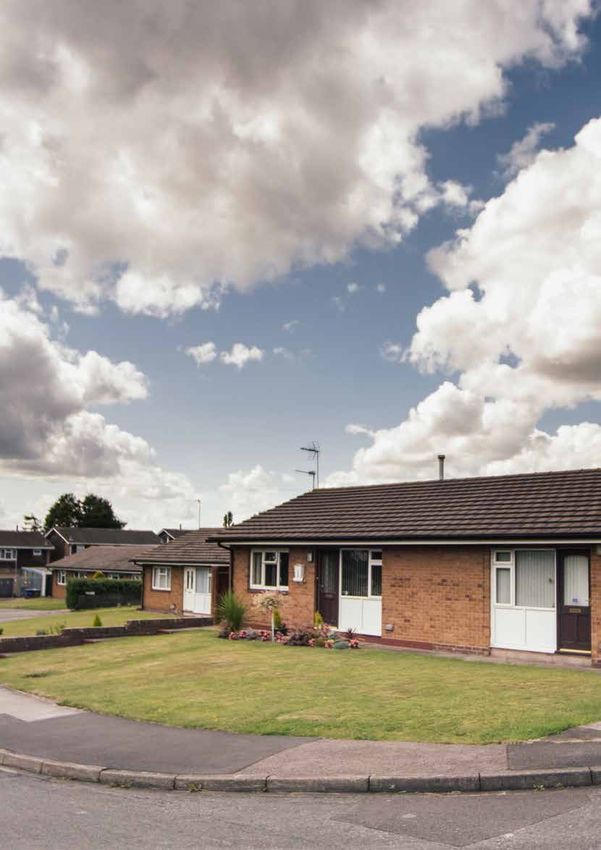
Directors letter
Dear Prospective Investor                                                   (including bungalow tenants unable to benefit from their own PV
                                                                            installation for various reasons including roof orientation or design).
November 2014
                                                                            While the financial reward for investors is not the main driver for
We are delighted to be able to offer you the opportunity to join            this scheme we do believe that the 7% projected Internal Rate of
and invest in this ground-breaking community energy project in the          Return is a fair and reasonable return for a project of this nature.
Cannock Chase district of Staffordshire.                                    In addition, we are expecting that it will be accepted for the Seed
                                                                            Enterprise Investment and Enterprise Investment Schemes, for
Cannock Chase is the second most deprived area in Staffordshire
                                                                            which Advance Assurance has been granted, and which will offer
after Stoke on Trent, with high levels of fuel poverty, This project will
                                                                            the additional benefit of either 50% or 30% relief for UK taxpayers.
help up to 400 Council tenants, many of them elderly, to reduce
their energy costs at a time when they have been faced with steep           We passionately believe that if this project is successful it will blaze
rises over the last few years.                                              the way for many further similar community energy projects with
                                                                            Councils and other social housing providers across the UK. There
This project originated in the autumn of 2013 when Southern
                                                                            are many more social housing roofs across the UK and there is very
Staffordshire Community Energy was approached by Cannock
                                                                            little reason why every one which is suitable should not host solar
Chase Council about the possibility of installing solar PV on Council-
                                                                            PV.
owned bungalows in the district. SSCE agreed to develop the
project through a new Community Benefit Society which was                   We do hope that you will find this share offer worthy of your
purpose-designed and would look to involve local people – and so            consideration.
Chase Community Solar was born.
To our knowledge no other community energy project has sought
to raise the community shares to install solar PV on individual
Council-owned homes at scale – and to provide free electricity to
the tenants. That makes this a particularly exciting project which we
are pleased to have brought to the launchpad.
In addition to providing benefits to the tenants there will, of
course, also be considerable carbon savings which will help in the
important fight against dangerous climate change, and contribute to         Michael Kinghan
the decentralisation of our energy provision. In addition we hope           Chair
to establish a community fund which would be used to provide
support including energy advice to a wider group of local people

  2        Chase Community Solar Limited Share Offer Document • November 2014
Declaration
Chase Community Solar Limited and each of its Directors
whose names are set out below hereby declare that
having taken all reasonable care to ensure that such is the
case, the information contained in this Offer Document is
                                                                                                                 Overv    iew
                                                                                      • First sc
to the best of his/her knowledge, in accordance with the                                            heme in th
                                                                                          panels on               e UK
                                                                                                          council ho to put solar
facts and contains no omission likely to affect its import.
                                                                                          communit                    use roofs
                                                                                                         y shares.                funded by
                                                                                     • Total in
                                                                                                   vestm
Bob Bell                             Catherine Sadler                                   communit ent at least £400,00
                                                                                                       y shares.                    0 from
                                                                                    • Betwe
                                                                                                en 150 an
                                                                                      benefit fro              d 400 cou
                                                                                                     m solar pa            ncil tenan
John Coombes                         Andrea Simpson                                                                nels.               ts
                                                                                  • Betwe
                                                                                              en 176 a
                                                                                     year CO                 nd 441 to
                                                                                                   s a v                 nnes tonn
                                                                                                 2       ed.                         es per
                                                                                 • Betwe
Douglas Haigh                        Robin Taylor                                            en £100 a
                                                                                    savings fo              nd £200 p
                                                                                                r tenants.               .a. estima
                                                                                                                                    ted
                                                                                • Projec
                                                                                           ted 7% re
                                                                                                           turn on sh
Michael Kinghan                      Anthony Walters                            • Shares                               ares.
                                                                                           expected
                                                                                  tax relief s             to qualify
                                                                                               cheme.                 for SEIS o
                                                                                                                                  r EIS
                                                                               • Estima
                                                                                         ted £6
Robin Powell
                                                                                 communit ,000 per annum av
                                                                                             y fund                        ailable to
                                                                                                                                       a

Contents
Directors Letter...........................................................Page 2             7.     Management and administration..............Pages 20 - 21
Declaration.................................................................Page 3            8.     Share offer.......................................................Page 22
1.     Summary of offer..................................... Pages 4 - 5                      9.     Terms and conditions.......................................Page 23
2.     Background........................................................Page 6               10. Guidance notes................................................Page 24
3.     Business overview..................................Pages 8 - 11                        Application form.......................................................Page 25
4.     Financial projections.................................Pages 12 - 15                    Declaration...............................................................Page 26
5.     Tax relief..........................................................Page 16            Glossary....................................................................Page 27
6.     Risk factors..............................................Pages 18 - 19

                                                                                                                              www.chasesolar.org.uk                        3
1. Summary of offer
This is a summary of the offer to acquire                                   1.3. The Project
shares in the Chase Community Solar Limited                                 The project is to install solar PV panels on social housing bungalows
                                                                            owned by Cannock Chase council. The solar panels will, when
(‘the Society’).                                                            generating, provide free electricity to the tenants.

1.1. Introduction                                                           The Project will help at least 150 and as many as 400 social housing
                                                                            tenant households in Cannock Chase District, many of whom will
The purpose of this share offer is to raise enough funds to install         be elderly people living on low incomes.
solar panels on at least 150 and up to 400 homes owned and
managed by Cannock Chase Council.                                           Cannock Chase district has the highest levels of deprivation of
                                                                            any district in Staffordshire (excluding Stoke) and is ranked 138
                                                                            out of 326 LA districts nationally from the 2010 Index of Multiple
“By investing as little as £100 in Chase Community Solar people             Deprivation. 12% of the population fall within the most deprived
can get a fair return on their money while helping others in their          20% nationally. Fuel poverty is higher than the national average at
community to save money on their electricity bills. This means              11.9% compared with 10.8%. Nearly half of all Cannock electoral
everyone in the community can benefit from the Feed-in tariff subsidy       wards experience high fuel poverty.
for solar electricity which we all pay for through our electricity bills.   The estimated saving to Council tenants who have the solar PV
By investing you will also help to build up a community fund to             installed is expected to be between £100 and £200 per annum,
support local projects to benefit the wider community.”                     depending on their consumption of electricity during the periods
Mike Kinghan, Chair of Chase Community Solar                                when the panels are generating electricity.
                                                                            The project will be managed and controlled by a local Community
The panels will provide free electricity to the tenants of the homes        Benefit Society and the capital will be raised by selling shares to the
and therefore will help to mitigate the rising cost of energy for           public, thus ensuring that the benefits will be distributed within the
these households. The properties planned to be included in this             local community as far as possible.
programme are all bungalows mainly tenanted by retired members              The overall number of installations achieved will be dependent on
of the community.                                                           the total capital raised. The minimum target is 150 systems with an
The target internal rate of return (IRR) to investors in the project        average capacity of 3kW. At this level, the internal rate of return for
is 7%. Additionally, the directors have received advance assurance          investors of 7% is expected to be achieved.
from HMRC that shares in the scheme will be eligible for tax relief
under the Seed Enterprise Investment and Enterprise Investment              1.4. Carbon savings
Schemes (SEIS/EIS) which will enable investors to reclaim income
                                                                            It is estimated that if 150 installations of 3kW are carried out, this
tax on their investment at the rate of either 50% or 30%.
                                                                            will displace the equivalent of 176 tonnes of CO2 every year. If 400
Chase Community Solar Limited (the Society) has been established            installations are carried out (300 at 3kW, 100 at 2.5kW), this will
by the Directors of Southern Staffordshire Community Energy                 displace 441 tonnes of CO2 every year.
Limited (SSCE Ltd) as a purpose-designed vehicle to take forward
                                                                            We are expecting the yield from each 3kW array in Cannock to
this specific project.
                                                                            be about 2,640 kWh per year (according to the data taken from
The project was instigated in partnership with Cannock Chase                the Microgeneration Certification Scheme (MCS) solar irradiation
Council who are strongly supportive of the concept.                         tables). The average electricity consumption for a domestic house in
                                                                            the UK is about 3,300 kWh p.a., so each installation will on average
This is an exciting and innovative project. There are now many
                                                                            produce the equivalent of about 80% of the electricity consumed in
renewable energy installations in the UK owned by community
                                                                            the building. (In practice, the times of generation and demand will
benefit societies or co-operatives, but we believe this will be the
                                                                            not match so electricity will be exported and imported at different
first major scheme to install solar PV panels funded by community
                                                                            times.)
shares on local authority housing and to provide council tenants
with free electricity.
                                                                            1.5. The Offer
1.2. Important Information                                                  £34,250 has already been raised through a previous share offer.
                                                                            This sum covers the preparatory work necessary to take the project
This document has been prepared by the Directors of Chase
                                                                            through to the point at which installation work can begin. In addition
Community Solar Limited, who are responsible for its contents. Full
                                                                            a grant of £1000 has been agreed by the Naturesave Trust.
details on the legal compliance of the document and the terms of
the offer and how to invest are set out in the main body of the             This current offer is for the capital to carry out the installations now
document. Technical and other words and phrases used that have              that the preparatory work has been completed.
a particular meaning are defined and explained in the Glossary. This
                                                                            The minimum capital required for the project to be viable and go
summary should be read as an introduction only and any decision to
                                                                            ahead is £523,000 (including existing shares) which will finance the
invest made on the basis of the document as a whole.
                                                                            installation of about 150 roofs.

   4        Chase Community Solar Limited Share Offer Document • November 2014
Of this, 25% is expected to be obtained through a loan and the                1.7. Allocation of shares
  balance of £403,000 would be raised from shares. Of this, £34,250
  has already been raised, leaving a minimum of £368,750, which has             Shares will be allocated on a first come first served basis.
  been rounded up to £370,000 to be raised through this share offer.            Once the minimum viability level is reached, installations will begin
  If more than this is raised, more roofs will be completed and this            and subscriptions converted to shares as soon as they are received.
  will result in higher carbon savings, more households helped, and             Once the maximum numbers of roofs are funded, no more
  higher community fund.                                                        applications will be processed.
  The maximum number of suitable roofs potentially available is about           There will be significant publicity within the local community of
  400 which would require a total of approximately £1,255,000 to                Cannock Chase to make sure that local residents have the maximum
  be raised, of which £951,000 would be raised from shares and the              opportunity to obtain shares.
  balance from a loan.
  Shareholders should regard these Shares as a long-term investment.            1.8. Rate of return
  They may subscribe for a minimum of 100 and a maximum of
                                                                                Returns to Members are calculated according to projected income
  100,000 offer Shares at their £1 par value, subject to the limitation
                                                                                and expenditure during the 20 year period during which the Feed
  that no single shareholder (or shareholder and close family
                                                                                in Tariff is being received.
  members) holds more than 30% of the value of shares at any one
  time. This is a requirement of being eligible for the EIS tax relief.         The surplus income generated will be dependent on the number
                                                                                of roofs fitted with panels and various other variables, including
  Once the final share offer is completed, all shares issued in all stages
                                                                                the size and orientation of the roofs which are included in the final
  will have identical status. Members’ eligibility for a tax rebate on
                                                                                scheme and the yield (which is based on the amount of sunshine
  the shares will depend on the individual member’s tax status and at
                                                                                in the year).
  what stage the shares were purchased.
                                                                                The target return to members is a 7% Internal Rate of Return
  Shares will not be traded on a recognised stock exchange and
                                                                                (IRR). The financial projection indicates that this should be achieved
  shares are not transferable. Share withdrawal may be authorized
                                                                                if the minimum target of 150 roofs is achieved, but this cannot be
  at the discretion of the board. Shares cannot be withdrawn until
                                                                                guaranteed because some factors that affect the return are outside
  at least three years after the date of issue of the shares as this is a
                                                                                the control of the Society.
  condition for eligibility of tax relief.
                                                                                Income above this will be distributed as a community fund.
  Each shareholder, whatever the relevant stake, automatically
  becomes an equal society member of the Chase Community Solar                  The benefit of tax relief is in addition to the basic interest that
  Limited on a ‘one member, one vote’ basis.                                    members will receive.
                                                                                                        For shares that are eligible for 50% tax return
Offer stage       Amount            Tax relief          Purpose                                         under SEIS, the overall return (including the
The previous      £34,250           SEIS (50%)          Raise the money necessary to formalise          tax relief) equates to an IRR of around 13%.
pioneer offer                                           the legal agreements and to pay for the         For shares that are eligible for 30% tax return
(now closed)                                            administration and marketing associated         under EIS, the overall return (including the
                                                        with the main share offer.                      tax relief) equates to an IRR of around 10%.
This current      Minimum of        SEIS (50%) on       To fund the installation costs. The             The financial model is based on a projected
share offer       £370,000          first £115,750      number of roofs will depend on the              return on members capital over 20 years
                                    [see section 1.6]   capital raised.                                 (subject to Society performance).
                  Maximum of        EIS (30%) on
                  £950,000          the balance                                                         1.9. Risks
                                                                                                       All investment and commercial activities
  1.6. Tax Relief                                                               carry risk. Investors should take appropriate advice and make
                                                                                their own risk assessment whilst bearing in mind the social and
  Advance Assurance has been given by HMRC that the shares
                                                                                environmental aspects of the Project.
  purchased through this pioneer share offer are expected to qualify
  for the Enterprise Investment Scheme (EIS) or Seed Enterprise                 Those interested in investing should do so only after reading this
  Investment Scheme (SEIS) tax relief schemes.                                  document in full and taking appropriate financial and other advice.
                                                                                Members who purchase shares in this project need to be aware of
  The first £115,750 of shares will be eligible for SEIS 50% tax relief.
                                                                                the financial risks associated with the venture.
  Members that subscribed to the offer will be given first refusal on
  these. The remaining shares eligible for SEIS will be allocated to            This share offer is not covered by the Financial Ombudsman Service
  other subscribers in date order of receipt of applications.                   or the Financial Services Compensation Scheme.
  It is expected that all further shares issued will be eligible for standard
  EIS tax relief of 30%.

                                                                                                               www.chasesolar.org.uk              5
2. Background
This section provides the background to the                                 2.2.      Project Partners
project and the organisations that have put it                              Cannock Chase Council supports this project as an important
                                                                            contribution to reducing the energy costs of its tenants, reducing the
together.                                                                   district’s carbon emissions and supporting community ownership
                                                                            and enterprise.
2.1.         Chase Community Solar Limited
                                                                            Southern Staffordshire Community Energy Ltd is a
Chase Community Solar Limited was specifically founded to                   Lichfield-based Registered Society, founded in 2011, that owns and
operate this scheme. The objects of the Society are to carry on any         operates renewable energy resources in the Lichfield area and also
business for the benefit of the community by;                               develops and implements renewable energy and energy efficiency
a)       Promoting renewable energy generation and developing,              projects across Staffordshire. Through its Directors, it has been
         installing and operating renewable energy sources;                 instrumental in the negotiations with Cannock Chase Council and in
                                                                            co-ordinating the feasibility and development work on the project.
b)       Promoting sustainable use of energy and reductions in carbon
         emissions through the provision of advice on energy efficiency     Pure Leapfrog is a business-led charity that is the leading social
         and the supply of energy-efficient products and services;          investment provider within the community energy sector in
                                                                            England. They provide low cost finance to UK projects, drawing
c)       Promoting public awareness of environmental and related            on a credit facility from Big Society Capital. Their vision is to ensure
         issues and supporting educational initiatives related to           that community energy becomes a significant part of the sustainable
         renewable energy, energy efficiency and sustainability; and        energy mix.
d)       Promoting sustainable initiatives and policies which improve       Sharenergy is a Shrewsbury-based Co-operative which helps
         health, wealth and well-being of local communities, particularly   community groups to establish community owned renewable
         those suffering from deprivation.                                  energy. Sharenergy are assisting with the preparation and
Chase Community Solar Limited is a Registered Society (for the              administration of the share offer for Chase Community Solar
benefit of the community) and was incorporated and registered               Limited.
with the UK Financial Conduct Authority on 20th June 2014.                  Ethex is a not-for-profit positive investment platform based in
It is domiciled in England, with its registered office at 3 Burns Close,    Oxford that makes positive investing easy to understand and easy
Lichfield, WS14 9DW and registration number 32420R.                         to do. Ethex is managing the share offer administration and helping
                                                                            to market the share offer.
A Registered Society is a legal form owned by and operated by its
members. Members elect the directors and each member has one
vote in a members’ meeting regardless of the number of shares
held.
Members are protected by limited liability and are only obliged to
contribute the initial cost of their shares.
A Registered Society is governed by Rules, largely in standard form,
which are approved by and registered with the Financial Conduct
Authority. A copy of Chase Community Solar Limited’s Rules is
available by application to the Society or from the website (see back
of this Offer document for contact details).

                                                                            Councillor Frank Allen of Cannock Chase Council with
                                                                            members of the board of the Society

     6         Chase Community Solar Limited Share Offer Document • November 2014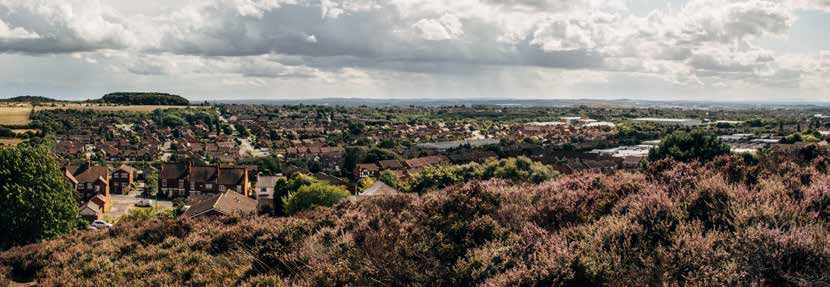
www.chasesolar.org.uk 7
3. Business overview
The sole planned activity of Chase Community
                                                                             “Cannock Chase Council is delighted to be working with Chase
Solar Limited is the ownership and management                                Community Solar on this ambitious project to install solar PV on the
of Solar PV panels on social housing owned by                                roofs of Council bungalows in our district. Our tenants have been
                                                                             badly hit by rises in energy prices in recent years and through this
Cannock Chase Council and the distribution of                                project we can give many of them an opportunity to reduce their
any community fund arising from this.                                        energy bills by getting free electricity when the sun is shining. By
                                                                             concentrating on bungalows we will be giving the most help to the
3.1. Relationship between the Society and 		                                 older members of our community. And in addition to helping reduce
     Cannock Chase Council                                                   electricity costs the project will also help to reduce the district’s
                                                                             carbon emissions.”
In the autumn of 2013 Cannock Chase Council sought interest from             Councillor Frank Allen, Portfolio holder for Housing
Southern Staffordshire Community Energy Ltd. to explore whether
solar PV panels could be installed on the roofs of some of their
housing stock. This discussion has led to the formation of Chase
Community Solar Limited (the Society) to deliver this scheme.             Case Studies
                                                                          Cannock Chase District Council carried out a pilot scheme in 2012
For a project such as this to work, there needs to be a high level of     to install solar panels on 39 bungalows in Jerome Road, Jerome
co-operation between the landlord (Cannock Chase Council) and             Drive, Yew Tree Close and High Street in the Norton Canes area
the installer (the Society). Constructive discussions have taken place    of Cannock Chase district. The tenants of the bungalows are getting
over an extended period of time to ensure that the arrangements           free electricity when the panels are generating, and the surplus
for the project are fair to all parties.                                  electricity is fed back into the grid.

Rooftops of Cannock Chase

3.2. Community fund
The main benefits to the community are the free electricity received          Mr and Mrs Powell had solar panels installed under the pilot
by council tenants and the environmental benefits of carbon                   scheme on their bungalow in Jerome Road in April 2012.
reduction.
                                                                              Since the installation, they have seen a significant fall in
Members (shareholders) will receive interest which will be capped             their electricity bills. They are very happy with the look of
such that the 20 year IRR is no higher than 7%. Surplus above                 the panels on the roof, and have not heard any negative
this (after all running costs and other essential commitments are             comments from anyone on the estate.
covered) will be put into a community fund. The size of this
community fund will depend on how many panels are installed.
At the upper end, if 400 installations are carried out, there will be a
community fund of about £6,000 per year available. It will be at the
discretion of the board and members of the Society to decide how
this was to be distributed to community projects. However the
board will consult with Cannock Chase Council and local residents
about how the community fund will be spent before making
decisions about its use.

  8        Chase Community Solar Limited Share Offer Document • November 2014
3.5. Proposed PV panel specification
                                                                          The size of each installation will depend on the space available on
                                                                          the roof, the maximum size will be limited to 3.6kW to simplify the
                                                                          cost of connecting to the electricity network. The average size is
                                                                          anticipated to be about 2.8kW.
                                                                          To ensure reliability, the solar panels will be sourced from a Tier 1*
                                                                          equipment supplier.
                                                                          Similarly a high quality inverter will be chosen to ensure reliable and
                                                                          efficient performance.
                                                                          The financial projections assume that all inverters are replaced
                                                                          at current prices from reserves during the 20 year lifetime of the
                                                                          project. This is expected to be conservative as many of the inverters
                                                                          will be repaired rather than replaced, and the cost of replacement is
                                                                          likely to fall as the technology matures and improves.

   Mrs Jeavons, who lives in Jerome Road, had solar panels                Remote metering will be installed so that manual meter data
   installed by Cannock Chase council in April 2012.                      collection will not be required. Remote monitoring of performance
                                                                          will also be incorporated so that malfunctions can be quickly
   She says “The installation was very quick, it was finished in a        identified and remedied.
   couple of days, and the installers only came inside the house,
                                                                          * In order to help in the selection and specification of PV panels, a classification
   into the roof for less than an hour.”                                  system has been established where panels are classified as “Tier 1”, “Tier 2” or “Tier
   Since the installation there have been no problems at all, and         3”. The system was put in place by Bloomberg New Finance. This is now the most
                                                                          respected international measure of panel “bankability”. Tier 1 is the top rating, tier
   she is now spending £6 per fortnight less on her electricity           3 is the bottom rating.
   and is very pleased to have received the panels.
                                                                          3.6. Panel installer
                                                                          Stage One tenders were received from seven contractors for a
3.3. Housing stock                                                        typical 3kW installation. The most competitive bid was received
The properties involved are all Council-owned, purpose-built              from J Tomlinson Ltd, a Nottingham based contractor with
bungalows on estates in Cannock, Hednesford and Rugeley. The              extensive experience in working with social housing providers
great majority are traditionally built with pitched roofs mostly          and installing PV systems on dwellings and elsewhere. Following a
finished with concrete tiles. The properties were constructed             review of their bid and detailed discussions with them about their
between 1945 and 1985. Maintenance of the properties is the               capabilities, the proposed components and the implementation
responsibility of the Council.                                            process, the Society have confirmed to J Tomlinson that they are
                                                                          the preferred contractor and that it is our intention to enter into a
3.4. Tenant Consultation                                                  contract with them. J Tomlinson have nominated their team for the
                                                                          project and have been working with the Society and the Council
Consultation with the tenants occupying properties on which the           on the project. Following the share launch we will agree the final
PV is planned to be installed will take place when the share issue        contract details with them (based upon their Stage One tender) and
has been launched. Each tenant will be approached individually            sign the contract for the works. We have been very pleased with
following a joint letter from Cannock Chase Council and Chase             their positive and helpful approach and have every confidence in
Community Solar Ltd. The project will be fully explained to the           their ability to deliver it successfully.
tenants by the installer and every household given the choice of
whether or not to be considered for PV panels.
                                                                          3.7. Planning Permission
The Society cannot guarantee an installation for all tenants that
                                                                          As long as certain conditions are complied with, roof mounted
express interest, because there may be technical reasons outside
                                                                          solar panels are treated as a “permitted development” and as such,
the control of the Society when the detailed survey is carried out,
                                                                          an application for planning permission is not needed. The Society
such as shading or orientation, that rule out a small number of
                                                                          will ensure that all the installations will comply with “permitted
properties.
                                                                          development” conditions.
Tenants will be given full instructions on the operation of the system
and how to maximise the benefits of savings on their electricity bills,
as well as other advice on energy efficiency. A 24 hour helpline will
be provided to report faults and deal with queries.

                                                                                                                                                          9
                                                                                                               www.chasesolar.org.uk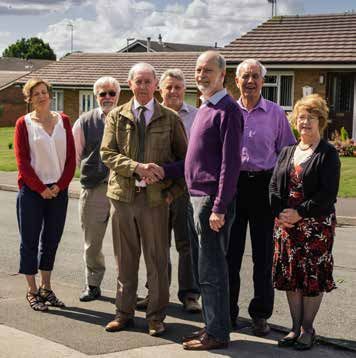
3. Business overview
3.8. Grid connection                                                     some form of disability, and these are considered less likely to be
                                                                         on pre-paid meters, or to be subject to rapid changes of tenant,
The District Network Operator (DNO) that covers the whole                so these risks are considered to be low, but an allowance of 1%
of the area where the properties are located is Western Power            reduction of yield has been included to allow for this.
Distribution (WPD). The Society is in discussion with WPD to
ensure that the grid connection process can progress smoothly.           To model all these factors, the following assumptions on yield
                                                                         reduction are used, compared to the 937kWh/kW from the MCS
It is anticipated that there may be some grid constraints that may       table above.
limit the volume of panels that can be installed in certain areas
within the district. The Society is working with WPD to identify         150 installs        6% reduction to 881 kWh/kWinstalled
these constraints so that detailed surveys are not carried out on        250 installs        7% reduction to 871 kWh/kWinstalled
properties where grid constraints apply.                                 400 installs        8% reduction to 862 kWh/kWinstalled
From discussions with Western Power to date it appears very likely
that it will be possible to connect at very least the minimum number
                                                                         3.11. On-site use of electricity
of 150 properties                                                        When the panels are generating electricity, tenants will be able to
                                                                         use this generated power free of charge. Any electricity they use in
3.9. Microgeneration Certification Scheme                                excess of the electricity produced by the panels will be imported
                                                                         from the grid and paid for by the tenant according to the terms they
In order to be eligible for the Feed in Tariff, the equipment that is    have with their normal electricity supplier.
installed and the company that carries out the installation must be
certified under the Microgeneration Certification Scheme (MCS).          If the solar PV panels should fail for any reason, they would continue
                                                                         to take electricity from the mains with no interruption of supply.
The Society will make certain that all requirements are met to
ensure that the installations will be eligible for the Feed in Tariff.   The income that the Society receives from sale of electricity to the
                                                                         grid is based on “deemed” export, which means that the actual
3.10. Panel Performance                                                  export is not metered and is assumed to be 50% of the power
                                                                         generated by the panels.
The Microgeneration Certification Scheme (MCS) have recently
produced a report on the installation and performance of roof            For this reason, the income received by the Society is independent
mounted solar panels. This report has gathered data on the               of how much or little is used by the tenants, even though they do
generation output of roof mounted solar panels across the UK. This       not pay for the electricity generated by the panels.
has been tabulated to form a resource for estimating the output of       Tenants will benefit financially by using electricity at times when the
roof mounted PV panels according to the location across the UK.          panels are generating, as far as possible. For example, they could
This data has been used in the estimation of generation and hence        choose to run washing machines, dishwashers and other appliances
income for the installations proposed for this Society.                  when the sun is shining.

The report can be found on the internet at http://s.coop/mcspv           They should be given information booklets by the installers on how
                                                                         to maximise their benefits and the Society will provide additional
This document provides look-up tables for 21 geographic zones            support to help them to obtain the most benefit from the solar
around the UK. Cannock lies in zone 6 (Birmingham).                      electricity, and also to help them to make their homes more energy
The output for an optimal installation (facing due South and at 38°      efficient in other ways.
inclination) would be 937 kWh per kW installed.
                                                                         3.12. Legal issues
Not all installations would be facing exactly south and at 38°
inclination. If the average is taken for all roofs between South East
and South West, and on roof angles between 20°and 45° the
                                                                         3.12.1. Decommissioning
average output is 913 kWh per kW installed.                              The lease negotiated with the council specifies that, at the end of the
                                                                         lease, and unless the option to extend is taken up, the ownership of
If only the minimum number of installs (150) are carried out,
                                                                         the panels would be gifted to the owner of the buildings (currently
they will be installed on the roofs that are most suitable and that
                                                                         Cannock Chase Council).
would give the highest yield. As more installations are added, roofs
oriented further from South would be added, so the average yield         There is no requirement in the lease for the Society to remove or
will reduce.                                                             decommission the panels at the end of the lease or any time in the
                                                                         future other than for roof maintenance when they would be re-
There will be a yield reduction as a result of disconnections due
                                                                         instated once the roof work is completed.
to prepayment meters being out of credit, and when properties
are empty (voids). The properties being considered are bungalows         Under this arrangement the tenants will continue to benefit from
predominantly occupied by retired residents, or residents with           reductions in their electricity bills and the building owner will be

  10       Chase Community Solar Limited Share Offer Document • November 2014
able to continue to use and benefit from the panels until the end of
their useful life which is expected to be far in excess of the length
of the lease.
3.12.2. Roof Lease
A template lease has been negotiated between the Society and
Cannock Chase Council. This will be completed for each property
where panels are going to be installed.
The lease will include rights to install and maintain solar photovoltaic
equipment, to connect to the mains grid and to take an income
from the FIT payments and export tariff.
The lease is for a term of 21.5 years, at a peppercorn rent. There is
an option to extend by 8.5 years.
The principal terms of the lease have been agreed and it is presently
at an advanced stage of drafting.
There will be a separate lease for each property but the contractual
terms will be identical. The leases for each individual property will
not be completed until installation is ready to commence.
3.12.3. Right to Buy
Right to buy – Under Government ‘Right to Buy’ legislation
Cannock Chase Council tenants have the opportunity to purchase
their properties at a discounted rate.
If the resident wants to retain the panels, the Council will transfer
ownership to the new purchaser who can then sign up to a lease
with the Society on the same terms.
If after the sale of a property under Right to Buy, the new owner
defaults on a mortgage secured on the value of the property, the
mortgagee in possession can break the lease without compensation.
These cases are expected to be rare.
If the resident does not want to retain the panels, the Council will
require us to remove the panels and will reimburse the reasonable
cost of removal. They will also make an Early Termination Payment
representing the depreciated cost of the panels and installation plus
10%.
3.13. Project timeline
This is an indicative timeline showing planned progress along a
realistic path – but can and will change as required.
4th November 2014 Main share offer launched
13th February 2015 Share offer closed unless extended
by the directors
March 2015 Installations begin
May 2015 Installations completed
June 2015 First Annual General Meeting.
Board Elections
11
www.chasesolar.org.uk4. Financial projections
Financial projections are based on estimates Bookkeeping and administration
The Society will need to keep accounts, to communicate with
of expenditure and income that have been members and pay interest on shares, and to fulfil all the regulatory
calculated for the project. These are described requirements of HMRC and the FCA. These functions will be
contracted with Sharenergy at a cost of approximately £5000 per
below. year (the actual figure depends on the eventual number of members
that subscribe for shares). In addition, an independent accountants
4.1. Expenditure report will need to be obtained on each annual set of accounts.
4.1.1. Development costs Maintenance and inverter replacement
Inverters have an expected lifetime of between 10 and 15 years and
The development costs have been covered by a previous pioneer therefore we would expect them to require replacement before
share offer which raised £34,250 and an additional £1000 awarded the end of the 20 years. An accumulating fund has been set up in
as a grant by the Naturesave Trust. the projections that allow for all inverters to be replaced during the
There will be an additional £5,000 development costs which will 20 year lifetime of the project.
be covered by the main share offer and only payable on successful It is not expected that much other maintenance will be needed
completion of the main share offer. This payment is to cover but the panels will be carefully monitored and repairs carried out
intellectual property and templates used by Sharenergy for the promptly where malfunctions are detected.
share offer.
Because of the slope of the panels the rain should keep them clean
An 8% contingency allowance has been built into the total project and it is anticipated that manual cleaning will not be necessary.
costs. This fee will be used in the first instance to cover any
unexpected capital project costs. If this is not all required, a fee will Insurance
be paid to Southern Staffordshire Community Energy Ltd out of the The Society will identify risks that could affect the panels and the
unused portion for use in the development of future community income from them, and take out appropriate insurance designed
energy projects. This fee will be capped at 5% of the project costs. for this type of PV installation. Costs in the projections are based on
estimates that have been obtained from Naturesave, a reputable
insurer who specialise in insurance of renewable energy installations.
4.1.2. Installation costs
The installation costs will be funded by this main share offer. This 4.2. Income
will cover the cost for a contractor to install panels, inverters and
monitoring and metering equipment, on the properties identified Income for the Society will come from the following sources:
for the project.
4.2.1. Feed in Tariff
The main share offer will also cover the individual cost of completing
a lease on each property. The legal costs include £2,500 already Income from all electricity generated will come from the Feed in
committed on establishing the template lease, plus £100 legal Tariff. It is anticipated that the panels will be installed after December
costs and the £40 Land Registry cost for applying the lease to each 2014 and hence the tariff rate will be 12.49 p/kWh because of the
property. 3.5% reduction (degression) that will occur at the end of December
2014.
4.1.3. Ongoing costs The tariff received for generated electricity will be indexed with RPI
Once the panels are installed, there will be ongoing costs that will and will continue for 20 years (see www.ofgem.gov.uk)
be incurred throughout the life of the Society.
4.2.2. Sale of exported electricity
Monitoring
Monitoring equipment will be installed with every array to identify Because the electricity exported from the homes will not be
any malfunction, but the output will need to be read on a regular separately metered, OFGEM regulations assume that half of the
basis. A commercial service provider, Orsis, have provided a generated electricity will be used on site, and half will be exported.
quote for the equipment and software and the costs have been The Society will therefore receive the export tariff of 4.77p/kWh for
incorporated in the projections. half of the generated electricity.
The export tariff is fixed by OFGEM and will increase annually with
RPI.
12 Chase Community Solar Limited Share Offer Document • November 20144.3. 20 year income and expenditure projection scenarios
Option 1: 150 roofs installed at 3kW each
Year 0 1 2 3 4 5 yrs 6 - 10 yrs 11 - 20 yrs 1 - 20
Generation (kWh) 396,351 393,848 391,344 388,841 386,338 1,894,141 3,600,536 7,451,399
Profit/Loss
Feed in Tariff income 49,999 51,174 52,374 53,600 54,853 294,013 698,585 1,254,598
Income from electricity sales 9,661 9,888 10,119 10,356 10,598 56,808 134,977 242,408
Income 59,660 61,062 62,494 63,957 65,451 350,821 833,562 1,497,006
Depreciation over 20 years 26,183 26,183 26,183 26,183 26,183 130,916 261,832 523,665
Operating and admin costs 16,311 16,800 17,304 17,823 18,358 100,390 251,295 438,283
Expenditure 42,494 42,984 43,488 44,007 44,541 231,306 513,128 961,947
Operating surplus 17,166 18,078 19,006 19,950 20,910 119,514 320,434 535,059
Interest on cash in bank 0 382 635 864 595 3,353 8,273 14,103
Pure Leapfrog loan interest -7,855 -6,919 -5,927 -4,876 -3,761 -3,907 0 -33,246
Interest to members -9,311 -11,541 -13,714 -15,938 -17,744 -118,960 -328,707 -515,916
Surplus for distribution 0 0 0 0 0 0 0 0
Cashflow
Bank opening balance 10,000 20,587 30,237 20,000 20,000
Capital expenditure -523,665
Surplus for distribution 0 0 0 0 0 0 0 0
Add back depreciation 26,183 26,183 26,183 26,183 26,183 130,916 261,832 523,665
Pure Leapfrog loan capital 130,916 -15,597 -16,533 -17,524 -18,576 -19,690 -42,996 0 -130,916
Community fund 0 0 0 0 0 0 0 0
Share capital (receipt and repayment) 402,749 0 0 -18,896 -7,607 -6,493 -87,920 -281,832 -402,749
Bank closing balance 10,000 20,587 30,237 20,000 20,000 20,000
Member IRR (no tax relief) 7.0%
Member IRR (30% tax relief) 10.1%
Member IRR (50% tax relief) 12.8%
Community fund £ nil £ nil £ nil £ nil £ nil £ nil £ nil £ nil
Option 2: 400 roofs installed, 300 at 3kW, 100 at 2.5kW
Year 0 1 2 3 4 5 yrs 6 - 10 yrs 11 - 20 yrs 1 - 20
Generation (kWh) 991,346 985,085 978,824 972,563 966,301 4,737,590 9,005,596 18,637,305
Profit/Loss
Feed in Tariff income 125,057 127,995 130,997 134,064 137,197 735,380 1,747,287 3,137,978
Income from electricity sales 24,163 24,731 25,311 25,903 26,509 142,087 337,603 606,306
Income 149,220 152,726 156,308 159,968 163,706 877,466 2,084,890 3,744,284
Depreciation over 20 years 64,038 64,038 64,038 64,038 64,038 320,188 640,375 1,280,750
Operating and admin costs 37,782 38,916 40,083 41,286 42,524 232,540 582,092 1,015,223
Expenditure 101,820 102,953 104,121 105,323 106,562 552,728 1,222,467 2,295,974
Operating surplus 47,401 49,773 52,187 54,644 57,144 324,739 862,422 1,448,310
Interest on cash in bank 0 574 1,192 1,752 733 4,586 13,005 21,841
Pure Leapfrog loan interest -19,211 -16,923 -14,496 -11,925 -9,199 -9,556 0 -81,310
Interest to members -22,189 -27,244 -32,518 -37,915 -41,925 -282,840 -782,988 -1,227,619
Surplus for distribution 6,000 6,180 6,365 6,556 6,753 36,928 92,439 161,222
Cashflow
Bank opening balance 10,000 35,892 59,495 20,000 20,000
Capital expenditure -1,280,750
Surplus for distribution 6,000 6,180 6,365 6,556 6,753 36,928 92,439 161,222
Add back depreciation 64,038 64,038 64,038 64,038 64,038 320,188 640,375 1,280,750
Pure Leapfrog loan capital 320,188 -38,146 -40,434 -42,860 -45,432 -48,158 -105,158 0 -320,188
Community fund -6,000 -6,180 -6,365 -6,556 -6,753 -36,928 -92,439 -161,222
Share capital (receipt and repayment) 970,563 0 0 -60,672 -18,606 -15,880 -215,030 -660,375 -970,563
Bank closing balance 10,000 35,892 59,495 20,000 20,000 20,000
Member IRR (no tax relief) 7.0%
Member IRR (30% tax relief) 10.1%
Member IRR (50% tax relief) 12.9%
Community fund £6,000 £6,180 £6,365 £6,556 £6,753 £36,928 £92,439 £161,222
13
www.chasesolar.org.uk4. Financial projections
4.4. Notes on the Financial Projections • Administration costs of the Society are set based on the
standard ‘small co-ops’ package from Sharenergy which covers
The Projections are based on the following principal assumptions: maintenance of membership database, phone, email and
• Current expectations relating to the global energy market, postal support of members, preparation of AGM papers and
the UK electricity industry, UK government policy, and the annual return, annual audit, FCA and other regulatory fees. the
desirability for and promotion of electricity from renewable Society will produce annual accounts and as a small business
sources, will remain reasonably consistent and reasonably will apply for the exemption from audit.
favourable to the PV panels over the next 20 years, resulting in • Interest on cash in bank is set at 2.5%.
continuing demand for electricity produced by PV panels.
• All profits are allocated to depreciation charge or distributed
• Electricity yield has been based on the data published by to members or distributed to the community fund and so the
the Microgeneration Certification Scheme, adjusted to take projections do not predict any liability for Corporation Tax.
account of the fact that some roofs will not be facing due south Note that members are likely to be liable for Income Tax on
or at the optimal slope, and there will be small number of their returns from investment.
disconnections due to pre-payment meters being out of credit
and voids (breaks between tenancies). See section 3.10 for • Normal monthly cash expenditure is expected to be small and
more details. will be amply covered by the generation and FIT income. The
Projections anticipate that Chase Community Solar Limited
• If any of the assumptions prove not to be correct this is likely will be cash positive each year from the commencement of
to result in adjustments to the projections in the Project plan. operations.
Projections and assumptions such as those above are inherently
less reliable over longer time spans. • Abortive visits – The installer will call on each prospective
property to assess whether panels can be installed. Some
• The total cost is based on the prices in the tender received of the visits will result in a conclusion that panels cannot be
from the preferred installer. installed, and the Society will be responsible for covering the
• Inflation on all income and expenditure is set at 3% per annum cost of these abortive visits. An assumption has been made that
over the 20 year period. for each 10 successful visits, there will be one abortive visit.
The installer has quoted a fee for each abortive visit of £97 to
• Income is based on the Feed in Tariff, and on the electricity cover the time spent.
being exported at the Ofgem Export tariff rate. Note that the
Feed in Tariff is guaranteed for the full 20 years. • Projections are based on a 20 year timescale. After this time,
income will reduce significantly as the FIT payments will cease.
• Depreciation of equipment is straight-line over the 20 year The lease will include an option to extend for an additional 8.5
period and creates a fund to pay back members capital. years. Members will decide whether to exercise this option
Capital is modeled as being returned to members each year as nearer the time, when the costs and income in 2035 are known
cashflow allows, subject to maintaining a contingency reserve with more certainty. At the end of the project, the panels will
within the Society and subject to maintaining EIS eligibility (i.e. be gifted to the then building owner, and no decommissioning
no capital withdrawal within the first 3 years). will be carried out. Therefore no decommissioning costs are
• Insurance costs are set at £6/year/kW – this is based on included in the financial model.
insurer’s estimates.
14 Chase Community Solar Limited Share Offer Document • November 20144.5. Profile of capital and interest 4.6. Community Benefit
returns to members Each of the households that has panels installed will benefit from
The target return to members is 7% IRR, and surplus above this will reduced electricity bills. This will form a real and direct financial boost
be placed in a community fund. The annual interest rate will vary at the heart of the local community and will benefit a large number
across the 20 years, increasing over time so will be less than 7% in of people.
the early years and more than 7% in later years. Part of the surplus will be set aside to form a community fund. The
Capital cannot be returned for 3 years as this is a condition of being level of this will depend on the scale of installation achieved.
eligible for tax relief. After year 3, assuming financial performance It will be the responsibility of the Society in consultation with the
is as projected, members will be given the option of withdrawing Council to decide how this should be disbursed.
capital in annual instalments over the remaining 17 years, such that all
capital is returned by the time the leases on properties have expired. Early indications suggest that if the minimum target of 150 roofs is
Capital available to return to members will be lower while the Pure achieved, the community fund will be minimal, but if 400 roofs are
Leapfrog loan is being repaid, and will increase once this is fully paid achieved, the community fund will be in the region of £6,000 per
off after year 7. year, rising with inflation through the life of the project.
To help give an understanding of the rate at which a member will
receive interest and capital through the 20 year lifetime of the
scheme, the following table shows the projected cashflow for a
member subscribing for 1000 shares.
The numbers represent a purchase of 1000 shares in year 0, then
receipt of interest, capital and tax relief over the subsequent 20 years.
Year - 1 2 3 4 5 6 7 8 9 10 11 12
Cashflow (no tax relief) -£ 1,000 £ 21 £ 27 £ 88 £ 57 £ 58 £ 60 £ 63 £ 124 £ 127 £ 129 £ 132 £ 134
With 30% tax relief -£ 1,000 £ 321 £ 27 £ 88 £ 57 £ 58 £ 60 £ 63 £ 124 £ 127 £ 129 £ 132 £ 134
With 50% tax relief -£ 1,000 £ 521 £ 27 £ 88 £ 57 £ 58 £ 60 £ 63 £ 124 £ 127 £ 129 £ 132 £ 134
Year 13 14 15 16 17 18 19 20 Year 1-20 total IRR
Cashflow (no tax relief) £ 137 £ 140 £ 142 £ 145 £ 148 £ 150 £ 153 £ 188 £ 2,222 7.0%
With 30% tax relief £ 137 £ 140 £ 142 £ 145 £ 148 £ 150 £ 153 £ 188 £ 2,522 10.3%
With 50% tax relief £ 137 £ 140 £ 142 £ 145 £ 148 £ 150 £ 153 £ 188 £ 2,722 13.4%
Note especially:
1) Tax relief received in year 1
2) Low interest in early years balanced by high interest in later
years.
3) No capital return for 3 years to comply with EIS conditions
15
www.chasesolar.org.uk5. Tax relief
The Society has applied for and received The Board will endeavour to ensure that this share offer qualifies
for SEIS and EIS tax relief and advance assurance has been received
advance assurance from HMRC that this from HMRC that the shares will be eligible for qualifying taxpayers.
scheme is eligible for Enterprise Investment However, the Directors are not in a position to guarantee this.
Investors should take their own advice as to whether they are
Scheme tax relief (EIS and SEIS). eligible for SEIS tax relief.
5.1. Income tax relief Capital gains tax relief is available if capital gains are re invested in
SEIS or EIS shares. More information can be obtained from the
Advance Assurance has been received from HMRC that shares in HMRC website at http://www.hmrc.gov.uk.
the scheme are expected to qualify for the EIS and SEIS tax relief
schemes. EIS Example
SEIS will apply to the first £150,000 of shares that are issued Jenny invests £20,000 in EIS qualifying shares. The EIS relief available
(including the £34,250 already issued). The relief is equivalent to is £6,000 (£20,000 at 30%). If her overall tax liability for the year
50% of the value of the shares. (before EIS relief) is £15,000 she can reduce this to £9,000 as a
result of her investment.
EIS will apply to shares that are issued above the £150,000 threshold
and is equivalent to 30% of the value of the shares. For full details see www.hmrc.gov.uk/eis/.
Both EIS and SEIS can be claimed back by qualifying taxpayers against SEIS Example
income tax for the financial year in which the shares were issued (or Jenny invests £20,000 in SEIS qualifying shares. The SEIS relief
the previous year). Shares must be held for at least 3 years. available is £10,000 (£20,000 at 50%). If her overall tax liability
Members who bought shares in the pioneer offer will be given first for the year (before SEIS relief) is £15,000 she can reduce this to
refusal on the shares that qualify for SEIS, and any remaining shares £5,000 as a result of her investment.
that qualify for SEIS will be offered to all applications on a ‘first come, For full details see www.hmrc.gov.uk/seedeis/.
first served’ basis based on the date the applications are received.
In order to comply with the terms of the EIS and SEIS conditions 5.2. Failure to raise sufficient capital
set by HMRC, once applications reach the minimum target for the
In the event that the scheme fails to raise sufficient capital to fund
project to proceed, the SEIS qualifying shares will be issued and
the minimum viable number of installations, the project will not go
spent on qualifying project expenditure before the remaining share
ahead.
applications are processed.
Members who have applied for shares through this offer will have
Please note that you cannot claim more tax relief than you have
their application returned in full.
paid in income tax. The relief is given by way of a reduction of tax
liability, providing there is sufficient tax liability against which to set it.
If, when investors eventually withdraw their shares, they are worth
less than their purchase price, the loss incurred (minus the initial
relief) can be set against income for tax purposes in that year (or the
previous year). For further details about the EIS and SEIS schemes
you are advised to consult the HMRC website.
16 Chase Community Solar Limited Share Offer Document • November 201417 www.chasesolar.org.uk
6. Risk factors
All investment and commercial activities carry risk, 6.3. Risks specific to Chase Community
and investors should take appropriate advice and                Solar Limited Long Term operation
make their own risk assessment whilst bearing • FIT degression – the government operates a system called
                                                        “degression” whereby the Feed in Tariffs (FITs) are gradually
in mind the social and environmental aspects of         being reduced over time as the costs of installation go down.
this investment opportunity. Attention is drawn         It is certain that a degression will occur at the end of December
to the following:                                       2014, and this has been included in all the financial modeling. It is
                                                                           possible, but considered unlikely, that there will be a degression
6.1. General investment risks                                              at the end of March 2015, in which case those installations
                                                                           carried out after this date would get a reduced FIT tariff. This has
• The value of shares can fluctuate according to the value of the          been modeled in one of the scenarios (see section 6.4)
  underlying business.
                                                                        • Loss of tax relief – we are expecting that the scheme will be
• Offer Shares will not be transferable or traded on a recognised         eligible for tax relief through EIS, however, the government
  stock exchange.                                                         can review this at any point and it is possible therefore for the
• Members wishing to withdraw their share capital will be able            situation to change before we issue the shares. The tax relief is
  to apply to the Board for this purpose after the third year of          not therefore guaranteed.
  operation. Withdrawal of share capital is at the discretion of the    • Right to buy – under Government ‘Right to Buy’ legislation
  Board.                                                                  Cannock Chase Council tenants have the opportunity to
                                                                          purchase their properties at a discounted rate. The lease has
6.2.     Renewable energy industry risks                                  been constructed to ensure that this does not place a significant
• Government policy towards renewable energy may change.                  financial risk on the Society, see section 3.12.
  Throughout the operation of the FIT and previous similar              • Pre-payment meters and voids – in circumstances where the
  schemes such as ROC and NFFO, the Government has                        tenant has a pre-payment meter, or there are voids in the
  maintained the commitment to the process of ‘grandfathering’            tenancy there could be interruptions to the operation of the
  which ensures that whatever tariff a project is registered for at       generation meter and thus to the recorded level of PV output
  the commencement of operation, will remain the same for the             with consequent losses in FIT and export payments. This risk
  duration of the FIT period, (which is 20 years in the case of PV        has been considered (see section 3.10) and an adjustment made
  panels). Therefore revenue from FITs for the Society should not         to the anticipated yield and income.
  be affected by any future changes to the FIT. This payment is
  also index linked to RPI.                                             • Warranties and insurance will be in place. Accidental and
                                                                          malicious damage will be covered and public liability insurance
• New technology inventions and developments may render                   will be in place. However, equipment failure due to exceptional
  existing technologies and equipment obsolete though such                circumstances would increase maintenance costs and this would
  applications require long lead times and are unlikely to render         impact on Society income.
  existing renewable energy projects redundant.
• Long-term changes to weather patterns could result in lower
  levels of production. However, there is no evidence that the
  Society is aware of that this will affect PV panel output.
• Abnormal short-term weather conditions could affect expected
  levels of generation, although overall patterns outside anticipated
  parameters are unlikely.
• Operational costs may rise faster than anticipated during the life
  of the Project.

 18        Chase Community Solar Limited Share Offer Document • November 2014
You can also read


