Online African organized crime from surface to dark web - July 2020 - Interpol
←
→
Page content transcription
If your browser does not render page correctly, please read the page content below

Online African organized crime
                    from surface to dark web
                                                    July 2020
ANALYTICAL REPORT

                                           This project is funded
                                           by the European Union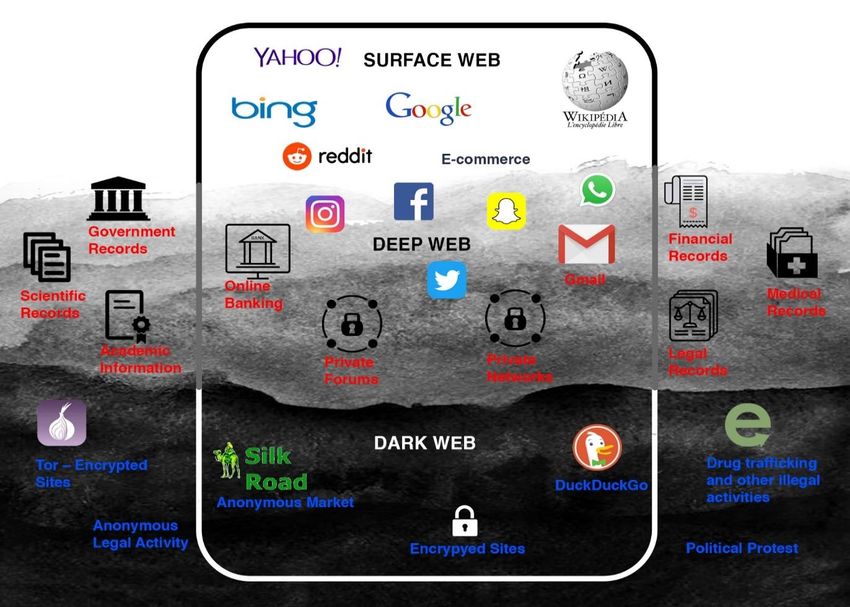
This analytical report was compiled in the framework of the European Union (EU) funded Project
ENACT (Enhancing Africa’s response to transnational organized crime). The contents of this INTERPOL
        report can in no way be taken to reflect the views of the EU or the ENACT partnership.

DISCLAIMER: This publication must not be reproduced in whole or in part or in any form without
special permission from the copyright holder. When the right to reproduce this publication is granted,
INTERPOL would appreciate receiving a copy of any publication that uses it as a source.

All reasonable precautions have been taken by INTERPOL to verify the information contained in this
publication. However, the published material is being distributed without warranty of any kind, either
expressed or implied. The responsibility for the interpretation and use of the material lies with the
reader. In no event shall INTERPOL be liable for damages arising from its use. INTERPOL takes no
responsibility for the continued accuracy of the information contained herein or for the content of
any external website referenced.

This report has not been formally edited. The content of this publication does not necessarily reflect
the views or policies of INTERPOL, its Member Countries, its governing bodies or contributory
organizations, nor does it imply any endorsement. The boundaries and names shown and the
designations used on any maps do not imply official endorsement or acceptance by INTERPOL. The
designations employed and the presentation of the material in this publication do not imply the
expression of any opinion whatsoever on the part of INTERPOL concerning the legal status of any
country, territory, city or area or of its authorities, or concerning the delimitation of its frontiers or
boundaries.

© INTERPOL 2020

                                                  Page 1/78
Table of Contents

Table of Contents .................................................................................................................................... 2
List of Acronyms ...................................................................................................................................... 4
Executive Summary................................................................................................................................. 6
Introduction ............................................................................................................................................ 8
1.     STRUCTURE OF THE REPORT ........................................................................................................... 8
1.1. Scope and Objective ....................................................................................................................... 8
1.2. Methodology................................................................................................................................... 9
2.     WHAT ARE THE SURFACE WEB, DEEP WEB AND THE DARK WEB? ................................................. 9
3.     INTERNET, CYBER AND CYBER ENABLED CRIME IN AFRICA .......................................................... 10
3.1. Internet and social media penetration ......................................................................................... 10
3.2. Cybercrime and cyber-enabled crime ........................................................................................... 12
3.3. Organized crime groups ................................................................................................................ 12
4.     SURFACE WEB AND DEEP WEB ..................................................................................................... 17
4.1. Financial crimes online.................................................................................................................. 17
4.2. Trafficking in human beings and people smuggling...................................................................... 22
4.2.1.         Human trafficking facilitated online ..................................................................................... 23
4.2.2.         Smuggling of migrants facilitated online .............................................................................. 25
4.3. Crimes against children online ...................................................................................................... 26
4.4. Trafficking in works of art online .................................................................................................. 29
4.5. Environmental crimes online ........................................................................................................ 33
4.6. Illicit trade in diamonds online ..................................................................................................... 35
4.7. Trafficking in small arms and light weapons online ...................................................................... 35
4.8. Drug trafficking online .................................................................................................................. 36
4.9. Trafficking in counterfeit goods online ......................................................................................... 38
4.10.          Trafficking in stolen motor vehicles online ........................................................................... 39
5.     DARK WEB ..................................................................................................................................... 40
5.1. Background ................................................................................................................................... 40
5.2. How to access the dark web? ....................................................................................................... 41
5.3. Africa and the dark web ................................................................................................................ 43
5.4. Use of cryptocurrency ................................................................................................................... 44
5.5. What can the user find on the dark web? .................................................................................... 47
5.5.1.         Hidden services...................................................................................................................... 47
5.5.2.         Crime areas on the dark web - Africa.................................................................................... 49

                                                                       Page 2/78
5.5.3.         Locations mentioned ............................................................................................................. 52
5.5.4.         User profiles .......................................................................................................................... 58
5.5.5.         Payment methods ................................................................................................................. 61
5.5.6.         Use of language .................................................................................................................... 62
5.6. VPN and TOR usage in Africa ........................................................................................................ 63
5.6.1.         Usage of VPN in Africa .......................................................................................................... 63
5.6.2.         Usage of TOR in Africa .......................................................................................................... 64
6.     DRIVING FACTORS ......................................................................................................................... 67
Conclusion ............................................................................................................................................. 68
References ............................................................................................................................................ 69

                                                                         Page 3/78
List of Acronyms
ACPF                    African Child Policy Forum

ANTIC                   Agence Nationale des Technologies de l'Information et de la Communication

ATM                     Automated Teller Machine

BDC                     Bureau de change

BEC                     Business Email Compromise

CAPCCO                  Central African Police Chiefs Coordination Organization

CEO                     Chief executive officer

DDoS                    Distributed Denial-of-Service

EAPCCO                  East African Police Chiefs Coordination Organization

ECPAT                   End Child Prostitution, Child Pornography and Trafficking

EFCC                    Economic and Financial Crimes Commission

ENS                     Environmental Security

EU                      European Union

FBI                     Federal Bureau of Investigation

GIATOC                  The Global Initiative against Transnational Organized Crime

ICOM                    International Council of Museums

ICT                     Information and Communications Technology

IFAW                    International Fund for Animal Welfare

IOM                     International Organization for Migration

IP                      Internet Protocol

ITU                     International Telecommunication Union

IWT                     Illegal Wildlife Trade

MENA                    Middle East and North Africa

MO                      Modus Operandi

NCF                     Nigerian Conservation Foundation

NGO                     Non-Governmental Organization

OCG                     Organised Crime Group

OCLCTIC                 Office central de lutte contre la criminalité liée aux technologies de l'information et de la
                        communication

OPSEC                   Operations Security

                                                        Page 4/78
OSINT     Open Source Intelligence

POC       Point of Contact

POS       Point of Sale

RAT       Remote Access Tool

RSO       Regional Specialized Officers

SALW      Small Arms and Light Weapons

SABRIC    South African Banking Risk Information Centre

SARPCCO   Southern African Regional Police Chiefs Coordination Organization

SMV       Stolen Motor Vehicles

SOCMINT   Social Media Intelligence

THB       Trafficking in Human Beings

TOR       The Onion Router

UAE       United Arab Emirates

UCLA      University of California, Los Angeles

UK        United Kingdom

UNESCO    The United Nations Educational, Scientific and Cultural Organization

UNODC     United Nations Office on Drugs and Crime

URL       Uniform Resource Locator

USA       Unites States of America

VIN       Vehicle Identification Number

VoIP      Voice over Internet Protocol

VPN       Virtual Private Network

WAPCCO    Western African Police Chiefs Coordination Organization

WHO       World Health Organization

WWF       World Wide Fund for Nature

                                          Page 5/78
Executive Summary use on the dark web as much as on the surface
web due to the anonymity factor, the report
In recent years, cyber-enabled crimes have
seeks to show the growing criminal activity on
increased on the African continent. This has
the dark web in connection to Africa.
been a result of a combination of factors,
including, the improvement of Internet As cyber-enabled crimes in Africa increase and
coverage, the wide availability of cyber-tools change, greater awareness of the overall issue
and the growing flexibility of cybercriminals. As and identification of best practice responses
a consequence, online crime nowadays from law enforcement will most probably be
represents a bigger security issue for law required. INTERPOL is in a position to support
enforcement in African member countries member countries through coordinated,
than ever before. In this framework, intelligence-led support to law enforcement
INTERPOL, under the European Union funded using a range of operational databases and
ENACT Project, examines through this support techniques.
assessment the issue of cyber and cyber- The following are the key findings deriving
enabled crimes in Africa in order to help drive from an analysis of a range of data sources
a more strategic law enforcement response. available on cyber-enabled crime in Africa:
Cybercriminals and Organized Crime Groups African countries are likely increasingly
(OCG) active in Africa are most probably using vulnerable to cyber-enabled crimes as
the Internet to commit a range of online source as well as target countries.
criminal activities. They use the Internet to
find, coerce and control victims online or Cyber-enabled financial crimes most
offline. They also use it to sell products, in most probably take various forms and affect
cases procured illegally, as well as to deceive individuals, companies, and public
online users and steal their money. They take administration in all African regions.
advantage of online anonymity, use code Trafficking in Human Beings (THB) in Africa
languages and temporary tools and, in some is likely facilitated by the Internet as it
cases, leave no online trace. allows the recruitment, control, and
The assessment highlights those deception of victims through social media,
cybercriminals that are likely changing the face instant messaging applications and online
of the Internet to further their illegal activities platforms.
on the international scene. They are becoming Migrant smuggling in Africa is likely
more sophisticated, with a growing capacity to facilitated by social media and encrypted
carry out a range of new types of crimes. In messaging applications: OCGs advertise
addition, the lack of investment and public their services and African migrants refer to
awareness, exacerbated by limited capacities information to reduce risks.
to prevent, detect, and investigate these
African and non-African offenders most
incidents in some African countries, are further
probably use the Internet to abuse African
driving this criminality on the continent.
children online and offline.
Certain crime areas have most likely witnessed
OCGs active in Africa probably use the
in recent years a shift from the surface web to
Internet to sell drugs and contact local as
the dark web, where enforcement on a
well as international customers/providers.
national level is more complex. Despite
difficulties at the moment to quantify criminal
African OCGs, mainly North African, are most probably investing in improving their
likely using social networking sites to technological skills, business know-how
facilitate the looting and trafficking of and advertisement strategies.
stolen works of art on continental but also
Some OCGs active online in Africa are most
transnational levels.
probably employing middlemen/women at
African OCGs, almost certainly in different stages of the crime activity to
connection with their transnational ensure the smooth running of criminal
counterparts, are increasingly using social business.
media-based trade for Illegal Wildlife Trade
The analysis of various elements on dark
(IWT) and trafficking in precious minerals
web domains suggests that cybercriminals
through the help of middlemen/women.
located in Africa are likely active on the dark
OCGs active in Small Arms and Light web with growing transnational links.
Weapons (SALW) trafficking in Africa are
It is likely that crime elements from Kenya,
increasingly using social networking sites to
Nigeria and South Africa are engaged in
conduct trade. They are likely engaged in
dark web activities.
other online criminal activities as well.
With the increase in Internet coverage,
online trade of illicit goods is likely
increasing on the African continent.
OCGs active in Africa are likely increasingly
using the Internet to complete various
stages of the process of trafficking in Stolen
Motor Vehicles (SMV).
African cybercriminals are most likely
limiting contact by using code languages
and temporary tools, making disruption by
law enforcement even harder.
Cybercriminals trafficking online in Africa
include private individuals, enthusiasts,
collectors and traditional Internet users.
Some cyber OCGs involved in online
trafficking on the continent are most likely
part of hierarchical networks where the
leader recruits members to complete
specific tasks that would facilitate online
crimes. Other OCGs are likely non-
traditional loosely connected groups that
connect for the purpose of committing a
crime.
Cybercriminals on surface web and dark
web are increasingly flexible and
knowledgeable Internet users. They are
Page 7/78
Introduction                                            3.5 billion. In Nigeria, this number reached USD
                                                        649 million and USD 210 million in Kenya.
In recent decades, African and international
                                                        South Africa also reported major economic
OCGs have increased their activities on the
                                                        losses due to cyberattacks, reaching around
African continent, further encouraged by
                                                        USD 157 million.2
growing economies. Over the years, these
OCGs have developed an understanding of the             Emerging economies and the impact of
Internet and the multiple possibilities of              globalization associated with non-restrictive
exploiting its capabilities for their criminal          cybersecurity practices in many African
activities. In particular, the Internet enables         member countries have greatly contributed to
OCGs to widen the scope of their operations,            Africa becoming a safe haven for
by expanding their networks and enhancing               cybercriminals. This threat assessment will
their abilities to stay undetected.                     explore cyber-enabled crime on the African
                                                        continent in light of several strategic
Internet penetration on the continent has
                                                        indicators.
increased steadily in recent years as a result of
multiple factors, including improved Internet           ** Two versions of this report exist. This
coverage and the increased use of the Internet          report is the public version of the completed
for basic individual needs. This increased              analysis, which included police information;
online exposure of Africans, many of whom               where specific police information was used,
lack basic technical knowledge on accessing             this information has subsequently been
and using the Internet, makes them easy                 sanitized for public distribution **
targets for transnational cybercriminals. At the
same time, younger Africans mostly, are                 1. STRUCTURE OF THE REPORT
demonstrating good abilities in using and
depending on cyber tools. This has led to an                1.1. Scope and Objective
increase in cyberattacks targeting individuals
                                                        The objective of this report is to examine the
and groups on the African continent, as well as
                                                        major aspects of organized crime in Africa on
in attacks originating from the continent.
                                                        the surface web, deep web and dark web.
Many African member countries still lack
                                                        This assessment will draw upon data from
proper policies and strategies to combat
                                                        available open and closed sources and present
cybercrime. On the continental level, in 2014,
                                                        a comprehensive overview on how the
the African Union adopted the Convention on
                                                        different OCGs active in Africa (or linked to
Cybersecurity and Personal Data Protection.
                                                        Africa) exploit the different levels of the
However, only 14 of the 55 African Union
                                                        Internet to foster their illegal activities.
member countries had signed the convention,
and only seven1 ratified it, by January 2020.           This report should assist and guide law
The convention needs to be ratified by at least         enforcement in designing strategies to combat
15 member countries to enter into force,                this form of emerging crime throughout the
meaning it is not in force yet. This shows that         continent. This assessment also intends to be a
cybersecurity is still not perceived as a               tool for eliciting law-enforcement cooperation
necessity by many African countries which               among countries of the five African regions,
further exacerbates the problem.                        not only among the countries impacted the
                                                        most by this crime, but also among those
In 2017, the economic loss in Africa due to
                                                        which are at risk of being affected in the near
cyber and cyber-enabled crime reached USD
                                                        future.

                                                Page 8/78
1.2. Methodology                                             Equatorial Guinea, Gabon, Republic of Congo,
                                                             Sao Tome and Principe.
This assessment follows an all-source
intelligence analysis methodology. It is the                 EAPCCO4: Burundi, Comoros, Djibouti,
result of integrating multiple data sources.                 Democratic Republic of Congo, Eritrea,
                                                             Ethiopia, Kenya, Rwanda, Seychelles, Somalia,
Open sources used in the framework of this
                                                             South Sudan, Sudan, Tanzania, Uganda.
report include news articles and reports from
various private entities,             international          SARPCCO5: Angola, Botswana, Democratic
organizations and think tanks. Whenever                      Republic of Congo, Eswatini, Lesotho,
identified, official statistics and data were used           Madagascar, Malawi, Mauritius, Mozambique,
and given preference over other sources. Data                Namibia, Seychelles, South Africa, Tanzania,
related to social media and dark web sources                 Zambia, Zimbabwe.
were processed while keeping in line with                    WAPCCO6: Benin, Burkina Faso, Cape Verde,
INTERPOL’s legal framework applicable to the                 Côte d'Ivoire, Gambia, Ghana, Guinea Bissau,
processing of open source information, which                 Liberia, Mali, Mauritania, Niger, Nigeria,
did not allow to monitor and investigate                     Senegal, Sierra Leone, Togo and Guinea.
information from some sources.
Information from the aforementioned sources                  2. WHAT ARE THE SURFACE WEB, DEEP
was aggregated together in order to identify                    WEB AND THE DARK WEB?
consistencies across all data, patterns and
trends, and any identifiable convergences.                   Surface web

This report was drafted using a regional                     Also known as the ‘visible web’, it is the
approach. Therefore, when national examples                  ‘Internet’, the web that is accessible by the
are quoted, it is done for illustrative purposes,            general public. Information on the surface
in order to put forward regional dynamics.                   web is indexed, and therefore, searchable with
                                                             standard web search engines. Access to its
INTERPOL African regions are defined on the                  content does not require special configuration.
basis of countries’ participation in regional                Compared to the deep web, the surface web is
chiefs of police organizations. Some countries               relatively small in size, making up less than 10
participate in more than one regional chiefs of              per cent of the total World Wide Web
police organization. In such cases, they are                 content.7 Examples of surface web include,
counted in each of the regional organization in              Google, Bing, Yahoo, YouTube, Wikipedia,
which they participate. North African countries              news sites, shopping sites, blogs, etc.
are members of the INTERPOL Middle East and
                                                             Deep web
North Africa (MENA) region. For the purpose of
this report which only covers the African                    Known as the ‘invisible web’, it is the part of
continent, they were regrouped in a category                 the Internet that is not visible to everyone. Its
named North Africa. This category includes the               content is not accessible through standard
following countries: Algeria, Egypt, Libya,                  search engines. Generally, deep web websites
Morocco and Tunisia. The other INTERPOL                      require a Uniform Resource Locator (URL) to
African regions and their member countries                   find the website as well as further
are as follows:                                              authorization and permission to access the
                                                             website (i.e. a username and password).
CAPCCO3: Cameroon, Central African Republic,
Chad, Democratic Republic of Congo,                          Examples of the deep web include email
                                                             accounts, social networking websites, cloud

                                                      Page 9/78
service accounts, online banking, internal dark web, most websites are hidden and users
networks of companies, education pages, can browse online almost anonymously.
government- related pages, services that Within this web level, illegal markets known as
require the user to pay for them (i.e. video on ‘dark net markets’ operate, and many of them
demand, magazines and newspapers), data constitute a space for the illegal selling of
shared on private social networks and Internet products, including drugs, firearms, child
messaging, etc. sexual abuse material, hitman services, etc.
Examples of dark net markets include
Dark web
Alphabay Market, Hansa Market, Dream
Also known as the ‘dark net’, it is a small part Market, etc. The dark web could also be used
of the deep web. In order to access the dark for legal purposes, such as accessing and
web, a specialized software is needed (i.e. TOR, sharing information, communication and
I2P, Freenet), which anonymizes the Internet identity protection.8 9
Protocol (IP) address of the user. Inside the
Figure 1. Representation of the surface web, deep web and dark web
1989, the creation of the World Wide Web
3. INTERNET, CYBER AND CYBER revolutionized communication, yet, by 1990,
ENABLED CRIME IN AFRICA statistical reports indicated that “only half of a
per cent of the world population were online”.
3.1. Internet and social media The following decade witnessed a qualitative
penetration leap. However, by the year 2000, 99 per cent
of population in Sub-Saharan Africa were still
Internet penetration in Africa is continuously offline.
increasing despite increased restrictions. In
Page 10/78Sixteen years later, countries worldwide were the previous year. Global penetration has also
joining the online world at a growing pace. witnessed a massive increase from nearly 17
Nonetheless, countries from some parts of the per cent in 2005 to 53 per cent in 2019.
world, including Africa, had barely witnessed
In 2019, ITU estimated that in the least
any change in online activity since the 1990’s,
developing countries, only 19 per cent of
with less than 5 per cent of population having
individuals were using the Internet, compared
online access in countries such as Central
to 87 per cent in developed countries. On this
African Republic, Eritrea, Guinea Bissau,
scale, Africa ranked lowest, with only 28 per
Madagascar, Niger and Somalia. Yet, the global
cent of individuals using the Internet,
trend shows that every year more people from
compared to Europe, which ranked the
all over the world are online, through a mobile
highest, with 83 per cent of individuals using
phone, a computer, a digital TV, a game or a
the Internet. This same year, the African
personal digital assistant.
continent had the highest percentage of offline
According to the World Bank, despite some population in the world, with the majority of
minimal irregular changes, Internet users have offline countries being in Central, Eastern and
steadily increased in Africa between 2015 and Western Africa.11 Differences across the five
2017 from an average of 20 per cent of the African regions in Internet usage patterns were
share of African population using the Internet also noted (see figure 2).12
in 2015 to 26 per cent of the population in
The inter-regional differences are further
2017. In some African countries, the number of
highlighted in the graph above. The graph
Internet users has even doubled over the three
shows that Internet and social media
years studied, such as in Côte d’Ivoire, Ghana
penetration present different patterns across
and Malawi.10
the five African regions between 2017 and
In its recent report, the International 2019. A great difference is noted between the
Telecommunication Union (ITU) revealed that levels of Internet and social media penetration
a reported 4.1 billion people used the Internet in Central, Eastern and Western Africa when
in 2019, indicating a 5.3 per cent increase from compared to Northern and Southern Africa,
Regional Internet and social media penetration percentages in Africa
compared to total population 2017-2019
70
2017 - Sum of Internet penetration
60
50 2017 - Sum of Social media
penetration
40 2018 - Sum of Internet penetration
30
2018 - Sum of Social media
20 penetration
2019 - Sum of Internet penetration
10
0 2019 - Sum of Social media
Central Africa Eastern Africa Northern Southern Western penetration
Africa Africa Africa
Figure 2. Regional Internet and social media penetration percentages in Africa compared to total population 2017-2019
Page 11/78where they are mostly higher. Despite the inadequate or the absence of cybercrime
variations, Internet and social media laws15 and under-documentation of the crime
penetration is mostly increasing in Africa. were among the main reasons that made the
continent vulnerable to malicious attacks,
The relatively slow increase and variation in
according to the report. Sources also mention
penetration levels on the continent between
that 18,607 cyber security incidents were
2017 and 2019, in particular in Eastern and
counted in 2011 compared to 564 in 2000.16 In
Western Africa, are likely due to various factors
2016, approximately 24 million malware
such as the growing ease of Internet access in
incidents targeted Africa. By 2017, malware,
parts of Africa more than in others as well as
spam emails, botnets and software piracy,
the multitude functions that Internet and
among other crimes, were reported in many
social media are increasingly offering in some
African countries across the continent.17
member countries paralleled with restrictive
measures to control and/or limit Internet and
social media access in some African countries. 3.3. Organized crime groups
This section summarizes some of the
3.2. Cybercrime and cyber-enabled crime inferences and conclusions included in the
assessment concerning OCGs. Further detailed
As cyberattacks evolve, the misconception
information will be provided throughout the
about the difference between cyber and cyber-
report. In particular, this section examines the
enabled crime has become common, including
various dynamics of some of the OCGs found
in Africa, with some sources combining data
to be using the Internet to further their illegal
relative for both areas and referring to them as
activities in Africa. It highlights some of the
cybercrime. According to INTERPOL,
main techniques OCGs active in Africa are
cybercrime refers to “crimes against
using online. Where possible, it draws
computers and information systems, where
attention to specific OCGs identified in the
the aim is to gain unauthorized access to a
framework of the report.
device or deny access to a legitimate user.” As
for the cyber-enabled crime, it occurs when a Some cyber OCGs are likely to have specific
‘traditional’ crime is facilitated by the Internet, roles assigned for each member. For example,
such as fraud, theft and the sale of fake the leader might handle recruitment, whereas
goods.13 group members would be in charge of
In the last decade, both cyber and cyber- extracting e-mails, creating fake profiles and
enabled crimes have become widespread in developing a fake website, among other tasks.
Africa. Despite the fact that 75 per cent of its Other OCGs are likely to form non-traditional
population were still offline by 2016,14 many organized groups that are loosely connected.
personal/private/public infrastructures in Small groups would connect, share experience,
African countries are increasingly emerging as commit the scam and then share the money.
targets for these types of crime. Attacks are According to open sources, OCGs use the
also increasingly originating from African Internet both for internal communication
countries. In 2013, Trend Micro predicted that within the group, and for external
“the number of cybercrime activities targeting communication with non-OCG associates.
or originating from Africa will increase—and Internet allows OCGs to reach new customers,
probably dramatically—in the next few years.” new victims, and to a lesser extent, possible
The growing base of Facebook users, new partners. It also allows them to advertise
Page 12/78their illicit goods and services. They are OCGs to acquire more experience in illegal
increasingly using code languages and activities online. This includes:
temporary contact numbers, which makes it
Apprenticeship, which involves an
more difficult to leave traces and as a result,
established criminal taking an apprentice
enforcement harder.
under their wing to teach them the
Cyber OCGs make wide use of social business;19
networking sites, instant messaging ‘Yahoo Boy’s’ academy, a real life
applications and Voice over Internet Protocol workshop where students are taught how
(VoIP) services. Facebook is the main tool used, to perpetrate scams online;20
followed by WhatsApp, and to a lesser extent, Trainings dedicated to cybercriminals
Instagram, Telegram, Twitter and Snapchat.18 in North Africa.21
OCGs also use e-mail services such as Yahoo,
Gmail and Outlook. To promote their offers, Financial cyber-enabled crimes
OCGs use social media and classified ads and e- Some OGCs involved in financial cyber-enabled
commerce websites. crimes are likely of Western African origins,
Social networks allow OCGs to connect with with some of them based in Africa and others
customers and possible partners across Africa in Asia, Europe and the USA, where they built
and worldwide. They use social networking connections with their counterparts.22
sites to: Some OCGs active in online financial crimes are
Contact, lure, recruit, coerce and opportunists and link their scams to current
control victims; events or regional instability in concerned
countries.
Advertise and sell illegal services or
products; Some OCGs are probably poly-criminal,
involved in or linked with offenders engaged
Share locations of victims;
in, among others, money laundering,
Organize logistics of the crime; kidnapping, coercion, human trafficking,
Exchange best practices and modus prostitution, political patronage, arms and
operandi among cybercriminals; narcotics trafficking.23
Launder revenue gained from illicit Members of Nigerian cyber OCGs based
activities; outside Nigeria, such as in Eastern Africa,
probably have links with cybercriminals based
Blackmail victims and/or their
in Nigeria. OCGs from Benin, Cameroon,
families.
Congo, Côte d’Ivoire, Democratic Republic of
OCGs also produce fake Internet sites similar to Congo and Nigeria implicated in scams
legitimate ones and manipulate search originating from their countries are most
engines. probably supported by members of their
OCGs active in Africa have different levels of community based in target countries, mainly in
expertise. The more they are experienced in Europe.24
terms of social engineering and computer Nigerian OCGs, or confraternities, such as the
skills, the more money they gain illegally. Black Axe Confraternity, are active in
Below are some of the methods adhered to by cybercrime on the African continent as well as
abroad, including in Canada, Italy and the USA.
Page 13/78Other Nigerian OCGs include Supreme Eiye
Confraternity and the London Blue, which is
based in the UK and operates mostly abroad.
The Supreme Eiye Confraternity
Also known as the Air Lords, was reportedly founded in 1963 or 1970 (date not agreed upon)
at the University of Ibadan in Nigeria. This Nigerian OCG is composed of a “system of cells
(called forums) operating locally, but connected to other cells established in different countries
in West Africa, in North Africa, in the Middle East and in Western Europe.” This confraternity
is poly-criminal and known to be involved in THB, drug trafficking, money laundering, etc.
Leaders are referred to as ‘Capones’, with a ‘hierarchy of Capones’, and new members undergo
brutal initial rituals, including criminal acts.
Source: ‘Nigeria: The Eiye confraternity, including origin, purpose, structure, membership, recruitment methods, activities and
areas of operation; state response (2014-March 2016), Immigration and Refugee Board of Canada, 08 April
2016, https://www.refworld.org/docid/5843fa644.html (accessed 03 June 2020).
Black Axe Confraternity
The group is widely believed to be the same as the Neo Black Movement founded in 1977 at
the Benin University in Nigeria. Black Axe is a transnational OCG with a pyramidal hierarchical
structure with cult-like tendencies. Black Axe gangs are involved in prostitution, human
trafficking, narcotics trafficking, grand theft, money laundering, and email fraud/cybercrime
mainly in Nigeria, but also Europe and North America. Members are known as ‘Axemen’ and
the commander or boss of a zone in a foreign location is known as an ‘Oga’.
Source: ‘Intelligence Report: Nigerian Confraternities Emerge as Business Email Compromise Threat’, Crowdstrike Global
Intelligence team, 03 May 2018, https://www.crowdstrike.com/wp-content/uploads/2020/03/NigerianReport.pdf (accessed 15
January 2020).
London Blue
A Nigerian gang, that likely originated in Nigeria, with members in the UK and collaborators
involved in moving funds in the USA and Western Europe. The group operates like a modern
corporation. London Blue evolved from Craigslist scams, to phishing, to BEC and uses legitimate
commercial data providers to identify targets, mainly in the USA and Western Europe.
Source: ‘London Blue UK-Based Multinational Gang Runs BEC Scams like a Modern Corporation’, AGARI Data, 09 November 2018,
https://www.agari.com/cyber-intelligence-research/whitepapers/london-blue-report.pdf (accessed 18 March 2020).
Page 14/78Human trafficking and human smuggling Environmental crimes
OCGs, with most likely Western African OCGs active in Western Africa offer and sell
members, active in human trafficking in their illegal wildlife products online.
Europe are using online platforms to offer
In Western Africa, some former ‘Yahoo Boys’,
victims to potential customers, where they
previously active in online financial scams,
give the possibility to costumers to leave
have moved to selling pangolin scales and ivory
comments and evaluate services.
artefacts online, with links in Western Africa,
Western African OCGs active online in Europe and Asia.
recruiting victims as domestic servants abroad
Trafficking in works of art
are almost certainly connecting with
destination-country recruitment agencies to Some OCGs active in trafficking in works of art
complete the trafficking process. online in connection to Africa are probably
originating from the Middle East and North
Western African OCGs active in Western Africa
Africa with links to Europe and the USA.
and Europe use mostly social networks,
including Facebook and WhatsApp, to recruit Trafficking in stolen motor vehicles
victims of human trafficking and migrant
OCGs active in trafficking in SMV in Africa use
smuggling. Some of them were found to offer
the Internet to forge documents and sell stolen
‘travel packages’ including all necessary items
cars as well as other vehicle components. OCGs
for the journey. OCGs have most probably
active in Western Africa forge Vehicle
developed links with local gangs active in
Identification Numbers (VIN) and deceive their
sexual exploitation as well as other crimes such
clients using illegitimate websites to sell non-
as THB, migrant smuggling, fraud, corruption,
existent vehicles.
document forgery and money laundering.
Dark web
Western African OCGs, actively using social
media for transnational human trafficking Based on the analysis of available information,
purposes have possible links to Europe and it is likely that crime elements active in Kenya,
other parts of the African continent. Nigeria and South Africa are investing in dark
web activities.
Central African OCGs active in recruiting
people online for trafficking purposes are It is likely that OCGs are active in the MENA
often composed of local community members, underground.
such as former religious leaders and victims
Predictions suggest that Western African
who have turned into perpetrators. Some
cybercriminals are likely to form their own
OCGs active online also involve family
online criminal communities in the framework
members.
of a Western African underground market.
Eastern African OCGs active in human
On the dark web, vendor sites can be managed
trafficking are found to have links to the Gulf
by a single individual or an OCG. However,
region.
given that marketplaces are platforms that
Sexual abuse/exploitation of children gather sellers and buyers interested in multiple
types of products and services, sometimes in
In Eastern Africa, ‘diva clubs’ attract young girls
different languages, it is likely that OCGs
using social media platforms and convince
investing on the dark web, are investing in
them to expose themselves sexually.
Page 15/78marketplaces. Forums also possibly provide a individuals engaged in similar criminal
platform for future members of OCGs to interests easier and expand as a result their
initiate contact seemingly anonymously. networks effortlessly.
Main techniques It should be noted that traffickers avoid using
terminology that can be tracked by law
In some crime areas, online markets offering
enforcement on Facebook, and often move to
illicit products are extensions of physical black
WhatsApp for negotiations after initial contact
markets. The analysis reveals that in most
on Facebook. The encryption features of
cases, cyber criminals initiate contact with
WhatsApp has made it in recent years the
would-be victims or customers through online
method of choice for communication between
platforms, mainly Facebook groups. Once
traffickers and smugglers.25
negotiations start, they move to more private
platforms, such as encrypted messaging Information gathering and tailoring the
applications and phones. When and/or if message
needed, physical contact between the
In many cases, the sophistication and success
offender and/or associate and the future
of the cyber-enabled crime is highly dependent
victim is established.
on the hard work that attackers have put into
Payment methods used are mostly cash, preparing the scam and tailoring the message.
mobile money, online transfer and This requires OCGs to use legitimate online
cryptocurrency. tools to study the profiles of future victims,
including e-mail tools and business listings. In
Use of Facebook
addition, they also monitor and study future
OCGs active online use mainly Facebook to victims’ profiles on social media websites (i.e.
support their illegal activities. They use it to location, interests, contacts, images, social
share know-how and best practices as well as situation, personal taste, etc.). Using these
to offer and sell products and services in closed tactics, OCGs can identify expectations and
groups. They also use the platform to promote exploit the emotional vulnerabilities of future
third party sites, on the surface and dark web. victims. This is how OCGs maximize the
Facebook has become the go-to web platform chances that a user buys a product or chooses
for OCGs active in Africa due to the features to benefit from a service.
that it offers and which can support criminal Use of middlemen/women
activity easily. This includes the privacy
Analysis of online crime in connection to Africa
settings that Facebook provides, including
reveals that OCGs likely employ
‘public’, ‘closed’ and ‘secret’, which give the
middlemen/women to support the criminal
administrator the freedom to decide who joins
process. Some former members of OCGs are
the group, further complicating enforcement
acting as middlemen/women by
attempts. In some cases, future members must
accompanying potential customers, with
reply to screening questions, in others, they
whom contact was initiated online, to check
need to commit to paying a 20 per cent
out physical products. When deals are made
commission to the administrator after any
through online markets, middle agents are
sale. Traffickers also use video and pictures to
employed to arrange the transfer and
advertise products, encrypted messages for
sometimes move the pieces ordered
communication and the ‘Buy and Sell’ feature.
themselves. Sometimes, they are employed to
Such features allow traffickers to connect with
move the money gained.
Page 16/78Middlemen/women also use their online pages The examination of available information
to advertise items and demonstrate to reveals that online financial crimes are the
potential customers their access to buyers or most prevalent and developing crimes on the
particular products. In the case where one of African web. These crimes can take many
their contacts is interested, middle agents forms. In the public version of the report, only
would buy the product, and resell it to them at cyber-enabled financial crimes will be
a higher price. examined in details.
African OCGs, mostly West Africans, are likely
4. SURFACE WEB AND DEEP WEB conducting various forms of cyber-enabled
financial crimes that target African as well as
4.1. Financial crimes online non-African countries.
African OCGs are likely engaged with Main online platforms used: Facebook, e-mail,
counterparts across the world to commit WhatsApp, etc.
online financial crimes targeting African and
Main payment methods used: Western Union,
non-African countries as well as generate large
Orange Money, Express Union, wire transfers,
sums of illegal money. Financial crimes pose
gift cards, etc.
significant threat to member countries as
victims include not only individuals, but private Online financial crimes are cyber-enabled
entities, governmental bodies and national when the Internet is used as a facilitator for the
institutions. The complex and transnational crime, such as a means to reach the victim’s
nature of this under-reported, and sometimes money. In this case, social engineering27 is the
undetectable crime, further complicates key ingredient for bypassing the traditional
enforcement measures.26 defense perimeters and committing fraud.
Financial crimes occur on the three web levels: Cyber-enabled offenders can be entry-level
criminals, mid-level criminals and the most
The surface web (i.e. scam classified advanced cybercriminals, depending on their
ads, fake phishing websites, scam technical abilities.
tutorials, etc.);
The deep web (i.e. phishing e-mails, Business Email Compromise (BEC)
social media used for social BEC scams originating in Africa, mainly
engineering, etc.); Western Africa, targeting victims based in non-
The dark web (i.e. malware markets, African and African countries are likely the
stolen financial data, etc.). most used online financial crimes by OCGs
connected to Africa.
Online financial crimes can be divided into two
categories: cyber-dependent crimes, when
BEC is a global phenomenon increasingly
targeting a system, network, or software and
targeting businesses, administrations
cyber-enabled crimes, as previously
and individuals worldwide, including in
mentioned, when a ‘traditional’ crime is
Africa.
facilitated by the Internet. In some cases,
online financial crimes are complex and hybrid, As defined by INTERPOL, BEC occurs when
combining cyber-dependent and enabled “criminals hack into email systems or use social
techniques, such as in some Business Email engineering tactics to gain information about
Compromise (BEC) scams. corporate payment systems, then deceive
Page 17/78company employees into transferring money their bank accounts, holding a percentage of
into their bank account”.28 BEC is a global the money.43 In this context, according to the
phenomenon increasingly targeting Federal Bureau of Investigation (FBI), romance
businesses, administrations and individuals scams’ victims have been also used as money
worldwide, including in Africa.29 On the mules to cash out or transfer money stolen
continent, BEC scams are increasing rapidly, from BEC scams.44 Multiple sources reveal that
with losses amounting to USD to USD 2 million Nigerian cybercriminals, after focusing on
in 2016. 30 simpler scams such as romance scams and/or
advanced-fee fraud, have moved in recent
According to open sources, BEC cases are
years to sophisticated BEC scams using Remote
reported in Central Africa31 and in Northern
Access Tool (RAT) as well as malwares45 from
Africa.32 In Eastern Africa, cybercrime losses in
Russian and other illegal English-speaking
Kenya reportedly amounted to an estimated
forums in the deep and dark web.46
USD 295 million in 2018, “with BEC being one
of the main ways used to defraud local In many cases, African OCGs operate outside
businesses.”33 It is also a common threat in Africa. A recent analysis uncovered the
Rwanda,34 where the cost of cyber fraud more working method of London Blue, a Nigerian
than doubled between 2017 and 2018, gang with members based in the United
increasing from USD 432,019 (RWF 400,000) to Kingdom, targeting companies and operating
USD 6,480,294 (RWF 6,000,000,000).35 like a modern corporation with members
carrying out specialized functions.47 A
In a 2018 report, South African Banking Risk
potential victims list of more than 50,000
Information Centre (SABRIC) reported that BEC
corporate officials in 82 different countries
is among the most prominent schemes having
(mainly Europe and the USA), of which 71 per
an impact on the digital banking industry.36 In
cent were CEOs, was identified.48
2019, SABRIC indicated that South Africa and in
line with global trends, has witnessed an
increase in BEC cases.37
In addition, multiple open sources indicate
that BEC scammers from Western African
countries are targeting individuals as well as
companies in Africa and abroad.38 It is worth
noting that some Western African offenders
tend to settle outside their country of origin
and operate in Western African countries, or in
other African regions. For example, some
Nigerians have reportedly settled in Ghana39
and Senegal,40 whereas some Ivoirians have
settled in Mali,41 Benin and Togo, allegedly to
evade law enforcement efforts.42
In order to transfer the money illegally from
abroad to accomplices based in Western
Africa, some cyber OCGs use money mules.
These individuals are usually based in the
victim’s country and route the money through
Page 18/78According to a survey on BEC fraud, the most- and Italy). To exchange information and
targeted countries are the USA, closely organize themselves, these groups use closed
followed by China, France, Germany, India, Facebook groups.51 According to open sources,
Saudi Arabia, South Korea, Turkey, the UAE cybercriminals use closed Facebook groups to
and the UK. Industries most targeted by BEC share know-how relative to social engineering
campaigns in 2016 included manufacturing schemes and to offer malware, stolen personal
businesses, which accounted for nearly half of information and illegal financial services such
the victims (45.96 per cent), followed by food as money mule services.52 Such groups
and beverages companies (5.05 per cent) and sometimes advertise third party sites based on
retail businesses (3.54 per cent).49 surface or dark web sites. In a recent article on
these Facebook groups, a list of the studied
CASE STUDY groups was made available. The names of
some of the groups included the ‘Yahoo boys’,
On 10 September 2019, the U.S. which likely bring together hackers from
Department of Justice announced that Western Africa.53 When deleted by Facebook,
Operation REWIRED, a coordinated which relies on its members to report illicit
international enforcement operation, activity, new groups with similar names and
disrupted BEC schemes that were designed objectives are established again.54
to deceive businesses and individuals. The
four-month operation resulted in the
seizure of approximately USD 3.7 million as Cybercriminals use closed Facebook
well as the arrest of 281 individuals in the groups to share know-how relative to
United States and overseas, including 167
social engineering schemes and to offer
in Nigeria, 18 in Turkey and 15 in Ghana.
malwares, stolen personal information
Arrests also included individuals in France,
and illegal financial services such as
Italy, Japan, Kenya, Malaysia, and the UK.
money mule services.
Source: ‘281 Arrested Worldwide in Coordinated
International Enforcement Operation Targeting Hundreds
of Individuals in Business Email Compromise Schemes’, U.S.
Department of Justice, 10 September 2019,
https://www.justice.gov/opa/pr/281-arrested-worldwide- In this context, multiple sources indicate that
coordinated-international-enforcement-operation- Nigerian cybercriminals are likely to rely on
targeting-hundreds (accessed 12 February 2020).
Nigeria-based Bureau de change (BDC)
operators as key facilitators when transferring
In the context of Operation REWIRED, the US
and laundering financial fraud proceeds.55 56
Department of Justice stated that foreign
BDC operators are financial service providers,
citizens that commit BEC scams are often
registered with the Nigerian government who
“members of transnational criminal
deal mostly in legitimate transactions. A 2016
organizations, which originated in Nigeria but
report on money laundering rated the
have spread throughout the world.” 50
vulnerability of BDCs to money laundering as
In addition, perpetrators on the continent use very high.57 More recently, the Central Bank of
advance money laundering techniques Nigeria urged BDC operators in Nigeria to self-
including the use of Banks in China, particularly regulate to better combat money laundering.58
in Hong Kong. Nigerian OCGs, such as the Black In addition, iTunes or Google play gift cards are
Axe confraternity, have invested in cybercrime becoming increasingly popular methods of
in Africa but also abroad (i.e. Canada, the USA cashing out among cybercriminals as they
Page 19/78allow them to collect the money quickly and speaking African countries, where OCGs use
directly, without the help of a money mule anonymization means. Such means include
who has to be paid and whose account could Virtual Private Networks (VPN), used to create
be monitored and shut down by law fake online accounts, which further complicate
enforcement. However, the money gained identification attempts by law enforcement.
through gift cards is less than what is gained The source also indicates that 60 per cent of
through fraudulent wire transfers (between victims examined were deceived through an
USD 1,000 and USD 2,000 compared to USD online dating site and 70 per cent had not
35,000). This is why some cybercriminals use made the payment claimed by the author. The
gift cards to buy cryptocurrencies. For follow-up of the files led to approximately 80
example, some cybercriminals use a USA- reports that were sent through the INTERPOL
based peer-to-peer market called Paxful to buy channel to the concerned member countries,
bitcoins using their gift cards. To convert the mainly from Western Africa, Northern Africa,
bitcoins into cash, cybercriminals uses and Southern Africa. Out of 900 procedures
Reminato, another peer-to-peer market place. identified, 96 per cent of the victims were male
The process is quick and can be completed in and 84 per cent were adults, most often young
less than three hours. The use of adults, around 19 years old. 64
cryptocurrencies seems well entrenched in
Cybercriminals are also active in Morocco.
Western African cybercriminal OCGs, and
They mainly use fake female profiles to deceive
tends to develop in all other African regions,
individuals, mostly from Morocco.65 In
except in Central Africa.59
Southern Africa, in South Africa the offense is
Sextortion reportedly on the rise via email and social
It is likely that sextortion originating in Africa, media,66 especially via WhatsApp and
mostly in Western and Northern Africa, targets Facebook.67 In Central Africa, cases of
males and females in African and non-African sextortion were reported in the Democratic
countries. Republic of the Congo,68 Gabon and
Cameroun, where Facebook and Western
As defined by INTERPOL, sextortion occurs Union are used for money remittance. 69
when “victims (often men) are tricked by an Analysis of victim profiles indicate that, overall,
attractive stranger into participating in naked they are predominantly male, when targeted
videos chats which are secretly recorded and outside Africa, but women appear to be more
subsequently used for blackmail”.60 This type targeted on the African continent. In Ghana,
of offense is widespread in Africa. women represent approximately 99 per cent
In Western Africa, cases of sextortion are of sextortion victims.70 In Cameroon, cases of
reportedly originating from Senegal61 and women being tricked by a would-be ‘European
Nigeria.62 In Ghana, sextortion recently ranked husband’, who uses a webcam to record
second with about 10 cases recorded each compromising material involving the women
week, most of which involve children and and then blackmail them, were reported.
young people.63
Analysis of victim profiles indicate that,
In an analysis carried out in 2018, l’Office
overall, they are predominantly male,
central de lutte contre la criminalité liée aux
when targeted outside Africa, but
technologies de l'information et de la
women appear to be more targeted on
communication (OCLCTIC) reveals that the vast
the African continent.
majority of cases originate from French-
Page 20/78You can also read


